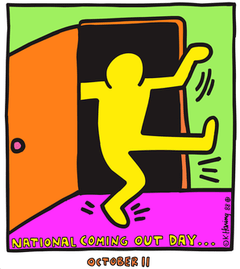
National Coming Out Day is an annual LGBT+ awareness day observed on 11 October, to support lesbian, gay, bisexual, and transgender people in “coming out of the closet”.
First celebrated in the United States in 1988, the initial idea was grounded in the feminist and gay liberation spirit of the personal being political, and the emphasis on the most basic form of activism being coming out to family, friends and colleagues, and living life as an openly lesbian or gay person. The foundational belief is that homophobia thrives in an atmosphere of silence and ignorance, and that once people know that they have loved ones who are lesbian or gay, they are far less likely to maintain homophobic or oppressive views.
People’s History Museum
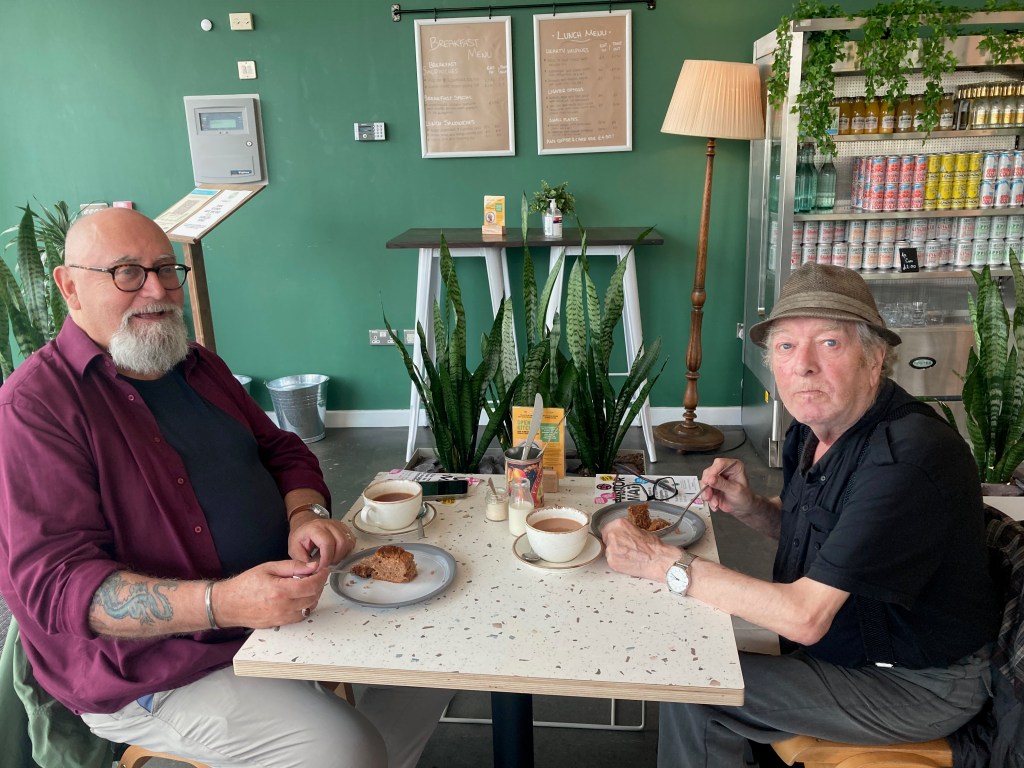
We met at the The Moon Under Water pub for lunch before taking the short walk to The People’s History Museum.
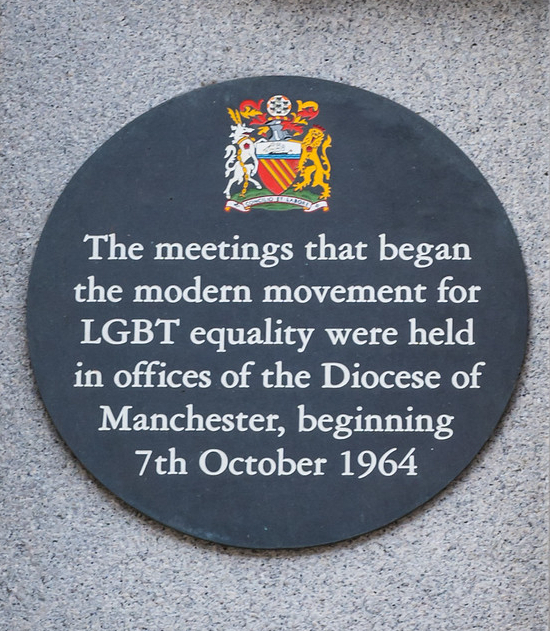
We walked past Church House on 7 October 2021, exactly 57 years after the first meeting that began the modern movement for LGBT equality. These meetings were held in the offices of the Diocese of Manchester.
The People’s History Museum in Manchester is the UK’s national centre for the collection, conservation, interpretation and study of material relating to the history of working people in the UK.
The Museum holds one of the largest collections of political material in Britain, beginning with the early 19th century. It focuses on the history of democracy with objects relating to the right to vote making up a large part of the objects on display. The collection includes 2,000 posters focused on elections and political campaigns, 300 political cartoons, 7,000 trade union badges and tokens, as well as 95,000 photographs. With over 400 trade union and political banners, the Museum holds the largest banner collection in the world.
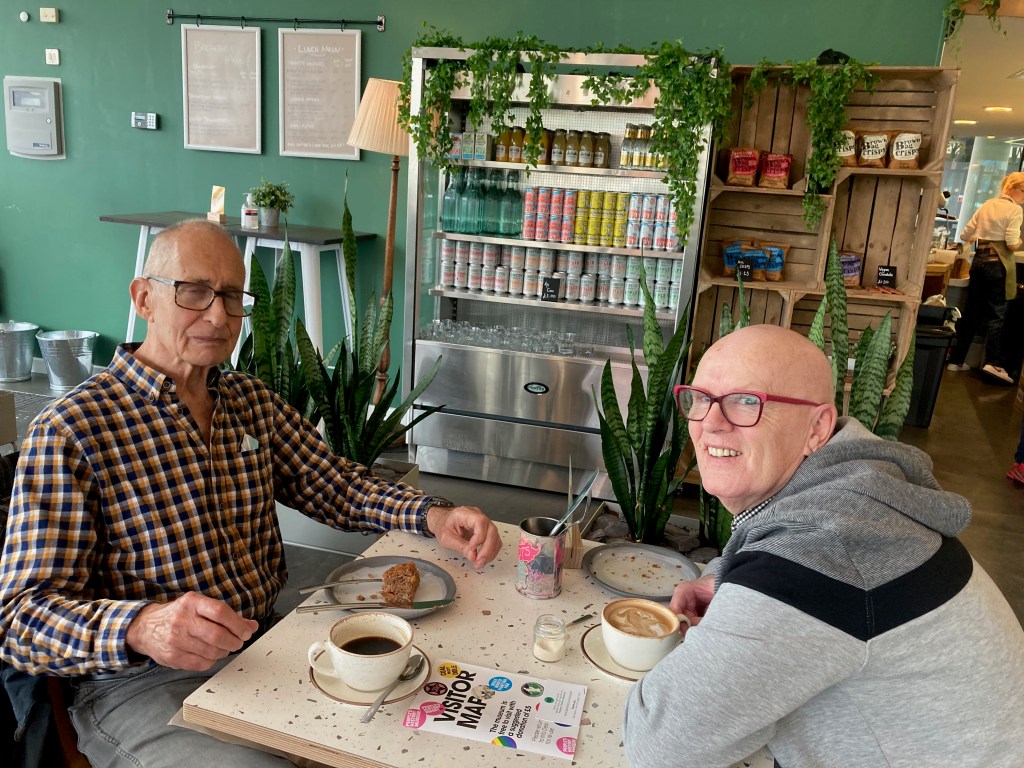
Current exhibitions included: “More in Common: in memory of Jo Cox”, “Counterflow: the movement of cultures” and “Banner Exhibition”. We also enjoyed the coffee and cake deal in the café after viewing the exhibits!
Bev Craig announced as new leader of Manchester council, the first woman to take on the role
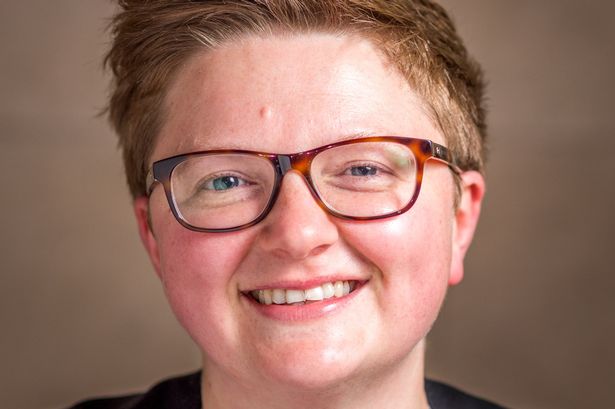
Bev Craig has become the first LGBT+ person to be leader of Manchester Council (Image: Manchester City Council)
Bev Craig has been announced as the new leader of Manchester Council, becoming the first woman to take up the role.
Councillor Craig was selected for the top job to replace Sir Richard Leese at a Labour meeting. Richard Leese is set to step down as leader on 1 December 2021 after 25 years in the role.
Councillor Craig, who is openly gay, has played a prominent role in Manchester’s response to the coronavirus pandemic, and was recently made deputy leader of the council.
She said: “It is the honour of my life to be elected and offered this chance to lead Manchester. I stood on a platform of Labour values, committing to further regeneration of the city and continuing the commitment to a greener, cleaner, and more equal city.”
She was the first in her family to go to the university, and moved to Manchester from Northern Ireland in 2003. In 2011 she was elected as a councillor to represent Burnage.
Recently she said: “Growing up gay, on a council estate just outside Belfast, I didn’t ever think politics could be for someone like me.” Sir Richard Leese added: “I am delighted with the new elected leader and she has my full support. It is a great honour to take on this role, and I am confident that Bev is committed to ensuring Manchester continues to be the best city in the world.”
I Am Samuel
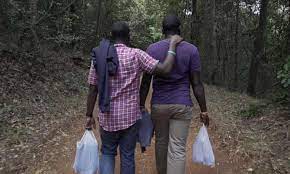
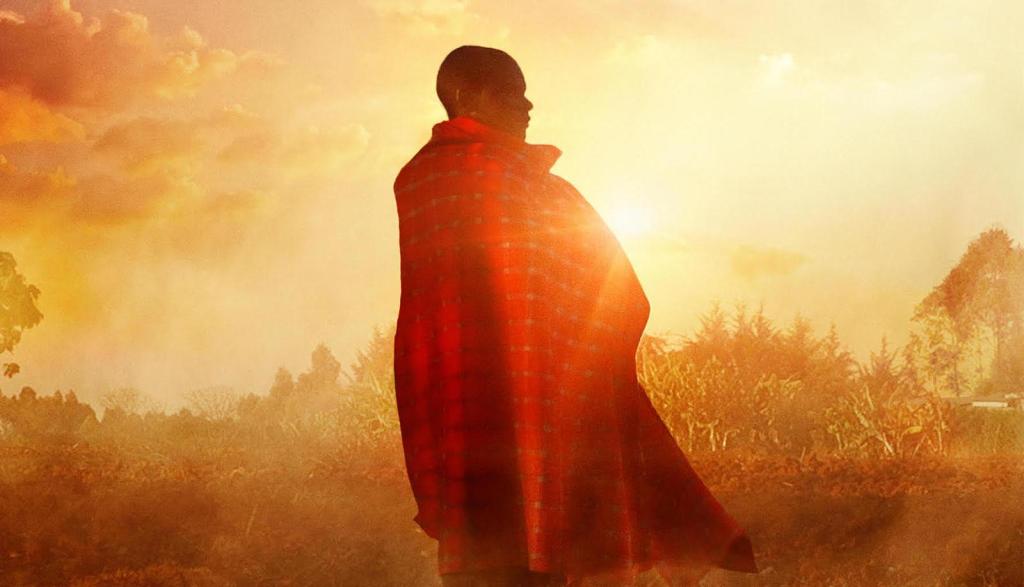
Samuel, a gay Kenyan man of the acclaimed documentary “I Am Samuel”, balances duty to his family with his love for his partner, Alex, in a country where their love is criminalised.
Samuel grew up on a farm in the Kenyan countryside, where tradition is valued above all else. He moves to Nairobi in search of a new life, where he finds belonging in a community of fellow gay men where he meets and falls in love with Alex. Their love thrives even though Kenyan laws criminalise anyone who identifies as LGBT+, and together they face threats of violence and rejection.
Samuel’s father, a preacher at the local church, doesn’t understand why his son is not yet married and Samuel must navigate the very real risk that being truthful to who he is may cost him his family’s acceptance.
The film is a quiet, steady, honest portrayal of Samuel’s daily life. LGBT+ people in Kenya are ordinary people living ordinary lives, but their government officially designates them as second-class citizens.
On 23 September 2021 Kenya’s Film Censorship Board (KFCB) slapped a ban on “I Am Samuel” claiming the film contravenes Kenyan values. They state: “By deliberately advocating same-sex marriage in Kenya, the film blatantly violates Article 165 of the Penal Code that outlaws homosexuality … From our analysis the documentary propagates values that are in dissonance with our constitution, culture, values and norms.” KFCB may want to silence LGBT+ people with flimsy claims, but it will not succeed. Censorship rarely does.
While the documentary has been banned in Kenya, the film will be available to watch online across Africa starting 14 October. Like the lesbian-themed film “Rafiki”, banned by KFCB in 2018, Samuel’s story will be seen by Kenyans who will make up their own minds. In trying to deny LGBT+ people’s existence and rights, Kenya’s Film Censorship Board is on the wrong side of history.
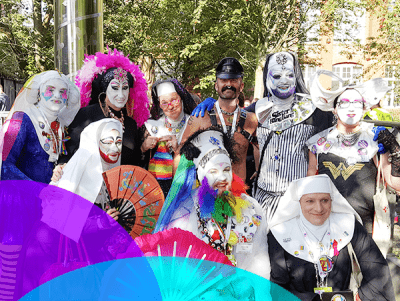
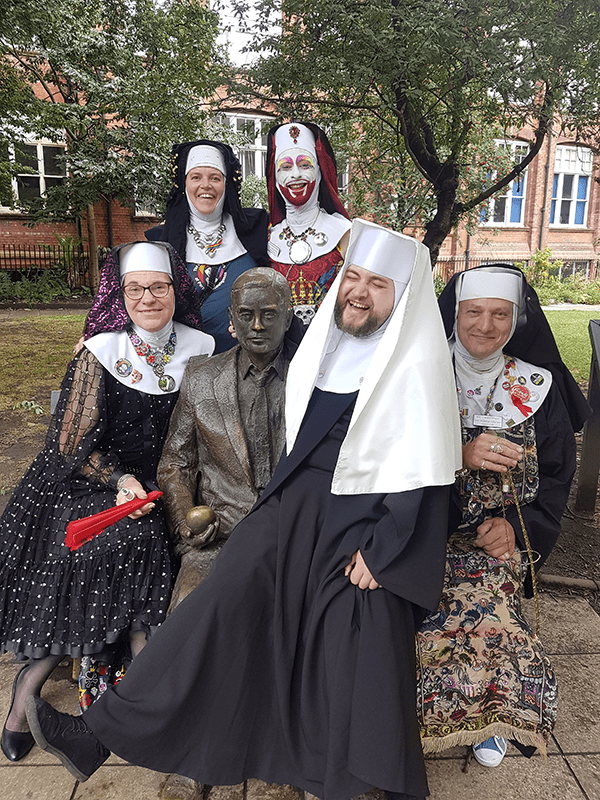
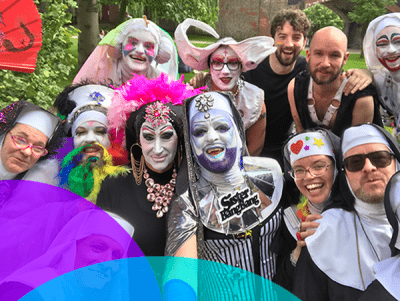
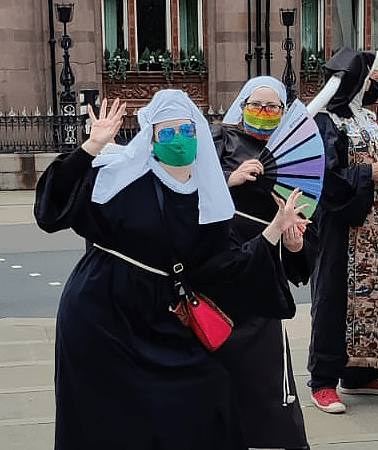
The Sisters of Perpetual Indulgence are an international Order of gay male and trans “nuns”. They believe all people have a right to express their unique joy and beauty.
The Manchester Sisters and friends
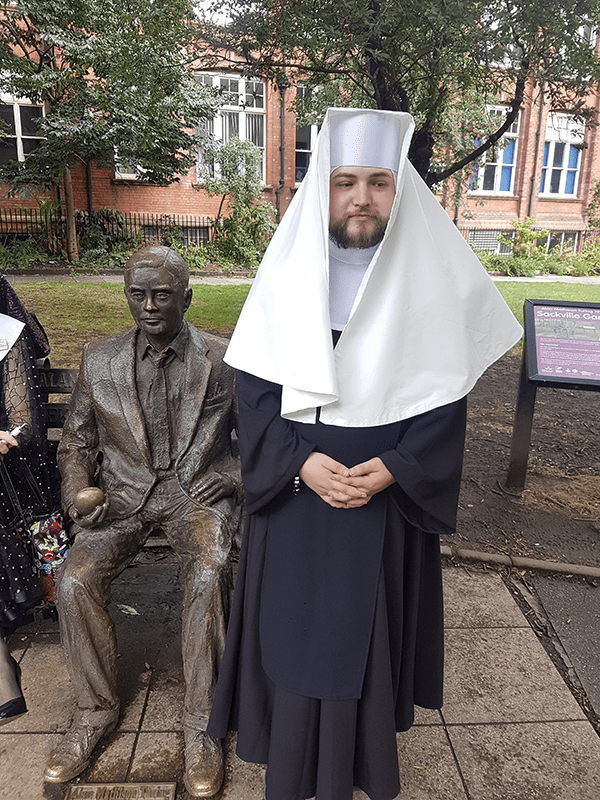
Novice Sister Bootrice at the vestition ceremony
Since their first appearance in San Francisco on Easter Sunday in 1979, the Sisters have devoted ourselves to community service, ministry and outreach to those on the edges, and to promoting human rights, respect for diversity and spiritual enlightenment.
They use humour and irreverent wit to expose the forces of bigotry, complacency and guilt that chain the human spirit, and sprinkle glitter blessings on us whenever they get the chance.
The Sisters have no central seat of power and no single ruling body. Each House is an autonomous, unique group with its own habits, culture, and rules.
You will be glad to know there is a Manchester House – The House of the Swishing Curtain.
Novice Sister Bootrice
Donna and Benji
So what fabulous things do the Manchester Sisters get up to? As well as raising eyebrows for a better world, they fight the good fight, raise money for good causes, give hugs to everyone and spread masses of joy. It runs through their blood like ice cold gin.
Saintmaking: the canonisation of Derek Jarman
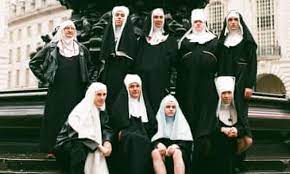
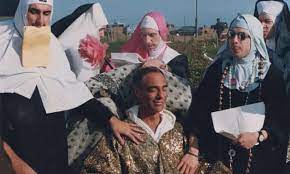
A new documentary, Saintmaking, tells the tale of a group of gay male and trans “nuns” in 90s London who decided to canonise Derek Jarman – film-maker, artist, gardener and more – as an act of political protest.
The London House of the Sisters of Perpetual Indulgence, by 1991, had become radical left-wing activists and vicious critics of the UK government’s lack of care in confronting the Aids crisis. Frustrated that “exactly £0 had been spent on research” and seeing their community suffering and dying as a result, they decided they wanted to make a stand and make someone a saint – but who?
Diagnosed with HIV in 1986 and a master of many forms of activism, Jarman was openly gay and open about his illness – he was the perfect candidate. So on 22 September, 30 years ago, the Sisters took a trip down to Prospect Cottage garden in Dungeness to lay hands on their beloved Dessie.
Podcasts
Here are a couple of highly recommended podcasts to listen to.
Childhood Heroes
Why do some young people prefer to be known as queer rather than gay, or as a gay woman rather than a lesbian? Do 5-year-olds understand discrimination? Should I put pronouns on my profile?
Carl Austin-Behan OBE DL helps us unpick these questions and many more in this episode of Childhood Heroes. Carl is a figurehead of Greater Manchester’s gay community, as previous Lord Mayor of Manchester and the current LGBTQ+ Adviser to Andy Burnham, Mayor of Greater Manchester.
Carl works with schools and the community to reduce stigma and normalise diversity. But personally, Carl’s own life tells the story of the dramatic changes that have happened over one short generation … from fear and discrimination (including dismissal from the Royal Air Force for being gay) to royal honours, and fulfilling his dreams as husband and father. Plus, we celebrate the writing of Russell T Davies.
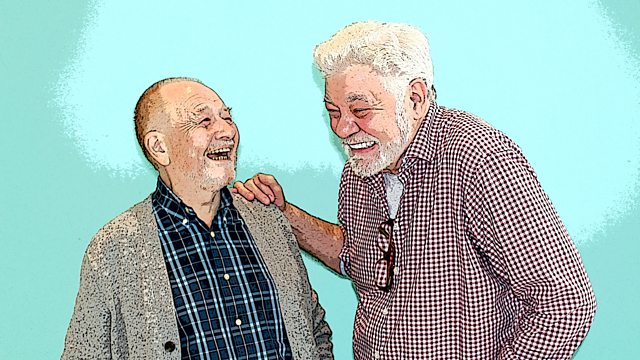
This is a drama by Philip Meeks, starring Matthew Kelly.
Daniel lives in a retirement home. He has lived his adult life as a gay man, but now finds that he has to suppress his sexual identity in order to fit in. But then an ex-policeman comes to the residence and he and Daniel realise they have met before many years ago.
A gentle and poignant comedy drama about two elderly men who discover a passion for life in their twilight years.
Documentary following Gracy, who takes us on a journey that addresses universal themes of life, death and experiences of illness through tales of frocks, flowers and fireworks.
You are always winning when you’re playing The Rainbow Lottery as each ticket you buy supports Out In The City. Thank you so much for your continued support.
Not only are you helping our community, but now you will have a chance to WIN £1000 in John Lewis vouchers on 30 October in the national bonus draw as well as chances to win cash prizes up to £25,000 every week! Thank you and good luck in the draws!
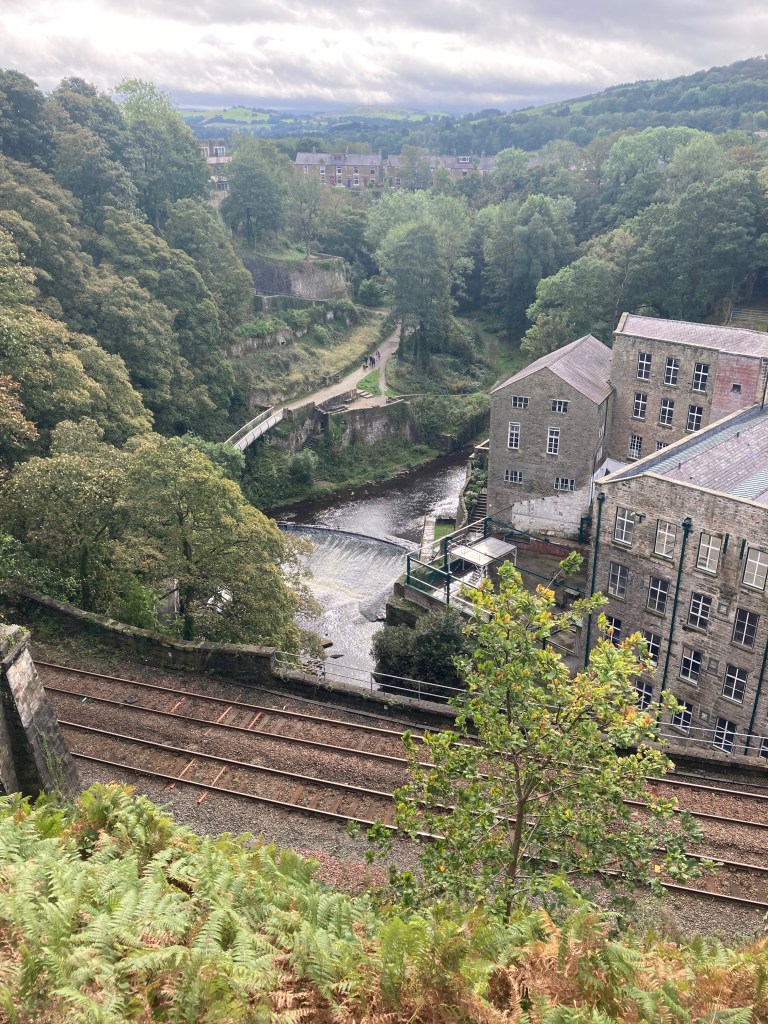
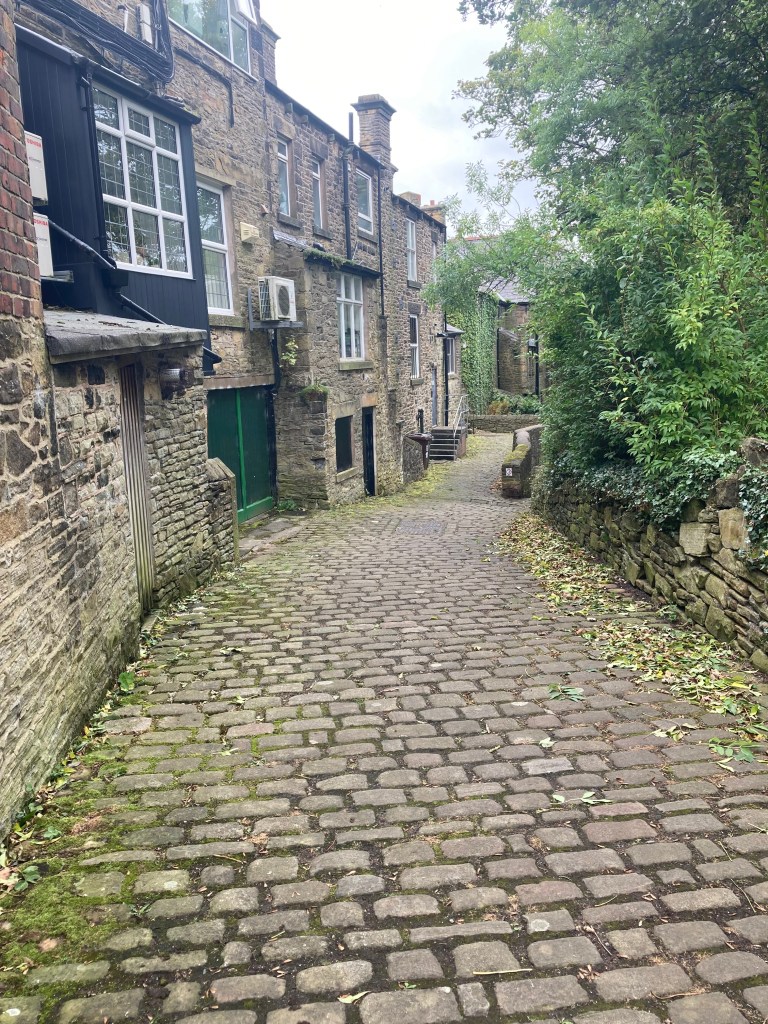
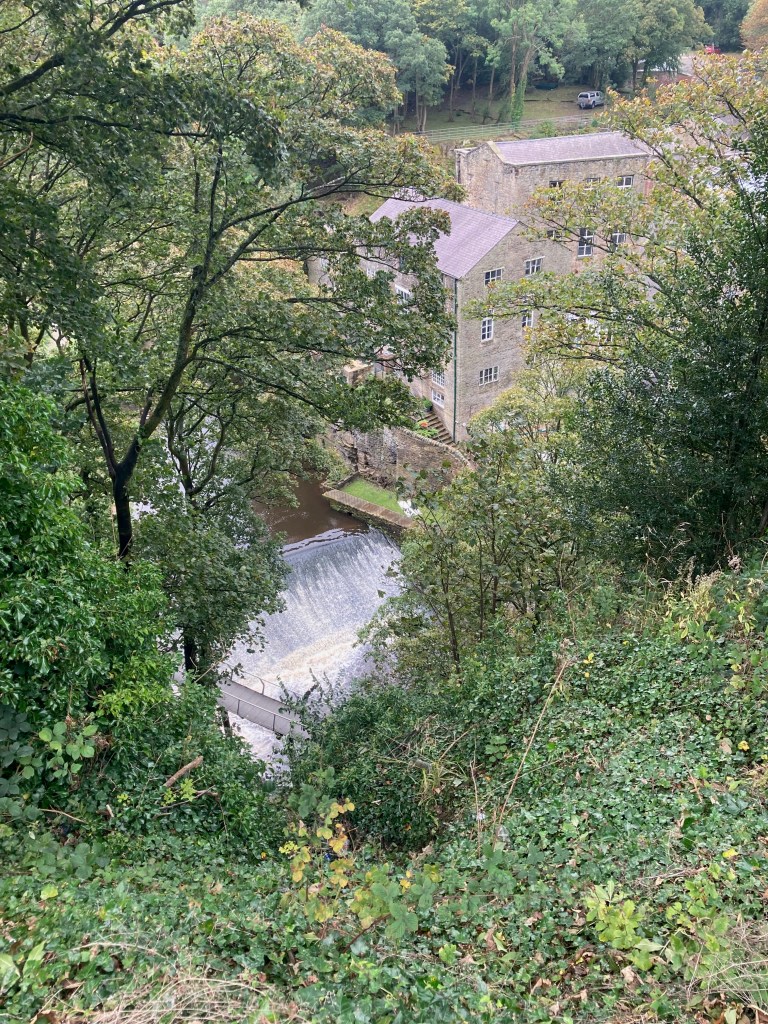
New Mills is a town in Derbyshire, about 16 miles from Manchester, close to the border with Cheshire. It is set in an area of spectacular natural beauty, standing high above a natural rocky gorge known as The Torrs, where the River Sett joins the River Goyt.
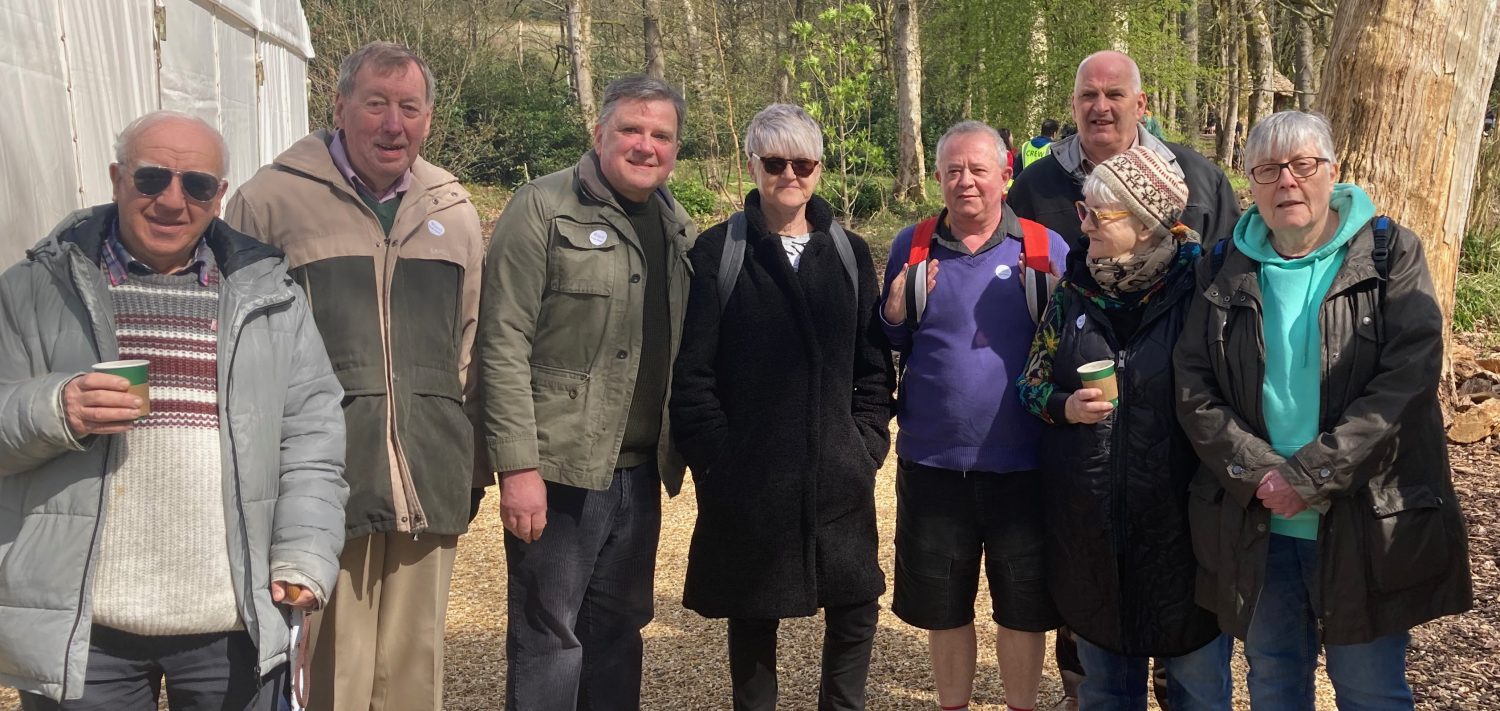
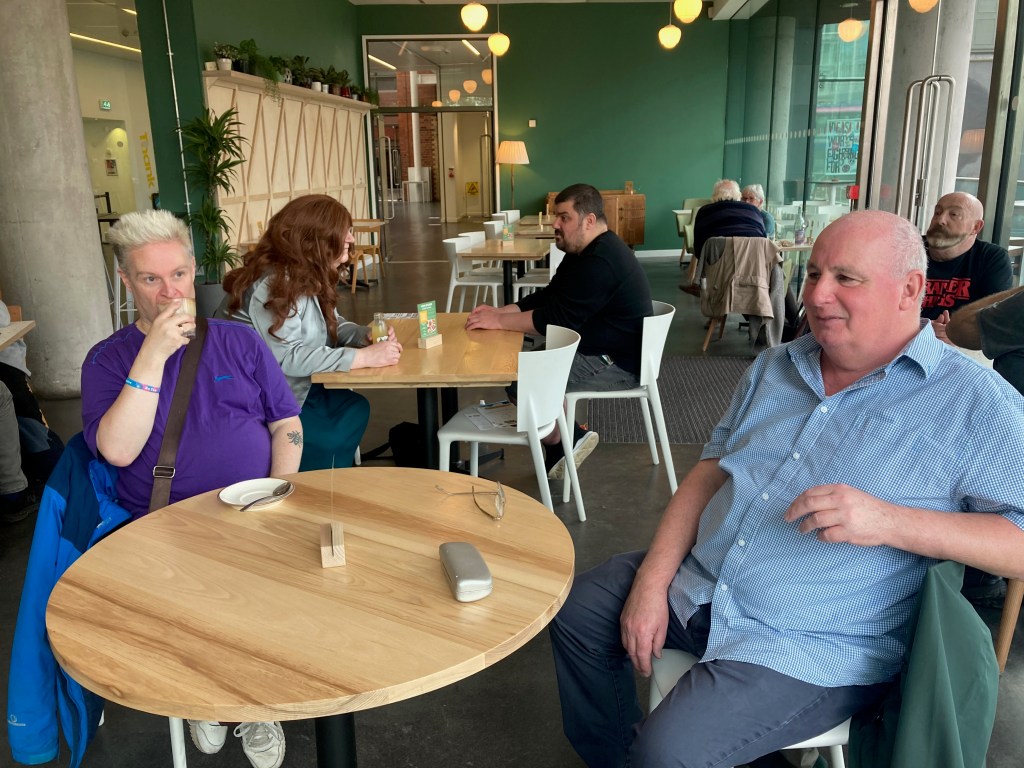
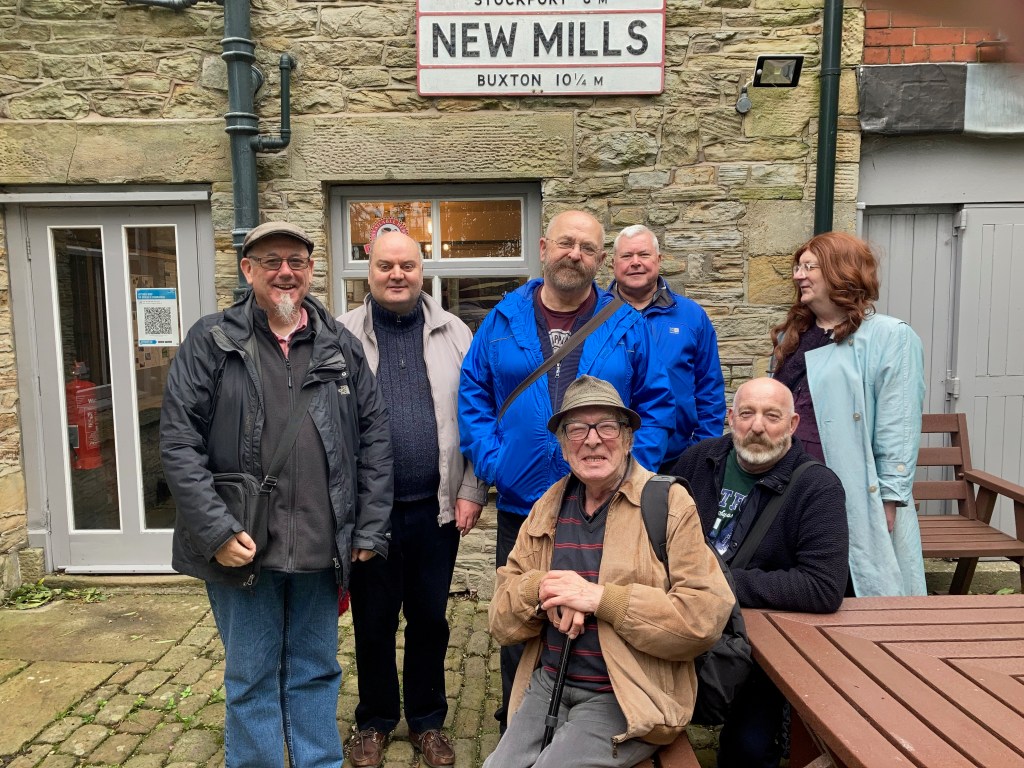
Eight of us travelled to the town. We made our way up the steep hill to the “Pride of the Peaks” pub. This was a good choice as the food was fantastic – proper home cooked food served in very generous portions and at reasonable prices.
Then we took a short walk to the New Mills Heritage and Information Centre housed in several rooms on the ground floor of a converted building in Rock Mill Lane.
The Centre was established in 1989 and has over 12,000 visitors a year. It includes the Museum, an Information Centre, a shop and a small café and generates income by selling publications, maps, trails, sundries, and light refreshments.
Volunteer staff are on duty to service the shop, provide information, deal with or pass on enquiries and supervise the displays. There was a friendly and helpful atmosphere and it was well worth a visit.
We then looked for the Butterfly Cafe which had been highly recommended (think it may be closed), but instead we went to the Clockwork Café which had some delicious homemade cakes.
New Mills is quite a small town but we didn’t spot actor Tony Audenshaw (Bob Hope in the television soap Emmerdale) who lives there.
Local activists inspire on International Day For Older Person’s and get BBC coverage
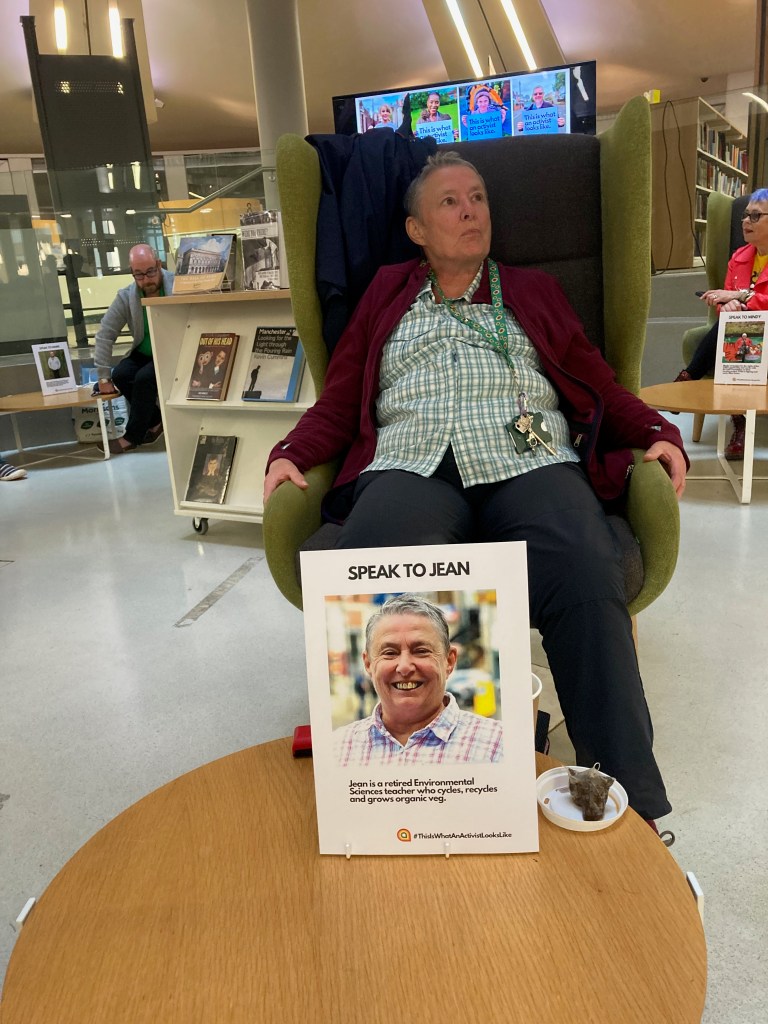
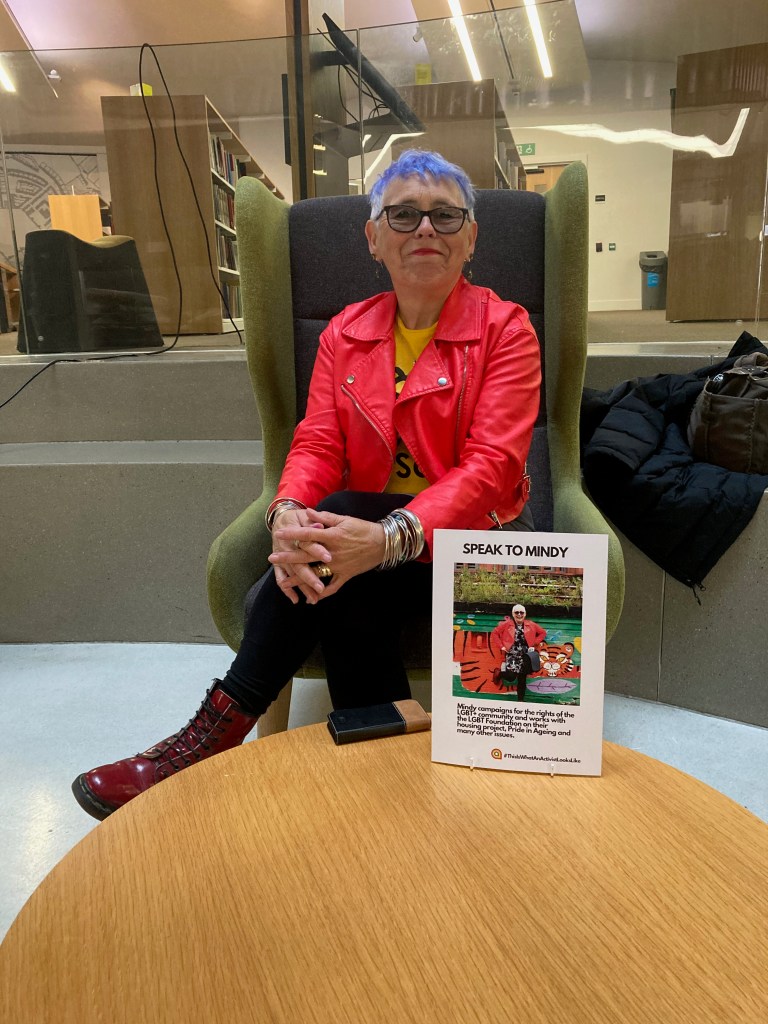
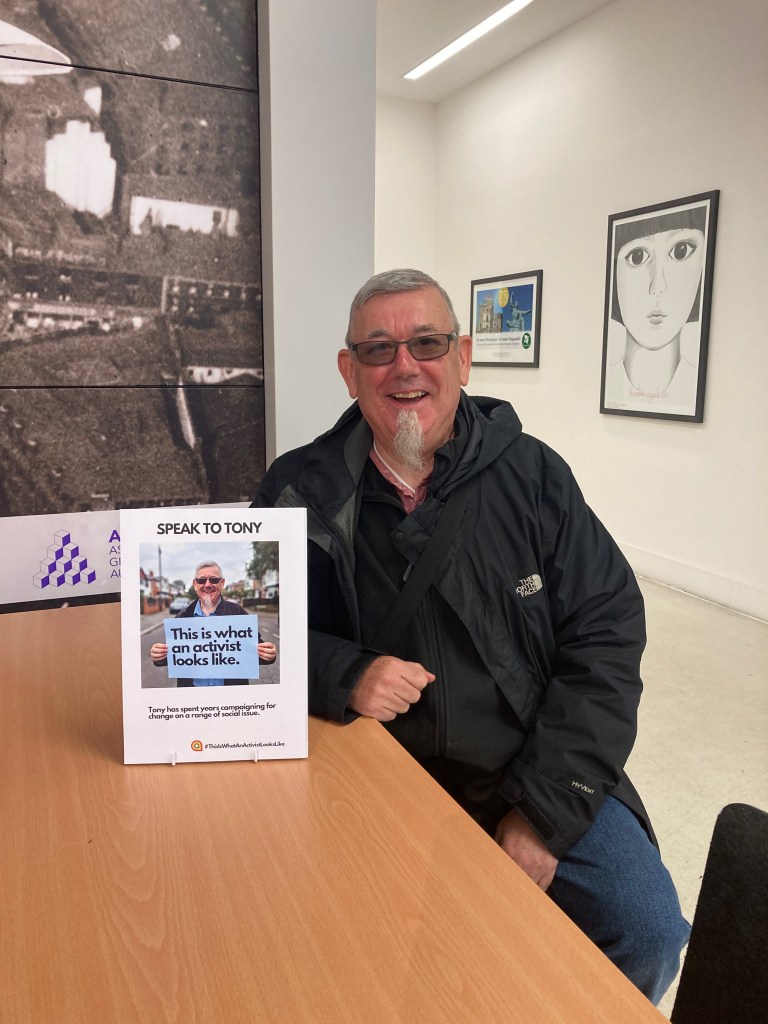
A group of local activists who have been featured in a special new film created by the Talking About My Generation team, commissioned by Greater Manchester Older People’s Network (GMOPN), took part in a living library event on Friday morning , 1 October.
The activists were available to ‘borrow’ like a book for a chat about what they’ve been doing in their community, helping to inspire others.
Jean, Mindy and Tony took part in the “living library” with other local activists.
The new film shows how people of all ages across Greater Manchester are uniting in the fight against climate change, breaking the myth that older generations don’t care.
It highlights the inter-generational activists in action; from green transport and litter picking to protesting and growing your own food in communities across all boroughs.
The event attracted the BBC who featured the activists and part of the campaign film on the North West Tonight programme on Friday evening.
Our campaign stars getting interviewed by the BBC about the new film and their activism
Elaine Unegbu, Chair of Greater Manchester Older People’s Network Steering Group, said: “We wanted to share a positive message about how important it is for the generations to come together to tackle big issues like climate change.
This is not about young versus old, it’s about all of us doing our bit, as individuals and in our communities. We can all do something and so many people are playing their part already and enjoying themselves in the process. Climate change is a serious business but you can still have fun and make a difference at the same time. We need to celebrate what people are already doing and inspire others to do the same. Ageism tries to divide generations – but the fight against climate change is uniting them.”
Drag Queen Bingo
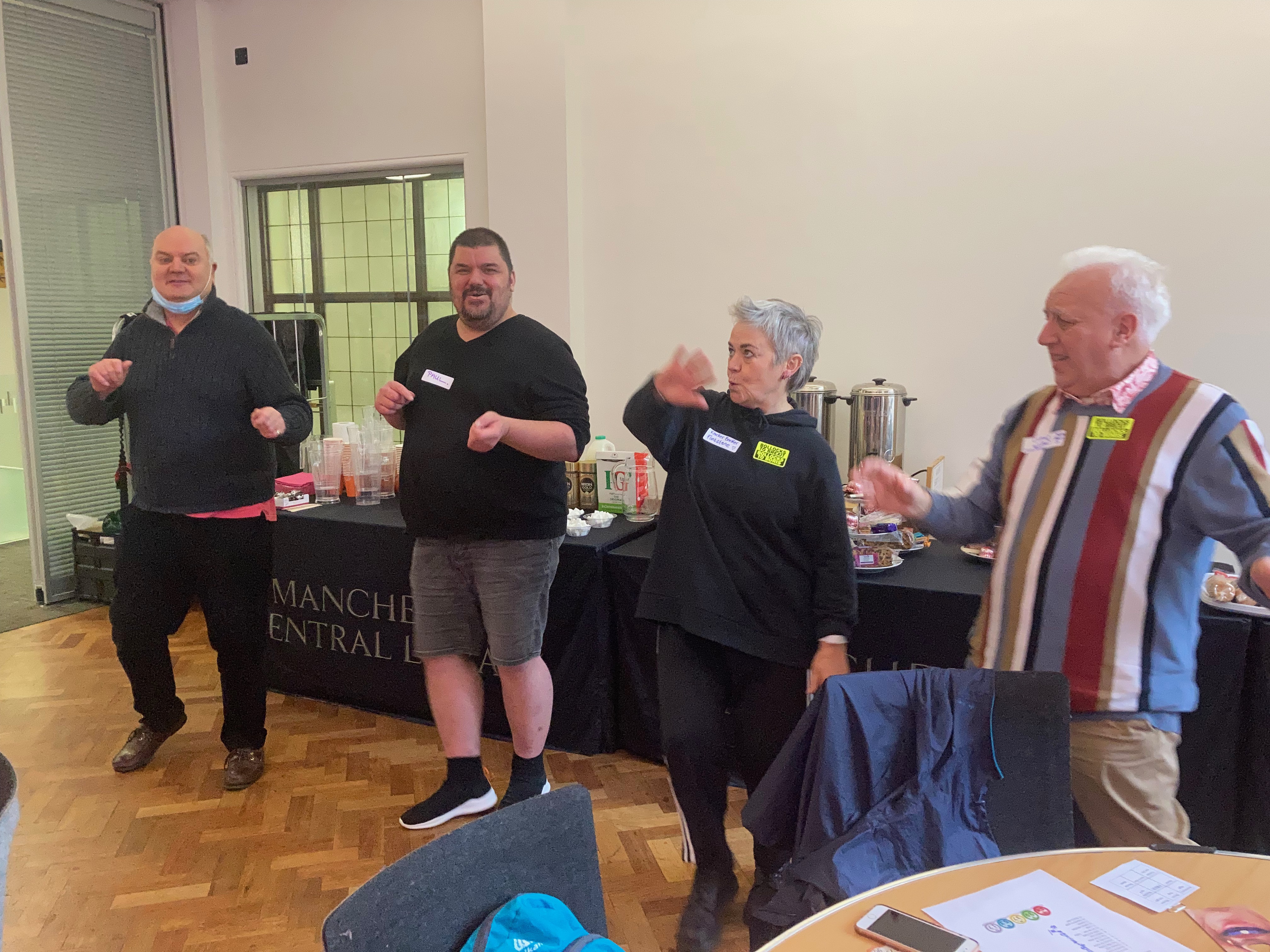
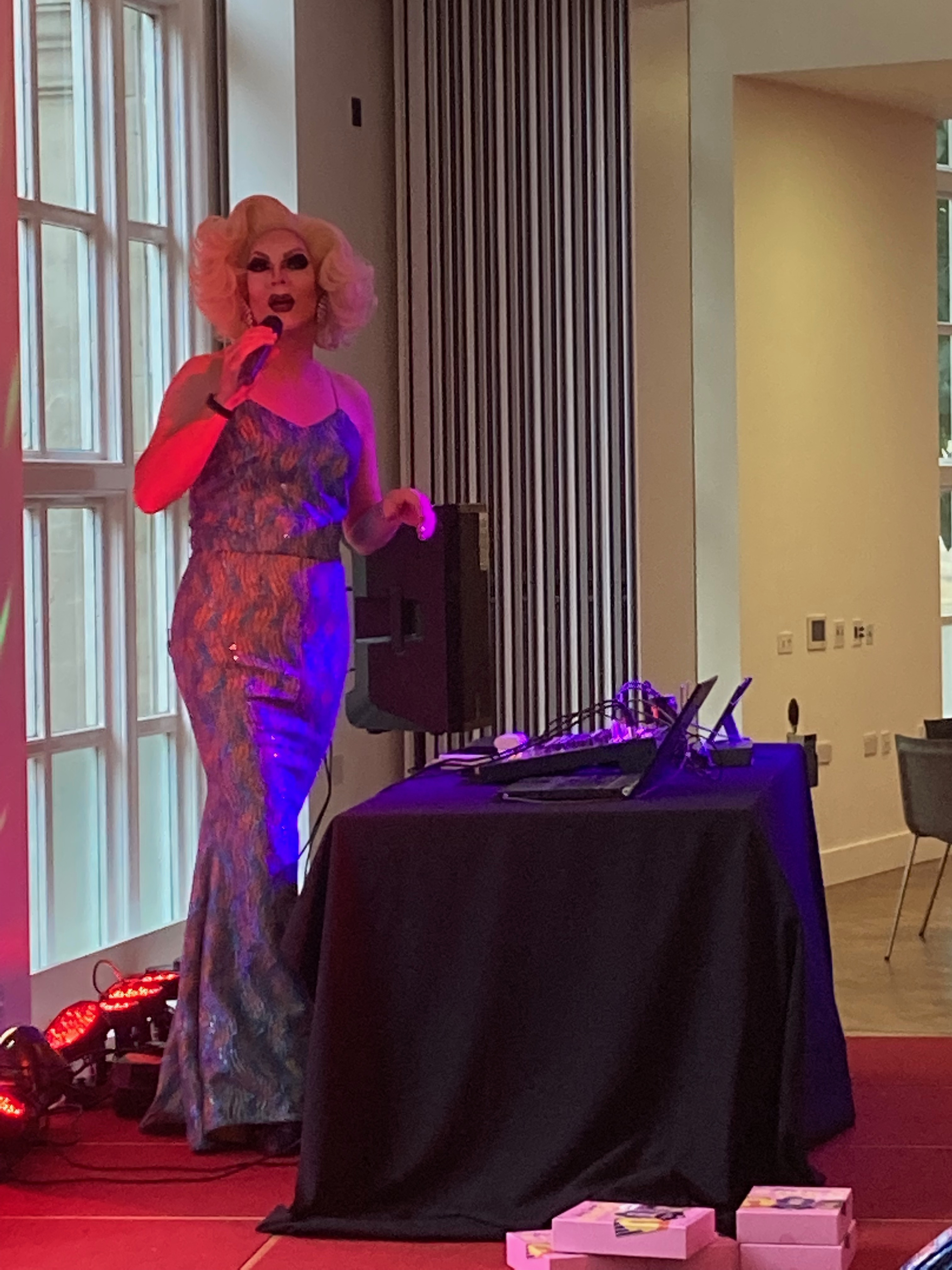
To celebrate The International Day of Older People, a group of us went to Manchester Central Library to be entertained by Angel Delight with Drag Queen Bingo.
We had an afternoon of sparkling fun, including a bit of a dance to some cheesy pop music, stand up bingo, bongo bingo and singalongs. Walter won a “Drag Queen Bingo” game
If you missed the event you can still find your drag name. Match your intitals and discover your very own alter-ego!
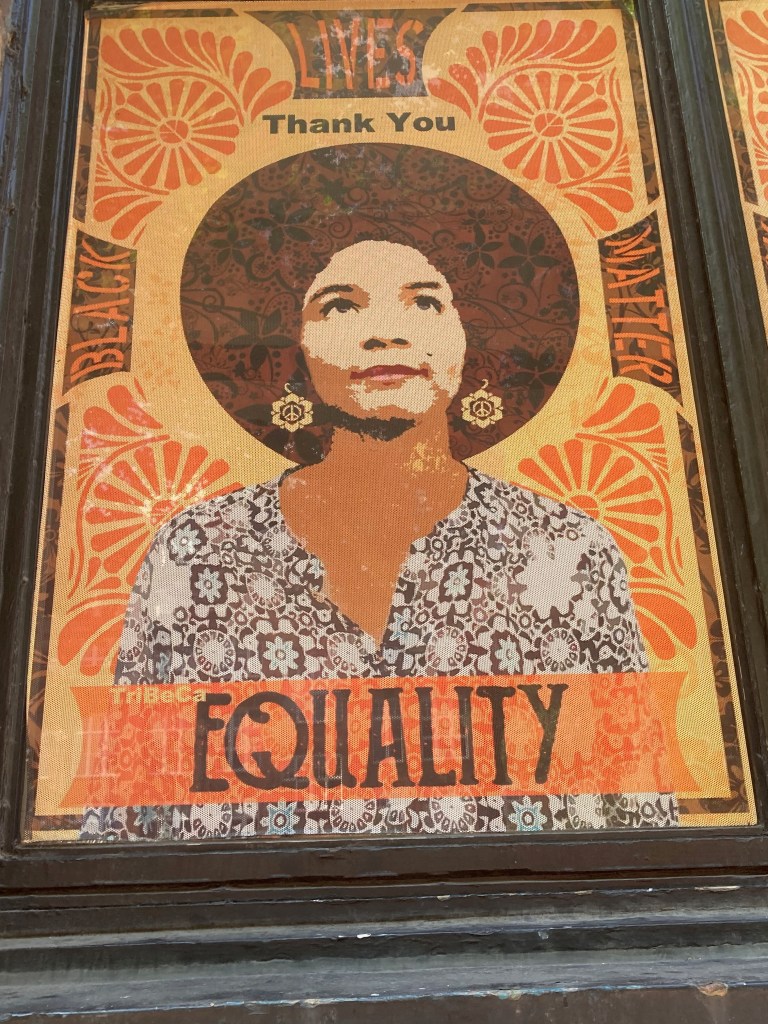
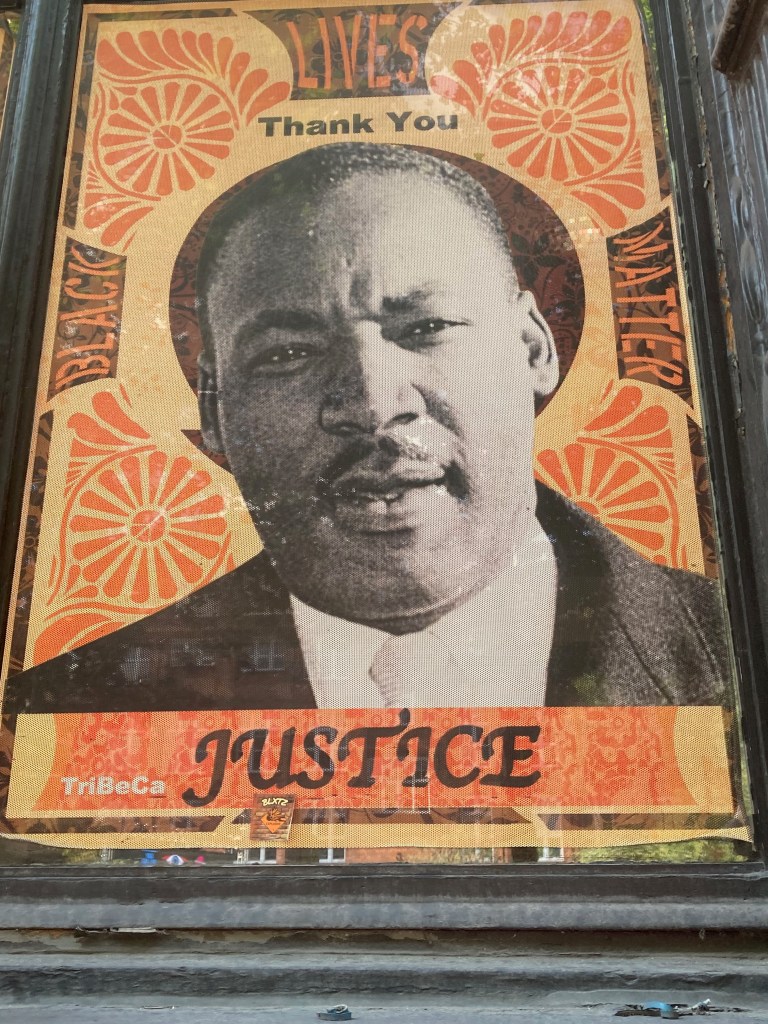
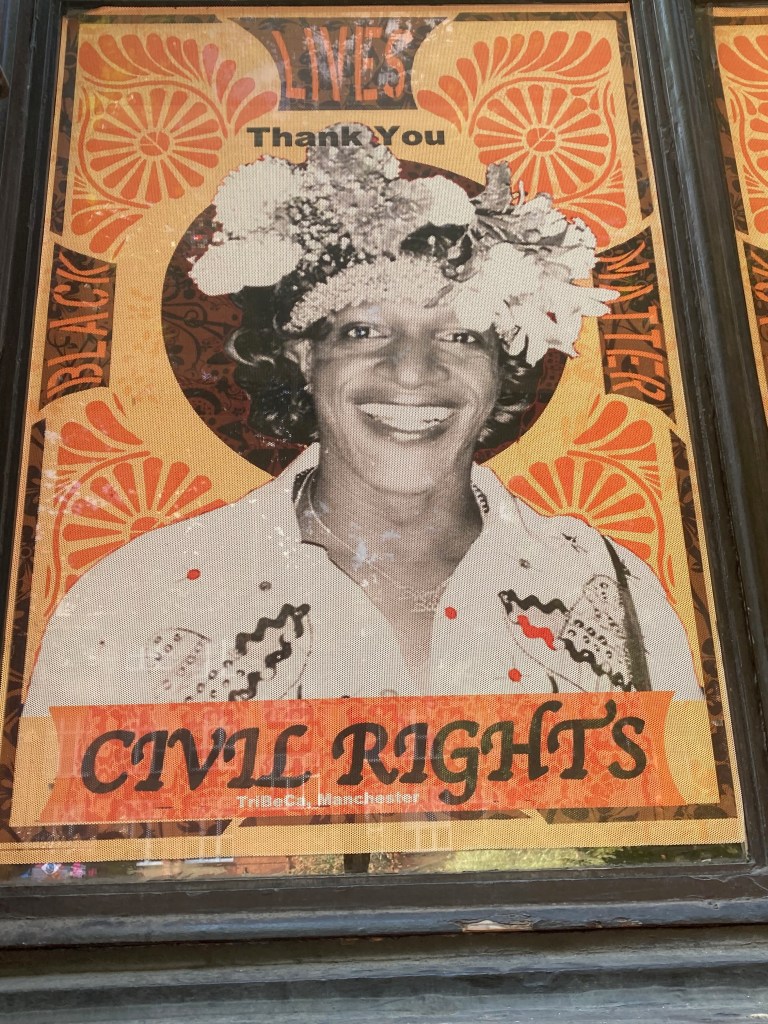
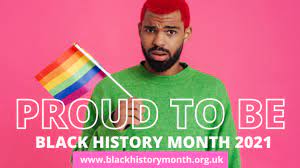
Black History Month is an annual observance originating in the United States. It has received official recognition from governments in the United States and Canada, and more recently has been observed in Ireland, the Netherlands, and the United Kingdom. It began as a way of remembering important people and events in the history of the African diaspora, and is celebrated in October.
As we look forward to celebrating Black History Month this October, Robert, a member of Out In The City, tells us his story:
When I arrived in the UK (the Mother Country) in the mid 1970’s I had no idea that I would face racism and prejudice almost on a daily basis. Having come from Jamaica where the island’s motto is “Out of Many, One People” and having grown up with cousins who were black, white and all the shades in between and having gone to school with Chinese, Indian, European and other ethnicities whose parents or grandparents had made their home in Jamaica, it really was a shock to the system.
I was a 21-year old mixed race man and came here to study, with a view of settling down as my great uncle on my father’s side had been an Admiral in the British Navy. My father is white Jamaican of French and British heritage and my mother is mixed race, the offspring of a black father and a half Irish, half Scottish mother.
So perhaps now I could see why my dad’s side of the family had always come across as having an air of superiority. They sometimes looked down on the darker skinned side of the family but as my father explained this was something inherent from the old Colonial days. My dad tells me that when he told his parents he had proposed to my mother, they sat him down on the veranda and said, “Three questions!” “Is she coloured?” “Do her parents have money?” “Is there any lunacy in the family?”
One of my first experiences of being made to feel different was one Saturday morning in Birmingham, when I went to a mate’s house to go to a football match and his mother answered the door and then shouted up to my mate Dave, “There’s a coloured lad at the door for you”. Why the adjective? She could have just said, “There is a lad at the door”. A similar incident occurred when I was looking for digs at college. The man who phoned round on my behalf repeated the same mantra with every call: “He is coloured”. So what? I thought. I soon discovered that at that time some white people thought that young people like me would be cooking highly spiced foreign muck, playing reggae music full blast and cussing them in Patois English.
There are so many situations over the years where I have had to stand tall and just stay composed but one incident that sticks in my memory is during my first year of teaching and travelling home on the school bus. The driver suddenly stopped the bus and wiped the floor with me because I had followed the instructions of the Head teacher and asked the pupils to calm down and stay in their seats. This man abused me in front of the students by saying that it was his bus, he was in charge and how dare I give orders on his bus. It was quite obvious it was to do with me being a black teacher as in those days there weren’t many of us in the profession like there is today.
Those early years of teaching were far from easy as the stereotype mentality of some parents and visitors to the different school’s I taught in was quite embarrassing. On numerous occasions I was mistaken for the caretaker or some kind of “handyman” so when I said I was a teacher, you could see the surprise on the person’s face as if to say: shouldn’t you have a broom in your hand? I saw myself repeatedly passed over for promotion and even though I was almost a straight “A” student and was awarded a distinction for my Teaching Practices, I was scrutinised much more than my white colleagues. When my students did well in exams, no one mentioned good teaching, as their success was because they were bright and capable. When they failed it wasn’t due to their laziness or that they hadn’t applied themselves, no it was down to bad teaching. It was my fault!
I had a break from teaching and went to work as Cabin Crew for a few years and it was noticeable on how few occasions I got to work at the front in Business Class. I can only assume that these Cabin Crew managers / Pursers did not feel that a slightly older man of colour should be serving in this particular cabin on the aircraft. Yet in Training School we were told that we must work in all cabins on a regular basis.
I guess some Sociologist’s might call this a type of “Hidden Apartheid”. When I was given an award one month, for having the most letters of commendation from passengers on my flights by my Fleet Manager, one crew member was heard to remark “I bet he has his friends on his flights and gets them to write in to praise him”.
Looking at the funnier side of things, I remember a teacher at one school stating that she was sick of people stereotyping her as since she came from Wales everyone seemed to think her father was a Coal Miner and he was called Taffy.
Then I looked at her and said now you know how I feel as people seem to think because I’m from Jamaica my father was a bus driver and my mother a Hospital Orderly because those were the predominant roles that West Indian immigrants took on arrival in the UK. So when she enquired what jobs my parents did and I mentioned that my dad was an Electrical Engineer with his own company and that my mother was a trained Pharmacist with her own business, she seemed surprised!
Another funny incident was in my early days of teaching and I was walking around with my son in the hall at the end of a Parents Evening as my partner had come to collect me. A child in my class came up to me, had a good look at my child whose skin and features are more Caucasian and enquired, “Is he quarter cast?” No, I replied, he is fully cast because he belongs to the human race. “Oh”, he said looking rather puzzled and ran off.
When I separated from my wife and went on to the gay scene I was horrified at the language I heard in pubs and clubs. The “N” word was still quite often heard but of course I am talking about the late 1980’s. Who say’s gay people can’t be racist? I remember on one occasion thinking I had met a really nice guy at the bar as we bought drinks, chatted and laughed and then only to be told, “Oh, I have never been to bed with anyone coloured before but mind you I didn’t think your skin would be so soft or you would be so intelligent and you do smell nice”. “By the way, I hope you don’t live in Moss Side.” Needless to say, I made a hasty retreat out of that joint.
I can say that I am proud of my mixed race heritage whether it’s on my maternal grandfather’s side who was the grandson of a slave or indeed on my father’s side where there is supposedly some aristocracy as his great grandfather was the Count of Fosse. We need to remember that racism has been around for a long time. My father told me the story of his uncle who went to Scotland to lecture at Edinburgh University in the early 1900’s and when they heard he was from Jamaica, the students waiting in the hall started chanting “bring on the monkey” before he even got to the podium. Of course they were quite shocked to see a white man and not what they had imagined in their feeble cockroach brains. Apparently, my ancestor had a wicked sense of humour and his opening words were: “Well; now you’ve seen a white monkey!”
I can honestly say that I am happy with my station in life and I am pleased to say that none of the above has scarred me in any way. I feel there are times when you just have to shrug these racist incidents off and even laugh at yourself as perhaps we can all be a little too PC. Then, there are other times when you have to stand up and be counted and make a lot of noise, show your teeth and don’t let people trample all over you.
I believe things are getting somewhat better in the United Kingdom but racism is still alive and kicking. Our politicians need to step up to the plate and lead by example especially those in senior positions. We also need schools to practice what they preach and not just pay lip service to racism. The Anglican and Catholic Churches need to speak up and stand up for those from foreign lands. They seem to forget that Jesus was a black man and a foreigner himself and yet so many Priest’s and Bishop’s pretend not to see what is going on and pass by on the other side! In the football world it is obvious that there is still a far way to go judging by the recent spate of racist tweets aimed at our black football players.
To my black brothers and sisters I would like to say that if you are ever challenged as to why you are here and not back in your own country always remember the words of my Sociologist Lecturer at University. He used to say, “tell them, you are here because they were there”. In other words when you think how our colonies in the West Indies, Africa and Asia were plundered and the profits from slavery, sugar and various minerals were used to build many of these big buildings we see today in Bristol, Liverpool, London and other cities, then we have every right to be here! In closing, perhaps a day will come when we will feel that there is no need to have a “Black History Month” but I dare say this is a long way off. Schools need to start teaching black history and not just British and European history. It’s not just the black children who need to know more about their roots and their ancestry but children of other races should also know too, so as to avoid perpetuating further stereotype views in the future. Perhaps some of us are too embarrassed to talk about slavery and wish to forget that it ever happened. It is important to remember the words of Malcolm X, “Our history did not begin in chains”.
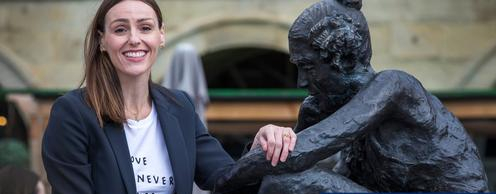
Statue of Anne Lister, TV’s Gentleman Jack, unveiled in Halifax
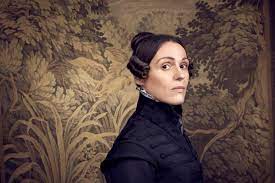
Suranne Jones, who played 19th-century diarist regarded as the first modern lesbian, says she hopes the artwork will be an inspiration.
Suranne Jones unveils the statue of Anne Lister at Piece Hall, Halifax on Sunday. Photograph: Gary Calton / The Observer
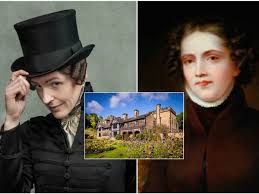
A bronze statue of the 19th-century diarist Anne Lister, known as Gentleman Jack, has been installed in Halifax, the West Yorkshire town where she lived.
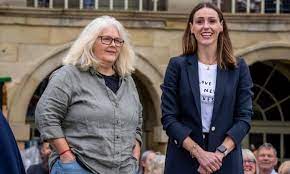
The artwork was unveiled on 26 September by Suranne Jones, who starred as Lister in the recent BBC One drama Gentleman Jack, and Sally Wainwright, the award-winning creator of the show.
Lister, who is sometimes described as the first modern lesbian, is known for her extensive diaries detailing her life as a landowner and entrepreneur, her travels across Europe and her relationship with Ann Walker, to whom she was notionally married.
The £25,000 installation called Contemplation and created by sculptor Diane Lawrenson, is now on permanent display at the Grade I-listed Piece Hall.
Jones said it was important that Lister was visible to the mainstream. “[In Gentlemen Jack] She has to gender-shift, in a way, and is hiding in plain sight. She is constantly facing challenges every single day of how people look at her and view her. And now in 2021 she’s sat here in the middle of the Piece Hall, where everyone comes to have their family days out. I think that’s what’s important about this specific piece of art.”
She said she was “fiercely proud” of the show and that she was part of Lister’s story.
“To be able to be on the BBC at nine o’clock on a Sunday night, with this character in full glory, has been amazing, and also fans have welcomed me as a straight actor to play Anne Lister and I enjoy being an ally – I enjoy the responsibility.
It’s one of the hardest roles I’ve had to play, because the language is really tough and I’m in almost every scene. I’m fiercely proud of what we’ve created here. It just speaks to visibility that there’s Shibden Hall [Lister’s family home in Halifax, which is open to the public] and now this beautiful statue, which is just glorious. I’m just very proud to be part of it.”
Suranne Jones with the scriptwriter of Gentleman Jack, Sally Wainwright. Photograph: Charlotte Graham / Rex / Shutterstock
Series two of Gentleman Jack wraps this week. Filming was disrupted several times due to the pandemic, the death of Jones’s father, and the birth of co-star Sophie Rundle’s baby.
Wainwright has spent years transcribing some of the diaries’ estimated five million words written in secret code detailing Lister’s liaisons with other women, as well as portraying the network of relationships between women of the gentry and aristocracy in early 19th-century Halifax.
She said the life sized statue “captured a lot” of Lister’s character. “I think it’s really sensitive but robust, and I love the way it’s deconstructed, where it’s just slightly abstract. It’s kind of rough and ready but it’s really alive.”
She added: “I hope [local people] will talk about Anne Lister, about who she was and why she’s important. I hope they’ll see this image of her, which is a very intelligent, very athletic woman, and it will inspire them. But I have no doubt people will put top hats and red noses on her at Christmas, they’ll be sitting on her and putting their arms round her and all sorts.”
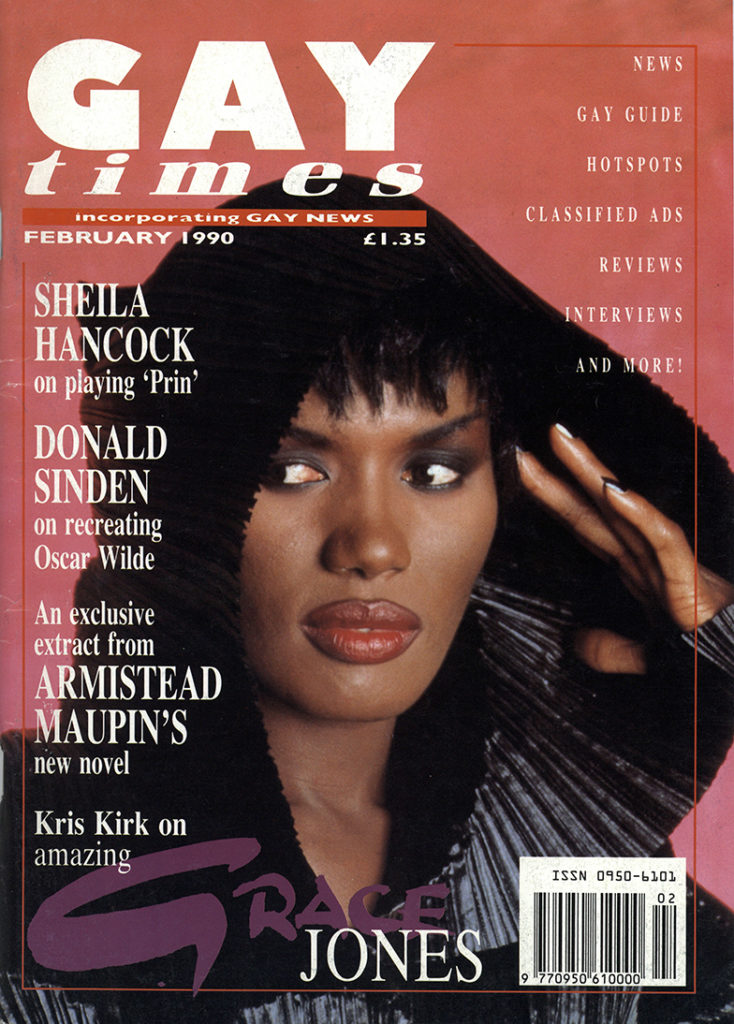
Gay Times ends print magazine after nearly 50 years
Gay Times, one of the world’s longest-running print magazine for the LGBT+ community, has ceased printing, but will continue as a digital publication.
The UK-based magazine was first published in 1984, but its predecessors date as far back as 1975. During that time it’s been a vital resource for LGBT+ people in periods of misinformation and violent rhetoric, from the early days of the Gay Liberation Front through to the repeal of Section 28.
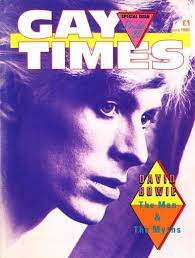
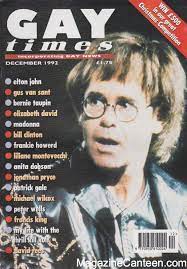
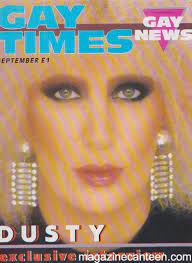
Over the decades hundreds of icons have graced its cover, including David Bowie, Elton John, Dusty Springfield and George Michael.
The magazine had been in print every month since its launch until 2020, when it moved to a quarterly publication, but is now going purely digital to reflect a decline in offline readers. Just two per cent of its readers consume the print magazine.
Gay Times says that the decision to cease the physical magazine had been planned for some time and says that it also considered the environmental impact of printing issues.
“Any print magazine production demands significant natural resources, so this was one of the main factors in the decision.” Although you won’t be seeing the familiar cover on magazine shelves anymore, Gay Times magazine will continue as a digital publication with 12 issues a year.
On Thursday, 23 September, twelve members of Out In The City, went on a “mystery trip”.
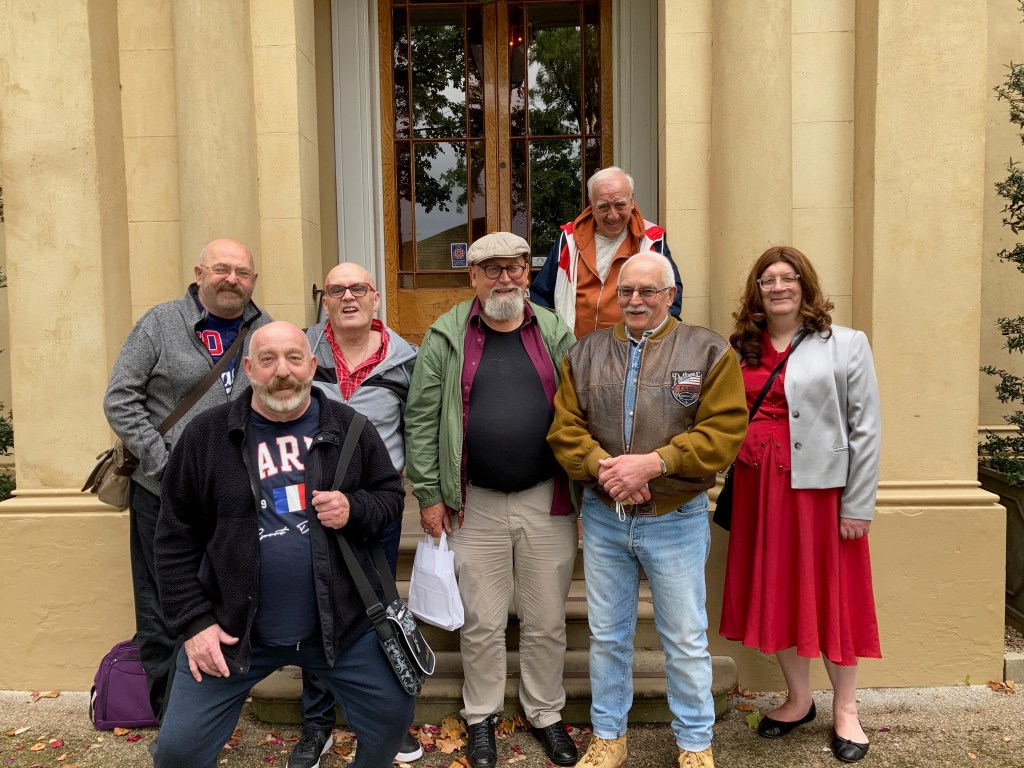
We met in the centre of Manchester but the end of our visit was kept secret. We took a bus to the university area and our first stop was at “The Turing Tap”, a pub dedicated to Alan Turing. They serve a wide range of food and drink. The pub is just a few minutes walk from the Whitworth Art Gallery and the Manchester Museum, and is just round the corner from the Pankhurst Centre (the home of Emmeline Pankhurst and the birthplace of the suffragette movement). The group did not know where we were going. However, once I had given the clue that we were heading “North and South” to “Cranford”, Walter guessed that our destination was Elizabeth Gaskell’s House. Those are two of her books.
84 Plymouth Grove, now known as Elizabeth Gaskell’s House, is a writer’s house museum in Manchester. The Grade II* listed neoclassical villa was the residence of William and Elizabeth Gaskell from 1850 till their deaths in 1884 and 1865 respectively.
Elizabeth Gaskell’s writing desk
The house itself was granted listed building status in 1952, partly due to its association with the Gaskells. This granted it protection from demolition, however, 84 Plymouth Grove slowly descended into a state of disrepair due to neglect.
The Manchester Historic Buildings Trust commenced a restoration project in 2009, aiming to see the building returned to its state as the Gaskells left it. By 2011, the Trust had finished the exterior, which included structural repairs and removing the pink paint that had coated the house for several years. On completion of the £2.5 million restoration, the building was reopened to the public on 5 October 2014.
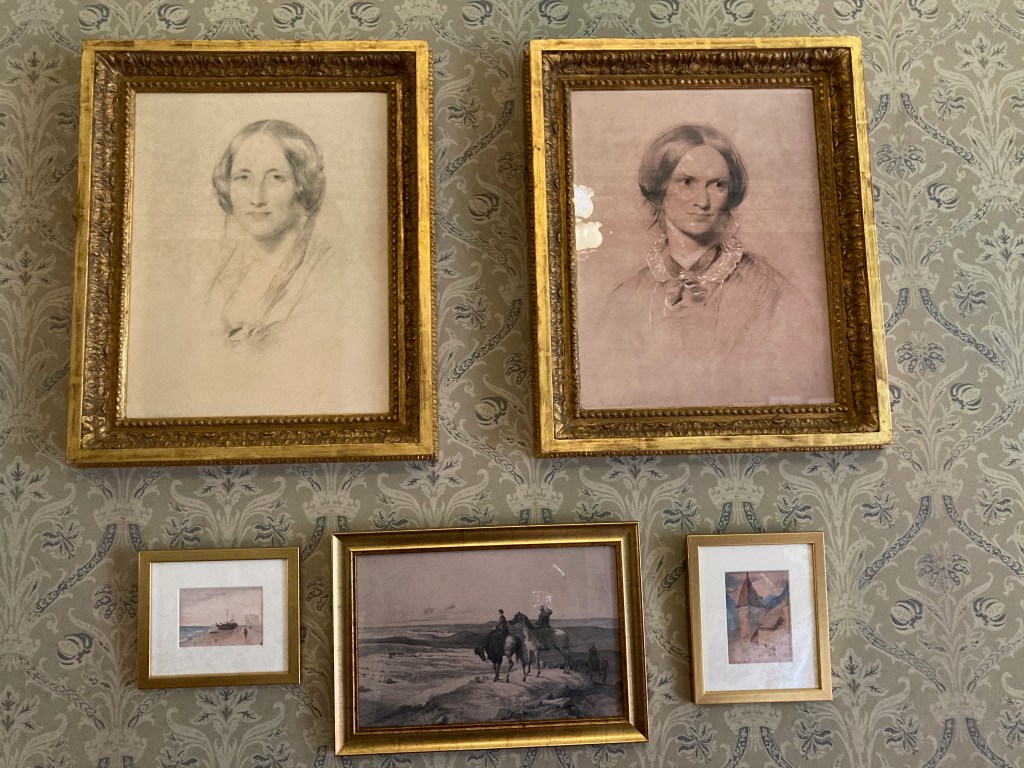
Elizabeth Gaskell (picture top left) and Charlotte Brontë (picture top right)
Charlotte Brontë, who visited the house three times between 1851 and 1854, described it as “a large, cheerful, airy house, quite out of Manchester smoke”. On one occasion, the meek Brontë even hid behind the curtains in Gaskells’ drawing room as she was too shy to meet the other guests.
Visitors to the house during Elizabeth Gaskell’s lifetime included Charles Dickens, who, on one occasion in 1852, made an impromptu visit to the house, along with his wife at 10.00am, much to the dismay of Elizabeth, who mentioned it to be “far too early”, John Ruskin, Harriet Beecher Stowe, American writer Charles Eliot Norton and conductor Charles Hallé.
The house has twenty rooms and there is now a café in the basement (previously the accommodation for the domestic staff including a cook, several maids, a handyman for outdoor work, as well as a washerwoman and a seamstress). In 1850 the rent was considered as very expensive at £150 per annum. William Gaskell was a member of Portico Library and also the Reverend at Cross Street Chapel.
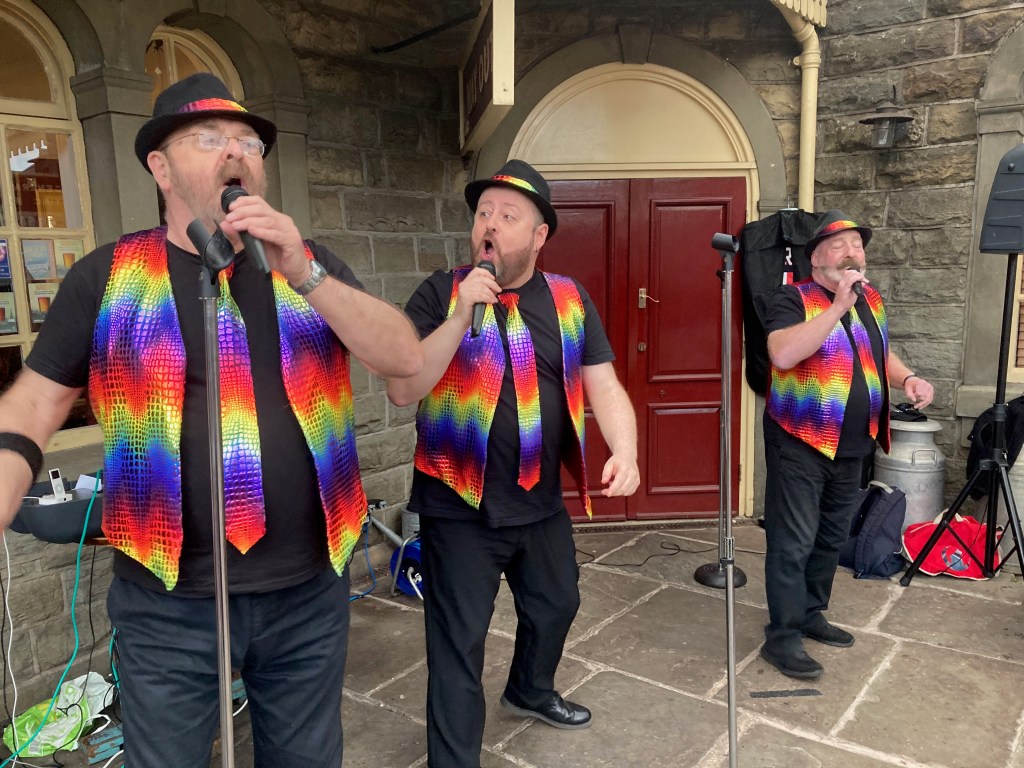
For the second time the East Lancashire Railway became the “Bury Pride Rainbow Train” to celebrate Pride in Bury.
Members of Out In The City joined people from Out on Sunday, Out In The Valley, the Bury LGBTQI+ Forum and others to board the steam train from Bury to Rawtenstall.
The event started with goody bags being distributed at the station and entertainment with a samba band.
Wolf kept us entertained when we arrived at Rawtenstall performing “Do The Locomotion” amongst other songs.
In 1990, the United Nations General Assembly designated 1 October as The International Day of Older Persons.
Did you know?
The composition of the world population has changed dramatically in recent decades. Between 1950 and 2010, life expectancy worldwide rose from 46 to 68 years.
Over the next three decades, the number of older persons worldwide is projected to more than double, reaching more than 1.5 billion persons in 2050 and 80% of them will be living in low- and middle-income countries.
Prevalence figures based on a survey of 83,034 people in 57 countries found one in every two people held moderately or highly ageist attitudes (i.e. stereotypes and prejudice).
Activists set to tell their stories at living library event
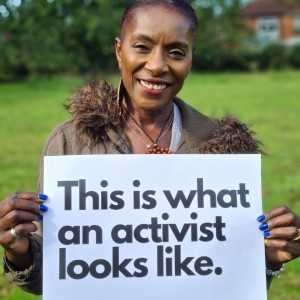
A living library event is being held on Friday, 1 October – to mark the launch of a new campaign that breaks stereotypes on what an activist looks like and showcase how generations are working together to tackle climate change.
The ‘This Is What An Activist Looks Like’ campaign launch coincides with the International Day of Older Persons and the living library event will give people the opportunity to talk to activists from all walks of life to be inspired to make a change in their communities.
All are welcome to the free drop-in event, which is being held at Manchester Central Library between 2.00pm – 3.30pm. The afternoon will also premiere a new campaign video that features eight activists – young and old – uniting in the fight against climate change.
A living library event allows visitors to browse the ‘bookcases’ and choose the ‘story’ they want to listen to, pull up a pew, and have a conversation with their chosen activist, who will be all set to share their personal stories about their activism to inspire all generations to act.
Dorretta Maynard
Among the ‘books’ will be community activist Dorretta Maynard from Trafford, who has spent most of her life volunteering in her community.
She said: “I’m a woman who stands up for her rights, who is calm, approachable and always has open arms. I want to help the next generation rise.”
Chris Barnes from Salford has turned a patch of wasteland in Salford into a blooming community garden, not only to act as a space for people to get together but also to grow their own produce.
The campaign has been commissioned by Greater Manchester Older People’s Network (GMOPN) and supported by the Talking About My Generation team.
We hope to see you there!
The Derek Jarman Pocket Park will also launch on 1 October at Manchester Art Gallery, ahead of the Derek Jarman Protest! exhibition opening on 1 December.


















 Out in the City