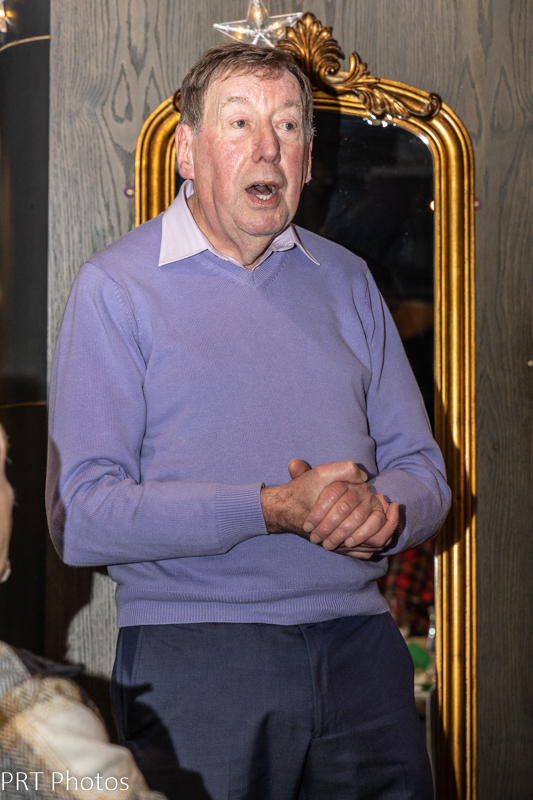
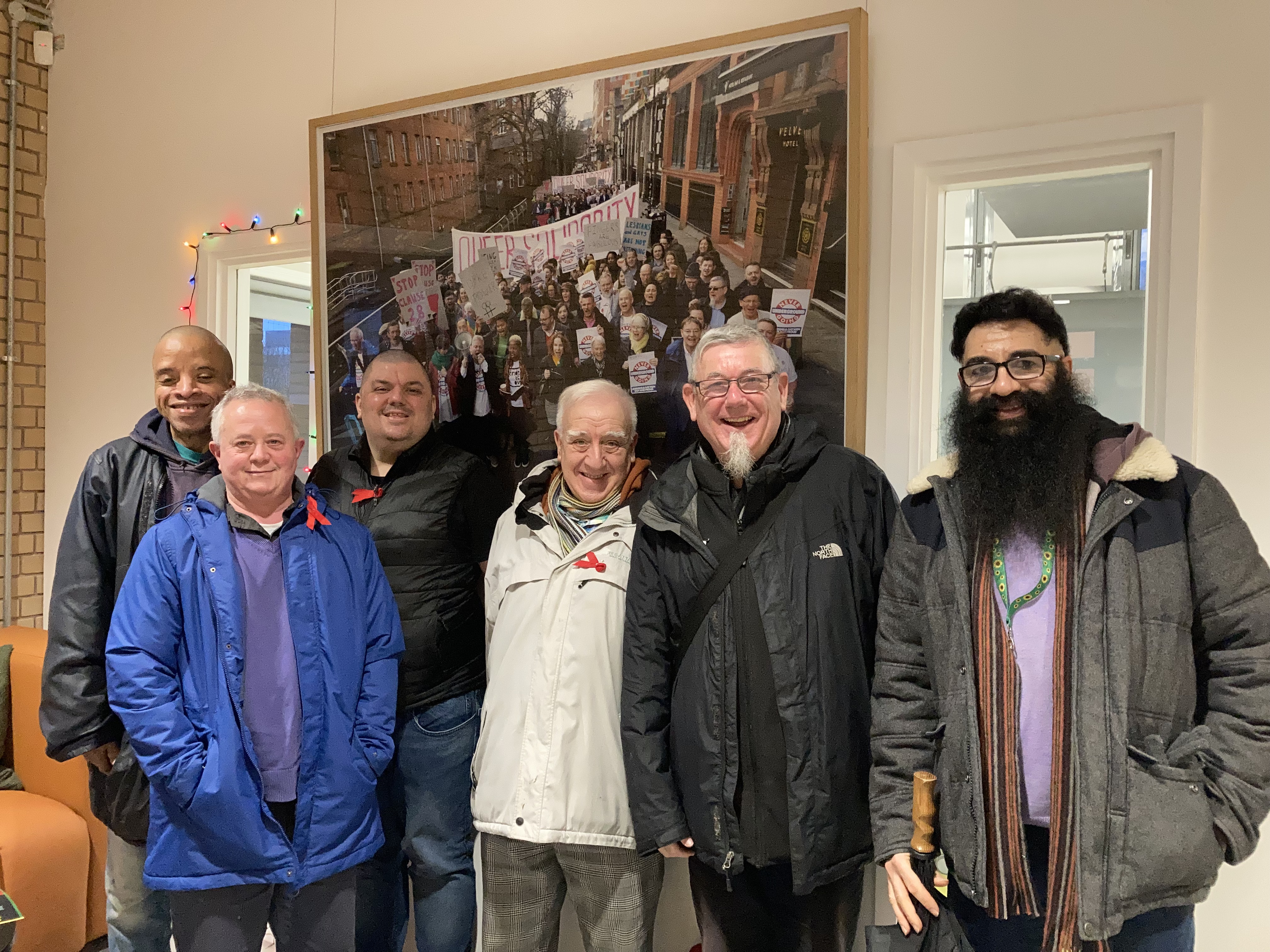
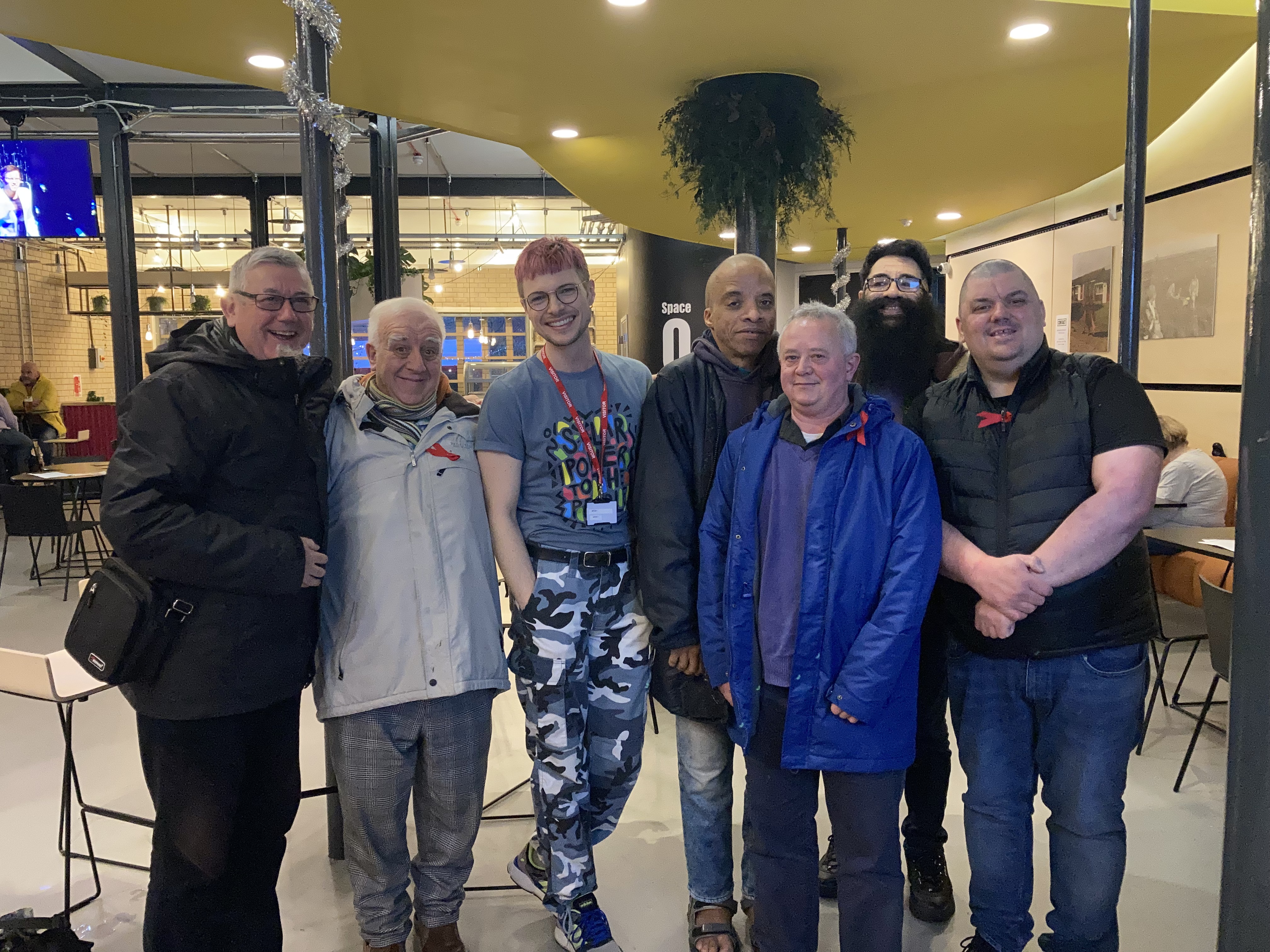
The Out In The City Christmas Party was held on 16 December 2021 at the Village Brassiere at Velvet on Canal Street in the heart of Manchester’s Gay Village. More photos can be seen here.
LGBTQ Timeline
As part of the “100” series, the BBC have created a timeline of LGBTQ+ stories and events within the context of the BBC broadcasts. It’s a long read, but very interesting and can be accessed here or via the Timeline drop down menu on the main page.
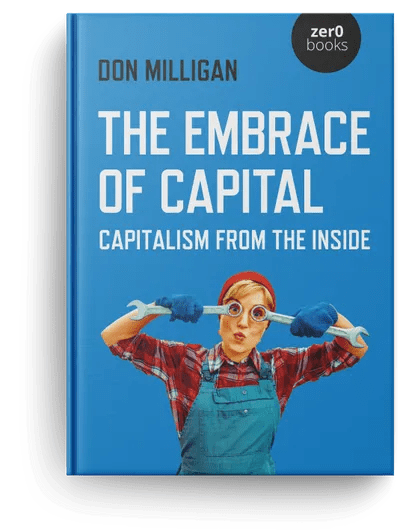
The Embrace of Capital
A member of Out In The City, Don Milligan, has written a thought provoking and provocative analysis of communism, from the point of view of a communist.
Don writes: “The “spectre of communism” which Karl Marx confidently evoked in 1848 is now nothing more than a ghostly and ghastly nightmare, without form or substance. This is because working people have developed a love-hate relationship with capitalism. They hate insecurity, inequality, and greed, and love civic and political freedom. They love mass consumption, and accept the logic of commerce.
Barreling along through wars, revolutions, epidemics, and crises of all sorts, working people in their millions have consistently dumfounded and dismayed the left, by their refusal to countenance any alternative to the capitalist mode of life. We have to ask: Is it possible to reverse this reality, and once again talk of the necessity of communism?”
Another member of Out In The City, Bill Drayton, is organising a fundraiser for the relatives of his partner, Kim. The supertyphoon, Odette, has destroyed buildings and made many people homeless.
More details can be found here. Please consider a donation.
Queer Britain is a charity working to establish the UK’s first national LGBTQ+ museum, a place as exciting as the people, stories and ideas it explores and celebrates. It will be an essential place for all regardless of sexuality or gender identity, to find out about the culture they have been born into, have chosen or seek to understand. It will help complete the Nation’s family tree.
It is important because queer people have impacted every part of culture, yet all too often their lives have been written in the margins of history books. Valuable stories and artefacts are being lost. Once gone, they may never be recovered. These deserve a dedicated space to be preserved, explored and celebrated. Queer Britain will put this centre stage.
Queer Britain has teamed up with wine brand Madame F to launch The Queer Britain Madame F Award. This year’s theme is Queer Creativity.
Entrants sent in illustrations, paintings, drawings and photographs that celebrate the theme of Queer Creativity, along with a statement explaining what that means to them. There are three cash prizes:
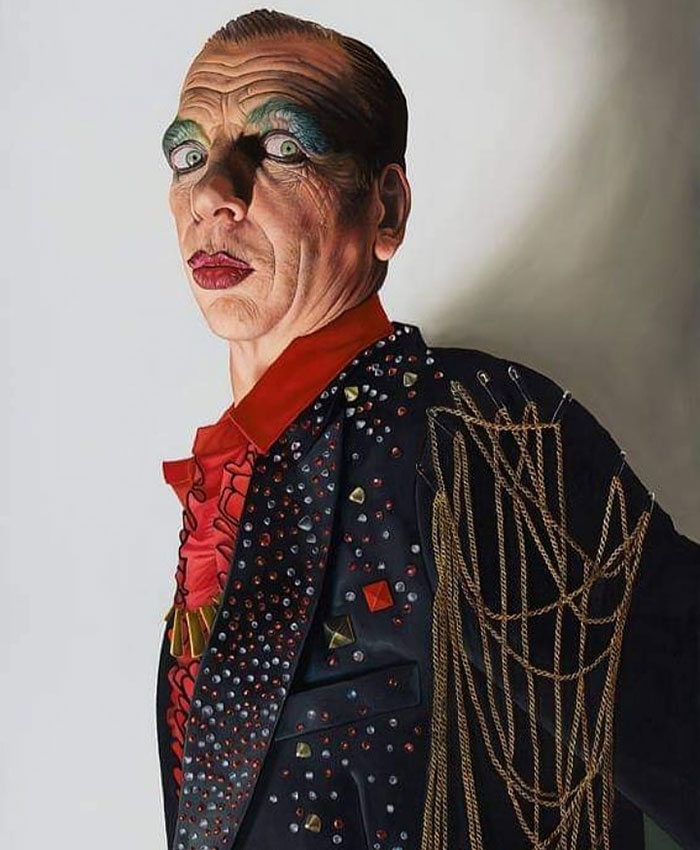
First Prize £1500 Awarded to Sadie Lee
“My paintings are realistic renderings of real people who sit for me. Frequently drawn from Queer communities, they depict and celebrate queer otherness and focus on the fabulous, the invisible, the marginalised and those who wear their identity on their sleeve. My submission is a painting of the artist David Hoyle. Regarded by many as Queer Royalty, David’s work often highlights inequalities and can be at once uplifting, challenging, euphoric and uncomfortable. As in all my work, the painting centres the subject from their perspective and the concept was developed through discussion and mutual input. In that sense I see my paintings as collaborations with my sitters.”
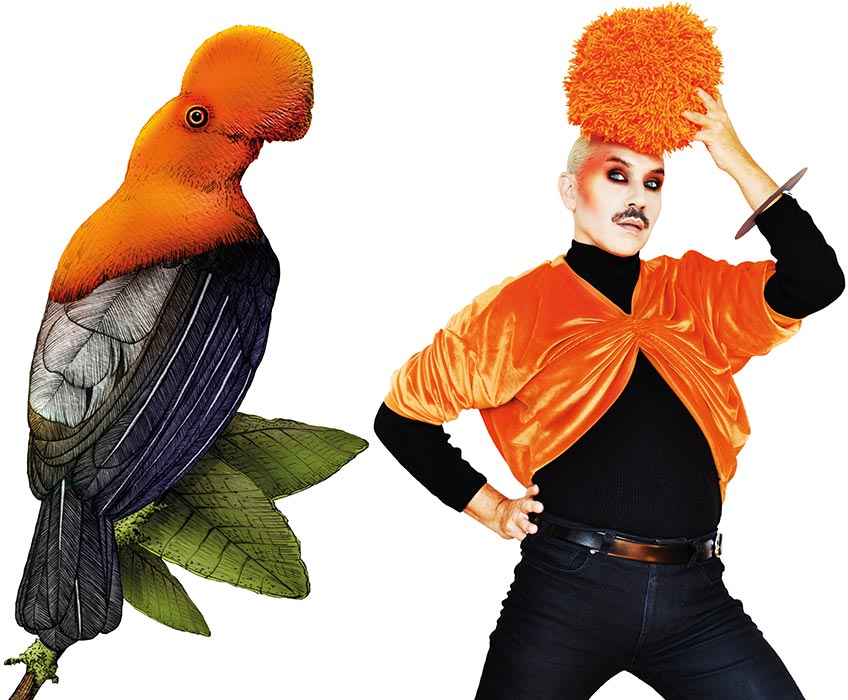
Second prize £1000 awarded to Paul Harfleet
This piece is a component of Birds Can Fly, a body of work by Paul Harfleet. He studies the birds he draws and then using his own wardrobe, styling and make-up skills, ‘gently references’ the birds he studies. This body of work celebrates a life-long love of ornithology and is a queer exploration that delves into the politics of ornithology. Birds have been largely categorised by straight white European zoologists, indigenous names and knowledge lost and side-lined. Paul playfully and subtly echoes the plumage and demeanour of the birds, and celebrates the connection between the frequent flamboyance of male birds and the connection to drag.
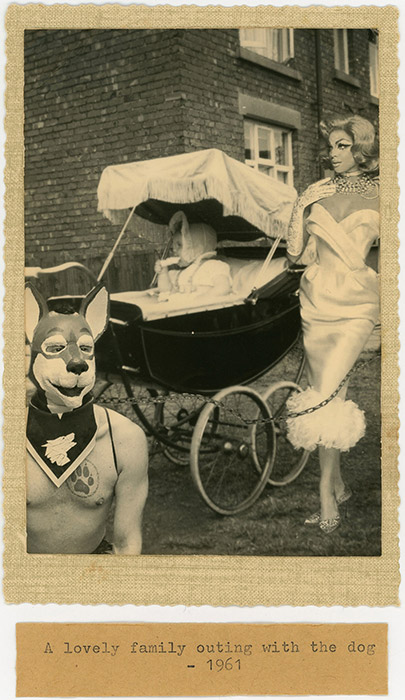
Third prize £500 awarded to Nathan Johnson
“I have been fascinated by incorporating LGBT politics and historical archives together to create fictional narratives that influence our perception of queer identity within the public sphere. I decided to shift my attention to more personal forms of archives such as family photo albums. This resonated with me as a member of the gay community who envisioned how my families social and political views would have evolved if they had LGBT influences in their formative years. I also speculated over the influence family photo albums have on the idealisation of heteronormativity and the nuclear family. This image taken from my most current project, “Our Kodak Moment” delves into the heteronormative environment of family photography and the influence photo albums can have on our perceptions of the nuclear family through the rose-tinted lens of the past. With the incorporation of both modern queer icons and vintage photographs, LGBT representation is brought to the forefront in this reimagining of the idyllic family utopia.”
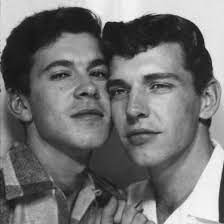
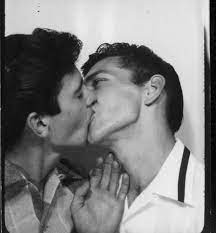
1950s gay couple
These days, most people wouldn’t think twice if they saw a gay couple showing affection for one another in public (well at least in certain areas). But that wasn’t always the case.
These pictures were taken inside a photo booth in 1953, during a time when police used to target gays and lesbians for being “sexual deviants.” Had these two young men been caught, they likely would have been arrested and thrown in jail.
The photo was once owned by J J Belanger, who is featured on the right-hand side of the picture. Belanger was born in Edmonton, Canada in 1925, and served in the Royal Canadian Air Force from 1942 to 1944.
When he was in his 20s, Belanger moved to California. In the early 1950s, he was one of the original members of the Mattachine Society, one of the first LGBT organisations in the United States.
In addition to that, Belanger was the Los Angeles coordinator of the Eulenspiegel Society, oldest and largest BDSM education and support group in the United States, in the 1970s. In the 1980s, he was involved with the San Francisco chapter of the Stonewall Gay Democratic Club, as well as Project Inform and the Quarantine Fighter’s Group.
Throughout his lifetime, Belanger was a devoted collector of historical LGBT artefacts and materials. The two photographs of him are now part of the ONE National Gay & Lesbian Archives at the University of Southern California Libraries, the largest repository of LGBT materials in the world, along with several of Belanger’s letters, notebooks, and audio recordings.
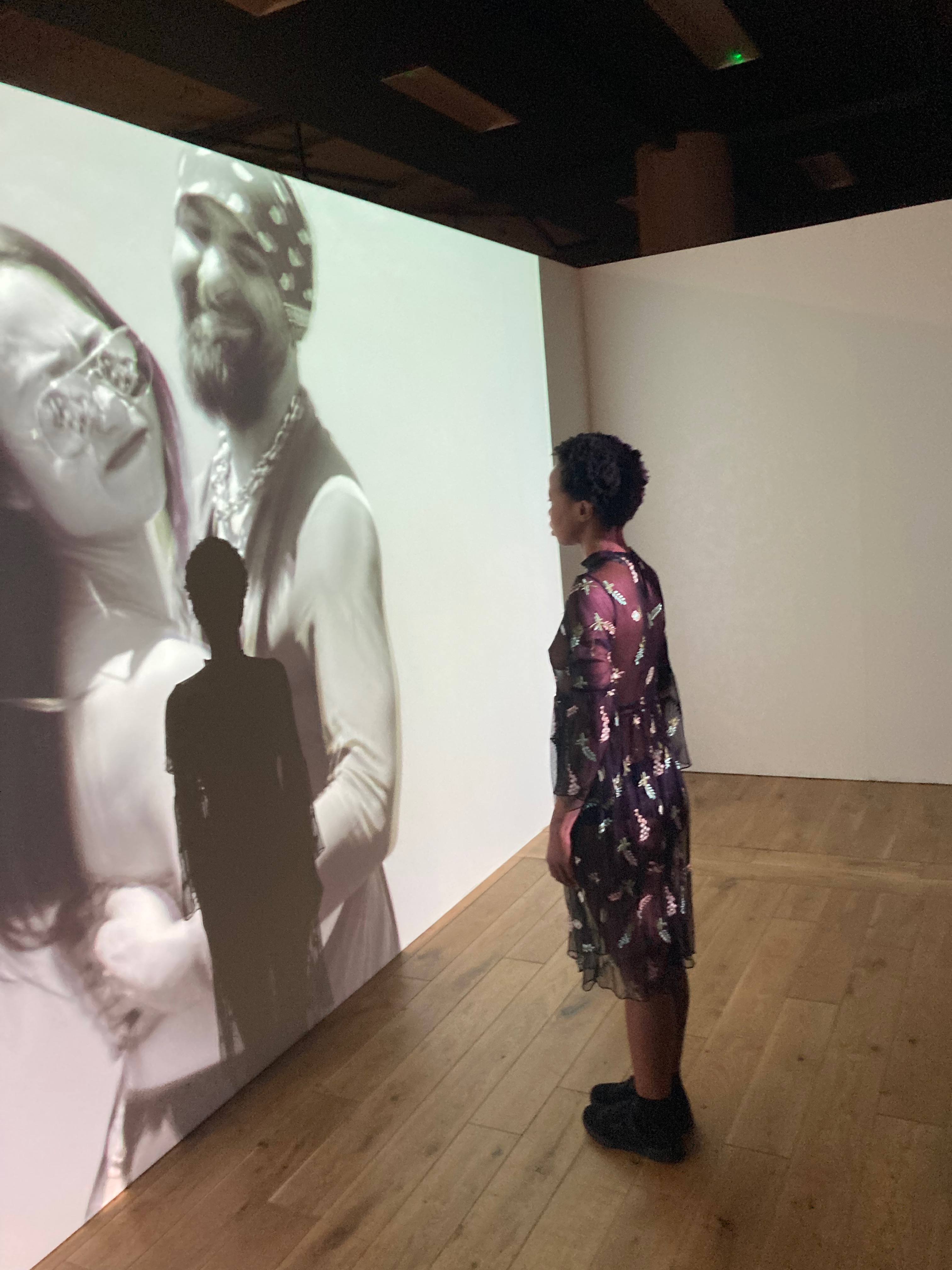
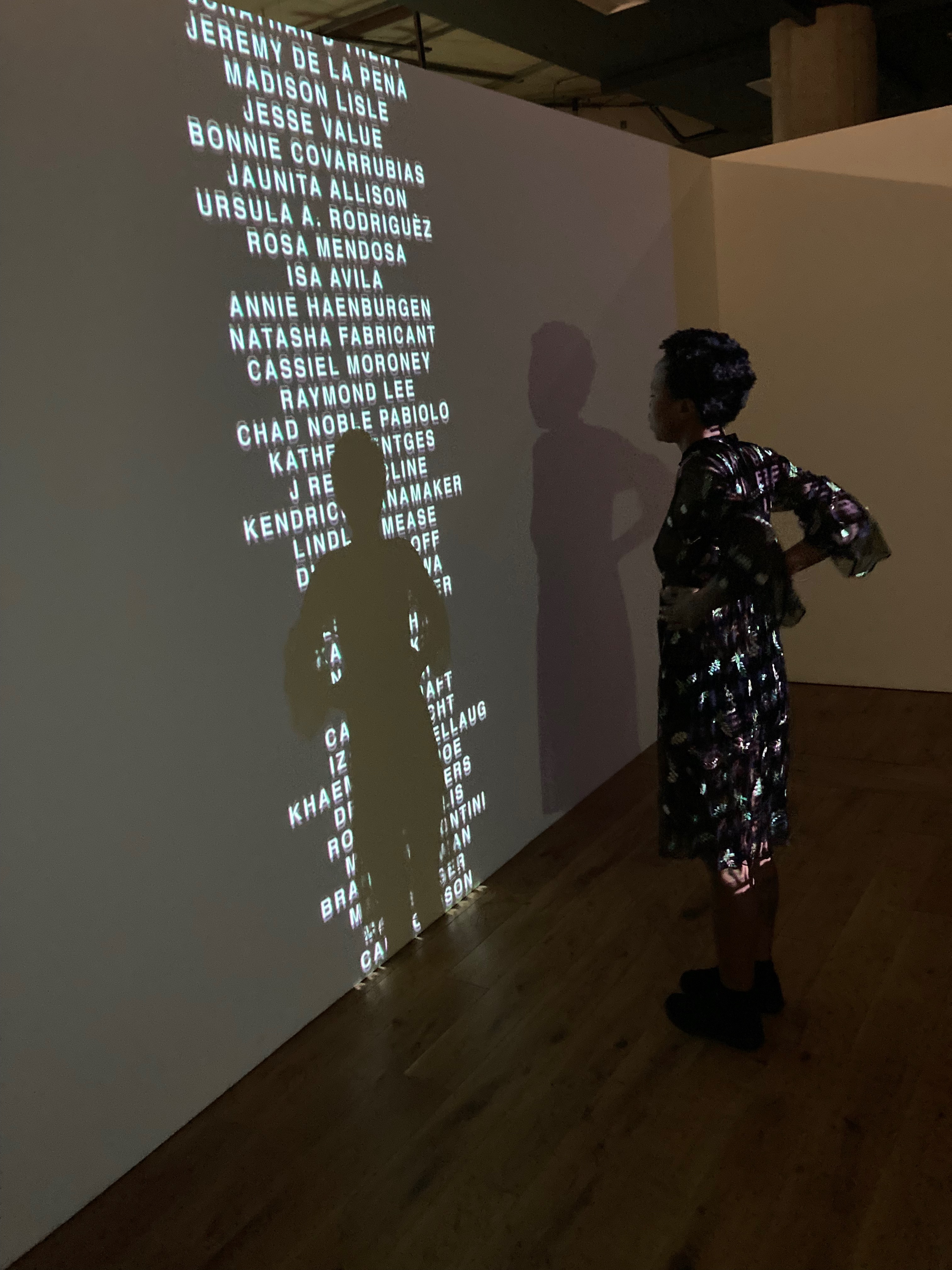
Human Measure is the debut UK solo exhibition by internationally renowned transgender artist Cassils.
Cassils is a visual artist who makes their own body the material of their performances. Cassils transforms their body through training, nutrition and the acquisition of athletic skills, and then defiantly exposes their body. The artist knows this will solicit lurid and intrusive gazes, but Cassils work incites voyeurism in order to subvert it.
Human Measure presents a 10-year survey of screen and print-based work at a critical moment for advocacy.
Working in live performance, sculpture, photography, sound design and film, Cassils contemplates LGBTQI+ violence, representation, struggle and power.
Cassils sent a personal message: “The work in this exhibition goes beyond the logic of identity politics, beyond the meat of my own body.
I have been working towards the revolutionary project of anti-patriarchal, anti-racist and social transformation in my own small/humble way.
Everyone is welcome with open arms – with special love and mindfulness towards our trans/GNC/non-binary folks.
To those of us deemed “marginalised” including but not limited to those without citizenship, indigenous peoples, non-white people, non-cis male people, our elders, our fairies and grand dukes – we are so much more. This work is for you.”
Human Musings was the one night only performative response to Human Measure. Maz Hedgehog, writer and spoken word poet together with mandla rae, an agender queer Zimbabwean writer and performer weaved in and amongst the gallery exhibition.
We listened and followed these different wordsmiths gaze upon and respond to the pieces of art. It was an interesting and thought provoking experience.
The veteran gay and human rights activist Tony Openshaw talks with Don Milligan about his new book ‘The Embrace of Capital – Capitalism from the inside’ due to come out in April 2022. This fascinating conversation focuses on Don’s life negotiating his gay identity within various left movements that he has been active in over a number of decades.
A synopsis of The Embrace Of Capital:
The “spectre of communism” which Karl Marx confidently evoked in 1848 is now nothing more than a ghostly and ghastly nightmare, without form or substance. This is because working people have developed a love-hate relationship with capitalism. They hate insecurity, inequality, and greed, and love civic and political freedom. They love mass consumption, and accept the logic of commerce. Barreling along through wars, revolutions, epidemics, and crises of all sorts, working people in their millions have consistently dumbfounded and dismayed the left, by their refusal to countenance any alternative to the capitalist mode of life. We have to ask: Is it possible to reverse this reality, and once again talk of the necessity of communism?
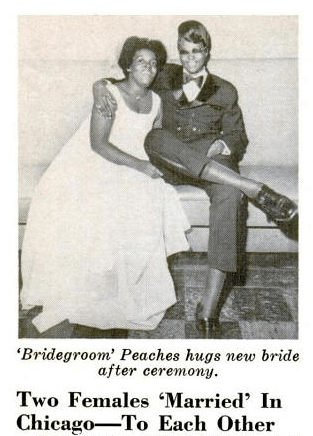
This photo and headline (Two Females ‘Married’ In Chicago – To Each Other) accompanied an article from the 15 October 1970 issue of Jet magazine. They reveal that long before the recent struggle for marriage equality began, African American women who love women have engaged with the institution of marriage and have fought to make it their own.
Edna Knowles, on the left, and Peaches Stevens were wed in Liz’s Mark III Lounge, a gay bar on the South Side of Chicago, “before a host of friends and well wishers.” The article ended by noting, “although the duo had a type of ‘marriage license’ in their possession, the state’s official marriage license bureau reported it had no record of their license.” This ending serves to remind Jet readers that Knowles and Stevens’ union was not legitimate in the eyes of the state, as does the use of quotes around the word “married” in the headline.
However, decades prior to this bold public display of queer affection, African American female couples in New York strategised alternative ways to obtain marriage licenses in the 1920s and 30s.
In her book “The Black Lesbian: Times Past – Time Present”, Luvenia Pinson writes: “Marriage ceremonies were held with large wedding parties which included several bridesmaids, attendants, and other wedding party members. Actual marriage licenses were obtained by either masculinising the first name, or having a gay male surrogate obtain the license for the marrying couple. These marriage licenses were placed on file with the New York City Marriage Bureau.”
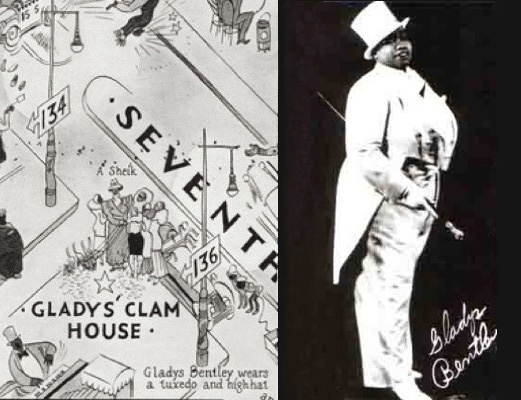
Also during the 1930s, popular performer Gladys Bentley was making a living singing bawdy tunes and playing piano late into the night at various clubs all over New York, including one named after her.
Gladys Bentley
Bentley married her white girlfriend in Atlantic City in a ceremony to which she invited friends in the entertainment industry.
Eric Garber in the book “Gladys Bentley: The Bulldagger Who Sang the Blues” states: “Columnist Louis Sobol remembered Bentley coming over to his table one night and whispering, ‘I’m getting married tomorrow and you’re invited.’ When Sobol asked who the lucky man was to be, she giggled and replied, ‘Man? Why boy you’re crazy. I’m marryin’ ——’ and she named another woman singer.”
These examples show some of the various ways African American women have created public rituals to express their same sex relationships and have therefore insisted on their rights to full citizenship, many decades prior to the current struggle for marriage equality.
World AIDS Day 2021
This year marks 40 years of the HIV response. On 5 June 1981 the Centers for Disease Control in Atlanta, Georgia published a report of five cases of a rare form of pneumonia amongst previously healthy young men. This unexplained illness later became known as Acquired Immuno-Deficiency Syndrome (AIDS).
The first observance of World AIDS Day was on 1 December 1988, marked by the World Health Organisation as a global public health issue. On that day each year there are campaigns raising awareness of the AIDS pandemic caused by the spread of HIV infection, and the day is also dedicated to mourn those who have died.
As of 2020, AIDS has killed 36.3 million people and an estimated 37.7 million people are living with HIV.
Whilst medical treatment has developed so much that an HIV diagnosis no longer means a death sentence, there’s still work to do in raising awareness and understanding of HIV, fighting stigma and discrimination and inspiring people living with HIV to live healthy and confident lives.
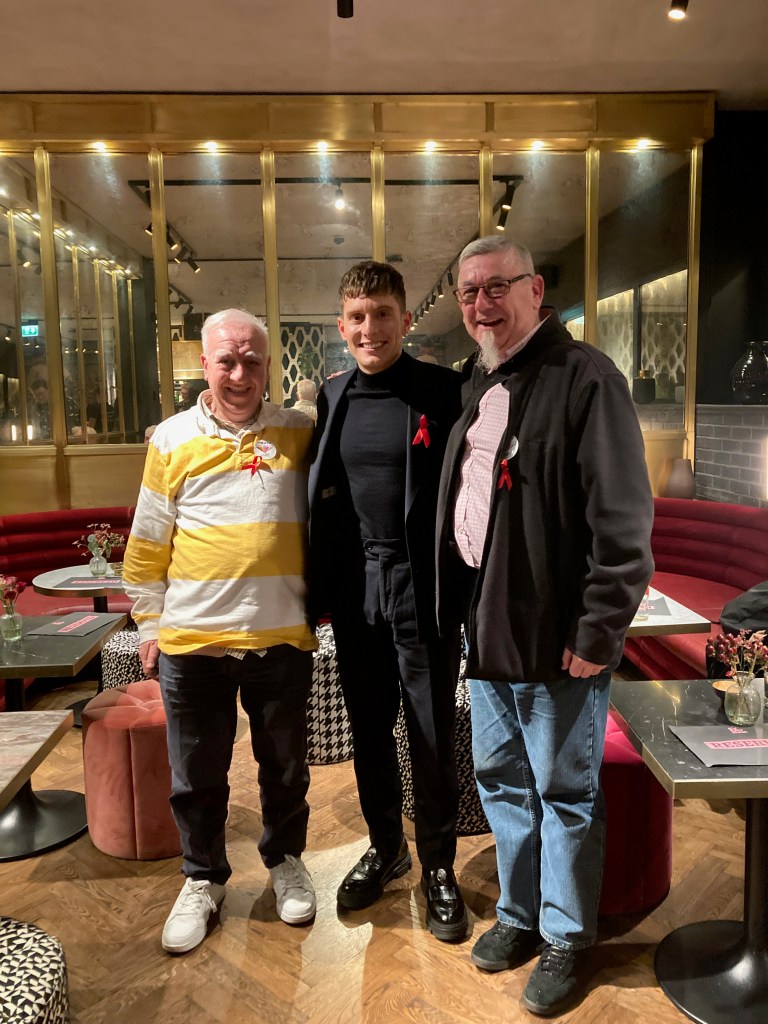
Norman Goodman, Riyadh Khalaf and Tony Openshaw at the launch event of “Positive”
In Manchester this year, there were a number of events ranging from distributing red ribbons and leaflets to a candlelit vigil, three part documentary series “Positive” with a community reflection group, the launch of the Derek Jarman exhibition “Protest!” at Manchester Art Gallery, the play “First Time” by Nathaniel Hall at the Contact Theatre and the exhibition / event – “To Whom It May Concern” at Seesawspace.
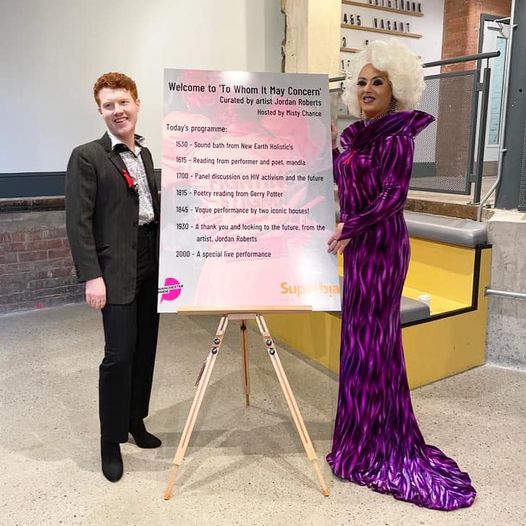
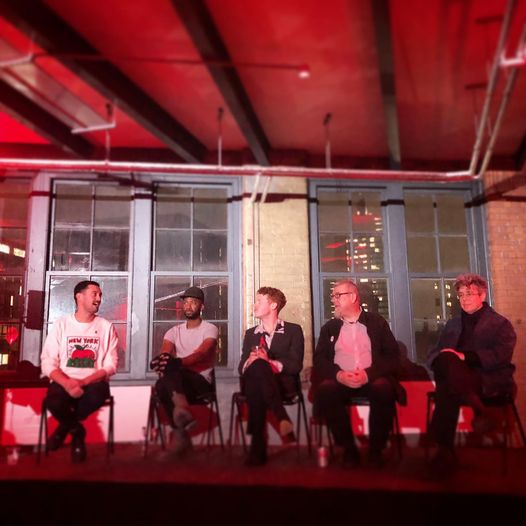
I attended most of these excellent events, but my personal highlight was the last event organised by Jordan Roberts. It featured photographic exhibition, films, reading by mandla rae, panel conversation on HIV activism including ACT UP Manchester and ACT UP New York, poetry reading by Gerry Potter, vogue performance from House of Blaque and artist talk with Jordan about the event and future projects.
Jordan Roberts and Misty Chance
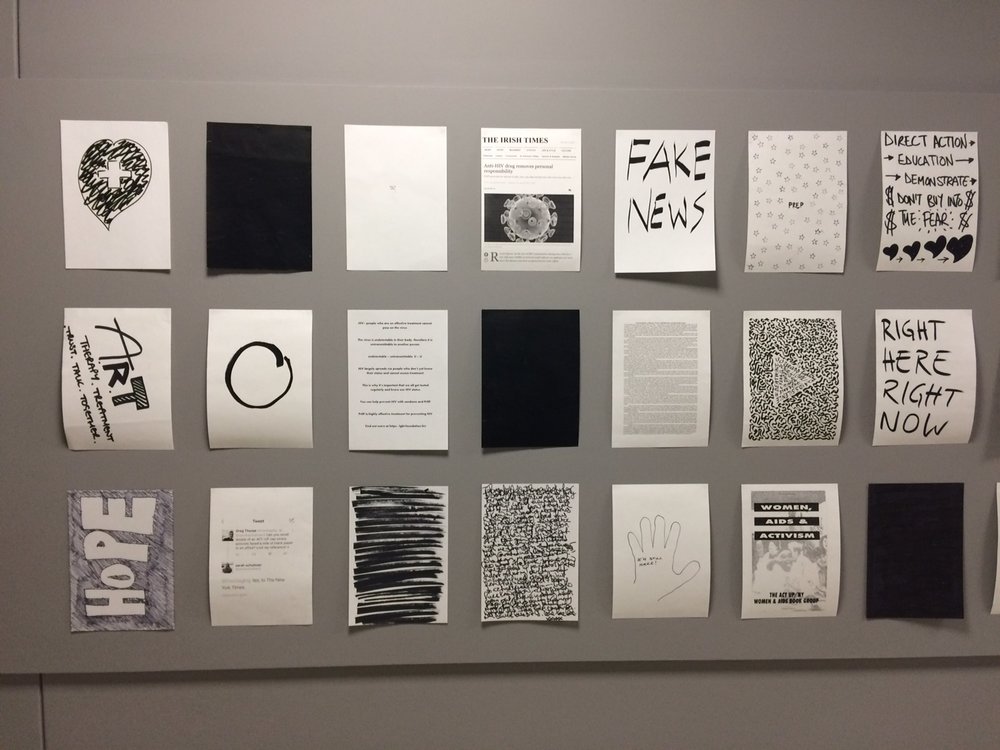
Also included was ‘A Mile of Black Paper’ by Greg Thorpe. In 1987 the New York Times installed its first fax machine. The direct action group ACT UP (‘AIDS Coalition To Unleash Power’) were effective, wildly inventive, tech savvy activists. They faxed a mile of black paper to the newspaper office, using up all the expensive ink and rendering the machine useless. This was one of many activist ‘zaps’ used to protest and draw attention to the AIDS epidemic.
‘A Mile of Black Paper’ is a collaborative artwork and teaching tool inspired by this action. The work inverts the original intention to shut down communication and replaces it with a forum for expression – a place to talk, write, learn and make work about HIV and AIDS.
Mile of Black Paper
One person described the event: “Beautiful conversations between the panel and the audience with so much generosity of sharing of experience and solidarity and support in the room. I felt like I was in exactly the right place with the right people, remembering those we have all lost supporting each other best we can and trying to find future solutions.”
This World AIDS Day, I laughed, I cried, but most of all I felt inspired.
Panel discussion on HIV activism
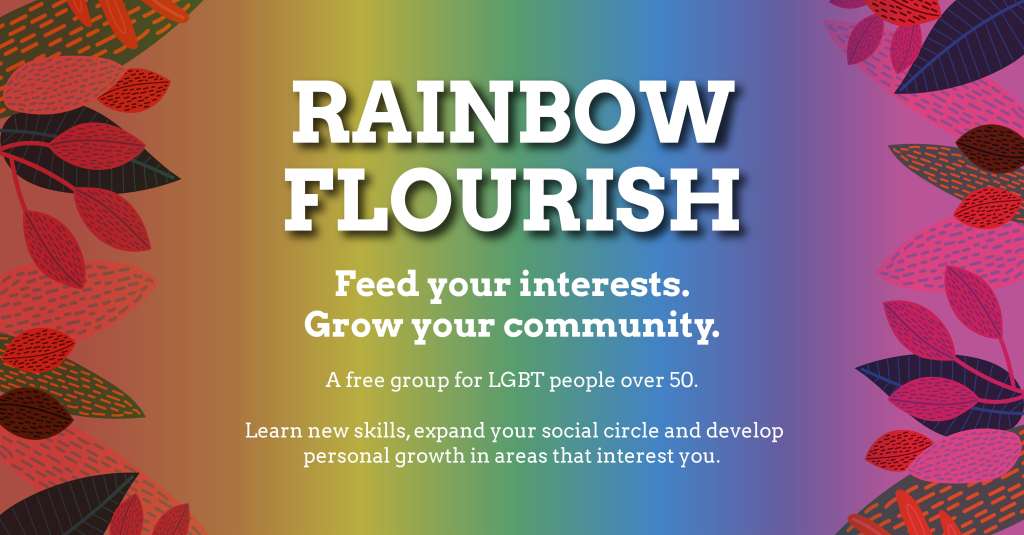
Rainbow Flourish
Popping up in Wigan, Trafford, Manchester South (Moss Side, Rusholme and Hulme) and online, Rainbow Flourish is a free monthly social group run by LGBT Foundation’s Pride in Ageing programme for LGBT people over 50.
Come along and join in with our monthly activities or relax with a cup of tea and some cake while meeting other LGBT people in your local community. We’ve set up Rainbow Flourish as a place to learn new skills and develop personal growth in areas that interest you.
Find out more about our upcoming sessions and book a place at lgbt.foundation/prideinageing/events Rainbow Flourish is run by Pride in Ageing at LGBT Foundation and is supported by Ambition For Ageing and the Older People’s Fund.
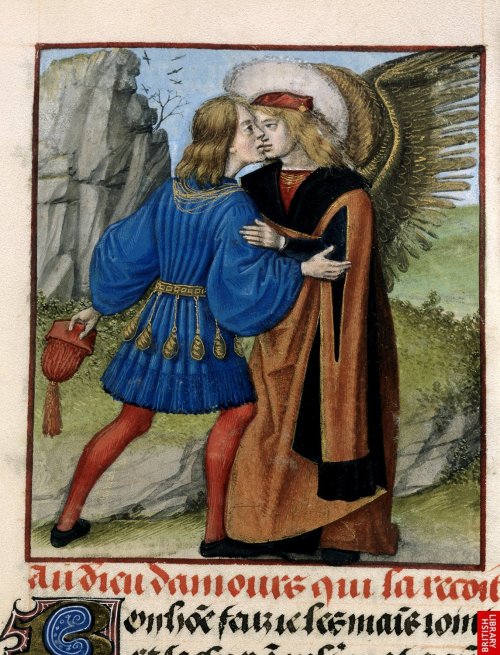
Amour kissing the Lover, Detail of a miniature from “Roman de la Rose” by Guillaume de Lorris and Jean de Meun, c.1490-1500
The Derek Jarman Protest! retrospective opened at Manchester Art Gallery on 2 December, and members of Out In The City formed an orderly queue to view the exhibition.
We had dined earlier at the China Buffet, just two minutes walk from the Art Gallery. It’s a simple all-you-can-eat hangout offering Chinese dim sum, noodles, seafood and fortune cookies and is great value for money.
The exhibition had been postponed and unfortunately the Derek Jarman Pocket Park – a new community garden space designed and planted by green-fingered LGBT+ people over 50 was not ready due to the corona virus and the weather. However you can download the zine here.
I’m sure we will revisit at some time to engage in a planned workshop or exhibition tour with Jez Dolan, the artist in residence.
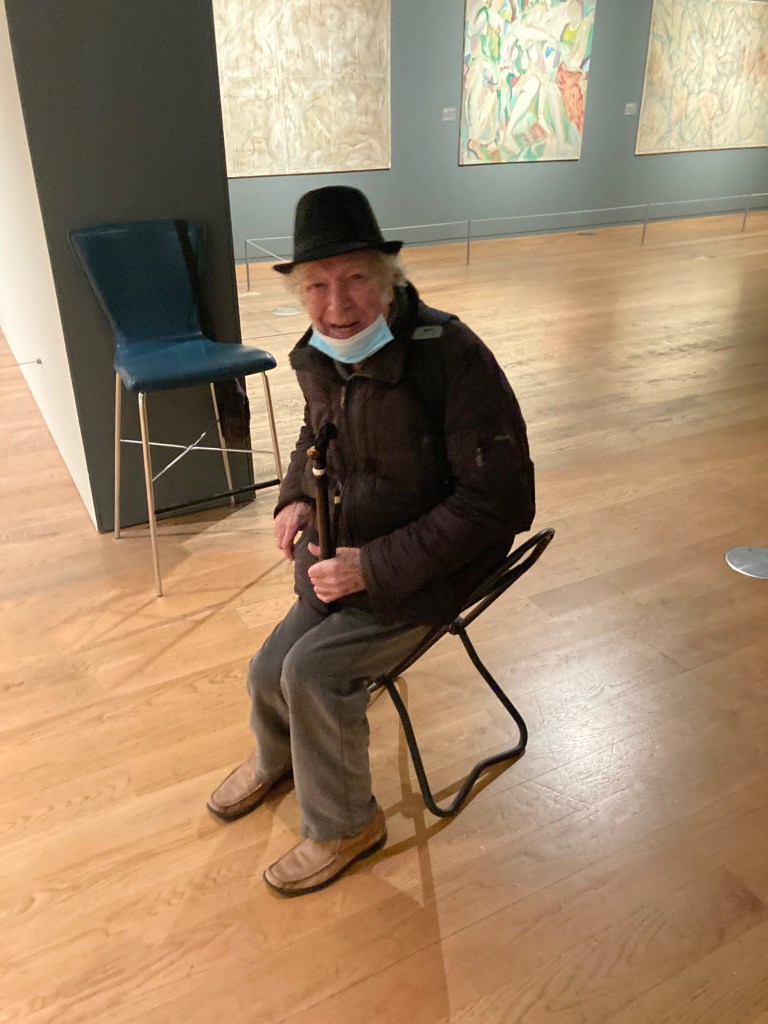
Is this an exhibit? Walter having a bit of a sit down.
The exhibition focused on the diverse strands of Jarman’s practice as a painter, film maker, writer, set-designer, gardener and political activist. This is the first time that all of these strands of his practice were brought together in over 20 years; many of which have never been seen in public before.
Protest! captures Jarman’s engagement with both art and society, as well as his contemporary concerns with political protest and personal freedoms arising from the AIDS crisis.
Almost 30 years on from Derek Jarman’s landmark “Queer” exhibition at Manchester Art Gallery, the word “queer” is becoming more mainstream. We have “Queer Lit” bookshop in Manchester and the Sunday Boys recent concert at Manchester Cathedral was entitled “A Very Queer Christmas”. The priest introducing the event started: “Welcome to queers and non-queers … “.
But the word “queer” is polarising. For some LGBT(Q)+ individuals, it’s a reclaimed badge of honour, a political statement, a declaration of attraction without binaries. For others, it’s still a homophobic slur, a weaponised word that can reopen years-old wounds.
When asked what “queer” means on an American social news website, there were a variety of responses. Here’s a selection:
“It meant I was about to get my butt beat by a homophobe. I despise that word …”
“For me, it’s always meant bullying. Thankfully, I was never beaten up by someone saying it, but like the f-word, it always cut me like a knife whenever I heard it.”
“I guess it’s just all-encompassing. When I tried coming out to my brother when I was a teen, he asked, ‘You think you may be queer?’ It was the first time I heard the word used in a non-derogatory way.”
“Not straight and/or not cis”
“Queer to me means anyone who doesn’t identify as straight.”
“Queer to me means, like, non-specifically sexually and gender fluid, an all-encompassing term that doesn’t keep someone stuck in definite boundaries … When someone tries to use it as a slur, I genuinely don’t have a reaction to it.”
“I am not queer; I’m gay. Queer is an offensive word. I dislike how academics and non-homosexuals use it all the time, when it seems that a lot of gay men aren’t down with reclaiming it. If someone describes themselves as queer, I assume they are heterosexual but want to seem interesting.”
“Queer to me, denotes ‘peculiarity.’”
“I’ve always used ‘queer’ in the ‘take back the word’ sense. Also, I refer to myself as queer when I’m being very specific about how I label my identity. Although I identify as a gay man in a general sense, if I got very specific about what is going on inside myself. ‘Queer’ is a more accurate term, i.e. how I feel about my gender and who I’m attracted to.”
Does it matter who uses the word? Has the word “queer” been appropriated by heteronormative people? What do you think?
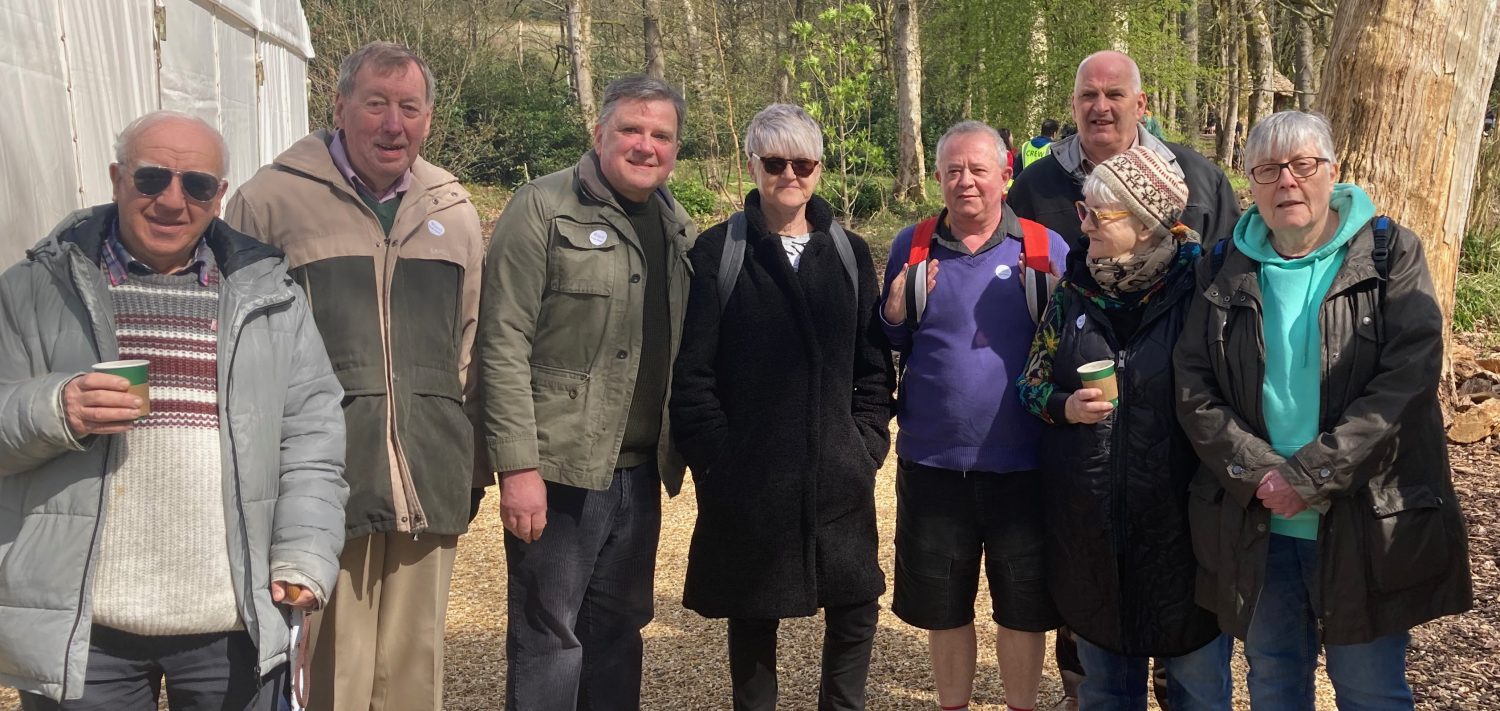
Out In The City at the Contact TheatreOut In The City members with Nathaniel Hall after seeing “First Time” at the Contact Theatre






 Out in the City