Great Western Railway honours Alan Turing … Monkeypox … Introducing The Proud Place … Conversion Therapy Ban Debate

News

GWR honours WWII codebreaker Alan Turing and unveils new ‘Trainbow’ livery
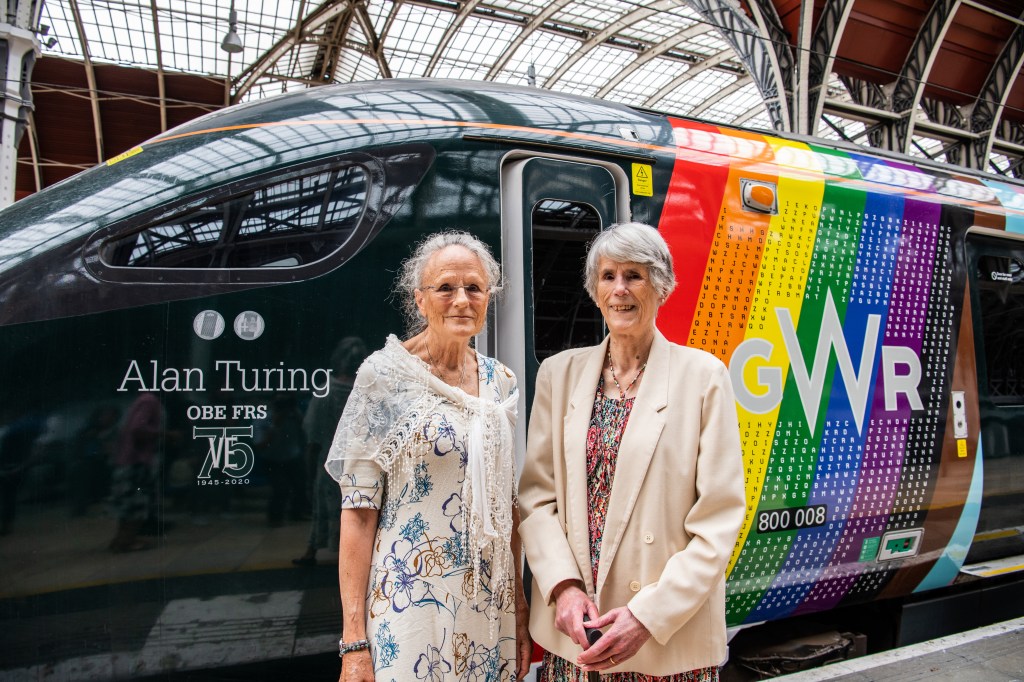
Alan’s nieces Janet Robinson, left, and Inagh Payne

Great Western Railway (GWR) has honoured World War Two codebreaker Alan Turing by including his name on its popular ‘Trainbow’ Intercity Express Train.

Members of Alan’s family officially named the train at London Paddington station on Thursday 26 May. The ceremony also saw the unveiling of GWR’s new ‘Trainbow’ livery celebrating the LGBTQ+ community.

Alan famously led a team in ‘Hut 8’ at the Government Code and Cypher School (GC&CS) at Bletchley Park, Britain’s codebreaking centre during the war.

In 1942 he and his team cracked the vitally important and most difficult German Naval Enigma. His work in the field of computer science was groundbreaking and paved the way for modern computing.

Alan is also an admired role model within the LGBTQ+ community and his legacy has helped change social attitudes in Britain.

Although laws during the 1950s made it illegal for him to be openly gay, Alan did not shy away from his sexuality. He was arrested for gross indecency which resulted in a sentence of chemical castration.

Two years later Alan died of cyanide poisoning. Following the launch of an internet campaign in 2009, he was granted a posthumous royal pardon four years later. A subsequent legal amendment, known as ‘Turing’s Law’, pardoned 65,000 other convicted gay and bisexual men.

Celebrating the new Trainbow livery and GWR’s support for the LGBTQ+ community

‘Trainbow’ was first unveiled in 2018 to support Pride events across the network and demonstrate GWR’s support for the LGBTQ+ community.

Its livery has now been updated to include black, brown, light blue, light pink and white, bringing focus on inclusion for trans individuals, marginalised people of colour and those living with HIV/AIDS.

Intercity Express Train 800008 also pays a nod to the World War Two codebreakers and their mastery of palindromes. And, as you might expect with something related to Alan Turing, there is more to the design of the new livery than first meets the eye.
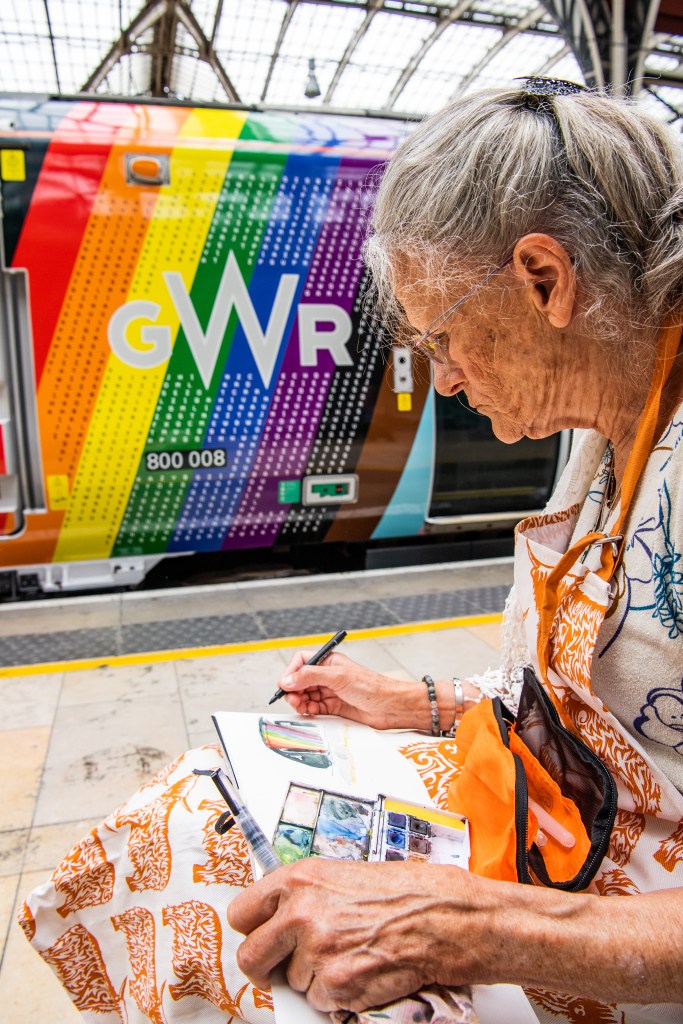
Janet Robinson’s painted sketch of the new livery

Alan’s niece, Inagh Payne, speaking on behalf of the family, said:

“Alan was very special to us and we are so incredibly proud of everything he did. Despite not being fond of neither fuss nor social occasions, he would have been delighted to have a train named after him.

We have our own fond memories of him as a loving and caring uncle and it is wonderful to see this tribute to him, and that he is remembered, and his life celebrated by so many people.”
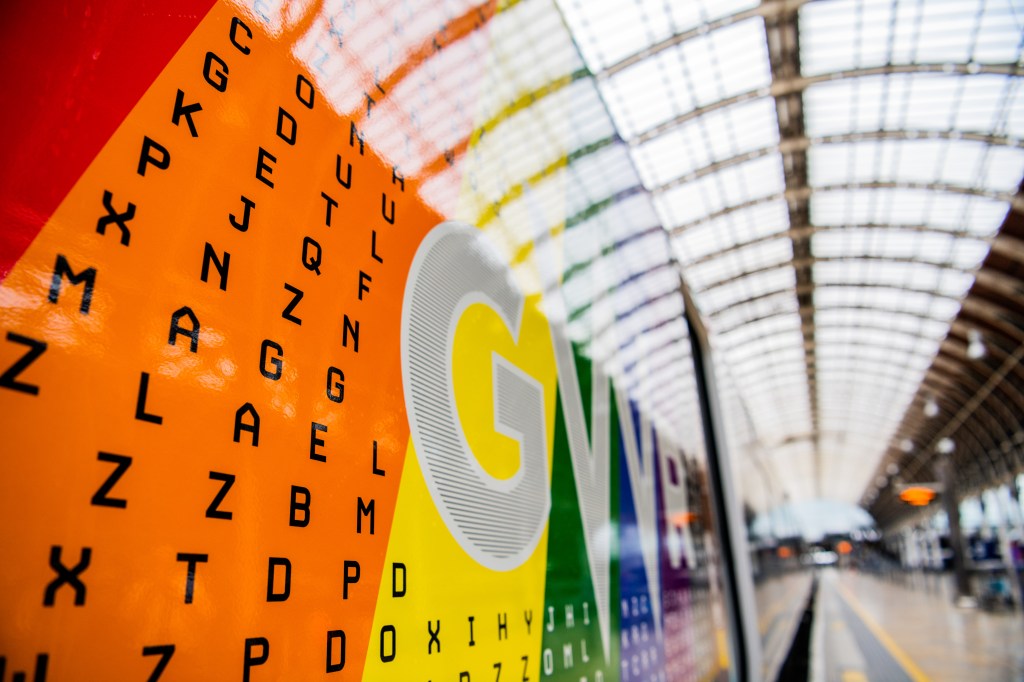
An up-close view of the new livery

GWR Managing Director, Mark Hopwood, said:

“It is an honour for us at GWR to name this Intercity Express Train after Alan Turing as we continue to remember those who gave so much during World War Two.

We at Great Western Railway have a long history of naming trains after Great Westerners, the past and present heroes from across our network.

It is also great to see this fabulous new Trainbow livery, celebrating not only Alan Turing but also the LGBTQ+ community across the GWR and indeed our colleagues within the rail industry.”
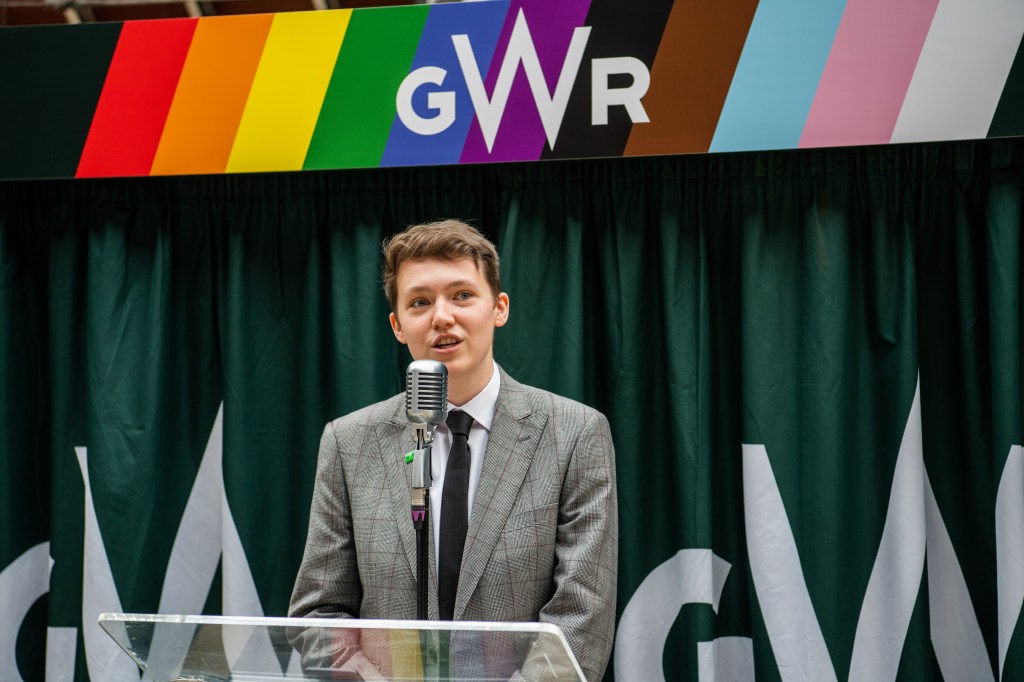
Cllr Dylan Tippetts

Plymouth City Councillor for Compton, Cllr Dylan Tippetts, said:

“Thank you so much to GWR for always standing with the whole LGBTQ+ community and celebrating our diversity; the things that bring us together and not those that divide us.”
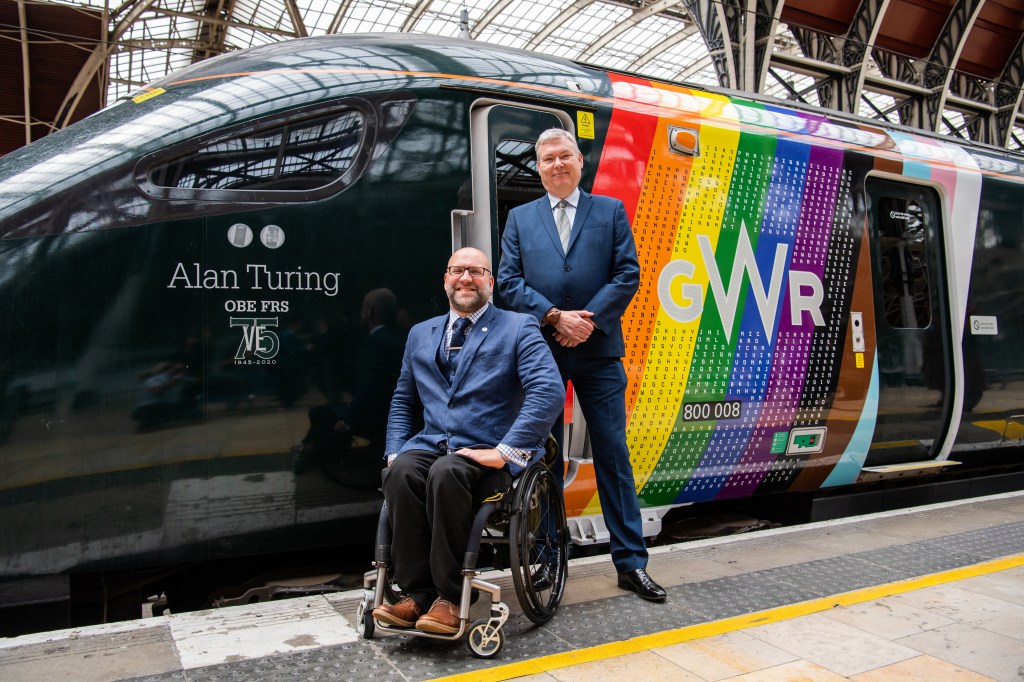
Dr David Abrutat, left, and Dr David Kenyon
(All Pictures by Jack Boskett)

Research Historian at Bletchley Park, Dr David Kenyon, said:

“It gives me great pleasure to add the endorsement of Bletchley Park Trust to the naming of this locomotive. We hope that it will remind travellers of Turing himself, but also of the thousands of others who worked alongside him to bring signals intelligence to Allied commanders and help bring victory in the Second World War.”

GCHQ Historian Dr David Abrutat said:  

“Turing’s scientific genius helped to shorten the war and influence the technology we still use today. Today illustrates his status as one of the most iconic LGBT+ figures in the world.

Turing was embraced for his brilliance and persecuted for being gay. His legacy is a reminder of the value of embracing all aspects of diversity, but also the work we still need to do to become truly inclusive.”

Don’t shun Pride parades because of monkeypox, says WHO

Photo: Shutterstock

Monkeypox is a rare disease that is caused by infection with monkeypox virus.

Monkeypox was first discovered in 1958 when outbreaks of a pox-like disease occurred in monkeys kept for research. The first human case was recorded in 1970 in the Democratic Republic of the Congo (DRC), and since then the infection has been reported in a number of central and western African countries. Most cases are reported from the DRC and Nigeria.

The UK Health Security Agency (UKHSA) has detected 190 cases of monkeypox as of 30 May 2022. The total number confirmed in England is 183. There are currently 4 confirmed cases in Scotland, 2 in Northern Ireland and 1 in Wales.

The number of monkeypox cases around the world continues to rise, prompting an adviser at the World Health Organisation (WHO) to comment on the upcoming Pride season.

So far, gay and bisexual men appear to have been disproportionately impacted by the outbreak. Monkeypox is not regarded as a sexually-transmitted infection, but it can be spread by close, skin-to-skin contact, or via bedding and clothing.

Yesterday, a WHO official said the outbreak should not impact Pride season or put people off from attending parades.

Although the outbreak in some countries has been linked to some festivals, this is not a virus that spreads as easily as Covid.

“It’s important that people who want to go out and celebrate gay pride, LGBTQ+ pride, to continue to go and plan to do so,” said Andy Seale, a strategies adviser in the WHO Department of Global HIV, Hepatitis and Sexually Transmitted Infections Programmes.

“There is no specific transmission route that we need to be worried about,” he said. “It really is connected to the fact there have been a couple of events that have perhaps amplified the current outbreak.”

Seale also wanted to downplay reporting that framed the monkeypox outbreak as a disease impacting just gay men.

“Given this is not a gay disease, the transmission routes are common to everybody,” Seale said. “The advice is pretty much the same for all people.”

Seale said that pride parades are usually outdoors, while monkeypox transmission has more recently been linked to indoor events and nightclubs.

“We don’t see any real reason to be concerned about enhanced likelihood of transmission in those contexts, because the parties that we’ve been referring to have perhaps been more in enclosed spaces,” he said.

At the time of writing, 14 cases of monkeypox have been identified across eight states in the US. Worldwide, monkeypox has been identified in 24 countries outside of West and Central Africa (where cases are normally located).

UK health officials have issued sex advice to those impacted. People who have tested positive for the virus and their close contacts are being told to isolate at home for 21 days.

They should avoid contact with other people until all lesions – or blisters – have healed and scabs have dried off. Anyone with a confirmed infection is also now being advised to abstain from sex while they have symptoms.

Although not endorsed by the World Health Organisation, the guidance also says, “Whilst there is currently no available evidence of monkeypox in genital excretions, as a precaution, cases are advised to use condoms for 8 weeks after infection and this guidance will be updated as evidence emerges.”

What is monkeypox?

Monkeypox is caused by a virus similar to smallpox. Early symptoms include fever, headache, muscle aches, backache, swollen lymph nodes, chills and exhaustion.

It will often be accompanied by a chickenpox-like rash, with lesions tending to eventually scab over and fall off.

It’s usually a mild, self-limiting illness, and most people will recover within weeks. However, the deadliest variant of the virus can be fatal for up to one in ten of those infected.

The form of the virus currently circulating is believed to be milder, with a fatality rate of less than 1 percent.

Introducing The Proud Place – Manchester’s LGBT+ Community Centre
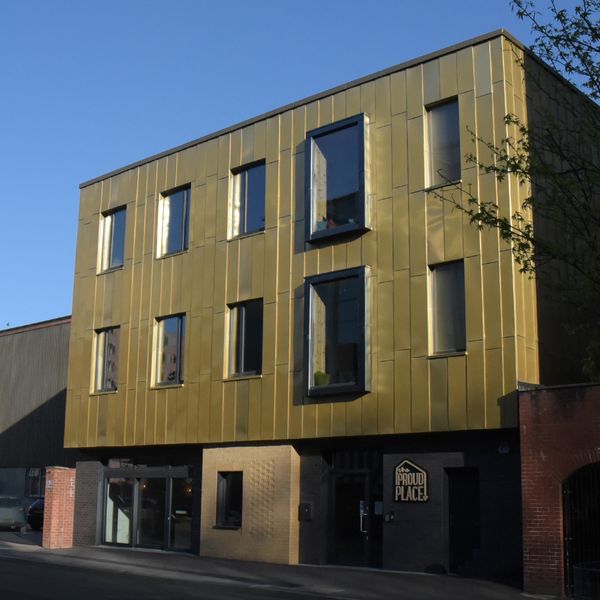
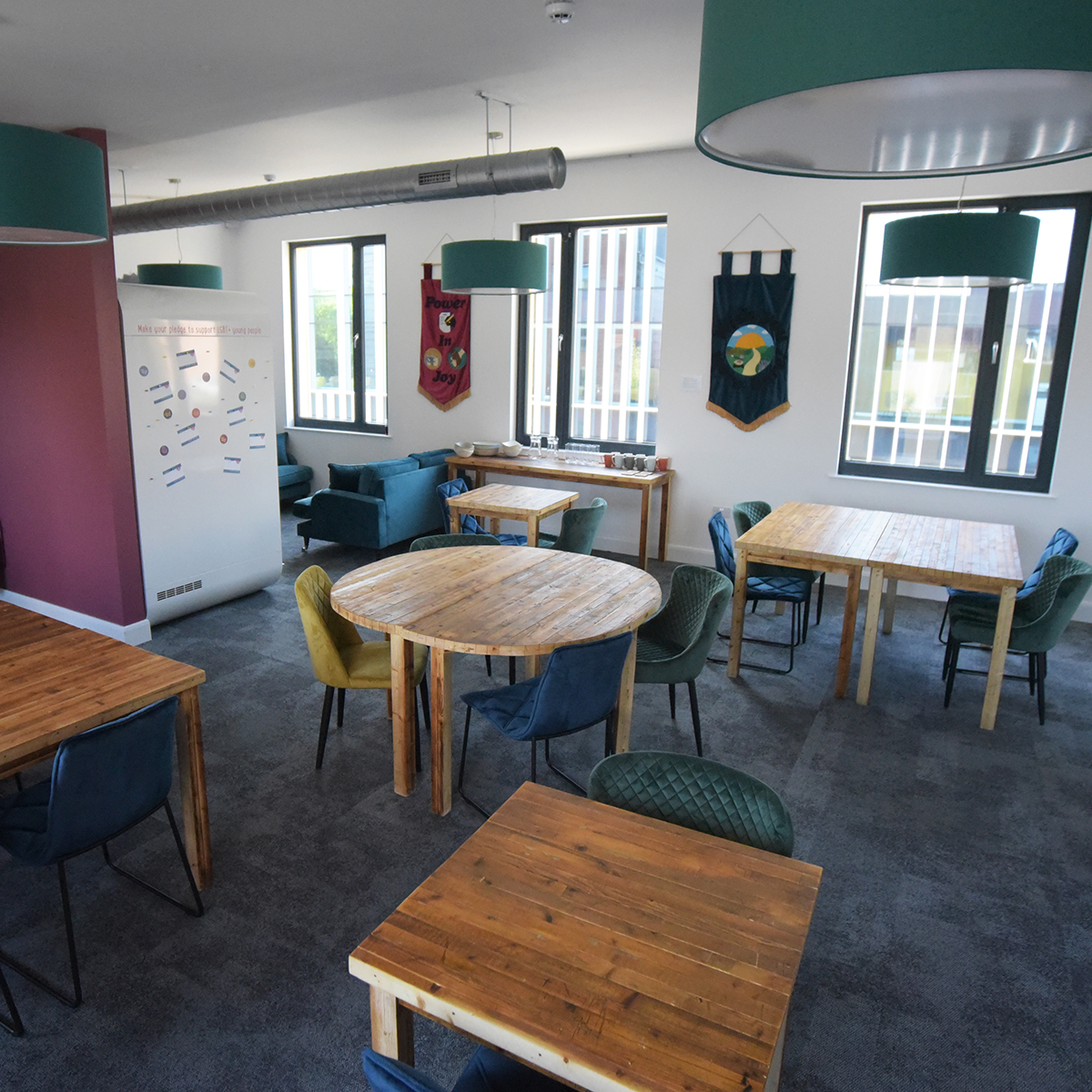
The Proud Trust had the most amazing long weekend celebrating the launch of The Proud Place with LGBT+ young people, community members, staff and supporters.

A huge thank you to the funders, businesses, brands and individuals who have supported the £2.4 million rebuild project over the last 4 years and beyond. They could not have done it without you.

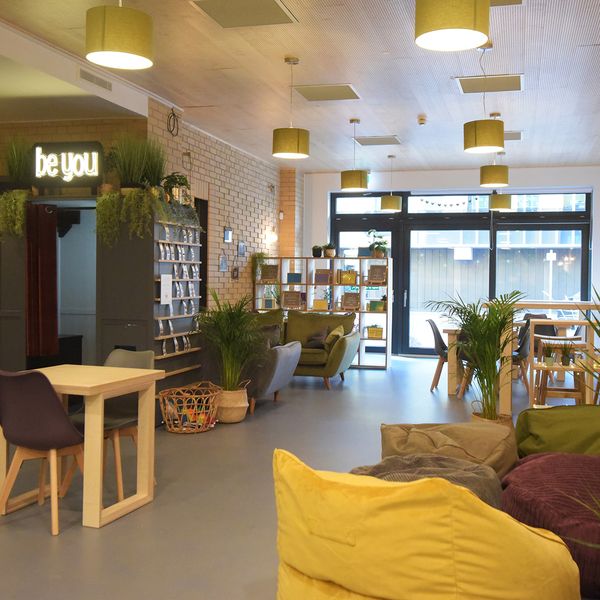
Simone, a Proud Trust young person who helped open the new building at the weekend said: “It means so much to be here today. To see it all finally complete, it very much feels like now everything can start.”

It’s a real honour for The Proud Trust to care for the building on behalf of Manchester’s LGBT+ Community and they can’t wait to see what the future holds!

To find out more about The Proud Place, check out what’s on, learn more about the youth and community groups who meet at the building, or hire one of their beautiful new spaces visit: http://www.theproudtrust.org/theproudplace
Conversion Therapy Ban Debate

The Petitions Committee has brought forward the debate on the petition: “Ensure Trans people are fully protected under any conversion therapy ban”. This debate will now take place on Monday 13 June at 4.30pm.

Watch the debate (from 4.30pm on Monday 13 June): https://www.parliamentlive.tv/Commons

Hansard will print a transcript (available a few hours after the debate ends).
Community Session … Access 4 All … South Korea … Vesta Tilley Postcards

News

Community Session – Out In The City

About this event

Join us at the fourth of Manchester Pride’s six Community Sessions, where we spotlight grass-roots organisations that support intersectional LGBTQ+ communities.

In this session, you will get to learn about the incredible work of Out in the City! There will be an opportunity to get to know other attendees, and food will be provided.

We hope you can join us in celebrating and learning more about the incredible community groups that make LGBTQ+ life in Manchester so special!

Spaces are limited, so make sure you sign up here to reserve your place. If you are unable to attend, please let us know at engagement@manchesterpride.com so we can offer your space to someone else.

Thank you!

Access 4 All

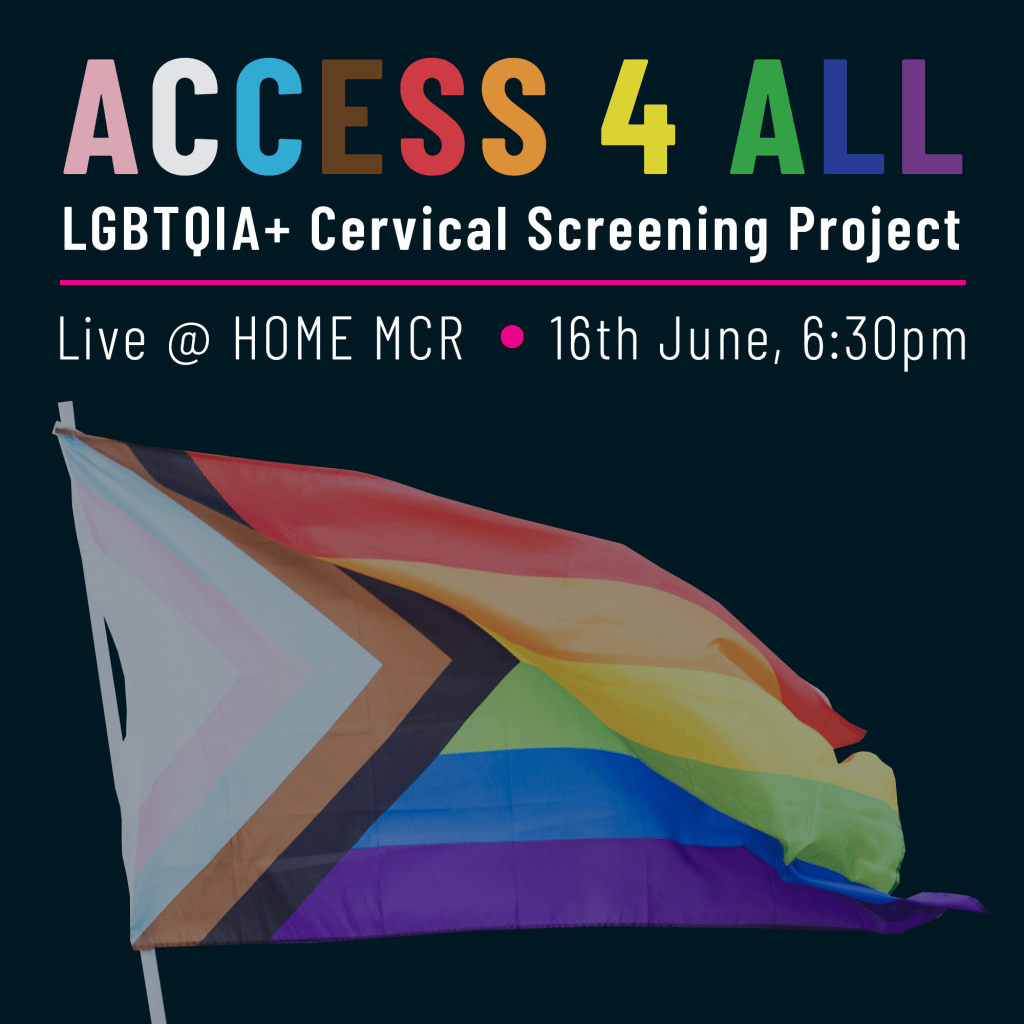
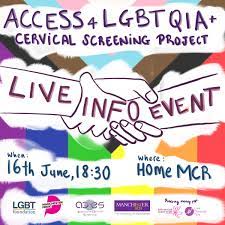
Access 4 All is an informal and educational evening at HOME MCR, 2 Tony Wilson Place, Manchester M15 4FN to learn more about alternative cervical screening and hear the results of the ACES LGBTQIA+ survey.

The event takes place on Thursday, 16 June from 6.30pm to 9.00pm and includes a performance from HUSK together with complimentary food and drink.

Individuals who identify as LGBTQIA+ have lower cervical screening attendance than people who are non-LGBTQIA+.

The Alternative CErvical Screening (ACES) team at Manchester University have been investigating the accuracy of a urine test as an alternative to the ‘smear’ for screening, in the hope that this could increase screening attendance.

This event is an opportunity to learn more about cervical screening and hear the results of the ACES LGBTQIA+ survey. In a safe and open environment, there will be an informative panel discussion where experts and LGBTQIA+ community members share their experiences, future research directions and implications for screening within the community. Signposting services for further information will also be available on the day.

The event will also celebrate those in the LGBTQIA+ community and their contribution to the project and will feature a special live performance from queer synth-pop performer, HUSK.

What is ACES?

The ACES LGBTQIA+ project explores the LGBTQIA+ community’s opinions of current cervical screening services, barriers to screening and the acceptability of alternative self-screening methods, including urine testing.

Book here

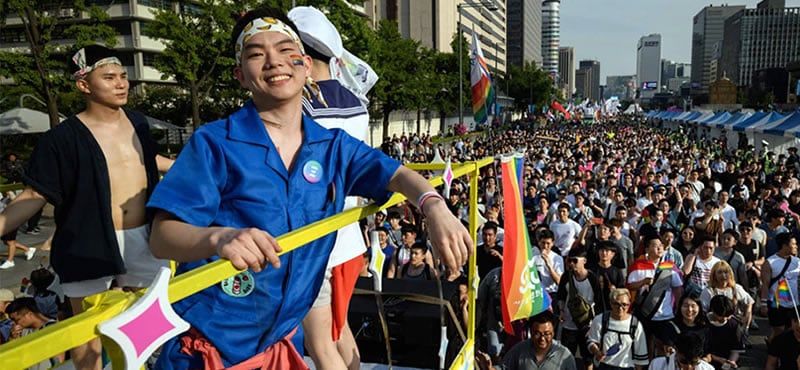
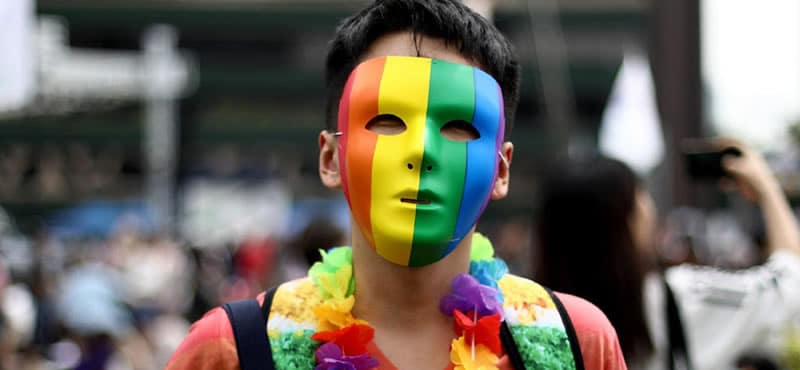
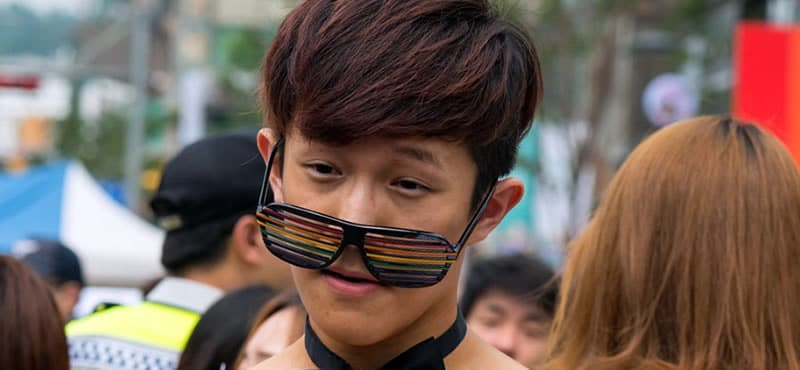
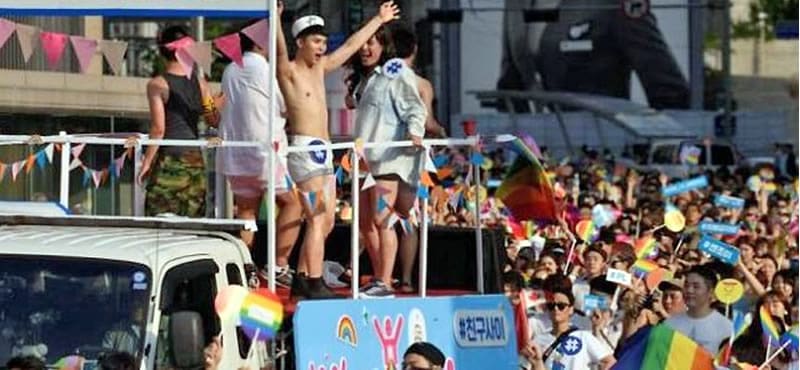
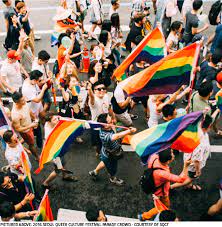
Seoul Queer Culture Festival – Celebrating Korean LGBT+ Pride

South Korea is not traditionally known for its robust LGBT+ community. Its conservative culture and religious right-wing make far more headlines than landmark cases of LGBT+ progress. However, this expectation is slowly but surely shifting as organisations like the Seoul Queer Culture Festival pave the way for queer Korean pride.

For the past decade or so, South Korea has been experiencing a surge in widespread international attention. The rise of K-Pop (Korean pop music) has reached astronomical levels in the last several years, thrusting the nation into the international spotlight. Yet not so strongly highlighted amidst this pop culture intrigue is the fundamentally conservative nature of Korean culture and how that culture impacts marginalised groups in Korea – especially the LGBT+ community.

Though South Korea is notably a far throw from criminalising or otherwise legally prosecuting individuals based on their sexual orientation or gender identity, the nation’s discriminatory bias runs deep. It is especially pervasive in the political sphere. With the recent narrow presidential election of Yoon Sukyeol – a proclaimed “anti-feminist” – from the conservative People Power Party, it is now more important than ever to highlight and learn from the experiences of marginalised people living in South Korea. Working to enhance our awareness and understanding of marginalised communities can be a highly effective way to weed out discriminatory societal trends and pressure local officials to take LGBT+ protections seriously.

However, it is not all doom and gloom for LGBT+ Koreans. According to the 2016 Korean General Social Survey, around 58% of respondents supported anti-discrimination legislation inclusive of sexual orientation, and – according to the Pew Research Center – South Korea experienced a 19-point increase in public acceptance of homosexuality (25% to 44%) from 2002 to 2019. Instrumental to this effort is the work of local activists and their work making the queer community visible to broader society. Various activists, organisations, and events have contributed to this gradual cultural shift, but arguably the most visible and influential is the Seoul Queer Culture Festival (SQCF).
History of the Festival

First hosted in 2000 under the name “Queer Culture Festival – Rainbow 2000”, the SQCF has undergone several iterations, both in title and structure. Despite these shifts, two major staples remain consistent features of the festival: the Korea Queer Film Festival and the Seoul Queer Parade. The former aims to showcase domestic South Korean films that primarily feature LGBT+ stories and characters. The latter is a more social, demonstration event that focuses on displays of pride and queer solidarity.
The SQCF typically consists of two weeks, packed to the brim with LGBT+-themed events and primarily occurring sometime in June – coinciding with many international pride celebrations and the anniversary of the historic Stonewall Riots. Initially, the festival was a two to three-day operation. But, it quickly outgrew its humble roots, expanding its duration to roughly two weeks, shifting its location from local university buildings to various community hubs, and moving the timeframe to June – likely to better align with the international community.

Conservative Pushback and Bureaucratic Setbacks

The festival’s over twenty-year history has not been a smooth ride filled solely with LGBT+ pride and rising societal acceptance. The SQCF made headlines last year as the Seoul Metropolitan Government rejected its application to be recognised as an official non-profit organisation. After holding the application for two years of review, the city cited several incidents of “indecent exposure” by festival participants. The Korea Times article notes that the festival consistently requires a significant police presence. In addition, a host of anti-gay protesters always accompanies the festival, often escalating their protest into physical altercations.

The dynamic between LGBT+ parade goers, anti-gay protesters, and the police was most notably exemplified at the inaugural sister event to the SQCF, the Incheon Queer Culture Festival. In 2018, at the first IQCF, protesters utterly derailed the event. The protests delayed the event’s start – a 20-minute pride parade – by several hours, and once it began, 300 parade goers were physically blockaded by nearly 1,000 anti-gay protesters.  As they were verbally assaulted, the attendees could not leave, eat, or go to the bathroom for five hours. Some further reported being victims of physical assault.

Incheon is the third most populous city in South Korea, just behind Seoul and Busan, and fully shares a metro transit system with Seoul. Seoul and Incheon are large cities that are highly developed with well-functioning municipal government systems. Both have robust police forces that have not adequately deployed to defend SQCF or IQCF attendees from assault. In the case of the 2018 Incheon Queer Culture Festival, police asked the attendees and organisers to end the event early. Unfortunately, they only arrested eight of the 1,000+ anti-gay protesters (without detention) for their behaviour at the event.

While tolerance is ever so slowly building for LGBT+ Koreans amongst the public, the Korean government needs to do more to protect this community now. Radical religious perceptions of the LGBT+ community will not quickly disappear, but that does not obfuscate responsibility from those in charge.

Local and federal levels of the Korean government have a duty to protect their citizens from blatant acts of bigotry, and now is the time to make that clear.

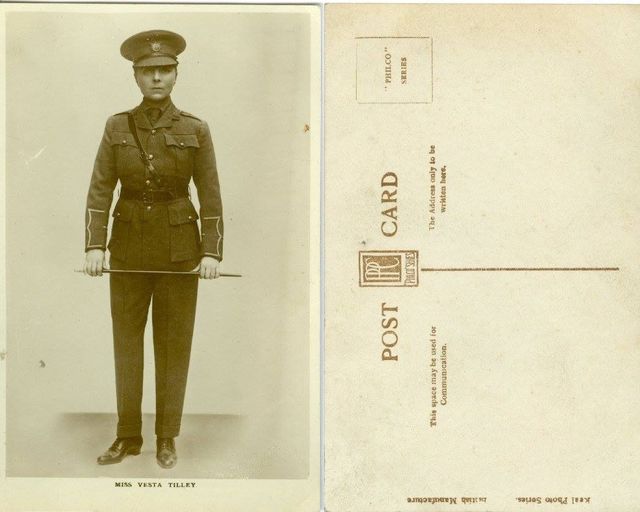
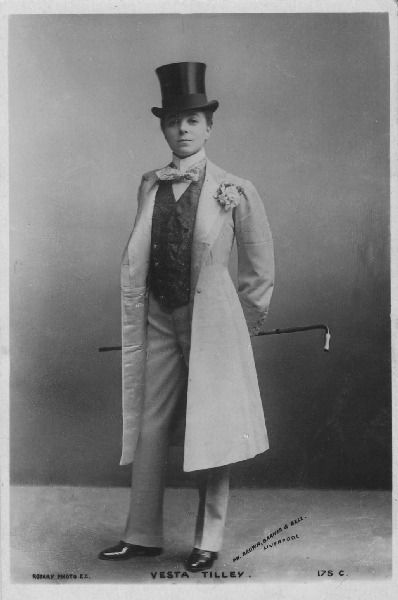
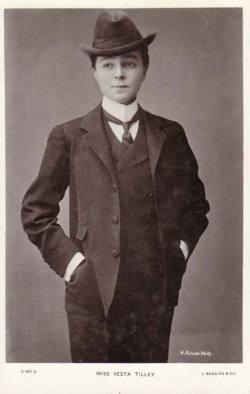
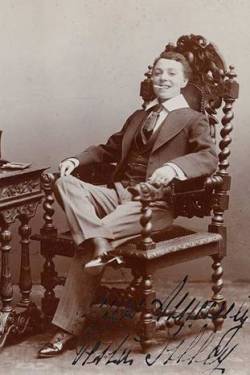
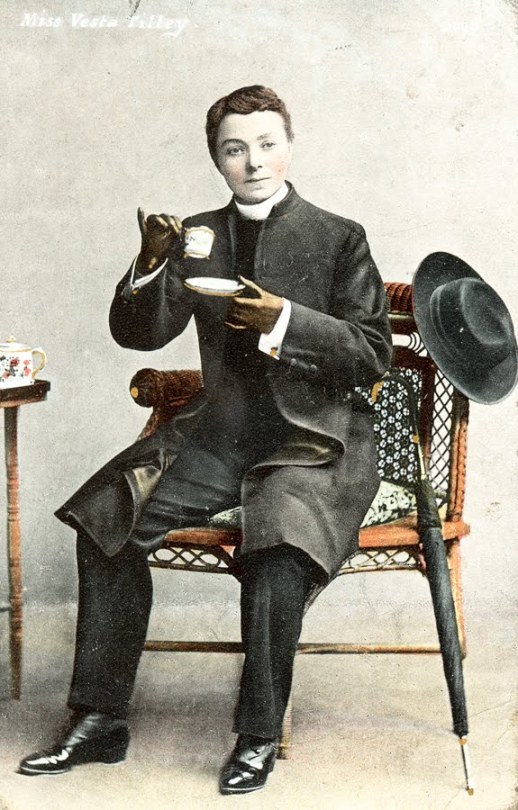
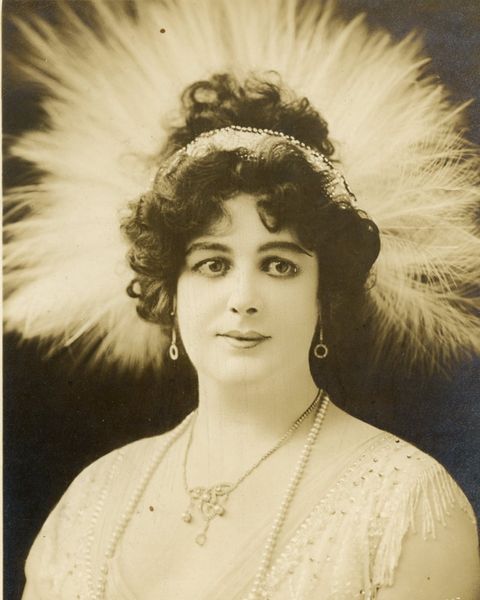
Vesta Tilley

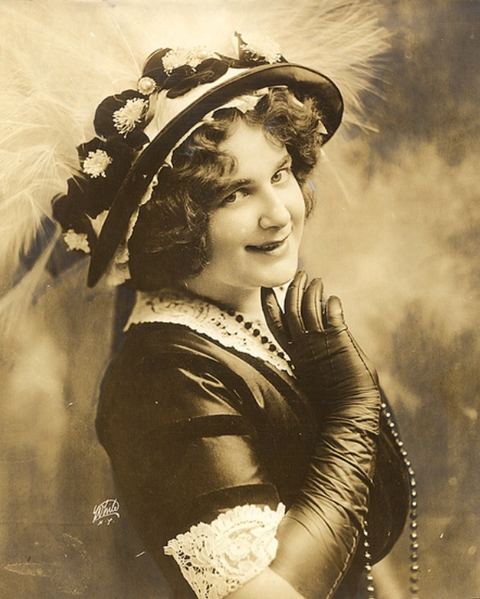
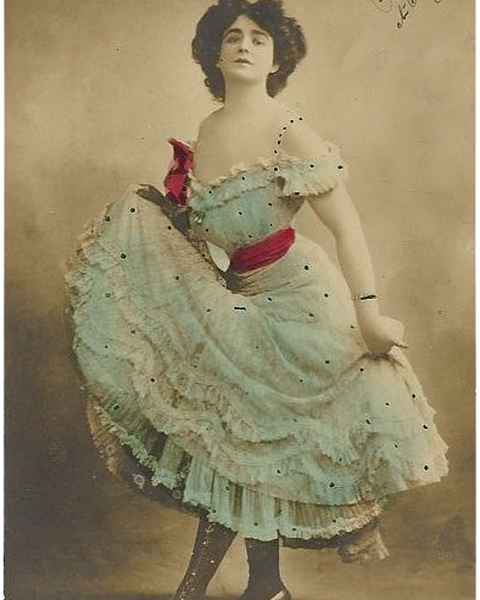
Vesta Tilley was a late 19th Century Drag King. Her performances were always family-friendly, unlike other acts. She had found her niche, performing as a male impersonator and working-class men adored her mockery of the upper classes. From the 1870s onwards, women also went to music halls and they revelled in Tilley’s independence. By 1912, music hall entertainments had become so famous that a Royal Command Performance was organised. Tilley sang a favourite song, “The Piccadilly Johnny with the Little Glass Eye” wearing trousers as part of her act. Queen Mary was scandalised to see a woman’s legs and hid her face behind a programme!

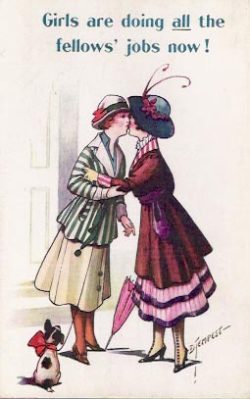
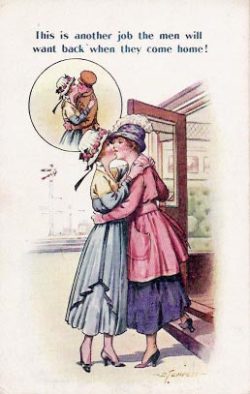
Many postcards were made featuring Vesta Tilley:

Clare Summerskill … Rebel Dykes … Full Steam Ahead … Drag Royalty Jubilee … Queer East Shorts

News

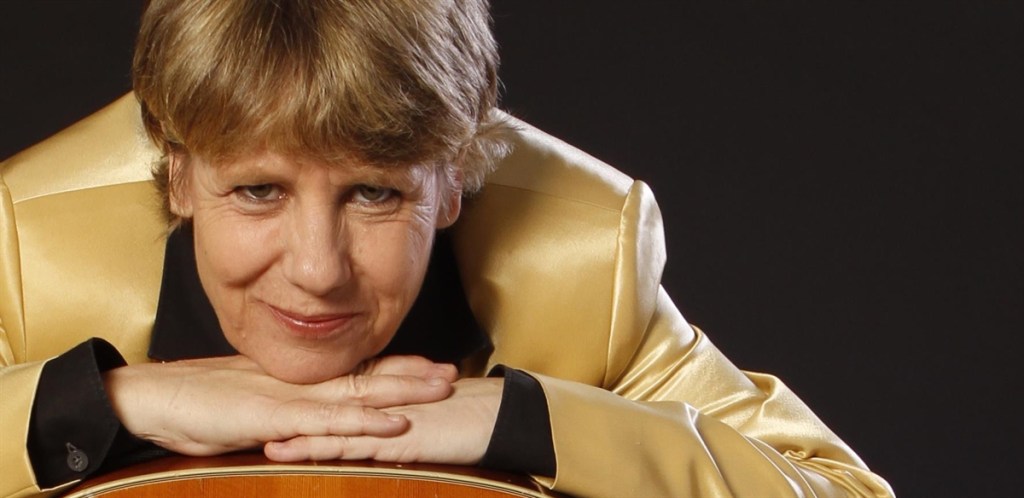
Clare Summerskill

Clare Summerskill

Clare Summerskill is a stand-up, a singer-songwriter, an actor, and a playwright. In her latest show, “I’ve Been Clare Summerskill”, she combines her comedy and song-writing talents to reflect upon her long career as what she terms ‘a professional lesbian’!

Her humour is warm and welcoming and often far too close to the bone. Audience members of any age, sexual orientation or gender identity will relish her unique take on matters of love and lust, marriage and divorce, and middle-aged worries and wisdom. Her comedy songs are hilarious and, as you will discover, Clare is a multi-talented comedian and musician.

Brewers Manchester, 4 Canal Street, Manchester M1 3HE

Friday, 27 May 2022 at 7.30pm

Accessibility – Accessible Toilets, Service Animals Welcome, Wheelchair Accessible

Tickets £10 to £12 here

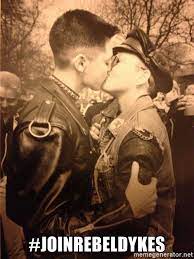
Rebel Dykes

A group of us went to see “Rebel Dykes” at HOME Cinema as part of the University of Manchester’s Sexuality Summer School. The screening was followed by a Q&A. Jackie Stacey and Monica Pearl were in conversation with Siobhan Fahey, director and producers Harri Shanahan and Sian A Williams. 

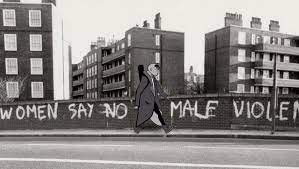
Rebel Dykes” is a full-length documentary about the explosion that happened when punk met feminism, told through the lives of a gang of lesbians in the riotous London of the 1980s. The tight knit group of friends met at Greenham Common peace camp and went on to become artists, performers, musicians and activists.

The film includes animation, archive footage, interviews and reconstructions to tell the story of squatting, BDSM nightclubs and radical politics. It’s a desperately needed piece of lesbian history and a reminder of how much lesbians have done for the LGBTQ+ community.

It’s a fun and raunchy documentary, that doesn’t shy away from the tougher aspects of being queer. One of our group commented: “Wow what a great night, really moving, lots of memories. Rebel Dykes – wow oh wow”.

Full Steam Ahead

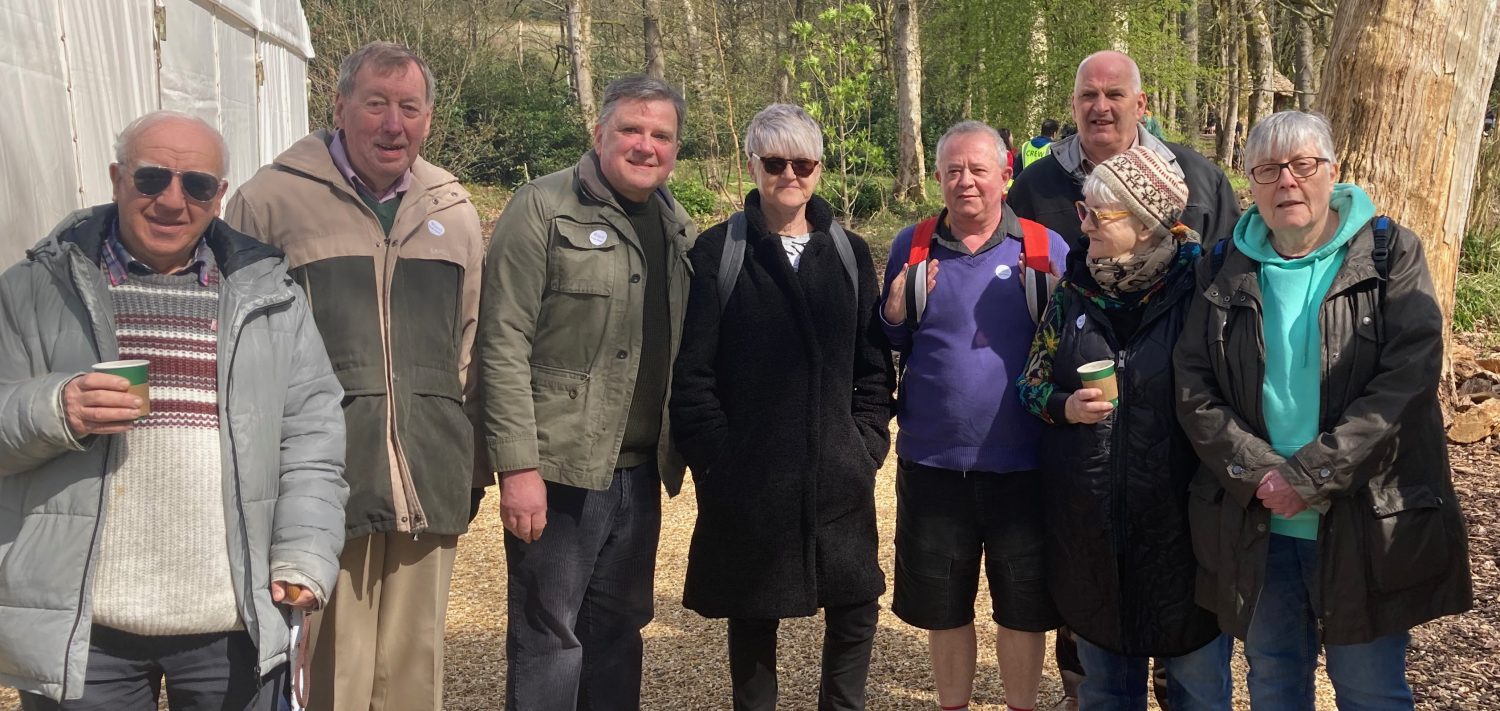
We met at Victoria Train station and Bury Interchange and made our way to the East Lancashire Railway. We just had time for light refreshments at Trackside (the railway bar) before making our way to Platform 3 to catch the steam train. The staff were friendly and welcoming and Out in the City had a whole carriage to ourselves.

The East Lancashire Railway is a 12.5 mile heritage railway line which runs between Heywood, Greater Manchester and Rawtenstall in Lancashire. It opened in 1846, but Angel pointed out that Cuba had a railway in 1837, the first in Latin America.

The time in Rawtenstall passed quickly and it was soon time to return. It was another fabulous day and more photos can be seen here.

Drag Royalty Jubilee

Donna Trump

Join the real Royalty of Manchester celebrating the Jubilee and the drag excellence of Manchester hosted by Donna Trump and featuring an array of performances from Kings, Queens, Things and all in between!

Comedy, dance, music, laughter tears – who knows what to expect from our royal drag community!

Thursday, 2 June 6.30pm – 10.00pm – Tony Wilson Place, First Street (the space outside HOME Cinema) – Free


This is the start of the First Street Festival 2022 – Free live music, family fun and more from Thursday, 2 June, every weekend until Sunday, 3 July.

Following the success of Homeground 2021, HOME is delighted to present First Street Festival 2022 – with live music, family events, drag performances, yoga, DJs and more. A central stage in Tony Wilson Place (in front of HOME) will form the focal point of the festival. All events are free and there’s no need to book, just pop along and enjoy yourself.

The bank holiday (Thursday 2 – Sunday 5 June) features acts programmed by HOME. Subsequent weekends will feature programming from our partner organisations Brighter Sound, SM Music MGMT, All Hands on Deck and The Untold Orchestra.

Queer East Shorts

Queer East presents a showcase of rarely seen queer shorts from East and Southeast Asia.

Queer East exists to amplify the voices of queer Asian communities, to challenge normative definitions of gender and sexual expression, and to introduce UK audiences to LGBTQIA+ cinema that they might not otherwise get a chance to see.

Queer East Film Festival 2022 is available on BFI Player for free

Julian Eltinge … Men Dressed in Drag in The Victorian Era … Jake Daniel

News

Julian Eltinge (1881 – 1941)

Long before Ru Paul … we celebrated the birth of popular stage actor, silent film star and renowned female impersonator Julian Eltinge. At one time the most popular drag performer in the world, Eltinge was born on 14 May 1881 in Newtonville, Massachusetts.

He began his career as a female impersonator at age 10, and his skills eventually made him a Vaudeville star. By 1906 his successful performances as ‘Eltinge’ in London culminated with a Command Performance before King Edward VII of England.

In 1910 he starred in a string of successful musical comedies on Broadway (“The Fascinating Widow”, “The Crinoline Girl”, and “Cousin Lucy”) written to showcase his skills.

In 1912 he was publicly feted in New York when The Eltinge Theatre was dedicated in his honour on 42nd Street. At the time he was one of the highest paid actors in America.

In 1914 he headed to Hollywood to star in silent film versions of his Broadway hits as well as “The Isle of Love” with Rudolph Valentino. What distinguished Eltinge from his contemporaries was his refusal to be a caricature of women; instead he presented a seamless illusion of actually being a woman, and then at the conclusion of his performance would remove his wig to an amazed audience. His transformation, with the aid of his male Japanese dresser, took two hours.

Though Eltinge was gay, he wildly overcompensated by frequently getting in fist fights, smoking cigars, and having long “engagements” with women – all of which were captured in staged publicity photographs. Despite his trail-blazing successes, by the 1930s female impersonation began losing popularity and crackdowns on cross-dressing in public had begun to prevent Eltinge from performing in costume.

In 1941 he fell ill performing at Billy Rose’s Diamond Horseshoe and died in his apartment 10 days later of a cerebral haemorrhage at age 59. Eltinge’s multi-faceted success as a female Impersonator has never been equalled.

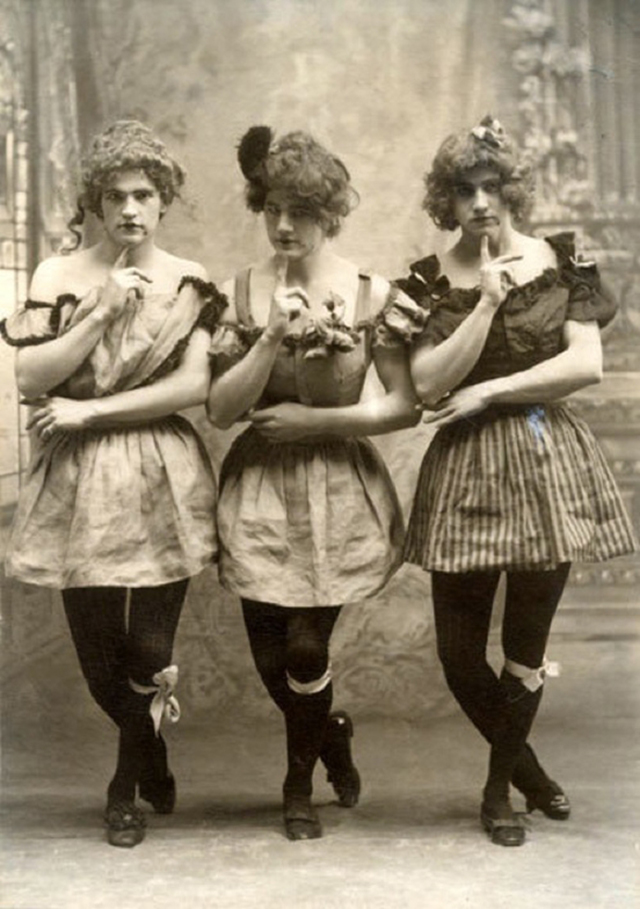
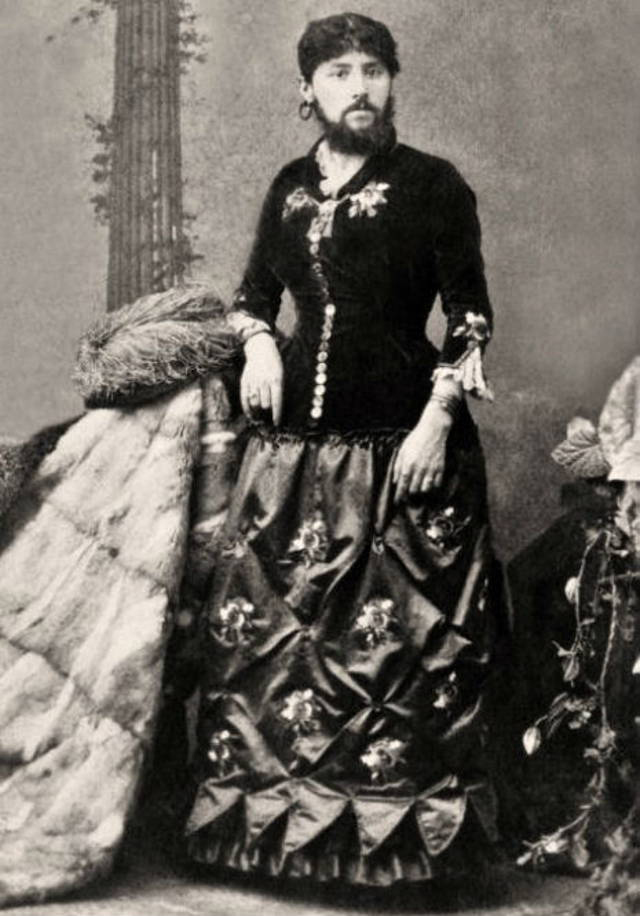
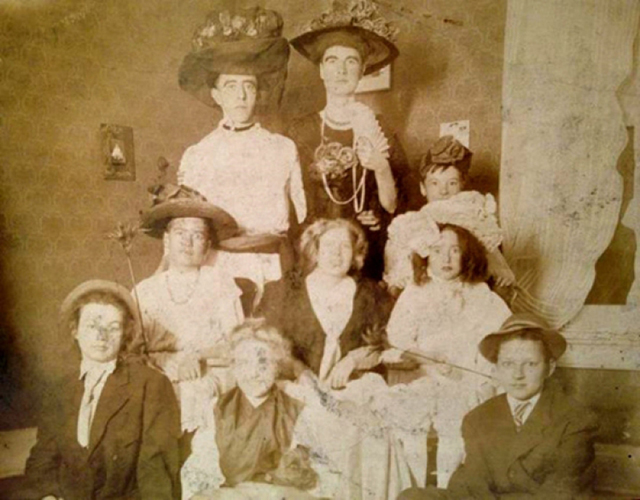
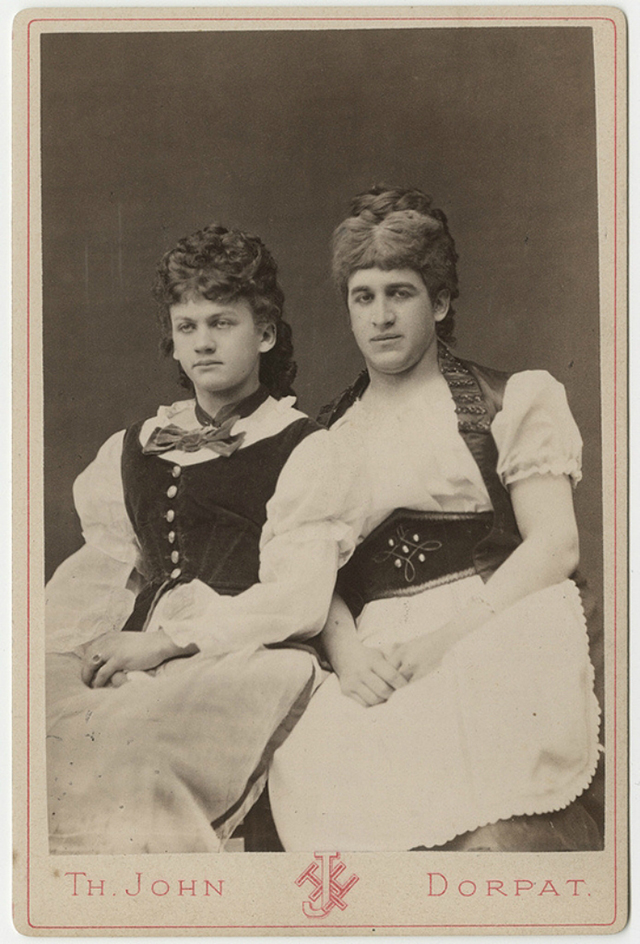
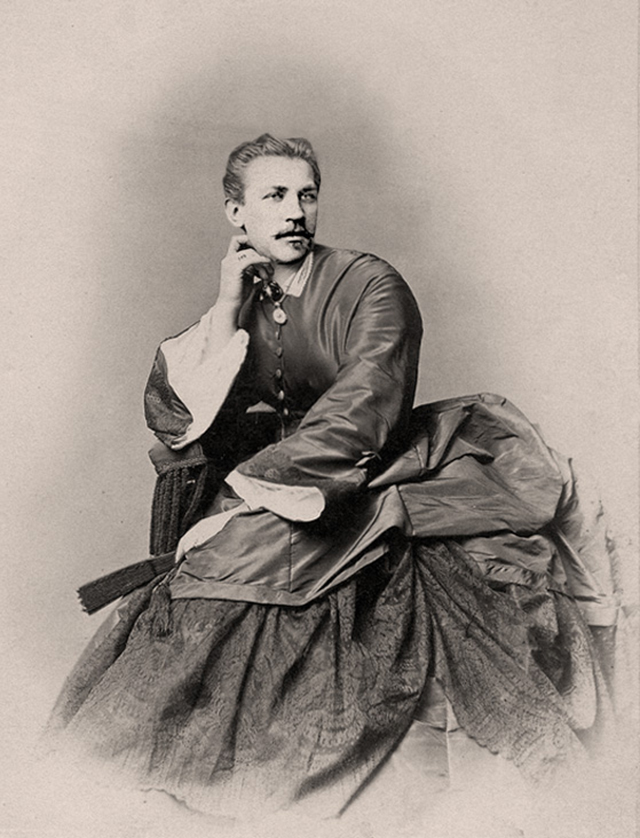
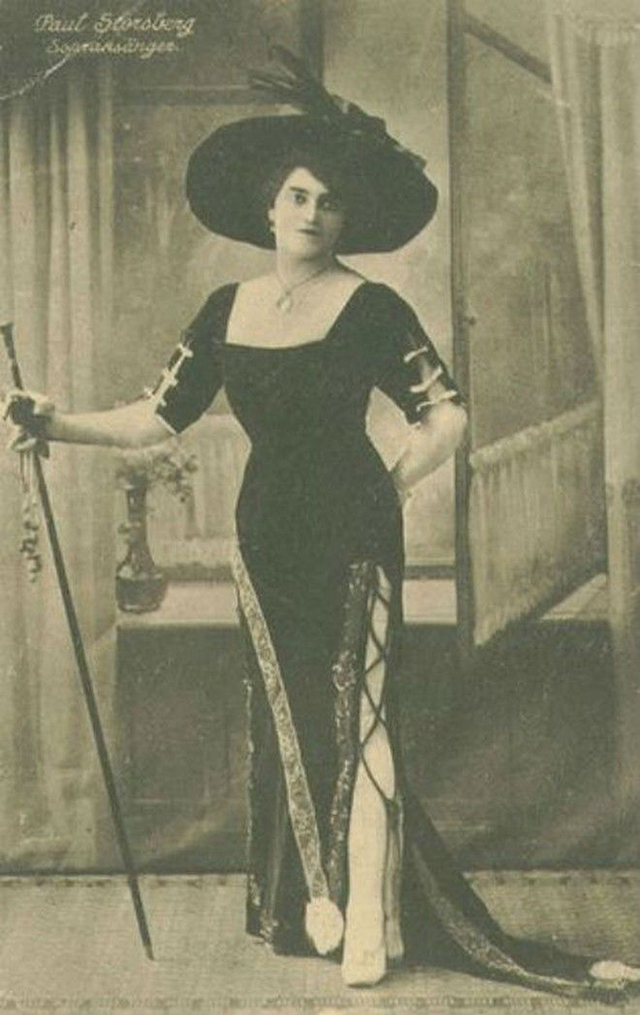
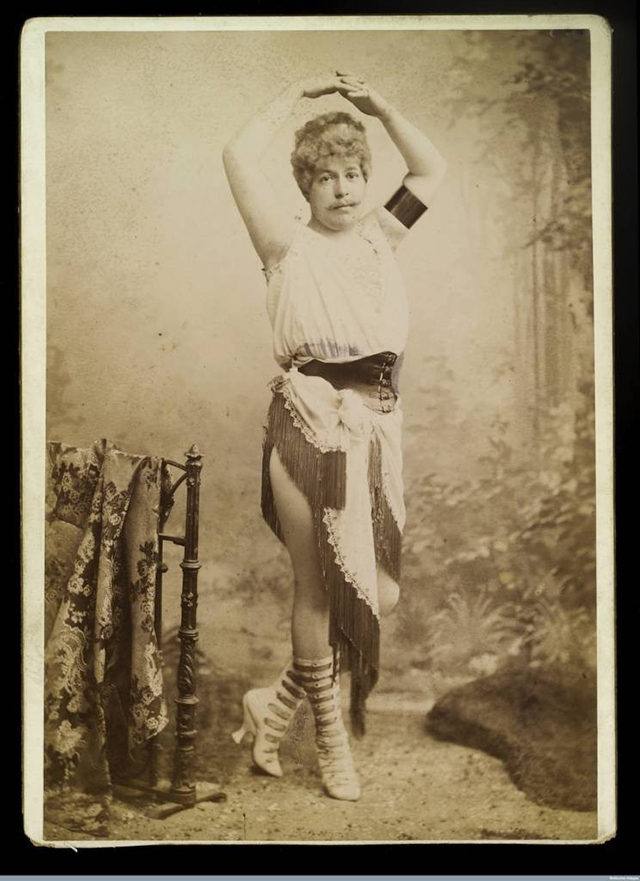
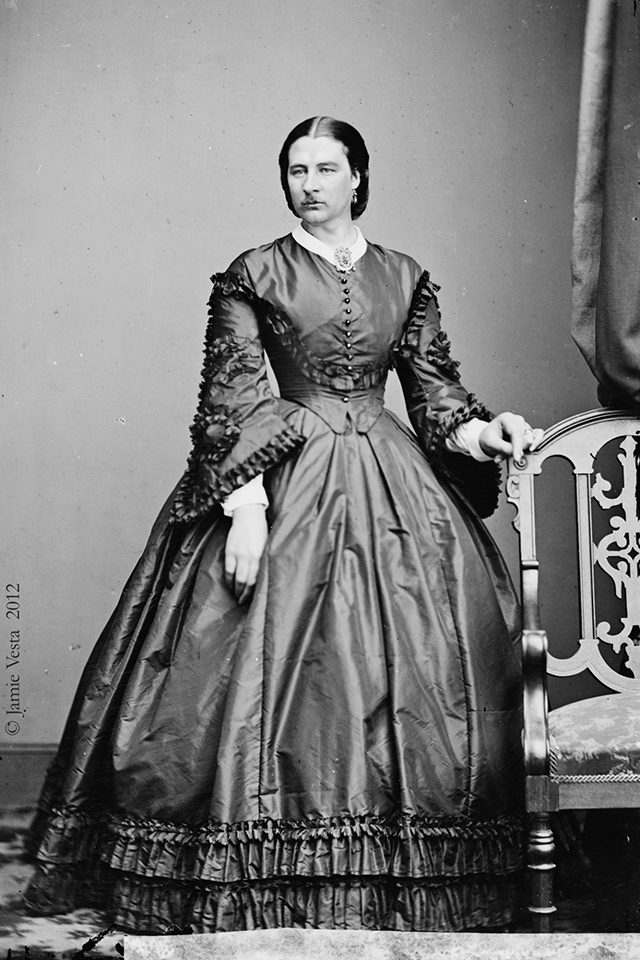
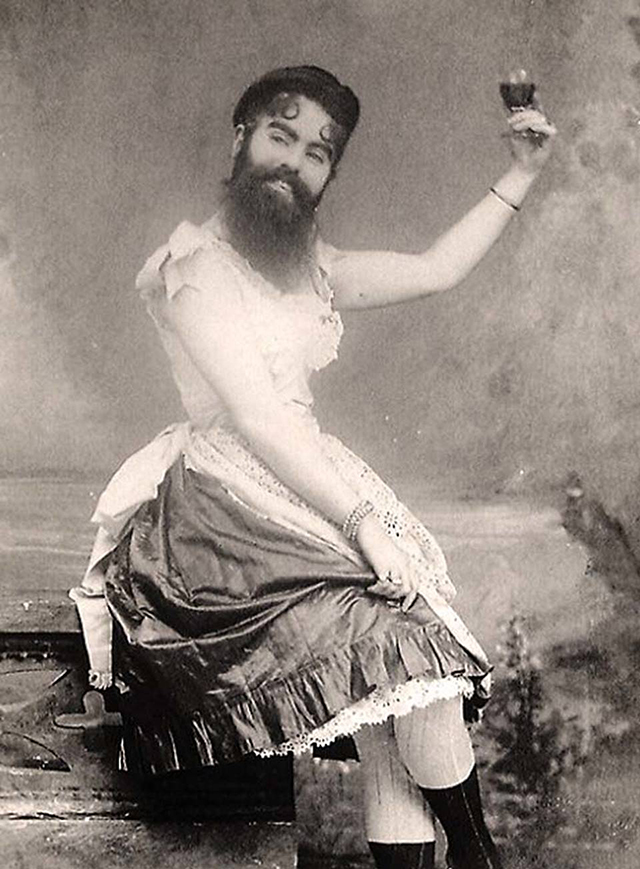
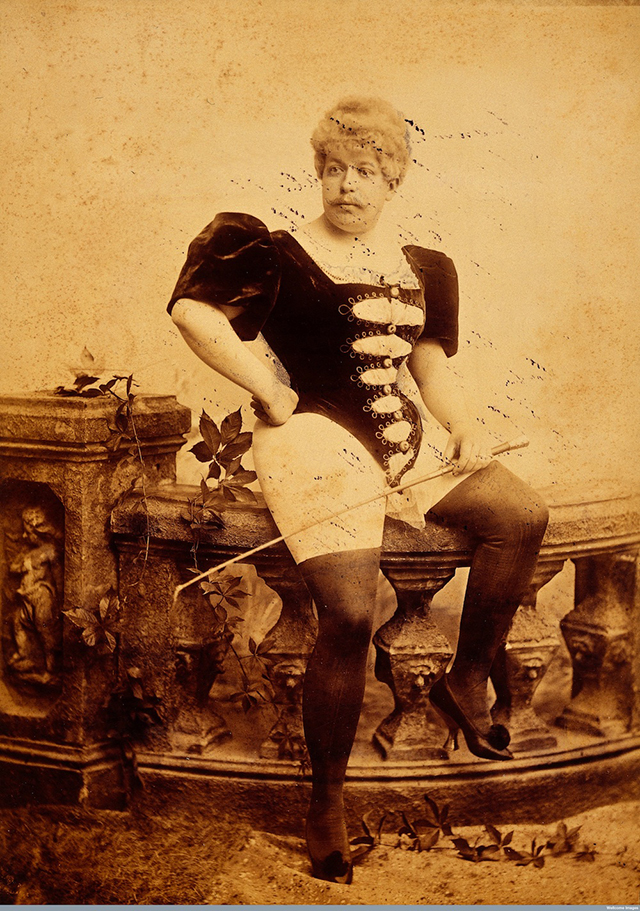
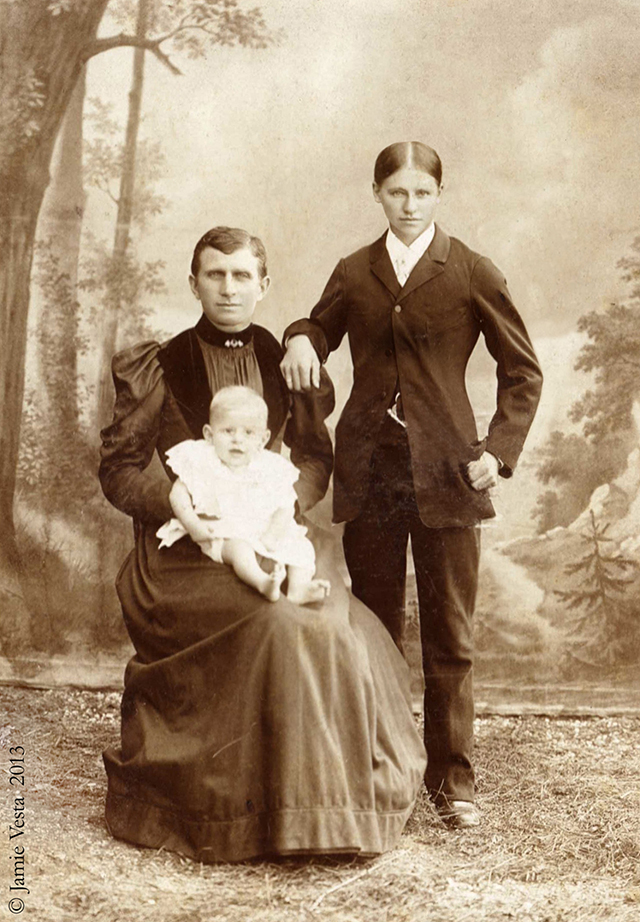
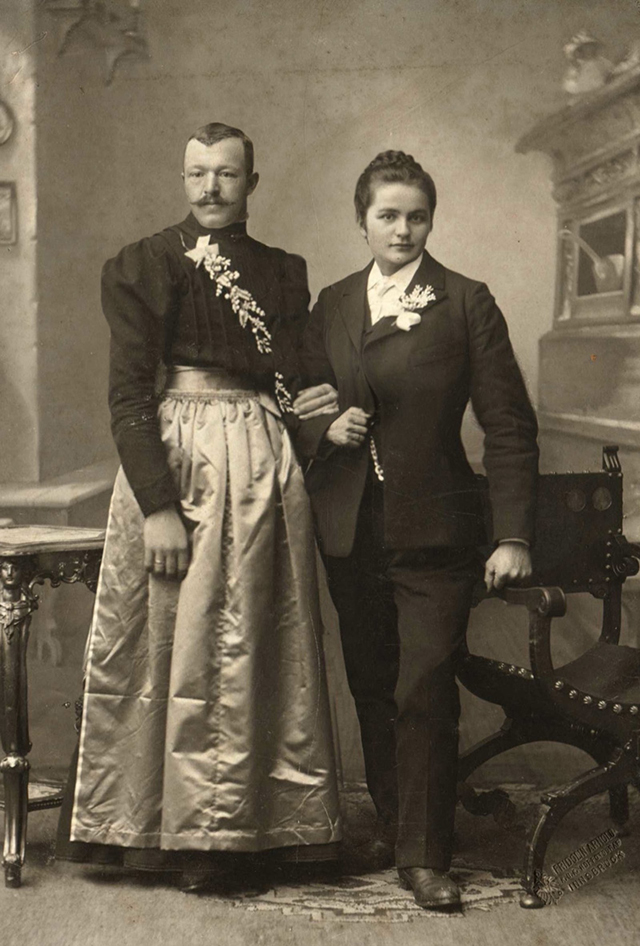
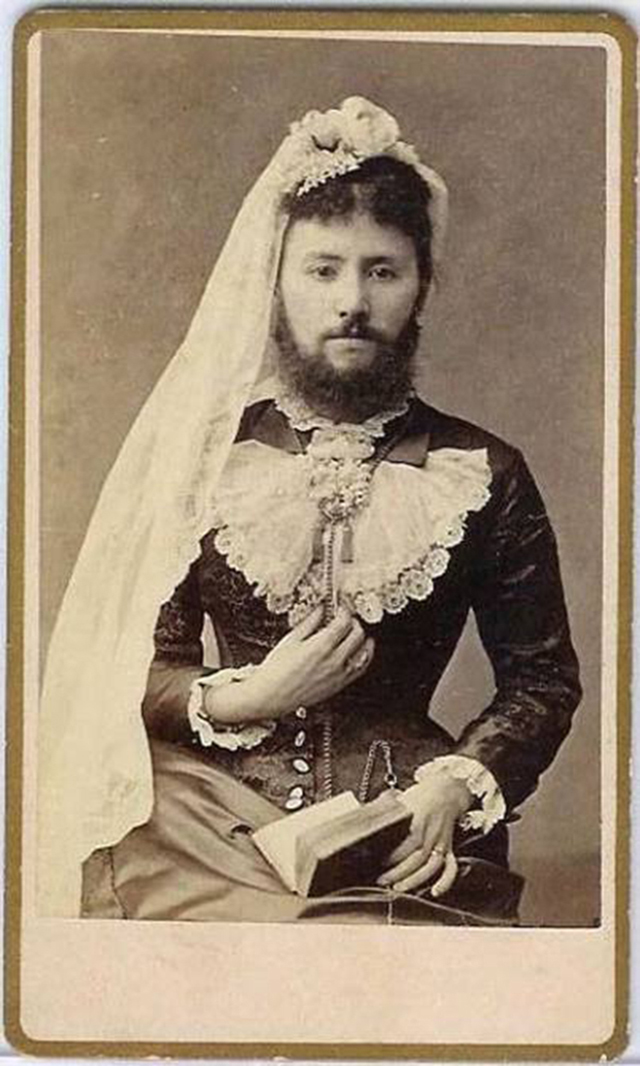
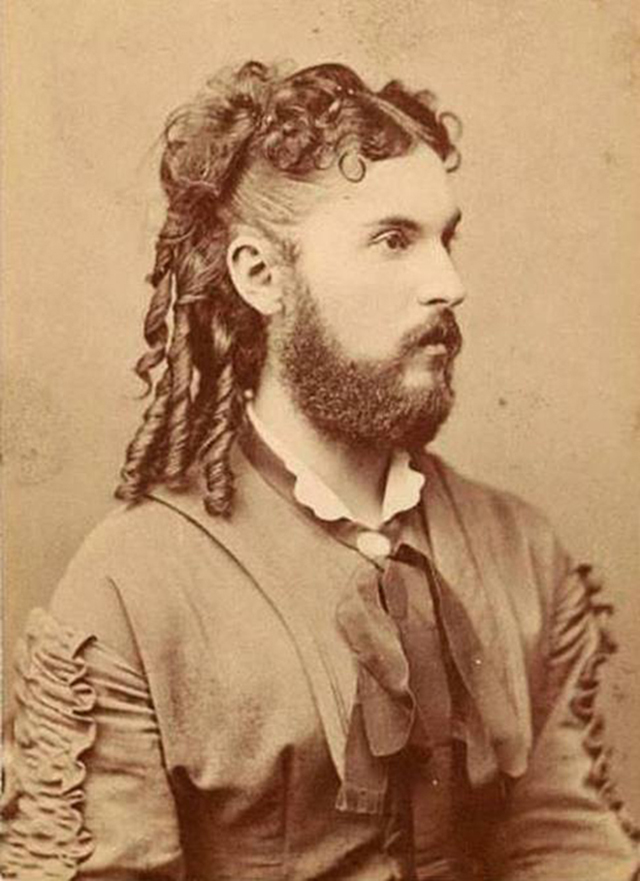
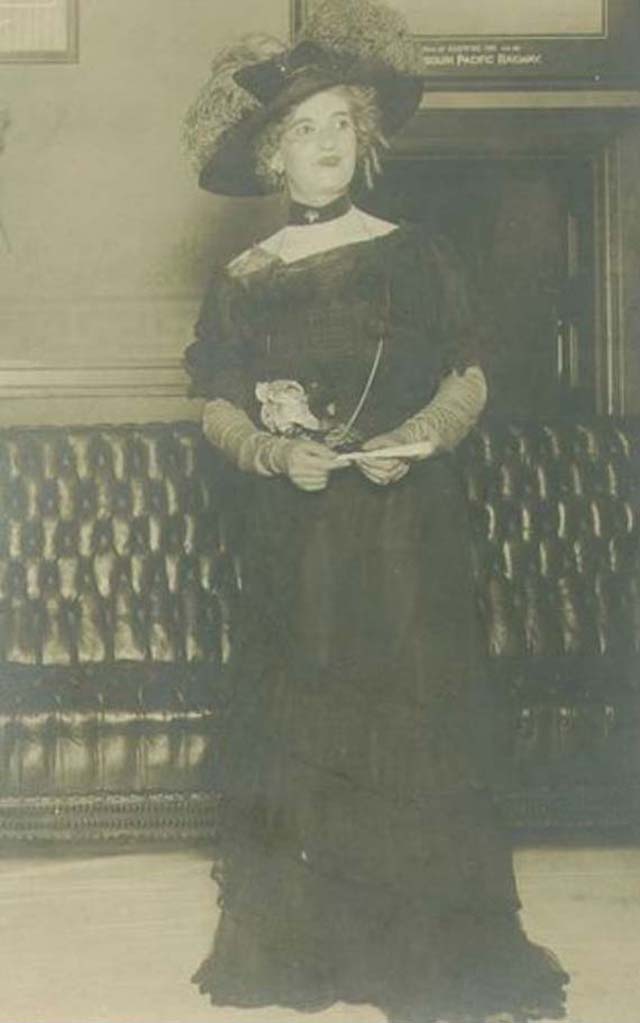
Men Dressed in Drag in the Victorian Era

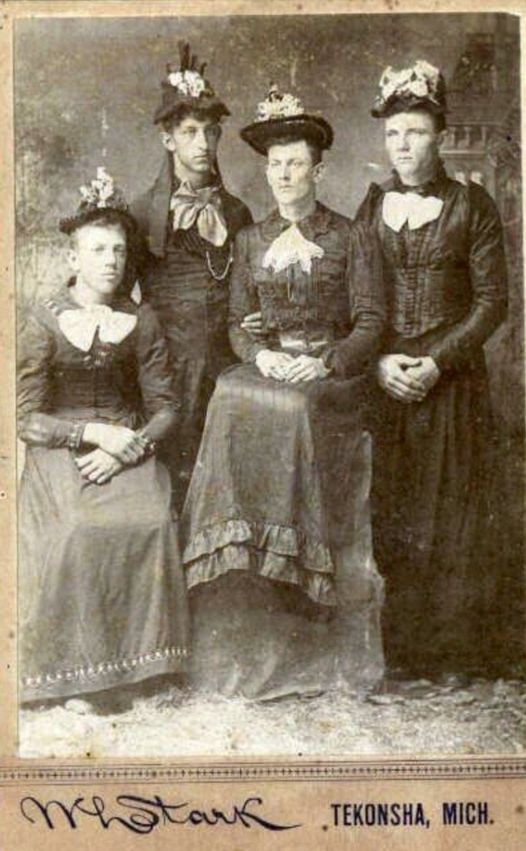
1870’s Farm Boys Portrait – These Tekonsha, Michigan farm boys presumably raided their mothers’ and sisters’ closets for this portrait

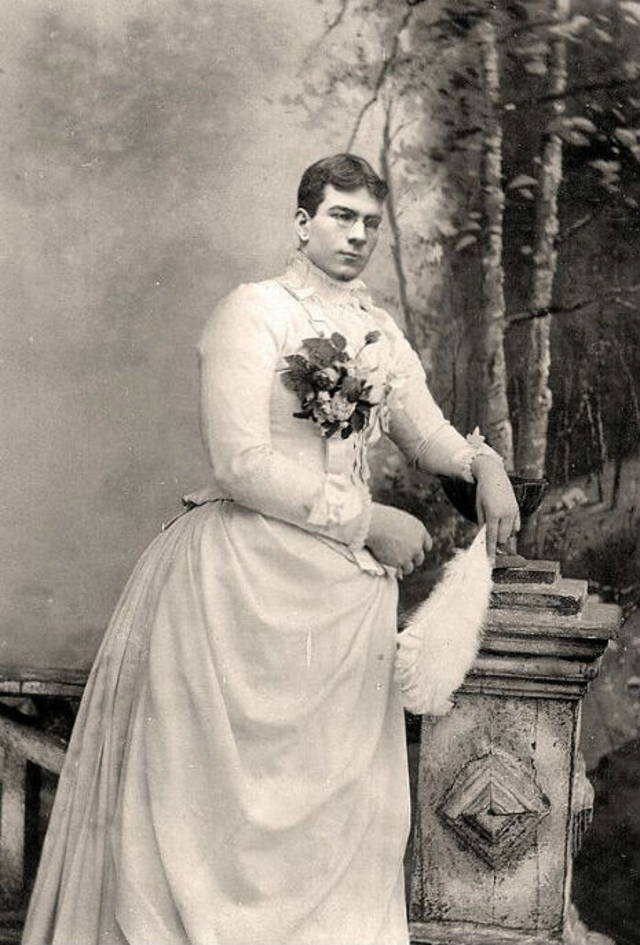
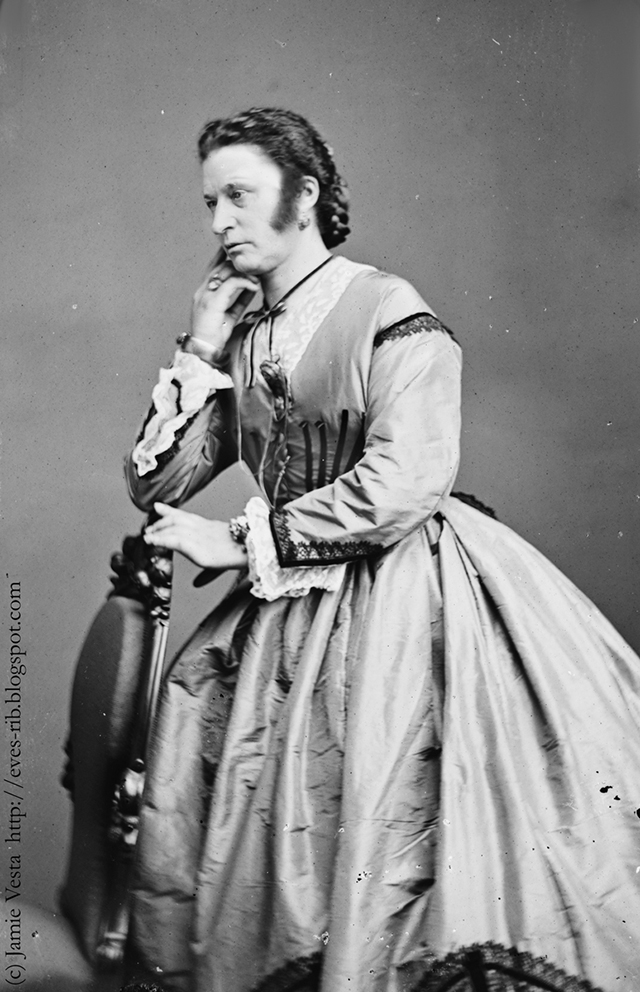
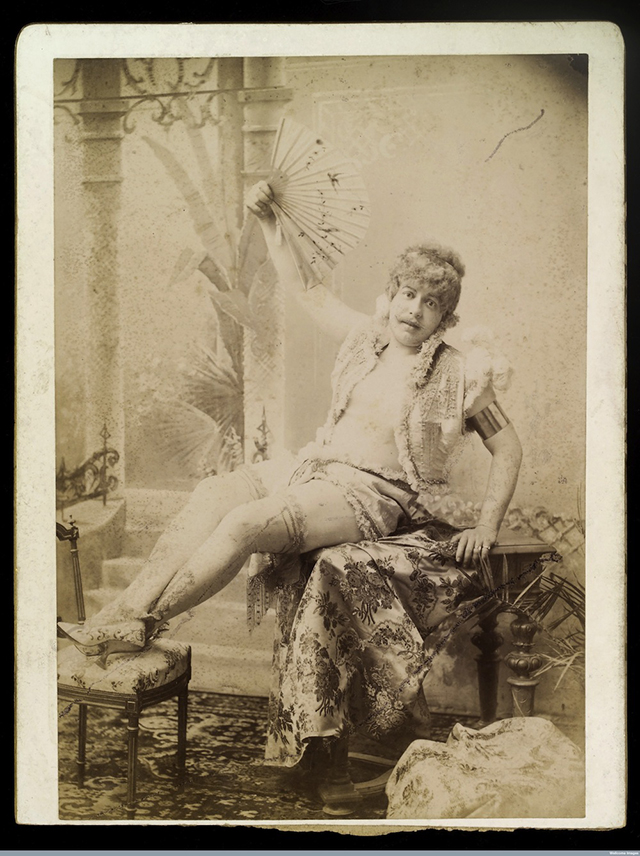
Men dressing in women’s clothing has been going on pretty much since the dawn of time, with reports of “cross-dressing” dating as far back as ancient Rome. Although, it wasn’t until the 20th century that the term “drag queen” came into popular use. The word ‘drag,’ most scholars agree, refers to the drag that came with hoop skirts, a popular lady’s style back in the day. But, as these images will attest, nothing was too over the top for these cross dressing trailblazers.

A line, however, was drawn when it came to public demonstrations of drag. When Frederick Park and Ernest Boulton shocked London society by daring to walk out in public as “Fanny and Stella,” there were still no laws preventing them from doing so. As a result, they, and others, were frequently charged with “the abominable crime of buggery”. Almost immediately, homosexuality would be firmly planted in the minds of people of that era as synonymous with drag.

Drag Queens from the 1890s and early 1900s:

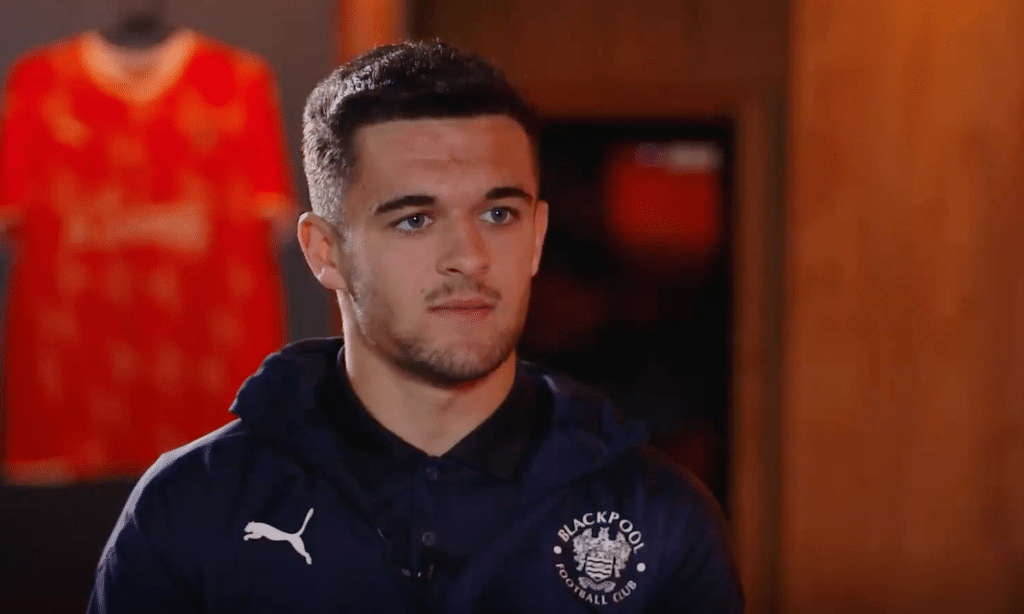
Jake Daniels

Jake Daniels

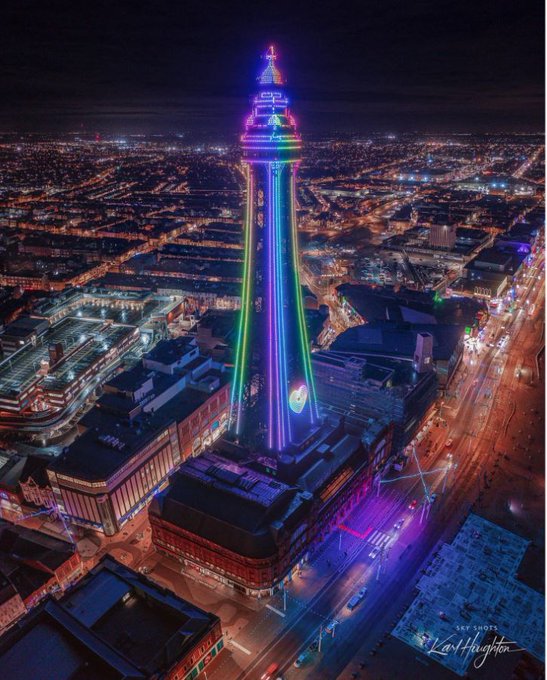
Blackpool football star Jake Daniels has come out publicly becoming the only active gay male professional footballer in the UK. 

Daniels, who plays forward for Blackpool, is the first professional player in British men’s football to come out publicly since Justin Fashanu in 1990. Fashanu was the UK’s first professional footballer to come out as gay, but his career was cruelly cut short by homophobia before he took his own life. 

Countless LGBT+ advocates, fans and football organisations praised Jake Daniels for his decision to share his truth with the world, and a host of public figures have voiced their support for the young football star.

Sir Ian McKellen hailed the teenager as a “hero” on Twitter and said Daniels represented a “generation that rejects old-fashioned homophobia in football and elsewhere”. 

Prince William, who is the president of the Football Association, also tweeted his support for Jake Daniels. The Duke of Cambridge declared that football “should be a game for everyone”, and he believed that Daniels’ decision to “speak openly” will “help break down barriers” in society. The town of Blackpool showed their support by lighting up Blackpool Tower in rainbow colours.

Bridgewater Hall concert … Rainbow 50p Coin … Cuba marks LGBT+ History Month … Conversion Therapy Ban (latest)

News

Bridgewater Hall

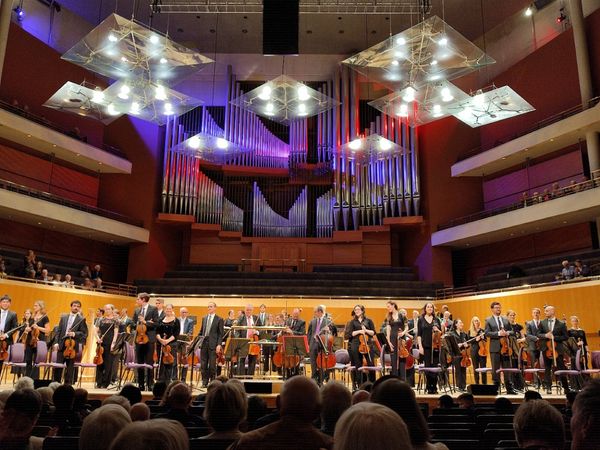
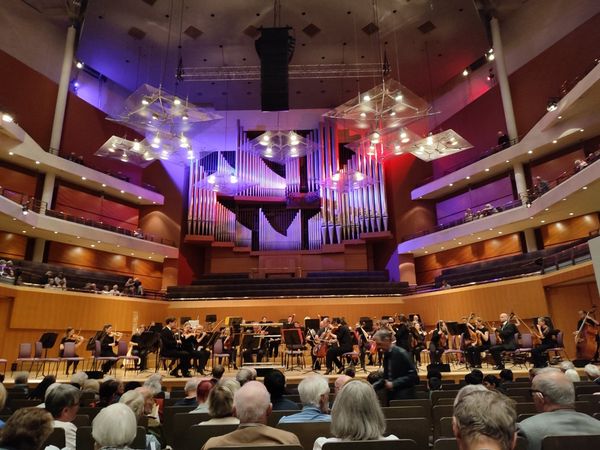
(review by Angel of a concert featuring Bruch – Violin Concerto No 1 and Tchaikovsky – Symphony No 5)

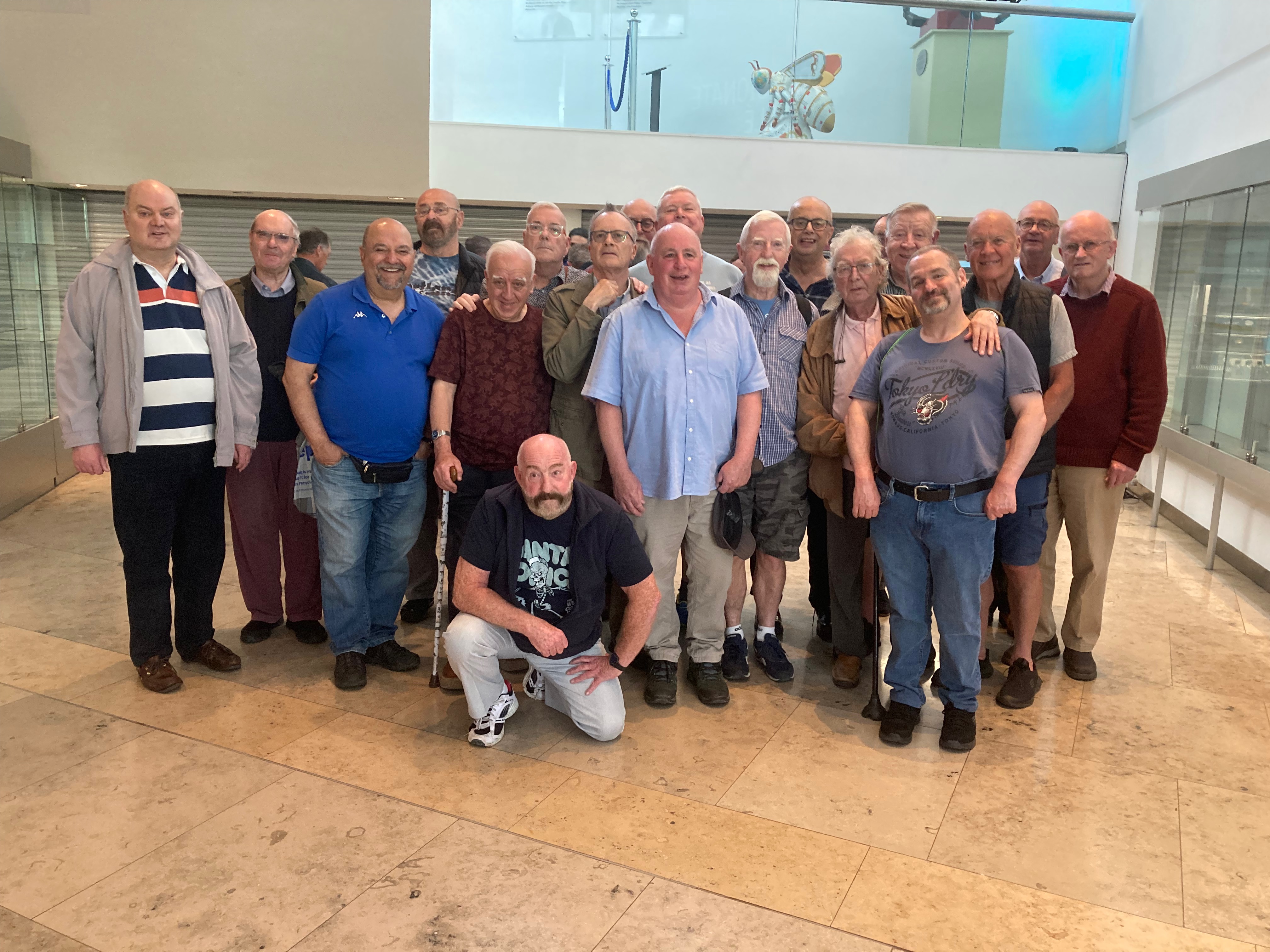
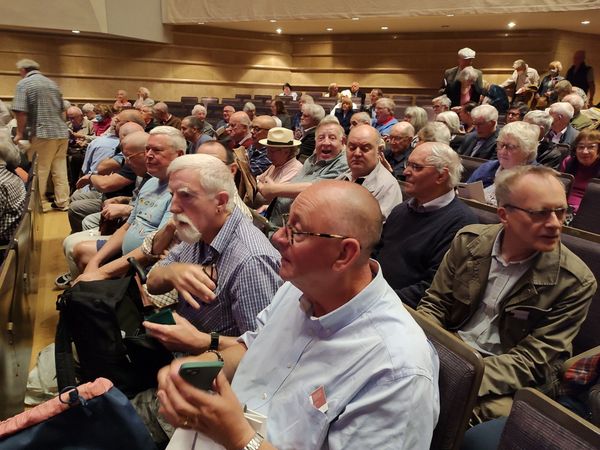
Today we “seniors” came to a classical music concert. The first part was dedicated to modern authors and it turned out very well, including a soloist with her violin. I admit, however, that I did close my eyes a few times.

After the Interval came the magic of Tchaikovsky and his 5th symphony. It was fabulous. I don’t remember being to a Tchaikovsky concert before and it’s a memorable experience. The music moved from place to place, like a demonical precursor to stereo. Violins and wind instruments went in a second from a deafening climax to a mellow, sweet sound. It was like dancing with the decibels. These days we all reject the criminal Russian invasion of Ukraine. However, we should not confuse Putin and his autocratic government with the Russian people. Russians have made indisputable contributions to humanity.

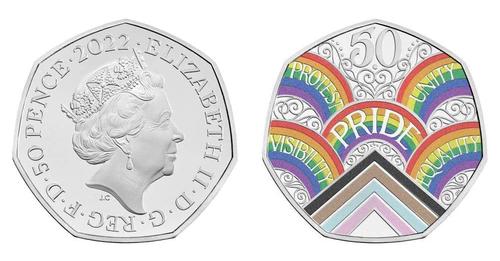
Rainbow 50p coin to mark 50 years of Pride movement in the UK

The 50p will not enter circulation but will be available online

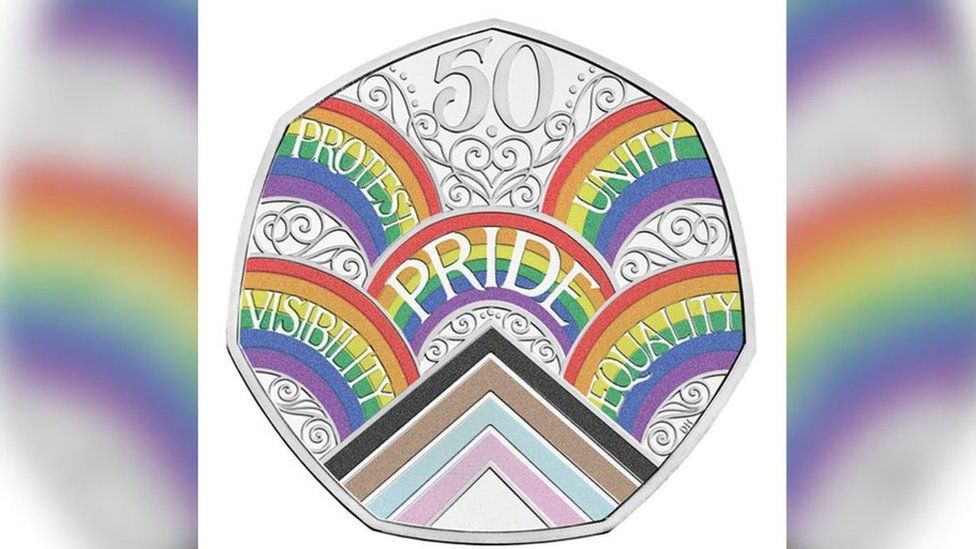
A rainbow 50p coin will be minted to mark the 50th anniversary of the Pride movement in the UK.

The coin features Pride in London’s values of Protest, Visibility, Unity, and Equality in rainbows with the Pride progression flag.

It has been designed by Dominque Holmes, an east London artist, writer, and LGBTQ+ activist.

This will be the first time the LGBTQ+ community has been celebrated on an official UK coin.

The commemorative 50p has been created through a partnership between Pride in London and the Royal Mint and a donation will be made to London LGBT Community Pride as part of the launch.

It was “a privilege” to see the coin being made at the Royal Mint, said Asad Shaykh, Pride in London’s director of marketing and communications.

“It humbles me greatly that the words that I coined for the brand- protest, visibility, unity and equality – will be on an actual coin, opposite the Queen,” he said.

He added: “Nowhere in the world had this been possible, except the UK. Pride in London feels very proud today.”

‘Milestone celebration’

Pride in London has organised the capital’s LGBT+ Pride parade and events since 2013, including this year’s on Saturday 2 July.

The UK’s first pride protest march took place in London in 1972 and the annual event now welcomes more than 1.5 million people onto the streets of London.

The Royal Mint’s director of commemorative coin, Clare Maclennan, said the anniversary was “a milestone celebration” and would use hi-tech colour printing technology to “capture the spirit of Pride UK”. She added the 50p will not enter circulation but will be available online.

Cuba marks Latin America’s first LGBTQ+ history month

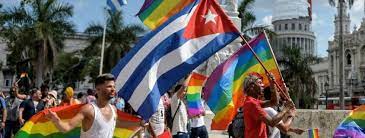
Cuba has become the first Latin American country to celebrate LGBTQ+ history month, with advocates hoping the milestone spurs other nations to mark old wins and prevent new discrimination.

Dozens of events are scheduled throughout May, said founder Raul Perez Monzon, a historian and assistant professor at the University of Havana.

Lectures, panel discussions, workshops and more will “promote inclusion” and “reflect on current issues in our country,” Perez said in an email.

“LGBTQ+ History Month is intended to help eliminate many years of discrimination,” he added.

“LGBTQ+ people have been afraid to call attention to themselves for fear of consequences, such as verbal abuse, attacks and exclusion.”

Organisers say the event marks an important first.

None of the 13 countries that have so far marked the month, from Australia to Canada, is majority Spanish-speaking.

Cuban Way

Legal persecution and social exclusion were once the norm for many LGBTQ+ people in mainly Roman Catholic Cuba, which has been governed by the Communist Party since 1959.

In the 1960s, under then-President Fidel Castro, some gay men were sent to forced labour camps known as Military Units to Aid Production for what government called “re-education”.

But LGBTQ+ campaigners say the island has since made strides.

In 2008, its National Centre for Sex Education said it would offer free gender-confirmation surgery to transgender patients.

Lawmakers banned workplace and housing discrimination on the basis of both sexual orientation and gender identity in 2013.

Yet the inaugural history month could still meet resistance from conservatives, including from some religious groups.

Changes that would have allowed same-sex marriage were scrapped in 2018 due to religious opposition.

At the time, Santiago de Cuba Archbishop Dionisio Garcia referred to LGBTQ+ rights as “ideological colonialism” and said that legalising marriage equality would result in “regrettable consequences”.

Cuba is holding consultations on the thwarted amendment, with lawmakers expected to revisit the issue in December.

Juan Carlos Gutierrez Perez, a professor at the University Marta Abreu of Las Villas and a festival co-organiser, said a “great wave of conservative religious fundamentalism has been developing in Cuba” in recent years.

“It is not an endemic phenomenon in Cuba but in Latin America and the rest of the world, too,” Gutierrez said.

Representatives from the Roman Catholic Church in Cuba, the island’s largest religious denomination, did not respond to a request for comment.

An estimated 60% of Cubans identify as Catholic.

Going Global

At least a dozen countries – from Canada to Finland, Hungary to Britain – have marked their LGBTQ+ heritage since Rodney Wilson organised the world’s first LGBTQ+ history month in the United States in October 1994.

“This is extraordinary exposure, and it’s had a really important impact,” Wilson said. “It provides at least once a year an excuse to take a spotlight out and shine it on these stories, these people and their history.”

The aim now is to spread the word wider, with a committee of members from New Zealand to Norway exploring participation. “It’s an exciting time,” Wilson said. “We are recognizing more globally the idea of shared and sustained history.”

Conversion Therapy Ban

The Petitions Committee has scheduled a debate on the petition “Ensure Trans people are fully protected under any conversion therapy ban”, for 4.30pm on Monday 20 June.

Ahead of the debate, MPs on the Petitions Committee have written to the Government to ask:

  • what evidence has informed the Government’s decision not to include transgender conversion therapy in the proposed ban on conversion therapy practices
  • for more details of the “separate work” the Government has said it will do to consider the issue of transgender conversion therapy
  • when the Government intends to publish its response to the consultation on banning conversion therapy

Read the full letter here.

The Committee has asked for a reply by Thursday 9 June so it can be published ahead of the debate on this petition.

How to follow the debate on transgender conversion therapy

Watch the debate from 4.30pm on Monday 20 June here.

Read a transcript which will be available a few hours after the debate ends here.