LGBT+ Museum Opens … LGBT Oral Histories … A Trans Man From Georgian Britain … Youth Pride

News

Inside Britain’s first ever LGBT+ museum (By Owen Jones)
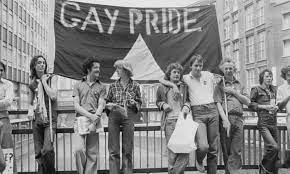
A Gay Pride demonstration at the Old Bailey, in 1977, one of the images exhibited at the Queer Britain museum. Photograph: Evening Standard / Getty Images

Queer Britain in north London is a bold attempt to celebrate queer history in all of its forms. At a time when the community is under attack, we need it more than ever.

It is little over half a century since homosexuality was partially decriminalised in England and Wales, and it’s a period defined by both progress and trauma. When Lord Arran co-sponsored the bill that ended the total criminalisation of same-sex relations between men – after his gay brother had killed himself – his preamble was bleak. “Lest the opponents of the new bill think that a new freedom, a new privileged class has been created,” he declared. “Let me remind them that no amount of legislation will prevent homosexuals from being the subject of dislike and derision, or at best of pity,”

After the Sexual Offences Act was passed in 1967, convictions of gay men for gross indecency actually increased four-fold, and gay people were still characterised as would-be sexual predators and threats to children. The 1980s HIV/Aids pandemic, ravaged a generation of gay and bisexual men, attitudes towards gay people hardened and a moral panic culminated in the passing of Section 28, banning the “promotion” of homosexuality in schools: the first anti-gay legislation passed since 1885. Nevertheless, in this period LGBT+ people flourished culturally and artistically, while from the 90s onwards, hostile public attitudes crumbled precipitously as anti-gay laws were struck from statute books.

Yet as a reminder that progress is far from linear, Britain is in the grip of another moral panic, this time directed at transgender people. And while today’s LGBT+ communities are more united in defiance of government policy that any time since Section 28 (more than 80 organisations pulled out of a government conference over its refusal to ban trans conversion “therapy”), Stonewall, the country’s main LGBT+ civil rights organisation, finds itself under siege, while homophobic and transphobic hate crimes are surging.
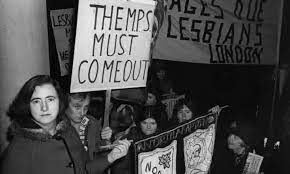
Trailblazing Labour MP Maureen Colquhoun with the Gay Defence Committee in 1977. Photograph: Wesley / Getty Images

So this really is an opportune moment to launch what is, astonishingly, Britain’s first ever national LGBT+ museum, established by the charity Queer Britain. Opening its doors to the public on 5 May, the space is ideally situated in King’s Cross, both for Londoners and for those visiting the capital by rail. Its opening is an important milestone for a minority that has only enjoyed widespread public acceptance and significant legal protections for the briefest of periods, and is, in a sense, still blinking, slightly dazed, in the light.
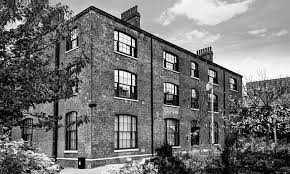
Launching a museum is an ambitious endeavour, and Queer Britain has come together with impressive speed. In 2017, its director Joseph Galliano visited the Queer British Art exhibition at Tate Britain and “realised you could create a blockbuster exhibition around queer subjects”. As a former editor of Gay Times, he tapped into his extensive connections with LGBT+ organisations and queer activists and artists, and when he spoke to potential funders, Galliano met constant astonishment that such a museum did not already exist or even been attempted in its own right before. Relationships were quickly built with the culture sector – such as the Tate and National Trust – as well as partnerships with the likes of M&C Saatchi “to help us develop our strategic outlook”. Thanks to the efforts of its patron ambassador Carolyn Ward donations began to pour in. Far from the national lockdowns proving an obstacle, the inevitable shift to digital events helped: it was easier to get 500 people on a Zoom call than crammed into a room.

“Our donors stood by us,” says Gallianio, while a membership system allowed for people to contribute what they could afford: whether it be a pound or £100 a month. “You see people welling up as you’re talking about the museum and the vision of the museum,” he says with no little pride. “When I started seeing that happen, that was the moment that made me step back and think: OK, this is something I’ve got to really commit to making happen and commit to making it as ambitious as possible.”
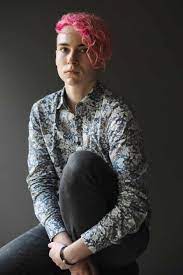
Milo, from Allie Crewe’s You Brought Your Own Light series, as featured in the initial show of photographs at Queer Britain. Photograph: Allie Crewe

One of the key tests of this museum is representation: LGBT+ spaces remain dominated by white, middle-class cis men (guilty as charged!). The trustees and advisory board reflect a laudable attempt to counter that with an impressive A-team of LGBT+ luminaries, such as the pioneering lesbian activist Lisa Power, Huddersfield-born Black artist and curator Ajamu X, Liv Little – founder of gal-dem, the magazine for women and non-binary people of colour – and the indefatigable trans author Christine Burns. As Galliano, ushers me into the museum – for now, three rooms of photographs serving as a holding pattern before its big summer exhibition in July – the commitment to that mission is commendably clear: queer families of colour, all conveying joy and love, adorn the walls. Why is this so important? Because the oppressed can be oppressors, too; research by Stonewall in 2018 found around half of Black, Asian and minority ethnic LGBT+ people suffered racial discrimination from local LGBT+ networks, rising to 61% among Black LGBT+ people.

“We built a board to make sure that there’s proper leadership structures that are diverse in themselves, as well as bringing in more skills that we need,” says Galliano. Uplifting underrepresented sections of the community is “absolutely written into the DNA”, with its first project being an oral history collection on those groups, accompanied by focus groups with representation from LGBT+ people with different and often intersecting identities.

“This will not be easy if we’re to truly transcend tokenism,” the trustee and Black photographer Robert Taylor tells me, “but I’m encouraged by what I’ve seen so far.” It’s so easy to be “unconsciously excluding”, he says, and he wants to “keep an eye out for comfortable unconscious assumptions about what we’re doing, how and for whom.” Or, as Lisa Power tactfully puts it: “We love our cis white men but they’re part of a bigger story.”
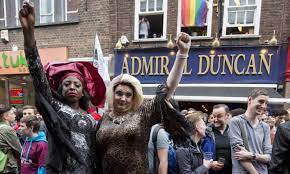
A show of solidarity for the Orlando massacre takes place at central London’s Admiral Duncan pub, itself bombed by a neo-Nazi in 1999. Photograph: Justin Tallis/AFP/Getty Images

Britain’s often tortured struggle for LGBT+ rights is reflected in many of the photographs, such as the flamboyantly dressed yet straight Jewish Labour MP Leo Abse, who successfully pushed for the partial decriminalisation of homosexuality from the backbenches. Maureen Colquhoun – the first openly lesbian MP who died last year – defiantly holds a placard emblazoned with “THE MPS MUST COME OUT”, while it’s difficult not to feel a pang of sadness at a photo of Justin Fashanu flexing his muscles: he was, of course, Britain’s first and still only out gay male professional footballer who killed himself in 1998. Such a collection would not be complete without that unlikeliest of LGBT+ allies, Diana, Princess of Wales, who helped upend the stigma of Aids, and is pictured lovingly touching the hand of an HIV patient.

This is a museum with huge potential. It includes space for events which – given that, unlike other major western capitals, London lacks a permanent LGBT+ community space – could make it a vital hub. There are, however, problems that the museum surely needs to interrogate in advance of the summer exhibition. One photograph, for example, features a Metropolitan police officer joyfully high-fiving a London Pride attender. That same police force has been criticised as institutionally homophobic by the families of the four men murdered by Stephen Port over its failure to investigate the so-called “Grindr killer”. Is the picture really appropriate, I ask Galliano. There’s a pause which seems to last a lifetime. “I think you make a good point, which I’d like to have a more considered answer for,” he tells me. “There’s a fuck of a lot to do in getting something like this set up, and it’s a lot of spinning plates, and the thing is you get some of them wrong.”

There is a lack of expression, so far, of queer love, too – of a non-familial sort, anyway – and sexuality, with the exception of a picture of the lower torsos of two kilted men holding hands. This is a family space, of course, and no one reasonable would expect full-frontal nudity, but it’s striking that the walls of a queer east London bar such as Dalston Superstore feature more challenging images about such important elements of the LGBT+ experience. It should be hoped, too, that the upcoming summer exhibition features more images of struggle: there are allusions, such as a Black woman holding a “LESBIAN AND GAY PRIDE ’83” balloon, but there are so many joyous moments to celebrate that are in danger of being forgotten by younger LGBT+ generations, such as the lesbian activists who abseiled into the House of Lords or stormed the Six O’Clock News to protest against Section 28. “Wait for the summer exhibition,” says Galliano. Where I disagree with Galliano, though, is when he suggests “it’s very easy to kind of go ‘struggle, victimhood, difficulty’”: these moments should surely be seen as courageous acts of agency which spurred on change.
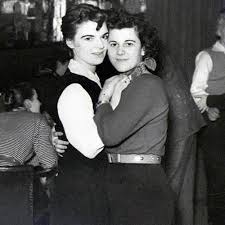
Given the full-frontal offensive against trans people it is welcome to see representation, including two portraits of trans people from award-winning photographer Allie Crewe’s You Brought Your Own Light collection. “As a trans person myself I am always surprised that the rights won by LGBT+ communities to date were very much won with trans siblings in the day-to-day struggles and fights from the outset,” says trustee and businessperson Antonia Belcher, “yet that representation has not materialised the same recognition for trans people – hardly fair.” She fears the museum may not succeed in challenging entrenched attitudes among older Britons, but it will be “welcomed by younger generations, like my own children and grandchildren, who are naturally inclusive”.

So who is this museum for? “It’s for everyone!” says Anjum Mouj, trustee and board member of Imaan, the Muslim LGBT+ group. She wants LGBT+ and heterosexual people alike to visit, with parents taking their queer and straight children; and for the museum to look beyond Britain’s borders, in a world in which 69 nations and territories still criminalise same-sex relationships. In its first year, the museum hopes to attract 26,000 people through its doors. It is easy to be pernickety about ambitious and well-intentioned new projects – this one has been four years in the making – but any critiques should surely be about wishing this endeavour well. It will make mistakes, but with such commendable representation among its trustees and advisers, and a genuine commitment to listen to LGBT+ communities, there are huge grounds for optimism.

In the half-century since criminalisation of male homosexuality was partly repealed, Britain’s LGBT+ communities have made dramatic contributions to British culture and society, often while faced with tremendous adversity. We surely deserve our own museum to remind us how our rights were won – at huge cost and sacrifice – as well as showcasing how we have flourished.

Queen Britain is at 2 Granary Square, London, N1, and will open to the public on 5 May.

LGBT Oral Histories

The LGBT Community Organising Oral Histories project is a series of interviews forming a snapshot of community organising, past and present, by LGBT+ people.

The Interviewees were asked in respect to their experiences of being an LGBT person involved in LGBT+ activism and community organising in Greater Manchester, and how things have changed.

This project is hoping to show community organising is not ‘only’ protesting in the streets, or for ‘only’ certain people and there’s not ‘only’ one way to make change. It can include: mutual aid, community groups, volunteering, helplines, protests online and offline, knowledge and resources sharing and the list goes on.

To see the interview with Sarah, an older lesbian in her late 50s, at the time of recording, and more interviews, click here.

A Trans Man from Georgian Britain

In August 1836, the New York police arrested a man who had been born female. Initially it looks like he lied to the police about his name “James Walker”, and background.

Claiming that he was looking for an estranged husband, he started working and dressing as a man to survive and gain access to the docks. He presumably hoped he might be let off with a warning. However, when his wife, Elizabeth, asked to see him at the jail the next day, his name was revealed as George Moore Wilson.

George was born around 1806 at 20 Atherton Street, Liverpool. When he was 9 he moved to Ayrshire, Scotland. Aged 12 he adopted his father-in-law’s name, put on masculine clothes and ran away to Glasgow, finding work in a textile mill. A marriage certificate showed that on the 2 April 1821 he married Elizabeth Cummings at the Barony Church in Glasgow.

Just a couple days later they set sail for Quebec; only then did she find out he was transgender. They lived in New Limerick for a while, where Elizabeth’s father moved into their house, and then they moved to Paterson, where both of the men worked at the same mill. Finally George moved to Brooklyn, New York, and found work at the docks. All throughout this he was clearly read as male by his contemporaries, even his father-in-law didn’t know his birth sex.

It was only when he was arrested that the fact he was trans was revealed. While we know that the magistrate lectured him on his “crossdressing” and mocked that his marriage had bore no children, we don’t know the end result of the trial.

It is worth noting the term ‘transgender’ did not exist back then. It’s possible that Wilson might have transitioned for economic reasons or simply to marry a woman, although the most likely explanation is the simplest: he lived as a man because he wanted to.

Evidence of a trans man from Liverpool this far back might seem extraordinary, but while his wife was alarmed by the court case, when summoned she spoke about the matter with “nonchalance”, showing that for some people it’s always been the norm.

Regardless of his reasoning, despite all the barriers, George Moore Wilson dared to be himself. But he had to live a life of secrecy and exile, and was most likely forced into living as a woman after the court case.

Despite the barriers that we might face today or in the future, we need to fight so that anyone can proudly take control of their bodies and their lives.
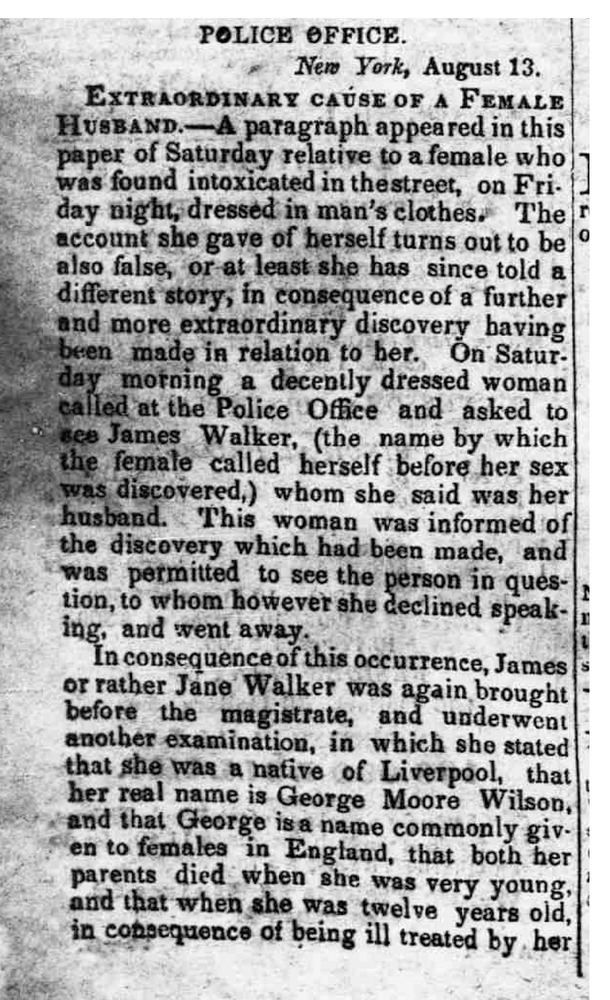
Extraordinary Cause of a Female Husband – The North Carolina Standard (Raleigh, North Carolina)
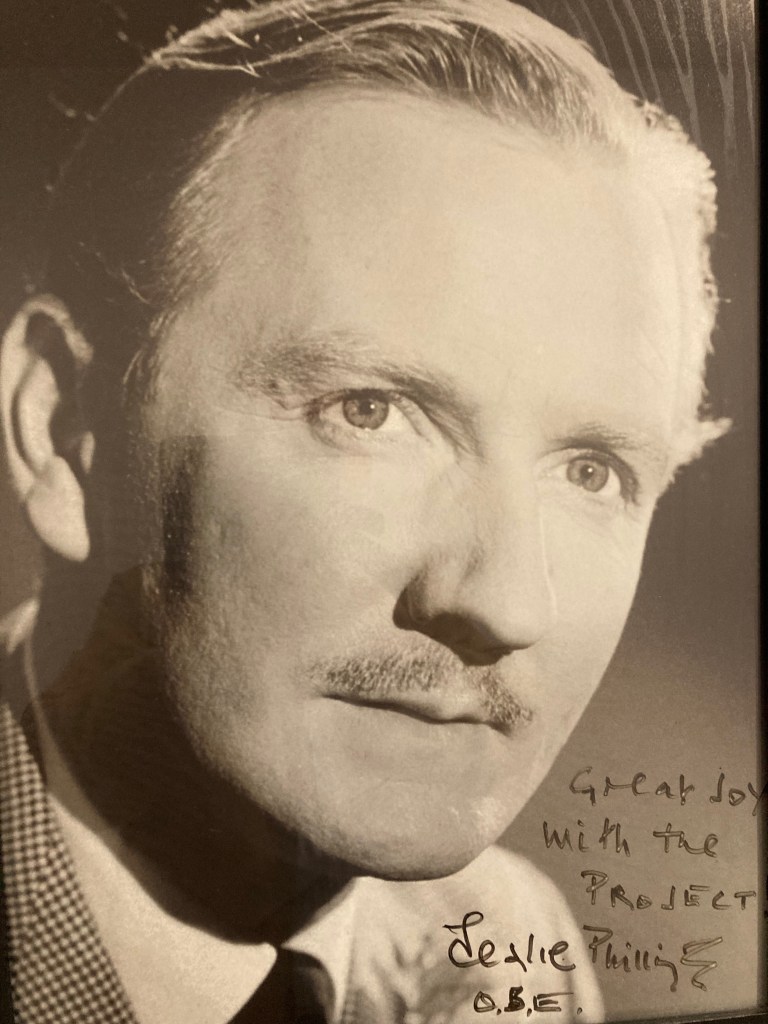
Leslie Phillips likes it: “Ding Dong … You’re Not Wrong”

Youth Pride

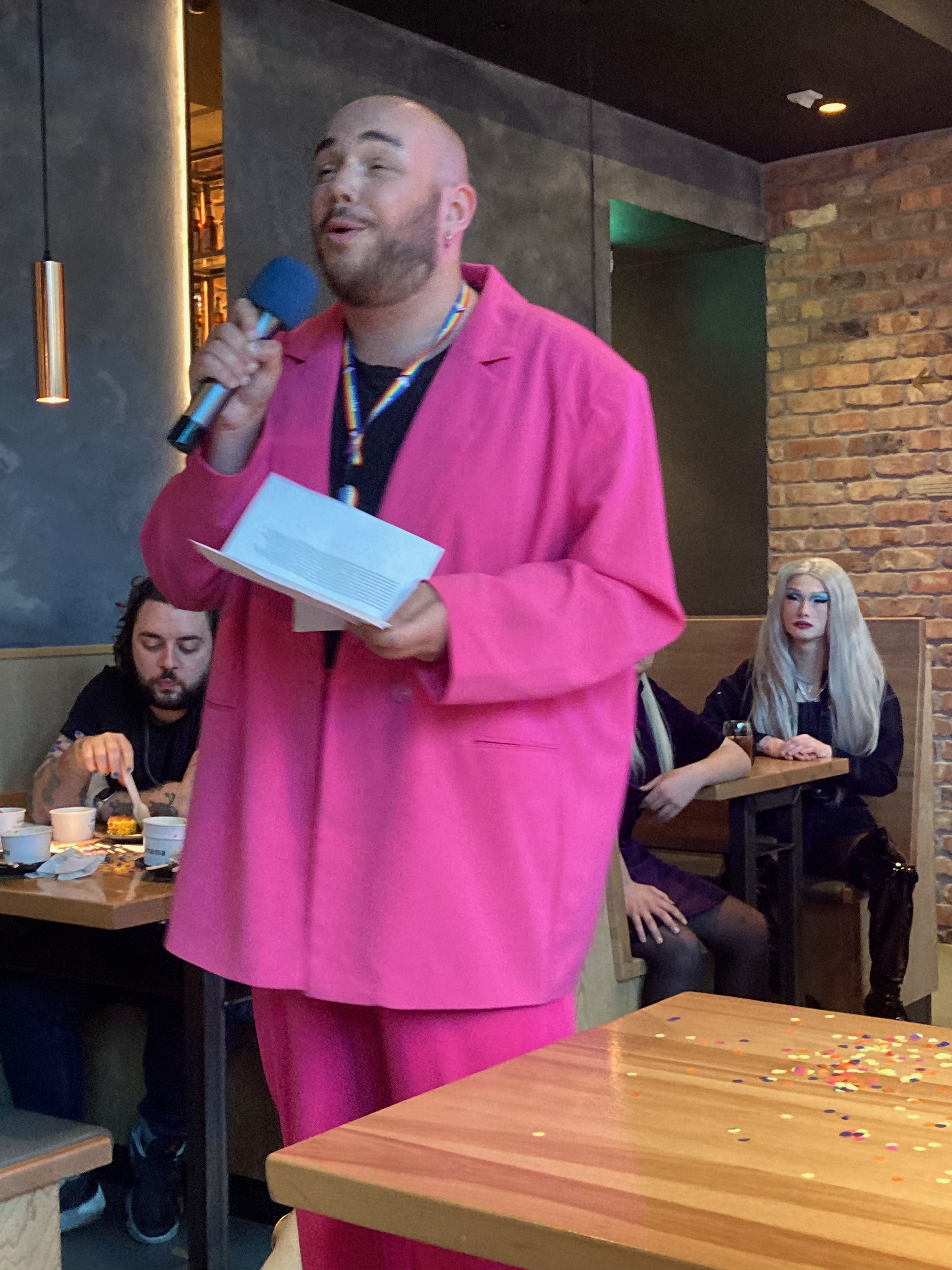
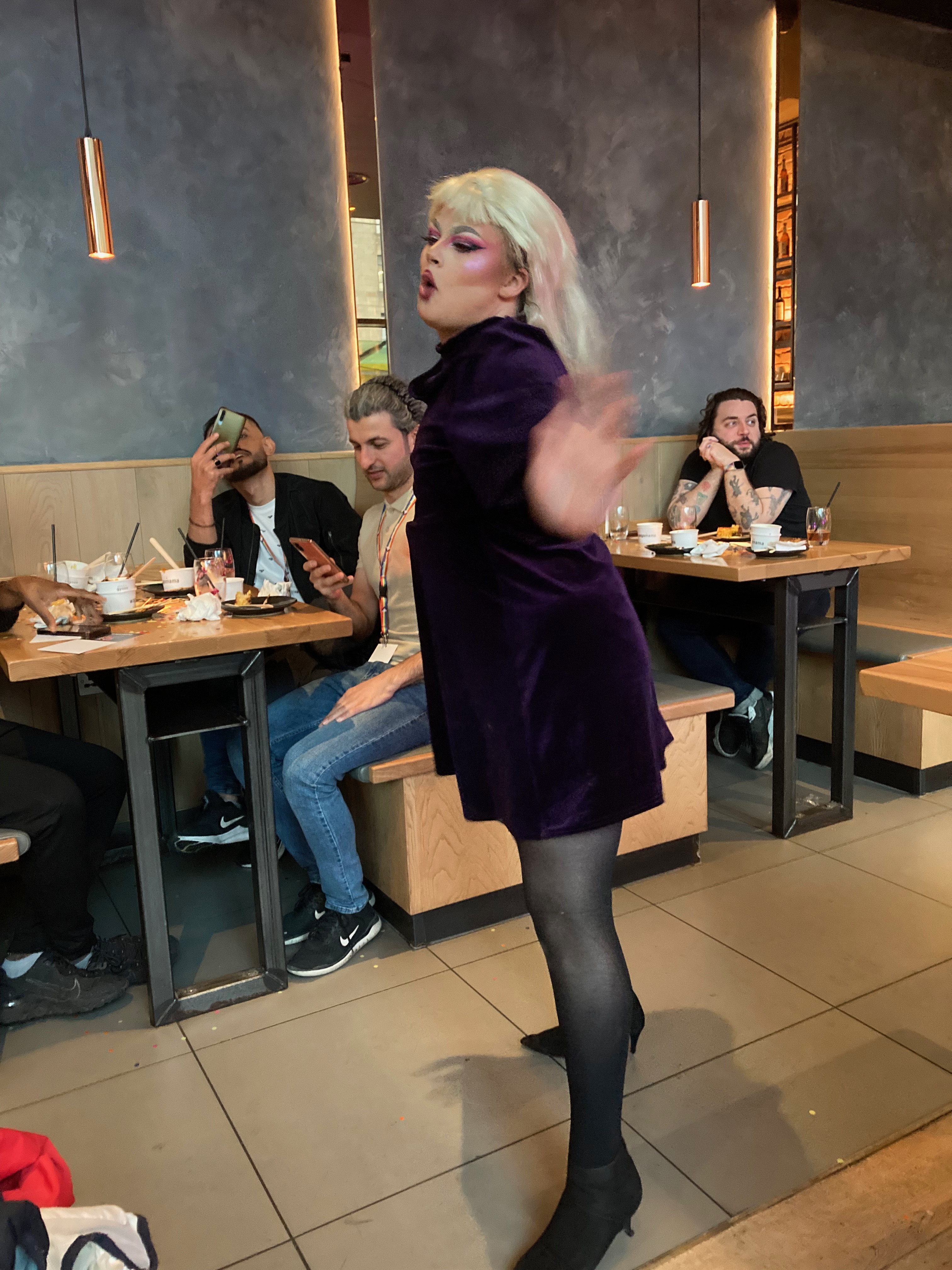
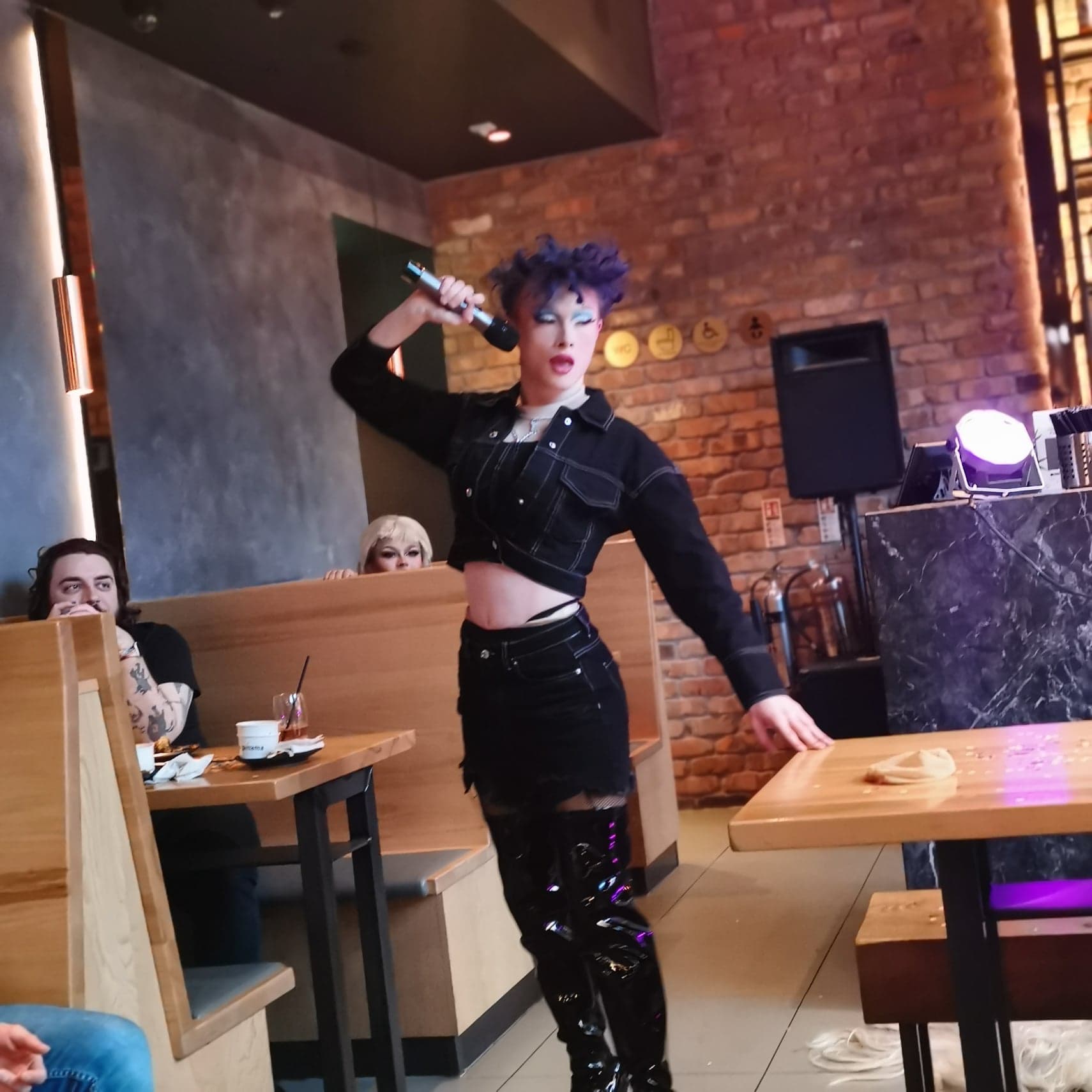
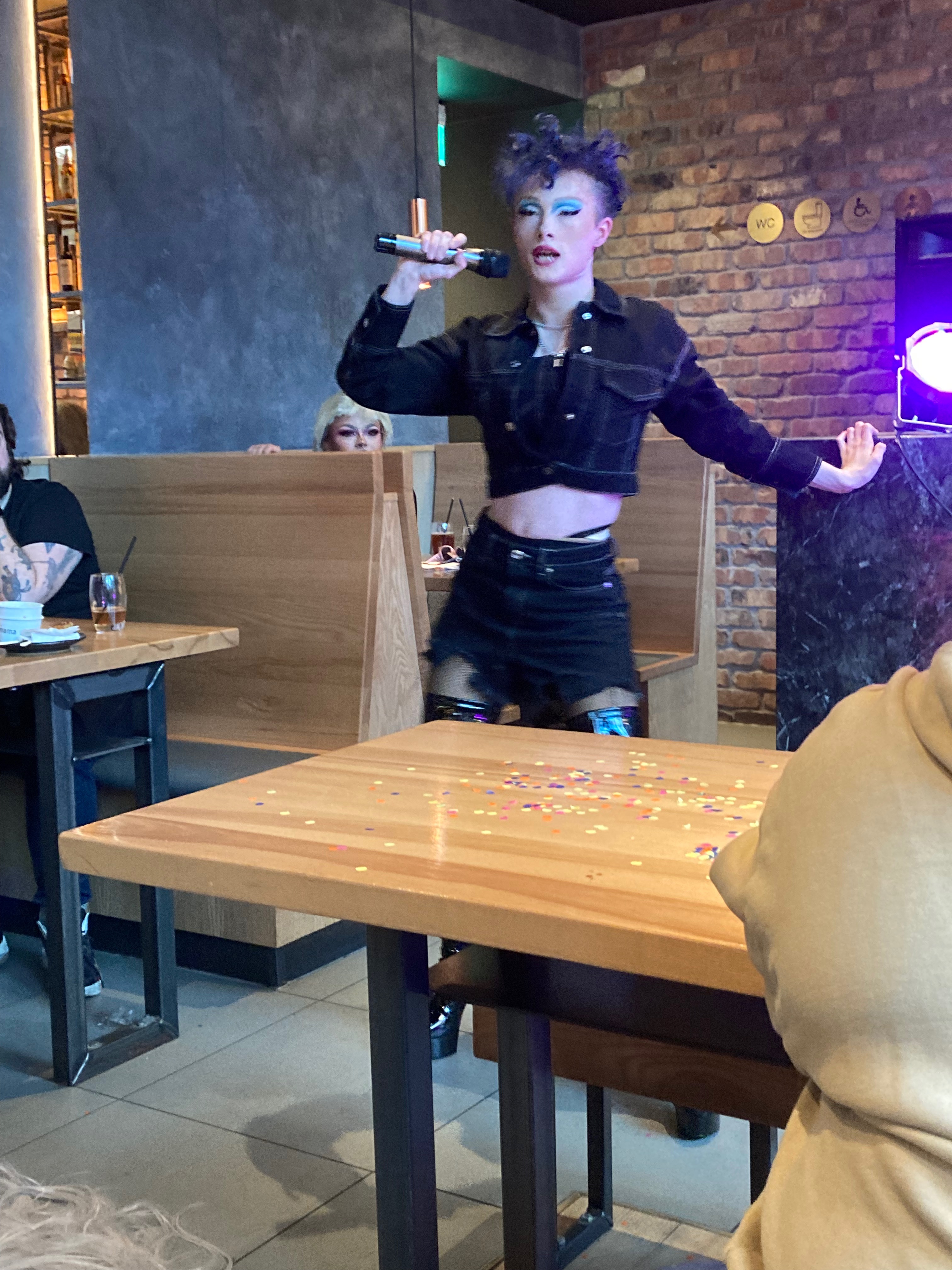
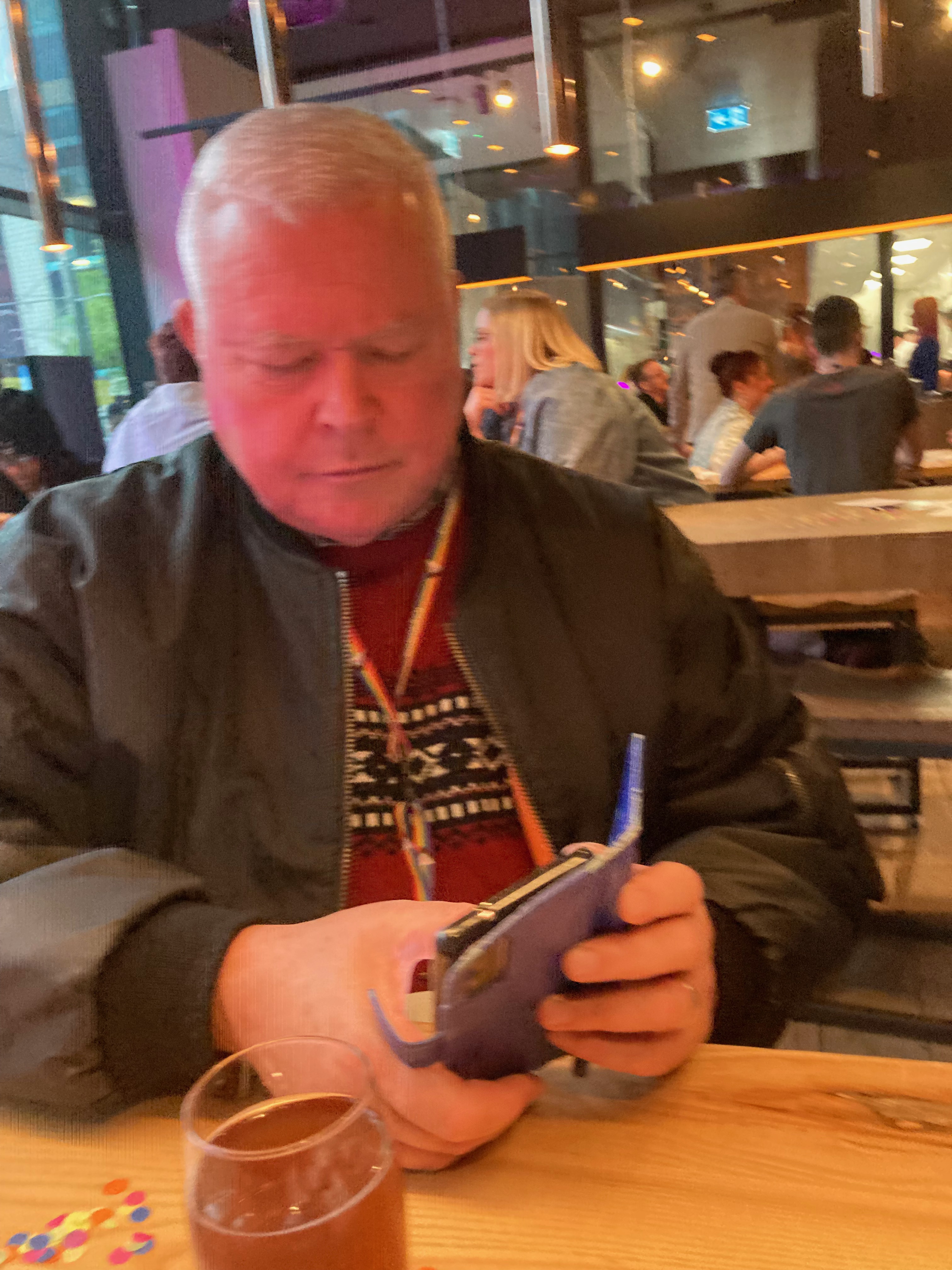
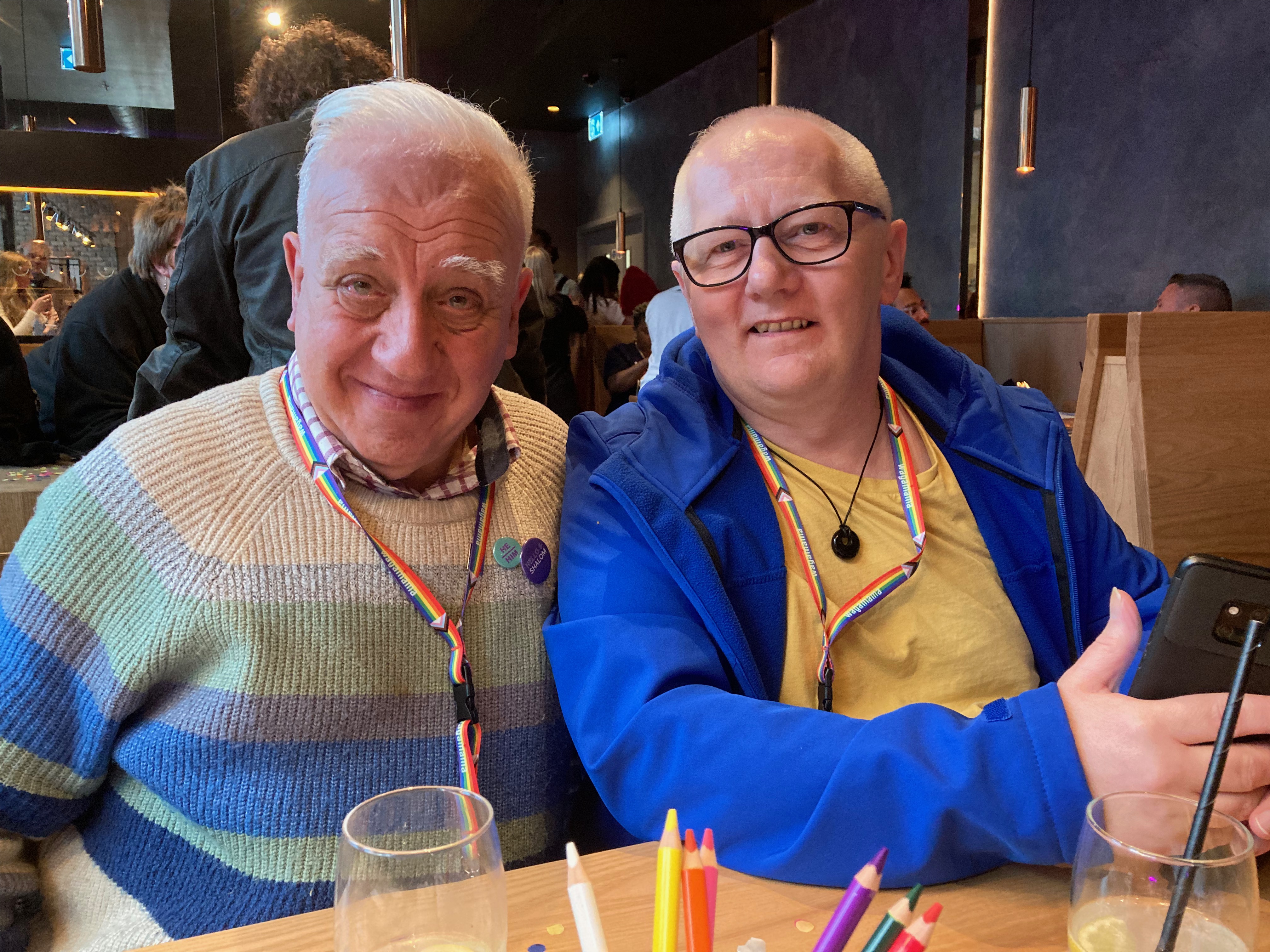
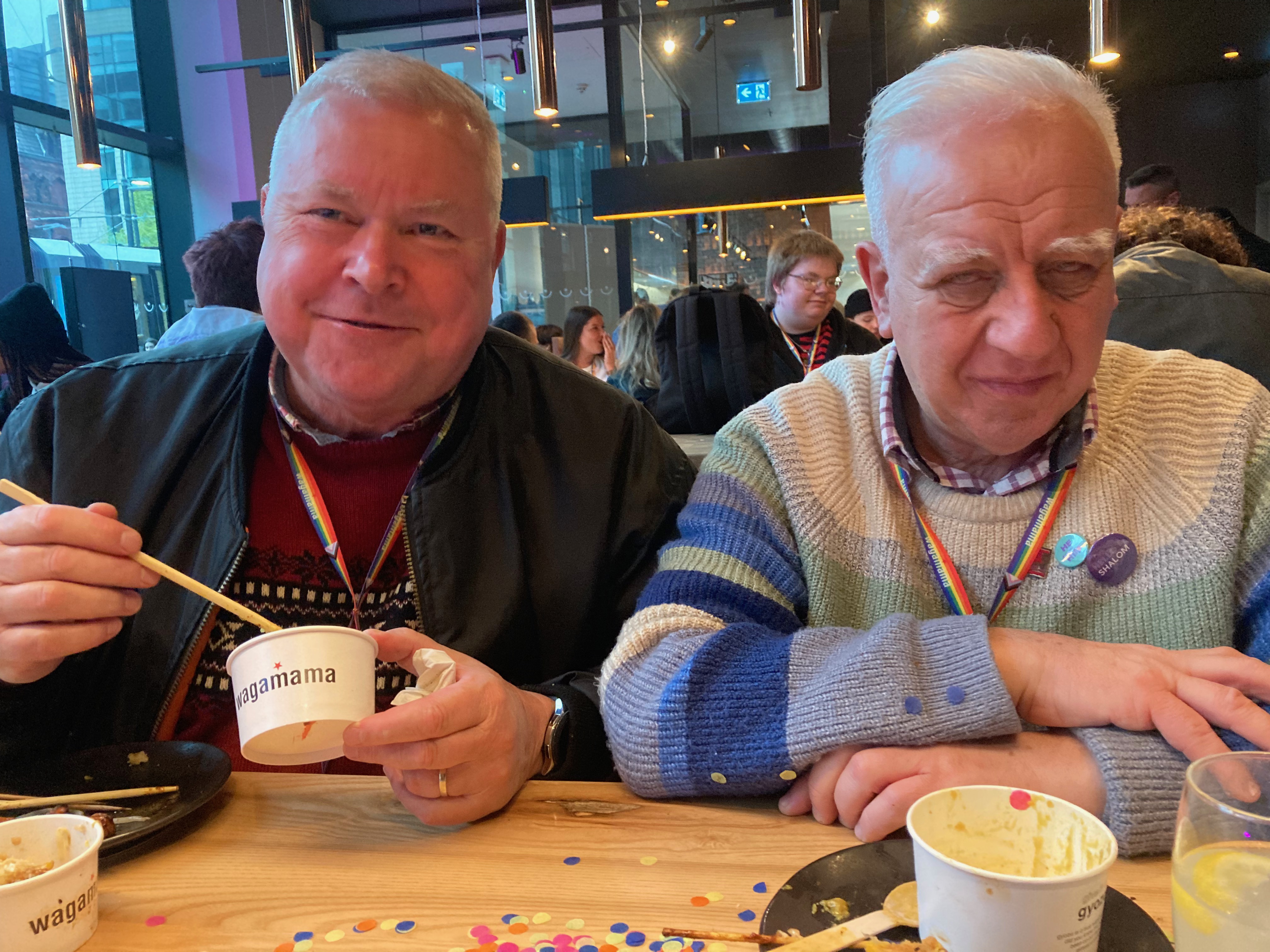
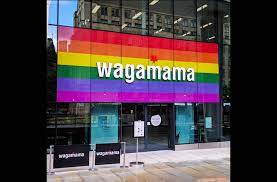
Four members of Out In The City were invited to a great event, which took place on Wednesday, 4 May at Wagamama’s in St Peter’s Square.

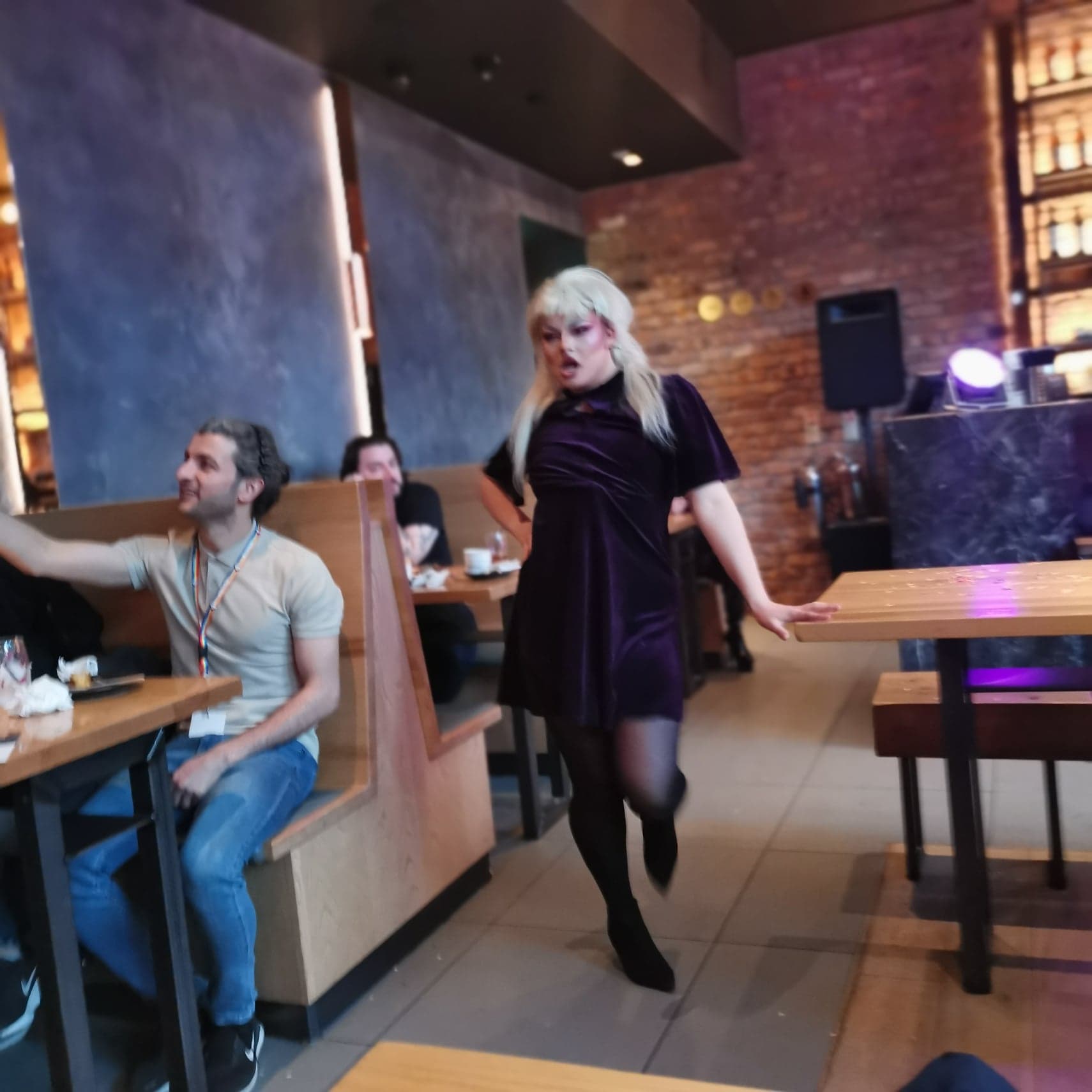
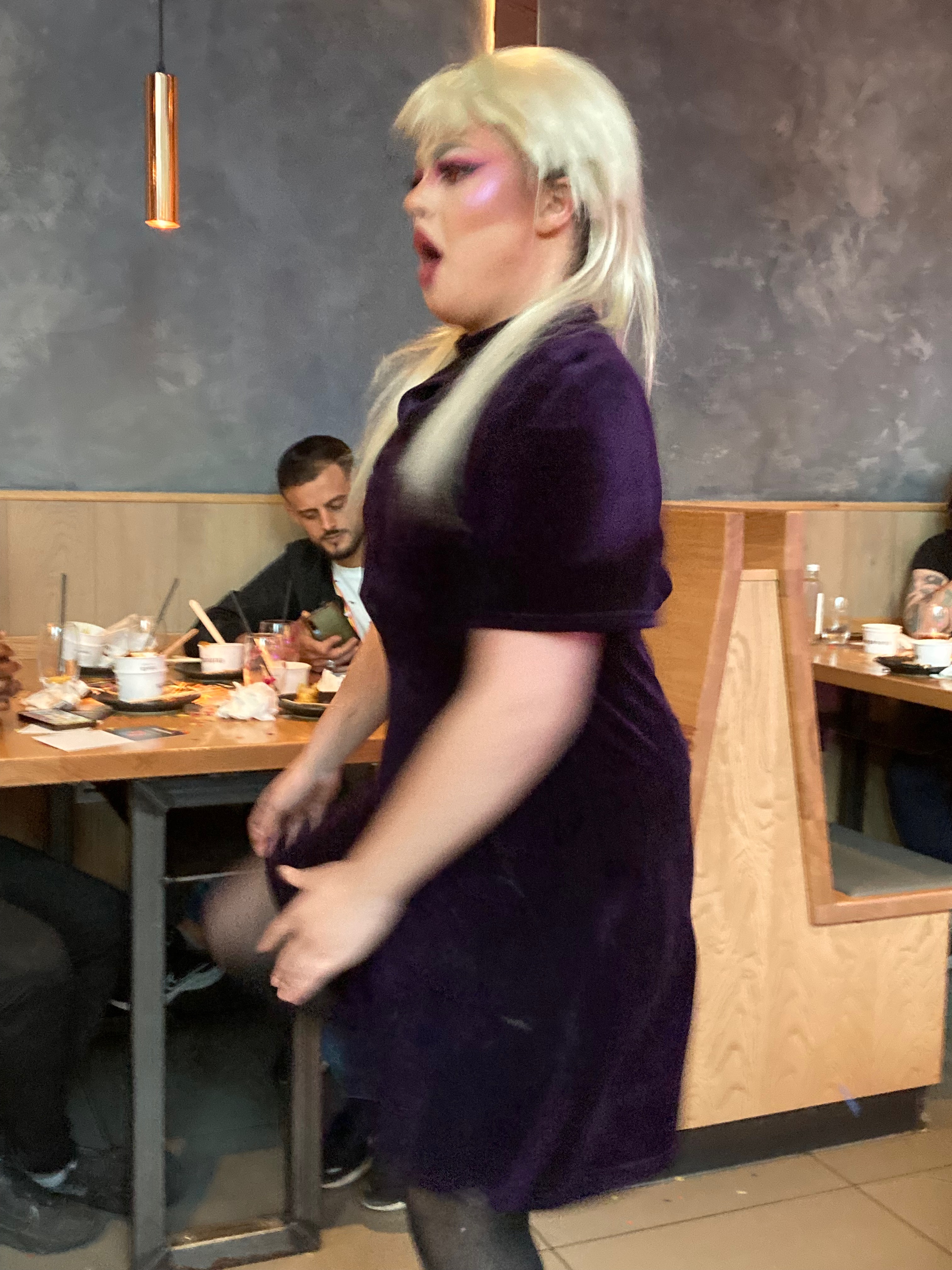
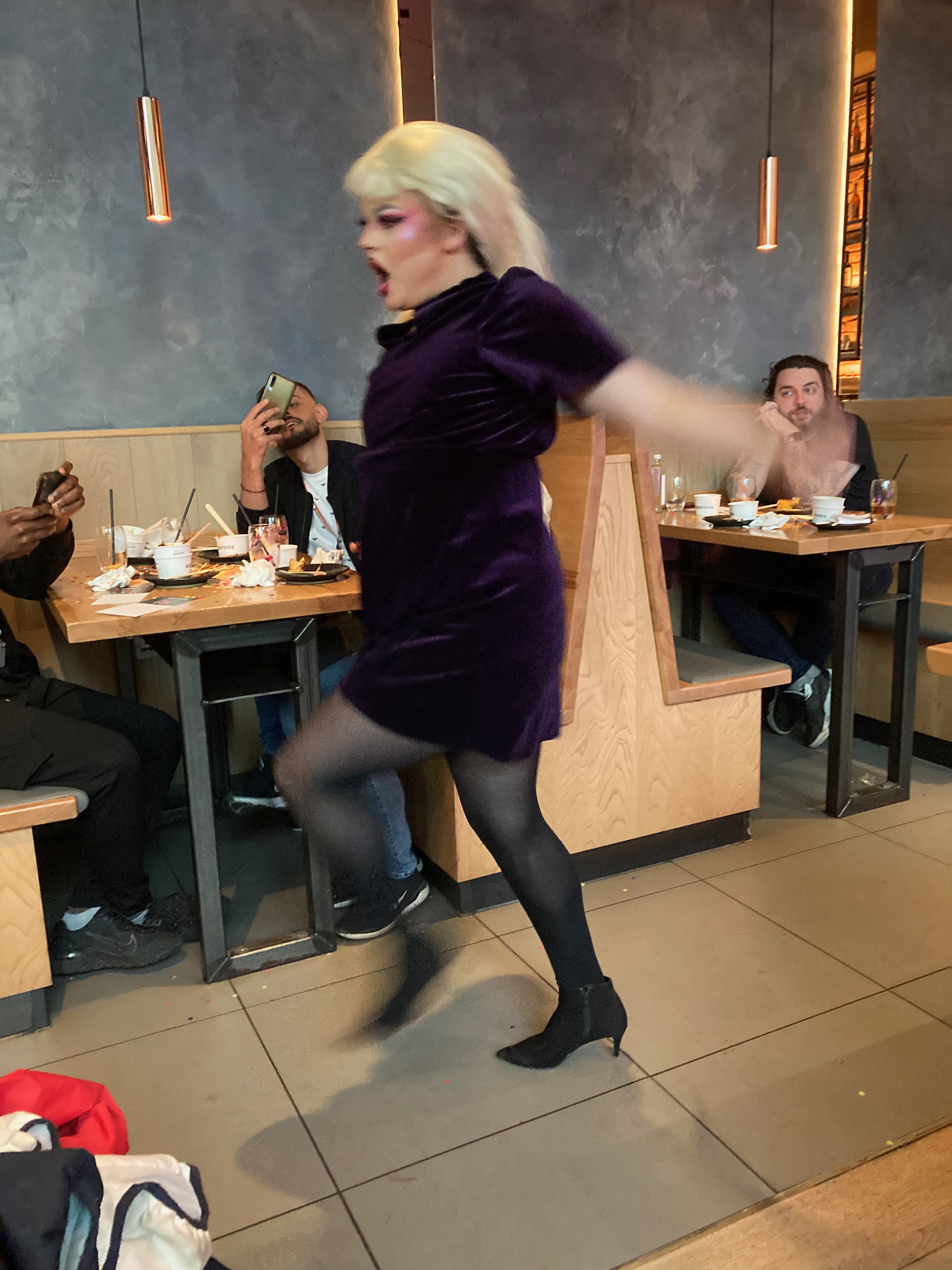
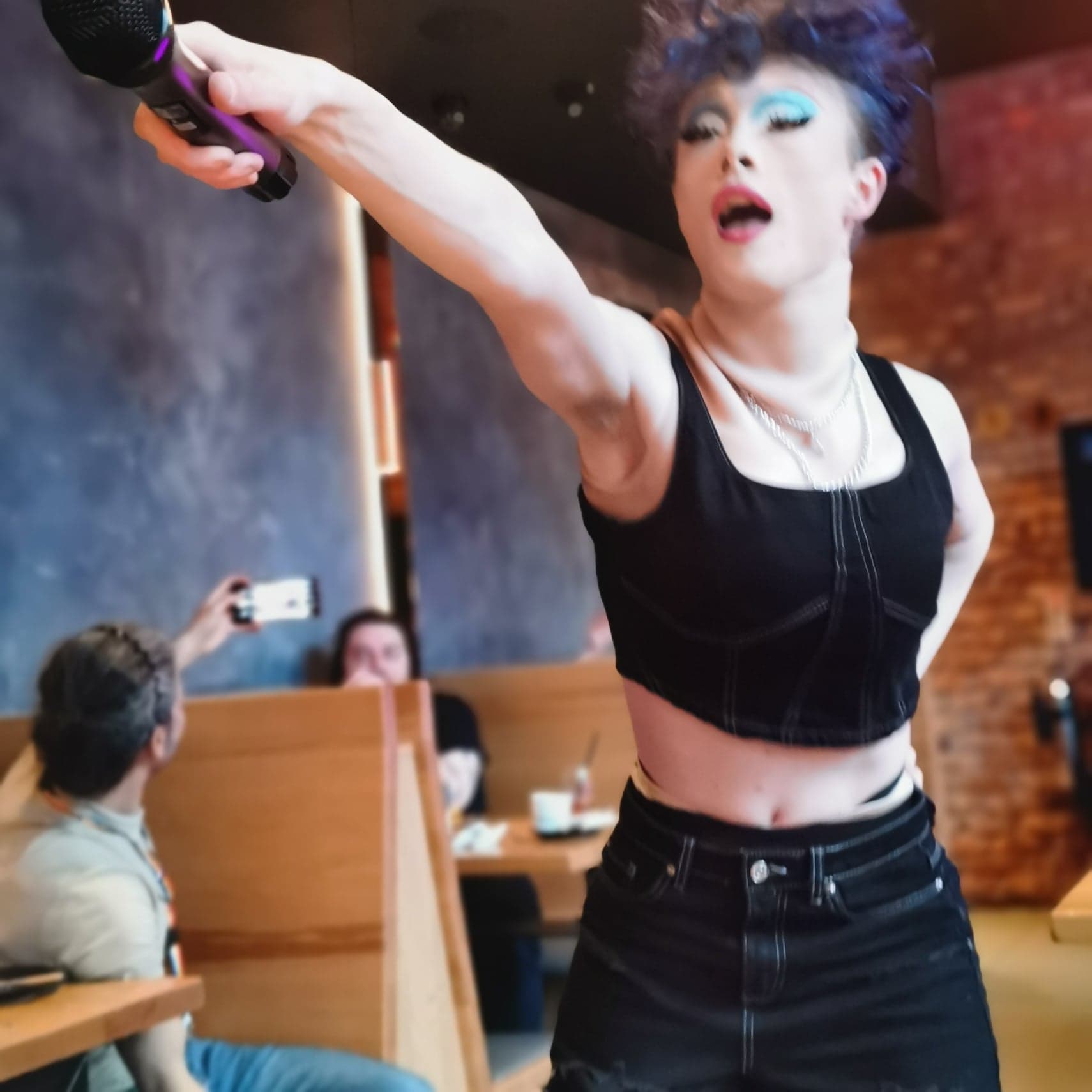
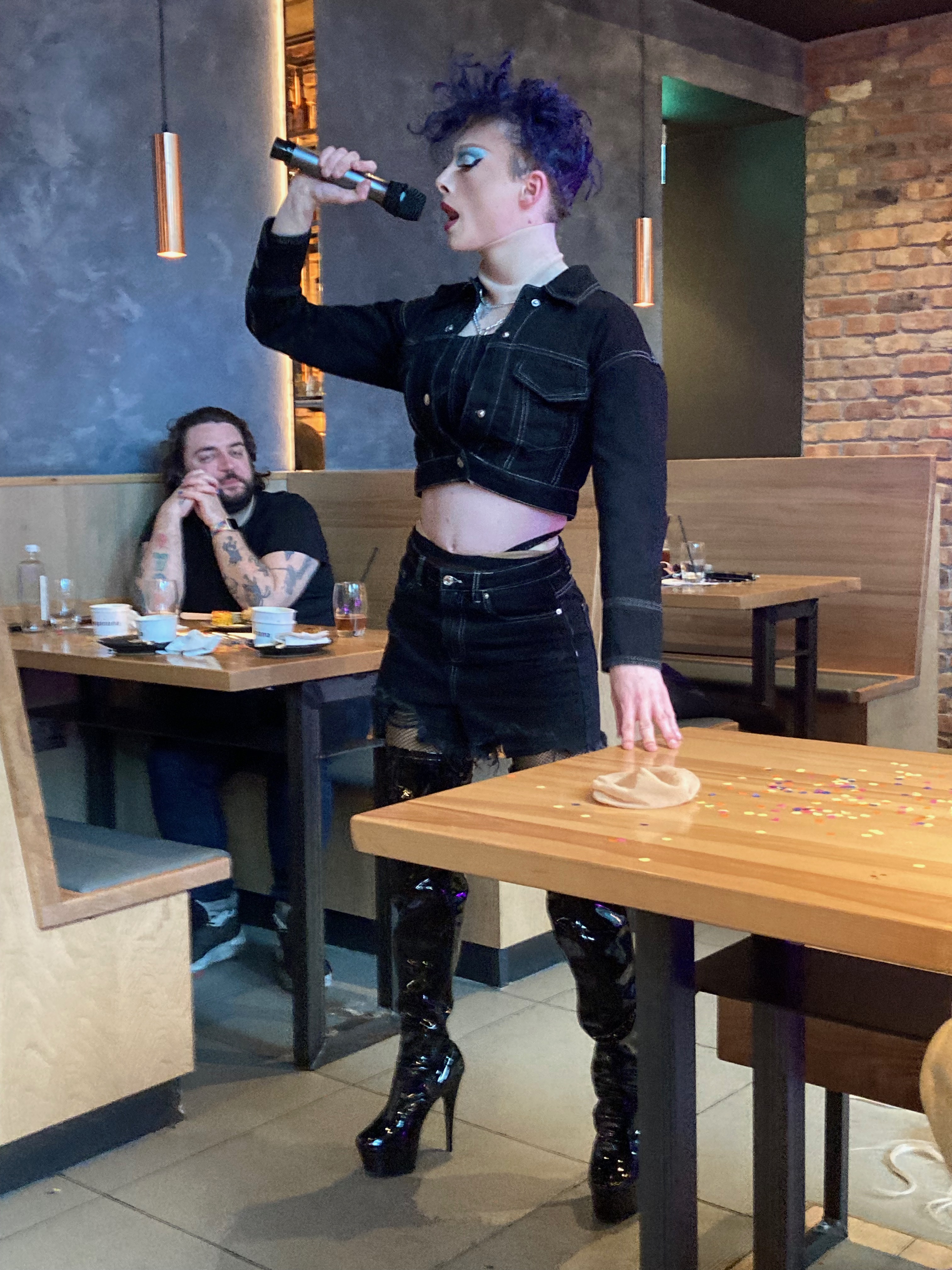
The evening was called “Proud Beyond Pride”. We enjoyed some delicious free Wagamama food and drinks, whilst entertained by performances from some super talented Youth Pride members including lip syncs and spoken word. There was a guest appearance from drag queen Snow White Trash.

It was a fantastic networking event.
Bury Pride … The Great British Bear Bash … Why One Gay Couple Fled Russia

News

Bury Pride

Bury Pride on 30 April was the first event of Pride Season 2022.

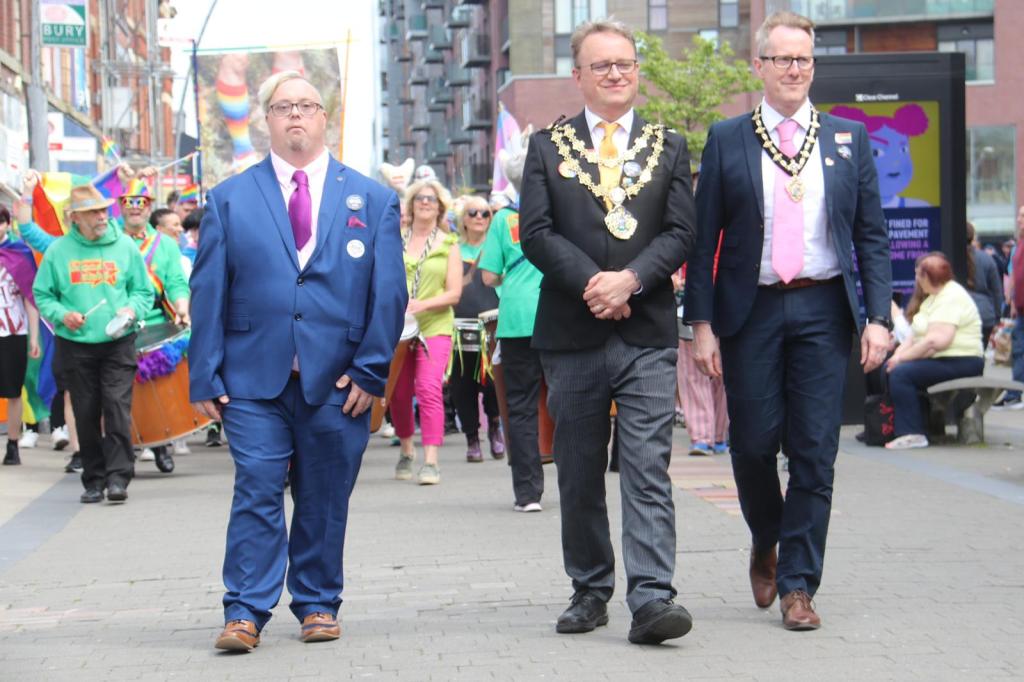
It took place at the Castle Armoury Drill Hall and included a line up of tribute acts and drag queens as well as the Walking Rainbow Parade. This was lead by Councillor and Mayor Tim Pickstone and attracted a large amount of interest from people within the town centre and shopping areas.

There were many information stalls ranging from The Beaumont Society (transgender support group formed in 1966) to the Proud Trust LGBT+ Youth Services.

See photos here.

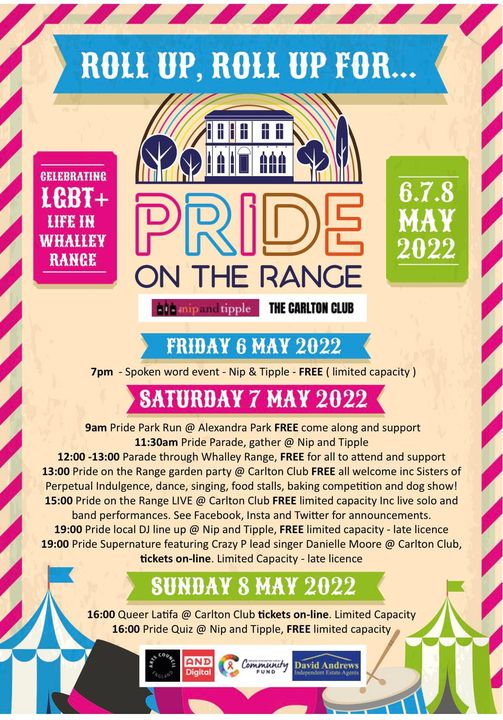
The weather was fabulous and we are looking forward to Pride on the Range (Whalley Range Pride) on 6 – 8 May and Pride in Trafford on 17 – 21 May.

The Great British Bear Bash

The UK’s biggest bear event returned to Manchester. Four days of friends, fun and fur.

With a favourable weather forecast in prospect, the event promises to bring a very special atmosphere across the May Bank Holiday weekend.

The Great British Bear Bash is the UK’s biggest bear community event. It is attended by bears, cubs, chubs, otters, pups and chasers from across the UK and even further afield.
It’s the perfect event to meet old friends and make new ones. Have a drink, a coffee, a dance, a pizza or even a cuddle.

The main event venues included: The Rem Bar, Cruz 101, Eagle Bar, Via, Cockatoo Club and The Basement Sauna. Throughout the weekend the bears will party, eat, drink and relax in venues across Manchester’s gay village and the organisers are pleased to support The LGBT Foundation.

‘War gave us the final push’: Why one gay couple fled Russia for Turkey

An estimated 200,000 Russians have left their country since Vladimir Putin invaded Ukraine at the end of February.

Among those fleeing are Dima and Mitya, who made their way to Turkey – one of the few countries Russians can enter visa-free. Being a gay couple and feeling the pressure of Russia’s newly enacted anti-gay federal laws, they had already been thinking about leaving the country.

Turkey’s record on LGBT+ rights is little better than Russia’s. All the same, Putin’s invasion of Ukraine was the final straw for Dima and Mitya.

‘It was [already] really hard living in Russia,” says Dima. “But now there is no life in Russia at all.”

Dima and his partner Mitya are among an estimated 200,000 Russians who have left their country. Many fear further crackdowns on anti-war dissent, and the possibility that forced conscription could be introduced.

But there are limited options for destination countries; the EU, the US and the UK have all closed their airspace to Russian planes. So Russians are largely travelling to neighbouring countries in the South Caucasus and Central Asia, including Armenia, Georgia and Turkey.

Dima and Mitya booked their flights as soon as they heard about Putin’s speech about a “special military operation”. Being a gay couple and feeling the pressure of Russia’s newly enacted anti-gay federal laws, they had already been thinking about leaving the country. “A lot of LGBT activists were punished, going to jail,” said Dima.

Turkey and Russia have been ranked among the worst places to live in Europe for LGBT+ people by advocacy group ILGA-Europe. President Recep Tayyip Erdogan and his government frequently target LGBT+ groups, and the government-influenced media often spreads disinformation about LGBT+ activists.

Still, the country – and especially its biggest city, Istanbul – has become a ‘hub’ for mostly young and progressive Russians, including LGBT+ people, either to settle in or to wait for the results of EU visa applications.

Mitya talked about how his Ukrainian friends posted on social media during the first days of the war, accusing all Russians of being responsible. “I do understand these people, they lost their homes, they’re being bombed, but I really want them to understand that there is nothing we could do about it,” he said, “The only thing we could do was to show our protest and show that we could never accept that.”

Smithills Hall … George Takei

News

Smithills Hall

We arrived in Bolton and dined at the Olympus Fish and Chip Restaurant before taking the bus to Smithills.

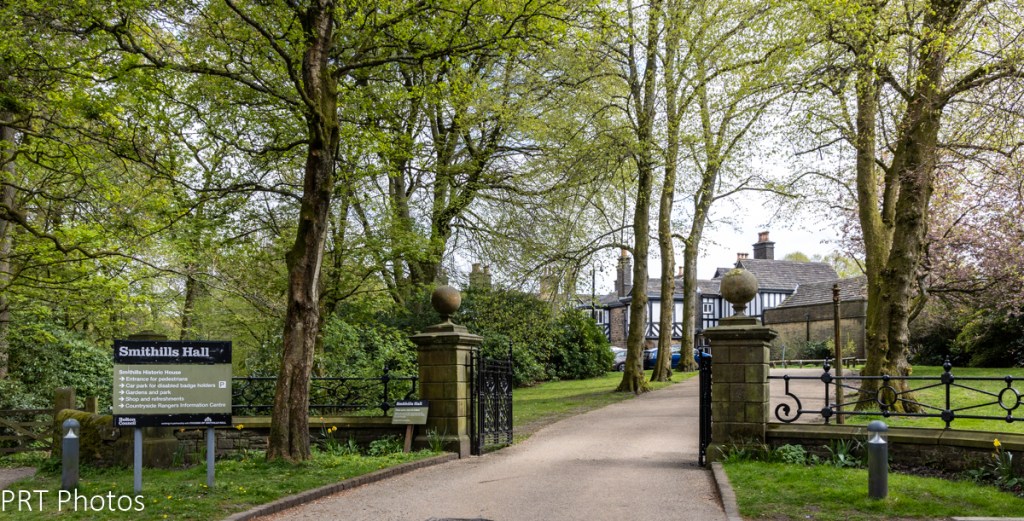
Smithills Hall in Bolton, a Grade I listed manor house, is three miles north of the town centre and is one of the oldest manor houses in the north west of England. The oldest parts date from 1335, but it has since been altered and extended.

When Mary, a committed Catholic, took to the throne in 1553 she was determined to overturn the religious changes made in the reign of her father Henry VIII. Many Protestants left the country, fearing her intentions.

During the early part of Mary’s reign, a fiercely devout Protestant preacher, George Marsh, was teaching in and around the parishes of Bolton and Deane. This aroused the anger of the authorities. In 1554 the local magistrate, Robert Barton of Smithills Hall, was ordered to arrest and examine him on a possible charge of heresy

Marsh was arrested and brought to Smithills Hall for interrogation in the Green Chamber. It is said that as he was leaving, he stamped his foot on the flagstone as a declaration of faith.

At the entrance to the Chapel is a mysterious mark on the flagstone. Legend has it that this is the footprint of George Marsh. The footprint is said to bleed every year on 24 April – the anniversary of his death.

In 1555, Marsh stood trial and was finally burned at the stake for refusing to deny his protestant beliefs.

Smithills Hall was the first building in Bolton to have a gas and electricity supply. Before the introduction of electricity, running a house the size of Smithills would have been a huge undertaking. Kitchen staff had to cope with conditions more like those of a busy hotel. Washing the dirty dishes required multiple sinks and at least two staff. Electricity and gas meant that lighting and heating such a large house no longer needed as much manual labour. As a result the number of staff employed decreased from the early 1900s onwards.

More photos can be seen here.

George Takei has perfect response to right-wing “grooming” hysteria

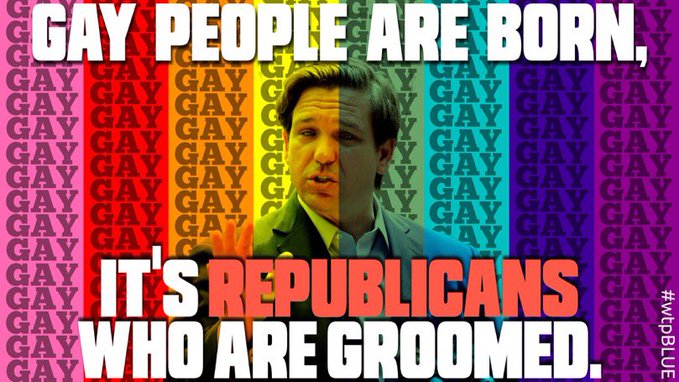
With debates around school textbooks and the passing of the “Don’t Say Gay” bill in Florida, some on the far right are increasingly accusing members of the LGBT+ community of wanting to “groom” children.

This disgusting, dog-whistle of a claim conflates LGBT+ rights with paedophilia.

Using the term “grooming” to discuss LGBT+ issues in the school curriculum also detracts from the serious issue of paedophiles who actually do target and groom kids.

Actor George Takei, who turned 85 on 20 April, tweeted the perfect response. He reminded people about how gay kids are usually brought up in a wholly heterosexual environment and it does nothing to change their sexuality.

“They ‘groomed’ me to be heterosexual, you know. It didn’t change a thing. Still gay as a rainbow sprinkle-covered cupcake,” he said.

Takei’s tweet has had over 211,000 likes and thousands of comments. Takei followed it up with a second tweet saying, “The only things ‘gay grooming’ will ever do to a straight child will be better hygiene and more desirability from the other sex.”

Lesbian Day of Visibility … March on Washington … Bearly Healthy

News

Lesbian Day of Visibility

“L” is at the beginning of LGBT+; what more visibility do lesbians need?

However, perceptions of the community are tarred by stereotypes. Lesbian Day of Visibility, celebrated on 26 April, remains an important opportunity to celebrate the diversity in the community and to challenge stereotypes. There has been a Lesbian Visibility Day since 2008.

In the 90’s and before, the world was a different place if you were L or G – the B barely got a look in then and there was little visibility of trans people.


While some lesbians were having a great time, locking lips on Channel 4 soap Brookside, the real-life ones, like Sandi Toksvig, were living their lives quietly, believing that to broadcast their sexuality would mean waving goodbye to their careers. Indeed, when Sandi did come out in 1994, she and her family received death threats and were forced into hiding, a situation she describes as “truly, genuinely frightening”.

Now, Sandi is at the top of her game inspiring us endlessly to come out and stay out and achieve our dreams. But make no mistake – life isn’t all rainbows.

​While it’s right and proper that we take this moment to celebrate, we mustn’t forget that for too many of us, it is still 1994. We are fearful and living in the shadows. So let’s celebrate, yes. But let’s also keep pushing forward, towards a better future for everyone under the LGBT+ umbrella. Because until we can all be out, in all aspects of our lives, we may as well all be in the closet. There remains a need for strong lesbian role models. Giving a platform to these role models, all of them with different stories, identities and nationalities, each an important part of our community, reminds us that we are all valid.
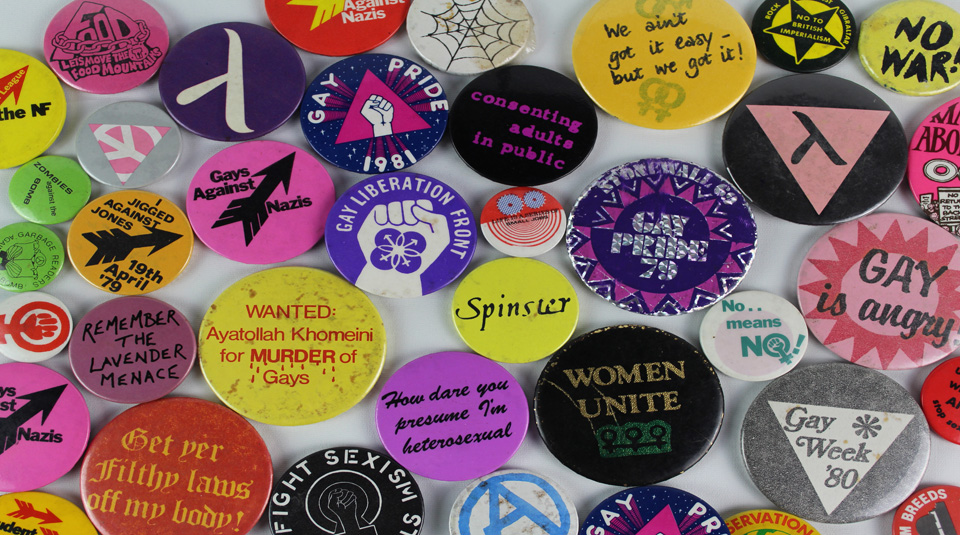
That’s why Lesbian Day of Visibility remains an important celebration, even today.

March on Washington for Lesbian, Gay, and Bi Equal Rights and Liberation

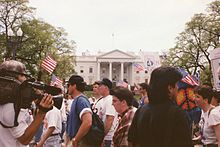
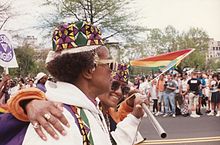
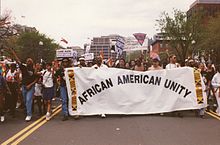
On this day, 25 April, in 1993 a large political rally took place in Washington DC. The march was titled “The March on Washington for Lesbian, Gay, and Bi Equal Rights and Liberation”, and organisers estimated that 1,000,000 people attended.

Speakers and performers at the rally following the march included Larry Kramer, RuPaul, Nancy Pelosi, Madonna, Martina Navratilova, Ian McKellen, Eartha Kitt and Jesse Jackson.

Bearly Healthy Life Survey

There is very little research data on the health and wellbeing needs of the Bear community. Bearly Healthy want to find out what those needs might be and find ways to try and meet them. They have organised a survey to help them to understand the needs of the community. This is an anonymous survey. You will not be asked for personal details apart from your age.

The Bear community is all those guys, old or young, big or small who socialise in bars, at events or online.

Bearly Healthy will publish the survey results on their website. If you want to be notified about the results please register your email on their website here.

You can take the survey here.

There is also an introductory seminar (in person and on zoom), which will explore current health issues for bigger men in the bear community on Saturday 28 May from 2.00pm to 4.00pm. Please see their website for more details.

Bury LGBTQI+ Forum Poetry Evening … AIDS Memorial

News

Bury LGBTQI+ Forum Poetry Evening

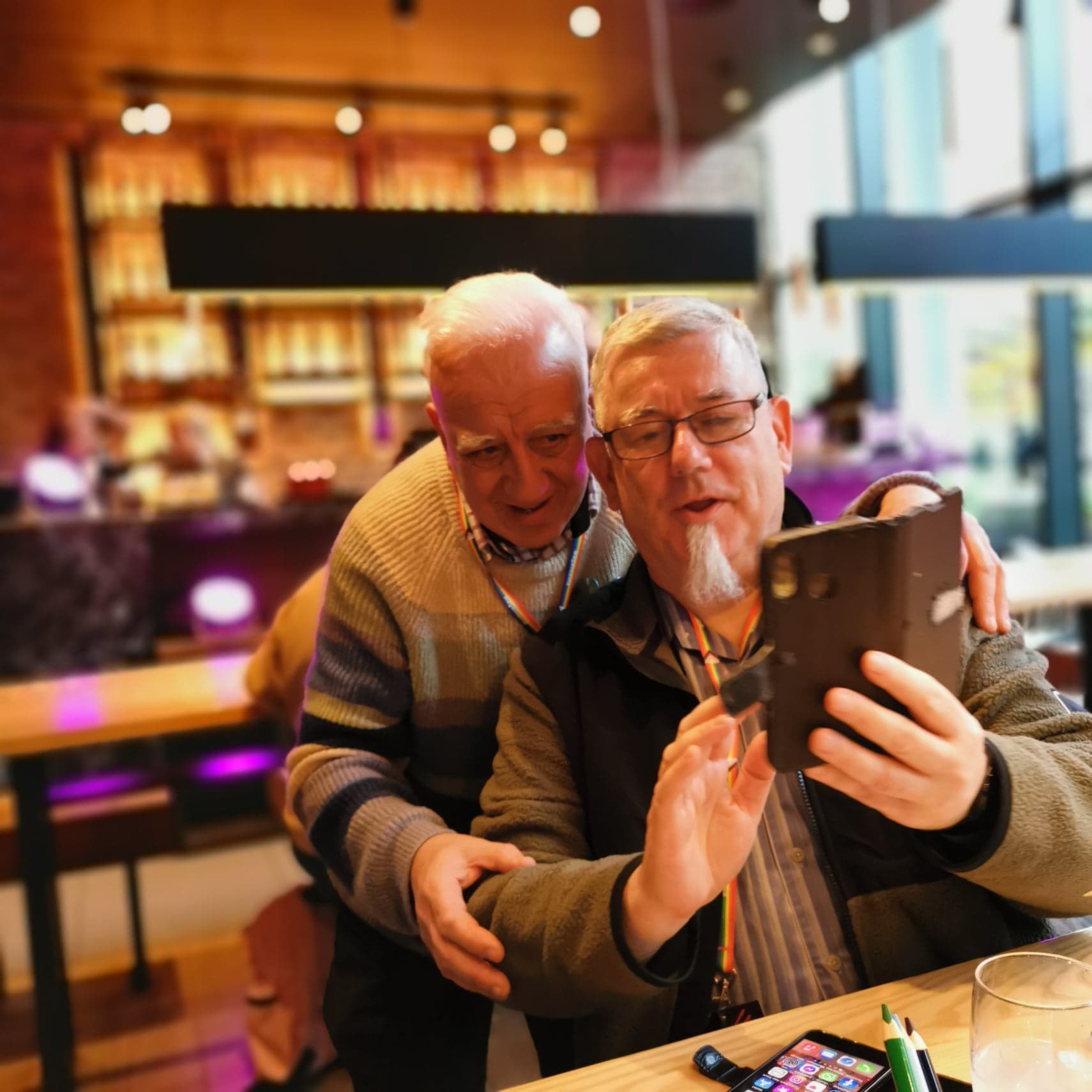
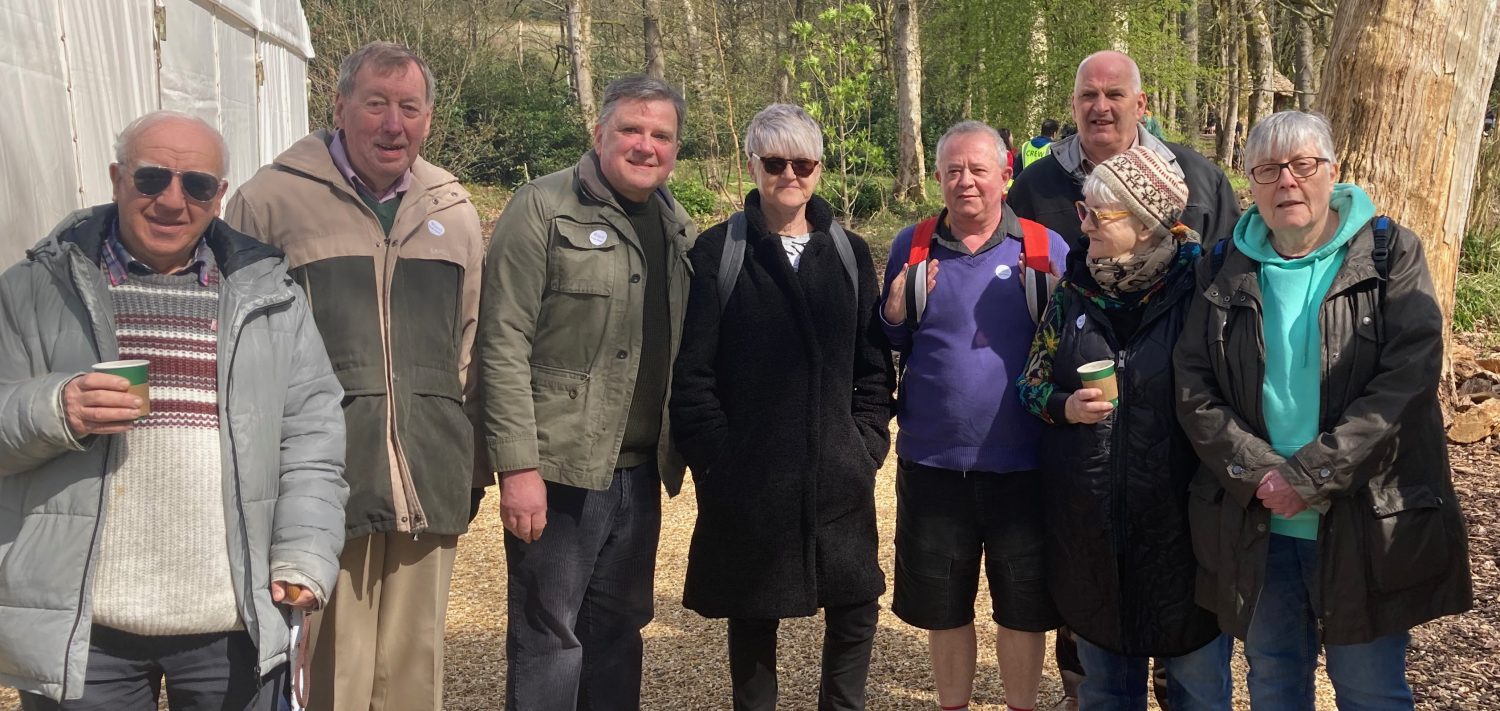
In the wonderful surroundings of the Bury Art Museum and compered by Ben, members of the Bury LGBTQI+ Forum and members of Out In The City gathered for an open mic poetry evening. People read their own work and also their favourite poems.

It was a fantastic evening, in two halves, with cheese and wine during the break. The poems took us on a rollercoaster of emotions from anger to laughter.

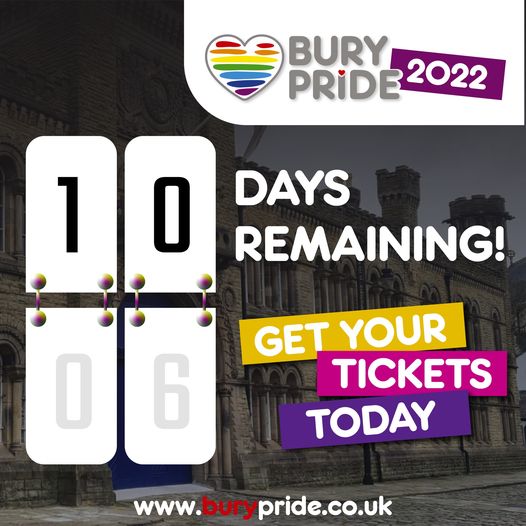
The evening was a prelude to Bury Pride 2022, which is only ten days away! Bury Pride and The Walking Rainbow Parade is being held on Saturday, 30 April from 10.00am to 6.00pm at Castle Armoury Drill Hall, Castle Street, Bury BL9 0LB and Market Street, Bury.

Don’t forget this is a ticket only event, get your FREE tickets via the website here.

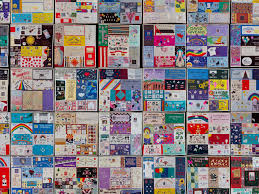
The AIDS Memorial – a true story by Lulu

When I was a little girl, we rented out a room in our large Haight-Ashbury flat to generate extra income. It was always rented to a young gay man, probably because my mum, a single parent, felt it was the safest and most sensible option. Their room was right next to mine in the front of the house and included a sitting room that we called the “library” because it had floor to ceiling bookcases, big puffy pillows on the floor and comfy nooks to settle in for reading or taking a nap. It was a common area in the house, but was mainly for our renter’s use, though I could often be found perched on the big overstuffed chair, peering out the window to observe the view of the always entertaining corner of Haight and Ashbury Streets.

If I wasn’t daydreaming, I had my nose buried in a book; such is the life of an only child in a household with no TV. Inevitably, our housemate would slide open the French doors that divided their room to the library and slowly, gently, tenderly, carefully, our friendship would unfold.

The men who lived with us all referred to themselves as my “fairy godfathers” – their term, not mine. As a child, I didn’t understand the tongue in cheek we’re-taking-our-power-back meaning. Once I did, I both grimaced and grinned.

We had about five young men live with us over the years. This was in the late 70’s – early 80’s, before gay people could easily adopt kids or were even really allowed to think, dream about becoming parents in some cases. I was the only child in their circle of friends and was often invited to tag along to their ever so glamorous soirées, Oscar parties, holiday fetes and any other over the top event that might just really be a Tuesday night but always seemed like so much more to me. These outings gave my mum nights off from mum-ing and me, adventures to be fondly remembered decades later.

I often found myself sitting crossed leg in the middle of one of their friend’s exquisitely decorated antique filled living rooms in the Castro district on a priceless oriental rug, beading necklaces or playing with antique paper dolls (theirs, not mine), Judy blasting in the background, watching a group of lively young men gossip and flirt and dance and share stories about their hopes, dreams & fears.

I heard them talk about how they had escaped to San Francisco from places like Iowa, Kentucky, Texas, so that they could live and love freely. They had all been disowned by their families for being gay. They had to create their own families and I was privileged to play the role of the little sister, niece, cousin they had to leave behind or, on an even deeper level, the child they never believed they would ever be able to have. It was from them that I learned my lifelong mantra: friends are the family we choose for ourselves. And love is love. Sorry but they said it first.

Of course, I was much too young to really understand the implications of all of this, but what I did know was that I felt so grown up and cherished in their presence. I knew there was something special about these men; to me they were worldly and fancy and sparkly and they knew a little something about everything. And most importantly, they taught me what they knew.

From them, I learned about music and fashion and art and literature and Broadway and why black and white movies of the 40’s were the best movies and that you must always bake with butter, never margarine and that cookie dough is calorie free and that one must always dress up when going downtown and the difference between Barbra Streisand and Barbara Stanwick; Bette Davis and Bette Midler; Oscar the Grouch and THE Oscars and the importance of wearing sunglasses, even in the fog, to prevent wrinkles, darling.

They were men of great style, class, elegance, intellect, wit, charm, creativity, beauty and fun. They were incredibly cultured and had exquisite taste. My memories of my time with them run deep:

  • Going to the “Nutcracker” every Christmas Eve.
  • Having high tea at Liberty House.
  • Lip syncing and dancing to the Andrew Sisters “Boogie Woogie Bugle Boy.” I know all the words, still, to this day.
  • Taking in the Christmas decorations downtown at Macy’s and ending the day with a cable car ride to Ghirardelli Square for hot chocolate with extra cherries and whipped cream.
  • Lengthy sermons on the essential need for dust ruffles and monogrammed stationery and silk dressing gowns.

To a young child, these experiences leave a mark; a permanent mark of rainbow coloured glitter sprinkled on her soul.

To my child’s eye, mind and heart, these men were magical. They were my playmates; the most delightful big brothers to a shy, often sad and lonely little girl. They were fun and silly and played dress up and always let me be Cher to their Sonny. A major sacrifice on their part, to be sure!

They told me I was a glittering gem and that I was “fabulous” and they meant it in a REAL way, not a “hey girl hey” way, though we had those moments too. They treated me with respect. They didn’t patronise or pander to me. They expected me to keep up my end of the conversation, regardless of the topic or my lack of knowledge about it. Local politics or Best Dressed at the Oscars; my opinion mattered to them. They didn’t baby me. They treated me like an equal. But that didn’t mean that they didn’t spoil and coddle me. They made me feel special and valued and respected. Perhaps because society didn’t offer them the same respect as gay men, they felt compelled to make sure I was always treated as a whole person. For a young girl of colour, this went far in developing my sense of self and worth and pride in being who I was.

They also showered me with gifts, some that I still have to this day:

  • A beautiful hand-woven throw made on an old-fashioned loom.
  • A hand beaded necklace with an antique tiny bell at its centre. Too tiny now for my adult neck but still cherished.
  • A beautiful white cake stand from Tiffany’s; an odd gift for a 10-year-old girl, you might think, but as the gift giver said when he handed me the HUGE blue box, “Sweetie, if I’ve taught you nothing else, please remember this: the light blue box is always the BEST box!”

I still have those treasures, but I no longer have my fairy godfathers.

They all eventually succumbed to AIDS. They were all in long-term relationships. Their partners died too. By the early 90’s they were all gone.

These men were the first and most prominent adult male figures in my young life; in truth, the only father figures I had growing up. I know for a fact that it is because of my time with them that I am the person, the woman, the friend, the activist, I am today.

They didn’t live to see the many strides and advances that the LGBTQ community has made. If they were still alive today, they would be at the front of the line continuing to fight the good fight for the strides still to be made.

But they aren’t, so I do it for them. It is the least I can do to honour their legacy and repay them for all they have given me.

My description of these men might seem almost disrespectful in its seemingly stereotypical depiction of gay men, but these were the men I knew, as I knew them, when I knew them. This was who they were, at a time when the gay community in San Francisco was thriving and carefree; when the pulse of the disco beat of the day seemed to ring in sync with the beat of the cultural awakening that was taking the world by gloriously gay rainbow storm on the streets of San Francisco.

I am so lucky that I spent my formative years as their fairy goddaughter, wrapped up in the glow of this historical time. But my golden carriage turned into a pumpkin well before midnight of my young adulthood dawned and my fairy godfathers vanished with it.

I am a better human being because I knew them. THIS, I know for sure. My fairy godfathers may be gone, but their rainbow coloured fairy dust flows in my veins forever. They had their Pride. And they gave me mine, too.

xo Lulu

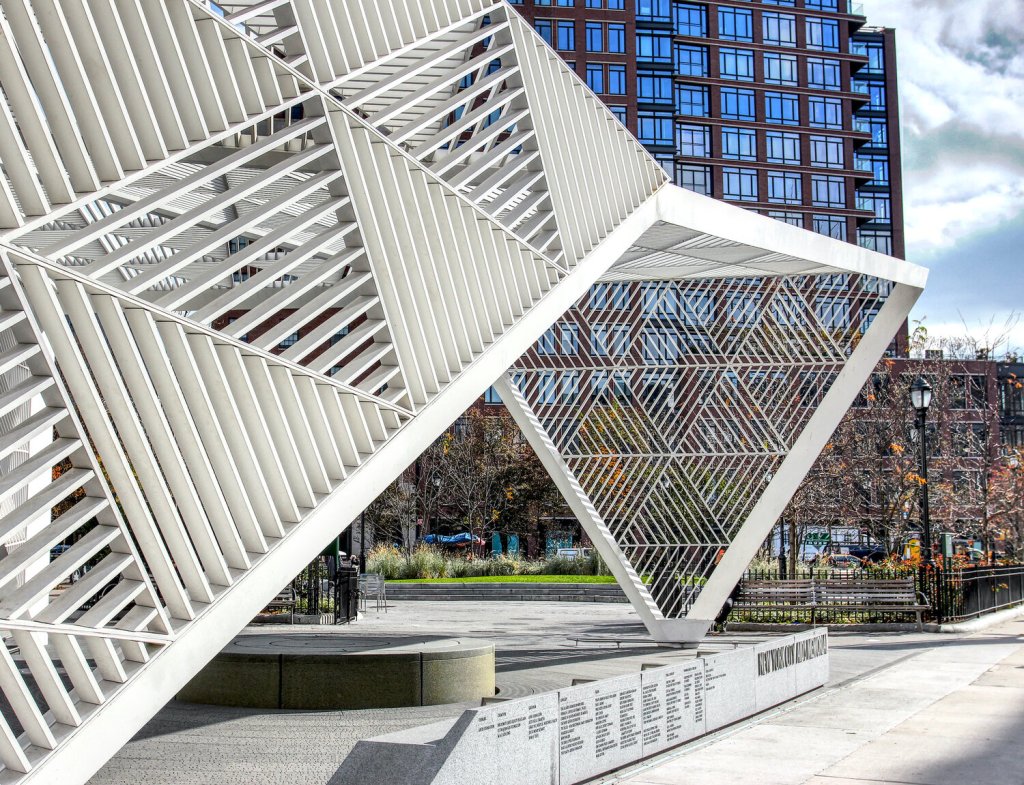
New York City AIDS Memorial