George Michael … Loving: A Photographic History

News

George Michael

On 7 April 1998, George Michael was arrested in a public toilet at Will Rogers Memorial Park in Beverly Hills. He had been caught by a plainclothes police officer performing “a lewd act” on another man. 

The Wham! front man was fined $810 and sentenced to 80 hours of community service, but that wasn’t the last of it. The story exploded in the media and attempted to make a mockery of the singer.

One UK tabloid broke the story on their front page with the headline “Zip Me Up Before You Go-Go”, while others spent weeks dissecting and going over and over the scandal. 

It was at a time when attitudes towards homosexuality were very different than they were today. 1998 was only three years after new types of drugs and therapy had been available to treat HIV and the stigmatised association between AIDS and homosexuality was still very much a real thing.

George at Live Aid in 1985 (pic: Live Aid / Mirrorpix)

In the years before the 1998 scandal hit, celebrities were already being publicly outed in the press under the guise of the “public interest”. Footballer Justin Fashanu, came out in a front page tell-all with The Sun newspaper in 1990 and faced immense backlash and crowd abuse in the years afterwards.

Three days after George’s arrest in Beverly Hills, the singer appeared on CNN where he chose to publicly come out. During the interview, the then 34-year-old told presenter Jim Moret: “I want to say that I have no problem with people knowing that I’m in a relationship with a man right now.

I’m a very proud man. I want people to know that I have not been exposed as a gay man in any way that I feel … I don’t feel any shame for. I feel stupid and I feel reckless and weak for having allowed my sexuality to be exposed this way, but I don’t feel any shame whatsoever. And neither do I think I should.”

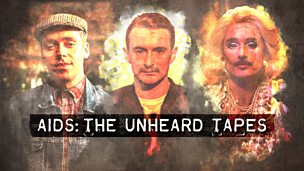
How George Michael responded to his arrest and the subsequent sensationalism of the scandal is at the centre of a two-part documentary which aired on Channel 4. “George Michael: Outed” showed how the media portrayed George at the time, alongside interviews with LGBT+ celebrities and those who knew George at the time, including former partner Kenny Goss.

It hit hard with a lot of viewers. One person tweeted after watching the show: “It’s utterly heartbreaking. A reminder how homophobic the tabloids were and how gay men were vilified during the 80’s especially.”

George appeared on CNN in 1998 to publicly come out (pic: CNN)

Another said: “Watching #georgemichaelouted and seeing how the press outed gay men and what they wrote about the aids situation and gay men as a whole makes me feel physically sick. Who in their right mind thought that it was ok to out people and write such vile things about them?”

One scene saw Years & Years frontman Olly Alexander read through some of the newspaper headlines and reports at the time. One, for example, suggested George should have been ‘honest’ about his sexuality from the beginning.

“You can’t win,” Olly remarked. “You’re damned if you do, damned if you don’t. And it’s very telling for someone, who I presume isn’t gay, to go ‘You should have done this, and if you’d done this maybe we would have reacted in a different way’.”

Tabloid journalists were also interviewed in the documentary. Neil Wallis, former Deputy Editor of The Sun and The News Of The World, seemed non-phased about the treatment George received at the time saying that celebrity scandals “sell newspapers”.

“All great celebrity stories are essentially about hypocrisy,” he says on screen. “Someone who appears to the public to be this and yet they’re leading a double life which means they’re really this. And the great tabloid hit is stripping away this facade and showing the truth.”

Just one of the headlines to cover George’s 1998 arrest (pic: The Sun)

And as for that “zip me up” story in 1998? Neil described it as a “great headline”. He remarked: “Great page one. It’s not exactly, ‘God we should send him to hell this evil man.’ It was laugh-out-loud ridiculous.”

Ultimately, the scandal worked in George’s favour despite many fearing it would end his career. He would later say that “as subconscious plans go, it was pretty successful”.

George would go on to reclaim the narrative with the release of his next single “Outside”. The now-infamous music video for the track sees George play the role of a police officer as he kisses another officer in a bathroom. It was provocative and it was loud and there was certainly no shying away from it after that.

Singer Will Young told filmmakers: “To see someone flip the script and go, Yeah, I’m really proud of this … He was really unique.”

George with former partner Kenny in 2005 (pic: Junko Kimura / Getty Images)

But the documentary shows that anti-LGBT+ attitudes in the media have long been, and still are, borderline obsessive and intrusive. We saw it only last year when Rebel Wilson revealed she was forced to come out after a newspaper threatened to reveal her relationship with girlfriend Ramona Agruma.

“I’ve always hoped that people get an understanding about what it’s like to come out, but also the idea that things may have moved on, but really, they haven’t,” director Michael Ogen told Esquire about the documentary.

“We’re not in a great place and we need to defend those rights and we need allies to help us defend those rights. There’s a comment in the film about how people like George and others were crucified in the press, and I want people to take away from the film that this is not just history; it’s a lesson.”

Loving: A Photographic History

Long resigned to living our lives in secret, behind closed doors, the extent of LGBT+ history that is untold and undocumented is unfathomable.

But thanks to projects like the documentary 100 Years Of Men In Love: The Accidental Collection, some of those stories are coming to light, photograph by photograph.

Inspired by a book of the same name, 100 Years Of Men In Love gives audiences a closer look at photography archives of married couple Hugh Nini and Neal Treadwell, a selection of found portraits of men from the 1850s to the 1950s.

During that time, male partnerships were often deemed illegal, so the images of (assumed) gay men together – loving, laughing, cuddling, smiling – feels especially radical.

Nini and Treadwell’s collection was deemed “accidental” because they never really thought they were collecting anything. Over the years, they simply began holding onto any image they could find of men showing affection for one another.

With each visit to an antique shop or a flea market, their collection grew and grew, and the couple eventually realised they needed to share it with the world.

Filmmaker David Millbern tells Nini and Treadwell’s story – as well as those of hundreds of gay couples that came before them – in his hour-long documentary. Speaking with Awards Daily, he remarks that the film is more than just a montage: “We actually go into each picture, we analyze it, we escape into it.”

Later in the conversation, Millbern elaborates on why these photos – some of which are over 150 years old – matter now, and why the seem to connect so deeply with audiences: “People are responding to the love, the love that is captured at a time when these men could have been put in prison or lost their entire livelihood. They could have ruined their lives. Yet they felt their love mattered so much that they wanted to capture it. Little did they know those photos would survive and their love would be basically a call to action … The ability to love freely whoever we choose is basically resting on the shoulders of those who showed us the way.”

In these dark times, a film like100 Years Of Men In Love reminds us what we’re fighting for. What we’ve been fighting for.

After playing film festivals, the film made its official premiere last year, and now streams exclusively on premium LGBT+ network Here TV.

You can check out the film’s trailer below:

LGBT+ Elders … Anne Lister … My Fair Lady … Great Indecencies … Out In The City Art Showcase

News

‘We’re not all old farts’: LGBT+ elders on life, love and why the battle for equality isn’t over

As they’re photographed for a new project celebrating people aged 50 and above, LGBT+ elders speak to Joanna Whitehead at The Independent about living under Section 28, decades of fighting for the most basic of LGBT+ rights, and the younger people taking up the baton for equality.

‘Section 28 changed my life’: Patrick Pope (left) and David Rhodes, as they appear in the Centre for Ageing Better campaign (Alexander Caminada)

When Patrick, a 73-year-old gay man from Manchester, worked as a teacher in a Catholic school in the late Eighties, he was confronted daily by the homophobia of the era. “We were sent videos to try and educate pupils about Aids,” he remembers. “I witnessed our head of PSHE opening up the package containing [the tapes] and throwing it in the bin in disgust. ‘We don’t have people like this in our school,’ she said. ‘We don’t have gay people’.”

Patrick Pope and David Rhodes

For many young queer people, such an attitude might be unthinkable, but for the majority of older LGBT+ people, prejudice, fear and hostility was part and parcel of everyday life. New legislation, greater awareness and improved representation mean things have moved on – albeit slowly – since the dark days of the 20th century. While this doesn’t mean we can rest on our laurels – rampant transphobia in almost all areas of life remains a critical rallying point for those invested in LGBT+ liberation, and there’s no disputing the continued existence of misogyny and racism – we also can’t deny that LGBT+ rights have come a long way in the past 40 years.

Patrick is one of four LGBT+ people I spoke with about their experiences as “gay veterans”. As well as reflecting on the past, we discussed the challenges that still exist for LGBT+ people, both young and old. A dearth of positive representation of older LGBT+ people has led to everyone involved in this story participating in the Centre for Ageing Better’s image library, a collection of more than 1,500 positive and realistic images of people aged 50 and above. Free and accessible to all, the image bank has now been nominated for a prestigious Charity Award.

David Austin

David, 59, is a reverend and activist from Manchester and the chair of Oldham Pride. “I was always told on the gay scene that once you’re past 24, you’re over the hill,” he tells me. “That was thanks to things like Boyz magazine, with all their body-beautiful images.” Such pressure to conform to restrictive bodily standards, or accepted appearances, still has resonance across the LGBT+ community. Venerating slimness or policing whether, how and when a person wears make-up can contribute to a lack of acceptance that many people in the community still struggle with. Discriminatory attitudes – both in and outside of the LGBT+ umbrella – also augment poorer mental health outcomes for LGBT+ people; a 2018 Stonewall report found that half of LGBT people polled had experienced depression in the previous year.

In the Eighties, such discrimination was enshrined in law, however. Section 28, the government act passed in 1988 that prohibited local authorities and schools from “promoting the teaching of the acceptability of homosexuality”, had a profound impact on Patrick. He’d been married to a woman for 15 years before coming out at the age of 40, leading his wife to “refuse to talk about it and [give] me three days to tell my children and leave”. Then, once he was seen out with his boyfriend, he was outed at work. “I was interrogated by the headteacher, the parish priest and the full board of governors, and they made me redundant,” he says. “They got me out on ‘economic budgeting grounds’, but I knew the real reason. Section 28 changed my life.”

Liz, from Manchester, was just 13 when her mother discovered she was a lesbian – and promptly took her to a psychiatrist. “Crazy,” says the now 61-year-old. “She denies it, but that’s kind of what we put up with.” Liz’s partner, 67-year-old Jo, also had a difficult time coming to terms with her sexuality as a young person. “I think I spent all my teenage years until I was 18 in total denial,” she says. “I was so relieved when I found out that it was ‘normal’ to have a passion for girls, to have a crush. It was a very lonely, isolated time, with some terrible attitudes. It took a lot of bravery to come out.” This was compounded in the early Eighties, too, upon the advent of Aids. “I was going to have children with my gay friend in Leicestershire and he died of Aids,” Liz remembers. “At that period, I went to so many funerals – I lost so many male gay friends.”

Same-sex relations between men may have been decriminalised in 1967 for those aged 21 and above (there was no equivalent law for women), but public perceptions of LGBT+ people were at rock bottom. Equal rights were a foreign concept. It wasn’t until 1992 that the World Health Organisation declassified same-sex attraction as a mental illness and, incredibly, consensual same-sex relations between men was only permitted for those aged 16 and above from the year 2000 (this was previously set at 18). That was also the same year that the ban on LGBT people serving in the army was lifted. For older LGBT+ people, such experiences shaped their lives.

When it comes to the evolution of LGBT+ rights, David is reflective. “LGBT people are sometimes still seen as ‘mad, bad and sad’,” he says. “The church often has a big hand in that in terms of condemning people. So I’m trying to set the record straight.” He is thankful for the activists who have fought for equality. “I’m grateful to the predecessors who’ve had the courage to stick out their necks and been ostracised and even imprisoned because of who they are. People like [human rights campaigner] Peter Tatchell and [Stonewall founder and LGBT+ activist] Michael Cashman have been role models for me in terms of speaking truth to power and confronting injustice, not just in this country, but also overseas.”

Patrick agrees. “I would not have been able to lead the life I’ve led if it were not for those who came before,” he says. “I think it’s important that younger people understand that the freedom they have today is because of LGBT+ people who put their lives on the line.”

‘I went to so many funerals – I lost so many male gay friends’: Jo (left) and Liz (Alexander Caminada)

For Jo, the introduction of equalities legislation designed to protect LGBT+ people has been paramount. She cites early equal opportunities policies developed at Manchester City Council, where she used to work, along with hate crime legislation and the 2010 Equality Act. “I used to think it wasn’t worth anything because it’s ‘the establishment’ and all that, but having those legal protections is actually really important,” she says. “In the Seventies, Manchester’s chief of police, James Anderson, said that gay men ‘had it coming to them’ and that people with Aids were ‘in a cesspit of their making’. We’ve gone from being condemned to hell by the most senior police officer in the district to the police developing a concept of hate crime. Once upon a time, you would never, ever go to the police about anything that revealed your sexuality, whereas we feel more supported now. I know the police are in a lot of trouble for not getting it right at the moment, but I don’t want to underestimate the ways that [hate crime legislation] has made us feel safer.”

In terms of the current status of LGBT+ rights, Patrick and David both feel that there is still work to be done. “The pendulum always swings backwards and forwards; we can never be complacent, even in the UK,” says David. For Patrick, transphobia is a major concern. “I think the recent murder of Brianna Ghey has brought home to a lot of younger people that there is still a fight to be had,” he says. He adds that a trans friend of his was “set on” by three teenagers coming home on the bus last week. “For what?” he despairs. “We’re not at the end of the road yet.” He calls on all members of the LGBT+ community to be “as inclusive and tolerant as possible”.

Societal intolerance extends to every aspect of a person’s life – and for older LGBT+ people in a community that often valorises youth, ageism can be rife. Additional and specific challenges faced by this group tend to be amplified for ethnic minority LGBT+ people, those with a disability, refugees or people within other marginalised groups. During our conversations, several issues came up with regularity: a lack of specialist services for LGBT+ communities, concerns about housing and older life care, and fears about having to go back in the closet at vulnerable points in their lives.

Liz remembers looking after her dad’s cousin, a gay man, after he went into residential care later in life. “Every time I visited, the photograph of his partner of 40 years had been put away in a drawer,” she recalls. “I used to get it back out.” Contending with discriminatory attitudes is a very real concern for older LGBT+ people thinking about their later years. “I refuse to go into a place where I have to go back in the closet,” Patrick says. “If I end up having to access care, I want it to be in a place where staff are supportive, they’ve been educated, and people can be themselves.”

And when it comes to their status as “elder gays”, all are united in their enthusiasm for later life. “It’s ironic,” David says. “Some of the young people I know have got little energy, and yet some of the older people I know … they might be 70 [or] 80 but they feel like they’re 25 inside. Their energy and enthusiasm for life is really endearing and stimulating.”

Reverend and activist David Austin (Alexander Caminada)

Patrick adds that he has become “more accepting and understanding” of differences as he’s gotten older. “I don’t know where the years have gone,” he says. “In my head, I’m still 33 rather than 73. And that’s partly because I’m active. I’ve got a positive attitude to life. And thankfully, I’ve got reasonably good health.”

The experience of growing up during a hostile period for LGBT+ people gives Liz and Jo an insight into the challenges facing young people today, they say. “We’re here for you,” says Liz. “We’re mother hens. We will adopt you if you need it, even in your thirties!” She says that it is imperative to accept people for “whoever they are, whatever they are,” adding: “We’re still evolving as well. We’re not stuck-in-our ways old farts.”

“Age is just a number,” says David. “When I came out as a teenager, my mum would say to me, ‘Oh, nobody will ever like you. You’ll grow up to be an old, lonely man’. But the opposite is true. I’ve got so many friends. And the older I get, the more attention I get – in all sorts of ways! I just love it. Embrace life and learn from other people’s experiences.”

Anne Lister

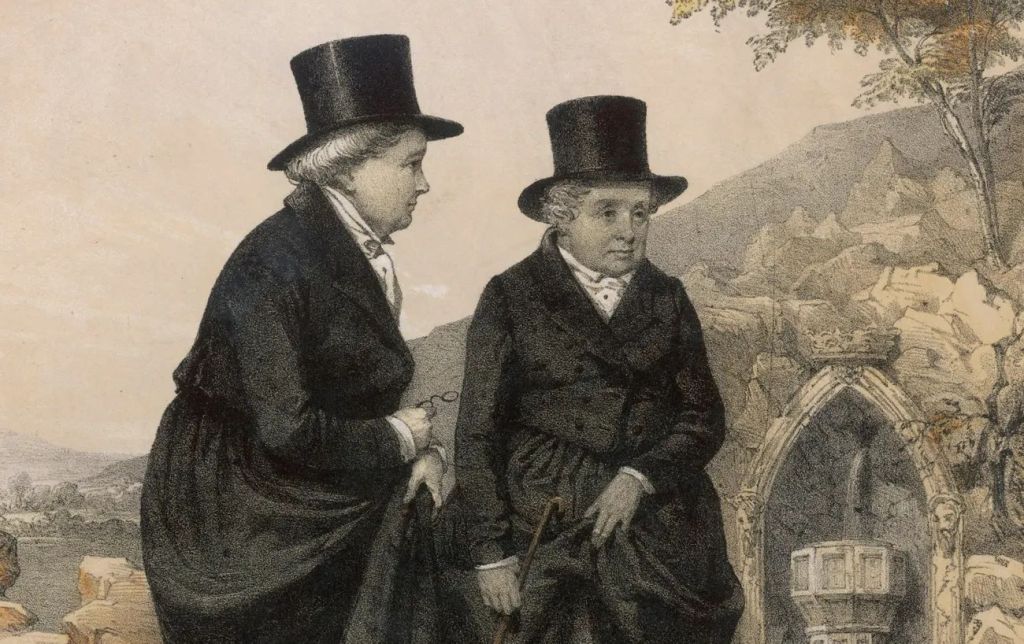
It’s Anne Lister’s birthday! Anne Lister (3 April 1791 – 22 September 1840) was an English diarist, famous for revelations for which she was dubbed “the first modern lesbian”.

Masculine in appearance, dressed only in black, and highly educated, she was later known, generally unkindly, as “Gentleman Jack”. Her final significant relationship was with Ann Walker, to whom she was notionally married in Holy Trinity Church, Goodramgate, York, now celebrated as the birthplace of lesbian marriage in Britain.

My Fair Lady

Lerner and Loewe’s world-famous musical came to Manchester this week, and a group of us from Out In The City were lucky enough to see the show together with a pre-show Q&A with the cast and crew.

My Fair Lady features an iconic score by Frederick Loewe, the story debuted as a stage musical in the 1950s, before being made into a 1964 film starring Audrey Hepburn.

The narrative centres on young Cockney flower seller Eliza Doolittle and linguistics professor Henry Higgins, who sets himself the challenge of transforming Eliza into a “proper young lady”. The action is seamless and acting superb.

The ingenious revolving set, switching from Professor Higgins’ beautiful wood- panelled study to the bawdy tavern and streets, then the ballroom, is wonderfully atmospheric, transporting you instantly to Edwardian London.

Charlotte Kennedy as Eliza is both comical and endearing. Her singing voice is excellent too.

There is a palpable chemistry between her and Henry Higgins, played with a delightful playfulness and sarcasm by Michael D Xavier. The camaraderie between the Professor and his bachelor pal Colonel Pickering, played with a quintessentially English eccentricity by John Middleton, is fun to watch too.

The famous soprano Lesley Garrett plays the suitably no-nonsense housekeeper. The role of Eliza’s father, dustman Alfred P Doolittle, fits Adam Woodyatt as the Cockney geezer cannily uses his daughter’s new relationship as a vehicle to get rich. Top hats and tails, tiaras, ball gowns and cloaks made for a visual spectacle and a half. Rags to riches stories are as old as time but rarely fail to entertain and with costumes as lavish as this one, great acting and singing and a magical set, this one enthrals and uplifts. There was a standing ovation at the end.

Great Indecencies

Great Indecencies is a new play by Joshua Val Martin. It was premiered at The Edge Theatre and Arts Centre in Chorlton, Manchester on Thursday, 30 March 2023.

The play is the culmination of Legacy of ’67: Initiative Arts Project’s year-long project that captures the real-life accounts of LGBT+ people during the last 50 years. In a time of enormous changes in the public perception of LGBT+ people, twenty volunteers were recruited who conducted one-to-one interviews with older LGBT+ people, and their stories were recorded and donated to the public sound archive at Manchester Libraries in Archives+.

Joshua Val Martin listened to all the testimonies and felt a deep responsibility, having been entrusted with these life stories, to tell the truth. Joshua began by identifying common themes, many of which are impossible to ignore, pervasive stories of homophobia and trauma. Joshua stated: “It was important to me that every plot point, twist and turn-of-phrase in the play had been taken from one of the real memories shared with us. This play had been written many times and years before I arrived: it had just been waiting to be told.”

Out In The City Art Showcase

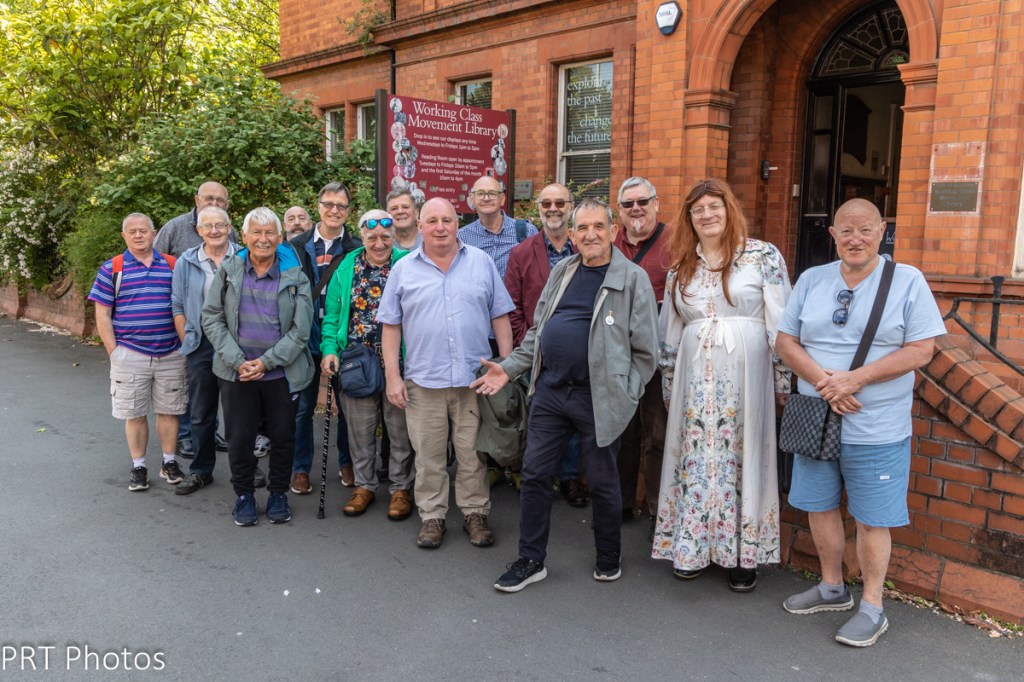
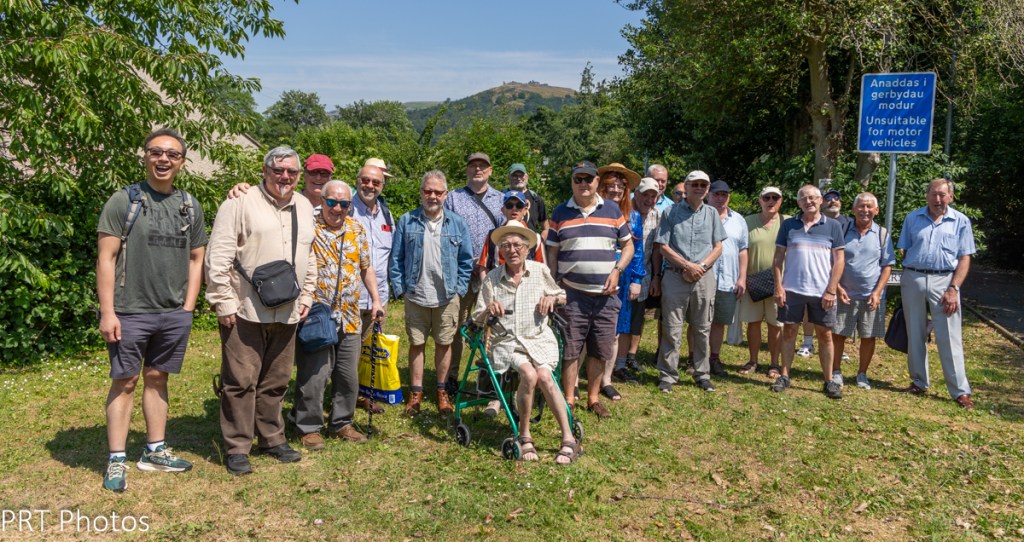
A dozen of us from Out In The City met on Canal Street and walked down to The LGBT Foundation’s building on Sackville Street. As well as the usual Coffee Morning, the Foundation was hosting the Out In The City Art Showcase.

Most of our group had not visited the building previously. Darren was a marvellous host, and whilst we viewed the art and drank our teas and coffees, he told us about the services available to LGBT+ people.

Some of the pictures can be seen here:

Bakewell … International Transgender Day of Visibility … Isobel Jeffrey … Billy Tipton

News

Bakewell

Bakewell is a market town in the Derbyshire Dales district of Derbyshire. It’s the biggest town in the Peak District and is idyllically situated on the banks of the river Wye.

We set off at 10.30am on a coach from Manchester and arrived at 12.00 noon. The mellow stone buildings, medieval five-arched stone bridge and quaint courtyards are a magnet for sightseers and photographers alike.

Bakewell is the ideal place for an interesting town walk. We strolled through the town and discovered scenic buildings and pretty streets. In one of the charming courtyards we discovered the Lavender Tea Rooms and sampled the town’s famous Bakewell Pudding.

Legend has it that the pudding was created by mistake by a local cook in the mid-19th century. Today the delectable ‘jam tart that went wrong’ can be sampled at various bakeries and cafés.

We didn’t find time to visit the Rutland Arms for afternoon tea, to have a look round the Old House Museum or All Saints Church which was founded in 920 during Anglo-Saxon times.

All too soon the time went and we had to return on the coach back to Manchester. Check out the photos here.

International Transgender Day of Visibility

International Transgender Day of Visibility is an annual event occurring on 31 March dedicated to celebrating transgender people and raising awareness of discrimination faced by transgender people worldwide, as well as a celebration of their contributions to society.

Meet Isobel Jeffery, who has undergone gender confirmation surgery at the age of 80

The former fire fighter and truck driver, who knew from an early age she was trapped in the wrong body, began transitioning to female in October 2021 at the age of 79 after living her life as a woman for six years.

She says it has enabled her to finally find peace.

After beginning hormone therapy a year ago, she had the operation at the private Spire Yale Hospital in Wrexham in January this year.

Isobel said: “I cannot tell you how much it has meant to me; the peace, the calm and the contentment that has been brought over me.

People ask me what I am smiling about, and someone asked recently why I was walking taller! Everything has just fallen into place – it was meant to be.

Now I just want to spread the good news and help others. I feel like 25 – not nearly 81!”

Isobel Jeffery who has recently undergone male-to-female gender confirmation surgery. Picture Mandy Jones / Spire Yale

Isobel, of Winsford, Cheshire, has been married to wife Margaret for almost 60 years and had her full support in her transition journey.

She said: “So many people ask why I left it so long but around 10 to 15 years ago, it was becoming more accepted. The changing attitudes in society gave me more confidence to be who I am.

“It’s not to be undertaken lightly, of course, but I am proof that you’re never too old. As long as you’re physically able to undertake the surgery, then it can happen.”

Isobel Jeffery with her wife Margaret before they were married (Image: Spire Yale Hospital / Mandy Jones)

Isobel said she knew from a young age that she was different to other children as she grew up in Marshfield, South Gloucestershire.

She said: “I always played with my sister and her dolls and pushed her pram. Seventy years ago, boys didn’t push dolls’ prams around. It was already starting to show then in hindsight.

I didn’t understand it, I just seemed to feel different. I was dressing up in women’s clothing probably from around 10 or 12. I learned to hide it and was the quiet child at the back normally.”

Isobel when she was presenting as a male and worked as a truck driver (Image: Spire Yale Hospital / MandyJones)

Isobel took on physical roles for 40 years as she tried to convince herself that she was male.

“I sailed around the world out of Liverpool or London with the merchant navy and did two 18-month voyages. When I came back, I became a fire fighter for Bristol City Fire Service as it was known then,” she said.

“Then I went into heavy goods driving and oversized loads. I did everything I could to ‘prove’ I was a man with ‘manly’ jobs but all the time I had a niggling feeling in the back of my mind. I would come home at the end of the day and get into a nightdress. I can laugh about it now, but I was living two lives.”

Isobel grew up as a boy, alongside four brothers and a sister. It was around the age of 10 that she first realised she felt different.

(Image: Spire Yale Hospital / MandyJones)

“I would’ve been bullied badly had I not had a twin brother who stuck up for me. My brother was in a different class to me, and we weren’t always together, but I only had to say so and so has been on at me again and he would sort them out!”

Isobel underwent gender confirmation surgery in January at Spire Yale Hospital in Wrexham.

Isobel’s Consultant said: “I was extremely touched by Isobel’s story. It’s amazing how somebody lived their life for such a long time hiding their real identity, it was very emotional.

The majority of patients are in their 20s or 30s but quite a few patients wish to complete their transition with gender affirming surgery in their 50s or 60s.

This is really a story about what it means to be transgender. We are living in a more liberal society now compared to a time when people like Isobel were growing up.

But discrimination and barriers still exist. For many people with gender dysphoria, life is filled with anxiety, depression, pain and a struggle for acceptance, belonging and equality.

Gender incongruence is not a choice – being born with a body that is not aligned with what your mind perceives as your true identity is scary and makes you question your space in society. It has taken Isobel almost eight decades to get to the point where she mustered up the courage to express and reveal her real identity.”

Billy Tipton, jazz artist who lived for decades secretly as a man…

Billy Tipton was a jazz musician who achieved only modest regional success in the 40’s and 50’s. His career included live radio shows with Big Bands and evolved into jazz quartets and trios playing in night clubs. In his 74 years, in addition to being a band leader and a booking agent, he was a husband five times and adopted three children. After he died in 1989 in Spokane, a coroner revealed that he was much more, and the mysterious story ran wild on the wire services: Billy Tipton was a woman.

It seems that Tipton’s decision to adopt a male disguise was likely motivated, at least at first, by practical reasons: It was the depression, people were desperate for work, and it was especially difficult for women to get work playing in jazz bands. So, at 19, Dorothy Tipton began cross-dressing to get a job in a band. She cut her hair, put on men’s clothing, bound her breasts and re-christened herself Billy Tipton, eventually fooling five wives and the world for more than 50 years. Tipton left no letters of explanation, so we can only speculate on what drove him, but we can learn much of what there is to know from a biography by Diane Wood Middlebrook called “Suits Me: The Double Life of Billy Tipton.”

LGBT+ Extra Care Housing Scheme … Voter ID … Celebrate Women’s History Month (Part 2)

News

LGBT+ Extra Care Housing Scheme

In 2013, Manchester City Council commissioned research through LGBT Foundation that indicated higher levels of loneliness and isolation amongst LGBT older people, and a lack of specific affordable accommodation where they can be open about their identity later in life.

The first purpose-built Extra Care scheme for LGBT+ people in the UK was first announced in 2017.

LGBT Foundation and Manchester City Council are really pleased to announce that Manchester City Council’s Housing Board has given approval to open formal negotiations with Great Places as the preferred provider to deliver the LGBT+ majority extra care scheme on Russell Road in Whalley Range. 

We expect a 100 to 110 apartment complex, with a variety of amenities including a restaurant, which will aim to have a majority of LGBT+ residents. 

The scheme is to be built on the former Spire Hospital site on Russell Road. Credit: via BCEG

Great Places has a long track record of delivering specialist and affordable housing, both in Manchester and across Greater Manchester and the North West. They already have five extra care schemes.

Helen Spencer, Executive Director of Growth at Great Places, has said: “We are very delighted to be working with the Community Steering Group on this exciting new scheme and look forward to sharing the experience of co-producing this innovative project. We look forward to the first meeting and getting going.” 

Local Elections

The local elections are on 4 May 2023.

You must be registered in order to vote in the Local Elections.

If you are not already registered, make sure you register by 17 April 2023 – visit https://www.gov.uk/register-to-vote in order to make sure your voice is heard.

Voter ID

This year voter ID is required, and there are concerns that some older people may be unable to vote, or may be put off voting because of this. It is important that a wide range of voices are heard in these difficult times.

Accepted Voter ID includes: 

  • Passport 
  • Provisional or full UK driving licence
  • A Blue Badge
  • Older or Disabled Person’s Bus Pass funded by the UK government
  • Identity card bearing the Proof of Age Standards Scheme hologram (a PASS card).

For anyone who does not have any of these they can apply for a free Voter Authority Certificate – the deadline is the 25 April 2023. If you are not sure if you have eligible Voter ID, pop into your local library. The staff can check your ID and help you to apply online for free voter ID if you need it.

Celebrate Women’s History Month with Women Who Paved the Way (Part 2)

Towards the end of Women’s History Month, we celebrate the accomplishments of some more women who all helped push toward wider acceptance of LGBT+ people through their contributions and through their legacies.

Louise Lawrence

Building Manager, Artist and Activist Louise Lawrence

A building manager by trade in San Francisco in the 1940s, Louise Lawrence, a trans woman, was also an artist and activist who helped build a correspondence network for trans people that became the basis for the Transvestia magazine subscription list.

Lawrence also corresponded with Dr Alfred Kinsey, introducing him to trans people for his studies.

She also lived with her female partner for many years before she died at 63.

Eleanor Roosevelt

First Lady and Diplomat Eleanor Roosevelt

The longest-serving first lady in history, Eleanor Roosevelt worked to change the position during her husband Franklin D Roosevelt’s four terms in office. A politician and diplomat, as first lady, she performed the duty of playing hostess but also held press conferences and delivered radio addresses and lectures.

After Franklin’s death in 1945, Roosevelt waited about a year before becoming the American spokesperson for the United Nations and carried on with her career until her death in 1962.

The first lady met AP journalist Lorena Hickok in the ’30s and the pair maintained an ardent relationship for several years and over many love letters.

“Hick darling, All day I’ve thought of you & another birthday [when] I will be with you, & yet to-night you sounded so far away & formal, oh! I want to put my arms around you, I ache to hold you close. Your ring is a great comfort, I look at it & think she does love me, or I wouldn’t be wearing it!” Roosevelt wrote to Hickok in 1933.

Alice Dunbar-Nelson

Poet, Diarist and Teacher Alice Dunbar-Nelson

A poet and diarist, Alice Dunbar-Nelson, born in New Orleans in 1875 to mixed-race parents, often addressed her African-American, Native American, and Creole heritage in her work. She began her career as a teacher but published her first book, Violets and Other Tales, in 1895, when she was just 20.

Dunbar-Nelson married three men throughout her life, but her affairs with women were documented in her diaries. Later in life she returned to teaching and began a relationship with her school’s principal, Edwina Kruse.

Nancy Kulp

Actress and Politician Nancy Kulp

Fans of The Beverly Hillbillies will remember Kulp best as the staid banker’s secretary Miss Jane Hathaway (an early crush for many a budding lesbian back in the day), but she was a character actress with a long career that extended into the era of The Love Boat and Fantasy Island. A journalism student in college, Kulp was a publicist for a time before she became an actress. Later in life, she tried her hand at politics, with an unsuccessful run for Congress in 1984. She was a Democrat running against a Republican in a heavily Republican district. That was not her swan song, however. She became an acting teacher at a Pennsylvania college.

Regarding her sexual orientation, Kulp told writer Boze Hadleigh, “As long as you reproduce my reply word for word, and the question, you may use it,” she said. “I’d appreciate it if you’d let me phrase the question. There is more than one way. Here’s how I would ask it: ‘Do you think that opposites attract?’ My own reply would be that I’m the other sort — I find that birds of a feather flock together. That answers your question.”

She died in 1991.

Margaret Mead

Anthropologist Margaret Mead

Cultural anthropologist Margaret Mead is renowned for her book Coming of Age in Samoa (1928), in which she researched adolescent girls in Samoa. Mead was also famous for fieldwork in New Guinea, where she studied children and gender throughout the years. Some of that work is found in her book Growing Up in New Guinea.

When her work in the South Pacific was cut short because of World War II, Mead and her former professor at Columbia University, Ruth Benedict, founded the Institute for Intercultural Studies. Mead worked with the American Museum of Natural History for several years, and she authored or co-authored more than 20 books.

Mead married three times, but she spent the last part of her life with anthropologist Rhoda Metraux. The women were together from the mid-1950s until Mead’s death in 1978.

Mercedes De Acosta

Writer and Costume Designer Mercedes De Acosta

Infamous for her affairs with women, including Greta Garbo, Alla Nazimova, Marlene Dietrich, and Isadora Duncan, De Acosta was a poet, playwright, screenwriter, novelist, and costume designer. Born in New York City in 1893, the youngest of eight siblings, she dressed in male clothing for much of her life, including as a child.

In the 1930s she moved to Hollywood, where she and Garbo began their epic affair. De Acosta published her autobiography, Here Lies the Heart, in 1960.

She died in 1968.

Gladys Bentley

Blues Singer Gladys Bentley

An out and proud, tuxedo-sporting blues singer, Gladys Bentley was one of the toasts of the Harlem Renaissance. Born in Philadelphia, Bentley found a measure of acceptance in the open, artistic environment in Harlem at age 16. She performed at clubs where she often improvised lyrics and flirted with women in the audience. At the close of the Renaissance in the late 1930s she moved to Los Angeles, where she continued to perform in gay clubs.

“From the time I can remember anything, I never wanted a man to touch me. … Soon I began to feel more comfortable in boys’ clothes than in dresses,” Bentley once told Ebony magazine.

She died of the flu at age 53 in 1960.

Dorothy Arzner

Director Dorothy Arzner

One of the few female directors in early Hollywood, Dorothy Arzner was also a pants-clad lesbian iconoclast who reportedly had affairs with women including Joan Crawford.

After driving an ambulance for a time in World War I, Arzner worked in Hollywood beginning as a script typist and becoming an editor.

Having successfully made the shift from the silent era to talkie films, Arzner directed her best-known work with Christopher Strong, which starred Katharine Hepburn as a no-nonsense British aviatrix. She worked with Crawford on the films The Bride Wore Red and The Last of Mrs Cheyney.

Following World War II, Arzner moved away from feature films and concentrated more on television and theatre. She also taught film at the University of California, Los Angeles, and at Pasadena City College. She died in 1979.

Christine Jorgensen

Nightclub Performer, Lecturer and Author Christine Jorgensen

Born in 1926, Christine Jorgensen unwittingly became famous as one of the first women to undergo gender-confirmation surgery. A native New Yorker, Jorgensen showed an early interest in photography, taking classes at the New York Institute of Photography before being drafted into the military in 1945.

Upon her release from the military, Jorgensen sought confirmation surgery in Denmark in 1950, and while she was still in Copenhagen, she became the subject of many newspaper headlines.

Jorgensen launched a nightclub act upon returning to the US, saying, “I decided if they wanted to see me, they would have to pay for it,” according to The New York Times.

She also became a lecturer and an author. Her autobiography is titled Christine Jorgensen: A Personal Biography.

She died of lung and bladder cancer in 1989.

Josephine Baker

Singer and Nazi Fighter Josephine Baker

Baker was born to a single mother in St Louis in 1906. Impoverished, she went to work as a domestic servant while still a child, and she often suffered sexual abuse by the white men who employed her. She had a couple of early marriages but found her calling as a dancer in vaudeville, in nightclubs, and on Broadway, and she enjoyed love affairs with other female performers. Later, her lovers included the French author Colette and the Mexican artist Frida Kahlo. Baker went to Paris to perform in the mid-1920s and quickly became a major star with her sensual dances, sultry singing, and barely-there costumes. There was an element of racial stereotyping in the audience response, as white people had a preconceived notion of Black women as wildly sexual. But she did encounter less racism in Europe than she did in the US, and she has been credited with subverting stereotypes.

In the late 1930s, she married Jean Lion, a white Jewish Frenchman, and although the marriage did not last long, she helped him and his relatives flee the Nazis. By then a French citizen, she was a valued member of the anti-Nazi underground during World War II, smuggling documents and assisting in espionage.

After the war, she married Jo Bouillon, another white man – a musician who was gay. While each had relationships with other people, they lived grandly at a chateau in southern France and adopted 12 children from around the world – children Baker called her “rainbow tribe.” Postwar, she also became more involved in antiracism work, and in 1963 she spoke at the Rev Martin Luther King Jr’s March on Washington.

Baker gave her last performance in April 1975 in Paris, then suffered a cerebral haemorrhage the next day and died two days later.

1853 Restaurant … Library creates brilliant map of LGBT+ authors … Ugandan MPs pass anti-LGBT+ bill

News

1853 Restaurant

The 1853 Restaurant is a new 40-seat training restaurant, part of the Manchester College. We were the first large group – there were 28 of us – to enjoy the high quality food in a relaxed atmosphere.

The restaurant is run by students, and is just a few minutes walk from Victoria Train Station, next door to the AO Arena.

The lunch time menu was excellent and will be always changing and innovating to reflect local seasonable produce.

They are open for lunch on Wednesdays, Thursdays and Fridays from 12.00 noon to 2.00pm and Thursday evenings from 6.00pm to 9.00pm. There will be an online booking system, but in the meantime you can book your table via email: 1853@tmc.ac.uk

We will certainly be coming back. Look at the photos here.

Library creates brilliant map of LGBT+ authors to help you to find your next read

LGBT+ bookworms, rejoice: the Barbican Library has created a map of the world’s best LGBT+ authors, making it easier for people to source new books to read.

The map includes more than 100 LGBT+ authors with work across the literary field, and was originally published on Twitter in February, LGBT+ History Month.

It’s colour-coded and designed similarly to the London Underground map, segmenting the authors into general fiction, plays, essays, memoir, science fiction and poetry.

On the fiction line are authors including Heartstopper’s Alice Oseman and Andrew Sean Greer, writer of the Pulitzer Prize winning novel Less.

Leaning into the tube line aesthetic, the map highlights which writers cross the boundaries between two genres.

Trans author Juno Dawson and Real Life writer Brandon Taylor, for example, are noted as writing both non-fiction and essays, while writers including Virginia Woolf and Roxane Gay are categorised under memoirs, essays, and fiction.

Mother’s Boy writer Patrick Gale shared his joy at being included on the map, writing on Twitter: “So happy to be a stop between Sarah Waters and Alice Oseman! I hope it’s a stretch with daylight and garden views.”

Emily Noble’s Disgrace author Mary Paulson-Ellis responded to the map with: “Wow, this is a brilliant map! Feel honoured to be in such splendid company.”

The Barbican celebrating LGBT+ authors comes as sales of LGBT+ books soar. However, there is a growing right-wing movement against the dissemination of LGBT+ literature, particularly in the US where books are being banned from schools and public libraries.

Ugandan MPs pass bill imposing death penalty for homosexuality

Moment Ugandan MPs pass anti-LGBT+ bill

MPs in Uganda have passed a controversial anti-LGBT+ bill, which would make homosexual acts punishable by death, attracting strong condemnation from rights campaigners.

One MP in the chamber, John Musila, wore a gown reading: “Say No To Homosexual, Lesbianism, Gay.”

All but two of the 389 legislators voted late on 21 March for the hardline anti-homosexuality bill, which introduces capital and life imprisonment sentences for gay sex and “recruitment, promotion and funding” of same-sex “activities”. According to Human Rights Watch, the proposed law is the first to make identifying as LGBTQ+ a crime. One legislator claimed that the penalties imposed by the bill did not go far enough, proposing an amendment that would make homosexuality punishable by castration.

“A person who commits the offence of aggravated homosexuality and is liable, on conviction to suffer death,” reads the bill presented by Robina Rwakoojo, the chairperson for legal and parliamentary affairs.

Human Rights Watch notes “any person who ‘holds out as a lesbian, gay, transgender, a queer, or any other sexual or gender identity that is contrary to the binary categories of male and female’” would face up to 10 years in prison.

Just two MPs from the ruling party, Fox Odoi-Oywelowo and Paul Kwizera Bucyana, opposed the new legislation.

“The bill is ill-conceived, it contains provisions that are unconstitutional, reverses the gains registered in the fight against gender-based violence and criminalises individuals instead of conduct that contravenes all known legal norms,” said Odoi-Oywelowo.

“The bill doesn’t introduce any value addition to the statute book and available legislative framework,” he said.

An earlier version of the bill prompted widespread international criticism and was later nullified by Uganda’s constitutional court on procedural grounds. The bill will now go to President Yoweri Museveni, who can veto or sign it into law. In a recent speech he appeared to express support for the bill.

The bill marks the latest in a string of setbacks for LGBT+ rights in Africa, where homosexuality is illegal in most countries. In Uganda, a largely conservative Christian country, homosexual sex was already punishable by life imprisonment.

Human rights campaigners have condemned the new move to enact the harsh law, describing it as “hate legislation”.

“Today marks a tragic day in Uganda’s history. @Parliament_Ug has passed legislation that promotes hatred and seeks to strip LGBTIQ individuals of their fundamental rights!” tweeted Sarah Kasande, a Kampala-based lawyer and human rights activist.

“The provisions of the anti-homosexuality bill are barbaric, discriminatory and unconstitutional,” she said.

She added: “To the LGBTIQ community, I know this is a difficult day, but please don’t lose hope. The battle is not over; this repugnant bill will ultimately be struck down.”

Gay activist Eric Ndawula tweeted: “Today’s events in parliament are not just immoral, but a complete assault on humanity. It’s frightening that our MPs’ judgment is clouded by hate & homophobia. Who benefits from this draconian law?”

Uganda is one of 30 African countries in which homosexuality is criminalised. More than 110 LGBT+ people in Uganda reported incidents including arrests, sexual violence, evictions and public undressing to advocacy group Sexual Minorities Uganda (SMUG) in February alone. Transgender people were disproportionately affected, said the group.

Kasha Jacqueline Nabagesera, a lesbian activist in Kampala, said efforts to overturn the legislation would continue.

“We shall continue to fight this injustice. This lesbian woman is Ugandan even this piece of paper will [not] stop me from enjoying my country. Struggle just begun,” said Nabagesera in a tweet.

Kasande said: “We will fight until all individuals in Uganda can enjoy the rights guaranteed to them by the constitution.”

President Museveni last month said Uganda will not embrace homosexuality, claiming that the west was seeking to compel other countries to “normalise” what he called “deviations”.

“The western countries should stop wasting the time of humanity by trying to impose their practices on other people,” said Museveni in a televised address to parliament on 16 March.

“Homosexuals are deviations from the normal. Why? Is it by nature or by nurture? We need to answer those questions. We need a medical opinion on that,” he said.

“It’s disappointing that parliament would, once again, pass a bill that is clearly in contravention of several basic human rights,” said Oryem Nyeko, a researcher in the Africa division at Human Rights Watch.

“This just opens the door for more regressive laws and for people’s rights to be violated across the board. President Museveni shouldn’t assent to it,” he said.