Boys in Dresses … Daily Mail … Vintage postage Stamps of Male Wrestlers

News

Boys in Dresses: The Tradition

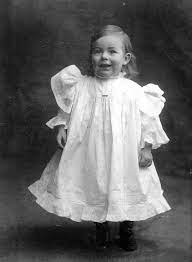
It’s difficult to read the gender of children in many old photos. That’s because coding children via clothing didn’t begin until the 1920s.
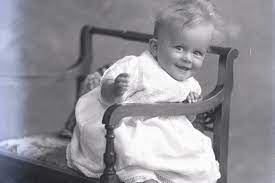
Baby Drew, 1913 via Flickr

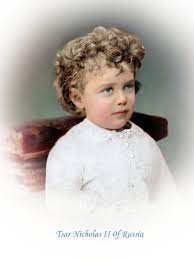
Exploring the biographies of men as disparate as Tsar Nicholas II (born 1868), Franklin Delano Roosevelt (born 1882), and Ernest Hemingway (born 1899), you’re apt to come across pictures of them as young boys looking indistinguishable from young girls. Their hair is long and they’re wearing dresses.
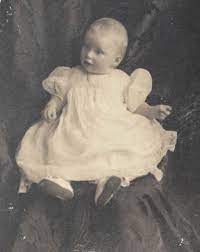
Scholar Jo B Paoletti examines the changing fashions in children’s wear at the turn of the twentieth century, as a long tradition transitioned to more overtly gender-coded clothing. As she notes, “Until World War I, little boys were dressed in skirts and had long hair. Sexual “colour coding” in the form of pink or blue clothing for infants was not common until the 1920s; before that time male and female infants were dressed in identical white dresses.”

Paoletti writes that young children’s clothing became more “sex-typed” as “adult women’s clothing was beginning to look more androgynous.” Before that transition, clothing styles for children followed a predictable progression.

“Infants of both sexes wore long white dresses until they began to walk,” while toddlers “wore short loose-fitting dresses until the age of two or three years.” After that, boys and girls wore dresses or suits with short skirts to the ages of five or six.
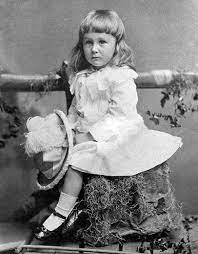
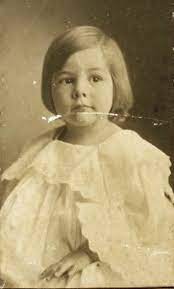
“Differences in colour, material, and trim” were used to separate boys and girls at the latter stage, although such details may be hard to read in old photos today. Paoletti quotes from an 1895 issue of Ladies’ Home Journal to give one example of differences: “little boys’ dresses button up the front, those of their sisters fasten in back.”

The reasoning behind boys in dresses has been attributed to several motivations. There were the necessities of toilet training but also just plain practicality, since sewing and fitting smock-like dresses was easier than making miniature suits. Paoletti points to another: “it was not considered important to differentiate boys and girls at such an early age.” But “it seems to have been very important to distinguish between children and adults.”

“A child’s maturation was noted by gradual adoption of adult dress,” Paoletti writes, “a process usually regarded as marking important milestones in her or his development. These stages became more distinct and more celebrated for boys than girls only after the age of five.”

The timing of “breeching” – putting on breeches, short pants, knickerbockers or shorts – was left to the mother’s discretion. “Advice columns very commonly included queries from mothers wondering if their sons were ready to put away dresses,” she notes. By 1900, however, little boys in dresses beyond the age of two or three became rarer. Mothers started being advised “not to keep their boys in skirts too long.”

Boys from five to twelve could be dressed in “costume style” outfits, including sailor suits and the “Little Lord Fauntleroy.” The enormously popular 1886 Frances Hodgson Burnett novel inspired this later outfit, made of velvet and trimmed with lace. Stage and screen versions of Burnett’s work sometimes featured girls in the title role.

By 1936, “Little Lord Fauntleroy” could be a taunt akin to “sissy,” and the popular movie version that year starred a boy without the suit (and the curls).

The Daily Mail published 115 articles on trans issues in January 2023

In 2018, then-Prime Minister Theresa May published an LGBT action plan that included the protection and expansion of transgender rights. “We can be proud that the UK is a world leader in advancing LGBT rights,” she said, as she promised to make the gender recognition process less intrusive, acknowledged the existence of non-binary people and condemned transphobic bullying in schools. “Everyone in this country should feel safe and happy to be who they are,” added Penny Mordaunt, the equalities minister at the time, “and to love who they love, without judgement or fear.”

Just four years later, their action plan reads like something from a parallel universe. Hate crime against trans people is up dramatically and public attitudes have hardened against trans rights. This rising tide of hate has not occurred in a vacuum. Increasingly, politicians have, at worst, used trans people as scapegoats and, at best, chosen to look the other way as the mainstream media has churned out stories opposing trans rights. 

Anti-trans hate crime was already high when May’s plan was published, with 1,700 cases reported in 2018. But since then its skyrocketed, increasing by an eye watering 156% in four years to hit 4,300 in 2022.
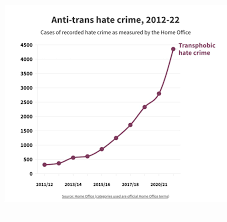
Source: Home Office

Hate crime has been on the up across the board in the last decade, with the total number of reported cases rising from 44k in 2012 to 119k in 2022 (+271%). But trans people have fared by far the worst, with cases rising from 300 in 2012 to over 4,300 in 2022. That’s an increase of nearly 1300%.

Research by trans rights activist MimmyMum suggests that UK media has published an average of 154 articles on trans issues every single month over the past seven years. That’s a total of 13,500 articles focusing on a minority group that makes up just 0.1% of the population.

Britain’s most-read newspaper, the Daily Mail, has certainly dramatically increased its coverage over the past few years. Comparing the first month of each year shows a rise from six articles in January 2013 to a jaw-dropping 115 articles in January 2023 (+1817%).
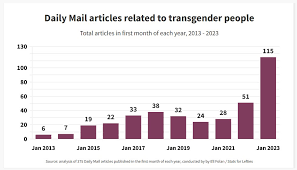
Source: analysis of 375 Daily Mail articles published in the first month of each year, conducted by Ell Folan / Stats for Lefties

It’s not just the volume of coverage that has affected the national mood towards trans rights, however – it’s the negative slant of the articles. While neutral and positive coverage has remained largely flat since 2013, the Mail and others have begun to publish a large number of critical pieces. Of the 115 Mail articles on trans issues in January 2023, 100 of them (87%) could reasonably be categorised as negative, in comparison to zero negative articles in January 2013.
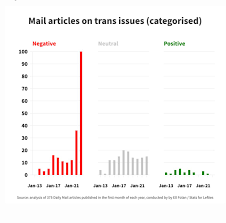
Source: analysis of 375 Daily Mail articles published in the first month of each year, conducted by Ell Folan / Stats for Lefties

Negative articles published by the Daily Mail last month include: “Now Aretha Franklin’s song Natural Woman is deemed OFFENSIVE to trans women”, “Labour again in hock to extreme ideology” and “Show sense on gender”. With a press this opposed to trans rights, it isn’t really surprising that the general public is turning against trans people.

So how do we reverse hardening attitudes and growing hate crime?

Something must give, that much is clear. In 2021 there was still some evidence that the public was inclusive towards trans people despite their poor political leaders – this is no longer the case. Public opinion has become far more sceptical of trans rights, hate crime is rising exponentially, and even notionally supportive politicians are now generally hesitant to stand up for trans people.

As a driving force behind the problem, the media must also be part of any solution. Making the mainstream media listen often feels impossible. In the past staff at the Guardian have coordinated demand that the paper improves its coverage of trans people. Perhaps now is the time to try again?

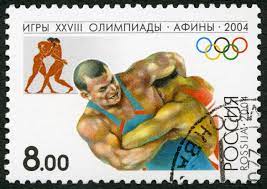
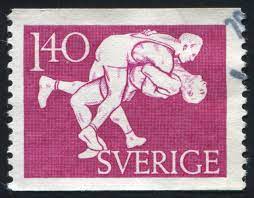
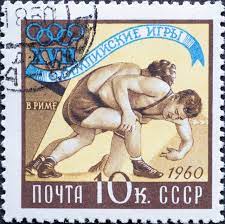
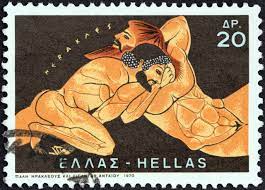
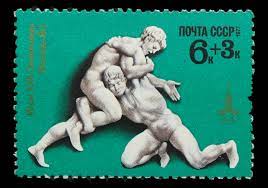
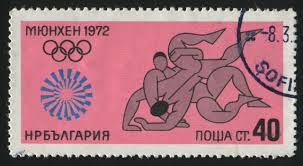
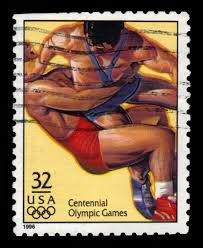
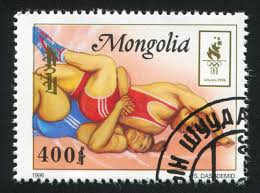
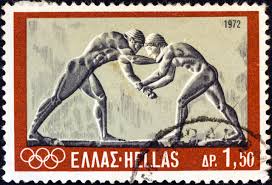
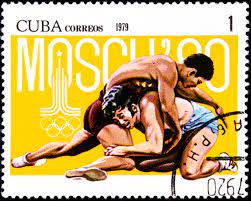
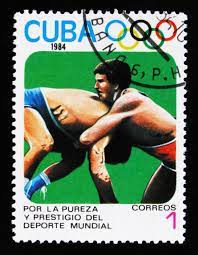
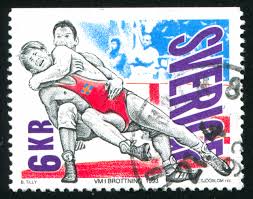
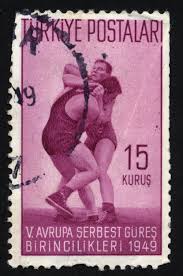
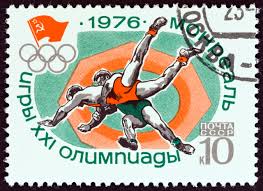
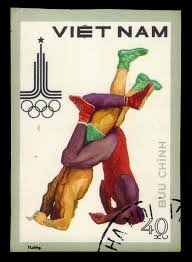
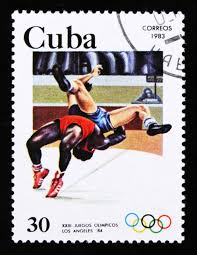
Vintage postage stamps of male wrestlers

Once upon a time, long before the age of texting and emailing, human beings would communicate by letter, which they sent through the mail using something called a postage stamp.

Commemorative stamps have long been used by countries to mark a historic date such as an anniversary, or to honour an event, place, person, or object. Unlike definitive stamps, commemorative stamps are usually made in limited quantities and sold for a temporary period of time before going out of print.

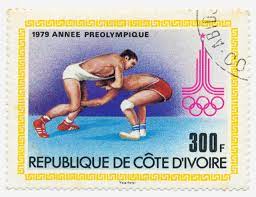
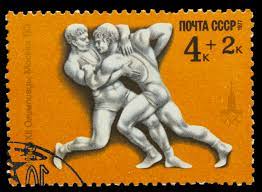
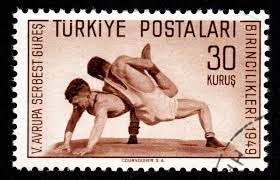
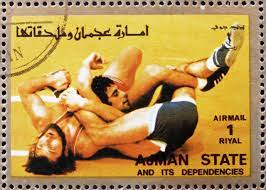
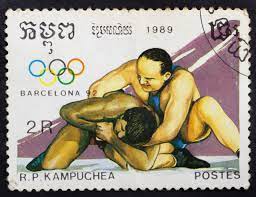
For whatever reason, male wrestlers have long been a popular subject for commemorative stamps in countries all across the globe. Interestingly, many of the countries that printed them don’t have particularly friendly histories when it comes to gay people such as Russia, Cuba, Turkey or Poland.

While the governments of these places might’ve had (and, in some cases, still have) serious issues with two men loving one another in the privacy of their own homes, when it came to licking the backs of stamps depicting images of half naked bodies, they were totally fine with it.

Here are some of the very best totally-not-gay vintage postage stamps of male wrestlers from over the years, with some dating as far back as the 1940s:
Lady Lever Art Gallery … Titanic … Collage workshops

News

Lady Lever Art Gallery

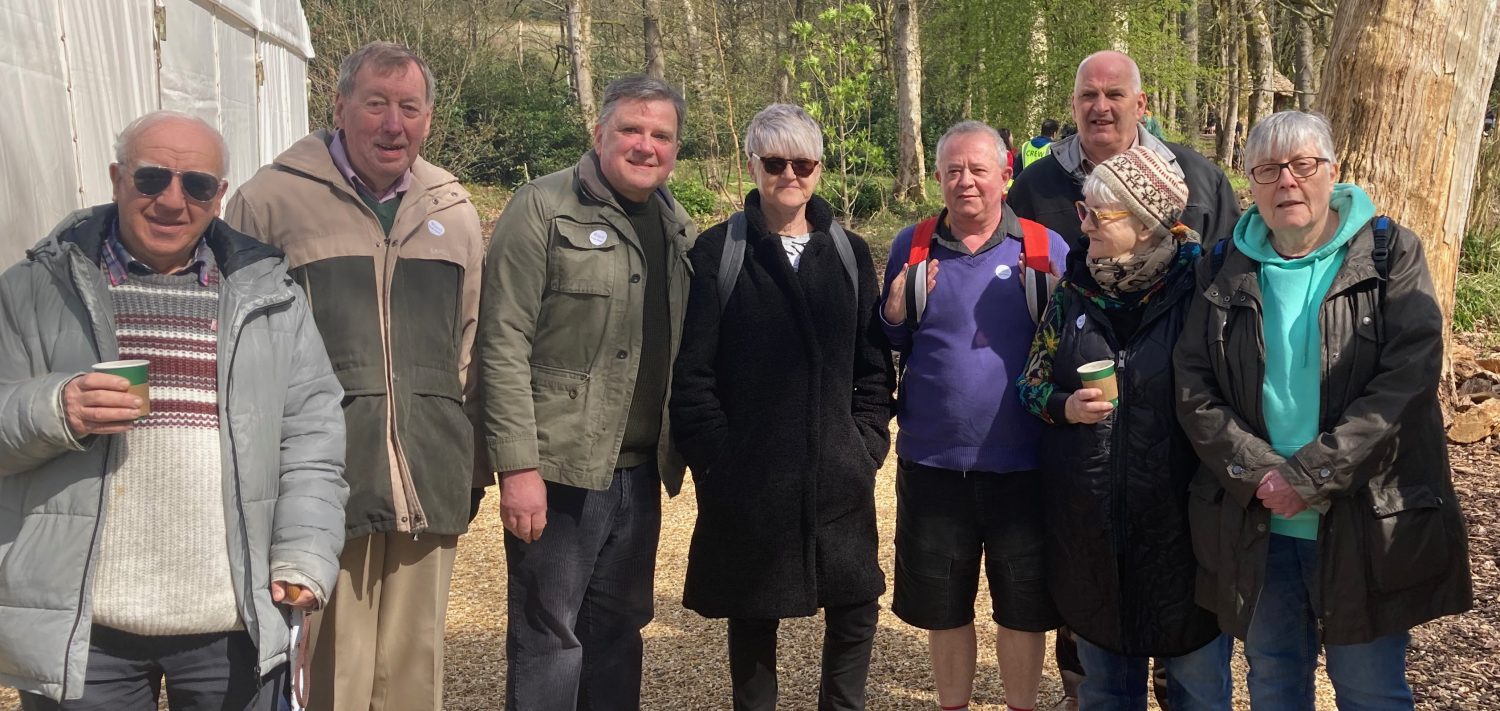
Out In The City members took the train to Port Sunlight. It’s quite an easy journey changing at Liverpool Lime Street.

Port Sunlight village is delightful and we had a lovely meal in The Bridge Inn. The food was terrific and great value. After dining we walked to the Lady Lever Art Gallery.

William Hesketh Lever was born in Bolton, the son of a wholesale grocer. He left school at 16 to join the family firm, which he expanded and transformed. In 1884 he decided to focus on just one product – household soap – primarily because of its potential for marketing in pre-wrapped bars under a brand name. Previously soap had to be cut to order from a single large block.

Two years later he began to manufacture soap himself and set up the firm of Lever Brothers with his brother. He initially produced his soap in an existing factory but by 1888 had outgrown the site and moved to a purpose built and much larger building on the Wirral.

The success of his company made Lever very rich. By 1912 in addition to his income, he had personal assets valued at nearly three million pounds. Within a few years the interests of his company Lever Brothers stretched from the United Kingdom to West Africa, the Pacific and the United States. Lever visited his business empire across the globe and collected works of art and everyday items during his travels. The company grew until Lever was employing 85,000 workers around the world in 1925.

There is some discussion about whether Lever exploited people in Africa, but he was certainly a philanthropist and made a large contribution to the lives of ordinary people in the UK. He built a village to house his employees and named it Port Sunlight after his most successful brand of soap. Port Sunlight was to provide his workforce with good housing. He campaigned for better welfare and a shorter working day, and supported building, education and medical projects.

He also founded the Lady Lever Art Gallery, which houses one of the UK’s finest collections of fine and decorative art.

Lord Leverhulme died at 73 of pneumonia at his home in Hampstead on 7 May 1925. His funeral was attended by 30,000 people.

More photos can be seen here.

Does the Titanic have a secret gay history? All signs point to yes

On Saturday 15 April it will be 111 years since the sinking of the Titanic. Over 1500 people perished when the ‘unsinkable’ ship sank in the Mid-Atlantic ocean, over two hours after striking an iceberg. The ship had only entered service four days prior and was expected to complete its maiden voyage to New York by 17 April.

The story of Titanic has been retold many times, most notably through the 1997 Blockbuster triggering a pop culture phenomena of iconic scenes, quotes and characters. The tragic love story of Jack and Rose enchanted the imagination of so many.

We all know what happened after Jack drew Rose, but it turns out there may have been a real-life couple on board the Titanic whose story is even more intriguing than James Cameron’s Oscar-winning tale of doomed love.

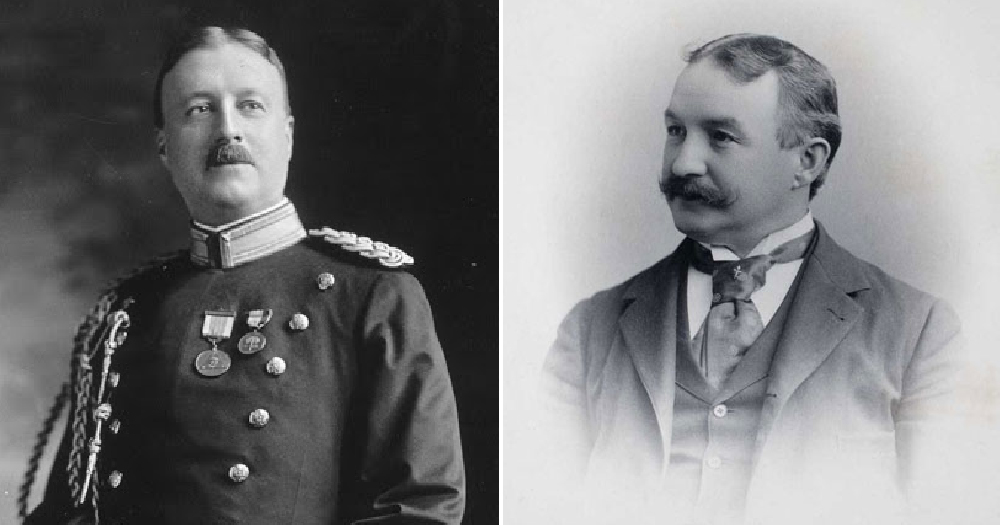
While it’s not 100% confirmed, all signs point to the likelihood that prominent military veterans Archibald Butt (above, left) and Francis Davis Millet (above, right), who both died when the Titanic sank in 1912, were much more than just friends.

The maybe-probably gay couple has been a source of fascination for years. Historian Richard Davenport-Hines wrote in 2012 that “the enduring partnership of Butt and Millet was an early case of ‘Don’t ask, don’t tell,’” and a National Park Service website about a fountain built in their honour notes that “many “have asserted that Butt and Millet were involved in a romantic relationship.”

Millet was estranged from his wife and love letters show he had a previous relationship with writer Charles Warren Stoddard. Butt never married, and the two shared a mansion in Washington, DC, where they regularly threw parties. President William Howard Taft, who happened to be Butt’s boss, was a frequent guest.

Millet and Butt were booked in separate rooms on the Titanic, but given that they’d have to keep their love a secret to maintain their status and freedom, this is hardly surprising. The Post notes that the men were vacationing together in Europe before boarding the ship, and it honestly sounds quite romantic.

Millet served as a medical assistant in the Civil War before studying art at Harvard. He travelled the world as a reporter, and received high praise for murals he painted in Belgium. He also served as vice chair of the US Commission on Fine Arts.

Butt also worked as a reporter for some time, but joined the military at age 34 and quickly ascended the ranks. President Theodore Roosevelt called him back to Washington in 1908 to serve as an adviser. Taft kept him on when he assumed office, and the two men grew close.

Taft was devastated at the loss of Butt, taking it as if his son had died. After the tragedy, plans were formed to honour the men with a White House fountain.

The official reason was that the two were the only representatives of the federal government on board the ship, but we like to think it’s an enduring monument of same-sex love.

It’s located near the E Street entrance on the southwest side of the White House.

Collage workshops

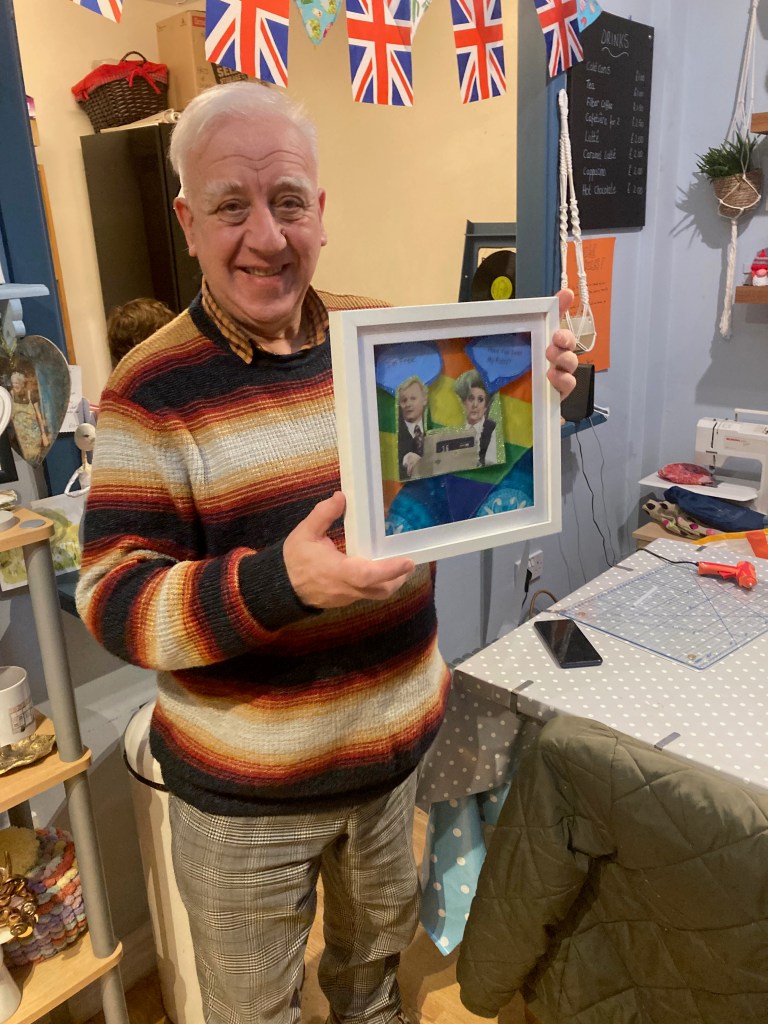
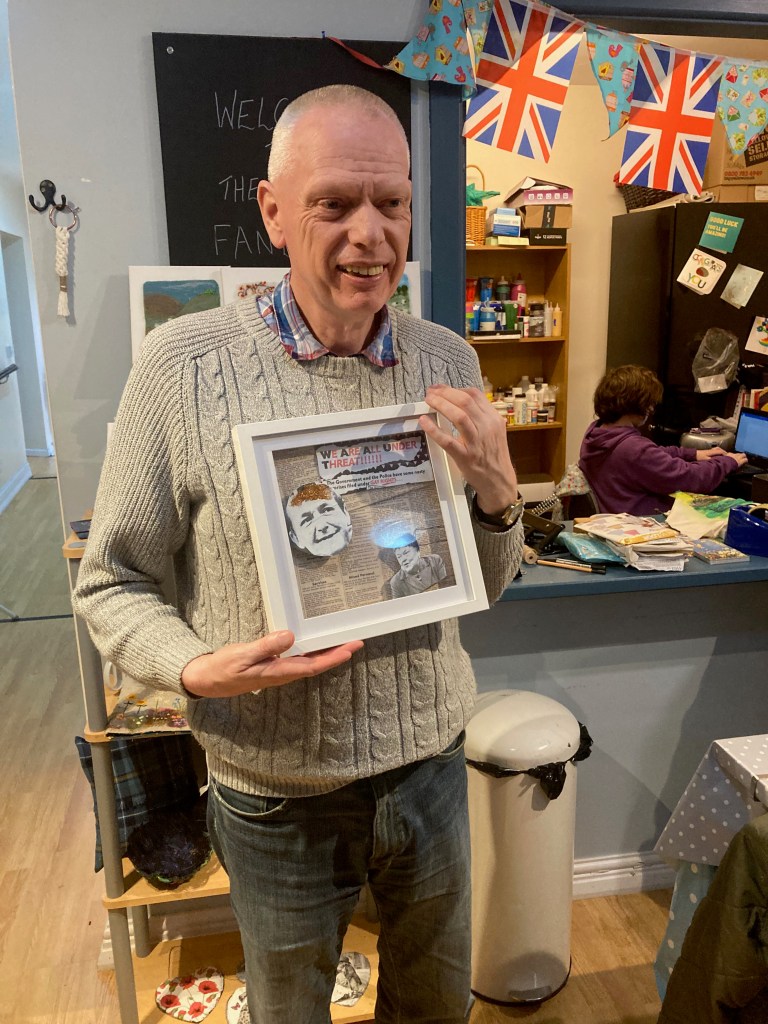
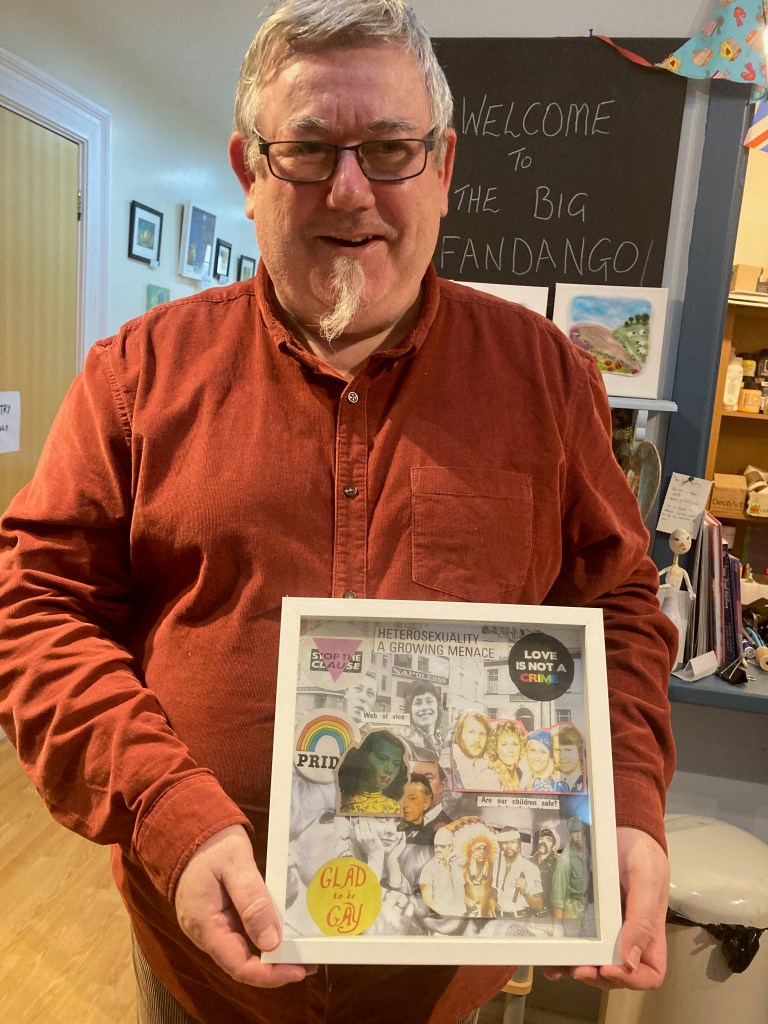
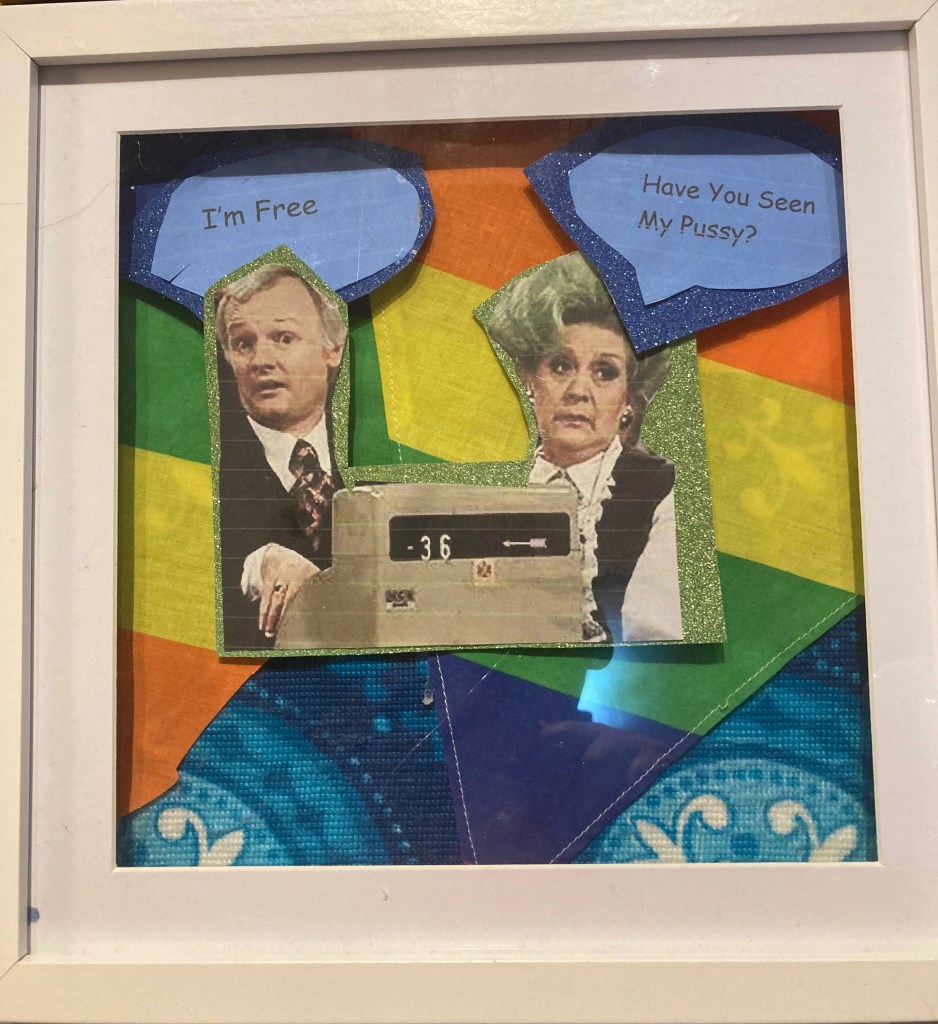
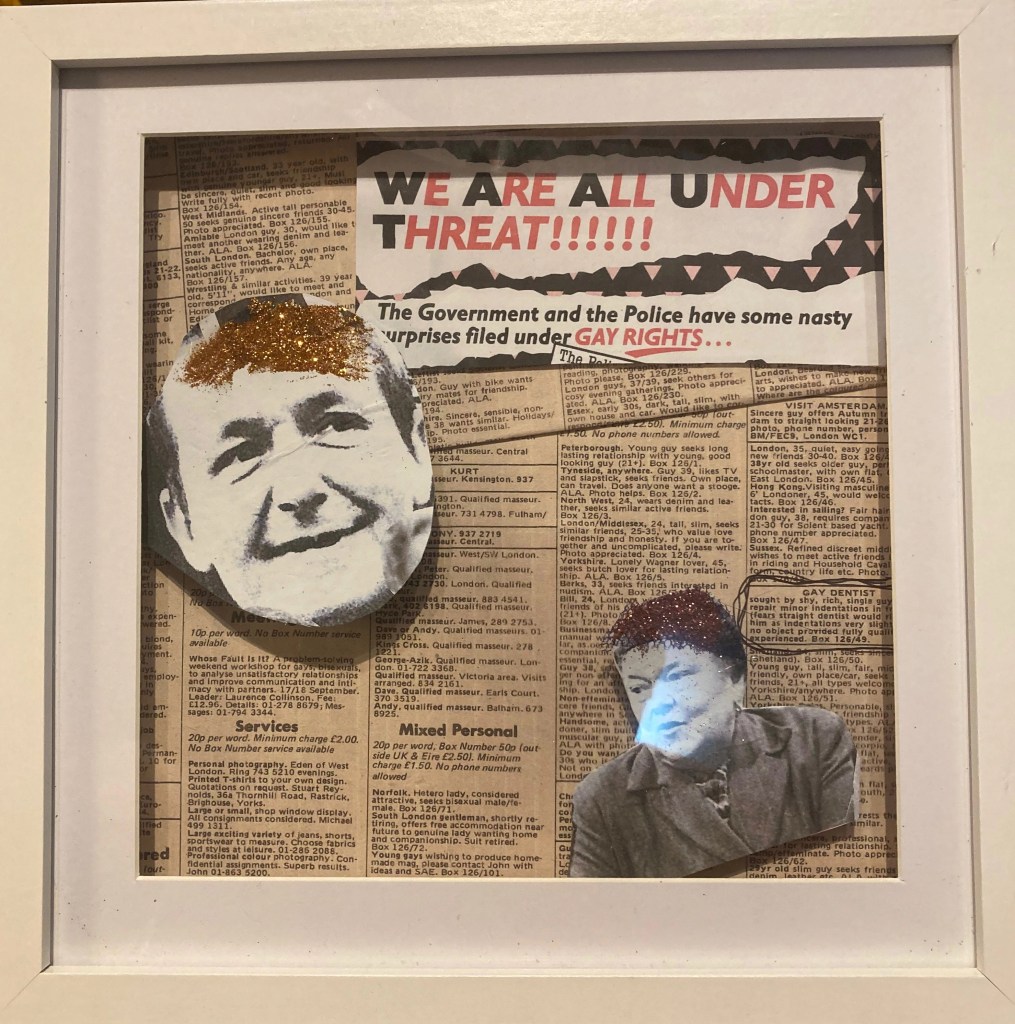
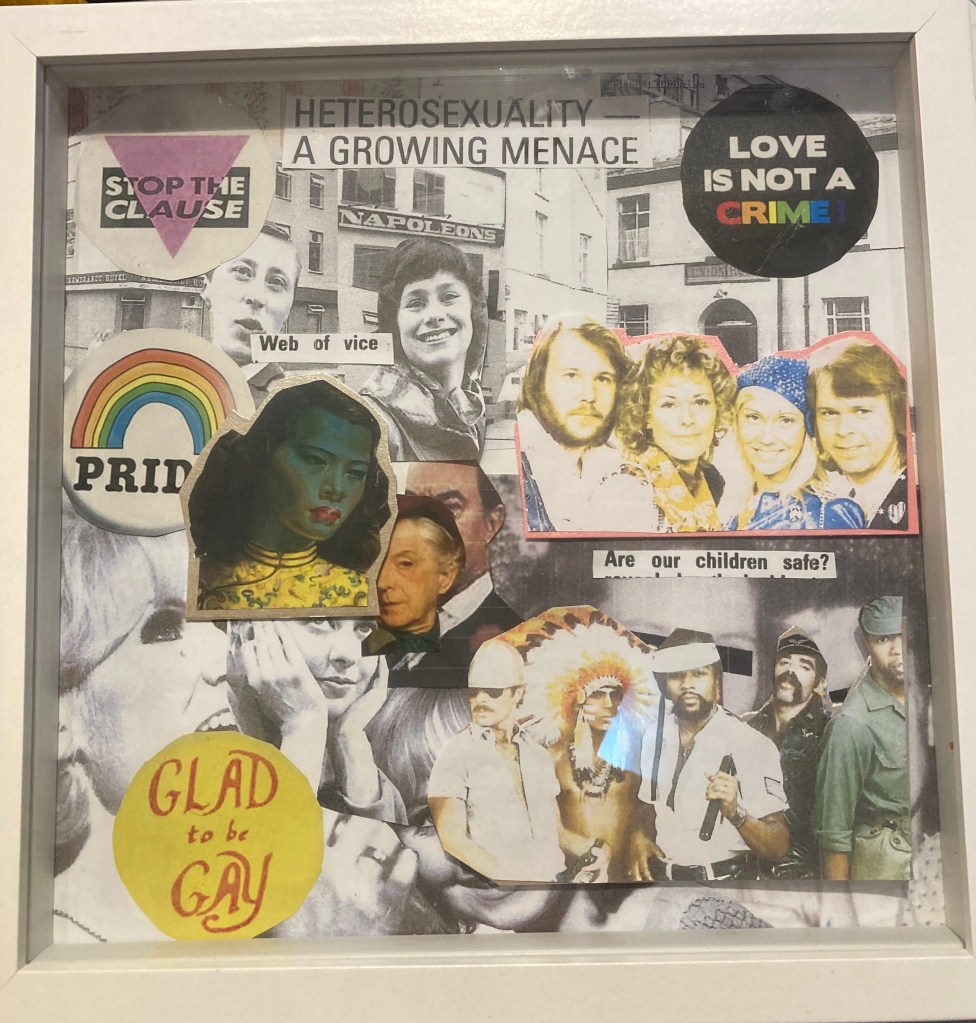
A small number of us attended The Big Fandango in Bury to make collage pictures in preparation for Bury Pride:

Does anyone know where this is from? An intriguing bit of history, but I have no context or information.

LGBT+ Community in Ukraine: One Year Into The War … I Just Want To Be Me … ACT UP … Rainbow Lottery

News

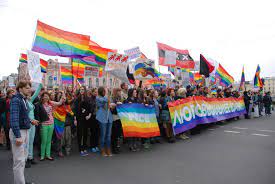
LGBT+ Community In Ukraine: One Year Into The War

It has been one year since Russia invaded Ukraine. Despite resulting in displacement and violence, Ukraine’s LGBT+ community has found ways to strengthen its fight for political and civil rights.

In the last year, Ukraine’s society has shifted its perspective on the LGBT+ community. While LGBT+ activists worked to resist the imposition of conservative Russian attitudes, LGBT+ communities advanced their rights in multiple ways. In May of 2022, “Nash Svit,” a Ukrainian LGBT+ organisation, conducted a study finding that 64% of Ukrainians support providing equal rights to the LGBT+ community.

This study indicates a considerable jump, as this percentage also includes those who previously had negative views towards this community. Another study, showcased by the social media group “LGBTIQ Military,” stated that there are more self-identified LGBT+ members in the armed forces of Ukraine than ever before as they have gained more acceptance among the armed forces. In addition, new legislation has been introduced, such as partnership rights for same-sex couples and the prohibition against anti-LGBT+ hate speech. 

Anastasia Adriivna, a school teacher, was inspired by opposite-sex couples rushing to get married before joining the fight to launch her campaign for same-sex marriage. Her petition gained over 25,000 signatures, and under Ukrainian law, the president must formally respond to any petition with this many signatures. However, the president argued that this would require a constitutional change which was impossible due to current martial law. Therefore, despite the public support of the LGBT+ community advancing, there is still work to be done to make these rights recognised under the law. 

This setback is no surprise, as the LGBT+ community has demonstrated their commitment to pushing for democracy, despite the pushback they have received in the last decade. However, it is also clear that they have seen a significant jump in public support within the previous year. 

One of the many characteristics of a nation going to war is that its social norms shift and the conventional expectations of the government and public lessen. This is the same for Ukraine. Often, marginalised communities are mobilised by their nation during a time of chaos. For some groups, this dramatic change provides a gain, while others return to their marginalised status afterward.

An example is Britain granting women the right to vote after World War I. On the contrary, African American troops returned from both wars to continue facing racial discrimination. Therefore, some times of chaos may bring many benefits, such as the increased support of the LGBT+ community in Ukraine; however, there is still the need to expand that support into permanent laws. 

The LGBT+ community in Ukraine is gaining support, as the efforts of many activists have made tremendous progress in the past decade. However, although accepting the LGBT+ community by the Ukraine public is a huge step, it does not guarantee the community full access to resources and protection against all forms of hate and discrimination. 

Therefore, it is vital to utilise this time and increased support to push on the Ukraine government and lawmakers. Even though the LGBT+ community is on a great wave, it is essential to know that the goal isn’t just to gain public approval but to make legal changes that protect the entire spectrum of the LGBT+ community permanently.

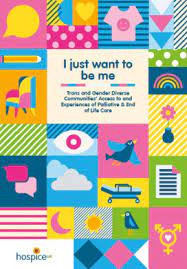
I Just Want To Be Me

A new report on trans and gender diverse communities’ access to and experiences of palliative and end of life care has been produced by Hospice UK – I Just Want To Be Me.

Dr Ellie Kane, Consultant in Palliative Medicine, writes in the foreword: “Caring for people with life-limiting illness is one of the greatest privileges in healthcare.

We see people at their most vulnerable and fragile as we try to listen and hear their story, help them live freely, and ultimately care for them with dignity and compassion as they die. There are few things as powerful when it’s done well. There are few things that can cause as much harm when it’s not.

People who are trans and gender diverse deserve that support as much as anyone else. We have a legal duty to improve care both from the Health and Care Act 2022 and the Equality Act 2010 but we also have a moral duty to improve this simply because it’s the right thing to do.

I’m often asked why we should focus on such a small group of people when healthcare is stretched in so many ways. Evidence tells us making care better for one group makes it better for everyone. It is not one group versus another but rather, how can we make sure we provide the best care for all.”

The Executive Summary

This report shows that in many instances, the end of life care that trans and gender diverse people receive is not inclusive of them, and despite best intentions and a willingness to learn, staff feel they lack the knowledge and training needed.

Trans and gender diverse people who had accessed palliative and end of life care at times experienced insensitivity from staff, misgendering and confusion over their identity and instances of poor physical care.

Palliative and end of life care staff expressed a positive desire to learn and ensure their services are accessible, with those who had received end of life care sharing many positives about the staff they encountered. However, staff raised serious concerns over discriminatory views not being addressed in the workplace, a lack of training and understanding on LGBTQ+ issues, and a lack of access to information on providing medical and clinical care to trans people.

In wider trans and gender diverse communities, many expressed apprehension about one day having to access end of life care services, in part due to a range of negative experiences with other healthcare services. It is essential that palliative and end of life care providers put in the work to make their services inclusive to ensure that trans and gender diverse people do not miss out on vital quality care.

To do this, health and social care staff need to be better equipped to support trans people. They should receive training pre registration on trans and gender diverse communities, and be supported to access further training throughout their career.

Professional bodies and Royal Colleges should also produce guidance on providing medical and clinical care to trans and gender diverse people in palliative and end of life care.

To improve the end of life care experiences of trans and gender diverse people, and the experiences of trans staff and volunteers within end of life care, providers should develop robust policies that support trans and gender diverse people. Trans and gender diverse people within end of life care spaces must be protected from discrimination and supported to transition.

This includes providing trans and gender diverse people with information on medical and physical transition and ensuring that being at end of life is not an additional barrier to transition related healthcare.

The experiences of trans and gender diverse people remain under recognised in end of life care. There has been little research or attempts to platform trans and gender diverse voices in the sector. This report should be used as an opportunity to continue to make palliative and end of life care services more inclusive, and truly open to all. For Hospice UK, this is a first step and we look forward to developing this work.

Download the full report here.

ACT UP

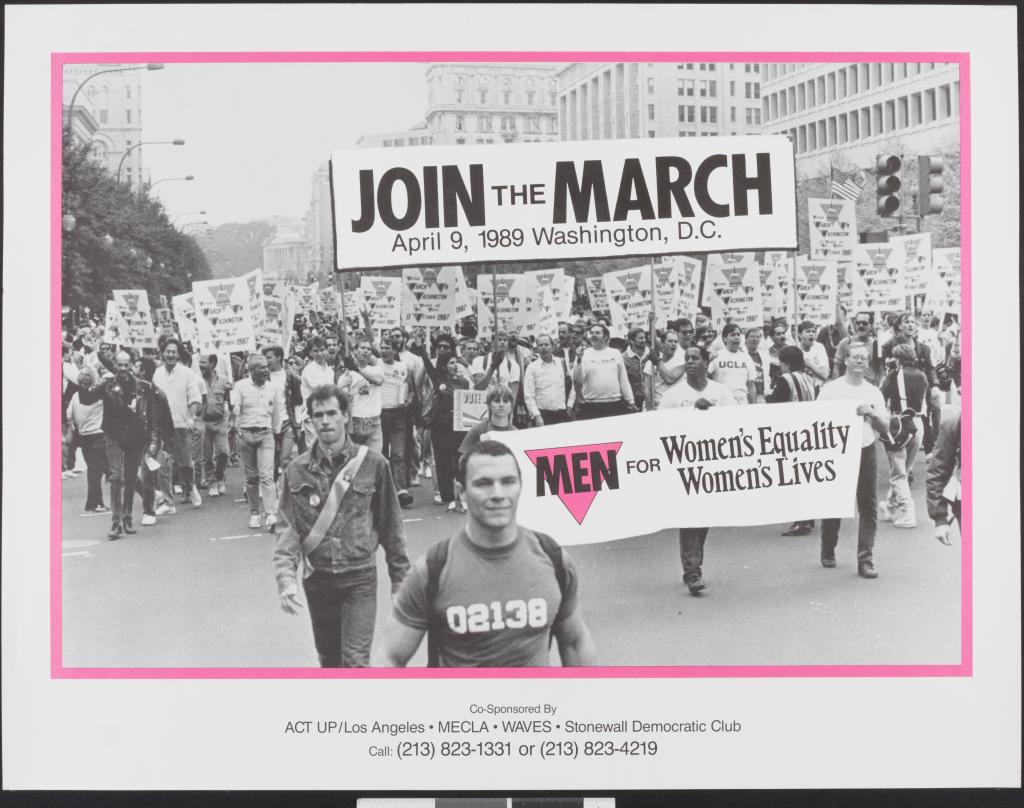
Women’s History Month might be over but our recognition of women’s rights and gender equality doesn’t end in March. This ACT UP (AIDS Coalition To Unleash Power) poster from 1989 demonstrates that all of us, including men, play a vital role in advocating for gender equality.

Women were sorely neglected during the tumultuous years of the AIDS crisis. The Los Angeles chapter of ACT UP was one of the foremost grassroots organisations in the US dedicated to creating change around AIDS responses through direct, non-violent action.

The march advertised in this poster was organised by ACT UP, in collaboration with other LGBT+ groups at the time, and was the second annual National March on Washington for Lesbian and Gay Rights, which originated in 1987. For such a prominent organisation to be organising around women’s rights and, in particular, for women affected by HIV/AIDS was extremely important at the time

Rainbow Lottery – Win an iPhone 14 Pro and an Apple Watch Series 8

The clocks have gone forward, there’s some light in the evenings, and we have a fantastic prize to welcome you into April!

To thank you for your ongoing support for Out In The City, we’re giving you the chance to win an amazing Apple tech bundle – a top-of-the-line iPhone 14 Pro, and an Apple Watch Series 8!

With a massive 48-megapixel camera, a crystal clear 6.1” display, and 128GB of storage – along with all the speed and processing power you’d expect, this really is the upgrade you’ve been waiting for! The Series 8 watch is fantastic for fitness, or just to keep you connected on the move – this combo is something you DON’T want to miss out on!

The special prize draw will take place on Saturday 29 April. Get your tickets here. If you already have tickets, there’s no need to buy separate tickets, you will be automatically entered into this prize draw. Of course, you are welcome to buy additional tickets here. Every ticket you buy is an extra chance to win, and an extra fundraising boost for Out In The City. It’s a win-win situation!

Thank you and good luck!

George Michael … Loving: A Photographic History

News

George Michael

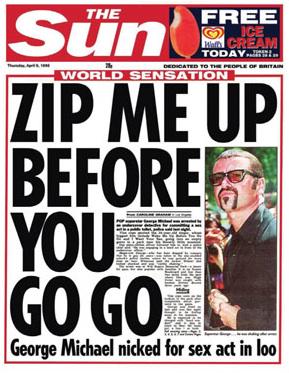
On 7 April 1998, George Michael was arrested in a public toilet at Will Rogers Memorial Park in Beverly Hills. He had been caught by a plainclothes police officer performing “a lewd act” on another man. 

The Wham! front man was fined $810 and sentenced to 80 hours of community service, but that wasn’t the last of it. The story exploded in the media and attempted to make a mockery of the singer.

One UK tabloid broke the story on their front page with the headline “Zip Me Up Before You Go-Go”, while others spent weeks dissecting and going over and over the scandal. 

It was at a time when attitudes towards homosexuality were very different than they were today. 1998 was only three years after new types of drugs and therapy had been available to treat HIV and the stigmatised association between AIDS and homosexuality was still very much a real thing.

George at Live Aid in 1985 (pic: Live Aid / Mirrorpix)

In the years before the 1998 scandal hit, celebrities were already being publicly outed in the press under the guise of the “public interest”. Footballer Justin Fashanu, came out in a front page tell-all with The Sun newspaper in 1990 and faced immense backlash and crowd abuse in the years afterwards.

Three days after George’s arrest in Beverly Hills, the singer appeared on CNN where he chose to publicly come out. During the interview, the then 34-year-old told presenter Jim Moret: “I want to say that I have no problem with people knowing that I’m in a relationship with a man right now.

I’m a very proud man. I want people to know that I have not been exposed as a gay man in any way that I feel … I don’t feel any shame for. I feel stupid and I feel reckless and weak for having allowed my sexuality to be exposed this way, but I don’t feel any shame whatsoever. And neither do I think I should.”

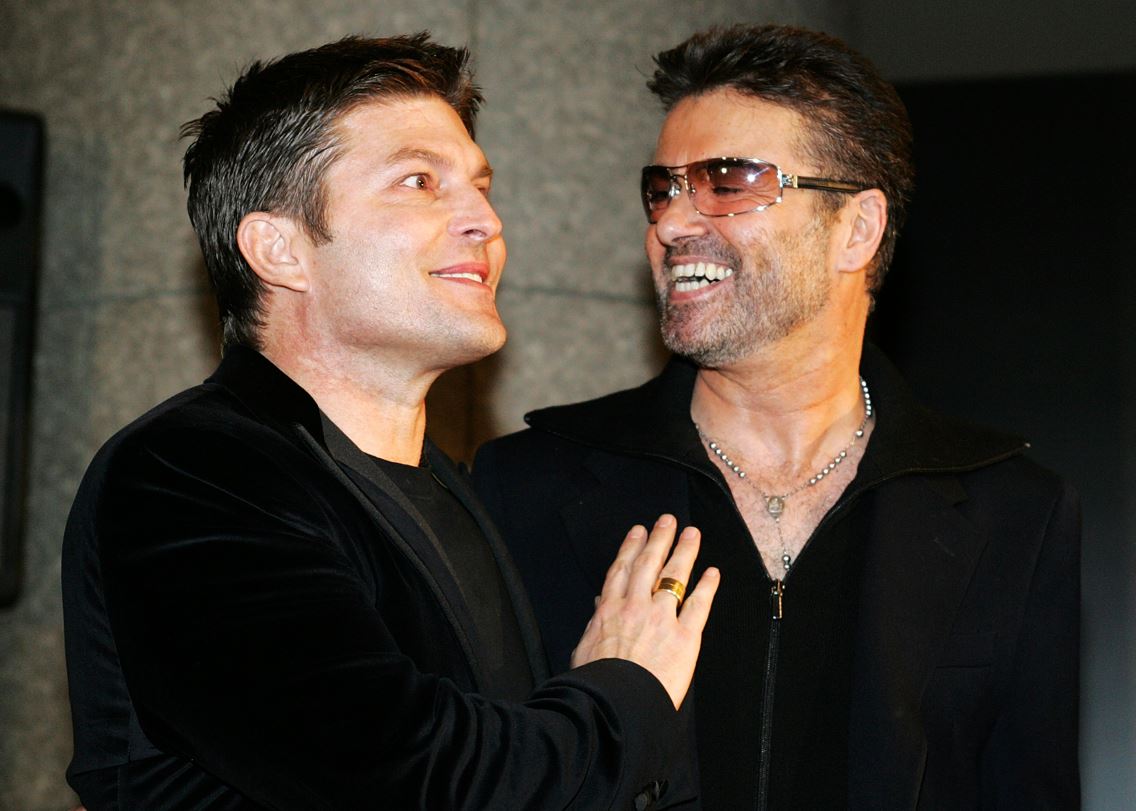
How George Michael responded to his arrest and the subsequent sensationalism of the scandal is at the centre of a two-part documentary which aired on Channel 4. “George Michael: Outed” showed how the media portrayed George at the time, alongside interviews with LGBT+ celebrities and those who knew George at the time, including former partner Kenny Goss.

It hit hard with a lot of viewers. One person tweeted after watching the show: “It’s utterly heartbreaking. A reminder how homophobic the tabloids were and how gay men were vilified during the 80’s especially.”

George appeared on CNN in 1998 to publicly come out (pic: CNN)

Another said: “Watching #georgemichaelouted and seeing how the press outed gay men and what they wrote about the aids situation and gay men as a whole makes me feel physically sick. Who in their right mind thought that it was ok to out people and write such vile things about them?”

One scene saw Years & Years frontman Olly Alexander read through some of the newspaper headlines and reports at the time. One, for example, suggested George should have been ‘honest’ about his sexuality from the beginning.

“You can’t win,” Olly remarked. “You’re damned if you do, damned if you don’t. And it’s very telling for someone, who I presume isn’t gay, to go ‘You should have done this, and if you’d done this maybe we would have reacted in a different way’.”

Tabloid journalists were also interviewed in the documentary. Neil Wallis, former Deputy Editor of The Sun and The News Of The World, seemed non-phased about the treatment George received at the time saying that celebrity scandals “sell newspapers”.

“All great celebrity stories are essentially about hypocrisy,” he says on screen. “Someone who appears to the public to be this and yet they’re leading a double life which means they’re really this. And the great tabloid hit is stripping away this facade and showing the truth.”

Just one of the headlines to cover George’s 1998 arrest (pic: The Sun)

And as for that “zip me up” story in 1998? Neil described it as a “great headline”. He remarked: “Great page one. It’s not exactly, ‘God we should send him to hell this evil man.’ It was laugh-out-loud ridiculous.”

Ultimately, the scandal worked in George’s favour despite many fearing it would end his career. He would later say that “as subconscious plans go, it was pretty successful”.

George would go on to reclaim the narrative with the release of his next single “Outside”. The now-infamous music video for the track sees George play the role of a police officer as he kisses another officer in a bathroom. It was provocative and it was loud and there was certainly no shying away from it after that.

Singer Will Young told filmmakers: “To see someone flip the script and go, Yeah, I’m really proud of this … He was really unique.”
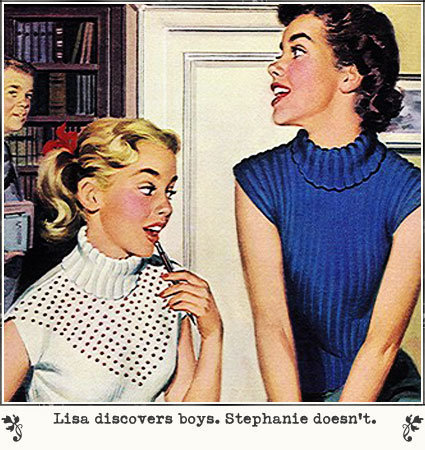
George with former partner Kenny in 2005 (pic: Junko Kimura / Getty Images)
But the documentary shows that anti-LGBT+ attitudes in the media have long been, and still are, borderline obsessive and intrusive. We saw it only last year when Rebel Wilson revealed she was forced to come out after a newspaper threatened to reveal her relationship with girlfriend Ramona Agruma.

“I’ve always hoped that people get an understanding about what it’s like to come out, but also the idea that things may have moved on, but really, they haven’t,” director Michael Ogen told Esquire about the documentary.

“We’re not in a great place and we need to defend those rights and we need allies to help us defend those rights. There’s a comment in the film about how people like George and others were crucified in the press, and I want people to take away from the film that this is not just history; it’s a lesson.”

Loving: A Photographic History

Long resigned to living our lives in secret, behind closed doors, the extent of LGBT+ history that is untold and undocumented is unfathomable.

But thanks to projects like the documentary 100 Years Of Men In Love: The Accidental Collection, some of those stories are coming to light, photograph by photograph.

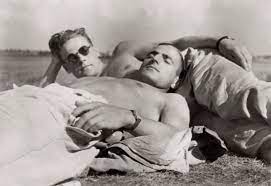
Inspired by a book of the same name, 100 Years Of Men In Love gives audiences a closer look at photography archives of married couple Hugh Nini and Neal Treadwell, a selection of found portraits of men from the 1850s to the 1950s.

During that time, male partnerships were often deemed illegal, so the images of (assumed) gay men together – loving, laughing, cuddling, smiling – feels especially radical.

Nini and Treadwell’s collection was deemed “accidental” because they never really thought they were collecting anything. Over the years, they simply began holding onto any image they could find of men showing affection for one another.

With each visit to an antique shop or a flea market, their collection grew and grew, and the couple eventually realised they needed to share it with the world.

Filmmaker David Millbern tells Nini and Treadwell’s story – as well as those of hundreds of gay couples that came before them – in his hour-long documentary. Speaking with Awards Daily, he remarks that the film is more than just a montage: “We actually go into each picture, we analyze it, we escape into it.”

Later in the conversation, Millbern elaborates on why these photos – some of which are over 150 years old – matter now, and why the seem to connect so deeply with audiences: “People are responding to the love, the love that is captured at a time when these men could have been put in prison or lost their entire livelihood. They could have ruined their lives. Yet they felt their love mattered so much that they wanted to capture it. Little did they know those photos would survive and their love would be basically a call to action … The ability to love freely whoever we choose is basically resting on the shoulders of those who showed us the way.”

In these dark times, a film like100 Years Of Men In Love reminds us what we’re fighting for. What we’ve been fighting for.

After playing film festivals, the film made its official premiere last year, and now streams exclusively on premium LGBT+ network Here TV.

You can check out the film’s trailer below:

LGBT+ Elders … Anne Lister … My Fair Lady … Great Indecencies … Out In The City Art Showcase

News

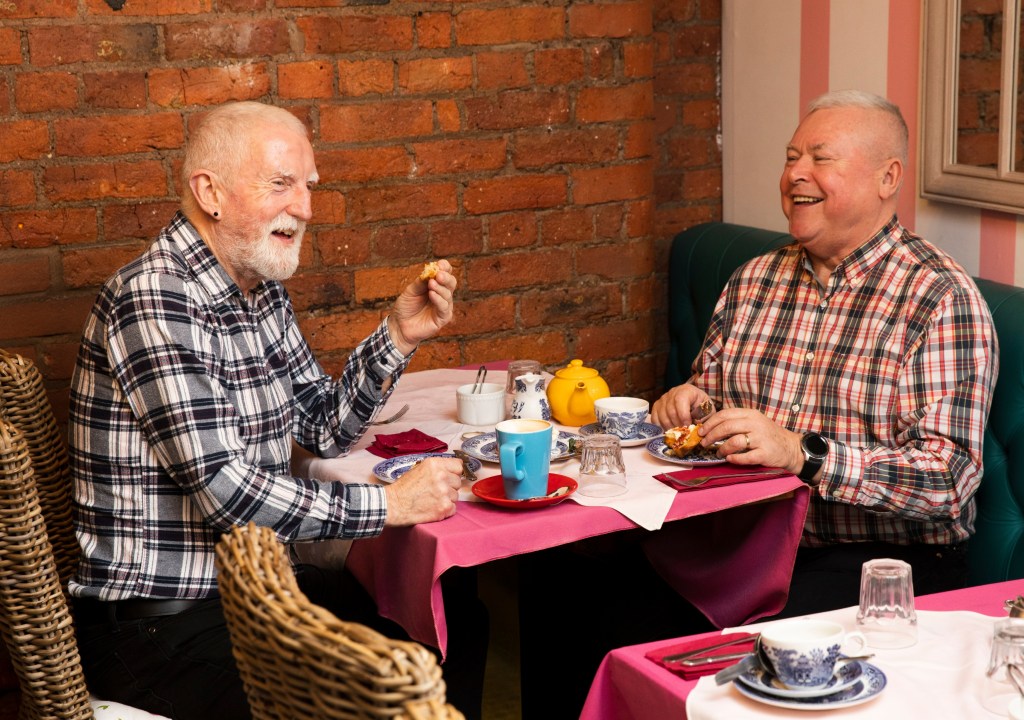
‘We’re not all old farts’: LGBT+ elders on life, love and why the battle for equality isn’t over

As they’re photographed for a new project celebrating people aged 50 and above, LGBT+ elders speak to Joanna Whitehead at The Independent about living under Section 28, decades of fighting for the most basic of LGBT+ rights, and the younger people taking up the baton for equality.

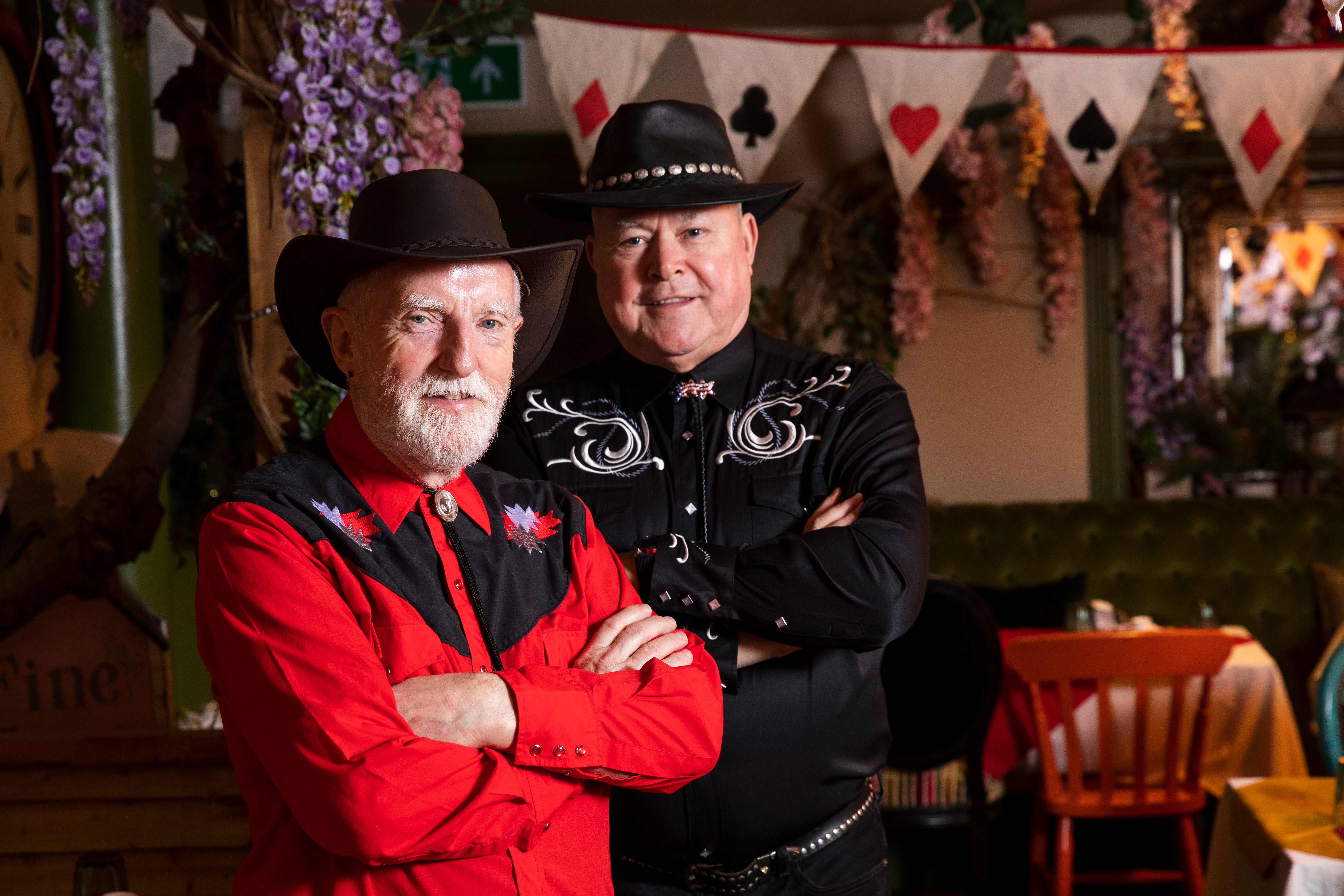
‘Section 28 changed my life’: Patrick Pope (left) and David Rhodes, as they appear in the Centre for Ageing Better campaign (Alexander Caminada)

When Patrick, a 73-year-old gay man from Manchester, worked as a teacher in a Catholic school in the late Eighties, he was confronted daily by the homophobia of the era. “We were sent videos to try and educate pupils about Aids,” he remembers. “I witnessed our head of PSHE opening up the package containing [the tapes] and throwing it in the bin in disgust. ‘We don’t have people like this in our school,’ she said. ‘We don’t have gay people’.”

Patrick Pope and David Rhodes

For many young queer people, such an attitude might be unthinkable, but for the majority of older LGBT+ people, prejudice, fear and hostility was part and parcel of everyday life. New legislation, greater awareness and improved representation mean things have moved on – albeit slowly – since the dark days of the 20th century. While this doesn’t mean we can rest on our laurels – rampant transphobia in almost all areas of life remains a critical rallying point for those invested in LGBT+ liberation, and there’s no disputing the continued existence of misogyny and racism – we also can’t deny that LGBT+ rights have come a long way in the past 40 years.

Patrick is one of four LGBT+ people I spoke with about their experiences as “gay veterans”. As well as reflecting on the past, we discussed the challenges that still exist for LGBT+ people, both young and old. A dearth of positive representation of older LGBT+ people has led to everyone involved in this story participating in the Centre for Ageing Better’s image library, a collection of more than 1,500 positive and realistic images of people aged 50 and above. Free and accessible to all, the image bank has now been nominated for a prestigious Charity Award.

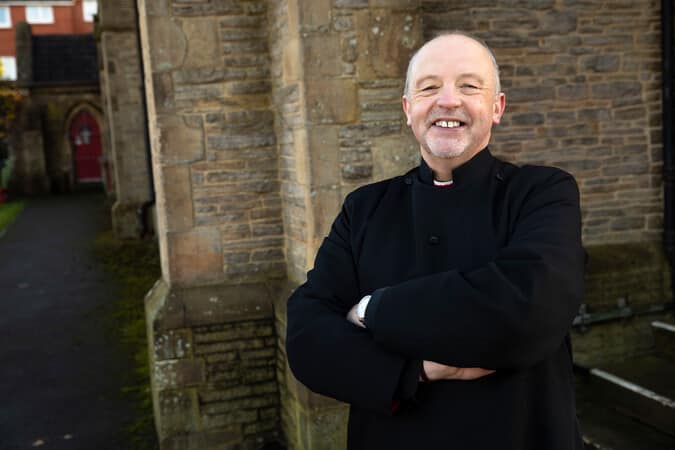
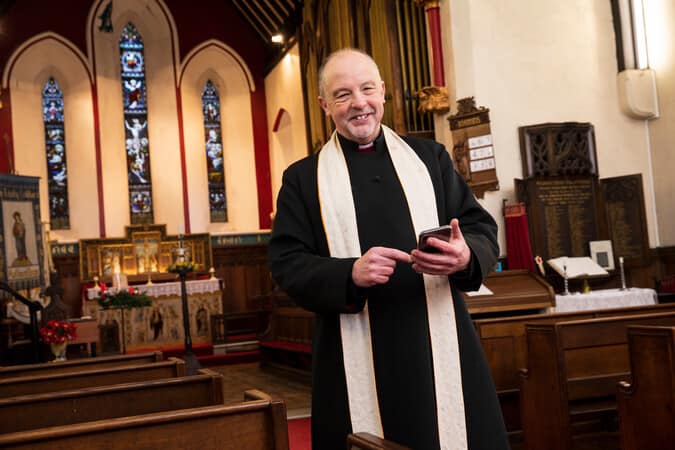
David Austin

David, 59, is a reverend and activist from Manchester and the chair of Oldham Pride. “I was always told on the gay scene that once you’re past 24, you’re over the hill,” he tells me. “That was thanks to things like Boyz magazine, with all their body-beautiful images.” Such pressure to conform to restrictive bodily standards, or accepted appearances, still has resonance across the LGBT+ community. Venerating slimness or policing whether, how and when a person wears make-up can contribute to a lack of acceptance that many people in the community still struggle with. Discriminatory attitudes – both in and outside of the LGBT+ umbrella – also augment poorer mental health outcomes for LGBT+ people; a 2018 Stonewall report found that half of LGBT people polled had experienced depression in the previous year.

In the Eighties, such discrimination was enshrined in law, however. Section 28, the government act passed in 1988 that prohibited local authorities and schools from “promoting the teaching of the acceptability of homosexuality”, had a profound impact on Patrick. He’d been married to a woman for 15 years before coming out at the age of 40, leading his wife to “refuse to talk about it and [give] me three days to tell my children and leave”. Then, once he was seen out with his boyfriend, he was outed at work. “I was interrogated by the headteacher, the parish priest and the full board of governors, and they made me redundant,” he says. “They got me out on ‘economic budgeting grounds’, but I knew the real reason. Section 28 changed my life.”

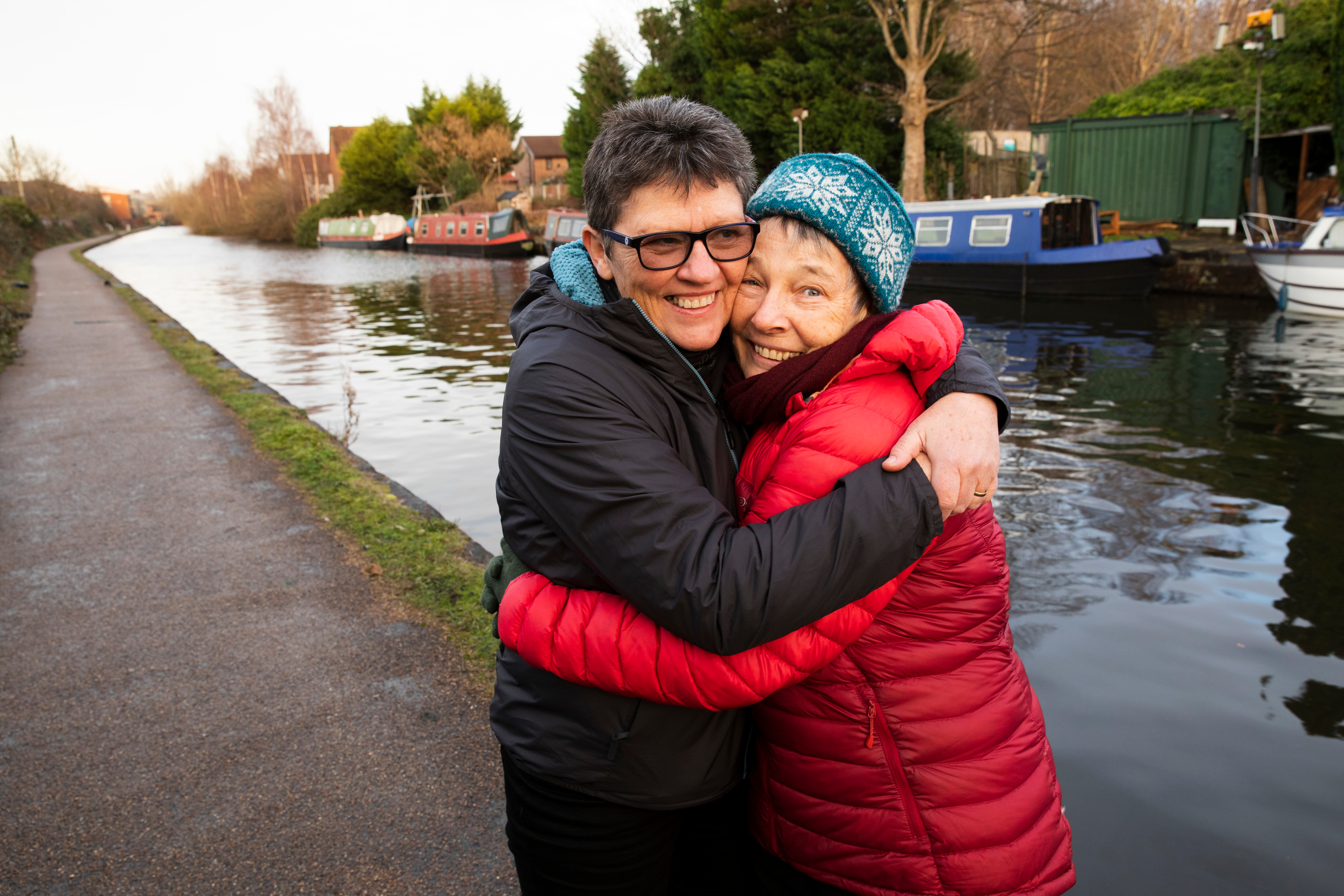
Liz, from Manchester, was just 13 when her mother discovered she was a lesbian – and promptly took her to a psychiatrist. “Crazy,” says the now 61-year-old. “She denies it, but that’s kind of what we put up with.” Liz’s partner, 67-year-old Jo, also had a difficult time coming to terms with her sexuality as a young person. “I think I spent all my teenage years until I was 18 in total denial,” she says. “I was so relieved when I found out that it was ‘normal’ to have a passion for girls, to have a crush. It was a very lonely, isolated time, with some terrible attitudes. It took a lot of bravery to come out.” This was compounded in the early Eighties, too, upon the advent of Aids. “I was going to have children with my gay friend in Leicestershire and he died of Aids,” Liz remembers. “At that period, I went to so many funerals – I lost so many male gay friends.”

Same-sex relations between men may have been decriminalised in 1967 for those aged 21 and above (there was no equivalent law for women), but public perceptions of LGBT+ people were at rock bottom. Equal rights were a foreign concept. It wasn’t until 1992 that the World Health Organisation declassified same-sex attraction as a mental illness and, incredibly, consensual same-sex relations between men was only permitted for those aged 16 and above from the year 2000 (this was previously set at 18). That was also the same year that the ban on LGBT people serving in the army was lifted. For older LGBT+ people, such experiences shaped their lives.

When it comes to the evolution of LGBT+ rights, David is reflective. “LGBT people are sometimes still seen as ‘mad, bad and sad’,” he says. “The church often has a big hand in that in terms of condemning people. So I’m trying to set the record straight.” He is thankful for the activists who have fought for equality. “I’m grateful to the predecessors who’ve had the courage to stick out their necks and been ostracised and even imprisoned because of who they are. People like [human rights campaigner] Peter Tatchell and [Stonewall founder and LGBT+ activist] Michael Cashman have been role models for me in terms of speaking truth to power and confronting injustice, not just in this country, but also overseas.”

Patrick agrees. “I would not have been able to lead the life I’ve led if it were not for those who came before,” he says. “I think it’s important that younger people understand that the freedom they have today is because of LGBT+ people who put their lives on the line.”

‘I went to so many funerals – I lost so many male gay friends’: Jo (left) and Liz (Alexander Caminada)

For Jo, the introduction of equalities legislation designed to protect LGBT+ people has been paramount. She cites early equal opportunities policies developed at Manchester City Council, where she used to work, along with hate crime legislation and the 2010 Equality Act. “I used to think it wasn’t worth anything because it’s ‘the establishment’ and all that, but having those legal protections is actually really important,” she says. “In the Seventies, Manchester’s chief of police, James Anderson, said that gay men ‘had it coming to them’ and that people with Aids were ‘in a cesspit of their making’. We’ve gone from being condemned to hell by the most senior police officer in the district to the police developing a concept of hate crime. Once upon a time, you would never, ever go to the police about anything that revealed your sexuality, whereas we feel more supported now. I know the police are in a lot of trouble for not getting it right at the moment, but I don’t want to underestimate the ways that [hate crime legislation] has made us feel safer.”

In terms of the current status of LGBT+ rights, Patrick and David both feel that there is still work to be done. “The pendulum always swings backwards and forwards; we can never be complacent, even in the UK,” says David. For Patrick, transphobia is a major concern. “I think the recent murder of Brianna Ghey has brought home to a lot of younger people that there is still a fight to be had,” he says. He adds that a trans friend of his was “set on” by three teenagers coming home on the bus last week. “For what?” he despairs. “We’re not at the end of the road yet.” He calls on all members of the LGBT+ community to be “as inclusive and tolerant as possible”.

Societal intolerance extends to every aspect of a person’s life – and for older LGBT+ people in a community that often valorises youth, ageism can be rife. Additional and specific challenges faced by this group tend to be amplified for ethnic minority LGBT+ people, those with a disability, refugees or people within other marginalised groups. During our conversations, several issues came up with regularity: a lack of specialist services for LGBT+ communities, concerns about housing and older life care, and fears about having to go back in the closet at vulnerable points in their lives.

Liz remembers looking after her dad’s cousin, a gay man, after he went into residential care later in life. “Every time I visited, the photograph of his partner of 40 years had been put away in a drawer,” she recalls. “I used to get it back out.” Contending with discriminatory attitudes is a very real concern for older LGBT+ people thinking about their later years. “I refuse to go into a place where I have to go back in the closet,” Patrick says. “If I end up having to access care, I want it to be in a place where staff are supportive, they’ve been educated, and people can be themselves.”

And when it comes to their status as “elder gays”, all are united in their enthusiasm for later life. “It’s ironic,” David says. “Some of the young people I know have got little energy, and yet some of the older people I know … they might be 70 [or] 80 but they feel like they’re 25 inside. Their energy and enthusiasm for life is really endearing and stimulating.”

Reverend and activist David Austin (Alexander Caminada)

Patrick adds that he has become “more accepting and understanding” of differences as he’s gotten older. “I don’t know where the years have gone,” he says. “In my head, I’m still 33 rather than 73. And that’s partly because I’m active. I’ve got a positive attitude to life. And thankfully, I’ve got reasonably good health.”

The experience of growing up during a hostile period for LGBT+ people gives Liz and Jo an insight into the challenges facing young people today, they say. “We’re here for you,” says Liz. “We’re mother hens. We will adopt you if you need it, even in your thirties!” She says that it is imperative to accept people for “whoever they are, whatever they are,” adding: “We’re still evolving as well. We’re not stuck-in-our ways old farts.”

“Age is just a number,” says David. “When I came out as a teenager, my mum would say to me, ‘Oh, nobody will ever like you. You’ll grow up to be an old, lonely man’. But the opposite is true. I’ve got so many friends. And the older I get, the more attention I get – in all sorts of ways! I just love it. Embrace life and learn from other people’s experiences.”

Anne Lister

It’s Anne Lister’s birthday! Anne Lister (3 April 1791 – 22 September 1840) was an English diarist, famous for revelations for which she was dubbed “the first modern lesbian”.

Masculine in appearance, dressed only in black, and highly educated, she was later known, generally unkindly, as “Gentleman Jack”. Her final significant relationship was with Ann Walker, to whom she was notionally married in Holy Trinity Church, Goodramgate, York, now celebrated as the birthplace of lesbian marriage in Britain.

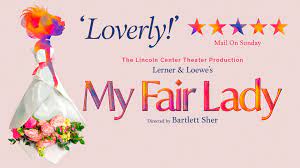
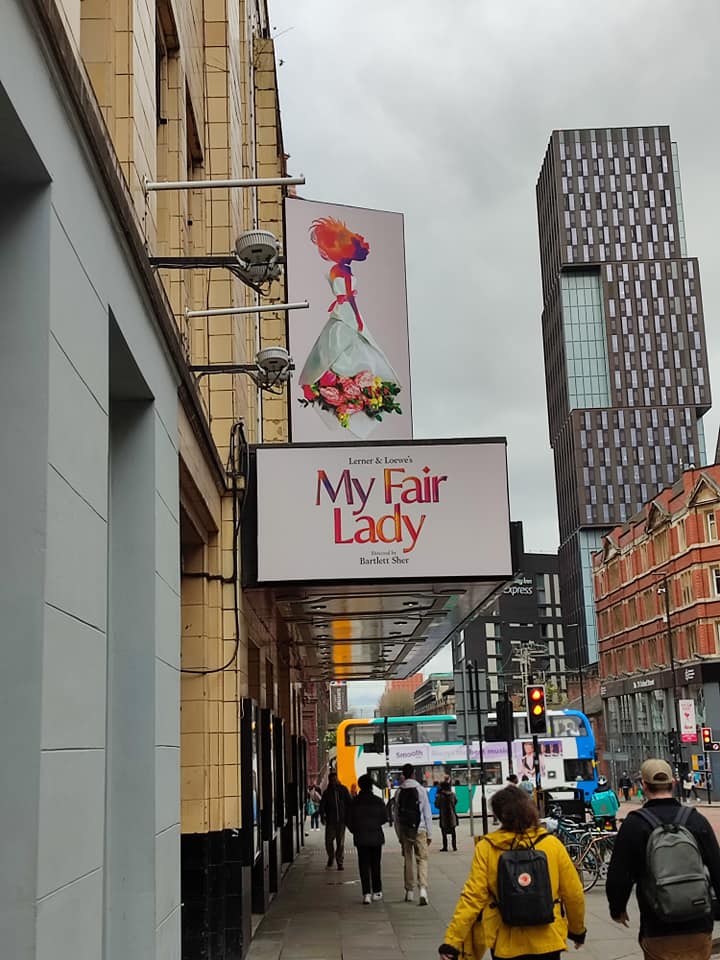
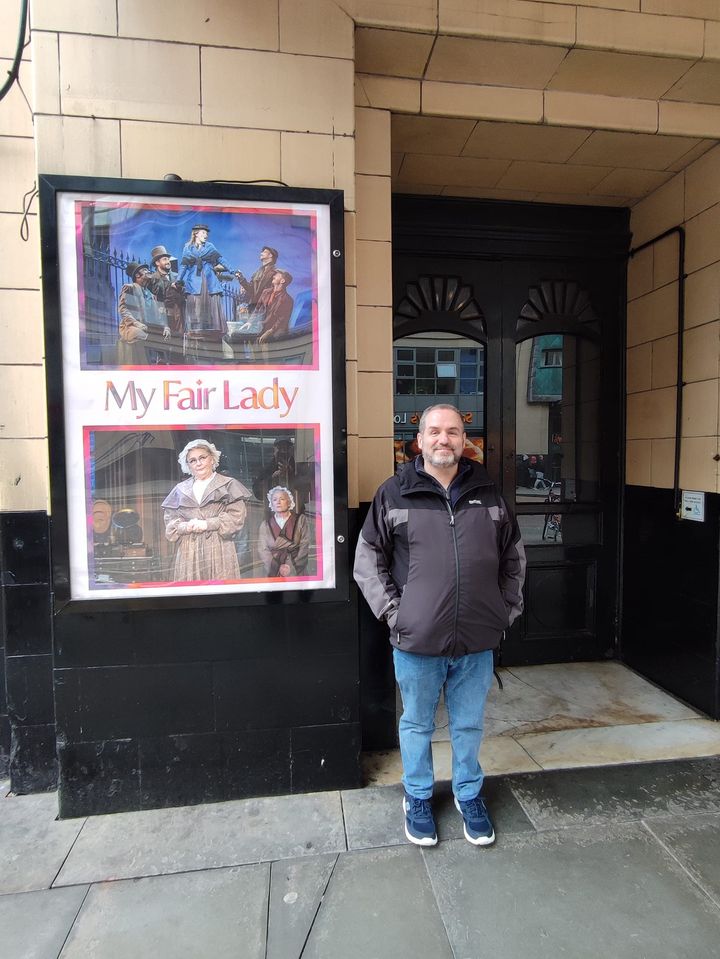
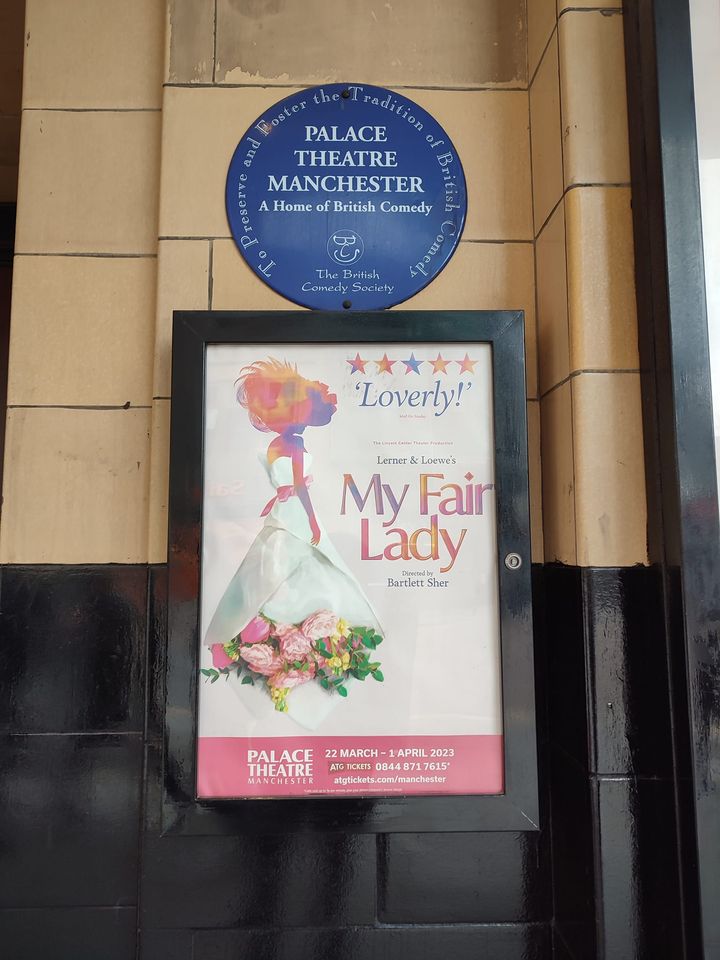
My Fair Lady

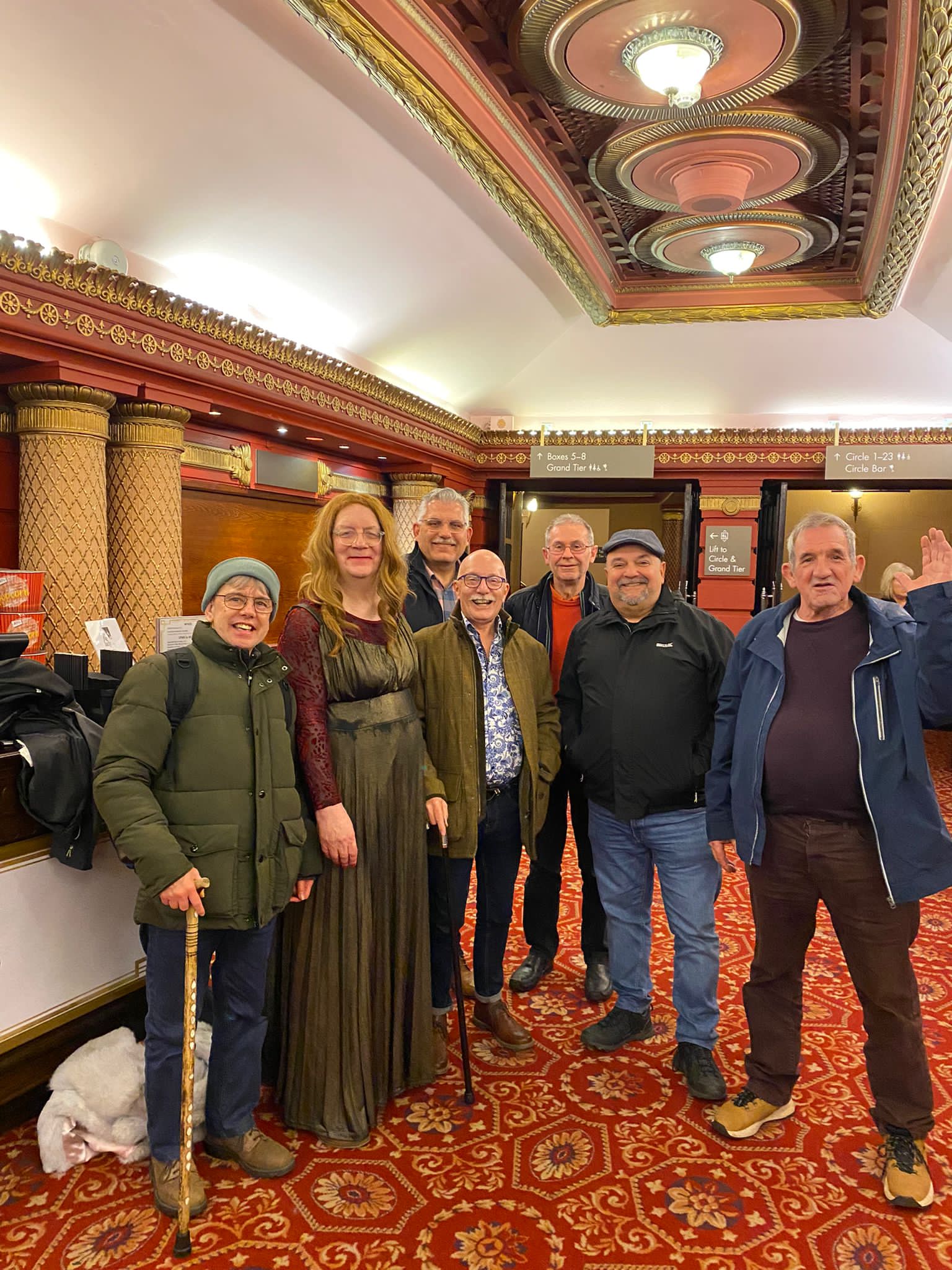
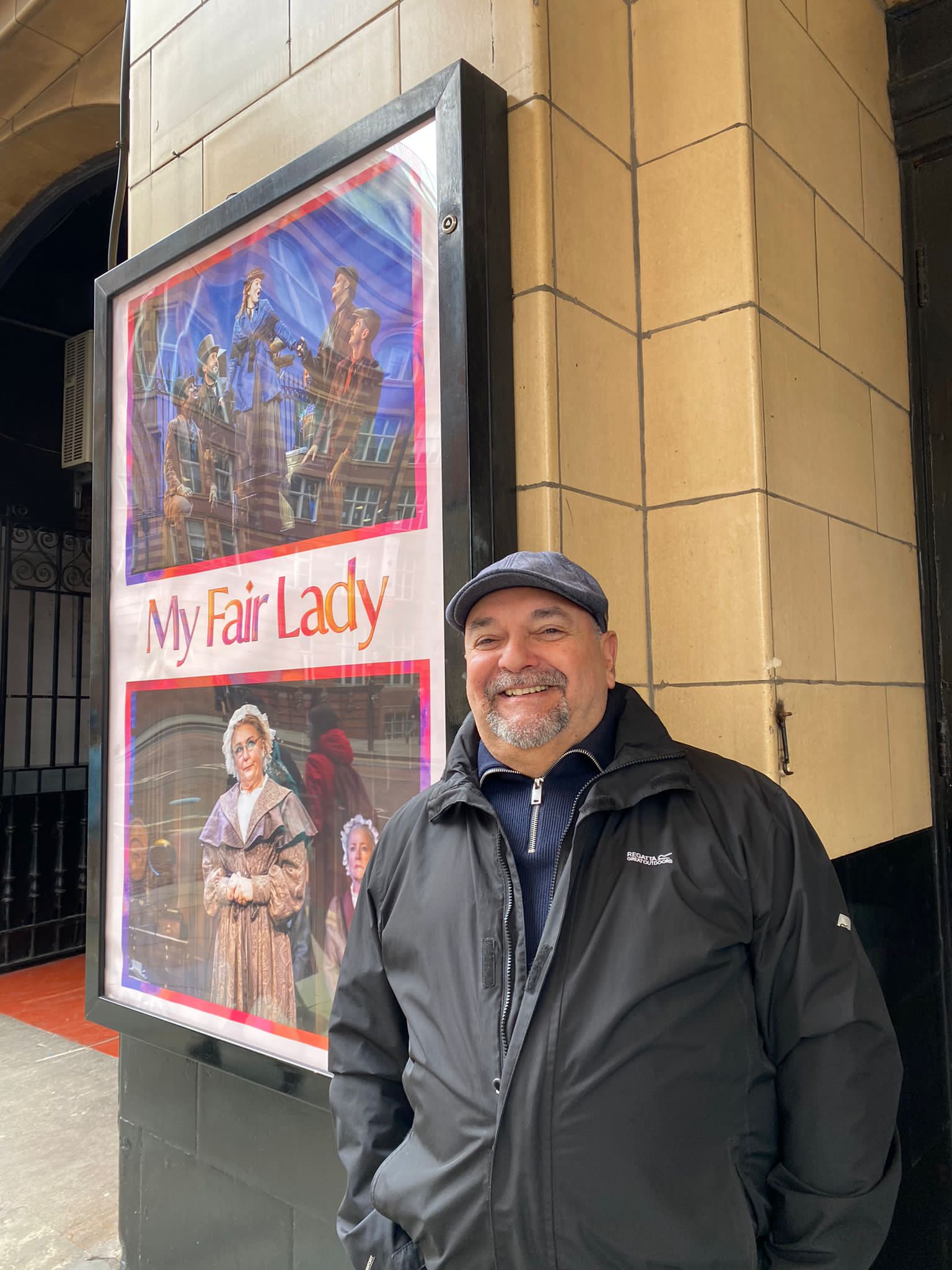
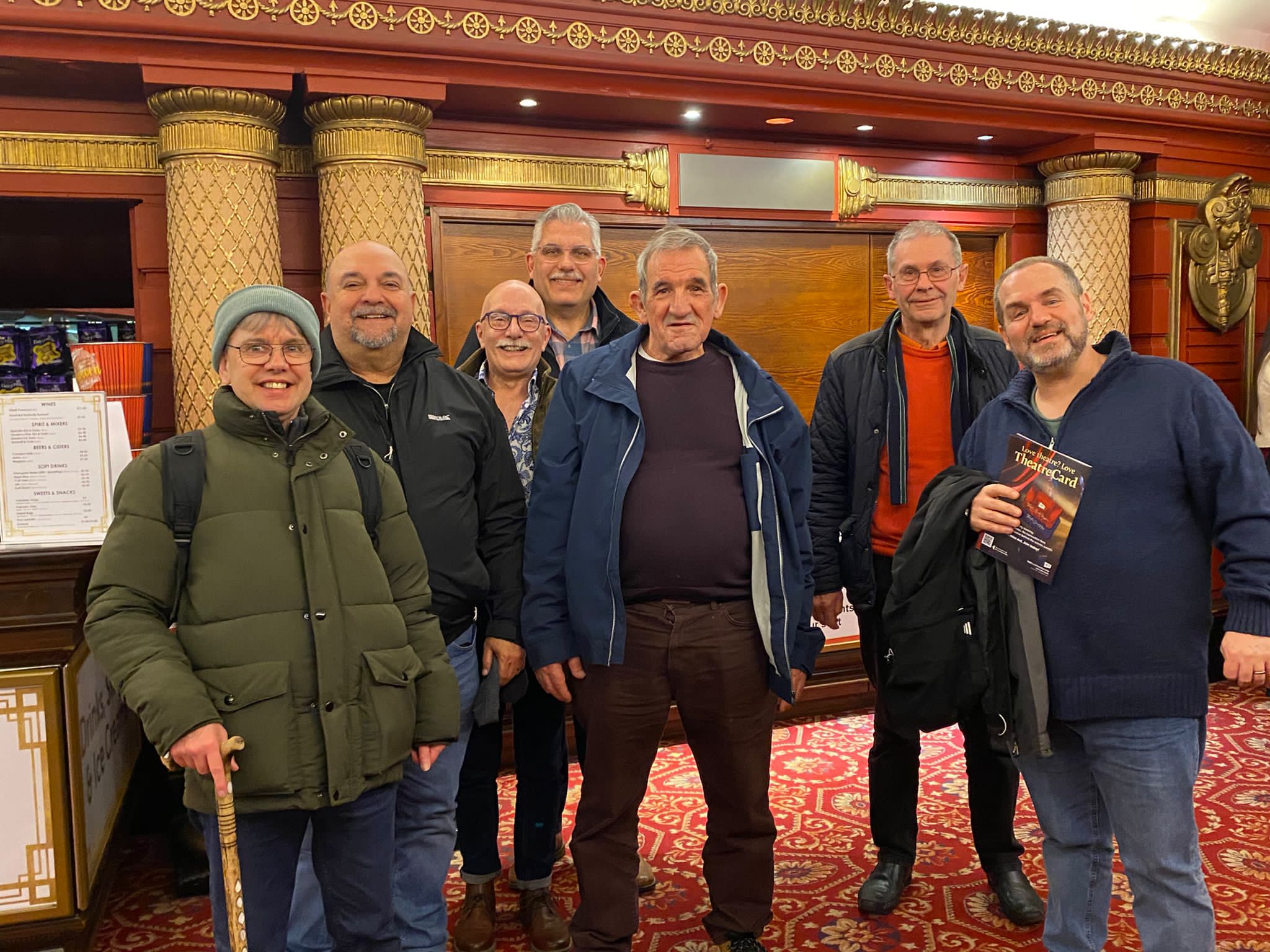
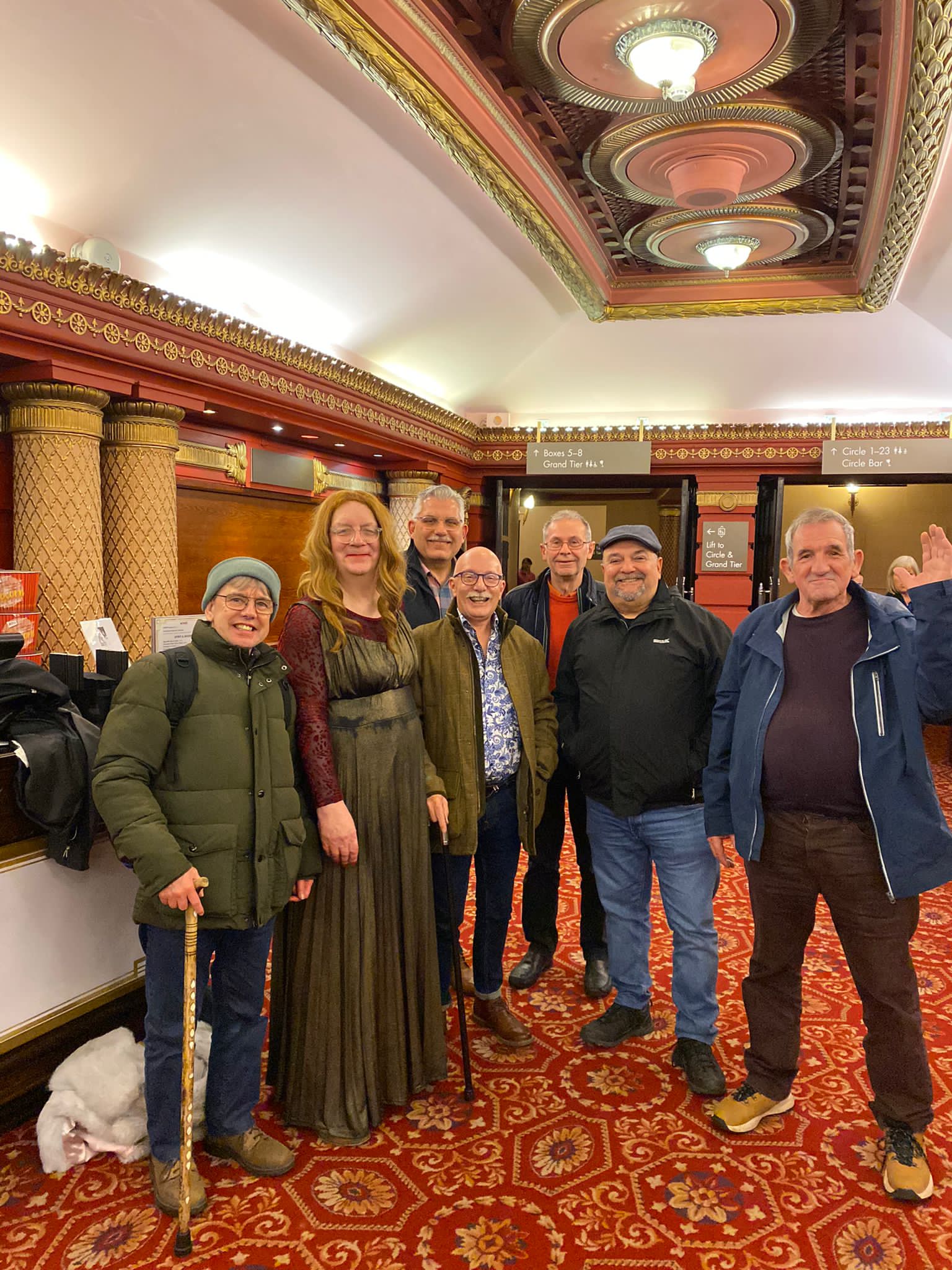
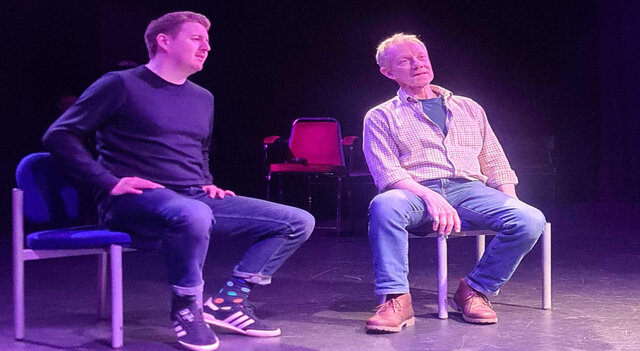
Lerner and Loewe’s world-famous musical came to Manchester this week, and a group of us from Out In The City were lucky enough to see the show together with a pre-show Q&A with the cast and crew.

My Fair Lady features an iconic score by Frederick Loewe, the story debuted as a stage musical in the 1950s, before being made into a 1964 film starring Audrey Hepburn.

The narrative centres on young Cockney flower seller Eliza Doolittle and linguistics professor Henry Higgins, who sets himself the challenge of transforming Eliza into a “proper young lady”. The action is seamless and acting superb.

The ingenious revolving set, switching from Professor Higgins’ beautiful wood- panelled study to the bawdy tavern and streets, then the ballroom, is wonderfully atmospheric, transporting you instantly to Edwardian London.

Charlotte Kennedy as Eliza is both comical and endearing. Her singing voice is excellent too.

There is a palpable chemistry between her and Henry Higgins, played with a delightful playfulness and sarcasm by Michael D Xavier. The camaraderie between the Professor and his bachelor pal Colonel Pickering, played with a quintessentially English eccentricity by John Middleton, is fun to watch too.

The famous soprano Lesley Garrett plays the suitably no-nonsense housekeeper. The role of Eliza’s father, dustman Alfred P Doolittle, fits Adam Woodyatt as the Cockney geezer cannily uses his daughter’s new relationship as a vehicle to get rich. Top hats and tails, tiaras, ball gowns and cloaks made for a visual spectacle and a half. Rags to riches stories are as old as time but rarely fail to entertain and with costumes as lavish as this one, great acting and singing and a magical set, this one enthrals and uplifts. There was a standing ovation at the end.

Great Indecencies

Great Indecencies is a new play by Joshua Val Martin. It was premiered at The Edge Theatre and Arts Centre in Chorlton, Manchester on Thursday, 30 March 2023.

The play is the culmination of Legacy of ’67: Initiative Arts Project’s year-long project that captures the real-life accounts of LGBT+ people during the last 50 years. In a time of enormous changes in the public perception of LGBT+ people, twenty volunteers were recruited who conducted one-to-one interviews with older LGBT+ people, and their stories were recorded and donated to the public sound archive at Manchester Libraries in Archives+.

Joshua Val Martin listened to all the testimonies and felt a deep responsibility, having been entrusted with these life stories, to tell the truth. Joshua began by identifying common themes, many of which are impossible to ignore, pervasive stories of homophobia and trauma. Joshua stated: “It was important to me that every plot point, twist and turn-of-phrase in the play had been taken from one of the real memories shared with us. This play had been written many times and years before I arrived: it had just been waiting to be told.”

Out In The City Art Showcase

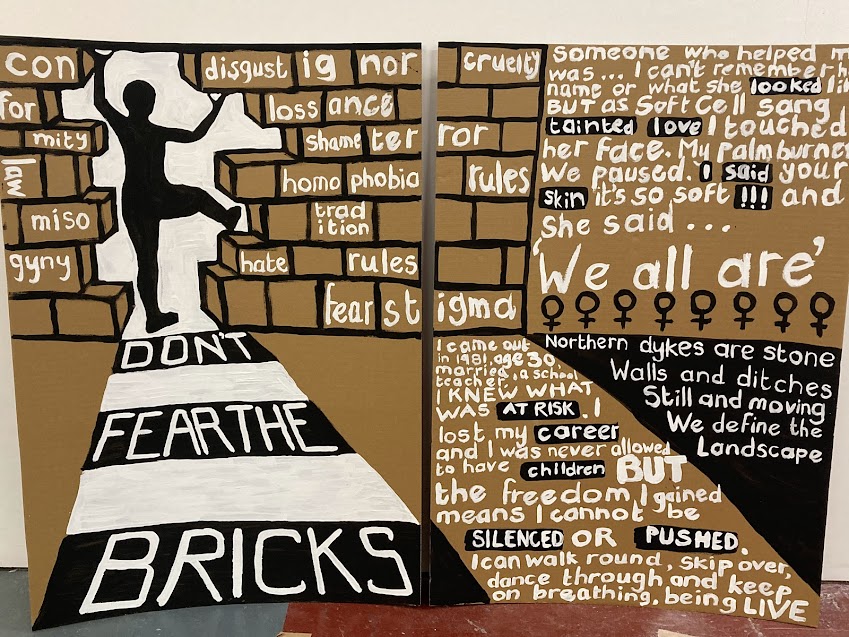
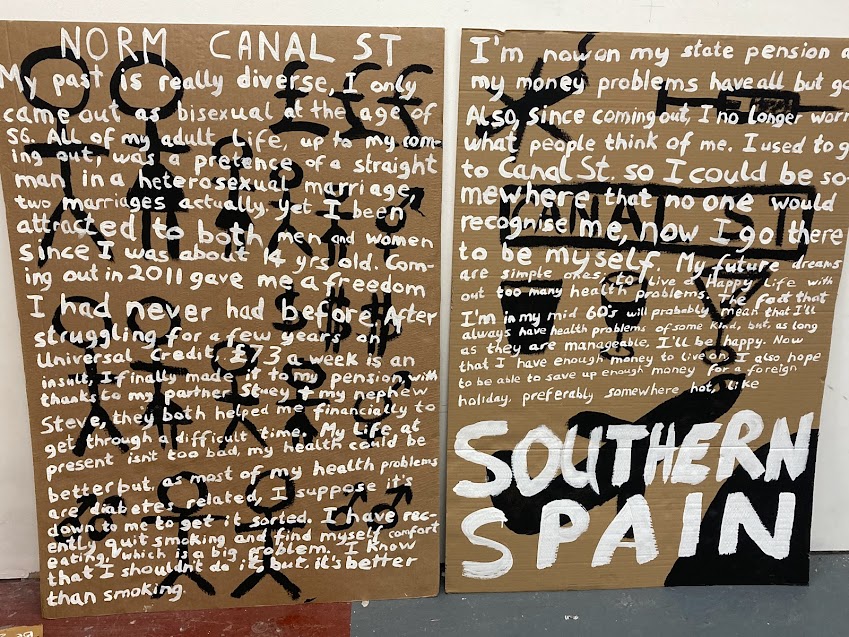
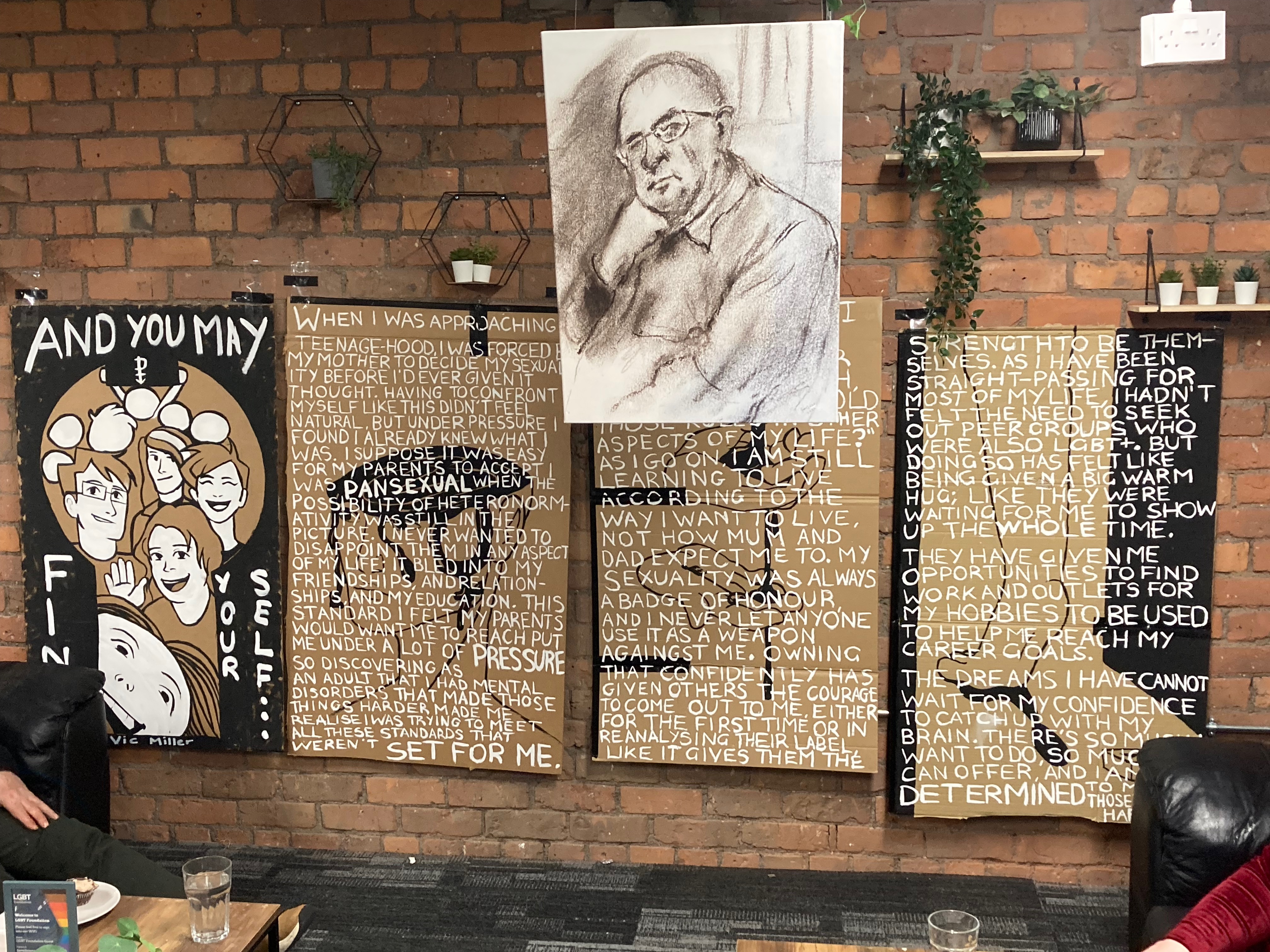
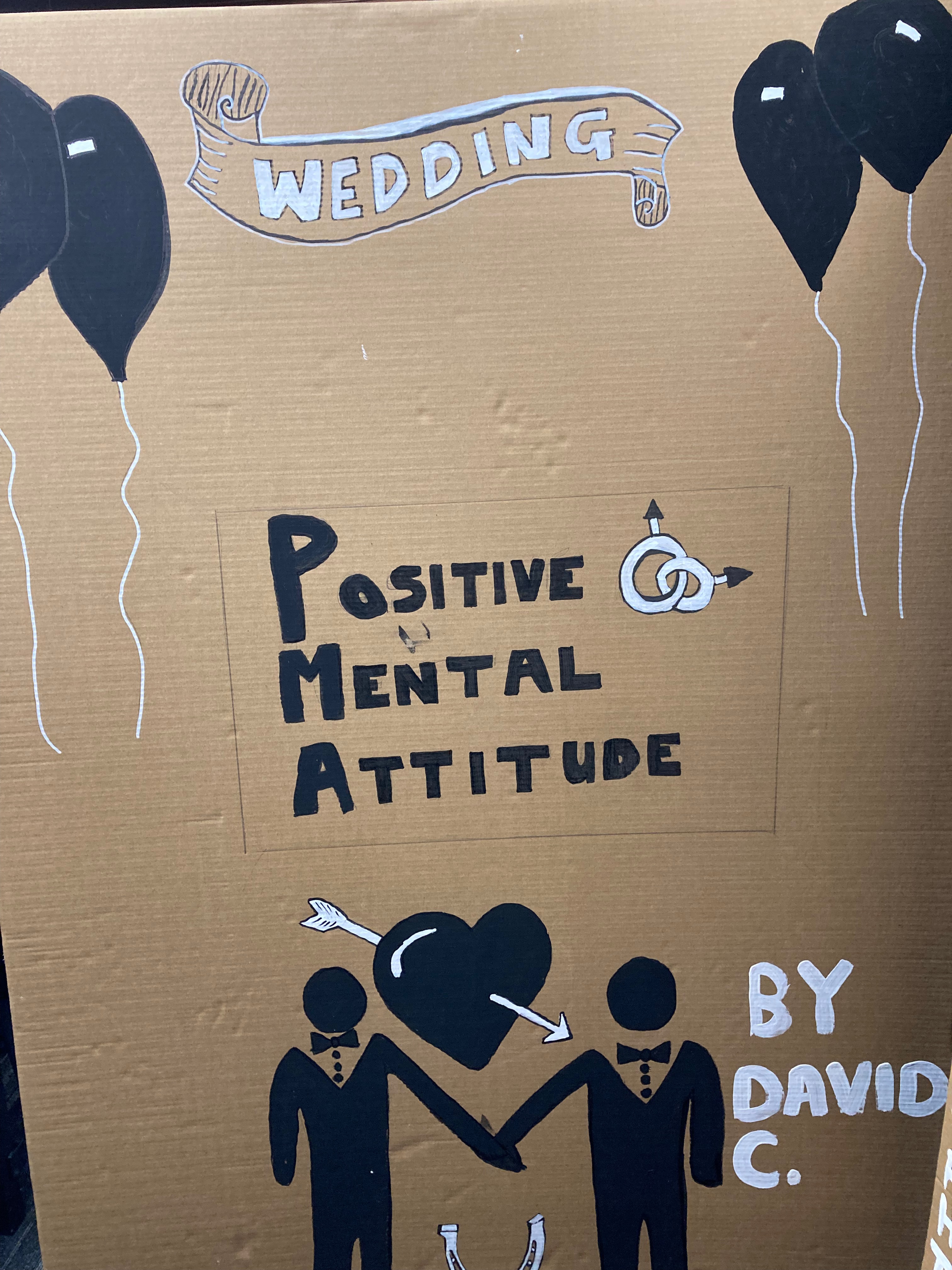
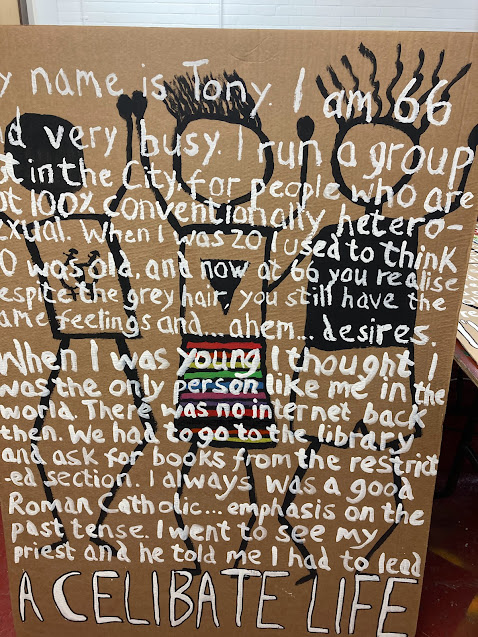
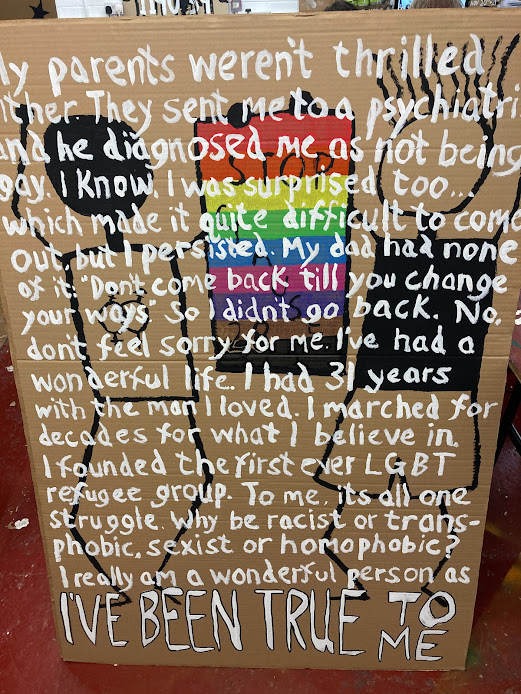
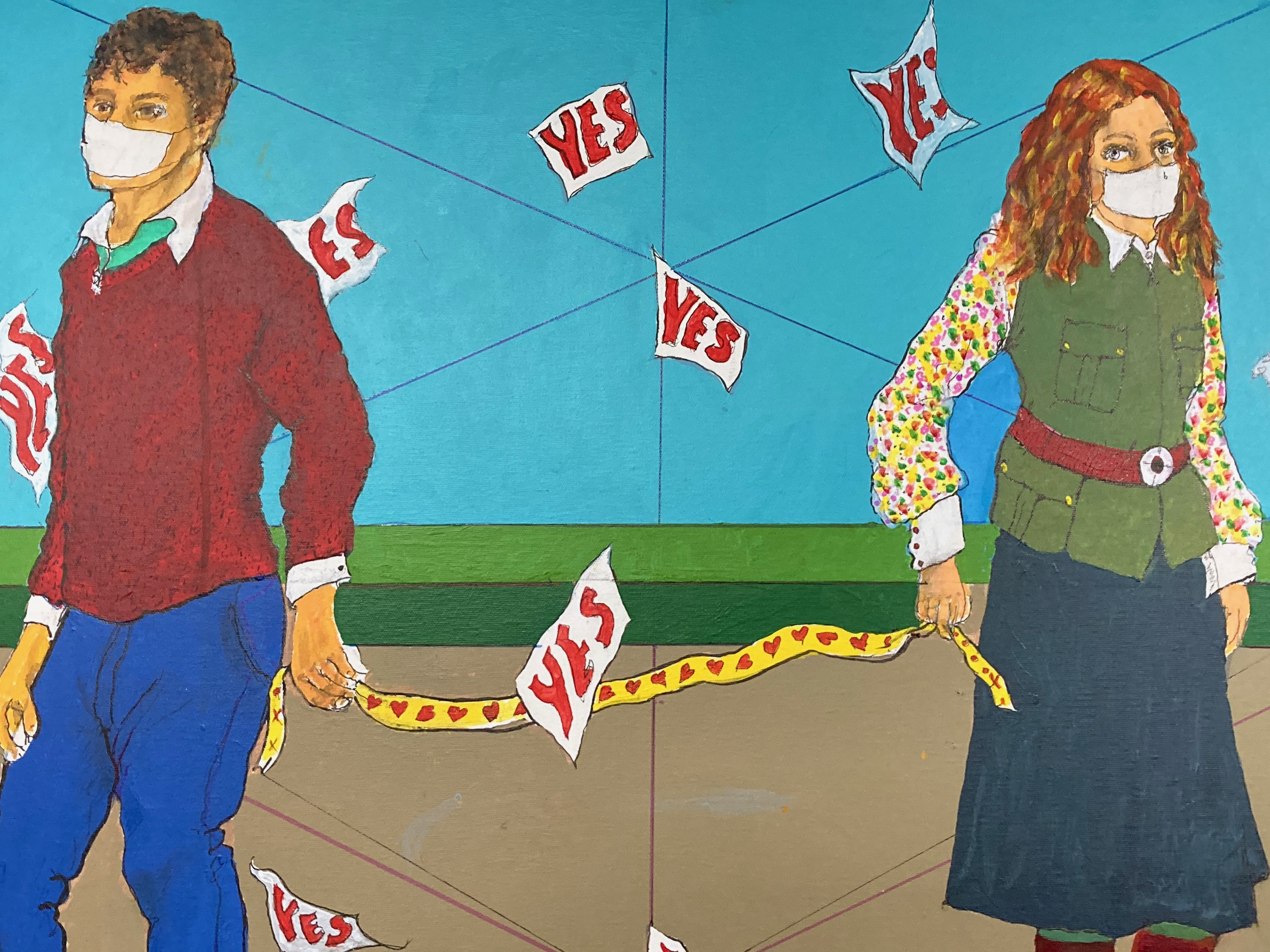
A dozen of us from Out In The City met on Canal Street and walked down to The LGBT Foundation’s building on Sackville Street. As well as the usual Coffee Morning, the Foundation was hosting the Out In The City Art Showcase.

Most of our group had not visited the building previously. Darren was a marvellous host, and whilst we viewed the art and drank our teas and coffees, he told us about the services available to LGBT+ people.

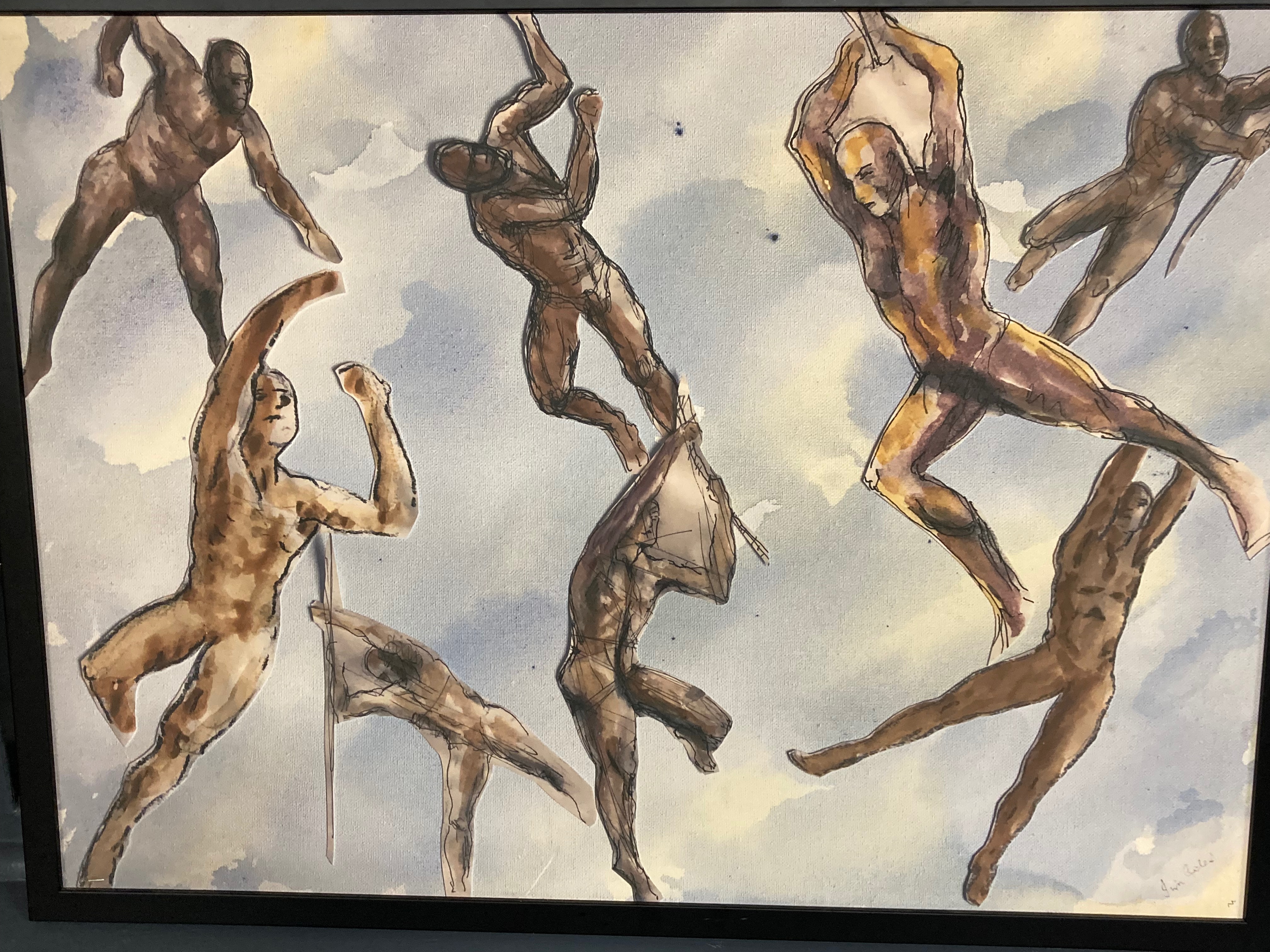
Some of the pictures can be seen here: