A New Start After 60 … Coming Out as Bisexual at 69 … Rwanda Plan Ruled Unlawful … Sparkle Weekend

News

A new start after 60: I’m gay but had done nothing for LGBTQ+ people. So I used my pension to launch a lottery

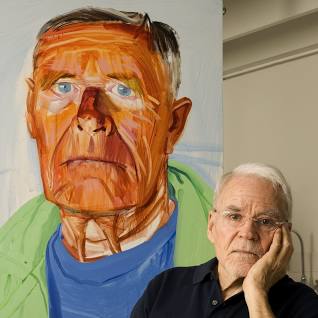
‘It’s a primal thing to do something important before you die’ … Tom Gattos. Photograph: Sarah Lee / The Guardian

During lockdown, Tom Gattos liked to play the national lottery. “There was nothing else to do,” he says. Checking the winning numbers one Sunday, it occurred to him that he and his partner, David, “really should be playing a lottery that supports the LGBTQ+ community”. They looked around online but couldn’t find one. “We thought: ‘We’ve got this little pension pot saved. Why don’t we invent the Rainbow Lottery?’” In June 2021, Gattos, who was 70, announced the first set of winning numbers.

Two years on, the Rainbow Lottery has amassed more than 1,700 players, signed up 150 good causes to support, and raised more than £100,000 a year for everything from the Terrence Higgins Trust to local Pride groups. But Gattos hopes for more. “We have only just scratched the surface,” he says. “There are supposed to be 4 million LGBTQ+ people in the country.”

The Rainbow Lottery is a not-for-profit organisation, and neither of its founders takes a salary. Gattos is an advertising copywriter and gets up at 4.30 each morning to do consultancy work before spending the rest of the day on the lottery. “Consequently, we are penniless,” he says. In two years, the only new item of clothing he has bought is a rainbow-coloured shirt. So why did he and David put themselves in a place of financial stress at this point in their lives?

“Maybe it’s a primal thing to do something important before you die,” he says. “We don’t have any children. We lived our lives in a bubble. I’m an advertising copywriter; my partner’s an architect. I guess the pandemic brought us that much closer to death. It was like: ‘Oh my God, is this it? Quick, quick! What can we do?’ It was in my mind: what are we good at? We are good at being gay!”

Gattos, who grew up in Detroit, met David in London 43 years ago. “There was a pub on Kings Road that was only gay on Saturday lunchtimes: the Markham Arms. My friend and I used to cruise in there every Saturday, to see who we could see. He claimed he saw David first. All three of us went out to dinner that night and David chose me. We have been together ever since.”

“This is payback time for us,” he continues. “We are gay, but we’ve never done anything for the community.” The lottery has given him a new sense of belonging. “We are card-holding LGBTQ+ members now.”

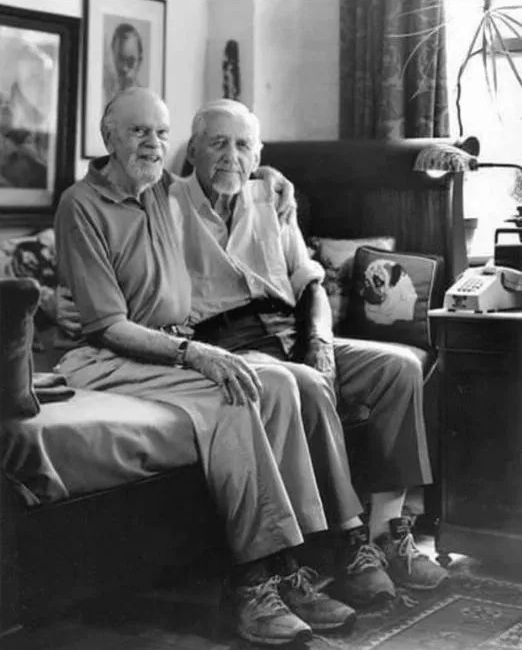
‘This is payback time for us’ … Gattos (right) with David, the lottery’s co-founder and his partner of 43 years. Photograph: Sarah Lee / The Guardian

This year, Gattos’s lottery was shortlisted at the Rainbow Honours for the new brand / organisation of the year award. Gattos has pictures of himself with Rylan Clark, Sinitta and Nicola Sturgeon. He had wondered as he got older: “What’s going to keep us active and busy and interested? If you had said to me a few years ago that I’d be meeting celebrities and dining with transgender people, I would have said, ‘What are you thinking?’” Now, he says, a richer “new life” has opened up.

Gattos says he has mostly avoided homophobia, despite living with David in Dubai for 13 years, though he has never felt comfortable “walking down the street holding hands”. But shortly before he had the idea for the lottery, he was walking in south-west London where he lives when the driver of a white van rolled down his window and yelled: “Fucking poof!”

“I thought: ‘Oh my God, London, in the 21st century, really?’ There are still people out there who need to know we are human beings as well.”

Two of Gattos’s brothers died last year, his sister shortly before. He is the last remaining sibling. “Life is about growing and expanding,” he says. “This money was supposed to last us the rest of our lives. We could have gone on spending it until we die. But we wanted to invest it in something solid, that we can do for the world. We don’t regret a single penny.”

If you want to buy a Rainbow Lottery ticket (or two!) and help Out In The City at the same time, please follow this link.

Norman not only came out as bisexual and joined a great community – he also found love

Norman Goodman ‘didn’t know how’ to come out after his late wife passed away, but felt ‘tremendously happy’ once he did and he wants to encourage others to do the same.

He was interviewed by Danielle Kate Wroe, Lifestyle Writer at The Daily Mirror on 29 June 2023:

During Pride Month, one of the main messages from the LGBT+ community is that it’s okay for people to be themselves – no matter their sexuality.

And nobody is prouder of the person they have become today than 73-year-old Norman Goodman.

After “straight acting” for the majority of his life, when his late wife passed away, Norman decided it was time to embrace his bisexuality – but he didn’t know where to start.

Now he’s encouraging other LGBT+ people to embrace themselves, no matter what their age, sharing that ‘Out In The City’ – a group that helps people over the age of 50 to socialise – has been a “lifeline” for him and even introduced him to his partner of 18 months.

Norman, a Reform Jewish man who lives in North Manchester, came out as bisexual in 2019 after his “lovely wife” Marilyn passed away in 2017.

As a child, he always knew he was “different”, which prevented him from forming relationships with other people.

Between the ages of 11 and 17 he was convinced he was a girl and wanted gender-affirming surgery.

“I was admitted to a psychiatric unit and I was given electroconvulsive therapy when I was about 17”, he shared.

Electroconvulsive therapy is a procedure where small electric currents are passed through the brain, intentionally triggering a brief seizure.

“I had a course of shock treatment, and then I had aversion therapy as they were trying to make me a man.”

Aversion therapy is psychotherapy designed to cause a patient to reduce or avoid an undesirable behaviour pattern by conditioning the person to associate the behaviour with an undesirable stimulus.

“I tried and tried because I wanted to be straight, and when I met my wife I fell in love so I thought ‘I must be straight’. But a few years later I realised that I was still attracted to men too.

“So I kept it all to myself and when I was 44, the tension had built up inside me and I was sick of straight acting so I told my wife.

“She said: ‘Look Norman, I already know. Let’s keep it just between us.’ Then I went to counselling, we stayed together, and two years after she died I decided to come out.

“It hasn’t been easy because I’ve spent my life straight acting, but I feel like I’ve found my true identity. For me now, the world is a nice place.”

He described himself as “absolutely dying to come out”, but he “didn’t know how”, until the LGBT Foundation came to do a talk at the Royal Exchange Theatre in Manchester, where he volunteered.

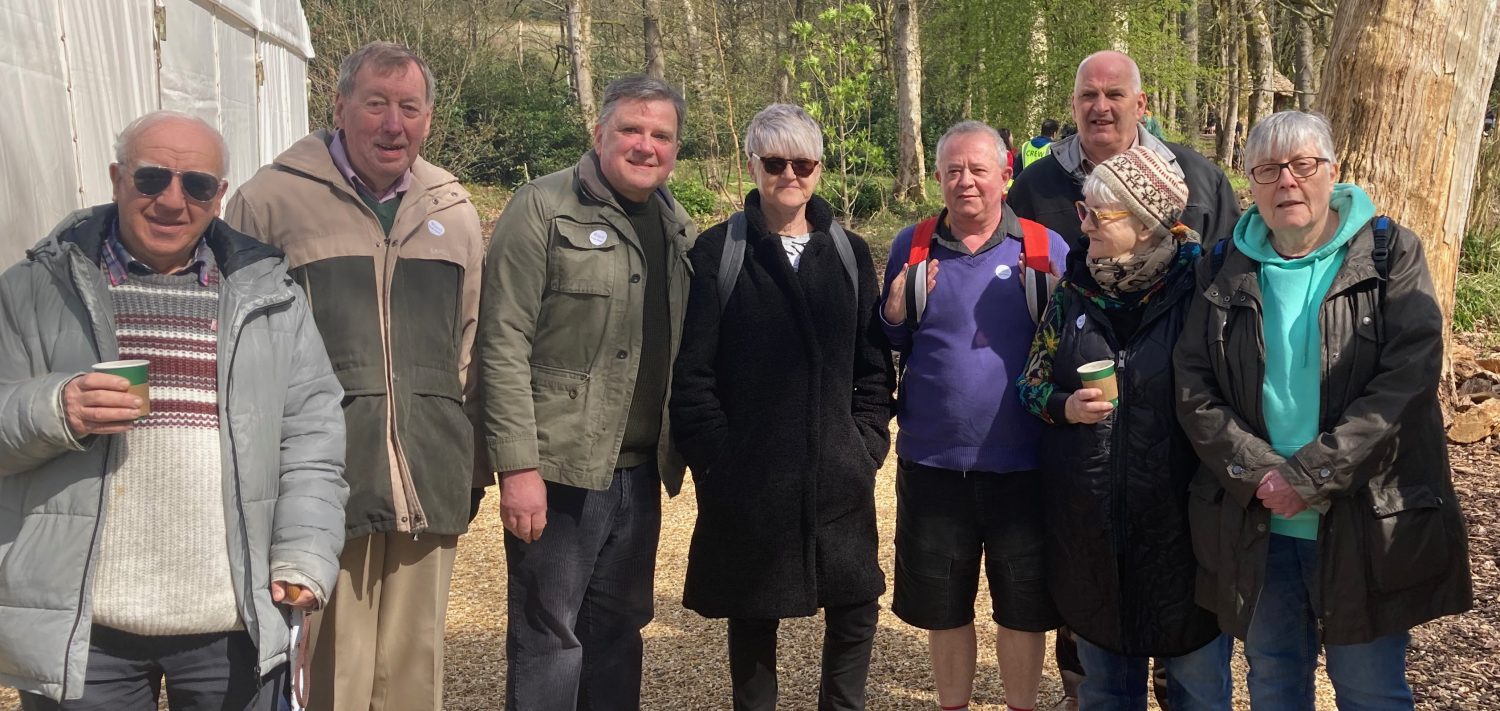
Norman met Tony when he joined ‘Out In the City’

“At the end of the talk, they were looking for volunteers over 60 to make some cassette tapes so that in years to come, young people listen to the tapes, and they will know what homosexuality was like in the 50s and 60s and how things have progressed”, he said. “And that was how I came out!”

Norman continued: “Then I got told about a group for people over 50 that were LGBT+ called ‘Out In The City’, so I decided to go, and it has given me a new lease of life.

“We have an outing every week and I’ve made a lot of lovely friends and we all have a laugh and a chat. And the coordinator and I have been in a relationship for the last 18 months.”

Norman said that he just wants to help people for as many years as he’s got left

After living almost his whole life without officially acknowledging his true sexuality, he’s described himself as “tremendously happy”, saying being out and proud is “better than winning the lottery.”

Norman wasn’t looking for love when he joined the group three and a half years ago, initially rejecting 68-year-old Tony Openshaw’s advances, but now he describes the pair as “really happy”. The group has also brought him a sense of fulfilment.

“I’ve been to places I never knew existed with the group”, Norman shared. “We go to museums, art galleries, we go on day trips, so it really is a lifeline as many older LGBT+ people are isolated. The oldest member of the group is 94, and there are many in their 50s too, so it’s a good mix.

“Sometimes we even have speakers in to give talks about health, we had somebody in from Mind, the mental health charity, mobility, benefits, so it’s very interesting. There’s always something going on.

The road hasn’t been easy for Norman, but he’s glad about how far he’s come.

“It’s just a group of LGBT+ people 50 and over and we can talk to each other and confide in each other. My social life has improved tremendously since joining.

“Tony, my partner, has been an activist since he was 19 because when he was that age, his parents kicked him out for being gay, and they were Catholic. So he’s done very well for himself to be running the group.

“I’ve spent my life feeling inferior for being LGBT+ and I’ve spent time trying to protect myself, so it’s nice that we’re all comfortable together. Now, the whole world can know that Norman Goodman is bisexual. And I want to help other people to come out – I want to give encouragement to others. Times have changed now.”

But not everybody has reacted positively to his coming out journey – four of his late wife’s cousins have all fallen out with him over his relationship with Tony.

“It’s because I’m in a same-sex relationship”, Norman shared. “I was a bit upset at first, but I think of it now as their problem, rather than mine.

“My late wife and I loved each other very much, and she would be absolutely disgusted with them.

“But I just want to strive forward for as many years as I’ve got now, I just want to help other people.”

Rwanda plan ruled unlawful

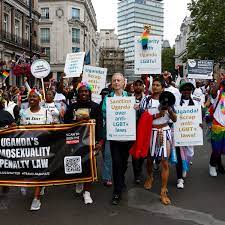
On 29 June the Court of Appeal ruled that Rwanda is not a safe country for people seeking asylum to have their claims processed. This means that for now, nobody seeking asylum in the UK will be removed to Rwanda.

The majority of the judges concluded that there is a real risk that people sent there will not be given a fair hearing and could be returned to their home countries where they are fleeing from, putting their lives in danger all over again.

The Government will make plans for its next steps, with the possibility of taking the case to the Supreme Court.

Meanwhile MPs raise specific concerns about LGBT+ refugees being sent to Rwanda

MPs are “deeply concerned” that relocating LGBT+ refugees seeking asylum to Rwanda could put them at greater risk of harm, according to a new report from the Women and Equalities Committee.

It has called for an “urgent review” of the safeguards in place for vulnerable people in all types of asylum accommodation, including that which currently exists, as well as the Home Office’s proposed use of barges.

“Housing vulnerable asylum seekers, including single women, mothers, children and LGBT people, in crowded hotel and other types of contingency accommodation is unacceptable,” part of the report’s summary said. “While use of hotels and other contingency settings persists, there must be effective policies and practices in place to better protect vulnerable adults and children from harm.”

The Committee, which is chaired by Conservative MP Caroline Nokes, also highlighted “clear risks that the asylum provisions in the Nationality and Borders Act 2022 will have unequal impacts” on certain groups of people, including members of the LGBT+ community with “complex sexual orientation and gender-based claims”.

“People with vulnerabilities arising from Equality Act protected characteristics, including women with histories of gender-based violence and abuse, children, lesbian, gay, bi-sexual and transgender (LGBT) people, and disabled people, experience unnecessary risks under the Home Office’s management of the asylum process,” the summary continued. “Recent and proposed changes to the system are likely to increase those risks. The Home Office must demonstrate it is taking effective steps to mitigate unequal effects.”

If the Illegal Migration Bill becomes law, more people could be detained for longer periods of time – something which has been proven to come with greater risks for LGBT+ people who may experience hate crimes or abuse while in detention.

The report urges the government to set out plans of how it intends to mitigate risks of harm to vulnerable groups in detention, as well as to collect and monitor data on where LGBT+ people are being held and for how long – something which is not currently tracked.

It also calls on it to “set out how it intends to monitor and ensure those removed to Rwanda do not suffer harm or experience discrimination in that country”.

“The inhumane policies towards people seeking asylum in the UK have to stop immediately”

Rwandan law forbids the changing of someone’s legal gender and, although homosexuality is not technically illegal, LGBT+ people often face arrest under laws that exist to uphold “good morals” there.

As such, LGBT+ activists and organisations have been critical of the government ever since it announced its intention to send refugees there.

Leila Zadeh, Executive Director at Rainbow Migration, a charity that helps LGBT+ refugees through the asylum and immigration process, said: “This report, for which Rainbow Migration gave oral and written evidence, is sending a very clear message to this government. The inhumane policies towards people seeking asylum in the UK have to stop immediately.

“This government’s legislation will put LGBTQI+ people seeking protection in dangerous situations, by detaining them in greater numbers and sending them to countries where they could face discrimination and violence.

“Instead, this government needs to focus on creating a compassionate and caring asylum system that treats people with kindness”.

The report can be read in full here.

The Sparkle Weekend: 7 – 9 July 2023

The Sparkle Weekend is the world’s largest free-to-attend celebration of gender diversity, and a safe space for anyone who identifies as gender non-conforming, their families, friends, and allies. In 2019, we welcomed more than 22,000 visitors over the weekend. 

The Sparkle Weekend is a festival-style family event, featuring live music and entertainment, talks and workshops, and an opportunity for our corporate sponsors, grassroots charities, and trans-run businesses to engage with our visitors.

We also work with local and national charities who support young trans and gender questioning people and their families so that all age groups feel included. 

One of the charity’s core values is that the event remains free-to-attend in order to be accessible to everyone, regardless of gender identity, race, religion or physical ability.

See Sparkle for more information.

Blackpool Model Village … “Our Proud Past” Exhibition … “My Gay Best Friend” … Mens Fashion Ads from the 70s … LGBT Documentary

News

Blackpool Model Village

The Blackpool Model Village and Gardens is a tourist attraction featuring handcrafted models of buildings including a castle and a Tudor village in a garden setting.

The model village is set in a beautiful landscaped 2.5 acres of carefully tended gardens with paved pathways that provide full access for visitors. The rain fell during our visit, but it didn’t dampen our spirits. The fact that the book shop was owned by “Bess Sellars” made us laugh.

It was a fascinating visit and photos can be seen here.

“Our Proud Past” – Exhibition Launch

Our Proud Past: a photography exhibition celebrating the past, present and future of Manchester’s LGBT+ Centre was publicly launched on Wednesday 28 June at KAMPUS Garden on Aytoun Street, Manchester M1 3GL.

Manchester’s LGBT Centre 2019 (top) and 2023 (bottom)

In 1988, Manchester’s LGBT+ Centre was constructed; it was the first purpose-built centre for the LGBT+ community in the UK (and possibly Europe).

In 2020, the single storey building was demolished, and a new three-storey Centre erected in its place.

The exhibition displays photos of the 1988 Manchester LGBT+ Centre and the community groups who have met or meet there, as well as photos of community groups meeting at the new LGBT+ Centre (which opened in 2022).

The aim of this exhibition is to make visible some of the more invisible members of the LGBT+ community. It also celebrates a year of the new Centre being open to the public and shares the outputs of research activities carried out as part of the ‘Documenting Demolition’ project.

The Proud Trust have worked in collaboration with Emily Crompton (an architect and researcher who has been working on the project for 10 years including archival research, architectural design and participatory action, and on the project’s board as a design expert and engagement advisor) as well as architectural photographer Sally-Ann Norman to document and record the demolition and re-building process of Manchester’s LGBT Centre, now known as The Proud Place.

Outside the old building in 2019

We heard from several speakers including Paul Fairweather (the city’s first gay men’s officer), Caroline Topham (a previous trustee) and Charlie Lee (a young person who attended the centre).

My Gay Best Friend (and Other Unspoken Letters of LGBTQI+ Identity)

This show, funded by a Queer Arts Grant from Superbia, at The Kings Arms in Salford on 25 June was an interesting concept.

What one thing have you’ve wanted to say to your straight mates but never had the chance to? How much of our struggles and joys do straight people really know about the LGBT+ community?

Six letters, written and sealed by LGBT+ identifying writers, were opened and read by straight identifying actors live for the first time in front of an audience.

This was the start of what aims to be an annual anthology series in which LGBT+ identifying writers express their personal and political opinions that are often left unspoken. The result however was a mixed bag. Although the letters were honest and personal, the presentation varied sometimes from the humourous to the serious. Not all the letters kept my interest and attention, but on the whole it was a worthwhile experience.

Mens fashion ads from the ‘70s

For a long time, it was popular to disapprove of 1970s styles for men: big collars, high waists, and tight crotches had fallen out of fashion. But the trend cycle can’t be stopped, and these once reviled looks are back, and in a big, big way.

The ‘70s expanded on trends of the previous decades. They took the bright palette of the ‘50s and the long-haired look of the ‘60s and turned them up to 11, giving rise to a variety of iconic styles. From the tie-dye and bell-bottoms of the hippie, to the ruffles and bold colours of the so-called “peacock revolution,” to the androgyny and revealing cuts of the glam rocker, every aesthetic of the era was totally groovy, baby.

But what really sets the ‘70s style apart is the fit. Every outfit was tight in all the wrong places.

Now, in the 2020s, ‘70s styles like flared pants, loud patterns, and skin-tight tops are finally back in fashion (thank you, Harry Styles!). There’s no better way to see what’s in store for the future than to look back to the past, particularly the advertisements of the era. These ads, for everything from jumpsuits to bell-bottoms to underwear, are certainly eye-catching, whether you think they’re fashion faux pas or the epitome of style.

Now, take a look back at the ads of the era to see if you’re buying what they’re selling …

LGBT documentary: Gay, Old and Out (2018)

Meet the people who paved the way for LGBT rights. It has been a long hard fight to secure acceptance for the LGBT community, and the older people who fought the fight often get overlooked and forgotten.

This documentary follows the astonishing and moving stories of members of the Opening Doors London project – whose personal struggles and successes paved the way.
Party … Pride Themes … Estonia … Superbia Cinema … Letters Against Transphobia

News
Party

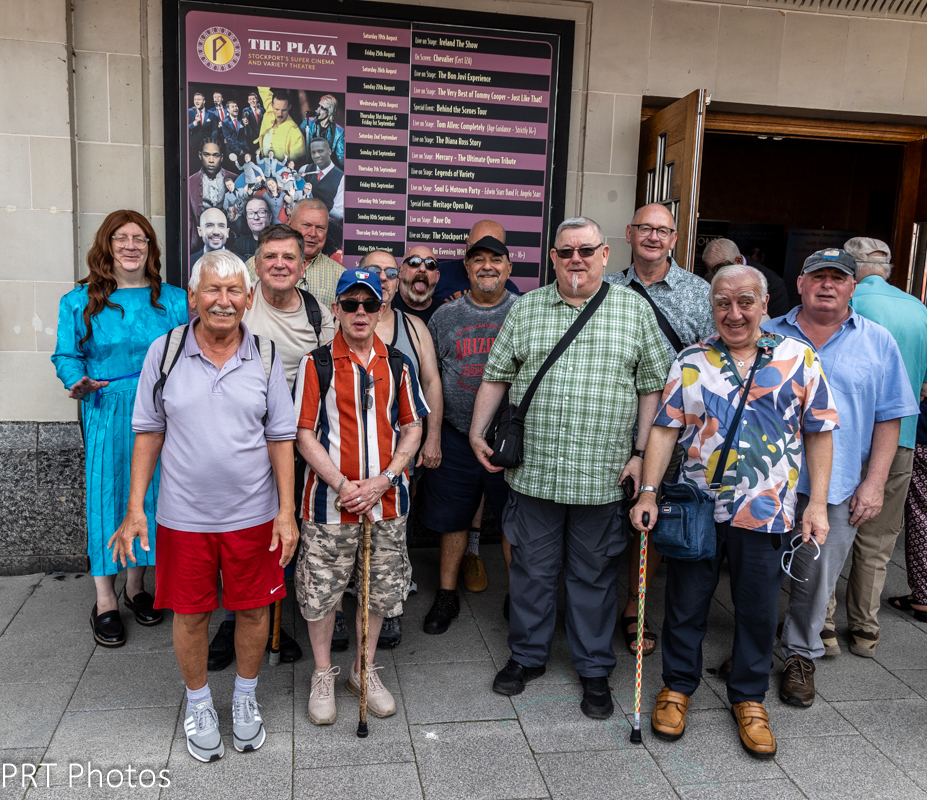
There ain’t no party like an Out In The City party!

The party was a great success and thanks go out to:
the volunteers – Jaz, Kai and Millie (Manchester Pride) and Jim;

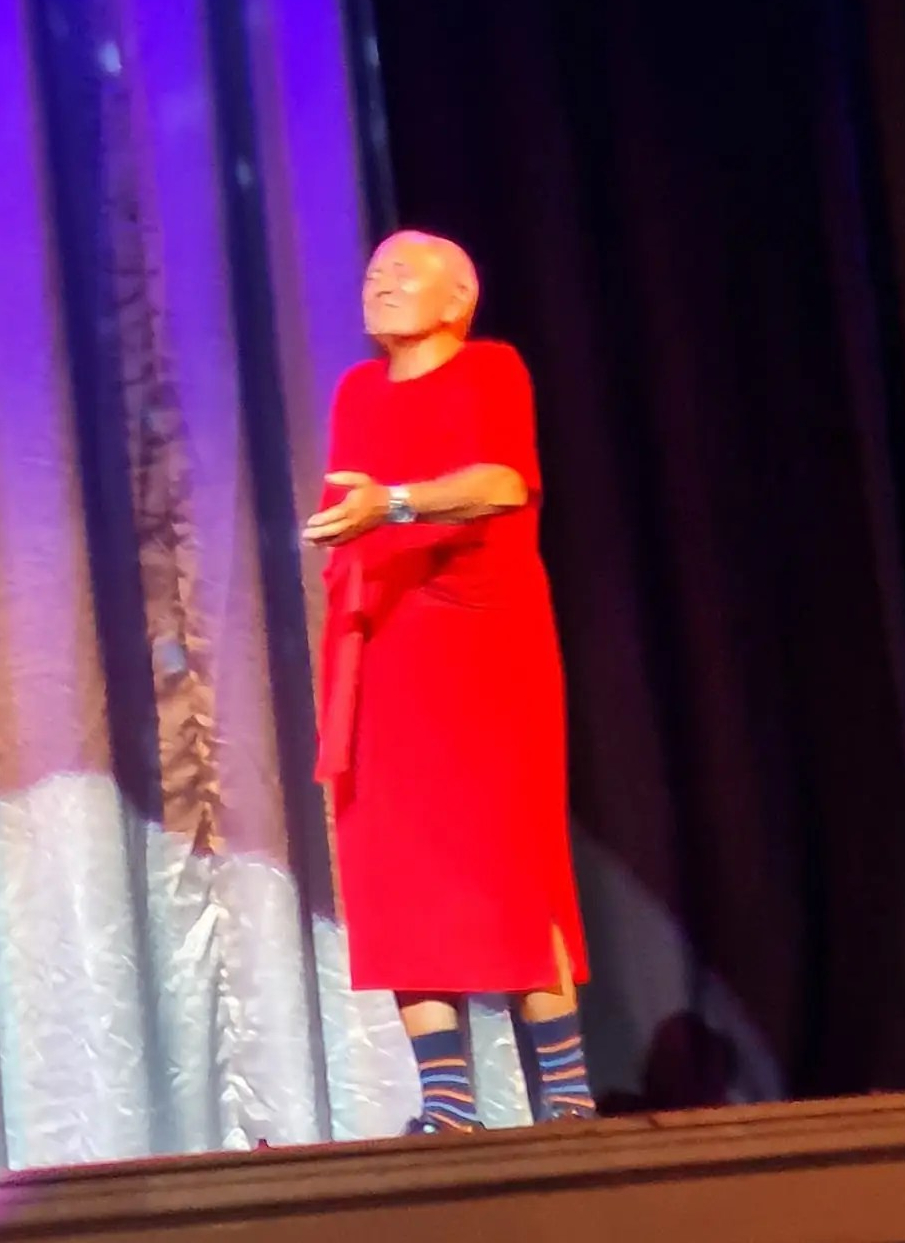
the performers – Ken and Lynn (as Larry Grayson and Isla St Clair), Norman, David and headliners Wolf (Derek, Gary and Will);

photographs taken by Cliff;

raffle prizes donated by Ecclesiastical Insurance Group, Lynn, Norman and Peter. Thanks to Carl for drawing the tickets; and

YOU for making such a great atmosphere. It was a memorable day and the photos speak for themselves.

Pride themes – Choose Love over Hate

Love is powerful! Acts of love and kindness, for ourselves and one another, has the power to resist hate against our communities and drive real change as we strive for LGBT+ liberation.

New York: The theme of this year’s march, which will take place on 25 June, says it all: “Trans & Queer: Forever Here.” 

London: Pride in London has unveiled its 2023 campaign entitled “Never March Alone” which emphasises supporting members of the transgender community. The march is on 1 July.

Manchester: Manchester Pride on 26 August is leading with love this year for the 2023 parade theme: “Queerly Beloved”. Love for ourselves and love for LGBT+ communities.

Estonia Becomes First Ex-Soviet State to Legalise Same-Sex Marriage

On 20 June Estonia’s parliament passed a law legalising same-sex marriage, becoming the first ex-Soviet country to do so.

Two adults will be able to marry “regardless of their gender,” after the parliament approved amendments to the country’s Family Law Act.

The amended act will go into effect from 1 January 2024.

The amendments to the Family Law Act also mean that same-sex couples can now adopt children. In Estonia, only a married couple can adopt a child, although single gay, lesbian, and bisexual people can also petition to adopt.

“Everyone should have the right to marry the person they love and want to commit to,” Prime Minister Kaja Kallas said. “With this decision we are finally stepping among other Nordic countries as well as all the rest of the democratic countries in the world where marriage equality has been granted.

This is a decision that does not take anything away from anyone but gives something important to many,” she continued. “It also shows that our society is caring and respectful towards each other. I am proud of Estonia.”

Same-sex relationships have been legally recognised in Estonia since 2016, when the Registered Partnership Act took effect. But while this act recognised couples regardless of their sex, marriage was only allowed to take place between members of the opposite sex.

A survey undertaken by the Estonian Human Rights Centre in April 2023 found that 53% of Estonians believe that “same-sex partners should have the right to marry each other.”

This is the highest percentage recorded since the survey began in 2012. Then, 60% of people surveyed were against marriage equality.

“I am genuinely very grateful for the patience and understanding the LGBT+ community has shown for all these years,” said Signe Riisalo, Estonia’s Minister of Social Protection. “I hope that, in time, those opposed to marriage equality come to see that we don’t lose anything from taking such steps, but rather that we all gain from them,” Riisalo added. “I am delighted that the decision has now been taken for a more forward-looking Estonia that cares for all.”

Superbia Cinema: Exploring Transmasculine Identities

Thursday, 20 July 2023 at 6.00pm – Free – at Cultplex, 50 Red Bank, Manchester M4 4HF

Calling all film enthusiasts!

Superbia Cinema is a joyful celebration of queer filmmaking that aims to uplift the work of talented LGBTQ+ creatives.

Superbia Cinema is a great way for those interested in LGBTQ+ arts to come together and immerse themselves in queer culture, plus you’ll get the opportunity to learn more about each film’s production process, directors, actors, filmmakers and more.

We want to make sure that LGBTQ+ arts & culture is accessible to all – that’s why all of the Superbia Cinema events are completely FREE to attend.

Join us on Thursday 20 July as we present a series of shorts exploring Transmasculine identities and filmmaking.

With Sparkle Weekend just around the corner, we’re spotlighting Transmasculine identities in this month’s series of short films. Quite often, heteronormative discourse leaves trans men and Transmasculine identities out of the conversation, and through July’s Superbia Cinema programme, we aim to recognise and platform their experiences, artistry and filmmaking expertise.

SCHEDULE:

6.00pm: Join us at Cultplex and socialise before the screening begins

7.00pm – 8.20pm: Series of short films, curated by Joshua Hubbard:

Who Am I Now / Juniper / Bouba & Kiki / Eyelash / The Floating World / Lewis Hancox comedy sketches / I’m The Only Person Here I’ve Never Heard Of

8.30pm – 9.00pm: Q&A with Jack Goessens

PLEASE NOTE:

Food and drink will be available to buy at the venue

Tickets are limited to 1 per order – each attendee must register for their own ticket here.

Letters Against Transphobia

Letters Against Transphobia is a project which aims to uplift trans voices through the medium of anonymous notes, messages and letters.

The government is set to release guidance to schools to force them to ‘out’ children to parents if they question their gender.

Teachers will be required to disclose the information even when pupils object. Young LGBT people are feeling scared, angry or uncertain and have expressed worries about their future.

Is anyone interested in writing an anonymous letter, perhaps detailing personal experiences, reassuring young LGBT kids and teenagers, or expressing solidarity with the younger generation?

You do not have to be transgender to contribute to the project; anyone who would like to send in a message can.

If you would like to contribute you can go to this link or handwrite something, take a picture of it and email to lettersagainsttransphobia@gmail.com

“Greetings,

I know, things are scary right now. There’s just so much going on, so fast. I feel it too. These are scary times, no doubt. 

I’ll tell you a secret, though: you know who is scared more? The people making these laws.  

Okay, that is pretty obvious, I’m sure, but it’s not that they’re scared of us in bathrooms, or in sports, or whatever else they’re saying: that’s just their excuse. 

No, they’re scared of what we represent. They look at us and see something special, and rare, and wonderful. We represent possibilities they can’t even fathom. We express freedoms they are utterly terrified by.  

You contain magic, and that magic is amazing and powerful — and all your own. They can never take it from you, just like they’ve never been able to take mine. They can try, but they cannot ever truly hold back souls like ours.

Be unfettered, be free, and let your magic shine like nothing that ever came before. 

Cheers”

Exhibitions at School of Digital Arts … Happy Birthday Alan Turing! … George Michael … Macclesfield Pride … Cheddar Gorgeous

News

Exhibitions at School of Digital Arts

Every year students from the School of Art and School of Digital Arts (SODA) prepare for their Degree Show in the form of an exhibition. Earlier this year Charlie, a final year university student studying photography contacted Out In The City.

She came to a couple of meetings in Manchester and met us when the group visited the town of Bakewell. Her work revolves around the idea of building relationships with the people in the photos.

Members of Out In The City met in Manchester city centre and travelled by bus to On The Eighth Day Shop & Café – a workers’ cooperative established in 1970 – selling hearty, healthy, homemade vegetarian and vegan food. After lunch we walked to the SODA building.

Charlie wanted to get to know us before taking photographs, and it was a two-way process. So, let’s dish the dirt on Charlie: she uses the word “queer” to describe herself, drinks coffee rather than tea and dances like a wally. Her work won an award under the category of Social Change.

Although it was the longest day of the year (21 June) Stephen had to dash off home before it got dark.

More photos can be seen here.

Happy Birthday Alan Turing!

If you have visited Sackville Gardens in Manchester you will know that Alan Turing was an English mathematician, computer scientist, logician, cryptanalyst, philosopher and theoretical biologist.

On what would have been his 111th birthday (on 23 June) here are some “fun facts” that you may not know:

  • Turing reportedly had an IQ of 185 but in many ways he was a typical teenager. Turing’s report card from Sherborne School in Dorset notes his weakness in English and French studies.
  • Like many geniuses, Turing was not without his eccentricities. He wore a gas mask while riding his bike to combat his allergies. Instead of fixing his bike’s faulty chain, he learned exactly when to dismount to secure it in place before it slipped off. He was known around Bletchley Park for chaining his tea mug to a radiator to prevent it from being taken by other staff members.
  • Alan Turing created the first-ever computer chess programme, although at that time, there was no computer to try it out on! He created an algorithm for an early version of computer chess with pencil and paper. The Turochamp programme was designed to think two moves ahead, picking out the best moves possible.
  • The Benedict Cumberbatch film about his life, The Imitation Game, received eight Oscar nominations.
  • He almost became an Olympic athlete. He came in fifth place at a qualifying marathon for the 1948 Olympics with a 2-hour, 46-minute finish (11 minutes slower than the 1948 Olympic marathon winner). However, a leg injury held back his athletic ambitions that year.
  • In 2009, UK Prime Minister Gordon Brown issued a public apology to Turing on behalf of the British government. His conviction for  “gross indecency” under Section 11 of the Criminal Law Amendment Act 1885 was not actually pardoned, though, until 2013, when he received a rare royal pardon from the Queen.

George Michael to be inducted into the Rock & Roll Hall of Fame

George Michael talks about his sexuality (1998)

George Michael, who would have been 60 this week (born 25 June 1963), will be inducted into the Rock & Roll Hall of Fame this year. It’s the first year the late British musician has been eligible, according to Rock & Roll Hall of Fame rules.

Michael was the most-played artist on British radio between 1984 and 2004, the organisation said.

“George Michael possessed extraordinary talent as a songwriter, vocalist and producer,” the Rock & Roll Hall of Fame said in announcing Michael as an inductee.

Michael formed the pop duo Wham! with schoolmate Andrew Ridgeley in 1981. They achieved teen idol status with the hits “Wake Me Up Before You Go-Go” and the timeless holiday megahit “Last Christmas”.

Michael’s foray into the solo spotlight with the introspective hits “Careless Whisper” and “A Different Corner” eventually spelled the end of Wham! in 1986.

Michael went on to release his debut solo album “Faith” in 1987.

“With well-crafted hooks, mature lyrics, and funk and Motown influences, ‘Faith’ was a Number One smash boasting four hit singles, including the title track and ‘Father Figure’,” hall of fame organisers said. “Echoes can be heard in the impassioned vocals and personal lyrics of artists from Adele to Lady Gaga to Mary J Blige.”

The Rock & Roll Hall of Fame called George Michael’s “Listen Without Prejudice Vol 1” a “masterpiece” that “alludes to Michael’s struggle as a closeted gay man during the height of the AIDS epidemic. However, after coming out in 1998, Michael refused to shy away from honesty again,” the group said.

Michael died in 2016 of heart and liver disease. He was 53.

Other artists who will be inducted this year who hadn’t been nominated before include Kate Bush, Sheryl Crow, Missy Elliot, Willie Nelson, and Rage Against the Machine.

The Spinners, who had been nominated in previous years, also will be inducted.

George Michael won the fan vote ahead of the official announcement of inductees with more than 1 million votes. Cyndi Lauper came in second with 928,113. The 38th Annual Rock & Roll Hall of Fame Induction Ceremony will take place on 3 November at Barclays Center in Brooklyn, NY.

Date for the diary – Macclesfield Pride

Cheddar Gorgeous rejects LGBT Awards

Cheddar Gorgeous has pulled out of the British LGBT Awards after climate campaigners said they would protest outside over its sponsorship deals with Shell and BP.

Cheddar joins a host of other stars who have publicly withdrawn from the event over its fossil fuel links.

The awards ceremony honours LGBT celebrities, role models and organisations. But nominees began pulling out after campaigners warned them it had become an exercise in corporate “pinkwashing” for oil and gas companies.

Cheddar Gorgeous, who found fame after appearances on RuPaul’s Drag Race, said it was “with sadness but necessary resolve” that they were rejecting a nomination for “TV moment of the year”.

Writing on Instagram, they said: “The event unfortunately has a number of sponsors with questionable track records on climate change, racism and inequality, including BP and Shell. These two in particular have consistently failed to back up rhetoric of low carbon transition with actions to that effect. Given the nomination was offered for an act of creative advocacy, it wouldn’t feel right to be part of the event knowing the damage these companies are still doing to the environment and communities most affected by climate change.”

Llangollen … Pride in Wythenshawe … Publishing Queer Berlin

News

Llangollen

On Thursday 15 June, Out In The City members visited Plas Newydd at Llangollen.

It was a really enjoyable trip to the fascinating home of Lady Eleanor Butler and Miss Sarah Ponsonby – the two Ladies of Llangollen.

They were two upper-class Irish women who lived together as a couple. Their relationship scandalised and fascinated their contemporaries. The pair moved to Llangollen, North Wales, in 1780 after leaving Ireland to escape the social pressures of conventional marriages. Plas Newydd was originally a five-roomed stone cottage, but over the years it was enlarged to include many Gothic features. The elaborately carved oak features were amazing.

Over the years, numerous distinguished visitors called upon them. Guests included Percy Bysshe Shelley, the Duke of Wellington and William Wordsworth, the latter of whom wrote a sonnet about them.

Anne Lister, dubbed “the first modern lesbian” also visited the couple, and was possibly inspired by their relationship to informally marry her own lover.

Butler and Ponsonby lived together for 50 years. There is nothing in their extensive correspondence or diaries that indicates a sexual relationship, but a succession of their pet dogs were named “Sappho”.

We also had time to visit the town and lots of photos can be seen here.

Pride in Wythenshawe

Pride in Wythenshawe is a celebration of LGBTQ+ people with fun activities for all.

It is held at Woodhouse Park Lifestyle Centre, 206 Portway, Wythenshawe, Manchester M22 1QW on Saturday, 24 June from 1.00pm to 5.00pm.

Get your FREE tickets now, using this link.

Publishing Queer Berlin

A cover of Frauen Liebe, 1928

Berlin in the 1920s was ablaze with sexual and gender freedom. Magazines at news stands boasted covers featuring people who were transgender and clad scantily. Their headlines touted stories on “Homosexual Women and the Upcoming Legislative Elections,” and offered, on occasion, homoerotic fiction inside its pages.

Publications like Die Freundin (The Girlfriend); Frauenliebe (Women Love, which later became Garçonne); and Das 3. Geschlecht (The Third Sex, which included writers who might identify as transgender today), found dedicated audiences who read their takes on culture and nightlife as well as the social and political issues of the day. The relaxed censorship rules under the Weimar Republic enabled lesbian writers to establish themselves professionally while also giving them an opportunity to legitimise an identity that only a few years later would be under threat.

A growing group of academics are focusing on this oft-forgotten moment in German history. The primary source documents that miraculously survived the period of the Third Reich and subsequent and repressive Cold War years provide a rich and complicated picture.

There were some twenty-five to thirty queer publications in Berlin between 1919 and 1933, most of which published around eight pages of articles on a bi-weekly basis. Of these, at least six were specifically oriented toward lesbians. What made them unique is the space they made for lesbians, who had traditionally been marginalised on account of both gender and sexuality, to grapple with their role in a rapidly changing society.

An issue of German lesbian periodical Die Freundin, May 1928

In these interwar years in Germany, queer and transgender identity became more accepted, in large part thanks to the work of Magnus Hirschfeld, a Jewish doctor whose Institut für Sexualwissenschaft focused on issues of gender, sex, and sexuality. At the same time, women in Germany were making strides toward greater independence and equity; they gained the right to vote in 1918, and feminist organisations like Bund Deutscher Frauenvereine cultivated space for women in public spheres, encouraging their advancement in politics. The German Communist Party created the Red Women and Girls’ League in 1925 to attract more women and working-class people, particularly through organising factory workers.

More generally, German women were becoming increasingly empowered. Queer people—including women—rallied around the abolishment of contemporary sodomy laws. This struggle “created a wider climate of publication, activism, and social organisation that was much more embracing of different types of queer and trans lives,” according to Katie Sutton, an associate professor of German and gender studies at the Australian National University.

Sutton came upon the Weimar-era lesbian publications in Berlin and was surprised that there wasn’t more engagement with these magazines or with the queer history of the Weimar Republic more broadly on the part of academics in the English-speaking world.

Magazine fiction of the time challenged some of the restrictions of class and race in its love stories. These publications also created a space for readers to assert themselves in the real world through personal ads and event listings. There included cream puff eating contests, ladies and trans balls, and lake excursions on paddle steamers. In fact, aspects of lesbian culture also seeped into the mainstream, particularly when it came to fashion, with a rise in the popularity of short haircuts, straight skirts, and pantsuits. There was little difference between the imagery in mainstream fashion magazines and the masculinised aesthetic eroticised in the queer ones. The “hint of queerness” in the mainstream, Sutton said, was “sexy and fascinating, but also a bit scary and potentially off putting.” A popular element in lesbian publications, the monocle was similarly charged, and, Sutton says, “a queerly coded, quite masculine symbol of owning the gaze.”

From the lesbian magazine Liebende Frauen, Berlin, 1928

Such sartorial choices were in keeping with debates in the lesbian magazines of the time around the “extent that masculinity might be seen as hierarchically superior to that of the feminine lesbian women,” according to Sutton. Moreover, these debates foreshadowed the butch/femme debates of the 1980s and 1990s.

Style was particularly significant for trans women and men who in the Weimar Republic defined themselves with a variety of terms: both as transvestites and masculine women who wore men’s clothes but identified as women. Trans people were given space in both their own magazines and even in some of the lesbian ones, highlighting a sense of cross-identity camaraderie. Die Freundin had a regular trans supplement highlighting these voices.

In a 1929 issue, a writer named Elly R criticised the treatment of trans people in mainstream media, referencing sensational coverage of men wearing their wives’ wedding dresses. “Everywhere in nature we find transitional forms, in the physical and chemical bodies, in the plants and the animals,” she wrote. “Everywhere one form passes into another, and everywhere there is a connection. Nowhere in nature is there a delimited, fixed type. Is it only in man that this transition should be missing? As there is no fixed form in nature, a strict separation between the sexes is also impossible.”

From the lesbian magazine Liebende Frauen, Berlin, 1928

These magazines were resilient, a testament to the strength of the communities they served. Still, they faced challenges. The 1926 Harmful Publications Act was intended to impose moral censorship on the widespread pulp literature sold at kiosks and news stands, including the queer publications, which often featured nude photographs.

The Catholic and Protestant Churches as well as public morality organisations and conservative politicians led the fight against what they called “trash and filth literature.” As Klaus Petersen explains in a German Studies Review article, the list of materials, which included at least seventy works on sexology and “filth literature,” could still be sold, just not to those under age eighteen. While “the instrument was blunt and [its] impact minimal,” the restriction was boosted by members of religious and youth groups that checked up on news stands to see what material was visible or advertised to children. (This is not a far cry from the Nazi book burnings that would occur just a few years later.) But the law also spurred a counter-campaign by writers, publishers, intellectuals, and leftist political activists who objected to these limitations, as Petersen explains.

“This coalition of protest groups against infringements of the freedom of expression considered the Index a simplistic and entirely ineffective means to avoid an honest discussion of the fast change in social attitudes and moral values and campaigned against it as an unconstitutional instrument of suppression.”

Despite their relative progressivism, these publications also represented a rather narrow, bourgeois segment of the German population. Even if women had greater access to education and publishing opportunities, the women who enjoyed this greater access were largely urban elites. Little if no space was given to proletarian struggles.

It’s also important to note that whatever sexual liberation the LGBT+ community enjoyed was at the discretion of the state, whose goal was to control its members. This was seen in the Transvestitenscheine (“transvestite certificates”) handed out by the German police to protect against the arrest of those cross-dressing in public. Between 1908-1933, dozens of such passes were distributed. They also guarded against arrests for sodomy law violations and played a role in a 1927 battle over legalising prostitution, largely aimed at preventing the spread of venereal diseases.

More notably, these magazines gave precious little foresight into what was to come in Germany: the attempted extermination of all who did not fit the Aryan ideal. That, of course, included lesbians, some of whom perhaps took steps to save their own skin. Ruth Roellig, who wrote for Frauenliebe and published Berlins lesbische Frauen (Berlin’s Lesbian Women) in 1928, a first-of-its-kind travel guide to queer Berlin, published a second book in 1937. Soldaten, Tod, Tänzerin (Soldiers, Death, Dancer), an anti-Semitic screed, proved to be Roellig’s last book, though she lived until 1969. Selli Engler, a lesbian editor who founded the magazine Die BIF – Blätter Idealer Frauenfreundschaften (Papers on Ideal Women Friendships), wrote Heil Hitler, a play she sent directly to the führer.

As feminist and queer activism grew in Germany in the 1970s, so too did interest in the Weimar period. In 1973, Homosexual Action West Berlin began to collect flyers, posters, and press releases in an effort to create a comprehensive archive of lesbian history. The group eventually morphed into Spinnboden, Europe’s largest and oldest lesbian archive, with more than 50 thousand items in its holdings, magazines among them. Katja Koblitz, who runs the archive, says the existence of these lesbian periodicals is invaluable. “These magazines were in one part a sign of the blossoming and of the richness of the lesbian subculture in these days,” she said. “Reading these magazines was a form of reassurance: here we are, we exist.”