An older gay couple’s love is put to the test in this bittersweet romance
Image Credit: ‘Turtles’, Outplay Films / Dark Star Pictures
We have many stories about first love or the sweeping rush of new romance, but tales of long-term companionship – all of its ups and downs – are much more rare in film and television, especially when it comes to gay relationships.
That makes the romantic dramedy Turtles feel like something wholly unique and all the more exciting.
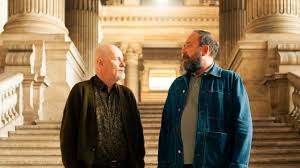
From writer-director David Lambert, the French and English-language film introduces us to older gay couple Henri (Olivier Gourmet) and Thom (Dave Johns, who film fans may recognise from the Cannes-winning I, Daniel Blake), who have built a life in Brussels and have been together happily for 35 years. Or so it would seem …
After retiring from his job on the local police force, Henri finds himself depressed and bored with his life. Not even Thom putting on a sexy outfit, bringing him breakfast in bed, and playing their song – Ottawan’s “Hands Up (Give Me Your Heart)” – can cheer Henri up.
With each passing day, the distance between them grows wider and wider, and their once happy home becomes a battleground. But Thom still finds himself madly in love and isn’t willing to give up on them so easily.
Image Credit: ‘Turtles’, Outplay Films / Dark Star Pictures
He’ll do whatever it takes to make things right. The two sixty-something gay men even try using Grindr for the first time, which opens up a whole other world of complications for them.
Eventually, a desperate Thom realises: Their best bet at rekindling the spark in their romance? Asking for a divorce.
Turtles takes its name from the pair of pets – Topsy and Turvy – they’ve both been caring for since they first moved in together all those years ago. Once a symbol of their longevity, the turtles now might be the only thing keeping Henri and Thom together.
Lambert’s bittersweet film first premiered in France last autumn, then made its US debut at the SXSW film festival in March.
I can’t wait for Turtles to reach the UK.
Live at Lunchtime – Free Concerts at Bridgewater Hall
We’re so pleased to announce this year’s Live at Lunchtime series is back starting Friday 3 May.
Live at Lunchtime is an annual series of free, lunchtime performances running from May to September in the Stalls Foyer at The Bridgewater Hall. It is dedicated to being a platform for talented musicians of all ages and genres.
Doors open at 12.30pm and the music starts promptly at 12.45pm. All are free to attend and usually last 45 minutes.
The Stalls Cafe will also be open, so come grab some great food and listen to some amazing artists!
Performing this year are:
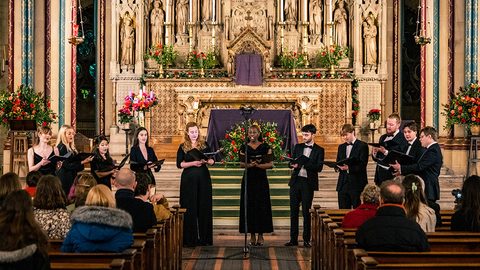
The Mancunium Consort, Live at Lunchtime at The Bridgewater Hall
3 May – The Mancunium Consort
10 May – Chetham’s School of Music
17 May – NOMAD
24 May – Mali Hayes
31 May – Ricardo Gosalbo & Julieth Lozano
14 June – Music for the Mind and Soul: Guiliano Modarelli & Kousic Sen
Throughout the day you’ll discover music from around the world as you take part in a singing workshop led by Simply Singing, take home a piece of original art inspired by live music with workshop leader and musician Lili-Holland Fricke, and also join the brilliant guides on a behind-the-scenes tour of the Hall.
Tea, coffee and a light lunch will be provided. Please could you let us know of any dietary requirements? (Vegetarian, gluten free etc).
Places are limited and the deadline for booking a place is 9 May.
If you are interested in attending, please contact us here.
Voting Day
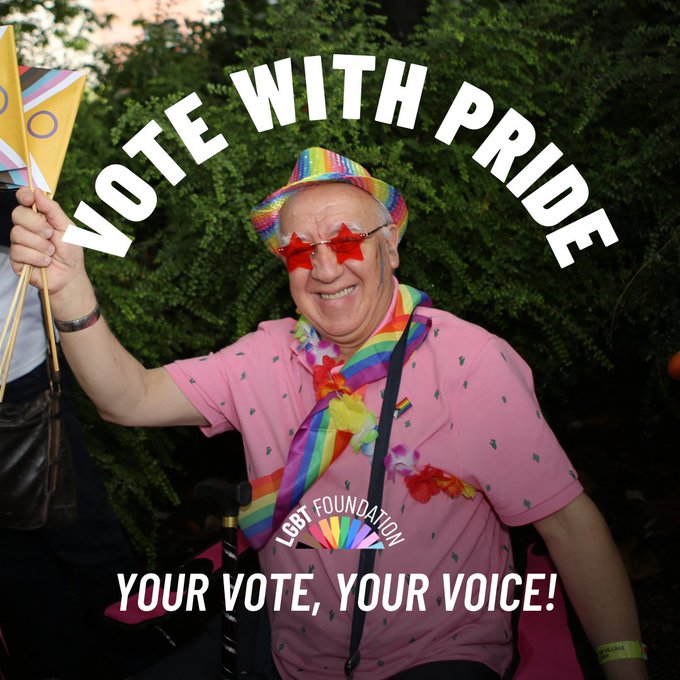
Don’t forget to bring photographic identification to vote. Your vote is your voice.
Research opportunity
Nina Rabbitt, Trainee Clinical Psychologist from The University of Manchester is looking for participants for research:
Do you have a diagnosis of bipolar disorder?
Do you identify as cisgender and lesbian or gay?
Are you aged 50+?
We would love to hear from you!
Check out the poster below and email to express your interest in taking part.
Labi Siffre: ‘I’ve had far more difficulties in my life due to being a homosexual than being black’
Image: Gareth Davies/Getty Images
Labi Siffre was born in June 1945 in Hammersmith. He formed his first band at 16 and began playing jazz guitar in groups around Soho in the late 60s. He released his self-titled debut album in 1970 and followed it up with classic albums including The Singer And The Song, Crying Laughing Loving Lying and For The Children. Hit singles in the 70s included It Must Be Love (later a hit for Madness), Crying Laughing Loving Lying and Watch Me.
A sabbatical from music ended in 1984, when Labi Siffre was inspired by a documentary about apartheid in South Africa to write Something Inside So Strong, a song that would reach No 4 in the UK chart on its 1987 release and go on to become an anti-apartheid anthem.
His music received a new lease of life in the 90s and 00s thanks to it being sampled by hip-hop artists, most notably when Eminem and Dr Dre used an instrumental element of Siffre’s 1975 track I Got The … as the hook for the 1999 global hit My Name Is.
Labi Siffre reflects on a youthful obsession with music, single-minded approach to life and what has been important to him:
At 16, I was trying to be Jimmy Reed. I’m the penultimate son of five boys and my brother Kole, who was five years older than me, was probably the largest influence on my life as a musician. He had an amazing record collection and still has excellent taste. So I grew up listening to the best of blues and modern jazz – Ornette Coleman, John Coltrane, Monk, Miles, Mingus, Howlin’ Wolf, John Lee Hooker, straight through to Ellington, Bird, Wes Montgomery, Oscar Peterson, Erroll Garner, Ella, the divine Sarah Vaughan, Mel Tormé, Little Richard, Fats Domino. That was the musical life that I grew up with, so I was very fortunate.
I’ve always been a serious person. At 14 I wrote my manifesto of what I was going to do with the rest of my life. It started with me thinking most people would do anything rather than evidence-based, critical thinking. Then I thought surviving is so tough for many millions, billions of people that perhaps they don’t have time for deep philosophical thought. I came to the conclusion that there was a group of people who took it upon themselves to think – as a duty, as a vocation – and those people would be philosophers and artists. I decided that I would be an artist-philosopher or a philosopher-artist. Somewhat to my surprise, it seems I stuck to my guns.
I was six the first time I saw a postcard in a window that said, “Room to let: No Blacks, no Irish, no dogs.” That was the first time I was trolled. I was brought up by the society I lived in. I was brought up to have very little self-esteem. I was brought up in a society that told me that as a man, I was supposed to be homophobic, racist, misogynistic and ableist. Because everywhere that I looked, that’s what I was being told was the right thing to be.
I gradually realised that everything I was being told about myself by the society and the country and the world I lived in, was a lie as a homosexual, Black atheist artist. So I decided that my roots had to start with me and I have progressed believing that ever since. I’ve never had time for people who base their lives on what their ancestors did. Especially when what their ancestors did was nothing to be proud of.
I decided very early on in my life that I would search for and find somebody, make them fall in love with me and we would live together happily ever after.I had decided that by the time I was 10 or 11 years of age. And I pursued that very seriously indeed. I doubt that there are even a handful of heterosexuals in the world who have considered this fact: while these things vary, only 6 or 7% of the population are homosexual and so it’s very much more difficult to find the person you want to spend the rest of your life with. You really have to take it rather more seriously.
I was very fortunate.In July 1964, I met Peter, who would have been my late husband had he lived long enough for marriage equality, so we were civil partners. Then in 1997, I met my husband Ruud. The three of us lived together for 16 years until Peter died in 2013 (we were together for 48 years). Ruud died in 2016. We were together for 19 years.
I have had far more difficulties in my life due to being a homosexual than being Black. And I conclude that your sexuality is who and what you are. And your colour is what other people say you are. If you are Black, you have to put up with the ignorance and arrogance of people who aren’t Black. If you are a homosexual, you must put up with the ignorance and arrogance of white people, blue people, green people, adult people, children who have been taught very early – just about every group of people.
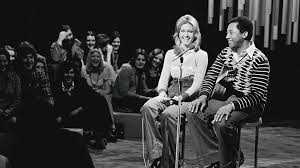
1971: Labi Siffre performing at the BBC TV studios in London with Olivia Newton-John. Image: Warwick Bedford / Radio Times via Getty Images
I’d tell my 16-year-old self, if you want to grow up to be me, I shouldn’t give you any advice at all.But if I was to give advice – certainly from a musical point of view – I could say honestly, that had I known I was going to be as good as I was, I wouldn’t have given up so often. So possibly my advice would be, just keep doing what you’re doing.
Fame and fortune were not in my plan. Not for any high moralistic artistic reasons, it just merely never occurred to me. I wanted to be a musician. That was it. I wanted to be able to earn enough money so that I could be a musician all the time, rather than having to take day jobs. When I became a ‘public figure’, it took a very short time, a matter of a few months, for me to realise I was never going to be comfortable with that attention, but it was part of the job.
I know we’re supposed to pretend that we’re all glamorous.Well, I’m not. I am very work oriented. I’ve come to realise that my job satisfaction mainly comes from the making. As far as songwriting is concerned – as with writing novels, or whatever – it’s making something seemingly out of the shadow of nothing. If you manage to do it, you get a great deal of satisfaction that you’ve done a good job. And then of course, you’ve got to do the next one.
My real life was at home.That was the thing that was overwhelmingly the most important part of my life. The rest of it you could call it a fascination or obsession or an inability to get away from music and learning about it. During the early part of my career, probably by the second album, I was asking myself, why exactly am I doing this? Because I knew that I was not part of the mainstream. I started by saying, I’m trying to write good songs. And then I quickly thought, hang on a minute, that’s not a good enough explanation. And I came to the conclusion that I was attempting to write songs that are useful.
I don’t pat myself on the back.I find that very difficult. In fact, I spent the past few years telling myself to be more forgiving of myself. I would doubt that there is anyone more critical of me than I am. So I wouldn’t have been especially self-congratulatory when the songs I’ve written have made an impact and been useful to people. I wouldn’t have thought about it like that. I would have just got on with writing.
For 14 years, I was Peter’s 24/7 carer and I mean 24/7.During that period I probably spent, in total hours, less than two weeks working on music. And when I started to be able to function again, which is only a short while ago, I was very, very pleased to find that I’m still eager to learn. That’s one of the things about a career in music, or arts. It is constant learning.
My new material is me now, not me then. I’m still me and I know more now. At the moment, I’m doing the part of the job that is getting as much of me into the work as I can. I have no intention of trying to be somebody else. And once I’ve gone through that process, that’s when I go into the studio with other people who might do something I’ve done better, or have an idea that I haven’t had. The most important thing first of all though, is to get as much of me into the work as possible.
If I could go back to any time, that’s obvious.It’d be to when Peter and Ruud were alive. I’d say “I love you” and they’d say “I love you”. It would be very straightforward. And I would refuse to leave.
Labi Siffre’s catalogue is currently being reissued on vinyl by Demon Music Group. The latest in the series, 1973’s For the Children, was released on 26 April.
How to deal with the depression that hurts so many older LGBT+ people
Older LGBT+ adults have more health problems than their straight counterparts. Ageing gay men, lesbians, bisexual and transgender people have higher rates of diabetes, hypertension and disability than older straight adults. Mental health problems are also more prevalent. Social isolation and lack of family support might be the reason for these extra health problems.
It’s never easy writing about depression: it could be about a range of issues hitting at once such as finances, ageing, weight, looks, being single, the health of an elderly parent. It can be expressed as lethargy, disengagement or loss of interest.
Perhaps you can’t read the paper, stopped eating (then started binge-eating), have no interest in the gym or pastimes like the cinema or hanging out with friends. Your bed has become your best friend, the place where you can still sink into a pillow and dream, where you don’t need to dress or shower or fake interest or a smile.
Depression hits approximately 10 million people a year, and it’s estimated that 15 percent of the adult population will have an episode of depression during their lifetime. Gay men are three times more likely than the general population to suffer from depression. As such, we are also more prone to suicide.
Knowing the statistics about depression is helpful, acknowledging the illness, imperative, but what to do about it? That’s the next step. Seeking medical attention might be necessary, but you also need to fight from the inside – with a little help from your friends.
Depression often hits older people as careers have ended, they retire, they lose a partner and their sense of purpose goes away. There is often hopelessness that sets in.
It’s vital to open up about depression. As with all psychological illnesses, there tends to be a need to hide depression, to push it aside, to pretend we’re always as happy as our Facebook page might suggest. In the long run, denial only makes depression worse.
Even the smartest among us see depression as being weak, or ‘it’s just thoughts,’ or ‘just suck it up,’ or ‘it will pass.’ That’s just not true. It’s not simply ‘pull your thoughts together.’
Once you open up to people about your struggle, you’ll more than likely find they’ve experienced similar problems and are happy to share stories, offer advice, and lend an emotional hand. It’s therapeutic for both parties. You can keep your depression hidden behind a smile or embrace it as another part of you. But make sure you have social support. Social isolation isn’t just a symptom of depression; it’s a cause.
Monthly Queer Cabaret Night Hosted at The Met!
Thursday, 16 May 8.00pm – LOUD Cabaret – Bury Met
We’re delighted to announce a queer cabaret night where we will be showcasing the most fabulous of rising stars from across Bury and beyond.
May’s event will feature Holly Redford-Jones, Venn Smyth, and Evie D’Luca. Your host for the evening will be Mancunian writer, actor and activist Nathaniel J Hall, Artistic Director of Dibby Theatre. Thursdays have never been so exciting!
The event includes “I Was Dancing in the Lesbian Bar” by Holly Redford-Jones combining her three greatest passions: music, comedy, and lesbians, and Venn Smyth who blends synth, sax, ballads and bops.
Supported by The Greater Manchester LGBTQ+ Network and Dibby Theatre
£11 standard / £9 subsidised / £13 supporters (including fees)
Standard – What we need most people to pay.
Subsidised – For people currently unable to pay the standard price.
Supporters – The extra you pay goes directly towards the subsidised ticket option.
The 1853 Restaurant is a 50-seat restaurant run by students at The Manchester College’s “Industry Excellence Academy for Hospitality and Catering”.
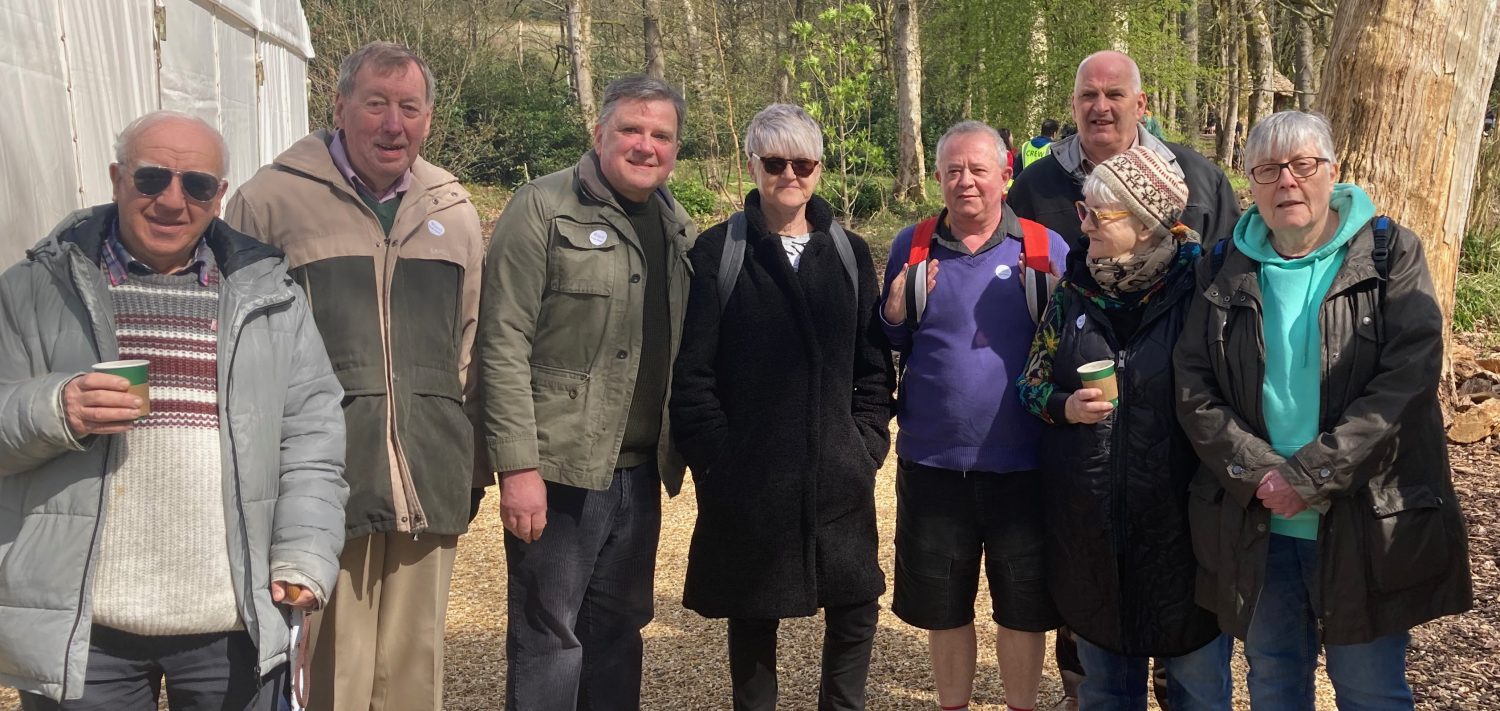
Thirty-two of us visited this week and we were given special attention by the team. We enjoyed a menu that’s always changing and innovating to reflect local, seasonable produce and the skills and talents of the chefs who are working and training in the state-of-the-art kitchen.
The lunchtime menu comprises of small plates, of modern starters, classic and contemporary dishes and delicious desserts.
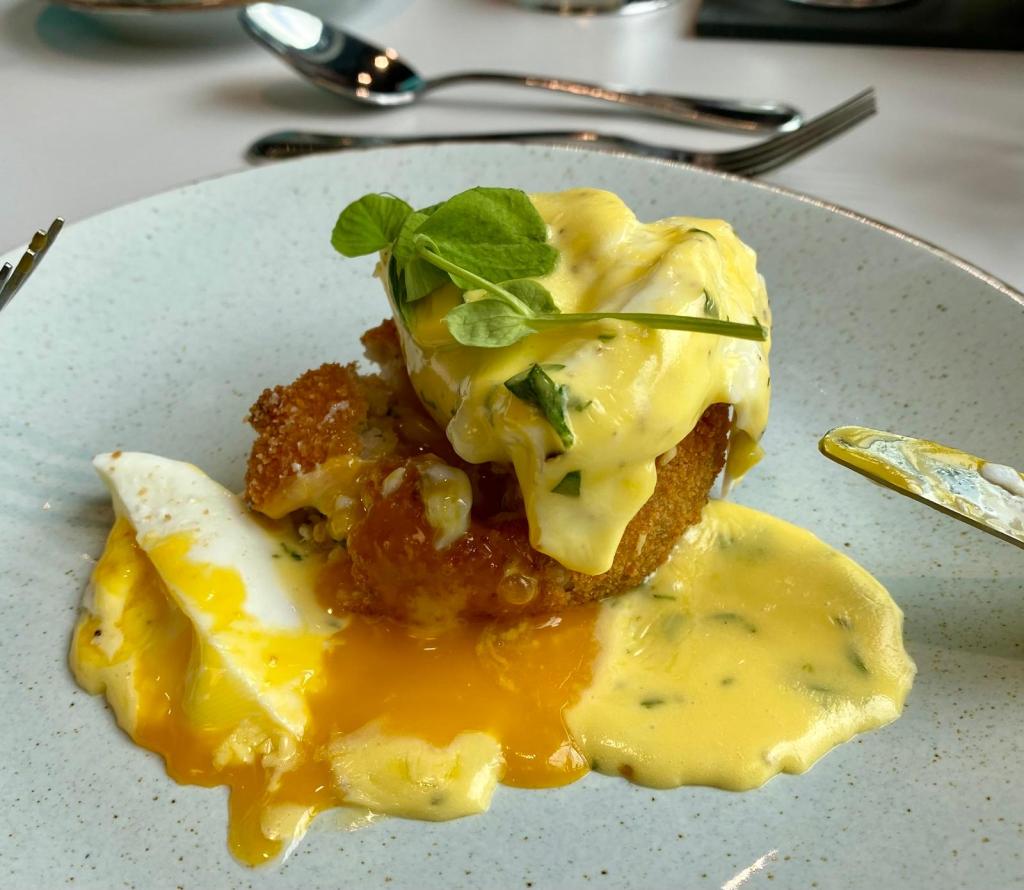
For starters we had roasted vine tomato soup with freshly baked bread or fish cakes with a poached egg and a lemon beurre Blanc.
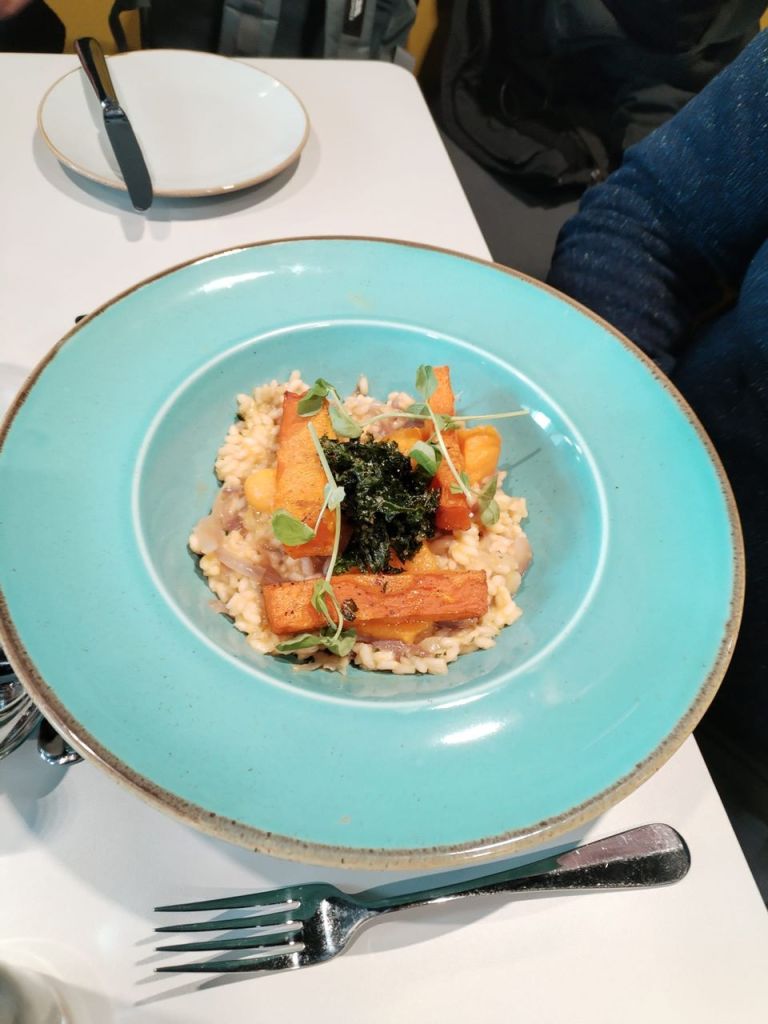
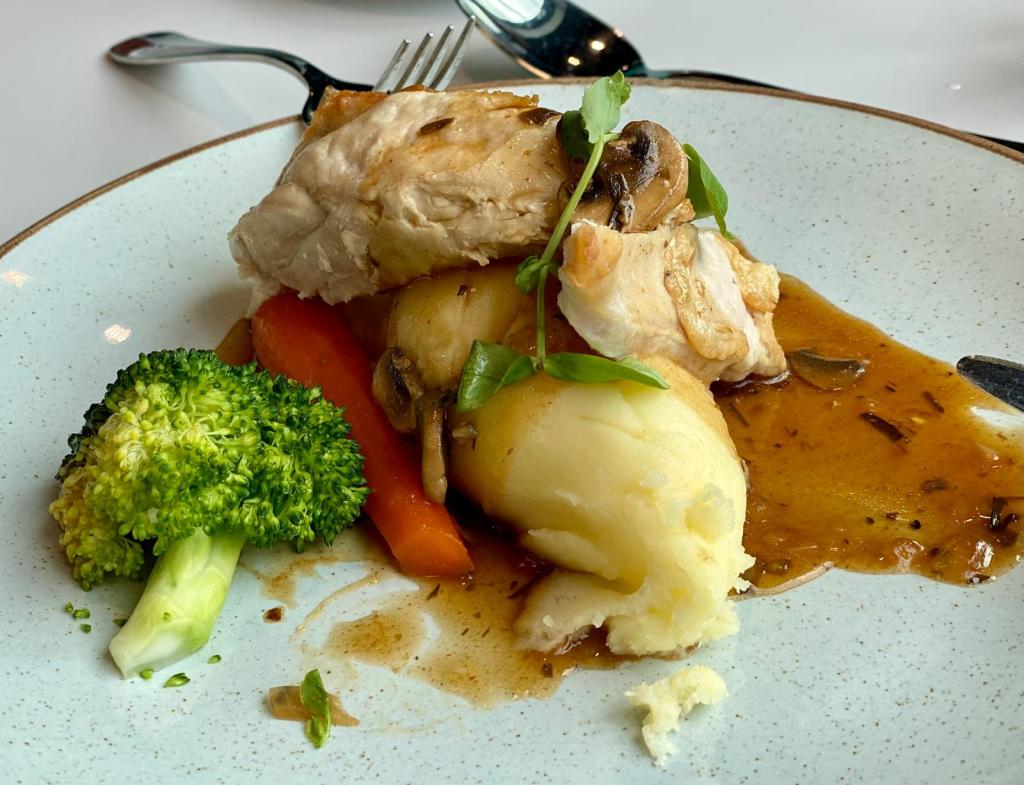
The main course was pan seared chicken breast, creamed potatoes, chard broccoli served with a mushroom and tarragon cream sauce or roasted spiced butternut squash with caramelised shallot and herb risotto.
We made room for dessert, which consisted of iced profiteroles and chocolate sauce or blackcurrant cheesecake with chantilly cream berry compote. The latter was available in vegan, gluten free and vegetarian options.
To finish we had tea and coffee.
This restaurant is excellent and we will definitely be returning soon.
The aim of the day is to provide visibility and ally-ship for women who identify as Lesbian or Gay, providing a platform to advocate for challenges, celebrations of accomplishments and areas where improvement is still needed.
Did you know that Stonewall reported that LGBT+ women are two times less likely to be out in the workplace, compared to LGBT+ men? This is an example of the different ways we still need to uplift, and challenge and dismantle systems that put barriers in place. It also shows why individual visibility days within our communities are so important.
Let’s spotlight some amazing Lesbian Women:
Holland Taylor – The L word American Actor, Holland Taylor has often spoken out about her sexuality and has long time advocated for the community. She is married to Sarah Paulston, who is another high-profile actor.
Sandi Toksvig – is a Danish-British writer, comedian and broadcaster on UK radio and TV. She is well known for her role within The Great British Bake Off and is also an activist, known for co-founding the Woman’s Equality Party in 2015.
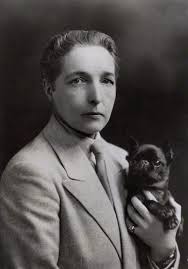
Radclyffe Hall – Marguerite Antonia Radclyffe was an English poet and author best known for her novel ‘The Well of Loneliness’ which is considered a ground-breaking work in lesbian literature and visibility.
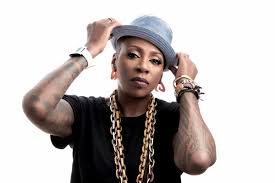
Gina Yashere – is a hilarious and inspiring British-Nigerian comedian who often includes experiences of racism and challenges faced as a Black woman in her sketches. Gina Yashere is not only a household name, but easily a fashion icon in the LGBT+ scene.
How Val McDermid met Jo Sharp: ‘I Googled her to make sure she was a real person’
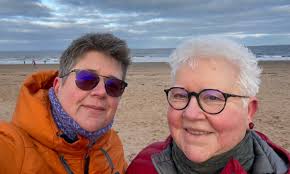
Jo (left) and Val at Portobello beach in Edinburgh.
Crime writer Val McDermid, 67, kept seeing geography professor Jo Sharp, 53, at literary events. They eventually had a drink at the bar in 2013 and now live together in Edinburgh.
In February 2013, crime writer Val McDermid was invited to speak at the University of Oxford. “It was at my old college of St Hilda’s,” she says. When she spotted she had been tagged on Twitter by an attendee, she felt nervous. “I’d had an unfortunate incident a few months before – someone had thrown ink in my face at a signing,” she says. “This tweet had a cartoon profile image rather than a picture, so I looked her up to make sure she was a real person.”
She discovered her new Twitter fan was Jo Sharp, a geography professor from Glasgow. “I was in Oxford doing some research,” says Jo. “I’d contacted a professor I knew there, to meet up. She told me she was going to see Val McDermid speak and I could come along.” Jo decided to go even though she had not read any of Val’s books. She tweeted the details of the event, tagging Val in her post. “My friend was a huge fan of her writing, so we stayed afterwards to be introduced,” says Jo. When she told Val she wasn’t from Oxford, Val admitted she already knew. “I told her I’d Googled her,” she laughs. “There was definitely something that caught my attention.”
In March, they met again at the Aye Write literature festival in Glasgow. Once again, they had a brief chat and exchanged a few messages on Twitter. It wasn’t until September 2013 that they got to know each other better at Bloody Scotland, a crime-writing festival in Stirling. “By this point, my friends were joking that I was stalking Val,” says Jo. They met up at a bar and chatted all evening. “We talked about all sorts: music, books, politics, gaming,” says Val. “We covered a lot of ground over the course of a few hours. I was intrigued by her, and she had lots to say for herself.”
At the time, neither of them saw each other romantically, which made their meet-up more relaxed. Jo was happily single and focusing on her career, while Val was coming towards the end of a long-term relationship. The following month, Jo travelled to Tanzania for a field trip, and their friendship continued to grow. “We broke Twitter because we were sending so many direct messages,” says Val. “Apparently there’s a limit on the number you can send.” Soon, they began to realise there might be more between them than friendship. “We were having these increasingly intense conversations,” says Jo. “Val really understood me.”
That January, Val’s relationship ended. She drove to Glasgow from her home in Northumberland to see Jo, and from that moment on they were never apart.
In May 2014, they moved in together in Edinburgh. “I grew up on the east coast and it’s less rainy,” laughs Val. They had a humanist civil partnership ceremony in 2016, which they celebrated with dinner and drinks near their home. “It ran from noon until 11pm, and the London contingent staggered out of the restaurant at the end of the night to get the sleeper (train) home,” says Val. “The whole day was joyous. I don’t think I stopped grinning,” adds Jo. Both describe their relationship as “incredibly supportive”. About a year after they first met at Val’s speaking event in Oxford, Jo remembers stumbling across a photo of them together there. “It felt like a moment in history for us,” she says. “Neither of us was looking for anything, but our worlds just collided that day.”
Lesbian Visibility Week was originally celebrated in California in 1990, and since then it has been an annual celebration of identity, community, culture and progress.
In 2020, Linda Riley, publisher of Diva magazine, began a new Lesbian Visibility Week.
Susan B Anthony
Maybe they were inspired by social reformer and women’s rights activist Susan B Anthony, who fought for gender equality. Born over 200 years ago, she never stopped speaking up, but a large part of her was silenced. She was a lesbian hero but they don’t teach you that in history class.
This year Lesbian Visibility Week (22 – 28 April) is all about a community that is unified, not uniform. Diva are working with their global partners to celebrate the incredible diversity of LGBTQIA women, and they want every single one of you to get involved!
For Lesbian Visibility Week 2024 the power of sisterhood will be celebrated by uplifting incredible LGBTQIA women from every generation, in every field and in every country around the world. One community, so many brilliant individuals can all take a moment in the spotlight to be recognised for the work they do and the joy they bring.
Immerse yourself in herstory with Lesbian herstory, an Instagram account that posts images of lesbians and related cultural artefacts from times gone by.
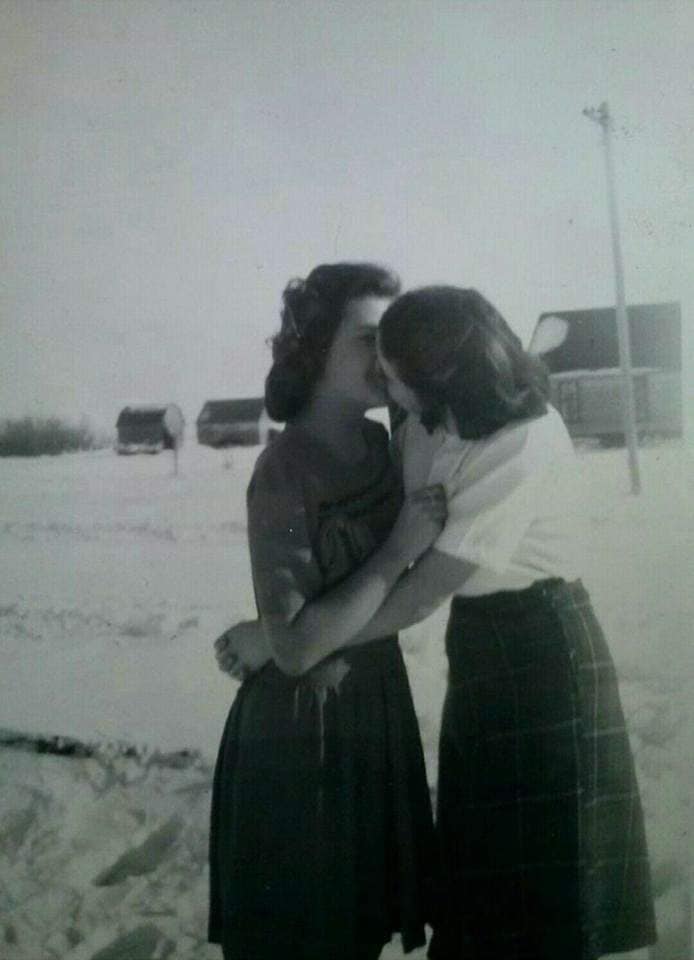
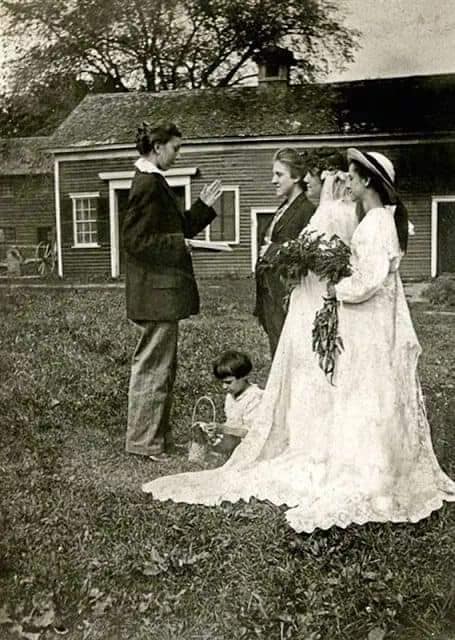
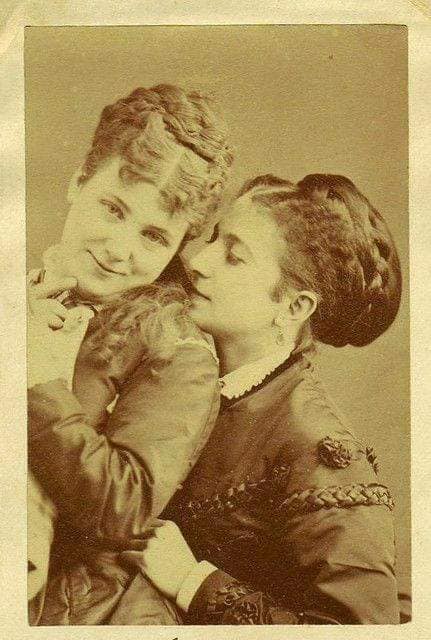
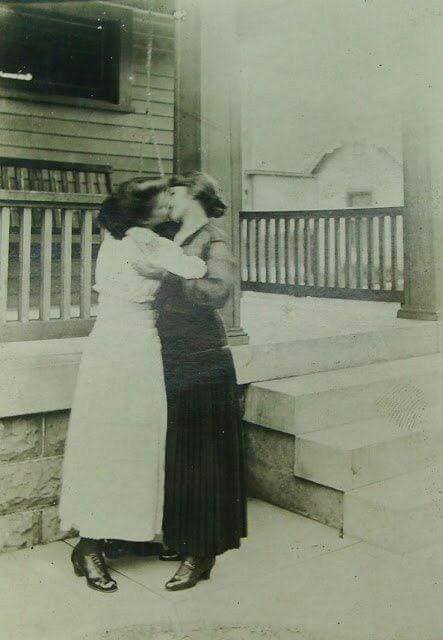
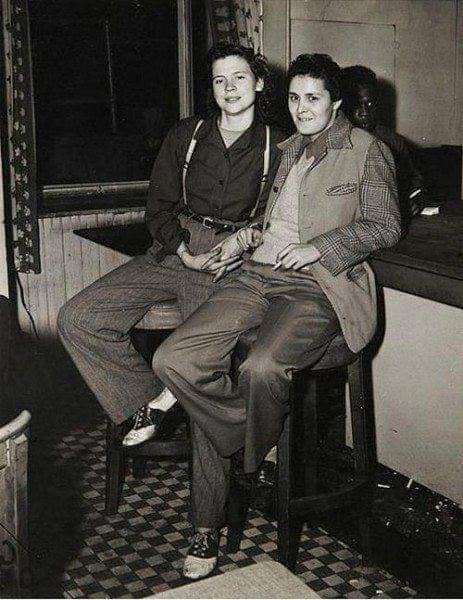
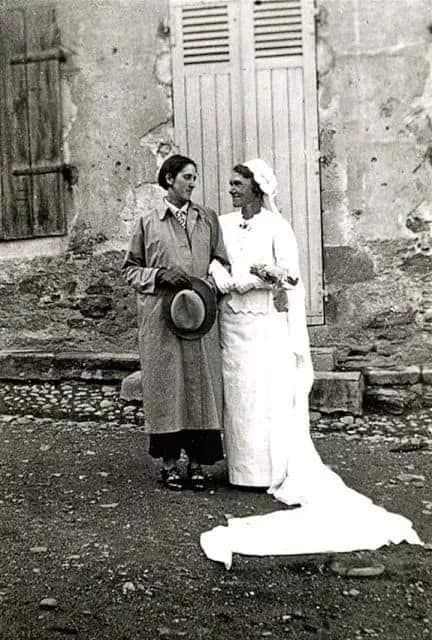
Some photos from back in the day:
How We Met: ‘My neighbours encouraged me to call and ask her out’
Deborah (left) and Maria at a ball in the New Forest in 1995. Photograph: Supplied image
Deborah, 67, and Maria, 70, met at a line dancing class in 1995. They fell in love and now live in Hove.
After a divorce, Deborah found herself living in Portslade, Brighton, in the mid-1990s. “I had only recently come out,” she says. “I didn’t have many lesbian friends, so I’d started going out more to meet people.” She decided to give line dancing a whirl.
“I walked in and saw Maria. She was wearing a hat that looked like a flying cap and was with someone called Tanya, who I’d seen before.” She went over to say hello, but didn’t get the response she was expecting. “Tanya turned to Maria and said, ‘Do we know her?’ I was a bit crushed.”
Despite the awkward start, Maria thought Deborah was “cute and a bit cheeky”. They chatted briefly, but then the class started. “I’d moved to Brighton from London and was living in a shared house,” says Maria. “I wasn’t able to work because I was struggling with ME, but I liked to get out when I was well enough.”
At the time, homophobia was still rife in some parts of the country, but there was an active LGBT+ community in Brighton. “People used to say, ‘Are you on the scene?’ which meant going out and about and meeting people. The scene was quite small, with a few bars that women used to go to,” says Deborah. “So we kept bumping into each other at different dance classes and started chatting more and more.”
Eventually they swapped numbers. “I was close to my neighbours at the time and they encouraged me to call and ask her out,” says Deborah. When she rang, Maria was in the middle of running a local gathering for Polish women and had asked not to be disturbed by any calls. “When they said it was Deb, I said, ‘Oh, I will take that!’ and just grabbed the phone. I couldn’t talk long but she said let’s go to the theatre. At first I didn’t cotton on to the fact that she liked me.”
Deborah and Maria at a wedding in Sussex in 2023. Photograph: Supplied image
In September 1995, Maria suggested they go for a walk together. “I love being in nature,” she says. “My plan was to go and see the white chalk cliffs and watch the sun setting over the sea. Deb had the wrong shoes and no jacket so I lent her one, then we went to the pub afterwards.” Deborah still remembers their conversation. “For some reason, I started talking about how organic lemons were really good. I remember thinking, ‘For God’s sake, stop talking about lemons,’” she laughs.
They soon began setting up dates, including parties and more dancing classes. “I was busy co-parenting my daughter, and Maria was still recovering from ME, so it suited us both to take things slow to start,” says Deborah. At a party, Maria met Deborah’s daughter for the first time and knew things were getting more serious. “It was a bit of a milestone because I was meeting someone important and we got on really well.”
Telling their families about the relationship was another big step. “My mum was a bit surprised and frosty at first, but she quickly warmed to Maria,” says Deborah. “Later in her life, as she got infirm, Maria was a great nurse to her.” Maria says her parents were initially “judgmental” about two women having a relationship but that Deborah persisted in getting to know them. “She’s so nice that they eventually cracked.”
The pair moved in together in Hove two years after meeting, and had a civil partnership in 2006. “In the 70s and 80s, it was really hard to be gay, and women with children would have them taken away if they came out,” says Maria. “But by the mid-90s it had become much easier. It’s hard to imagine now how scary it used to be.”
Deborah taught education as a university lecturer in Brighton, before retiring in 2018 to write novels and a memoir. Maria later worked as a Polish interpreter, writer and creative writing teacher.
Deborah says they have supported each other through bereavements, including her mother’s death and losing both of Maria’s parents. “We lost our friend Tanya in an accident, too. We offered each other very practical help as well as emotional.”
Maria says Deb is “really beautiful” and one of the most dynamic people she’s ever met. “She’s an exciting person to live with and you can never be bored around her.”
Whatever happens, Deborah says they always “have a laugh together”. “Maria has the most integrity of anyone I know and she’s always got my back.”
Out In The City Women’s Meeting
Thursday, 25 April 2024 – 2.00pm – 4.00pm
Meeting at Cross Street Chapel, 29 Cross Street, Manchester M2 1NL (Kenworthy Room)
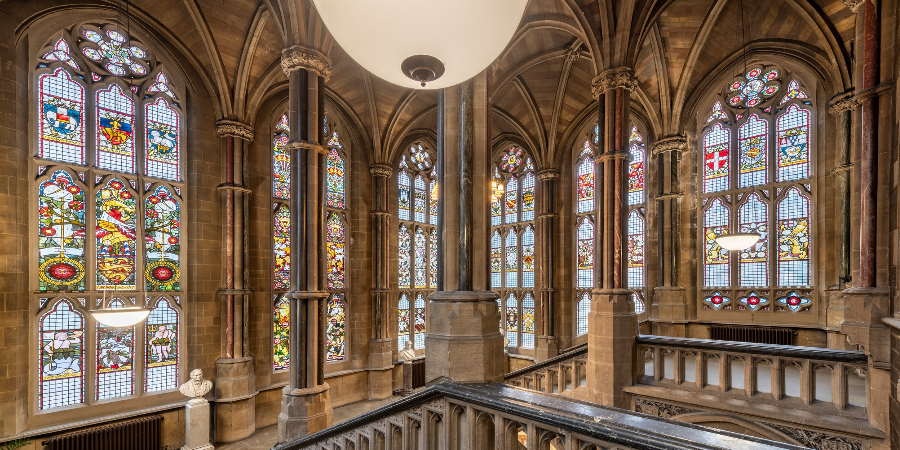
Rochdale Town Hall is a Victorian-era municipal building and is “widely recognised as being one of the finest municipal buildings in the country”.
We travelled by train and tram and had lunch in the Regal Moon (originally used as the Regal cinema) before our visit to the Grade I listed building.
Construction was completed by 1871 although the cost had, by then, increased beyond expectations from the projected £40,000 to £160,000 (£15,850,000 in 2024).
Previously, Rochdale Council met in all sorts of different buildings to conduct the town’s business. The council chamber was purpose-built and here the Council could discuss, debate and often disagree in style. There used to be a screen to keep the public separate. This kept the noise out and stopped tomatoes being thrown at the councillors!
The council offices are now based at Number One, Riverside and in 2021 work began to restore the building to its former glory, some 150 years after it was first completed. The work has recently been completed and the Town Hall is once again open to the public as a remarkable space that’s accessible to everyone.
New group coming to Levenshulme – a fun and informal intersectional drop-in where all members of our LGBTQIA+ community are welcome to come down, grab a brew, build some connections and find new ways to flourish.
The first Levy Queer Club will take place on Tuesday 30 April from 7.30pm to 9.00pm in Studio Room, Levenshulme Old Library.
Come and meet other local LGBTQIA+ folk and decide what you want your local Queer Club to offer!
Behind the Movement that Brought Homosexuality – and Psychiatry’s Power – to a Vote 50 years ago
A Yale historian argues in a new book that post-war psychiatrists had pathologised homosexuality to legitimise and hold on to their raw yet fading political power.
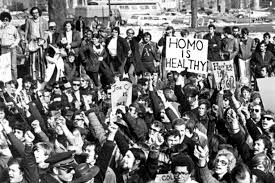
Demonstrators gathered in Albany, NY, in 1971 to demand gay rights and declare “Homo Is Healthy. ”Richard C Wandel / LGBT Community Center National History Archive
Fifty years ago, the United State’s psychiatrists effectively put gay people’s mental health – and their very place in society – to a vote.
Five months prior, on 15 December 1973, the 15-member board of the American Psychiatric Association (APA) had voted unanimously, with two abstentions, that homosexuality should no longer be considered a mental illness.
The epochal elimination of the homosexuality diagnosis from the APA’s influential bible, the Diagnostic and Statistical Manual of Mental Disorders, or DSM, made the front page of The New York Times and The Washington Post. The Chicago Gay Crusader ran the cheeky, if world-weary, banner headline, “20,000,000 Gay People Cured!”
Many outlets covered the APA’s decision to remove homosexuality from its list of mental disorders. The Chicago Gay Crusader / Windy City Times
But the policy shift was met with dismay by prominent APA members who remained wedded to their conviction that homosexuality was a pathology warranting “reparative” treatment. They prompted a ballot referendum of the organisation’s rank and file to repeal the board’s vote.
On 8 April 1974, the APA reported the tally: 58% of the more than 10,000 members to cast a ballot had supported upholding the vote.
Gay people remained “cured.”
“It was a sea change in LGBT rights,” said the APA’s current president, Dr Petros Levounis, who as an openly gay man represents a prime product of that change.
Loosening psychiatry’s grip on homosexuality
Those two crucial votes were the culmination of years of both external gay-activist pressure on the APA and an internal reform campaign, fuelled by the myriad civil rights movements that bloomed out of the 1960s. These revolutionaries sought to release the repressive grip that Freud-descended psychoanalysis held over post-war American society.
“Psychiatry really set the conditions within which people had to make sense of themselves,” said Regina Kunzel, a professor of history and women’s, gender and sexuality studies at Yale University, referring to the period, from about 1940 through the 1970s, when psychoanalysis dominated the psychiatry field and enjoyed its cultural and political zenith.
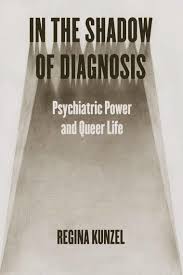
“In the Shadow of Diagnosis” book cover. Regina Kunzel
Kunzel is the author of a new academic text, “In the Shadow of Diagnosis: Psychiatric Power and Queer Life,” in which she argues that historians have under-recognised psychiatry’s sweeping influence over the perception and treatment of gays and lesbians during the mid-20th century.
The word “power” is littered across the pages of Kunzel’s tidy and at times harrowing account of the mistreatment and torment sustained by gay and gender-nonconforming Americans at the hands of the psychiatric establishment. Psychiatrists, Kunzel asserts, were not merely interested in caring for distressed patients or exerting their influence on the culture at large. They also sought to bolster their own power and authority by proclaiming subject-matter expertise regarding homosexuality and enforcing the heterosexual nuclear family as a Cold War-era bulwark against the existential threat of communism.
“Psychiatry wasn’t just doctors in hospitals, in clinics,” said Kunzel, who sourced copious documentation of gay people being locked in such asylums for years against their will. “They really made bargains with the state to enhance their authority.”
Psychiatrists did so by partnering with the military to weed homosexuals out of the armed forces, and with the criminal justice system to aid in the policing and sodomy prosecutions of gay people. Their pathologising of homosexuality also influenced the federal government’s campaign to flush gays from the civil service during the Lavender Scare (recently depicted in the limited series “Fellow Travellers”).
This swell of criminalisation of gay Americans came in the wake of the Kinsey reports and their bombshell findings. In 1948, Alfred Kinsey published “Sexual Behaviour in the Human Male,” shocking Americans with his finding that 37% of men reported a history of sex with other men. The cultural backlash to Kinsey was driven at least in part by psychoanalysts.
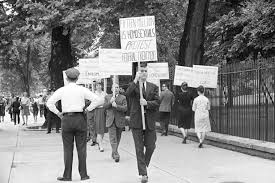
Gay rights activist Frank Kameny, second in line, protests with others outside the White House in 1965.Bettmann / via Getty Images
As a countervailing anti-psychiatry movement eventually began to take hold, psychiatrists stoked homophobic anxieties with one hand while offering a solution – reparative therapy, also known as conversion therapy – with the other, fuelling a feedback loop that bolstered their central and supposedly indispensable place in society.
Gay activism’s ascent thus became dependent on psychoanalysis’ decline. The Mattachine Society, founded in 1950, saw the APA’s categorisation of homosexuality as a disease as the linchpin obstructing gay liberation.
“Off the couches and into the streets!” became a popular liberationist slogan, emphasising that gay people were not mentally ill and were a force to be reckoned with.
Psychiatry ‘legitimised a great deal of horrors’
By defining homosexuality as a pathology – the diagnosis appeared in the DSM’s first edition in 1952 – the APA “legitimised a great deal of the horrors,” said Andrew Scull, a sociology professor at the University of California, San Diego, and an expert on the history of psychiatry.
Such horrors, many of which were imposed by coercion or during forced institutionalisation in the name of curing homosexual urges and behaviours, included lobotomy, insulin shock, what’s now known as electroconvulsive therapy and aversion-therapy treatment (including the use of emetics and electric shocks including to the genitals).
One company that made shock-therapy devices even had a regular booth at the APA’s annual conference.
In 1970, the year after the Stonewall uprising, infuriated gay activists began infiltrating these conferences and raucously demanding an end to such mistreatment and the delisting of homosexuality as a psychiatric disorder. In 1972, a gay psychiatrist stunned conference attendees when he appeared on a panel anonymously – dressed in an oversize tuxedo, a ghoulish mask and a wig – and spoke of the anguish of working in the profession from within the closet.
Barbara Gittings, Frank Kameny and John Fryer (Dr H Anonymous) at the American Psychiatric Association’s 1972 national convention in Dallas. Kay Tobin / New York Public Library
During this same period, Kunzel writes, the APA top brass was seeking to defend psychiatry as an evidence-based science in the face of mounting attacks on the field’s legitimacy. So when gay advocates presented to the organisation newer research suggesting that homosexuality was not a sickness but a normal variant of human sexuality, they found a receptive audience among key APA leaders.
“Organised psychiatry was scuttling for safety,” Dr Richard Pillard, who at the time was a young APA member and a very rare openly gay psychiatrist, recalled in “Cured,” a recent documentary about this moment in the organisation’s history.
Dr Lawrence Hartmann’s APA membership also dates back to that era. Speaking about the appeals he and others made to the organisation’s leadership to reconsider its stance on homosexuality during this historic window, he said: “It took some persuading. Sometimes science and politics can cooperate.” Even as he remained professionally in the closet, Hartmann in 1970 helped found what became an influential group of APA members who sought to reform and modernise the organisation and make it more responsive to the array of recent socio-political upheavals.
Hartmann recalled his crucial efforts to master the bylaws and byzantine bureaucracy of the APA. He marshalled through the proper internal channels a position paper he had written with Pillard arguing for the APA to remove homosexuality from the DSM and become an actual champion of gay civil rights. Ultimately, Hartmann got the measure passed by the APA assembly and sent on to the board for the pivotal, and successful, December 1973 vote.
At that time, the APA also put its weight behind civil rights protections for gay people and supported the repeal of state sodomy laws then on the books in 42 states and Washington, D.C. (When the Supreme Court finally struck down all such statutes in 2003, 14 states still had them.)
“With various populations, it was taken as a sign of a reasonable scientific health that a large organisation could be open to real discussion and real rethinking,” said Hartmann, who gradually came out as gay over the next two decades and served as president of the APA from 1991 to 1992.
The sea change
Asked about his own reaction 50 years ago to this sea change in the APA, Hartman said, “We at the time didn’t know what it would mean. It turned out to be very influential.”
That’s putting it mildly. The full parade of barriers to gay civil rights – including housing and employment discrimination, laws governing sex between consenting adults, and the bans on gay people immigrating, adopting children and marrying – all hinged on whether gay people were defined as constitutionally well or as psychologically sick, clinical pariahs at a time when all manner of psychiatric disorders were magnets for stigma and discrimination. And so, the APA’s policy change sent off shockwaves that continue to course across the legal landscape.
The APA did not, however, make a clean break from pathologising homosexuality with the 1973 board vote. As a compromise in the face of resistance, the leadership allowed for a new diagnosis to enter the DSM at that time: “sexual orientation disturbance,” for people who were distressed over their homosexuality, including those who wished to change it. This diagnosis was then replaced by “ego-dystonic homosexuality” in 1980. That diagnosis was struck in 1986; but at that time, the symptom of “marked distress about one’s sexual orientation” was newly included in the diagnosis of “sexual disorders not otherwise specified.” That last vestige of pathologised homosexuality wouldn’t finally be deleted until 2013.
Critics say those various diagnoses helped legitimise decades of conversion therapy efforts. Research that began to emerge in the mid-1990s ultimately discredited this practice, which although still carried out, is now widely condemned as harmful and ineffective by mainstream mental health professionals and is banned for minors in 22 states and Washington, DC.
The new frontier
Kunzel is among those who look at homosexuality’s decades long evolution in the DSM and see at least a partial parallel to the more recent effort to depathologise transgender identities.
“Transsexualism” first entered the manual in 1980, enraging many trans activists for, they argued, turning their identity into a sickness. This was replaced in 1994 by “gender identity disorder” – an effort by the APA to mitigate stigma that nevertheless left many trans people unappeased. Then, in 2013, that diagnosis was replaced by the current “gender dysphoria,” which distances the source of distress from the core sense of self and attributes it more to society’s stigma toward gender nonconformity.
Today, there is sustained pressure on the APA to discard the gender dysphoria diagnosis and, just as with gay and lesbian people, totally depathologise trans people in the eyes of psychiatry. However, because receiving hormones and transition-related surgeries is key for many trans people to fully realise their identities, and given that insurance companies require a diagnosis to cover such treatment, a tension remains that may prove irreconcilable.
Levounis, the current APA president, declined to take a position on what should become of the gender dysphoria diagnosis.
“It’s a very active debate within our field,” Levounis said. “Unlike other discussions within the APA of yesteryear, we do involve a lot of lived experience in our work – people who are transgender,” including psychiatrists and non-psychiatrists alike, “who do help inform us in these discussions.”
Hartmann said the effort to depathologise homosexuality has “a mixed relevance to the present, very lively and argumentative field” of gender identity – one in which he hopes to see further research that will yield clearer insights. Surveying the fruits of his own efforts five decades ago to strike homosexuality from the DSM, Hartmann said, “I think it has helped an enormous number of people’s self-esteem. I think it has helped them face real problems in their life, including psychiatric problems. I think it has helped them fight for justice in other realms. And I think there are some people who came around and became thoughtful about what other things are unfair.”

























 Out in the City