Mini Cini … US Military Amends Records for ‘Don’t Ask, Don’t Tell’ … Protest! – Documenting Dissent

News

Mini Cini

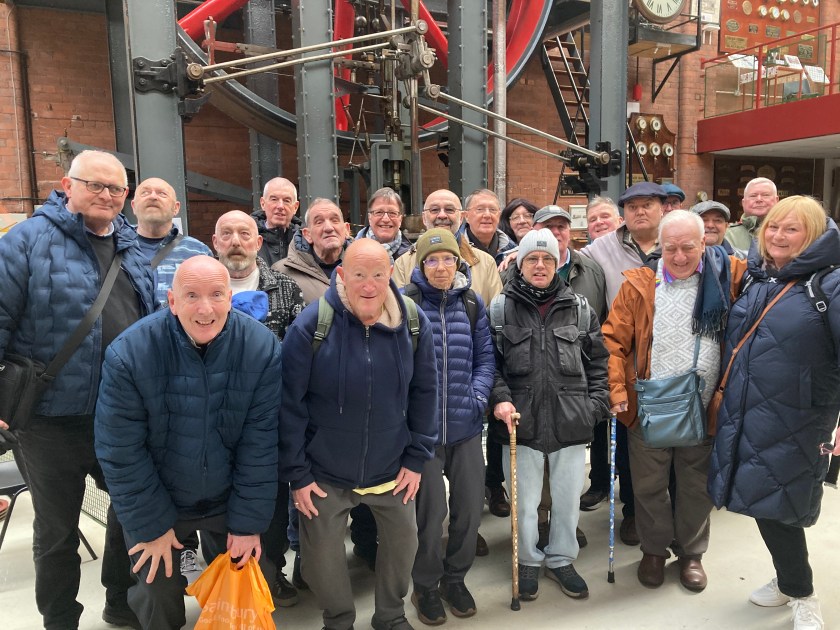
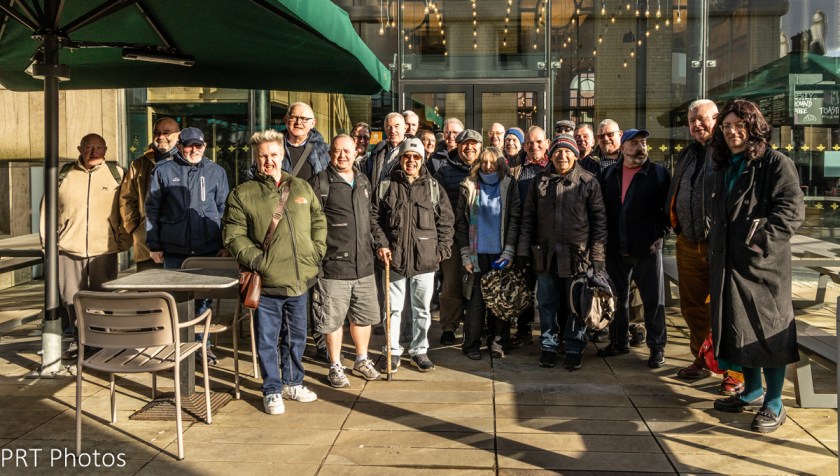
We dined at the Piccadilly Tavern before walking to Ducie Street Warehouse where the Mini Cini is housed. The Mini Cini is a small 36 seat cinema where we are able to show our own film selections.

This time we had a number of short films:

Why?;

That Don’t Impress Me Much;

Wings;

Old Gays Share their Coming Out Stories;

Old Gays Try Drag;

A Short Film in Polari; and

Being Gay in the Thirties.
Why? Is a new video celebrating 40 years since the original song by Bronski Beat. It’s part documentary, part music video.

Wings from 1927 showed the first on screen same sex kiss by two men.

Polari was a form of slang used by gay men in Britain prior to the partial decriminalisation of homosexuality in 1967, used primarily as a coded way for them to discuss their experiences.

It quickly fell out of use in the 70s, although several words entered mainstream English and are still used today. All I can say is let us put our best lallie forward and with our eeks shining with hope, troll together towards the fantabulosa futurette!
Despite a couple of technical hitches, the afternoon went well. The main feature was Being Gay in the Thirties.

In this outstanding episode of pioneering 1980s TV series “Gay Life”, Gifford Skinner describes what it was like to be a gay man in the 1930s.

Illuminating and nostalgic, Gifford recalls picking up guardsmen in Hyde Park as well as some of the homosexual ‘characters’ he encountered in London’s West End. The gay activist, historian and sociologist Jeffrey Weeks is interviewed about gay law reform. This episode is presented by Michael Attwell, who also produced the series for the London Minorities Unit.

London Weekend Television may have screened “Gay Life” in the Sunday night ‘graveyard’ slot of 11.30pm, but it attracted a lot of publicity, some of it negative. Lesbians protested that they were excluded from the first series in 1980, so this was rectified for the much-improved second series in 1981.

In the pages of Gay News veteran activist Dudley Cave welcomed “Gay Life”, saying it reached “into the homes and the closets to places where Gay News never gets.”

US Military Amends Records for ‘Don’t Ask, Don’t Tell’

Secretary of Defence Lloyd Austin testifies in front of the House Armed Services Committee in Washington on 29 February, 2024.
Photo: Jack Gruber / USA TODAY NETWORK

In a move long fought for by LGBT+ veterans, the United States military has upgraded the records of service members discharged under the controversial anti-LGBT+ “Don’t Ask, Don’t Tell” policy.

On 15 October 2024, Defence Secretary Lloyd Austin announced the action on Twitter/X with a full statement saying that 851 service members who lost their positions under “Don’t Ask, Don’t Tell” would have their status changed to “honourable discharge.”

Austin’s statement reads: “Brave LGBTQ Americans have long volunteered to serve the country that they love. Some of these troops were administratively separated from military service under the now-repealed ‘Don’t Ask, Don’t Tell’ policy.”

Protest! – Documenting Dissent

Initiative Arts Projects Ltd will be launching their new project – Protest! – at 6.00pm on Wednesday, 4 December 2024 at Manchester Art Gallery.

Please keep the date in your diary as Out In The City members have been invited to attend.

During the previous project (Legacy of ’67) a recurring theme in the stories collected was the importance of protest in advocating for equality and securing and maintaining rights for LGBTQ+ people.

At the centre of Protest! will be the recording of oral history testimonies and the project will result in an exhibition, public performances, film, and regular lectures, guided tours, workshops and symposia.

Protest! will launch at the end of November 2024 to coincide with the 21st anniversary of the repeal of Section 28 in England and Wales.

Giorgio Armani On His Male Lovers … Bronski Beat’s “Why?” … Rainbow Lottery Super Draw

News

Giorgio Armani Breaks His Silence On His Male Lovers

With an estimated worth of over $13 billion, Giorgio Armani has been a fashion powerhouse since launching his namesake label in 1975.

The Italian designer, who turned 90 in July, is also immensely reserved and has rarely spoken on his private life. While he’s considered to be part of the LGBT+ community, one of the last instances of him addressing his sexuality was in a Vanity Fair article from 2000 where he noted: “I have had women in my life. And sometimes men.” 

But in a new and very personal interview, Armani has opened up about his relationships with male lovers throughout his life and shared intimate details of these special romances.

After disclosing that he lost his virginity to a girl in his class, Armani spoke candidly about his first male crush that occurred while at summer camp.

“I’ve never talked about this. It happened under a shed on the beach at Misano, at 5 in the afternoon, when all the boys from the summer camp were supposed to have a bit of a quiet time.”

While he didn’t fully elaborate if he had an actual experience or if it was the first time he had same-sex feelings, the object of Armani’s burgeoning affection was for one of the camp counsellors.

“I was in a group of boys, and there was a supervisor, a young man, who I felt immediately attracted to. I didn’t fully understand it at the time, and I didn’t pursue it,” he said. “But from that moment on, my life took a different turn.”

Like many young boys, Armani’s “gay awakening” left him confused and excited.

“I didn’t understand what it was. I didn’t distinguish between men and women at the time. It was just an attraction I felt, something beautiful: I couldn’t wait to be near him, to be touched …  I felt a huge connection,” he added, before taking pause to honour what a monumental moment that was in his life.

I’ve never told anyone about this. It’s still a very emotional memory for me.”

In the ’60s, Armani met architect Sergio Galeotti. The duo became business partners, but even more importantly, they were in a relationship for more than a decade.

“We met near the Capannina night club, in Versilia, where I was on holiday for a couple of days,” he recounted. “I saw Sergio in his car and I immediately fell for his Tuscan smile.”

Armani and Galeotti were together throughout the ’70s and ’80s, until tragedy hit. In 1985, Galeotti died from complications due to AIDS and Armani was left completely devastated.

“When Sergio died, a part of me died with him. I must say I’m still amazed that I found within myself the resilience to withstand such an immense pain,” Armani shared.

“I had to tap into my willpower to deal with all the pain and anguish. A whole year spent next to Sergio in his hospital bed. And it all happened as our career was taking off, when we were becoming known, setting up our company, reaching worldwide fame. It was the moment I was gaining confidence in myself, and then this blow hit me.”

For the last several decades, Armani has had his collaborator Leo Dell’Orco, who is the Head of the Men’s Style Office for all collections, at his side.

While the pair are not legally married, Armani wears a ring on his left hand as a symbol of their enduring relationship. “It’s a wonderful ring with a diamond. Leo gave it to me.” Despite their strong connection, Armani is still hesitant to say he is in love with Dell’Orco.

“I’m a bit indifferent to that. I think it over and realise there’s no point in being in love and giving it so little space, because I just don’t have that much space,” he clarified. “But I have deep affection for Leo Dell’Orco, who has lived with me for years and is the person closest to me.”

For now, Armani shows no sign of slowing down as he’s set to debut his spring 2025 collection on Thursday, 17 October.

Bronski Beat’s “Why?” Gets Reinvented With a Striking New Video 40 Years After its Original Release

Image Credit: “Why?” directed by Matt Lambert for Bronski Beat, courtesy of London Records

This month marks the 40th anniversary of The Age Of Consent, the landmark debut album from British synth-pop trio Bronski Beat, initially made up of musicians Jimmy Somerville, Steve Bronski, and Larry Steinbachek.

Powerful, propulsive, and unabashedly gay, the group’s music was a much needed calling card for the LGBT+ community in the ’80s, especially at a time when Margaret Thatcher’s conservative reign was actively silencing queer voices and HIV/AIDS continued to spread.

While first single “Smalltown Boy” remains Bronski Beat’s most enduring hit, their follow up “Why?” is just as potent and deserves to also be remembered as a timeless LGBT+ anthem.

The song was inspired by – and dedicated to – friend of the band Drew Griffiths, a gay playwright who was chased out of the country by his boyfriend’s angry family and eventually murdered.

Lyrically, “Why?” doesn’t hold back, nor does it attempt to mask its righteous queer themes in metaphor. “Contempt in your eyes when I turn to kiss his lips”, vocalist Sommerville sings. “Broken I lie, all my feelings denied, blood on your fist.”

Over cascading synths and a wail of horns, the chorus repeats the question, “Can you tell me why?”, begging, pleading for someone to explain the point of the ceaseless homophobic violence. Meanwhile, the bridge offers a defiant rallying cry: “You and me together, fighting for our love.”

Upon its release “Why?” came complete with a conceptual video, which featured Sommerville as a butcher in a market overrun by gluttonous consumers. When what we can assume is meant to be a gay couple have their money refused at the counter, Sommerville defends them before being dragged away to a court where judges are being puppeteered by a spiteful god. He’s then sent to work on a messy, factory line job, where he eventually leads the others in a riotous protest.

Filmed on an intricate set in a single soundstage, the video is actually quite striking, though it’s been said Bronski Beat was “never happy” with the visuals as they felt “frivolous and sidestepped the anger and passion behind the song.”

Considering “Why” was written in memory of a friend lost to violence and is so direct and urgent in its lyrical messaging, it’s not hard to see why the band members might have preferred something more to the point.

In the four decades since, Bronski Beat’s roster changed a number of times, and Sommerville split off to pursue projects of his own. Today, he’s the only surviving member of the original trio (Steinbachek passed in late 2016, and Bronski in 2021).

In celebration of The Age Of Consent‘s 40th anniversary, Sommerville wanted to honour his bandmates’ legacies, as well as the generations of fans who have been empowered by the trio’s trailblazing work. Along with a deluxe, remastered re-release of the album, he also commissioned a new video for “Why?”, tapping filmmaker and activist Matt Lambert to reimagine visuals that would match the song’s revolutionary spirit and perpetual timeliness.

The result is “Why?”, a hybrid documentary and music video that uses Bronski Beat’s towering anthem to link the past to the present. Lambert assembles archival footage to set the scene of the early ’80s, providing some context for the fraught era that birthed the song.

But as the synth beats fades in and Sommerville wails, “tell me whyyyyy?”, the clips jump through time, right up to this very minute, alternating between scenes of real-world cruelty and homophobia to moments of unity and celebration.

“It was such a dream to look into the past and future with Jimmy,” director Matt Lambert shares in a press statement. “This project was born out of an ongoing dialogue about the past and our ongoing responsibilities to protect what we’ve fought so hard for.”

In an ’84 interview with the Record Mirror, Sommerville shared the song was about “a constant fight for your right to love and that’s a right everybody should have – to love who they want.” Today he adds: “I never thought a song that we wrote in 1984 would resonate even more powerfully in 2024.”

As wrenching and heartbreaking as some of the footage in the new “Why?” video may be, it stands to remind us of what Bronski Beat always hoped we’d take away from their music: We’re here, we have always been here, and we’re not going anywhere as long as we stand by one another.

It’s no accident that the new, extended mix of the song brings its bridge to the end, letting Sommerville sing, “you and me together, fighting for our love” as a final, hopeful note of resistance.

Rainbow Lottery Super Draw!

Please support Out In The City by buying a Rainbow Lottery ticket or two (or more!)

With each Rainbow Lottery ticket, you are not just entering to win exciting prizes, you are also supporting our mission to support older LGBT+ people.

It’s a vital part of our fundraising as we receive 50p for every £1 spent and you have the chance to win cash prizes each week from £25 for three numbers up to a jackpot of £25,000 for six numbers – while helping us to achieve more for the LGBT+ communities over 50 years.

Buy tickets here.

This month we have a terrific tech prize for you. On Saturday 26 October, one lucky person will win the just-released iPhone 16 Pro!

This top-of-the-line phone is built for Apple Intelligence, for a whole new smartphone experience. It comes in Grade 5 Titanium with a Super Retina XDR display with a state-of-the-art GPU for gaming, and the most advanced iPhone camera system yet, for professional photos and the highest quality video in a smartphone!

Your regular weekly tickets already enter you into the draw to win this fantastic prize – but did you know you can now top-up your tickets, just for the Super Draw weeks!? And just imagine what you could do with this huge prize …

Play Now!

Richmond Tea Rooms … Carolyn Weathers … Gay Holocaust Survivor on Tik Tok

News

Richmond Tea Rooms

The Richmond Tea Rooms is an “Alice in Wonderland” themed restaurant in the heart of Manchester’s Gay Village.

It’s a unique and wonderful experience and members of Out In The City dined in the enchanted forest area. The food and service were of the highest quality, but in my view, it was a little pricy.

Photos can be seen here.

Celebrating Carolyn Weathers

Carolyn Weathers, photographed on 12 January 2024, stands next to the Heritage Award she received from the City of Los Angeles in 2015 for her work to improve the lives of the LGBTQ community. Photo: Q Voice News

Carolyn Weathers was born 19 February 1940, in Eastland Texas, daughter of a Baptist minister, but not the type that comes to mind today. He wrote papers on the importance of the separation of church and state. He and her mother accepted their two lesbian daughters, and their home was always open to their daughters’s LGBT+ friends. Carolyn had the fortune to always feel right about herself and to know she was not the only one.

As a librarian with the Los Angeles Public Library, she organised the first reading by LGBT+ writers at the Los Angeles Public Library’s Central Library. In 2015, she received a Heritage Award from the City of Los Angeles for her work to improve the lives of the LGBT+ community. That same year, Carolyn, who was retired, was named the “Grand Lesbrarian” of the LA Pride Parade.

In her own words:

“I’m proud of the people who paved the way. I’m proud of my big sister Brenda, who was expelled from college for “moral turpitude” homosexuality in 1957 when she was 20.

Brenda was handcuffed in a Denton, Texas jail and told she could return to college if she renounced her homosexuality. She refused to do that. After being expelled, Brenda moved to Los Angeles and became a leading LGBTQ activist in the 1970s. Her story is representative of the stories of countless others.

Coming out in 1961

When I came out in 1961, there was no Pride. We in the community had camaraderie, but only in each other’s homes or in the gay bars, which were subject to police raids.

We had no public display of Pride except during San Antonio’s annual Fiesta San Antonio, a twin to New Orleans’s Mardi Gras, and to Rio de Janeiro’s Carnavale, where people are allowed, even expected, to act outside the norms.

One of the celebrations is in La Villita, a historic Mexican village in the heart of downtown San Antonio. We had a place we called the “Gay Curb” where we met and acted just gay enough for people to assume we were gay. The light kiss on the cheek, the holding of hands. That was OK. It was Carnavale after all.

Moving to LA in 1968

Things were different in Los Angeles, where I moved in 1968, drawn there by the burgeoning counterculture and hippies.

Gay, feminists, lesbian-feminists, cross-dressing friends, and I performed impromptu guerrilla theatre on Hollywood Boulevard, usually in front of the tour buses, and we got away with it, but not without angry shouts from some of the passers-by. Things might have been better in Los Angeles, but they had a long way to go.

I’m proud to have been part of the early movement that brought about change.

Protesting in LA in the 1970s

In 1970, the Los Angeles Gay Liberation Front, of which I was a member, held the first Pride Parade in Los Angeles, in Hollywood. It was called the Christopher Street West Parade, named after the location of the Stonewall Inn in New York City.

I can’t describe the thrill of stepping out into the middle of Hollywood Boulevard and marching.

In 1971, the Los Angeles Gay Liberation Front had a “Gay-In” at the merry-go-round in Griffith Park. Over 100 members of the community showed up. We sang, we danced, revelling in ourselves and who we were. “Free to Be, You and Me,” we shouted.”

Disrupting the American Psychiatric Association

On 17 October 1970, the Biltmore Hotel in Los Angeles hosted the Second Annual Behavioural Modification Conference. The audience was watching a film by Dr M Phillip Feldman, which was making the case for electroshock therapy as the “cure” for homosexuality. Carolyn Weathers, centre, stands at the podium inside the Biltmore. Weathers and approximately 35 men and women from the Los Angeles Gay Liberation Front stormed the stage and cancelled the screening in what became known as the Biltmore Invasion. That demonstration effectively forced one of the first dialogues between mental health professionals and the gay community. Within two years of that incident, “homosexuality” was removed as a mental disorder after decades of stigma and official misclassification.

Today, Pride enables LGBT people who are out in the world to thrive in their authentic selves. Pride offers stepping stones to those who want to come out, but are hesitant for whatever reason. Just knowing that there is such a thing as Pride can offer some comfort to those who, for whatever reason, never come out.

Gay Holocaust Survivor on TikTok

Grandma Elli

A gay Holocaust survivor has taken to TikTok with the help of her grandchildren to slam “wannabe dictator” Donald Trump.

88-year-old Grandma Elli began posting on TikTok (@grandmaelli) this month, urging her followers not to vote for Republican hopeful Donald Trump in November’s presidential election, while sharing her artwork and collages.

Her TikTok has already had more than 10,000 followers!

Manctopia

Hate Crime Awareness Week … The Age of Consent … Podcasts … Mr Loverman

News

Hate Crime Awareness Week – 12 – 19 October

This year the theme of Hate Crime Awareness Week is “in solidarity with those affected by homophobic hate crime targeted towards the LGBT+ community”. 

Manchester Pride have organised a Community Session on Hate Crime Awareness on 22 October from 6.00pm to 8.00pm at The Proud Place.

Join a panel of expert speakers to understand topics such as: What is a hate crime? What do I do if I experience a hate crime? How do I support someone who has experienced a hate crime?

Book your free space here.

The number of reported hate crimes against LGBT+ people in England and Wales has dropped slightly in the past year but campaigners say the figures are still “deeply worrying”.

New research published by the government on 10 October, showed that hate crimes based on a person’s sexual orientation dropped by eight per cent in the year 2023-2024, compared with 2022-2023, while transphobic hate crime fell by two per cent.

In the year ending March 2024, there were 22,839 reported hate crimes involving a person’s sexual orientation, and 4,780 transphobic crimes.

These are still record-high numbers in comparison to previous years, and only account for the tip of the iceberg, particularly when underreporting is taken into account. How many times have you been called a fag, a dyke, or a nonce in the street and dismissed it as part of daily life? These are hate crimes – and even if you didn’t report them, it puts into context just how bad the situation still is in the UK. 

Meanwhile, we should be vigilant that the fight back out of this is long from over.

The Home Office defines a hate crime as “any criminal offence which is perceived, by the victim or any other person, to be motivated by hostility or prejudice towards someone based on a personal characteristic.”

Those characteristics include race, ethnicity, religious beliefs, sexual orientation, disability, and gender identity.

Anyone who has witnessed or experienced a hate crime is urged to call the police on 101, Crimestoppers anonymously on 0800 555 111 or visit the True Vision website. In an emergency, always dial 999.

The Age of Consent 

“The Age of Consent” album cover

The Age of Consent is the debut album by British band Bronski Beat (Steve Bronski, Larry Steinbachek and Jimmy Somerville), released on London Records on 15 October 1984.

By 1984, many European countries had reduced the age of consent for homosexual acts to 16, but it remained at 21 in the United Kingdom, having only been partially decriminalised in 1967. Homosexuality was not ‘legalised’ in Scotland, where Somerville was born, until 1981. The wording of the legislation to decriminalise also included wording that placed restrictions such as making illegal the use of a hotel room for sex. Homosexuality was further stigmatised beyond the restrictions placed on homosexual individuals, and homophobia was a danger to gay individuals.

“The Age of Consent” inner sleeve

Against this background, Bronski, Steinbachek, and Somerville met in Brixton in 1983, and soon formed Bronski Beat. They signed a recording contract with London Records in 1984 after doing only nine live gigs.

The album was produced by Mike Thorne; the recording sessions took place in London and New York City.

The inner sleeve of the album has a table listing the minimum age for lawful homosexual relationships between men in each country in Europe, accompanied by the telephone number of a service giving gay legal advice. It was removed from the United States release of the album on the basis of “past sensitivities of several record store chains”.

The band’s debut single – “Smalltown Boy” – was released on 25 May 1984, peaking at number 3 in the UK Singles Chart in June, and reaching number one in Belgium, Italy, and the Netherlands. It is a poetically poignant, soul searching composition addressing homophobia, loneliness and family misunderstanding. It perfectly encapsulates the experience of being young and gay in the ’80s.

It was accompanied by a video of Jimmy Somerville with fellow band member friends Larry Steinbachek and Steve Bronski, who, while cruising at a public swimming pool and changing room, are attacked and beaten up by a gang of homophobes. Somerville is returned to his family by the police; he leaves home alone and has a reunion with friends Steinbachek and Bronski, travelling to a new life on a train.

The band had the telephone number of the London Gay Switchboard (telephone support and information for gays and lesbians in central London) etched into the inner groove of the 12″ vinyl version.

Listen to Smalltown Boy here.

Podcasts: Coming Out Stories

Coming Out Stories will take you to one the most important moments in many people’s lives. It will perch you on sofas in suburban sitting rooms, stand you in front of officials’ desks, put you at the centre of a crowd in a noisy classroom, everywhere where these conversations have happened.

Listen here.

Podcast: The Most Important Conversations Happen in Bed

Across 50 years of bedsheets, the love story of two extraordinary women unfolds against the backdrop of evolving LGBTQ+ rights in Britain. The romance between wild-hearted Margo and shrinking violet Lucille twists and turns as the political debate around queer love transforms from aversion to acceptance over the decades.

Queer female stories and longstanding lesbian relationships are rarely seen or heard in the media. This drama is quietly radical in its intimate depiction of two women’s personal lives revolutionised by the outside world’s changing relationship to queer love. The play asks – is love enough to weather the storm of conflicting political debate?

Lie your head on the same pillow as Margo and Lucille as they have the most important conversations of their lives in the privacy of their bed, laying bare the dreams, frustrations and secrets they dare not speak in public.

Cast:
Margo (17 years) …….. Tamara Brabon
Lucille (17 years) ……… Laura Marcus
Margo (29/40 years) …….. Lucy Ellinson
Lucille (29/40 years) ……… Kelly Hotten
Margo (66 years) …….. Cara Chase
Lucille (66 years) ……… Alexandra Mathie

Written by Natasha Sutton Williams.

Listen here.

Mr Loverman

In a rare piece of drama that not only looks at a black, gay relationship, Mr Loverman also follows the life of elder gays in a relationship in a TV adaptation of Bernardine Evaristo’s 2013 best-selling novel.

The eight-part drama starts on Monday (14 October) on BBC One at 9.00pm. Mr Loverman follows Barrington Jedidiah Walker, who is known around town as a suave and charismatic elder. Barrington known as Barry to his mates, is a 74-year-old, Antiguan-born, exuberant Hackney personality, renowned for his dapper taste and fondness for retro suits.

His wife has fears that he has been cheating on her with other women. But what she doesn’t know is that Barrington is having an affair with his best friend and soulmate Morris. In what has been described as “a life-affirming story about family, love, and being true to yourself”, viewers will be in for a treat with this series.

The Holly Johnson Story … National Coming Out Day … Matthew Shepard

News
Holly Johnson

The Holly Johnson Story

The ’80s are synonymous with the music of Holly Johnson and Frankie Goes to Hollywood. As the band were storming the charts, Britain was going through a cultural revolution. On the 40th anniversary of the album Welcome to the Pleasuredome, released in 1984, this exhibition charts the life and career of Liverpool lad Holly Johnson and his meteoric ascension to fame, where he became one of the first openly gay and openly HIV+ high profile artists in history. 

Delivered in partnership with Homotopia and Duovision, this exhibition tells the story of Holly’s very public experience with homophobia and HIV+ stigma. It reflects the polarising emotions of glamour, fun and sexual liberation, as well as fear and loss, encapsulating the experiences of the LGBT+ community at the time, an important moment in our history, and its legacy today.

Holly Johnson (William Johnson) was born on 9 February 1960 in Wavertree, Liverpool. He attended St Mary’s Church of England Primary School from 1965, where he starred in plays, wrote poetry and created his first song on a glockenspiel.

In 1972, he enrolled at Liverpool Collegiate Grammar School for Boys. The music of David Bowie and Marc Bolan inspired Holly, he started dyeing his hair and acquired the nickname “Joyful Johnson”.

By 1973, Holly had started writing songs, composed on an acoustic guitar, purchased with cigarette coupons. He attended school less frequently, due to the hostility he and his friend, “Honey Heath” experienced, in response to their increasingly outrageous appearance.

During his later school years, Holly discovered the work of Andy Warhol, The Velvet Underground, Derek Jarman, William Burroughs and Jean Genet. He adopted the name “Holly Johnson” and never looked back.

Relax, Two Tribes and The Power of Love all reached number 1. They became the second act, in the history of the UK charts, to reach number 1 with their first three singles, after fellow scousers, Gerry and the Pacemakers in the 1960s.

More photos can be seen here.

National Coming Out Day – 11 October

National Coming Out Day was first celebrated in 1988 based on the idea that the most basic form of LGBT+ activism was coming out to family, friends, and colleagues. 

Be proud of who you are and your support for LGBT+ equality this National Coming Out Day!

Sharing our authentic selves with others is not always safe or easy, and it is not a one-day event — but when possible, it can be an extraordinarily powerful key to breaking down the barriers we face as LGBT+ people. We are still coming together, celebrating ourselves, and advocating for our rights. It is more important than ever that we show up to send a clear message against the threats to equality: We are not going anywhere.

Matthew Shepard

Matthew Shepard

Matthew Wayne Shepard (1 December 1976 – 12 October 1998) was an American student at the University of Wyoming who was beaten, tortured, and left to die near Laramie on the night of 6 October 1998. He was taken by rescuers to Poudre Valley Hospital in Fort Collins, Colorado, where he died six days later from severe head injuries received during the attack.

Suspects Aaron McKinney and Russell Henderson were arrested shortly after the attack and charged with first-degree murder following Shepard’s death. Significant media coverage was given to the murder and what role Shepard’s sexual orientation played as a motive for the crime, as he was gay.

The prosecutor argued that the murder of Shepard was premeditated and driven by greed. McKinney’s defence counsel countered by arguing that he had intended only to rob Shepard but killed him in a rage when Shepard made a sexual advance toward him. McKinney’s girlfriend told police that he had been motivated by anti-gay sentiment, but later recanted her statement, saying that she had lied because she thought it would help him. Henderson pleaded guilty to murder, and McKinney was tried and found guilty of murder; each of them received two consecutive life sentences.

Shepard’s murder brought national and international attention to hate crime legislation at both the state and federal level. In October 2009, the United States Congress passed the Matthew Shepard and James Byrd Jr Hate Crimes Prevention Act (commonly the “Matthew Shepard Act” or “Shepard / Byrd Act” for short), and on 28 October 2009, President Barack Obama signed the legislation into law. Following their son’s murder, Dennis and Judy Shepard became LGBT rights activists and established the Matthew Shepard Foundation.

Matthew Shepard’s mother gets ‘unexpected honour’ of Presidential Medal of Freedom

Judy Shepard and Dennis Shepard, the parents of Matthew Shepard (Image: Markus Bidaux)

The mother of Matthew Shepard has expressed her gratitude at the “unexpected honour” of being recognised for her campaigning in the years since her son’s death.

Matthew Shepard’s murder in 1998 sent shock waves around the world. He was found dead and tied to a fence in Laramie, Wyoming after being beaten and tortured.

On 3 May 2024, Judy Shepard, Matthew’s mother, was awarded the Presidential Medal of Freedom. The honour is the highest civilian award in the United States. In an opening address at the event at the White House, President Biden mentioned Judy’s work. “The brutal murder of your son galvanised the movement into a law in his name [to] protect LGBTQ Americans. Your relentless advocacy is a reminder that we must give hate no safe harbour and that we can turn into purpose that pain.”

The note that accompanied Judy’s medal said: “Judy Shepard took a mother’s most profound pain and turned her son’s memory into a movement. Matthew Shepard’s brutal death 25 years ago shocked the conscience of our nation and galvanised millions of Americans to stand against anti-LGBTQI+ hate.

Together with her husband, Dennis, their courageous advocacy has since driven tremendous progress in our laws and culture, giving young people and their families strength and hope for the future. The Shepard family’s compassion reflects the best of America, where everyone is equally deserving of dignity and respect.”

In a statement, Judy said the medal was an “unexpected honour” and was “very humbling for me, Dennis, and our family.” She continued: “What makes us proud is knowing our President and our nation share our lifelong commitment to making this world a safer, more loving, more respectful and more peaceful place for all. I am grateful to everyone for the love and support through the years. It has allowed our work to continue.

If I had the power to change one thing, I can only dream of the example that Matt’s life and purpose would have shown, had he lived. This honour reminds the world that his life, and every life, is precious.”

Marking the 20-year anniversary of Matthew’s death in 2018 Judy and Dennis attended the Attitude Awards where they accepted the Attitude Inspiration Award.