Oscar Wilde’s Library Card Reissued … Meet Sir Lady Java … Craig Rodwell: Gay Right’s Pioneer … We Are The Bridge

News

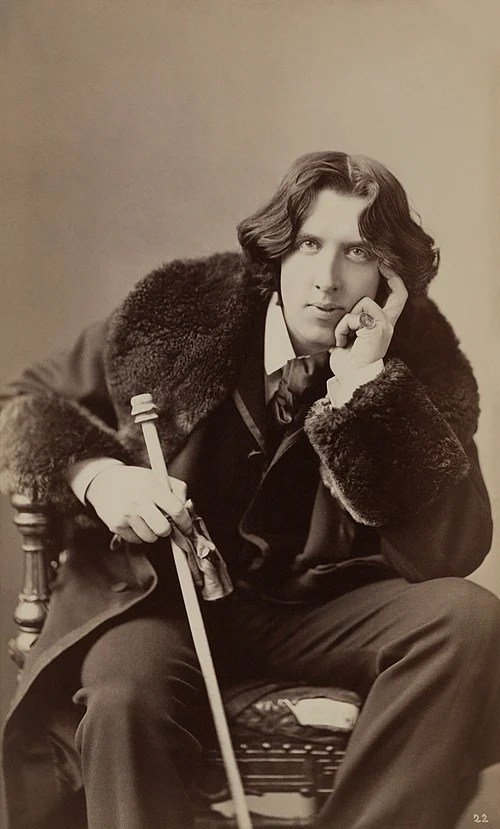
Oscar Wilde’s library card reissued
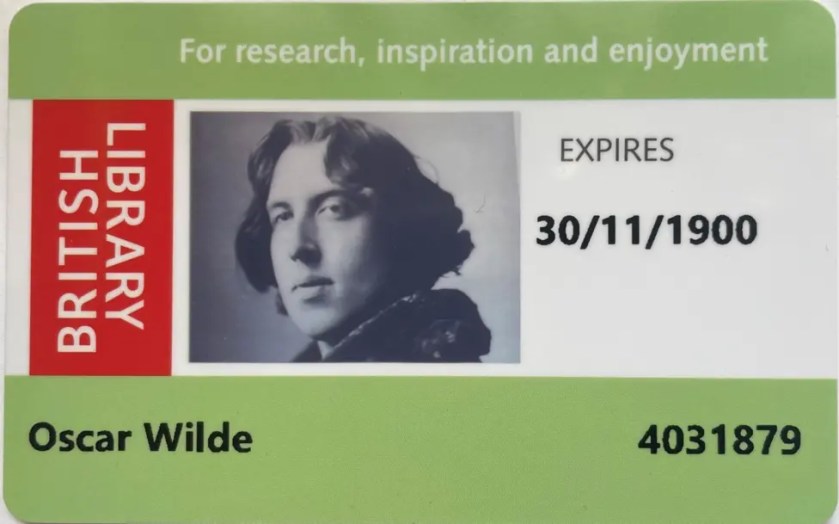
The date of Oscar Wilde’s death, 30 November 1900, has been used as the new card’s expiry date

The British Library has honoured late Irish writer Oscar Wilde by reissuing a reader’s card in his name, 130 years after his original was revoked following his conviction for “gross indecency”.

The celebrated novelist, poet and playwright was excluded from the library’s reading room in 1895 over his charge for having had homosexual relationships, which was a criminal offence at the time.

The new card, collected by his grandson, author Merlin Holland, is intended to “acknowledge the injustices and immense suffering” Wilde faced, the library said.

Mr Holland said the new card is a “lovely gesture of forgiveness and I’m sure his spirit will be touched and delighted”.
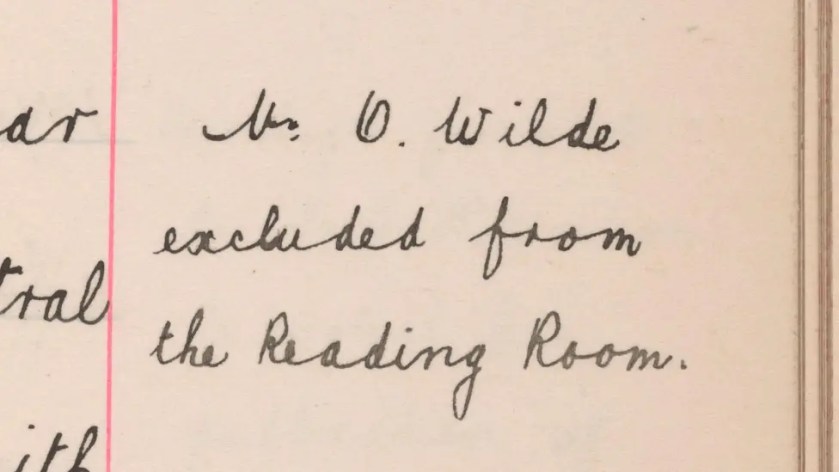
British Library papers from June 1895 noted: “Mr O. Wilde excluded from the reading room”

The decision to revoke Wilde’s pass for the library – then the British Museum reading room – was recorded without comment in the trustees’ minutes for 15 June 1895.

He had been in prison for three weeks at the time after being handed a two-year prison sentence with hard labour.

The author was convicted after he lost a libel trial against Lord Queensberry, who had accused him of being homosexual after discovering that his son, Lord Alfred Douglas, aka Bosie, was Wilde’s lover.

The library regulations at the time said anyone convicted of a crime should have their card revoked.

‘Letter from prison meant so much’

The British Library holds handwritten drafts of some of Wilde’s most famous plays including The Importance of Being Ernest, An Ideal Husband, A Woman of No Importance and Lady Windermere’s Fan.

Its collection also includes De Profundis, the letter he wrote to Bosie from Reading Gaol.

Mr Holland collected the new card at a ceremony at the venue on what would have been his grandfather’s 171st birthday.

Speaking to BBC Radio 4’s Today programme, Mr Holland said he felt both “proud” of his grandfather and slightly burdened by the responsibility of handling his legacy.

“People will so often write in to me and say, ‘I cannot tell you how much your grandfather’s De Profundis meant to me’,” he explained.

“It has a note of positivity at the end … he’s going to come out of prison and do something again.

And people have written to me saying, ‘In a moment of terrible depression about my own life I read De Profundis, and I just wanted you to know that your grandfather’s letter from prison meant so much to me’.”
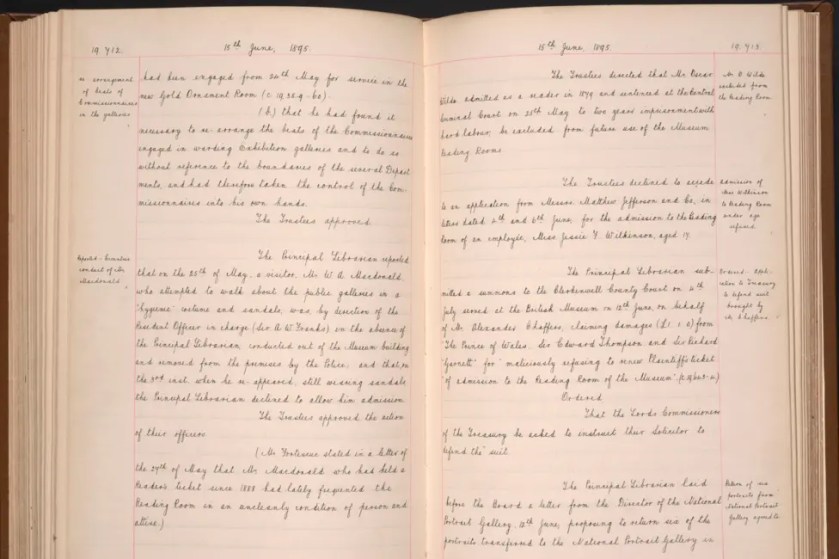
Trustees’ papers noted Wilde’s exclusion from the library at the time

Dame Carol Black, chair of the British Library, described Wilde as “one of the most significant literary figures of the nineteenth century”.

She said that by reissuing his library card, “we hope to not only honour Wilde’s memory but also acknowledge the injustices and immense suffering he faced as a result of his conviction”.

She added that they were “delighted” to welcome his grandson – who is the author of a new book, After Oscar: The Legacy of a Scandal – to receive the library card on his behalf.

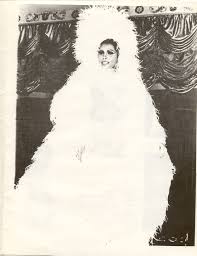
Meet Sir Lady Java, the 1960s trans performer

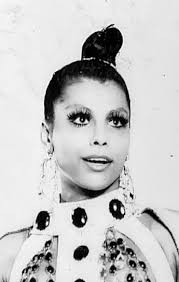
Did you know that Los Angeles once had a law that banned drag performances? That’s why we’re celebrating Sir Lady Java, a trailblazing transgender activist who fought that law in the 1960s.

Almost half a century before “RuPaul’s Drag Race” and “Pose”, Sir Lady Java was a popular dancer, comedian and drag performer in Los Angeles’ nightlife scene, working alongside Sammy Davis Jr and Richard Pryor among other people.

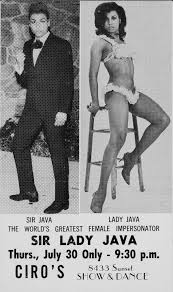
Born and raised in New Orleans, she moved to Los Angeles in the mid-1960s. She worked as a waitress at the Redd Foxx Club on North La Cienega Avenue in what is now West Hollywood.

At the same time Sir Lady Java was making a name for herself, the LA Police Department began cracking down on shows featuring “female impersonators” or anyone dressing in drag. As Sir Lady Java’s popularity grew, she became a target for the Los Angeles Police Department (LAPD), who used Rule Number 9 to shut her down.

Rule Number 9, passed in 1958, was a municipal code that prohibited bar owners from hiring anyone who performed as or impersonated the opposite sex.

In 1967, when Sir Lady Java wanted to continue performing at the Redd Foxx Club, the owner applied for a performance permit but was denied.
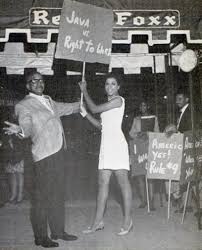
In response, Sir Lady Java organised protests and picketed outside the Redd Foxx Club, demanding her right to work.

After her protest, the American Civil Liberties Union (ACLU) filed a lawsuit on Sir Lady Java’s behalf against the LAPD. However, the court refused to hear her case because only bar or club owners could file such a lawsuit. Since no owner would step forward, the case was dismissed.

Still, Sir Lady Java made history because she was the first person to challenge the code in court.

Two years later, Rule Number 9 was overturned. Sir Lady Java was able to return to the stage and continued performing in Los Angeles nightclubs throughout the 1970s and early 80s.

Sir Lady Java laid the groundwork for future generations in the fight for transgender rights.

In 2022, her trailblazing efforts were recognised; the 79-year-old was the community grand marshal in the LA Pride Parade.
New book celebrates gay rights pioneer
Book cover image courtesy of University of Toronto Press

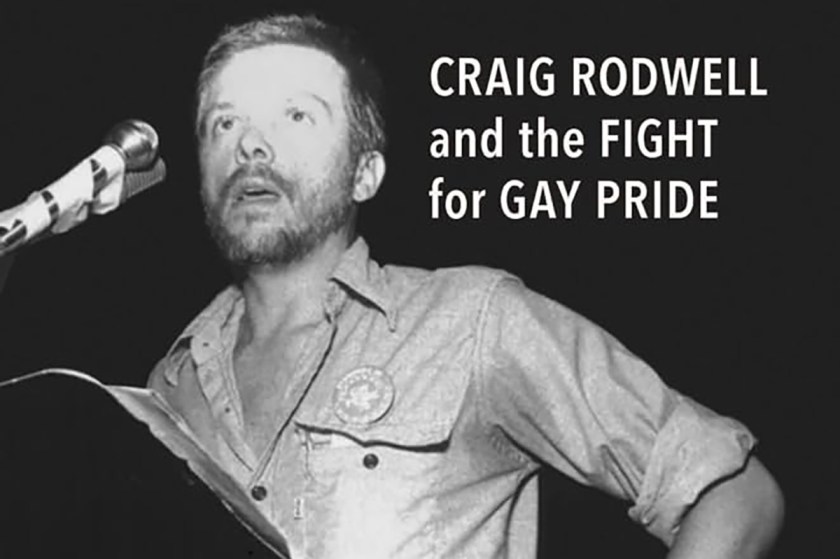
Craig Rodwell is, sadly, not nearly as well known as he should be, given his accomplishments. He opened the first bookstore devoted to gay and lesbian literature. He led a chant of “Gay power!” at the Stonewall riots and contributed many articles about the struggle for equality and fair treatment. He helped organise the first Pride march. Thankfully, journalist John Van Hoesen’s new book, “Insist that They Love You,” tells Rodwell’s story.

Rodwell was born in Chicago in 1940 and spent his early years at a Christian Science-run children’s home. As a teenager, he roamed the streets, connecting with older men. One of those lovers was arrested and later died by suicide. He moved to New York to study dancing and joined the Mattachine Society, one of the first groups involved in “gay liberation.” He dated Harvey Milk, a challenging relationship, as the older Milk was still closeted while Rodwell was out and deeply involved in the cause. This was when being gay was a crime and public exposure risked getting fired and evicted.

In 1967, he opened the Oscar Wilde Memorial Bookshop, which openly displayed gay and lesbian books and materials. It had large, inviting windows, different from the typical places gay people congregated. Many walked past it, working up the courage to go in. Once they did, they found a welcoming place where they could learn and connect with others. Van Hoesen writes about the diversity of the Bookshop’s employees, gay, lesbian, black, and white, who all loved the sense of community and purpose Rodwell created.

That same year he helped form the group Homophile Youth Movement in Neighbourhood and created their periodical HYMNAL. He wrote many articles for them and later, for QQ Magazine, describing the forces in straight “heterosexist” society, as he termed it, against gay people. He wrote about mafia-controlled gay bars, including the Stonewall Inn, seedy places that overcharged for watered-down drinks. He decried how the law was used to persecute gay people, describing his arrest for wearing “too-short” swim trunks. He explained what to do if arrested: never speak without a lawyer present and never provide names of other gay people. Van Hoesen helpfully includes these articles in an appendix.

Rodwell’s history of activism is impressive. In 1966, he participated in a “sip-in” protesting a law forbidding bars serving alcohol to homosexuals; it took three attempts before one refused to serve him. He and his partner happened by the Stonewall Inn when the riots began, offering the protesters support. He helped lead a group that picketed Independence Hall in Philadelphia every year as an “Annual Reminder,” arguing with organiser Frank Kameny over the required conservative dress code.

He organised the first Pride march in 1969. One of the biggest challenges was getting all the different gay rights groups, with different objectives, to work together. The police only issued the permit the morning of the march. Among the book’s photos is one of Rodwell and his partner afterwards, looking exhausted but happy.

Rodwell never sought the spotlight for his work, always working with others. Yet he often chaffed against many of the organisations’ philosophies, one of the few Mattachine Society members to use his real name. He refused to sell pornography in the Bookshop, or work with gay business owners funded by the mob. He even threw some customers out. Let’s hope this biography shines more attention on this lesser-known leader of the gay rights movement.

‘Insist That They Love You: Craig Rodwell and the Fight for Gay Pride’
By John Van Hoesen
c.2025, University of Toronto Press
£22.99 / 432 pages

We are the Bridge

We were born in one world … and grew up in another.
A world where summers meant open windows, the hum of a box fan, and the smell of fresh-cut grass.
Where neighbours waved from their porches, and if your bike chain broke, you didn’t Google it – you knocked on a door and someone came out with a wrench.
We lived in a world built on patience.
We waited for letters to arrive.
We waited for the library to open.
We waited for our favourite song to play again on the radio – and when it finally did, it felt like magic.
Then, almost overnight, everything changed.
Phones shrank. Music became invisible.
News arrived before the coffee finished brewing.
We learned to type, to swipe, to tap.
We learned to talk to machines – and to have them talk back.
We’ve seen milk delivered to the door in glass bottles …
and we’ve scanned groceries without speaking to a single cashier.
We’ve dropped coins into payphones …
and we’ve made video calls to loved ones across oceans.
We’ve known the deep quiet of a world without notifications –
and the noise of one that never stops buzzing.
And sometimes, the younger ones look at us like we’re behind.
But what they don’t see is this:
we know both worlds.
We can plant tomatoes and write an email.
We can tell a story without Google – and then fact-check it with Google.
We know the weight of a handwritten letter and the reach of a message sent in seconds.
We’ve lived long enough to understand that you can change without losing yourself.
That you can honour where you came from while still learning where the world is headed.
We’ve buried friends and welcomed grandchildren.
We’ve seen diseases disappear and new ones arrive.
We’ve unfolded paper maps – and followed glowing blue lines on GPS.
We’ve sent postcards with stamps – and emojis with a single tap.
And maybe that’s our greatest gift:
the memory of a slower, gentler time,
and the courage to adapt to a world that never sits still.
We can teach the young that not everything needs to happen instantly.
And we can remind our peers that it’s never too late to try something new.
Because that’s what we are –
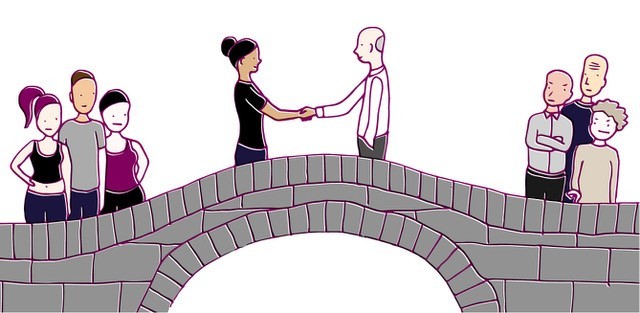
the bridge between what was and what will be.
And as long as we keep standing strong,
the world will always have something solid to cross on its way forward.
Because every generation builds the road a little further – and ours?
Ours remembers both the dirt path and the highway
1853 Restaurant … Intersex Awareness Day … Avril A … Research

News

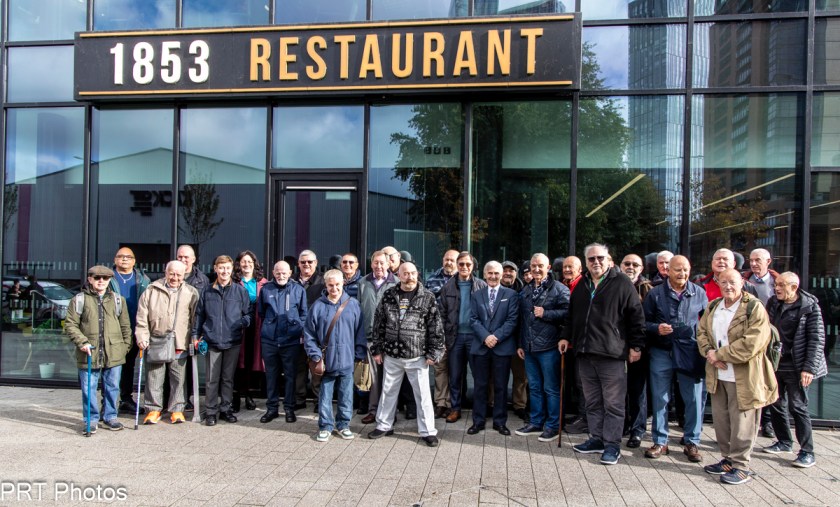
A very enjoyable afternoon – good food, good company and plenty of gossip … a perfect afternoon!

More photos can be seen here.

Intersex Awareness Day

Intersex Awareness Day is an internationally observed awareness day, each 26 October, designed to highlight human rights issues faced by intersex people.

For the past decade, the Intersex Human Rights Fund (IHRF) at the Astraea Lesbian Foundation for Justice has been supporting the intersex rights movement, nurturing connections between activists, and advocating for intersex rights and wellbeing.

In just ten years, the IHRF has supported gains in intersex rights at the local, national, regional and global levels. The intersex movement continues to grow in strength and visibility, with accomplishments that are truly remarkable.

Recently, in 2024, the UN Human Rights Council adopted a resolution addressing intersex rights. This groundbreaking resolution, which IHRF grantee partners advocated for, calls for UN member states to support “the highest attainable standard of physical and mental health” for intersex people. This international achievement was the result of many years of advocacy.

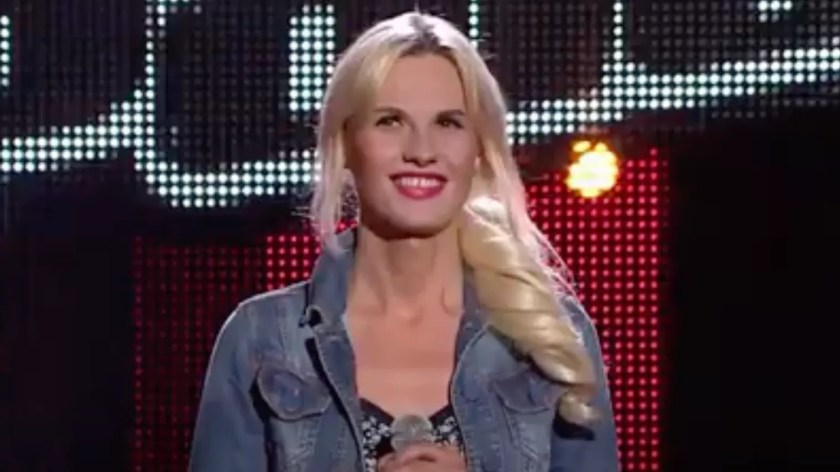
Michalina Manios

Intersex model Michalina Manios was a finalist on the 2011 season of Poland’s Next Top Model.

During her appearance on the show, Manios explained that she was assigned a male identity at birth and was raised in that gender identity until she was 18 years old, something she said felt like being imprisoned. At that point, she then legally changed her gender to female.

“Functionally, I developed as a woman, but unfortunately, I was assigned a male identity, not any other. My body and mind developed toward femininity, but my genitals didn’t. I was ashamed to go to physical education classes because I was embarrassed”, Manios said.

Intersex individuals have innate variations in physical traits that differ from typical expectations for male or female bodies, including variations in reproductive organs, hormones or chromosome patterns. An estimated 1.7% of infants are born intersex – roughly the same number of people born with red hair.

“Visibility is crucial,” said a spokesperson from Poland’s leading LGBTQ+ advocacy organisation, the Campaign Against Homophobia. “When public figures share their truths, it chips away at stigma and ignorance.”
At the start of 2020, Poland’s anti-LGBTQ+ Law and Justice Party (PiS) began declaring regions across the country as “LGBT-free zones” in an attempt to remove LGBTQ+ “propaganda” from the public. Both the US and the European Union condemned the zones as violations of human rights. By early 2020, roughly one-third of the country had established “LGBT-free zones.” However, the PiS party suffered defeat in the 2023 national elections. Then, in 2025, the party’s last of the state-sanctioned anti-LGBTQ+ zones was finally eliminated.

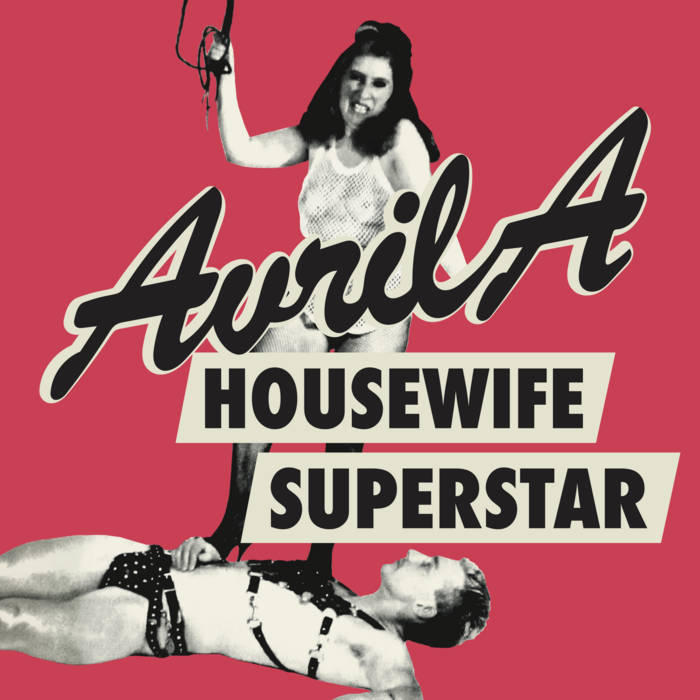
Avril A – Housewife Superstar

My partner Norman first met Avril A at his aufruf on 17 August 1974 in the United Synagogue in Prestwich. He was called up to read part of the Torah as he was getting married the next day. Norman knew Avril’s  husband Philip as they both attended King David’s High School in Cheetham Hill.

Avril A was a Jewish housewife by day, club superstar by night and also a thrifty cook. She is known particularly for her gay club performances in the 80’s and 90’s. Her videos are hilarious and despite never making the big time, Little Lady Dynamite remains a much-loved legend.
Avril was a one-off and is posthumously launching an album – “Avril A – Housewife Superstar”.

Listen to “Little Lady Dynamite” here:

“Little Lady Dynamite” from Housewife Superstar by Avril A. Released: 2025.

Research

We often receive requests from students for help with research. Please let us know if you are interested in participating (where eligible). Please contact us here.

The latest requests are here:

PhD research for older LGBTQ+ people

Harriet Argyle is currently researching the experiences of older LGBTQ+ people (67+) with residential and domiciliary care settings in the UK.

As part of this she is using online questionnaires and in-person interviews to talk to LGBTQ+ care receivers and their families, friends and support networks as well as professional care providers and middle-late aged LGBTQ+ adults (40s, 50s, 60s+) on their concerns, assumptions and fears about the future and the care sector in general. 

This research focuses on the importance of identity recognition and sexual citizenship in LGBTQ+ people’s later life. Concerns over having to go back into the closet are frequent as are fears of abuse, neglect or ignorance from staff who are not trained and not prepared to provide care for the specific needs of LGBTQ+ people. Dignity, respect, privacy and the ability to live authentically while getting the support they need are integral to LGBTQ+ care receivers mental, physical and emotional health. 

Please see attached the research leaflets.

Harriet Argyle BA, MA (she, her) 

If you have any questions, please contact harriet.argyle2019@my.ntu.ac.uk

Your Story Matters

Cesar Augusto Kampff, a psychologist and PhD candidate in the Graduate Programme in Cultural Diversity and Social Inclusion at Universidade Feevale, Brazil is conducting groundbreaking research in Brazil, Portugal, and the United Kingdom.

The study is on the psychological aspects involved in the processes of recognising and sharing one’s sexual orientation (coming out) among cisgender lesbians and gay men aged 50 and over.

He is kindly requesting your participation in this research, which is essential to better understand the experiences of the mature lesbian and gay population, give visibility to these life stories, and build knowledge that helps combat violence, prejudice and discrimination.

Research like this is only possible with the support and voices of those who have lived and continue to live these experiences. Your contribution will help strengthen public policies, support practices and initiatives that promote respect for diversity.

The interview can be conducted via a questionnaire, which can be sent by e-mail so you may answer it at your own pace.

Thank you in advance for your trust and for sharing your story. To participate or learn more, please email cesarkampff@gmail.com

An Injection to Prevent HIV … Odeon Pride Nights … Joint Meeting … Rainbow Lottery … Timeline

News

An injection to prevent HIV is something to celebrate

By Matt Cain

I’m celebrating because a bi-monthly injection to prevent the contraction of HIV is to be made available on the NHS across the UK. It offers an alternative to the daily pills that have been routinely available since 2020. Meanwhile, an annual injection that prevents HIV contraction has passed its first round of safety trials. Together, these advances give us hope that we can eradicate HIV transmission in the UK by 2030. So why isn’t everyone celebrating?

I suspect it’s because the group still most affected by HIV in the UK is gay men. In 2017, while I was editor of gay magazine Attitude, I took the daily pills – known as PrEP – and wrote about my experience, arguing that they should be available on the NHS. I was shocked by some of the responses. The sort of sentiment I heard from various straight people was: why should my taxes pay for you to sleep around without condoms? Even within the gay community there were concerns the drug would get us a bad reputation. I had thought the situation would be much improved but the comments under the news story on Mail Online proves otherwise. “Sounds like a licence for free and rampant cheek-clapping, the activity that brought us HIV in the first place,” one reader wrote in the messages.

Such responses ignore the fact that gay men, especially from older generations, suffer higher rates of poor mental health and addiction, in my view because of the shame instilled in growing up in a world that taught us who we were was wrong. For years I thought I was a pervert, suffocated my shame with binge drinking and punished myself with anonymous, sometimes reckless, sex. But the man I was still deserved the care of society. And yes, the NHS is short of money but it funds preventative remedies such as anti-smoking therapies and the contraceptive pill for straight people. So why not PrEP injections for gay men?

Negative responses to news of the injection hark back to the homophobia that impeded research into Aids treatments when HIV was first discovered in the early 1980s. President Ronald Reagan only publicly said the word “Aids” in 1985, four years into the epidemic. And it’s taken 40 years to get to this point. Compare that to what happened with Covid, when a vaccine was developed in less than a year of the World Health Organisation declaring a pandemic. An estimated 7 million people around the world have died of Covid; 44 million people have died of HIV-related causes.

As a gay man growing up in the 80s, I was terrified of contracting HIV and only ever had sex under the shadow of the threat. I knew I could protect myself with a condom but just getting one out served as a reminder of the threat. I found it impossible to have sex innocently or joyously. For me, PrEP changed that. The pills helped me finally shake off my shame, find love and get married. They have changed the lives of thousands of gay men like me. And they have allowed us to finally take control over the virus. In 2024, 111,000 HIV-negative people took daily PrEP pills in the UK, and the rate of HIV infections plummeted to just 3,043.

But some people find it hard to take daily pills; those with medical contraindications, addiction problems and less regulated lifestyles. Many people from faith-based backgrounds or less accepting cultures don’t want their families discovering their pills and asking questions. To offer people like this another means of protecting themselves against HIV is crucial. And surely as a society we can accept the efficacy and convenience of preventative treatment that could soon be taken once a year, as we do a flu shot?

If we believe all lives are valid, if we value the contribution of every member of our society, we should be welcoming the news. So please join me in celebrating.

ODEON Pride Nights 

ODEON Cinema, Great Northern, 235 Deansgate, Manchester M3 4EN

A community focused event, where they will be screening LGBTQI+ films.

The titles and dates so far are:

Monday, 3 November – 7.00pm – Born For You (1 hour 53 minutes) – £6.00 – £8.00

Alba has Down’s Syndrome and was left in the hospital when she was born. Thirty families rejected her before the court decided to entrust her to Luca.

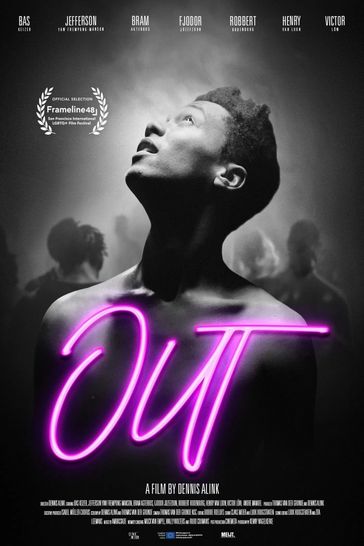
Monday, 1 December – 7.00pm – Out (1 hour 34 minutes) – £6.00 – £8.00

Lovers Tom and Ajani dream of a new life in which their relationship does not have to be a secret. The two feel like outsiders in their conservative, small village.

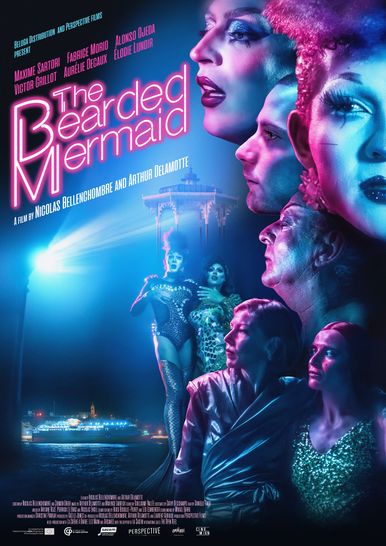
Monday, 5 January – 7.00pm – The Bearded Mermaid (1 hour 37 minutes) – £6.00 – £8.00

The drag queens of the La Sirène à Barbe cabaret put on a grandiose show of song, circus and dance, the likes of which Dieppe has never seen before.

More info here.

Don’t miss this event! Mark your calendar! Add the date to your diary!

On Thursday, 27 November from 2.00pm to 4.00pm there will be a joint social of the LGBT+ group and the Women’s group at Cross Street Chapel, 29 Cross Street, Manchester M2 1NL.

There will be a short film show, entertainment with secret surprise guests and more!

In order to support Out In The City, please sign up for the Rainbow Lottery.

You can buy tickets at: https://www.rainbowlottery.co.uk/support/out-in-the-city

The tickets cost £5 per month (£10 for 2 tickets, £15 for 3 tickets etc) and the details are as follows:

Play the Rainbow Lottery and support Out In The City

The Rainbow Lottery is the UK’s first and only lottery supporting LGBTQ+ good causes.

Welcome to the Rainbow Lottery, the exciting weekly lottery that raises money for over 200 LGBTQ+ good causes totally, openly and exclusively.

The hope is to make a difference to good causes so they can carry on their vital work – which helps us all. Play the lottery, support the community – it’s fun, it’s simple and everybody wins!

How the lottery works:

  • £1 per ticket – that’s right, unlike many other lotteries, the lottery tickets are only £1 per week.
  • For every ticket you play, 80% goes to good causes and prizes.

£25,000 jackpot prize

  • Match all 6 numbers and you win the JACKPOT! There are also prizes of £2000, £250, £25 and 3 free tickets for the following week.
  • Every month there is a Super Draw. This month one person will win an iPhone 17 Pro (or £1,000 cash or plant 1,000 trees!)

Buy tickets here: https://www.rainbowlottery.co.uk/support/out-in-the-city

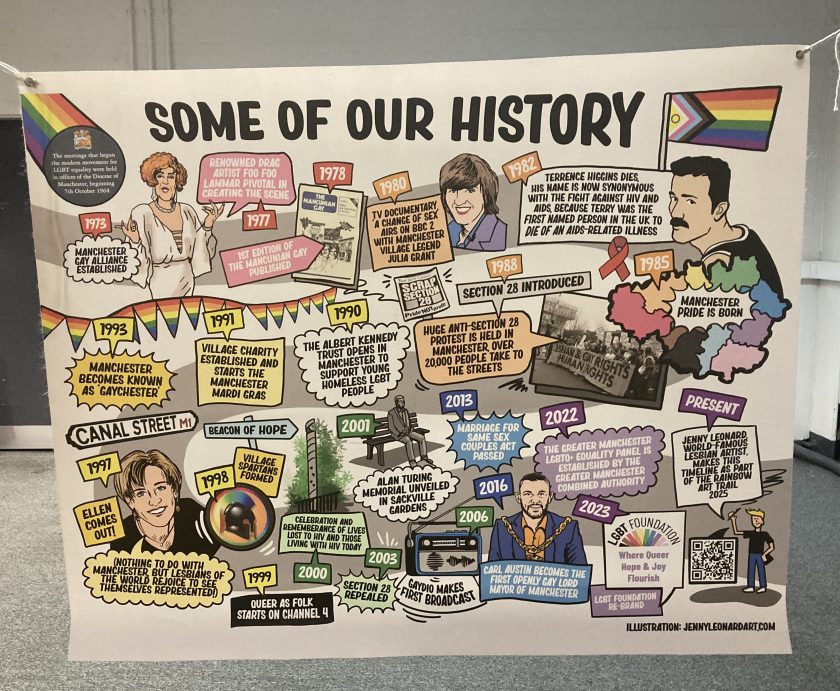
Timeline

Visit to Ancoats … John Waters on “Queer” … Miss Major … Birthdays

News

Visit to Ancoats

Out In The City members gathered in the city centre and walked up to Ancoats, a former industrial district in north Manchester.

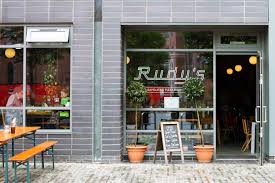
There we dined at Rudy’s Pizza – the original Rudy’s serving true Neapolitan Pizzas. There are around 36 locations now, but Rudy’s is not a franchise. It’s a company owned and operated chain of restaurants. Rudy’s Pizza in Ancoats is based on Cotton Street, and “Cottonopolis” was a 19th-century nickname for Manchester, due to its central role in the global cotton industry. 

Just across the street is Hallé St Peter’s, which provides a home for the Hallé Orchestra’s rehearsals and recordings, its choirs and Youth Orchestra, as well as a space for education workshops and small performances.

We had come to hear a chamber music performance (but missed it due to a misunderstanding on timings), but we did attend a talk on “The Re-Opening Festival of the Free Trade Hall 1951”.

The talk was held in the Victoria Wood Hall. Victoria Wood was Patron of the Hallé Children’s Choir for several years and had a life-long affection for the Hallé Orchestra and classical music.

This hall is dedicated to the memory of Victoria Wood and acknowledges her huge contribution to the worlds of music, theatre and television.

Victoria was one of the UK’s most beloved performers and a very famous Northerner who developed some of the funniest characters ever crafted; a local woman whose love of music started as a child right here in Manchester.

Manchester Free Trade Hall

The Free Trade Hall was bought by Manchester Corporation in 1920; but was bombed and left an empty shell in the Manchester Blitz of December 1940. A new hall was constructed behind two walls of the original façade, opening as a concert hall in 1951.

As well as being the venue for the Hallé Orchestra, Manchester Free Trade Hall was also used for pop and rock concerts. I remember seeing Joan Armatrading, The Smiths, the Sex Pistols, Buzzcocks, Rory Gallagher, Kraftwerk, Aswad and many more there.

Nearly sixty years ago, Bob Dylan was at the centre of a storm, with arguments raging about whether his decision to play electric sets meant he had sold out his folk roots.

The controversy began at the 1965 Newport Folk Festival in the US, where he was booed when he played electric and it came to a head, unexpectedly, towards the end of his 1966 world tour at a concert in Manchester on 17 May.

Frustrated by what he was hearing, one man decided to vent his fury as the sound ebbed before Dylan’s final song of the set with a heckle that has become one of the most famous in musical history.

He shouted a single word – “Judas”.

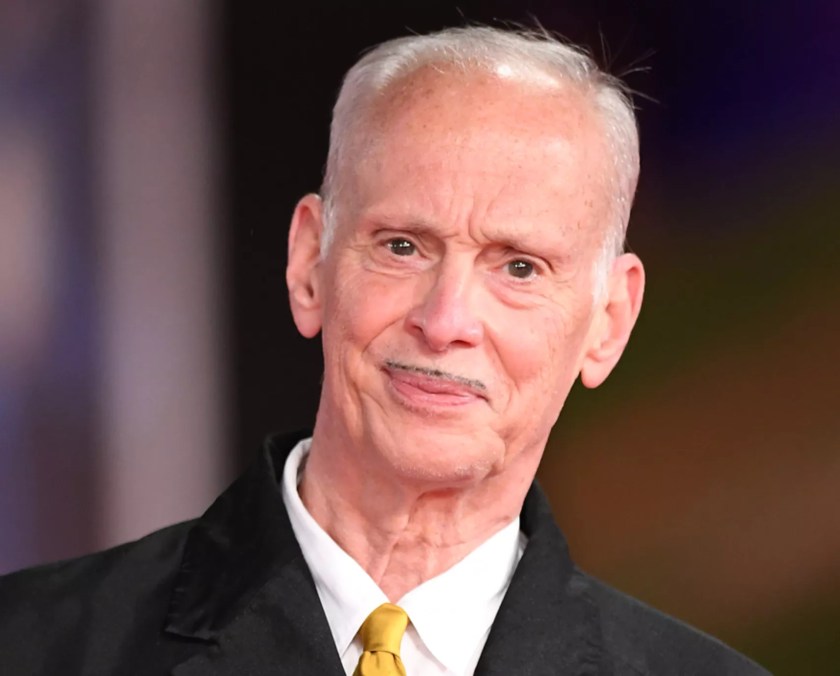
Legendary filmmaker John Waters, 79 – “Queer was a very hurtful word when I was growing up.”

John Waters on why “queer” can be so controversial

I don’t use it much. I’m not against it, but I don’t use it much. I have it in “Hairspray”, when Penny says, “He’s such a queer.” That just meant a nerd too. It wasn’t a gay thing. But being called a queer was very hurtful, yeah. And it’s the same like all bad words: You take it back. 

I like “ribbon clerk” – an anti-gay term that I find quite endearing. “There’s that little ribbon clerk.” It’s British. It means a snotty little queen that works in the gift wrap department at Harrods. There are some horrible things to say about people, but I don’t think anybody’s been convicted of a hate crime by calling somebody a ribbon clerk.

‘We’re here, we’re not queer, and nobody’s used to it.’ That’s really what it is now, because the young kids, they aren’t just queer. They’re open to everything.

These new extremes do surprise me even, but I think that’s very healthy. I am a survivor of the first sexual revolution, but there’s definitely a new one that is going on and the trans thing was, except recently, accepted by young people really quickly.

“Gay” took centuries. But right now, every trans person’s a murderer. That’s what they (homophobes) are trying to say now.”

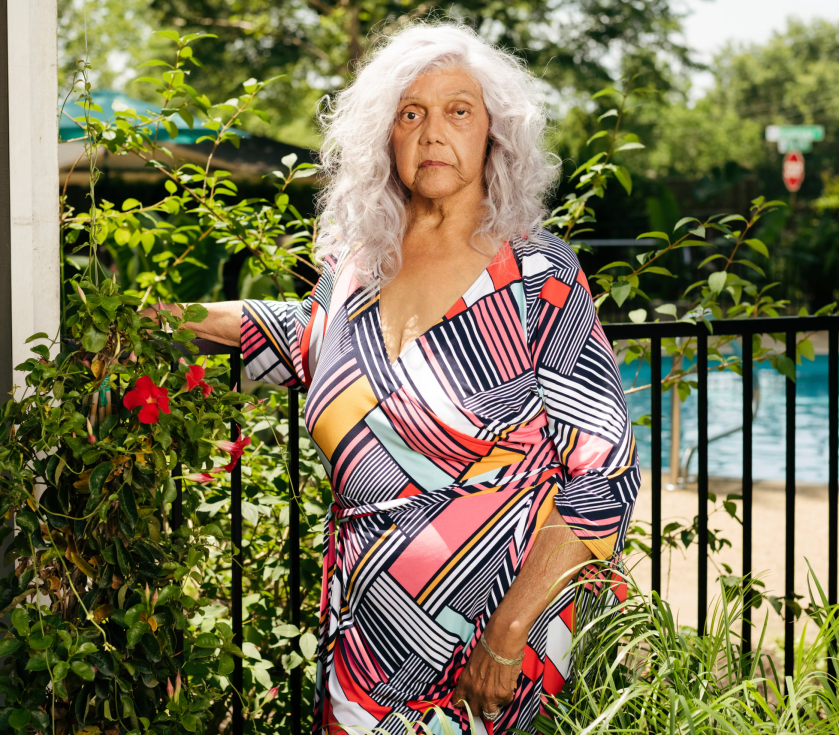
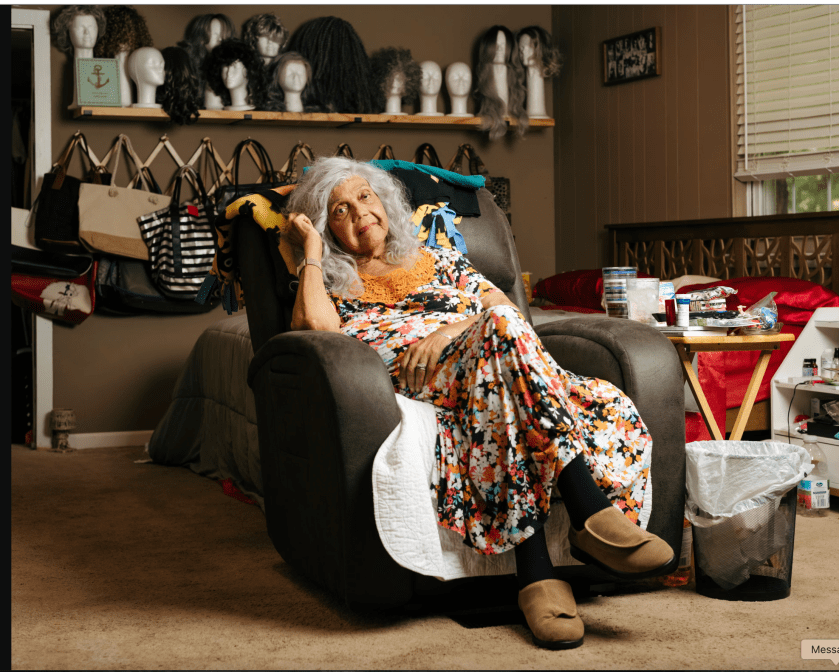
Miss Major, trailblazing US trans rights activist and Stonewall veteran, dies aged 78

Miss Major Griffin-Gracy in Little Rock, Arkansas, on 15 June 2023. Photograph: Whitten Sabbatini / The Guardian

Miss Major Griffin-Gracy, a trailblazer of the transgender rights movement, longtime community organiser and veteran of the Stonewall riots, died on 13 October, her representatives announced.

The acclaimed activist died at her home in Little Rock, Arkansas, surrounded by family, the House of GG (Griffin-Gracy Retreat and Educational Centre – the final organisation she founded and led) announced. She was 78, and the group’s statement did not give a cause of death.

Miss Major was one of the US’s most celebrated trans rights pioneers and elders, at the forefront of the fight for trans rights for more than five decades. She spent her final years providing a sanctuary for trans and gender-nonconforming people in her conservative home state, while continuing to travel the country to rally for trans rights and meet with young trans people and other LGBT+ organisers.

Miss Major, known by her first name, earned a reputation as an outspoken and fearless champion for the liberation of Black trans women, fighting for communities that have long suffered extreme discrimination and violence and have been neglected by the gay rights movement.

She was considered a mother to trans women across the country, some of them prominent community organisers themselves.

Her mantra, “I’m still fucking here!”, captured the joy and humour she brought to her activism and became a rallying cry for the resiliency of Black trans people – a call to live long, full lives in a society that pushes to marginalise and erase the community.

Miss Major was born in Chicago. Her parents, a postal service administrator and beauty shop manager, took her to her first drag show but did not support her when she identified with the performers. Her family sent her to psychiatric institutions as a teenager to “get the gay outta me”, and her mother burned her dresses, she recounted in her book, Miss Major Speaks: Conversations With a Black Trans Revolutionary (2023).

Miss Major in Little Rock, Arkansas, on 15 June 2023. Photograph: Whitten Sabbatini / The Guardian

She went on to perform in Jewel Box Revue, a drag show in Chicago, helped by a mentor named Kitty who gave her a wig, did her makeup and taught her to embrace her identity.

Forced out of college in Minnesota for being trans, she ended up in New York, where she survived by doing sex work. Some of her early activism was rooted in the networks of sex workers who worked together to keep themselves safe from police and violent clients.

Miss Major recounted suffering repeated police violence, including on 28 June 1969, when the New York police department raided the Stonewall Inn in the West Village, the rare gay bar that she said did not shun trans people.

 “I guess we were just sick of their shit,” she said in Miss Major Speaks. “And suddenly we were fighting, and we were kicking their ass.”

She and others fought back, and Miss Major recalled being knocked unconscious and jailed. “The cops beat on you till you drop. Everybody that stood up to them went through that. It wasn’t pretty. It was a riot. We were fighting for our lives. It was so sad,” she said in an interview in 2023.

The Stonewall protests launched Pride and were considered the birth of the contemporary gay rights movement, but the trans women of colour involved in the demonstrations were cast aside by the mainstream activism that followed.

We fought for no reason. It’s a shame the way it turned out. We started the riots and what did we get? Nothing. Nothing,” she said, recalling that gay and lesbian leaders were “ashamed to be seen with us”.

During a later stint in a New York prison, Miss Major became a mentee of Frank “Big Black” Smith, who had led a major prison uprising and taught her principles of organising, and how “you can’t throw anybody under the bus”, a guidance that drove her later work, she recalled.

In the 1980s, Miss Major formed the Angels of Care, a group of trans women who served as caretakers for gay men dying in the Aids epidemic, with efforts in California and New York. In San Francisco, she became an accomplished community leader, driving the city’s first mobile needle exchange van and running a drop-in centre for trans sex workers.

Miss Major went on to lead the Transgender Gender-Variant & Intersex Justice Project (TGIJP), a group that fights the abuse of trans people of colour in prison and provides support during re-entry. Janetta Johnson, one of her adopted daughters, now leads the organisation, which today is called the Miss Major Alexander L Lee TGIJP Black Trans Cultural Centre.

In recent years, Miss Major suffered repeated health challenges, yet she continued her work through the House of GG, which she also nicknamed Telling It Like It Fuckin’ Is (Tilifi). The organisation brings trans leaders to her colourful Little Rock guest house, called the Oasis, to provide a refuge for rest and relaxation.

I’ve gotta make joy here, because it doesn’t exist in the normal world,” Miss Major said during a 2023 interview at her home. “They want us to live in the 1950s. No. Get off our fucking backs and let us live … I know the world I would like to live in. It’s in my head, but I try my best to live it now.”

Miss Major is survived by Beck Witt, her longtime partner; her three sons, Asaiah, Christopher, and Jonathon; and her “many daughters”.

She was a world builder, a visionary, and unwavering in her devotion to making freedom possible for Black, trans, formerly and currently incarcerated people as well as the larger trans and LGB community. Because of her, countless new possibilities have been made for all of us to thrive – today and for generations to come,” the House of GG said in a post on Monday. “While her physical presence has shifted, we have gained an immensely powerful ancestor and there is no doubt that she is and always will be with us – guiding, protecting and reminding us that she is ‘still fucking here!’”

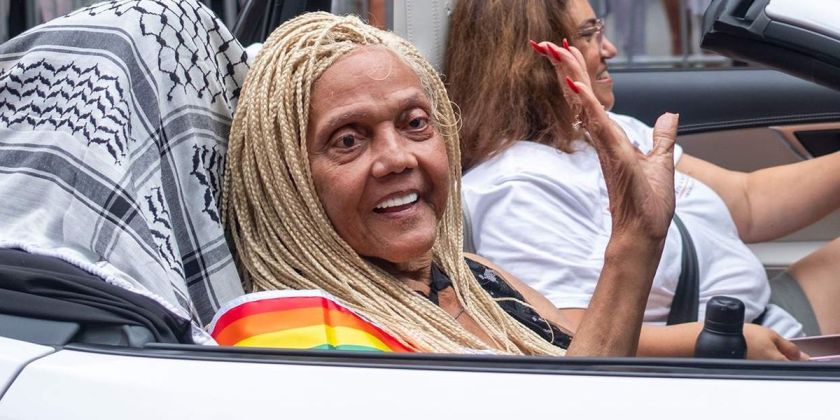
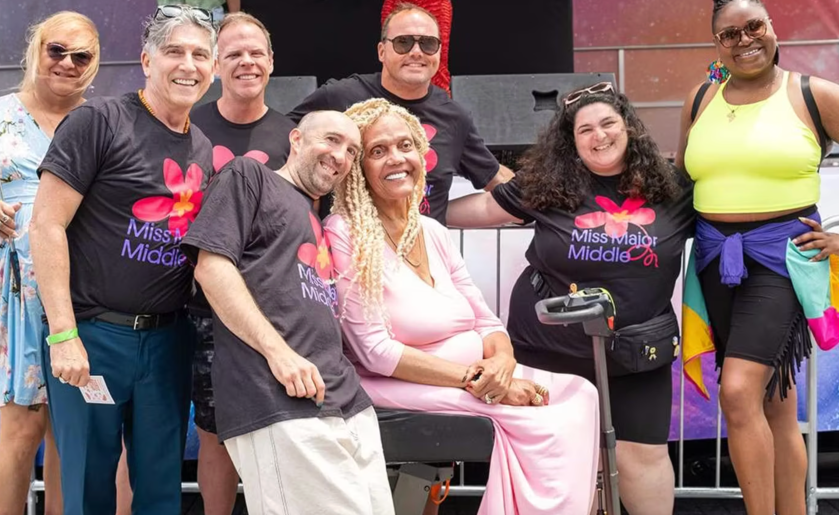
Miss Major Griffin-Gracy (pictured center, in pink) with members of the community during NYC LGBTQ+ Pride festival, 2024

Miss Major was a revolutionary, a visionary, a legend – a foundational mother of our movement and an inspiration to those fighting for liberation. She was a sharp and unyielding truth teller. She was also undeniably loving and generous to those who called her Mother, Auntie, colleague and friend. There will never be another like her.

Birthdays

Congratulations to Manchester Prairie Dogs … Criminally Queer: The Bolton 7 … Seven Million LGBT+ Elders are Coming

News

Congratulations to Manchester Prairie Dogs

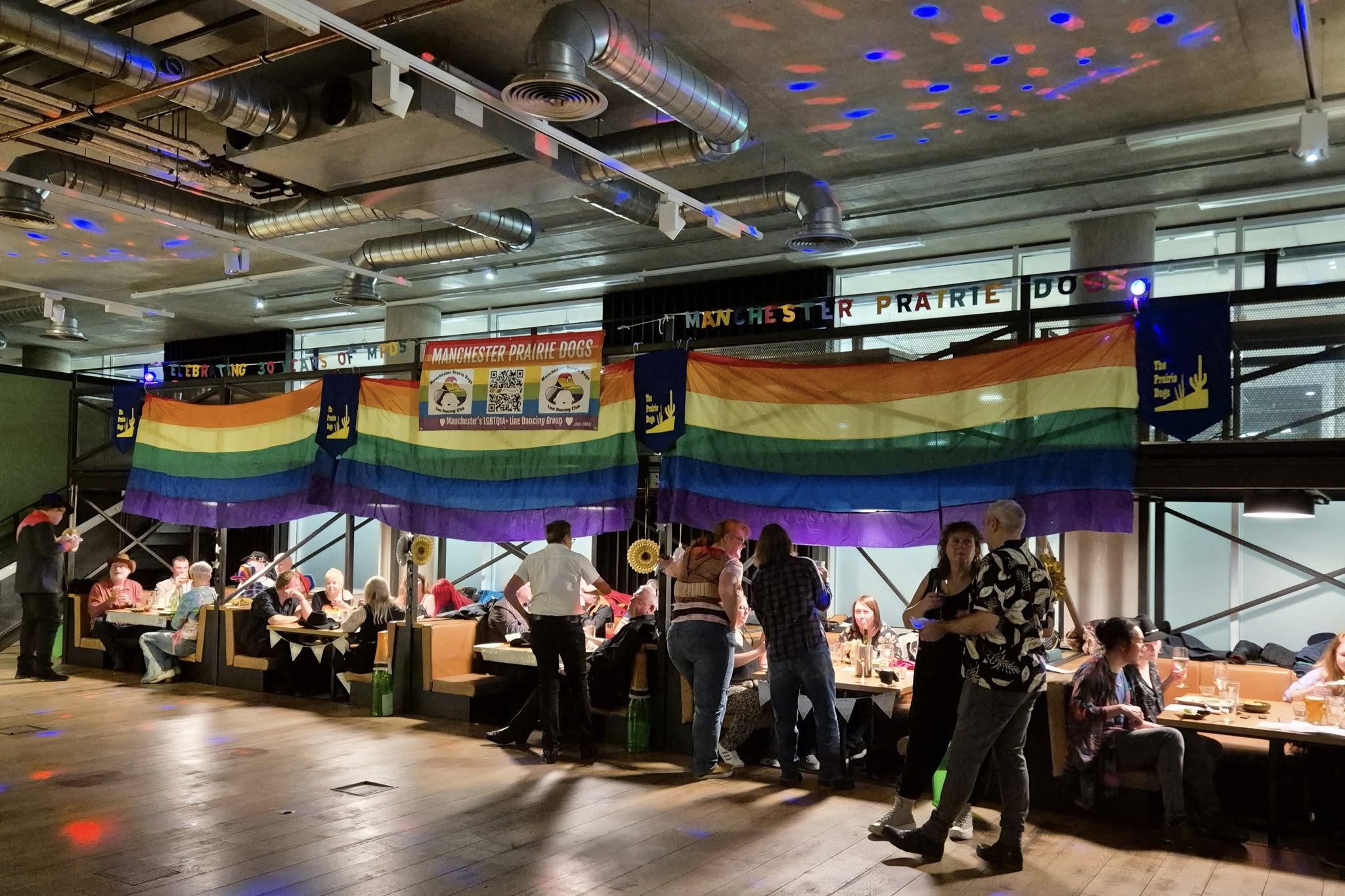
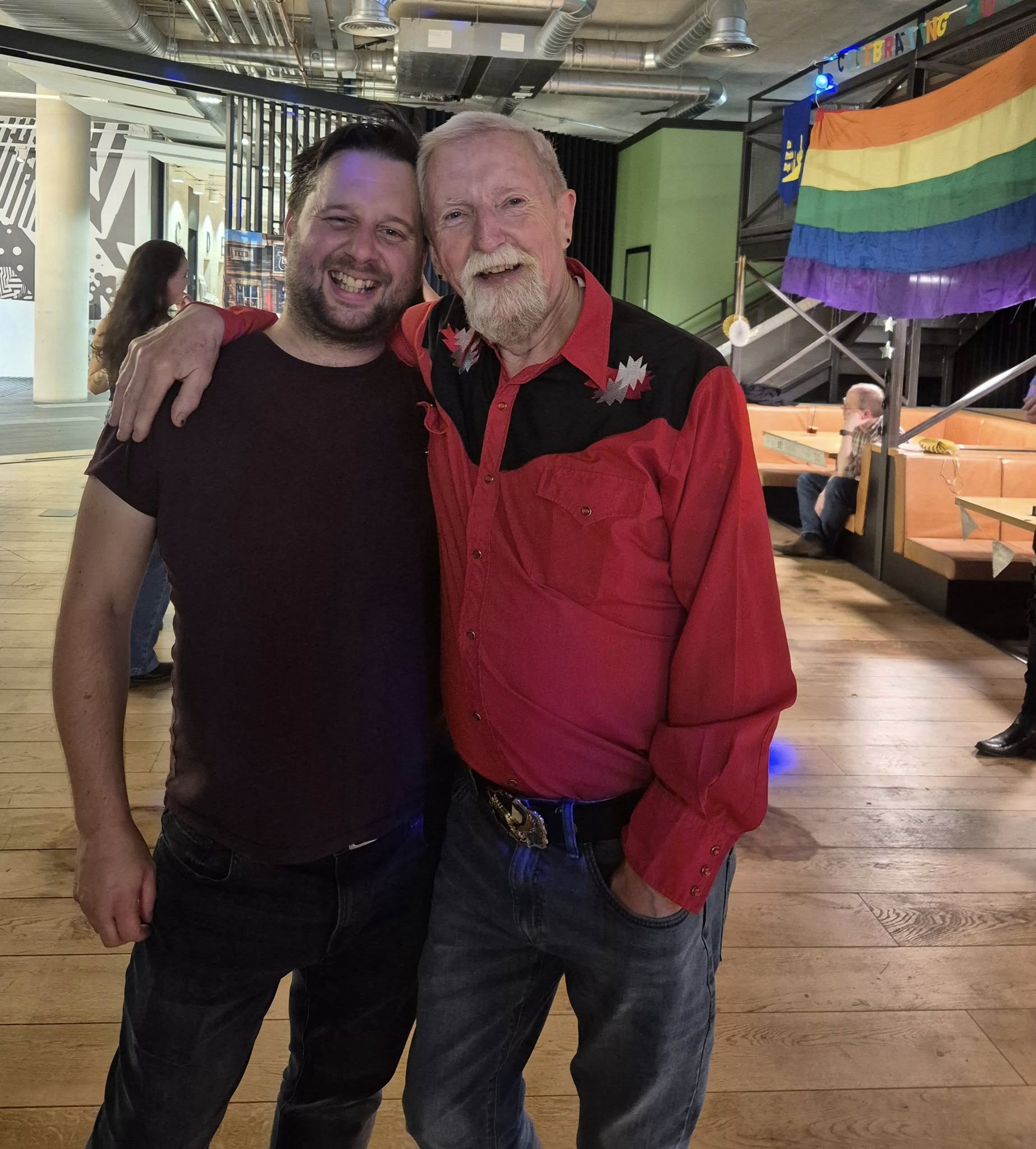
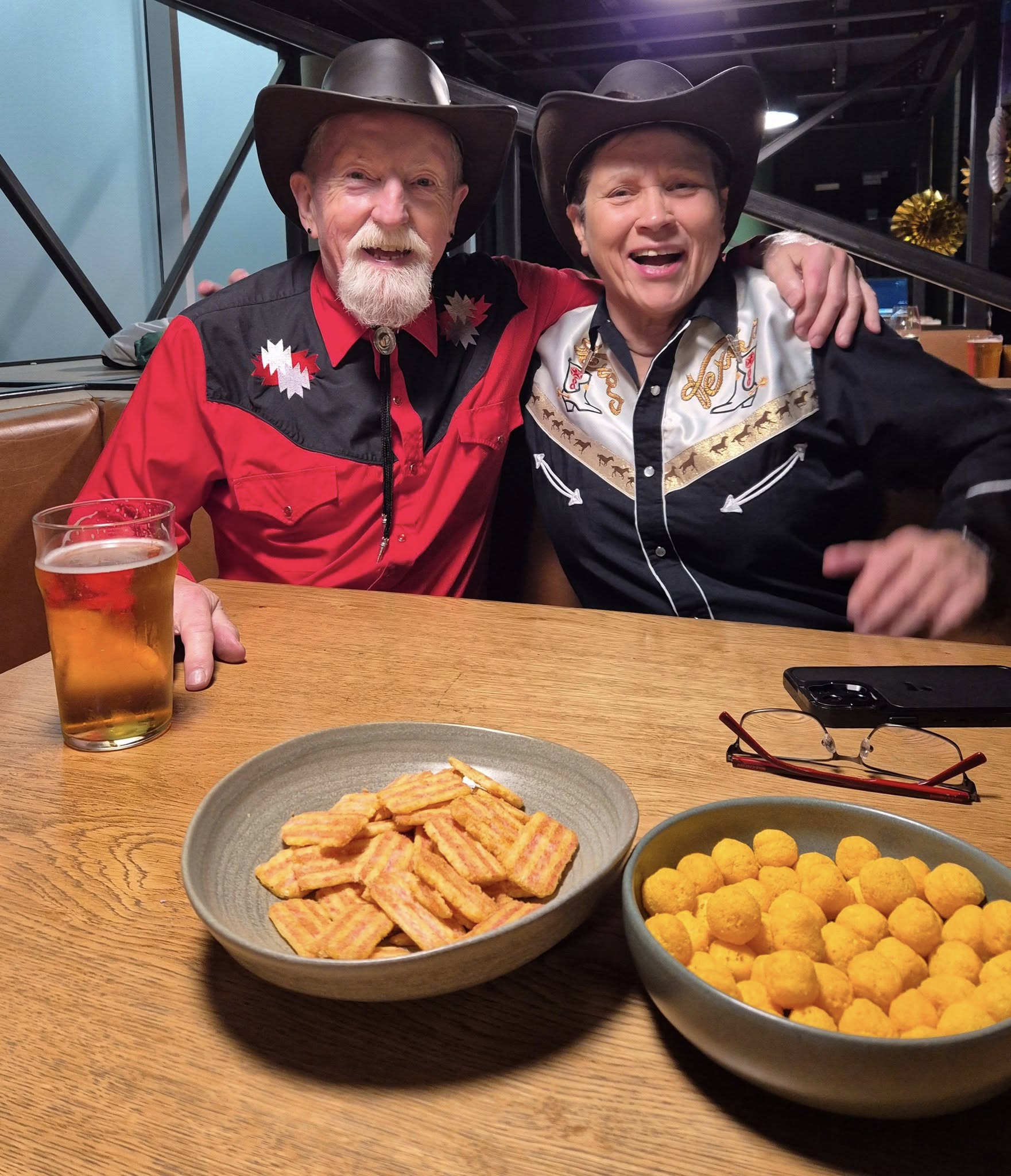
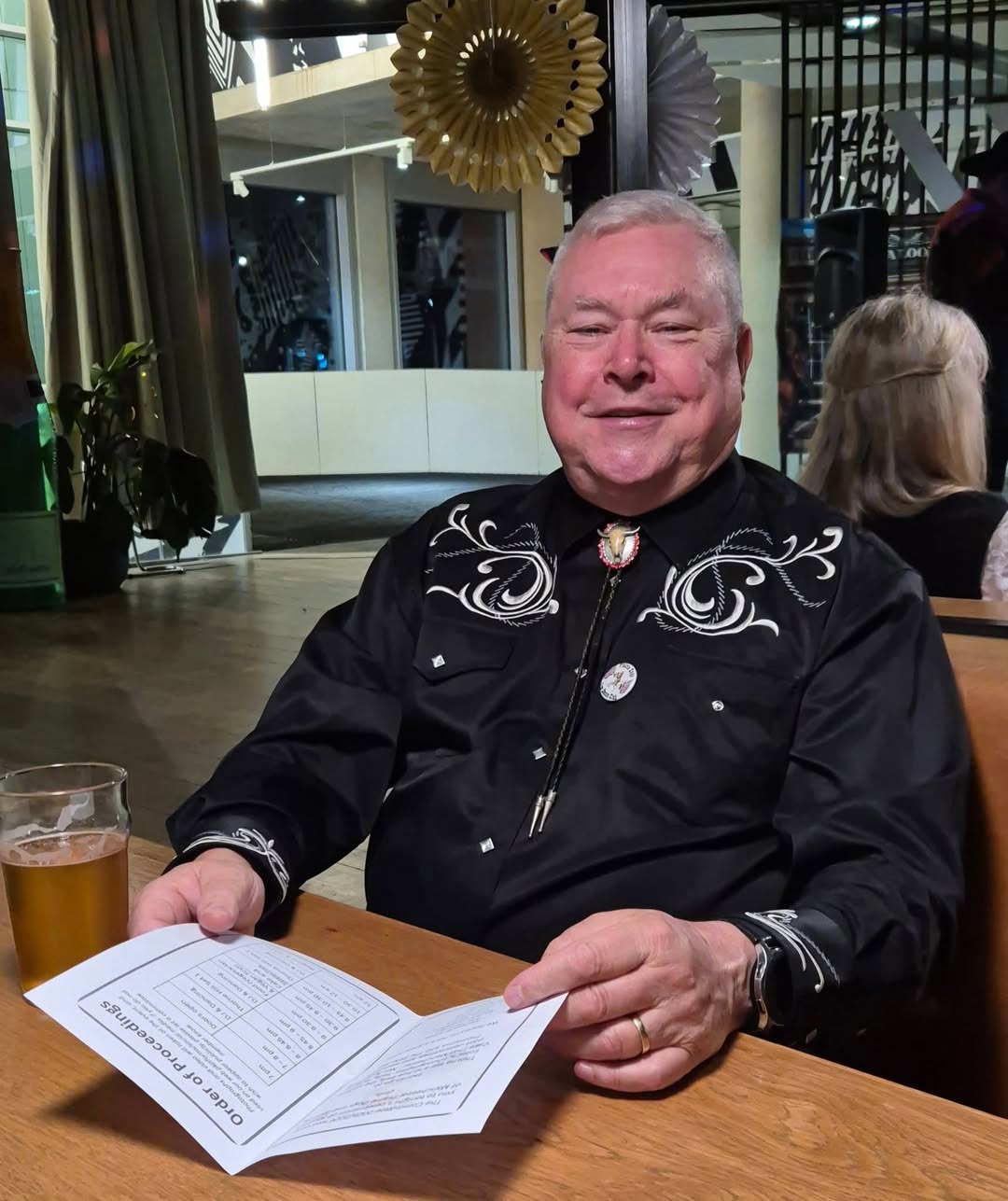
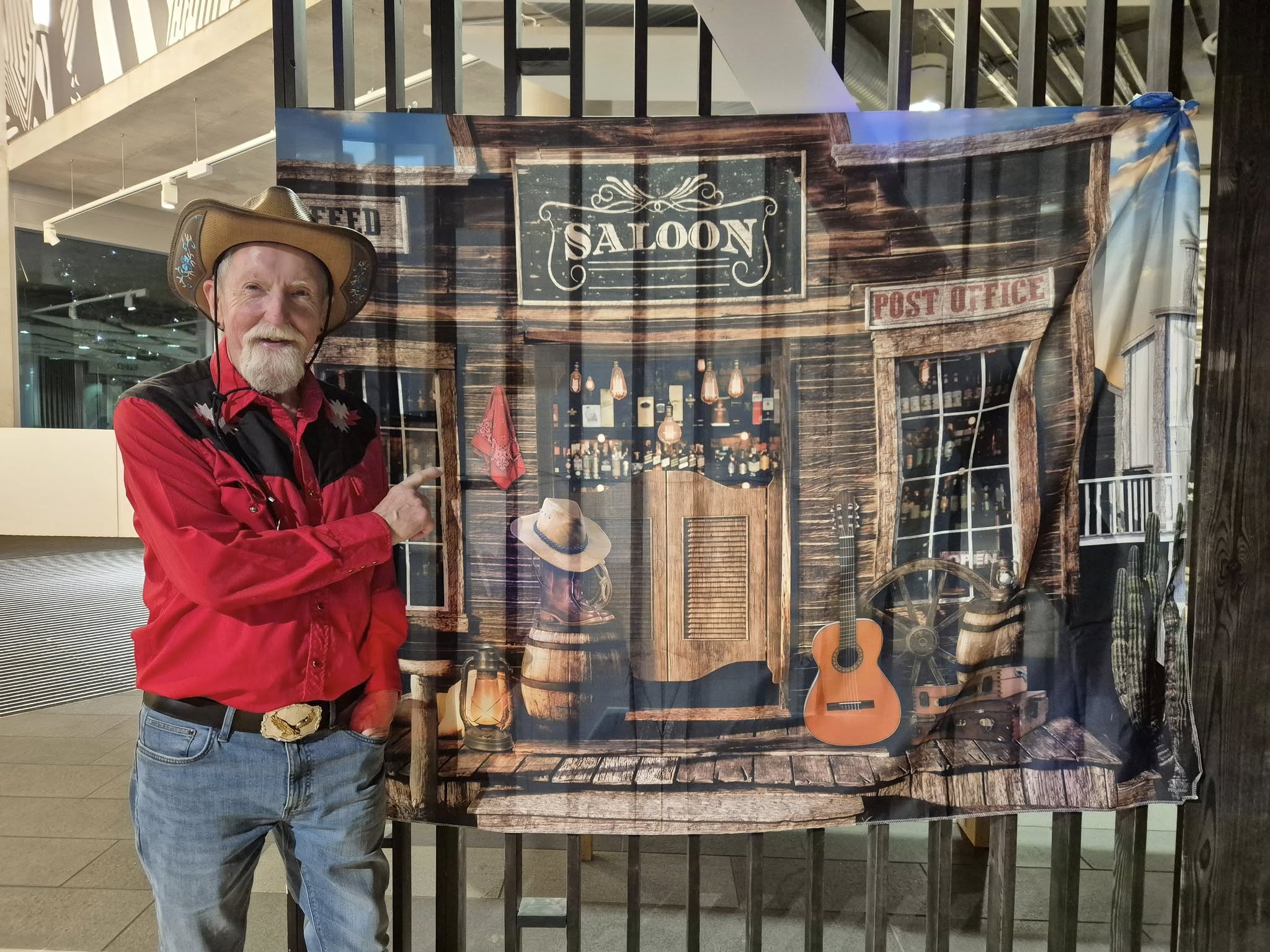
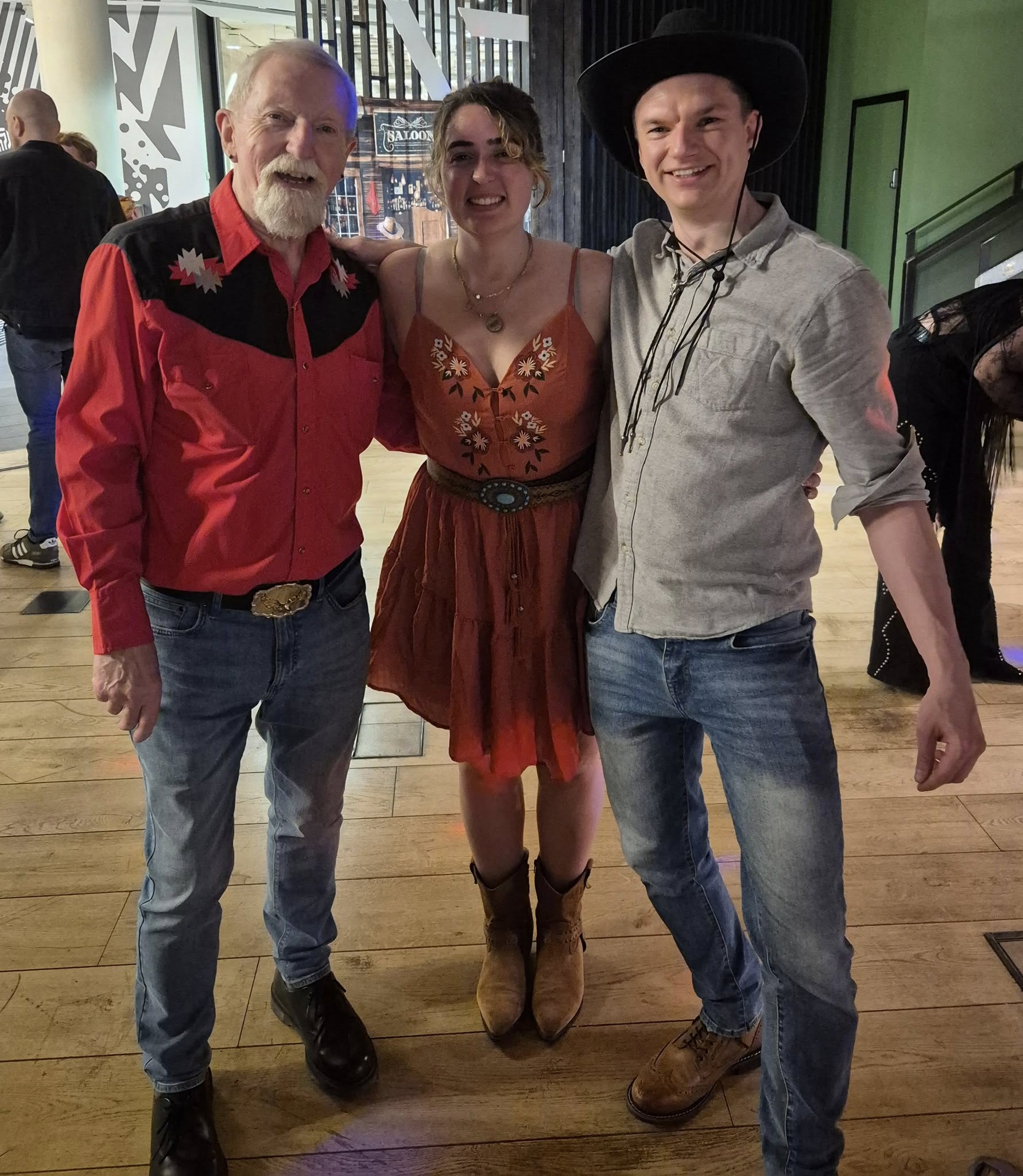
Manchester Prairie Dogs are Manchester’s best LGBT Line Dancing Club! They are a non-profit club aimed primarily at the LGBT communities but everyone is welcome to come along and join them.

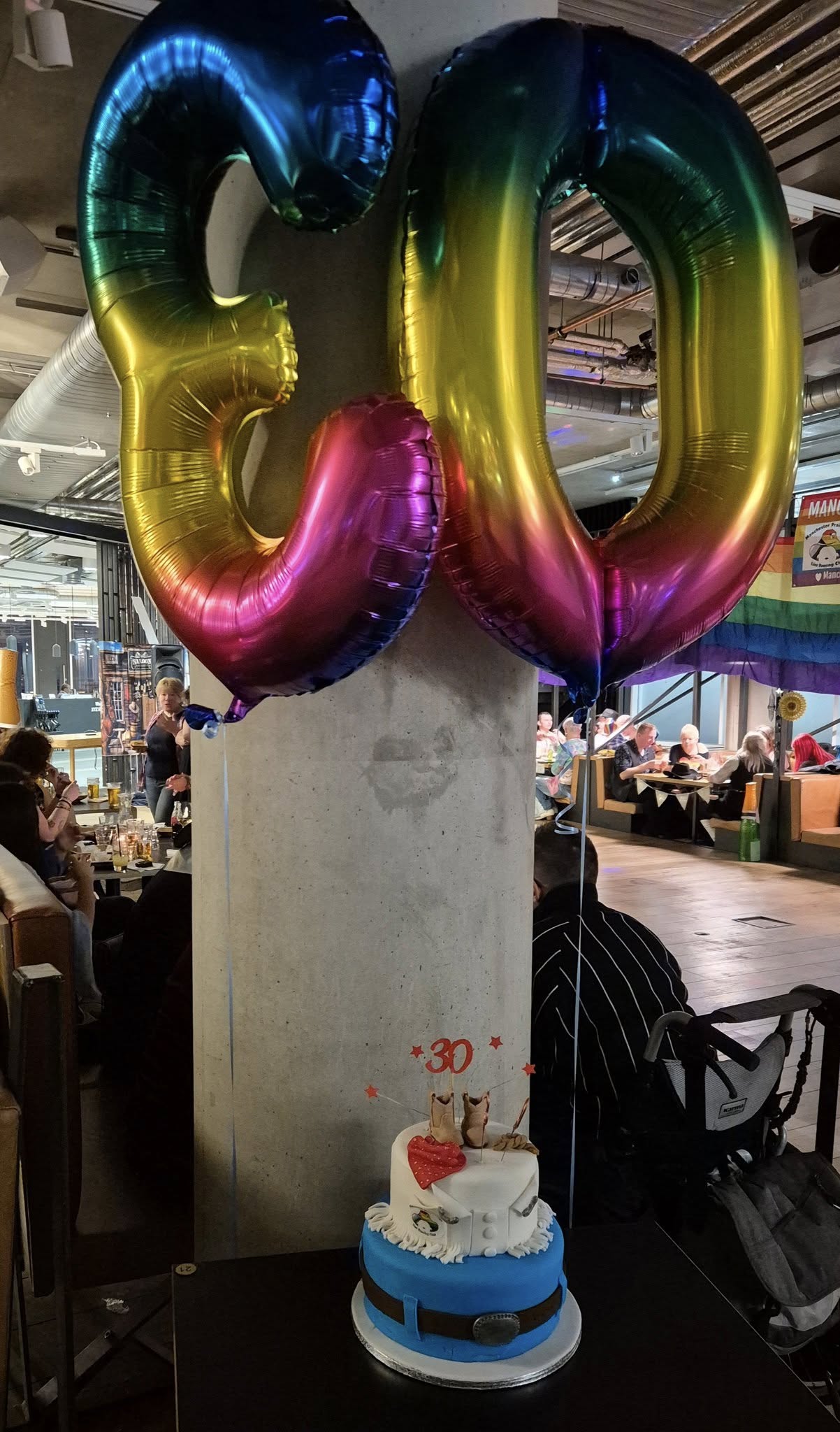
This year they are celebrating their 30th anniversary!

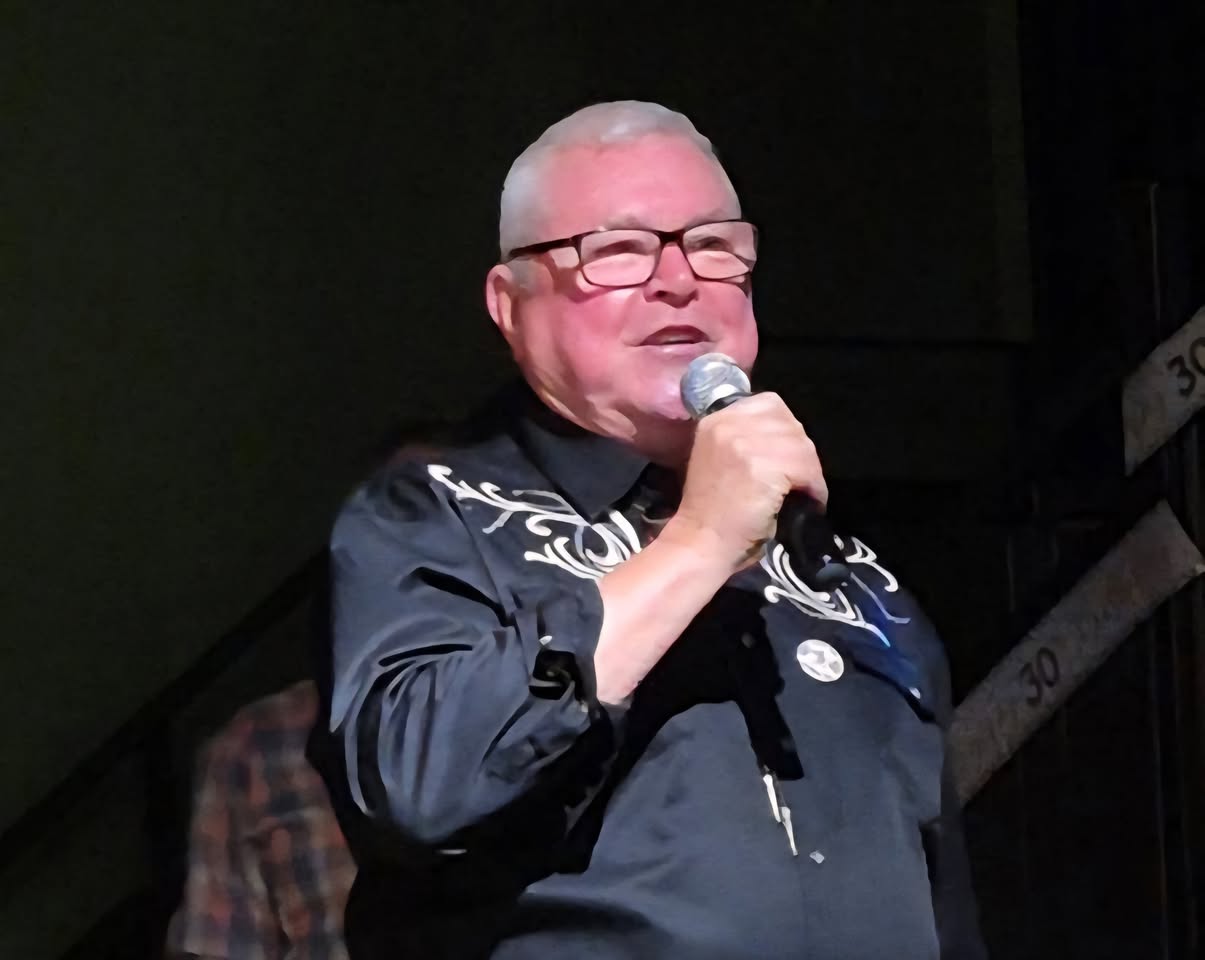
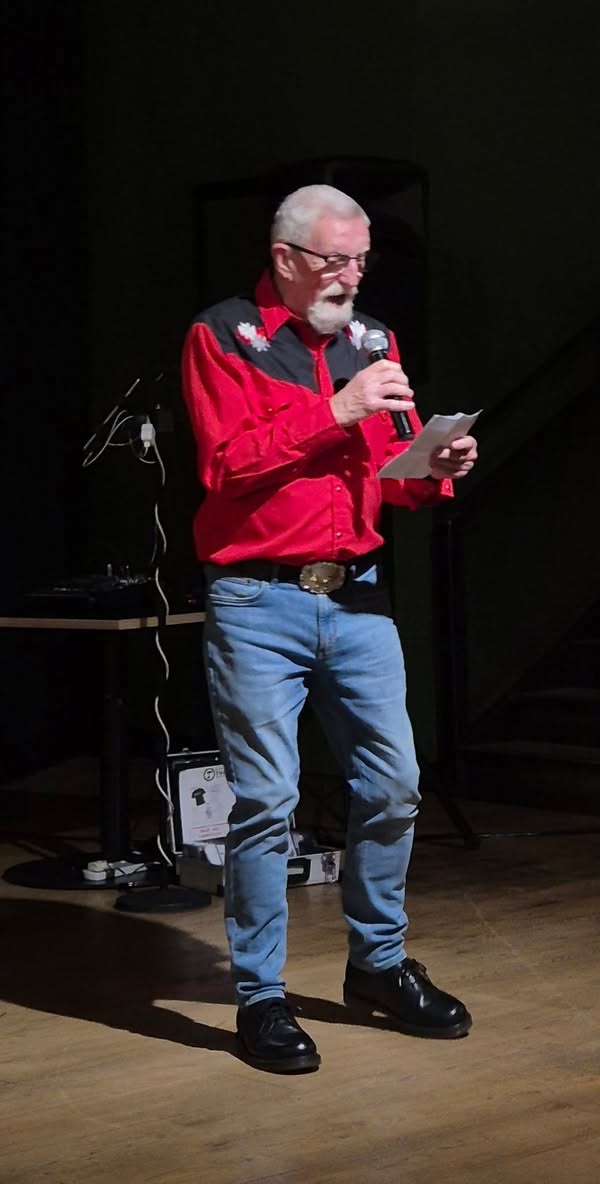
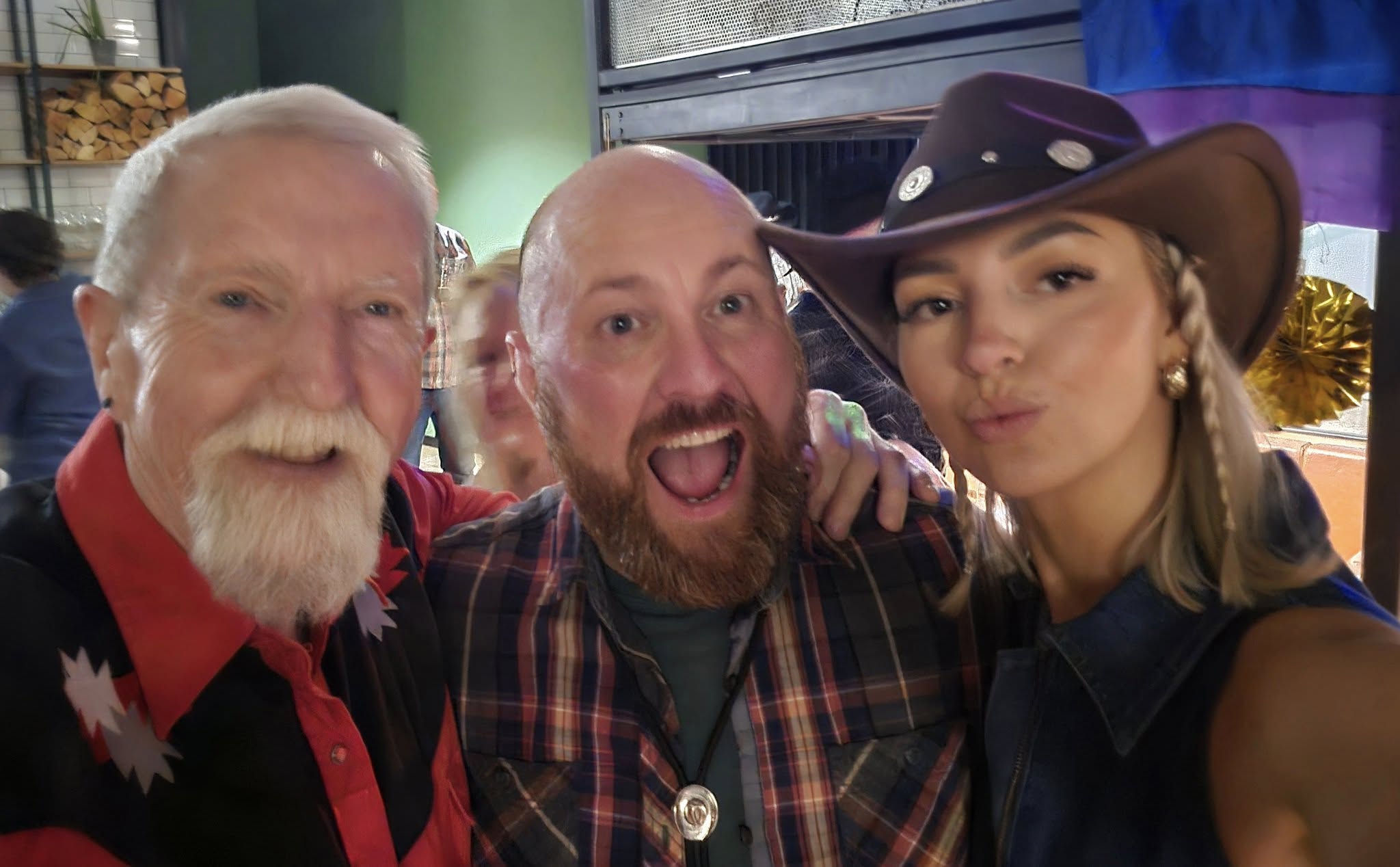
On 10 October they were dancing the night away as the club continued its 30th anniversary celebrations with great music, dancing and merriment at Foley’s Club in Spinningfields, Manchester.

.The dancing kicked off at 7.15pm to get people warmed up ready for guest Thorne Hill’s fantastic singing at 8.00pm. Dancing, drinking and making more memories continued to the witching hour at midnight.

Thanks go out to all the committee for their hard work in arranging a wonderful evening.

The Prairie Dogs have members of all different ages – both beginners and more experienced dancers. They do charge a cover fee for attending as this covers their operating costs, but your first night is always free.

They dance on Tuesday evenings upstairs at The Thompsons Arms on Sackville Street in the Gay Village. There is a beginner’s session that starts at 7.30pm where they will bring you up to date with their “oldies but goodies” dances, and regular dancing then runs from 8.00pm to 10.00pm.

If you’re line dance curious, or a seasoned dancer, please come down and join them!

Criminally Queer: The Bolton 7

A five-part docu-series explores a landmark legal case in the late 90s by Hugh Sheehan

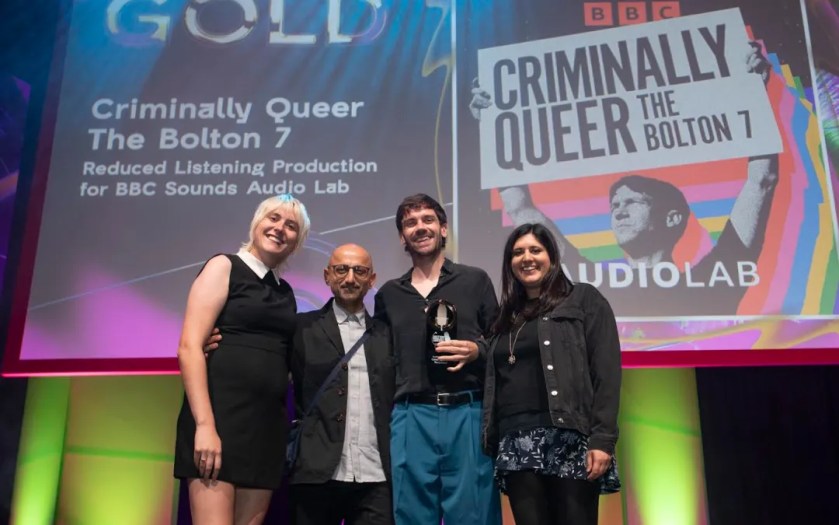
Criminally Queer: The Bolton 7” is an award-winning podcast that Hugh Sheehan created, presented and produced as part of this year’s BBC Sounds Audio Lab scheme. Having come out in February to overwhelmingly positive responses from listeners, the five-part docu-series explores a landmark legal case in the late 90s that changed the lives of seven gay and bisexual men from Bolton forever, and how the case played a significant role in the fight for LGBT+ rights.

Having won specialist podcast of the year at the Press Gazette’s Future of Media Awards in September, the podcast was nominated for an award at this year’s British Podcast Awards.

Hugh’s podcast won gold at the British Podcast Awards in the sex and relationships category.

Criminally Queer: The Bolton 7” recalls the stories of seven gay and bisexual men from Bolton, a former mill town north of Manchester, who were convicted of offences of gross indecency under the Sexual Offences Act 1967 in January 1998. The case has been described as one of the biggest miscarriages of justice in recent British LGBT+ history, with the series being released last February, coinciding with LGBT+ History Month.

Having won specialist podcast of the year at the Press Gazette’s Future of Media Awards in September 2025, the podcast has been described as “mind-bending” and “a staggering tale” by The Guardian and a “sad, startling story skilfully unravelled” by The Sunday Times.

Hugh is a multifaceted creative: an audio producer, musician / composer and theatre sound designer, who is originally from Birmingham. Much of his work explores questions around gender and sexuality, desire and shame, assimilation and radicalism. In 2020 he was commissioned as a New Creative by BBC Arts and Arts Council England to make Lost Time – an audio short contemplating LGBT+ people’s experiences in getting to live life on their own terms.

Link to podcast here.

7 million LGBT+ elders are coming

An estimated 3.6 million LGBT+ people over the age of 50 live in the United States, and by 2030, that number will grow to 7 million. Despite those growing numbers, LGBT+ older adults continue to face inequities in health care, housing and economic security due to discrimination and stigmatisation from legislators, elder care workers and medical professionals, as well as a lack of access to culturally competent healthcare and gender-affirming care.

Because all of these factors contribute to higher rates of depression, dementia and chronic health conditions among LGBT+ elders, the need for LGBT+-inclusive senior housing is rising. As such, the need for dedicated LGBT+-affirming retirement communities is more than a luxury – it’s a necessity.

Why inclusive senior housing matters

The aforementioned inequities are compounded by the fact that LGBT+ seniors are twice as likely to live alone and four times less likely to have children than their heterosexual peers, creating an even greater reliance on supportive housing solutions. This lack of traditional family support, combined with a lifetime of stigma and discrimination, can make aging especially isolating.

According to SAGE (Services & Advocacy for LGBT Elders), LGBT+ seniors in elder care facilities have been denied the right to share a room with their partner, pressured to hide their identities or mistreated by staff unfamiliar with LGBT+ lives. The fear of going “back in the closet” in a care facility remains a real and painful possibility.

Inclusive retirement communities aim to address these challenges by:

  • Ensuring cultural competency training for staff: including the use of affirming language and pronouns; asking respectful and open-ended questions about relationships and family; understanding why LGBT+ people might not want to disclose their identities; and acknowledging the unique economic, social, physical and mental healthcare needs (and relationship styles) of aging LGBT+ people.
  • Creating environments where residents can live openly and authentically: Providing awareness training to help facility staff recognise and minimise implicit biases in themselves, their professional colleagues and other facility residents; teaching community members how to respectfully engage with LGBT+ people; and providing various opportunities for LGBT+ residents to seek support.
  • Building spaces for social connection and belonging: Creating community events and opportunities to express and explore sexuality through socialising, learning and artistic engagement; providing a mediator, counsellor, office or ombudsman to assess/address any LGBT+ community needs; understanding how isolation and discrimination can uniquely affect LGBT+ seniors.

These factors are critical for both the mental and physical health of older LGBT+ adults.

LGBT+ retirement homes across the US

While the number of communities remains relatively small compared to mainstream options, there are now dedicated LGBT+ senior housing developments and retirement villages in multiple states. Here are 21 around the United States:

Mary’s House (Washington, D.C.)

Birds of a Feather (Pecos, New Mexico)

The Palms of Manasota (Palmetto, Florida)

Stonewall Gardens (Palm Springs, California)

The Connie House (Boynton Beach, Florida)

A Place for Us (Cleveland, Ohio)

Triangle Square (West Hollywood, California)

John C. Anderson Apartments (Philadelphia, Pennsylvania)

Open House Community at 55 Laguna (San Francisco, California)

Town Hall Apartments (Chicago, Illinois)

Fountaingrove Lodge (Santa Rosa, California)

North Park Senior Apartments (San Diego, California)

Stonewall House (Brooklyn, New York)

Crotona Pride House (Bronx, New York)

Bay Shore Senior Residences (Bayshore, New York)

Living Out (Palm Springs, California)

Pride Place (Seattle, Washington)

The Pryde (Hyde Park, Massachusetts)

The Opal (Portland, Oregon)

Rainbow Vista (Gresham, Oregon)

Village Hearth (Durham, North Carolina)

Many of these developments include independent living, assisted living, or affordable housing options – reflecting the diversity of financial and medical needs among LGBT+ elders.

Alternatives to dedicated LGBT+ retirement communities

Not every elder person has access to a specialised retirement community, but there are other options:

  • LGBT+-friendly senior living facilities: More mainstream retirement communities are adopting anti-discrimination policies, staff training and LGBT+ resident programming.
  • Nonprofit support: Organisations like the National Resource Center on LGBT Aging and SAGE connect seniors with inclusive housing and care resources.
  • Inclusive cities: Urban areas with strong LGBT+ networks – such as San Francisco, Chicago, Atlanta and Philadelphia – often provide supportive social services and affirming healthcare options, especially through their LGBT+ community centres or other elder care services.

Looking ahead

The US is on the cusp of a demographic shift. By 2030, all Baby Boomers will be over the age of 65, and that includes millions of openly LGBT+ adults. Ensuring they can age with dignity requires policy changes, cultural shifts and investment in inclusive housing.

LGBT+ retirement communities represent one part of the solution. They offer safety, visibility and belonging at a stage of life when many people need it most. But expanding access – through both dedicated communities and wider adoption of affirming practices in mainstream senior housing – remains essential.