Aderonke Apata called to the Bar … Latest Global Marriage News … Times Gone By

News

Barrister says she became legal expert while in Home Office immigration detention

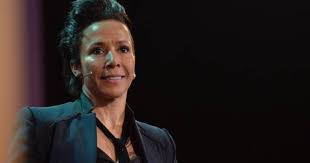
Aderonke Apata was called to the bar on 13 October. ‘Without what the Home Office did to me I wouldn’t be a barrister today,’ she says. Photograph: Supplied

A refugee who has just been called to the bar says she has the Home Office to thank for her career after she became an amateur legal expert while locked up in a detention centre.

Aderonke Apata, 55, from Nigeria, said she was proud to take part in a ceremony last week where she, along with dozens of other newly qualified barristers, were formally called to the bar.

Aderonke was almost forcibly removed from the UK on a Home Office charter flight to Nigeria in January 2013 after her asylum claim, based on the fact that as a lesbian who had been persecuted in Nigeria her life would be in danger if she was returned there, was rejected.

Aderonke had completed a degree in microbiology before fleeing Nigeria and hoped to pursue a career in public health in the UK.

She was detained in Yarl’s Wood immigration detention centre in Bedfordshire, which at the time was used mainly for women, from the end of 2011 until the beginning of 2013, including a week spent in solitary confinement in 2012.

During her time in Yarl’s Wood, more women – who either could not understand English or did not understand what the Home Office had written in refusal letters about their immigration claims – turned to Aderonke for help in explaining what was happening with their legal cases.

“The type of language the Home Office uses is very difficult to understand. But I learned quite a bit about immigration law from reading the other women’s refusal letters during the period of more than a year that I was locked up,” said Aderonke.

She had received poor legal advice about her own case and when she was given removal directions from the Home Office for a flight to Nigeria for 24 January 2013, she decided she had to fight the removal herself.

She downloaded an interim injunction application for the high court and, with time running out, started faxing supporting documents to a member of staff at the charity Medical Justice, which works to support the health of immigration detainees.

The staff member ran to the high court with the documents. But escorts came to take Aderonke to the plane before she had finished faxing documents. She begged other detainees to continue faxing documents for her while she was being taken to the plane.

“An escort told me I would be fine going back to Nigeria but I could not reply. I knew it would not be fine and that returning to Nigeria would mean death for me. Suddenly the escort turned to me and shook my hand. He said: ‘Congratulations, your ticket has been cancelled. You won’t be flying to Nigeria. You must have a very good lawyer.’ I laughed and said that I had lodged the injunction application in the high court myself.”

Aderonke continued to represent herself for part of her case and later was able to secure legal representation, which helped her win her refugee status in 2017.

In 2018, she began her legal training with a law conversion course, before being formally called to the bar on 13 October.

“It didn’t dawn on me until I walked into the hall where the bar ceremony was being held that this was something monumental on my journey. Even if I can just help a few people as a barrister over the next few years I will be satisfied,” she said.

When she won her asylum case in 2017, Aderonke told the Guardian: “I will continue to do my bit in amplifying the voices of people who can only shout so far.”

She is now looking for pupillage and wants to specialise in immigration and human rights work.

“I was always drawn to giving people a helping hand. In Yarl’s Wood we were all in the same boat and we were all drowning. Helping others gave me the energy to carry on myself. When you are faced with a life or death situation that’s where the inner part of yourself comes out,” she said. “I knew I needed to fight because I could not return to Nigeria. If I hadn’t been detained in Yarl’s Wood for so long I probably would have pursued a career in public health. Without what the Home Office did to me I wouldn’t be a barrister today. In a way they trained me.”

Piccadilly Train Station, Manchester – December 2016

Latest Global Marriage News

Slovakia Votes Against More Rights For LGBT Couples

The Slovakian Parliament has decided to keep registration of relationships exclusively for one man and one woman only. On 19 October 2022, it voted against a proposal that would grant same-sex couples inheritance rights and the right to access medical records, the so-called cohabitation partnership.

If the proposal had been passed, same-sex couples could register their partnership. This would grant them inheritance rights, entitlement to decide about medical treatments and compensation in the event of death or injury at work. However, even if the bill had been passed, same-sex couples would not have the same rights as heterosexual couples.

Gay Cuban Couple’s Long Wait To Tie The Knot

Adiel Gonzalez, a 32-year-old former theology student, was forced to break with his church eight years ago due to his sexuality. He became a fierce LGBT+ rights campaigner and on 20 October 2022, was able to tie the knot with his long-time partner and fellow activist Lazaro Gonzalez — among the first gay weddings celebrated in Cuba.

Thanks in large part to the efforts of the pair and others like them, Cuba finally approved same-sex marriage on 25 September 2022 after a long battle against religious and cultural resistance in the country. The Cuban family code adopted last month allows not only legal unions but also adoption, surrogate pregnancy for gay couples and parental rights for non-biological mothers and fathers.

Singapore Seeks To Amend Constitution To Protect Its Definition Of Marriage

Singapore’s government filed bills in parliament on 20 October 2022 seeking to decriminalise sex between men, and to amend the constitution to prevent court challenges to laws and policies concerning marriage. 

The proposed legislation in Singapore follows Prime Minister Lee Hsien Loong’s announcement in August of a plan to repeal Section 377A of its penal code, a legacy of British colonial rule and not used in decades, which carries punishments of up to two years in jail for sex between men.  Recent surveys have shown attitudes towards LGBT people in Singapore have become more accepting. But changes have yet to be reflected in government policies, which deny LGBT couples access to subsidies and benefits available to heterosexual couples. Though repealing 377A has been largely welcomed by LGBT groups, some activists are disappointed that legalising same-sex unions or pursuing more equal policies towards LGBT couples are not being considered.

Times Gone By – LGBT History:

Claude Cahun – 25 October 1894 – 8 December 1954

Claude Cahun is mostly known as a surrealist artist, specifically for their photographic work of self-portraits which have been described as presenting a ‘dizzying kaleidoscopic mix of mystery and exuberance’. Cahun is also known for their photo-montages, with whom their / her long-term partner Marcel Moore contributed in the capacity of ‘artist collaborator’. Cahun’s iconic photography has also been described as a ‘dialogue with multiplicity’. In a creative psychological context, it was an ongoing self-exploration of their character / personality through text and imagery. Cahun described it as a ‘hunt’ – presumably for self and identity.

Cahun was also a writer, sculptor, activist, and a propagandist and resistance worker during World War 2. Cahun was gay and if they were alive today may have identified as non-binary or perhaps more specifically genderfluid. Cahun stated: ‘Masculine? Feminine? It depends on the situation. Neuter is the only gender that always suits me’. In this context Cahun’s photographic self-exploration didn’t just depict a number of theatrical personalities but also explored gender identity and gender expression.

Cahun has been described as having ‘protested gender and sexual norms’ with their name change and as such they have attracted an increasing following amongst feminists and people within the LGBT community, and on an intellectual level the interest of art historians. Cahun in fact, was multi-talented as they were also a poet, critic, translator and essayist. However, it was through fully embracing their gender identity / fluidity that they are considered a groundbreaking artist.

Claude Cahun’s original name was Lucy Renee Mathilde Schwob  born on 25 October 1894 into an intellectual Jewish family in Nantes. Their great uncle David Leon Cahun had been an orientalist, whilst their uncle Marcel Shwob was an avant-garde writer. Their mother Mary Antoinette Courebaisse was taken into a psychiatric facility because of her mental illness. As a teenager, Cahun also struggled with mental illness, including ‘suicidal thoughts’, bulimia and ‘crippling sadness’.

Cahun’s early education included the Parson’s Mead School in Surrey which was a private school. This was after they had unfortunately experienced anti-semitism at high school in Nantes. Cahun also studied at the University of Paris-Sorbonne. It was at the age of just 18 in 1912 that they made their first initial experimental photographic self-portraits. Their image making expression continued throughout the 1930s.

In about 1915 they had their hair cut very short and continued working on their photographic self- exploration at the same time. These photographs have been described as ‘cross-dressing experiments’ as they could be dressed as a ‘sportsman, sailor or dandy’.

Cahun adopted the pseudonym – Claude Cahun, as this was more gender neutral. They had previously used the names Claude Courlis after Curlew, and Daniel Douglas apparently taking inspiration from Lord Alfred Douglas.

Cahun creatively explored gender identity and the subconscious mind through surrealist photography. Their self-portraits featured outfits that defied conventional identification of feminine or masculine, and today would perhaps be described as gender neutral or fluid. Cahun in reference to their self-exploration famously stated, ‘Under this mask, another mask’ and ‘I will never be finished removing all these faces’. Taking this into consideration, Cahun’s work has generated interest beyond the history of photography, for example and significantly in Gender Studies.

Suzanne Malherbe, who also changed her / their name to Marcel Moore, became Cahun’s lifelong partner after they both settled in Paris in the early 1920s. It was after Cahun had moved to Paris that they became involved with the surrealist Parisian art scene – it was then that Cahun went on to collaborate with the famous Man Ray. Cahun and Moore, as well as being partners also collaborated on many creative projects. These included photomontages, sculptures and written works. Surprisingly, Cahun and their partner also became step-siblings as Cahun’s divorced father married Moore’s widowed mother.

Cahun and Moore, after relocating in Paris, slowly became involved in the small Parisian avant-garde circle, who coincidentally were also exploring aspects of identity. Probably one of the most famous artists at the time ‘playing’ with gender was Marcel Duchamp who introduced Rose Selavy, his artistic character and female alter ego. Cahun and Moore in fact welcomed avant-garde artists and writers to the parties that they organised at their house around 1922.

Cahun and their partner also met the head of experimental theatre ‘Le Plateau’ – Pierre Albert Birot. Here, both again collaborated with Moore designing stage sets and costumes – Cahun concentrating on performance skills.

In this connection it is interesting to note that Cahun’s self-portraits incorporated elements of theatre and the aesthetics of surrealism. They also significantly ‘blurred’ gender indicators, partly through often showing only head and shoulders. In some pictures, Cahun’s head is shaved looking directly at the viewer; this together with the varying gender representations was apparently a way of undermining the ‘patriarchal gaze’.

Cahun had some of their writings published. These included ‘Heroines’ in 1925 which featured a ‘series of monologues’ based on female fairy tale characters. These were ‘intertwined’ with images of modern contemporary women as a means of making witty comparisons.

Cahun became involved with the ‘Association des Ecrivains et Artistes Revolutionnaires’ in 1932. They took part in certain surrealist exhibitions which included the London International Surrealist Exhibition and in Paris (1936) ‘Exposition Surrealiste d’Objets’.

Finally, as a surrealist artist, Cahun had mostly been written out of art history until their photographic work was included in an exhibition in 1986. Only then, Claude Cahun was recognised as a significant artist and gained an increasing following.

“Victim” at Mini Cini … International Pronouns Day

News

Mini Cini

This week we lunched at the Piccadilly Tavern – the special offer is two meals for £9.00 – before visiting the Mini Cini in Ducie Street Warehouse to watch the brilliant mystery thriller “Victim” from 1961.

Viewed in the context of Great Britain in 1961, it’s a film of courage. How much courage can be gauged by the fact that it was originally banned from American screens simply because it used the word “homosexual.” To be gay was a crime in the United States and the UK, and the movie used the devices of film noir and thriller to make its argument, labelling laws against homosexuality “the blackmailer’s charter.” Indeed, 90 percent of all British blackmail cases had homosexuals as victims.

Dirk Bogarde’s elegant, sensitive portrayal of a man coming to terms with being gay played a vital role in the partial decriminalisation of homosexuality in 1967.

Dirk Bogarde plays the barrister Melville Farr, haunted by his (unconsummated) gay desires and threatened by a sinister blackmail ring. His trusting young wife Laura is played by Sylvia Sims.

Blackmailed … Dirk Bogarde as barrister Melville Farr in Victim. Photograph: Rank Film/Sportsphoto/Allstar

Farr, who at the young age of 40 has just been offered the opportunity to become a Queen’s Counsellor. He will lose that appointment, his career and his marriage if he’s identified in the press as gay, and yet he decides that someone must stand up to the blackmailers to demonstrate the injustice of the law. As he tracks the blackmailers through a network of their victims, the movie follows him through the London of the time — its courts of law, police stations, pubs, clubs, barbershops, bookstores, cafes, drawing rooms, car dealerships — showing how ordinary life is affected in countless ways by the fact that many of its citizens must keep their natures a secret.

Farr projects a surface of strength and calm. He only raises his voice two or three times in the movie, but we sense an undercurrent of anger: He finds it wrong that homosexuality is punished, wrong that gays cannot go to the police to complain of blackmail, wrong that hypocrisy flourishes. There is a moment in the movie when he unexpectedly hits someone who has just insulted him, and it comes as a revelation: Beneath his silky persona is a wound, a resentment, and a fierce determination to act at last on his convictions.

Bogarde himself was homosexual, but never made that public; even in his touching memoirs about the life and death of his partner Tony Forwood, he cast their relationship as actor and manager, not lovers. For that he has been criticised by some gay writers and activists, but consider: By accepting what looked like career suicide to star in “Victim,” wasn’t he making much the same decision as his character Melville Farr — to do the right thing, and accept the consequences? Didn’t he, in effect, come out as an actor in that and many other roles (notably as the ageing homosexual in “Death in Venice“)? Was it anybody’s business what he was, or did, in his private life? It is the argument of “Victim” that it was not.

Today, yes, things are different, but Bogarde was born in 1921, and homosexuality was only partially legalised in 1967. As an actor, he risked a great deal to take a crucial role at a time when it made a difference.

Desert Island Discs

An audio collector from Suffolk has discovered more than ninety lost recordings of Radio 4’s Desert Island Discs. Bing Crosby, Dame Margot Fonteyn, James Stewart, Sophie tucker and Dirk Bogarde are among the big names who appear in the episodes from the 1960s and 1970s. On 28 September 1964 Roy Plomley’s castaway was actor Dirk Bogarde. His favourite track was “Symphony No 5 in C Minor (Opus 67)” by Ludwig van Beethoven. The book chosen was “The Swiss Family Robinson” by Johann Wyss. The luxury item was “Conversation Piece” by John Singer Sargent – a painting of the Sitwells.

International Pronouns Day

It was International Pronouns Day on 19 October. The Day began in 2018 and seeks to make respecting, sharing, and educating about personal pronouns commonplace.

You may have heard of the singular “they / them” pronouns, often used by non-binary people as a gender-neutral pronoun in place of “she / her” and “he / him”. But while more and more people are becoming familiar with this new set of pronouns, there are plenty of other “neopronouns” that gender non-conforming folks use to refer to themselves such as ze / zim and xe / xem pronouns.

What Are Neopronouns?

If you don’t know what neopronouns are, don’t worry. It’s a relatively new term that describes new pronouns that can be used to replace the usual gendered pronouns like “she” and “him”. The word combines the terms “neo”, meaning new, and “pronoun”, or words that are used to substitute other nouns.

Why Do People Use Neopronouns?

Before we get into why people use neopronouns, we have to discuss what it means to be non-binary. 

For a long time, gender was presumed to be binary: either male or female. But, today, more scientists are acknowledging the idea that gender may be a spectrum. 

Instead of there being just two seemingly opposite genders, experts believe that gender is vast and diverse, ranging from feminine to masculine. Non-binary people are those who identify somewhere in the middle of that spectrum or even outside of it altogether.

However, the English language (along with many other Western languages) still remains gendered – particularly when it comes to pronouns. We refer to women as “she” and men as “he”. This puts non-binary people in a tough spot. When you identify as neither a man nor a woman, how do you refer to yourself in a way that accurately represents who you are?

This problem is compounded by the fact that many non-binary people (but not all) experience gender dysphoria. This is described as the feeling of intense distress or discomfort when one’s gender identity does not match the sex assigned at birth. 

Being misgendered can often trigger gender dysphoria, which is why many trans and non-binary people undergo gender-affirming surgery; make changes to how they dress, talk, and behave; and choose pronouns that they feel best represent their gender identity.

Thus, the birth and rise of neopronouns and gender-neutral pronouns, the most common of which are “they/them/theirs” pronouns. This set of pronouns has actually been around for some time now, contrary to popular belief. The singular “they” can be traced back all the way to 1375, where it was used in the medieval novel William and the Werewolf.

Isn’t The Singular ‘They’ Incorrect?

It wasn’t until the 18th century that grammarians started to call out uses of the singular “they” as grammatically incorrect. This, despite the pronoun “you” being originally used as a plural pronoun before becoming singular, notes the Oxford English Dictionary.

Today, the argument that the singular “they” is grammatically incorrect still dominates discussions. However, English experts will be the first to tell you that language is ever-evolving and that there is no place for prescriptivism in English. 

“People who want to be inclusive, or respectful of other people’s preferences, use singular ‘they’. And people who don’t want to be inclusive, or who don’t respect other people’s pronoun choices, use ‘singular’ they as well,” says the Oxford English Dictionary. 

“Even people who object to singular ‘they’ as a grammatical error use it themselves when they’re not looking, a sure sign that anyone who objects to singular ‘they’ is, if not a fool or an idiot, at least hopelessly out of date.”

How Do I Ask For Someone’s Pronouns?

You can never assume a person’s pronouns just by looking at them. As such, it’s always important to ask. 

A good way to go about asking for someone’s pronouns is by introducing yourself first, along with your own personal pronouns. For example, you can say, “Hi, my name is Robin. I go by “she / her / hers” pronouns. What about you?” 

However, bear in mind that not everyone may be comfortable sharing their personal pronouns, especially if they don’t know you very well. 

Some people may be wary of outing themselves to strangers, given that there are still many people out there who don’t take the matter seriously. Others may still be unsure about their gender identity, and thus haven’t pinpointed which pronouns feel right for them. 

Thus, it’s never good to coerce someone to share their personal pronouns. When unsure what pronouns to use, try using the person’s name instead.

What If I Get Someone’s Pronouns Wrong?

Don’t panic – it’s totally fine if you get someone’s pronouns wrong by mistake. What’s important is that you apologise and correct yourself the moment you realise your error.

The best course of action is to apologise to the person in private. Give a quick apology and try not to make the issue about you. Make a promise to do better, and stick to that promise by making an effort to remember their pronouns. 

The Bottom Line

Pronouns are an important part of communication, and, with the rise of neopronouns, it’s more important than ever to make sure you use the correct pronouns for the people in your life.

Liberace arm wrestling Rock Hudson

Black History Month … Times Gone By … Rainbow Lottery

News

To commemorate Black History Month here is a playlist:

Intro
Max Richter – All Human Beings
David Lammy – When Will Black Lives Matter?
Nina Simone – Ain’t Got No – I Got Life
Kathleen Cleaver – Change It
Prince Riser – African Slaves Dub
Billie Holliday – Strange Fruit (Outsider Mix)
The Last Poets – Black Lives Matter
Dominique Fils-Aime – Strange Fruit
Huey Newton – The Black Panther Party Calls For
DJ Vadim – If Life Was A Thing
Stokely Carmichael – So Much Strength
Doctor T Meets The 18th Parallel – Fuel For Dub
Malcolm X – Standing & Fighting
Oku Onuora – If Not Now
Benjamin Zephaniah – Dis Policeman
Huey Newton – Power To The People
Ministry of Echology – Moving Forward (Kaseta Version)
Freddie McKay – I’m A Free Man
Bongo Isaac & Itekted Dread Benji – Perfect Love and Peace
David Lammy – Hang On A Minute

Times Gone By – LGBT History:

Jeanne Deckers aka The Singing Nun – 17 October 1933 – 29 March 1985

In 1963 Jeanne Deckers, a Dominican nun, recorded an LP. One song from the album, “Dominique”, sold over 1.5 million copies and was number 1 worldwide.  Under the name Soeur Sourire (Sister Smile) she appeared on the legendary “Ed Sullivan Show” – a performance that made her an international superstar.  

In 1964 she won a Grammy for Best Gospel Recording and in 1965 MGM produced a highly fictionalised movie of her life – “The Singing Nun” – starring Debbie Reynolds. 

Jeanne Deckers – The Singing Nun

Having grown increasingly critical of Catholic doctrines – particularly the Church’s stand on artificial contraception – Jeanne left the order in 1967, and along with her companion of ten years, Annie Pescher, she opened a school for autistic children. 

In the early 1980s the Belgian government claimed she owed $63,000 in back taxes for royalties from “Dominique”.  Deckers countered that as all proceeds from the record’s sales were donated to the Convent no taxes were due; but the government would not relent and threatened to shut down the school. Citing financial difficulties, Jeanne Deckers and Annie Pescher died by suicide together through an overdose of barbiturates and alcohol on 29 March 1985. The note they left said simply “We hope God will welcome us. He saw us suffer.”

Laura Nyro – 18 October 1947 – 8 April 1997

It would be difficult to overstate Laura Nyro’s influence on late 20th-century popular music.  A self-taught pianist, Nyro began composing songs as a child and sold her first song – “And When I Die” – at the age of 19.

Between 1968 and 1970 a number of her songs achieved significant success on the Billboard charts by The Fifth Dimension, Blood, Sweat, and Tears, Three Dog Night and Barbra Streisand.  

Laura Nyro

Nyro’s evocative style mixed jazz and rhythm-and-blues with street pop, gospel and Broadway.  A number of her songs – the antiwar “Save the Country”, the feminist “Women of the One World” and the environmentalist “Lite a Flame” – addressed social issues. Throughout her career Nyro maintained a very strong lesbian following.

She never publicly acknowledged her own sexuality, which included relationships with both men and women, privately referring to herself as “woman identified.” In 1977 Nyro met painter Maria Desiderio. The two women were together until Nyro’s death of ovarian cancer in 1997 at age 49.

Frances Kellor

Frances Kellor – 20 October 1873 – 4 January 1952

Frances Alice Kellor received her law degree from Cornell in 1897 and soon after entered the University Of Chicago to study criminal sociology. She eventually spent nearly two years in southern penitentiaries for African Americans. Her resultant book,  “Experimental Sociology” (1901), helped launch the modern concept that environmental factors — such as disadvantaged childhoods and poor education – play a determining role in criminal behaviour.

After moving to New York City in 1903, Kellor undertook a subsequent study of the exploitation of domestic workers by employment agencies. The resulting book, “Out of Work” (1904), was among the first books to present unemployment as a government problem rather than simply a personal misfortune.

It was around this time that she fell in love with activist Mary Dreier. In 1906, Kellor was instrumental in organising the National League for the Protection Of Colored Women, which worked to find jobs and housing for African American women migrating north.

In 1908 Kellor was appointed to New York State Immigration Commission. Her research led to the creation of the Bureau of Industries and Immigration, which provided arbitration between workers and employers and produced leaflets in various languages warning immigrants to beware of exploitative practices. In 1912 Kellor began work with the Progressive Party, which believed in using the state for social reform. She headed the party’s National Service Committee, preparing official statements and research, making her instrumental in shaping Theodore Roosevelt’s campaign agenda. In this way Kellor became a key player in presidential politics before women even had the right to vote.

Continuing her work for the compassionate assimilation of immigrants, Kellor devised programmes that provided language and citizenship classes as well as vocational training. In 1926 she launched the American Arbitration Association and wrote “Arbitration in the New Industrial Society” (1934). Frances Kellor was still vice-president of the American Arbitration Association when she died in 1952 in the home she had shared with Drier since 1905. She was 78.

Rainbow Lottery

Out In The City signed up to the Rainbow Lottery 16 months ago. In that time:

  • Supporters have bought 2,333 tickets in total;
  • Rainbow Lottery have paid Out In The City £1166.50;
  • We currently have 20 supporters buying tickets each week;
  • 17 of those 20 have won prizes (38 x 3 extra tickets the following week or cash prizes 7 x £25 and 2 x £250).

In the national draw on 29 October you will have the chance to win an extra special prize – a £1,000 Bicycle Voucher. That’s on top of the weekly cash prizes of up to £25,000.

There’s no need for existing supporters to buy a separate ticket – you will automatically be entered into the special draw, but of course you could buy extra tickets: the more tickets you have, the more chances to WIN!

Please support us.

Chill Factor … SEASONED: Connections Project … Times Gone By

News

Chill Factor

The Chill Factor is the home of the UK’s longest indoor real snow ski slope. It is near the Trafford Centre, about seven miles from Manchester city centre and is easily located (if travelling by car). However, on public transport it is about a twenty minute walk once you have reached the Trafford Centre tram terminus.

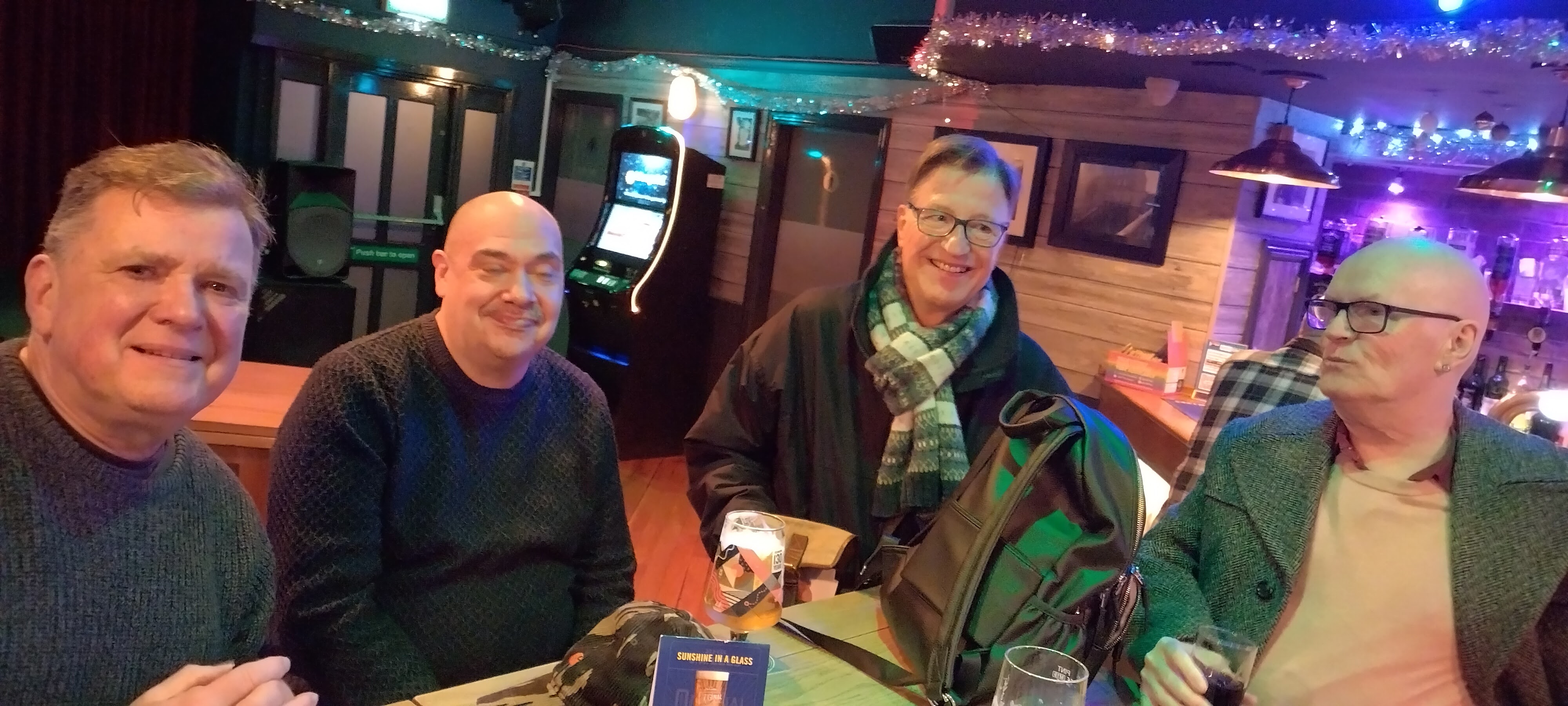
Once we arrived at the venue we made our way to The Lodge Bar and Kitchen where we met Steve (and his friend Alan), who is not only a member of Out In The City but a qualified ski instructor. He was booted up ready for going on the slope.

The Lodge Bar and Kitchen is a relaxing Alpine lodge located on the first floor. It offers panoramic views over the slope. The food and drink were reasonably priced, and we enjoyed Alpine Schnitzel, Beef Goulash and Pizzas.

We only spent a couple of minutes on the outside viewing platform as it was minus six degrees. Besides The Lodge Bar was spacious and warm and gave a birds eye view of the slope.

It was a great place to sit back and relax whiling away the time watching some freestyle skills in action.

More photos can be seen here.

SEASONED: Connections Project

SEASONED: Connections Project meets every Tuesday (beginning 11 October) at LGBT Foundation, Fairbairn House, 72 Sackville Street, Manchester M1 3NJ from 6.00pm – 8.00pm, .

The project is a weekly space for LGBTQI people of colour aged late 40s and up to learn new digital skills and improve current connectivity, stay connected with loved ones throughout winter and share stories with each other. The project includes device giveaways and loans for tech-limited friends and family.

The first meeting on Tuesday 11 October is a ‘get to know you’ and intro to subsequent sessions, all completely free, with refreshments included. Want to know more? Email: qtipoc@lgbt.foundation

Times Gone By – LGBT History:

Oscar Wilde – 16 October 1854 – 30 November 1900

Oscar Wilde – whose full name was Oscar Fingal O’Flahertie Willis Wilde – became one of the most popular and fashionable playwrights of the early 1890’s in Victorian London. He is also one of the most celebrated and iconic gay men of British history. Mr Wilde was originally from Dublin, born on 16 October 1854 at Westland Row, and as such he was an Irish born poet and dramatist. However, Wilde was also ultimately a tragic figure as he went from being an artistic playwright and flamboyant wit, to being a man struck down by tragedy who was imprisoned for two years and ultimately dying penniless in a cheap hotel in Paris.

Both of Wilde’s parents were professional, intelligent and highly accomplished individuals. Wilde’s mother (Lady Jane Wilde, 1820-1869) wrote patriotic Irish verse. She was a successful poet and journalist, and also wrote revolutionary poetry under the pseudonym Speranza. She was also considered an authority on Celtic Myth and Folklore. Wilde’s mother is credited with having inspired her son’s love of poetry and neo-classical art. Wilde’s father (Sir William Wilde, 1815-1876) was also a gifted literary figure, and produced books on ‘Archaeology and Folklore’. He was also a medical professional, in fact described as ‘Ireland’s leading ear and eye surgeon’.

Oscar Wilde can be more accurately described as Anglo-Irish who was a playwright, a novelist, poet, lecturer, journalist and critic. However, he only wrote one novel in his career, which was ‘The Picture of Dorian Grey’. Wilde was also part of what could be described as an ideology or a philosophy known as the Aesthetic movement that was popular in England during the Victorian era. Its ‘creed’ has been summarised as ‘Art for Art’s sake’

Having come from such an accomplished cultural family, it would seem inevitable that Wilde would receive a good education. He first went to Portora Royal School (between 1864-71) then attended Trinity College Dublin (1871-74) and finally Magdalen College Oxford (1874-78). It was during his time at Magdalen College that Wilde became a strong admirer of the teachings and philosophy of the English writers John Ruskin and Walter Pater, who taught about the ‘central importance of art in life’. Pater stressed that life should be lived with aesthetic intensity. Wilde thus became known during his Oxford days for his involvement with the Aesthetic and decadent movements. Wilde began to wear his hair long and decorated his rooms with ‘peacock feathers, lilies, sunflowers, blue china and other objets d’art’. The ‘aesthetics’ had ‘languishing attitudes’ and a showy flamboyant dress sense.

Wilde’s intellectual talents also included being an exceptional linguist. He studied Greek for nearly nine years and became fluent in English, German, French and he had a working knowledge of Italian and Greek. Unfortunately he apparently was unable to speak a single word of Irish.

When his studies at Oxford came to completion, Wilde returned to Ireland for romantic purposes as he wanted to meet a potential love interest, the renowned beauty Florence Balcombe. Unfortunately for Wilde, this potential romance was never to be as Miss Balcombe had become engaged to Bram Stoker, the famous author of ‘Dracula’. Heartbroken, Wilde moved to London and boarded with portrait artist Frank Miles who was highly successful. Wilde lived on the highly fashionable Tite Street in Chelsea, a residence that also boasted none other than the painter James Whistler and illustrator Charles Rickets with his partner Charles Shannon.

Apart from his literary accomplishments, Wilde was also renowned for his ‘dazzling’ wit and has also often been described as ‘flamboyant’ – a description that can also be extended to his affairs with men. After moving back to England, Wilde soon became a name in Victorian London’s ‘society circles’, He drew into his orbit a number of admirers ‘flocking’ to Chelsea to spend time with him and Miles. This was partly in response to the fact that Wilde had published, at his own expense, a poetry collection (his first in 1881) despite the fact that he had been lampooned by Punch magazine.

The followers that Wilde attracted into his orbit have been described as having ‘initiated a personal cult, self-consciously effete and artificial’. In fact, Wilde wrote in 1894 ‘the first duty in life is to be as artificial as possible’. It would seem that with his decadence, he was deliberately setting out to contradict Victorian piety.

In 1882 when he travelled to the United States, having arrived at customs in New York City, he made perhaps his most famous quip that he had ‘nothing to declare but his genius’. Wilde spent an entire year lecturing in America. He then returned to England where he also lectured. Wilde also tried his hand at editing and from the years 1887 to 1889, he edited the magazine ‘Woman’s World’. In 1888, Wilde wrote ‘The Happy Prince and Other Tales’, this being his first success as a prose writer. In 1892, he brought out another collection of fairy tales entitled ‘The House of Pomegranates’.

Oscar Wilde is also famous as being an iconic gay man. Homosexuality was considered a crime during the Victorian era. As he famously had a homosexual relationship or ‘affair’ with the son of an aristocrat, his personal life became public knowledge, and he was ultimately tried, sentenced and imprisoned.

Wilde apparently became active as a gay man in 1886. He believed he was deliberately subverting the Victorian moral code and challenging society by creating scandal, albeit a personal private scandal. Furthermore, he believed that his subversion of the Victorian moral code was the inspirational ‘impulse’ to his literary career. Ultimately a rebel, Wilde ‘believed in the criminal mentality’ and perceived himself as a criminal. It is interesting to note here that the subject of criminality was woven into his only novel published in 1891 ‘The Picture of Dorian Gray’. In this story, the painter Basil Hallward is murdered, initiating Dorian’s disintegration as a pivotal moment. Initially the character Dorian did not age which is considered to be a metaphorical celebration of youth.

Oscar Wilde (left) and Lord Alfred Douglas ‘Bosie’ (right)

Wilde, who famously had a gay relationship with Lord Alfred Douglas, (otherwise known as ‘Bosie’) was accused of homosexuality by Bosie’s father, who happened to be the Marquis of Queensberry. This resulted in Wilde suing Bosie’s father for libel. Tragically Wilde’s case went against him and he was ultimately arrested and tried for ‘gross indecency’. He was sentenced for two years hard labour – for the  crime of ‘sodomy’.

It was between the years 1892-1895 that Wilde produced a number of Plays. These works proved to be popular with audiences as they relied on puns and elaborate word games. In 1892, Wilde produced ‘Lady Windemere’s Fan’, in 1893 ‘A Woman of No Importance’, and in 1895 there was ‘An ideal Husband’ and ‘The Importance of Being Earnest’.

National Coming Out Day … Football Museum … Groove

News

National Coming Out Day

National Coming Out Day is an annual LGBT+ awareness day observed on 11 October to support lesbian, gay, bisexual and transgender people in “coming out of the closet”.

First celebrated in the United States in 1988, the initial idea was grounded in the feminist and gay liberation spirit of the personal being political, and the emphasis on the most basic form of activism being coming out to family, friends and colleagues, and living life as an openly LGBT+ person.

The foundational belief is that homophobia thrives in an atmosphere of silence and ignorance, and that once people know that they have loved ones who are LGBT+, they are far less likely to maintain homophobic or oppressive views. 

In the US Come Out! was the first periodical published by the Gay Liberation Front in November 1969.

The UK Gay Liberation Front existed between 1970 to 1973.

Its first meeting was held in the basement of the London School of Economics on 13 October 1970. Bob Mellors and Aubrey Walter had seen the effect of the GLF in the United States and created a parallel movement based on revolutionary politics. Come Together, the organisation’s newspaper, came out of its Media Workshop the same year. The GLF challenged gay people to come out and be visible, while also exploring the means by which they were oppressed by society. For the GLF, gay liberation was not about law reform, it was about a revolutionary change in society.

National Football Museum

Last Thursday Out in the City visited the National Football Museum. It is based in the Urbis building in Manchester city centre, and preserves, conserves and displays important collections of football memorabilia. The museum was originally based in Deepdale, Preston in Lancashire, but moved to Manchester in 2012.

The first item we saw on display was the mini donated by George Best, but we soon discovered that there was a guided tour. Our fantastic guide, Veronica, was so knowledgeable and enthusiastic that she brought the displays of trophies and t-shirts to life even to those with little or no interest in the “glorious game”.

The Football Association Minute Book, 1863

In 1863, Ebenezer Cobb Morley, the visionary first secretary of The Football Association, helped devise the original thirteen laws of association football. While these laws have been revised many times, they helped to define the game, as we know it today.

The book also records the birth of the FA Cup and the planning of the first ever international match. It is the most significant document in football history, without which the world would never had played its most popular sport.

The laws were drafted in a London pub, and the wobbly writing shows the obvious effects of the beer drunk when drafting the rules.

Also on display is the England shirt worn by Arnold Kirke Smith in the world’s first international match versus Scotland in 1872.

On 20 March 1966, the Jules Rimet trophy was stolen from a stamp exhibition in London. A ransom note was sent to the FA, along with a part of the trophy: “ Pay me £15,000 in £5 and £1 notes and you shall have your cup back … you will be satisfied and so will the rest of the world  … Do not inform press or police.”

On 27 March, Pickles the dog found the trophy in a garden near the home of his owner, David Corbett. The thief has never been caught, but Pickles became a national celebrity.

The museum also shows the “dark side” of football with racism and discrimination based on gender, religion and sexual orientation, as well as highlighting the positive roles of black people and women.

The Prince of Goalkeepers

Arthur Wharton was the first black professional player in English football. He was born in Ghana, the son of a missionary and an African princess.

Wharton broke records for sprinting and cycling but chose a career in football. He was a crowd pleaser and once pulled down the crossbar to stop a goal. He played for eight clubs in seventeen years.

Lily Parr

Lily Parr was one of English football’s greatest ever players and its first female superstar. She played for the most successful women’s team of her time: Dick, Kerr’s Ladies.

As men fought during the First World War, Lily and other women worked in munitions factories where they seized the chance to play football. Between 1917 and 1921, the team played over 100 games and attracted huge crowds at major stadiums. In 1920, over 53,000 watched them play St Helens Ladies at Everton’s Goodison Park.

Lily lodged in Preston with one of her teammates, Alice Norris. She also had a romantic relationship with her teammate Alice Woods. While playing for the Dick, Kerr’s Ladies she was noted for her large appetite and almost constant smoking of Woodbine cigarettes.

The success of Lily and her teammates was not welcomed by everyone. In 1921, the FA banned its clubs from hosting women’s games. Despite this opposition, Lily and her teammates defiantly played on and encouraged others to do so. During her impressive 30-year career she played across the world, and scored around 1,000 goals.

It was an interesting experience, which I recommend to everyone visiting Manchester.

More photos can be seen here.

“Groove” at The Contact Theatre

“Groove” is a lively theatrical performance about the dance floor – a place where LGBT+ people can feel liberatory potential. For us, it can be our community centre, our church, our school and our family.

The theatre company Outbox brought the democracy of the dance floor to Studio One at the Contact. We felt the groove as the night

club atmosphere encouraged audience members to get up and dance and the performers moved into the audience on a number of occasions.

The pulse of the music brought back memories of stepping through those doors where magic happens. There were memories of everyone sweating from the music, communally recognising the songs, which inspired us and made us move our bodies and our minds. The dance floor was our safe haven from the outside world, where we could be ourselves at least for a few hours.

It was an enjoyable and emotional piece of theatre. We also enjoyed the after-party. Thanks to Lawrie from Pride-in-Ageing who organised our attendance at the event.

The “Groove” by Nazamba