State of Ageing Report … World AIDS Day Archive Pop-Up … How the Nazis targeted Trans People … Queer Britain Podcast … Cruella Braverman

News

Centre for Ageing Better Report

A longer life is an expectation for many, but there is a growing divide in our experiences of ageing.

In this video, we hear from older people from across the country. They were asked how they feel about different issues facing our ageing population.

This video accompanies the State of Ageing 2023 Report. This discusses the data on our older population, highlights stark inequalities and the urgent need for action.

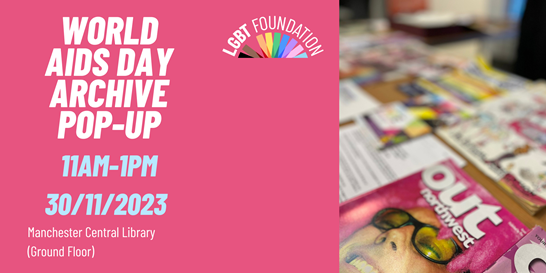
World AIDS Day Archive Pop-Up – 30 November, 11.00am – 1.00pm at Manchester Central Library

Follow this link for more information.  Please share with anyone you know who may be interested in attending.

Historians are learning more about how the Nazis targeted trans people

Thanks to Laurie Marhoefer, Professor of History, University of Washington for this article.
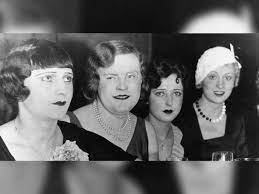
Patrons at the Eldorado, a popular LGBTQ cabaret in Berlin during the Weimar years. Herbert Hoffmann / ullstein bild via Getty Images

In the fall of 2022, a German court heard an unusual case.

It was a civil lawsuit that grew out of a feud on Twitter about whether transgender people were victims of the Holocaust. Though there is no longer much debate about whether gay men and lesbians were persecuted, there’s been very little scholarship on trans people during this period.

The court took expert statements from historians before issuing an opinion that essentially acknowledges that trans people were victimised by the Nazi regime.

This is an important case. It was the first time a court acknowledged the possibility that trans people were persecuted in Nazi Germany. It was followed a few months later by the Bundestag, Germany’s parliament, formally releasing a statement recognising trans and cisgender queer people as victims of fascism.

Up until the past few years, there had been little research on trans people under the Nazi regime. Historians like myself are now uncovering more cases, like that of Toni Simon.

Being trans during the Weimar Republic

In 1933, the year that Hitler took power, the police in Essen, Germany, revoked Toni Simon’s permit to dress as a woman in public. Simon, who was in her mid-40s, had been living as a woman for many years.

The Weimar Republic, the more tolerant democratic government that existed before Hitler, recognised the rights of trans people, though in a begrudging, limited way. Under the republic, police granted trans people permits like the one Simon had.

In the 1930s, transgender people were called “transvestites,” which is rarely a preferred term for trans people today, but at the time approximated what’s now meant by “transgender.” The police permits were called “transvestite certificates,” and they exempted a person from the laws against cross-dressing. Under the Republic, trans people could also change their names legally, though they had to pick from a short, preapproved list.

In Berlin, transgender people published several magazines and had a political club. Some glamorous trans women worked at the internationally famous Eldorado cabaret. The sexologist Magnus Hirschfeld, who ran Berlin’s Institute for Sexual Science, advocated for the rights of transgender people.

The rise of Nazi Germany destroyed this relatively open environment. The Nazis shut down the magazines, the Eldorado and Hirschfeld’s institute. Most people who held “transvestite certificates,” as Toni Simon did, had them revoked or watched helplessly as police refused to honour them.

That was just the beginning of the trouble.
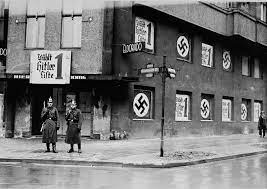
Nazi banners hang in the windows of the former Eldorado nightclub. Landesarchiv Berlin / US Holocaust Memorial Museum

‘Draconian measures’ against trans people

In Nazi Germany, transgender people were not used as a political wedge issue in the way they are today. There was little public discussion of trans people.

What the Nazis did say about them, however, was chilling.

The author of a 1938 book on “the problem of transvestitism” wrote that before Hitler was in power, there was not much that could be done about transgender people, but that now, in Nazi Germany, they could be put in concentration camps or subjected to forced castration. That was good, he believed, because the “asocial mindset” of trans people and their supposedly frequent “criminal activity … justifies draconian measures by the state.”

Toni Simon was a brave person. I first came across her police file when I was researching trans people at the United States Holocaust Memorial Museum. The Essen police knew Simon as the sassy proprietor of an underground club where LGBTQ people gathered. In the mid 1930s, she was hauled into court for criticising the Nazi regime. By then, the Gestapo had had enough of her. Simon was a danger to youth, a Gestapo officer wrote. A concentration camp was “absolutely necessary.”

I am not certain what happened to Simon. Her file ends abruptly, with the Gestapo planning her arrest. But there are no actual arrest papers. Hopefully, she evaded the police.
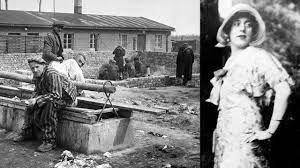
Other trans women did not escape. At the Hamburg State Archive, I read about H Bode, who often went out in public dressed as a woman and dated men. Under the Weimar Republic, she held a transvestite certificate. Nazi police went after her for “cross-dressing” and for having sex with men. They considered her male, so her relationships were homosexual and illegal. They sent her to the concentration camp Buchenwald, where she was murdered.

Liddy Bacroff of Hamburg also had a transvestite pass under the Republic. She made her living selling sex to male clients. After 1933, the police went after her. They wrote that she was “fundamentally a transvestite” and a “morals criminal of the worst sort.” She too was sent to a camp, Mauthausen, and murdered.

Trans Germans previously misgendered

For a long time, the public didn’t know the stories of trans people in Nazi Germany.

Earlier histories tended to misgender trans women, which was odd: When you read the records of their police interrogations, they are often remarkably clear about their gender identity, even though they were not helping their cases at all by doing so.

Bacroff, for example, told the police, “My sense of my sex is fully and completely that of a woman.”
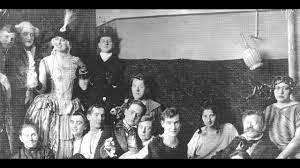
There was also confusion caused by a few cases that, by chance, came to light first. In these cases, police acted less violently. For example, there is a well-known case from Berlin where police renewed a trans man’s “transvestite certificate” after he spent some months in a concentration camp. Historians initially took this case to be representative. Now that we have a lot more cases, we can see that it is an outlier. Police normally revoked the certificates.

A through line to today

Today, right-wing attacks against trans people in the US are intensifying.

Though the American Academy of Pediatrics and every major medical association approves gender-affirming health care for trans kids, Republican politicians have banned it in 19 states, with even more moving to prohibit it.

Gender-affirming medicine is now over 100 years old – and it has roots in Weimar Germany. It had never before been legally restricted in the US Yet Missouri has essentially banned it for adults, and other states are trying to restrict adult care. A host of other anti-trans bills are moving through state legislatures.

I find it fitting, then, that “A Transparent Musical” recently premiered in Los Angeles. In it, fabulously dressed trans Berliners sing and dance in defiance of Nazi thugs.

It’s a reminder that attacks on trans people are nothing new – and that many of them are straight out of the Nazi playbook.

“The Log Books” makes LGBTQ+ history

The Log Books is an extraordinary, award-winning podcast documentary series telling untold stories from Britain’s queer marginalised voices and stories that are not usually featured in the media, or even in LGBTQI+ histories. Over three seasons the podcast has featured around 100 voices from across the UK.

Season 3 features eleven episodes and features stories including:

● Lesbians such as Sali Walker starting queer families in the 90s with sperm donors;

● Kinky club nights such as Sadie Masie, which mixed genders and sexualities;

● Hugo Greenhalgh and Euan Sutherland talking about their groundbreaking legal fight to equalise the age of sexual consent for gay men;

● Transgender teenagers such as Finn, who reached out for help from Switchboard;

● TV viewers’ memories of the lesbian kiss on Brookside and Queer As Folk; and

● The nail bomb at the Admiral Duncan gay pub in 1999.

The Log Books, produced by Adam Zmith, Shivani Dave and Tash Walker, has been collecting and sharing crucial heritage with a diverse cast of contributors and extensive research.
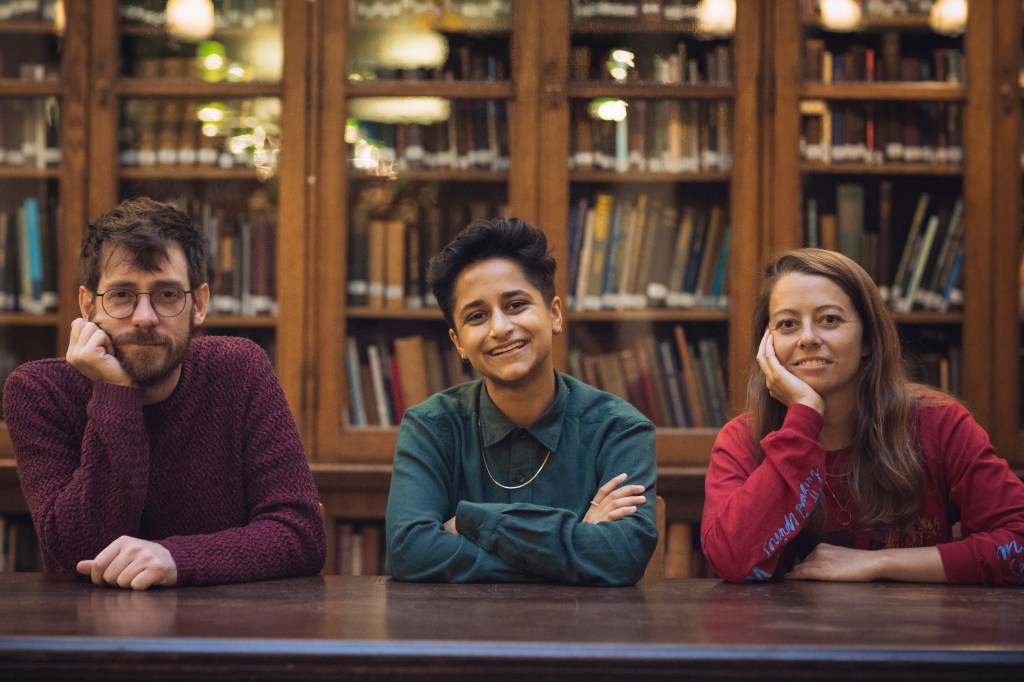
Adam Zmith, Shivani Dave and Tash Walker, producers of The Log Books – photo by Imogen Forte

The Log Books has closed in its current form, as its producers move forward to create new podcasts under their new production company Aunt Nell.

Stories + Strategies: diversifying our national LGBTQ+ heritage

Aunt Nell have engaged a freelance Project Manager for a year long project to gather diverse new queer oral histories from across the UK.

The UK’s queer history is endangered. Unheard stories are held by diverse LGBTQ+ people who often feel excluded from museums and society.

The production company Aunt Nell partnering with the museum Queer Britain will aim to increase recognition of oral histories as valuable and impactful research practice and resources – focussing on LGBTQ+ histories – and reduce barriers against full inclusion of queer heritage in the galleries, libraries, archives and museums sector.

Through active participation of underrepresented groups, they will disrupt traditional ideas of knowledge and heritage, empower people to see their stories as an essential part of history, and produce a high-profile podcast series that will democratise and diversify history.

They are currently looking for community groups interested in partnering with heritage institutions. Please get in touch if you’re interested in finding out more.
Cruella Suella

Suella Braverman had no evidence for her claim that “many” people pretend to be gay in order to “game” the UK asylum system, the Home Office has been forced to admit.

The sacked former home secretary made the allegation in September as she sought to shore up support for her flagship policy of deporting asylum seekers to Rwanda. The plan was deemed unlawful in the Supreme Court in a rare reprieve for hundreds of people who had been threatened with offshoring before their claims were decided.

Braverman, a former attorney general, told ITV on 27 September: “People do game the system. They come to the UK. They purport to be homosexual in the effort to game our system – in the effort to get special treatment – and it’s not fair and it’s not right … I’m afraid we do see many instances where people purport to be gay when they’re not actually gay.”

Her former department admitted it could not find any relevant information. Braverman’s homophobic falsehoods look like an attempt to mask her own cruelty and incompetence. Good riddance!
Hate Crime Event in Bury … The Colonial Legacy of Anti-LGBT+ Laws in Africa … Harvey Milk and Sylvester … Over 50’s Digital Cafe

News

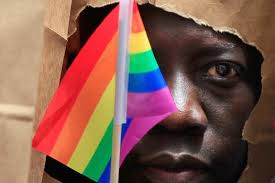
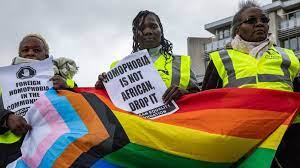
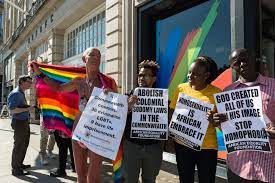
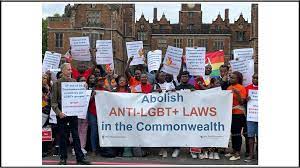
The colonial legacy of anti-LGBT+ laws in Africa

Namibia’s High Court will rule next May in a case that could see the southern African country overturn a colonial-era ban on same-sex relations.

Friedel Dausab, who is gay, is challenging the compatibility of the common law offence of sodomy and related offences with his rights under the constitution. Sexual contact between men is a criminal offence in Namibia but the law is seldom enforced.

Like many anti-LGBT+ statutes across Africa, the Namibian law dates back to colonisation and was retained on the books after independence in 1990.

In October, Mauritius moved to decriminalise same-sex relations when the Supreme Court in the Indian Ocean island nation struck out a law dating back to British colonial rule in 1898, saying it was unconstitutional.

Globally, 65 jurisdictions still criminalise same-sex relations, according to rights group Human Dignity Trust (HDT), and 31 of these are in Africa.

Here’s what you need to know about this colonial legacy in Africa.

Where is the colonial legacy still being felt most keenly?

Rights activists say abuses experienced by LGBT+ people today can often be traced back globally to a colonial legacy of discrimination, even though colonial powers like Britain, France and Portugal long ago decriminalised same-sex relations.

Given the size of its empire at the height of its power, British law still casts a long shadow in its former colonies.

According to HDT research, 13 former British colonies in Africa have laws that prohibit same-sex relations.

“The basis of many of the world’s anti-LGBT criminal laws is British colonialism,” said Téa Braun, chief executive of HDT.

This idea is also espoused by activists who challenge the notion — often voiced by lawmakers pushing for anti-LGBT+ legislation — that same-sex relations are un-African.

They point to historical examples of more fluid sexual behaviour across the continent.

“The British exported their legal systems … imposing them on societies where often consensual same-sex activity did not carry the same social and religious taboos,” said Braun.

By the time Britain legalised same-sex acts in 1967, many former colonies had gained independence and did not inherit the legal change, including Kenya and Uganda.

What about other colonies?

While Britain’s colonial legacy weighs heavy on LGBT+ communities in some African countries, it is not the case in every former colony.

Portugal was one of the main colonial powers in Africa and today, all five of its former colonies have decriminalised gay sex.

Guinea-Bissau was the first to do so in 1993 – becoming the first African country to legalise LGBT+ activity while Angola and Mozambique dropped the colonial-era “vices against nature” from their criminal codes in 2019 and 2015, respectively.

Gustavo Gomes da Costa Santos, a sociologist at the Federal University of Pernambuco-Brazil, said one possible reason Portuguese legislation did not have the lasting effect of British law was that it was only applied to colonies in 1954.

“We’re talking about the very late phase of the Portuguese colonial reign in Africa,” he said.

Former French colonies fell under the jurisdiction of the French Penal Code of 1791, which was centuries ahead of other European laws in decriminalising consensual same-sex activity.

But several former French colonies passed anti-homosexuality laws after gaining independence, including Algeria, Cameroon, Mauritania and Chad.

Away from colonial influences, some rights activists say foreign anti-LGBT+ religious groups drive the agenda in some countries while sharia is also used – for example in Somalia and some Nigerian states – to outlaw LGBT+ activity.

What is behind the current pushback on LGBT+ rights?

A recent wave of conservatism has swept across Africa with activists decrying an assault on LGBT+ rights, notably in east Africa.

In May, Uganda’s President Yoweri Museveni signed one of the world’s harshest anti-LGBT+ laws, including the death penalty for “aggravated homosexuality”, in defiance of Western condemnations and potential sanctions from aid donors.

Next-door, Kenyan authorities are considering similar measures to further penalise gay sex, as are lawmakers in Tanzania and South Sudan.

Some regional lawmakers frame the issue as an existential battle to defend what they see as African values, which they say have been battered by Western pressure to support gay rights. “In the case of Uganda or Nigeria and other cases, the current political elites are now (casting) homosexuality as something ‘un-African’ to enforce their power,” said Gomes da Costa Santos.

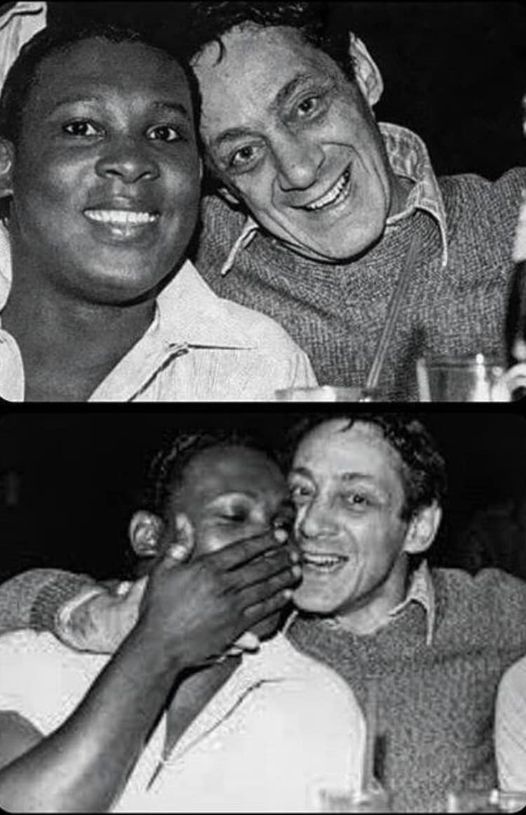
Harvey Milk and Sylvester

Harvey Bernard Milk (22 May 1930 – 27 November 1978) was an American politician and the first openly gay man to be elected to public office in California, as a member of the San Francisco Board of Supervisors.

Milk was born and raised in New York where he acknowledged his homosexuality as an adolescent, but chose to pursue sexual relationships with secrecy and discretion well into his adult years. His experience in the counterculture of the 1960s caused him to shed many of his conservative views about individual freedom and the expression of sexuality.

Milk moved to San Francisco in 1972 and opened a camera store. Although he had been restless, holding an assortment of jobs and changing addresses frequently, he settled in the Castro, a neighbourhood that at the time was experiencing a mass immigration of gay men and lesbians. He was compelled to run for city supervisor in 1973, though he encountered resistance from the existing gay political establishment.

His campaign was compared to theatre; he was brash, outspoken, animated, and outrageous, earning media attention and votes, although not enough to be elected. He campaigned again in the next two supervisor elections, dubbing himself the “Mayor of Castro Street”.

Sylvester performing at Harvey Milk’s Birthday

Sylvester James Jr (6 September 1947 – 16 December 1988), known as Sylvester and also the “Queen of Disco”, was an American singer-songwriter. Primarily active in the genres of disco, rhythm and blues, and soul, he was known for his flamboyant and androgynous appearance, falsetto singing voice, and hit disco singles in the late 1970s and 1980s. Here they are together at Harvey Milk’s birthday in 1978.

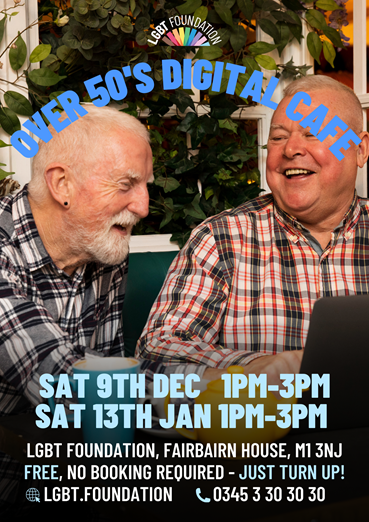
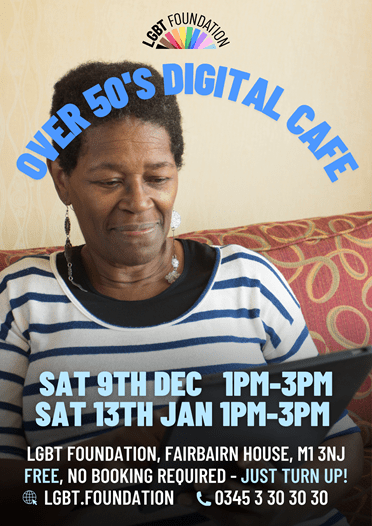
Over 50’s Digital Café

Over 50’s Digital Café on Saturday 9 December and Saturday 13 January, from 1.00 – 3.00pm at LGBT Foundation’s Community Hub at Fairbairn House, 72 Sackville Street, Manchester M1 3NJ

Visit Pride in Ageing’s Over 50’s Digital Café for coffee and a chat about the benefits of getting online. There will also be an opportunity to swap tips and tricks on using smartphones, tablets, laptops and other digital devices, how to save money and how to stay safe.

This monthly social space run by the Pride in Ageing programme is centred around LGBTQ+ people aged over 50, however any adult is welcome to attend. Whether you are a technology beginner or a tech expert all are welcome to the relaxed and LGBTQ+ friendly space. Free Wi-Fi is also provided throughout the session.

Please note: Unfortunately they cannot offer one-on-one troubleshooting or tech support as part of this session, but they can provide signposting to other relevant services who can help you. No booking required, just drop-in on the day.

For those who know me well!

Section 28 … Transgender Day of Remembrance … Sex and Sexuality During World War II … Rainbow Lottery

News

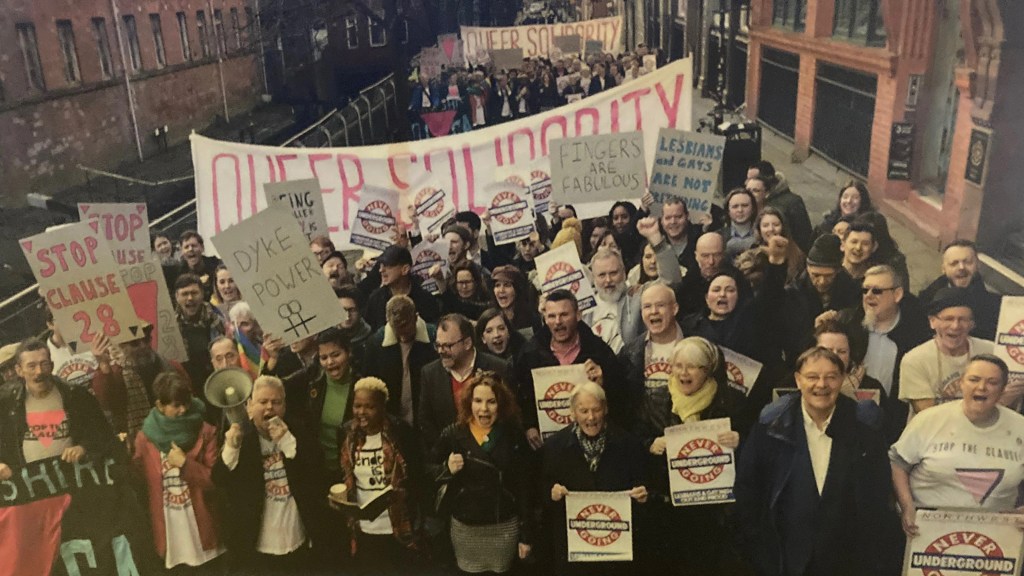
Section 28

Section 28 was a legislative designation for a series of laws across Britain that prohibited the “promotion of homosexuality” by local authorities.

It was in effect from 24 May 1988 to 18 November 2003 in England and Wales. It caused many organisations such as lesbian, gay, bisexual and transgender student support groups to close, limit their activities or self-censor.

This harmful legislation – prohibiting positive discussion of LGBT+ experiences in schools – was repealed 20 years ago. Age-appropriate LGBT+ inclusive education is currently a mandatory part of the Relationships, Sex and Health Education (RSHE) and research suggests a shift in societal attitudes

Reconstruction of Section 28 Demo, Manchester in 2018

Manchester Transgender Day of Remembrance Vigil

Transgender Awareness Week, observed from 13 to 19 November, is a one week celebration leading up to the Transgender Day of Remembrance, which memorialises victims of transphobic violence.

Each year on 20 November, we honour Transgender Day of Remembrance.

Monday 20 November, 6.30pm – 8.30pm at Vimto Park, 39 Sackville Street, Manchester M1 3WE (opposite the LGBT Foundation). 

This year Sparkle are collaborating with Not A Phase, TransCreative, Trans Pride Manchester, Manchester Pride and the LGBT Foundation. 

The service will be held in Vimto Park and then a procession will go to Sackville Gardens for candle lighting and laying flowers to rest.

Candles will be provided if you would like to light one to remember someone or to show your respect.

Let’s commit to creating a safer world for trans people

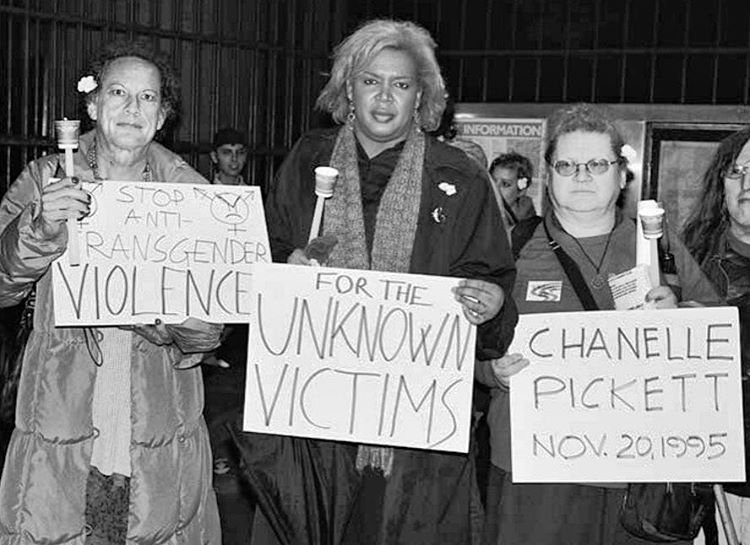
Each year on 20 November, we honour Transgender Day of Remembrance. In 1999, a small group of trans activists gathered to memorialise the lives of two black transgender women who were lost to violence.

The loss of Rita Hester and Chanelle Pickett became a catalyst for the trans community to record and memorialise the victims of violence who were misgendered, deadnamed, disregarded, and ignored as they deserved to be remembered – as their whole and true selves. 

Over the past two decades, this day has become a time for our community to come together to honour those we have lost, and to commit to creating a better and safer world for trans people.  

Thanks to the tireless advocacy of transgender activists, allies, and organisations, life for trans people has evolved significantly. There have been legal victories, more access to healthcare, greater visibility in media, and increased understanding of gender diversity. More people are beginning to become familiar with the transgender community, and this familiarity counteracts the dishonest tactics that extremist politicians use to score political points.

Unfortunately, backlash often follows progress. In America we have seen anti-trans legislation escalate alarmingly over the last few years. In 2023 alone, we saw more than 500 bills introduced that target LGBT+ rights, and more than 400 of these attacked the basic safety of the transgender community. Nearly 150 of these bills specifically aimed to restrict access to, or outright ban, lifesaving healthcare for trans youth.

This legislation is based on fear-mongering, misinformation, and outright lies that exploit the public’s relative unfamiliarity with transgender people and our needs. That hostile rhetoric sends the signal that it’s OK to attack transgender people simply because of who they are.

Extremist politicians target them in the media and attack their rights to healthcare, safety, and education. There are some people in our society who threaten their very right to live. But within the challenges, we find hope. We know that the trans experience goes far beyond violence, statistics, or reports. 

Trans people are out here thriving every single day, even in the face of systemic social and physical violence. We celebrate with each other when we are happy and support each other when we are down. We love hard, we laugh hard, and work toward our dreams. Allies are joining the fight, recognising the importance of standing up for trans rights and creating a more inclusive society. Organised advocacy efforts, legal battles, and social movements are gaining momentum, reminding us that change is possible.

Everyone deserves to be healthy, safe, and loved for who they are – and that includes transgender people of all ages. Trans people are vital and beloved members of our communities. We are brilliant, we are beautiful, and we are full of joy. Our lives have meaning – and we matter.

Sex and Sexuality during WWII

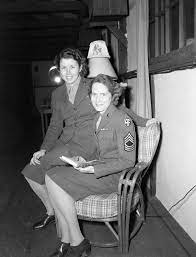
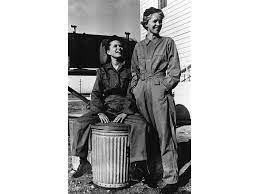
Officers and enlisted women of 3rd WAC Co. are shown in front of company area

Changing Perspectives during WWII

World War II was the first time in history that women were allowed to officially enter the military in any major capacity, outside of nursing. This change brought many white, middle-class women into the labour force for the first time and opened up opportunities to women and people of colour in jobs that would otherwise be denied to them. 

The Women’s Army Corps or WAC (originally the Women’s Army Auxiliary Corps) in the US was the only one of these groups to integrate women into its corresponding military branch fully. However, in the 1940s, there were much stricter ideas of gender norms, gender expression and heteronormativity. This meant there was significant pushback against the idea of women joining the military, as this was viewed as the epitome of masculine spaces. As a result, many suggested that women did not belong in the military, despite many women joining the WAC and excelling in their new roles.

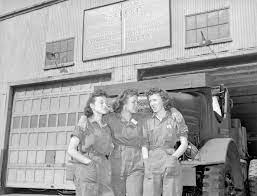
Three women mechanics employed at Hampton Roads Port of Embarkation

The Slander Campaign

There was a lot of concern about what women joining the military might mean. A slander campaign arose between 1943-1944 which claimed that women who joined the WAC were either promiscuous or lesbians. These rumours were sourced from several places. One is a prominent newspaper article claiming that WACs would receive free prophylactic equipment, just as the male GIs did. However, this was inherently false, one of the many double standards that women in the military were held to.

Cpl. Hamilton stands up out of the turret of a tank

Another source of the rumours was actually from male GIs. Many men felt threatened or uncomfortable by the presence of women in the military. The official purpose of the WAC was to “free up a man to fight” by taking over the many support roles in the military. However, for many GIs, this meant that WACs would be taking their relatively safe support role, and the men would be sent to a combat role. This perceived threat from the WAC fed into the slander campaigns against women in the military.

Two WACs who are returning to Italy after 30 day furloughs in the US wait to ship out

Propaganda and Femininity

To combat the slander campaign, the Director of the WAC, Oveta Culp Hobby, created propaganda with an ideal image of the WAC, calling for women to maintain their ‘femininity’ while in the military. One of the reasons we have photographs of WACs is this anti-slander campaign. These were propaganda images used to promote the idea of WACs being feminine, wholesome women who went to museums, not ‘loose women’ who went out drinking. There were also many others outside of the military who worked to support the WACs against the slander campaign, including Representative Edith Rogers who told Congress that “nothing would please Hitler more” than to discredit WACs and American women.

In addition to this wholesome propaganda for the WAC, the military had written legislation against homosexuality among service men and women. Despite this, many lesbians (and other LGBT+ service members) created their own space within the WAC. Although homosexuality was prohibited in the military, when it came to the WACs, higher-ups were more worried about the ‘appearance’ of lesbians in the WAC than their actual presence. The military did provide regulations for the “undesirable discharge of homosexuals,” but there was concern that if many WACs were discharged in this way, it would only add fuel to the slander campaign. Thus, officers were told to only consider undesirable discharge in the most extreme cases.

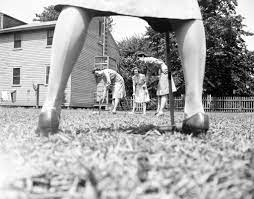
A number of WACs playing croquet in an open lawn area near a two story building

LGBT+ Women in the WAC

Because of this, many LGBT+ women were able to find their own place in the WAC, and develop their own culture within the military. Several veterans recounted having coded language to find other lesbian women and having more freedom in the WAC to express themselves in a less feminine way, if they so chose. Some veterans talked about joining the WAC to be with other women, while others discovered their sexuality after joining the WAC. Sentiment might vary between bases and units, as both straight and LGBT+ veterans from some bases said that “no one really cared” while others remembered paranoia and distrust surrounding the idea of homosexuality. Overall, because anti-homosexual legislation did exist, it was still a precarious existence for LGBT+ service members. After the war ended, and there was less need for an “all hands” mentality towards ending the war, efforts to remove lesbians and LGBT+ members of the armed forces increased.

WAC Medics, Pvt. Katherine Lucas and Pfc. Elsie P. Lanard are pictured fishing off a bridge

A lesbian WWII vet was renowned for standing up to Eisenhower. Was it all a lie?

One WAC in particular, Sgt Johnnie Phelps, talked about her experience as a lesbian in the WAC during WWII on several occasions. She joined the WACs initially out of patriotism, and once in the service, realised she was attracted to women. “The thing I felt most was the fact that I was doing something for my country. When I tell you that I was patriotic then, I was patriotic. Of course, I’m also patriotic today. Gay I may be.”

Portrait of Sgt Johnnie Phelps circa 1940s.

Phelps initially served as a WAC medic in the south pacific and was able to find a small community of LGBT+ women there. She received a purple heart for her service and earned enough points to go home, but the war was still on, so she re-enlisted to go to Europe. However, by the time she got there, the war was over, and she served as part of the Army of Occupation. Phelps was stationed at Frankfurt, as the European Motor Sergeant, under the direct command of General Dwight D Eisenhower.

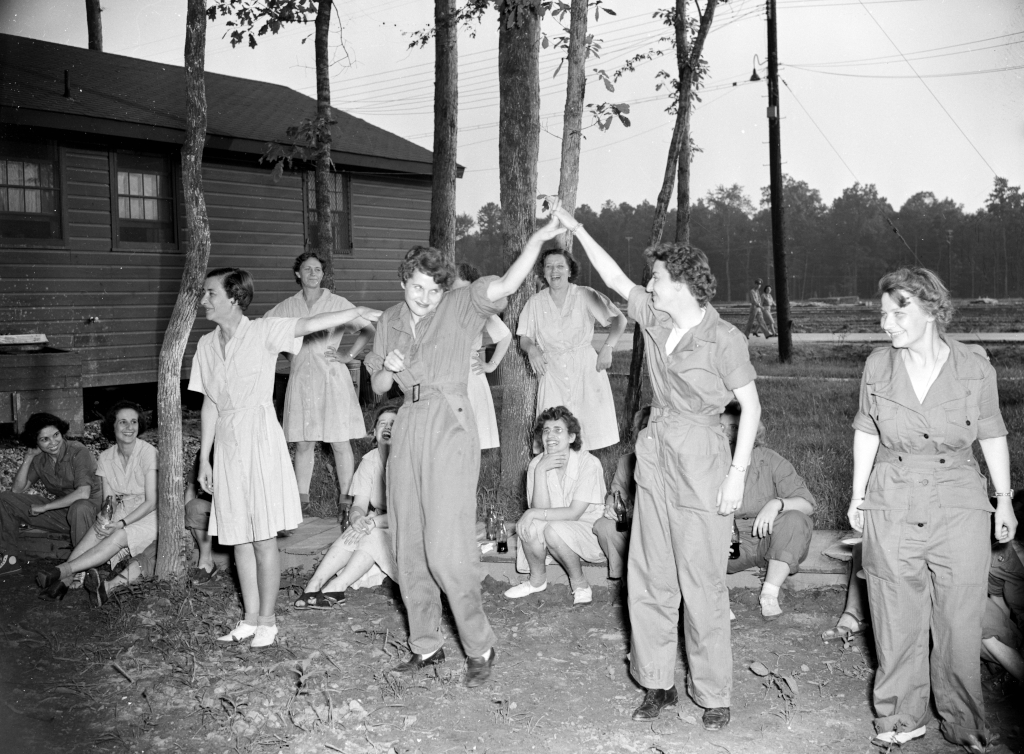
Lt Coleson, Lt Daneys, Lt Jayne House, Lt Sarah Jencks, and other WACs dancing at a campfire event

At this time, General Eisenhower received a report of a lesbian presence in the battalion in which Phelps served, and was given orders to remove them. “The General called me in and gave me a direct order. ‘It’s been reported to me that there are lesbians in the WAC battalion. I want you to find them and give me a list. We’ve got to get rid of them.’ I said ‘Sir, if the General pleases, I’ll be happy to check into this and make you a list. But you’ve got to know, when you get the list back, my name’s going to be the first.’ … His secretary at the time was standing right next to me. She just looked at him, and she said ‘Sir, if the General pleases, Sergeant Phelps will have to be second on the list, because mine will be first. You see, I’m going to type it.’ He sat back in his chair, looked at us, and then I said, ‘Sir, if the General pleases, there are some things I’d like to point out to you. You have the highest ranking WAC battalion assembled anywhere in the world. Most decorated. If you want to get rid of your file clerks, typists, section commanders, and your most key personnel, then I’ll make that list … If you want me to get rid of these women, I’ll get rid of them, but I’ll go with them.’ He just looked at me and said “Forget that order. Forget about it.”

“That was the last we ever heard of it. There were almost nine hundred women in that battalion. I could honestly say that 95 percent of them were lesbians.” It is thanks to Phelps and her strong stance against removing LGBT+ members from her WAC battalion that their base did not go through ‘lesbian witch-hunts’ as many other bases did, after the war.

As it turns out, Phelps’ piece of now-ubiquitous gay history may be a marriage of myth and fact. The story most famously attached to her, however, is now believed to be just lesbian folklore. 

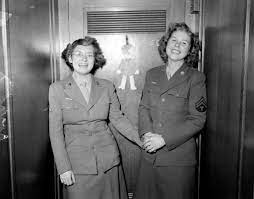
Two WACs stand in front of a door with a paper doll WAC mascot hung on the door. The women are holding hands.

LGBT+ Community

Statistically we know that many of the WACs, GIs, nurses and other service members were lesbians. These women fought not only sexism, but homophobia and heteronormative ideas about gender and gender expression, all to carve out a place for themselves within the military. They proved that not only could women be part of the military, but they could at once be patriots and part of the LGBT+ community.

Rainbow Lottery Super Draw!

With the nights drawing in and Christmas just around the corner, we’ve got a fantastic prize to share with you for November’s Super Draw – a £1,000 gift card for John Lewis & Waitrose!
Whatever they want under the tree this year, you’ll be able to one-stop shop your Christmas present shopping at John Lewis – or pull out all the stops for your festive feasts with Waitrose!

Prefer a little more flexibility? The winner can even choose to take the cash!

The special prize draw will take place on Saturday 25 November. If you already have tickets, you don’t need to do anything extra, but you can always buy extra tickets.

Thank you and good luck!

Buy tickets here.

Happiness! Exhibition at the Museum of Liverpool … Website to track global LGBT+ laws … Rustin

News

Happiness! Exhibition at the Museum of Liverpool

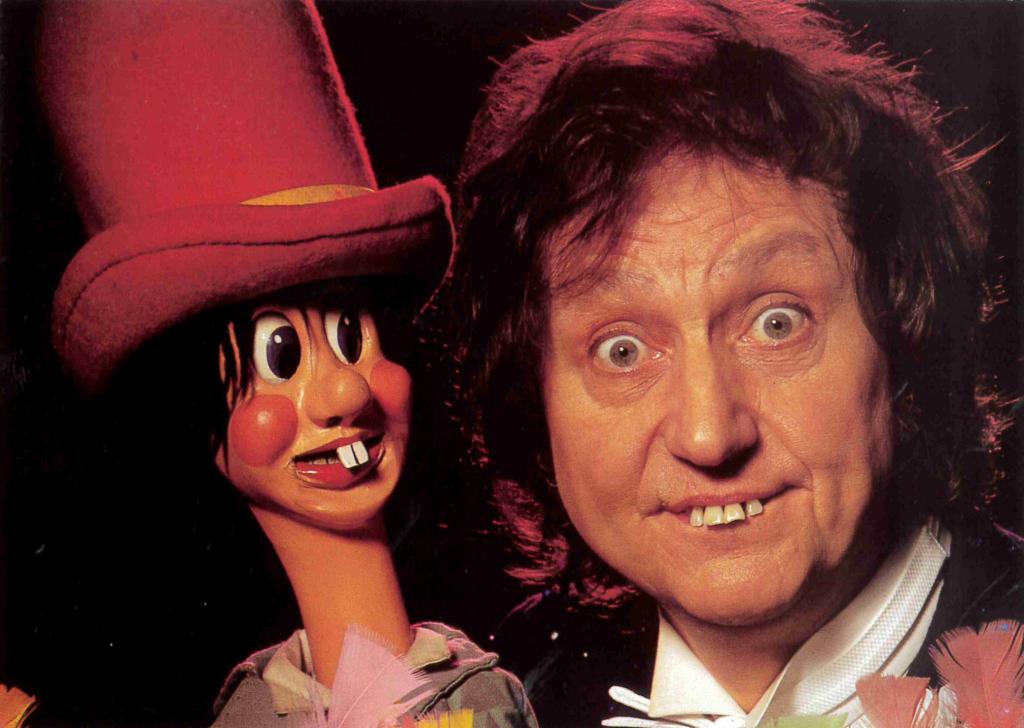
Happiness! – an exhibition celebrating Sir Ken Dodd is the first major exhibition on a British comic in a national museum.

We travelled from Manchester Victoria Rail Station to Liverpool Lime Street Rail Station and walked to The Pump House in Albert Dock for lunch.  

Happiness! in the near by Museum of Liverpool is an exhibition filled with fun and humour. Celebrating one of Liverpool’s iconic comedians, the exhibition charts the life and career of the legendary Sir Ken Dodd, and his connection to today’s comedic stars.

This exhibition highlights Ken Dodd the entertainer – comedian, performer, actor, and singer. Ken’s unique blend of whimsical, physical, surreal and theatrical humour transformed the UK’s comedy scene.

Fondly remembered for the magical world he created, including Ken Dodd’s Diddymen, his tickling stick and the jam butty mines, his true passion was his natural gift for making people laugh.

Doddy and Dicky Mint – Photo: Peter Rogan

The face that launched a thousand quips

Ken’s act was very visual, playing on his unusual looks; his unruly hair (that he could never quite tame) and his protruding teeth, damaged in a childhood accident. He presented himself as “The Comedian who is Different”.

Bursting onto the stage in bright costumes with a variety of props, Ken would wow audiences with his quick fire wordplay, jokes and whimsical stories. It was all delivered with incredible energy and pace. The ventriloquist element stayed in his act throughout his career, but it was the tickling stick which became truly iconic.

Test your chuckle muscles

The exhibition also looks at why laughter is good for our health: some claim it takes 43 muscles to frown and 17 to smile. While there is no scientific basis for this, such urban myths convey a very important message – smiling and laughing makes us feel happier!

Some photos can be seen here.

Website to track global LGBT+ laws

In 2008, Dan Leveille, 35, was studying computer science at the Rochester Institute of Technology when California voters passed Proposition 8, eliminating the right of same-sex couples to marry in the state. It was a blow to the LGBT+ community, including Leveille, who found himself wanting to bring order to how he thought about LGBT+ rights in the US.

His solution was Equaldex, a project that visualises the state of LGBT+ rights around the world. The site has become a trusted resource for governments, the media, and LGBT+ travellers everywhere.

There is a system on the site called the Equality Index, which ranks legal rights and public opinion. The most LGBT+ friendly countries are Iceland, as number one, with Denmark, Norway. Malta, the Netherlands and Canada up there.

The Middle East and Africa are generally the most hostile to LGBT+ people in terms of both the laws and public opinion.

Rustin

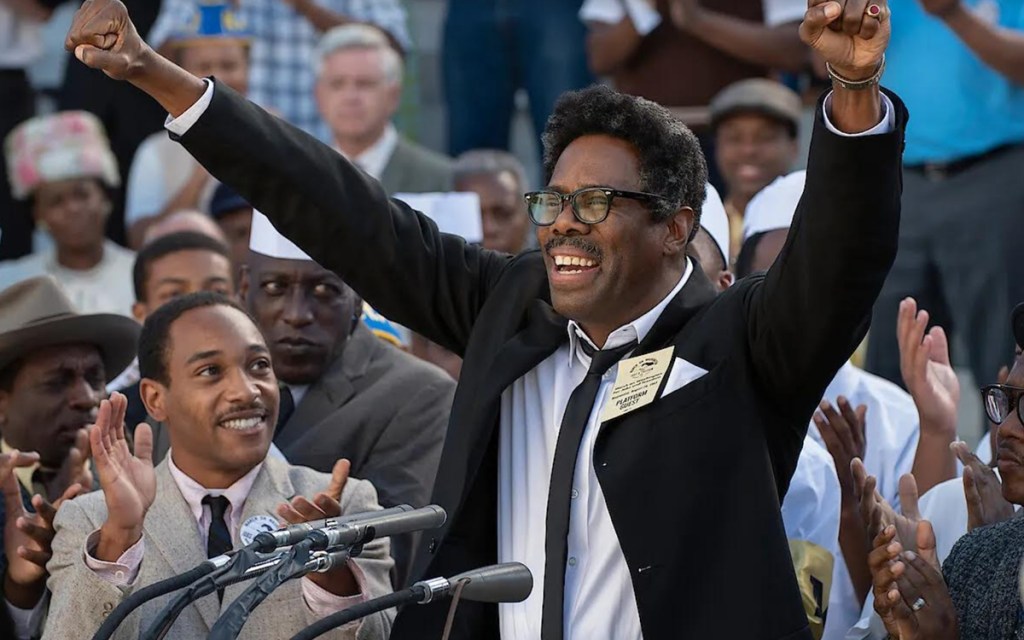
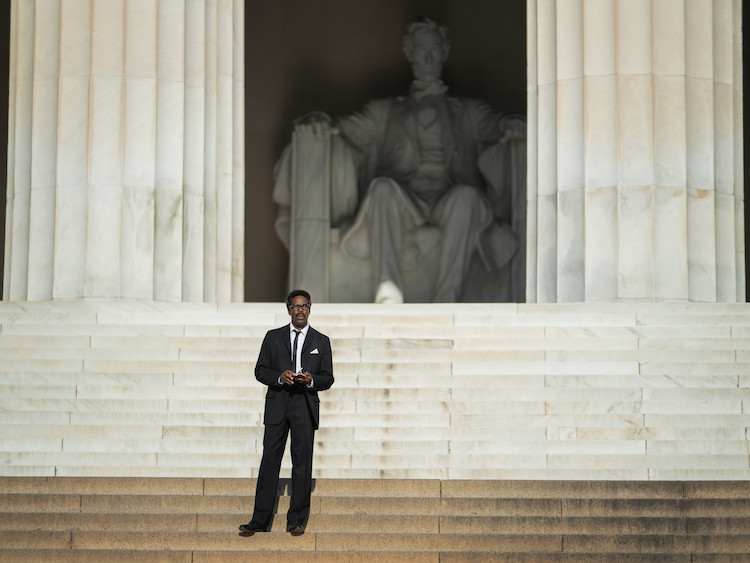
Coleman Domingo in “Rustin” available on 17 November on Netflix. Credit: Netflix

Probably the most high-profile piece of LGBT+ filmmaking of the upcoming season is this biopic about Bayard Rustin – the gay black architect of 1963’s world-changing March on Washington.

Starring Emmy-winner Colman Domingo in the title role this ambitious fictionalised portrait of an extraordinary, history-making gay hero shines a long overdue spotlight on a man who dreamed of a better world.

Bayard Rustin: Things to know before seeing “Rustin” movie

The film focuses on Rustin’s time as a close confidant of King and the mastermind of the 1963 March on Washington for Jobs and Freedom.

Despite Rustin’s amazing activist skills, he was ignored and pushed to the back of the bus by homophobic black leaders in the Civil Rights Movement.

“He was ostracised particularly by black leaders because they were homophobic. They said he would bring disgrace on them because he was gay,” Angela Bowen, assistant professor of women’s studies at Cal State Long Beach, said.

“Bayard knew they were little minded, and he was ahead of his time,” she added.

Colman Domingo as Bayard Rustin in “Rustin”. Credit: Parrish Lewis / Netflix

In 1960, while leading the push for protests at the National Democratic Party Convention in Los Angeles, Rustin was attacked as an “immoral element” in the Civil Rights Movement by Congressman Adam Clayton Powell Jr. According to John D’Emilio’s book, “Lost Prophet: The Life and Times of Bayard Rustin,” Powell Jr phoned King and threatened to publicly charge that King and Rustin were lovers. King withdrew his support for the protests at the convention and removed Rustin from his staff.

“Bayard was so incredibly talented,” Nancy Kates, co-producer and director of the documentary “Brother Outsider: The Life of Bayard Rustin,” said.

“He would rise to the top of something, then somebody would take a pot shot at him because of him being gay or issues around his sexuality and that would force him to leave or they’d fire him.

Then he’d rise to the top again. He was like the Energizer Bunny,” Kates said. “He refused to be vanquished by people because they didn’t approve of him.”

Rustin also has been largely forgotten in history books.

Here are seven things to know about Rustin.

  • Born in 1912 in West Chester, Pennsylvania, Rustin was raised by his grandparents and deeply influenced by his grandmother, a fierce advocate for social justice.
  • By the 1940s, Rustin was a committed missionary of  nonviolence. Rustin spent three years (1943-46) in a federal penitentiary as a conscientious objector to World War II (He was a Quaker).
  • In 1947, Rustin organised the first “Freedom Rides” through the South. The riders were beaten, arrested and fined. Rustin served 22 days on a North Carolina chain gang.
  • Rustin, 40, was arrested on 21 January 1953, in Pasadena, and convicted of “vagrancy” for violating a morality offence that was often used to discriminate against and criminalise LGBT+ and Black communities, but has been repealed. At the time, homosexuality was not only still classified as a mental illness, but also illegal in many parts of the nation. Members of the LGBT+ community also were persecuted under various morality codes in many states, including California. Rustin was arrested for having consensual sex with two white men in a parked car, but the white men were not arrested. After the arrest, Rustin was convicted, served 50 days in jail, and was forced to register as a sex offender. Gov Gavin Newsom posthumously pardoned Rustin in 2020 for the more than 70-year-old “vagrancy” conviction.
  • In 1956, during the initial stages of the Montgomery bus boycott, Rustin met the 26-year-old King Jr. Rustin schooled the young leader in the mechanics of running a nonviolent protest. “Rustin’s greatest historical legacy is that he did more than anyone to bring the message of militant nonviolence to the United States and to the black freedom struggle,” John D’Emilio, author of “Lost Prophet: The Life and Times of Bayard Rustin,” said.
  • In 1963, Philip Randolph, president of the powerful Brotherhood of Sleeping Car Porters, tapped Rustin to organise the March on Washington. Rustin and Randolph saw the event as far grander than ending the rule for sitting at the back of the bus. They envisioned it as a “catalyst, which mobilises all workers behind demands for a broad and fundamental programme of economic justice.”
  • Rustin, who died in 1987 at the age of 75, was awarded a Presidential Medal of Freedom in 2013 by President Barack Obama.

Ted & Noel … Brigitte Bond … Loads of Animals are Gay … Report into Housing for Older LGBT+ People in Scotland … Coming Out in Later Life

News

Ted & Noel wins Iris Prize Audience Award

The short film “Ted & Noel” has picked up the Co-op Audience Award at this year’s Iris Prize LGBTQ+ Film Festival (voted for by the public). 

This moving documentary focuses on Gay Liberation Front activist Ted Brown and his journey and campaigning after losing his civil partner Noel, who was subjected to homophobic abuse at a London care home.

The film will be part of a best of Iris Prize 2023 screening programme in cinemas in early 2024 (dates To Be Confirmed) and is available to watch for free on the Channel 4 website – https://www.channel4.com/programmes/ted-noel

Brigitte Bond – Transwoman and Iconic Beat Girl

(Thanks to Siobhan Donegan for this article)

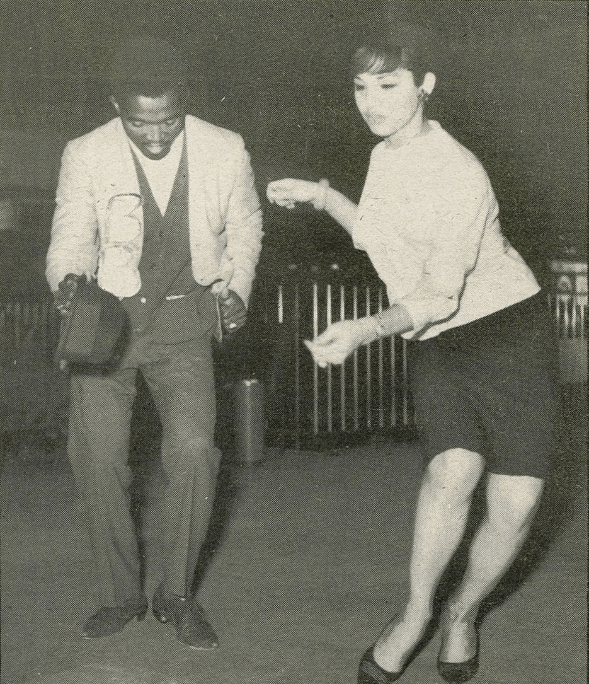
Brigitte Bond in the 1960s was an actress, a recording artist, who was dubbed by The Daily Mirror as “The Queen of Bluebeat”, a Cabaret singer, a Mod girl and she was a truly stunning pioneering Transgender woman. Furthermore, she was the inspiration behind “The Beat Girl” character / logo designed by Hunt Emerson for the late 1970s Midlands Ska band The Beat.  

This image of a young mod girl in sharp 60s fashion dancing to Ska music, is not only instantly recognisable to people connected and fans of Ska music, but also iconic. Furthermore, the Beat Girl has grown beyond the band’s logo and has become a symbol for Ska music and youth subculture for over 40 years.

Brigitte Bond who was also known as Bridgette Saint John, whose actual birth is unknown: she was born sometime time between 1943-45, and the best estimate that has been suggested is February – May 1944. Brigitte, according to the press was / is French or Maltese – she stated that she was born in Malta of an Italian mother and a French father. She was apparently a mod girl, a huge Ska fan and in fact a Bluebeat / Ska singer and went on to record for the UK label Blue Beat.

For those old enough to remember, in the late 70s – early 80s there was a revival of Two-Tone Ska music in the UK with bands such as The Specials, Madness, Selector and of course The Beat. The iconic Beat Girl logo designed for The Beat was inspired by a picture featured in the music paper The Melody Maker of 19 May 1979 which showed Brigitte doing the twist with famous Ska legend Prince Buster. There are certain apocryphal stories behind this photograph, for example that Brigitte was the girlfriend or wife of Prince Buster and that the picture was taken outside his recording studio in Jamaica.

However, this now famous picture was from when she and other mod ska fans welcomed Prince Buster to England at Heathrow Airport on the 25 February 1964 and shows them both doing the twist. At the time the story was featured in The Daily Mirror under the headline “The King and Queen of Bluebeat Meet”. As previously mentioned, it was during the Ska revival that Hunt Emerson drew inspiration for the creation of the character of The Beat Girl by referencing this picture for a logo for the first album for the band The Beat.

It is not altogether clear if the 19-year-old Brigitte debuted as a singer at Southall Community Centre, or the famous 2i’s Coffee Bar. This venue was on Compton Street in Soho, which in the 1960s was known as the “square mile of sin”, obviously as it was known for sex, but also fashion and coffee shops. The 2i’s Coffee Bar was not only the birthplace of British Rock n’ Roll but also the first Rock club in Europe.

When Brigitte was showcased here in 1964, she was scouted / discovered and signed under Tom Littlewood the manager of the club. Subsequently her first single 45rpm featured the tracks “Bluebeat Baby” and “Oh Yeah Baby”. Some commentators have unkindly stated that Brigitte’s single was a cash-in on Millie’s “My Boy Lollipop”, however, both singles were released at roughly the same time.

Brigitte was also a bit of a rebel. In June 1966 Brigitte climbed onto Dr Billy Graham’s car to protest his comments on the fashionable, but controversial at the time, miniskirt. The ‘establishment’ evangelical preacher Dr Graham was in London for a month and had ‘denounced’ the miniskirt. Brigitte’s ‘protest’ had occurred during Graham’s visit to Soho on the 17 June. Dr Graham had stated that miniskirts are ‘sinful’ or ‘bring sin’; an angry Brigitte declared that her skirt was only “six inches above my knees, how can it be sinful? Sometimes I wear a skirt ten inches above my knees.” She further stated that it was not sinful, just fashionable. Brigitte’s protest and picture appeared on the front page of The Sunday Mirror at the time.

The Flamingo Club at the time had become well known for Jazz, R&B and West Indian Music. As a result of the Jamaican musical style known as Ska or Bluebeat being incorporated into the musical tastes of the Mod Movement, the Flamingo in Soho, which was to become primarily a mod haunt, started a weekly Bluebeat night – and Brigitte performed here. The original clientele had been a rich mixture of mods, West Indians, LGBT+ people, sex workers, musicians, celebrities, gangsters and US military service men.

The Flamingo is also where Brigitte famously met Sir John Waller who was a poet of note and very open about his homosexuality. He was also an aristocrat – 7th Baronet of Braywick Lodge. Waller was due an inheritance of £250,000, which adjusted for inflation is about 4 million pounds, however, he could only claim his full inheritance once he was married and had a male heir. Waller had arranged to meet the very attractive Brigitte and proposed to her, which she accepted. However, when it was revealed that Brigitte was a transgender female and wouldn’t be able to provide Waller with an heir the marriage was called off. However, Waller had proposed to many women and his ‘proposals’ were really made in terms of a business arrangement.

However, Brigitte didn’t let this setback interfere with her career. The Bluebeat nights went on for a further two months, the Flamingo finally closed at the end of the 60s. Brigitte appeared in “Titbits” in May, which played off the fact that her name was Bond with the headline “licensed to Thrill” and being a teenager attended a mod weekender (on Whitsun weekend) in Margate. She also went on to perform for a week in Mayfair at the Astor club, which famously had the intoxicating mix of Royalty and gangsters, who as one shrewd commentator stated are people who both have too much money to know what to do with. She also had film roles in Don Levy’s “Herostratus” released in 1967, and had a part in the James Bond film “Casino Royale”.

Brigitte Bond faded into obscurity after 1976, however, I would like to think that this amazing trans woman is still alive.

Loads of Animals are Gay

Animals can be gay – and it’s totally normal. (Getty Images)

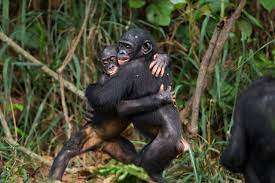
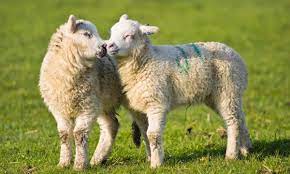
New research has found that same-sex activity is common and totally normal for most animals, including fish, birds, an array of mammals and even insects.

The study, led by scientists at Estación Experimental de Zonas Áridas, in Spain, examined all scientific literature relating to same-sex activity in the animal kingdom and created a database of their conclusions.

The same-sex sexual activity recorded included courtship, mounting, genital contact, copulation (sexual intercourse) and pair bonding. Same-sex animals also raise young together.

Eighty-seven per cent of the interactions involved mounting and genital contact.

The research revealed that same-sex sexual activity has been identified in more than 1,500 animal species, including spiders, fish, reptiles, birds and mammals.

Overall, same sex contact was reported in 261 mammalian species, representing approximately four per cent, belonging to 62 families and 12 orders.

Some penguins are gay, get over it. (Getty Images)

The scientists found that it was more common in mammals than other species, such as birds or insects, with more than 80 per cent of mammal groups experiencing same-sex behaviour in a number of long-term field studies.

The behaviour was recorded slightly more in males, with male-on-male activity observed in 199 species, while for the females it was seen in 163 species.

There were a variety of explanations for this, with some hypotheses suggesting that animals might engage in same-sex relationships as a “consequence of mistaken identity”, “limited availability of individuals of the opposite sex” or “indiscriminate sexual behaviour.”

Same sex interactions in animals an ‘evolutionary conundrum’

The authors of the study wrote: “Same-sex sexual behaviour is any behaviour that is usually performed at some stage during reproduction with a member of the opposite sex, but which is instead aimed towards members of the same sex.

“Same-sex sexual behaviour as it is used here does not denote sexual orientation (ie an overall pattern of sexual attraction / arousal over time), sexual orientation identity (the sexual orientation that individuals perceive themselves to have), categories of sexual beings (homosexuals, heterosexuals, etc), nor sexual preference.”

The scientists overwhelmingly concluded that same-sex activity can play an “adaptive role” in “maintaining social relationships and mitigating conflict”, but noted that since the relationships do not “contribute directly to reproduction”, it is considered an “evolutionary conundrum”.

However, they warned that their findings should not be used to analyse the evolution of sexuality in humans.

The study’s authors also argued that since the relationship between animals and sexuality has only recently been investigated by ecologists, it is likely to be under-researched, and could benefit from further investigation.

Homophobia is found in only one of the identified 1500+ species – human beings!

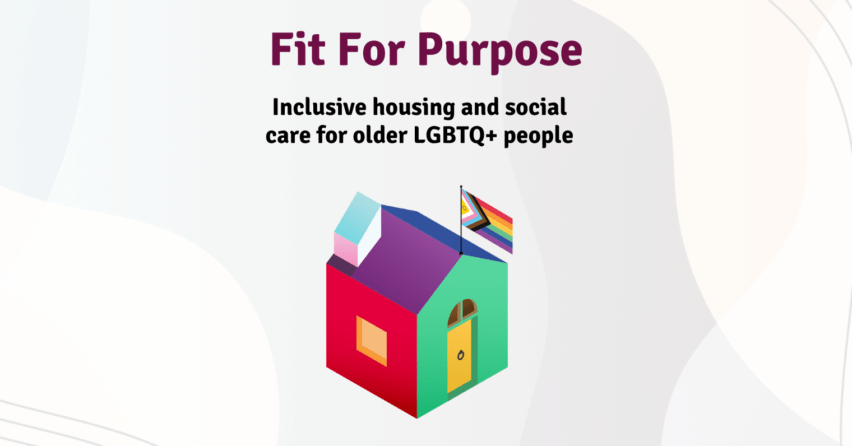
Report into housing and social care for older LGBT+ people in Scotland

LGBT Health and Wellbeing, a Scottish LGBTQ+ charity, have recently released a report into inclusive housing and social care for older LGBT+ people in Scotland, which you can find here

Their report highlights a number of themes we’re all familiar with, from families of choice to going back into the closet. While its focus is on the older LGBT+ community in Scotland, it’s clearly very relevant to Manchester’s development at Russell Road in Whalley Range and is well worth a read!

Coming Out in Later Life – Feature in Sunday Times

Journalist Katie Gatens is looking to profile 5 people who have come out for the first time in later life. This will appear in the Sunday Times early next year.

If you would be interested in being featured please let me know here and we can connect you with Katie.