David Hockney Exhibition … A Snapshot of HIV Through a ‘Mancunian’ Gay Lens … With Love, Mr Gay … Can You Help?

News

Thanks to Bruce for the following write up:

DO NOT MISS THIS MARVELLOUS EXPERIENCE!!

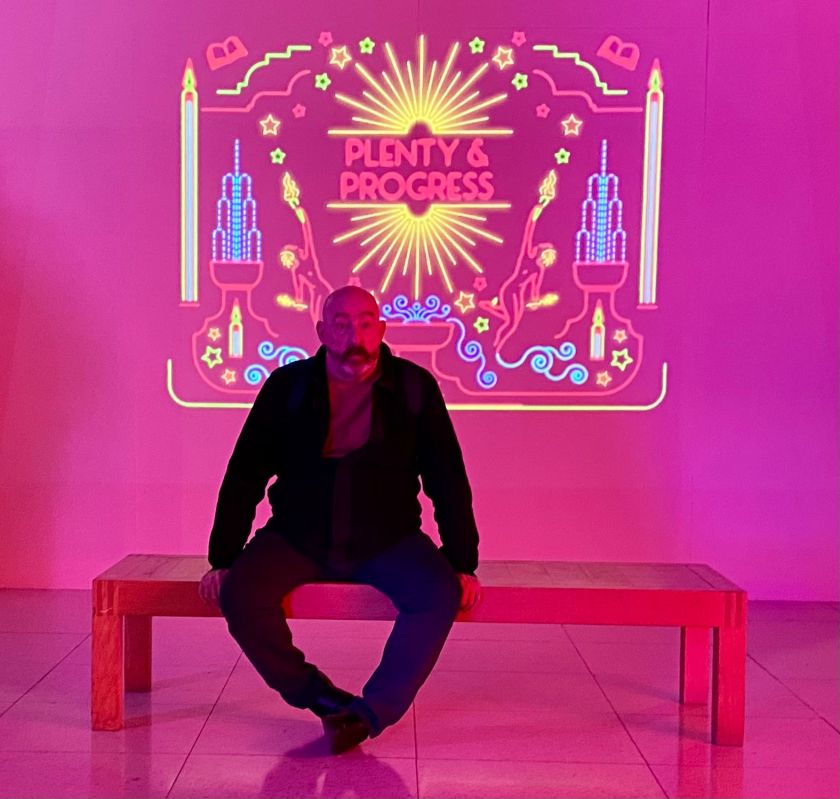
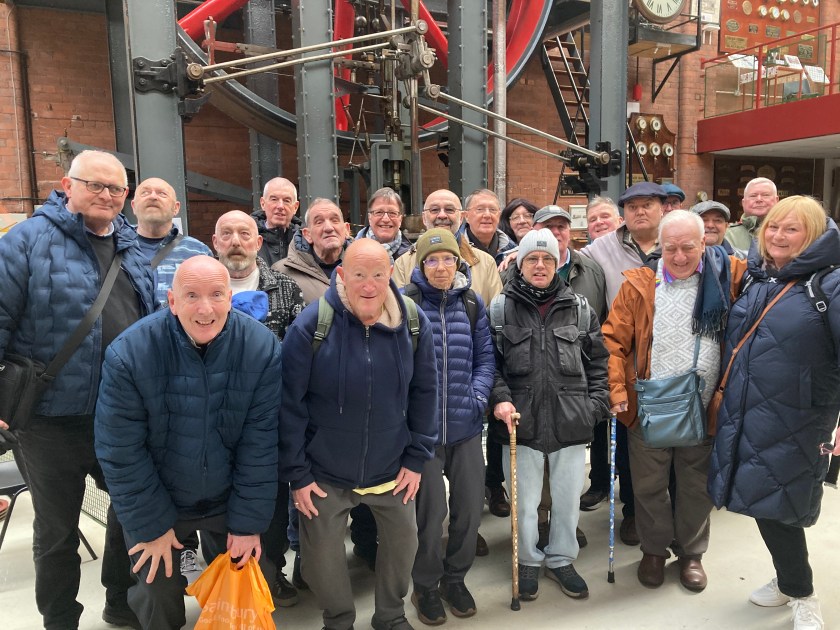
Today, friends from Out In The City visited the magnificent Aviva Studios to see the exhibition, David Hockney: Bigger & Closer (not smaller & further away). With huge state-of-the-art projections and a revolutionary sound system you are invited to experience the world through David Hockney’s eyes.

After opening at Lightroom in London to rave reviews, this is the first time the show has travelled outside of the capital. Get an insight into the legendary artist’s process as you journey through six different chapters of his work, seeing the room around you light up and change.

With a unique personal commentary by David himself and an original score by composer Nico Muhly, the show, directed by Mark Grimmer of 59 Productions, offers a holistic artistic narrative. The rousing music brought a tear to my eye at one point, I was so moved by the experience, being a big fan of his work.

Hockney’s lifelong fascination with media and technology takes centre stage. The exhibition showcases his experimental approach, from innovative photography techniques to iPad drawings, revealing how he continually pushes artistic boundaries.

The experience is divided into six themed chapters, each offering a window into his creative process. From his Los Angeles period to recent works in Normandy, visitors will witness the artist’s journey through landscapes, perspectives and artistic mediums.

What truly sets this show apart is its immersive nature. The four towering walls are just the beginning—the floor becomes part of the canvas, making it a full sensory feast. Each segment surprised and delighted me in equal measure, combining Hockney’s work with his narration in a way that was both playful and profound. I often laughed out loud or marvelled at his boundless creativity and childlike wonder.

More photos can be seen here.

A Snapshot of HIV Through a ‘Mancunian’ Gay Lens

As paramedics treated a man in a car crash, a spotlight was shone on a need for change.

The original 1986 article from the Manchester Evening News appears in the exhibition

In 1986, two ambulance workers in Oldham were embroiled in a so-called ‘Aids scare’ after treating a man involved in a car crash.

Emergency measures were put into place for the paramedics after the man was confirmed to be living with HIV – with the vehicle locked away and withdrawn from duty, equipment quarantined and the two men undergoing ‘safety checks’.

It was later reported in the Manchester Evening News that the scare was ‘over’, with the staff members’ chances of catching the disease described as ‘remote’. But that coverage lingered on in the minds of many Mancunians. And it lingered alongside more-extreme examples like the John Hurt-narrated advert featuring toppling oversized tombstones warning people not to die of ignorance.

Some eight years earlier, Paul Fairweather, a prominent LGBT+ and HIV activist, had just moved to Manchester to work for the Campaign for Homosexual Equality (CHE), which was the main gay rights organisation in the city at the time.

Paul in the 80s (Image: Paul Fairweather)

Paul, who awarded an MBE in the King’s New Year Honours List in 2023, was also at the forefront of the local response to the growing HIV pandemic in Manchester and across the North West helping to organise meetings, writing articles in the gay press, like Mancunian Gay magazine, and lobbying for much-needed support services for those diagnosed.

LGBT activist Paul Fairweather was awarded an MBE in the King’s New Year Honours List in 2023 (Image: Paul Fairweather)

Paul was one of the six people who founded the Manchester AIDSLine in 1985 – one of only a handful of services across the entire country at the time that provided peer support, advice and mentorship.

“In those early days, it was very unclear how HIV was transmitted,” Paul, now 68, explains. “There was quite a lot of ignorance and fear, and a lot of people wrongly thought in the mid-80s that it only affected gay men.”

Data from the UK Health Security Agency (UKHSA) found that 6,008 people were diagnosed with HIV across England in 2023. Nearly half (49%) of all new diagnoses first made in England were among people exposed through heterosexual contact.

In 1990, five years later after its foundation, the AIDSline was renamed as the George House Trust – a name that remains today. The charity has continued its efforts to help those living with HIV and to help shift narratives ever since. It will celebrate its 40th anniversary in 2025.

The city centre exhibition features posters, adverts and articles from within Paul’s archive

To mark its landmark year, an exhibition is currently being held at the Kimpton Clocktower Hotel’s The Refuge – A Snapshot of HIV Through a ‘Mancunian’ Gay Lens. The exhibition features a number of articles, posters and documents from the mid-80s from within Paul’s personal archive – including that story of the ambulance workers.

The exhibition also features sensationalised mainstream media coverage, community responses from the Mancunian Gay magazine of the mid-1980s, and posters promoting the charity’s vital services and support. There is also the 2009 Manchester Evening News article from when Paul, then a councillor for Harpurhey, revealed his own HIV diagnosis on stage at a vigil.

“I kept all of the stuff going back to the 70s when I moved here,” Paul said. “It’s fascinating looking back at things, it reminds me of the times that were there and that were happening really.

“I’d forgotten how, even with the health service, how people were so ignorant and scared. Even health care professionals didn’t realise the extent of the situation and were part of some of the mass concerns.

“The story about the ambulance workers – they were taking someone living with HIV to hospital and they found out he had AIDS. They quarantined the ambulance because they thought the ambulance would somehow give people AIDS.”

The exhibition, which runs until the end of January, has been in place at the Oxford Road hotel since December and has already received a good response. Paul said: “People have been wandering past to stop and look at it – it’s a chance for us to share the work we do with people who might not be aware.”

Three years ago, the government launched its first ever HIV Action Plan for England which set an ambition between 2019 and 2025 to reduce the number of HIV diagnoses – including an 80% reduction in new HIV infections in England.

Considering that the figure of those first diagnosed in England in 2023 was 2,810, a figure nearly the same as in 2019, we are clearly off-track to achieve the 2025 goal, and therefore the 2030 goal.

Whilst Professor Susan Hopkins, the Chief Medical Advisor at the UK Health Security Agency, said its target is unlikely to be reached next year, the 2030 target of zero new HIV transmissions was still achievable.

Speaking about what still needs to be done, Paul said: “We do a lot of work with young people in school. They’re much more aware of the LGBTQ+ community and HIV to the point that sometimes they know more than their parents or grandparents do.

The ‘A Snapshot of HIV Through a ‘Mancunian’ Gay Lens’ exhibition is at Kimpton Clocktower Hotel until the end of January

“I still think we need to raise more general awareness around the messaging of U=U, which means that anybody on effective HIV treatment with an undetectable viral load cannot pass HIV on. There are also people out there who might be benefitting from getting PrEP, which reduces the risk of getting HIV, who aren’t aware of it.”

And Paul says there are plenty more things in the works to celebrate the 40th anniversary of George House Trust in 2025, as well as campaigns to continue the important work they do. “I still can’t believe it’s 40 years,” he says of its foundations.

“40 years isn’t that long really, it isn’t a massive amount of time and there is still lots of work to be done.”

You can find more information about HIV and the work that George House Trust does here. ‘A Snapshot of HIV Through a ‘Mancunian’ Gay Lens’ is at Kimpton Clocktower Hotel until the end of January.

“With Love, Mr Gay” – Written and performed by Josh Val Martin – Part Of “Fringe Highlights”

Monday, 20 January – 7.30pm – 9.30pm and Tuesday 21 January – 7.30pm – 9.30pm

The Kings Arms, 11 Bloom Street, Salford M3 6AN

Pay What You Can from £4 to £20 + fees

“Dear Mr. Gay, if you move my bin again, I will get an ex-mercenary to destroy you … from flat 2.”

This (real) letter was blue-tacked to my flat’s front door, and thus sparked a neighbourhood feud over both my sexuality, and the placement of the blue bins.

Determined to find peace, and not let the conflict consume me, I sought advice and interviewed experts: a dog trainer, a historian, a Middle East peace negotiator and, of course, my Auntie Clare.

With Love, Mr Gay is my true story, featuring cabaret, comedy, interviews and showtunes, as I’m accompanied by the personification of a laughing Buddha statue from B&M, who acts as my unlikely spiritual guide.

Join us on our heartfelt and hilarious mission to find fabulous ways of end deeply personal battles – even when the idea of peace seems impossible.

Buy tickets here.

Can You Help?

My name is Jason D’Suvio and I am a 48 year old gay man studying a Bsc in Psychology at Arden University in Manchester.

I am undertaking my final major researching project and will be completing it on Gay Men and their use of Gay Dating Apps with a focus on the experience of users and the pros and cons they may have identified.

Part of my project involves recruiting participants that are aged over 55 for a brief interview about their experience with face to face or online. The project will have full ethical approval from the university and a Participant information sheet, consent form and debrief form will all be provided.

The aim of the study is to help identify the benefits an drawbacks of these apps and the importance of having social opportunities for older gay men in the community.

If you think you could enquire amongst your members if any one would be happy to participate it would be a great help. Thanks, Jason
Contact us here and we will forward information.

25th Anniversary of the Lifting of the LGBT Ban in the Armed Forces … Pentagon Settles with LGBT Veterans … New Union … Roger’s Story

News

25th Anniversary of the Lifting of the LGBT Ban in the Armed Forces

On 12 January 2000, the UK government announced that it would lift the ban on gay people serving in the Armed Forces.  

It followed a lengthy legal battle and a case heard before the European Court of Human Rights. While gay men and women had served in many conflicts, being gay in the British military was illegal and could have resulted in instant dismissal or a possible jail term.  

Gay service members were often stripped of medals and many were dismissed from the military solely on the grounds of their sexuality. 

The Imperial War Museum North will celebrate the anniversary of the lifting of the ban on gay service members.

In collaboration with Fighting with Pride, hear the personal stories of two LGBT+ veterans impacted by the ban, and learn about the long-lasting impact it had on their lives and how they campaigned to have it lifted. 

This is a free event in the Liebeskind Learning Space, but with limited availability, on Sunday 12 January 2025 from 11.00am to 12.00pm and from 2.00pm to 3.00pm.

Please reserve your tickets at the information desk on the day. 

Pentagon settles with US LGBT+ veterans discharged under discriminatory policies

United States Defence Secretary Lloyd Austin

The United States Defence Department has reached a settlement with veterans who were discharged under discriminatory policies like “Don’t Ask, Don’t Tell,” potentially allowing more than 30,000 to receive benefits.

Pending approval by a federal judge, the settlement agreement will update discharge papers for US LGBT+ veterans who were separated from the military, removing references to their sexual orientation, while allowing those who were denied honourable discharges the right to seek an immediate review.

The agreement stems from federal civil rights litigation, Farrell v. Department of Defence, filed in August 2023 by a group of LGBT+ veterans.

“Coming from a family with a long history of military service, I was beyond proud to enlist in 1985 to contribute to my country,” said Sherrill Farrell, a US Navy veteran who was the lead plaintiff in the case.

“When I was discharged because of my sexual orientation, I felt that my country was telling me that my service was not valuable – that I was ‘less than’ because of who I loved,” she said. “Today, I am once again proud to have served my country by standing up for veterans like myself, and ensuring our honour is recognised.”

The lawsuit came as the Pentagon under the Biden-Harris administration worked to streamline the process by which veterans harmed by “Don’t Ask, Don’t Tell” – and anti-LGBT+ discriminatory policies that came before – can seek redress.

Last summer, President Joe Biden issued pardons to thousands of service members convicted under the Uniform Code of Military Justice’s former Article 125, which criminalised sodomy, and was rewritten in 2013 to proscribe only forcible acts.

New Union

The New Union is located on the corner of Princess Street and Canal Street in Manchester, adjacent to the Rochdale Canal.

The Union Hotel was built in 1865 and the name refers to the union of countries in the Commonwealth at that time. 

The building’s stained glass windows depict those countries including Canada, New Zealand, Australia, India and New Foundland.

It has been a gay venue for as long as anyone can remember and in 1965, the landlord was briefly sent to prison for “outraging public decency” for running a public house of ill repute.

The name was changed to the New Union in the 1970s and the pub was extended in the mid 1990s to cater for the increasing number of visitors to the Gay Village.

Roger’s story

Roger was referred by his GP to the LGBTQ+ group, Silver Pride, in Didcot, South Oxfordshire. He told about his life and experience:

“I told my parents I was LGBT back in the late 80s. Because they were of a certain generation, they didn’t really accept it. So, after a while it wasn’t really spoken about. I’m not going to criticise them; they were very good parents. it’s just a shame that they didn’t really accept me as me.

I feel sort of like people say, ‘oh, you’ve come out’ and you do come out, but you have to keep doing that because you keep on meeting new people, you see. But it’s a very private thing – you don’t have to come out. People don’t say, oh hello, I’m straight or heterosexual or whatever do they?

I was a member of a very, very conservative church in Swindon, which I left in 2019. I was 21 when I joined. Because I was only young, I thought if I joined the church, it’d stop me being gay. Obviously, that’s not the case! And I left because of how they treated gay and trans people – very, very sad.

I moved back to Wantage and joined my local church and although they don’t do same-sex marriages, they have changed a lot. I have told my vicar and she seems quite positive.

About a year ago I visited my GP and said that I was LGBT and they told me about a Social Prescriber at the surgery who could help me find other people to chat to. I think it was Mandy who wrote to me back then and I’ve been going along to the Silver Pride group since February 2024.

I like going along to the group; they’re very friendly. It’s Kate and Gaynor and they make you feel so welcome, you can relax and don’t have to hide anything. They’re just very nice people. There’s a man who goes with his sister and it’s nice seeing her supporting him to go along, you know. So yeah, I quite enjoy going.

I went to Pride in Oxford in the summer. It was very good. I have to travel for anything LGBT because I’m in a small rural community; it is isolating at times. But I enjoy going to London – I’ve got a few friends there and there’s a higher percentage of gay people in London than there would be around here.

I also go to Bible study at a local church and attend ‘Open Table’, an LGBT+ service at Reading Minister Church. I’ve always been a churchgoer. It’s always been a very, very big, big thing for me. Although a lot of LGBT people are not into church, because of how we’ve been treated over the years. There’s this one guy at Silver Pride, I think he was brought up Catholic but he’s anti-church. Almost all my socialising is church, church, church and this Silver Pride group is the only thing that isn’t church related.

I have a very quiet life. I like seeing to my garden. I go to the market and see my extended family and have a few trips to London or Oxford. I think I’m so privileged to live where I grew up and I enjoy life very, very much. I’m very, very blessed.”

Look Back at 2024 … Life of Bi … Quentin Crisp … Liechenstein

News

Out In the City’s “Look Back at 2024

Meetings & Trips

1,210 people attended 60 meetings.

1,691 people attended 103 trips including:

32 trips to concerts at the Bridgewater Hall (attended by 327 people);

3 coach trips to Jodrell Bank, Samlesbury Hall and Maurice Dobson Museum (attended by 76 people); and

Christmas Meal (attended by 73 people).

Website

660 articles published over 99 blog posts. We have 414 subscribers.

87,992 website views by 11,816 visitors from 97 different countries.

Rainbow Lottery

£1,864 raised for Out In The City.

£2,150 cash and 84 extra tickets won by 35 people.

Media

Various members have been interviewed and contributed as follows:

  • Centre for Ageing Better organised an exhibition “See and Be Seen” in London.
  • Interviewed by ITV (and ITVX website) for video about Canal Street.
  • Interviewed by Amy Prescott, researcher at Brunel University, London for a project on “Socially Inclusive Ageing Across the Lifecourse”.
  • Interviewed by Bianca from Centre for Ageing Better on what can be done to improve the lives of older people.
  • Interviewed by The Times about coming out in later life.
  • Barclays Bank showed the video made in 2023 (for Pride in Ageing) in all Barclays Bank branches during month of June.
  • Six members of Out In The City were filmed in connection with the Over 50s Digital Café and the Derek Jarman Pocket Park by Pride in Ageing at the LGBT Foundation.
  • Interviewed in connection with HIV activism for Manchester Pride. The film was launched at the Candlelit Vigil.
  • Rainbow Lottery shone a spotlight on Out In The City whilst revealing the week’s winning numbers.
  • Interviewed by Matthew Walker who is making a documentary about Section 28.
  • Interviewed by Mike Sweeney on BBC Radio Manchester on “Is Greater Manchester a good place to grow old in?”.
  • Interviewed by Manchester Central Library regarding Out In The City activities which will form part of a podcast.
  • Interviewed by Emma Goswell on BBC Radio Manchester on “Pride in Ageing”.
  • Interviewed by ITV (Good Morning Britain) outside Church House to commemorate 60 years since the meeting on 7 October 1964 that began the modern movement for LGBT equality.
  • Interviewed on Broadcast Radio (Wythenshawe FM) about Out In The City.
  • Interviewed by Joely Bell, student journalist at the University of Salford to chat about lesbian life in 1990s Manchester for a feature article.
  • Article about Out In The City published in the Age Friendly newsletter.
  • Scott Hale from the Institute of Human Viralogy at the University of Maryland, Baltimore, USA was looking for short written accounts by people who have been affected by HIV or use PrEP as prevention for a World AIDS Day event in Maryland. Two contributions were included.
  • Norman Goodman’s story is featured in Age UK’s report “You are not alone in feeling lonely: Loneliness in later life”.
  • Recorded a podcast with Heart Radio to be broadcast in the new year.
  • Interviewed for The Sun Online about loneliness and older people.
  • We are currently working with 2 students doing research – Poppy Sullivan at Manchester Metropolitan University (photography project) and Jason D’Suvio at Arden University (Gay Men over 55 and Dating Apps).

Laughter, Independence, Kindness and Support

Immeasurable.

“Life of Bi” – Podcast Episode 37

In this episode of the extremely fun and thought-provoking podcast “Life of Bi” (available on all podcast platforms) Monica Pearl discusses some thoughts on Queer Friendship.

Veteran professor and HIV/AIDS activist Dr Monica Pearl is in conversation with Mary Higgins and Ell Potter about her experiences with ACT UP and the unique and under-studied intricacies of queer friendship.

A perfect antidote and/or accompaniment to the festive season when the emphasis is on “family time”.

Quentin Crisp-mas

I hadn’t realised previously that Quentin Crisp was born on Christmas Day, 25 December in 1908.

While travelling on a bus recently, I was called “an old queen” as I accidentally jostled a whippersnapper while taking my seat. At first, I was offended, but as I started to spit out a response, I thought of a certain Old Queen of England and instead my retort was: “Oh, sweetie dear, you simply have no idea…”.

“Life was a funny thing that happened to me on the way to the grave.” 1980 photo by Simon Dack

Quentin Crisp was a British writer who really gained the world’s attention after the 1975 airing of a television adaption of his 1968 memoir, “The Naked Civil Servant”.

He was a flamboyant, fey man who wore makeup and painted his nails. He worked as a rent boy as a youth, and then spent three decades making money as a figure model for art classes. The interviews he gave about his unusual life attracted increasing public curiosity and he was soon in demand for interviews where he told tales of his highly individual views on social manners and the cultivation of style. He was also frequently harassed, insulted, and beaten.

Born Denis Charles Pratt, he left home to lead a life that was not based on anything more than completely being his newly invented persona, “Quentin Crisp”. Not only did he have an attention-getting appearance, his expressions of his queerness attracted a great deal of curiosity among his fellow humans.

He started to speak about his life and his views in his ever changing solo stage show, which was very popular in Britain and the USA.

Many critics claimed that Crisp didn’t do anything to actually help members of the LGBTQ community, but he was always a brave supporter of freedom in gender and sexual expression. Throughout his long life, he remained highly independent, but he continued to share his beliefs and observations through his books, stories, quips, and stage and film performances. The way he lived his life advocated that a positive outlook and dedication would help one succeed in life.

Crisp was Oscar Wilde’s perfect progeny, with calculated caustic confabulations, open queerness, and witty, winning obstinate opinions toward anything conventional. He caused a bit of a stir in the traditional Britain of the 1950s, 1960s, and 1970s. In 1981, he moved to New York City and brought along his wit and eccentricity. Crisp completely charmed the city, and he became the very essence of the modern urban bohemian.

Crisp resided in a single room in the East Village from 1977 to 1997. He remained fiercely independent and unpredictable to the end. He caused controversy and confusion in the LGBTQ community by jokingly calling HIV/AIDS “a fad”. Still, he was always in demand from journalists seeking a juicy soundbite, and throughout the 1990s, his commentary was still requested. You could consistently count on Crisp to say something quotable.

During his two decades in Manhattan, Crisp wrote eleven books, plus contributed reviews and magazine articles, and acted in several films, including playing a touching and dignified Elizabeth I in Sally Ann Potter’s luscious gender-bending “Orlando” (1992), loosely based on Virginia Woolf’s 1928 novel “Orlando: A Biography” starring the always daring Tilda Swinton in the title role.

While filming “The Bride” (1985), he became friends with Sting who was playing Dr Frankenstein. Crisp was the inspiration and subject of Sting’s beautifully brilliant song “An Englishman In New York” (1988). In 1986, Sting had visited Crisp in his Bowery apartment and was told over dinner, and in the three days that followed, what life had been like for an out-of-the-closet, fey, queer man in the very homophobic Britain of the 1920s to1960s. Of living in New York City, Crisp told Sting: “I looked forward to receiving my naturalisation papers so that I could commit a crime and not be deported.” When Sting asked him what kind of crime, Crisp explained: “Something glamorous, non-violent, with a dash of style. Crime is so rarely glamorous these days.” Sting was both shocked and fascinated. His song includes these lyrics: “It takes a man to suffer ignorance and smile. Be yourself no matter what they say.” The black-and-white video for the song was directed by David Fincher, and features scenes of Sting and Crisp. At the end of the video, as the song fades, Crisp says: “If I have an ambition other than a desire to be a chronic invalid, it would be to meet everybody in the world before I die … and I’m not doing badly.”

The kids won’t understand this, but Crisp’s New York telephone number was listed in the phone book. He felt it was vital that he speak with anyone who called. Crisp: “If you don’t have your name in the phone book, you’re stuck with your friends. How will you ever enlarge your horizons?” His openness to strangers meant accepting dinner invitations from almost anyone. He expected that the host to pay for dinner, but Crisp felt he earned it by regaling his terrific, sometime terrifying tales.

Liechtenstein marriage equality law takes effect

A law that extends marriage rights to same-sex couples in Liechtenstein took effect on 1 January.

Lawmakers in the small European country that borders Switzerland and Austria approved a marriage equality bill in May 2024. Liechtenstein is the last country in which German is the primary language to extend marriage rights to same-sex couples.

Same-sex couples have been able to legally marry in Switzerland and Austria since 2022 and 2019 respectively. Same-sex marriage has been legal in Germany since 2017. Liechtenstein’s first-ever Pride event took place in 2022.

Christmas Meal … Henry Gerber – 100 years ago … Rainbow Lottery … LOUD Cabaret

News

Christmas Meal

This year 73 members of Out In The City enjoyed a meal at the 1853 Restaurant.

As the capacity of the restaurant is only 50 people we had two Christmas meals! We took over the restaurant on Thursday with the balance attending on Friday where there were other members of the public present.

The 1853 is a training restaurant run by students studying Hospitality and Catering. In every aspect the service was excellent, the atmosphere was friendly and relaxed and the food was of high quality.

We shall definitely be returning next year.

More photos can be seen here.

Henry Gerber – 100 years ago

Did you know the documented fight for LGBT+ equality in America started decades before the 1969 Stonewall Uprising?

While the groundbreaking protest blazed a trail for present day LGBT+ rights, the movement can be traced back to 1924, when a Chicago man named Henry Gerber formed the Society for Human Rights.

This month marks 100 years since Gerber launched what’s largely regarded as the country’s first-ever gay rights group. On 10 December 1924 he published a newsletter, Friendship and Freedom, for distribution among its small membership.

Unfortunately, the organisation was short lived. Within months Gerber and fellow members of the group were arrested on obscenity charges. Though the charges were eventually dropped, the legal fees bankrupted Gerber and the scandal cost him his job forcing the group to disband.

Only two issues of Friendship and Freedom were printed and no copies are known to survive today, however a review described the first issue as including a Walt Whitman poem, an essay on Oscar Wilde and an article on “self-control.”

Gerber died just over fifty years ago on 31 December 1972, at the age of 80, living long enough to see the Stonewall Uprising and the start of a new era of LGBT+ rights activism.

Rainbow Lottery Super Draw!

Our Christmas blockbuster Super Draw is BACK this festive season, and we’re spreading some holiday cheer! Your support of Out In The City means you’re already in with a chance to win a whopping £3,000 Christmas cash bonus on Saturday 21 December – but you can always top up your tickets for extra chances to win!

The possibilities for spending your prize are endless:  

  • Home looking a little tired? Spruce up your living space with a New Year’s makeover!
  • Into Tech and Gadgets? Upgrade your gadgets or treat yourself to the latest tech innovations. Whether it’s a PS5 Pro, the new iPhone 16, or smart home devices, the choice is yours.
  • Hit the January sales! Hit the shops and indulge in a shopping spree, treating yourself and your loved ones to special gifts and holiday essentials.
  • Fancy a getaway? Plan the vacation you’ve always dreamed of, whether it’s an escape to a winter wonderland or a planning ahead for some summer sun
  • Or why not give a little back? Spread the joy by giving back to your favourite charities, contributing to a cause that holds a special place in your heart, or even planting trees!

Please support Out In The City by buying a Rainbow Lottery ticket or two (or more!)

With each Rainbow Lottery ticket, you are not just entering to win exciting prizes, you are also supporting our mission to support older LGBT+ people.

It’s a vital part of our fundraising as we receive 50p for every £1 spent and you have the chance to win cash prizes each week from £25 for three numbers up to a jackpot of £25,000 for six numbers – while helping us to achieve more for the LGBT+ communities over 50 years.

Your regular weekly tickets already enter you into the draw to win this fantastic prize – but did you know you can now top-up your tickets, just for the Super Draw weeks!? And just imagine what you could do with this huge prize …

Buy tickets here.

LOUD Cabaret – Thursday, 19 December 8.00pm

LOUD Cabaret is back with another fabulous line-up of LGBTQ+ talent!

LOUD showcases the most fabulous of rising stars from across Bury and beyond. Expect tantalising musicians, side-splitting comedians, captivating dancers and a line-up of talented additions for your delight on a monthly basis. Thursdays have never been so exciting!

December’s event will feature Alexa VoxTequila Thirst, and Josh Jones. Your host for the evening will be Mancunian writer, actor and activist Nathaniel J Hall, Artistic Director of Dibby Theatre.

Tickets: £11 standard / £9 subsidised / £13 supporters (inc fees)

The Box @ The Met, Market Street, Bury BL9 0BW

Christmas Poem … Gay Penguin … Emilia Perez … Lisa Power

News

A king penguin has been renamed after a sexing mix up (Peter Macdiarmid / Getty Images)

Female Penguin Renamed After Park Staff Discover She’s In Fact a Gay Male

Staff at a wildlife park who were bemused by female king penguin Maggie’s inability to lay eggs – despite flirting and lovemaking with males in her enclosure – have learned the truth behind the mystery.

The 10-year-old bird, it turns out, is male. And gay.

Since renamed Magnus, the penguin lives at Birdland Park and Gardens, in Bourton-on-the-Water, Gloucestershire, which has the UK’s only king penguin breeding colony.

The colony is made up of four other birds: 30-year-old Bill, 24-year-old Frank, Seth, the world’s oldest living king penguin at 39, and Spike, 17. Bill was originally thought to be male but was later discovered to be female. Magnus was brought to Birdland from Odense in Denmark in 2016 as part of a breeding programme to boost numbers.

“Magnus seemed to settle in well, even catching the attention of fellow penguin Frank,” a spokesman told The Telegraph. “But when keepers observed ‘Maggie’ attempting to mate with Frank, suspicions grew. A feather sample was sent for DNA testing and the truth was revealed: Magnus is definitely male.”

Alistair Keen, Birdland’s head-keeper, said the discovery of Magnus’ real sex presents “another unique hurdle” in efforts to establish a successful breeding programme because it leaves just one female bird in the colony.

“It’s fascinating, however, to have confirmed what we’ve long suspected, and we remain committed to supporting these incredible birds in every way possible,” he added.

A new female penguin is expected to arrive from Germany in January 2025.

Given that Magnus is a male, it turns out he has been engaging in same-sex sexual activity.

The children’s book And Tango Makes Three was inspired by the real-life coupling of male penguins Roy and Silo at New York’s Central Park Zoo. The title is frequently included in book bans by anti-LGBTQ+ conservatives who want to prevent children knowing about homosexuality.

Sphen and Magic, a pair of male gentoo penguins at Sea Life Sydney Aquarium, also made headlines around the world and were dubbed gay icons for their love story. They adopted and raised two chicks: Sphengic (Lara) was born in 2018, followed by Clancy two years later.

Fans of the birds were left heart-broken in August when Sphen died aged 11.

In the wild, when a penguin’s partner dies the living one will often search for them, so staff at the Sydney aquarium decided it would be best to show Magic that Sphen died, to help him see that “his partner wouldn’t be returning”.

Penguin-keeper Renee Howell described the moment Magic saw Sphen as deeply emotional because he started singing, with the wider colony then joining in.

In 2019, Heythrop Zoo, in Oxfordshire, threw a lavish wedding for “inseparable” penguin couple Ferrari and Pringle, including a ride in a Bentley and a fish wedding breakfast.

Emilia Pérez

“Emilia Pérez” has won best film at the European Film Awards. The musical also claimed prizes for best director, screenplay, editing and best actress for Karla Sofía Gascón.

Karla Sofía Gascón is the first openly trans actor to win best actress at Cannes for her role in Jacques Audiard’s audacious musical, Emilia Pérez.

The 52-year-old Gascón, who was born and raised near Madrid and has spent the bulk of her career acting in Mexican telenovelas, plays the drugs kingpin Manitas, who fakes his death, transitions from male to female and reinvents herself as Pérez, a socially conscious activist.

Accepting her prize, Gascón was very emotional and dedicated the prize to trans people in Europe. She said she had chosen to wear a blue dress because she believed “deeply” in European values. “There are European roots of many human rights and laws”, she said. “We have been pioneers in the world in passing laws that make life better for many people.”

Gascón herself transitioned at the age of 46. Back then, she told herself: “I do it now, or I never do it.” She continues to have the support of her wife, whom she has known since they were teenagers, and their daughter, who is now 13.

Veteran Welsh LGBTQ+ Activist Celebrated as a Game Changer

When Lisa Power MBE came out in the 1970s, there were few icons to draw courage and inspiration from. “I had a choice between Radclyffe Hall – whose The Well of Loneliness is the most miserable novel in the English language – and Beryl Reid in the film The Killing of Sister George, drunk as a skunk sexually assaulting nuns in a taxi,” Lisa recalls. 

It’s all the more fitting, then, that after a lifetime of fighting for gay rights, Lisa, 69, has become something of an icon herself. She volunteered on a telephone helpline in the 1980s, offering advice during the Aids epidemic (a time she revisited as a historical consultant to Channel 4’s It’s a Sin); was policy director at the Terrence Higgins Trust; and co-founded Stonewall.

In 1991 she was the first openly queer person to address the UN on gay rights. And she has even been “sainted” by The Sisters of Perpetual Indulgence group, which campaigns on LGBTQ+ issues.

Now Lisa, a proud Cardiff native, volunteers for Pride Cymru. “Friends joke that I won’t retire but I’m doing what I love,” Lisa says. “I’m a sort of generic ‘gay granny’ and that’s a privilege, as so many male friends from our community didn’t survive into old age.”

Lisa has just been nominated by the public as one of 30 National Lottery Game Changers to help celebrate the organisation’s 30th birthday – the first draw was on November 19, 1994. Players have since raised £50 billion (£30 million a week) for causes that change lives, supporting more than 690,000 projects. The Game Changers are being honoured for their inspiring achievements across community, heritage, sport, arts and film projects, and organisations that have used National Lottery funding.

‘Being a generic “gay granny” is a privilege – so many male friends didn’t survive’

“It’s very exciting to have been nominated as a Game Changer by others because usually I muscle my own way into things,” Lisa laughs. “It’s lovely to be remembered for the game changing I’ve done and acknowledged as someone who is still changing the game.”

Lisa is one of seven Game Changers honoured for their work in heritage. Since 1994, billions of pounds of National Lottery funding have gone into the sector, making it the UK’s largest supporter of heritage projects and organisations. 

In 2015, Lisa and Pride Cymru received a National Lottery grant to create Icons & Allies, a mobile portrait exhibition shining a light on 20 Welsh LGBTQIA+ trailblazers who helped shape their country. They were nominated by the public and endorsed by experts in queer history. 

“I remember my experience in the 1970s – no icons and precious few allies,” Lisa says. “But as a community we have a rich history and need to be able to say: ‘Look, here are our gay elders.’ It’s about that slogan: ‘If you can’t see it, you can’t be it.’ It also irritated me that there were so many gay people, like Terry Higgins and Ivor Novello – both Icons in the exhibition – who nobody realised were Welsh.” 

The Icon from furthest back in history is Hugh Despenser, a peer hung, drawn and quartered in 1326 for being King Edward II’s lover. Allies include miner Dai Donovan, who hosted and looked after members of fundraising group Lesbians and Gays Support the Miners when they visited south Wales mining communities during the 1984 strike, sometimes in the face of vitriolic homophobia. 

Icons & Allies, first shown at the Welsh Parliament in 2016, is still touring libraries, educational institutions and even shopping centres. “It’s not what people expect in Sainsbury’s on a Saturday – ‘a couple of pounds of potatoes and a lesson in gay history, please’. But it’s where people need to see it. 

“When we stuck our head above the parapet in the Eighties, the backlash was massive and that’s what’s happening to trans people now. They’re the most persecuted section of our community. 

“So one of our exhibition Icons is Wena Parry, an evangelical preacher from Port Talbot who in 2005 was the first trans person to take the UK to the European Court of Human Rights. Then, to get a gender recognition certificate, you had to divorce your heterosexual partner. But she saw no reason why she should split up with her lovely wife. She lost but her case became a lever for subsequent ones. Without that National Lottery funding we couldn’t share Wena’s story.”

Last month, Lisa was in Whitby for the unveiling of a 5,400 sq m land art installation celebrating the seven National Lottery Heritage Game Changers, who include Eden Project co-founder Sir Tim Smit and Arthur Torrington, who helped set up the Windrush Foundation. 

“A huge painting of a tree spread out from Whitby Abbey with a representation of each of our hands at its roots. It was magnificent. And I was very proud to represent my community and Wales.” 

Next year is the 40th anniversary of Cardiff’s first Gay Pride march, and Lisa and Pride Cymru hope to mark it with a celebration of activism in Wales. “I’m a loud voice and get involved to stand up for people,” she says. “Hopefully seeing The National Lottery Game Changers – people who did something because it needed doing – will inspire game changers of the future.”