We’re delighted to advise that The Bridgewater Hall has again offered us FREE tickets to various performances from the International Concert Series, BBC Philharmonic and The Hallé.
We really appreciate the support of Bridgewater Hall. Last season 67 different people enjoyed 35 concerts.
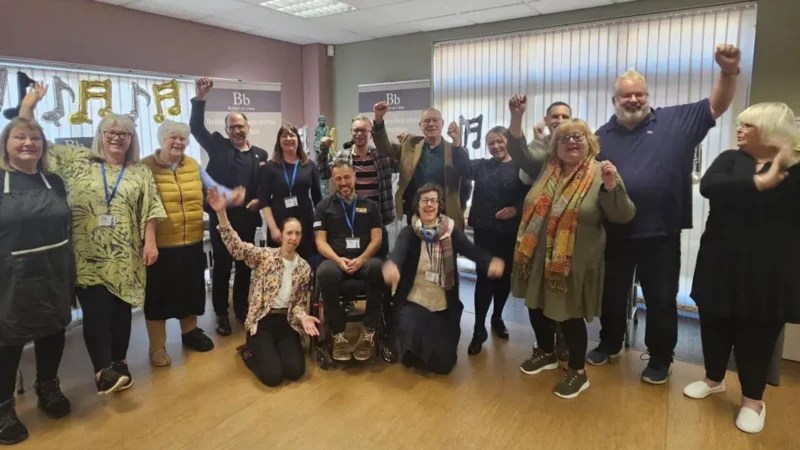
Last Saturday, despite a bus strike and atrocious weather, eleven of us made our way to the Bridgewater Hall to see the BBC Philharmonic Orchestra. The concert was recorded by BBC Radio 3 for broadcast in Radio 3 in Concert on Tuesday, 28 October at 7.30pm.
The performance was the season opener and included a pre-concert performance of Julia Wolfe’s LAD – nine bagpipers playing drones. She is the Composer in Residence this season.
The concert proper opened with Julia Wolfe’s Fountain of Youth.
Augustin Hadelich brought his incredible artistry to one of Sergey Prokofiev’s most celebrated works – Violin Concerto No 2. The first piece brought blocks of orchestral sound, whereas this work was more precisely expressive with ravishing melodies.
After an interval, the concert ended with Pyotr Tchaikovsky’s Fifth Symphony with huge emotions and passionate melodies painted on an epic musical canvas, which could only have been written by a gay man.
International Celebrate Bisexuality Day
International Celebrate Bisexuality Day is on Tuesday, 23 September 2025.
Also known as Bi-Visibility Day, it is a global annual event celebrated on this date since 1999 to recognise bisexual people, their community and the history of bisexuality.
The day serves as a grand finale to Bisexual Awareness Week, which runs from 16 to 23 September.
While records have shown that several cultures throughout history openly embraced bisexuality, in recent years the LGBT community and especially the bisexual community has been marginalised.
What it is:
A day for celebrating bisexuality and promoting cultural acceptance of the bisexual community.
A day to advocate for bisexual rights and raise awareness about unique challenges, such as biphobia and bisexual erasure.
Key aspects of the day:
Visibility:
It increases the visibility of bisexual individuals and the broader bisexual+ community.
Community:
It creates platforms for bisexual people to connect with others and build community.
History:
It highlights the history of the bisexual rights movement and the journey towards greater acceptance.
Other Names and Languages:
English
International Celebrate Bisexuality Day
Arabic
يوم ثنائية الجنس الدولية
German
Welttag der Bisexualität
Hebrew
ום ביסקסואליות הבינלאומי
Korean
국제 양성애 일
Norwegian
Verdensdagen for biseksualitet
Spanish
Día Internacional de la Bisexualidad
Your Story Matters – Take Part in This Research
Cesar Augusto Kampff, a psychologist and PhD candidate in the Graduate Programme in Cultural Diversity and Social Inclusion at Universidade Feevale, Brazil is conducting groundbreaking research in Brazil, Portugal, and the United Kingdom.
The study is on the psychological aspects involved in the processes of recognising and sharing one’s sexual orientation (coming out) among cisgender lesbians and gay men aged 50 and over.
He is kindly requesting your participation in this research, which is essential to better understand the experiences of the mature lesbian and gay population, give visibility to these life stories, and build knowledge that helps combat violence, prejudice and discrimination.
Research like this is only possible with the support and voices of those who have lived and continue to live these experiences. Your contribution will help strengthen public policies, support practices and initiatives that promote respect for diversity.
The interview can be conducted via a questionnaire, which can be sent by e-mail so you may answer it at your own pace.
Thank you in advance for your trust and for sharing your story.
To participate or learn more, please email cesarkampff@gmail.com
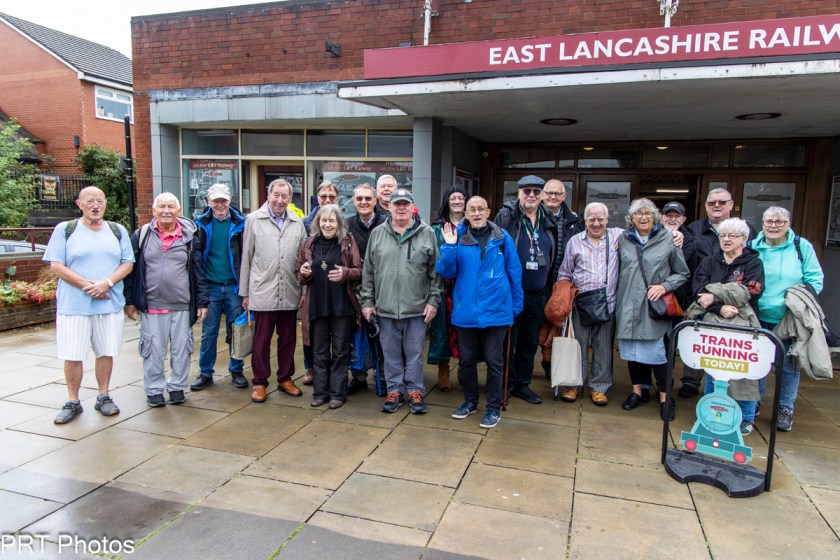
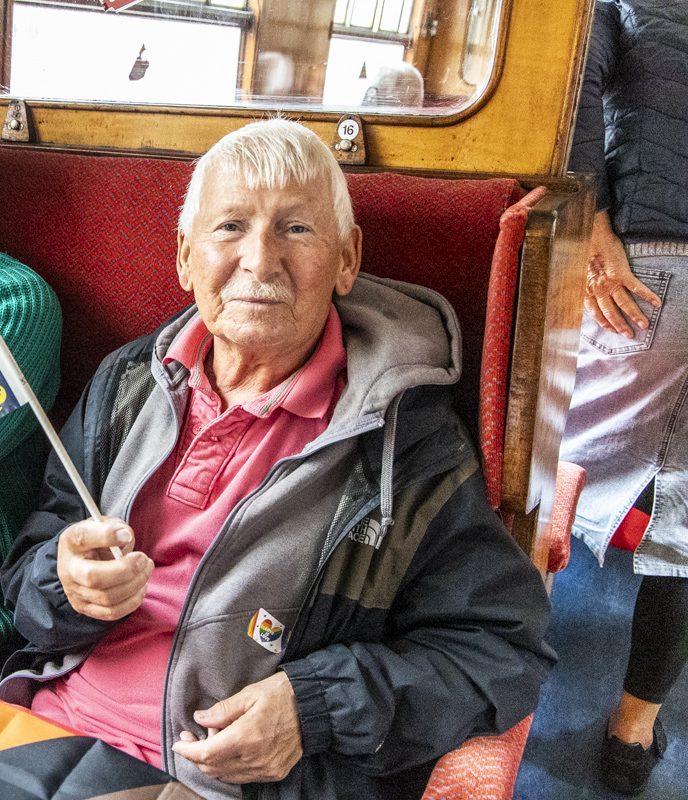
On Wednesday, 17 September Out In The City members took over the East Lancashire Railway to mark the end of the Pride season in Greater Manchester. We decorated our carriage with rainbow tablecloths and flags to make the “Rainbow Train”.
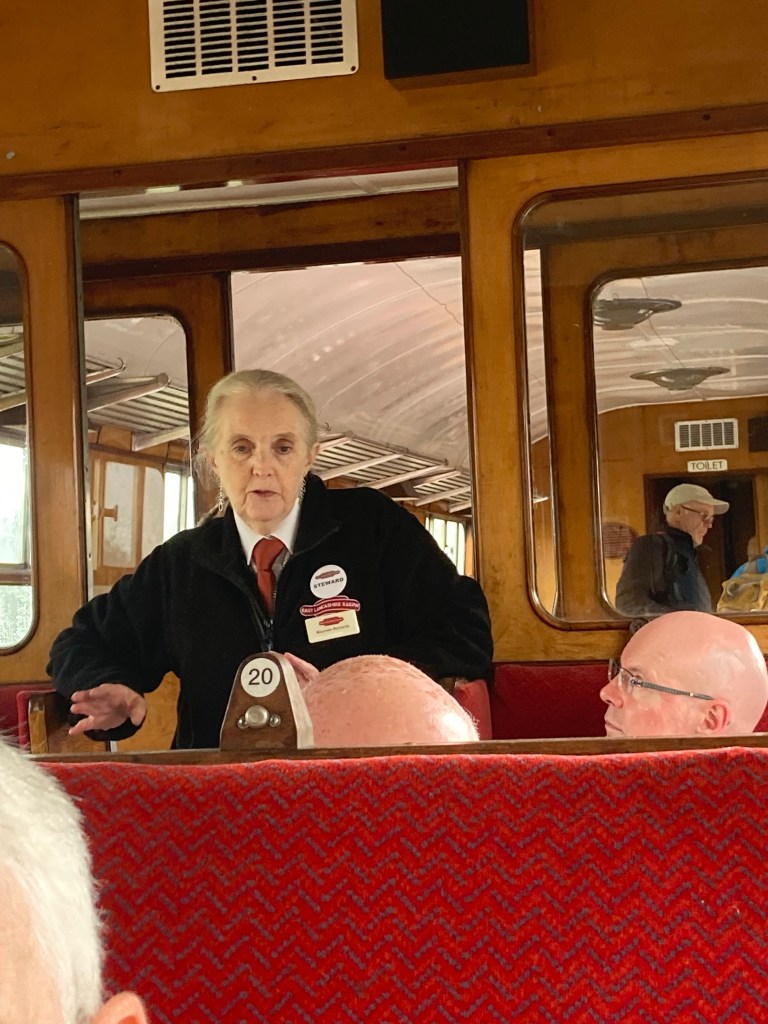
The train journey covers 12 miles through stunning scenery from Bury to Rawtenstall. We all enjoyed travelling on the “Rainbow Train” and visiting the town of Rawtenstall. During the journey we chatted with our steward – Maureen – who pointed out some of the sights such as the Peel Tower.
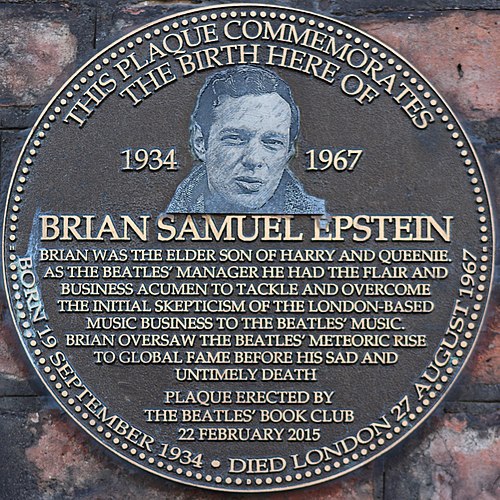
Brian Samuel Epstein (19 September 1934 – 27 August 1967) was an English music entrepreneur who managed the Beatles from 1961 until his death in 1967.
Epstein was born into a family of successful retailers in Liverpool, who put him in charge of their music shop, where he displayed a gift for talent-spotting. He first met the Beatles in 1961 at a lunchtime concert at Liverpool’s Cavern Club. Although he had no experience of artist management, Epstein put them under contract and insisted that they abandon their scruffy image in favour of a new clean-cut style. He also attempted to get the Beatles a recording contract, eventually securing a deal with EMI’s Parlophone label.
Within months, the Beatles were international stars. Some of Epstein’s other young discoveries had also prospered under his management. They included Gerry and the Pacemakers, Billy J Kramer and the Dakotas, Tommy Quickly, Cilla Black and The Big Three. In 1967, he died of a combined alcohol and barbiturate overdose, ruled as accidental, at the age of 32.
Brian Epstein, 1965
Epstein’s homosexuality was not publicly known until some years after his death, although it had been an open secret among his friends and business associates. While Epstein was in the British Army, he commissioned a tailor to make him an officer’s uniform. He wore the uniform when cruising the bars of London, but was arrested one night at the Army and Navy Club in Piccadilly by the military police for impersonating an officer. Epstein managed to avoid a court martial by agreeing to see an army psychiatrist, who learned of Epstein’s sexuality. After ten months he was discharged from the army on medical grounds for being “emotionally and mentally unfit”. Epstein later stated that his first homosexual experience was when he returned to Liverpool after being discharged.
Epstein spent a year studying acting at RADA, but dropped out shortly after his arrest for “persistent importuning” outside a men’s public toilet in Swiss Cottage, London. Cottaging, as it was called, was one of the few public ways that gay and bisexual men could meet, especially if they were closeted.
McCartney said that when Epstein started to manage the Beatles they knew that he was homosexual but did not care, because he encouraged them professionally and offered them access to previously “off-limits” social circles.
Although the group, Lennon in particular, often made sarcastic comments about Epstein’s homosexuality to friends and to Epstein personally, no one outside the group’s inner circle was allowed to comment. Epstein went on holiday to places such as Amsterdam, Torremolinos and Barcelona or Manchester at weekends, as the attitude towards homosexuals there was more tolerant than in Liverpool, even though Liverpool did have several gay bars.
There were reports of a brief sexual encounter between Lennon and Epstein during a four-day holiday in Barcelona in April 1963. Lennon admitted in a 1971 Rolling Stone interview that he knew Epstein was a “fag” and that he (Lennon) enjoyed “playing a bit faggy and all that”. Addressing the rumours again later, Lennon told Playboy in 1980, “Well, it was almost a love affair, but not quite. It was never consummated … but we did have a pretty intense relationship”.
Soni Wolf
Soni S H S Wolf (19 September 1948 – 25 April 2018) was an American lesbian activist. She described herself as a dyke, and was also a motorcycle enthusiast and former US Air Force Vietnam-era veteran.
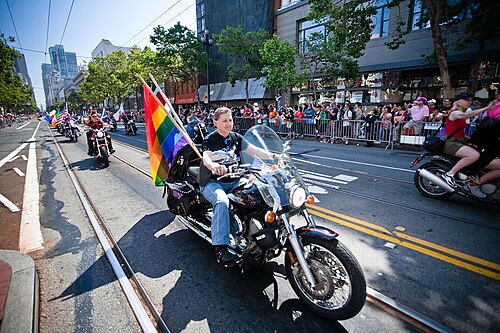
She co-founded the Dykes on Bikes (DOB) after their 1976 San Francisco Pride parade debut, and rode with them each year from 1978 until her death in 2018.
San Francisco Pride, 2009
The group is a highly visible symbol of empowerment and LGBTQ pride. Wolf nurtured DOB’s worldwide chapters and fought for their right to use the reclaimed term dyke, they fought and won two lawsuits against the US Patent and Trademark Office so they could trademark their name and logo.
DOB does philanthropic work for LGBTQ causes and organisations around the world. In June 2019, to coincide with the 50th anniversary of the Stonewall riots, Wolf was one of fifty inaugural heroes to be named on the National LGBTQ Wall of Honour placed inside the Stonewall Inn, and within the Stonewall National Monument.
Dykes on Bikes
In June 1976, a group of 20 – 25 lesbians decided to ride their motorcycles in the San Francisco Gay Freedom Day Parade which had started in 1970. They led the parade to prevent their bikes from overheating due to idling behind the slower-moving walking contingents. Some motorcyclists had done the parade before then, but it wasn’t as organised.
One of the riders noted them as being “dykes on bikes” which was overheard, and reported in the city’s main newspaper, the San Francisco Chronicle. The Dykes on Bikes (DOB) formalised within a week of the parade. Although the name originator isn’t known, Wolf, who started riding with the group in 1978, embraced the name, and helped the new group become one of the most visible, and empowering symbols of the LGBTQ communities.
In 2016 she was sainted by the Sisters of Perpetual Indulgence as someone who “dedicated their life to fundraising, activism and human rights”.
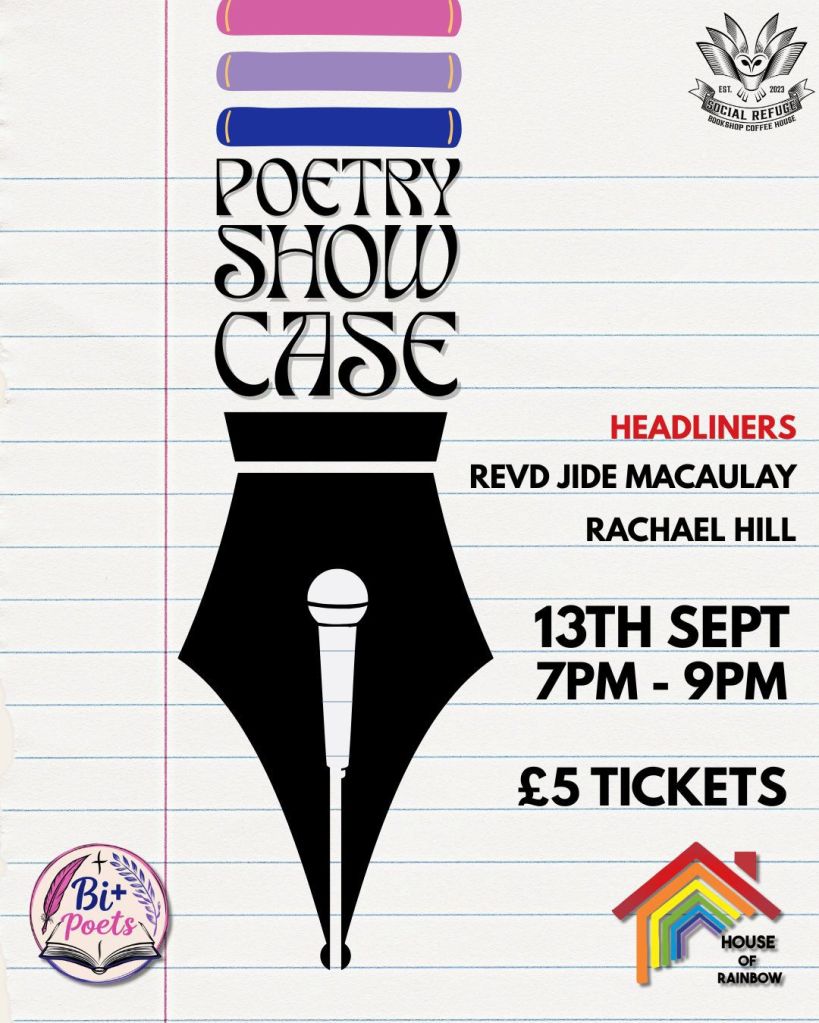
The Queer Poetry Upfront Performance Night at Queer Lit, Manchester was a vibrant celebration of LGBTQ+ voices, offering an intimate platform for both emerging and established poets. The atmosphere was electric from the outset, with the bookshop’s cosy setting fostering a sense of community and inclusivity that made everyone feel at home.
Performers took to the stage with a diverse array of poetic styles, ranging from deeply personal confessions to sharp, witty social commentary. The raw honesty and vulnerability displayed captivated the audience, who responded with enthusiastic applause and heartfelt cheers. Standout performances included moving pieces on identity, love, and resilience, all delivered with a remarkable blend of passion and poise.
What set this night apart was the open-mic segment, which encouraged audience participation and showcased the breadth of talent within Manchester’s LGBTQ+ community. The event was expertly hosted by Jide Macaulay and Lauren Temple (standing in for Rachael Hill), ensuring a supportive environment where every voice was valued.
Overall, the Queer Poetry Upfront Performance Night at Queer Lit proved to be a powerful and uplifting experience – one that highlighted the importance of queer spaces in amplifying underrepresented stories. It was a night brimming with creativity, courage, and connection, leaving attendees eagerly anticipating the next gathering.
Ann Bannon
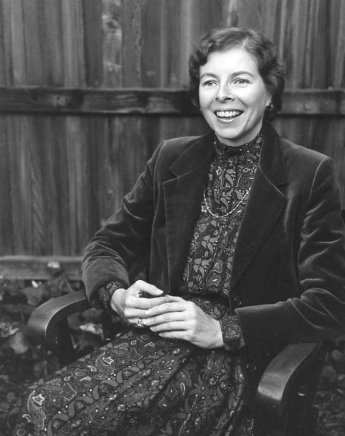
Ann Bannon in 1983
Ann Weldy (born 15 September 1932), better known by her pen name Ann Bannon, is an American author who, from 1957 to 1962, wrote five lesbian pulp fiction novels known as The Beebo Brinker Chronicles. The books’ enduring popularity and impact on lesbian identity has earned her the title “Queen of Lesbian Pulp Fiction”.
Bannon was a young housewife trying to address her own issues of sexuality when she was inspired to write her first novel. Despite her traditional upbringing and role in married life, her novels defied conventions for romance stories and depictions of lesbians by addressing complex homosexual relationships.
Her books shaped lesbian identity for lesbians and heterosexuals alike, but Bannon was mostly unaware of their impact. She stopped writing in 1962. Bannon has received numerous awards for pioneering lesbian and gay literature. She has been described as “the premier fictional representation of US lesbian life in the fifties and sixties”, and it has been said that her books “rest on the bookshelf of nearly every even faintly literate Lesbian”.
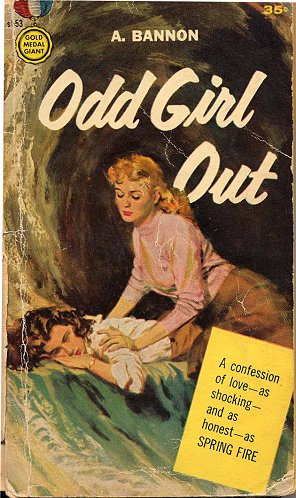
“Odd Girl Out” cover 1957
Her first book, Odd Girl Out, was published in 1957, and became Gold Medal Books’ second best-selling title of the year. Based on Bannon’s own experiences, the plot involved a lesbian relationship between two sorority sisters in a fictional sorority at a fictional midwestern university. As was custom with pulp fiction novels, neither the cover art nor the title were under the control of the author. Both were approved by the publisher in order to be as suggestive and lurid as possible.
Lesbians depicted in literature were relatively rare in the 1950s. It was the publisher’s policy in any novel involving lesbianism that the characters would never receive any satisfaction from the relationship. One or both usually ended up committing suicide, going insane, or leaving the relationship.
Bannon’s books were popular because they were so different from anything else being published at the time. Bannon insisted on the continuity of lesbian love, while everything in her culture was speaking of its quick and ugly demise.
Garbo in “Inspiration”
Greta Garbo (Greta Lovisa Gustafsson) born on 18 September 1905 was a Swedish and Americanactress. She was a premier star during Hollywood’s silent and early golden eras. Regarded as one of the greatest screen actresses of all time, she was known for her melancholic and sombre screen persona, her film portrayals of tragic characters, and her subtle and understated performances.
Hello! … We are back! Due to computer problems we have not been able to send our regular emails.
We had a trip to Astley Hall in Chorley, held a Pride Party, had a guided tour of the exhibition “Turner: In Light and Shade” at the Whitworth Art Gallery, visited the Helmshore Mills Textile Museum and held a board games afternoon.
This year’s Vigil at Manchester Pride was extra special, marking 40 years of George House Trust supporting people living with HIV.
At the Vigil, we heard from two of their founders, as well as many people living with HIV, healthcare professionals and partners. There were Positive Speaker volunteers up on stage, showing the world what living with HIV can look like in 2025,as well as volunteers from other roles, staff and supporters, dancing and celebrating our community.
“It was truly an honour to be part of such a moving evening, representing George House Trust and sharing in the energy of the Vigil. The love and solidarity in the room were deeply felt.” – Jide, Positive Speaker
The Vigil was an amazing opportunity to raise awareness and tackle HIV stigma, reaching an audience of thousands both at the event and online. Nathaniel Hall, one of their inspiring Positive Speakers, produced the Vigil and the wonderful video shown on the night.
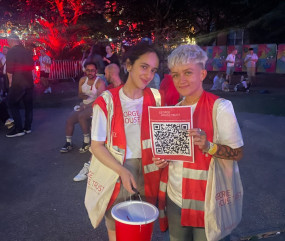
George House Trust raised an incredible £10,914 at the Vigil, an increase of around £3000 on last year’s total. They are so grateful to all the volunteers who raised funds on the night.
For anyone who couldn’t be there, or who just wants to relive a very special night, full coverage of the Vigil is available online here:
Boogie Woogie Bisexual
This ’40s singer had a secret gay past that’s now coming to light.
(Photo by Gene Lester / Getty Images)
The Andrews Sisters are the legendary wartime trio instantly identifiable to anyone who’s heard the almost eerily uniform sound of the singing sisters on soundtracks, in documentaries, or in any of the many feature films they appeared in.
The Andrews Sisters weren’t just chart-toppers in their own right – they also collaborated with some of the biggest names in the business, from Frank Sinatra to Bing Crosby to comedy duo Abbott and Costello.
Defined by their insanely close harmonies and jingoistic hits, the three sisters took the world by storm just as America was entering World War II with songs like “Don’t Sit Under the Apple Tree” and “Bei Mir Bist Du Schön.”
Listen to “The Boogie Woogie Bugle Boy of Company B”. It’s still a certified bop.
But behind the sisters’ decades-long successes, there was a lot more to the story. All three of the sisters married men, but Maxene (aka “the sister on the left” in most photos) had a much more complicated sexuality than anyone knew at the time.
As explained by historian Amanda W Timpson, Maxene didn’t view herself as a lesbian, but when she fell in love with two women in later life, she started to see that her sexuality was much more fluid than the time openly allowed for.
Maxene initially married a successful music publisher, but after that marriage broke up, she fell in love with her next partner, who happened to be a woman.
As Timpson explains, Maxene assumed this was something of an anomaly, and that she’d fallen in love with the person, not the gender. But when she and her long-term girlfriend broke up, Maxene began dating another woman, Lynda Wells, who was also Maxene’s manager.
The two met, amazingly enough, at a party held by Broadway legend Elaine Stritch in the ’70s, and they stayed together until Maxene’s death. Because gay marriage wasn’t on the table, in order to secure legal rights and be part of each others’ family, Maxene ended up legally adopting Wells later on.
Strange as this method might seem, it wasn’t an uncommon route for lesbian and gay couples to take in the years before marriage equality. The Japanese lesbian novelist Nobuko Yoshiya did the same with her partner Chiyo Monma in the late ’50s, as did civil rights fighter Bayard Rustin and his partner Walter Naegle, along with many adults in the later 20th century.
According to Wells, Maxene’s sexuality didn’t play a part in her life, despite her significant relationships with women. While the couple was out to friends and family, they didn’t see it as important to go public with their relationship, even in the post-Stonewall era. Simply put, they felt their relationship was their business, and nobody else’s.
But when Maxene suffered a heart attack later on, they started to think seriously about the future, leading to discussions of Maxene – who was much older than Wells – adopting her partner. This ended up being a smart move, and when Maxene died in 1995, Lynda was able to retain her legal right to the home and possessions they shared.
We don’t know too much more about the relationship, but Wells, who is still alive today, is at work on a biography of Maxene. Many long term gay partnerships had to hide their love from the world just to survive, and even those that didn’t were subject to strange loopholes just to protect each other in the event of a tragedy. Maxene and Lynda’s story is one of the happier examples of a love affair that found a way to thrive, despite a challenging era for lesbians and gay men.
Bus travel
Last week, Mayor of Greater Manchester Andy Burnham announced a raft of changes to the Bee Network bus services.
Pensioners were also set to benefit from the changes. The mayor noted that during August, more than 100,000 journeys were made by disabled and older people before 9.30am.
The end of time restrictions could be made permanent as transport bosses analyse passenger feedback, patronage and pass usage before making a decision.
In the meantime a second trial is set to continue in November.
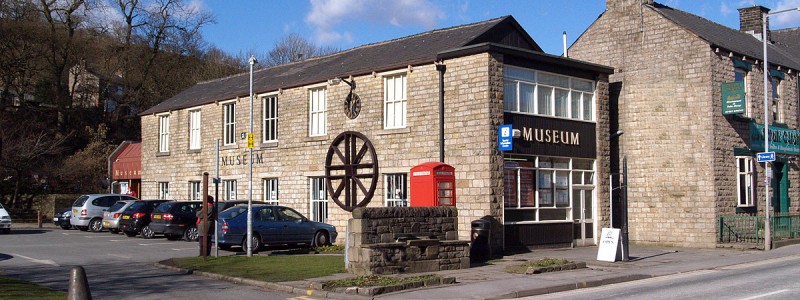
A group of us travelled eleven miles by bus from Manchester to Saddleworth, an area primarily known for its textile industry heritage, picturesque moorland scenery and charming villages.
After a lovely lunch at The Caffe Grande Abaco, we headed for the Museum and Art Gallery. Founded in 1962, the museum is housed in the remains of the 19th century Victoria Mill. Saddleworth was a major centre for cotton spinning and weaving during the Industrial Revolution.
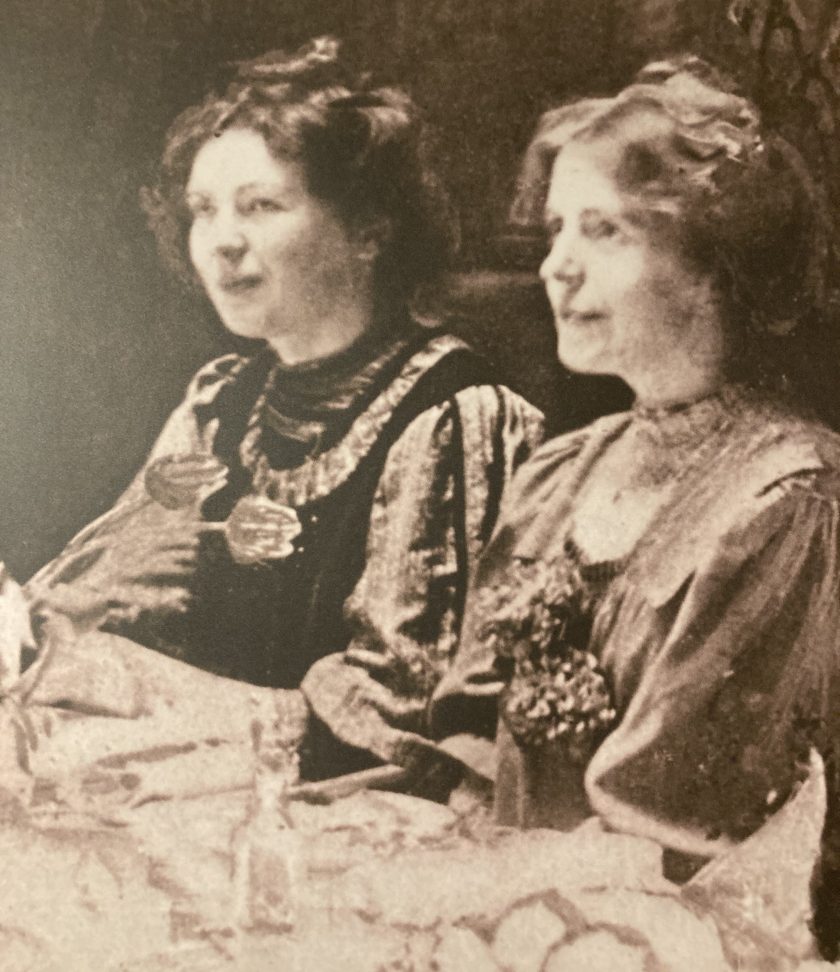
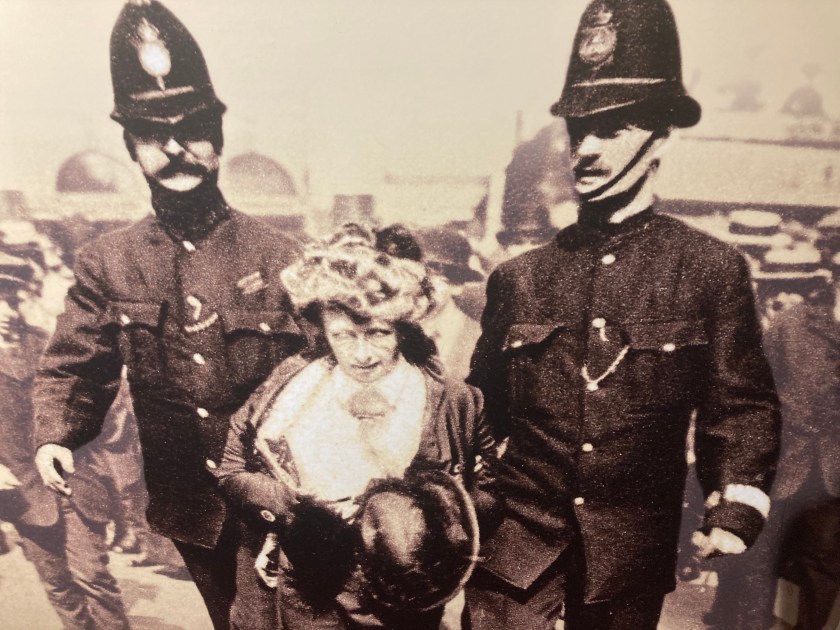
Annie Kenney was born in Springhead in Saddleworth and became a prominent figure in the suffragette movement.
Annie Kenney (left) and Christabel Pankhurst, 1909
She left school at age 13 to work in the cotton mill. Annie was the first local woman trade union representative, and inspired by Christabel Pankhurst she joined the Women’s Social and Political Union. This group was the first to use militant tactics to bring attention to the rights of women.
The militant campaign began in Manchester in 1905, when Christabel Pankhurst and Annie were arrested at The Free Trade Hall. Annie was an excellent speaker and her working class background meant that she was understood by many working women. She was regularly put in prison and in 1913 was sentenced for three years. Annie was released because she was on hunger strike but was not allowed to speak at meetings. She refused to accept this and attended meetings in disguise and was often re-arrested.
It was a very hot day – 28 degrees – and a mint chocolate chip ice cream was in order before heading back to sunny Manchester. More photos can be seen here.
Simon and John
Seafront statue of Benjamin Britten given approval
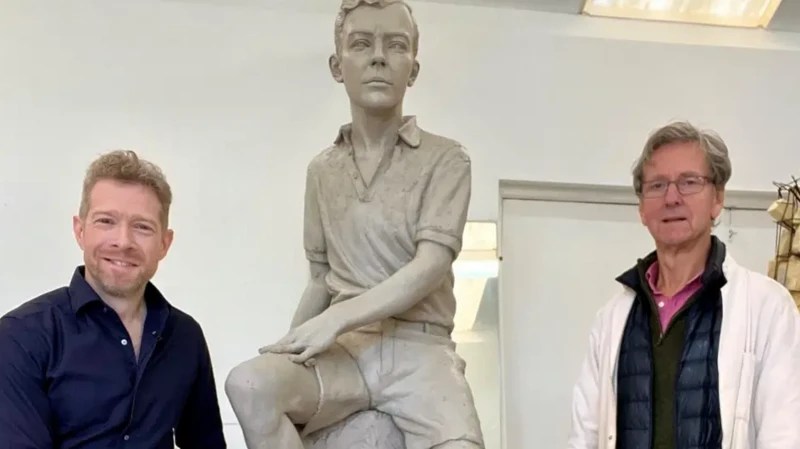
Zeb Soanes, vice chairman of the Britten as a Boy project, with sculptor Ian Rank-Broadley and a clay sculpture of Benjamin Britten as a boy, which has since been cast in bronze
A life-sized statue of Benjamin Britten will soon be unveiled after plans for the seafront project were given approval.
The bronze sculpture of the composer as a boy will be installed opposite 21 Kirkley Cliff Road, Lowestoft, where he was born on 22 November 1913.
The Britten as a Boy project was co-founded by teacher and artist Ruth Wharrier, who has been granted permission by East Suffolk Council to move forward with the creation.
“The project has always been about promoting aspiration for generations of children of Lowestoft to dream big just as Benjamin Britten did 100 years ago,” she said.
“Our simple message of looking ahead has also inspired many adults within our community, including those recovering from domestic and substance abuse.”
Members of East Suffolk Council, Lowestoft Town Council and Kirkley People’s Forum celebrated after fundraising £110,000
The possibility of a statue being made became a reality after members of East Suffolk Council, Lowestoft Town Council and Kirkley People’s Forum raised £110,000.
It was designed by sculptor Ian Rank-Broadley, who has described Britten – who died in 1976 – as a “genius”.
‘Successful children of Lowestoft’
“It’s really important we recognise people of our town who succeeded, councillor Peter Byatt said.
“I hope this is going to be the beginning of revisiting those successful children of Lowestoft.”
Zeb Soanes, vice chairman of the project, has previously said he, too, hoped the piece would act as an inspiration for young people in the town.
“Our idea of depicting [Britten as a child] is to really inspire children that whatever you want, if you work hard, it is achievable,” he said.
The Hidden Case of Sir Ewan Forbes, the Transgender Baronet
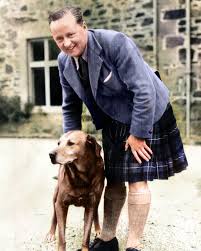
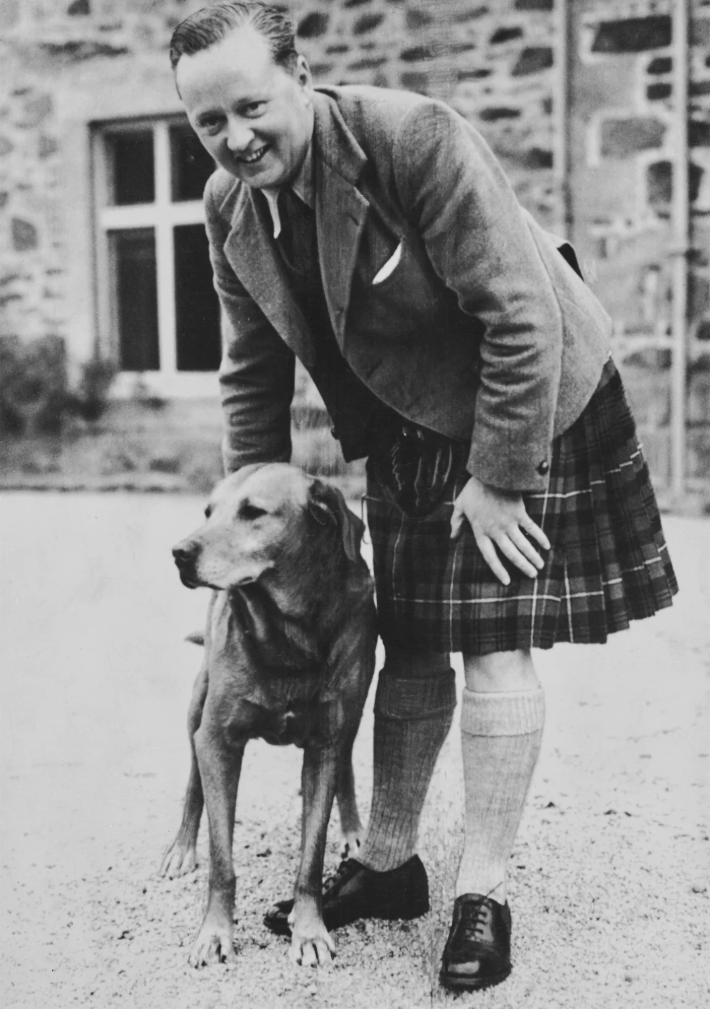
Scottish nobleman, general practitioner and farmer Ewan Forbes-Sempill (1912 – 1991), wearing a traditional Scottish kilt and relaxing with his dog at his residence in Kildrummy, Scotland on 15 October, 1952. FPG / Archive photos / Getty Images
In 1968, a new name was placed on the United Kingdom’s Official Roll of the Baronetage: Sir Ewan Forbes, the 11th Baronet Forbes of Craigievar. A quintessential Scottish gentleman, Ewan was a perfect fit for his new role. He was a caring country doctor, a doting husband, a sportsman who excelled in riding, shooting, fishing, and Scottish dance, and whose ancient, rather eccentric aristocratic clan had deep ties to the British royal family.
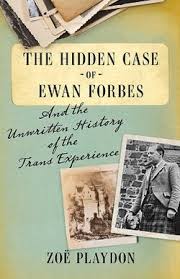
“His grandfather had been an intimate friend of Queen Victoria; his mother was a close friend of Queen Mary; his father was aide-de-camp to King George V. And their castle, Craigievar Castle (now owned by the National Trust for Scotland), is only 30 miles away from Balmoral,” says Zoë Playdon, emeritus professor of medical humanities at the University of London and author of The Hidden Case of Ewan Forbes: And the Unwritten History of the Trans Experience.
As outlined in academic Zoë Playdon’s 2021 book – soon to become a TV mini series – Forbes was born into a deeply privileged family with ties to the British royals.Evidence points to the fact that Ewan himself entertained the royal family, who shared his deep love of horses and the country.
But despite his deep privilege, Ewan’s journey was not an easy one. “Like most trans people, Ewan learned from an early age to be resilient, imaginative, and courageous in facing the challenges that the world threw at him. He’s really very inspirational,” Playdon says. Ewan’s biggest battle would lead to an invasive court case which led to his ascendence as Baronet Forbes of Craigievar. The case would be shrouded in secrecy for years, and Playdon believes its implications set trans rights back decades.
Ewan was born on 6 September, 1912, and christened Elizabeth Forbes-Sempill. Elizabeth was the third child and second daughter of John Forbes-Sempill, 18th Lord Sempill and 9th Baronet of Craigievar, and Gwendolen, Lady Sempill. From an early age, the compassionate, open-minded Gwendolen knew that her third child, who she called Benjie, was different. Ewan eschewed stereotypically girlish pursuits and clothing, loved tramping through the Highlands at Craigievar Castle, and worshipped his elder brother, William, an aviation pioneer. She had Ewan homeschooled and let him live as his authentic self on the family’s massive estates.
“Gwendolen, the Lady Sempill, was remarkable for her time, and I think a real inspiration to parents today with trans children,” says Playdon. “Like them, she recognised the insistence, persistence, and consistence of Ewan’s understanding of himself as a boy, in spite of his birth-assigned sex. She supported his social transition … and she found him affirmative medical support as soon as it became available.”
In an intolerant time, options were limited. “Everyone realised my difficulties,” Ewan once recalled, per The Daily Telegraph. “But it was hard in those days to know what to do.”
But Gwendolen would not be deterred. According to Playdon, Gwendolen took a teenage Ewan to visit experts across Europe, disguising their adventures as a grand tour. Ewan was given treatments, almost certainly including testosterone. “I found it necessary to shave,” Ewan recalled, “because I had quite a lusty growth of hair on my chin and cheeks.”
There is no doubt these visits to doctors working with intersex and transgender patients were not only a result of Gwendolen’s tireless efforts, but also the family’s immense privilege. “Ewan’s family had the wealth and connections required to access the new affirmative trans medical support that was being developed in Europe in the 1920s,” Playdon shares.
However, the family’s illustrious connections and high profile also had downsides.
“His father was a stickler for social form, so that whenever they were in the public eye, Ewan was obliged to dress up as a girl for society photographs – including being required, as a matter of family honour, to dress up as a debutante to be presented to the queen,” Playdon notes. “This must have been horribly embarrassing for him, but he saw it as his duty and somehow got through it.”
Indeed, Ewan later recalled these events as making him feel “like a bird that had had its wings clipped.” After being presented to his mother’s good friend Queen Mary in 1930, he went to London debutante balls “under protest and duress.” Afterwards, he recalled, “I made my escape and I never went back.”
Instead, Ewan threw himself into Scottish culture, forming the popular “Dancers of Don” dance troupe, in which he often took the male leads. After his father died in 1934, Ewan almost exclusively wore the male Scottish kilt and worked the family’s extensive estates. In 1939, he started medical school at the University of Aberdeen. A year after his beloved mother died in 1944, he began work as a family doctor in the Scottish village of Alford, near the family seat of Craigievar Castle.
Jovial and kindly, with a special knack with children, Dr Forbes-Sempill was known to go to any lengths to help his patients. In 1947, he bought the 3000-acre Brux Lodge and settled into his role as a beloved villager who could be found judging country dances and reciting ancient Doric poems.
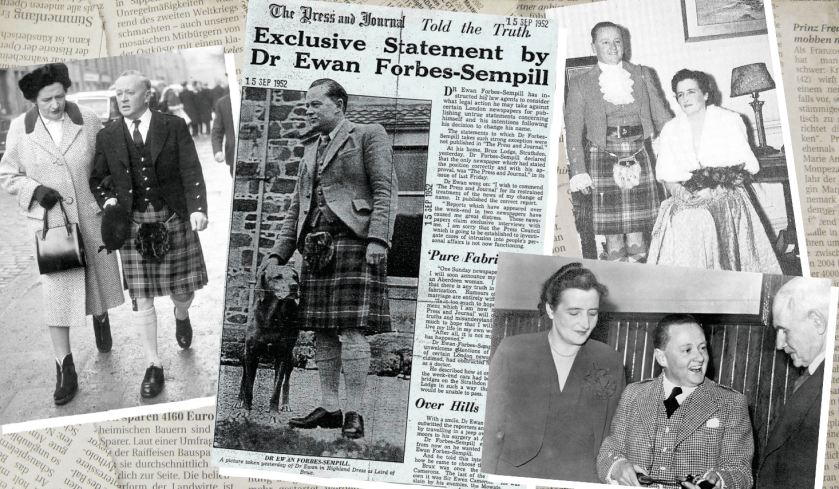
But in 1952, Ewan’s insular, protected life would be thrust into the national news. Ewan had fallen in love with his kind and gentle housekeeper Isabella “Patty” Mitchell and wanted to marry her, despite the fact that gay marriage was illegal. “I felt the right to have my own wife and my own house, and take my place as other ordinary individuals,” Ewan recalled.
Ewan decided to take the brave step of having his birth certificate amended to the gender he had always known he was. Though surprising to modern readers, residents of the United Kingdom at the time could amend their birth certificates, as long as doctors agreed the initial assignment had been a mistake. As a respected member of the Scottish medical community, Ewan was easily able to obtain the necessary permissions. Legally, he was now a man, and free to marry Patty.
“It was very confusing to us children,” Ewan’s great-niece later said. “Suddenly Auntie Elizabeth was Uncle Ewan. But we all adored him.”
The townspeople of Alford reacted in much the same way. “The doctor has been telling us for some time of his intended announcement. We admire his courage in taking this step.”
The national press took a more sensational view, aware that Ewan now could inherit the Forbes baronetcy, which passed to the next male heir. “It has been a ghastly mistake,” Ewan told one reporter. “I was carelessly registered as a girl in the first place … The doctors in those days were mistaken … I have been sacrificed to prudery, and the horror which our parents had about sex.”
According to Playdon, Ewan was unable to make his daily rounds on foot because of reporters blocking his way. In an effort to avoid the press, Ewan bought a Land Rover, after Princess Margaret told him that her father had acquired one.
On 12 October, 1952, Ewan and Patty were married in a secretive nighttime ceremony at Brux, with members of both their families present. “It seems likely, too, that at least one member of the Royal Family was at Ewan’s wedding to Patty, since the wedding was held very privately,” Playdon says. “Princesses Elizabeth and Margaret, in their 20s, were both on holiday at Balmoral. Still today, those who know will not say precisely who all the guests were!”
The village of Alford was not as shy in celebrating the new couple. “His patients had clubbed together to buy him and Patty handsome wedding gifts,” Playdon writes in The Hidden Case of Ewan Forbes. “A special dance had been composed in honour of Ewan and Patty, called ‘The Doctor’s Waddin,’ to celebrate the occasion … Finally, the minister who had married them gave Ewan an encomium: ‘No matter how deep the snow, no matter how high the river or wind, the doctor is always there when we need him.’”
Ewan and Patty settled into a quiet, contented life. In 1955, Ewan quit his practice to focus on running his estate, where he raised prize-winning cattle and entertained neighbourhood children. But this peaceful idyll was shattered in December 1965, when his brother William, 19th Lord Sempill and 10th Baronet Forbes, died. Although the barony went to William’s daughter Anne, the baronetcy was to be passed to the next male heir, Ewan.
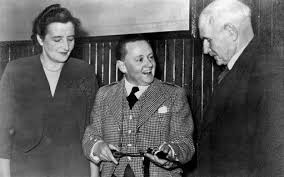
Ewan Forbes-Sempill (1912 – 1991), sitting at a telephone desk, UK, circa 1950. Keystone / Getty Images
Well aware of Ewan’s history, his cousin John Forbes-Sempill, a film producer, put in a claim for the baronetcy, and would declare Ewan “of the female sex in the physical, anatomical, physiological, and genetic meanings of that term.”
According to Playdon, Ewan, terrified that a court case would destroy his life and invalidate his marriage, struck a deal with his cousin, giving him what was left of the family estates. In return, John reportedly agreed to not pursue the baronetcy.
But John had no interest in giving up his claim, and he soon enlisted Ewan’s estranged older sister Margaret to strengthen his claim. Margaret was a strong-willed eccentric who ran a successful pony stud from her home of Druminnor Castle, alongside her life partner, Joan.
According to Playdon, Margaret was heavily in debt, and John agreed to pay her debts if she went against her brother. On 8 March, 1966, she wrote a letter to John’s lawyer, outing Ewan:
“I always regarded Dr Ewan as my sister … She went through the phase (as I did myself and so many girls do) of wanting to be a boy,” she wrote. “She went to parties, dances, etc., and was presented at Court in 1929 or 1930. She had her periods regularly just the same as any other girl … That will show her on whose side I am on.”
After emotional conversations with Ewan and his doctor, Margaret soon regretted her betrayal, and agreed to testify in court that she had been mistaken. But that was never to be. On 28 October, 1966, Margaret was killed in a car crash. Ewan now had to rely solely on his own wits and the help of the medical community to fight John.
What followed was a flurry of claims, counter claims, analyst reports and a demeaning medical examination meant to prove or disprove Ewan’s manhood. After a medical test proclaimed Ewan a female with congenital adrenal hyperplasia (probably due to his longtime use of hormones), the doctor took matters into his own hands. Ewan claimed to have biopsied a recently descended testicle and provided a tissue sample that was, indeed, someone’s testicular tissue, which he submitted to the court.
On 15 May, 1967, the opposing sides assembled for a four-day hearing presided over by Lord Jack Hunter of the Scottish Court of Sessions. Experts, friends, and colleagues were examined – as were Ewan and Patty, who were subject to an extremely demeaning line of sexual questions. Unable to discredit the bogus testicular sample, and swayed by the tests determining Ewan’s psychological sex to be male, in early 1968, Hunter ruled narrowly in favour of Ewan, writing he was “a true hermaphrodite in whom male sexual characteristics predominate”.
The proceeding received little media attention, due to Ewan’s powerful connections. “Undoubtedly, Ewan’s aristocratic background kept his case out of the press. Cecil King, (chairman of several prominent newspaper groups), had an estate that shared boundaries with the Craigievar estate, and Ewan’s sister-in-law, Cecilia, Lady Sempill, asked King to keep the case out of the newspapers,” Playdon says.
But the Home Secretary’s decision to officially grant Ewan the title in late 1968 did make the news. Headlines like “Former Girl Now N S Peer” and “‘Elizabeth’ becomes baronet” titillated the public, leading Ewan and Patty to retreat further into their sheltered life at Brux.
Playdon also believes (though some dispute her conclusions) that Ewan’s case influenced the outcome of 1970’s Corbett v Corbett. This was a divorce case where aristocrat Arthur Corbett sought to annul his marriage to transgender model April Ashley (covered extensively in the fascinating 2025 documentary Enigma). Dismissing the phycological factors that Hunter prioritised, this case established that sex was defined by chromosomal, gonadal, and genital factors, and since gay marriage was illegal, the marriage was annulled.
With this devastating decision, transgender rights, including trans people’s ability to correct their birth certificates, were swept away (in 2004, the UK granted transgender people full legal recognition). Playdon believes this was an overcorrection of Ewan’s case, enacted to protect the interest of primogeniture, where noble titles (and until 2013, the monarchy) are inherited by the eldest male heir.
“I’d known how trans lives had changed through April’s case,” Playdon said. “But I’d never known why that change had happened – what the motive had been for removing trans civil liberties and consigning trans people to the outermost fringes of society. It was very shocking to see the evidence that it was done to protect the political interest of a tiny minority of royal and aristocratic men whose inheritances were (and except for the King, still are) regulated by primogeniture.”
Ewan’s case, which could have upset the precedent set by Corbett v. Corbett, was also successfully hidden from public view. According to Playdon, after she learned of the case’s existence, it took two years – and direct pressure from the Home Secretary – for the Scottish Records Office to reveal the case and send over a transcript.
As anti-trans hate intensified in the coming decades, Ewan continued his quiet life at Brux. An elder at the Presbyterian Church, he became more old fashioned and dogmatic in his older years, but never lost his sense of humour. Ewan rarely discussed or even acknowledged his transgender status. Instead, he became a keeper of memories, publishing his idyllic memoir The Aul’ Days in 1984 and a book about the “Dancers of the Don” in 1989. “He truly was an unforgettably gentle, kind, and charming man,” journalist Moreen Simpson, who interviewed him in the 1980s, recalled, “parts of whose life had been the stuff of nightmares.”
Sir Ewan Forbes, the 11th Baronet Forbes of Craigievar, died on 12 September, 1991. His beloved Patty followed in 2002. Their insistence on living an authentic life reverberates today in a world of increasing anti-trans rhetoric. “There is a view, propagated by anti-trans voices, that trans people are new to this decade,” says Playdon. “And as Ewan’s story tells us, nothing could be further from the truth.”
Being a Champion Against Ageism
Pauline is a passionate advocate for LGBT+ and older people’s rights in Bury, Greater Manchester, and beyond. Since retiring, Pauline’s creativity has flourished through powerful poetry that challenges ageism and inspires change. Watch and listen to the latest poem, ‘Being a Champion Against Ageism’.















 Out in the City