North West Computer Museum … State of Ageing Report 2025 … Queer Treasures of the Manchester Central Library

News

North West Computer Museum

Leigh Spinners Mill

Architects Bradshaw, Gass & Hope based in Bolton were the masterminds behind some of the most incredible buildings in the north west during the Industrial Revolution. These included Manchester’s Stock Exchange (1904-06) and the Royal Exchange (1914-21) alongside Leigh Spinners Mill, an iconic Grade II* listed building residing within a large eight acre site.

We visited Mill 2, which was built in 1925. It’s an iconic landmark in Leigh and now 100 years later is a community hub, housing a number of tenants including the North West Computer Museum on the 4th floor. Luckily, the lift was working!

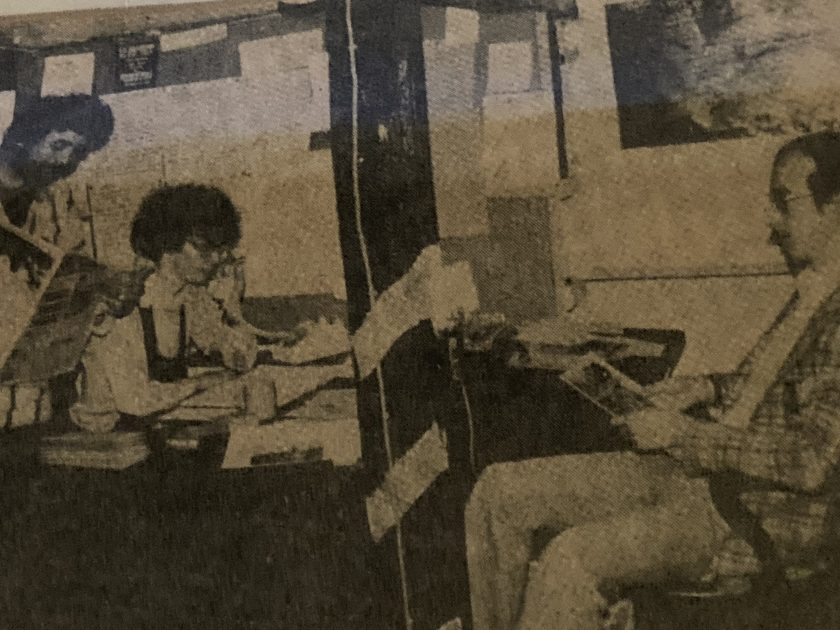
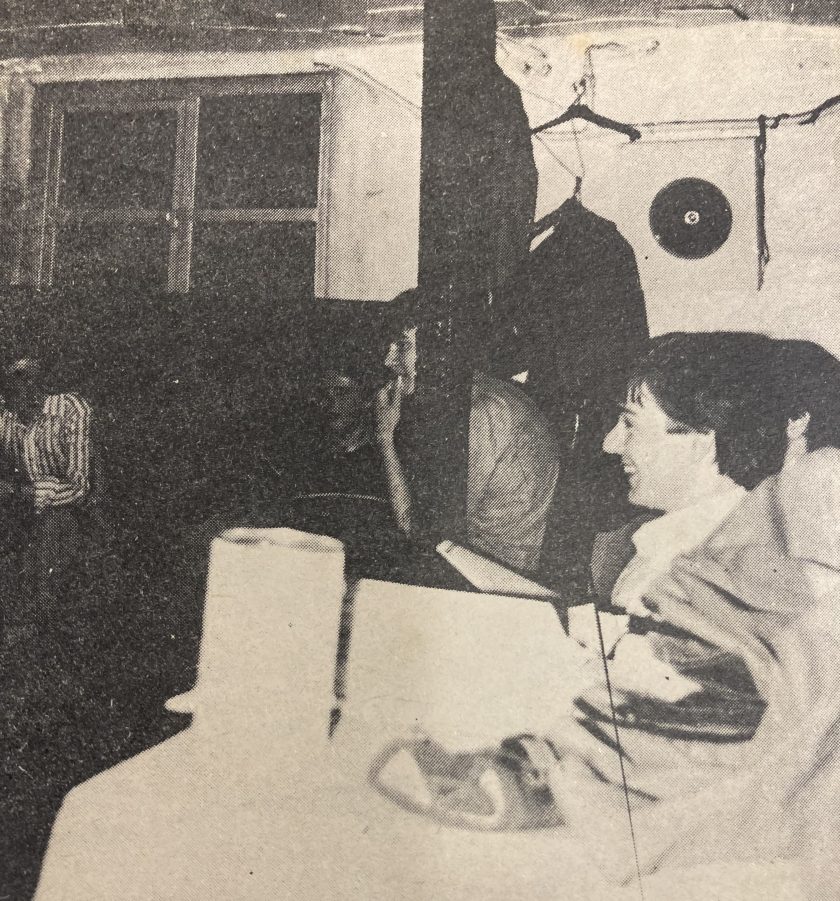
Whilst there we had a coding taster session on BBC Micro 32K computers which dated back to the 1980s. Liz, our tutor, gave some examples of coding. It’s amazing how computers have changed in such a relatively short period of time.

There was so much to see with hands on exhibits, dating from the 1970s to the present day, including retro arcade games and an internet café.

Tony was tasked with writing down everyone’s lunch orders in the café and was rewarded with a free cup of coffee!

More photos can be seen here.

State of Ageing Report 2025

This year’s State of Ageing report paints a picture of the older population in England, using a variety of national data sources.

The Centre for Ageing Better’s new analysis shows that quite simply, where you are born in England determines how long you live and how well you age.

Living in the poorest parts of England can cost you almost five years of your life. Men living in the poorest areas of the country can expect to live 4.4 fewer years on average than those living in the wealthiest areas of England.

All of us deserve the best possible lives as we grow older, and our whole society reaps the rewards when people can age well. The Centre for Ageing Better’s new analysis of the state of ageing in England in 2025 reveals millions more of us are living into our seventies, eighties, nineties and beyond, in good health, working for longer and supporting our communities through volunteering and caring. 

But this report also highlights that this rosy, positive picture of ageing is unobtainable for many, such as those who are living in poor housing, in poverty and poor health, and who are isolated from their communities and society. The report shows the impact of regional inequalities that determine the quality of people’s later life. Quite simply, where you are born in England determines how you live and how well you age.

This summary report and the accompanying chapters draw attention to the disparities in resources, opportunities and outcomes that exist between different geographic areas – whether regions or local authorities. Inequalities between places in things such as access to decent and affordable housing, access to jobs (and good jobs), and the extent to which these places provide and maintain infrastructure such as transport and public services, give rise to inequalities in outcomes for people, including life expectancy and health.

We need the government and others to take inequalities in ageing seriously and address the lack of political focus that has meant chronic underinvestment in helping people to age well. We also need to address the pervasive ageism in society that produces negative and distorted views of ageing and older people. By doing this, we can properly value and benefit from the contributions of older people to our society.

Download the report here.

Lawrie Roberts, Pride in Ageing Manager at the LGBT Foundation, will be speaking today (27 March 2025) about LGBTQ+ communities at the Age Friendly Futures Summit on a panel titled “Understanding differing experiences of ageing”.

Queer Treasures at the Manchester Central Library – 5

‘A History of Penal Methods: Criminals, Witches, Lunatics’ by George Ives

This is the fifth in a series of articles about queer treasures that are currently found in the Archives held at Manchester Central Library.

George Cecil Ives

George Cecil Ives (1867-1950) was an English writer of Uranian poetry and an early campaigner for homosexual law reform. Whilst at University at Magdalene College in Cambridge, he became interested in penal reform, and being gay himself, was particularly concerned with the way that the state dealt with those minorities whose lives involved transvestism and homosexuality. He was also a successful cricketer, briefly playing for the Marylebone Cricket Club.

In 1892 he met Oscar Wilde and endeavoured to recruit him to ‘the Cause’, which Ives defined as the ending of the legal and social oppression of homosexual love. The following year he also met Lord Alfred Douglas, with whom he had a brief affair.

By 1897, Ives had founded the Order of Chaeronea, a secret organisation for homosexuals, whose members occasionally gathered together and talked about their own lives and about how positive legal and social changes for homosexuals could be effected. Ives was also a friend of Edward Carpenter and, in 1913, he, together with Carpenter, Magnus Hirschfeld, Laurence Houseman and others, founded the British Society for the Study of Sex Psychology, which aimed to bring about progressive social change by promoting and supporting the scientific study of sex. Ives visited prisons across Europe, took part in international conferences on penal reform and wrote books and articles to promote his ideas.

Out of this study of, and engagement with, prison reform, came his 1914 work, on ‘A History of Penal Methods’. After looking at a variety of criminal behaviours and, in particular, the treatment meted out historically towards those who do not conform to rigid social norms, such as witches and the mentally ill, he turned his attention to homosexuals, pleading for a radical legal transformation in society’s approach to the whole issue. In his writings his employment of language can be seen to reflect the vocabulary of his age, by his use of the terms ‘sexual inverts’ and ‘homogenic attraction’ to refer to LGBT men and women.

Ives chided the fact that there was limited general understanding about sexuality, as the subject was often deemed unsuitable for public discussion. He argued however, that ‘if the legislator makes one theory of the psychology of sex the basis for passing a law which sends citizens to penal servitude, it is impossible to shut out such a theory from public discussion’ (p291). He was determined to argue the case for the reform of laws that constrained LGBT people, which he did for the rest of his life.

Ives posited same-sex attraction as ‘an innate instinct’ (p294) and that –

The sexual inverts may be compared to the left-handed. They are indeed always a minority in every population, but an eternal minority which neither laws nor even religious systems have ever altogether swept away … the names of some of them are written for all time in the world’s history. (p292)

He maintained that sexual inversion was ‘A deep inevitable impulse’ which ‘could never … be penalised out of existence’ (p295) but that legislators had refused to listen and so, ‘hopelessly, the unfortunate inverts have been left to policemen.’

In his book, Ives reviews the theories of progressive contemporary British and Continental sexologists to suggest a ‘latent bisexuality in each sex’ (p299) but that ‘Custom, education, costume and maternity have all tended to accentuate the difference and obliterate the likeness of the two sexes …’ (p299).  Human variety had not however been totally eradicated and ‘thus among the infinite kinds of combination we also find the homogenic union’ (p300).

Ives points towards continental criminal codes (France, Italy etc) where ‘an age of consent is allowed for homosexuality to both sexes above which the law refrains from interference’ (p361) and urges that this be applied to other penal codes. Sadly English ‘inverts’ had to wait almost 100 years later, until 2001, for an equal age of consent to become a reality.

Generally less well-known than Edward Carpenter or Magnus Hirschfeld, Ives was nevertheless at the forefront of campaigning for the equal treatment of queer people before the law in the late 19th and early 20th centuries. He, and other reformers who worked energetically for what were, then, unpopular causes, laid much of the groundwork for the rights we enjoy today.

Arthur Martland © 2025

International Women’s Month … George House Trust Celebrates 40 Years … Rainbow Lottery Super Draw! … The Sunday Boys

News

Audre Lorde, writer feminist, poet and civil rights activist, during her 1983 residency at the Atlantic Center for the Arts in New Smyrna Beach, Florida. (Robert Alexander / Getty)

International Women’s Month

This year, the theme of International Women’s Day was “Accelerate Action.” The theme emphasises the importance of taking swift and decisive steps to achieve gender equality.

Every March, Women’s History Month seeks to raise awareness of the social and historical contributions and achievements of women. This year’s theme is “Moving Forward Together! Women Educating & Inspiring Generations”.

In light of that, we decided to look at LGBT+ women from history who took bold, brave steps to live their lives as they wanted to, refusing to let prejudice or misogyny prevent them from being themselves. From 17th century sword-slingers to 20th century movie stars and activists, here are some favourite trailblazers.

1. Julie d’Aubigny (1670 – 1707)

Julie dAubigny

Where to start with Julie? Better known as Mademoiselle Maupin or La Maupin, this 17th century sword-slinger and opera singer became involved with a young woman, whose parents later put her in a convent.

In order to get her lover back, she entered the convent, stole the body of a dead nun, placed it in her lover’s bed and set the room on fire so that they could escape together.

What a woman!

2. The Ladies of Llangollen (1739 – 1829, 1755 – 1831)

Portrait of The Rt Hon Lady Eleanor Butler & Miss Ponsonby “The Ladies of Llangollen” (Wikimedia Commons)

The Ladies of Llangollen, Eleanor Butler and Sarah Ponsonby, were two upper-class Irish women who lived together in Llangollen, Wales, and whose relationship scandalised and fascinated their contemporaries.

Some consider Butler and Ponsonby’s relationship to be a Boston marriage, or a romantic relationship between two women who chose to live together and have “marriage-like relationships”.

3. Anne Lister (1791 – 1840)

Anne Lister was a prolific diarist in the 19th century. (Public Domain)

Anne Lister was a landowner, diarist, mountaineer and traveller who kept diaries which chronicled her life, including her lesbian relationships.

However, the LGBT+ info was written in code, derived from a combination of algebra and Ancient Greek.

She had an affair with a wealthy heiress called Ann Walker, who she later married (without legal recognition), provoking uproar in polite society.

4. Jane Addams (1860 – 1935)

Jane Addams in 1926 (Wikimedia Commons)

Jane Addams was a pioneering figure in the American suffrage movement. Also an activist, social worker, public philosopher and author, she was involved with several women throughout her lifetime.

Most significantly, Addams was in a relationship with Mary Rozet Smith, and according to historian Lilian Faderman, she addressed Mary as “My Ever Dear”, “Darling” and “Dearest One” in letters.

The couple were together for 40 years and wrote to each other constantly when apart. “I miss you dreadfully and am yours ‘til death,” read one letter from Addams to Smith.

5. Virginia Woolf (1882 – 1941)

Virginia Woolf. (Fine Art Images/Heritage Images/Getty)

Writer Virginia Woolf’s bisexuality is pretty hard to argue with. She had a relationship with fellow writer Vita Sackville-West in the early 1920s.

In a letter to Vita, Virginia described telling her sister Nessa about their affair, where she wrote: “I told Nessa the story of our passion in a chemist’s shop the other day. ‘But do you really like going to bed with women’ she said – taking her change. ‘And how’d you do it?’ and so she bought her pills to take abroad, talking as loud as a parrot.”

6. Eleanor Roosevelt (1884 – 1962)

Portrait of Eleanor Roosevelt (1884-1962), American author, diplomat, humanitarian, and 32nd First Lady. Undated photograph.

Eleanor Roosevelt was known to have been allowed to have an affair by her straying husband – and she chose reporter Lorena ‘Hick’ Hickock.

Following Eleanor’s death, a series of letters were unearthed. Although most were destroyed by the Roosevelt family, one letter read: “I want to put my arms around you & kiss you at the corner of your mouth.”

In another 1933 letter, Eleanor wrote: “I want to put my arms around you. I ache to hold you close … Your ring is a great comfort to me. I look at it and think she does love me, or I wouldn’t be wearing it.”

7. Mercedes de Acosta (1893 – 1968)

Mercedes de Acosta (Wikimedia Commons)

An American poet, playwright and novelist, Mercedes de Acosta wasn’t famed for her writing, rather for her many lesbian affairs with Hollywood stars.

She’s possibly best-known for her long-term romance with Greta Garbo, and was also involved with Russian ballerina Tamara Karsavina.

8. Alla Nazimova (1879 – 1945)

Alla Nazimova in 1913 (Wikimedia Commons)

Alla Nazimova, an actress, was credited with coming up with the phrase ‘sewing circle’ as a code name for her and her fellow lesbian or bisexual Hollywood actresses.

She openly had relationships with women, and her Sunset Boulevard mansion was believed to be the home of some pretty exciting parties.

9. Audre Lorde (1934 – 1992)

Google celebrates acclaimed poet Audre Lorde for Black History Month. (Google)

African-American writer Audre Lorde was also a civil rights activist who famously said: “Those of us who stand outside the circle of this society’s definition of acceptable women; those of us who have been forged in the crucibles of difference – those of us who are poor, who are lesbians, who are Black, who are older – know that survival is not an academic skill.

It is learning how to take our differences and make them strengths. For the master’s tools will never dismantle the master’s house.

They may allow us temporarily to beat him at his own game, but they will never enable us to bring about genuine change. And this fact is only threatening to those women who still define the master’s house as their only source of support.”

10. Ruth Ellis (1899 – 2000)

Ruth Ellis

Ruth Ellis was an African-American woman and LGBT+ rights activist who came out when she was just 16.

In the 1920s, she met her partner of 30 years, Ceciline ‘Babe’ Franklin, and their Detroit home became a refuge for African-American LGBT+ people.

11. Marion Barbara ‘Joe’ Carstairs (1900 – 1993)

Marion Barbara Carstairs

A wealthy British power boat racer, Marion Barbara ‘Joe’ Carstairs often dressed as a man, had tattoos and loved adventure and speed.

She was openly gay and had many affairs with women, including Dolly Wilde (Oscar Wilde’s niece), Greta Garbo, Tallulah Bankhead and Marlene Dietrich.

12. Gladys Bentley (1907 – 1960)

Gladys Bentley (Wikimedia Commons)

Gladys Bentley was an American blues singer, pianist and entertainer during the Harlem Renaissance, and is a significant figure for the LGBT+ community and African-Americans.

She dressed in men’s clothes when she performed, backed up by a chorus line of drag queens, played piano and sang in a deep, growling voice while flirting with women in the audience.

Gladys Bentley, and all of the other women on this list, helped move things forward for women’s and LGBT+ rights just by being so unapologetically themselves, at a time when women were expected to conform to men’s expectations.

George House Trust celebrates 40 years of helping people with HIV

It’s 40 years since George House Trust was set up in a small office in central Manchester, starting as a once-a-week helpline run by volunteers.

Since then it is estimated to have helped over 100,000 people across the North West providing advice, support and information for those living with and affected by HIV.

It started in 1985 when six gay HIV activists set up Manchester AIDSline in response to the arrival of the HIV virus in Manchester. The City Council formed an ‘AIDS Working Party’ and the North Western Regional Health Authority began to support Manchester AIDSline financially. As support developed, they began providing more targeted and tailored services, such a befriending support and information resources for professionals. The AIDSline changed it’s name to George House Trust in 1990.

Anita Binns is one of those who’re grateful for their help.

Anita Binns (2nd from left) is fundraising for George House Trust

In 1995, after giving blood, she found out she was HIV positive, along with her husband and young son. George House Trust helped her navigate a path through what was a very scary time for Anita, who was completely in the dark about living with the disease.

She said: “At the time there was no medication so we were literally given an aids diagnosis, we had to put our life in order to make sure our family would be looked after.”

“We didn’t know if we were going to live, would we be there for our children would we die before our children?”

They also supported her when she was discriminated against at work because of her diagnosis. “When you walked through the door they could answer your questions, if it wasn’t for George House Trust I wouldn’t be here” she told Granada Reports.

This year as it celebrates its 40th anniversary ,the charity will use a £150,000 grant from The National Lottery to tell the story of HIV across Greater Manchester and the associated activism, heroism, passion and loss.

The project manager Joseph Tanzer is working with Manchester Archives+ to appraise and catalogue George House Trust’s physical and digital archive material and preserve this by depositing it at Manchester Central Library.

At the end of the project in March 2026, people can learn about the history of HIV activism in Greater Manchester and this will lead to change in outdated perceptions and increased awareness about HIV and tackling HIV stigma.

Paul Fairweather, the co-founder of George House Trust said: “People are now so much more aware, we talk to a lot of young people and I think they are far more aware about the facts around HIV, but there are still many people whose physical health is fine but their mental health isn’t, they are isolated and have not told anyone about living with HIV”

To bring transmission rates down the Government has pledged £27 million for opt-out testing in emergency departments, something George House Trust is helping to deliver.

Dr Orla McQuillan is a consultant at the Northern Sexual Health and HIV Service, she said: “The most important thing is to get tested and get diagnosed because we know know that HIV is a different world and once you are diagnosed we can look after you and treatment is actually quite easy to take.”

Watch video via this link.

George House Trust wins GSK Impact Award

George House Trust has scooped one of this year’s GSK Impact Awards, a sought-after accolade for health care charities in the UK. 

The awards are widely seen as a mark of excellence in the charity health sector and are designed to recognise outstanding small and medium-sized charities working to improve people’s health and wellbeing in the UK. 

As an award winner, George House Trust will now receive £40,000 in unrestricted funding, as well as a place on a highly sought-after leadership development programme provided by The King’s Fund.

Amongst other services – destitution payments, formula milk donations, support groups – George House Trust has also played a vital role in reaching out to the fastest-growing, yet often underrepresented, demographic of people living with HIV – over 50s.

Naomi Sloyan, 58, a user of George House Trust who now works at the charity, said: “I went through a year of being desperately ill, often hospitalised. It was quite a traumatic experience, really, because it wasn’t picked up early.”

But Sloyan believes her story, as well as George House Trust’s Ageing Well programme, is breaking down the stereotypical image of someone living with HIV, meaning faster treatment and support for people in whom the disease may previously have gone undiagnosed.

The GSK Impact Award will further raise George House Trust’s profile, helping to achieve its aims of normalising, de-stigmatising, and combatting HIV throughout the Northwest.

Rainbow Lottery Super Draw!

Please support Out In The City by buying a Rainbow Lottery ticket or two (or more!)

With each Rainbow Lottery ticket, you are not just entering to win exciting prizes, you are also supporting our mission to support older LGBT+ people.

It’s a vital part of our fundraising as we receive 50p for every £1 spent and you have the chance to win cash prizes each week from £25 for three numbers up to a jackpot of £25,000 for six numbers – while helping us to achieve more for the LGBT+ communities over 50 years.

Buy tickets here.

In this weekend’s Super Draw (Saturday, 29 March) one lucky supporter will win an amazing Home Robot Bundle – or of course, a £1,000 cash alternative or the option to plant 1,000 trees with projects available all around the world!

Put your feet up and relax, while your new Roomba Combo J5 takes care of all the floors in your home with its vacuuming AND mopping options, while outside, your Lawnmaster L12 Robot Mower is hard at work, keeping your lawn under control, all whilst you kick back with a cup of tea (and we’ll even throw in the teabags!) 

Or as always, the winner can opt for the £1,000 cash alternative, and spend it your way or plant 1,000 trees if the main prize doesn’t appeal to you!

Play Now!

The Sunday Boys

Come and Sing this Spring!

Join Manchester’s LGBTQ+ low-voice choir for an exciting project. No experience needed!

The Sunday Boys are giving you the chance to learn beautiful acappella pop songs, and perform in an informal concert.

Email: info@thesundayboys.com for more information and to register your interest.

Rehearsals dates and times

Sunday 30 March: 5.30pm – 7.45pm

Sunday 6 April: 5.30pm – 7.45pm

Sunday 13 April: 5.30pm – 7.45pm

Sunday 27 April: 4.30pm – 6.30pm

Venue

Halle St Michaels, 36-38 George Leigh Street, Ancoats, Manchester M4 5DG

Performance & Social

On Sunday 27 April at 7.00pm, we will share a relaxed, informal performance lasting about 20 – 30 minutes. It’s the perfect chance to showcase your wonderful voices to family and friends!

Get involved

The participation fee for the project is £40 (but the fee is negotiable).

1835 Restaurant … Was Abraham Lincoln Gay? … The Lavender Scare … Manchester Trans Liberation Assembly … Quentin Crisp

News

The 1853 Restaurant

We enjoyed our meal at The 1853 Restaurant. It has become a favourite for the group as it is renowned for its exceptional cuisine, which seamlessly blends traditional British fare with modern culinary techniques. The menu is a carefully crafted selection of dishes that highlight seasonal ingredients and local produce, ensuring that each meal is a celebration of Manchester’s rich culinary heritage.

At the 1853 Restaurant, exceptional service is a cornerstone of the dining experience. The attentive staff go above and beyond to ensure that each guest feels welcomed and well cared for. The restaurant also hosts themed nights and seasonal events, offering something new and exciting for patrons to look forward to.

Abraham Lincoln had a male ‘roommate’ who he shared a bed with for years

It’s a question that has plagued historians and journalists for decades. Now, the perpetual debate has reared its head once again: was US President Abraham Lincoln gay?

Several of Lincoln’s biographies have alluded to him having same-sex relationships. Publications from Vanity Fair to The Guardian have discussed it at length. The subject of Abe’s sexuality even has its own Wikipedia page.

It seems that everyone is desperate to know whether Lincoln – ironically, the first Republican president – was actually gay.

The discussion was reignited once again a couple of years ago when journalist Alex Abad-Santos shared a snippet of a The New York Times article, which made reference to Abraham Lincoln and his lifelong “friend” Joshua Speed.

“Abraham Lincoln and his friend Joshua Speed, a Springfield, Illinois., shopkeeper, had a rare intimacy,” the extract reads. “The two shared Speed’s bed for years in Springfield after Lincoln told Speed he couldn’t afford a mattress. Historians still debate the nature of this relationship.”

Abad-Santos shared the snippet along with the caption “Abraham Lincoln had a ‘roommate’”, making reference to the enduring meme where historians take evidently queer relationships and position them as simple friendships.

More recently, in 2024, a documentary was released that again suggested that ex-president had a secret, gay sex life, calling it an “important missing piece of American history.” The film, titled Lover of Men: The Untold History of Abraham Lincoln, explores the rumour that Lincoln was gay using historical recreations and never before seen photographs and letters.

It also features an expert stating: “Lincoln probably slept in the same bed with more men than he did with women.”

Lincoln’s relationship with Joshua Speed has been debated since the early 20th century.

In one Lincoln biography published in 1926, author Carl Sandburg wrote that the pair’s relationship had “a streak of lavender, and spots soft as May violets”. The phrase was later understood to imply homosexuality. 

Speed isn’t the only special pal that Lincoln is rumoured to have spooned with. In his 20s, the former president spent time spooning his friend Billy Greene.

Greene seemed to be a fan of the arrangement, having allegedly said: “When one turned over the other had to do likewise … his thighs were as perfect as a human being could be.”

Other historians however have noted that it wasn’t ‘unusual’ for men to share a bed in the 1800s when no other option was available.

They also point to the fact that Lincoln had a wife and four children as evidence against his rumoured queerness, though most know this isn’t exactly a robust defence.

Despite Lincoln’s sexuality being explored intently over the past 100 years – including in a scientific paper – the debate rages on. It’s likely we’ll never know if the seminal US president really did share a bed and “rare intimacy” with his friends simply because he couldn’t afford a mattress, rather than because he was, you know, gay.

The Lavender Scare: The Case Against Homosexuals

President Dwight D Eisenhower delivering a speech sponsored by the National Newspaper Publishers Association in 1958. (Photo: The US National Archives)

House Un-American Activities Committee hearings, the Red Scare and homosexuals

The Red Scare – the threat of communists infiltrating American society at every level in the 1940s and 1950s – gave birth to the Lavender Scare: a belief that homosexual men and women were seen as “sexual perverts”, “deviants” and a national security threat. Wisconsin Republican Senator Joseph McCarthy spread rumours about communists in the US government decades ago.

Many of McCarthy’s fellow Republicans at that time – including President Dwight D Eisenhower – supported McCarthy’s dogged work to weed out communists in American society, but it was also a bipartisan effort with some Democrats supporting McCarthy as well. Democrats were also actively engaged in the homosexual purges that led to the Lavender Scare in which McCarthy claimed that homosexuals were more vulnerable to blackmail from the Soviets, and were therefore a national security risk and posed a significant threat to the country as the Cold War ratcheted up.

In 1947, the US Park Police started their “Sex Perversion Elimination Programme,” which targeted gay men for arrest and intimidation. In 1948, Congress passed an act “for the treatment of sexual psychopaths” in the nation’s capital. That law facilitated the arrest and punishment of people who acted on same-sex desire and also labelled them mentally ill.

The subversive aspects of both homosexuality and communism began to be linked. In 1950, even the Communist Party had issued a warning about the threat of homosexuality.

McCarthy’s efforts to eradicate communists and his focus on homosexuals in particular brought a significant number of closeted writers, actors and even politicians before his House Un-American Activities Committee (HUAC) hearings. Ironically, his main support for his work was his assistant, 26-year-old Roy Cohn, a closeted gay man who would later become Donald Trump’s attorney.

Executive Order 10450 fuels Lavender Scare

The direct connection between McCarthy and HUAC to Eisenhower’s Executive Order 10450, issued on 27 April 1953, which led to the expulsion of homosexuals from all levels of American government, remains unclear, but a link certainly existed. The policy was succinct and unforgiving: anyone suspected of being a lesbian or gay man was summarily dismissed from their positions, no matter what the placement.

The HUAC and Lavender Scare impact was extraordinary – and largely hidden. Around one million gay or lesbian individuals were prosecuted in the US from 1945 to 1960 and that by the end of the 1940s, Washington officials announced the “Sex Perversion Elimination Programme.”

Executive Order 10450 was not rescinded until 1995 and continued to bar gays from entering the military until the establishment of “Don’t Ask, Don’t Tell,” which in turn was not repealed until 2011.

The purge of homosexuals was ongoing

But this assault on homosexuals was not just about McCarthy, nor was it solely the purview of Republicans. The Subcommittee on Investigations was chaired by Democratic Senator Clyde R Hoey from 1949 to 1952 and investigated “the employment of homosexuals in the Federal workforce.” McCarthy embraced this theme in the HUAC hearings as The Hoey Report stated that all of the government’s intelligence agencies “are in complete agreement that sex perverts in Government constitute security risks.”

The head of the Washington DC Metropolitan Police Department vice squad, Lieutenant Roy Blick had testified that 5,000 homosexuals lived in Washington, DC, and that around 3,700 were federal employees. This lit a fuse to weed out these men and women from the government.

Examining the Lavender Scare

Eisenhower’s association with McCarthy highlights how he was far from a benign leader and was in fact one of the most dangerous for lesbians and gay men both at the time and historically. Renowned activist Harry Hay said “We lived in terror almost every day of our lives.”

One example is Madeleine Tress, 24, who worked as an economist for the US Department of Commerce when two investigators told her they had evidence of her lesbianism. She was asked to swear an oath. She asked for an attorney and was told she could not have one. Tress lost her job.

The incidental aspects of Executive Order 10450 – one young lesbian economist’s life being upended and virtually ruined – exemplifies what the confluence of McCarthy and Eisenhower did to gay men and lesbians with the Lavender Scare. But the impact went far beyond job losses. Some people died by suicide after being outed, as the repercussions were so devastating on multiple levels that they couldn’t bear the fallout. They were labelled as deviants and ostracised in their respective professions.

Activist response to the Lavender Scare

Frank Kameny was working for the United States Army Map Service as an astronomer when he was fired in 1957 for being homosexual. Kameny tried repeatedly but was unable to find another job in the federal government after that firing due to the Lavender Scare.

The impact that had on Kameny propelled him into becoming one of the most pivotal LGBT+ civil rights leaders, devoting his life to the gay-rights movement. Kameny was instrumental in creating the Mattachine Society of Washington in 1960. In 1965, four years before the Stonewall Riots, Kameny picketed the White House on the grounds of gay rights. That same year, Kameny led a picket line for gay rights at Independence Hall on 4 July, which included veteran Philadelphia lesbian activist Barbara Gittings. 

This history shows what a seemingly benign president and an ideologue of a senator can do to threaten, terrorise and even lead to the deaths of whole groups of marginalised people. It’s a lesson worth reviewing and a history that continues to impact LGBT+ history – past and present.

Manchester Trans Liberation Assembly

Sick of Labour Politicians claiming to respect trans people while attacking trans rights? Want them to take concrete steps to keep trans people safe? Make sure they know about it!

Manchester Trans Liberation Assembly is holding a workshop for you to write to decision makers.

🏳‍⚧✍🏳‍⚧✍🏳‍⚧✍🏳‍⚧
Where: Gorton Library,  27 Garratt Way, Manchester M18 8HE
When: Wednesday, 26 March, 6.30pm – 7.45pm

There are no staff onsite on Wednesdays, apart from at reception, but we’ll be at the door!

Not familiar with trans rights in the UK?
The session will start with a talk and Q&A, so everyone is up to date before they decide what they want to write.

Don’t think your MP will listen?
There are other groups we need to reach, including Unions and LGBTQIA groups within Labour. And even if you think your MP won’t change their mind, there is a good chance they will reply, which will help build up a picture of what positions MPs have taken on trans rights and guide future campaigns. Above all, you will not be the only person writing to your MP for trans rights! Your message might be a start, even if it isn’t enough on its own.

Quentin Crisp

The first openly gay person that I ever did see

Was Quentin Crisp on my TV

My mother said: “No, turn it off.”

And that was the end of that … for a while!

Quentin, your spirit still inspires

A flame that never once retires

In everyone that dares to dream

Your legacy is a shining beam.

Queer Treasures of the Manchester Central Library … Once-a-year Jab for HIV Protection … Women and HIV: Personal Stories of Activism

News

Queer Treasures of the Manchester Central Library – 4

A Fable of Love and War: A Romantic Poem’ (1925) by Ralph Nicholas Chubb

This is the fourth of a short series of articles about queer treasures that are currently found in the Archives held at Manchester Central Library.

Born in Hertfordshire in 1892, Ralph Nicholas Chubb completed his studies at Cambridge before signing up as a volunteer to fight in the First World War in 1914. He was already aware of his own fondness for male company, having experienced various crushes and a relationship with a younger male whilst at school. As with many other young recruits, life before the war had not prepared them for the horrors that real-life combat would expose them to. After entering the army, he was soon promoted to the rank of captain and was mentioned in despatches at Loos. Continuing exposure to violence and extreme stress though subsequently affected his mental health and he was invalided out of the army with severe neurasthenia before the end of the conflict.

Of his many wartime experiences, one proved pivotal and turned him thereafter into a lifelong pacifist. Chubb had become attracted to a ‘curly-haired, seventeen-year-old son of a blacksmith’ whom he subsequently saw being killed by enemy fire. As Timothy D’Arch-Smith writes in his book on the Uranian Poets, ‘Love in Earnest’

His death symbolized for Chubb all the horrors and taboos of society. The boy, a beloved object, was not only forbidden by law to be loved by an adult male but was legally sacrificed by the same laws in the service of his country. (p223)

After leaving the army, he studied for a period at the Slade School of Art and successfully exhibited his artwork in various London galleries.

In 1921, he left London to live with his sister, Muriel, and brother, Lawrence, in Curridge in Berkshire. Together with Lawrence, Ralph built a crude printing press from discarded wood and began to write and print his own books – ‘A Fable of Love and War’ was Ralph’s third book and the last that he produced on the press. It is decorated with woodcut illustrations he himself produced. After ‘Fable’, Chubb experimented with other printing methods before settling on lithography, which allowed him to produce some of the rarest, and most artistic, homoerotic books of the 20th century.

‘A Fable of Love and War’ is a poetical celebration of the story of a relationship between two soldiers – one a seasoned warrior, the other a younger fighter who is attracted to him. Mirroring Chubb’s trauma at the loss of the blacksmith’s son, the younger soldier is brutally killed in battle. However, the poem ends on a note of hope, pointing towards his as-yet-unborn child who may well survive and inhabit a better, more accepting world.

Arthur Martland (c) 2025

Once-a-year jab for HIV protection passes early safety trial

An annual jab to protect against HIV infection has successfully passed an early safety trial, according to research published in The Lancet medical journal.

The drug lenacapavir passed a critical Phase I testing trial and now may become a highly effective and convenient form of HIV prevention.

Lenacapavir works by stopping HIV from replicating inside cells. PrEP delivered with a daily pill or bi-monthly injections already drastically reduces the risk of contracting or spreading HIV.

The lenacapavir trial consisted of 40 people without HIV receiving a muscle-directed shot of the drug. No major side effects or safety concerns were recorded, and after 56 weeks the medicine was still detectable in their bodies.

“By decreasing dosing frequency and providing an additional PrEP option for people who want or need PrEP, yearly dosing of lenacapavir has the potential to further decrease current barriers to PrEP by increasing the uptake of, persistence on, and, therefore, scalability of PrEP,” researchers said.

In a statement to the BBC, Richard Angell of the HIV charity Terrence Higgins Trust, said, “PrEP as a daily pill has been a game-changer in our HIV response. The prospect of ‘safe’ annual injectable PrEP is as exciting as it is transformational. It’s great to see these early results that suggest injectable PrEP might be effective for up to 12 months.”

Angell noted there is inequality in who gets access to treatment and who doesn’t.

“The oral pill is still not available in prisons, online, or in community pharmacies,” he said. “We need to get ready for its rollout now and fund sexual-health clinics to do so.”

Around 40 million people are living with HIV, 65% of them in Africa, according to the World Health Organisation.

Trials going forward must have more diverse participants, the researchers told the 2025 Conference on Retroviruses and Opportunistic Infections.

Women and HIV: Personal Stories of Activism

Throughout 2025, George House Trust is proud to present a series of events celebrating the rich history of HIV activism in Greater Manchester.

Their next event, Women and HIV: Personal Stories of Activism, will bring together inspiring women who have been at the forefront of positive change in the field of HIV in Greater Manchester.

Join us for an uplifting evening that will highlight stories from the archive while addressing current issues affecting women and HIV today.

The event will take place at SISTER (Renold Building, 81 Sackville Street, Manchester M1 3NJ) and will begin at 6pm.

Complimentary food and drinks will be provided.

Register here.

Chesterfield … Fact Checking Trump’s Address to Congress … Blackpool’s ‘Rainbow Quarter’

News
George Stephenson (1781–1848), engineer behind the world’s first public railway hauled by steam, ended his days at Tapton House, now a Chesterfield College campus, his statue can be seen outside Chesterfield station.
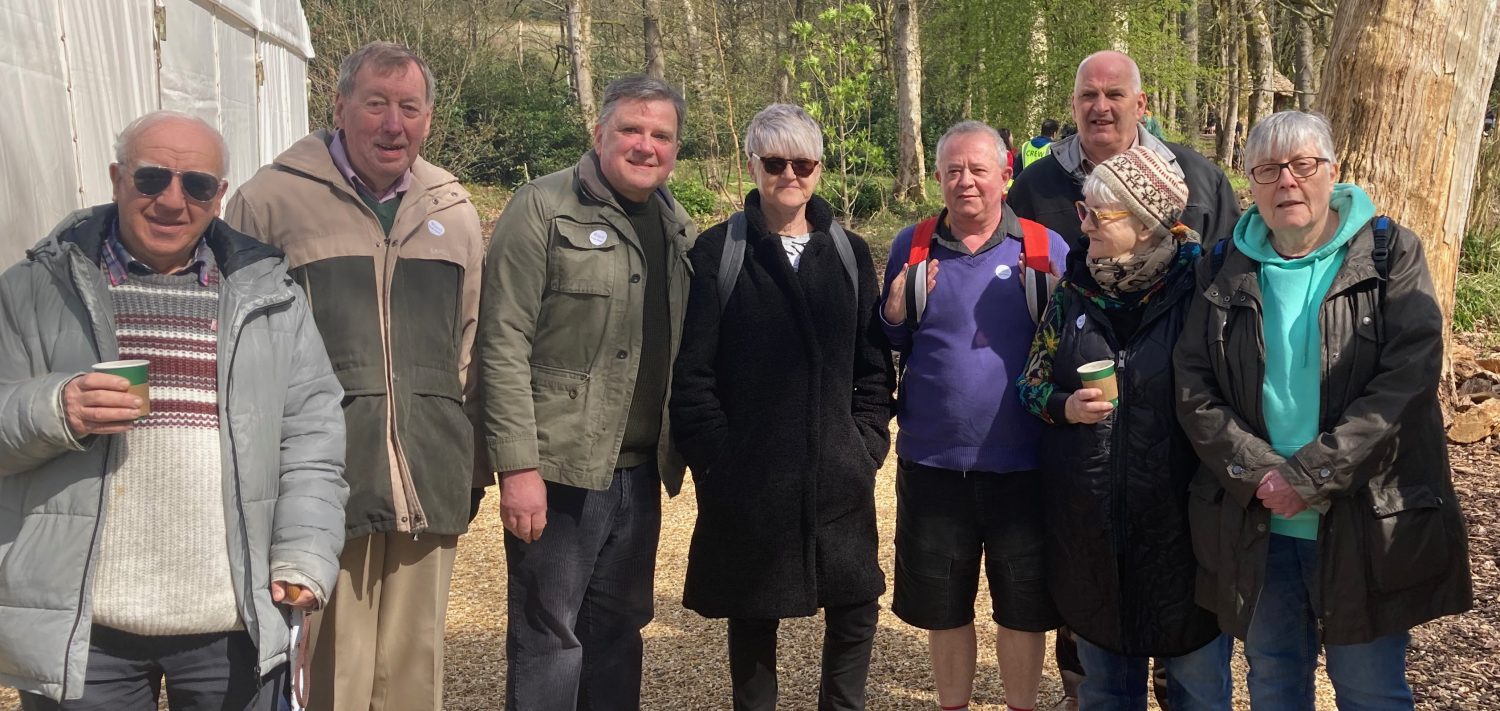
Visit to Chesterfield

Chesterfield is a charming market town nestled in the picturesque county of Derbyshire.

Chesterfield’s history stretches back over a thousand years, with its roots firmly planted in the Roman era. The town’s name is derived from the Old English “ceaster” (a Roman fort) and “feld” (pasture), highlighting its significance as a Roman settlement.

One of the most notable landmarks is the Crooked Spire of St Mary and All Saints Church. This architectural marvel, constructed in the 14th century, is famous for its twisted and leaning spire, which has intrigued visitors for centuries. The spire is twisted 45 degrees and leans 9 feet 6 inches (2.90m) from its true centre.

Folklore recounts that a blacksmith mis-shod the Devil, who leapt over the spire in pain, knocking it out of shape. Realistically, the lean has been ascribed to an absence of skilled craftsmen just twelve years after the Black Death, and the use of unseasoned timber used during construction, which warped over time.

The church itself is a stunning example of Gothic architecture, with its intricate stonework and beautiful stained glass windows. Inside, visitors can explore the nave, chancel, and various chapels, each adorned with historical artifacts and memorials.

More photos can be seen here.

Fact Checking Trump’s Address to Congress

On 4 March, President Donald Trump spent a hefty amount of his 99-minute address to Congress to underline his social policies around LGBT+ people.

In his speech, he said transgender children shouldn’t exist – a similar claim that Speaker of the House Mike Johnson has made toward gay people, generally – concealed the real impacts of cuts on LGBT+ issues, and repeated misleading claims on transgender athletes while elevating people who work with anti-LGBT+ hate groups. However, he was also fact checked on other issues such as immigration and Social Security and was found to have misled Congress. One fact Trump failed to mention is that he’s working on $5 trillion in tax cuts for the rich. 

STATEMENT: “Just listen to some of the appalling waste we have already identified. … $8 million to promote LGBTQI+ in the African nation of Lesotho, which nobody has ever heard of. $60 million for indigenous peoples and Afro Colombian empowerment in Central America – $60 million. $8 million for making mice transgender. This is real.”

FACT CHECK: Trump’s claim needs much more context. First, both of the $8 million figures are unclear, as many of the savings the Department of Government Efficiency (DOGE) claims have been debunked because of bloated numbers and a deep misunderstanding of how government contracts work. The only record of money given to focus on administering gender hormones to animals was three grants totalling $447,000 from the National Institutes of Health. Similar claims have been made on pseudo-science and far-right news outlets with claims as high as $10 million being spent on this kind of research. Second, the study “for making mice transgender” was actually for giving feminising hormones to chimps as part of research to understand why trans women, in particular, have higher rates of HIV – up to 50 times – than other populations.

STATEMENT: “A few years ago, January Littlejohn and her husband discovered that their daughter’s school had secretly socially transitioned their 13-year-old little girl. Teachers and administrators conspired to deceive January and her husband, while encouraging her daughter to use a new name and pronouns – they/them pronouns actually – all without telling January, who is here tonight and is now a courageous advocate against this form of child abuse.”

FACT CHECK: This statement is false. Littlejohn became well known in conservative circles because of this claim – Florida Governor Ron DeSantis even repeated the story to justify signing the state’s “Don’t Say Gay” bill. But emails given to CNN (Cable News Network) showed that it was Littlejohn – not teachers or administrators – who asked that the school refer to her child by the name they chose and to use they/them pronouns. Littlejohn lost her case against the school district.

STATEMENT: “Three years ago, Payton McNabb was an all-star high school athlete – one of the best – preparing for a future in college sports. But when her girls’ volleyball match was invaded by a male, he smashed the ball so hard in Payton’s face, causing traumatic brain injury, partially paralyzing her right side and ending her athletic career. It was a shot like she’s never seen before. She’s never seen anything like it.”

FACT CHECK: This statement needs clarity. It is true that Payton McNabb suffered an injury during a volleyball game where the other player was transgender. But it needs to be couched in numbers: How often are volleyball injuries? One study, which looked at the National Electronic Injury Surveillance System, showed that more than 340,000 people had volleyball-related sports injuries among youth in the US. McNabb’s head injury is one of the more common sports injuries in volleyball. And, if we’re looking at the number of transgender athletes en masse, the athletic association NCAA has said there are less than 10 athletes out of 500,000 who are openly transgender.

STATEMENT: “And if you really want to see numbers, just take a look at what happened in the women’s boxing, weightlifting, track and field, swimming or cycling, where a male recently finished a long distance race five hours and 14 minutes ahead of a woman for a new record by five hours. Broke the record by five hours. It’s demeaning for women, and it’s very bad for our country. We’re not going to put up with it any longer.”

FACT CHECK: It’s important to note that Trump didn’t actually give any numbers to justify this statement. The “long distance race” statement he made is true – but it was not just for women. The man who won that race wrote an Opinion piece in The Guardian saying Trump is incorrectly using him to degrade transgender athletes, while doing nothing at all to elevate, fund or support women athletes.

There are many similar comments made by Trump that were said in years past to scapegoat our community. I know it feels like the attacks are coming from all sides right now – but let’s be clear, this isn’t new. This is the same playbook, just with fancier tech and way worse vibes.

Scrubbing trans people from online records? Banning research on our community? That’s just the 21st-century remix of Nazis burning books and research from the Institute for Sexual Science in 1933.

Let’s not forget the Lavender Scare of the 1950s, when the US government purged thousands of LGBT+ people from federal jobs, branding them as security risks. Senator Joe McCarthy justified this and said communists were “twisted mentally and physically” because they were homosexuals.

Also, in 1978, Senator John Briggs ran a disinformation campaign trying to convince people that gays and lesbians were a threat to children and shouldn’t be allowed to teach. His ballot measure lost.
And in 1987 Congress banned the Centers for Disease Control and the National Institutes of Health from funding AIDS research or any education that “promoted homosexuality.”

History tells us that no matter how many times they try to throw us off course, we figure out how to keep moving. The road to justice has never been easy – but we’ve never let that stop us before.

LGBT+ Group Creates Blackpool ‘Rainbow Quarter’

Blackpool Council said the vibrant colours “brightened up the area” and were a show of “solidarity” with LGBT+ people

Rainbows have been appearing on street signs in Blackpool as a community group works with councillors to support LGBT+ people in the resort.

It coincides with Blackpool developing its Be Who You Want To Be area, which aims to boost inclusivity and help regenerate the north of the town.

Zebra crossings and street planters have also been decorated in the many colours of the Progress Pride flag, which is a symbol of the LGBT+ community.

Shaun Pickup said the Be You In Blackpool group wanted to create a “rainbow quarter”

Shaun Pickup, community lead for the Be You In Blackpool group, said: “One of the main ideas is to give the area around Lord Street, Dickson Road and Queen Street an identity to help encourage investment within the area.

Blackpool’s the LGBT+ capital of the country, so we’re now creating the Blackpool rainbow quarter,” he added.

“One of the ideas that was put forward by the community was these new rainbow street signs, replacing street signs that were either missing, or had been vandalised.”

The signs follow two rainbow zebra crossings that were added last year.

Two rainbow zebra crossings appeared in Blackpool last year

Mr Pickup said they decided to concentrate on streets around Lord Street since they were “already quite heavily concentrated with LGBT+ venues and hotel accommodation.

“And it is actually working,” he said. “Because 18 months ago we were down to about four LGBT+ venues and we’re already up to 24 venues, so it’s already showing that people are starting to invest in the area.

A lot of the older generation are feeling safe and coming back out again, so these venues are really important.

Throughout the country LGBT+ venues have been closing, so it’s nice to see Blackpool bucking the trend and I think it’s something Blackpool should be shouting about.”