Golden Age Big Band … Jonathan Blake … Aleshia Brevard

News

Golden Age Big Band

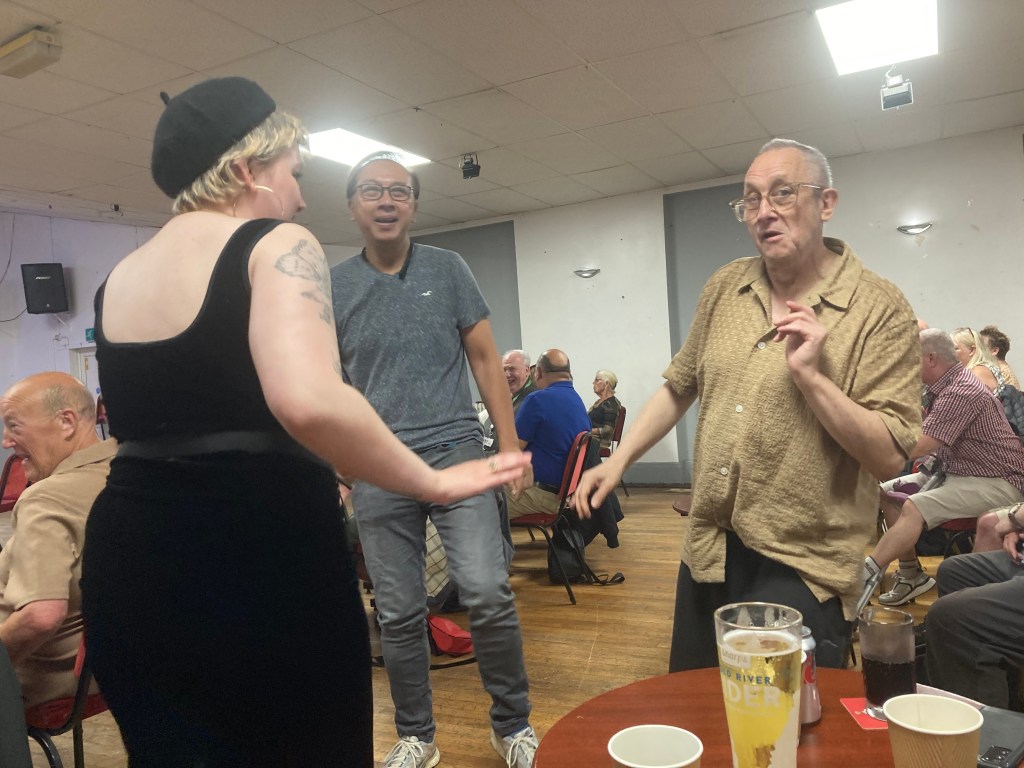
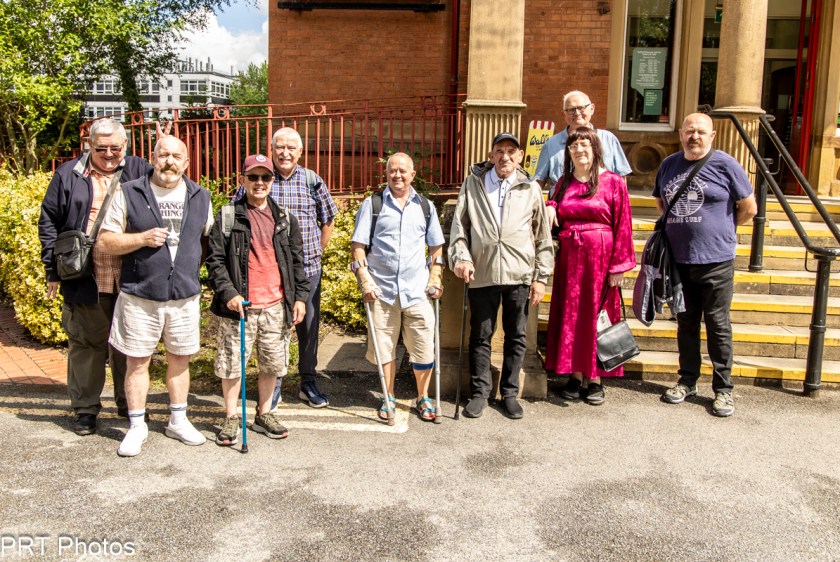
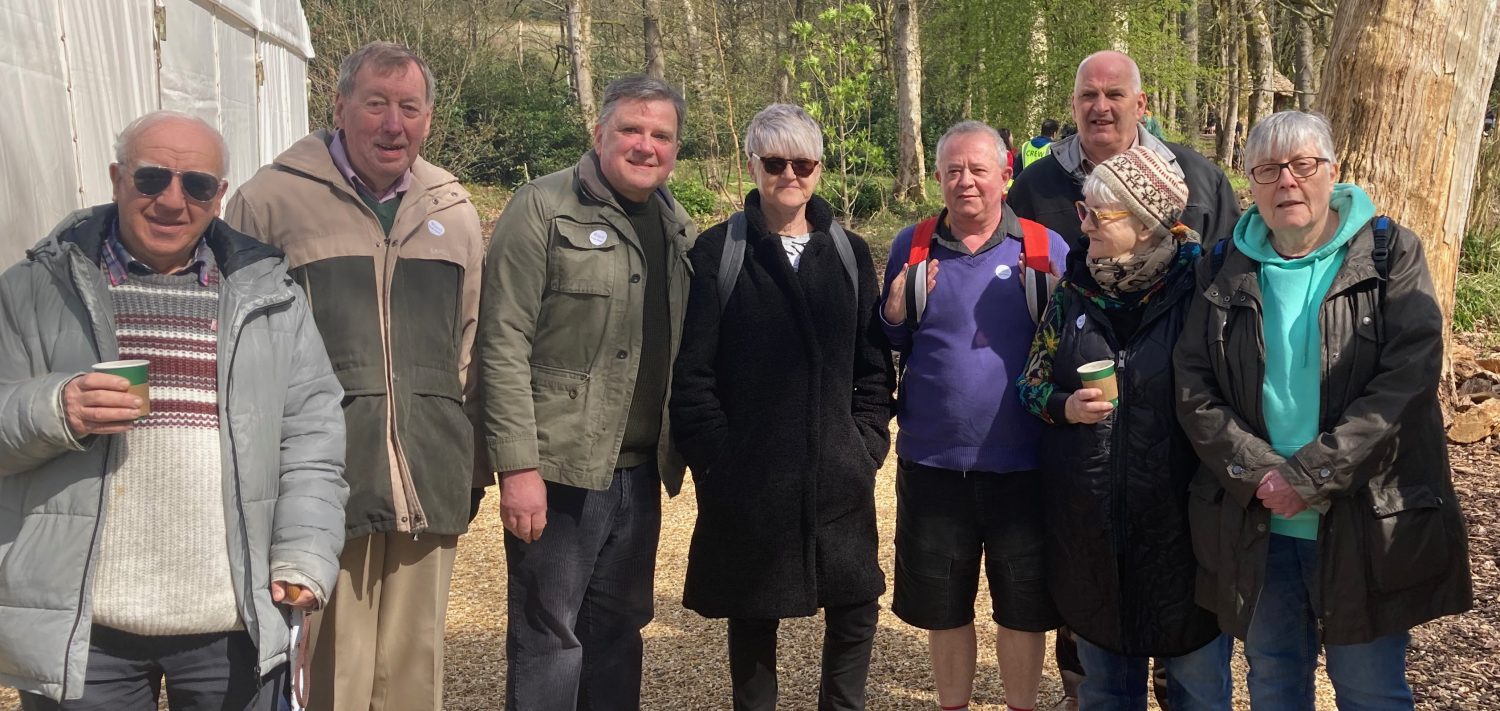
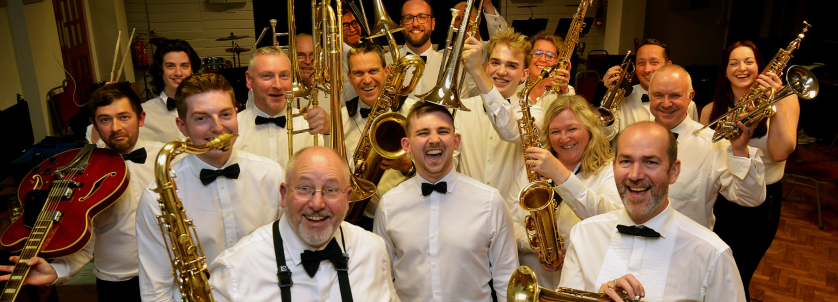
Twenty of us travelled to the John Alker Club, near Flixton, for an afternoon of Golden Age Big Band music plus Bingo and Afternoon Tea.

The term “Golden Age Big Band” refers to the period in American music history, roughly from the early 1930s to the late 1940s, when big band swing music was at its most popular. This era is characterised by the rise of large ensembles, often featuring prominent bandleaders like Benny Goodman, Glenn Miller, and Duke Ellington, whose music dominated radio airwaves and dance floors.
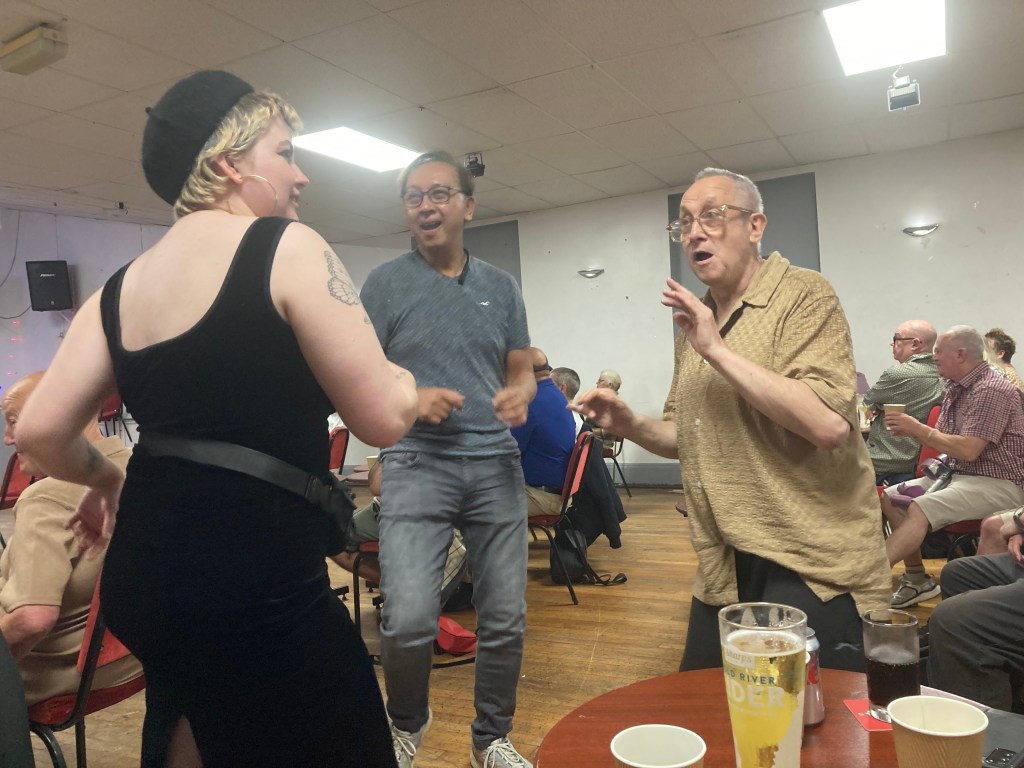
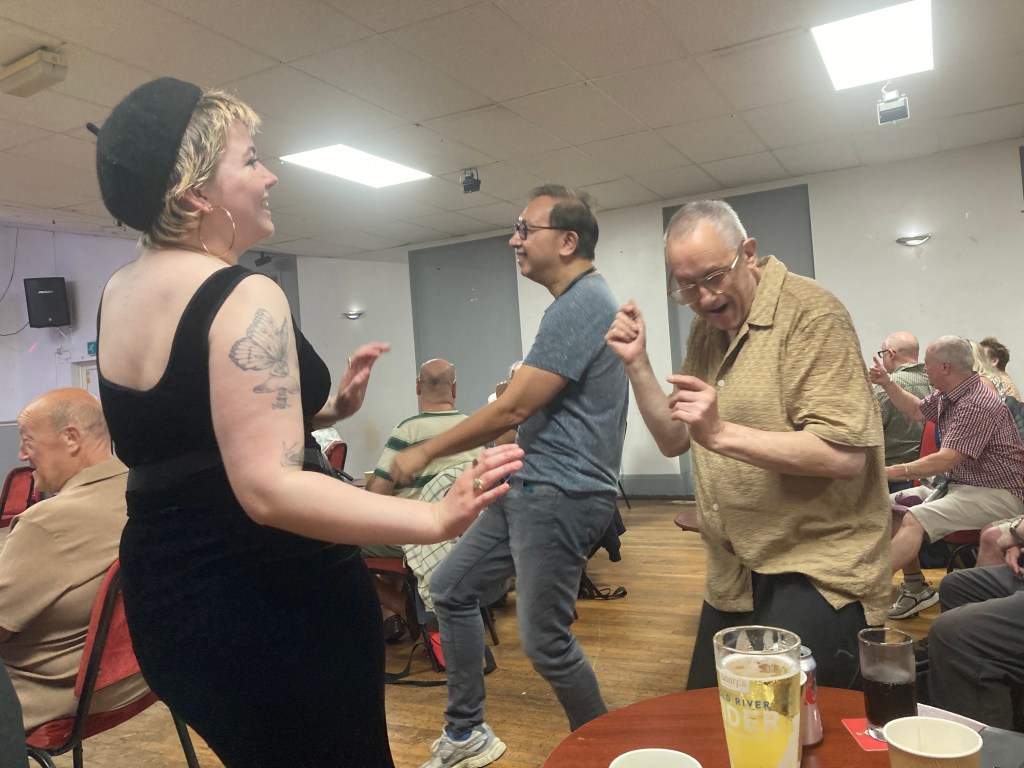
There were 17 musicians in the band and the conductor doubled as singer. There were some standards such as Glenn Miller’s “In The Mood” as well as more obscure tunes, and we had a thoroughly enjoyable time.

More photos can be seen here.

Jonathan Blake
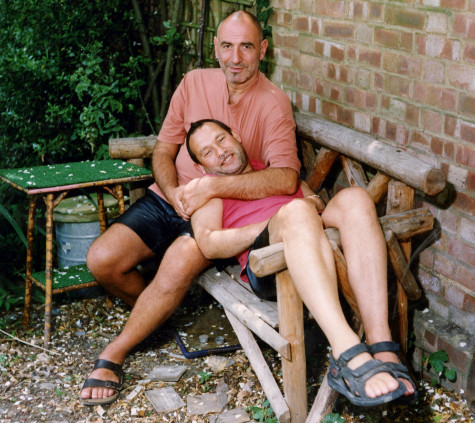
Jonathan Blake was one of the first people to be diagnosed with HIV in the UK

Jonathan Blake (born 21 July 1949) is a British gay rights activist. In 1982, he was told that he had just months left to live – now 76 today – he shares his groundbreaking story about his HIV diagnosis.

Jonathan Blake was just 33 years old when he became one of the first people in the UK to be diagnosed with HIV. Little did he know that after receiving what was then considered to be a “death sentence”, he would still be living a happy and healthy life at 76.

His experiences in the 1980s, along with the LGBTQ+ community which he was a part of, have since inspired both film and TV projects, including the 2014 film Pride. The film sees British actor Dominic West play Jonathan in a retelling of his work as a member of the group Lesbians and Gays Support the Miners.

Jonathan reflects on the moment he first received the harrowing news that he had contracted what was, in 1982, an unknown virus. He shared: “I was told I had a virus. There is no cure. You have between three and nine months to live … I was winded and just kind of numbed by it.”
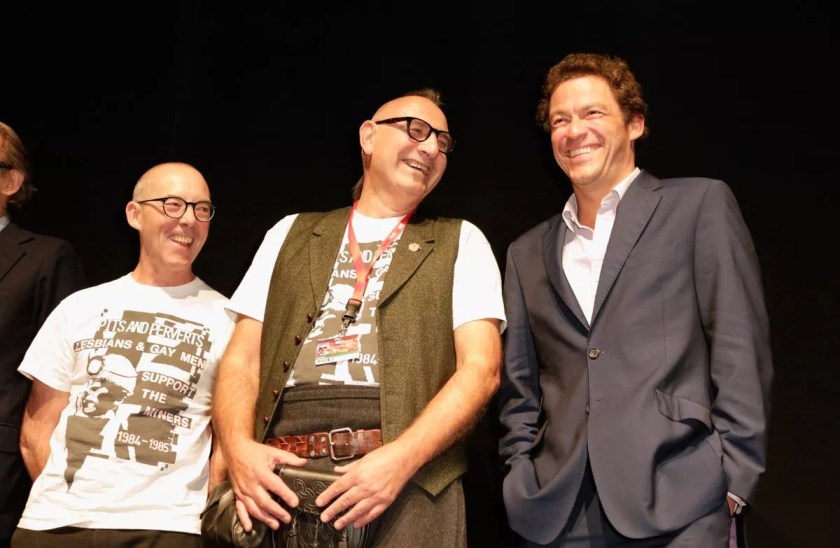
Jonathan at the Pride Press Conference in 2014

He recalled the days leading up to his diagnosis and how he felt as though every single lymph node in his body had started to grow. After silently struggling with his mobility, Jonathan booked himself in with a GP. It was then that he was sent to hospital, where they did a biopsy and he was left waiting for a few long days.

He shared: “Two days later they came back, having done the biopsy, and they’d given me this news, that I had this virus, with three to nine months to live, and palliative care was available when the time comes. And then, after having been completely floored, they said that I could go home.”

“I mean, it was really frightening”, he continued. “And I just decided that what was in front of me was actually so horrendous that I was going to take my own life, but I didn’t know quite how I was going to do it”.

The tragic diagnosis sent him, at just 33, into isolation. The lack of information around HIV at the time meant he feared passing the virus on to others through the air. “I would forever go to the gay bars in the East End because I needed to be with people,” he said.

“But I would stand in the darkest corner and send out all the vibes to say ‘don’t come near me people’ because what are you going to say? I felt like a modern-day leper because I just assumed that it was airborne. You know, it was never explained that the only way you can pass it on is by blood and fluids, none of that.”

This picture taken of Jonathan inspired Dominic West’s dance scene in the film

It was when he was at his very rock bottom that Jonathan found hope in a group of like-minded people where “everyone was welcome”. With an interest in activism and politics he spotted a tiny advert in a magazine called Capital Gay in 1983 calling on people to join the Gays For a Nuclear-Free Future in a CND campaign.

He said: “I just thought, this is going to be my re-entry into society. I’m going to join that because what the little advert said was ‘everybody welcome’, and I just thought, ‘well, that includes me’.”

This small decision changed the trajectory of Jonathan’s life as it was here that he met late partner Nigel Young. Not only that but his work with LGSM created a legacy away from his diagnosis, for his work helping under-represented groups, which in this case was a Welsh mining town.

Written by Stephen Beresford and directed by Matthew Warchus, the film Pride features a character based on Jonathan, played by Dominic West. The creation of the project helped him to reconnect with old friends and relive those spectacular years of activism while he was secretly fighting for his life.

He recalls meeting the actor who would play him in the movie. It was the day before that he got the call asking him to meet the mystery actor and classic Jonathan, welcoming everyone he comes into contact with, thought “it’s just enough time to make a lemon drizzle cake.”

Jonathan said: “So the next day arrives, the doorbell goes, I open the door, and this man thrusts out his hand and introduces himself as Matthew Weiler, the director. And over his shoulder I see McNulty from The Wire. And at that point I realised that it was Dom West. I was aware of him because I’ve watched The Wire and loved it.”
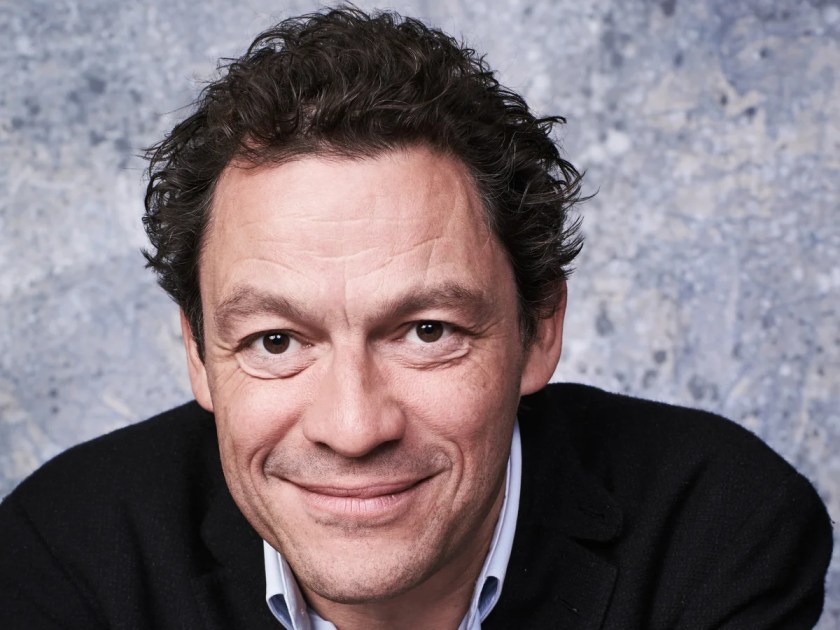
Dominic West

Growing up in Birmingham before making the move to London later in his life, Jonathan knew from an early age he was gay. “I already knew that I was attracted to men,” he explained. “And I had already sussed out that that wasn’t acceptable.

“You know, this wasn’t something that you could just rush home and shout about as such. At an early age if I couldn’t be found the headteacher would say ‘if you go and look where Bert is, you’ll find John’. He was the caretaker and I just followed him around. You know, pheromones, infatuation, what have you.”

The stigma that came along with HIV in the 1980s was something that didn’t help the problems he already faced as a homosexual man. During the first appearance of the virus, there was a widespread misconception that HIV and AIDS were solely diseases that affected gay men and it was this that fuelled fear and discrimination that still lives on to this day.

“People sort of carried this blame,” Jonathan said. “They were blamed for their own illness. You’ve decided to explore this thing. You’ve decided to go out and have sex. You’ve done this to yourself. And the chief constable of Manchester, James Anderton, talked about gay men who were ‘swirling in a human cesspit of their own making’.

“And what is really interesting is the way that suddenly there’s been this huge focus on trans people. And the way that people talk about and dismiss the trans community is exactly the same language that was being used to attack gay men in the 60s and 70s. It’s almost word for word.”

It wasn’t until 10 years ago that Jonathan finally started to feel a sense of freedom, at 65. He said: “What was amazing was the turning point for me was 2015, because in 2015 they announced that on effective medication, you cannot pass the virus.” It was a powerful sentence to hear after years of questioning his own health and that of others.

“And with it came the phrase, U = U. Undetectable equals untransmittable. And psychologically it was incredible.”
Jonathan Blake as a part of Lesbians and Gays Support the Miners in the 1980s (Image: Jonathan Blake)

Back in the 1980s, however, Jonathan famously refused to take part in the drug trials for HIV. He said: “I was asked if I would be a part of a trial called the Convoy Trial. And they were basically trialling the very first drug that was used around HIV, which was called AZT. What nobody ever told us was that AZT was a failed chemotherapy drug.

“And so it would leave you open to opportunistic infections. That is exactly how the HIV virus works. I think one of the reasons that I’m here today is that I never touched AZT because all the people who touched AZT, if they didn’t withdraw from that trial because they were so nauseous, basically died.”

Thinking back to how far we’d come since the early days of this initially unknown virus, Jonathan recalled a time where two communities were forced to join together. He said: “What was really fascinating was that in the late 80s, there was suddenly this influx of Black African women who came to drop-in centres.

“And it was really extraordinary because they were having to deal with the fact that they were mainly surrounded by white gay men. And mainly they came from Christian communities, where homosexuality was just forbidden. So suddenly they’re having to deal with the fact that they’ve got this disease which basically ‘homosexuals have’. And that, to me, is what stigma is all about.”

Now he believes the way forward is through “raising awareness and sharing information”. He said: “I think the difficulty is that there are still parts of the population that still believe that it can’t affect them. And what is amazing now is that we have this arsenal of medication.”
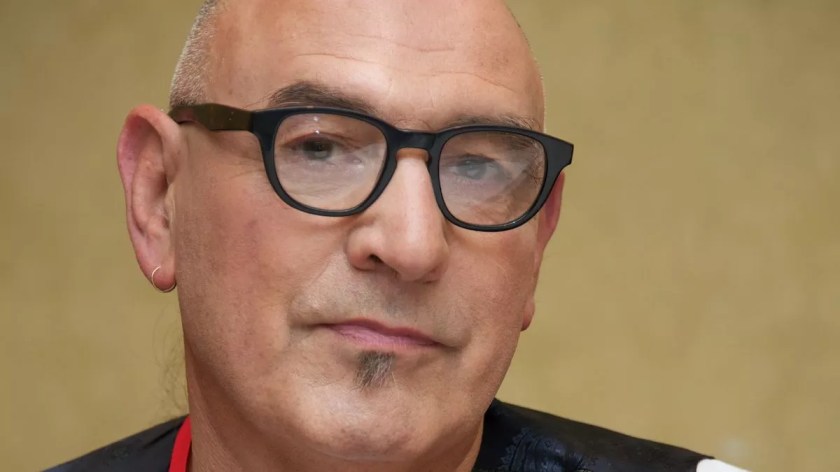
The Terrence Higgins Trust works to support those with HIV, providing helpful resources and information for those interested in learning more about the virus or who are living with it themselves. The charity’s mission is to end any new cases of HIV by 2030 and with the help of people like Jonathan Blake sharing their incredible stories, there’s hope that this could be a reality.

Living with HIV has opened up so many doors for Jonathan in a world that once felt so isolating to him. Alongside his part in Pride, he has been able to share insight for other documentary films, theatre performances, and written works, as well as attending talks. With endless amounts of stories to share, he is always keen to embrace, educate and connect with people through the virus that he was once told would be the end of it all.

Aleshia Brevard

Aleshia Brevard was a pioneer transgender woman and has been described as ‘one of the early medical transitions’ in America. She transitioned not only before there was a trans community in San Francisco, but before the word ‘transgender’ had even been coined.

Aleshia underwent gender-affirming surgery in Los Angeles in 1962, which was one of the first such operations in the USA. 
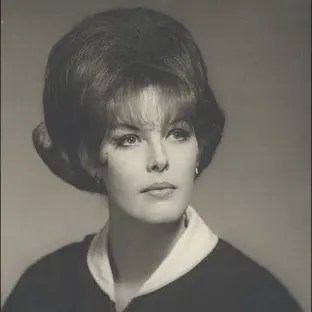
Brevard eventually wrote two biographies, the first one entitled ‘The Woman I was not born to be: A Transsexual Journey’.

Aleshia was born in 1937 and was brought up on a tobacco and cattle farm in Central Tennessee. Most of her early summers were spent hauling hay.

Aleshia was conscious of her desire to live as a woman and identified from an early age as a girl. However, she kept this inner gender identity to herself. Nevertheless, friends around her were able to sense this identity. She was described as “effeminate and artistic”. In fact, she was often mistaken for a girl, which made her teenage years awkward.

At the age of 15, having spent her youth dreaming of glamorous film stars and having left school, she took the Greyhound bus to California. Aleshia had been inspired by the iconic Christine Jorgensen, a pioneer transgender woman who made history after her gender-affirming surgery, becoming Christine and returning to the USA.
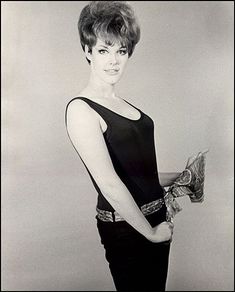
Aleshia began her transition in the late 1950s. She was one of the first transgender women working as a ‘female impersonator’ to take female hormones to aid her transitioning. She said, “Within a year of that life changing surgery I was balancing a showgirl’s headdress at the Dunes Hotel”. However, Aleshia’s dream was to be more than just a showgirl, but a Hollywood Star.

Aleshia was a multi-talented woman and worked throughout her career in many different roles: from model, entertainer/performer, showgirl, playboy bunny girl, director, professor of theatre and eventually with the publication of her memoirs, an author. She started her career as a female impersonator, as a Marilyn Monroe persona, at Finocchio’s in San Francisco in the early 1960s. From this point in her life, Aleshia travelled between Appalachia, the Eastern US and California. Having studied art at Tennessee State University, eventually attended Middle Tennessee State University, graduating with a degree in theatre.

Later, Aleshia reflecting on her transition, stated: “I did not go through gender reassignment to be labelled as transexual. I look at that as an awkward phase that I went through, sort of like a really, painful adolescence.” 

After her life changing procedure, she sought the help of her family in Hartsville to recover from her surgery. Fortunately, her family were loving and supportive of her transition. However, when an opportunity to go to California with a friend came her way, she took it.

Aleshia’s regular performance as a Monroe impersonator won such renown that Marilyn Monroe herself went to the San Francisco nightclub, which was famous for it’s drag female impersonators, to see Brevard’s performance. As the act came to an end and the lights went up, Aleshia realised that Monroe was in the audience, having been discovered Monroe blew her a kiss. Monroe later recounted in her diary that seeing Aleshia’s act was like seeing herself in a film.

When Aleshia returned to Middle Tennessee State University, after retiring as a performer, she studied and earned a master’s degree in Theatre Arts. She was then able to work as a drama teacher. Aleshia also married for the first time whilst in Tennessee, eventually she married four times. In the late 1990s Aleshia returned to California and settled outside of Santa Cruz with a friend, she also worked as a substitute teacher in community theatre.

Aleshia died at the age of 79 on 1 July 2017, at her home in Scotts Valley California.

Salford Museum & Art Gallery … Evolution of the Pride Flag … Birthdays

News

Salford Museum & Art Gallery

This week we viewed the Colour exhibition at Salford Museum & Art Gallery.

Throughout history colours have been connected to human emotions and behaviours. The meaning and influence of certain colours might have individual and cultural significance, but the acceptance that colour can have an effect is universal. It is believed that surrounding yourself with the right colours can improve your wellbeing and colour is used by designers and artists to influence behaviour or mood.

Red

Ochre, a natural clay earth pigment, was one of the first colours used in prehistoric art due to it being readily available. In Central and South America, the Aztecs ground down cochineal insects to make red pigment. They gathered the bugs from the prickly pear cactus. The bugs were so small 70,000 of them were needed to make 1lb of dye!

Orange

Spanish and Portuguese merchants brought orange trees to Europe from Asia in the 15th and 16th centuries and the name of the fruit was adopted for the colour. Before this it was called saffron or yellow red.

Yellow

Yellow is a sacred colour in many religions derived from worshipping the sun, with sun gods often depicted wearing yellow.

Green

Green is the colour of chlorophyll, a pigment found in plants, so it is often associated with freshness and renewal. The word green comes from the Latin viridis, which means growth and life. It’s been used in art since the Egyptians who used the mineral malachite and green earth to make the pigment.

Blue

Blue was a common colour in Ancient Egyptian clothing and language. They produced the first blue pigment using minerals, limestone, copper and sand. They also valued blue semi-precious stones like lapis lazuli.

Purple

Purple signifies power and wealth. This may be because it is a very expensive dye to create and in the past ordinary people were forbidden to wear it.

Black

Black and white are not classed as colours in one sense, they are an expression of light. Black is the absence of light and absorbs all wavelengths, whereas white reflects all wavelengths of light equally. Black has associations with death and evil.

White

In the Western world the colour white can be seen as a positive clean colour, with a religious and pure quality. But in many Asian countries, white can be the colour of death and mourning.

More photos can be seen here.

The evolution of the Pride flag – where it came from and what it looks like today

With June marking Pride Month globally, the UK has events and marches occurring across the length and breadth of the country all month long (and beyond).

Pride Month honours the legacy of the Stonewall uprising while also shining a light on the ongoing activism and achievements of the LGBTQIA+ (lesbian, gay, bisexual, transgender, queer, intersex, asexual) community.

Evoking a sense of belonging, representation and community, the Pride flag is a symbol of unity and empowerment.

But what exactly are the origins of this world-renowned flag? Here’s a brief breakdown of the history of the Pride flag and its evolution over the decades.

Pride flag: A brief history

The 8-stripe flag was first designed by an activist from San Francisco called Gilbert Baker, whose aim was to represent the diversity of the LGBTQIA+ community through the flag. Harvey Milk, California’s first openly gay elected official, commissioned Gilbert to create a visual of pride for the gay community. With flags often being recognised as key pillars of self-identity, Gilbert’s design was then printed onto a flag.

The first iteration of the Pride flag was revealed during the Gay Freedom Day Parade in San Francisco in 1978. Due to colour shortages however, the turquoise and pink stripes had to be removed from the flag, and the blue stripe was changed to a different shade. This is the version of the Pride flag which is world-renowned and has since served as an iconic representation and symbol of unity, freedom and equality for the community.

The Gilbert Baker Design

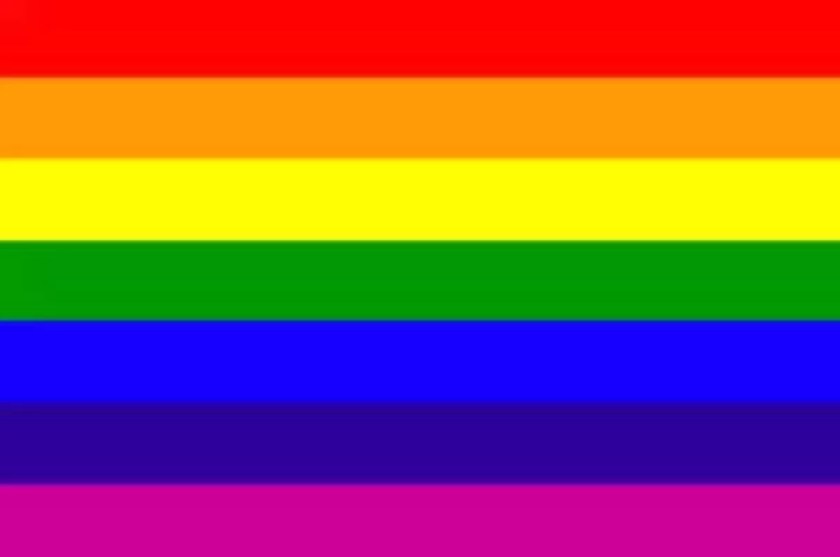
Gilbert Baker’s original design had 8 stripes (Image: Flagmakers)

Inspired by the lyrics of Judy Garland’s Over the Rainbow and the visual language of other civil rights movements from the 1960s by black civil rights groups, Gilbert Baker designed the Rainbow Flag. Hand-dyed and hand-sewn by him, the flag was first flown at San Francisco’s Gay Freedom Day in June 1978

Each coloured stripe of Gilbert’s flag represents a different aspect of the LGBTQIA+ community, namely: Hot Pink for Sex, Red for Life, Orange for Healing, Yellow for Sunlight, Green for Nature and Serenity, Turquoise for Art, Indigo for Harmony and Violet for Spirit.

Pride Flag History from 1978 to 1999

A colour was dropped due to manufacturing issues (Image: Flagmakers)

After Harvey Milk’s assassination in 1978, several individuals and organisations chose to adopt the Pride flag introduced to the community upon his insistence. The flag was flown across San Francisco and was ordered for mass production by Gilbert, the original designer of the flag, with the help of local business Paramount Flag Co, in an effort to commemorate Harvey’s accomplishments and continue the community’s fight for equality and diversity.

Demand for the rainbow-striped flag rose so high, it became impossible for the 8-stripe design to be produced in such large quantities. Gilbert and Paramount both struggled with sourcing the hot pink fabric and so a 7-stripe version of the flag was borne and manufactured.

The Traditional Gay Pride Flag

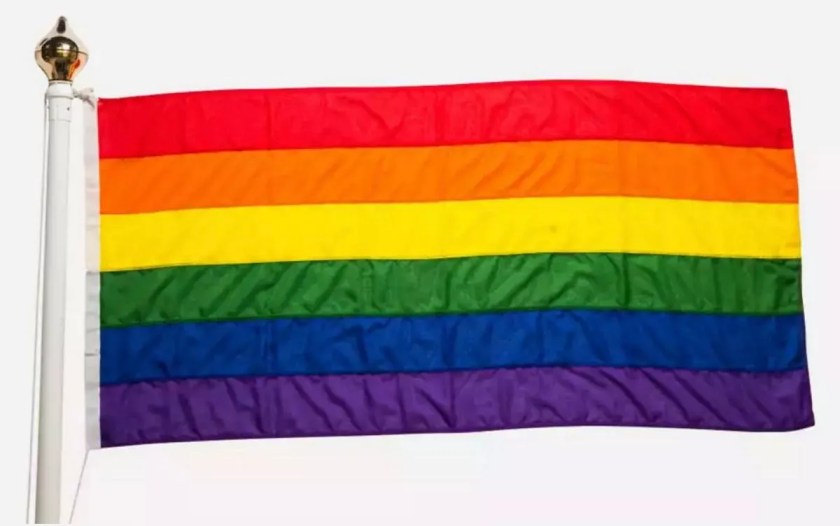
The 6-stripe version of the Pride flag is the most famous (Image: Flagmakers)

1979 once again saw the Pride flag’s design amended – this time to a six-stripe version – after several complications arose over the odd number of stripes featured on the flag, as well as the conundrum of people wanting to split the flag in order to decorate Pride parades.

The indigo and turquoise stripes of the flag were combined to create a vivid royal blue stripe instead, and it was agreed that the flag would typically be flown horizontally, with the red stripe at the top, forming a natural rainbow. Finally landing upon a six colour version, this is the iteration of the flag the world is most familiar with.

This version of the Pride flag’s design became extremely popular globally, making it the focal point of landmark decisions like John Stout fighting for his right to fly the Pride flag from his apartment’s balcony in 1989.

The 2017 Philadelphia Design

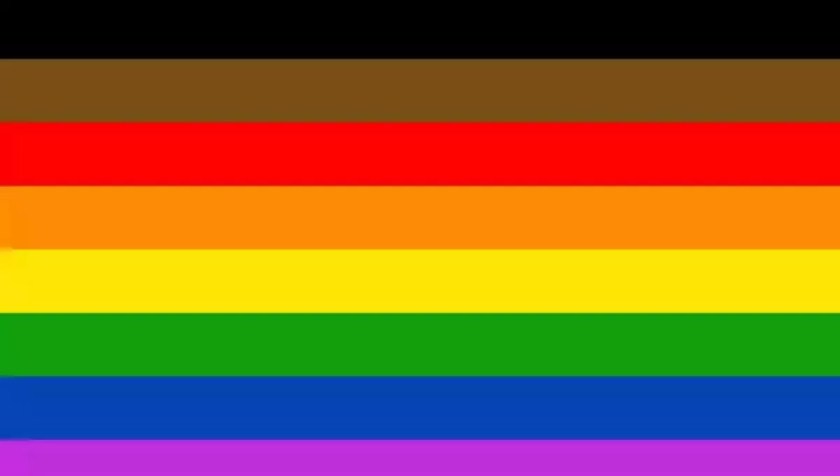
Black and brown stripes were added in 2017 to represent people of colour (Image: Flagmakers)

In 2017, the city of Philadelphia recognised that people of colour often face discrimination within the LGBTQIA+ community itself, and thus added an additional 2 stripes – black and brown – to the Pride flag, in an effort to represent the regular prejudices and struggles faced by queer people of colour.

While some organisations and activists criticised the new design citing unnecessary division and boundary creation within the community, Pride festivals world-over, including in Manchester, decided to adopt the design in a bid to promote inclusion, especially within the community.

This came especially after a 2018 study’s finding showed that 51 per cent of black LGBTQIA+ individuals have faced racism within the queer community.

The Progress Pride Flag

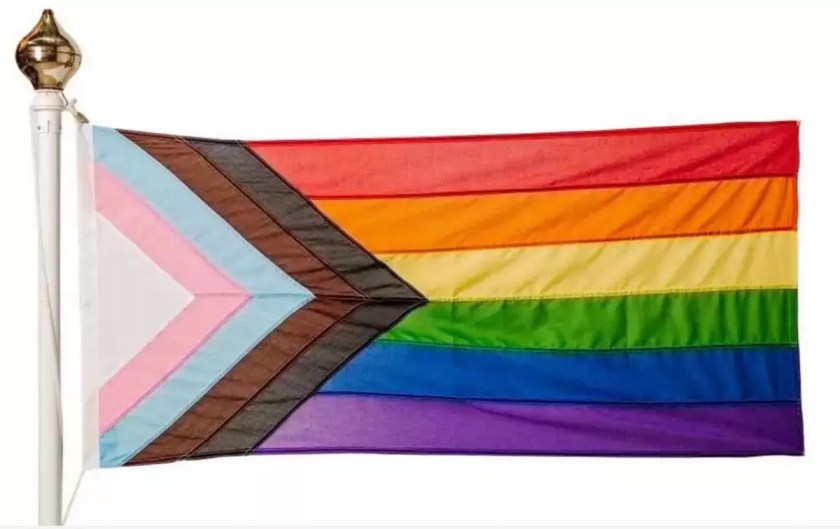
The Pride flag saw another change in 2018 to include the Transgender community (Image: Flagmakers)

June 2018 saw Daniel Quasar, an activist and designer, release another version of the Pride flag, which combined the new elements of the Philadelphia design with the Transgender flag in an effort to promote further progress and inclusion.

This new iteration of the flag saw a chevron added to the hoist of the traditional 6-stripe flag. The chevron represented those living with HIV/AIDS and those who have been lost, trans and non-binary persons, as well as marginalised LGBTQIA+ communities of colour.

The new design went viral and was fervently adopted by pride parades and people all over the globe. The chevron’s arrow purposefully points to the right in a means to represent forward movement and progress.

Intersex Inclusive Progress Pride Flag

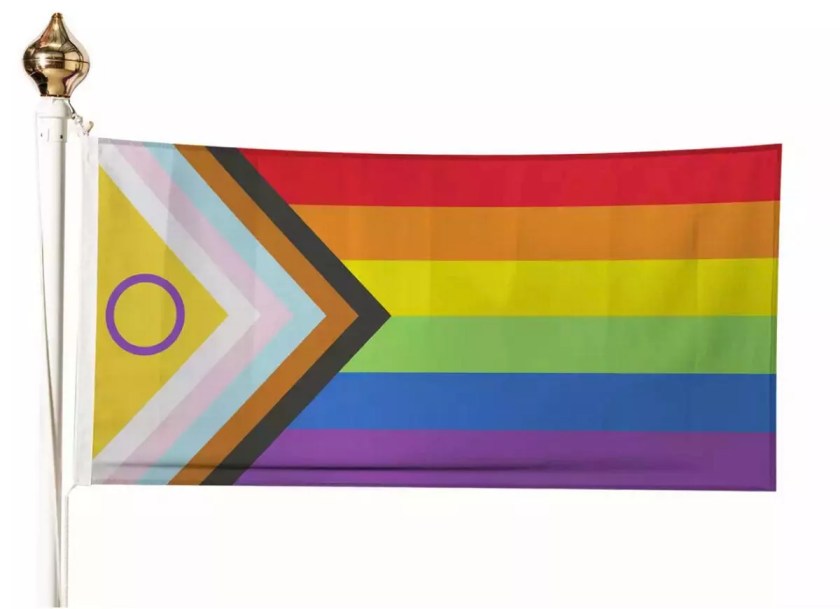
The Intersex flag was incorporated into the original design in 2021 (Image: Flagmakers)

In 2021, the Pride flag was once again reinvented, with Valentino Vecchietti of Intersex Equality Rights UK adapting the previous Pride Progress flag to now incorporate the intersex flag as well, thus creating the Intersex-Inclusive Pride flag of 2021.

Purple and yellow are colours used by the intersex community as an intentional counterpoint against the gender defining blue and pink that have traditionally been used for years around the world. The circle further represents the idea of being whole and unbroken, denoting the right of Intersex people to make independent decisions with regards to their own bodies.

Birthdays

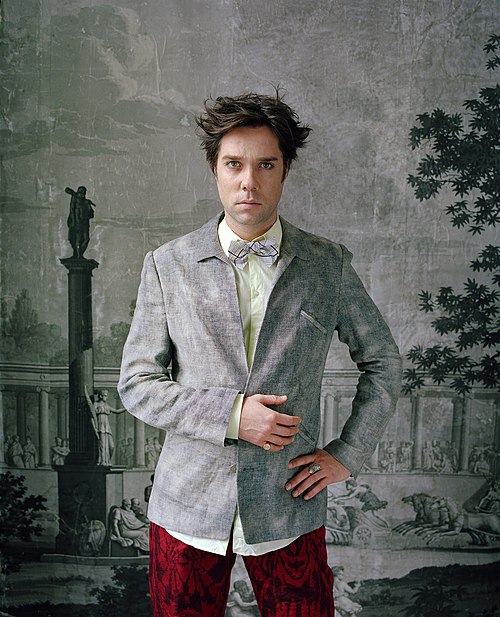
Rufus Wainwright (Born 21 July 1973), American / Canadian singer-songwriter

Ten Buildings with an LGBT+ Past … Daddy’s First Gay Date … Rainbow Lottery … Birthdays

News

Ten Buildings with an LGBT+ Past

There are many untold LGBT+ histories of buildings and places that people have lived alongside for generations.

From the private houses of trailblazing individuals to the much loved local gay bar, the first venue in town to host equal marriage and everything in between. Here, are ten places:

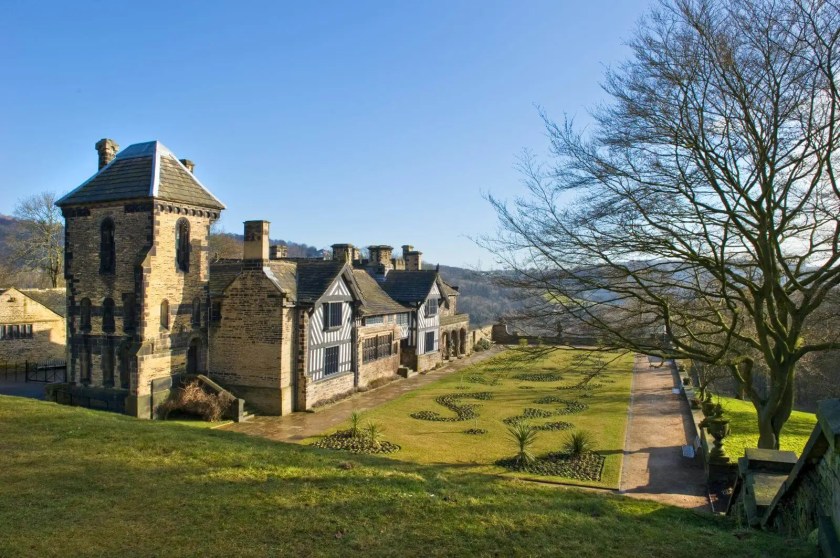
1. Shibden Hall, Halifax, West Yorkshire

Shibden Hall, Listers Road, Halifax

Shibden Hall in Yorkshire was once home to the famed lesbian diarist Anne Lister, born in 1791. Her masculine appearance and sometimes eccentric behaviour earned her the nickname of “Gentleman Jack.”

Anne kept a diary throughout her life where she devised a code to record her innermost thoughts without fear of discovery, including her intimate feelings towards women.

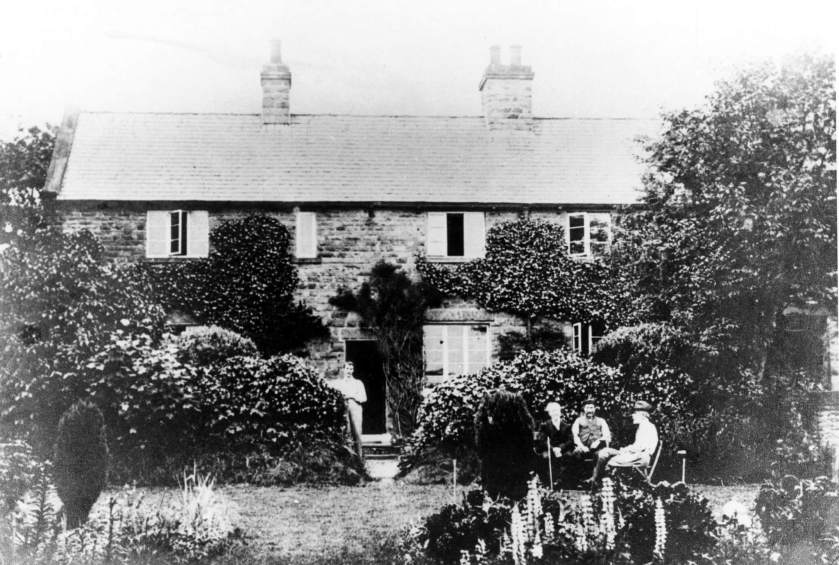
2. Millthorpe, Derbyshire

Edward Carpenter and friends at his cottage, Millthorpe, Derbyshire

Edward Carpenter was the founding father of gay rights in Britain, living openly with his partner George Merrill at a time when hundreds of men were prosecuted for homosexuality.

Millthorpe was a place of pilgrimage for many, including the writers E M Forster and Siegfried Sassoon, and other less well-known women and men questioning their sexuality, including soldiers during the First World War.

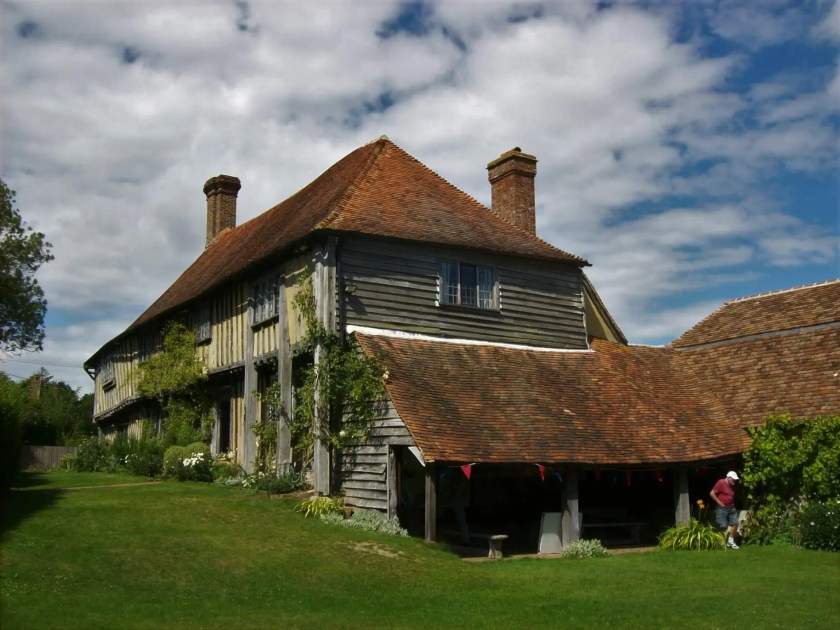
3. Smallhythe Place, Tenterden, Kent

Smallhythe Place, Kent. Photo via Wikimedia Commons

Smallhythe Place was bought by the renowned Victorian actress Ellen Terry. After her death, her daughter Edy Craig, an early pioneer of the women’s suffrage movement and theatre director, continued to live there.

Craig lived at Smallhythe in a ménage à trois with the dramatist Chris St John (Christabel Marshall) and the artist Tony (Clare) Atwood until her death in 1947.

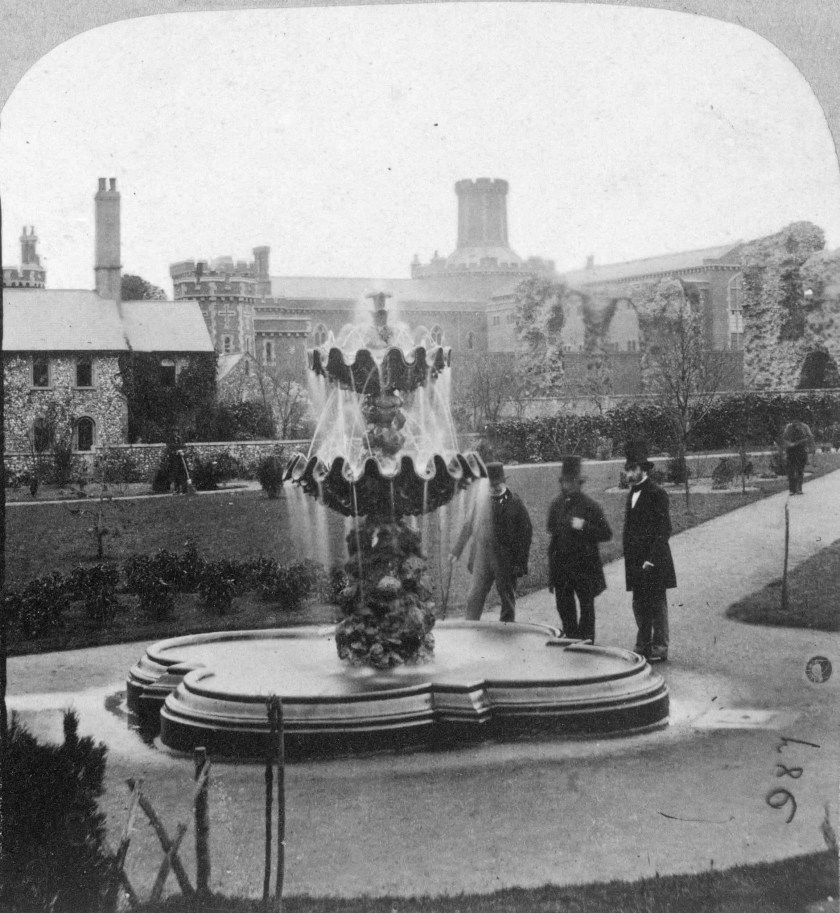
4. Reading Gaol, Berkshire

Fountain with Reading Gaol in background

Reading Gaol is where the poet and playwright Oscar Wilde spent eighteen months of his two-year sentence of hard labour for ‘gross indecency’.

Wilde later immortalised the institution, and his experiences, in his poem “The Ballad of Reading Gaol” (1897).

In 2017 Wilde, along with tens of thousands of other men, was posthumously pardoned for acts no longer considered a crime, under the Policing and Crime Act 2017 (also known as Alan Turing law).

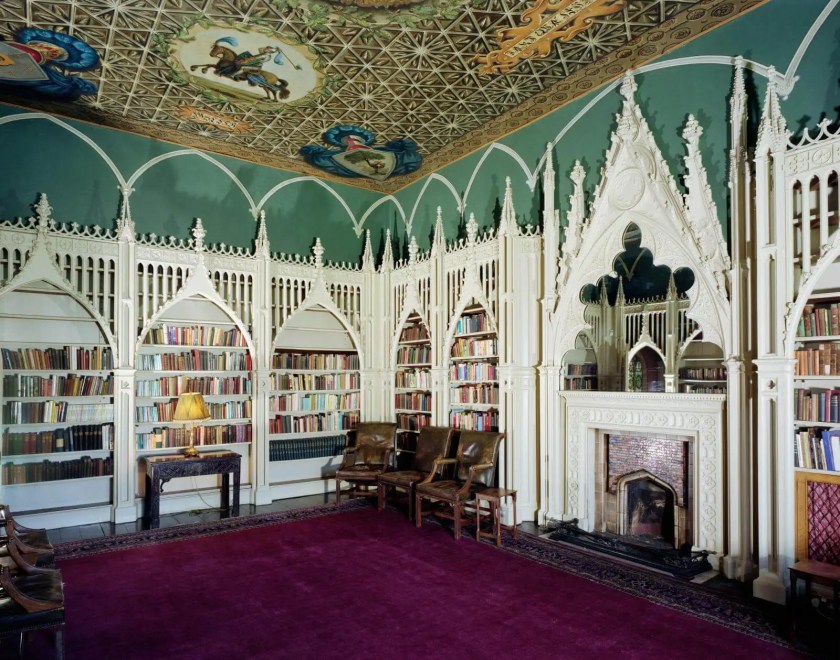
5. Strawberry Hill, Twickenham, London

Strawberry Hill, Waldegrave Road, Richmond-upon-Thames, London 

Completed in 1776, Strawberry Hill was extensively remodelled by its most famous owner, writer Horace Walpole.

Walpole was one a group of four male friends who called themselves the ‘Committee of Taste’ and advised each other on architecture and interiors. There is no evidence Walpole had any sexual relationships with men, but he had a number of close friendships with other bachelors. He was described as an effeminate man by contemporaries and the decorative style of Strawberry Hill is often described as ‘queer gothic’.

On his death in 1797, Walpole left Strawberry Hill House to his niece, the lesbian sculptor Anne Damer, who lived there until 1811.

6. Carlton House, St James’, London

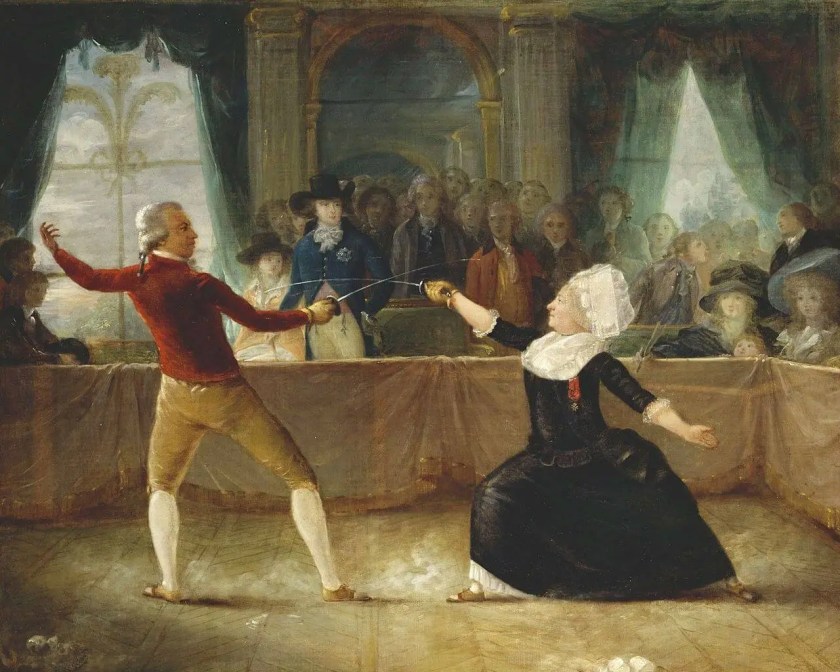
Although demolished in 1825, Carlton House is best known as the London residence of the Prince Regent (later George IV) and location of a noted fencing match in 1787 between the gender-crossing Chevalier d’Eon and the Chevalier de Saint-Georges.

Having lost a French pension with the onset of the French Revolution, d’Eon’s prowess at fencing and appearance in women’s clothing proved a lucrative spectacle at the Vauxhall Pleasure Gardens and other locations across the country.

7. Temperance Hall, Hulme, Manchester

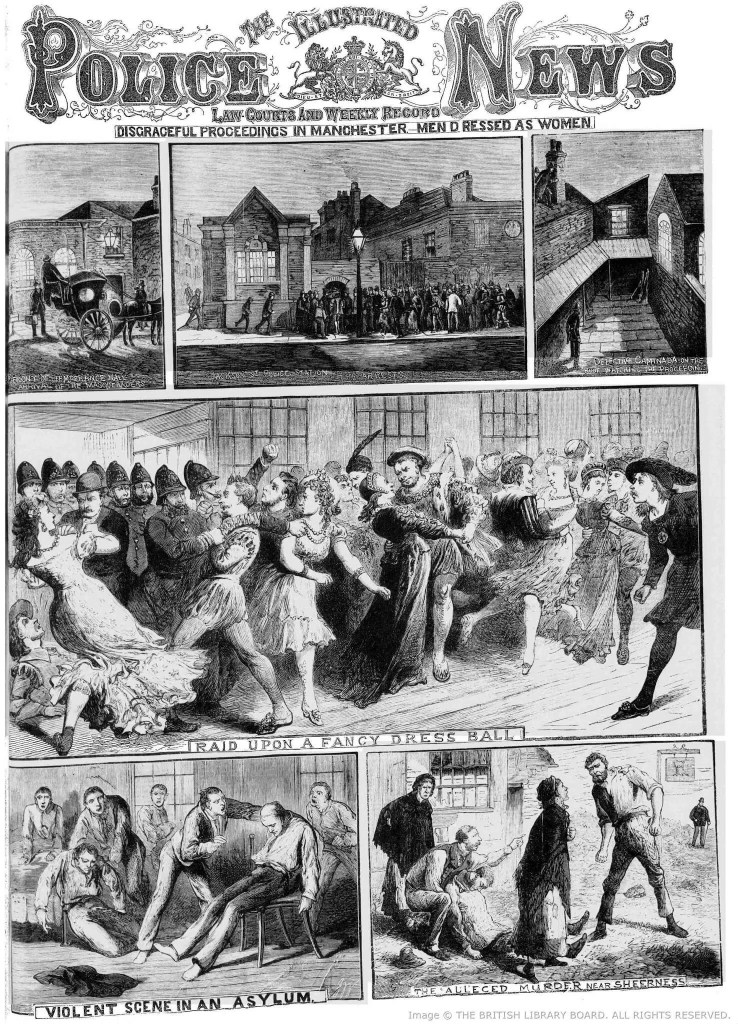
The Illustrated Police News

The Temperance Hall in Manchester was the site of an infamous cross-dressing ball in 1880, raided by police.

Police secured entry by giving the password ‘sister’ to the ‘nun’ guarding the door. Detective Sergeant Caminada reported seeing 47 men in ‘most fantastic fashion’, including 22 in ladies’ wear. Detective Caminada and his officers rounded up the men and took them to Manchester Town Hall for questioning. Several cab-loads of clothing were taken as evidence.

All were arrested and charged the following day with having ‘solicited and incited each other to commit an unnameable offence’.

8. The Gateways, Chelsea, London

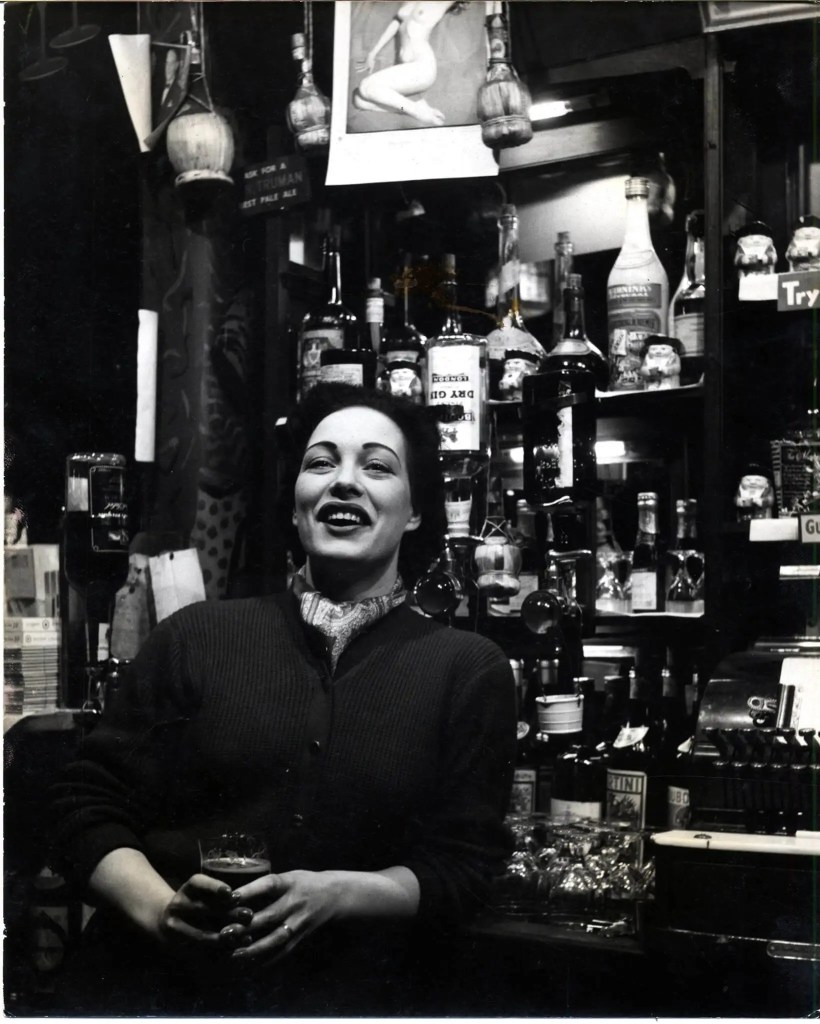
Gina Ware was the proprietor of the legendary Gateways club at 239 Kings Road on the corner of Bramerton Street, Chelsea

Opened in the 1930s by a retired colonel, the Gateways club was the longest-running lesbian nightclub of the 20th century.

Lesbian-friendly since the 1940s, in the 1950s and 1960s the Gateways became an almost exclusively lesbian club, under the management of Gina Ware, and an American ex-airforce woman, Smithy, who was herself a lesbian.

The club became internationally famous and celebrated after it featured in the film “The Killing of Sister George in 1968 – the extras in the club scenes were genuine Gateways members. It closed in 1985.

9. The Jacaranda Ladies Club, Hove, East Sussex

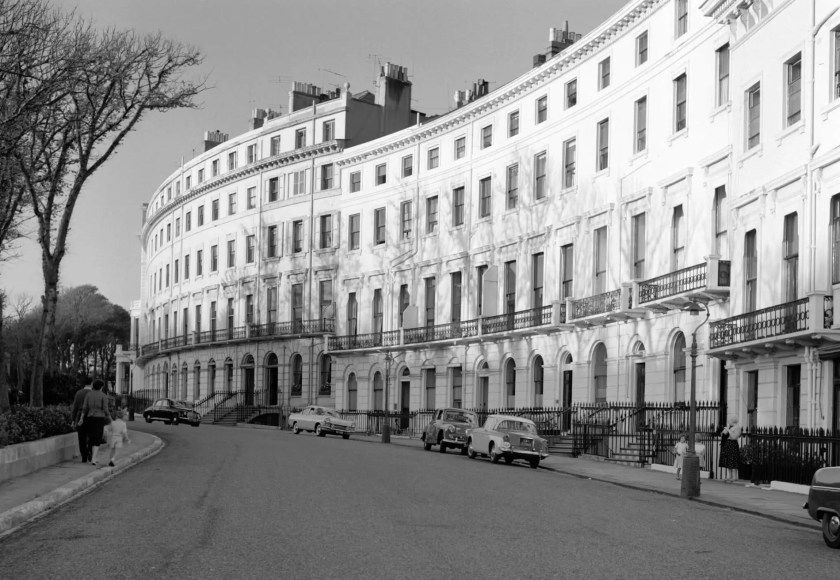
General view of Adelaide Terrace in Hove, East Sussex

The Jacaranda Ladies Club was set up in the early 1960s by Kay Morley.

According to an entry in ‘Daring Hearts: Lesbian and Gay Lives of 1950s and 1960s Brighton’ the club was shut down soon after a police raid. Today, very little is known about the club.

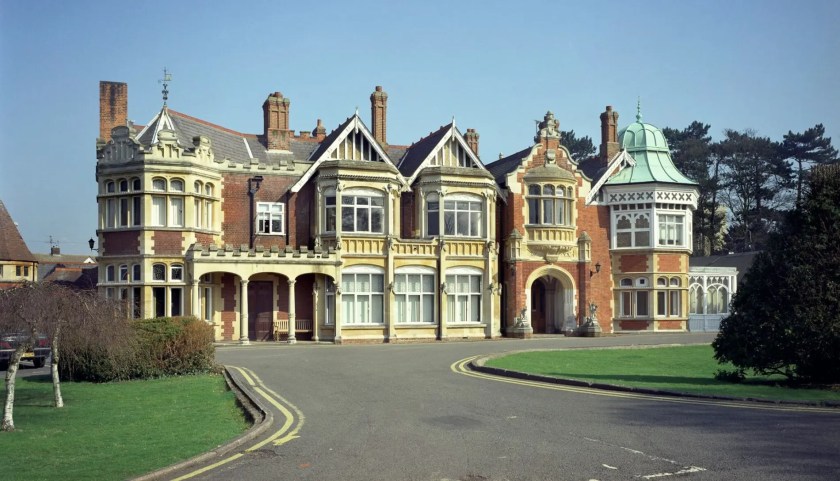
10. Bletchley Park, Milton Keynes, Bedford

Bletchley Park, Britain’s codebreaking centre

In 2013 Alan Turing was granted a posthumous pardon and Gordon Brown, who was Prime Minister at the time, gave an official apology for the “appalling way” he was treated.

During the Second World War, Alan Turing worked for the Government Code and Cypher School (GC&CS) at Bletchley Park, Britain’s code-breaking centre. Turing was instrumental in cracking intercepted coded messages that helped the Allies to defeat the Nazis.

In 1952, Turing was prosecuted for homosexual acts. Rather than serving a prison sentence, he was chemically castrated, and just two years later died of cyanide poisoning, suspected to be suicide.

Daddy’s First Gay Date

The Robert Bolt Theatre, 1 Waterside Plaza, Sale, Trafford M33 7ZF

Thursday, 17 July – Friday 18 July, 8.00pm

Is it selfish to leave someone you love in order to find yourself? An uncomfortable restaurant break-up becomes a pressure-cooker first date in this new comedy by Sam Danson, directed by the award-winning Rikki Beadle-Blair.

Ben’s hoping his first date with a man can provide him with some much-needed answers, but is he expecting too much?

Set in their local pub – The Halfway House – a place full of memories; birthdays, christenings, funerals, and now this first date. All the regulars are in, watching as Ben desperately tries not to crumble under the weight of his new life.

The show candidly explores identity and self-acceptance, whilst stewing in the awkwardness of ‘first dates’.

Buy tickets here. Price £16 Standard / £14 Concession

Rainbow Lottery

With summer in full swing, we’re thrilled to bring back an old favourite for our July Super Draw: an amazing £1,000 Sainsbury’s eGift Card!
On Saturday 26 July, one lucky supporter will win this fantastic summer prize (or of course, £1,000 cash alternative prize, as well as our all-new, all-green option – planting 1,000 trees!)  

For existing ticket holders there’s no need to buy separate tickets, you will be automatically entered into this prize draw. Of course, you are welcome to buy additional tickets. Every ticket you buy is an extra chance to win, and an extra fundraising boost for Out In The City. All this for just £1 a week.

Thank you and good luck!

Buy tickets here.    

Birthday

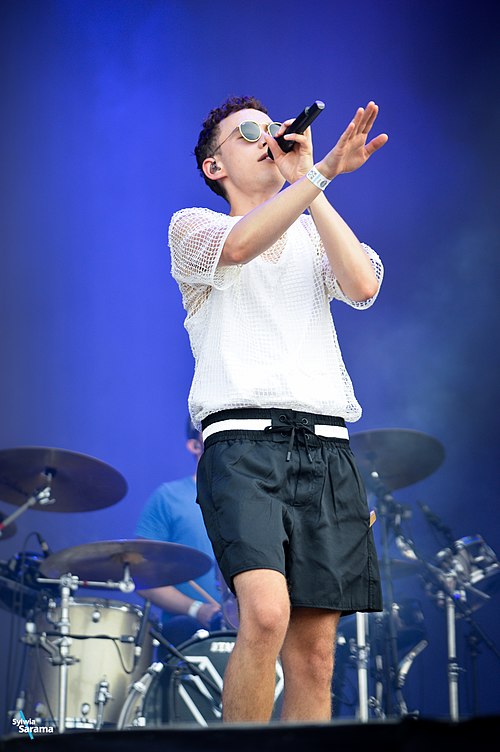
Olly Alexander (Born 15 July 1990), British singer (Years & Years)

Maurice Dobson Museum … Research – Seeking Participants … World’s Sexually Liberated Cities … Birthdays

News

The Story of Maurice Dobson: The Tough-As-Nails, Openly Gay Ex-Miner

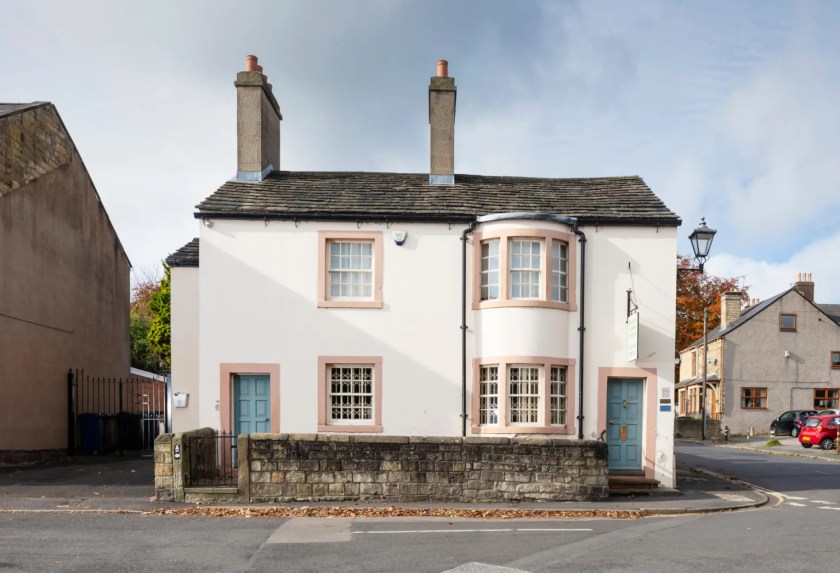
Tucked away on the corner of Vicar Road in Darfield, an ex-mining village in South Yorkshire, there’s an inconspicuous, volunteer-led museum containing a truly surprising history.

Maurice Dobson Museum, Vicar Road, Darfield, South Yorkshire

The Maurice Dobson Museum and Heritage Centre is billed as a tribute to Darfield’s industrial and coal-mining past, as well as a place to grab a cup of tea and slab of delicious cake at the in-house café.

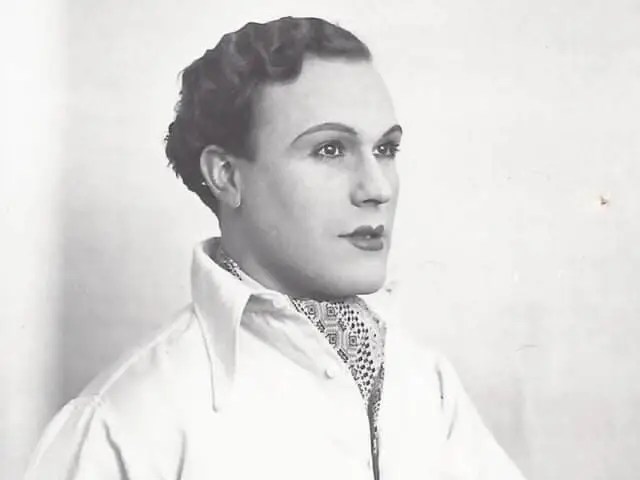
These are all accurate descriptors. But some of the most interesting artefacts inside nod to the colourful life of Dobson himself, somewhat of a local legend. There are a couple of shelves dedicated to Maurice himself. There are amazing photographs of him fully glammed up, wearing a fancy blouse and holding his cigarette.

A portrait of Maurice Dobson. Image courtesy of the Maurice Dobson Museum.

Who was Maurice Dobson?

Maurice Dobson was born in 1912 in Low Valley, Wombwell, just a stone’s throw away from Darfield. He was born into a family of miners. His mum and dad both came from esteemed mining stock, and he was raised alongside seven siblings.

Dobson followed in his family’s footsteps at the earliest opportunity and headed down the pits, working as a coal miner before later joining the army. He served during the Second World War (1939 to 1945), spending his time stationed on brutal battlefields across North Africa.
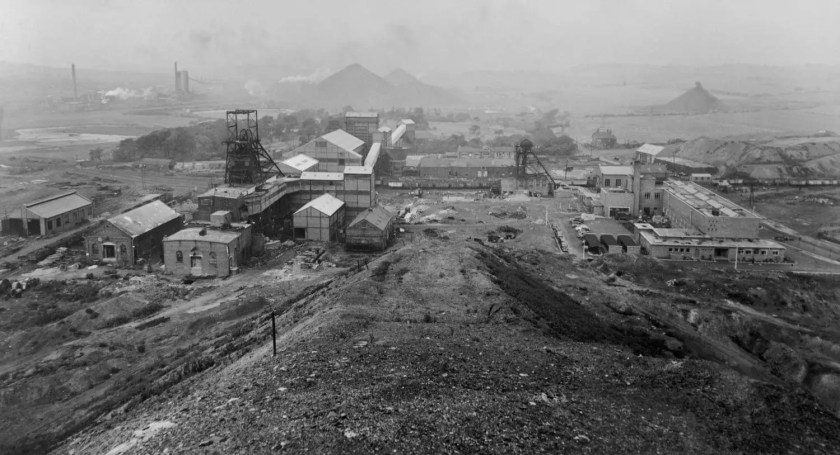
Darfield Main Colliery, Barnsley, South Yorkshire

Dobson survived the war and moved back to Darfield in the late 1940s, but he didn’t come alone; he came with his partner, Fred Halliday.
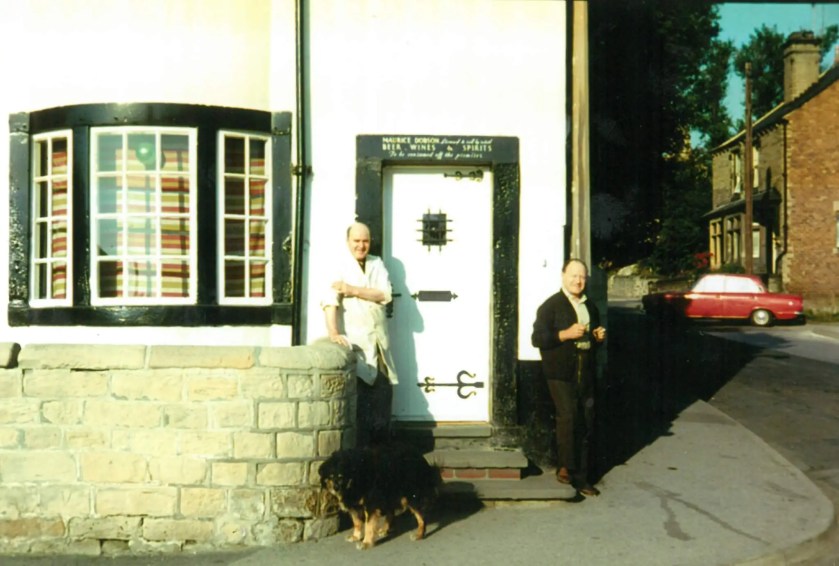
For decades, Dobson and Halliday lived in relative peace as an openly gay couple. They ran a corner shop filled to the brim with cold meats, pantry staples and jars of colourful sweets. Locals recall stepping inside to find Dobson perched on a high stool, dressed in a dapper suit with a cigarette holder in one hand and a parrot on his shoulder. Halliday was comparatively low-key, usually dressed in a brown smock instead.

An army photograph shows Fred standing in the back row, second from the left, and Maurice seated in the front row, second from the right. Image courtesy of Maurice Dobson Museum.

Clearly, Dobson was charismatic. He’s described by those who knew him as eccentric, divisive and hard as nails. Despite being just over five feet tall, he could throw a mean punch. Rumour has it that local pubs treated Dobson as de facto security, nodding discreetly in his direction if troublemakers tried to start fights.

In recent years, local newspapers have retold the story of Dobson’s life, billing him as a “cross-dressing” eccentric. However, some people really go for it and say “Maurice would never have worn a dress”. People who knew him in the 1970s said that he was very well-dressed, and that he would wear fairly flamboyant clothes for a man at the time, but he never would have put a dress on.

Maurice in uniform with his dog. Image courtesy of Maurice Dobson Museum.

There’s a lot about Dobson that’s anomalous in the wider context of gay histories. When we hear stories of same-sex desire between men before the decriminalisation of (most) homosexual acts in 1967, they’re usually tales of criminalisation. Dobson was never arrested, but that doesn’t mean that Barnsley in the 1950s and ‘60s was a haven of tolerance and acceptance.

In the Goodliffe case of 1954, a man named John Wilson had drunken sex with an old friend, Peter Goodliffe. What started as a hook-up behind a pub turned violent, as Wilson punched, kicked and stabbed Goodlife before stealing his watch, money and trousers.

Goodlife reported Wilson, which resulted in a lengthy prison sentence.

Yet Goodliffe’s account led him to be prosecuted too. In court, he detailed sex with numerous local men, from miners to office clerks, giving a testimony described by policemen as “so shocking that most of it could not be read out in court.”

Maurice Dobson and his partner Fred Halliday. Image courtesy of Maurice Dobson Museum.

Clearly, Dobson wasn’t the only man in Barnsley with same-sex partners before decriminalisation, but he kept his relationship with Halliday largely private. They were a known couple, and their love was certainly not unchallenged within the community, but they weren’t having sex in public, cruising or sleeping with multiple partners, all of which were more likely to get you arrested.

Police officers seemed to quite like Dobson. He was tough, and could handle himself in a fight. Seemingly, locals just saw Dobson as a colourful eccentric, a man with a penchant for sharp suits and light make-up who taught his parrot to tell the local kids to “bugger off” when they lingered too long.

According to various testimonies, Dobson was a champion boxer in his army regiment, a collector of fine antiques and a renowned dancer. However, we should take these stories with a pinch of salt. There’s probably a different Maurice for everyone that remembers him.

These nuances and complexities make the story of Maurice Dobson so fascinating. Usually, gay men’s histories are either rooted in criminalisation or the stories of the wealthy upper classes. They’re rarely set in working-class mining villages or feature men in seemingly harmonious, same-sex relationships. Whether they loved or hated him, Darfield’s locals paint vivid pictures of a charismatic and unique man whose legacy is worthy of preservation.

More photos can be seen here.

✨ Seeking Participants ✨

🏳️‍🌈 Amplifying Queer Voices 🏳️‍🌈

Hi, I’m Elena (she/her), a queer woman and trainee psychologist, committed to making the world safer for our community. 💛

I’m researching the journeys queer women go through with their identity after surviving ‘corrective’ sexual violence – a form of violence used to punish or ‘change’ someone for being queer.

🌿 Why? To amplify our voices, advocate for better support, and fight for justice.

💬 What? A one-hour confidential conversation with me, centred on care, healing, and resistance.

🤸🏽 Who? Queer cis women (for this phase of research).

Confidentiality will be held with deep care. The focus is on solidarity and systemic change, and this research will lay the foundation for future work with other queer and trans communities. No questions will regard the incident(s) itself, and I too have endured this form of violence.

💌 Interested or want to know more? Would be lovely to hear from you.

Email me at u2631805@uel.ac.uk

Please share with anyone who might want to take part.

World’s most sexually liberated cities revealed

The results are in for the world’s most sexually liberated cities in 2025, and Manchester has made the top 10. No surprise to us Mancunions.

Global research by escort consultancy group Erobella analysed cities around the world and ranked them based on the number of gay bars they have, the frequency of LGBT+ events there, access to contraception, transgender rights, the legality of sex work and laws protecting against homophobic and transphobic behaviour. 

This year, eight European cities have made the top 10 most sexually liberated cities, whilst only one US city has made the list. This marks a clear shift from last year’s rankings, when seven US cities dominated the top 20 (New York, Los Angeles and Chicago have all dropped out of the rankings this year).

The change in results could be a reflection of “the politicisation of sex” in the US following the re-election of President Donald Trump and a resurgence of conservative values, which has impacted sexual health and reproductive rights, LGBT+ legal protections and sex work legislation.

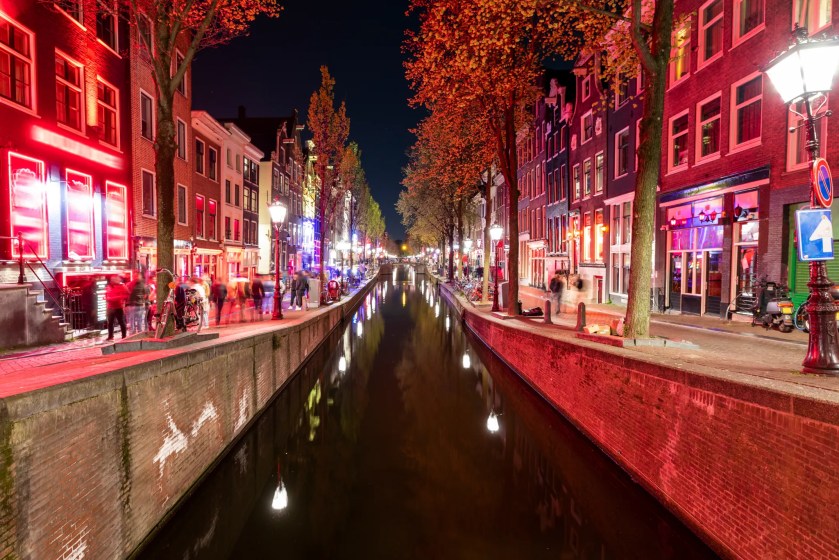
Amsterdam, known for its Red Light District, is the most sexually liberal city in 2025 (Getty Images)

Amsterdam, which is known for its Red Light District, unsurprisingly claimed the top spot. The capital city of the Netherlands was praised for its “comprehensive legal protections, abundant sexual health resources, and vibrant LGBTQIA+ scene”. 

Sex work was legalised in the city in 2000, with the Dutch government aiming to give sex workers “more autonomy over their profession, reduce criminal activity and improve their labour conditions”. The city is widely considered to be “the birthplace of LGBT+ rights” after homosexuality was decriminalised in 1811. 

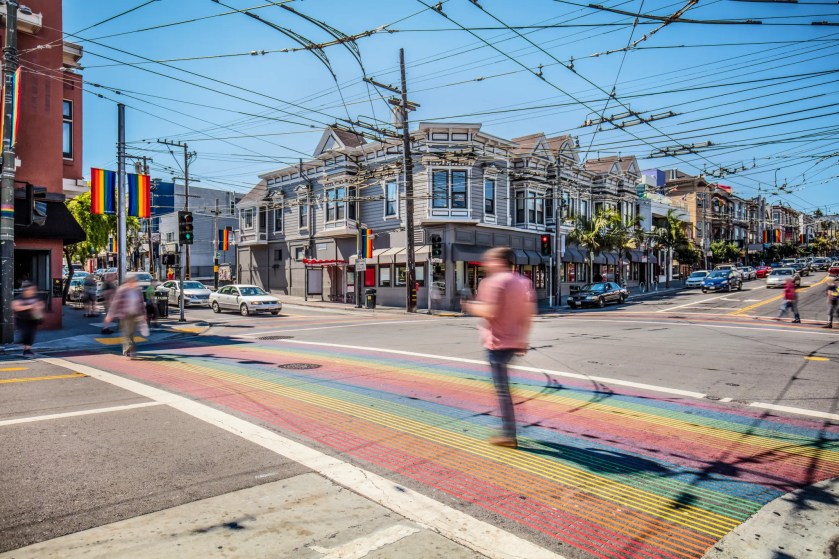
Coming in at number two is this year’s only US city on the list, San Francisco. The city is home to one of the first gay neighbourhoods in the US, The Castro, while San Francisco Pride has continued to stand strong in the face of rollbacks in the US. 

San Francisco, California, is the only US city on the list this year (Getty Images)

Cologne, Germany; Vancouver, Canada; Lisbon, Portugal; and Berlin, Germany, claim the top three, four, five and six spots, respectively. 

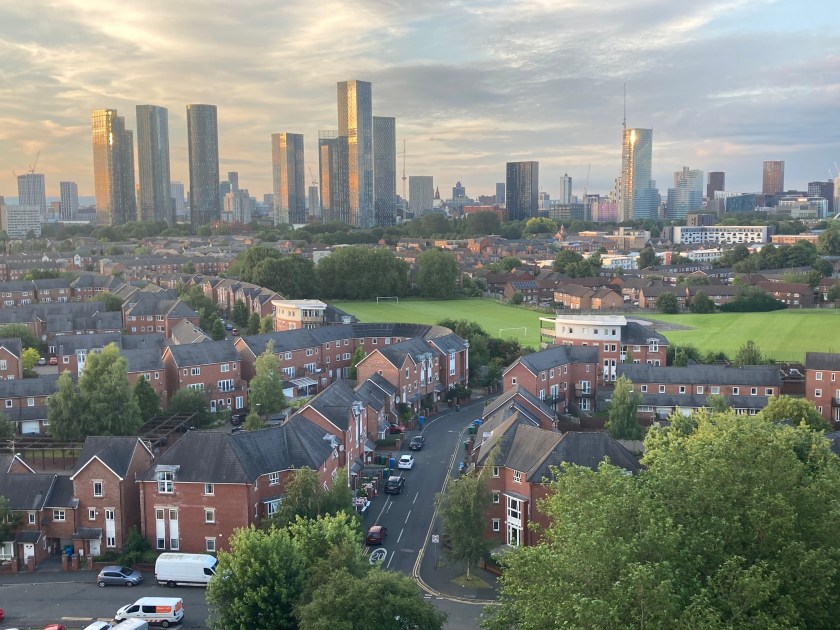
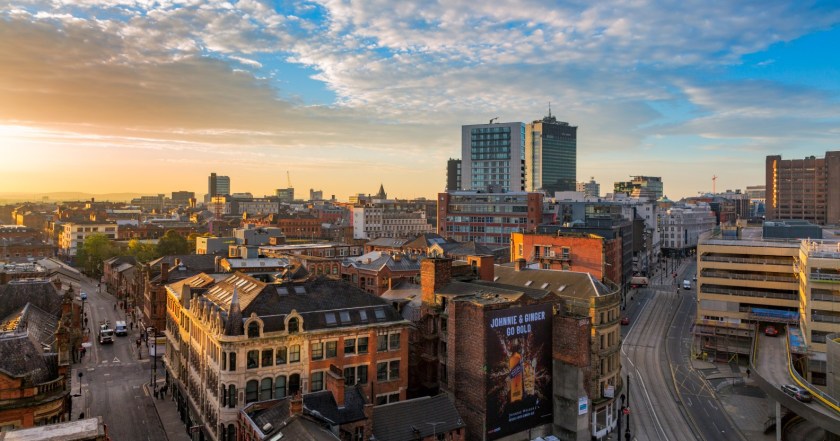
Meanwhile, the UK has thrown a curveball in the form of Manchester, which sits at number 7. The city has a thriving LGBT+ scene, particularly in the Gay Village near Canal Street, which hosts over 30 gay bars and clubs.

Manchester is one of the most sexually liberal cities in 2025 (Getty Images)

Hamburg, Germany; Vienna, Austria; and Barcelona, Spain round off the top 10 most sexually liberated cities.

Birthdays

Bee Corner … Winnipeg’s Place of Pride … Star Trek Legend George Takei … David Hockney … This Was Always Me

News

Bee Corner

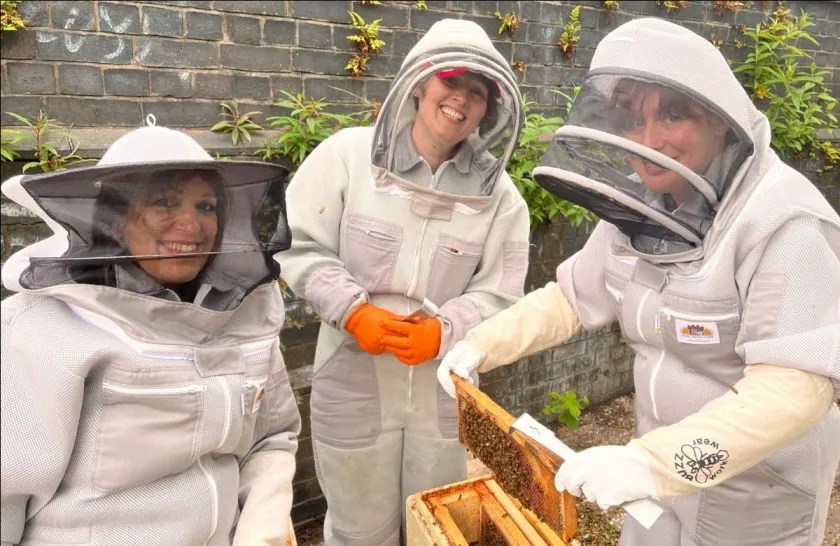
A visit to “Bee Corner” has become an annual trip for Out In The City, and certainly one of our favourites, if truth bee told.

After lunch we caught the Bee Network bus (should that be “buzz”?) to Salford. It was a bee-utiful sunny day as we made our way just bee-hind Islington Mill.

Ambee, I mean Amber, and her team treated us to teas, coffees and chocolate bars. I can’t bee-lieve how relaxing it was sitting in the garden surrounded by bee-gonias and bee-onys.

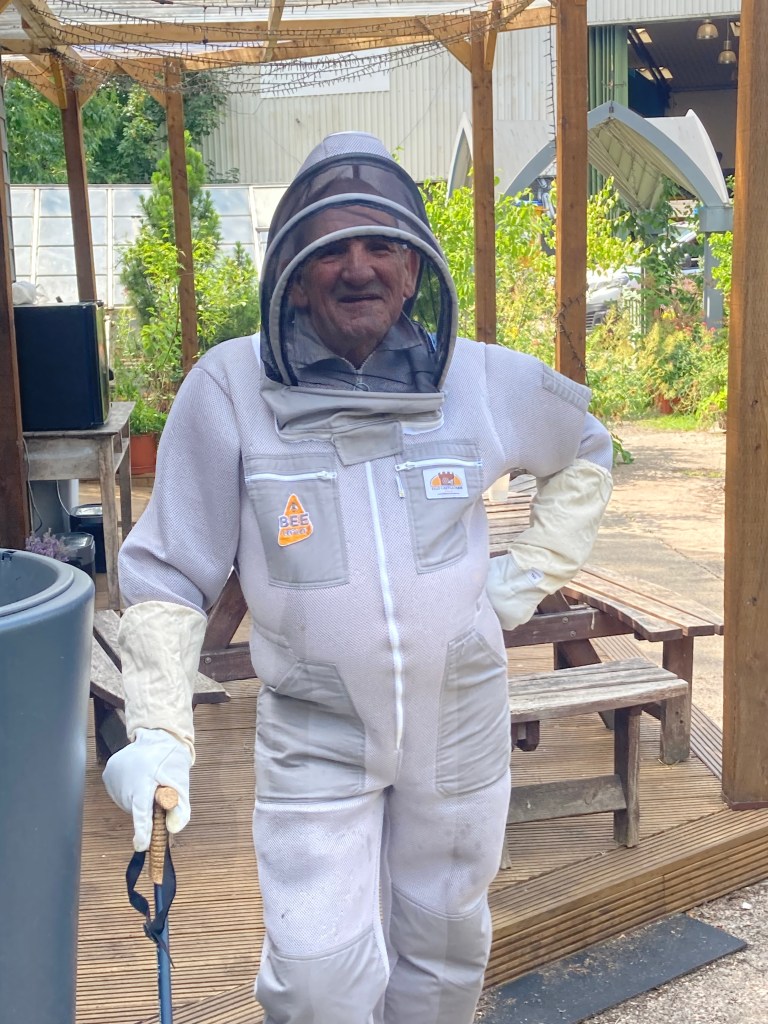
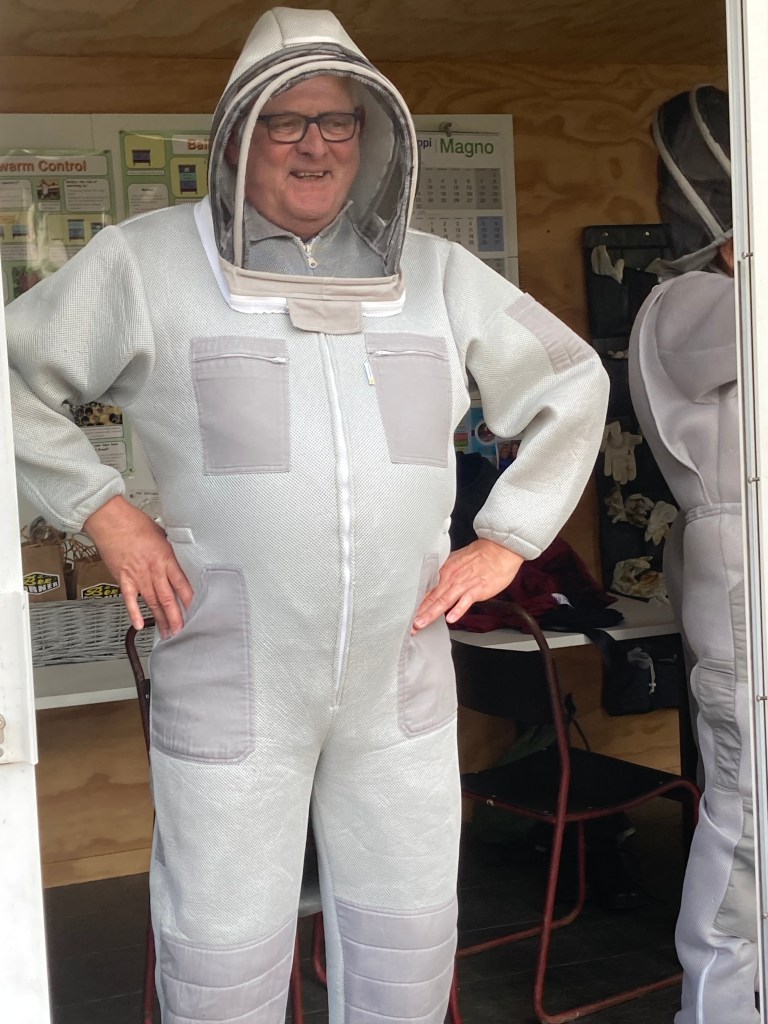
A few of us bee-gan to get bee-suited in full gear in order to visit the hives. You might ask: “What’s all the buzz about?” The bee experience is something un-bee-lievable if you hadn’t bee-n bee-fore.

Amber gave us “goodie-bags” with honey and badges – everybody loves a good free-bee! Another great day out – it was the real bees-knees!

More photos can bee seen here.

Winnipeg’s Place of Pride Campus Receives $2.5 Million From The Manitoba Government

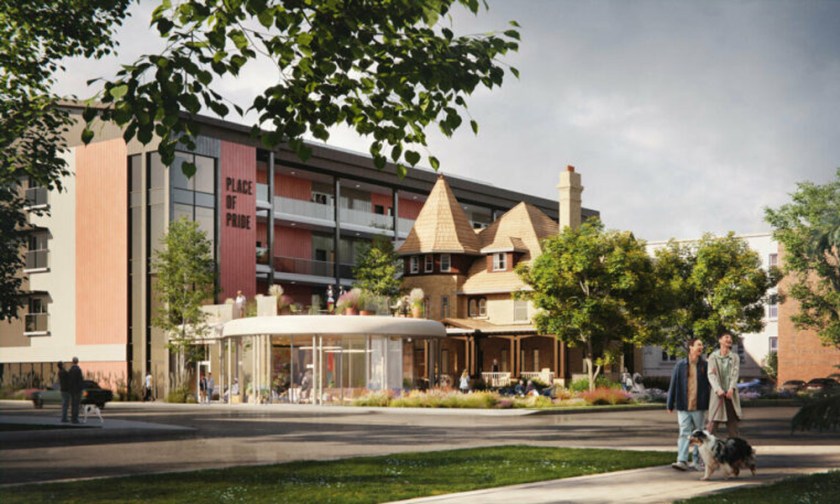
Winnipeg Place of Pride Campus

The new first-of-its-kind affordable housing and community centre project is expected to be fully complete by 2027.

A $2.5 million investment from the Manitoba Government was announced in June for phase two of Rainbow Resource Centre’s upcoming Place of Pride campus in central Winnipeg. The new first-of-its-kind affordable housing and community centre complex, has received a total of $5.5 million from the provincial government and is aimed at creating a safe and inclusive space for the more than 270,000 Manitobans who consider themselves part of the LGBT+ community – including those who identify and their immediate families.

Phase one of the $20 million project was completed last year, offering 21 affordable housing units for LGBT+ adults over 55 years old. The new government commitment will help create the facility’s community hub, set to break ground in the autumn. The new building will include a kitchen, cafe, arts hub, courtyard, counselling rooms, activity spaces and other facilities for those of all ages and stages of life.

“The Place of Pride initiative is a welcome addition to downtown housing,” said Premier Wab Kinew in a government issued release. “All Manitobans deserve a place where they feel safe and welcome, which is why this investment greatly benefits the seniors and community members who access the space.”    

Place of Pride is being developed by Rainbow Resource Centre, Canada’s longest serving, continually running LGBT+ centre. Opened over 50 years ago, it has been by the sides of LGBT+ Manitobans during their fight for equal rights, the HIV crisis and more. It has helped the community through challenges, grief, milestones and celebration. 

“For decades, Manitoba’s LGBT+ community has worked toward a dedicated, permanent ‘home’ of its own,” said Noreen Mian, executive director, Rainbow Resource Centre in a press release. The campus is set to be fully operational in 2027 and is currently looking for another $12 million investment to complete phase two.

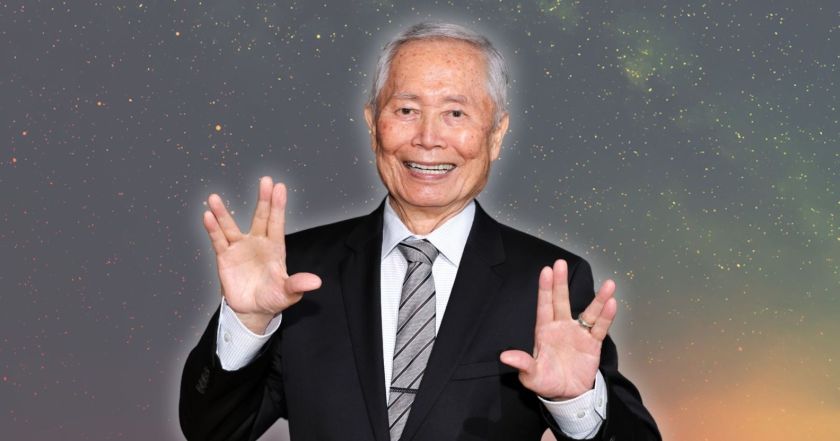
Star Trek Legend George Takei

George Takei talks about growing up and coming out

Takei’s breakout role came as Hikaru Sulu in the 1966 original Star Trek TV series, which managed to become one of history’s most distinguished franchises. Takei also starred in the first six movies and a slew of other Trekkie media since.

He’s been politically involved all his life, yet, for the first 68 years of his life, Takei stayed silent on one issue particularly close to his heart: the fight for LGBT+ rights.

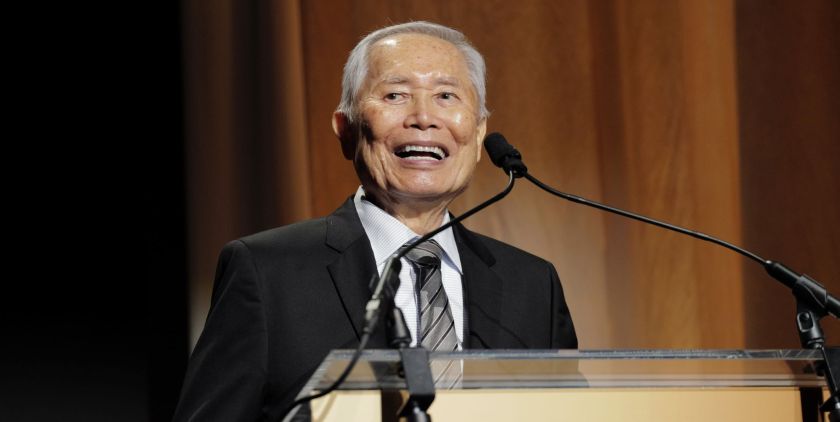
George Takei, a lifelong activist, speaks at the National Equal Justice Awards Dinner in 2025. (Getty)

Takei’s vivid memory recounts when he first realised that he was gay. “From about nine or 10-years-old at school, I discovered that I thought boys were so attractive”. He recalls one classmate who had “the sweetest smile” and “long lashes around his eyes”, and another who, while playing marbles, leant over and exposed the small of his back, leaving Takei flustered. 

His heartthrob was gay 1950s star Tab Hunter who, after gossip columns insinuated he was a homosexual, saw his bright career dimmed. “There again was a lesson to me … you can’t pursue an acting career and have the public know that you are gay. If you’re gay, you don’t get cast. And so I decided I’m not going to let people know,” Takei says. 

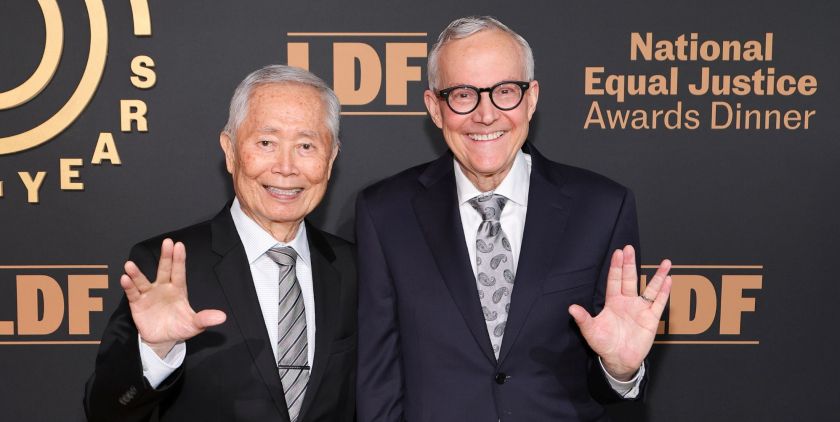
George Takei and his husband Brad do the famous Star Trek Vulcan salute. (Getty)

George Takei and his husband Brad Altman became the first same-sex couple to apply for a marriage licence in West Hollywood in 2008, and have now been together for 38 years. In the 20 years since coming out, Takei has made LGBT+ activism a daily part of his life, in part, due to “guilt”. “I felt so guilty for being silent. I mean, I’ve been vocal on all these other issues. The civil rights movement for African Americans; the peace movement during the Vietnam War; nuclear testing. All those issues I was very vocal on, and my most personal issue, I was silent on. So, I needed to pay back.”

He feels he owed it to the LGBT+ activists who were loudly and proudly fighting for him to one day live openly. “I’m so indebted to those brave LGBT+ people who sacrificed on my behalf.”

Happy 88th Birthday, David Hockney

David Hockney (born 9 July 1937) is an English painter, draughtsman, printmaker, stage designer, and photographer. As an important contributor to the pop art movement of the 1960s, he is considered one of the most influential British artists of the 20th and 21st centuries.

On 15 November 2018, Hockney’s 1972 work Portrait of an Artist (Pool with Two Figures) sold at Christie’s auction house in New York City for £70 million, becoming the most expensive artwork by a living artist sold at auction.

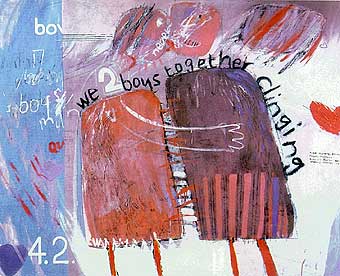
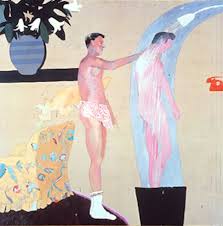
Hockney came out as gay when he was 23, while studying at the Royal College of Art in London. Britain decriminalised homosexual acts seven years later in the Sexual Offences Act 1967. Hockney has explored the nature of gay love in his work, such in as the painting We Two Boys Together Clinging (1961), named after a poem by Walt Whitman. In 1963 he painted two men together in the painting Domestic Scene, Los Angeles, one showering while the other washes his back.

This Was Always Me

Norman Goodman knew he was different from a young age. But it was seen as a mental illness. He faced aversion therapy and electroconvulsive therapy to ‘cure’ his feelings. For decades, Norman hid his bisexuality, even from himself, and lived a life as a husband and nurse.

It wasn’t until after his wife Marilyn passed away that Norman found the courage to come out publicly. Now in a loving relationship, Norman shares how embracing his true self brought peace … and why telling his story matters for other older LGBTQ+ people still in the shadows.

Norman speaks with Rich Clarke about decades of silence, mental health struggles, and finally living openly.

Listen in here.

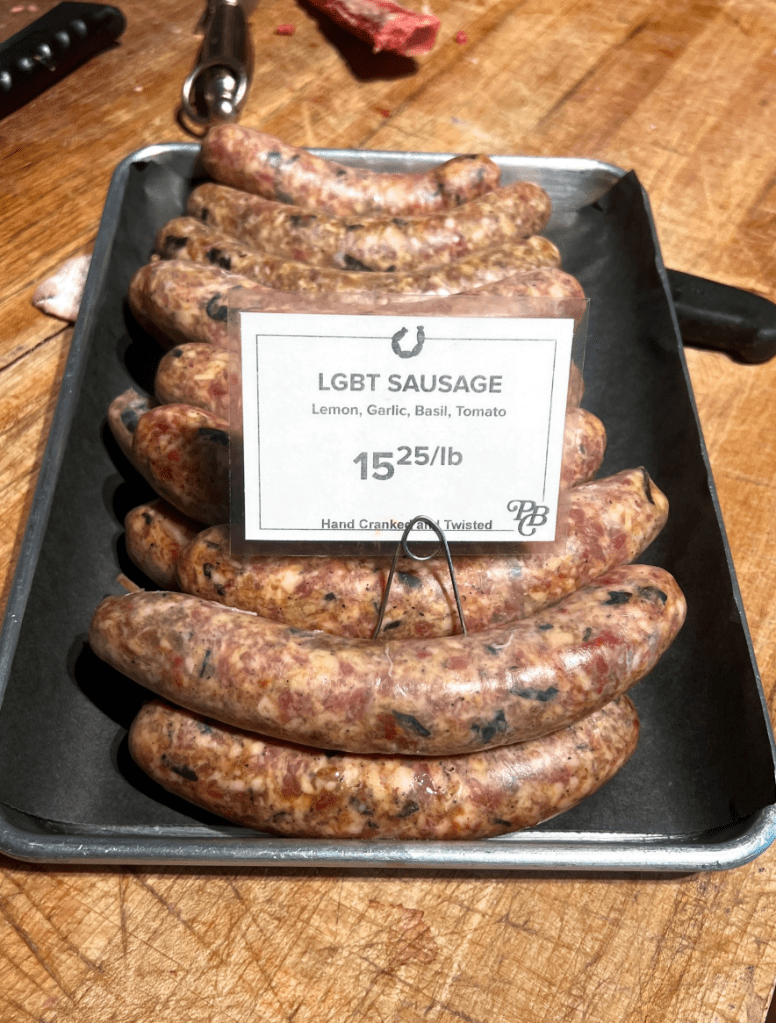
Celebrating with our LGBT sausage all year long. Lemon zest, garlic, fresh basil, sun-dried tomato– perfect for pasta or for throwing on the grill!🌈