Detention at The Lowry … Frank Kameny … Rainbow Map … Man Raged at NatWest Bank over its Pride Flag … Birthdays

News

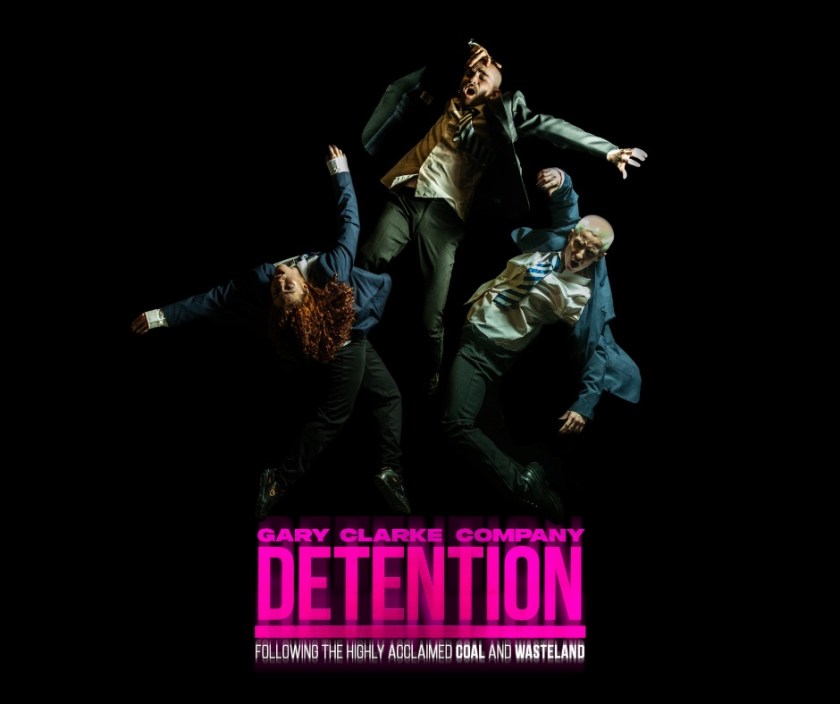
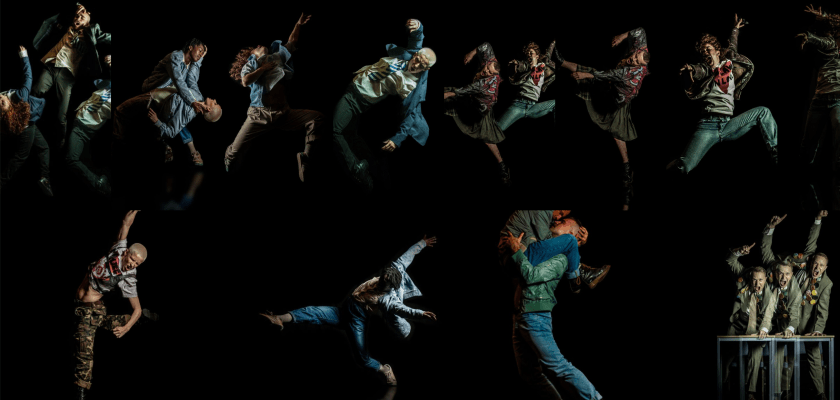
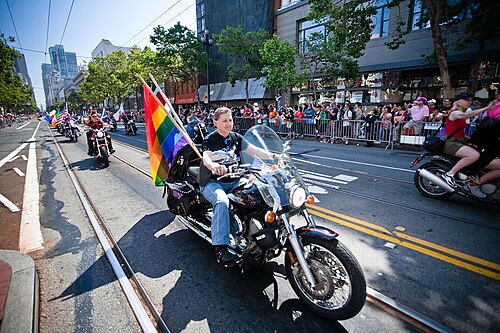
Detention at The Lowry

Detention is the third and final part of a trilogy of dance theatre works following the multi award winning Coal and critically acclaimed Wasteland.

What unites this trilogy is 1980s Britain, a time when we were governed by Margaret Thatcher and how different marginalised communities fought for their human rights, their livelihoods and their existence.

Detention features violence, shame, isolation and suicide, but also incredible solidarity, community, heroism, activism, unlikely allies, protest and truly remarkable individuals and organisations of the time.

It’s a political, urgent, angry call to action and an attempt to honour a past that shaped our resilient and courageous community forever.

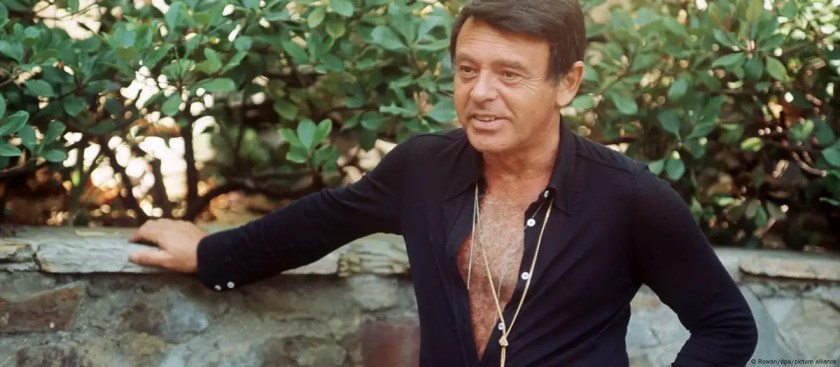
Frank Kameny

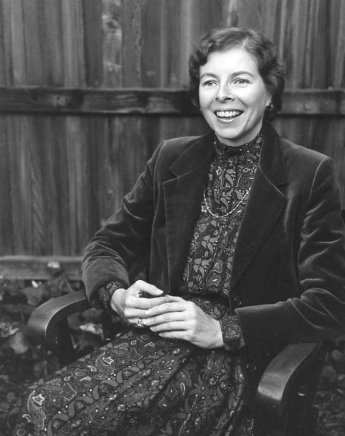
Franklin Edward Kameny (21 May 1925 – 11 October 2011) was an American gay rights activist. He would have been 100 years old on 21 May.

During the Lavender scare, in 1957, Kameny was dismissed from his position as an astronomer in the US Army’s Map Service in Washington DC, because of his homosexuality. This led him to begin a struggle with the American establishment that would spearhead a new period of militancy in the homosexual rights movement of the early 1960s.

Kameny formally appealed his firing by the US Civil Service Commission. Although unsuccessful, the proceeding was notable as the first known civil rights claim based on sexual orientation pursued in a US court.

Kameny organised the first demonstration by a homophile organisation. The 10-person protest took place outside the white house. Signs included the organisation’s demands: “WE WANT FEDERAL EMPLOYMENT, HONORABLE DISCHARGES, SECURITY CLEARANCES.” Kameny had strict standards for those participating. His requirements for picketers included men wearing suits and women wearing dresses, each sign measuring twenty-two by twenty-eight inches, and the message on the sign being the same on both sides. These efforts contributed to portraying a nonviolent and respectful protest.

Kameny coined the phrase “GAY IS GOOD,” in the 1960s to inspire pride and challenge societal prejudice.  He was one of the most significant figures in the American gay rights movement.

Global LGBT+ rights crackdown overshadows this year’s IDAHOBIT

Activists around the world marked the International Day Against Homophobia, Biphobia, and Transphobia against the backdrop of efforts to curtail LGBT+ rights that are gaining traction in the US, UK and elsewhere.

The Trump-Vance administration since it took office in January has issued a number of executive orders that have specifically targeted transgender and nonbinary people.

ILGA-Europe (the International Lesbian, Gay, Bisexual, Trans and Intersex Association) released its annual update to its Rainbow Map, which documents LGBT+ rights in European countries.

The UK has dropped to its lowest position ever (22nd) on the ILGA Europe ranking of the best and worst places to be LGBTQ+ in Europe.

Ten years ago, it ranked in first place. Here’s how the UK fared over the last 12 years.

The ILGA-Europe press release notes Hungary’s “prohibition of Pride events and criminalisation of participants” and the UK Supreme Court ruling last month that restricts “the legal recognition of trans people.” The European advocacy group also highlighted a “sweeping ban on all forms of LGBTI representation and assembly” that Georgian lawmakers passed last year.

“They are merely the most striking examples of a broader trend in which LGBTI human rights are being systematically dismantled under the guise of preserving public order,” said ILGA-Europe. “In reality, such measures pave the way for sweeping restrictions on fundamental freedoms, including the rights to protest and to political dissent.”

Argentine President Javier Milei in February issued a decree that restricts minors’ access to gender-affirming surgeries and hormone treatments. An appeals court in Trinidad and Tobago in March recriminalised consensual same-sex sexual relations in the Caribbean country.

The Trump-Vance administration’s decision to suspend most foreign aid has forced several LGBT+ rights groups and HIV/AIDS service organisations in South Africa, Kenya, and other African countries that received US funding to curtail operations or shut down. Lawmakers in Vanuatu are considering an amendment to the country’s constitution that would recognise only two sexes: male and female.

IDAHOBIT commemorates the World Health Organisation’s declassification of homosexuality as a mental disorder on 17 May 1990.

This year’s IDAHOBiT theme was “the power of communities.” We are stronger together.

Our government must reverse, not further, this shocking decline in LGBT+ rights.

Man raged at NatWest bank over its Pride flag

When a client of the NatWest bank saw Pride flags at a local branch, he said the flags caused him emotional distress because of his disabilities and religious beliefs. He asked the bank to remove the decorations. The bank told him that the services he needed that day could have been completed online without visiting the branch in person.

The man, identified only as “Mr J,” complained last year after seeing the rainbow-coloured decorations in the bank. Apparently dissatisfied with the bank’s response compelled him to escalate the matter.

He complained to the Financial Ombudsman Service, a national group that settles complaints between consumers and financial services businesses. The man said that the decorations and the bank’s refusal to remove them violated his rights under the Equality Act 2010, a law which forbids discrimination based on personal characteristics.

The ombudsman decided in favour of the bank.

In her judgement, ombudsman Danielle Padden wrote, “NatWest is a bank that has chosen to display Pride materials along with other paraphernalia at certain times of the year. As a service, we wouldn’t be able to tell them not to do that, as they are entitled to celebrate and raise awareness to the communities they service.”

Padden said that, if the physical branch caused him so much discomfort, that the man could try “alternative methods of banking,” such as online banking, ATMs or the post office.

When the man said he needed to visit the bank in-person, Padden said he could legally appoint a third party representative to handle his bank business in a physical branch.

The bank’s website states, “We aim to continue to deliver a better LGBT+ colleague and customer experience through continuously challenging the status quo … We have worked hard to understand the issues our LGBT+ colleagues and customers face and engage with them regularly to demonstrate that NatWest Group is a welcoming place, regardless of sexual orientation or gender identity.”

This is a lesson for all bigots. Please leave LGBT+ people alone. To NatWest – thank you for flying the flag for the LGBT+ community.

Birthdays

Rewind! Now. Is. The. Time. … Gender Policing Does Not ‘Protect’ Butch Women and Lesbians … IDAHOBIT … Out In The City: 20th Anniversary … Birthdays

News

Rewind My Selecta!

Alyson Malach has remixed our last blog. She has altered or contorted the articles from their original state by adding, removing, or changing pieces of the blog. For those old enough to recognise the analogy she has edited our 7 inch version to a new improved 12 inch extended remix. Thanks, Alyson!

Now Is the Time: Remembering, Resisting and Rising Together

Introduction: The Weight of Now

In 2025, we stand at a pivotal moment in the ongoing struggle for equality and dignity for all LGBTQ+ people. Around the world, rights once won are under threat, and in the UK, recent legal and political decisions are stirring urgent debate about identity, inclusion and the meaning of freedom.

This blog is a call to remembrance, reflection, and radical hope. Through powerful stories – from Holocaust Centre North to Gad Beck’s resistance, from Making Gay History to Pride in Trafford – we are reminded that queerness is not new. LGBTQ+ people have always existed, fought, survived, loved, and led.

But we also name today’s injustices. A recent UK Supreme Court ruling in April 2025 determined that “sex” in parts of the Equality Act 2010 should be interpreted only as biological sex – a judgment that, while legally limited in scope, is being misused in the public discourse to justify exclusion of trans people, especially trans women, from single-sex spaces. This ruling has emboldened anti-trans rhetoric in the press, schools, and even some public services.

Meanwhile, conversion practices remain legal in the UK, LGBTQ+ hate crimes are rising, and intersectional communities – especially LGBTQ+ people of colour, disabled queer people, and those of faith – are facing disproportionate levels of harm, poverty, and social exclusion.

In this climate, remembering queer history is not indulgent – it is resistance. Sharing inclusive stories is not optional – it is survival. And Pride is not a party – it is protest, joy, and radical self-affirmation.

Now Is the Time – A poem by Alyson Malach

Now is the time to lift the weight,
Of silence, judgement, fear and hate.
To speak the names we’ve pushed aside,
To hold a space, to turn the tide.

Now is the time to name what’s wrong,
To right the past, to make all strong.
To see each soul, each heart, each face,
And build a world of equal place.

Now is the time to change our speech,
To think, reflect, to learn, to teach.
To catch the slip, to shift the phrase,
And honour all in what we say.

Now is the time to share your truth,
To lead with hope, to teach the youth.
To pledge a way, to own your part,
And hold inclusion at the heart.

The Stories That Shape Us: Holocaust Centre North & Gad Beck

The Holocaust Centre North is home to the lived histories of Jewish survivors who rebuilt their lives in northern England. Their testimonies are vivid reminders of what happens when hatred is institutionalised, and people are dehumanised for being who they are.

Among those silenced by history are LGBTQ+ Holocaust victims – people like Gad Beck, a defiant gay teenager who led resistance efforts in Nazi Berlin and risked everything to rescue his Jewish lover. His courage was not only political, but it was also profoundly personal – a kind of love-led defiance we must still emulate today.

Making Gay History: Unearthing Queer Resistance

The podcast Making Gay History restores voices of LGBTQ+ individuals who resisted, survived, and saved others during the Nazi era. Trans woman Lucy Salani, lesbian resistance fighter Frieda Belinfante, and teenage lover Stefan Kosinski each remind us that queerness and resistance have always walked hand-in-hand.

These histories challenge the erasure of LGBTQ+ identities from narratives of war, bravery, and victimhood.

Pride in Trafford: Celebration as a Form of Resistance

The Pride in Trafford festival showcases the dynamism of queer arts and community. With cabaret, neurodiverse performers, drag workshops, and LGBTQ+ youth events, it carves out joyful, reflective, and creative spaces for everyone.

This matters, especially when young queer people are facing rising mental health needsbullying, and cuts to LGBTQ+ youth services.

UK LGBTQ+ Issues in 2025: Progress Undermined

Supreme Court Ruling on Sex and Gender (April 2025):
While legally focused on specific exemptions in the Equality Act, this ruling has been weaponised to challenge trans inclusion in sport, education, and healthcare. Some schools have removed inclusive language policies or restricted trans students’ access to toilets and pronoun use.

Hate Crime and Fear:
LGBTQ+ hate crimes in England and Wales increased by over 150% between 2014 and 2023, with transphobic abuse seeing some of the sharpest rises. The absence of robust government strategy has left communities feeling unsafe and unsupported.

Conversion Practices Still Legal:
Despite years of campaigning, the UK still has not passed a full ban on conversion therapy. This disproportionately harms young queer people, particularly those from religious backgrounds or ethnically diverse families.

Media Hostility and Misinformation:
Public discourse has grown increasingly hostile, with trans people, especially trans women, being vilified in mainstream press. This drives isolation, anxiety, and policy regression.

Intersectionality: When LGBTQ+ Identity Meets Race, Religion, Disability and More

The impact of these issues is not equal.

Black and racially minoritised LGBTQ+ people often face racism within queer spaces and queerphobia in their racial communities.
Muslim and Christian LGBTQ+ individuals are frequently caught in cultural and theological tensions – their existence treated as a contradiction.
Disabled LGBTQ+ people face inaccessible events, support services, and often invisibility in LGBTQ+ representation.
LGBTQ+ asylum seekers are at risk of deportation to hostile countries, while facing dehumanising treatment in UK detention centres.

Key message: Queer liberation cannot be achieved without racial, religious, disability and migrant justice too.

Action: Use an intersectional lens in your EDI work, network events and Pride planning. Invite people with layered identities to speak and lead. Ensure accessibility, safety, and relevance for all.

Share and Amplify: How to Use This Blog

Share with your networks:

  • Include in Pride Month or Holocaust Memorial Day communications
  • Post in LGBTQ+ staff network groups and diversity newsletters
  • Use in schools and universities as a learning resource

Use in practice:

  • Pair Gad Beck’s story with a discussion on allyship and courage
  • Use the full poem in team meetings, classrooms, or leadership forums
  • Host a Making Gay History listening circle followed by a reflective session

Pledge your part:
In your workplace, classroom, community group – ask, what can we do differently so that everyone is included, seen, and safe?

Final Word: The Time is Now

We inherit the legacy of those who fought, danced, resisted and loved in the shadows. Today, we rise in their memory, with boldness, intersectionality, and joy.

Not tomorrow.
Not after another headline.
Not when it’s safe.
Now. Is. The. Time.

Gender policing does not ‘protect’ butch women and lesbians – it actively punishes them

Article by Sophie Perry

Gender policing does not ‘protect’ butch and masc women – it actively punishes them (Canva / Unsplash)

When the Supreme Court issued its 88-page long judgement that the legal definition of ‘sex’ is based on ‘biology’, gender critical lobbying group and controversially registered charity LGB Alliance declared it was a “landmark for lesbian rights in the UK”. 

“This matters greatly to LGB people,” CEO Kate Barker said of the ruling. “It is especially important to lesbians, because the definition of lesbian is directly linked to the definition of woman.” 

Barker – who once claimed a singular drag queen carrying the Olympic torch demonstrated the “erasure of woman in all spheres of public life” – went on to say the ruling “marks a watershed for women and, in particular, lesbians who have seen their rights and identities undermined over the last decade.”

Despite Supreme Court judge Lord Hodge specifically counselling against certain factions “reading this judgement as a triumph of one or more groups in our society at the expense of another,” gender critical activists view the outcome of the Supreme Court case as a decisive victory for all women over so-called ‘gender ideology’. 

However, in the days and weeks that have followed the Supreme Court ruling, it has quickly become clear that many women who are not trans will likely be disadvantaged by the court’s decision because they do not fit into narrow, often white and western, definitions of what constitutes as ‘woman’. 

Transgender people and their allies stage a protest march in Westminster in support of trans rights following this week’s UK Supreme Court unanimous ruling that the terms woman and sex in the Equality Act 2010 refer to a biological woman and biological sex, in London, United Kingdom on 19 April 2025. (Wiktor Szymanowicz / Future Publishing via Getty Images)

Sparked by a trans-inclusive definition of womanhood in Gender Representation on Public Boards (Scotland) Act 2018 – which sought to diversify the number of women on public boards in the devolved nation – the Supreme Court decision was the culmination of a years-long legal battle between gender critical Scottish group For Women Scotland (FWS) and the Scottish government about how the protected characteristic of ‘sex’ is defined and applied in the 2010 Equality Act. 

After traversing many different appeal processes, the case finally ended at the UK’s highest court and concluded the definition does not include trans people. 

“The unanimous decision of this court is that the terms woman and sex in the Equality Act 2010 refer to a biological woman and biological sex,” Lord Hodge said in his oral reading of the ruling. 

The decision is expected to have wide-ranging implications for the trans community, as well as organisations, public bodies and services who may be forced to update their policies on single-sex spaces, inclusion and discrimination. Some, including the Football Association and the England and Wales Cricket Board, have already taken steps to bar trans women from taking part in female matches. 

In the wake of the ruling, the Equality and Human Rights Commission (EHRC) – the UK’s equalities watchdog – issued interim guidance which said single-sex spaces must be based on biology whereby a trans woman must not be allowed to use a female toilet and a trans man not allowed to use a male one. However, the guidance also adds that, in “some circumstances,” trans women should also be banned from the men’s facilities and trans men from women’s facilities.

When asked to clarify this point by the BBC, the EHRC directed the broadcaster to a section of the Supreme Court ruling which states trans men could be excluded from women’s facilities “where reasonable objection is taken to their presence, for example because the gender reassignment process has given them a masculine appearance or attributes to which reasonable objection might be taken” in the context of a female-only space, such as a toilet. 

In essence, when a trans man looks, well, too much like a man (because he is one) or when a trans woman looks, well, too much like a woman (because she is one), they can be totally excluded from gendered spaces and be forced to only use a unisex facility – assuming one is available.

If the circumstances which would see trans men – who are defined by the court ruling as ‘biologically female’ – banned from female toilets is all about ‘masculine appearance’, then where does this leave masculine, cis women? 

Campaigners outside the UK Supreme Court celebrate the ruling that the legal definition of a woman excludes trans women. (Getty)

Whilst the Supreme Court case is supposedly about ‘protecting’ the interests of all women, this exception – in itself – shows there is only interest in protecting certain kinds of women. Namely, women who ‘look’ like women: traditionally feminine women with long hair, hips and visible breasts, who dress and talk and walk in a way that is ‘expected’ of women and who have no trouble moving through the world as one. 

By contrast, there are plenty of other women out there who constantly have their gender and presentation policed by strangers for not fitting into the narrow and misogynistic definitions of what a woman should be. Women who are tall, have short hair, broad shoulders and square jawlines. Women who wear clothes from the men’s section and have deep voices and body hair. 

Such slim definitions of what is correct or incorrect womanhood rooted in patriarchal beauty standards are – ironically enough – what feminists have actually spent decades fighting against, so that women have the choice about whether or not they want to shave their legs, wear make-up or put on dresses or *gasp* trousers. 

The Supreme Court ruling will, very likely, cause butch and masculine lesbians to face increased harassment in single-sex female spaces simply because of how they present themselves. This is not a fictitious, dystopian musing by one dyke about the rights of others in her community, this is something we have already seen – and are continuing to see – when it comes to women do not fit into the confines of traditional femininity and gender. 

For Lesbian Visibility Week, which came a week after the Supreme Court’s decision, Labour MP Kate Osborne said she is “frequently misgendered” because of how she looks and expressed concern it will only get worse going forward. 

“I note that Ministers said yesterday that there will be guidance regarding the Supreme Court verdict. That decision will have a huge impact on my life, on many other cis lesbians and, indeed, on heterosexual women,” Osborne told fellow MPs. “I suspect that I will get challenged even more now when accessing facilities. The impact on my life will be problematic, but the impact on my trans siblings’ lives will be significantly worse.”

Just this week in the United States, a number of headlines were dedicated to an incident involving lesbian woman Ansley Baker who was removed from a female toilet in a Boston hotel by a male security guard after being accused of being ‘a man’ by other women in the facility. The irony that it was a male security guard who banged on the cubicle door and removed her when her shorts were not fully done up has not been lost on most in the LGBT+ community, it must be noted. 

Baker is certainly not the first, nor will she likely be the last, lesbian to face such treatment.

But, tight confines and strict parameters of what constitutes correct womanliness and the social punishments inflicted when broken are not solely restricted to masculine lesbians, straight women too are subject to such policing. 

In 2023, the pregnant girlfriend of Harry Potter star Daniel Radcliffe,  actor Erin Darke, was transvestigated by anti-trans pundits on social media because she happens to be taller than Radcliffe and have certain facial features. Transvesigation refers to conspiracy theories that falsely claim individuals, typically women, are transgender and are hiding their “true” gender identity, with Darke accused of ‘secretly being trans’. Transvesitigations are entirely rooted in warped, deeply misogynistic and racist views of femininity and gender.

Similarly, Olympic boxer Imane Khelif – who was thrust into the centre of a gender storm during the Paris Games – was accused of ‘being a man’ despite the fact she, and Olympic bosses, clarified she is not nor has ever identified as trans. In fact in Algeria, where Khelif hails from, gender-affirming care is banned and public gender non-conformity has the potential to be prosecuted as “indecent” under the 1966 penal code. However, the conspiracy persisted because, according to the wisdom of users on X / Twitter, Khelif has a strong nose, muscles, is tall and has hairs on her knuckles, so must be male. 

Other cis women who are seemingly not woman enough according to transphobes include rugby icon Ilona Maher, tennis legend Serena Williams and former first lady Michelle Obama. Why? Again, because their bodies have dared to exist outside of patriarchal beauty standards, defined and controlled by the male gaze. 

Erin Darke has been the target of a harassment campaign by transphobes. (Getty)

As organisations, public bodies and services across the UK look set to draw up fresh guidelines in response to the Supreme Court ruling we will all do well to remember that gender policing does far, far more harm than ever does any good. At best it can be an irritant for women who move through the world everyday in a more masculine presentation, at its worst it poses an inherent threat to the people such an ill-thought out ruling is supposed to protect; putting woman who do not conform at risk of harassment, abuse and vigilante justice. 

At its heart gender policing just proves – just like their views on the beautiful diversity of gender are narrow – the views of bigots on womanhood are equally as restrictive. 

IDAHOBIT 2025

The theme for the International Day Against Homophobia, Transphobia, and Biphobia (IDAHOBIT2025 will be “The power of communities”.

IDAHOBIT 2025, celebrated on 17 May, will bring together individuals, organisations, and institutions to amplify the voices of those who have been marginalised and to foster a culture of compassion and understanding.

In the years since its inception in 2004, IDAHOBIT has grown into an international movement, with events taking place across more than 130 countries, including those where LGBTQIA+ rights are still criminalised or under threat.

IDAHOBIT 2025 will take place in a world where LGBTQIA+ rights remain a deeply polarising issue. While many countries have made significant strides in recognising same-sex marriages, enacting anti-discrimination laws, and providing protections for transgender individuals, others have moved in the opposite direction, enacting regressive policies that endanger and marginalise LGBTQIA+ people.

The day serves as a reminder of these disparities and the ongoing need for advocacy.

The day is a call to action for individuals, communities, and institutions to work together to create a world where everyone, regardless of their sexual orientation or gender identity, can live with dignity and freedom.

Out In The City is celebrating our 20th Anniversary with a Party on Thursday, 19 June from 2.00pm to 4.00pm at Cross Street Chapel, 29 Cross Street, Manchester M2 1NL.

We will Celebrate Ageing and Challenge Ageism with great entertainment from Jennifer, Mindy, Pauline and the boys from Wolf. Buffet and raffle. 

RSVP for catering purposes. Please contact us here to confirm attendance or to send apologies.

Birthdays

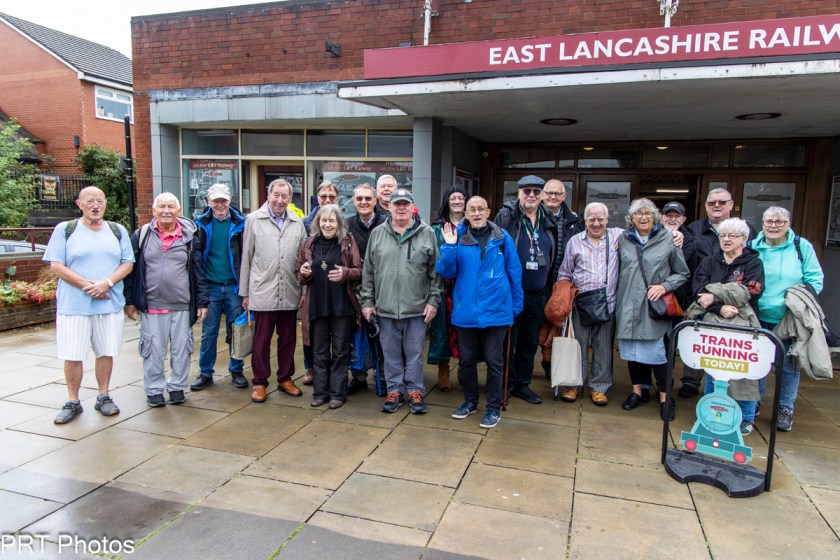
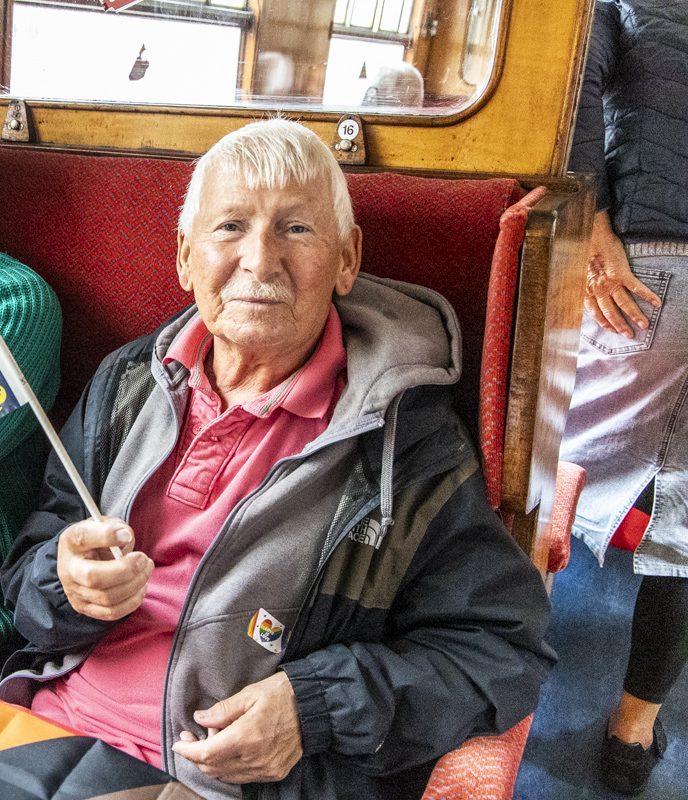
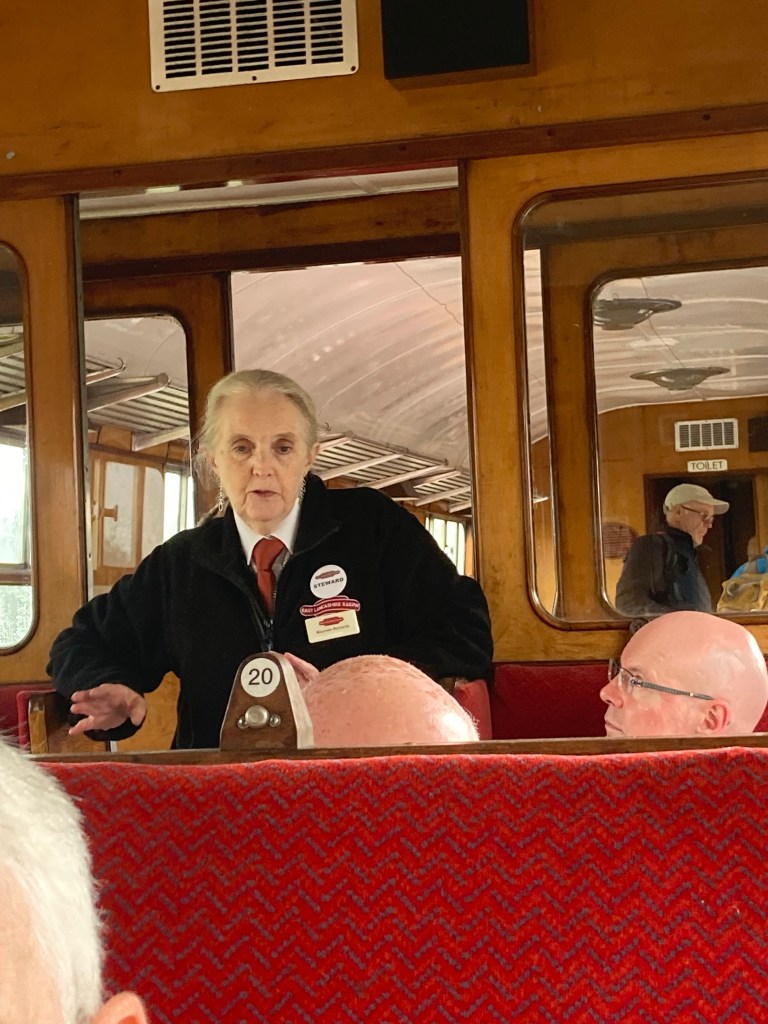
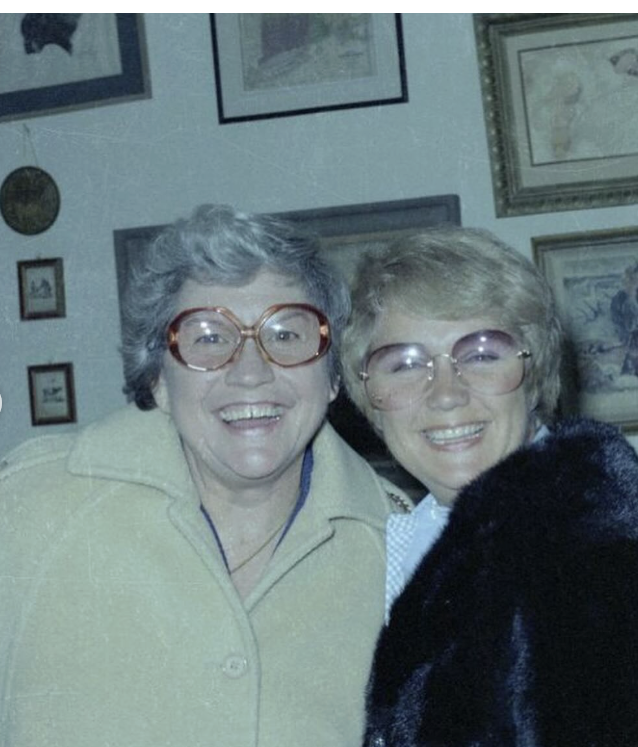
Do you recognise anyone?

Holocaust Centre North … Gad Beck … Making Gay History … Pride in Trafford … Now Is The Time … Birthdays

News

Holocaust Centre North

Between 1933 and 1945 the German Nazi regime and its collaborators persecuted Jewish men, women and children across Europe. By the end of the Second World War in 1945 the regime had murdered six million of them. This genocide is known as the Holocaust.

The Nazis also targeted Roma people and those with disabilities. They persecuted and murdered millions of other people across Europe including Polish citizens, Soviet prisoners of war, political and religious opponents, homosexuals and Jehovah’s Witnesses.

Some Jewish people who escaped or survived the genocide made their lives in the north of England. Their stories are told in the Holocaust Centre North.

The Holocaust Centre North’s Archive is a precious time capsule. It is one that tells life-affirming stories of survivors of Nazi persecution starting fresh lives in the north of England but also one that reminds us of the horrors of war. The eyewitness experiences are moving and ensure that the legacy of the Nazi genocide is not denied or forgotten.

More photos can be seen here.

Gerhard “Gad” Beck

You’ve probably never heard of Gad Beck, but he was an LGBT+ hero. Beck and his twin sister Margot was born in Berlin on 30 June 1923 to a “mixed” marriage: his father was Jewish, and his mother was legally Christian (though she converted in order to get married).

He also showed very early that he was gay: he was the kind of boy who likes to dress up as a girl and play with dolls. He started having sex with other guys – lots of sex – just after puberty. And Beck was never in the closet about any of this. He was only half-Jewish, which could offer you some protection in the Nazi period, but he always identified with Jews, and although his family was middle class and didn’t live in the old “ghetto” neighbourhood in the centre of Berlin, he insisted on going to a Jewish school in the ghetto. He was remarkably open about his sexuality as well, both intentionally – he told his mother about his first sexual experience right afterward – and unintentionally, because he was the kind of “queeny” gay guy whose sexuality is no secret.

The point of this story is: Beck ended up running the largest Jewish resistance organisation in Nazi Berlin, funnelling fake food coupons and sometimes fake ID papers to hidden Jews in the city. This job fell on him because (although not very educated – he had to drop out of school as the Nazis ramped up persecution and impoverished his family) he was very clever, and also because he had something we can only call “balls”. He ran circles around the Gestapo.

The best story about Beck tells you everything about him. In 1941, he fell in love with a boy called Manfred Lewin (pronounced Levine). Manfred was 100% Jewish, and eventually he and his family were rounded up for deportation. So what did Beck do? Well, he freaked out, of course. But he didn’t just give up, as anyone else would. Instead, he dressed up in a borrowed Hitler Youth uniform (pinned up because it was 3 sizes too big), went down to the deportation centre, Heil Hitler-ed his way through the door, and made up a ridiculous story that got the commandant to release Lewin into his custody! The story doesn’t end well: this was early in the war, so people didn’t realise (or weren’t sure) that deportation meant death, and Lewin felt he couldn’t abandon his parents and siblings as they were going to a work camp. So he went back in and died with his family in Auschwitz.

“Gad, I can’t go with you. My family needs me. If I abandon them now, I could never be free.” No smile, no sadness. He had made his decision. We didn’t even say goodbye. He turned around and went back. In those seconds, watching him go, I grew up.

Gad Beck describing the moment his lover Manfred Lewin chose to return to his family, to be deported to their deaths at Auschwitz

Beck never got over it (of course). I always think it’s amazing that somehow, despite being arrested by the Gestapo twice and buried alive during a bombing, he managed to keep a little book of drawings and poems that Lewin made for him (and which he donated to the Holocaust Museum in Washington DC). But it was also the moment where he decided to fight the Nazis with all of his might – all the might that courage and wit gave this short, gay, Jewish super-hero!

Gad Beck died aged 88 in 2012.

Signed portrait of Manfred Lewin, a member of the Hehalutz Zionist youth movement in Berlin, who was deported to Auschwitz in November 1942. United States Holocaust Memorial Museum, courtesy of Jizchak Schwersenz.

Making Gay History

Making Gay History is an award-winning podcast featuring intimate, personal portraits of both known and long forgotten champions, heroes and witnesses to history.

Season 14 is titled “Voices from the Shadows: LGBTQ Experiences During the Nazi Era” and has 12 episodes on the experiences of LGBTQ people during the rise of the Nazi regime, World War II and the Holocaust.

The podcasts include archival interviews that bring this painful, often hidden history to life through the voices of the people who lived it.

Polish teenager Stefan Kosinski was beaten, tortured and sent to prison. His crime? He fell in love with a Viennese soldier serving in the German army. When the soldier was sent to the Eastern Front, Stefan sent him a love letter, which was intercepted by the Nazis.

When the Nazis invaded the Netherlands in 1940, Frieda Belinfante dedicated herself to helping others. She forged IDs to save Jews from deportation and joined a resistance group that carried out a daring act of sabotage.

Photo at age 95

Lucy Salani was assigned male at birth, so when she came of age she was conscripted into the Italian army. She soon deserted – the first of several daring escapes that eventually landed her in Dachau. She’s one of the few trans people to testify about their experiences in Nazi concentration camps.

Pride in Trafford

Pride in Trafford returns with a vibrant celebration of LGBT+ arts, creativity and community across the borough.

Trafford has unveiled the programme for its seventh annual Pride in Trafford festival. This year they’ve expanded the celebration beyond Sale to include events in Altrincham, making it the most exciting and inclusive year yet.


Festival Highlights:
 
Official Festival Launch: Join them for speeches, poetry and song as we raise the Pride Flag on Waterside Plaza.

Youth Pride: Creative activities with a focus on the youth voice at Gorse Hill Studios.

A Northern Tr*nny Hootenanny: Presented by Hunter King, an uplifting queer parody musical and the story of Hunter’s transition.

The Wheel of Nouns: The Gender Fairy is loose in this new cabaret, interactive comedy!

The Queer Creatives Assembly: A chance to connect, collaborate and celebrate with LGBTQ+ creatives.

Buff: A funny yet poignant body-positive solo theatre show.

Jay Farley – A (Cupboard) Full of Tomboys: Step into the surreal world of Jay Farley, a neurodiverse filmmaker and poet.

I Was Dancing In The Lesbian Bar: This cabaret show is a sonic love letter to Lesbian Bars of a bygone era.

Block Party: An exciting afternoon of free outdoor activities on Waterside Plaza, featuring specially curated activities for children and young people and their families, followed by live performances on The Bandstand.

Drag and Draw: OYEZ Arts will be delivering a two-hour guided art workshop at Altrincham Town Hall, featuring a fabulous drag model and an atmosphere filled with DJ-spun beats.  

From powerful performances and artistic showcases to moments of reflection and fun-filled gatherings, Pride in Trafford offers a dynamic space where everyone can come together to celebrate love, identity and diversity.

For more information and bookings, see here.

Now is the Time

Let’s show the world that Now is the Time for equity, dignity, justice and joy:

Now is the time to lift the weight,
Of silence, judgement, fear and hate.
To speak the names we’ve pushed aside,
To hold a space, to turn the tide.

Now is the time to name what’s wrong,
To right the past, to make all strong.
To see each soul, each heart, each face,
And build a world of equal place.

Now is the time to change our speech,
To think, reflect, to learn, to teach.
To catch the slip, to shift the phrase,
And honour all in what we say.

Now is the time to share your truth,
To lead with hope, to teach the youth.
To pledge a way, to own your part,
And hold inclusion at the heart.

By Alyson Malach

Director Equality and Diversity UK Ltd

Sexuality Summer School … What Does Family Mean to You? … Ready to Protest Quiz … Birthdays

News


Sexuality Summer School 2025: Intergenerationality

Sunday 25 – Friday 30 May 2025

The Sexuality Summer School is a week-long event consisting of seminars and workshops for 40 postgraduate students, alongside a public events programme open to all. This year, the SSS will focus on the theme of ‘Intergenerationality’, exploring debates about how generations are constituted and distinguished one from another in the context of feminist, queer and trans theories and practices. 

Our discussions will draw together debates in gender, sexuality and critical race studies about how generationality has marked and regulated certain bodies, spaces and resources in particular times and contexts. Our public events and postgraduate workshops will examine how knowledge, creative practice and activism in the past has shaped current intellectual and political agendas, as well as artistic forms and collaborations. 

Exploring memory work, archives and oral histories, we will consider theories and methods for conceptualising past-present relations in terms of debates about desire, violence, antagonism,  nostalgia, consent and regulation.

Public Events Programme:

Sunday, 25 May, 3.30pm – 5.30pm

Film Screenings: A Place of Rage (1991, 54 mins) and Khush (1991, 26 mins), directed by Pratibha Parmar.

Q&A: Author and poet Jackie Kay will join Pratibha Parmar for a discussion of the films.

In partnership with the Women in Revolt! Exhibition at the Whitworth Gallery and with the Centre for New Writing and Screen Studies.

Venue: HOME Cinema, 2 Tony Wilson Place, Manchester M15 4FN

Tickets required. Click here to book.

Monday, 26 May, 4.00pm – 6.00pm

Opening Academic Plenary Lecture: ‘Between Desire and Dissociation: ‘Queer Magical Thinking in Hetero-Authoritarian Times’

Tavia’ Nyong’o (William Lampson Professor of Theater and Performance Studies, Professor of American Studies and African American Studies, Yale University). 

Venue: International Anthony Burgess Foundation, 3 Cambridge Street, Manchester M1 5BY

No booking required, all welcome.

Tuesday, 27 May, 5.30pm – 7.00pm

Roundtable Discussion on Intergenerationality and Activism. Speakers include: Marc Thompson (Pioneering HIV/AIDS activist, London), Chloe Cousins (Rainbow Noir and Social Justice Manager, Manchester Museum), Robert Broughton (George House Trust) and Agatha Phiri (HIV Activist).

In partnership with George House Trust, celebrating 40 years of supporting people with HIV and AIDS in Manchester. 

Venue: Sister, Renold Building, 81 Sackville Street, Manchester M1 3NJ

Free to attend but booking required. Click here to reserve a spot.

Please email sexualitysummerschool@gmail.com with any questions.

What Does Family Mean to You?

DIVA Magazine partnered with LGBT Foundation to find out more about your rainbow families. This is what family looks like to Mindy.

Words by Mindy

What does family mean to you?

For me, family is chosen as well as a couple of the people I have a genetic connection to. My primary family priority is my wife (we’ve been together for 34 years now) and our cats. 

Tell us about a typical day in your family life.

We get up together, then we meditate before breakfast (that makes us sound a lot more worthy than we are). After breakfast we get on with our day, which includes cat care and the various volunteering things we are involved in. If it’s a Tuesday we go to a singing for wellbeing group, other days Linda plays her guitar and I dance. Sometimes we meet up with close friends for a meal or I go out dancing with other friends.

How have things changed for LGBTQIA+ families over your lifetime?

Big changes! In the 80s I knew I couldn’t adopt or foster so we have no children. The children of friends just take us as we are – all totally ordinary as we’ve known them since they were babies. We are both out to everyone in our lives and it wasn’t like that when I came out in the early 80s or when Linda left Northern Ireland in the late 70s. 

What are your hopes for the future for LGBTQIA+ families?

My hope is that we keep on becoming more and more unremarkable so we are completely embedded in our communities and localities. Here in Manchester it feels like we are totally ordinary but that may just be because we’ve lived in the same house for 30 years and as older women we are largely invisible. 

All of this is why I am part of the Centre For Ageing Better’s Age Without Limits campaign and part of their stock image library as well as a volunteer at the LGBT Foundation here in Manchester.

You can find out more about LGBT Foundation here.

Ready to Protest? – Tuesday, 10 June – 6.00pm – 8.00pm

The Social, Aviva Studios, Water Street, Manchester M3 4JQ

Test your skills at PROTEST! – a Pride Month special quiz – Free to attend

This June, IAP:MCR takes over Factory International’s monthly quiz night. This special edition is part of PROTEST! – a two-year project exploring Section 28, and the history of Queer resistance.

Your compere is Louise Wallwein: legendary poet, performer, and frontliner at the 1988 anti-Section 28 demonstration. Expect big energy and brilliant questions, celebrating protest, pride and resistance. 

There will also be a pop-up display, tracing the history of Section 28.

Produced by IAP:MCR as part of PROTEST!, funded by the National Lottery Heritage Fund.

Can we get a team together for Out In The City? – Please contact us if interested.

Birthdays

Trans+ History Week … Eli Erlick … Karl Kohnheim … Greater Manchester Police … Theatrical Double Standards … Birthdays

News

Trans+ History Week

In May 2024, QueerAF started the first Trans+ History Week, observed for the week beginning 6 May 2024, to celebrate the history of transgender, non-binary, gender-nonconforming, and intersex people. The organisation hosted billboards across the UK with the slogan “Always been here. Always will be.”

They got the idea after learning about the Nazi book burnings that targeted trans texts on 6 May 1933 after a raid on the Institut für Sexualwissenschaft in Berlin.

Nazi Party members at the Opernplatz book burning in Berlin

This year Trans+ History Week will be celebrated from 5 May to 11 May 2025. During the week we make space for, platform and share our rich history. A history which is as long as all of human life. 

See timeline for more information.

Eli Erlick

About a year ago, frustrated with the “erasure of trans history” and continued anti-trans narratives, Eli Erlick began writing a history book.

It spotlights underreported trans stories from 1850 to 1950, including some experiences that haven’t been told in 120 years. 

Unfortunately, a lot of history isn’t just withheld on purpose by the far-right but also by academics and publishing companies that want to maintain the intellectual property.

She said, “So I wanted to do something very public, very accessible and very understandable to the mainstream.”

As part of her work, Eli colourises historical black and white images. As she explains: “We know from past social movements, particularly the civil rights movement, colourisation brings the subject closer to the viewer. We think of subjects who don’t have photos or have black and white photos as lesser, as in the past, as of a different time, era or culture – even when this could have only been 50 years ago.”

Eli has posted images of world champion athlete Mark Weston, who transitioned in 1936, and Christine Jorgensen, who was the first trans person to become widely known in the US for having gender-affirmation surgery. 

“I was colorising trans photos and it reminded me of star athlete Mark Weston, who transitioned in 1936. It’s as if he was erased from the history books. He was one of the world’s top athletes and Britain’s #1 women’s shot putter for six years. His brother Harry was also trans!”

Through her research, Eli has found that trans people were treated relatively “well” in the 19th and 20th centuries – especially compared to how the community is “currently being demonised as a sort of contagion”.

“Trans people used to be treated, at worst, as a curiosity or even a medical breakthrough, and it was generally positive,” she says.

She adds: “It’s clear that right now we have a significant problem in reporting and also in queer and trans historiography.”

“We shouldn’t have to produce evidence of our own history,” she says. “Yet, we are forced to … colouring these images helps remind viewers that trans people – real people – have always existed and will continue to thrive no matter how much we are attacked.”

Karl Kohnheim – Businessman, Advocate, Trans

What did it mean to transition in Weimar Germany?

Karl Kohnheim (sometimes referred to in documentation as ‘Katharina T’) was the first person to receive a German Transvestitenschein, the official government documentation that allowed dressing in affirming clothes (literally transvestites pass). Karl fought to be legally recognised as a man for over 15 years before he was given his pass; it took 8 years to receive a notice to allow his style of dress, and he was never allowed to legally change his name.

What can we learn from Karl Kohnheim?

We can’t be erased. Trans+ people have always been resilient and have always had to fight for their identities. Even when the Nazis targeted the first trans+ clinic in the world, even when they burnt our medical records and outlawed our very existence, we didn’t disappear.

Magnus Hirschfeld was one of the strongest trans+ allies in the Weimar period. He founded the Wissenschaftlich-humanitäres Komitee (Scientific-Humanitarian Committee) and the World League for Sexual Reform. His Institut für Sexualwissenschaft (Institute for Sexual Research) was the site of the first sex reassignment surgery. Hirschfeld was not transgender himself, but he felt that trans+ people deserved more dignity than they were offered in society. The incoming fascist regime targeted him for those views as well as the fact that he was Jewish and gay.

Hirschfeld also gives us the opportunity to reflect on those we choose to put on a pedestal. He pushed trans+ rights forward significantly in his time, but he was deeply racist, heldstrong views on how eugenics could be used positively in society, and had complicated power dynamics in relationships with quite young men. It’s important that we are careful about the people we invest in and recognise that no person is a monolith. We can’t excuse Hirschfeld’s horrific and dangerous ideas just because he was supportive of trans+ folks.

Campaigners urge Greater Manchester Police to apologise for alleged history of homophobic policing

Greater Manchester Police has been urged to apologise for an alleged history of ‘homophobic policing’.

The Peter Tatchell Foundation has written to the Mayor of Greater Manchester, Andy Burnham, and the Chief Constable Stephen Watson asking for “a formal apology for decades of abusive, homophobic policing that devastated the lives of LGBT+ people.”

The Foundation sent the letter on 16 April, and though it acknowledged Manchester’s more inclusive and supportive policies today, it condemned the force’s historic persecution of LGBT+ people as “some of the most vicious and aggressively homophobic in Britain.”

Citing the tenure of Chief Constable James Anderton in the 1980’s, they claim that he openly denounced gay men as “swirling around in a cesspit of their own making” and orchestrated a campaign of harassment, entrapment and humiliation.

Greater Manchester Police has been urged to apologise for an alleged history of ‘homophobic policing’.

The Foundation also says that victims were beaten, arrested for kissing, and outed in the press—leading to prison, fines, job losses, evictions and suicide attempts.

The Foundation is not asking the police to apologise for enforcing now-repealed homophobic laws, but to say sorry for the “abusive and often unlawful manner” in which these laws were enforced.

“Raiding gay birthday parties, using homophobic slurs and harassing and bashing people outside gay pubs—these tactics would never be acceptable today,” said Tatchell.

“So far, 21 UK police forces have apologised for similar past wrongs, including the Metropolitan Police, Police Scotland and Merseyside Police. Their apologies have been followed by new LGBT+ action plans, including the appointment of LGBT+ community liaison officers and the establishment of homophobic hate crime hotlines. These apologies and new supportive LGBT+ policies have much improved relations between the police and the LGBT+ community.”

“Mayor Burnham and the Chief Constable were not responsible for the past homophobic abuses,” Tatchell said, “but as people with oversight of the police, they have the power—and duty—to help make amends. A formal apology would be an important act of healing. It would boost in trust and confidence in the police, and encourage more LGBTs to report hate crimes, domestic violence and sexual assaults.”

A GMP Spokesperson said: “The GMP of today is proud to serve and protect all communities in our dynamic city-region. We strive to engage with all our diverse communities to understand their non-recent experiences and ensure they feel policing of today is doing more to listen to concerns and work together to make Greater Manchester a safer place for everyone.”

Theatrical Double Standards

English writer, broadcaster and drama critic Sheridan Morley, circa 1985. Photo by Gemma Levine / Hulton Archive / Getty Images

Sheridan Morley was an English author, biographer, critic and broadcaster. He was the official biographer of Sir John Gielgud and wrote biographies of many other theatrical figures he had known, including Noël Coward.

In this article from The Spectator dated 5 May 2001, Sheridan Morley looks back on changing public and police attitudes towards gay actors.

For me, it all began with Jimmy Edwards – a revered actor and comedian, a war hero badly burned at Arnhem, a lord rector of Aberdeen university, and for 11 years the beloved, irascible Pa Glum of Take It From Here on BBC Radio. In the late 1970s he was “outed”, and it was revealed to a somewhat surprised world that Jim, he of the tuba and the handlebar moustache, was in fact also a lifelong homosexual.

Jimmy Edwards

“Out of the closet?” he once boomed indignantly at me in a pub near Broadcasting House. “Of course I didn’t come out of the bloody closet. They broke the bloody door down and dragged me out against my will.” Soon after that Edwards settled in Australia, and far too soon after that he was dead at only 68. I am not suggesting the outing killed him, but it certainly made it harder for him to find work in Britain. It is at least arguable that his life and career as well as that of many others were shortened by the strain of some very unwelcome publicity.

As late as the 1980s, British public and private intolerance of homosexuality was still more than enough to ruin careers and lives, or at least to do them considerable damage; the television star Peter Wyngarde and Leonard Sachs of The Good Old Days were just two of maybe a dozen actors whose careers never really came back from court cases involving cottaging, even though there was no question of the involvement of minors, or indeed anyone other than consenting adults.

The tragedy was that for many of these men, often born into a 1920s world where the memory of Oscar Wilde was still strong, there was no possibility of coming to any terms with what even they still thought of as a criminal offence, and a deep cause of familial and sometimes also marital shame.

Justin Fashanu

To this day, the stigma can still kill: in May 1998, the former soccer star Justin Fashanu committed suicide a month after a warrant was issued for his arrest on charges of sexual assault against a teenager in America – charges denied in his suicide note. Ironically, in that same week, the first “gay walking tour” of Soho was announced, and clearly there was a double standard already established: suggestions of homosexuality did little harm, for instance, to the careers of Kenneth Williams or Frankie Howerd, because their public personae were long established as gay, even though they both resolutely refused to tell the truth and Williams once threatened to sue me for inadvertently, in a theatre annual, publishing nothing more overtly “damaging” than a picture of him on a beach in Morocco with Joe Orton and his killer Kenneth Halliwell.

If however your career depended on any kind of a romantic image, whether as an actor or a pop star, the danger of alienating audiences was still all too real and, amazingly, remains so to this day, more than 100 years after the death of Wilde.

I believe, having researched in some detail the arrest of Sir John Gielgud in 1953 with police who recall the case, that the witch hunt of homosexual actors in the years after the second world war was as firmly established over here, and did as much damage to lives and careers, as that of the simultaneous witch hunt of American actors and writers by the McCarthy Committee on UnAmerican Activities in Hollywood.

Indeed there is a direct transatlantic connection. In the aftermath of the Burgess and Maclean defection to Moscow, the FBI had strongly requested that the Home Office make every effort “to weed out homosexuals from British public life”, since they could clearly form a security risk at a time when the Cold War was still at its height. Accordingly, one of Scotland Yard’s top-rated officers, Commander E.A. Cole, was seconded for three months to Washington to examine in detail the anti-communist campaign in America, and to see whether there were useful lessons to be learnt for the ongoing war on homosexuality in Britain.

The commander rapidly reached the conclusion that witch hunts were apt to be counterproductive, but 1953 was in many ways the watershed. It was of course the year of the Coronation, of Everest, of a “New Britain” not unlike the one envisaged almost half a century later by Tony Blair. It was however still more divisive; in every area of public life, there was a group of reactionaries who believed that, with “a slip of a girl” newly on the throne, Britain was in imminent danger of going to the dogs, and that therefore the sooner Victorian values could be reimposed, harshly if necessary, the better for our long-term moral health. But now for the first time there was an equally powerful group of younger movers and shakers who saw in the Coronation changeover the chance finally to drag Britain into the 20th century and line her up with more liberal European neighbours such as France and Italy, where homosexuality among consenting adults had long been decriminalised.

Isherwood and Auden

The battle which started in that year dragged on for about 20 more, and it took many hostages. Some playwrights, among them Terence Rattigan and Noel Coward, followed Isherwood and Auden into exile, choosing places in the sun such as Bermuda and Jamaica where their discreetly homosexual lives could be pursued without fear of the police or press. Others chose to remain in Britain, despite the evidence of increasing intolerance.

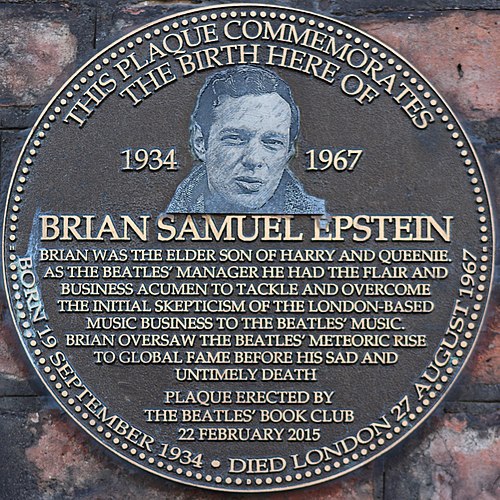
Birthdays