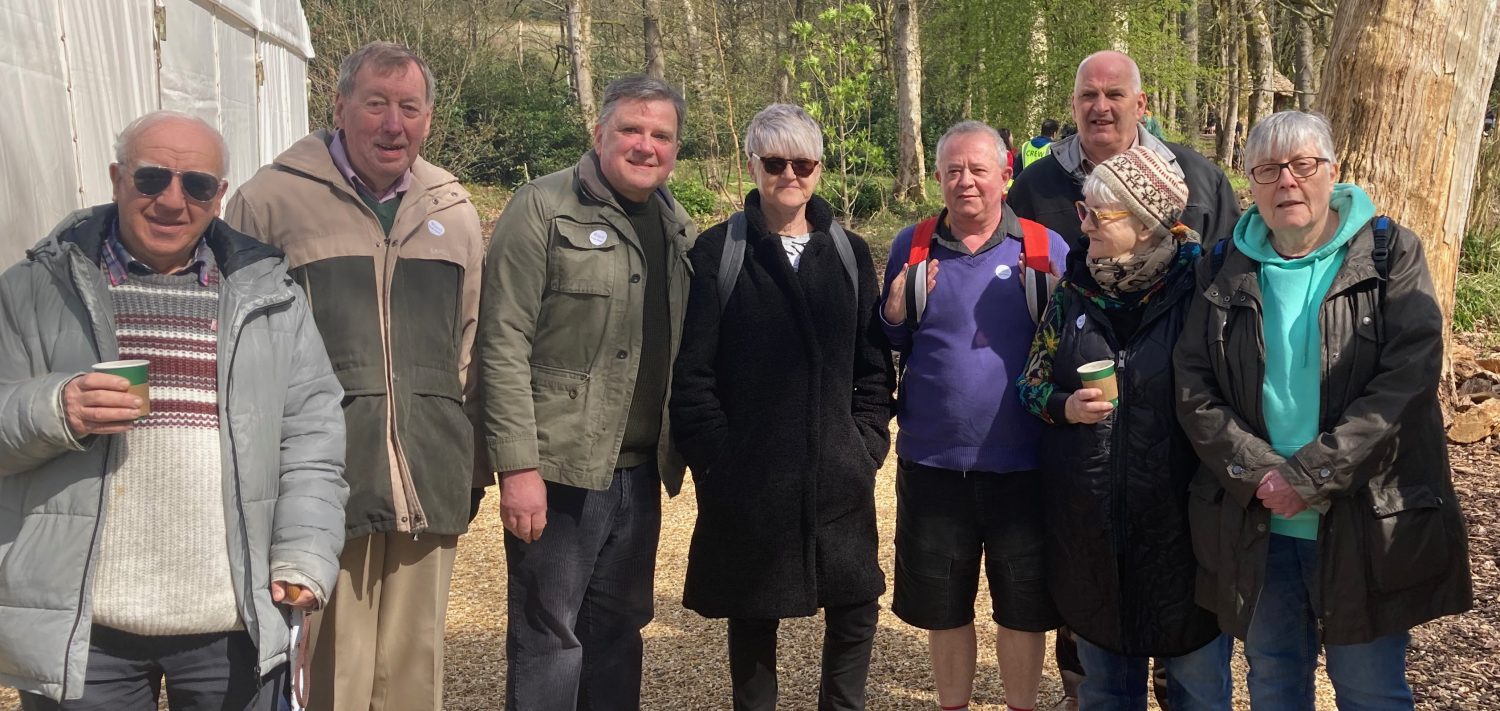
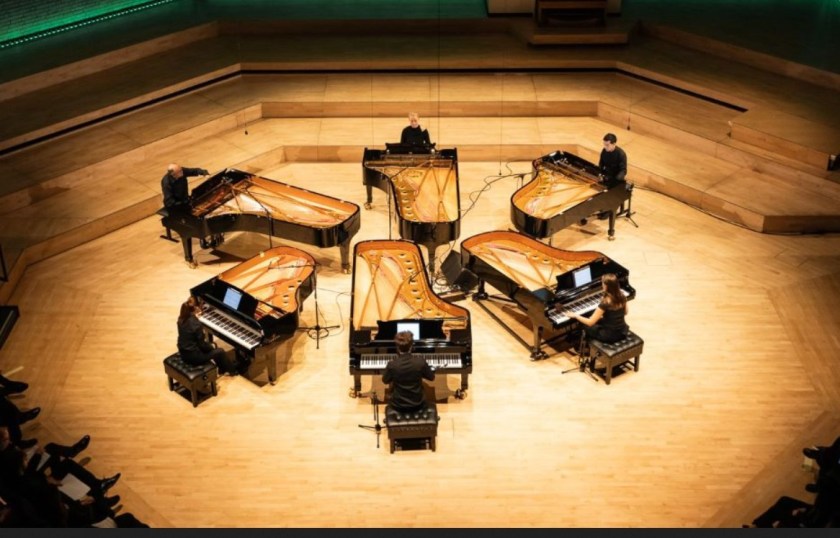
A group of us from Out in the City visited the RNCM on 2 October to hear a marvellous lunch-time concert. As on previous occasions there were six grand pianos for the programme, for me the most interesting was Wagner’s Tannhäuser Overture (arranged for 4 pianos by John Wilson, who was present).
The two others were also very exciting to hear, ‘Shangri-La beneath the summer moon’ (world premiere), composed by a student at the college, Lucian Amette Crosby and ‘Aerobatics Over Lake Wanaka’ by Adrian Sutton.
(Review by Bruce)
Thank You For The Music
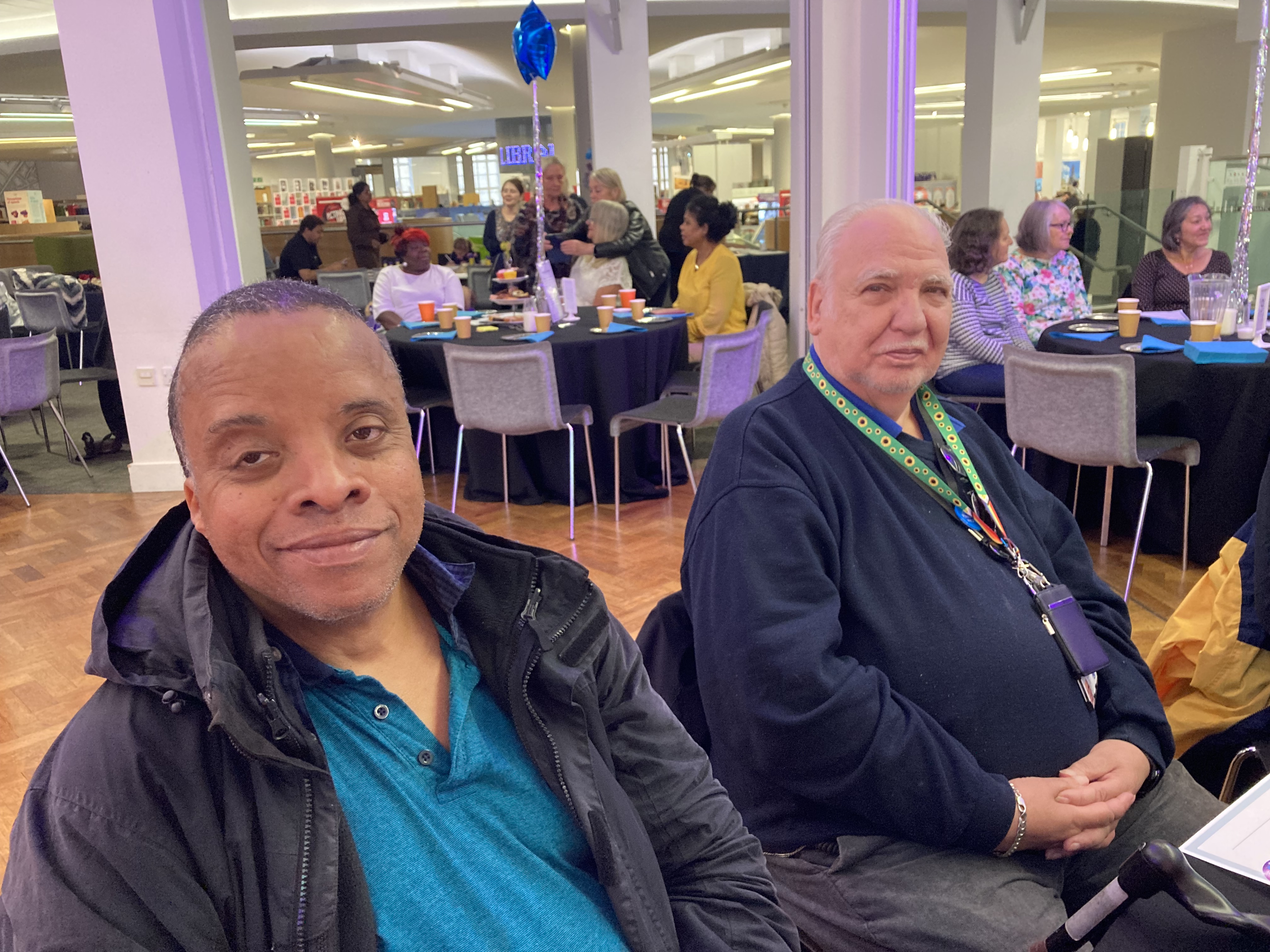
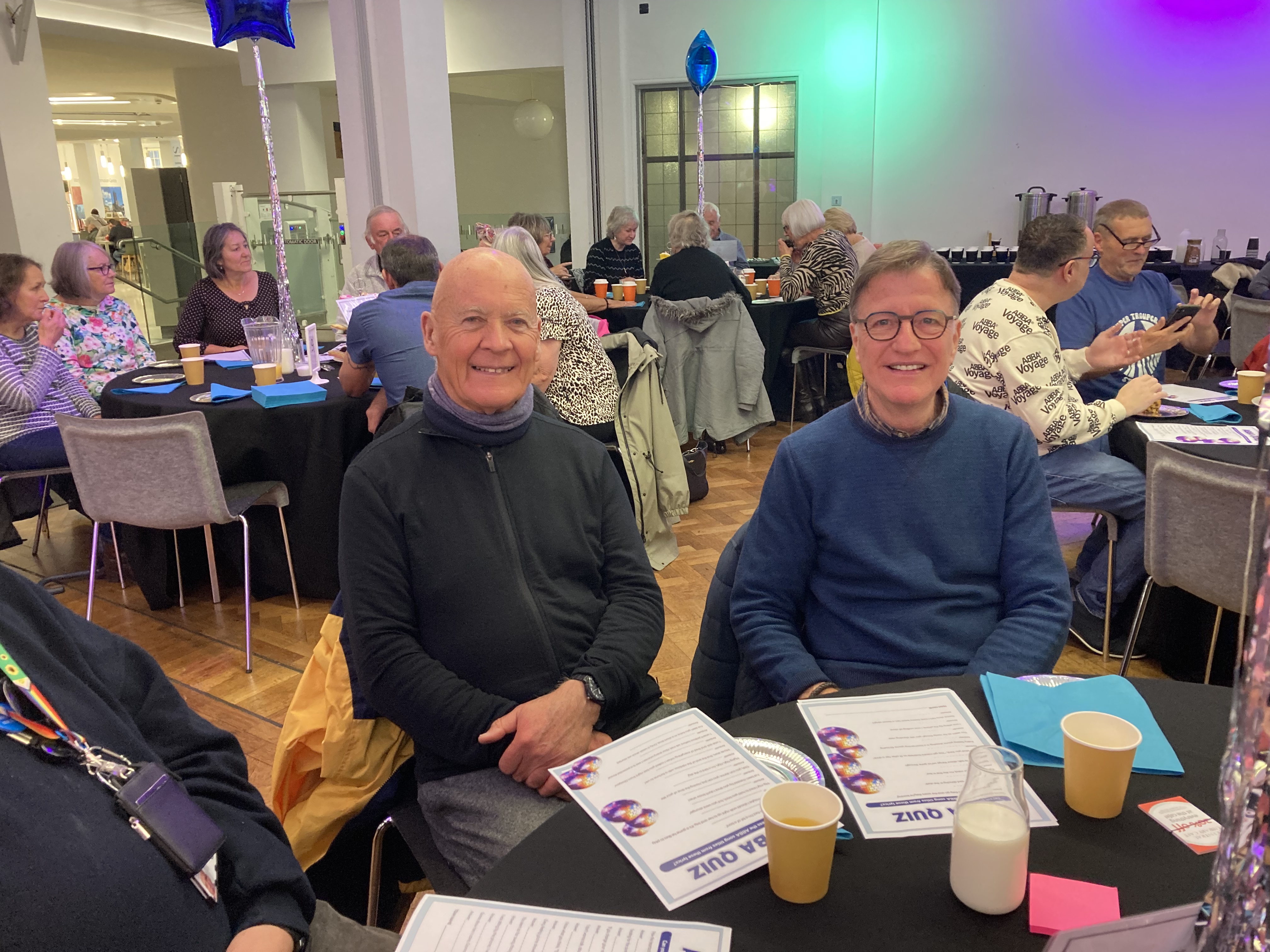
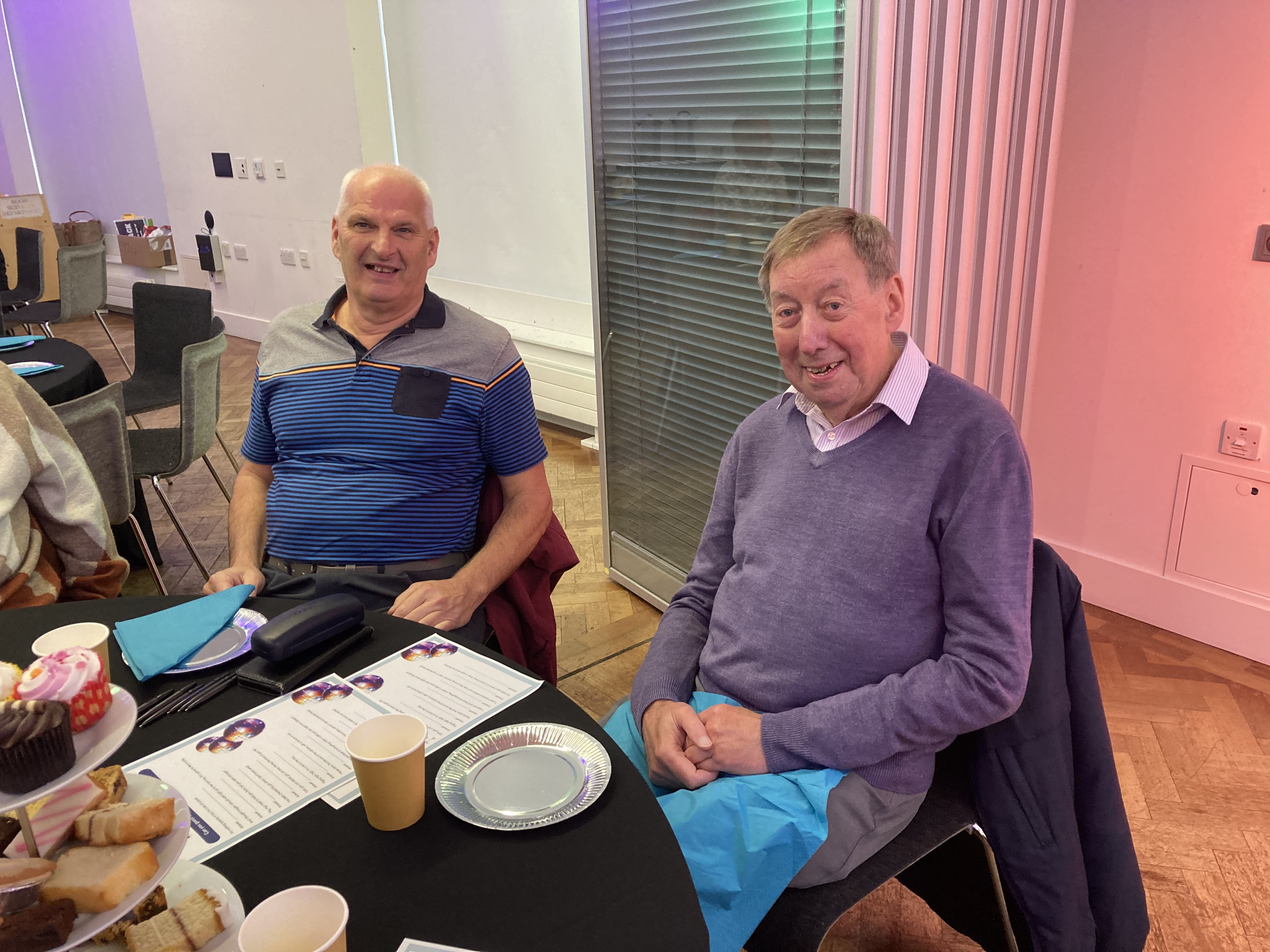
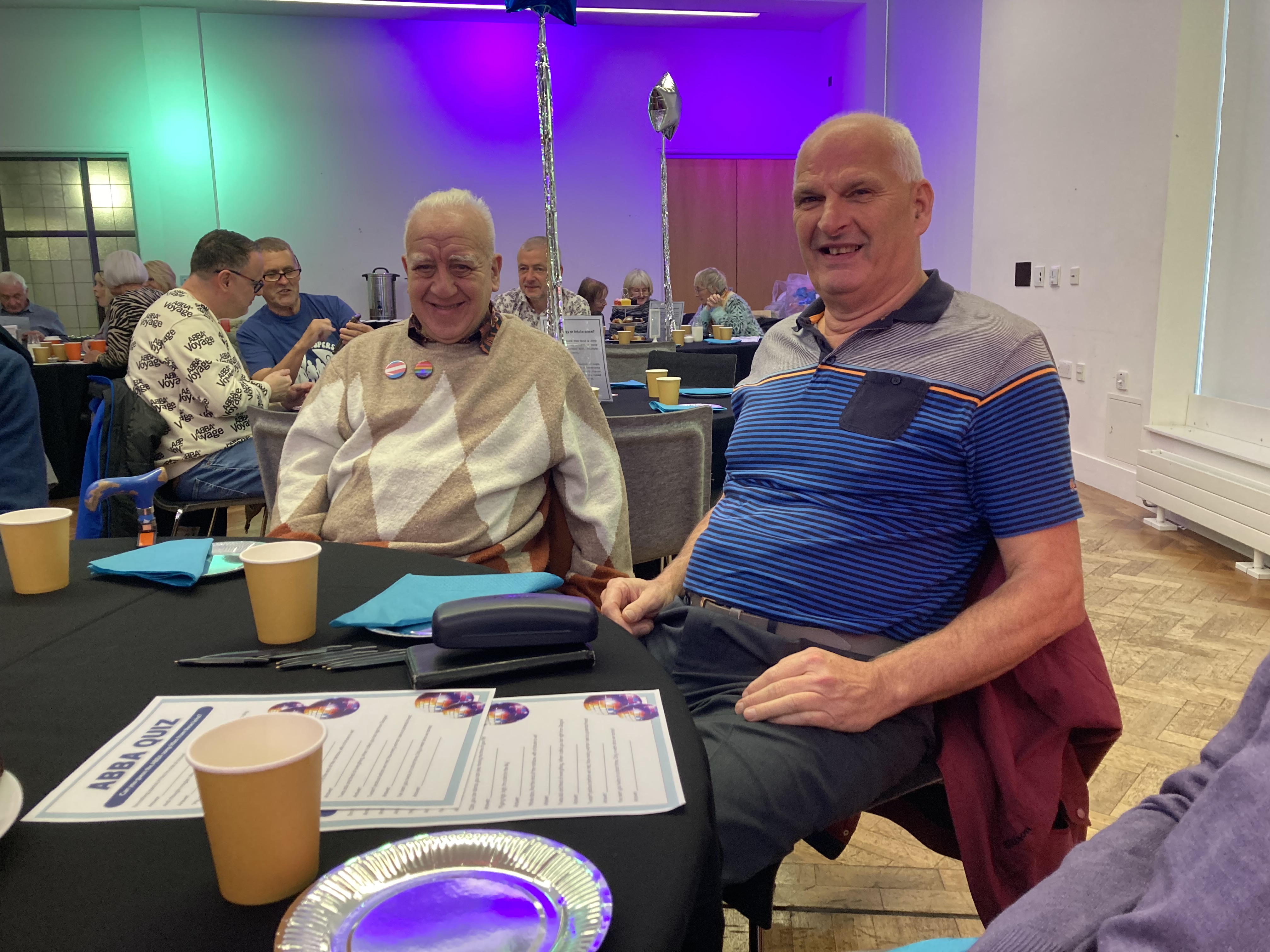
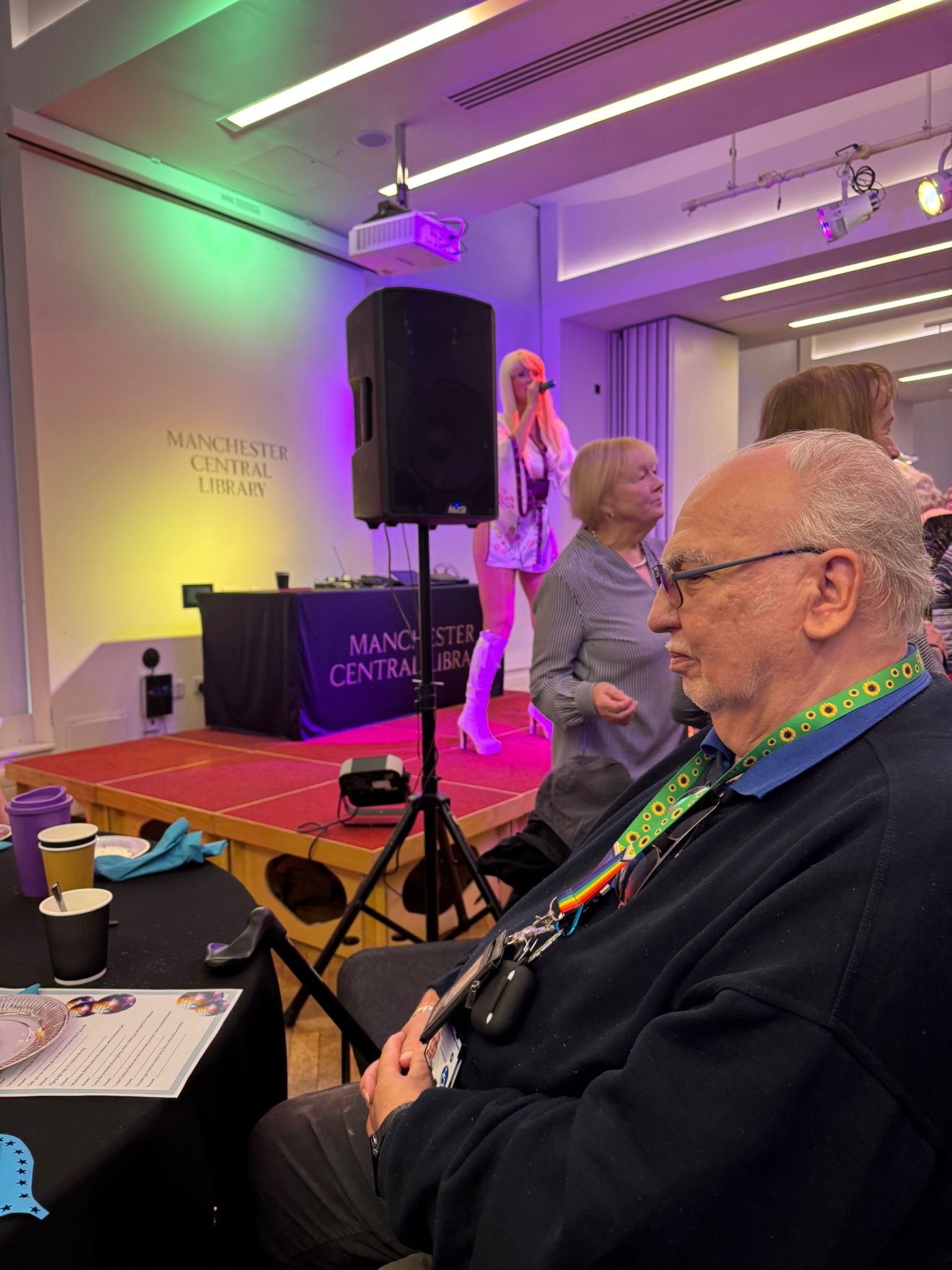
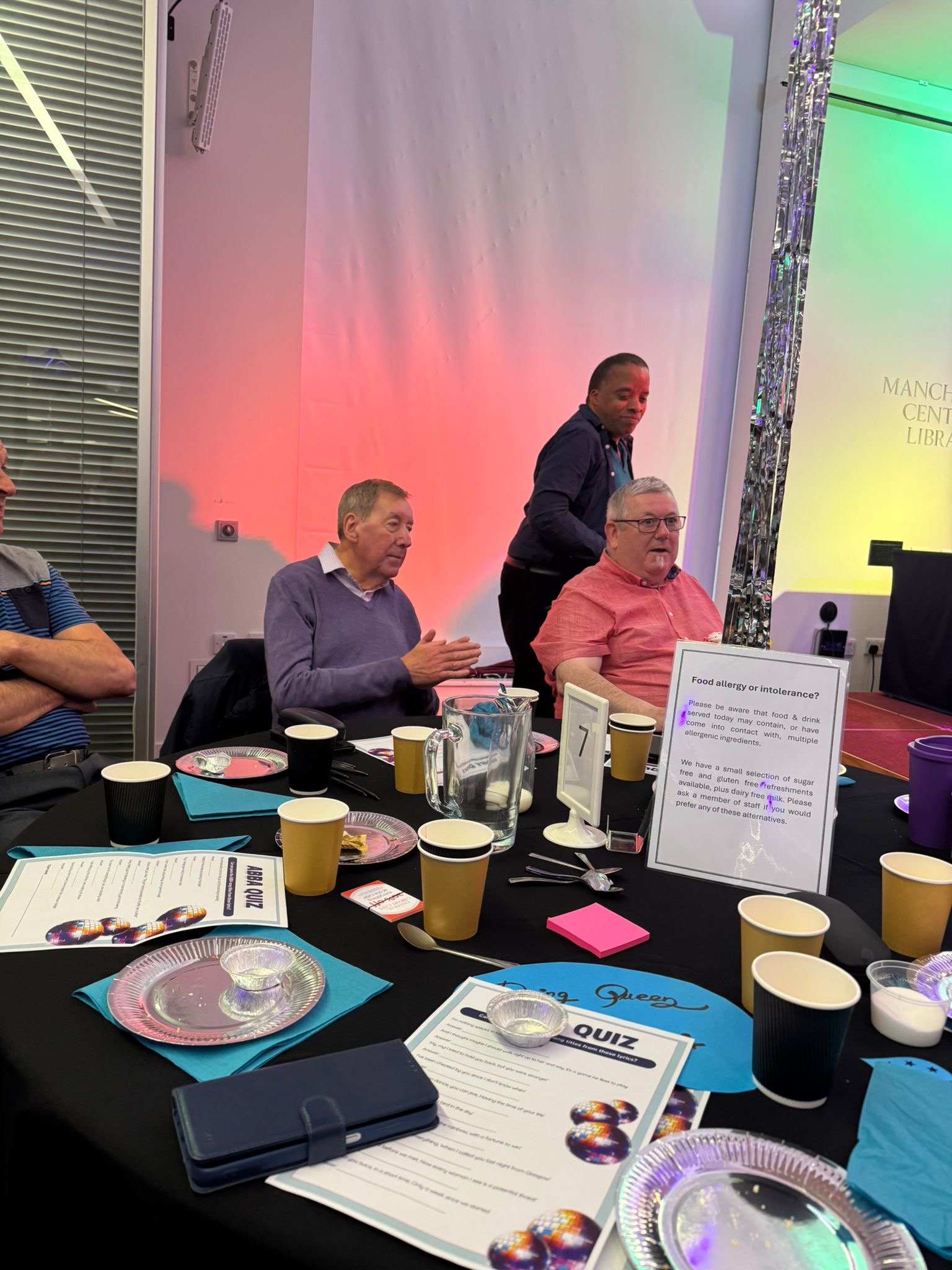
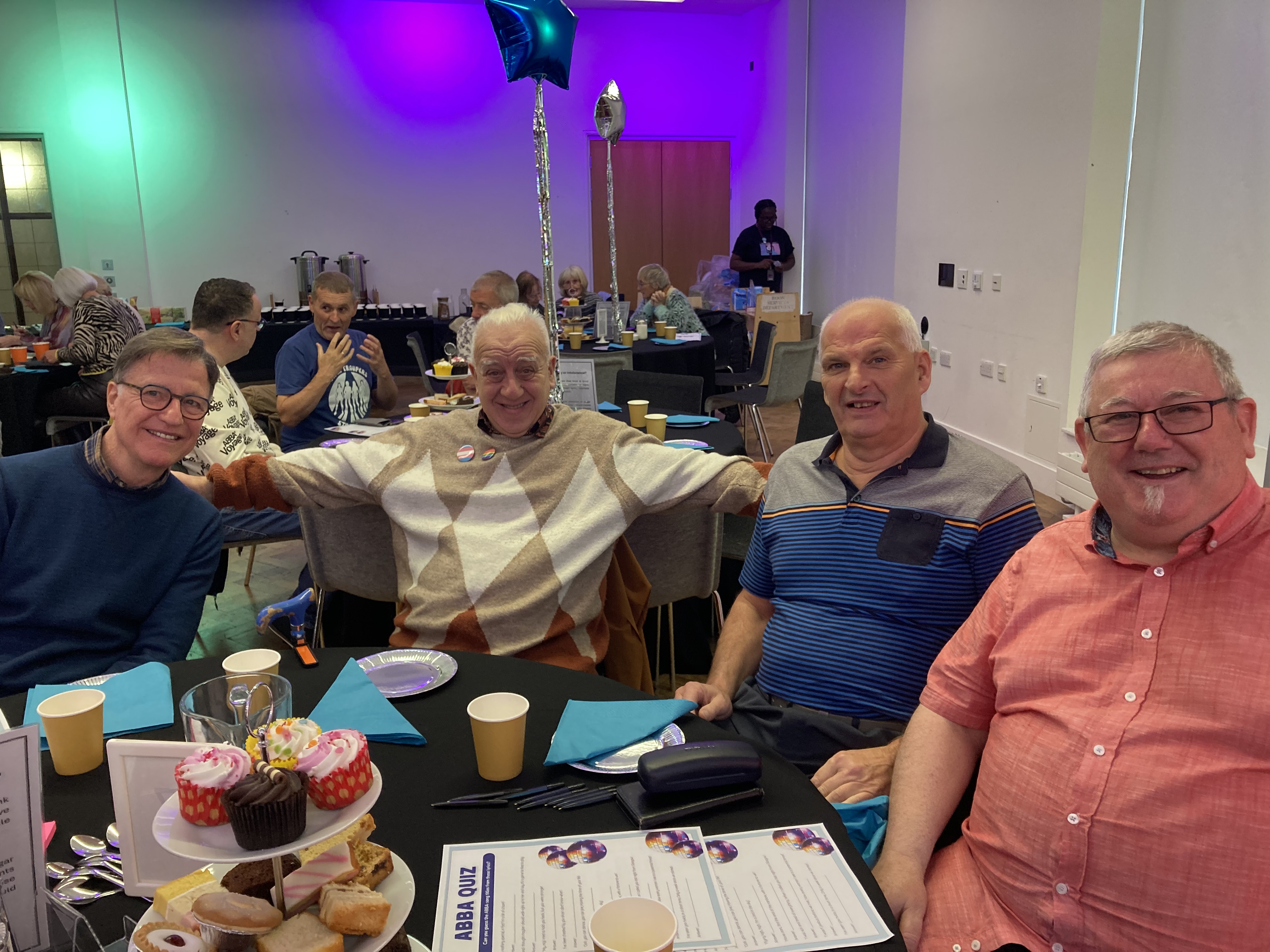
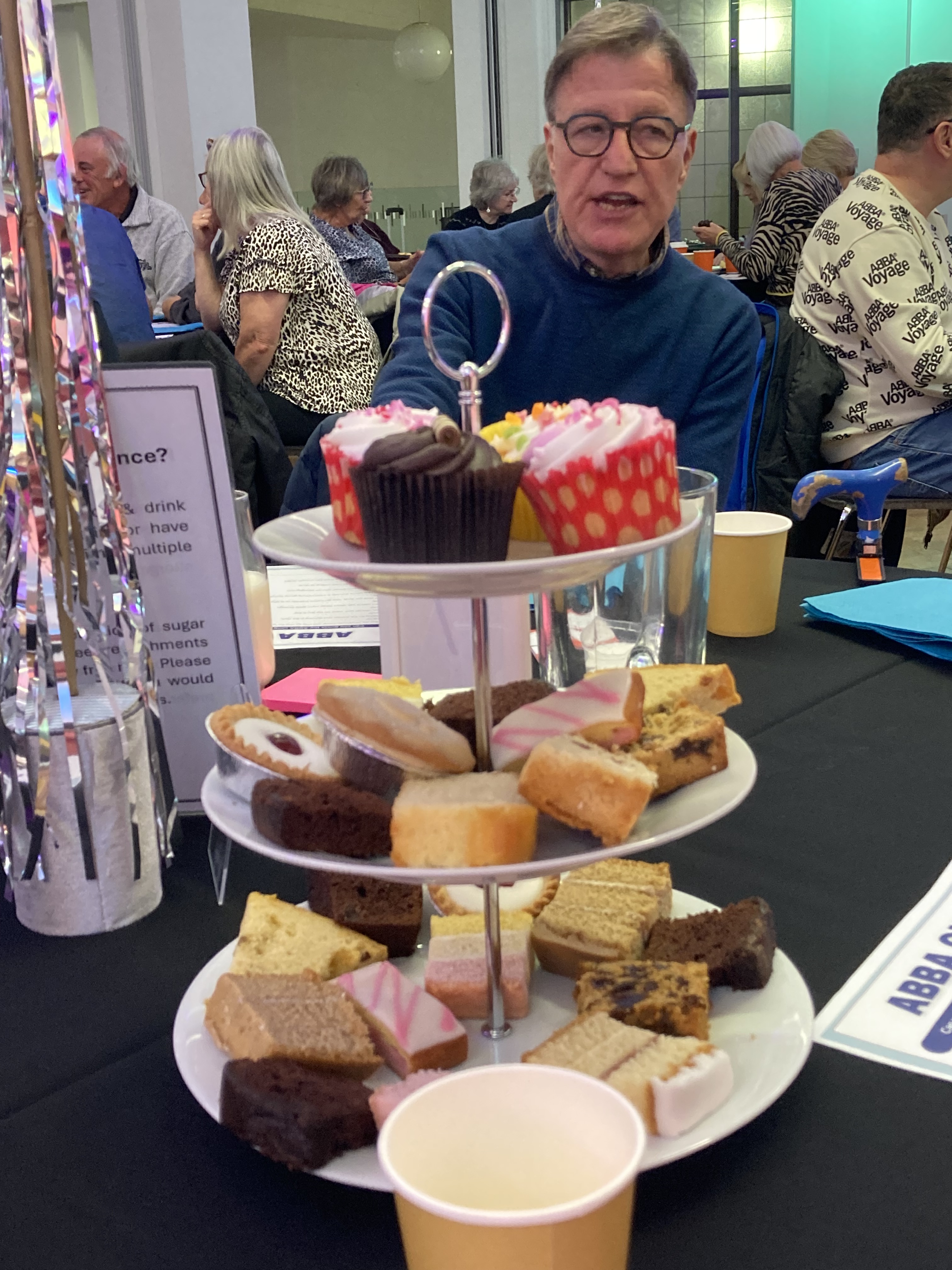
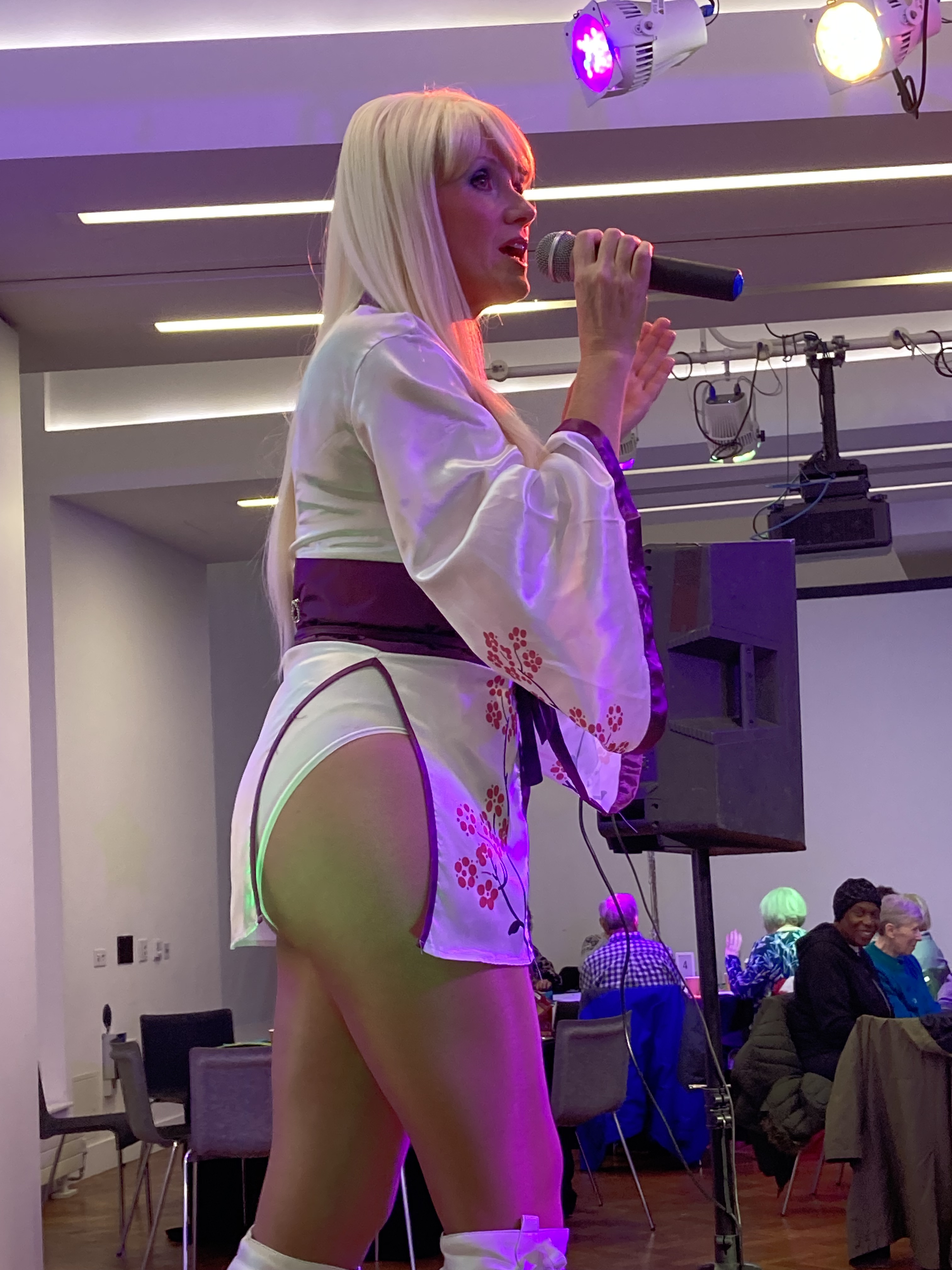
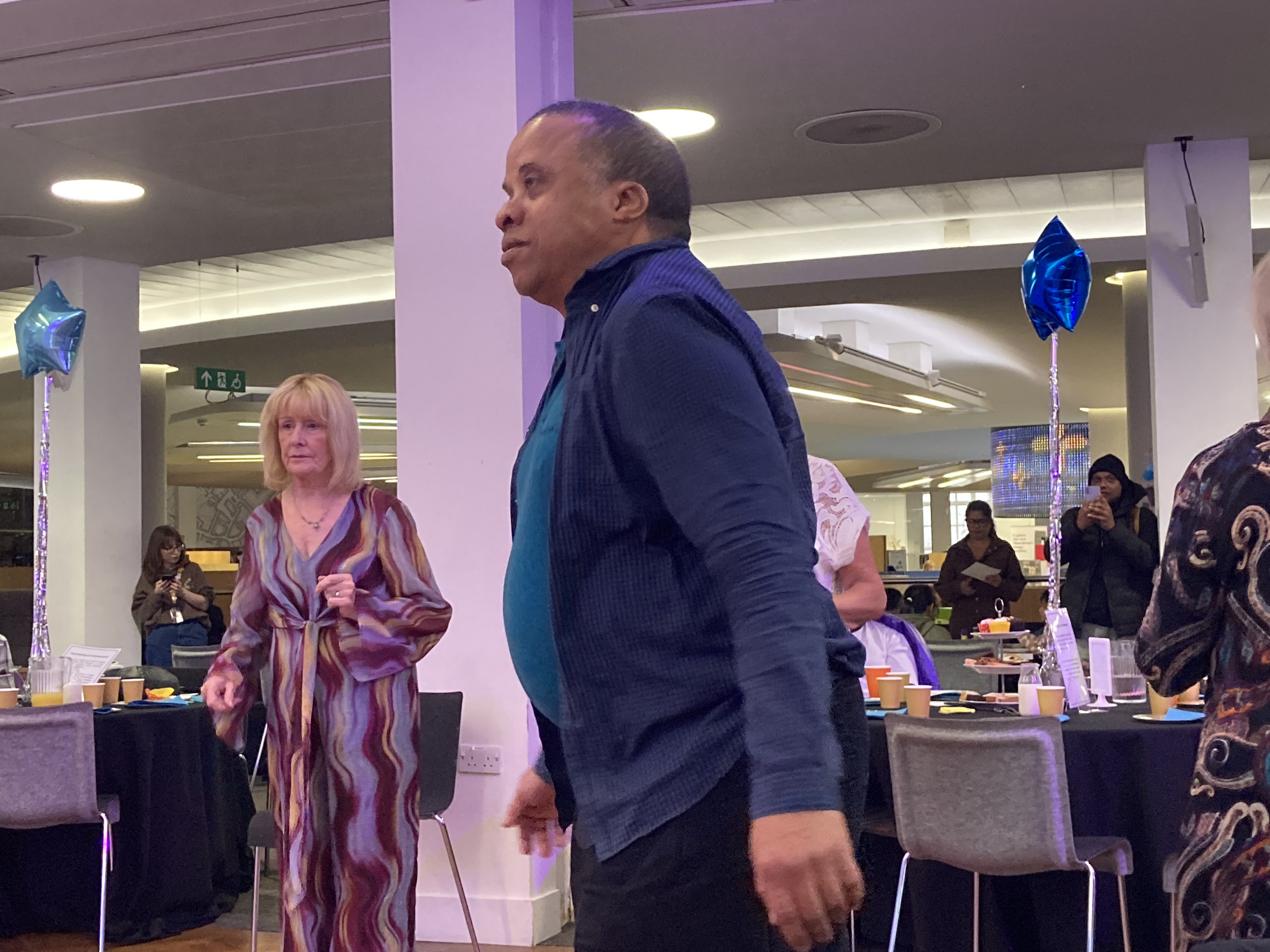
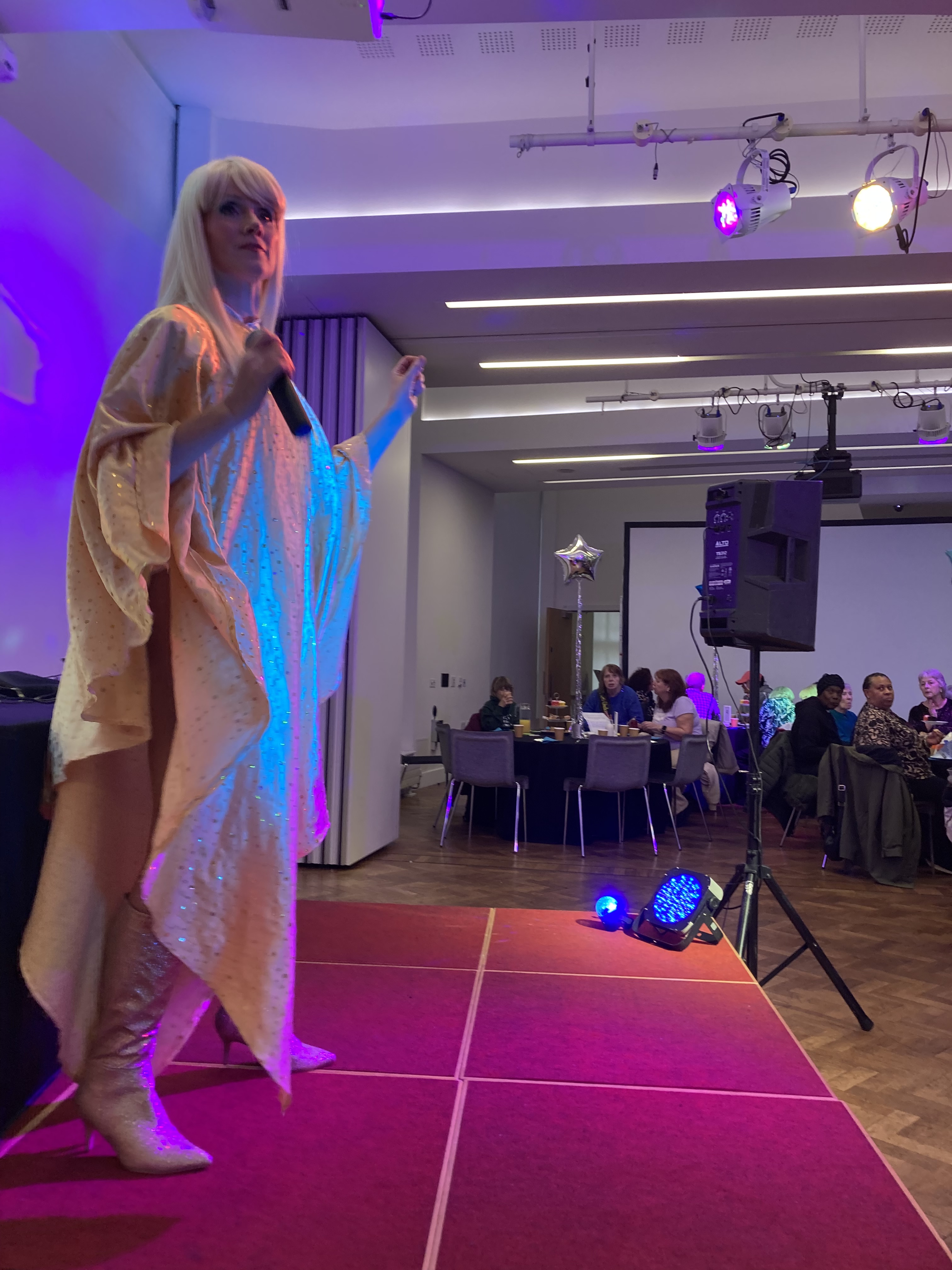
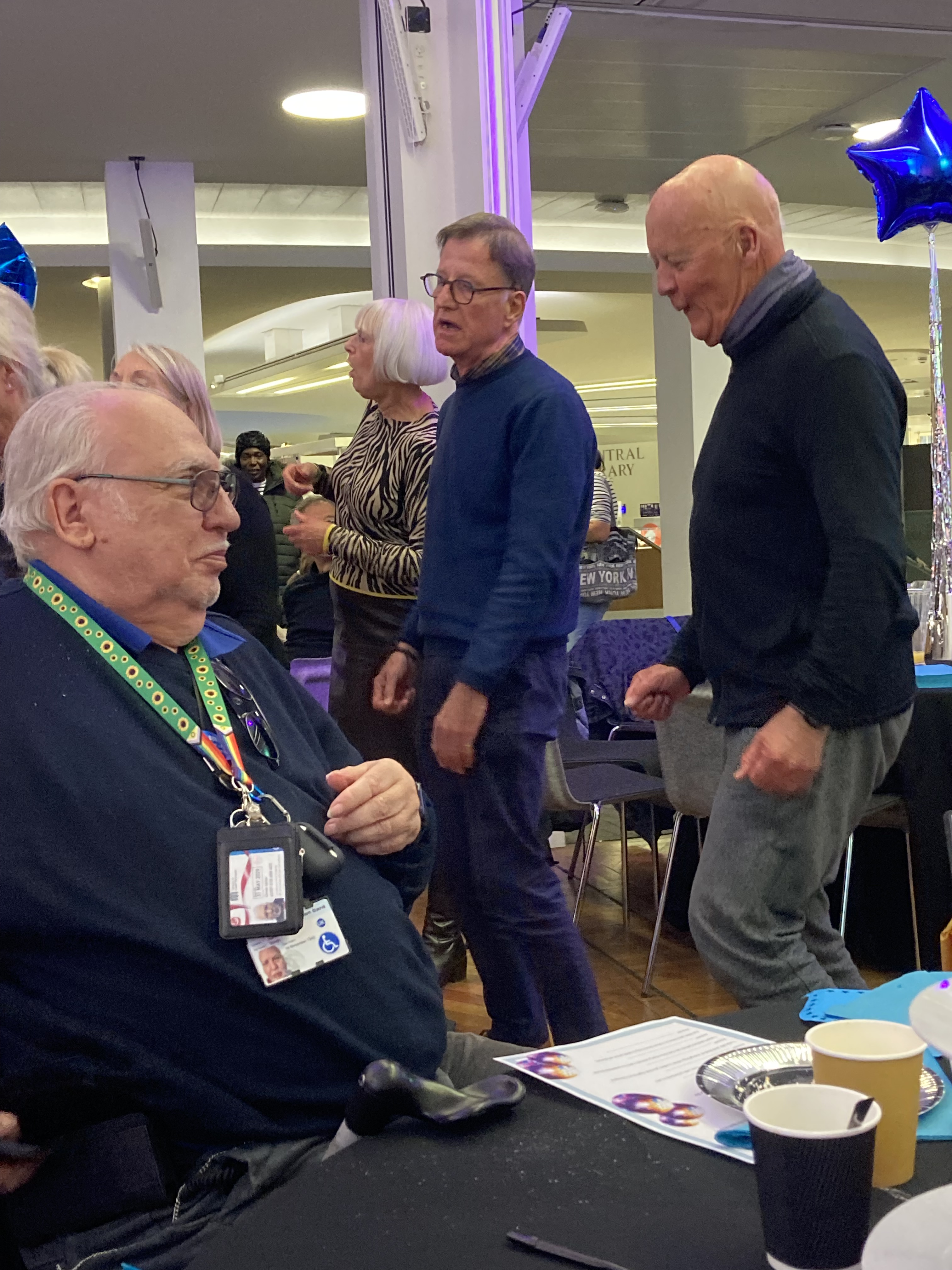
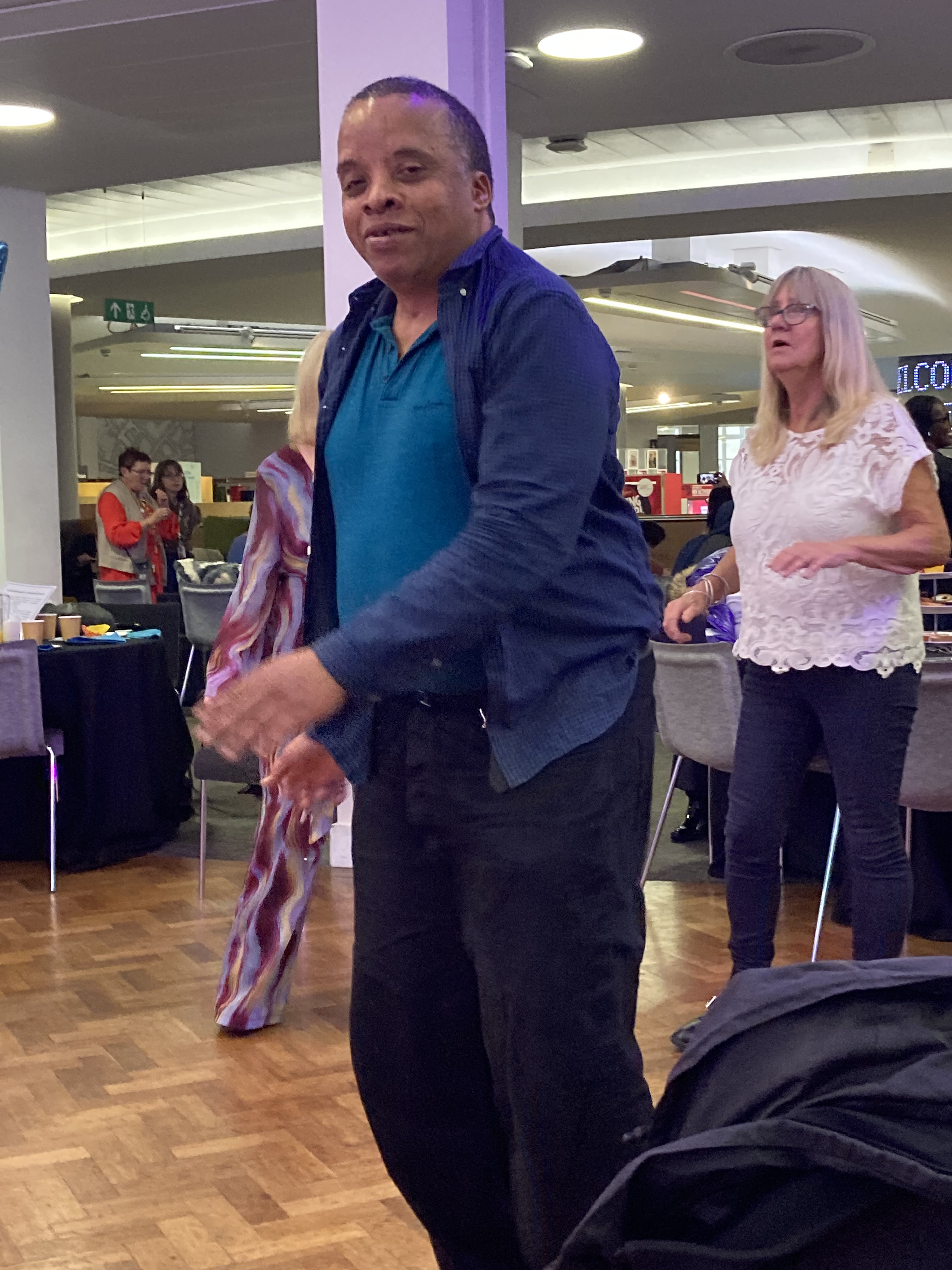
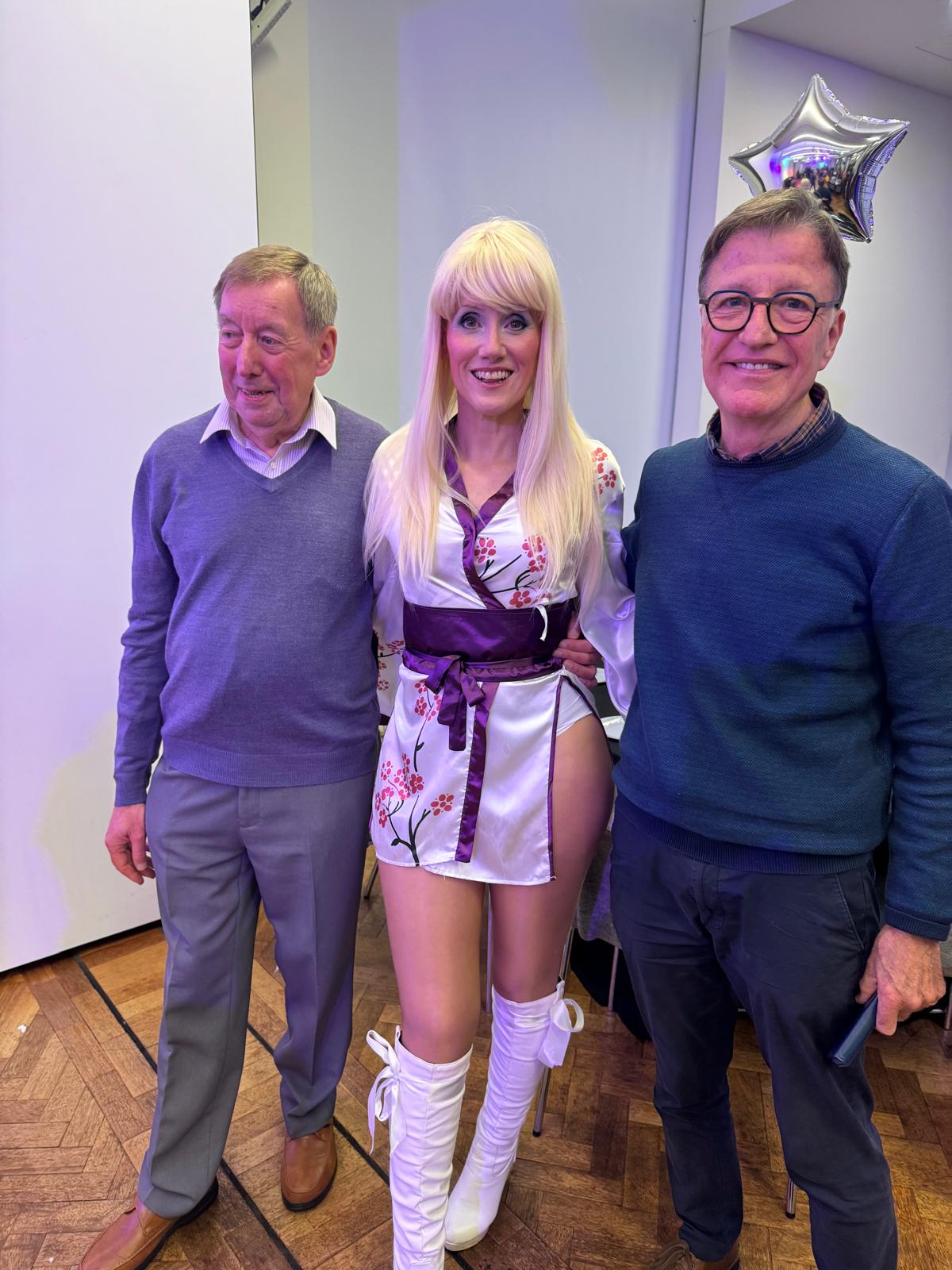
We took a chance on a super trouper afternoon at Central Library to celebrate International Older People’s Day.
We listened to two hours of ABBA classics with the fantastic solo tribute artist “One of Us”. Here are some photos of the event:
International Lesbian Day
There are two main days to recognise and celebrate lesbian communities: International Lesbian Day on 8 October and Lesbian Visibility Day on 26 April.
International Lesbian Day is a day for celebration of lesbian culture and history and serves as an opportunity to raise awareness of the lesbian community and advocate for their rights and inclusion.
We haven’t always had recognition. In the Scottish court case Woods and Pirie vs Dame Cumming Gordon (1811) two teachers were accused of having a lesbian relationship by a pupil, claiming they had indecent sexual relationships. However, one judge found that sex between women was “equally imaginary with witchcraft, sorcery or carnal copulation with the devil”, illustrating notions at the time that tied sexuality with masculinity.
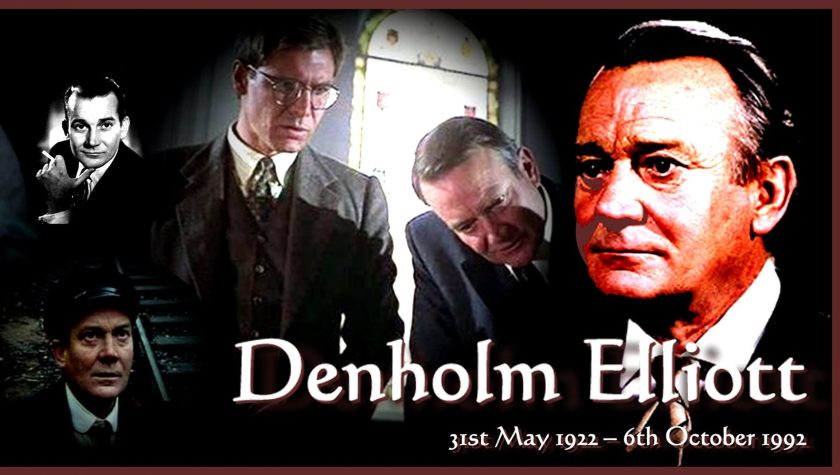
Denholm Elliott (31 May 1922 – 6 October 1992)
Today we are remembering Denholm Elliott, CBE on what would have been his 103rd birthday.
He was an English actor, with more than 125 film and television credits. His well-known roles include the abortionist in Alfie (1966), Marcus Brody in Raiders of the Lost Ark (1981) and Indiana Jones and the Last Crusade (1989), Coleman in Trading Places (1983), and Mr Emerson in A Room with a View (1985).
On TV he memorably portrayed the terrified title character in a Christmas 1976 adaptation of the Dickens ghost story The Signalman.
Secretly bisexual, Elliott was married twice: first to actress Virginia McKenna for a few months in 1954, and later, in an open marriage, to American actress Susan Robinson, with whom he had two children.
Pride in Ageing 2025
Since 2019, LGBT Foundation’s Pride in Ageing programme has been offering support and opportunities for members of the LGBTQ+ community aged 50+ in the North West of England. The success of this programme led to its expansion from Greater Manchester into Liverpool and Merseyside this year, with dedicated events to help older LGBTQ+ people connect, get involved in the community and shape the future of LGBTQ+ health and wellbeing provisions in the region.
2025 marks LGBT Foundation’s 50th Anniversary and the sixth consecutive year of Pride in Ageing, inviting reflection on the last 50 years of LGBT Foundation’s services, campaigns and advocacy to support LGBTQ+ people and highlight the issues they face throughout their lives. In this year’s video we hear from several of their volunteers about the impact of LGBT Foundation’s work and why Pride in Ageing continues to be one of their most valued programmes.
Throughout the year they are continuing to look back on this legacy – from conversations facilitated by 50th Anniversary Ambassador Dita Garbo (RuPaul’s Drag Race UK, Season 6) with their Pride in Ageing volunteers, to an exhibition at Manchester Central Library featuring materials from their archives, showing the scale of work they’ve contributed to since 1975.
Find out more about Pride in Ageing and their 50th Anniversary by visiting http://www.lgbt.foundation/prideinageing and http://www.lgbt.foundation/50years, and please consider donating today or leaving a gift in your will with their free will writing service to help them continue this groundbreaking work.
Here are some short articles about prominent LGBT+ people listed by birthday:
Annie Leibovitz
Anna-Lou Leibovitz born 2 October 1949 is an American portrait photographer best known for her portraits, particularly of celebrities, often feature subjects in intimate settings and poses. Leibovitz’s Polaroid photo of John Lennon and Yoko Ono, taken five hours before Lennon’s murder, is considered one of Rolling Stone magazine’s most famous cover photographs.
The Library of Congress declared her a Living Legend, and she is the first woman to have a feature exhibition at Washington’s National Portrait Gallery.
Leibovitz had a close relationship with writer and essayist Susan Sontag from 1989 until Sontag’s death in 2004. During Sontag’s lifetime, neither woman publicly disclosed whether the relationship was a platonic friendship or romantic. In 2006, Newsweek magazine made reference to Leibovitz’s decade-plus relationship with Sontag, stating, “The two first met in the late ’80s, when Leibovitz photographed her for a book jacket. They never lived together, though they each had an apartment within view of the other’s.” When Leibovitz was interviewed for her autobiography A Photographer’s Life: 1990–2005, she said that the book told a number of stories, and “with Susan, it was a love story.” While The New York Times in 2009 referred to Sontag as Leibovitz’s “companion”, Leibovitz wrote in A Photographer’s Life: “words like ‘companion’ and ‘partner’ were not in our vocabulary. We were two people who helped each other through our lives. The closest word is still ‘friend’.” That same year, Leibovitz said the descriptor “lover” was accurate. She later reiterated: “Call us ‘lovers’. I like ‘lovers.’ You know, ‘lovers’ sounds romantic. I mean, I want to be perfectly clear. I love Susan.”
Gore Vidal in 1948
Gore Vidal
Eugene Louis Vidal, (3 October 1925 – 31 July 2012) was an American writer and public intellectual known for his acerbic epigrammatic wit. His novels and essays interrogated the social and sexual norms he perceived as driving American life. Vidal was heavily involved in politics, and unsuccessfully sought office twice as a Democratic Party candidate, first in 1960 to the United States House of Representatives (for New York), and later in 1982 to the United States Senate (for California).
As a novelist, Vidal explored the nature of corruption in public and private life. His novel, The City and the Pillar (1948), about a dispassionately presented male homosexual relationship, offended conservative book reviewers’ literary, political and moral sensibilities.
In the satirical novel Myra Breckinridge (1968), Gore Vidal explores the mutability of gender roles and sexual orientation as social constructs established by social mores. Vidal often repudiated the label “gay”, maintaining that it referred to sexual acts, not innate sexuality. He described his style as “knowing who you are, what you want to say, and not giving a damn.”
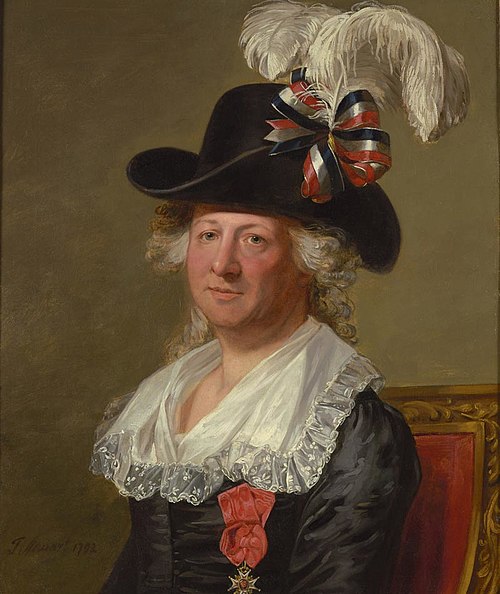
Chevalier d’Éon
Charles d’Éon de Beaumont (5 October 1728 – 21 May 1810), usually known as the Chevalier d’Éon, was a French diplomat, spy, freemason and soldier. D’Éon fought in the Seven Years’ War, and spied for France while in Russia and England.
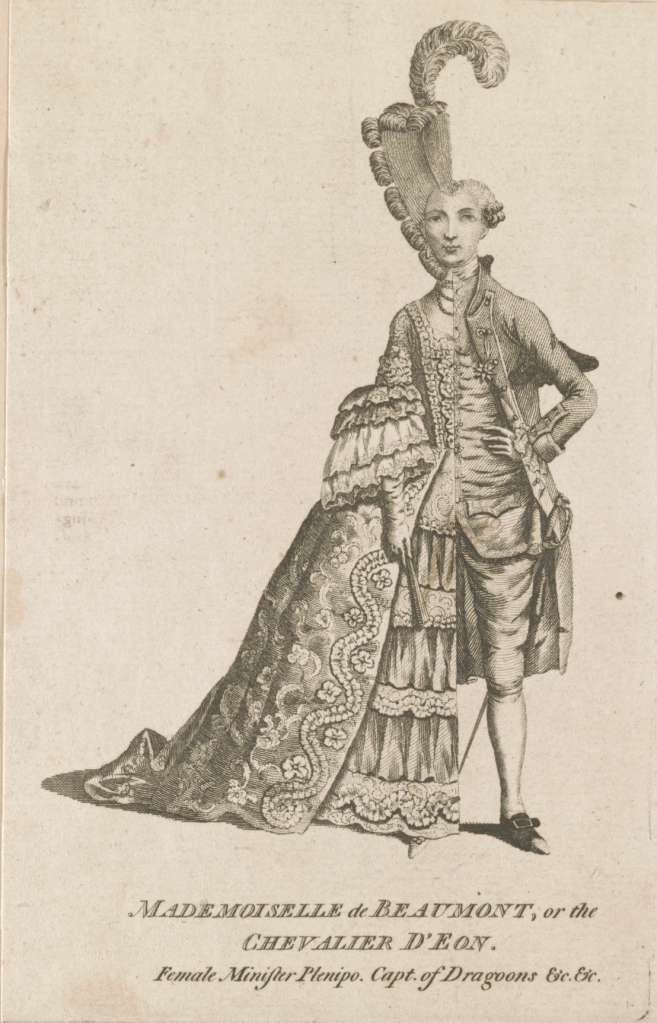
D’Éon had androgynous physical characteristics and natural abilities as a mimic and a spy. D’Éon appeared publicly as a man and pursued masculine occupations for 49 years, although during that time, d’Éon successfully infiltrated the court of Empress Elizabeth of Russia by presenting as a woman. Starting in 1777, d’Éon lived as a woman and was officially recognised as a woman by King Louis XVI.
Caricature of d’Éon dressed half in women’s clothes, half in men’s clothes
This year’s theme is “Building Belonging: Celebrating the power of our social connections”.
Each year on 1 October, people across the world mark United Nation’s International Day of Older People to raise awareness of opportunities and challenges faced by ageing populations, and to mobilise the wider community to address difficulties faced by older people.
Communities and organisations are welcome to mark the day in a way that’s right for them – it could be bringing people together through food and fun, to hear how your place might take action to be a better place to age.
However you choose to mark International Day of Older People this year, your activities will be helping to change the narrative on ageing, and get more people talking about the changes needed, so that everyone can enjoy a good later life, now and in the future.
These celebrities came out publicly after 60
Take inspiration from these eleven brave men and women who came out later in life.
It’s never too late to come out. You can do it at any age.
That’s the message from this group of celebrities, newsmakers and one music executive, who shared their true selves with the public in the seventh, eighth, ninth – and even tenth! – decades of their lives. Whether you’re out and proud or curious and questioning, take inspiration from these brave men and women who came out later than most.
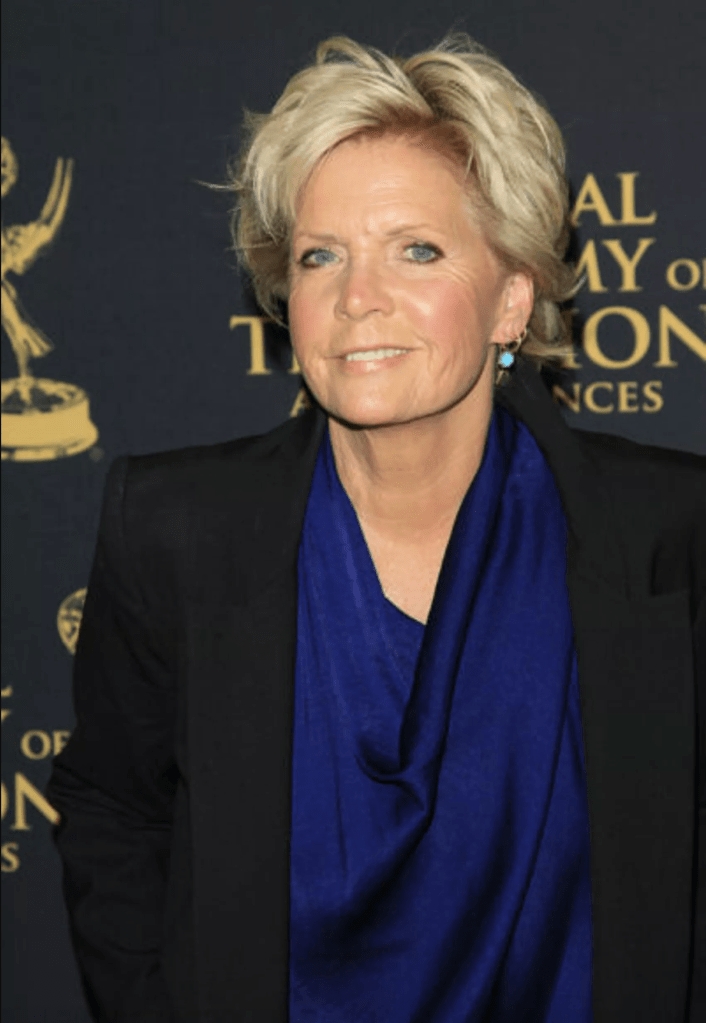
Meredith Baxter, 78
Age she came out: 61
Where she came out: On The Today Show, in the Advocate and People magazine
When the thrice-married and three-time Emmy nominee and mom from Family Ties learned the tabloids got hold of a lesbian cruise story about her, Baxter took matters into her own hands. “I didn’t want some tabloid to take the story and make it up,” Baxter said during an interview on the Today Show. “I wanted it to be in my own words.”
Two years later, she told Oprah: “After coming out on national television, I felt unburdened and that’s the way I feel now,” she says. “I don’t have anything I’m trying to hide.”
Victor Garber, 76
Age he came out: 63
Where he came out: In a TV Critics Association press tour interview
You know him as the man who designed the Titanic and went down with the ship, and from dozens of roles in movies and on TV. Less known in 2013 was Garber’s sexual identity, publicly revealed when the blog Greg in Hollywood asked if a Wiki entry on Garber’s page about his “partner” was “something that’s public, that you’ve confirmed.”
Garber was surprised but answered: “I don’t really talk about it, but everybody knows.” And he was out.
Garber and Rainer Andreesen married in 2015.
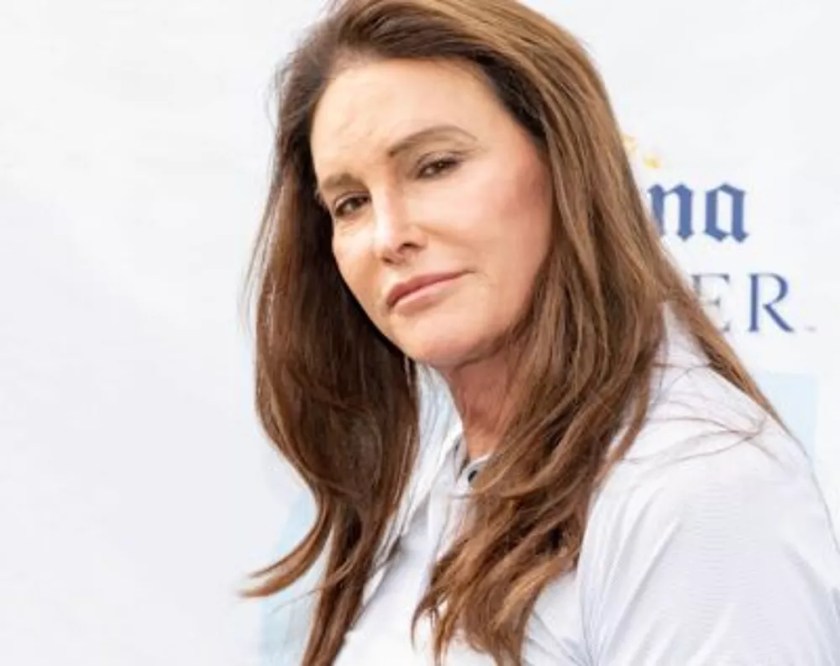
Caitlyn Jenner, 75
Age she came out: 65
Where she came out: During a television interview with ABC’s Diane Sawyer
“I’ve been thinking about this day forever,” the one-time Olympian and Kardashian dad said to Sawyer at the start of their interview. “My brain is much more female than it is male,” the 65-year-old explained.
“I’m not gay. I’ve never been with a guy,” Jenner added, before identifying as asexual. “For all intents and purposes, I am a woman.”
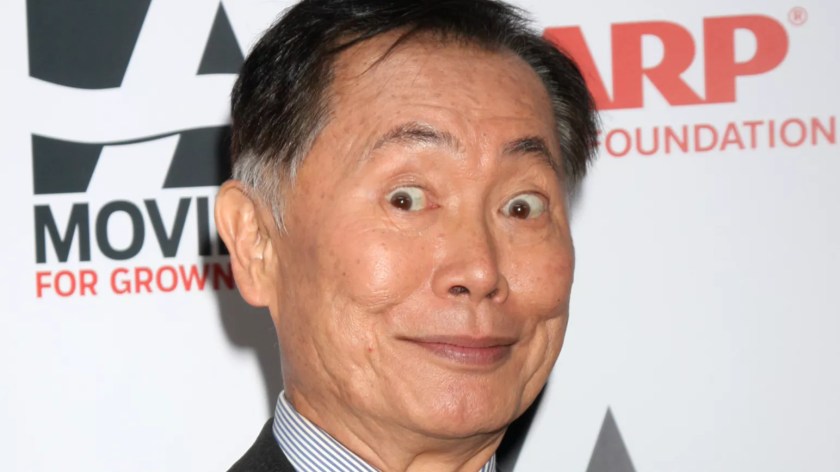
George Takei, 88
Age he came out: 68
Where he came out: In an interview with Frontiers magazine
Asked by the now-defunct magazine why he decided to come out at that moment, Star Trek’s Mr. Sulu responded: “I think it was more the political climate. Society has been changing. Today gay teens are now feature stories in Time Magazine – that generation thinks being gay is just a part of society. The world has changed dramatically.”
In a recent interview, Takei says he was also prompted by California Governor Arnold Schwarzenegger’s rejection of a bill to legalize same-sex marriage in the state. “I was so angry that I spoke to the press for the first time as a gay man at the age of 68.”
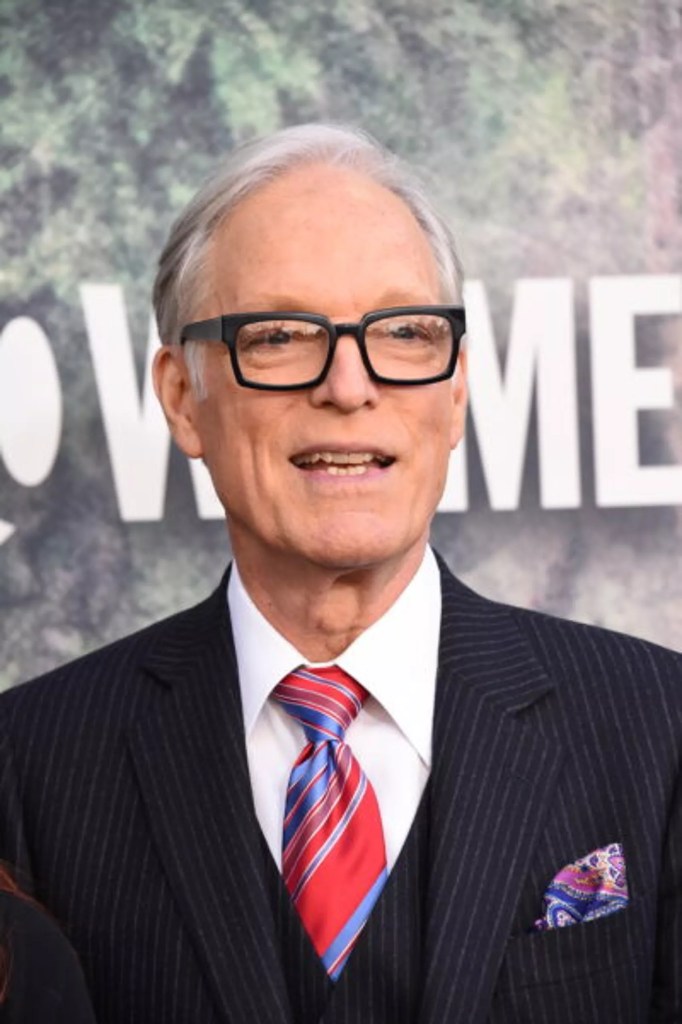
Richard Chamberlain, 90 (died 29 March 2025)
Age he came out: 69
Where he came out: In his autobiography
In Shattered Love: A Memoir, The Thornbirds actor and Dr. Kildaire heartthrob said he hid his sexuality to protect his privacy and career, but while he was writing the memoir, it “was as if an angel came in and put his or her hand on my head and said, ‘Richard, you’ve been barking up the wrong tree here. All your self-dislike of having grown up during the 1930s, ’40s and ’50s, that was when being gay was totally verboten.’ Suddenly, deep, deep within my bones, I realised that I had been lying to myself, like society had been lying to me, and that there was nothing wrong at all, nothing wrong with me.”
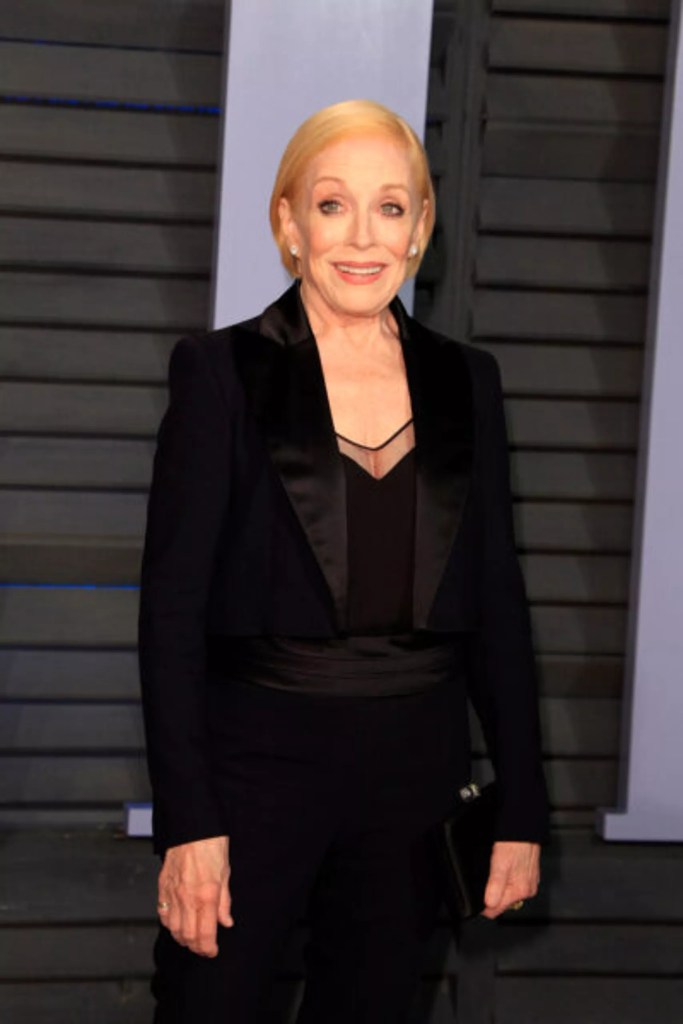
Holland Taylor, 82
Age she came out: 72
Where she came out: An interview on WNYC radio in New York, In the interview, the Two and a Half Men star wanted to avoid labeling the conversation a “coming out.”
“‘So have you come out?’” Taylor asked rhetorically. “No, I haven’t come out, because I am out. I live out.” Taylor did reveal she was in a relationship with a much younger woman, whom she didn’t name but the world would later learn is actor Sarah Paulson, 32 years her junior.
“There’s a very big age difference between us, which I’m sure shocks a lot of people, and it startles me,” Taylor said. “But, as they say, ‘If she dies, she dies.’”
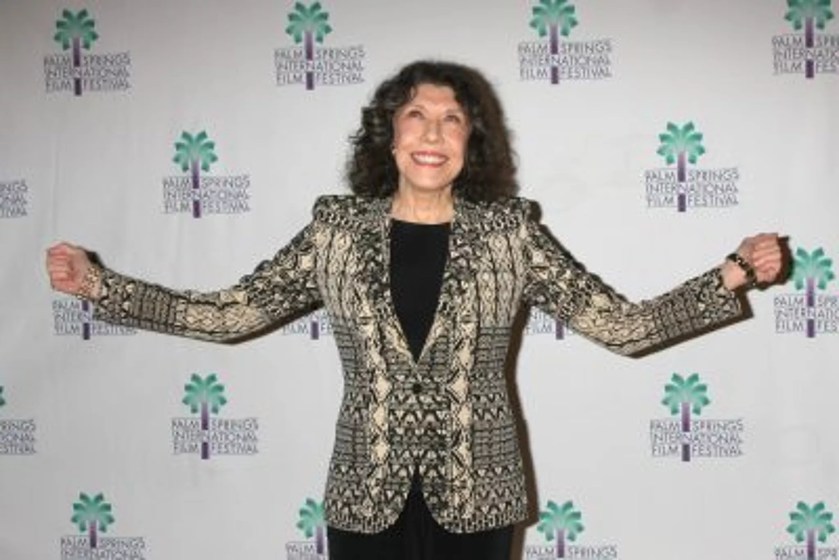
Lily Tomlin, 86
Age she came out: 73
Where she came out: In People magazine
Tomlin refused to buy into the orthodoxy of “coming out” for years, plus, she says, “My mother would have died. Literally.” So the Grace and Frankie co-star waited until 2013 to officially tie the knot with her longtime partner Jane Wagner at a courthouse in the San Fernando Valley, followed by an intimate ceremony with friends a few days later.
Of her mother, who died in 2010, Tomlin told the Telegraph: “Bless her heart, she was Southern, basically fundamentalist, but she was very witty and sweet and kind, and she adored Jane.”
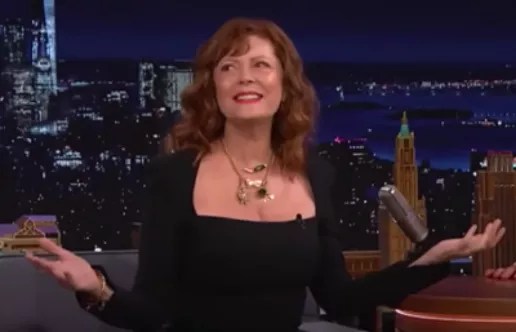
Susan Sarandon, 78
Age she came out: 75
Where she came out: The Tonight Show Starring Jimmy Fallon
Forever young Sarandon’s admission in 2017 that she is “open” was followed in December 2022 to Jimmy Fallon: “I’m bi, so…”
The blurt came with a side-eye to the audience and a not-so fresh joke
from Fallon: “You mean you like dogs and cats,” to which Sarandon replied, “I’m fluid. I’m very fluid, where animals are concerned.”
The gag preceded the premiere of Sarandon’s latest role in NBC’s Monarch, so the moment was likely far from spontaneous, but the cat, as they say, was out of the bag.
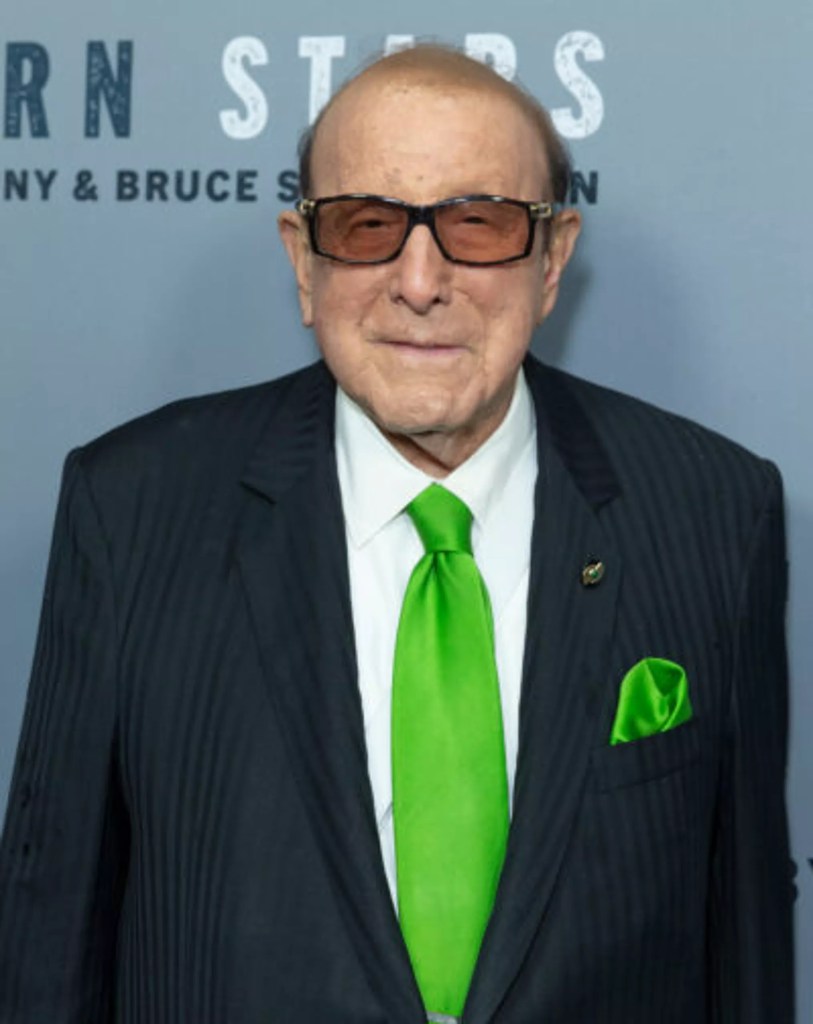
Clive Davis, 93
Age he came out: 80
Where he came out: In his autobiography
In legendary record executive Davis’s memoir, The Soundtrack of My Life, the producer for Whitney Houston and Billy Joel, among countless others, revealed his “bisexual life” for the first time. His first sexual encounter with a man went down during “the era of Studio 54.”
“On this night, after imbibing enough alcohol, I was open to responding to his sexual overtures,” writes Davis, who describes the same-sex encounter as “welcome relief.”
He is divorced and has had multiple relationships with both sexes.
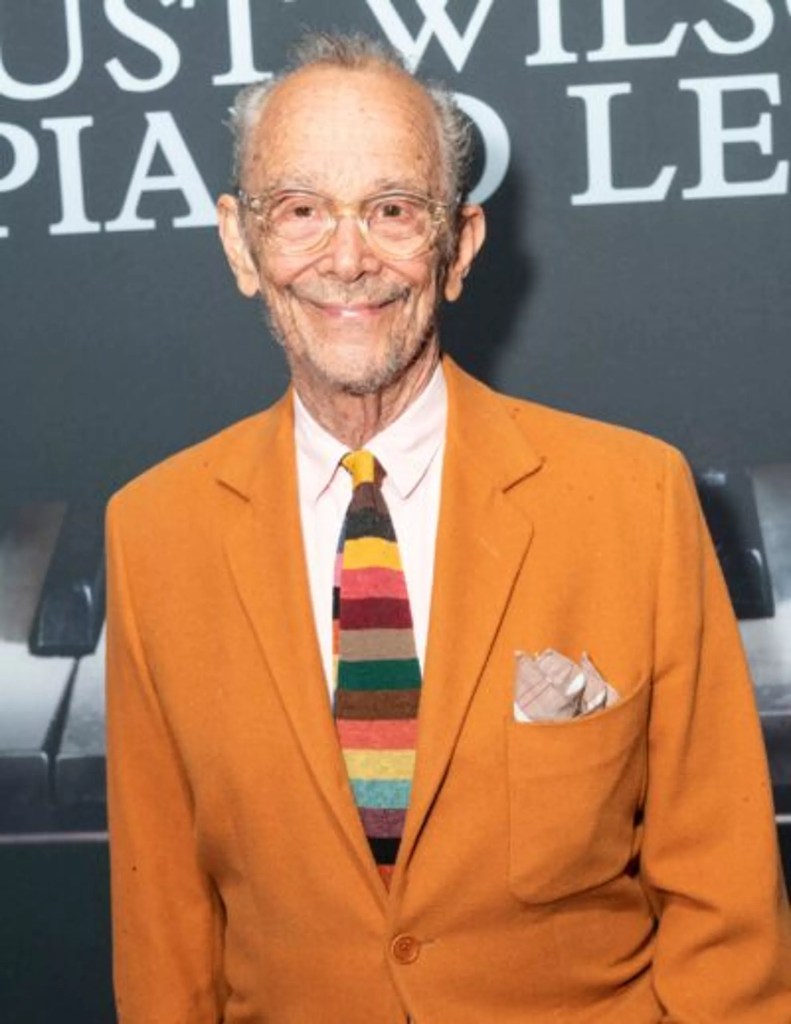
Joel Grey, 93
Age he came out: 83
Where he came out: People magazine
Broadway and Cabaret legend Grey fathered two children, including actress Jennifer Grey, but had known and acted on his attraction to men since he was young. But like many in his generation, Grey doesn’t “like labels.”
“But if you have to put a label on it, I’m a gay man,” he admitted.
The fact wasn’t a secret to family and friends: “All the people close to me have known for years who I am,” Grey told People, yet “it took time to embrace that other part of who I always was.”
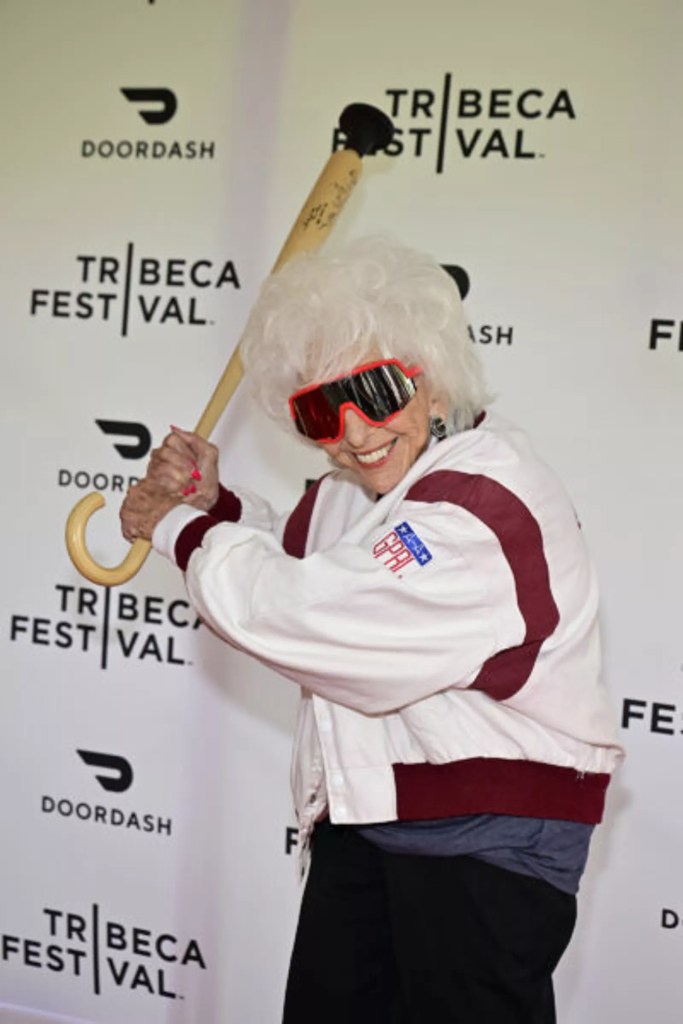
Maybelle Blair, 98
Age she came out: 95
Where she came out: The Tribeca Festival in New York
The woman who inspired Madonna’s character in Penny Marshall’s 1992 hit A League of Their Own took the opportunity to reveal her sexual identity at the premiere of the TV version of the story.
The real-life “All The Way Mae” said, “I hid for 75, 85 years, and this is basically the first time I’ve ever come out.” She added: “In our day, you wouldn’t dare tell your family or hint to anybody that you were gay. It was the most terrible thing in the world.”
But the All-American Girls League changed her life, said Blair. “I went back to Chicago, and I got on the team, and I’ll tell ya, it was the most amazing time of my life, because they asked me to go out to a bar,” she recalled with apparent glee. “Well, it turned out to be a gay bar, and I was never so happy in my life.”
We have received the following message:
“I’m reaching out on behalf of The Dyke Agenda, a non-profit, queer collective.
We are a group of queer women, non-binary and trans folk who want to help keep our crucial queer spaces open in Manchester. Our goal is to run pop up events tailored to our beautiful community, who we know are hungry for safe spaces.
We are also really interested in documenting the current happenings of and history of queer spaces within Manchester. Our plan is to conduct interviews with those involved in Manchester’s current and past queer community, events, and venues. We would love to interview a member/s, who identify as queer women, non-binary and/or trans. The interview would be shared on our social media accounts.
Please let me know if this is something you would be interested in.”
If interested, please contact us and we will forward your message.
Afternoon Cream Tea at Rochdale Town Hall: A Delightful Experience
Nestled within the stunning Gothic architecture of Rochdale Town Hall, the afternoon cream tea experience at The Martlet Kitchen is a delightful treat for the senses. The grandeur of the Grade 1 listed building, with its ornate carvings and sweeping staircases, sets the perfect backdrop for a leisurely afternoon.
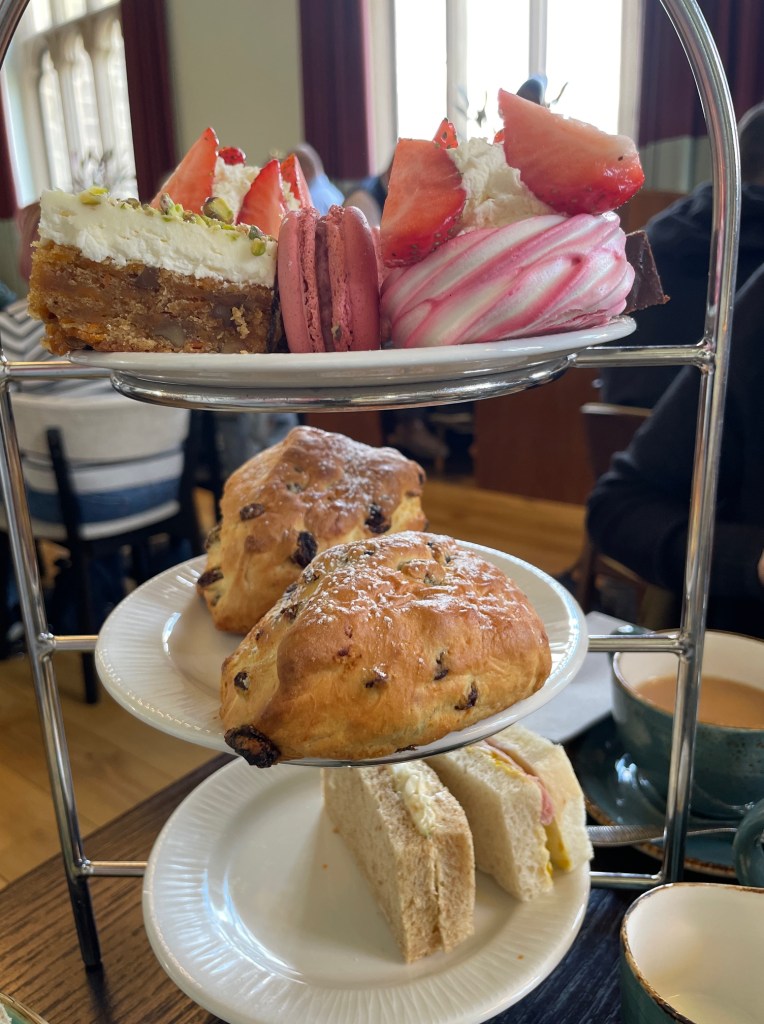
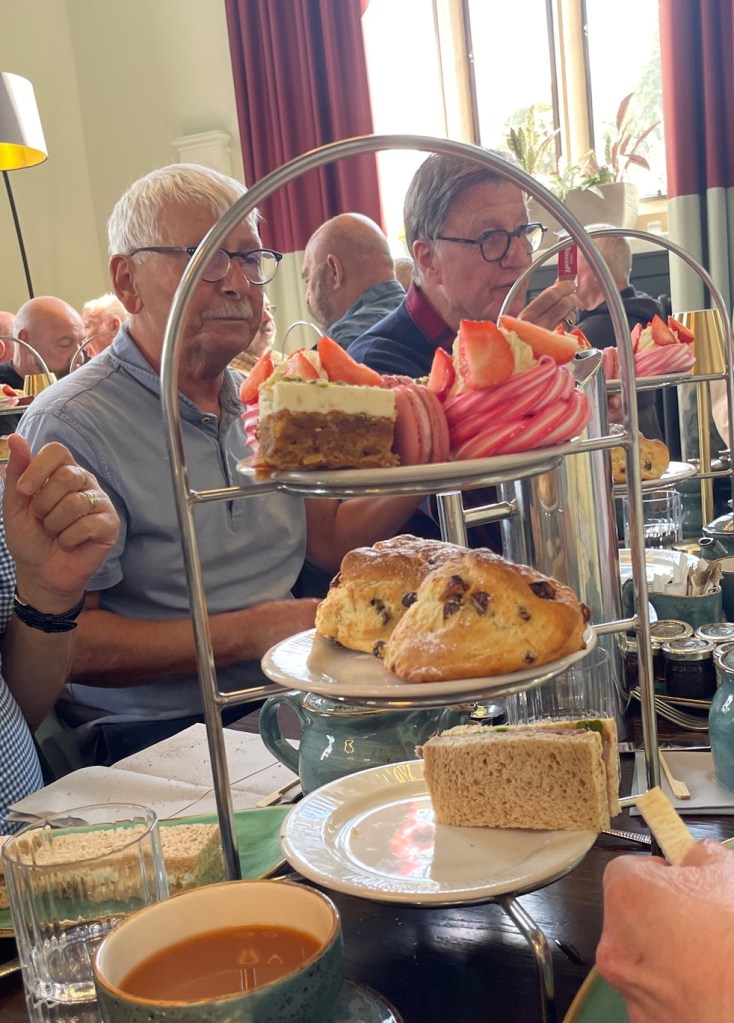
We started with a small bowl of tomato soup, accompanied by a samosa and onion bhaji. The afternoon tea menu offers a selection of traditional finger sandwiches, including egg mayo and watercress, local honey roast ham and pickle and cream cheese and chive. Each sandwich is crafted with care, providing a delightful balance of flavours.
The highlight of the tea experience is undoubtedly the freshly baked fruit scones, served with seasonal fruit jam and clotted cream. The scones are light and fluffy, making them the perfect accompaniment to the rich and creamy clotted cream.
For those with a sweet tooth, the selection of desserts is sure to impress. The carrot cake and chocolate cake are standouts, offering a delightful combination of sweetness and texture. The macaroons with vanilla butter cream are equally delightful, providing a perfect ending to the meal.
The service at The Martlet Kitchen is attentive and friendly, ensuring that guests feel welcome and well-cared for. The staff are happy to accommodate dietary requirements, making the experience enjoyable for everyone.
Overall, the afternoon cream tea at Rochdale Town Hall is a wonderful way to spend an afternoon. The combination of delicious food, beautiful surroundings, and excellent service makes it a must-visit for anyone in the area.
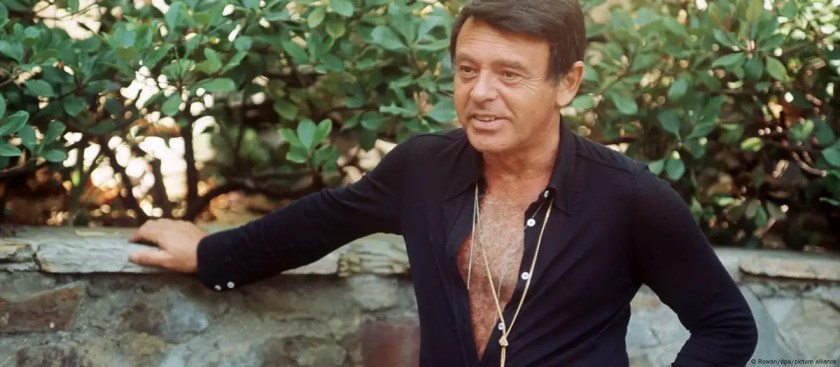
The first leaves are falling and autumn is coming, so it must be time for an article on those two narrow straps that sit just above the hipbone, their edges cutting into sun-tanned flesh: the thong.
The Austrian-born designer Rudi Gernreich invented the thong in 1974 Image: Rowan / dpa / picture alliance
These days, thanks to the revival of fashion from the 2000s, it seems to be everywhere: sticking out of low-rise jeans, shimmering underneath transparent beach dresses or revealing derrieres on the beach.
But what many people might not know about the thong bathing suit is that its creation was political – and its creator a gay man.
Austrian-born designer Rudi Gernreich poses with two models presenting his creations Image: United Archives International / IMAGO
July 1974: Los Angeles’ last summer of nude bathing
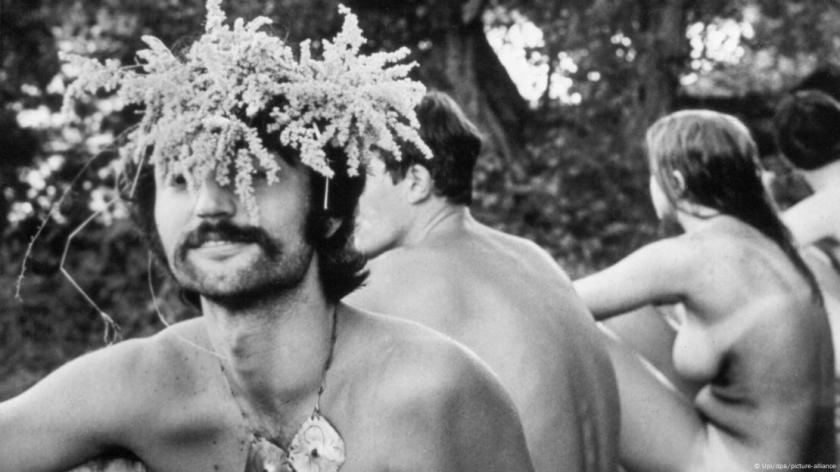
“Everyone was nude,” a lifeguard recalls in the newspaper LA Times. In the summer of 1974, Venice Beach became a sea of bare bottoms. Nobody knows exactly how the famous beach in Los Angeles became a popular location for naturists, but hippies readily popularised the nudist craze, taking advantage of the fact that there was no explicit ban on nudity yet.
But the naked summer dream didn’t last long: First came the press, then the police. After nudity made headlines, Los Angeles promptly banned it altogether.
Hippies famously embraced nudity, like here at the 1969 Woodstock Festival Image: Upi / dpa / picture-alliance
What does this have to do with the thong?
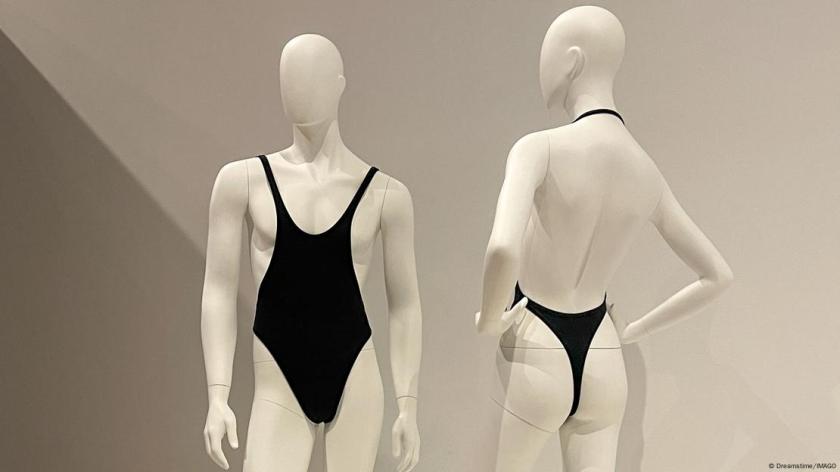
Rudi Gernreich, an Austrian-born designer who lived in LA, rebelled against the ban by creating a tiny piece of fabric for all genders that covered only the bare minimum.
The designer was not interested in sexualising bodies. On the contrary: He wanted to set them free.
“The liberation of the body will cure society of its sexual hang-up,” Gernreich once said.
It wasn’t the first time he broke taboos with fashion.
The back of a Rudi Gernreich design featuring what we know as a thong Image: Rudi Gernreich
Gernreich was born into a Jewish family in Vienna on 8 August 1922. He was 16 years old when he fled the Nazis with his mother in 1938, and they settled in Los Angeles. His father had taken his own life shortly before. To survive, his mother sold baked goods door-to-door and young Rudi washed corpses that were to be autopsied.
“I do smile sometimes when people tell me my clothes are so body-conscious I must have studied anatomy. You bet I studied anatomy,” Gernreich said, referring to this job, in an essay in Moffitt and Claxton’s “The Rudi Gernreich Book.”
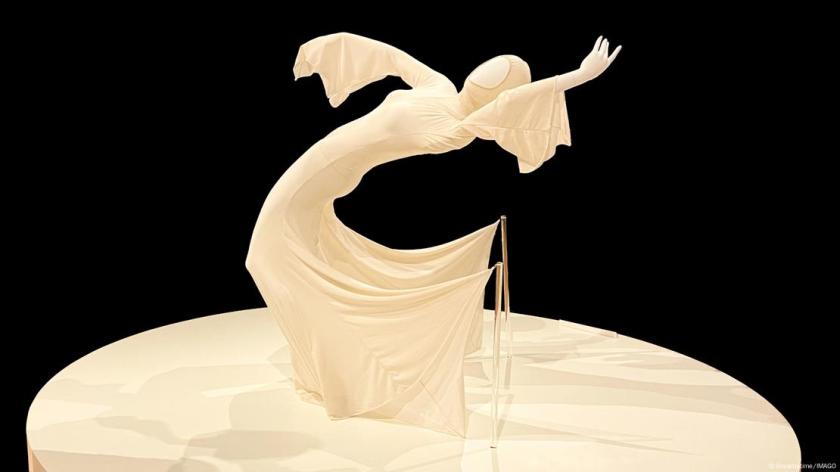
His actual studies, however, were in art; he went on to work as a costume designer and a dancer. His designs often show his fascination with bodies in movement.
Gernreich’s creations were often inspired by dance moves Image: Dreamstime / IMAGO
‘Winter or summer, male or female, everybody will dress alike’
Gernreich was ahead of his time. While homosexuality was still a criminal offence in the US, he co-founded the Mattachine Society, one of the first organisations for LGBT+ rights in the US.
For Gernreich, the future of fashion was unisex, and he promoted queer styles long before they became an established concept.
“Clothing will not be identified as either male or female … women and men will wear skirts interchangeably … the aesthetics of fashion are going to involve the body itself,” he predicted back in the 1970s.
Gernreich’s designs were intended for all genders Image: Dreamstime / IMAGO
Gernreich freed the nipple
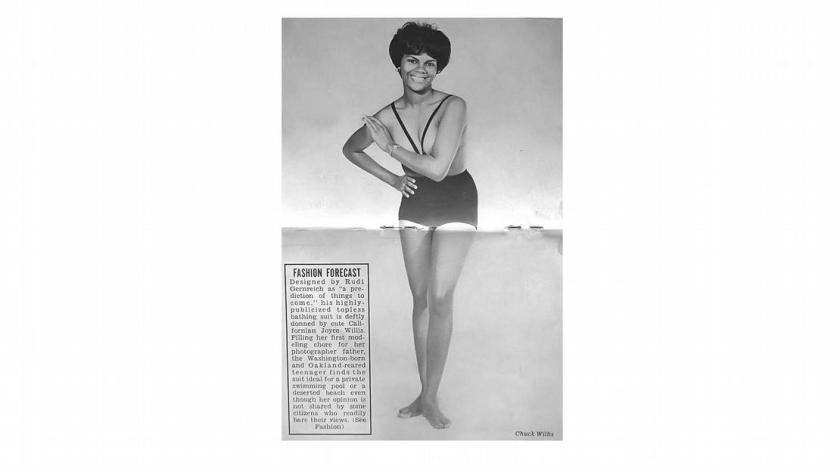
In 1964, Gernreich presented a design that went down in history as women’s first topless swimsuit: the monokini. The provocative piece, which covered the bottom up to the midriff, featured two straps that left the breasts completely exposed.
Model Joyce Willis wears Gernreich’s monokini in 1964
Gernreich believed that women should be allowed to show their nipples just as men do, and above all, that they should be the ones calling the shots when it comes to their clothing.
“I don’t like to dictate women what to wear,” he said in an interview in 1966.
The designer, who died in 1985, remains a pioneer of body positivity, and his legacy marks how little has changed surrounding prudery – as today Instagram censors images of female nipples, and society still sexualises nudity.
Detention
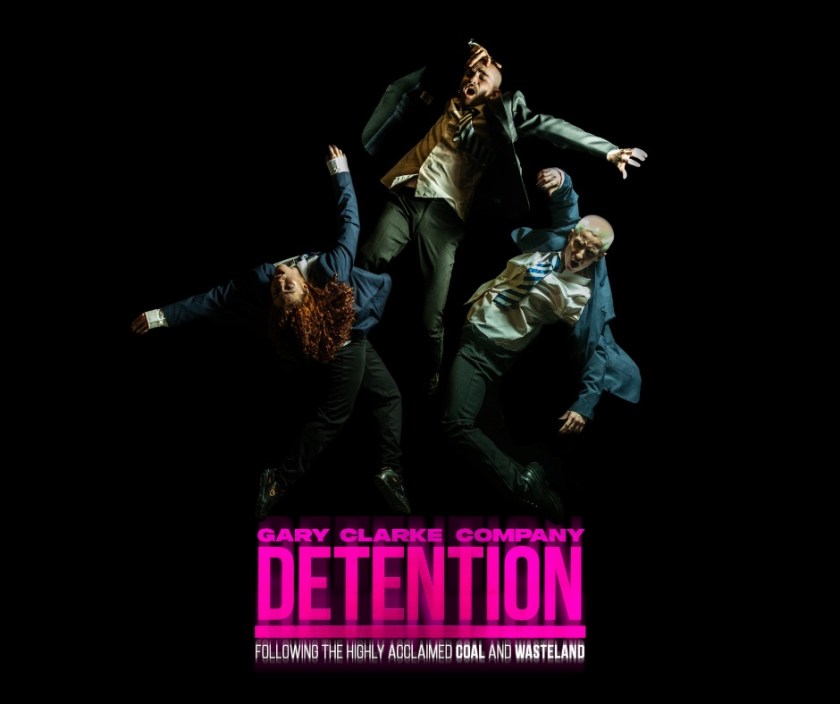
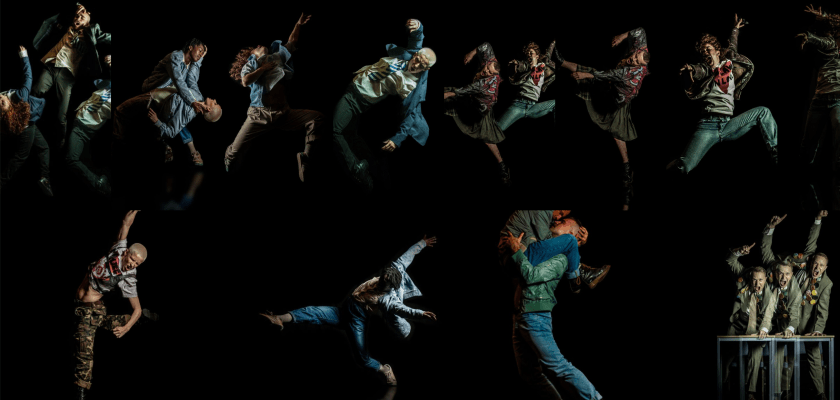
One of our members will be performing in Gary Clarke Company’s DETENTION on Wednesday, 8 and Thursday, 9 October at Blackpool’s Grand Theatre at 7.30pm.
DETENTION explores the impact of Section 28 – a piece of largely hidden legislation from Thatcher’s Conservative Government which “prohibited the promotion of homosexuality”.
As part of the community cast, she will be performing alongside the professional cast and other local participants to explore the effects of this legislation through movement and dance.
DETENTION is a bold and moving exploration of the violence, loneliness, protests, debates, unlikely allies and the remarkable individuals / organisations of the time amidst the political and social upheaval.
If you would like to come and show some support, you can book your tickets here from £15.00.
Hope to see you there!
Timeline of same-sex marriage in Europe
Year in which same-sex couples are allowed to marry
The Netherlands introduced same-sex marriage 16 years before Germany and 24 years before Liechtenstein.
Play the Rainbow Lottery and support Out In The City
The UK’s first and only lottery supporting LGBTQ+ good causes.
Welcome to the Rainbow Lottery, the exciting weekly lottery that raises money for the full spectrum of LGBTQ+ good causes totally, openly and exclusively.
The hope is to make a difference to good causes so they can carry on their vital work – which helps us all. Play the lottery, support the community – it’s fun, it’s simple and everybody wins!
How the lottery works:
£1 per ticket – that’s right, unlike many other lotteries, the lottery tickets are only £1 per week.
For every ticket you play, 80% goes to good causes and prizes.
£25,000 jackpot prize
Match all 6 numbers and you win the JACKPOT!
Every month there is a Super Draw. On Saturday, 27 September one person will win a £1,000 Aldi gift card (or £1,000 cash or plant 1,000 trees!)
We’re delighted to advise that The Bridgewater Hall has again offered us FREE tickets to various performances from the International Concert Series, BBC Philharmonic and The Hallé.
We really appreciate the support of Bridgewater Hall. Last season 67 different people enjoyed 35 concerts.
Last Saturday, despite a bus strike and atrocious weather, eleven of us made our way to the Bridgewater Hall to see the BBC Philharmonic Orchestra. The concert was recorded by BBC Radio 3 for broadcast in Radio 3 in Concert on Tuesday, 28 October at 7.30pm.
The performance was the season opener and included a pre-concert performance of Julia Wolfe’s LAD – nine bagpipers playing drones. She is the Composer in Residence this season.
The concert proper opened with Julia Wolfe’s Fountain of Youth.
Augustin Hadelich brought his incredible artistry to one of Sergey Prokofiev’s most celebrated works – Violin Concerto No 2. The first piece brought blocks of orchestral sound, whereas this work was more precisely expressive with ravishing melodies.
After an interval, the concert ended with Pyotr Tchaikovsky’s Fifth Symphony with huge emotions and passionate melodies painted on an epic musical canvas, which could only have been written by a gay man.
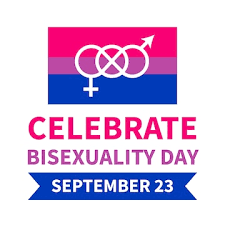
International Celebrate Bisexuality Day
International Celebrate Bisexuality Day is on Tuesday, 23 September 2025.
Also known as Bi-Visibility Day, it is a global annual event celebrated on this date since 1999 to recognise bisexual people, their community and the history of bisexuality.
The day serves as a grand finale to Bisexual Awareness Week, which runs from 16 to 23 September.
While records have shown that several cultures throughout history openly embraced bisexuality, in recent years the LGBT community and especially the bisexual community has been marginalised.
What it is:
A day for celebrating bisexuality and promoting cultural acceptance of the bisexual community.
A day to advocate for bisexual rights and raise awareness about unique challenges, such as biphobia and bisexual erasure.
Key aspects of the day:
Visibility:
It increases the visibility of bisexual individuals and the broader bisexual+ community.
Community:
It creates platforms for bisexual people to connect with others and build community.
History:
It highlights the history of the bisexual rights movement and the journey towards greater acceptance.
Other Names and Languages:
English
International Celebrate Bisexuality Day
Arabic
يوم ثنائية الجنس الدولية
German
Welttag der Bisexualität
Hebrew
ום ביסקסואליות הבינלאומי
Korean
국제 양성애 일
Norwegian
Verdensdagen for biseksualitet
Spanish
Día Internacional de la Bisexualidad
Your Story Matters – Take Part in This Research
Cesar Augusto Kampff, a psychologist and PhD candidate in the Graduate Programme in Cultural Diversity and Social Inclusion at Universidade Feevale, Brazil is conducting groundbreaking research in Brazil, Portugal, and the United Kingdom.
The study is on the psychological aspects involved in the processes of recognising and sharing one’s sexual orientation (coming out) among cisgender lesbians and gay men aged 50 and over.
He is kindly requesting your participation in this research, which is essential to better understand the experiences of the mature lesbian and gay population, give visibility to these life stories, and build knowledge that helps combat violence, prejudice and discrimination.
Research like this is only possible with the support and voices of those who have lived and continue to live these experiences. Your contribution will help strengthen public policies, support practices and initiatives that promote respect for diversity.
The interview can be conducted via a questionnaire, which can be sent by e-mail so you may answer it at your own pace.
Thank you in advance for your trust and for sharing your story.
To participate or learn more, please email cesarkampff@gmail.com


















 Out in the City