LGBT+ History Month … Iris Prize LGBTQ+ Film Festival … Queer Contact Festival … Party in Cross Street Chapel … Local Heroes … Manchester Village Pride … Birthdays

News

LGBT History Month

Science and innovation impacts our daily lives, from the technology we use to developments in healthcare, as well as helping us to address global challenges such as climate change and access to clean energy.

Diverse teams are essential for the development of solutions which benefit everyone, yet we might often struggle to name LGBT+ scientists and innovators. The 2026 theme for LGBT+ History Month aims to highlight the contributions of LGBT+ people historically and today, and to raise awareness of the people behind them. 

Alongside celebrating LGBT+ people, it is important to highlight the harm that LGBT+ people have historically faced as a result of the ways in which science has been explored and misapplied in the past, such as through the medicalisation and pathologisation of LGBT+ identities, and how we still need to address this today. 

Iris Prize LGBTQ+ Film FestivalHOME, 2 Tony Wilson Place, Manchester M15 4FN

Wednesday, 11 February – Saturday, 14 February

Wednesday, 11 February – 6.30pm – Iris 2025: Best Bits + Q&A

Award winners, audience favourites and unforgettable stories

Thursday, 12 February – 6.00pm – Blue Boy Trial + Q&A

The ground-breaking true story of the moment that changed LGBTQ+ visibility in Japan

Saturday, 14 February – 3.30pm – When Love Broke the Law + Q&A

Celebrate desire, protest and the power of love this Valentine’s Day

Queer Contact Festival – Contact Theatre, Oxford Road, Manchester M15 6JA

Thursday, 12 February – Saturday, 21 February

The annual Queer Contact Festival is back with a bang with two weeks of varied and exciting programming from a diverse range of queer creatives. With theatre, cabaret, art, film, line-dancing and more, all available at a range of accessible prices, we think there’s something for everyone this year.

Main Character Energy (Thursday 12 – Friday 13 February)
A beautiful and supremely talented black actress is putting on an autobiographical one woman show to finally take up the space she’s been so routinely denied. It’s your privilege, your honour and your pre-eminent pleasure to give her all the attention she deserves. Tickets available from £10.

You’re Not Getting Any Younger (Saturday 14 February)
This Valentine’s Day, Chanukah Lewinsky thinks you should get out the house more because you’re running out of options. A cabaret night for single people and their allies, non-ethical non-monogamy (just have the affair!), and anxious bisexual window shopping. Tickets available from £5.

Social Experiment – Queer Contact Edition (Thursday 19 February)
Social Experiment is a gathering at Contact for anyone interested in Live Art and contemporary performance to meet, chat, and try ideas out. A free and informal, semi-regular evening event with the upcoming Queer Contact edition featuring work from Queer Artists. Free to attend.

Comedy at Queer Contact (Friday 20 February)
As part of this year’s Queer Contact, join us for a hilarious evening of stand-up comedy, featuring a line-up of all queer comics curated and hosted by Ben Hodge. Tickets available from £5.

Less Like Ourselves, More Like Each Other (Saturday 21 February)
Artist and filmmaker Graham Clayton-Chance presents Less Like Ourselves, More Like Each Other, a body of work rooted in queer country and western dancing in San Francisco spanning his multi-award-winning film Last Dance at the Sundance Stompede and immersive installation developed for Queer Contact. Tickets available from £3, some parts free to attend.

Manchester Queer Art Market (Saturday 21 February)
Manchester’s premiere monthly market for Queer artists and makers takes over the Contact Castle for the very first time! Free to attend from 1.00pm – 5.30pm.

A Northern Tr*nny Hootenanny (Saturday 21 February)
Join Trans Artist Hunter King in his gender journey of self-discovery in his uplifting queer parody musical, maid in the Wild, Wild, North West, A Northern Tr*nny Hootenanny. Tickets available from £10.

See the full schedule and buy tickets 

LGBT+ History Month Party in Cross Street Chapel

Thursday, 19 February – 2.00pm – 4.00pm – Free

featuring Joe Cockx (from the Golden Age Big Band) performing Dean Martin, Frank Sinatra and Andy Williams.

There will also be a raffle and buffet. 

RSVP for catering purposes here.

Local Heroes

Forever Manchester are bringing back their ‘Local Heroes’ series:

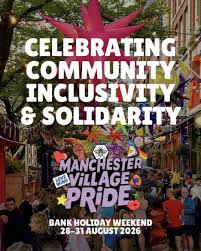
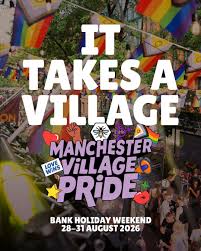
The Manchester Village Pride

Pride is coming back to Manchester this summer, and this time it is being rebuilt from the Village up.

A new not for profit Community Interest Company called Manchester Village Pride CIC has been set up to deliver the event, following the collapse of Manchester Pride Events Ltd last year. The aim is simple. Bring Pride home. Make it safe, inclusive and rooted in the community that created it.

The four day celebration will take place over the August Bank Holiday, from Friday 28 to Monday 31 August. Core parts of Pride will return, including the parade, the Village party and the vigil.

Manchester Village Pride has the backing of key partners including Manchester City Council, Marketing Manchester, CityCo and Equity, alongside LGBTQ+ organisations, charities and community groups.

Alongside the main programme in the Village, there will also be a Pride Fringe, made up of LGBTQ+ arts, culture and nightlife events across the city.

Local Village venues have already backed the plan with £120,000 in loans to provide the working capital needed to get things moving. It is a clear show of commitment from LGBTQ+ businesses to protect Pride and keep it community led.

The CIC is run by an unpaid board working on a voluntary basis. Any profit made will be reinvested back into the community, supporting LGBTQ+ charities, grassroots organisations and services.

The Council will also host engagement sessions with LGBTQ+ organisations to help shape the event, and a Community Advisory Board will be created through an open application process to ensure community voices are reflected in the planning.

Carl Austin-Behan, a founding board member and spokesperson for Manchester Village Pride CIC, said the focus for 2026 is about rebuilding trust, reconnecting with Pride’s origins and reinforcing the Village as the heart of the celebration. From 2027 onwards, there are plans to develop a wider citywide programme around Pride.

“Manchester Village Pride is built around a simple belief,” said Carl. “Pride has a home – and that home is the Village – but Pride belongs to everyone”. 

The Manchester Village Pride community interest company

Birthdays

Paradise Island Adventure Golf … Holocaust Memorial Day …

News

Paradise Island Adventure Golf

We travelled by tram to the Trafford Centre – a large indoor shopping centre and entertainment complex in Trafford Park. After lunch at The Mardi Gras, we walked to Paradise Island Adventure Golf – a mini golf in a tropical paradise. There are two amazing 18 hole courses.

Forget crazy golf – this is adventure golf!

Holocaust Memorial Day

On 27 January each year, people throughout the United Kingdom unite to reflect on the six million Jews who were murdered during the Holocaust, alongside the millions of people who lost their lives under Nazi persecution of other groups, as well as those in more recent genocides in Cambodia, Rwanda, Bosnia, and Darfur.

The theme for International Holocaust Memorial Day this year is ‘Bridging Generations’ – a reminder that the responsibility of remembrance doesn’t end with the survivors – it lives on through their children, their grandchildren and through all of us.

This theme encourages us all to engage actively with the past – to listen, to learn and to carry those lessons forward. By doing so, we build a bridge between memory and action, between history and hope for the future.

International Holocaust Memorial Day – commemorating the liberation of Auschwitz concentration camp – is for everyone. It brings people together from all walks of life to strengthen communities and stand up against hatred and discrimination.

“Lesbian Love”

America deported her for publishing a book titled “Lesbian Love”. Years later, she was murdered by the Nazis for being Jewish.

Eve Adams, an immigrant and the proprietor of a 1920s lesbian tearoom, was imprisoned for disorderly conduct and obscenity, then sent back to Europe, where she became a target of the Holocaust.

Pages from Eve Adams’ Polish passport Courtesy of Daniel Olstein

In the 1920s, lesbians in New York City flocked to 129 MacDougal Street, a tearoom in the heart of Greenwich Village, for conversation and camaraderie. This hangout – a relatively safe space at a time when sodomy laws criminalised same-sex activity nationwide – was run by a Jewish immigrant from Poland who went by the name Eve Adams. A bold and mysterious woman, Adams attracted the government’s unwelcome attention due to her unorthodox activities and forbidden book on lesbian love. She was under surveillance, then arrested, charged with disorderly conduct and obscenity and finally deported back to Europe.

Adams’ business – known mainly as Eve’s Hangout – but also referred to as Eve’s Tearoom and Eve & Ann’s – was a long time coming when it opened in 1924. It operated for just two years, but in that time, it made a crucial difference to the community. Being openly lesbian in the 1920s took significant courage, and Adams provided a great service by creating a cosy space for lesbians to congregate. Greenwich Village, with its population of free-spirited artists and bohemians, was the perfect setting for this venture.

There were places where you could sort of cocoon and assume everyone around you accepted you, and Greenwich Village was one of those places in the 1920s. People who came to Eve’s Tearoom knew what the place was, and they felt safe making a pass at a woman who came there.

A 1941 photo of Adams Courtesy of Eran Zahavy

Adams (centre) with her brother Yerachmiel (left) in 1925. Her sister Tobe is likely the individual on the right. Courtesy of Eran Zahavy

Born in 1891 as Chawa Zloczewer, Adams immigrated to the United States in 1912. Settling in New York City, she joined a group of anarchist organisers, speakers and writers. By 1919, she was working as a travelling saleswoman for radical publications. She caught the attention of the Bureau of Investigation, as the FBI was then known, which considered her an “agitator” and started watching her activities.

In early 1921, Adams moved to Chicago, where she co-managed a tearoom called the Gray Cottage – a refuge for leftist thinkers that also attracted lesbians – in the neighbourhood of Towertown, which was essentially the Illinois city’s version of Greenwich Village. Two years later, Adams returned to New York, where she opened Eve’s Hangout. The tearoom, operating during Prohibition, likely doubled as a speakeasy, and visitors probably brought flasks of illicit alcohol with them to use in mixed drinks.

Adams, who had many affairs with women, seemed to consider herself a member of the “third sex,” which was neither male nor female – similar to today’s nonbinary identity. Her adopted American name, “Eve Adams,” was a deliberate choice: It is a play on the biblical Adam and Eve, serving as a statement that she was simultaneously neither and both. (Adams also went by Eva Kotchever.)

Jonathan Ned Katz, author of “The Daring Life and Dangerous Times of Eve Adams”, calls his 2021 biography’s colourful subject “just one of those people.”

“She came to stand out and make this active life for herself,” Katz explains. “She found a way to make a living selling radical literature about the things that were wrong in the country.” At the same time, however, “she was really busy, working-class, and never made much money. She was always busy making a buck.”

129 MacDougal Street, the former site of Eve’s Hangout, is now home to an Italian restaurant (centre, with green overhang). Public domain via Wikimedia Commons

Katz is a Greenwich Village native who regularly dines at La Lanterna, an Italian restaurant in the mixed-use building that once housed Eve’s Hangout. The owner has named multiple drinks after Adams.

“It’s rather spooky downstairs,” Katz says. “I really can imagine Eve being here. It’s a dark, low ceiling.”

In 1925, Adams published a short book titled “Lesbian Love”, which was intended for private circulation and limited to a print run of just 150 copies.

The short text – reprinted in full in Katz’s book – documents the lives and loves of some two dozen lesbians, all of whom were based on real people Adams knew but identified in “Lesbian Love” only by pseudonyms. Characters included Jonnie, described as “tall, broad-shouldered” and oval-faced, wearing “strictly tailored clothes,” and Ann, a West Coast woman with “striking yellow curls” and a deep voice. “Ann is the magnet, the fire, and wherever she appears, she always leaves behind some victim,” Adams wrote. “She is like a butterfly and is only attracted to virgins.” Then there was Sara, “just a slip of a girl; Ann’s first love here.” Sara experienced terrible anxiety over losing Ann, who had a love-them-and-leave-them reputation, to one of her “many rivals.”

In the appendix, called “How I Found Myself,” the book’s unnamed narrator – likely a stand-in for Adams herself – describes her sexual awakening at age 19, when she was living in a rural colony of artists. She met a beautiful older woman, about 30 years old, who invited her to sit on her lap. Tired of men and feeling like something was missing, the narrator, who had dreamed for a long time of experiencing a woman’s loving caress, spent the night with the stranger.

“All that I know is that it was one of the greatest and most significant events of my life, which will never be forgotten, and that the memories are always just beautiful,” Adams wrote.

Katz emphasizes Adams’ courage in publishing “Lesbian Love”. “She was speaking the word out loud, ‘lesbian,’ which had such a negative connotation at the time,” he says. “It was so heroic of her to put together these stories. It’s different types of women: some sort of funny, some dominating. She was seeming to make the point that lesbians are just as crazy as everyone else. It was so unusual for this time.” The book wasn’t “professionally written,” Katz adds. “It’s an amateurish view of women she knew.”

In his biography, Katz details the stories of many of Adams’ known romantic companions, combining these accounts with fragmentary records of her life. A key question posed in the book is why Adams failed to obtain US citizenship despite stating her intent to do so in 1923. This status would have made it harder for authorities to kick her out of the country; Adams’ decision not to follow through ended up costing her her life.

In 1926, Adams was arrested and jailed for publishing “Lesbian Love”, which was considered “obscene” in the eyes of the law. She was also found guilty of disorderly conduct for supposedly trying to seduce an undercover policewoman named Margaret Leonard, who’d been assigned to entrap her. On top of her one-year sentence on obscenity charges, Adams was sentenced to six months at a women’s penitentiary – a pair of punishments that allowed authorities to start considering whether to ship her back to Poland upon her release from prison.

At a November 1926 deportation hearing, Adams argued that she hadn’t done anything wrong. “I can’t see why I should be singled out and sentenced to imprisonment for writing my book, which was only meant to show the humorous side of life, the serious side of life and tragedy, all in one,” Adams testified.

A 1934 photo of Adams – Courtesy of the Ghetto Fighters House Archives

Despite Adams’ protests and pleas to remain in the US and seek citizenship, she was deported back to Europe in December 1927. After that, she spent more than a decade rebuilding her life – but the rise of Adolf Hitler and the Nazis cast an ominous shadow on life in Europe, especially for Jews.

While working as a journalist in Paris in 1933, Adams met Hella Olstein, a Jewish singer who performed at cabarets. The two women soon moved in together, residing in the same home for the next ten years. Although the stated nature of their relationship wasn’t entirely clear – at some point, Olstein married a man and became Hella Olstein Soldner, yet Adams continued to live with the couple – the two women appeared to be more than friends. Perhaps Hella was bisexual.

After the outbreak of World War II in 1939, Adams and Olstein evaded arrest by the Nazis, even as the collaborationist Vichy regime started ramping up mass deportations of “foreign and stateless” Jews in 1942. (The Nazis also targeted lesbians with harassment and sent thousands of gay men to concentration camps). But this reprieve didn’t last: On 7 December 1943 – exactly two years after the Japanese attack on Pearl Harbour that brought Adams’ former adopted country into the war -authorities arrested Adams and Olstein. Five days later, the pair arrived at the Drancy internment camp outside of Paris, where they endured crowded, unsanitary conditions and hunger.

On 17 December, the two women joined about 848 other Jewish prisoners on a transport bound for Auschwitz-Birkenau in Nazi-occupied Poland. Neither survived Auschwitz’s liberation in January 1945, but the exact circumstances of their deaths are unknown. They may have been among the 112 women from their transport who were selected to work at the concentration camp; more likely, they were gassed to death shortly after arrival.

Hella Olstein (centre) performing in a revue in France (Courtesy of Daniel Olstein)

Eran Zahavy is a great-nephew of Adams. His grandfather, Yerachmiel Zloczewer (later changed to Zahavy), was Adams’ younger brother. Five of Yerachmiel’s six siblings were murdered by the Nazis during the Holocaust. Yerachmiel only escaped this fate because he’d emigrated from Poland to British-occupied Palestine in 1931.

The last postcard Yerachmiel received from Adams was dated in June 1940. Though Yerachmiel was unable to find out what had happened to his older sister, he maintained a lifelong belief that she was still alive out there somewhere and had perhaps escaped to Spain during the war.

On his deathbed in 1983, Yerachmiel issued an appeal to his grandson. “He said to me, ‘Look, you need to find Eve,’” Eran recalls. “‘I’m sure she is still alive.’”

Yerachmiel didn’t tell Eran about his sister’s sexuality and her life in New York. He was very religious, and the subject was taboo. It was a different time, Eran says. While Adams was a “very dedicated professional,” he adds, her naïveté regarding the limits of what was culturally acceptable in the early 20th century probably led to her arrest and deportation from the US.

“She trusted people that she shouldn’t have trusted,” Eran says. “She was brave. She was not reckless. I think she was naïve. She did not understand the real danger in what she was doing. People told her, ‘We’re in America. Nothing can happen to us.’”

Selections from the Olstein family photo album, including a snapshot (left) of Adams and her companion Hella Olstein (Courtesy of Daniel Olstein)

Compton’s Cafeteria … Council of Europe Vote … Through the Queer Lens … Out on the Radio

News

Years before Stonewall, a cafeteria riot became a breakthrough for trans rights

Compton’s Cafeteria in 1970

As February is LGBT+ History Month, we thought we would start early. Before Stonewall, and before the Black Cat protests, there was the Compton’s Cafeteria riot.

In August 1966 – the exact date is unknown – drag queens and transgender women who frequented Gene Compton’s Cafeteria in the Tenderloin district of San Francisco rose up against police harassment.

Here are the facts as we know them about the riot and its aftermath.

Harassment and hot coffee: What happened?

The restaurant, open 24 hours, was popular with trans women and drag queens; they were not welcome in many of the nearby gay bars. Some of them were sex workers, and they could be arrested not only for that but for cross-dressing. One night, a police officer tried to arrest one of Compton’s trans patrons on some charge or other, and she responded by throwing hot coffee in his face. Others started tossing chairs, dishes, and sugar shakers around the cafeteria. Outside, they smashed squad cars’ windows and set fire to a newsstand.

“We were tired of being arrested for nothing,” Felicia “Flames” Elizondo, a trans woman who lived in San Francisco at the time, said in 2018. “Arrested for being who we wanted to be. Thrown in jail for obstructing the sidewalk. Thrown in jail for dressing like a woman, because in those days it was illegal. Anything they could think of to make their quota or just to make our lives a living hell, they would do.” Flames often visited Compton’s, but given the fog of time, she couldn’t remember if she was there that night.

She did remember how difficult life was for LGBT+ people then, especially drag queens and trans women, even in supposedly liberal San Francisco. “LGBT people were thrown out of hotels, they were stabbed, they had their breasts cut, they were mutilated because of their genitalia,” she said in the 2018 interview. “We were something that could be thrown away in a trash can.”

Amanda St Jaymes, who did participate in the uprising, was interviewed for the 2005 documentary Screaming Queens, written and directed by Susan Stryker and Victor Silverman. “Oh, the sugar shakers went through the windows and the glass doors,” she said in the film. “I think I put a sugar shaker through one of those windows.” Outside, the fighting continued, and many of the restaurant’s customers were taken away in police vehicles.

Nevertheless, “there was a lot of joy after it happened,” St Jaymes told Stryker. “A lot of them went to jail, but there was a lot of, ‘I don’t give a damn. This is what needs to happen.’”

The owners of Compton’s responded to the uprising by barring drag queens and trans women from the restaurant, a decision that immediately led to protests. But life got marginally better for this community.

“The developments in the Tenderloin following that night attest to its impact,” Johnny Damm wrote in Guernica Magazine in 2020. “After Compton’s, the city could no longer claim not to see the Tenderloin trans community. Tenderloin residents also suggest police harassment lessened in those months following the riot, but the law forbidding ‘dress not belonging to his or her sex’ continued as a basis for arrest until finally removed from the municipal code book in July 1974.”

Preserving a legacy

No local media outlet reported on the Compton’s uprising; the subject was considered unworthy of attention. Police claim to have no arrest records from that night. But LGBT+ activists and historians wouldn’t let it be forgotten.

Stryker is chief among them. She found a scrap of information on the riot while going through some archives, then realised, “There’s a story here that I need to tell,” she told The Guardian in 2019.

“So she slowly built her own paper trail and learned how the corner of Turk and Taylor streets, where Compton’s was located, was ‘trans central,’” The Guardian noted. She met St Jaymes and others, and the Screaming Queens documentary was the result.

The Compton’s riot has been memorialised in other sources. It figures prominently in the permanent collection of the Tenderloin Museum, which opened in 2015. The Compton’s Cafeteria Riotan interactive play, has been presented at the museum’s Larkin Street Café.

The overall history of the Tenderloin district is recounted in the book The Tenderloin: Sex, Crime, and Resistance in the Heart of San Francisco by Randy Shaw.

Six blocks in the Tenderloin have been designated as the Transgender District, the first legally recognised trans district in the world. It was founded in 2017 by three black trans women, Honey Mahogany, Janetta Johnson, and Aria Sa’id, and originally named Compton’s Transgender Cultural District. Transgender District staffers work to bring economic empowerment and stable housing to the community, promote cultural competency and offer arts and culture programmes.

The current tenant is controversial

Compton’s Cafeteria closed in 1972, and its site is now home to a halfway house for formerly incarcerated people, operated by the private prison firm Geo Group. Activists would like to reclaim the Compton’s site as a community centre or supportive housing. Janetta Johnson envisions “studio apartments and one-bedroom apartments for people with mental health issues, with mental health providers on staff, not a prison”. Advocates have vowed to go on working for such a use of the site.

Stop Sex Matters infiltrating the Council of Europe

The Council of Europe will be voting on 29 January to ban conversion therapy. This would be an incredibly important step to stop the rollback in the rights of LGBT+ people. But Sex Matters is infiltrating the vote. They have set up a tool for transphobes to email the MPs that are part of the council, bullying them to uphold transphobic ideas and asking them to vote against a ban.

The British parliamentarians who represent us in the council should represent what the people actually want, instead of reflecting the views of a small, hateful minority. After all, banning conversion therapy was in the government’s manifesto – let’s make sure they keep their word.

We have to stop this. Email the MPs and let them know they can stand up for what’s right.

We only have a few days, but together, we can stop hate.

Through the Queer Lens: with Stuart ‘LINDEN’ Rhodes and Rachel Adams

Thursday, 26 February from 6.00pm to 7.30pm at The Whitworth, Oxford Road, Manchester M15 6ER.

Join Stuart ‘LINDEN’ Rhodes and Rachel Adams as they discuss what it means to capture the Queer community through photography.

Join us for an evening discussion called Through the Queer Lens where Stuart and Rachel will discuss photography’s role in building community and shaping culture and how they have captured these within their own practice.

Get tickets here £3 – £5

Out on the Radio

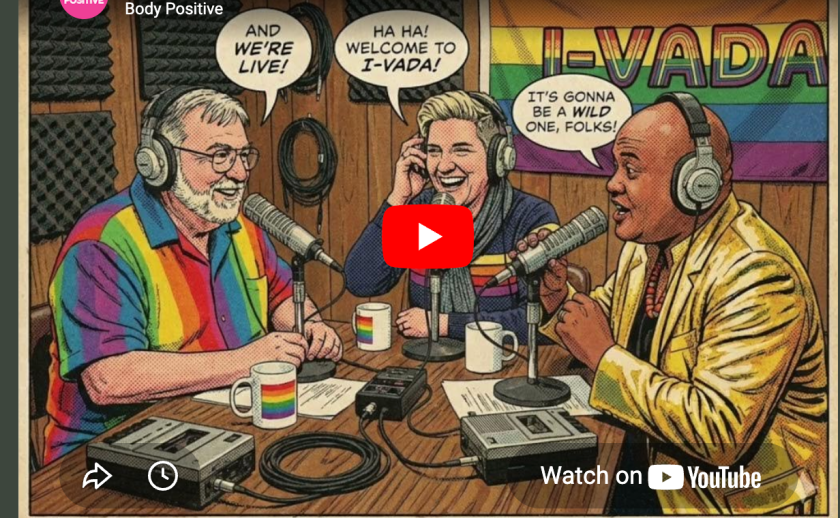
The next edition of Out In The City‘s radio show “Out on the Radio” will be live on ALL FM 96.9 on Tuesday, 3 February from 2.00pm to 3.00pm.

The new show features special guests Lizzie and Sarah from Out In The City‘s Women’s group.

If you missed the previous shows

Listen to Show 1 here

Listen to Show 2 here

Re/Assemble at People’s History Museum … Smiley Charity Film Awards! … Play the Rainbow Lottery … Counselling Course … Birthdays

News

Re/Assemble

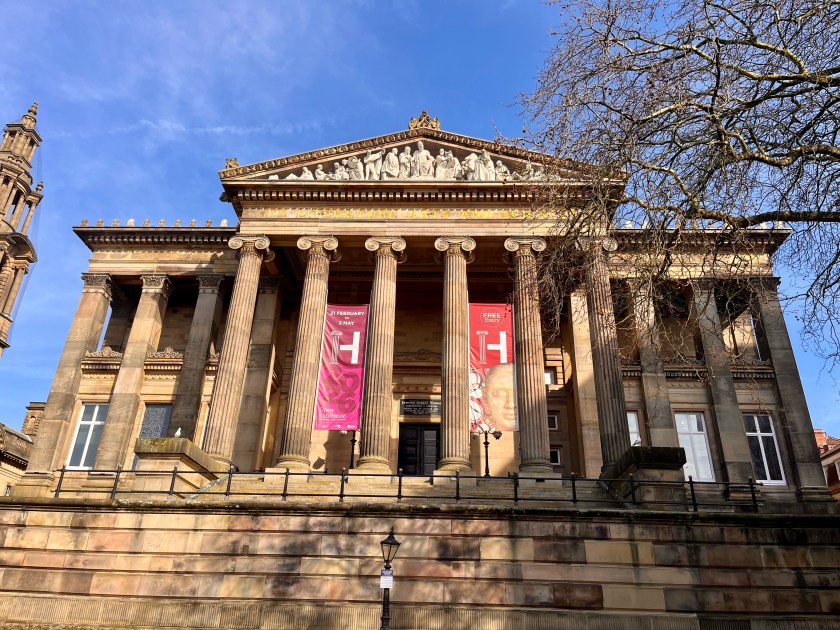
Re/Assemble at the Peoples History Museum is an exhibition that draws inspiration from the 1988 Section 28 protest marches

Re/Assemble’s starting point is the largest LGBT+ demonstration in British history, when 20,000 people gathered in Manchester in 1988 to protest against Section 28 – a clause in the Local Government Act that prohibited the ‘promotion of homosexuality’ by schools and local authorities.  For 15 years, this legislation cast a dark shadow, fostering a climate of fear and hostility that remains in the memories of many.

Developed following a two-year long research project, Re/Assemble is a new exhibition by Manchester-based arts organisation IAP:MCR, which creates and presents work across the visual and performing arts by artists who identify as queer. It features newly commissioned artworks by Sarah Joy Ford, Yuen Fong Ling and Anna Appleby that respond to the legacy of Section 28. It also explores themes of protest and resilience and celebrates queer voices and creativity. These works are displayed alongside historic artefacts from People’s History Museum’s own collection, including protest banners and objects, in Gallery Two.

You can also download the song “Never Going Underground” by Anna Appleby (ft Sherpa K and Norrisette)

Re/Assemble is open from Saturday, 17 January 2026 to Sunday, 3 January 2027 (10.00am to 5.00pm)

More photos can be seen here.

Smiley Charity Film Awards!

The Pride in Ageing 2025 film, produced by Film on the Brain with assistance and footage from our Brand & Storytelling Coordinator Scarlett and starring the amazing team of Pride in Ageing volunteers, has been nominated for a charity film award!

Please vote for the film here. Voting is open until 30 January 2026.

Play the Rainbow Lottery and support Out In The City

The Rainbow Lottery is the UK’s first and only lottery supporting LGBT+ good causes.

Welcome to the Rainbow Lottery, the exciting weekly lottery that raises money for over 200 LGBT+ good causes totally, openly and exclusively.

The hope is to make a difference to good causes so they can carry on their vital work – which helps us all. Play the lottery, support the community – it’s fun, it’s simple and everybody wins!

How the lottery works:

  • £1 per ticket – that’s right, unlike many other lotteries, the lottery tickets are only £1 per week.
  • For every ticket you play, 80% goes to good causes and prizes.

£25,000 jackpot prize

  • Match all 6 numbers and you win the JACKPOT! There are also prizes of £2000, £250, £25 and 3 free tickets for following week.
  • Every month there is a Super Draw.

The Super Draw Prize is an amazing £1,000 Aldi Gift Card (or, of course, £1,000 cash).
Imagine stepping into your local Aldi with £1,000 to spend: from stocking up on fresh, high-quality groceries to indulging in unique Special buys from the middle aisle, the options are endless.
Whether you’re planning a luxurious dinner party, filling your pantry with everyday essentials, or treating yourself to their award-winning wines, this gift card will go a long way!

Buy tickets here.

LGBTQ+ Affirmative Counselling Training: Applications Open!

elop’s counsellor training programmes equip you to work as a qualified, affirmative counsellor. The courses are taught in a Queer environment and open to all LGBTQ+ people and embedded allies.

The Foundation Certificate in LGBTQ+ Affirmative Counselling is a 3-month course for people starting their counsellor training journey or wishing to enhance their skills for supporting clients, colleagues and peers. The course includes online, and in-person learning sessions, and could be an entry pathway to professional qualified counsellor training. The course runs twice a year; the next programme commences late February 2026 and is open to applications now.

To receive further information, details of course fees, and an application pack please contact training@elop.org and/or to book onto one of the upcoming online information sessions (details below).

The Advanced Diploma in Integrative LGBTQ+ Affirmative Counselling is a 2-year part-time qualifying counsellor course taught at a venue in East London. The next programme commences September 2026.

To receive further information, details of fees or an application pack – please contact advanced-diploma@elop.org

Counsellor Training Online Information Sessions – if you are interested in becoming a counsellor and finding out more about the training pathways, please book and come along to the next online information session where you can hear more details, meet the course programme leader and ask any questions you have.

The next date is Tuesday, 27 January 12.30pm – 1.30pm.

Birthdays

For Sale: Manchester Pride’s Identity … Same Sex Kisses on Film … Donor Circle Grassroots Fund … LGBTQ+ Extra Care Housing Scheme Update

News

Manchester Pride’s identity is up For Sale

By Adam Maidment

Manchester Pride’s name and online presence is up for grabs to the highest bidder (Image: Manchester Evening News)

Earlier last summer, Manchester Pride celebrated its 40th anniversary with a weekend of unity and celebration. But within weeks of the August Bank Holiday festival taking place, the shutters were down on the company responsible for the event after going into voluntary liquidation.

Headliners, performers and suppliers were left doubting whether they would be paid what they were still owed, eight staff members were made redundant, and questions remained on how debts in the hundreds of thousands of pounds would be resolved.  

On 29 July 2025, Out In The City received an email confirming that our application to the Community Fund had been approved for the amount of £1000. Despite chasing up, we never received the payment.

It also made people question not only how things had got to that point, but what it meant for the Pride event going forward.

KR8, who were appointed liquidators by Manchester Pride Limited (the company behind the festival) back in November, said this week that they had now successfully contacted ‘all affected creditors of the charity’, and were in the ‘process of pursuing all asset realisation opportunities to maximise the return to creditors’.

This does not include organisations like Out In The City who were promised a grant, which was not paid.

Asset valuators and auction house SIA Group have listed the Manchester Pride and Mardi Gras brand name, and any associated domain names. This means that whoever secures the assets will, in theory, be able to ‘host future Pride events under the Manchester Pride brand name’. But, how did we get to this position where Manchester Pride’s identity is now up for grabs to the highest bidder – whoever that might be?

People enjoying Manchester Pride in 2015 (Image: Manchester Evening News)

Officially, 22 years of Manchester Pride

The roots of Manchester Pride date back to 1985, having taken on various names since then including the Manchester Mardi Gras, GayFest, and The Big Weekend. But it would officially become known as Manchester Pride as the city geared up to host EuroPride in 2003.

Manchester Pride Limited (MPL) was set up as a company in 2003, being registered as a charity in 2007. A Manchester Pride Events Limited subsidiary was also founded in 2007. Between then and 2019, it’s understood that, bar a few shortfalls, the event had managed to mostly prove financially successful as it built up a firm reputation within LGBTQ+ communities around the world for its prestige.

The pandemic caused ‘significant disruption’ to the company, with the 2020 event having to be cancelled altogether. MPL reported a fall in revenue of around £3.2m and a loss of £481,000 in 2020. By 2023, the charity reported losses after tax of £467k, resulting in a negative reserve position for the first time in ‘several years’. The latest figures for 2024 have not yet been published, but it’s estimated the charity could have lost around £318k.

For the 2025 event, Manchester Pride bosses announced a new Mardi Gras set-up which aimed to go back to its roots with a celebration of culture and community outside of the Gay Village area. Held at Mayfield Depot, it was headlined by Nelly Furtado, Olly Alexander and Leigh-Anne Pinnock. Behind the scenes, the charity had hoped this new expansion would be successful enough to turn fortunes around. It wasn’t.

Fortunes faded and a ‘compelling case’

Sir Ian McKellen at the Manchester Pride parade in 2010 (Image: Manchester Evening News)

Within hours of opening to the public, videos circulated online of empty dancefloors and artists performing at the new Mardi Gras set-up to minimal crowds. Before the event had even finished, bosses were said to be scrambling in the sidelines about the next steps for the charity. One such plan already in motion was a bid to host EuroPride again in 2028 – where things all began for the company.

Out In The City provided a letter of support to the organisers of EuroPride 2028 on 5 August 2025.

Putting together a bid which saw the event budgeted at around £3.2m, the city went up against West Ireland in front of the European Pride Organisers Association (EPOA). Manchester lost spectacularly with 70 per cent of voters preferring the alternative bid.

At the same time, Pride bosses had submitted a ‘compelling business case and turnaround plan’ to Manchester City Council which aimed to secure loans or grants to help the charity ‘return to solvency’. It wasn’t enough, with Council leader Bev Craig later saying that Manchester Pride’s ‘position had become unsustainable’.

Assets for sale

The news of Manchester Pride’s voluntary liquidation was officially announced on 22 October 2025. The charity said it had hoped to find a way to move forward, but rising costs, declining ticket sales and an ‘ambitious refresh of the format’ had resulted in the organisation ‘no longer being financially viable’.

In 2025, Manchester Council leader Bev Craig said that the position of the company behind Manchester Pride’s ‘had become unsustainable’ (Image: Jason Roberts / Manchester Evening News)

Since then, little has been said about whether performers and suppliers will ever see the money they are rightfully owed. The Equity Union is campaigning on behalf of many artists, whilst the Together for Creatives fundraiser also aims to raise £50,000 for those left out of pocket. Manchester Council said it will ensure Pride will take place in the city this August Bank Holiday weekend, working with members of the local LGBTQ+ community to create something that goes ‘back to home-made Pride’.

But, now questions have arisen about whether this future event will ever be able to be called Manchester Pride. The assets and trademarks to the name are listed for sale with The SIA Group saying the opportunity ‘would be suited to a range of potential acquirers’ including LGBTQ+ organisations, civic bodies and not-for-profits, as well as event promoters, entertainment groups and nightlife operators. Theoretically, it’s fair game to anyone and will depend on who has the most cash – or most viable offer – to claim it.

Manchester Council has reaffirmed that whilst it supports the return of Pride, and will work alongside the LGBTQ+ community, it will be not serve as an organiser of any such event. The ‘brand-related’ assets are therefore unlikely to be something the council would purchase.
Despite its name and branding up for sale, the legacy of the Pride event in Manchester cannot be underestimated. It has drawn in thousands of people from all over the world, generated millions in the economy, and, most importantly, served as a place for belonging and community to LGBTQ+ people and allies. Whether it’s named Manchester Pride or not going forward, it’s important that doesn’t change. It can still be a watershed moment, and it’s the community themselves that can, and should, steer that going forward.
Same Sex Kisses on Film

Same sex kisses on film have a long evolving history from early pioneering moments to modern depictions, showcasing shifts from coded representation to more open and celebrated intimacy in cinema and on television.

The Kiss was photographed between 1872 and 1885 by Eadweard Muybridge before the invention of the motion picture camera. Animating the photographs has produced the first cinematic kiss.

During the fall of Babylon sequence in “Intolerance” (1916), two male warriors kiss quite passionately on the lips, when they realise they are both about to be killed in a losing battle.

In “Orphans of the Storm” (1921), two sisters (one played by star actress Lilian Gish) lovingly embrace and kiss each other on the lips.

In one of the Roman orgy scenes in “Manslaughter” (1922), there are two women kissing and fondling each other in the crowd of partying people.

In 1927, audiences were treated to a same-sex kiss. In Wings, winner of the Academy Award for Best Picture, Buddy Rogers and Richard Arlen both fancy Clara Bow. They also really like each other. It is a truly romantic moment as the wingmen confront Arlen’s death.

In a BBC teleplay from 1960, once thought to be lost, Sean Connery can be seen smooching another man. Disappointingly, the kiss is a fraternal one.

BBC Two’s adaptation of Edward II (1970) featured a kiss between the titular king (Ian McKellen) and his lover Gaveston (James Laurenson), recognised as the first male same-sex kiss on British TV.

In 1989 the long-running soap opera EastEnders broadcast the first mouth-to-mouth kiss between two gay men (Colin and Guido), in a pre-watershed slot, causing controversy but paving the way for more LGBT+ representation.

Donor Circle Grassroots Fund

LGBT+ organisations receive just 10p in every £100 that is donated to charitable causes in the UK, and most are small teams doing incredible work, day in day out.

45% of the LGBT+ Consortium’s membership operate on less than £1,000 a year, and they have launched a new campaign featuring Out In The City:

When you donate to the LGBT+ Fund you help us resource some amazing LGBT+ charitable and volunteer led organisations like Out in the City Manchester.

Out In The City is a social and support group for members of the LGBT+ communities over 50 years of age.

“Using some of our funding from the LGBT+ Futures: Equity Fund, over 20 of us joined an experience on the East Lancashire Railway’s Heritage Steam Engine from Bury to Rawtenstall. We brought flags and banners and proudly ‘took over’ our carriage making it The Rainbow Train for the day!”

If you can donate £100 please head to this link and donate to our Donor Circle Grassroots Fund today

LGBTQ+ Extra Care Housing Scheme Update

Work has continued to progress on the ‘first of a kind’ purpose-built majority LGBTQ+ Extra Care social rent housing scheme and neighbouring shared ownership block in Whalley Range.


The lightweight steel frame installation has now commenced on site, with the ground floor structure partially formed for the Shared Ownership block. Meanwhile, work continues on the foundations and substructure for the Extra Care block, with the ring beam and pot & beam flooring nearly complete in readiness for the steel frame installation to begin. Ring Beam is a strong concrete band around a building that keeps it stable. Pot & Beam is a floor system using concrete beams and hollow blocks to make floors strong but lighter. These methods help ensure safety and durability in modern construction.

Our co-production work with the Russell Road Community Steering Group (CSG) continues. Last month, members visited the site alongside researchers from the University of Manchester to view progress and discuss upcoming construction activity with the site manager.

The University of Manchester is carrying out a year-long project researching the unmet housing and social care needs of older LGBTQ+ people. As part of this, they are working alongside LGBT Foundation and the Community Steering Group to consider best practice and co-production of inclusive housing and care, with a view to undertaking a wider piece of research post 2026.

They are looking for people over 50, who identify as lesbian, gay, bisexual, transgender or queer and have lived in or have an interest in social housing.

The commitment will be to about ten hours attending workshops taking place between April and June.

Please contact us here and we will pass on your contact details.

Vintage 1950 Children’s Illustrated Christian Prayer Book “Good And Gay”