Alan Turing … Public support for Radclyffe Hall … New podcast: The Out Crowd … HIV+Me

News

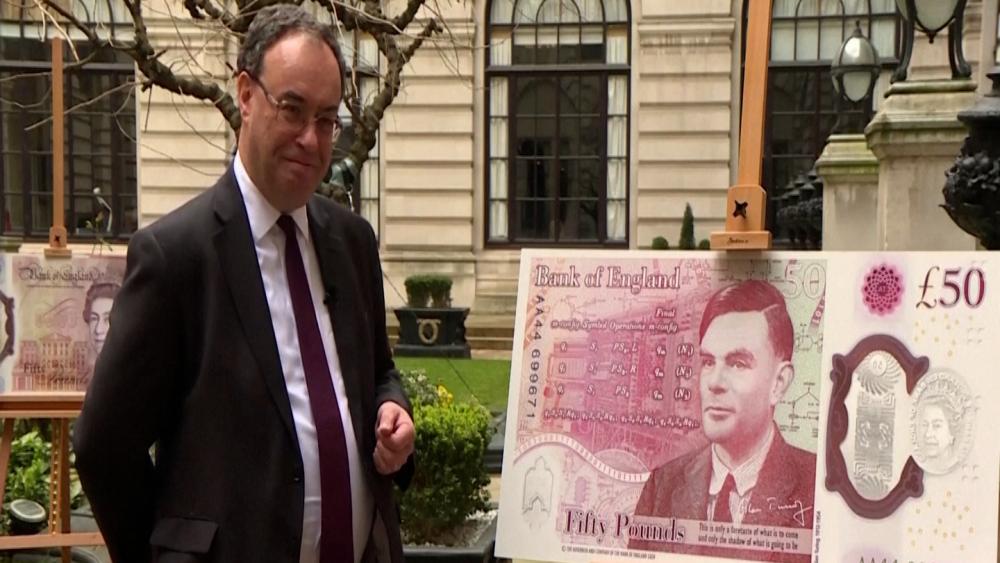
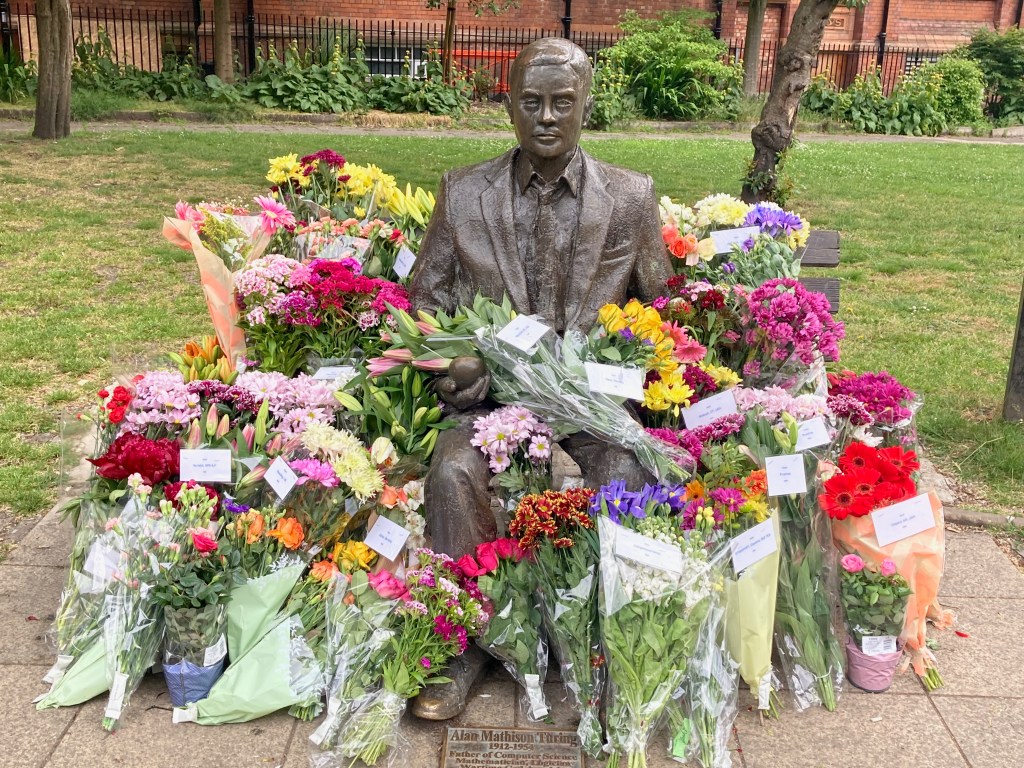
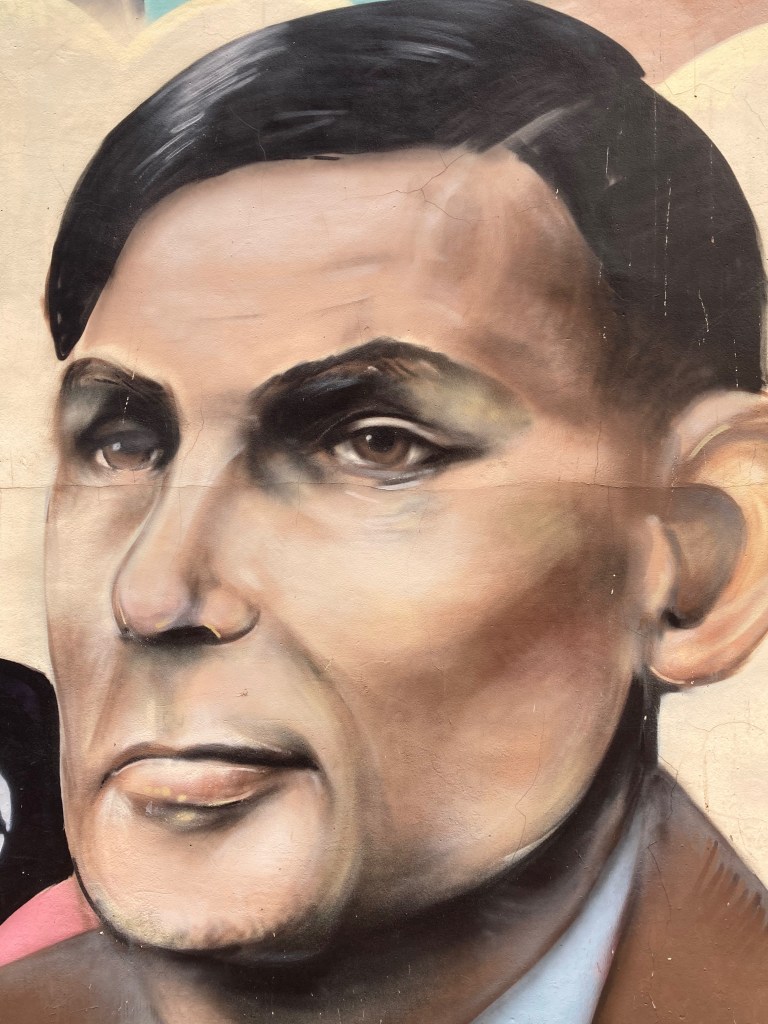
Alan Turing would have been 109 years old on 23 June 2021, and a new £50 note featuring the mathematician, computer pioneer and codebreaker entered circulation today.

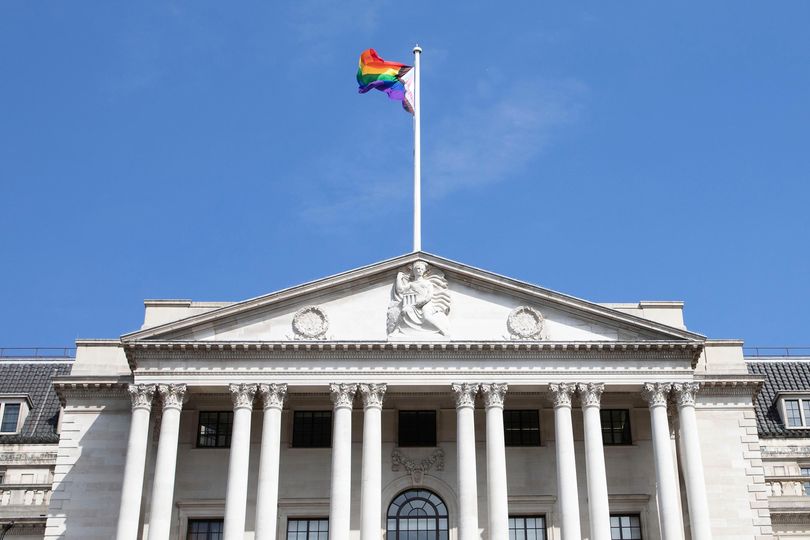
To celebrate Alan Turing’s life, the Bank of England are proudly flying the Pride Flag above their Threadneedle Street building in London.

Public support for lesbian novelist Radclyffe Hall over banned book
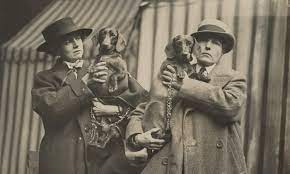
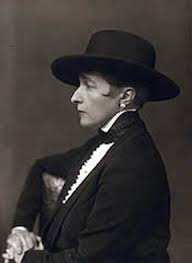
Una Vincenzo, Lady Troubridge and Radclyffe Hall (right) with their dachshunds at the 1923 Crufts dog show. 
Photograph: Harry Ransom Center

Radclyffe Hall’s 1928 novel The Well of Loneliness was subjected to a vicious campaign of attack led by the Sunday Express for its depiction of lesbian relationships, eventually being suppressed and censored in the UK as a piece of “obscene libel”. The editor even said he would rather give “a healthy child prussic acid to drink than read such an obnoxious book”.

But the author’s own papers, which have been digitised, reveal the outpouring of support Hall received from members of the public around the world, who wrote to thank her for creating, in her heroine Stephen Gordon, a character with whom they could identify.
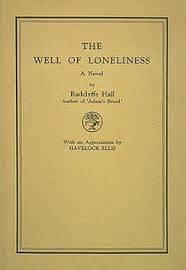
Seen today as a seminal work of gay literature, The Well of Loneliness tells of the “invert” Stephen Gordon, who realises from a young age that she is attracted to women, dresses in masculine clothes, and falls in love.

The book has its shortcomings both as a work of literature and as an apologia for a homosexual way of life and love; nevertheless, for decades these have been outweighed for many readers by the novel’s mere existence in telling them that they were not alone, and by the courage of its author in both writing and defending it.

Hall, a lesbian herself, wrote it to “put my pen at the service of some of the most misunderstood people in the world”. At its raciest, it goes no further than “she kissed her full on the lips, as a lover”, with a night of passion described as “that night they were not divided”. It ends with Stephen’s plea: “Give us also the right to our existence!

Sunday Express editor James Douglas led a campaign against the novel, writing in his paper: “In order to prevent the contamination and corruption of English fiction it is the duty of the critic to make it impossible for any other novelist to repeat this outrage. I say deliberately that this novel is not fit to be sold by any bookseller or to be borrowed from any library.” Despite support from writers including Virginia Woolf and EM Forster, it was banned in the UK until 1949, after Hall’s death. But newly revealed papers from the author’s archive, which have been digitised by the Harry Ransom Center at the University of Texas alongside those of her partner, the artist Una Vincenzo, Lady Troubridge, show that the novel was also supported by thousands of readers, who wrote to Hall in outrage at the ban.
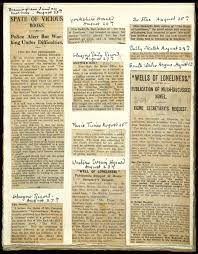
Hall’s scrapbook of clippings about the suppression and censorship of The Well of Loneliness, 1928. 
Photograph: Harry Ransom Center, The University of Texas at Austin

The picture you paint of the poor invert should make everyone more charitable … No one could finish your book, Miss Hall, without donning a sword and shield forever in the cause of inverts,” wrote one reader from the US, where the novel was not withdrawn despite a challenge, a court declaring it not obscene.

It has made me want to live and to go on … I discovered myself in Paris and I dreaded this thing which I thought abnormal,” wrote another.

In the UK, an 18-year-old man told Hall he had “experienced many of the terrors of the invert”, hailing her “truly marvellous but searing book”. Others offered to send money to help Hall in an appeal against the judgment, or wrote of how the book changed their perspectives. “At first it repulsed and disgusted, and then the pathos and beauty of it got me, and if I had it in my power to help those poor souls I would have offered my services,” wrote a London correspondent.

Dr Steven MacNamara, who has researched Hall’s papers, said she received “thousands of letters of support”.

The letters demonstrate the public’s awareness that The Well of Loneliness was not an obscene novel, and that Hall had been unfairly and unjustly treated by the government and the media. Access to these letters, through the digitalisation project, will enhance the importance and understanding of this groundbreaking novel for Hall’s contemporary readers,” he said.

In one letter, a married coal miner in Doncaster wrote that he had “marvelled at the bigoted outlook of so-called ‘thinking men’, who are ashamed to let broader minded folk than themselves delve into the great sex problems”. The miner added: “Some day we will wake up, and demand to know ourselves as we profess to know about everything else.”

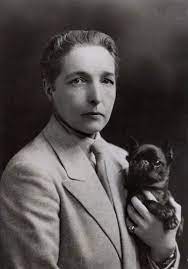
The project has seen more than 38,500 images from Hall and Troubridge’s papers digitised and made available online. Alongside Hall’s notebooks and drafts for The Well of Loneliness, the archive also includes diaries, letters – including around 650 that Hall wrote between 1934 and 1942 to Evguenia Souline, a Russian émigrée with whom she had an extended affair – and evidence gathered by Hall’s American lawyer before her obscenity trial in the US in 1929.

In a telegram, physician Dr Logan Clendening writes that “it is incredible to the scientific mind that an honest and sensitive presentation in literary form of a subject familiar and tragic to every physician should be threatened due to the pornographic imagination of a censor.”

Ransom Center director Stephen Enniss said: “The richness and depth of this material goes well beyond the subsequent censorship and cultural controversies sparked by The Well of Loneliness.”
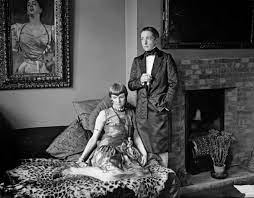
Lady Una Troubridge and Radclyffe Hall in 1927. 
Photograph: Fox Photos / Getty Images

Jana Funke, senior lecturer at the University of Exeter and author of The World and Other Unpublished Works by Radclyffe Hall, said the archive also includes early drafts of The Well of Loneliness, which are “more explicit in their depiction of lesbian desire and more affirmative regarding the protagonist’s gender non-conforming identity”. Hall dropped earlier sections from the book “arguably to try and make the book less scandalous – a strategy that obviously failed,” said Funke.

One chapter in an early draft, included in Funke’s book, begins with the protagonist having sex with a woman during wartime at the frontline. “They spoke very little, for the darkness was rent by intolerable noise, and by sudden swift flashes that penetrated even into this darkness between cracks in the war-scarred brickwork,” wrote Hall. “And something, perhaps this near presence of death, seemed to quicken their bodies into agonised loving, so that they felt the throb of their bodies in each separate nerve and muscle and fibre, so that they ceased to be two poor atoms, and became one transient imperative being, having reason for neither good nor evil – the primitive, age-blind life force.”

Funke said that when people read The Well of Loneliness, knowing that it was banned as obscene in the UK, “they are often surprised and disappointed to find that there is no explicit sexual content. It was banned simply because it argued that lesbian sexuality and gender non-conformity should be accepted by society.” Hall and Troubridge, she added, “are internationally recognised as LGBTQ pioneers, and it is vitally important that audiences around the globe have access to their papers now and in the future”.

New podcast celebrates the LGBT+ community

From protests to parades, parties to politics, Pride is all about visibility. The LGBT+ community is loud and proud, here and queer, after many years forced inside the closet.

A brand new podcast will learn what it means to be LGBT+ in 2021.

Launched during Pride Month this June, The Out Crowd is a new LGBT podcast speaking to members from all gender identities and sexualities about their experiences in the past and present – and their hopes for the future.
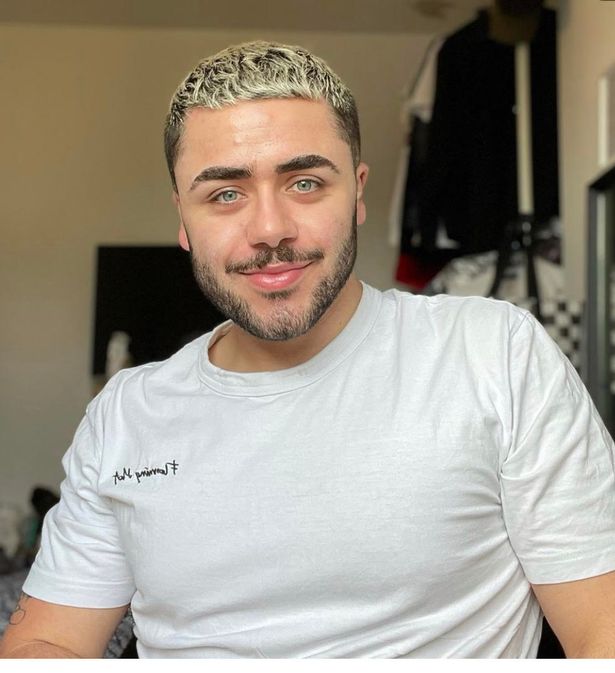
Joe Ali is the host of LGBT+ podcast The Out Crowd
 

Podcast host Joe Ali hopes that The Out Crowd will help raise more awareness about the LGBT+ community.

He said: “I’m really looking forward to getting this podcast out into the world. More awareness of LGBT+ people and our past is absolutely vital. A lot of people still don’t understand what the community has sacrificed and continue to sacrifice to be authentically themselves.”

Joe added: “I really hope that a young LGBT+ person will pick up on this podcast and feel less alone.”

The battle for equality still remains, and the podcast will look at the history of the struggle from those who continue to fight for it.

You will hear from activists, artists, drag queens, writers, educators, journalists, family, friends, and colleagues, as they answer the questions about the LGBT+ community you may have been too shy to ask: What does non-binary mean? What are the correct pronouns to use when speaking to trans people? What’s the difference between bisexual and pansexual?
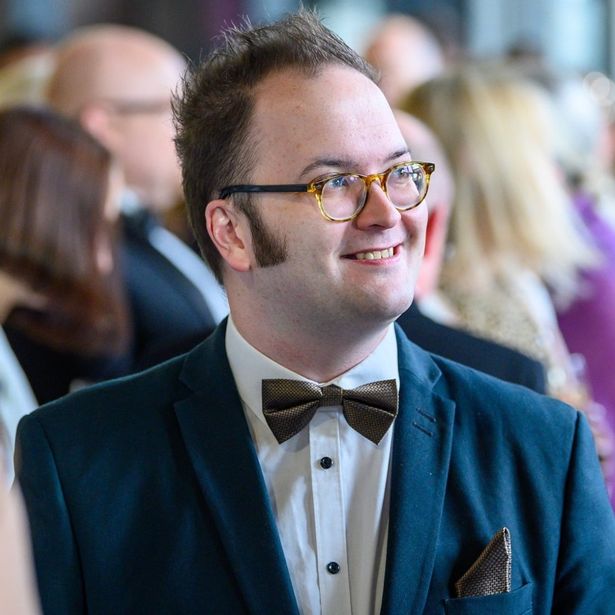
Daniel J McLaughlin, podcast producer, argues that “Pride is not just for June – it’s for life”

Daniel J McLaughlin, who produced the podcast, argues that “Pride is not just for June – it’s for life”.

He said: “I wanted to create an LGBT+ podcast. The struggle for equality lasts longer than just one month, and we hope that The Out Crowd will make a fabulous noise in Pride Month and beyond.

As a bisexual man, I am looking forward to learning more about members of the LGBT+ community that I belong to – as well as providing an insight into modern LGBT+ life for those not accustomed to it.

Like the rainbow flag that represents the LGBT+ community, The Out Crowd will hear the inspirational, fascinating, and entertaining tales from all those on the sexuality and gender spectrum: lesbian, gay, bisexual, asexual, transgender, non-binary, and more!”

The Out Crowd is available on all major podcasting platforms, and Episode 1 features an interview with Lisa Power.

Hiding behind fake profiles, some internet trolls gave the following reviews:

Missbettyboop: “Disgusting ban it”

Wendigo: “Its for this hetrophobic group only. Build a wall around the village.”

TheTruthHurts18: “What a waste of Space”

Alphaonezero: “Couldn’t care any Less if I Tried !!!!!”

Personally, I enjoyed it (except for the adverts!) and looking forward to listening to more episodes.

Meet the people from Greater Manchester determined to end HIV stigma and shame.

HIV+Me showcases three people living with HIV and their extraordinary stories in three beautifully shot short films.

Paul remembers the lovers and friends he lost whilst fighting and campaigning from a grotty basement just off Canal Street. ​

Mark revisits the squat he used to call home on Claremont Road and reflects how a positive diagnosis marked the beginning of a new life.

Yvonne recalls a lifetime of hiding in the shadows before she found something inside so strong that now helps her help others.

Credits: Stories written and performed by Paul Fairweather, Mark Holder and Yvonne Richards and directed by Nathaniel Hall.

The stories are powerful and very moving – highly recommended.
New £50 note is revealed … GCHQ releases ‘most difficult puzzle ever’ … On-line celebration organised by Queer Britain … George House Trust Age+ Project

News

New Alan Turing £50 note design is revealed

The £50 note will be made of polymer for the first time

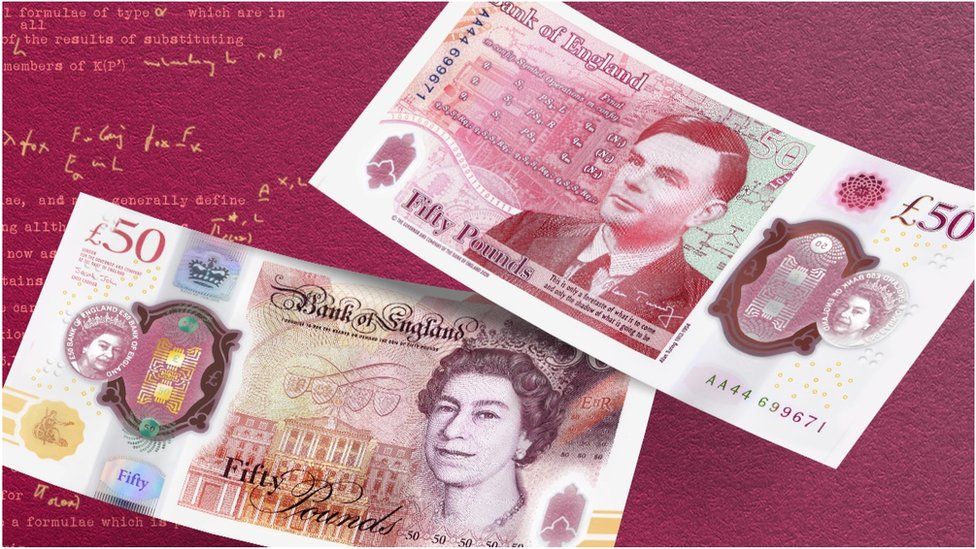
The design of the Bank of England’s new £50 note, featuring the computer pioneer and codebreaker Alan Turing, has been revealed.

The banknote will enter circulation on 23 June, which would have been the mathematician’s birthday.

It will be the last of the Bank’s collection to switch from paper to polymer. In keeping with Alan Turing’s work, it has advanced security features. Old paper £50 notes will still be accepted in shops for some time.

Why is Alan Turing on the note?

The work of Alan Turing, who was educated in Sherborne, Dorset, helped accelerate Allied efforts to read German Naval messages enciphered with the Enigma machine. His work is said to have been key to shortening World War Two by two years and saving 14 million lives.

Less celebrated is the pivotal role he played in the development of early computers, first at the National Physical Laboratory and later at the University of Manchester.

Alan Turing (1912 – 1954)

Key dates:

1912 – Alan Mathison Turing was born in West London

1936 – Produced “On Computable Numbers”, aged 24

1952 – Convicted of gross indecency for his relationship with a man

In 2013, he was given a posthumous royal pardon for his conviction for gross indecency. He had been arrested after having an affair with a 19-year-old Manchester man, and was forced to take female hormones as an alternative to prison. He died at the age of 41. An inquest recorded his death as suicide.

Andrew Bailey, the governor of the Bank of England, said: “He was a leading mathematician, developmental biologist, and a pioneer in the field of computer science.

He was also gay, and was treated appallingly as a result. By placing him on our new polymer £50 banknote, we are celebrating his achievements, and the values he symbolises.”

The Bank is flying the rainbow flag above its Threadneedle Street building in London as a result.

What features are on the note?

The new note will feature:

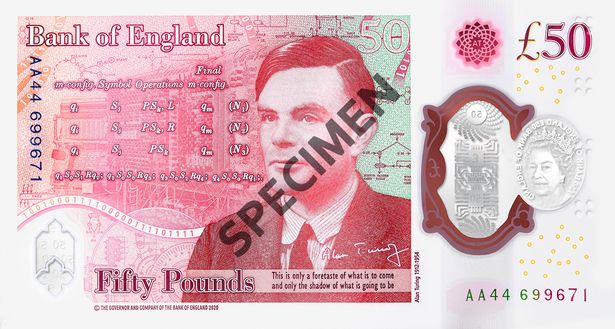
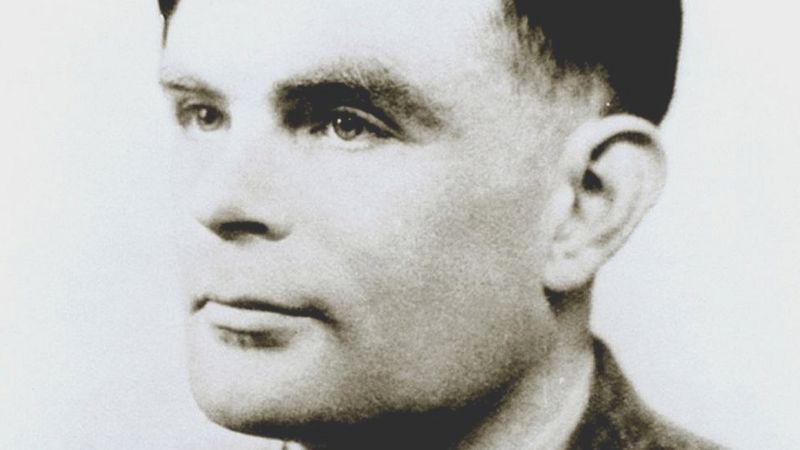
  • A photo of Turing taken in 1951 by Elliott and Fry, and part of the National Portrait Gallery’s collection;
  • A table and mathematical formulae from Turing’s 1936 paper “On Computable Numbers, with an application to the Entscheidungsproblem” – foundational for computer science;
  • The Automatic Computing Engine (ACE) Pilot Machine – the trial model of Turing’s design and one of the first electronic stored-program digital computers;
  • Technical drawings for the British Bombe, the machine specified by Turing and one of the primary tools used to break Enigma-enciphered messages;
  • A quote from Alan Turing, given in an interview to The Times newspaper on 11 June 1949: “This is only a foretaste of what is to come, and only the shadow of what is going to be”;
  • His signature from the visitor’s book at Max Newman’s House in 1947 which is on display at Bletchley Park; and
  • Ticker tape depicting Alan Turing’s birth date (23 June 1912) in binary code. The concept of a machine fed by binary tape featured in Turing’s 1936 paper.
Sarah John, the bank of England’s chief cashier, whose signature is on the note

There are also a series of security features, similar to other notes, including holograms, see-through windows – based partly on images of Bletchley Park – and foil patches.

The Bank also says that plastic banknotes are more durable and harder to forge.

Sarah John, the Bank’s chief cashier whose signature features on the note, said: “This new £50 note completes our set of polymer banknotes. These are much harder to counterfeit, and with its security features the new £50 is part of our most secure series of banknotes yet.”

Do we need a £50 note?

The £50 note is the least likely to be in people’s wallets or purses. There were 351 million £50 notes in circulation last year, out of a total of nearly four billion Bank of England notes. The government has previously discussed whether it should be abolished.

The banknote was described by Peter Sands, former chief executive of Standard Chartered bank, as the “currency of corrupt elites, of crime of all sorts and of tax evasion”.

The debate continues, with the added element that cash use has declined, particularly during the Covid pandemic.

The UK’s intelligence agency GCHQ has set what it describes as its toughest ever puzzle to mark the new note. Although Turing was, among other accomplishments, the co-creator of the first computer chess programme he claimed not to be that good at puzzles himself.

The new note though marks another step in the recognition of a man whose wartime work was secret, and who took his own life soon after his conviction for homosexuality in 1952.

“Turing was embraced for his brilliance and persecuted for being gay,” said current GCHQ Director Fleming. “His legacy is a reminder of the value of embracing all aspects of diversity, but also the work we still need to do to become truly inclusive.”

GCHQ releases ‘most difficult puzzle ever’ in honour of Alan Turing

Alan Turing was instrumental in helping to crack the Enigma code

Government Communications Headquarters (GCHQ) has released its “most difficult puzzle ever”, a set of 12 riddles linked to design elements of the new £50 note featuring the mathematician and codebreaker Alan Turing.

The questions begin with a relatively straightforward crossword-style puzzle that starts by asking where GCHQ’s predecessor agency, where Turing worked, was based during the second world war. A two-word answer, nine letters then four, is required.

‘It captures so much of Turing’s work’: Bank of England unveils new £50 note

The spy agency, which believes setting puzzles gives the public an insight into its surveillance work, said it thought the multi-part “Turing challenge” would take an experienced puzzler seven hours to complete.

Colin, described by the agency as its “chief puzzler,” said GCHQ’s riddles were generated by “a mix of minds from across our missions” in honour of Turing, who he said had inspired many recruits to join.

GCHQ chiefs also took the opportunity to apologise again for the post-war treatment of Turing, who helped develop the Bombe, a machine to help crack the German Enigma code, that is regarded as a forerunner of modern computers.

LGBT staff were banned from working in Britain’s spy agencies until the early 1990s, and if somebody was believed to be gay they were dismissed from the secret services, a policy that has resulted in several retrospective apologies.

In February 2021, the new head of MI6 apologised publicly to officers who were thrown out of the spy agency before 1991, and said the foreign intelligence service operated a “wrong, unjust and discriminatory” ban on LGBT staff in its ranks.

Try the puzzle here.

On-line celebration organised by Queer Britain

Join Queer Britain for an online event to celebrate the Bank of England’s new £50 note.

They will be exploring Turing and his legacy, asking who the unsung queer heroes of Science and Technology are and, after the pardons, what next? 

The Audience will also be privy to a special announcement from the Bank of England.

When: Thursday 8 July, 6.00pm – 7.15pm
Where: Zoom

The discussion will be led by: 

Dr Dominic Galliano, Head of Public Engagement from UCL, and features: 

Sarah John, the Chief Cashier of the Bank of England; 

Josh Little, the lawyer who led the Allen & Overy team advising Stonewall on 2017’s gross indecency ‘Turing Law’ pardons; and

Dr Alex Moylett, Quantum Scientist.

While there is no charge for tickets, they would be grateful for a donation upon booking.

George House Trust launch Age + project to Empower People Ageing with HIV

George House Trust will launch Age+ – a new project which will empower people over the age of 55 to live confidently with HIV in Greater Manchester.

An ever-growing ageing population of people living with HIV means support services need to change and adapt to meet their diverse needs.

Launching in June 2021, the Age+ project will provide services to support people over 55 years of age, living with HIV in Greater Manchester, including social networking opportunities, skills-based training sessions, new volunteering opportunities and one to one support.

Another key element of the project will be the delivery of HIV training and awareness sessions to residential care homes, social care providers and other organisations in contact with, or supporting, older people. This will increase knowledge and understanding of living and ageing with HIV.

Funding for the project was provided by ViiV Healthcare, a global specialist HIV company. Sylvia Nicholson, Policy Director at ViiV Healthcare UK said: “We are delighted to be able to support this project provided by George House Trust to better serve an important group of people living with HIV with evolving needs in Greater Manchester.”

Darren Knight

Darren Knight, George House Trust’s Chief Executive, said, “This funding from ViiV means that we can do more work with people ageing with HIV, building their confidence, skills, reducing loneliness and tackling the stigma and discrimination that still exists for people living with HIV. As part of this project, we’ll also be working with care homes and social care providers and developing our essential work in raising awareness of HIV amongst staff in those settings, which will improve the experience of people in care living with HIV.”

About Age+ Project

This project will launch on 21 June 2021. People who are living with HIV who are over the age of 55, care homes and social care providers should contact Anna Hughes on anna@ght.org.uk for more information on how to get involved.

About George House Trust

Since 1985, George House Trust has provided services to people living with, and affected by, HIV. We believe that people living with HIV have the right to live happy and healthy lives, free from stigma and discrimination.


Darren Knight is the CEO of George House Trust

Interview with Darren Knight

“The stigma around HIV can massively impact on those living with the virus. In the early 1980’s, there was a huge lack of understanding around what HIV was. There was no cure, no effective treatment and a lot of fear.

Fast forward to 2021 and people with HIV can expect to live a normal life expectancy and are more likely to die from something other than HIV, but knowledge and understanding has not kept pace. These days, when taking effective treatment, the HIV virus becomes undetectable and can no longer be passed on to others. We call this U=U which means undetectable equals untransmittable.

However, the significant stigma for those living with HIV remains. HIV is a long-term chronic health condition, similar to diabetes, but it is not viewed as the same and those with a HIV status can be treated very negatively due to a lack of understanding and stigma. Those disproportionately affected by HIV are gay and bisexual men and African men and women. However, it is not just people in these communities who are living with HIV. There are many groups impacted by HIV, but the important thing to remember is that anyone can be diagnosed with HIV. As a virus, it doesn’t discriminate.

There is work being done to raise awareness including our Positively Speaking programme, where people living with HIV share their story to dispel the myths that still exist. The lived experience of people living with HIV is so important in changing people’s deeply held views.

However, there’s other important things that need to happen including more testing for those who potentially have HIV, ensuring that the funding is available for HIV prevention and HIV support, more training and awareness for first point of contact professionals like GP’s, dentists, other health professionals and our colleagues across the voluntary sector too. George House Trust continues to work with partner organisations like the LGBT Foundation and BHA for Equality to raise awareness through the Passionate about Sexual Health (PaSH) project in addition to the wide range of other projects that George House Trust offers including access to welfare grants, food parcels, nutrition support, peer support, life coaching and training to name a few.

Ultimately, HIV is an issue that we all need to work together on. The Government pledge to end HIV transmission by 2030 is achievable if we all work together to tackle HIV, but we must first challenge the stigma associated with HIV. You can start by supporting the work of George House Trust or booking a Positive Speaker.”

For more information, call 0161 274 4499 or email talk@ght.org.uk or visit the website at https://ght.org.uk/

Exclusive Online Premiere of HIV+Me on Wednesday 23 June, 7.30pm

Dibby Theatre’s YouTube Channel will exclusively premiere HIV+Me, three remarkable short stories of surviving, living and thriving with HIV.

HIV+Me showcases three ordinary people living with HIV and their extraordinary stories in three beautifully shot short films:

  • Paul remembers the lovers and friends he lost whilst fighting and campaigning from a grotty basement just off Canal Street.
  • Mark revisits the squat he used to call home on Claremont Road and reflects how a positive diagnosis marked the beginning of a new life.
  • Yvonne recalls a lifetime of hiding in the shadows before she found something inside so strong that now helps her help others.

Nathaniel Hall, writer, performer and HIV activist (First Time, It’s A Sin) directed the films. The YouTube premiere is on Wednesday 23 June 2021 from 7.30pm – 7.50pm. Make sure you are logged in to YouTube if you wish to write comments during or immediately after the live broadcast here.

Pride flowers

Manchester Day … Refugee Week … Gay rights in Ghana

News

Manchester Day

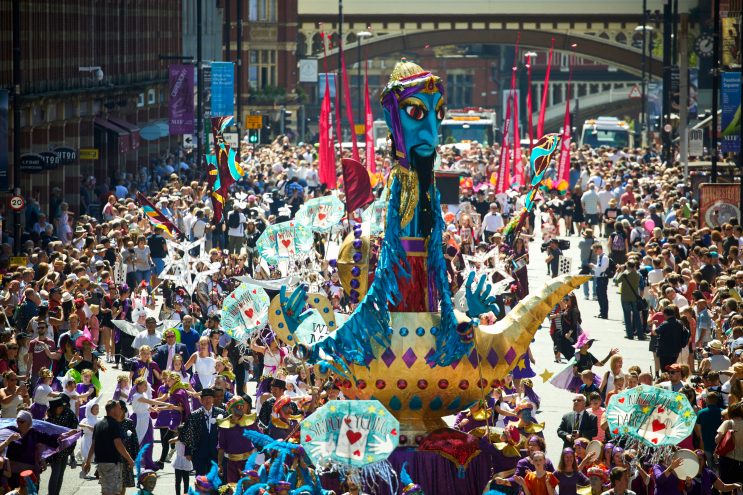
Manchester Day is an annual event that celebrates everything great about the city. It is a day for families, residents and visitors to get together and celebrate all things Mancunian that have made Manchester one of the world’s most iconic cities.

It has taken place every year since 2010, but unfortunately it wasn’t possible for the last two years in light of the Covid-19 pandemic.

Previously, 100,000 people gathered in the city centre to watch the procession which featured 22,000 people and 80 community groups ranging from the Manchester Chinese Centre to the trans youth group Afternoon Tea and the Greater Manchester Fire and Rescue service. This is all of Manchester coming together, very visibly demonstrating all of its diversity and all of its solidarity.

This is why I love Manchester:

Refugee Week

Refugee Week is taking place from 14 to 20 June and is regularly used as a platform for hundreds of arts, cultural and educational events.

Refugee Week events are often intended to celebrate the contribution of refugees to the UK, and encourage a better understanding between communities.

The theme for Refugee Week is “We Cannot Walk Alone” and recent events in Ghana show exactly why we still need to support refugees and those seeking asylum.

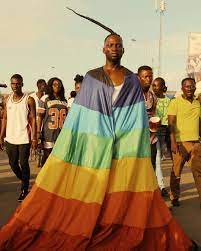
Idris Elba and Naomi Campbell sign letter backing gay rights in Ghana

A group of 67 high-profile figures say they are ‘deeply disturbed’ by the recent closure of the LGBT+ centre in Accra.

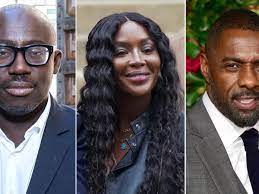
Edward Enninful (left), Naomi Campbell and Idris Elba are among the signatories of the letter. Photograph: Agencies

Some of the UK’s most prominent people of Ghanaian heritage have joined together to condemn their former homeland for its stance on gay rights in what will be seen as an extraordinary show of diaspora power.

The influential names in fashion, film and media, including Idris Elba and the Vogue editor-in-chief, Edward Enninful, have signed an open letter in support of Ghana’s LGBT+ community. Naomi Campbell and Labour MP Diane Abbott, although not of Ghanaian heritage, have also put their names to the letter.

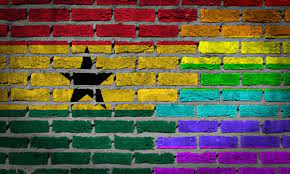
In February 2021 a community centre for LGBT+ people in Ghana closed its doors after mounting pressure by religious groups and anti-gay organisations against sexual minorities. Police later raided the centre its staff said, after its leaders were forced into hiding.

The letter, signed by 67 celebrities, politicians and other influential people largely of Ghanaian heritage, said they were deeply disturbed by the events and called on Ghana’s president, Nana Akufo-Addo, and other political leaders to offer protection to the LGBT+ community: “We have watched with profound concern as you have had to question the safety of your vital work at the LGBT+ Rights Ghana Centre in Accra, and feared for your personal wellbeing and security. It is unacceptable to us that you feel unsafe,” it said.

“As prominent and powerful advocates for this great country, we are beseeching His Excellency, the President of the Republic of Ghana, Nana Addo Dankwa Akufo-Addo, and political / cultural leaders to create a pathway for allyship, protection and support. We petition for inclusivity which will make the nation even greater and even stronger,” it continued.

In recent weeks several high-profile figures in Ghana had demanded the closure of the centre, intended to be a safe space for LGBT+ people to meet and find support. Yet since the centre’s opening in January in the capital, Accra, many people have received death threats and online abuse.

The opening of the centre amplified discrimination against the community, said activists. Although same-sex relationships are illegal in Ghana, the law is rarely enforced, according to a 2018 report by Human Rights Watch. Yet activists say abuse against LGBT+ Ghanaians has intensified in recent years, fuelled by influential anti-gay campaigners.

The community centre was set up by LGBT+ Rights Ghana. A fundraising event to mark the opening was attended by the Danish ambassador, the Australian high commissioner and EU delegates, which caused outrage and prompted repeated claims that the international community was promoting LGBT+ rights in Africa.

Earlier in February, the Catholic church in Ghana bishops’ conference released a statement demanding the centre be shut down and condemned “all those who support the practice of homosexuality in Ghana”. It urged the government “never to be cowed down or to succumb to the pressure to legalise the rights of LGBTQIs in Ghana”.

Roslyn Mould, a board member of LGBT+ Rights Ghana, said the group hoped the community space would protect LGBT+ people from threats and abuse in Ghana, increasing in recent weeks.

“This space or office was made to support a vulnerable community, these persons have been under attack for a long time,” she said. “We would also like this opportunity to thank all the allies who have supported the community throughout this ordeal.”

Ghana’s National Coalition for Proper Human Sexual Rights and Family Values has in recent weeks ramped up threats against sexual minorities, Mould said, including proposing conversion therapy.

Outcry after 21 people arrested in Ghana for ‘advocating LGBT activities’

Rights groups say the targeting and abuse of LGBT+ people in Ghana has sharply risen this year. Photograph: Micha Klootwijk/Alamy

Rights groups have condemned the arrest of 21 people by Ghanaian police for “unlawful assembly” and promoting an LGBT+ agenda, in the latest move against sexual minorities in the country.

Several rights groups called the arrests illegal, saying those detained did not have access to legal representation before they were remanded to court, and that some suffered medical illnesses and needed treatment for trauma.

The arrests came after a group of journalists reportedly descended on an event by Rightify Ghana, which was held to provide training for activists and paralegals when supporting LGBT+ people.

“The press teamed up with the police to storm the meeting location, started taking images, took their belongings and arrested them,” Rightify Ghana said.

The targeting and abuse of LGBT+ people in Ghana has sharply risen this year, said Alex Kofi Donkor, the founder and director of LGBT+ Rights Ghana, an advocacy and aid organisation based in Accra.

“The [event] was to train them on paralegal services for vulnerable groups – how we can document issues of abuse, and how best these trained paralegals can provide support,” Donkor said.

“There is no law preventing advocates or LGBT+ people from existing or gathering. It’s a constitutional right.”

Same-sex relationships are illegal in Ghana, yet while prosecutions are rare, rights groups say it has led to widespread targeting and extortion of vulnerable people and anyone suspected to be gay.

A statement by the police calling members of the public to come forward with information about LGBT+ activities amounted to “a witch-hunt”, Donkor said.

“It is very, very disturbing – also for the fact that the police are now inciting the public against Ghanaians. It’s already a vulnerable situation for LGBT+ people in Ghana,” he said.

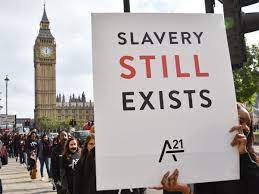
Last year over 10,000 people were identified in the UK as possible victims of human trafficking or modern slavery, around two thirds of whom were foreign nationals from places like Albania, Sudan and Vietnam.

22 June 2021 will mark the fourth national Windrush Day and 73 years since the SS Empire Windrush arrived at Tilbury Docks in Essex in 1948 carrying the first Caribbean migrants to the UK to help re-build Britain after the Second World War.

Patrick’s story … World Blood Donor Day and rules changing

News
Patrick

Patrick’s story

Many gay men born in the 1950s and 1960s, before homosexuality was partially decriminalised in 1967, stayed firmly in the closet for decades. It can be hard now to remember the societal pressures that drove many into denial and marriage with women, despite knowing their own preferences. But not Patrick, who identified as straight throughout his early life.

“My friends think I’m a very strange gay guy, but I just loved women!” he says. “I knew about the gay life, but I had no feelings for it, nothing to do with it. I got married, had a very happy marriage, had two sons.”

He worked as an English teacher and, with a strict Irish Catholic upbringing, was active in his local church, while his wife was a teacher in a local Catholic primary school. So when an incident on holiday triggered unexpected feelings and he began to explore his sexuality, it came as something of a surprise.

“If I’d had feelings like that before I’d have told people,” he says. One thing led to another and, 30 years ago aged 41, he came out; it was a traumatic time for him and his whole family.

“It was a shock, and not everybody took it well,” he says. “It was different for my wife, different for my boys, different for my mum and dad – my mother took it very badly indeed, though my dad was amazingly supportive. Thankfully, attitudes have changed since that time.”

For today’s young people, it can be hard to imagine the difficulties faced by earlier gay generations. Patrick’s local priest banned him from the church, his marriage broke down, and he led a double life for some years, keeping his sexuality hidden at work and not coming out to his wider family for five years.

It was a lonely time. Then he bumped into a former pupil, got into a conversation about faith, and learnt about a support group for gay Catholics, which he started attending.

“That led to meeting people involved with other groups. It’s a networking thing, you get to hear about other clubs you might be interested in,” he says.

He joined a gay badminton group (he had always been a keen badminton player, playing in the top division of the local league), a gay choir and Manchester’s first LGBT line dancing club, the Prairie Dogs, set up 25 years ago (it won the best walking entry in Manchester Pride 2019’s parade). He also volunteered with the LGBT+ community, working with befriending schemes and as an HIV/Aids buddy.

“That was difficult at times, but I wanted to do something giving back to my community,” he says.

He stepped up as a diversity officer for his union, which led to him being appointed a delegate to LGBT+ conferences, where he has given speeches on a number of motions.

“I went through a lot, but I hear stories of unbelievable bravery and courage even now,” he says.

Clearly there is still much work to be done to ensure recognition and acceptance for LGBT+ people. But the community has many friendship groups to support older gay singletons – Patrick is a regular at Out in the City, a Manchester group for the over-50s.

“I’ve worked through some really bad times, but I’m very happy with my life,” he says.

“I’m single, but I’ve got a good, supportive friendship circle and a lot of activities. But do we have to have labels on people? I don’t go into places and announce myself as gay; my sexuality is my business.

We’re all human beings that should be treated with mutual respect and caring.”

You can also read Annie’s story here and Ted’s story here.

World Blood Donor Day

World Blood Donor Day is held on 14 June each year. The event was organised for the first time in 2005 to raise awareness of the need for safe blood and blood products, and to thank blood donors for their voluntary life-saving gifts of blood.

It is celebrated on the birthday anniversary of Karl Landsteiner (14 June 1868) who was awarded the Nobel Prize for his discovery of the ABO blood group system.

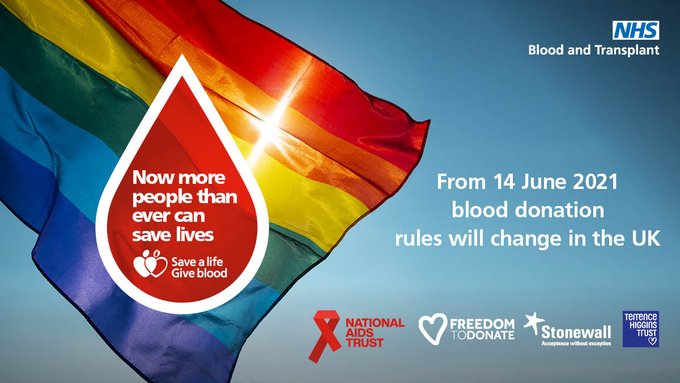
Blood donation rules changing (from 14 June 2021)

The eligibility rules around blood donation are changing to move towards a more inclusive and fairer process allowing as many people as possible to make the life-saving decision to give blood safely.

Following the FAIR (For the Assessment of Individualised Risk) steering group’s recommendations and in line with the latest scientific evidence, blood donation will become more inclusive. More people could be eligible to donate blood based on their health, travel and sexual behaviour.

New guidance means your eligibility to give blood is based solely on your own individual experiences, making the process fairer for everyone. Switching to an individualised check is a fairer and as safe a way to spot infection. The changes mean many gay, bi-men and men who have sex with men in a long-term relationship will now be able to donate blood at any time.

What is changing?

From 14 June 2021, the questions you will be asked before you give blood are changing.

What questions will you be asked?

You will have to complete a Donation Safety Check and will be asked whether, over the last three months, you have:

  • Had sex with anyone who has had syphilis, hepatitis or anyone who is HIV positive?
  • Been given money or drugs for sex?
  • Had sex with anyone who has ever been given money or drugs for sex?
  • Had sex with anyone who has ever injected drugs?
  • Taken Pre-Exposure Prophylaxis (PrEP) / Truvada for prevention of HIV or taken or been prescribed Post-Exposure Prophylaxis (PEP) for prevention of HIV?
  • Used drugs during sex (excluding erectile dysfunction drugs or cannabis)?

If you answered yes to any of the questions above, then you are unable to give blood right now.

If you answered no to all of the questions above, you may be able to give blood if you meet the other eligibility criteria.

In addition, you will also be asked whether, over the last three months, you have:

  • Had sex with a new partner, or had sex with more than one partner?

If you answer yes to this question, you will then be asked if you had anal sex with any of your sexual partners.

  • If you have, you will not be able to donate for three months.
  • If you have not, you will be able to donate (subject to all other eligibility criteria).

What do the changes mean for transgender blood donors?

Being transgender does not in any way prevent you from being able to donate. All donors are addressed using the title and pronouns of their choice. NHS Blood and Transplant considers all donors to be the sex and/or gender that they identify as, including nonbinary, genderfluid and agender donors.

Currently, donors are asked about their assigned sex at birth every time they come to donate, because some blood products are safe to manufacture from the blood of donors assigned male at birth but not from those assigned female at birth.

Many trans people may not consider this suitable, but there are plans by September 2021 to require the assigned sex at birth only once at registration and not at every session.

First blood plasma for medicines donations begin

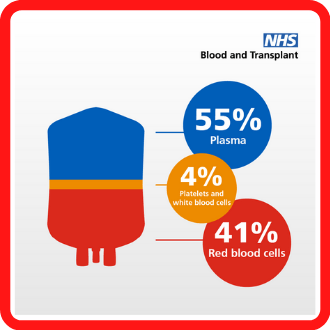
NHS Blood and Transplant is asking for men between the ages of 17 and 66 to consider donating their blood plasma which is used in the production of life-saving medicines. Thousands of patients rely on these antibody-based medicines called immunoglobulins, which are used for short-term treatment or lifelong diseases, they help people with weak immune systems and a variety of other rare disorders.

Men are more likely to have the blood plasma volumes and larger vein sizes making them ideal donors. Donating plasma takes about 45 minutes and is completely safe. During the process the plasma is filtered out of circulating blood by an apheresis machine and the red blood cells are returned to the donor. It is possible to donate as often as every two weeks and a maximum of 24 donations per year.

Donate plasma

Since 7 April 2021, people will donate blood plasma for medicines for the first time in more than 20 years at 14 donor centres around England including Manchester.

There is a global supply shortage due to rising demand. Up until now, the UK has depended on imports of blood plasma from other countries – mainly the US. Donations will bolster the supply chain and improve the self-sufficiency of the UK in producing its own treatments.

The restriction on using plasma from UK donors was introduced in 1998 as a precautionary measure against vCJD (Variant Creutzfeldt-Jakob Disease), but was lifted by the Department of Health and Social Care in February 2021. The independent Commission on Human Medicines advised it is safe and can recommence supported by a set of robust safety measures. Find out more about donating blood plasma by calling 0300 123 23 23.

Rainbow Lottery … Pride in Ageing video … Born To Be: Trans Surgery Centre

News

Rainbow Lottery – First Draw on 12 June

What is The Rainbow Lottery?

The Rainbow Lottery is a weekly online lottery, and is the UK’s first lottery dedicated to supporting LGBT+ good causes. You can support Out In The City (we get 50p from every £1 ticket) and you could win up to £25,000!

How does it work for supporters?

The draw takes place every Saturday night at 8.00pm, starting 12 June 2021.

• Each ticket costs £1 per week and consists of six numbers. The more numbers you match in a draw the bigger the prize you win.

• Players choose who their ticket purchase will support.

One ticket costs just £4.34 per month (three tickets costs £13.00 per month) and there are a range of payment options.

Players can pay:

• Monthly via Direct Debit;

• Monthly via Debit Card (VISA, Mastercard etc); or

• One off payment via Debit Card (five weeks, three months, six months or twelve months).

Players are notified by email when they win.

Pride in Ageing

Pride in Ageing was set up in response to concerns that too many lesbian, gay, bisexual and trans people over the age of 50 are living in isolation and facing discrimination as a direct result of their sexual orientation or gender identity. Laws change but attitudes can be harder to shift.

Members of Pride in Ageing are featured in this video:

‘A story that hadn’t been told’: inside a groundbreaking trans surgery centre

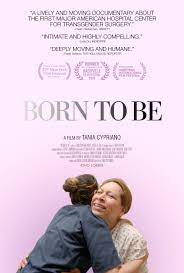
In a moving documentary Born to Be, the work of pioneering surgeon Dr Jess Ting and the lives of his patients are brought to the screen with sensitivity.

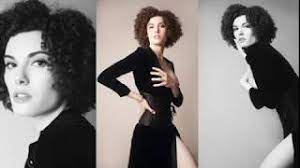
Garnet Rubio moved to New York City from Texas at 19 with a singular mission: transitioning. While her friends attended college, Rubio worked as a model, did her research and saved money for expensive and time-consuming gender-affirming surgeries. “The two years that I’ve spent here have been completely devoted to saving money, affording to live here and then transitioning,” she says on the morning of her vaginoplasty in Born to Be, a documentary about Mount Sinai’s Centre for Transgender Medicine and Surgery (CTMS) in Manhattan, the first comprehensive healthcare centre for transgender and non-binary people in New York and one of the few specialised centres of its kind around the country.

The camera follows Rubio from her apartment to the centre, the final pre-op stages – a last consultation with her surgeon, Dr Jess Ting, on the aesthetics of the procedure, a hug from her friend, last Instagram – to the operation table, where the weight of anticipation brings her to tears.

There are several poignant, deeply emotional scenes of relief and excitement in Born to Be, which traces the centre’s groundbreaking medical practice as well as the experience of patients. Other times, it’s disarmingly, candidly clinical: how Dr Ting turns a forearm skin graft into a new phallus or the cuts required for facial feminisation.

The story of a transgender health and surgery centre is still itself relatively new; at the time the centre was founded in 2015, Ting was working as a general plastic surgeon in New York City, with little awareness of transgender healthcare or experience in gender-affirming surgical procedures. The film makers hoped Born to Be “could give information about light being at the end of the tunnel, that things were changing regarding healthcare”.

Rubio, in particular, allows the camera into some highly sensitive moments – consultation appointments, discussing desired aesthetics with Dr Ting, first post-op dilation. The decision to allow the camera into the doctors’ office “was necessary”, Rubio said.

The main barriers for his procedures are not skin grafts or medical limits, said Ting. It’s “the world – there are so many people who don’t accept what we do, who don’t accept trans people and who would just like to delegitimize the whole concept of being trans or being yourself or being able to choose for yourself your own course in life.

I wish they would see this movie,” he added, “because maybe they would change their minds a little bit, and see that trans people are just like you and I.”

Born to Be is available digitally in the US now, but a UK date is still to be announced.