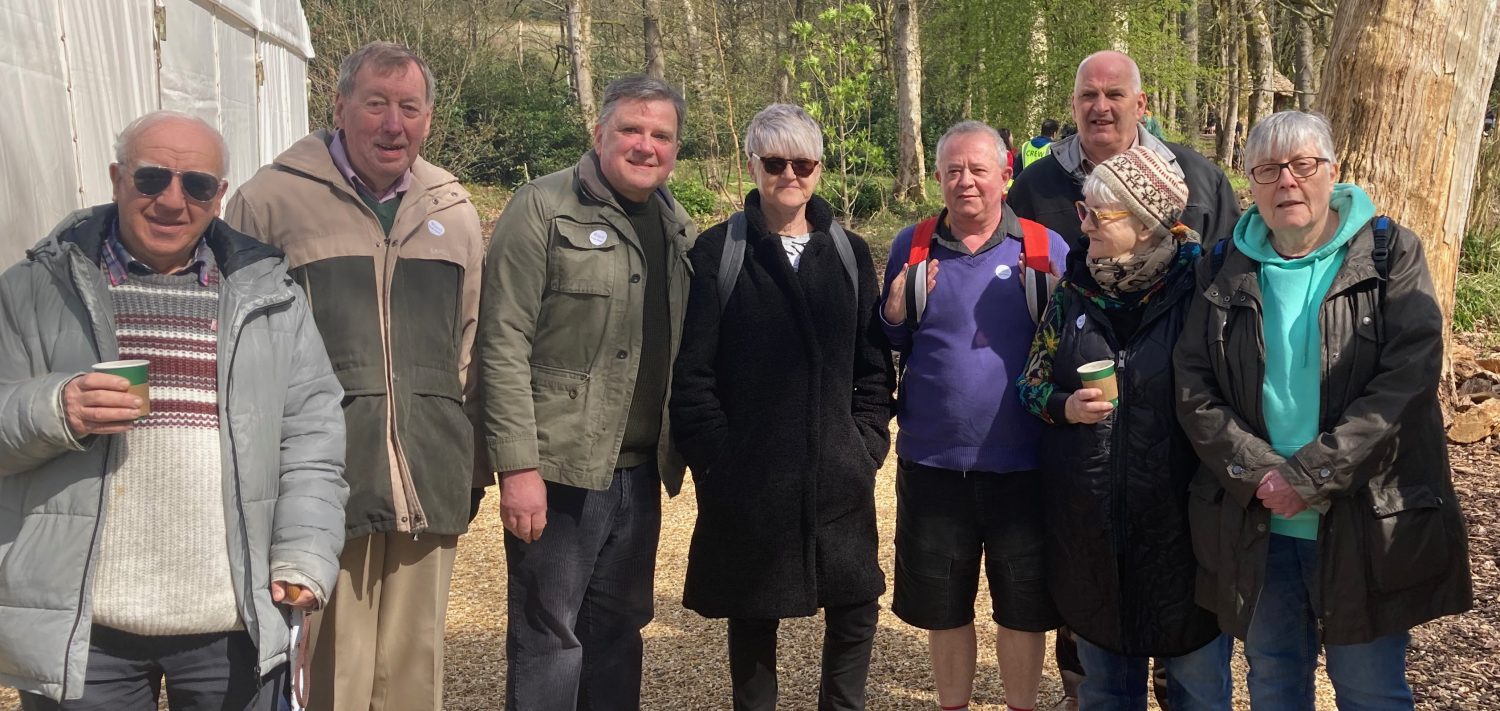
Irlam Railway Station … Mary Cunningham Simpson … Dial a Pride Poem … Werewolf & The Manbears!

News

Visit to Irlam Railway Station

The railway station in Irlam, Greater Manchester is 8.75 miles west of Manchester Oxford Road on the Manchester to Liverpool Line.

The original station was opened on 2 September 1873, but after lying derelict for nearly twenty-five years, the station building had a two million pound renovation. It was reopened in March 2015, and is currently used by over 350,000 passengers a year.
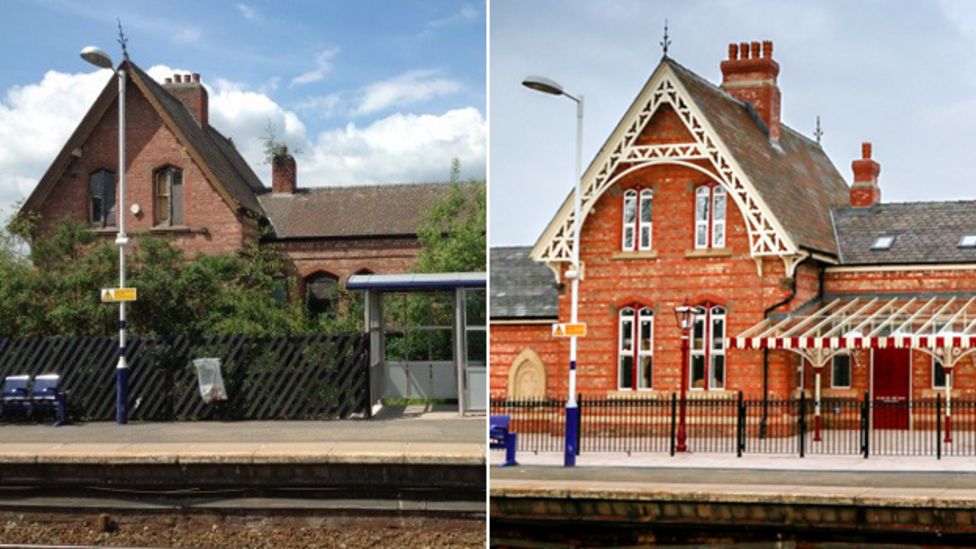
Irlam station house has reopened exactly 122 years after its original opening

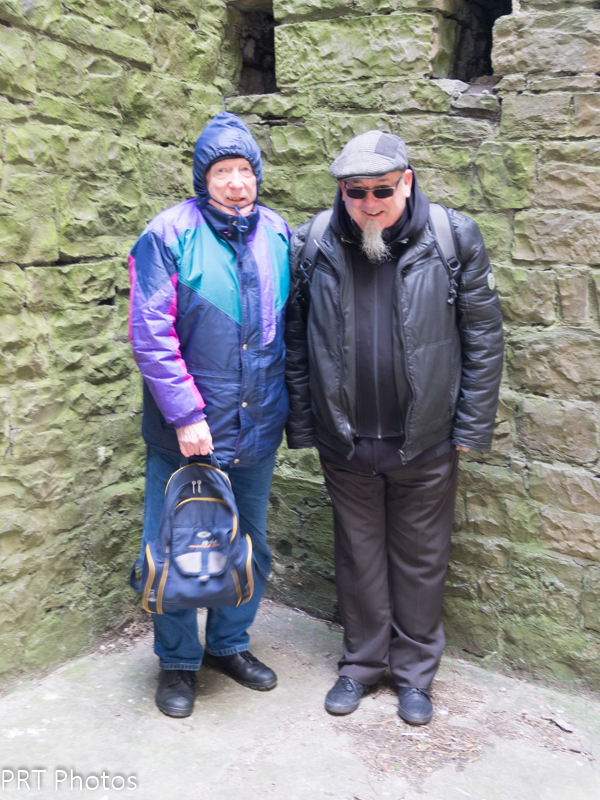
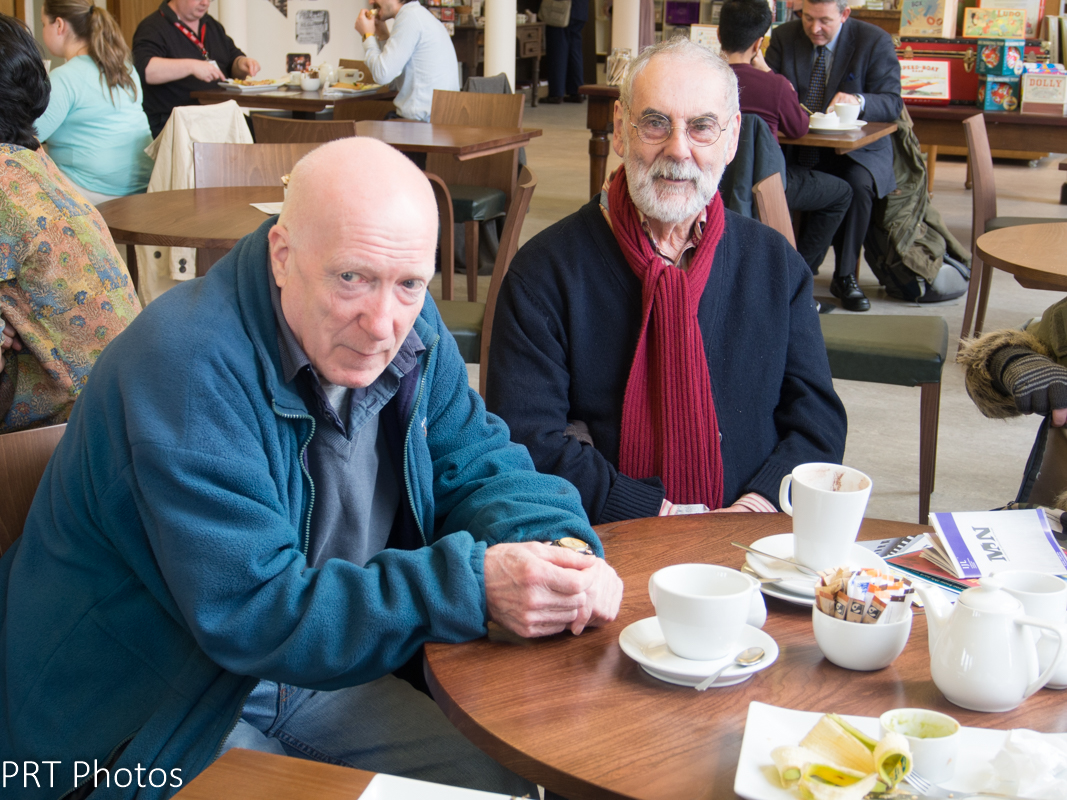
The station has a railway-themed café, and due to the fantastic weather we decided to eat outside during our visit. I think one or two might have gone for healthy options, but most of us had the hearty “Full Steam Ahead” breakfast which consisted of sausages, bacon rashers, tomatoes, black pudding, eggs, baked beans, hash browns, mushrooms and toast with tea or coffee!
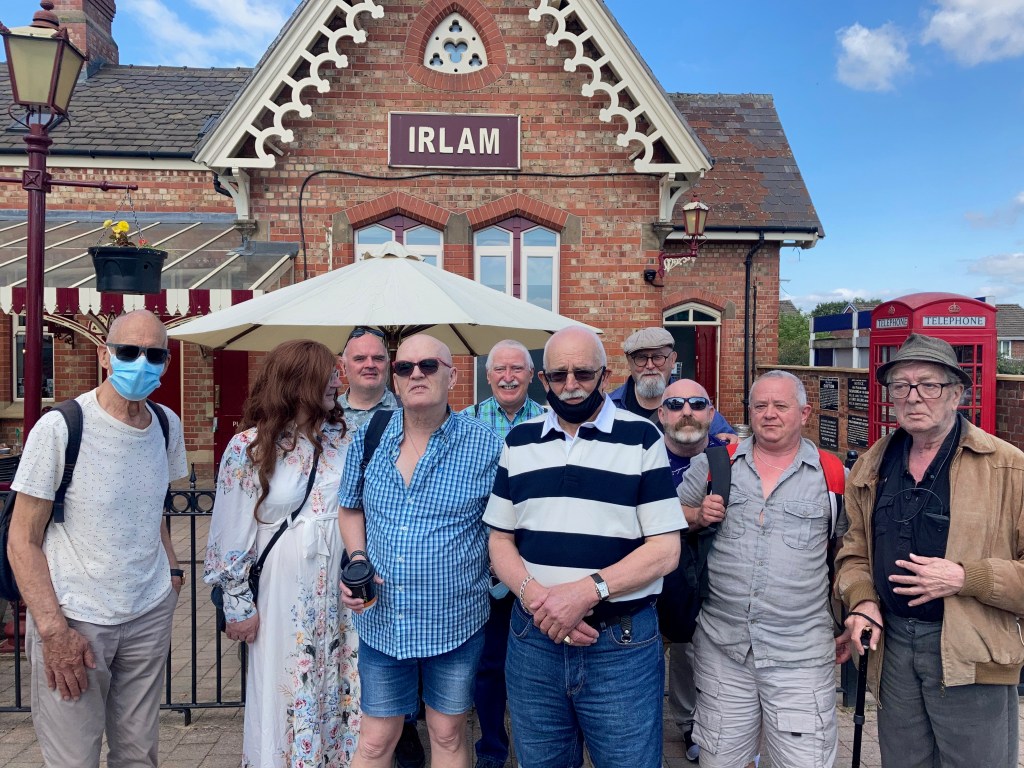
With the homemade food, great conversations and informal ambience, dining at the station is highly recommended. There is a lot to see and make sure you have a look at the photos here.

Mary Cunningham Simpson, the UK’s forgotten lesbian pioneer, tragically dies aged 74
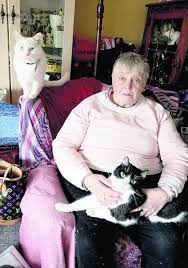
Mary Cunningham Smith (Picture used courtesy of the Wiltshire Gazette & Herald / Paul Johnson)

Mary Cunningham Simpson, a pioneering lesbian campaigner who fought for the rights of same-sex couples in the UK, has sadly passed away aged 74.

Mary was at the forefront of the early LGBT+ rights movement in the 1980s as she challenged laws that discriminated against same-sex relationships – yet today her achievements are widely forgotten.

In 1986 she became the first woman to take a case to the European Convention on Human Rights in an attempt to gain legal protections for cohabiting same-sex couples.

Although her case was unsuccessful it provided an important basis for future cases that ultimately led to a change in the law, both in the UK and at the European level.

“The world should remember Mary Simpson and all she stood for,” said sociology professor Paul Johnson, who interviewed Mary in 2015.

“Mary was a pioneer. She brought one of the earliest cases under international human rights law challenging discrimination against same-sex couples. She did this at a time when same-sex couples had no legal protections in the UK, and when homophobia was endemic.

She suffered attacks on her home, and her campaign took a significant toll on her life. But she would not give up, and she would not give in … she is a lesbian hero and should be honoured as such.”

Mary Cunningham Simpson was ahead of her time

Mary’s fight began when her partner, Nicky, died in 1984, which led to Mary being threatened with eviction from the council house they shared.

They’d lived as a married couple for years, running a joint household, sharing all expenses and sleeping in the same bed, but that meant nothing as the law at the time only made provisions for “husband and wife”.

Mary refused to leave her home and the council launched legal proceedings against her. But she refused to back down, taking her fight to the County Court, the Court of Appeal and finally the European Court of Human Rights.

Her case is now believed to be one of the earliest attempts to establish that rights and benefits associated with marriage should extend to partners of the same sex.

She had a deep-seated desire to live in a society that cherished the freedom for everyone to be themselves

“Although Mary had been treated very cruelly by others she responded not with anger or bitterness, but with a quiet determination to live the life she wanted to live.

She was kind to others, and had a deep-seated desire to live in a society that cherished the freedom for everyone to be themselves,” Johnson said.

“As she told me: ‘I’m me. There are no two people like me. I am me. I will fight for my rights and I will keep on fighting until everybody gets their share of their rights.’”

Tragically the European Commission of Human Rights dismissed Mary’s application, stating that a same-sex relationship fell outside of the scope of the “family life”, “private life” or “home” section of Article 8.

Her treatment by the Commission at that time was not atypical, since complaints about discrimination on the grounds of sexual orientation were routinely rejected.

But despite the many hardships and rejections she faced, Mary regretted none of it.

“You’ve got to keep chipping away at the paintwork, bit by bit, until you break through. I’m proud I did it. They walk about with gay pride, but I’ve got pride inside,” she said.

 “I’m proud that I stuck my neck on the block and tried to get something done. It makes people realise that we can’t be trodden on. Because a lot of people think gays are the riff-raff of society, they’re the queer lot of society … and I thought, no, I’m not having it, I’ve got to do something to make people realise we’re still human beings. No matter which side of the fence we sit, we’re still human beings.”

Ultimately, Mary was ahead of her time: the type of discrimination she endured would persist in the UK until 2002.

Mary’s achievements were widely forgotten

Mary spent her final years in Calne, Wiltshire, where she was known for her love of animals – but not for her important legacy in the field of LGBT+ rights.
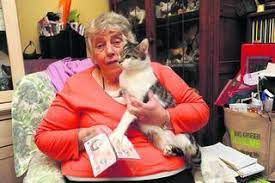
Now, many are calling for her to be remembered as the true lesbian hero she was.

“Mary Simpson was a true pioneer. She should be celebrated and recognised for her bravery and determination to fight injustice,” said associate professor Loveday Hodson of the University of Leicester.

“Because her fight for recognition stemmed from what we might consider her private life, rather than in the public theatre of criminal law, it has received less attention and isn’t recorded in many history books.

Mary deserves to be recognised as a warrior for lesbian rights.”

To learn more about Mary Cunningham Simpson and the case she brought to the European Court of Human Rights, check out “Going to Strasbourg” by Paul Johnson.

Dial-A-Pride-Poem with Maya Chowdhry

Maya Chowdhry presents a selection of special readings which you can enjoy via your telephone.

Dial-A-Pride-Poem offers charming musings by spoken word artist Maya on seduction by wild violets, and why nature is not outraged by sex-switching.

Simply dial this number 0800 005 3904 and choose a poem. It will be recited just for you, for free, and is best listened to with headphones.

This is a Superbia Spotlights commission, and this project will be live from 12 August until 12 September 2021.
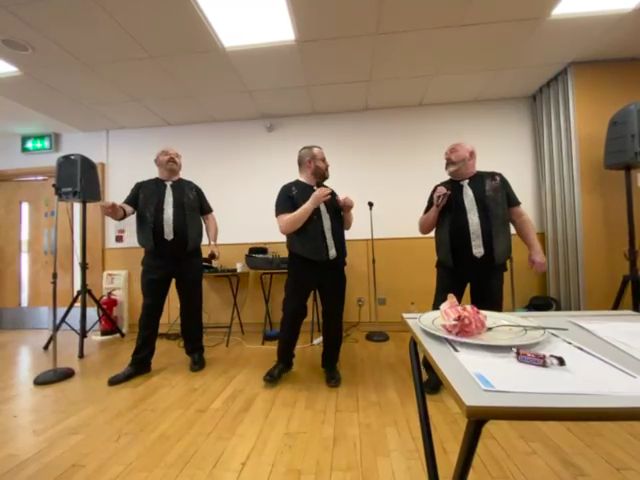
Werewolf and the Manbears guys do a bearified cover of the Shania Twain classic

Queering the North … Richard Wilson … Sonder Radio

News

Queering the North Exhibition

Performance Space, Manchester Central Library

23 August – 28 August 2021, 10.00am – 4.00pm

The OUTing the Past International Festival of LGBT+ History (established in Manchester in 2005) has teamed up with the Museum of Free Derry to create the first retrospective showcase of Queer Activism in Northern Ireland.

This is a rare insight into the previously unacknowledged tenacious heroism of queer activism in Northern Ireland before, during and following “The Troubles”. The project was greatly enriched by the support of several archival collections and regional LGBT+ groups and queer veterans.

The Queering the North Exhibition aims to bring to a wider public an expansive and nuanced reading of the history of the LGBT+ community in Northern Ireland. It brings together archives and recollections from a range of key activists within a scaffolding provided by academic research. The exhibition includes an expansive chronology of key events, commencing with the deliberate exclusion of Northern Ireland from the decriminalising legislation offered by the 1967 Sexual Offences Act through to the introduction of Equal Marriage to Northern Ireland in January 2020.

Museum of Derry Curator Adrian Kerr described the exhibition as a natural step for his institution: “This is a part of our collective past that has been kept hidden, and this is reflected in the nature of the information available for the exhibition. It is the hope of all involved that this will act as a provocative spur towards the creation of the first comprehensive reading of our LGBT+ history.”

The Mayor of Derry City, Cllr Michaela Boyle: “I had the great pleasure of hosting a reception in the Guildhall for the Exhibition Launch. I believe that this exhibition goes a long way towards creating a better understanding of the sensitivities and changes faced by the LGBT+ community and how we can all work collectively to create a better informed and respectful environment on this important issue.”

Sue Sanders (Founder & Chair of LGBT+ History Month UK and Professor Emeritus of the Harvey Milk Institute): “A thrilling and crucial exhibition that reflects the vital importance of working together to seek human rights for all.”

Free – please drop in

Richard Wilson

Richard Wilson

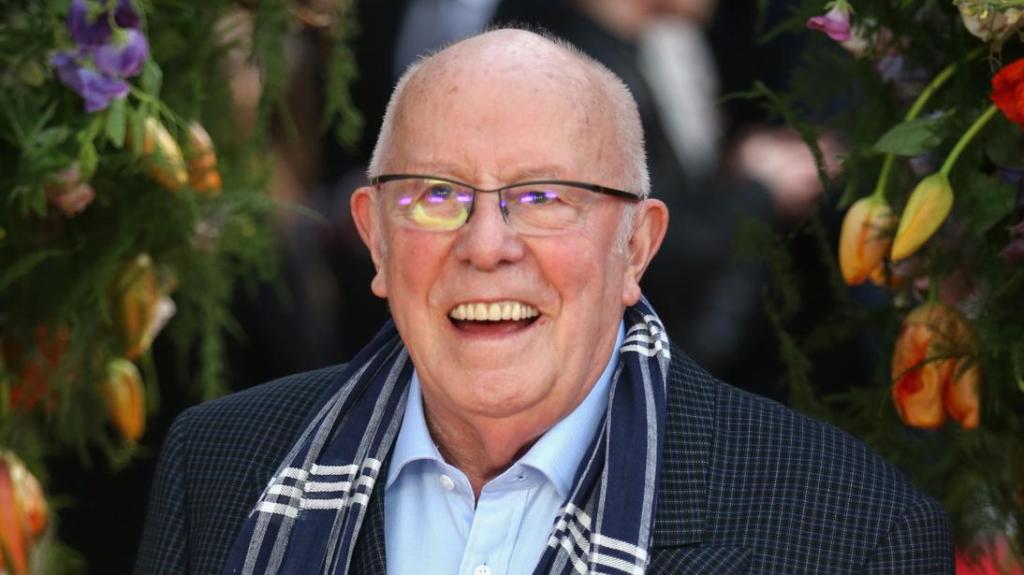
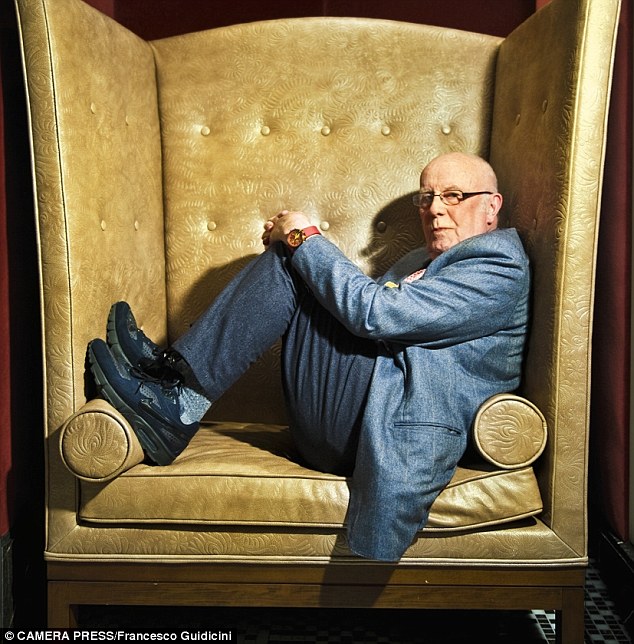
Richard Wilson has something he wants to get off his chest: “When I did Desert Island Discs, they didn’t mention my directing at all.” But he wants to set the record straight; despite coming to fame as Victor Meldrew in the BBC sitcom One Foot in the Grave, he is most proud of his work as a director, which has seen him do associate stints at the Royal Court in London and, latterly, Sheffield Theatres. “I always felt that my directing was much more important than my acting,” he sighs. “I was rather p—ed off.”

The actor was “outed” when Time Out included him in a list of influential gay people in 2013. Richard, now 85, has been a supporter of gay rights organisation Stonewall. He said “I was delighted it had come out. I was a bit worried my sister might find it difficult but it did not seem to worry her at all.” He said being gay in the 1950s when homosexuality was illegal did cause problems.

Richard has long campaigned for gay rights, but never spoken about his sexuality. “I don’t mind people saying I’m gay, because I am,” he says. “But I don’t live in a gay relationship”.

Today, he’s a dashing gent of a man with an OBE for services to his profession and a reputation as a thoroughly nice bloke, but he remains painfully shy, rarely venturing out of his flat without a pair of glasses and a cap.

Here are some things you might not know about his life and résumé:

1. He originally passed on his iconic role as irascible retiree Victor Meldrew.
2. He and Sir Ian McKellen once considered moving in together.

3. He was officially “outed” by London’s Time Out magazine in 2013.

4. He describes himself as a “lifelong socialist”.

5. His voice may be instantly recognisable — but he wasn’t always proud of it.

6. He reunited with his One Foot in the Grave co-star Annette Crosbie on British daytime show Loose Women in 2018.

7. The only thing he disliked about playing Gaius in Merlin was his wig.

8. Over the years, he’s been a prolific theatre director — and a popular one.

9. He became good friends with Alan Rickman after casting him in a play he was directing.

10. Oh, and for the record: He doesn’t think he’s too much like Victor Meldrew.

“Victor was the opposite of me in many ways. I always thought that he was, maybe not a Conservative, but certainly a member of the Liberal Party, and I have always been a staunch left-winger. He had no work at all, poor man, and I had too much. But I suppose there is a sort of Scottish dourness about Victor … and me.”

Sonder Radio

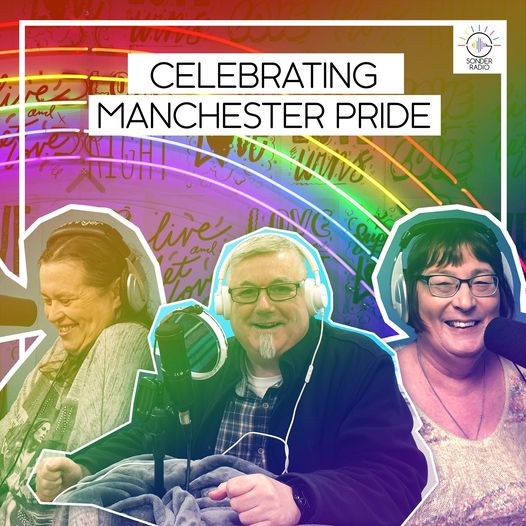
In celebration of Manchester Pride, Sonder Radio are having two full days of throwback shows from Bill Haycraft, Tony Openshaw and Rachel Oliver along with some amazing out and proud music!

Listen on 27 and 28 August on sonderradio.com

Trip to Llandudno … Winston Churchill … Solitaire

News

Trip to Llandudno

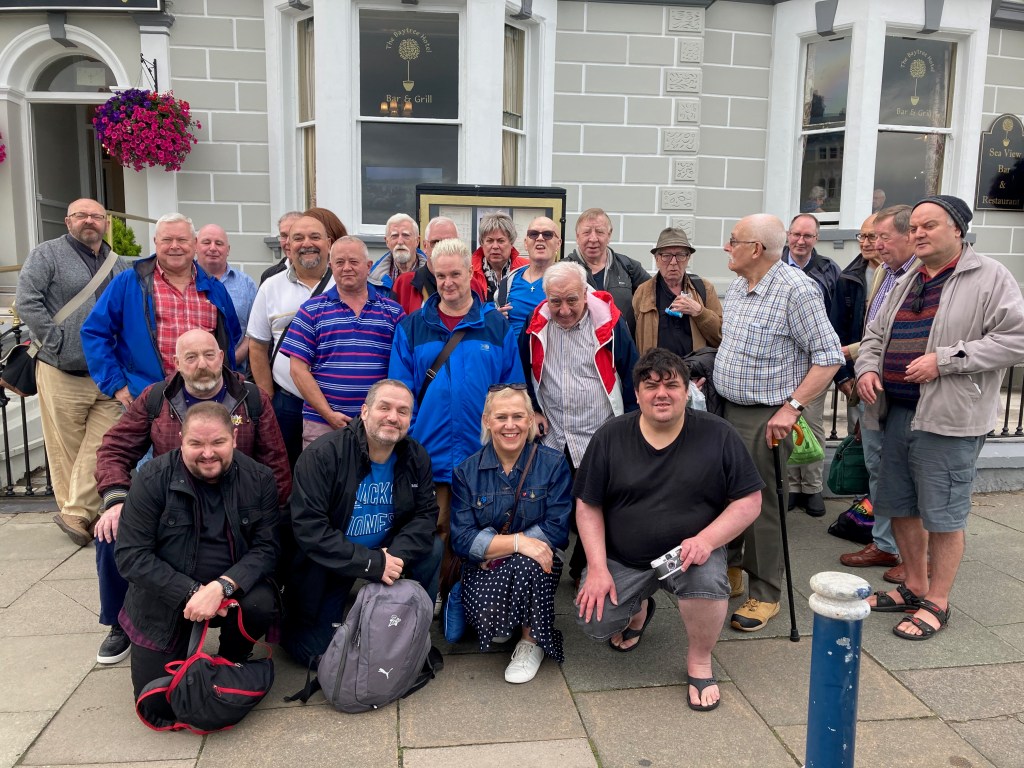
Thirty of us enjoyed a day trip by coach to Llandudno, the largest seaside resort in Wales, with a population of just over 20,000 people.

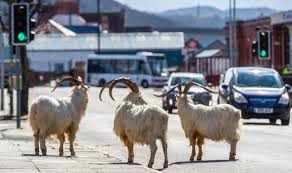
During the first lockdown due to the corona virus pandemic, frisky goats ventured down from their mountain home on the Great Orme into Llandudno in search of something to eat.

The goats became a sensation on national news roaming the empty streets during the lockdown.

We set off at 10.00am and arrived in time for lunch at the Fish Tram Chips Restaurant. There was only room for sixteen people (advance bookings were not taken), so some people had a takeaway and some dined at the pub over the road.

Most of the group took the Great Orme Tramway to the summit of the Great Orme headland, which has fantastic views over the peninsula. The tramway is a cable hauled 3ft 6in gauge tramway, open seasonally from late March to late October. It takes over 200,000 passengers each year from Llandudno Victoria Station to just below the summit of the Great Orme.

It is Great Britain’s only remaining cable-operated street tramway, and one of only a few surviving in the world.

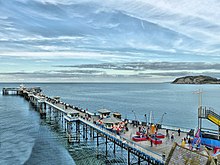
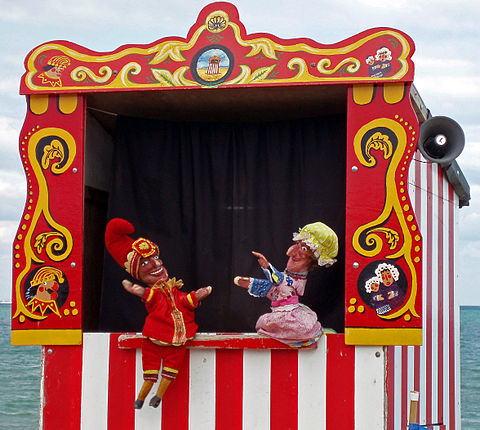
We didn’t have much time in the town to see the pier on the North Shore, a Grade II listed building, built in 1878. It is the longest pier in Wales and has attractions including a bar, a cafe, amusement arcades, children’s fairground rides and an assortment of shops and kiosks. Professor Codman’s Punch and Judy show (established in 1860) was spotted on the promenade near the entrance to the pier.

All in all, a great day out and as usual great photos can be seen here.

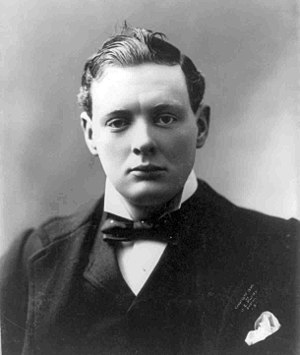
Sir Winston Leonard Spencer Churchill (1874 – 1965)

Winston Churchill in 1900

Throughout his life, Churchill showed little interest in women other than his wife, enjoyed the company of homosexuals, and was deeply attached to male friends including his secretary Edward Marsh, although there is no evidence of any physical relationships. Edward Marsh, Churchill’s private secretary for twenty-five years was a ‘wispy falsetto-voiced’ man of noted good looks who was known to be homosexual. Churchill described him as “a friend I shall cherish and hold on to all my life”.

In 1895 Churchill was accused of having committed “acts of gross immorality of the Oscar Wilde type” while a cadet at Sandhurst. He sued the accuser for defamation and was awarded £400 in damages.

The writer W Somerset Maugham is said to have asked Churchill whether he ever had any homosexual experience, and been told: “I once went to bed with Ivor Novello: it was very musical.”

When he was told that a member of Parliament had been caught in the park with a guardsman, Churchill said: “On the coldest night of the year? It makes you proud to be British.”

The notebooks kept by the Cabinet Secretaries contain short handwritten accounts of the conversations of ministers on a range of issues. On 24 February 1954 the Cabinet discussed the issues of prostitution and homosexuality, then inextricably linked as ‘sexual offences’ in the eyes of the legislators.

Gay sex between consenting adults, even in private, was a criminal offence, and many hundreds of gay men were being caught and convicted of sodomy and gross indecency every year.

The high-profile journalist Peter Wildeblood had been arrested for homosexual offences the previous month, but he did not stand trial until March. The scandal surrounding his arrest and that of Baron Montagu of Beaulieu led to public discussion of homosexuality.

At Cabinet the Home Secretary David Maxwell Fyfe seemed mystified at the spike in convictions for homosexual offences: “While crime generally has doubled, these offences have risen four and a half times. Some think existing law should be limited to protection of young and public indecency. I don’t agree: homosexuals make a nuisance of themselves. But admit I can’t account for this increase.”

Prime Minister Winston Churchill bluntly replied that the Tory party were not going to accept responsibility for making the law more lenient towards gay men.

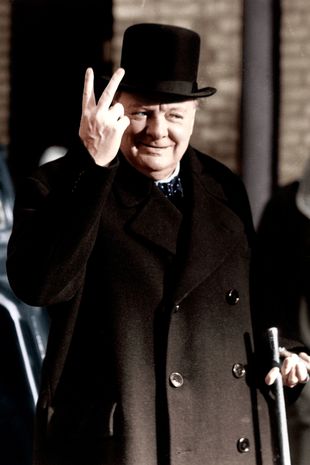
Winston Churchill making his famous V for Victory sign 1942

He suggested that an enquiry might be the way forward, proposed limiting press coverage of the convictions of homosexuals, and suggested that any man caught by police should be offered the option of medical treatment. “Otherwise, I wouldn’t touch the subject,” he said. “Let it get worse – in hope of a more united public pressure for some amendment.”

The idea of an enquiry into prostitution and homosexual offences was considered by several Cabinet ministers, among them Oliver Lyttleton, Secretary of State for the Colonies.

But the Prime Minister perhaps best explained the realities of politics in 1954. “Remember that we can’t expect to put the whole world right with a majority of 18,” he told his colleagues.

Seven months after that Cabinet meeting, the Wolfenden committee met for the first time to consider whether a change to the laws on homosexuality and prostitution was needed. They took evidence from a range of people, including religious leaders, police officers and Peter Wildeblood.

When the Report of the Departmental Committee on Homosexual Offences and Prostitution was finally published in 1957, it came to the conclusion that: “The law’s function is to preserve public order and decency, to protect the citizen from what is offensive or injurious, and to provide sufficient safeguards against exploitation and corruption of others. It is not, in our view, the function of the law to intervene in the private life of citizens, or to seek to enforce any particular pattern of behaviour.”

It was ten years before a Labour government backed a private member’s bill to introduce the changes to the law on homosexuality that the Wolfenden committee recommended.

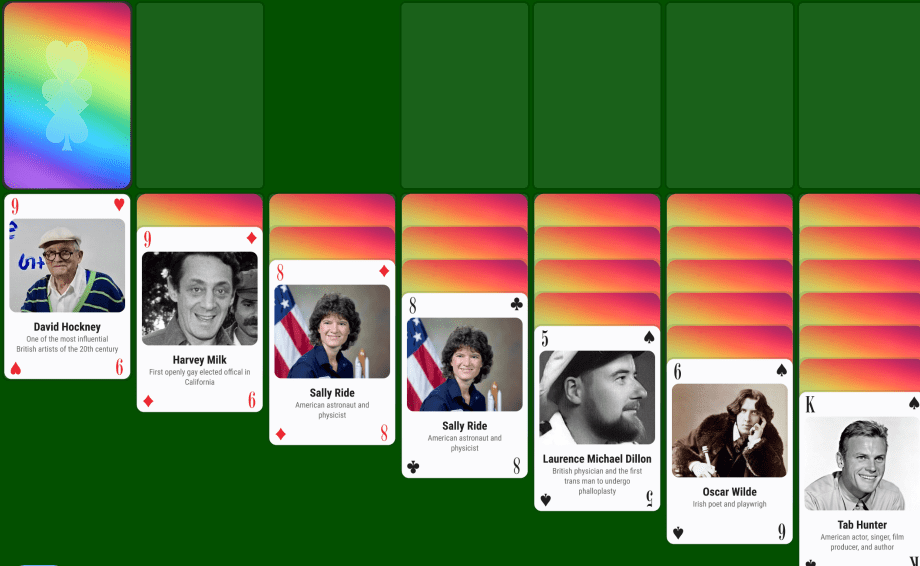
Solitaire

Solitaired have created an online solitaire game featuring LGBT+ figures and activists in history to commemorate Pride Month.

You can play their Pride edition of solitaire here.

Films at HOME … Major General Alistair Bruce

News

Films at HOME (2 Tony Wilson Place, Manchester M15 4FN)

There are some films at HOME which may be of interest:

Suk Suk

Suk Suk (translated as Twilight’s Kiss) – Monday 23 August, 6.30pm

Cantonese with English subtitles

Suk Suk presents the story of two closeted married men in their twilight years: Pak and Hoi. The two men have their respective families, responsibilities and burdens, but their love affair releases them from emotions that they have repressed for years.

Bound by morals and family values, the two men find their precarious relationship hanging in the balance.

Wings

Old, Bold, Queer, Here (Women Over 50 Film Festival) – Tuesday 24 August, 6.30pm

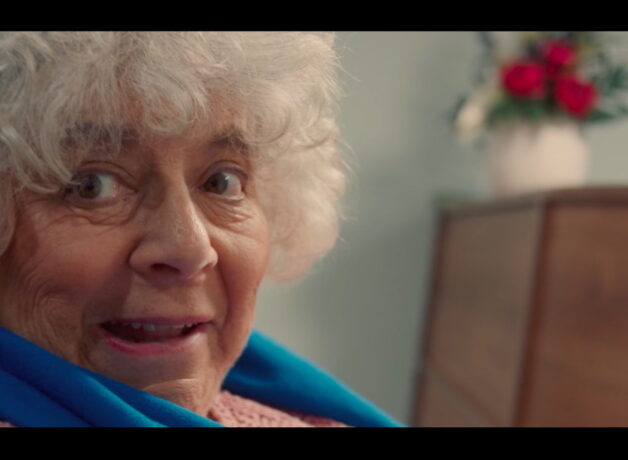
Older queer women at war, in love and swinging from the rafters. Wings, starring national lesbian treasure Miriam Margolyes, and six other fabulous LGBTQ+ shorts from the Women Over 50 Film Festival.

Films screening in this selection are:

Swivel (Experimental / 7 mins)

Older Than What? (Documentary / 13 mins)

My Mama, A Man (Documentary / 9 mins)

The Passionate Pursuits of Angel Bowen (Documentary / 25 mins)

Pastry (Drama / 13 mins)

SWING (Experimental / 10 mins)

Wings (Drama / 18 mins)

March for Dignity

March for Dignity – Thursday 26 August, 6.30pm

English & Georgian with partial English subtitles

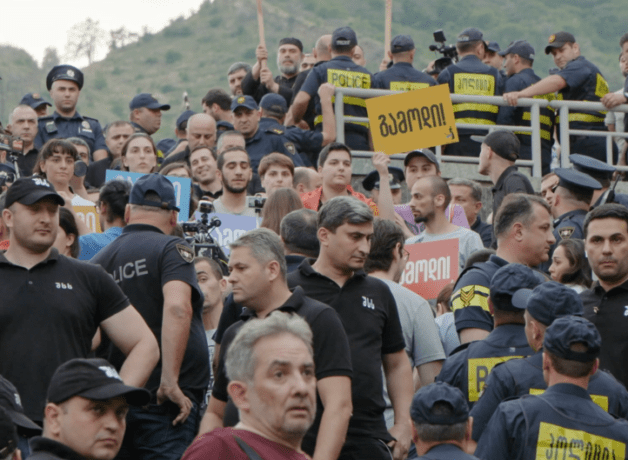
Feature documentary March for Dignity follows a small group of LGBTI+ activists in Tbilisi, Georgia as they attempt to conduct the first Pride march in the country. They face overwhelming opposition from far-right groups, the government, and the Georgian Orthodox Church who have a history of inciting violent attacks on the LGBTI+ community.

With membership of the European Union, and anti-Russian sentiment firmly on the political agenda, Georgians are at a turning point in history where they must choose to fight for progress and human rights or concede to greater Russian influence. In the midst of this geopolitical turmoil, the committed organisers of Tbilisi Pride bravely strive to be visible in their evolving country.

Alastair Bruce: ‘When I joined the army it was illegal to be gay’

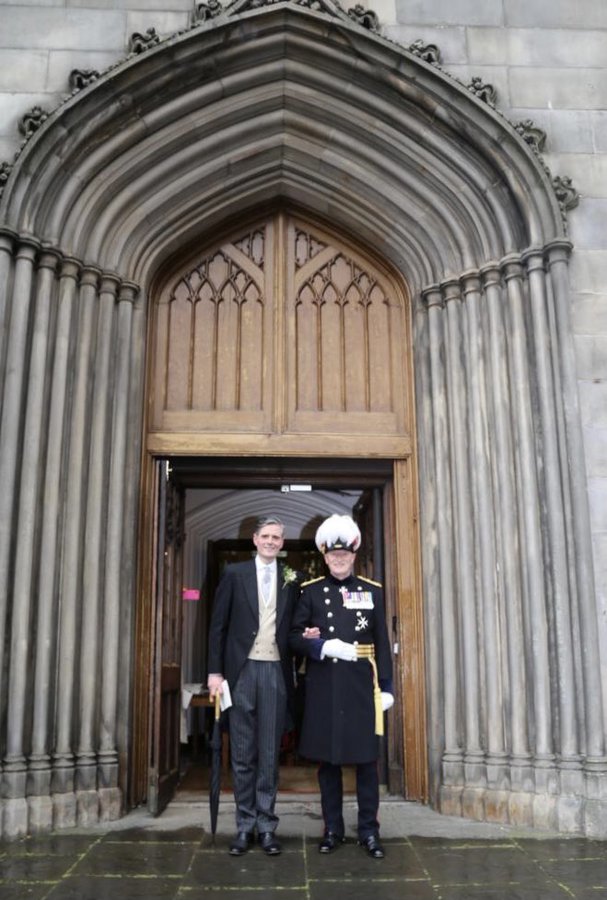
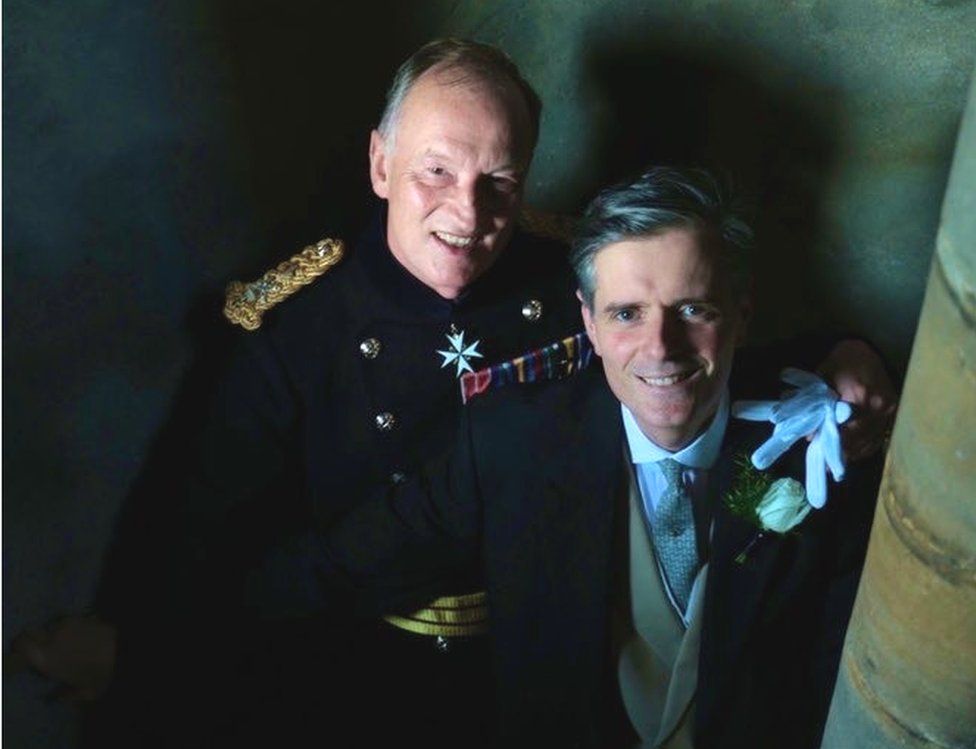
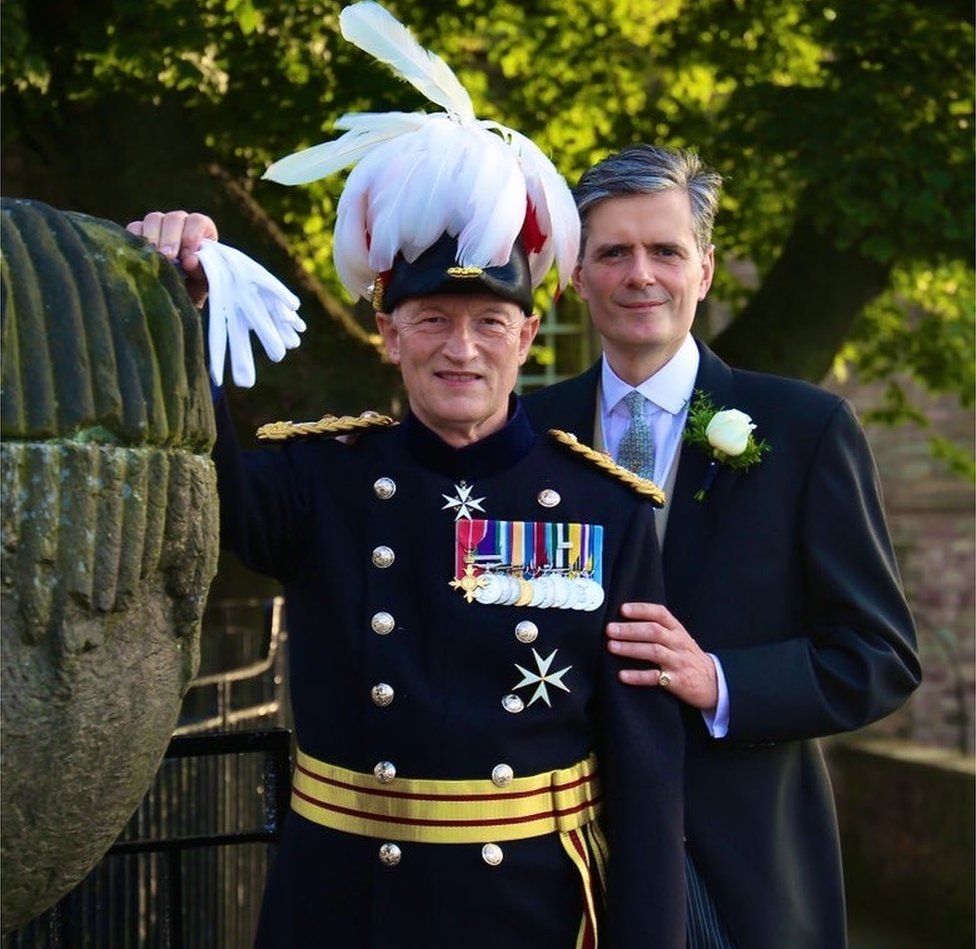
Major General Alastair Bruce was married to Stephen Knott in the shadow of Edinburgh Castle last month. He tweeted a game-changing picture, a snap of his wedding day, alongside his husband. He had come out, in style.

When Alastair Bruce joined the army in 1979 it was illegal to be gay and serve your country.

In July 2021 Major General Bruce became the highest-ranking officer in the British army to have a same-sex wedding. After years of hiding their relationship, he married his partner of 20 years, Stephen Knott, in Edinburgh in full military uniform.

General Bruce kept his sexuality under wraps for his entire professional life, fearing he would be “dishonourably discharged” from the institution he sacrificed so much for.

He served with the 2nd Battalion Scots Guards in the Falklands in 1982, and rose through the ranks hiding that side of him. He is now governor of Edinburgh Castle.

It wasn’t until January 2000 that the British military changed its view on homosexuality. Until then, gay, lesbian and bisexual people had been banned from serving in the British Army, the Royal Navy and the RAF. But even after General Bruce met Stephen in 2001, he continued to keep his relationship quiet.

The couple kept their relationship discreet but are now fully open after their wedding in Edinburgh.

On BBC Radio Scotland the royal broadcaster said: “I think I had spent most of my life keeping it quiet anyway. Attitudes socially were somewhat different to what they are today. Some people haven’t altered their view but most people have. As a consequence, in almost every professional interest I had at the time, there would have been an issue.

As you join the army you have to adapt to be more physically able – it’s all part of the training. So I think I had been well trained to cover up the fact that I had a particular sexuality and I just quietly got on with living as well as serving.”

He met Stephen when he was lecturing on a cruise ship in the Great Barrier Reef.

“I never thought anyone came to my lectures under the age of 40,” he said. “I was amazed he would be interested in some of the historical stuff I talk about. But he returned and we got chatting and it just took time and within a few months he left where he lived in Northern Ireland to come and live with me in this country. It was such a huge brave step by him and I was awakened by his capacity for love to realise what really mattered in life. And although we continued to maintain a very low-key relationship, we knew this was something that was going to last.”

As governor of Edinburgh castle, General Bruce takes part in high-profile ceremonial duties. Getty Images

General Bruce said the couple worked hard to be discreet. “I used to say to Stephen if we were walking down a street and I saw someone in the army he would walk on ahead as if I didn’t know who he was and we would meet up in the next shop.”

But, as attitudes have changed, his did too, and as he revealed his private life to those closest to him, he found nothing but support.

‘Incredible journey’

The wedding at St John’s Church on Princes Street, officiated by the Bishop of Edinburgh, started a new, more open chapter in his life. After the ceremony, the couple held a reception in Edinburgh Castle.

He explained: “It was fantastic. It absolutely poured with rain, but nothing was going to dampen how Stephen and I felt. It has been a long journey and we were absolutely delighted and we are still thrilled.”

And it meant a lot to him to be married in full Army ceremonial uniform.

“I have really loved serving in the Army. I wanted to wear uniform at my wedding to say thank you to the armed forces for the incredible journey they have taken and the fact that now, as it should be, we only care whether people are able to deliver, as I put it, ‘calculated precise and legal violence against the Queen’s enemies’ when the nation demands it. What people do in their spare time is of no consequence to that issue.”

He does not see the earlier years as living a lie and has found peace with the past. Indeed many friends have told him they knew, but respected him enough to leave him alone.

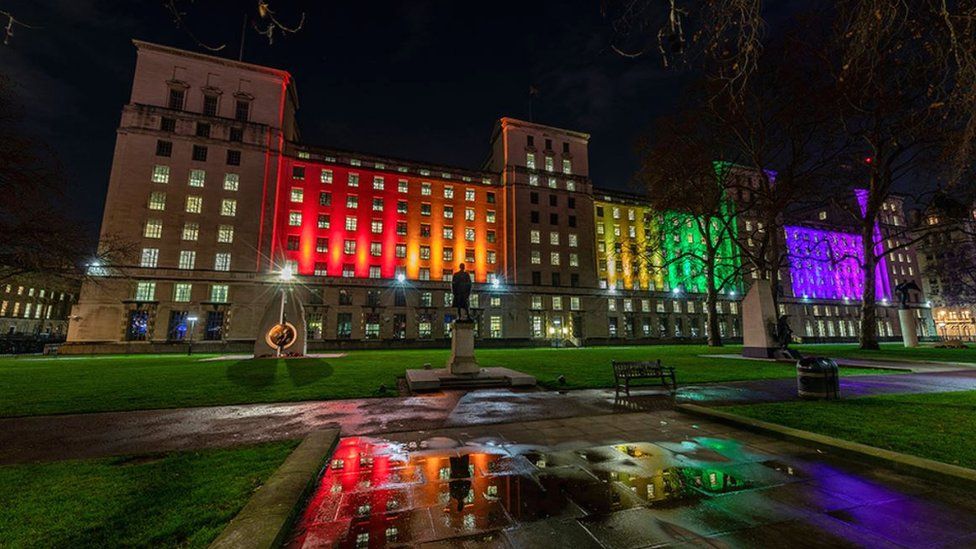
Last year, the MoD main building was lit in rainbow colours to celebrate 20 years since lesbian, gay and bisexual personnel were legally allowed to serve in the armed forces.

He said: “It was complicated and you had to recognise there was a certain amount of jeopardy if you allowed it to become a more publicly-known issue. I am still a bit gauche but that is not caused by how people truly react because everyone is delighted. The truth is, my anxiety endures purely because I lived through a youth where I was cautious and I had a profession where I had to be very very careful and that does shape you.”

The Major General now looks forward to his work at Edinburgh Castle, with Stephen by his side, not walking ahead.

“Because I love history anyway and because I am a Bruce, it means so much to be here but to have Stephen by my side makes everything more entertaining – he adds levity and is brilliant with people.

“I hope we will be a firmament of that continuing welcome this castle affords to people all over the world who come to find the very best of Scotland.”

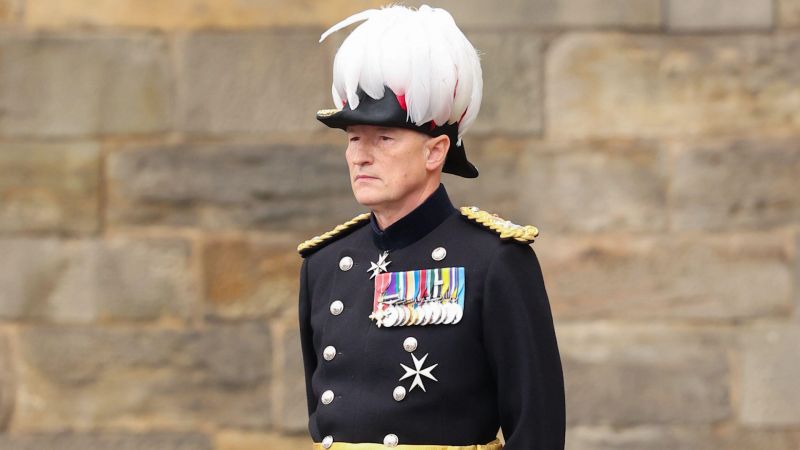
Major General Alastair Bruce of Crionaich attends the Ceremony of the Keys on the forecourt of the Palace of Holyrood house in Edinburgh Credit: PA ALAMY

Welcome Party … The Pride circuit struggles to redefine itself … Street Poem … Podcasting course

News

Welcome Party

We organised a party to welcome everyone back to Out In The City and to welcome some new members.

The event was presented by Ken and Lynn and featured singing, poetry and storytelling by David, Louise, Norman G, Norman W, Patrick, Pauline and Wolf (Derek, Will and Gary).

Wolf (Derek, Will and Gary)

More great photos can be seen here.

Sadly, it was also the funeral of one of our members, who died recently after a heart attack. The party was dedicated in memory of Bruce.

Ode to Bruce

Today our friend was buried

A kind quiet man

Who enjoyed football and the pub

And trips out in England

A founder member of Out In The City

Bruce had close friends

His Buddies at the pub

His Buddies at Out In The City

And a large extended family

Who all loved his company

When you gave him the time

He was a special man

With hidden depths

He listened

He cared

Lets all remember Bruce today

Now he has gone

The Pride circuit struggles to redefine itself

We’ve seen New York, London, Brighton and now Montreal reclaim their prides with Boston and Philadelphia dissolving their prides to make way for a fresh new start.

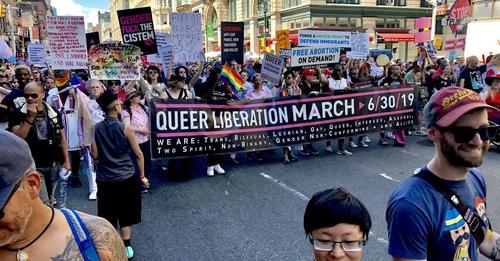
Call it the summer of discontent: the LGBT+ Pride circuit is undergoing a revolution not seen since the Christopher Street Liberation Day March was held in New York City on 28 June 1970, to mark the first anniversary of the Stonewall Inn uprising of 1969.

Calling themselves a “a people’s political march” members of New York City’s Reclaim Pride Coalition held their inaugural Queer Liberation March in June 2019 to mark the 50th anniversary of Stonewall, stating they were working “to reclaim the spirit and meaning of Pride to better represent the LGBTQIA2S+ community.” Courtesy of Richard Burnett

That march inspired LGBT+ activists around the world to organise Pride marches of their own, including Montreal’s very first Pride march in June 1979, organised by La Brigade Rose, to mark the 10th anniversary of Stonewall. La Brigade Rose organisers drew 52 marchers in 1979. Forty years later, total attendance was 3.4 million.

The increasing commercialisation and corporatisation of Pride over the years is an issue that has polarised the LGBT+ community, more recently compounded by the politics of inclusion and representation in the wake of Black Lives Matter and the murder last year of George Floyd.

Calling themselves a “a people’s political march” members of New York City’s Reclaim Pride Coalition got the ball rolling in 2019 with their inaugural Queer Liberation March to mark the 50th anniversary of Stonewall, stating they were working “to reclaim the spirit and meaning of Pride to better represent the LGBTQIA2S+ community.”

At New York’s annual Queer Liberation March, there are no corporate sponsors and no police barricades.

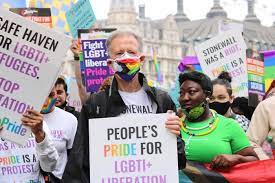
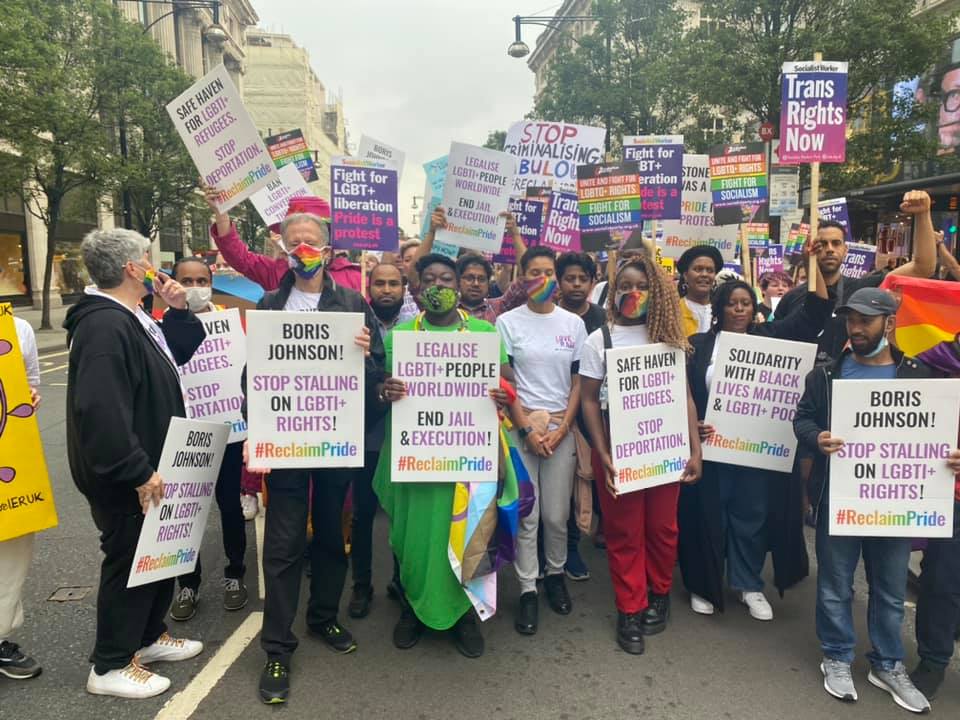
This summer, the Reclaim Pride movement migrated across the Atlantic when the first-ever Reclaim Pride march was held in London on 24 July, to protest against the commercialisation and corporatisation of London’s huge Pride parade. Protestors held signs and shouted slogans in support of queer and trans civil rights, and denounced racism and transphobia within the LGBT+ community.

“We want to say that our human rights should be central,” said renowned LGBT+ activist Peter Tatchell, one of the organisers of London’s Reclaim Pride march. “As well as a celebration, Pride has to be a protest.”

In Philadelphia, after organising the Philadelphia Pride March and Festival for 28 years, Philly Pride Presents cancelled their 2021 parade and dissolved after community criticism over lack of diversity. Black LGBT+ community leaders in Philadelphia are planning a new Pride event and organisation. As ACT UP Philly organiser José de Marco told the Philadelphia Gay News, “Our planning has been inclusive of the entire community for the first time.”

A similar controversy claimed Boston Pride, which organised Boston’s Pride parade for 50 years. Accused of ignoring racial minorities and transgender people, its board of directors stated on 9 July, “It is clear to us that our community needs and wants change without the involvement of Boston Pride. We have heard the concerns of the QTBIPOC (queer, trans, Black, Indigenous, people of colour) community and others. We care too much to stand in the way. Therefore, Boston Pride is dissolving. … By making the decision to close down, we hope new leaders will emerge from the community to lead the Pride movement in Boston.”

QTBIPOC programming has increased dramatically at Fierté Montréal. “Racism exists in Quebec and those who deny it are part of the problem,” says interim director Jean-François Perrier. “Fierté Montréal was established in 2007 to celebrate the diversity, solidarity and resilience of the LGBT+ community. It’s our responsibility to educate ourselves, to question our ways and to decolonise spaces.”

Following the cancellation of their 2020 parade because of COVID, Fierté Montréal’s flagship event returns with a scaled-down, in-person Pride March on 15 August. Under the theme Together for All, it is a throwback to Montreal’s original Pride marches.

At this year’s Pride March, there will be no vehicles, floats or contingents. Banners, signs and streamers are welcome as long as respect and safety for all are observed.

“This year we are returning to our roots,” says Perrier. “This is an opportunity to make all our voices heard.”

Meanwhile in Manchester the Council meets LGBT charities to discuss the way forward

Manchester Pride announced cuts in funding to the LGBT Foundation and George House Trust. The partnership to fund the ground-breaking condom and lube distribution scheme is coming to an end, but LGBT Foundation pledges the scheme will continue. You can download the full press release here.

George House Trust, The LGBT Foundation and Manchester Pride met with council representatives at the Town Hall on Thursday 12 August

They reported that it was a very productive and positive meeting to discuss Pride and the funding of other LGBT charities.

The meeting agreed that:

1. The three charities each have a vital role to play in serving the LGBT communities of Greater Manchester.

2. The City Council will convene a meeting between Manchester Pride, LGBT Foundation, George House Trust and the Village Licensed Business Association after the festival, to explore how Manchester Pride can continue to support the work of the other two charities on an ongoing basis.

3. The City Council will actively work with LGBT Foundation and Manchester Pride to ensure the continued survival of the safer sex pack scheme.

4. Manchester Pride has agreed to conduct a transparent review during autumn taking views from a wide-reaching range of stakeholders and the community about the future direction of the Festival. The result will be published along with an action plan.

Street Poem

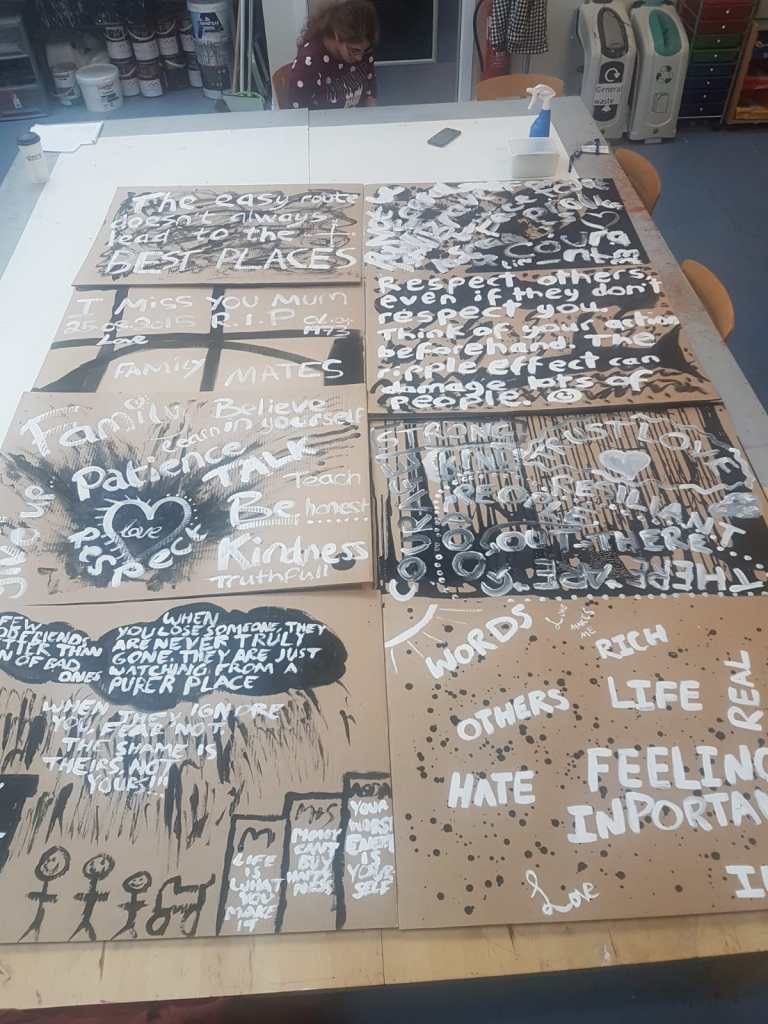
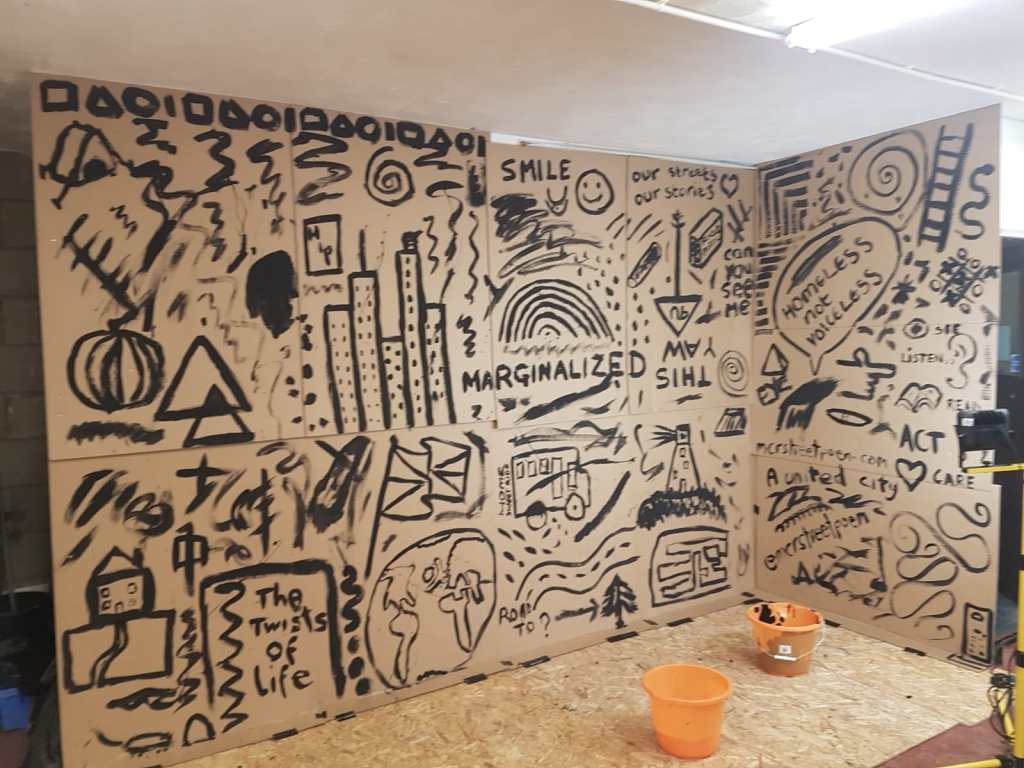
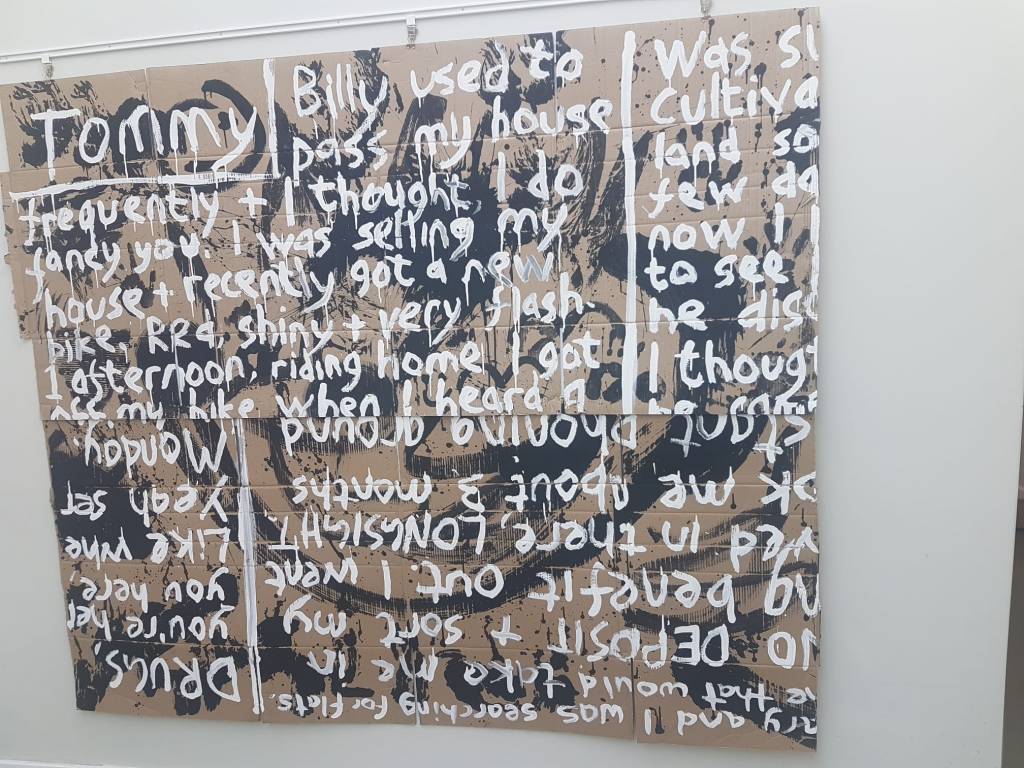
Manchester Street Poem is a co-produced art collective and charity, whose work reflects the personal experience of our city’s marginalised communities. Guided by the principle that there is ‘ no us and them – only us’, we aim to promote this viewpoint through art and storytelling in the belief that by exploring our shared humanity, we can break down barriers.

We’re aiming to run 6 sessions of workshops throughout September/October, using creative writing/storytelling as a therapeutic tool and to tell the lived stories of those part of the LGBTQ+ community. 

Absolutely anyone who wants to take part is welcome and we have the resources to run these workshops in person at Islington Mill, or online via Zoom (we can provide technology to do this if necessary.)

It would be fantastic to have some of you involved, and we’re hoping to identify a group of participants before we decide on what times/dates as we want it to be suitable for the majority to attend.

If you are interested, please contact us.