We Are Everywhere … Palm Springs … LGBTQ+ Advisory Panel

News

We Are Everywhere

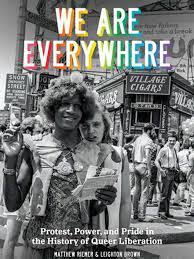
Since 2015, Matthew Riemer and Leighton Brown have run the Instagram account @lgbt_history, which offers spellbinding photos of our vast LGBT+ past, from protests and parties to riots and balls.

With thousands of unearthed LGBT+ historical artifacts, the massively popular Instagram account does the vital work of making our past accessible to all. Their slogan is: Our Past Becomes Inspiration for a Better Future.
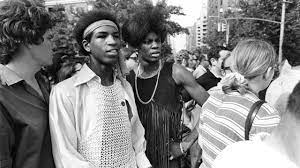
View of attendees in Washington Square Park at one of first mass rallies in support of gay rights, New York, New York, July 27, 1969. The event marked the one month anniversary of the Stonewall riots (28 June); the following year, the event was repeated as the first annual Gay Liberation Day .
Fred W McDarrah / Getty Images
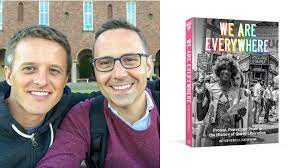
Leighton Brown and Matthew Riemer; their book “We Are Everywhere”

Scouring archives both online and off, Riemer and Brown have unearthed thousands of images that reveal the complex web of connections that tie the LGBT+ communities together, both in the present day and stretching back centuries.

Alongside each picture, they supply a brief caption to provide context that’s often more jaw-dropping than the photo itself. An image of an elderly man staring at the ground turns stunning when the caption reveals that it’s Frank Kameny, who coined the protest phrase “gay is good”, studying the names of friends stitched into the AIDS quilt. A twenty-something man sitting on a dock with friends becomes haunting when the caption reveals that it’s a young Alan Turing, whose engineering prowess helped win World War II.

Riemer and Brown, who are a couple, began the project after realising that they lacked a connection to their past during a ceremony honouring Frank Kameny. Now, they’ve produced a new book, “We Are Everywhere”, that gathers some of their most amazing finds.
Matthew Riemer was interviewed about his work alongside Brown, their mission, and their hopes for the future:

What’s your background with history, particularly queer history?

We were both history majors in undergrad, though neither of us had any interaction with queer history when we were undergrads. I had started to collect buttons in 2013 from queer history, mainly based on aesthetic.

I knew the name Frank Kameny, who’s best known for coining “Gay is Good,” and much much more. We went to the unveiling of Kameny’s headstone in 2015, and it was during that event where activists and historians spoke that Leighton and I both had a moment, an existential crisis where we realised we don’t know shit — anything — about our history.

Stonewall, Harvey Milk, AIDS, and marriage is what we knew, and we didn’t know anything about those things. Without really talking about it, we went off on our own directions. On the Uber ride home Leighton was looking at images, searching Frank Kameny, and seeing images of the homophiles in front of the White House 1965. I started to do more of the reading.

What was it like to find out how much history you’d missed?

It was really sad and scary and discombobulating. It’s something that I think more and more privileged people — and we are privileged — have come to understand, with the sociopolitical realities of the US, that we have been walking around taking history, belonging, and everything for granted. All of a sudden it became clear to us that we don’t have an anchor, and there’s much more to it than what we know.

As underrepresented people, we’re taught never to ask questions. We grow up assuming there isn’t anything. We show up at Pride and then we go home. We wanted to show the connections, that it’s a 24/7 job to be activists.
Where do you find the images that you use?

Everywhere. Leighton started with the ONE Archives, which has done an amazing job of digitising. So has the New York Public Library. I went to seven to ten archives, and I’d go through thousands of negatives and take photos with my iPhone. Very quickly it opens up and it never stops. You start to realise that among libraries and archives, there are a ton that have digitised, but that’s barely the tip of the iceberg.

One of the things that we’ve learned in this project is that history isn’t dead. We would learn these names, and there’d be a picture and there’s a list of names, and we’d go on Facebook and there those people are.

There’s internalised homophobia and modesty that makes those people think, “Who wants to see pictures of me and my friends in a park in 1975?” And the answer is, “We do.” We thought there was a finite number of images to use. But Leighton’s collected about 100,000 images, and we have the rights to maybe five percent.

How do different generations respond to your work?

The younger folks have a recognition of our infinite existence. Our work isn’t a history of queer people, it’s a history of queer activism. We want people to know that the anger and isolation and frustration and joy they feel has always been there. Hopefully that will have somewhat of a humbling effect, and we see that.

On the opposite end, with our elders, there’s a realisation that people know that it mattered. The elders always knew that it mattered, but now they’re getting the credit they know they deserve. In a community that has always prioritised whatever Hollywood star comes out over the front-liners, to be able to have a popular social media platform where at least for a second someone is seeing all these kids freak out about their outfit or their sign from a 1987 protest is gratifying.

So many kids will say, “these people were so badass,” and I’m like, “I tagged them! You can talk to them, you can tell them.”

We try to moderate a conversation in the comment section. Hopefully there’s conversation between generations, a mutual respect. For those willing to engage and listen and be part of this, it’s been incredible.

We take comments very seriously, and learning to listen and learning to understand the perspective of those who feel unincluded. It’s my obligation not to convince people who feel excluded that they’re welcome, but rather to ask, what did I do and what can I do to be more successful in telling history? That doesn’t mean changing history, that just means making sure that the language that I use is respectful of all.

Has this project changed how you see yourselves in relation to the LGBTQ+ community?

I don’t know how we saw ourselves before. I think looking back that I focused more on how I saw myself in the cis-het community than I thought about my relation to the LGBTQ+ community. Meaning, assimilation. I was a gay attorney at a big law firm, and I was on brochures and stuff. I represented diversity.

That was more about existing in space carved out for me both by the work of my elders in the queer community and a little bit of space by the dominant culture. With all my privilege, I wasn’t focused on what I can — and should — do for my community. That’s entirely changed. Today the question I ask myself is, “What are we doing for the community?” The job is not just to exist in the space that others created for us, but to create more space.

And if people try to shout us down, we have the privilege of shouting back.

Living Out Palm Springs to offer LGBT+ seniors a retirement community

One of the amenities to be offered at Living Out Palm Springs will be a dog park.

For decades, Palm Springs has been a popular retirement destination for well-to-do gay men. The city in the desert might become more attractive as it prepares to welcome Living Out Palm Springs, an upscale resort-style apartment community designed specifically to meet the unique needs of LGBT+ seniors.

A groundbreaking ceremony will take place at the 9-acre development during Palm Springs Pride.

The project was initially scheduled to break ground in early 2020 as a luxury condo retirement community, but then COVID-19 pandemic hit, and it was put on hold.

The developers eventually decided to pivot their business model from luxury condominiums to upscale apartments.

The Coachella Valley’s first and — so far — only LGBT+-centric retirement community, North Palm Springs’ Stonewall Gardens, opened in 2014. The facility’s 24 bungalow-style apartments include an option for 24-hour on-site care.

If residents require it, Living Out Palm Springs will recommend supportive in-home care companies with LGBT+ cultural competency.

LGBT+ seniors don’t have many options for welcoming and inclusive living environments for people 55 and over. LuAnn Boylan, who’s in charge of marketing and sales with Living Out Palm Springs, said: “We hear stories all the time about people who are discriminated against from the senior communities they live in, whether it’s from other residents or from the staff. Sometimes people have to hide photographs in their own homes, photographs of them with their partners, so people don’t know they’re in a same-sex relationship.”

According to SAGE (Services & Advocacy for LGBT Elders), when compared to older heterosexual adults, LGBT+ seniors face several challenges:

  • Twice as likely to live alone
  • Half as likely to have life partners or significant others
  • Half as likely to have close relatives to call for help
  • Are caregivers for older loved ones, but four times less likely to have children to help them.

Living Out Palm Springs has been created to fight loneliness and increase socialisation among residents. The project will feature numerous amenities:

  • Upscale restaurant and piano bar operating
  • Private screening room
  • Massage studio
  • Hair, pedicure, and manicure salon
  • Community lounge with coffee bar, prepared food options, yogurt bar, and workspace
  • Resort-style swimming pool
  • 2 jacuzzi-spa areas
  • State-of-the-art fitness centre
  • Putting green
  • 2 ball courts
  • Outdoor BBQ and entertainment areas
  • Pet park for large and small dogs adjacent to a full-service pet facility (retail, grooming, boarding, and daycare).

The 122 luxury apartments will range from 1,100 to 1,700 square feet, with every unit containing a large usable balcony or patio.

An official with the project said the rates have not yet been set, but will be comparable to some of the luxury heterosexual communities in the area. That means starting rents could be between $4,500 and $5,000 a month.

Project construction is scheduled to take 18 months with anticipated opening in early 2023.

Do you want an opportunity to create a Greater Manchester that’s better for LGBTQ+ people?
The deadline for applying to join the Greater Manchester LGBTQ+ Advisory Panel has been extended to Tuesday, 7 December 2021.

The Panel is one of seven established by Greater Manchester Combined Authority (GMCA) to tackle inequality and injustice in the region. They aim to improve the lives of LGBTQ+ people across the city region by putting LGBTQ+ communities at the heart of decision-making in Greater Manchester.

Join the Panel

LGBT Foundation is currently looking for passionate individuals with links to local LGBTQ+ communities to join the Panel on a voluntary basis. In this role, you will have the opportunity to advocate for LGBTQ+ people across Greater Manchester and influence policy at the highest level. You will also have access to training and development opportunities to ensure you can make the most of the time that you volunteer.

If this sounds like you, visit their website to find out more and apply by Tuesday, 7 December!

They particularly encourage applications from trans and non-binary people; LGBTQ+ women, people of colour (PoC), and disabled people; and others with lived experience of multiple marginalisation to ensure that the Panel is representative of diverse LGBTQ+ communities across Greater Manchester.
Chetham’s Library … Lewis Hamilton … Your Words Are Powerful

News

Chetham’s Library

We had a meal in the Seven Stars pub, part of the Printworks entertainment venue. The premises are named after one of Manchester’s long-lost inns, as the original Seven Stars stood close by and had a picturesque Tudor-style front. It claimed to have been licensed since 1350. 

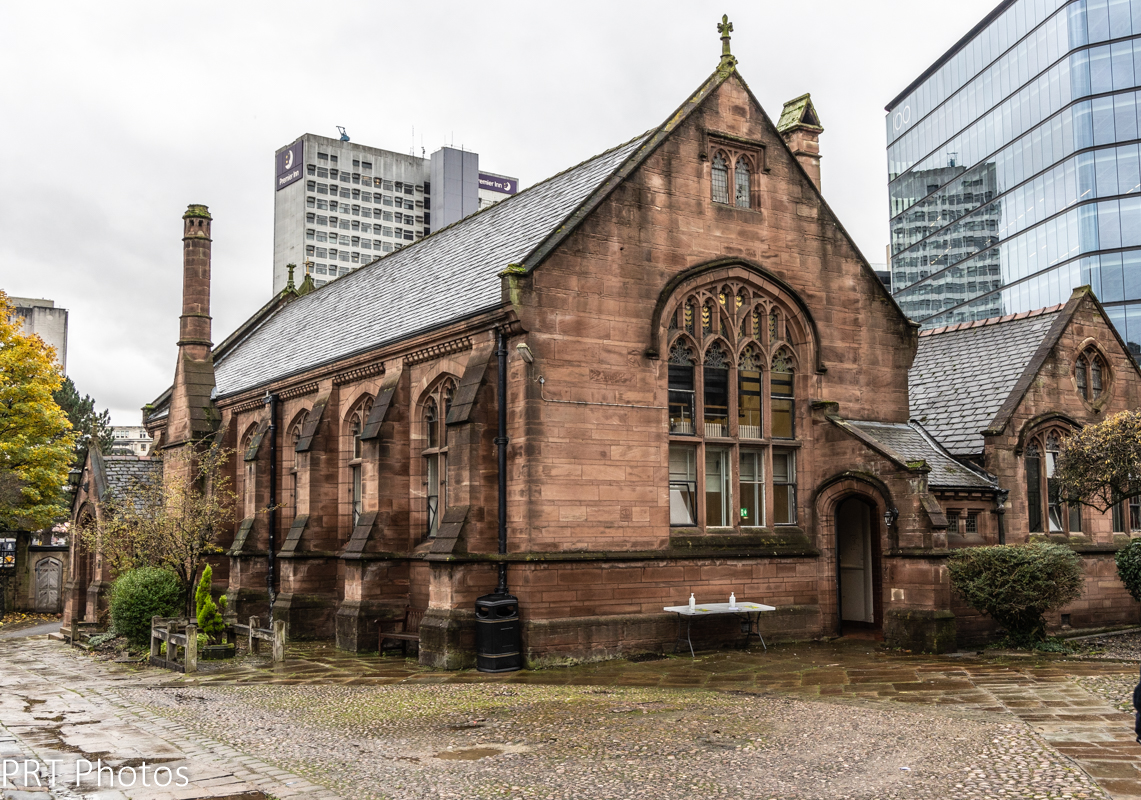
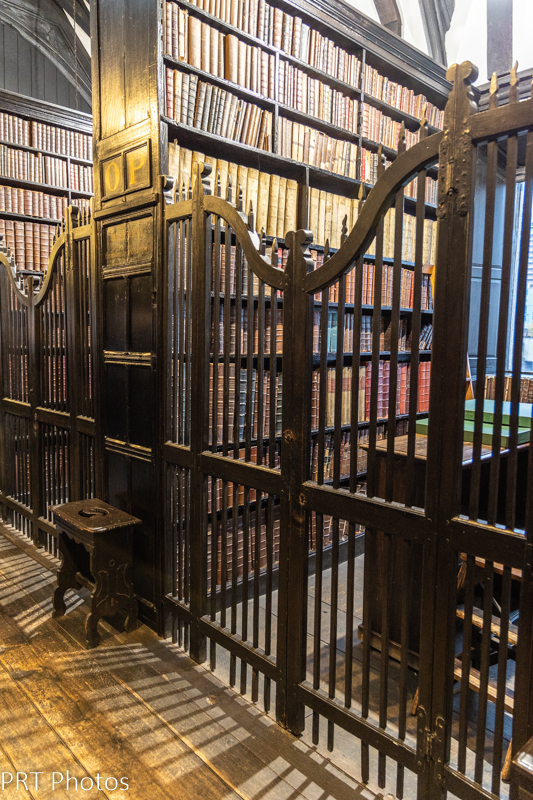
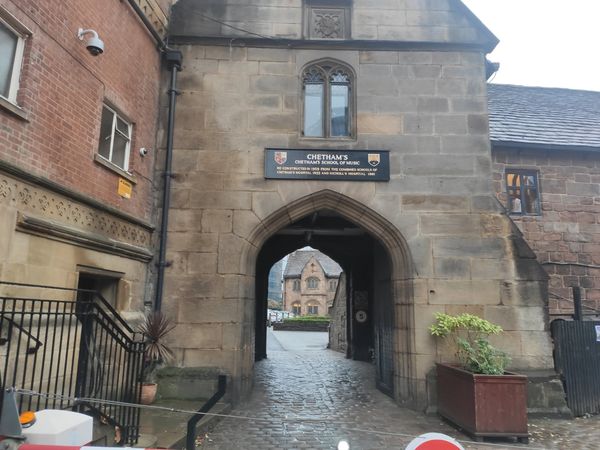
It was then just a few minute’s walk to Chetham’s Library, the oldest free public reference library in the English-speaking world, where we had arranged a guided tour with one of the librarians.

Chetham’s Hospital, which contains both the library and Chetham’s School of Music, was established in 1653 under the will of Humphrey Chetham (1580–1653), for the education of “the sons of honest, industrious and painful parents”, and a library for the use of scholars. The library has been in continuous use since 1653. It operates as an independent charity, open to readers free of charge, by prior appointment.

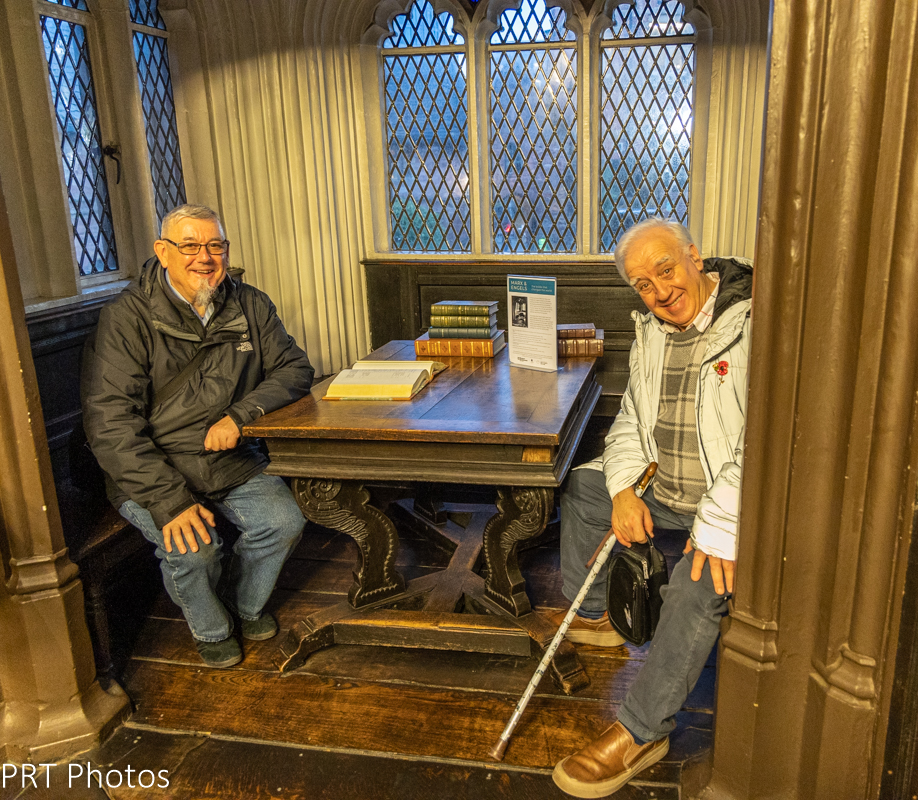
Chetham’s is also famous as the meeting place of Karl Marx and Friedrich Engels when Marx visited Manchester in the summer of 1845. Facsimiles of the economics books they studied can be seen on a table in the window alcove where they would meet. The research they undertook during this series of visits to the library led ultimately to their work, The Communist Manifesto.

More pictures can be seen here.

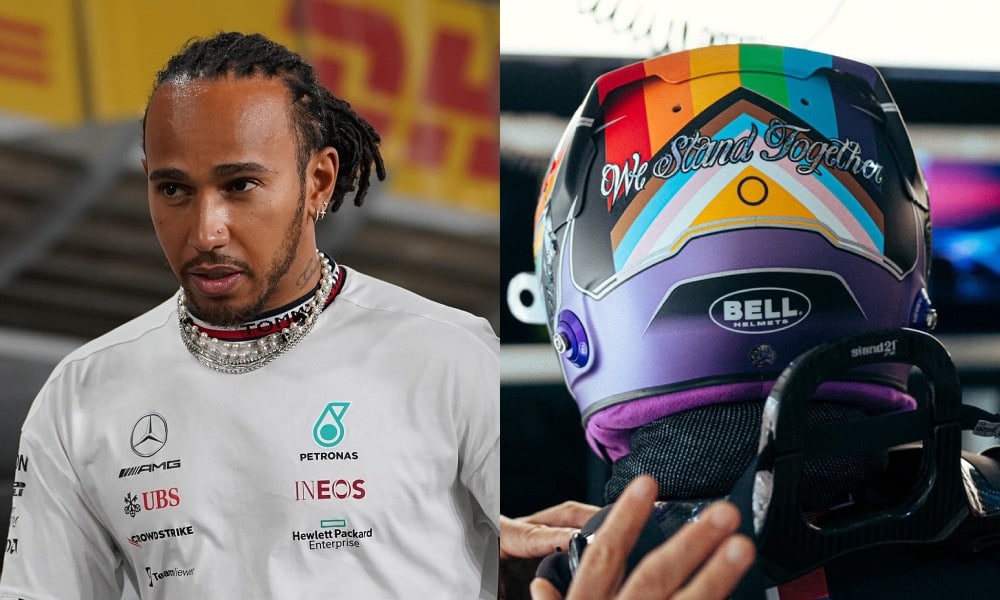
Formula One champ Lewis Hamilton wore the Pride flag on his helmet for last weekend’s Qatar Grand Prix

The racer is making a show of LGBT+ solidarity at the race, with his crash helmet – which will be beamed from the in-car camera – also emblazoned with the message “We Stand Together”.

Qatar hosted its first Grand Prix on Sunday, 21 November as part of a new 10-year deal.

When it was first announced, in September 2021, Amnesty International was among those to criticise the decision. It noted Qatar’s “extremely troubling” human rights record, and said that “drivers and their teams should be prepared to speak out about human rights in Qatar.”

Speaking ahead of the race, Lewis Hamilton said: “We’re aware there are issues in these places that we’re going to. But of course Qatar seems to be deemed as one of the worst in this part of the world. I do think as the sports go to these places, they are then duty bound to raise awareness for these issues. These places need scrutiny from the media to speak about these things. Equal rights is a serious issue.”

It is illegal to be homosexual in Qatar, with a punishment of up to seven years in prison or flogging.

Your Words are Powerful

Amnesty International organise an annual “Write for Rights” campaign and hundreds of thousands of supporters take part showing solidarity with people and organisations enduring human rights abuses.

It might only take a few minutes to write a letter or card, but for an LGBT+ organisation suffering homophobic attacks, this simple gesture has a powerful impact. Your letters, words and actions also put pressure on the authorities to bring perpetrators of human rights abuses to justice.

LGBT and Women’s Rights under attack

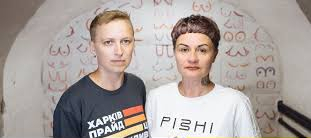
Sphere has championed LGBT and women’s rights since 2006, and is one of the oldest organisations of its kind in Ukraine. Founded by activists Anna Sharyhina and Vira Chernygina, it provides a safe space for women and LGBT people in the city of Kharkiv. In recent years the organisation has suffered frequent homophobic attacks.

The authorities are not addressing the growing rate of hate crimes. Anti-LGBT groups have set upon Sphere’s supporters and premises, urinating on walls, daubing faeces on doorknobs, breaking windows and chanting homophobic slogans. Anna and Vira report them to the police, but no one is held accountable.

In 2019, Sphere organised Kharkiv’s first Pride. Despite threats and intimidation, it was a huge success, attended by up to 3,000 people. But the police failed to protect marchers from violence, and instead joined in by hurling homophobic abuse. Anna and Vira say police inaction has left Sphere and its supporters in a permanent state of fear.

What You Can Do

  • Send a message of support and solidarity to

Sphere

PO Box 10399

Kharkiv, 61005,

Ukraine.

  • Send an appeal letter to

The Minister of Interior

Ministry of Interior Affairs

Vul. Akademika Bohomoltsa, 10

01601, Kyiv

Ukraine

Address your letter to Dear Minister and ask him to take all necessary steps to ensure the perpetrators of the attacks against Sphere are identified and held to account in fair trials and to ensure the discriminatory motive of the attacks is taken into account during the investigations.

Campaigning can work

Last year more than 445,000 letters and cards were sent to support students Melike Balkan and Ozgür Gür from Turkey defending their right to celebrate Pride on their university campus. They faced nearly three years in prison but were acquitted on 8 October 2021 and their ordeal is finally over.

Does anyone recognise this person?

Transgender Awareness week … Alan Hart … Female Husbands

News

Transgender Awareness Week

Transgender Awareness Week, observed 13 – 19 November, is a one-week celebration leading up to the Transgender Day of Remembrance, which memorialises victims of transphobic violence.

The purpose of Transgender Awareness Week is to educate about transgender and gender non-conforming people and the issues associated with their transition or identity.

In Trans*: A Quick and Quirky Account of Gender Variability (University of Columbia Press, 2018), Jack Halberstam, professor of English and comparative literature, explores recent shifts in the meaning and representation of gender and the possibilities for a non-gendered, gender-optional, or gender-queer future.

Here is a short excerpt: “Over the course of my lifetime, I have called myself or been called a variety of names: queer, lesbian, dyke, butch, transgender, stone, and transgender butch, just for starters. Indeed, one day when I was walking along the street with a butch friend, we were called faggots! If I had known the term “transgender” when I was a teenager in the 1970s, I am sure I would have grabbed hold of it like a life jacket on rough seas, but there were no such words in my world.

Changing sex for me and for many people my age was a fantasy, a dream, and because it had nothing to do with our realities, we had to work around this impossibility and create a home for ourselves in bodies that were not comfortable or right. The term “wrong body” was used often in the 1980s, even becoming the name of a BBC show about transsexuality, and, offensive as the term might sound now, it at least harboured an explanation for how cross-gendered people might experience embodiment: I, at least, felt as if I was in the wrong body, and there seemed to be no way out.

For my part, I now prefer the term “trans*” because it holds open the meaning of the term and refuses to deliver certainty through the act of naming. The asterisk modifies the meaning of transitivity by refusing to situate transition in relation to a destination, a final

form, a specific shape, or an established configuration of desire and identity. The asterisk holds off the certainty of diagnosis; it keeps at bay any sense of knowing in advance what the meaning of this or that gender-variant form may be, and perhaps most importantly, it makes trans* people the authors of their own categorisations.

Though these past two decades have given us better terms for who we are, they have done less than one might hope to heal the vexed relationship between trans* activism and theory, on the one hand, and feminist activism and theory, on the other. This rift presents a real problem for the contemporary political alliances that are so desperately needed now in a time of extended crisis.”

Alan Hart

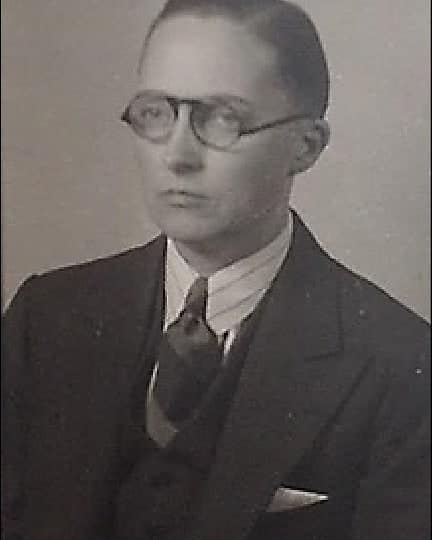
Alan Hart was a transgender man born in 1890 in Kansas and raised on his grandfather’s farm in Oregon. His identity was accepted early on: he was fascinated with playing doctor as a young boy; wrote articles for school publications and local newspapers under his male pseudonym as a teenager; and was listed as a surviving grandson in his grandparents’ obituaries at the time of their deaths.

In 1917, Alan received a doctor of medicine degree from the University of Oregon. He was upset to see the information included his birth name, realising that having a feminine name would limit his job opportunities, despite his masculine appearance. Around this time, Alan approached Dr Joshua Gilbert at the University of Oregon and requested a full hysterectomy as part of his medical transition. Dr Gilbert refused until Alan changed tactics, convincing the doctor that a person with “abnormal inversion” should be sterilised. After the successful operation, Alan legally changed his name and began hormone therapy, despite its risks at the time. He is regarded as the first person to medically transition in America.

During an internship in 1918 at San Francisco Hospital, Alan was outed to the school newspaper by a former classmate, and with his first wife, Inez Stark, was forced to flee to Oregon, where he began his own practice. He was eventually outed there as well, but responded in a local newspaper, saying: “… I am happier since I made this change than I ever have been in my life, and I will continue this way as long as I live. I came home to show my friends that I am ashamed of nothing.”

Throughout the 1930s and ’40s, Alan devoted his career to tuberculosis research. He travelled through rural Idaho, teaching, training medical staff, treating patients, and conducting mass tuberculosis screenings. He was a capable and accessible writer, and he published his findings for both medical researchers and the general public. He also popularised the use of x-rays to diagnose tuberculosis, which saved thousands of lives.

As a writer, Alan also published several pieces of fiction, including stories featuring disabled, gay and transgender characters. His books deal with gender, sexuality, and feminism, while also exploring the ups and downs of working in the medical field.

After his death in 1962, Alan’s wife established a scholarship in his name. There would be an ongoing debate surrounding it for two decades afterwards, regarding whether the beneficiaries of the scholarship should be lesbians or transgender individuals in order to qualify. Some people misidentified Alan as a lesbian instead of a transgender man, despite his efforts to keep his pre-transition identity a secret, including a request that his personal letters and photos be destroyed upon his death.

More than a century later, Alan is still remembered for being the first transgender man to undergo medical transition in the United States, but even more so as a doctor at the forefront of the fight to eradicate tuberculosis, saving countless lives in the process.

Consider these 18th-century ‘female husbands’

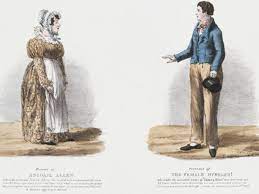
Portrait of Abigail Allen, a so-called ‘female husband’. Photograph: Courtesy of The Lewis Walpole Library, Yale University

Whenever the subject of transgender identities comes up today, there is a tendency to trot out a particularly specious argument: that the idea of being trans is a “new” concept, a notion that “no one” in their right mind had heard of, or would entertain, in previous eras.

The fact is that people who defied gender norms in notable, consistent ways – and who might well have identified as transgender today – have existed throughout human history.

Consider, for example, that in the 18th century, a property owner in England realised, to her consternation, that one of her tenants, whom she had long assumed was a swashbuckling married man, might actually, at least in her eyes, be something else entirely.

“You are taken to be of a different sex from what you appear, and you know how profane a thing it is for a woman to be a man,” the property owner declared, “for if you are a woman, you must be a woman, there is no help for it.”

Samuel Bundy, the subject of this denunciation, tried to think up excuses and settled on an extraordinary solution: that they lacked “male” genitalia because a shark had devoured them on one of their voyages. “I owe this,” Bundy offered, “to a shark in the West Indies.” Whether or not this was believed, it was too late. Others had already been informed, and Bundy was arrested shortly thereafter.

Samuel Bundy – whose story is one of many documented in Female Husbands: A Trans History, a fascinating new book by Jen Manion – had been assigned female at birth, but, from a young age, enjoyed tales of women sailing the seas in the guise of men, and also liked alternating between male and female attire. Later, Bundy took on the identity of a man more fully, perhaps because this represented the easiest way to be granted passage as a sailor, and set off. Bundy romanced women at ports of call – an important way to convince the other male sailors of their virility – and eventually married a woman, while also seemingly offering their hand in marriage to 12 others, as well. When Bundy was incarcerated, the women lined up to visit. Bundy’s “official” wife refused to press charges, allowing them to go free.

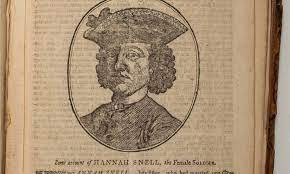
Hannah Snell, who went by the name James Gray. Photograph: Image accessed through the Digital Transgender Archive. Courtesy, American Antiquarian Society

What made Bundy particularly distinctive was their willingness to embrace their identity in both male and female terms, never settling entirely on one side of the gender binary. “In contemporary terms,” Manion writes, “we might see their gender as non-binary.” Manion, unlike all too many previous scholars writing about long-dead figures who may have been transgender, accepts that it is not always possible to know a historical person’s gender identity, so when it seems uncertain, Manion uses gender-neutral terminology – a move at once politic and political, doing gender justice to historical figures whose identities are unclear or who may have genuinely wished to be spoken of in non-binary terms.

To the 18th-century press, however, the Bundy story was another lurid case of the “female husband”, a then popular term for someone assigned female at birth who presented as male and took a wife. For much of the century, newspapers and popular novels were filled with sensationalistic tales of similar lives. What made these stories stand out was how they crossed assumed borders of gender and sexuality. Queerness already defied the simplistic paradigm of who was drawn to whom, and narratives of people transing gender – Manion’s term – defied further still, suggesting that our bodies did not necessarily represent the destiny of our gender. Bodies, instead, were suddenly unruly, unpredictable, expansive – as, of course, they always had been, and remain.

Another such case was James Allen, a labourer in London who had married a housemaid, Abigail Naylor. In 1829, after Allen was fatally crushed by falling timber, the coroner’s examination of their body revealed that Allen had been assigned female at birth.

The coroner continued to use male pronouns when referring to Allen, even after the discovery. “I call the deceased a ‘he’, because I considered it impossible for him to be a woman, as he had a wife.” As Manion noted, the deaths of female husbands were so often newsworthy “because people wanted to know how someone assigned female at birth managed to go through life as a man”, as well as how their marriages to cisgender women had worked. In some cases, Manion speculates, the female husband’s wife might genuinely not have known what cisgender men’s bodies were “supposed” to look like, especially if she had been raised in a puritanical home, or their husband may have taken efforts to conceal their bodies, even during intercourse. In other cases, their wives may simply have accepted their bodies and identities as they were, embracing their queerness in secret.

Because of their journalistic popularity, some accounts of female husbands were transformed into biographies or even novels, like The Female Sailor, published in 1750, about “Hannah Snell who went by the name of James Gray”.

Some, like James Howe, were even covered on both sides of the Atlantic. Born into a poor family in 1732, Howe “lived as a man for over 30 years undetected, achieving wealth and the esteem of the local community as the owner of the popular White Horse Tavern in London’s East End”, Manion tells us. Their identity was only revealed after they were blackmailed by an old classmate, who wanted to extract money out of them. As Manion’s book emphasises, these historical figures may not have used the terms transgender or non-binary, per se, but still understood themselves as people who transed gender, in some way, and wanted their partners, if not the world at large, to be able to accept them as such. While Manion’s book is only a narrow geographic snapshot of such figures, it underscores their prevalence in the past, as well as the still-radical notion that transgender people are worthy of love and respect.

Rochdale Fireground … Asylum Claims … First Lesbian Selfie

News

Rochdale Fireground

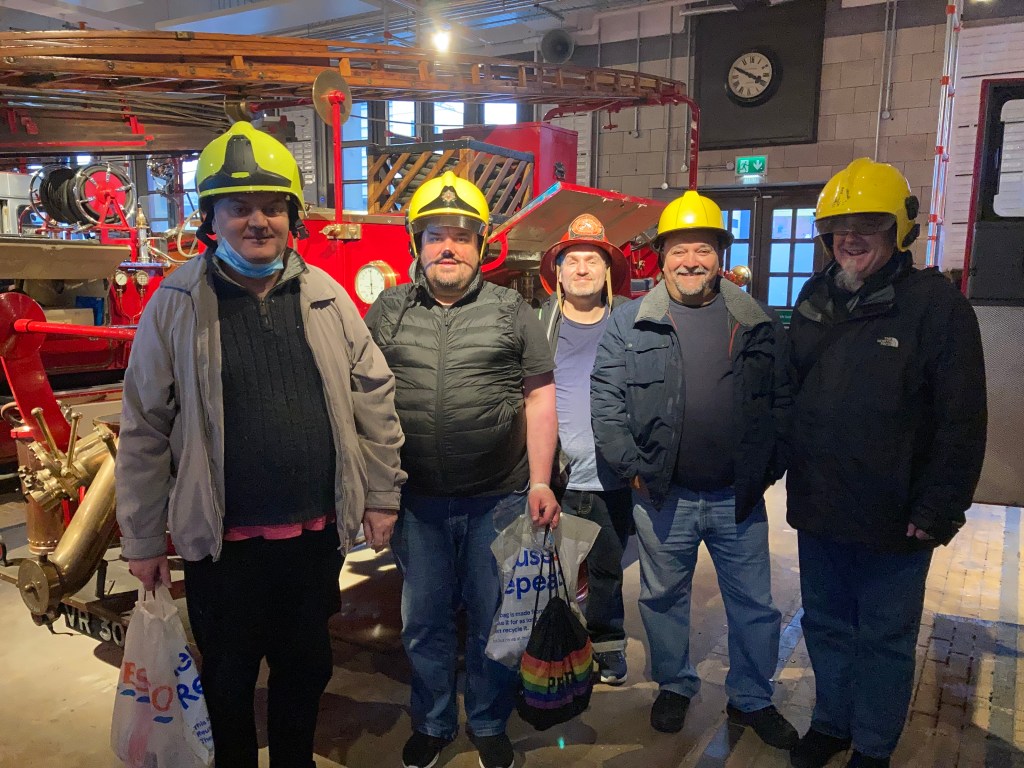
Our visit this week was to the Rochdale Fireground, a museum located in the former Rochdale Fire Station. The Fireground preserves the history of fire, fire engineering and the fire and rescue services in the Greater Manchester region.

We learnt that the Great Fire of London made people think seriously about fire protection. It started in a bakery in Pudding Lane on 2 September 1666, and burned for four days destroying over 13,000 houses, 84 churches and most public buildings. Fire needs three things to sustain it – heat, fuel and oxygen. The Navy was called in to blow up houses that were in the path of the fire. This took away the source of fuel for the fire and so stopped it. Miraculously, only six people died. Two things happened as a result of the Great Fire of London: very primitive fire engines were built and the first organised fire brigades began to appear.

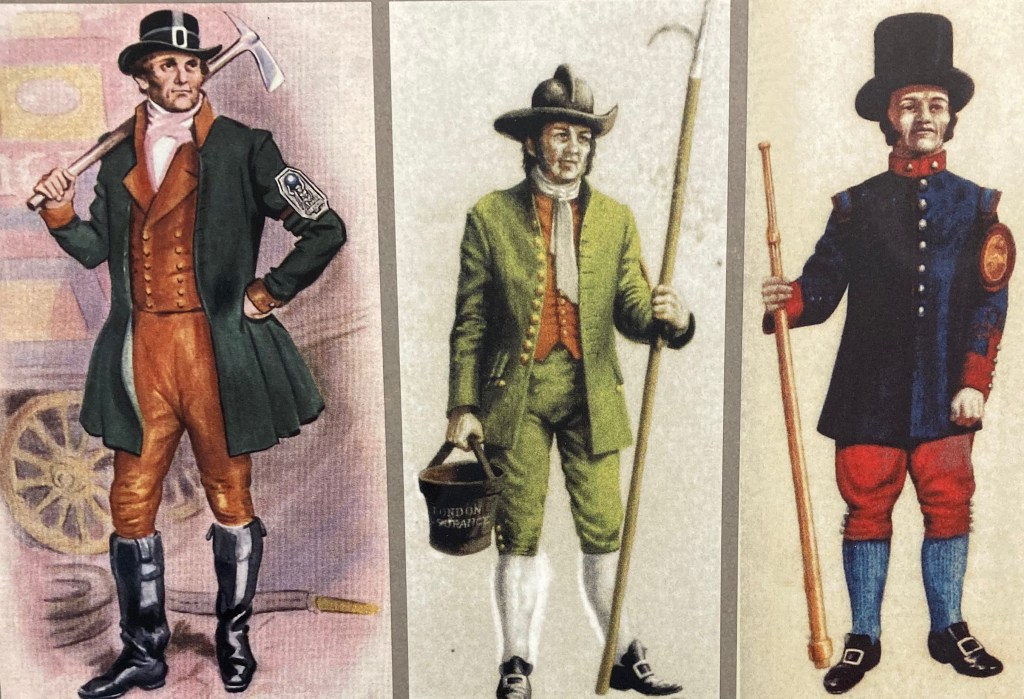
Insurance office fire fighters wore brightly coloured, though not very practical, uniforms to identify their company.
(left: The Atlas, centre: London Assurance, right: The Hand-in-Hand)

Fire fighters’ everyday uniform has changed several times in the last three hundred years but traditionally uniforms were worn to impress. They were designed to be smart and to look like military uniforms.

Over the years helmets have been made out of brass, steel, cork, leather, thermoplastic and composite materials. Tunics have been made from wool but now are made from Nomex which was first used for racing drivers in the Grand Prix. It is light and strong and easy to wear. Early fire fighters wore velvet breeches but again more practical Nomex overtrousers are now worn.

Women in the fire service

Women began to be part of the fire service during the Second World War. They played a vital role helping the fire service in communications, as dispatch riders and as drivers.

In the 1950s and 60s fire women used to work in the control room and they wore a uniform that was very similar to that of the men. The first female fire fighters joined the fire brigade in the 1980s, but the first women to join the Manchester Fire Service were not until the early 1990s. Absolutely no concessions were made to women in terms of uniform, as they wore exactly the same clothing as men.

Another good day out and more photos can be seen here.

How does the Home Office assess sexual identity in asylum claims?

People being persecuted on account of their sexual orientation can seek asylum in the UK, but face having to convince the Home Office that they are in fact lesbian, gay or bisexual. While asylum seekers are no longer quizzed about Oscar Wilde, more subtle forms of stereotyping persist. Decision-makers can demand of all LGBT+ asylum seekers a narrative that only some can provide: feelings of shame, stigma and difference, and a sort of emotional journey towards understanding their sexuality.

Different policies and procedures apply to claims based on gender identity, so trans and intersex claims are considered separately.

There were 1,012 asylum applications lodged in the UK in 2020, where sexual orientation formed part of the basis for the claim (LGB asylum applications), representing 3% of all asylum applications.

People claiming asylum based on their sexual orientation may form part of a “particular social group” which qualifies for protection under the Refugee Convention. 

In deciding whether to accept an asylum claim, part of the Home Office caseworker’s job is to assess the person’s overall credibility. This includes the often-difficult determination of whether the applicant is telling the truth about their sexual orientation.

Somebody’s sexual orientation is a highly personal and subjective matter, which manifests in many varied experiences. What criteria is used by the Home Office to assess it? 

“Stigmatisation, shame and secrecy”

Home Office guidance directs caseworkers to look for evidence that the person was made to feel “ashamed, humiliated or stigmatised” due to their sexual orientation. Examples can include being bullied by peers or teachers at school or harassed by members of their community. 

Caseworkers are also told to assess the applicant’s narrative to see whether it refers to “strong disapproval from external sources” indicating that the conduct is unacceptable, immoral, or sinful. 

They also look for the person having their belief that their sexual orientation is “wrong”. This can be problematic, especially with an applicant who has a strong sense that they are in fact doing nothing wrong. An applicant, for example, can repeatedly state that she was proud of her sexual identity as a lesbian woman and did not feel different; she just felt “herself”. 

An applicant will have two main opportunities to present evidence capable of demonstrating this: at their substantive asylum interview, and in supporting evidence such as a witness statement.

“Painful self-disclosure”

An asylum caseworker will also look for evidence of what the guidance calls “painful self-disclosure”, which means how the person has come to realise their sexual identity. Broadly speaking, the Home Office wants to see a “journey” to sexual awareness. 

Asylum refusal decisions have been known to state “you did not provide an overly emotional account of your sexuality”. There is often an expectation that someone’s journey will be an emotional and painful story to re-tell. But the nature of having experienced past persecution means that a person may not come across as “overly emotional”. And, of course, some genuine claimants will simply not be the kind of personality given to expressions of strong emotion.

An applicant was told repeatedly that her sexuality was wrong by her family. This meant she had spent years keeping her sexuality to herself. When questioned at interview she found it very difficult to talk with emotion about what she had experienced, as she had learned to repress her emotions as a safety mechanism. In this case, medical evidence of trauma was required to support the claim.

The guidance says that caseworkers should not stereotype behaviour and that the human dignity of the claimant is respected. But in asylum interviews clients have been asked repeatedly about when they first realised they were gay, or when they first were attracted to a member of the same sex. These questions place an undue burden on the applicant to examine and articulate their sexuality, an innate and often nebulous part of who they are.

The guidance does recognise someone may only realise their sexuality relatively late in life, and that this should not count against credibility. It also recognises that LGBT+ people may have opposite sex spouses or children, and that this should not count against them either. 

Country conditions

When it comes to the asylum interview, caseworkers are asked to explore with the applicant what social, legal, and cultural norms they are believed to be transgressing. For example, is homosexuality illegal in their home country, or considered sinful according to religious doctrine?

This is because the claim is not just assessed on the person’s local experiences, but on the wider context of the country. This can create problems if the applicant is from a sheltered or unrepresentative community – for example, a young woman living on a family compound may have little or no access to news about the situation for LGBT+ people elsewhere. 

Or, for example, Angola decriminalised same sex consensual relations in 2019, but many human rights organisations report that homophobia is still widespread.  Asylum cases should be decided on whether there is “reasonable degree of likelihood” that something is true. Claimants in sexual identity cases may feel that they are held to a higher standard when asked to “prove” their sexual orientation. Bearing in mind the framework used to decide such cases should help, although evidently it cannot neatly account for something as personal as sexual orientation in its every iteration.

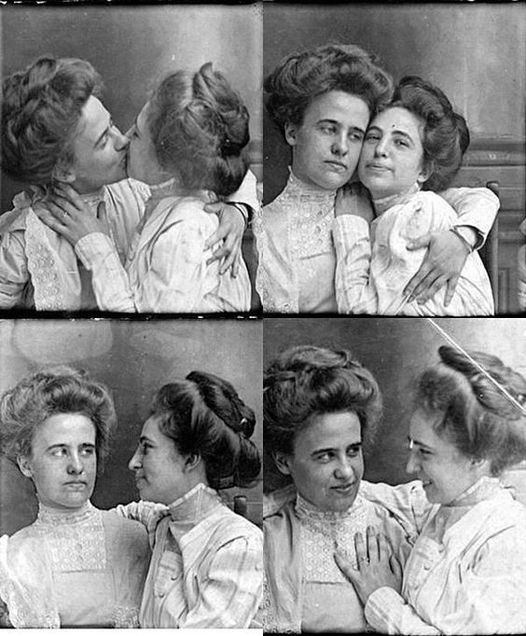
These are believed to be the first ever lesbian self-portraits which were taken in 1910. Photo booths were how most of the earliest forms of LGBT visual documentation started. It was the only way they could capture a photo in total secrecy since there was no need for a third party taking the photo.

“The Old Gays” just landed their own series … Ahead of The Curve … Carl Austin-Behan

News

Call them the new ‘Golden Girls’: The Old Gays just landed their own series

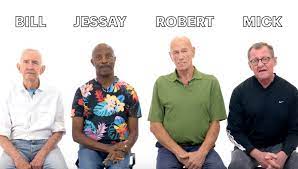
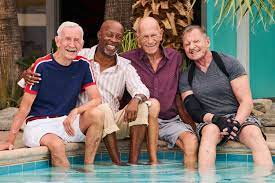
Bill Lyons, Jessay Martin, Robert Reeves and Mick Peterson – best known as “The Old Gays” – have just signed with Brian Graden Media (BGM) to develop a new television docu-series focusing on their lives and friendship in Cathedral City, California, a suburb of Palm Springs.

BGM said in a statement: “We are thrilled to be working with the hilarious and very talented “The Old Gays”. Their videos resonate with audiences young and old alike and viewers have shown extreme interest in seeing their lives on a more personal level which we intend to deliver upon.”

At present, “The Old Gays” have more than 3.2 million followers and 320 million views across their social media platforms. The group first rose to infamy in a promotional video for the popular gay dating app Grindr. They’ve since developed a loyal following for their mix of humour and warmth, as well as their anecdotes from LGBT+ history.

“I think the most important thing that we’re educating people on is that 60 years ago, coming out was a real struggle,” Bill Lyons said. “You didn’t talk about coming out to your parents or anything. In fact, a lot of situations, I heard when parents found out that one of their children was gay, they kicked him out of the house right away. It really wasn’t easy in the beginning.”

“I have not always had a voice,” Jessay Martin added. “This has given me an opportunity to really use my voice and to just not to worry about what people are thinking of me. For me, it really has been and still is quite the journey. I don’t know where it’s going, but right now I’m on cloud nine and I’m thankful to be a part of it.”

There is no word yet on when the show will premiere, or which network or streaming service will air it.

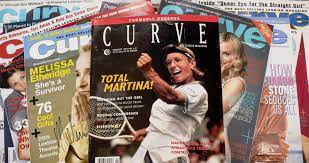
Ahead of The Curve

“For the first time in my life, I was sexually free” … Stevens and staff had a polishing pop-up business at the Dykes on Bikes festival. Photograph: Frankly Speaking Films / Together Films

In 1991, Franco Stevens was 23, broke and working in an LGBT bookshop in San Francisco. She thought the world needed a glossy lesbian magazine, but she didn’t have the money to launch one. So she took out 12 credit cards, borrowed the maximum on each, then gambled it all on a horse race. The horse came in. She took the money and put it on another horse, which also won, and then another, which did the same. With her winnings, she set up Deneuve.

“I almost felt like, ‘Well, if this is meant to be, it will happen’,” she says, from her home in the city’s Bay area. She lives with her wife, their two sons of college age, and a younger boy whom they call “a son of the heart”, who splits his time between their house and “his biological home”. Stevens is in her 50s, bright and sharp, and seems like the kind of person who quietly gets a lot of things done. “I mean, I wasn’t going into it completely blind. I grew up with horse racing, so I know this business from a different angle.” Plus she had the recklessness of youth. “I just felt like, I’ve lived in my car, I’ve had nothing to eat – if it’s meant to be, it will be. And my bankruptcy would be off my record by the time I was 30. So it seemed like everything lined up.”

The first issue of Deneuve appeared in April / May 1991. Early editions featured scene reports, lesbian fashion shoots, fiction, reviews, personal ads and “news, rumours and tidbits from the lesbian nation”. It became Curve in 1996 after the French film star Catherine Deneuve sued them for trademark infringement, though Stevens always denied it had been named after her. The magazine almost buckled under the cost, and, with the stress of it all, Stevens’ hair began to fall out. Eventually, she changed the name. “When I got that summons for the lawsuit, I was like, ‘Oh, this is a joke, right? What?’ Catherine Deneuve is suing us? It’s crazy.” How does she feel towards her now? Stevens is tactful. “I’m not a great fan.”

Curve has weathered plenty of storms, and now exists as a philanthropic foundation and online archive, with Stevens undecided about whether it can return in print. It has been a remarkable 30 years, which are now the subject of Ahead of the Curve, a documentary co-directed by Rivkah Beth Medow and Jen Rainin, who is Stevens’ wife. While it is the story of Stevens and her magazine, it is also a portrait of how life has changed for LGBT+ people since the early 90s. “Just as I felt it important to create the magazine to serve the community, Jen and Rivka thought it was important to make the film to serve the community.”

The project evolved even as it was being shot. On camera, Stevens learns that Curve, under the ownership of a different publisher, is struggling and may be forced to close. It was supposed to be the final scene of the film, but it ended up being the first: it set Stevens off on a journey to find out what a queer audience wants and needs from an inclusive publication in the modern age. It is a wonder the story hasn’t been told until now. Does she think there is a lack of documented history when it comes to queer women? “Oh, 100%,” she says. Why does she think that is? “First of all, we’re women. Second of all, we’re queer. People are not telling our stories.”

They are missing out, if some of these stories are anything to go by. Stevens’ win on the horses funded the early days of the magazine, but it wasn’t enough to sustain it for long. There was a trip to a loan shark to pay staff wages, and the time Stevens realised that there was money to be made in a pop-up business polishing the motorbikes that arrived daily in the Castro, the city’s gay district.

“Some of the office shenanigans didn’t make it into the movie,” she says, tantalisingly. Like what? “OK, so shenanigans, for real? I was on the road a lot. Once I came back from the Book Fair in Chicago, walked into my office, and there was a stack of Polaroids on my desk. Apparently, there was a ‘leather day’ at the office when I was gone, and they were all posed on my desk, scantily clad in leather attire. When some of the staff came back from festivals where clothing was optional, I’d be like, ‘Can you just keep a bra on or something?” She smiles. “There was definitely some sex-toy stuff that would not fly today.”

Before Stevens arrived in San Francisco, she had been an army wife, married to a man in the military. When she realised she was gay and left him, her family refused to support her (though their relationship improved with time). She ended up living in her car. Younger queer people might be surprised at how different life sounds for gay women in San Francisco during the late 80s and early 90s. “It was the first time in my life I was sexually free. San Francisco was a lesbian mecca. There were sex clubs for women, where you could just go and either watch or partake, and men were not allowed in. When I was homeless, I would sometimes sleep at a friend’s house. And there were four different roommates there, and honestly, I shared a bed with them all, I think.”

However, there was a darker side to this sexual idyll. “San Francisco was very accepting but only in certain areas. And, even in those areas, it was very dangerous. They used to have this big Halloween party in the Castro. That was our time, the queers’ big night out.” One year, she was walking past the house with the four roommates to pick up her friends. “Somebody in a sheet with eyes cut out, like a ghost, walked by and hit the person in front of me over the head with a baseball bat, and shouted a gay slur. That was a reminder that, even though we have this little 10-block radius, we’re not safe.”

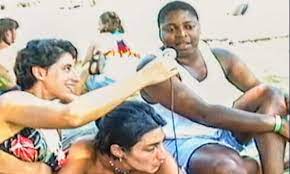
Out and about … Franco Stevens interviews women at the Michfest festival

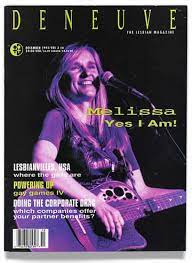
In the early days, few advertisers would pay for ads and no celebrities would give an interview. After two years, in 1993, the out musician Melissa Etheridge appeared on the cover.

“I owe her so much gratitude,” says Stevens. “To me, she was a humongous celebrity. And for her to say, ‘Yeah, I’ll do that. Come to my show.’ We were like, ‘We have arrived!’” These days, there are far more celebrities who will talk about their queerness publicly. “For young people to see queer celebrities be out, it’s so validating. When celebrities are out, not only does it affect queer people, but the mainstream acceptance goes up so much.”

But the fight is not over, she warns. “Here in the States, we have active government trying to repeal rights that we have. When Trump was in office, he was pushing the country towards a very conservative angle, where, if you are not a heterosexual, white person, you are to be feared and hated. Even now, there are a lot of anti-trans bills being battled.” She mentions Arkansas, where legislation banning gender-affirming treatment for transgender people under the age of 18 was passed, as well as the struggle over including LGBT+ history in schools. “There is a battle over having those rights expanded versus states wanting to repeal them. Because God forbid we should teach our kids to be whoever they are.”

Stevens, centre, at a Dyke March in 2019

Stevens recently bought Curve back from the Australian publisher that owned it for a time, and established the Curve Foundation, “to continue with the mission of the magazine”. There are two initial projects. The first is to build an online archive of every issue. The second is a financial award to support emerging queer women journalists in the US. After 30 years, they are still helping people to tell their stories.

But will we ever see the likes of Curve again? “Well,” Stevens smiles. “You might.”

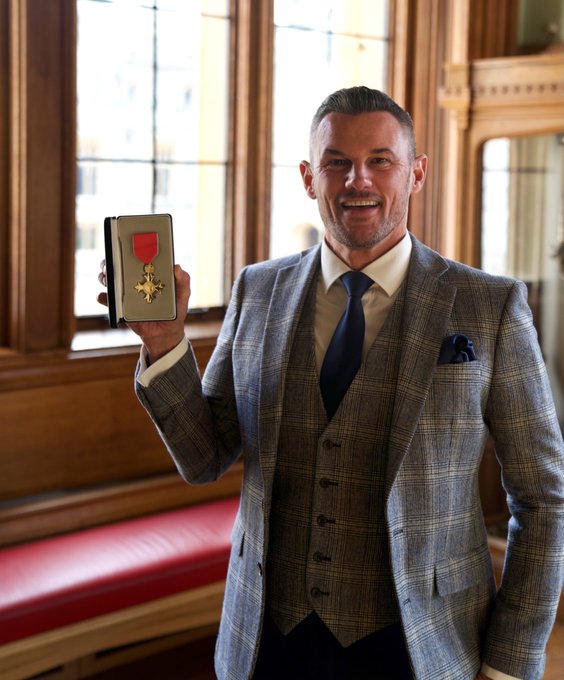
Every year inspiring people from across the UK are recognised for their outstanding achievements. Carl-Austin Behan was appointed in the 2020 New Years Honours List, but has only just received his OBE, recognising his incredible work for charity and the LGBTQ+ community in Greater Manchester.
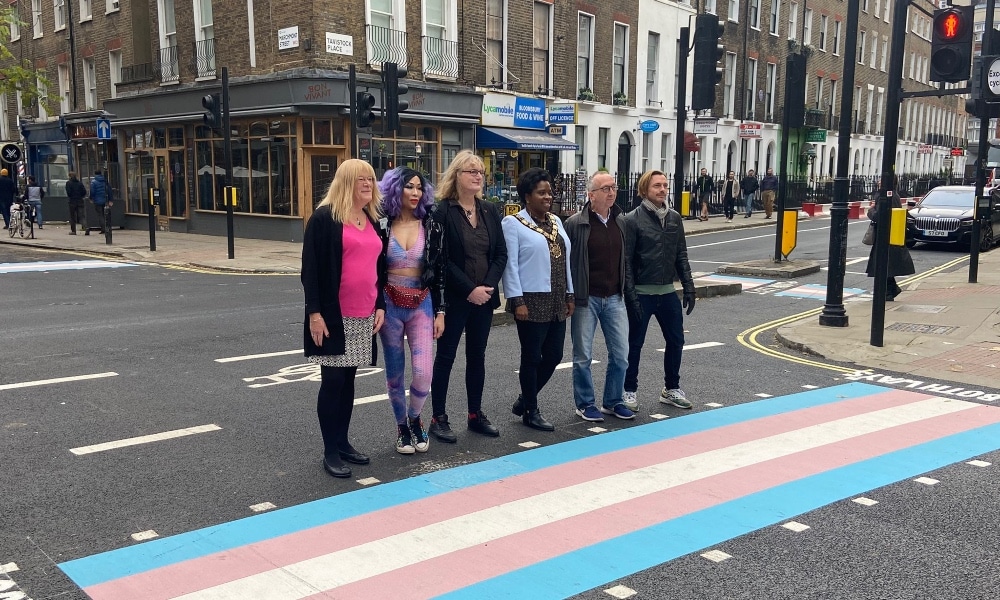
Local Labour councillors stand in front of the new trans crossing in Camden, London. (Twitter/@DannyBeales)

A trans Pride road crossing has been unveiled in north London as a “clear statement” of trans rights and LGBT+ unity.

On Monday afternoon, 8 November, the mayor of Camden Sabrina Francis was joined by local councillors and community leaders to open what was described as the “first trans crossing” in the borough of Camden.