
Russian airstrike kills Ukrainian LGBT+ activist … How would you define ‘obscenity’? … Inside Britain’s first LGBT retirement homes

News
Elvira Schemur ‘inspired and motivated all volunteers around’, colleagues said. Photograph: Kharkiv Pride / Sphere NGO

A gay rights activist from Kharkiv, Elvira Schemur was killed on 1 March 2022 during the Russian bombardment of the city centre, her colleagues at Kharkiv Pride said. She was killed at the local territorial defence office where she volunteered.

“Elvira was an activist and a patriot: she participated in all possible actions and democratic events of Kharkiv. Together with Elvira, we went through three Kharkiv Prides and three women’s solidarity marches. Elvira was actively engaged in human rights interventions and pride performances,” the colleagues said.
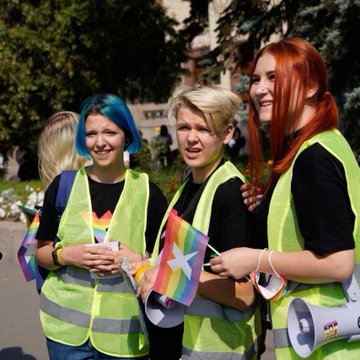
“She inspired and motivated not only our team but all volunteers around. People followed her into her struggle for freedom and equality. And when she smiled, everyone smiled back. Elvira was one of the first Kharkiv Pride volunteers that joined the Kharkiv defence office. She was brave and courageous. A patriot and a hero. And this is how we will remember her and never forget.”
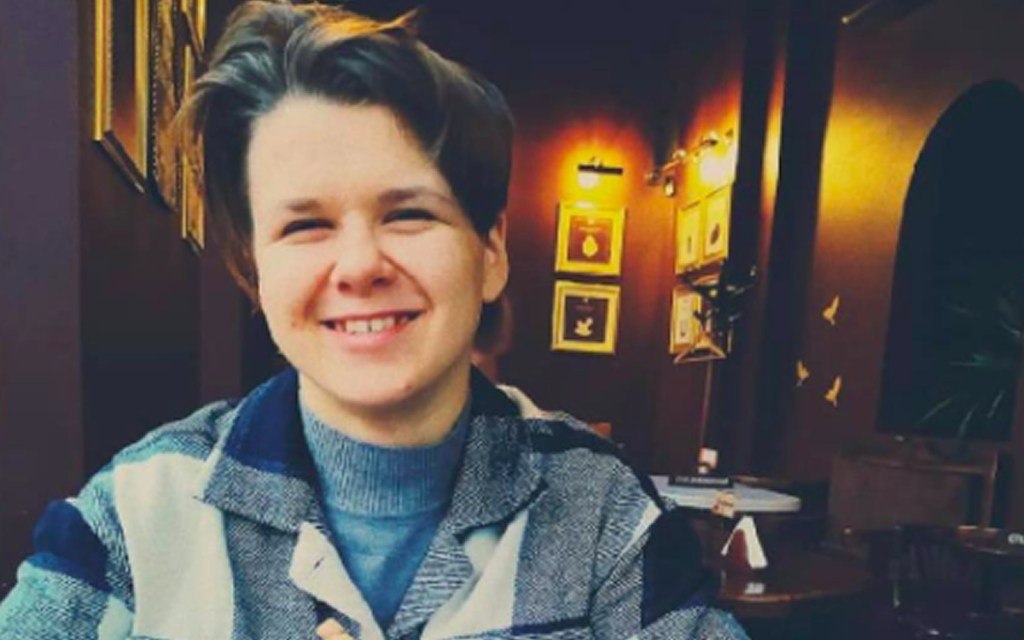

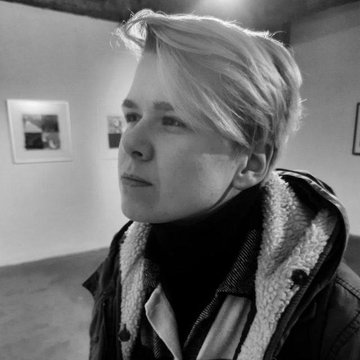
Elvira Schemur (Photo courtesy of Maksym Eristavi/Twitter)

How would you define ‘obscenity’?

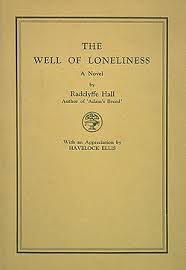
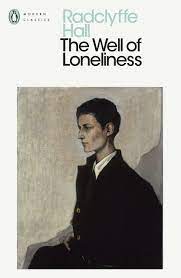
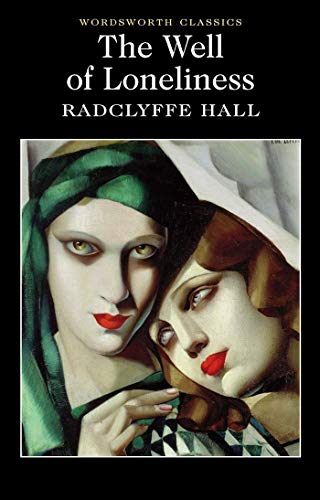
First edition cover

The Well of Loneliness is a 1928 lesbian novel by Radclyffe Hall. It follows the life of Stephen Gordon, an English woman from an upper class family whose “sexual inversion” (or lesbianism) is apparent from an early age. She finds love with Mary Llewellyn, whom she meets while serving as an ambulance driver in World War One, but their happiness together is marred by social isolation and rejection, which Hall depicts as having a debilitating effect on ‘inverts’.

Invert was a term used by sexologists, primarily in the late 19th and early 20th century, to refer to homosexuality. Sexual inversion was believed to be an inborn reversal of gender traits: male inverts were, to a greater or lesser degree, inclined to traditionally female pursuits and dress, and vice versa. The novel portrays inversion as a natural, God-given state and makes an explicit plea: “Give us also the right to our existence”.
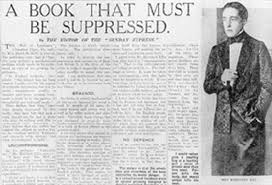
The book became the target of a campaign by James Douglas, the editor of the Sunday Express newspaper, who considered it a ‘moral poison’, although its only sex scene consists of the words “… and that night, they were not divided”.

James Douglas wrote on 19 August 1928 under the heading “A Book That Must Be Suppressed”: “I would rather give a healthy boy or a healthy girl a phial of prussic acid than this novel. Poison kills the body, but moral poison kills the soul.”

In November 1928, Chief Magistrate Sir Chartres Biron ruled that, although the topic in itself was not necessarily unacceptable and a book that depicted the “moral and physical degradation which indulgence in those vices must necessary involve” might be allowed, no reasonable person could say that a plea for the recognition and toleration of inverts was not obscene. He ordered the book destroyed.

In the US, the book survived legal challenges and publicity over The Well’s legal battles increased the visibility of lesbians in British and American culture. For decades it was the best-known lesbian novel in English, and often the first source of information about lesbianism that young people could find. Some readers have valued it, while others have criticised it for Stephen’s expressions of self-hatred and viewed it as inspiring shame. Its role in promoting images of lesbians as “mannish” has also been controversial.
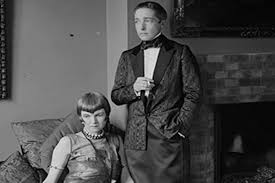
Although few critics rate The Well of Loneliness highly as a work of literature, its treatment of sexuality and gender continues to inspire study and debate.

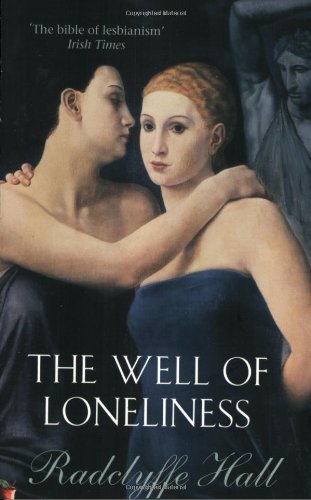
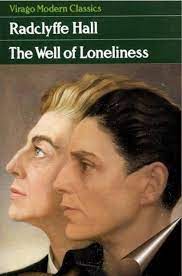
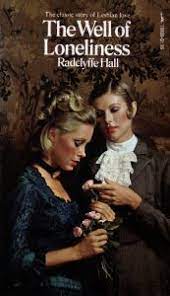
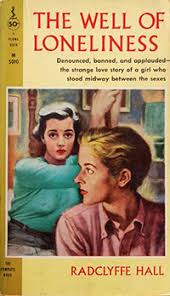
The book has been reprinted many times:
Inside Britain’s first LGBT retirement homes – (by Patrick Strudwick / inews)

Lydia Arnold reclines on her squashy, mustard-yellow armchair, tilts her bright pink trainers skyward, and begins to describe the moment she became the first resident of Britain’s first LGBT retirement community. It was just three months ago, in early December 2021.

She ascended the lift in the modern, bulbous, tower block on the banks of the Thames, walked down the corridor – past the unoccupied rooms – and arrived at the threshold of her new apartment.

“On the doorstep was a big white package with a rainbow ribbon,” says the 74-year-old. “I carried it in, and inside was a hamper and a mug.” On the mug was the motto of Tonic Housing, the organisation behind this pioneering housing scheme: “How we live our lives out.” The double meaning – uncloseted, for the final chapter – wasn’t lost on Lydia.

“I was on my own. And I burst into tears,” she says. Relief from the memory resurges. She begins to laugh. “I thought, ‘Wow. Fantastic.’”

It marked the end of a frightening year for Lydia. Her 16-year-old relationship broke down. “And then in May I was diagnosed with lung cancer,” she says. “They removed half my lung.” In the September, the retirement community officially opened, and by December she was in.

“The idea that I was the first was more than exciting,” says Lydia, pushing up her tinted glasses. She has short, white hair and the mischievous demeanour of a valuable dinner party guest. In the weeks after arriving, her appreciation deepened. “I thought, ‘This is really quite special. To feel safe, to feel comfortable. It’s my little cocoon.’”
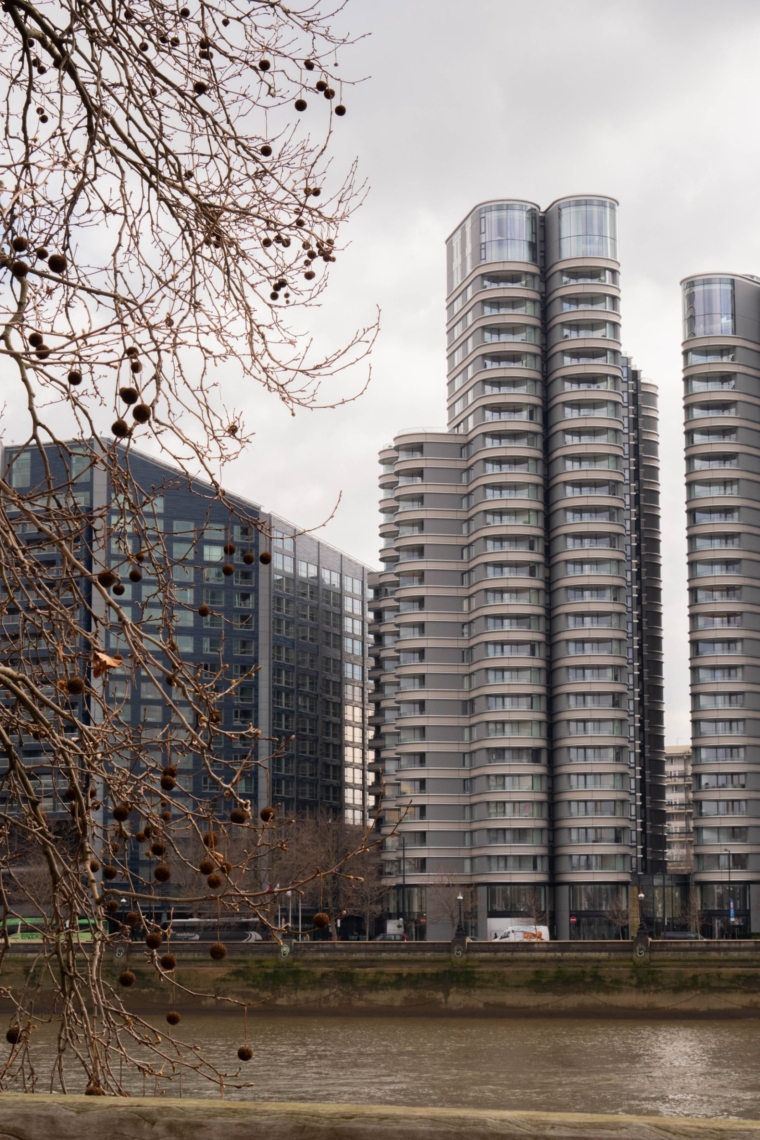
The exterior of Tonic Housing Photographer: Albert Evans / inews

Before Lydia, no lesbian, gay, bisexual, or transgender pensioner in the UK had ever stepped into a housing scheme designed to look after them. Those who have moved into mainstream facilities for the elderly have often found themselves surrounded by the very attitudes they spent a lifetime trying to escape.

Over the last 20 years, studies into older LGBT people, conducted by Age UK, Stonewall, and Opening Doors London have captured a concerning picture. Not only are LGBT people much more likely to be single, have HIV, mental health problems, live alone, not have children, and not have support from their family, but also, they may go back in the closet in elderly care homes.

A Stonewall survey, albeit from 2011, found half do not come out to their care staff and two thirds believe care services will not understand them. In 2020, a follow-up by Opening Doors London, Tonic and Stonewall Housing found 12 per cent had experienced bigoted abuse in their current housing and over half (56 per cent) would prefer an LGBT specific provision.

Other countries, including Spain, Germany, and the USA, have tried to address this with different variations of LGBT elderly housing, but Britain has lagged behind – until now.

‘Safe for the rest of my life’

Tonic spans 19 apartments on the uppermost four floors of Bankhouse, a Norman Foster-designed block which already housed 11 lower floors of a mainstream retirement home. It’s a 10-minute walk from Vauxhall tube station. Residents in the LGBT floors can opt for one- or two-bedroom apartments, with on-site care options, and communal areas to mingle with the other LGBT residents – although everyone in the building can mix.

Regular events, such as a cinema club, are already in place, but there’s more planned: art classes, coffee mornings, drag shows, and on the roof, opportunities to grow herbs and vegetables.

The motto, as well as being on mugs, now greets you at the front entrance. Inside, the lobby resembles a swishy cocktail bar, with velvet couches and a pink neon “TONIC” sign against William Morris wallpaper.

Eleven stories up you reach the interlocking communal areas: a white minimalist-style bar enlivened by a somewhat ironic, deliberately self-knowing picture of Judy Garland; a modern living room with colourful cushions; and a cosy reading room.

“All my friends who’ve been round are incredibly envious,” says Lydia, looking across her kitchen-living room, with its wall-mounted spice rack, cherry blossom perched in the window, and sapphic pictures of women in ecstatic poses.
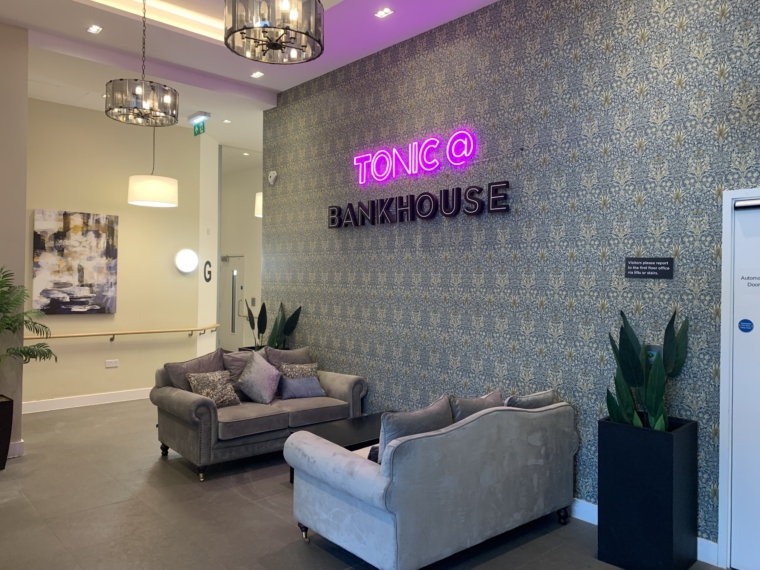
The lobby at Tonic Housing. Photographer: inews

Sun beams in from her balcony. You can see half of London from up here. Below, vast railway lines bring people into Waterloo station from the so-called home counties – a trip that endless young gay people have made to escape. What does Lydia feel when she stands out here?

“A surge of excitement,” she says. “And when I walk out of the building in the morning, and I see the river in front of me, I go for a little wander along the embankment, and I just have this waaaaaahhhhhh! feeling.”

Lydia grew up around here in the 1950s, before gentrification sent house prices into orbit, and before the partial decriminalisation of homosexuality in 1967. It took until the 80s for her to realise who she was.

“I fell in love with a woman and realised why my earlier life had not been very successful,” she says, laughing. At the time, she was working as a probation officer and was happily out at work, but her parents’ reactions were trickier.

“My mother never accepted that it wasn’t her fault that I was a lesbian,” she says. Lydia’s father, John Arnold, was president of the Family Division of the High Court. “He was the first judge to grant custody to a lesbian mother in a divorce case,” she says. “I was extremely proud of him.” But when it came to his own daughter?

“He never acknowledged my sexuality,” she says.

Forty years on, Lydia was newly single, facing her mortality, and contemplating a stark question – where to move for the final time? – when she stumbled upon Tonic Housing. She was still living in Marseille following the breakup with her partner.

“I was looking on the net one day, sort of fantasising. I tapped in ‘lesbian retirement accommodation in London’, and up popped Tonic,” she says.

“I thought, ‘this is perfect, because there is going to come a point when I probably will need some help, and the idea of going into an old people’s home in France, where I was a lesbian, English, and living with all these heterosexual people who didn’t understand where the hell I was coming from?’ I thought, ‘I can’t face that.’”

Lydia Arnold, the first resident of Tonic (Photo: Albert Evans / inews)

Lydia rang up and, “straight away I knew,” she says. “Knowing that if I moved into this place, I was safe for the rest of my life, in an atmosphere where I could be me. Where I didn’t have to pretend to be married or have children. Then I could be as I’ve always been: out and happy.”

She had questions, however. “I did wonder whether they would be more men than women, purely because men have more money than women,” she says. “But actually, that doesn’t necessarily bother me. It’s a community, but we are also independent.”

Currently, there are only a handful of residents who have moved in, and the other four are men, but Tonic is determined to ensure diversity on all fronts. Eventually, this retirement community will also welcome renters needing social housing, but currently part-ownership is the only option.

The need to have money – at least £133,750 for a 25 per cent share of a one-bedroom apartment – prompted some to criticise the scheme, particularly when the Mayor of London announced a £5.7m loan to Tonic Housing to enable the place to open. But Anna Kear, the CEO, wryly suggests that people be cautious about opining on such matters until they “actually understand how social housing works.”

Specifically, she explains, statute dictates “you can’t provide affordable rented housing without being a registered provider.”

This meant, “We had to get a property first, before we could even apply to the regulator. I’ve just spent the last six months doing the application.”

It has been a 20-year marathon to reach this point. The genesis of which was the experience of Geoff Pine, the former chairman of Tonic Housing, whose partner of 30 years, Jamie, suffered from a degenerative heart condition before he died.

“He needed support and they couldn’t find wheelchair-accessible, appropriate care,” says Kear. Instead, they enlisted a carer until eventually Pine discovered what was happening to Jamie because of his sexuality. “The carer had been coming in and praying for his ‘condemned soul’ at the end of the bed.”

The need was clear. The execution has been arduous. After joining in 2018, Kear, who has decades of experience in housing, had to deliver a rather awkward reality check to the board.

“I said, it’s going to cost about £50m to develop a scheme like this. And that’s very, very difficult. I don’t like to say the word impossible, but it’s close to it.” Their faces, she says, fell. “But it was necessary to move forward.”

Investment followed, and the loan from the Mayor of London, which is repaid each time someone part-buys an apartment. All the existing carers in the building were then given specialist LGBT training to ensure no one has an experience like Geoff Pine’s partner.

“It’s a huge responsibility,” says Kear. “Part of the original vision was about being both a provider and an exemplar.” The hope is that many more facilities for older LGBT people follow.

‘A place we can live without fearing any prejudices’

For now, the first few residents continue to settle in. On my second visit, I knock on the door of another apartment and a trim, chatty, Malaysian-British man, Ong Chek Min, invites me in. He’s 73 and one half of the first couple at Tonic.

Min’s 80-year-old partner, Tim, sits in a wheelchair in the living room, with his carer Sam helping him with his lunch. Behind them sweeps a curved white mural of a forest; the bark of which is raised, creating shadows that lead you beyond the wall as if lost in Narnia. They’ve had a terrible two years.

Ong Chek Min on the balcony of his new home (Photo: Albert Evans / inews)

“Tim had a stroke in February 2020,” says Min. By then the couple had been together for 40 years. “I came downstairs, and he was lying on his side. Being a nurse, I knew straight away.” Min administered aspirin to stop any further clotting. “That saved him.” But their lives were never the same again.

“It affected his communication centre,” says Min. “That was the last time I conversed with Tim as he was. I’ve lost him in a way. And I grieve all the time. It’s very hard. I try not to because I know that I have to look forward.” His manner is like many who care for their loved ones: practical, determined, trying to stay positive.

But as we begin to talk about their lovely new place, Min begins to cry. “Tim can’t share this,” he whispers, covering his face as the grief streams out.

They met at the opera, in London’s Covent Garden, in 1980, shortly after Min arrived in Britain to become a nurse. “It was June, he was leaning against a lamppost outside the opera house. We caught each other’s eye, and just clicked.” But it was the interval, so when the bell sounded for the second half they quickly scribbled their phone numbers on each other’s ticket. “I still have that ticket,” he says.

They built a life together, survived the Aids crisis – while losing numerous friends – and witnessed dramatic attitudinal shifts towards homosexuality. But during the pandemic, hate crime rates against LGBT people have soared, while many newspapers and broadcasters have begun attacking LGBT charities for supporting transgender people.

was the only media organisation allowed in since residents arrived.

In 40 years, I ask, have you ever held hands in public?

“No, we never show affection in public,” he says. “I try to avoid any chance of anyone abusing me.”

After retirement, they began to consider the future.

“We discussed how we wanted to end our life,” he says. “We thought it was a good idea if we can find a place that we can live without fearing any prejudices, and amongst people we feel comfortable with.”

But they couldn’t find anywhere. After Tim’s stroke, a friend suggested Tonic. “I was really happy,” says Min. “You don’t have to worry about someone yelling something unpleasant, especially with Tim being ill.” To be the first couple here is a bonus.

“I’m just very honoured,” he says. He hopes that he’ll be able to take Tim to the opera one last time.

Until then, they’ve begun to meet other residents. The previous Saturday they went down to the communal area for an art workshop. “We were sitting there chatting away. It was very, very, nice,” he says, smiling and looking out the window over the London skyline. “It feels like home.”
Manchester Pride Conference … Plaza Cinema … Cinema Theatre Association

News

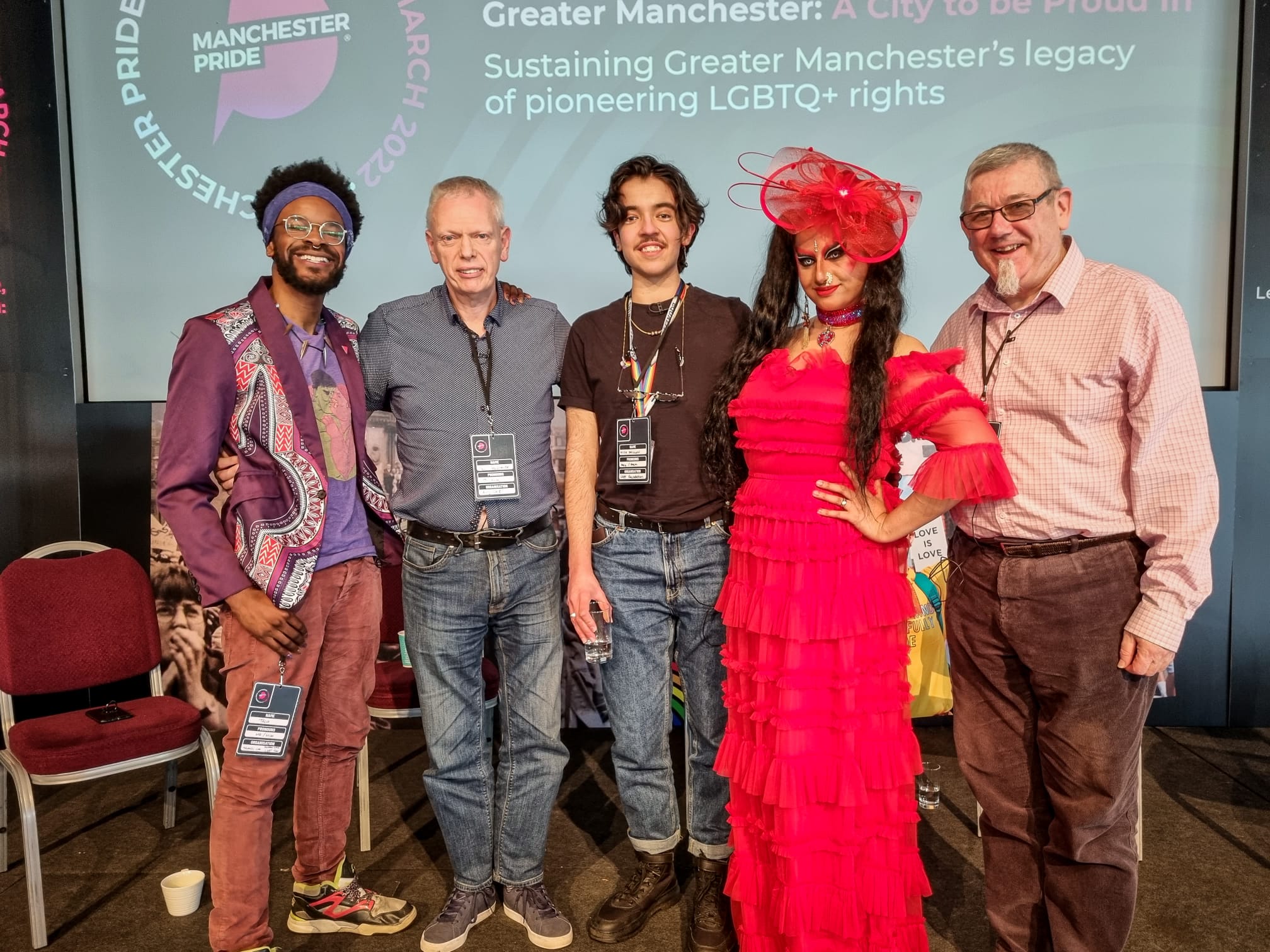
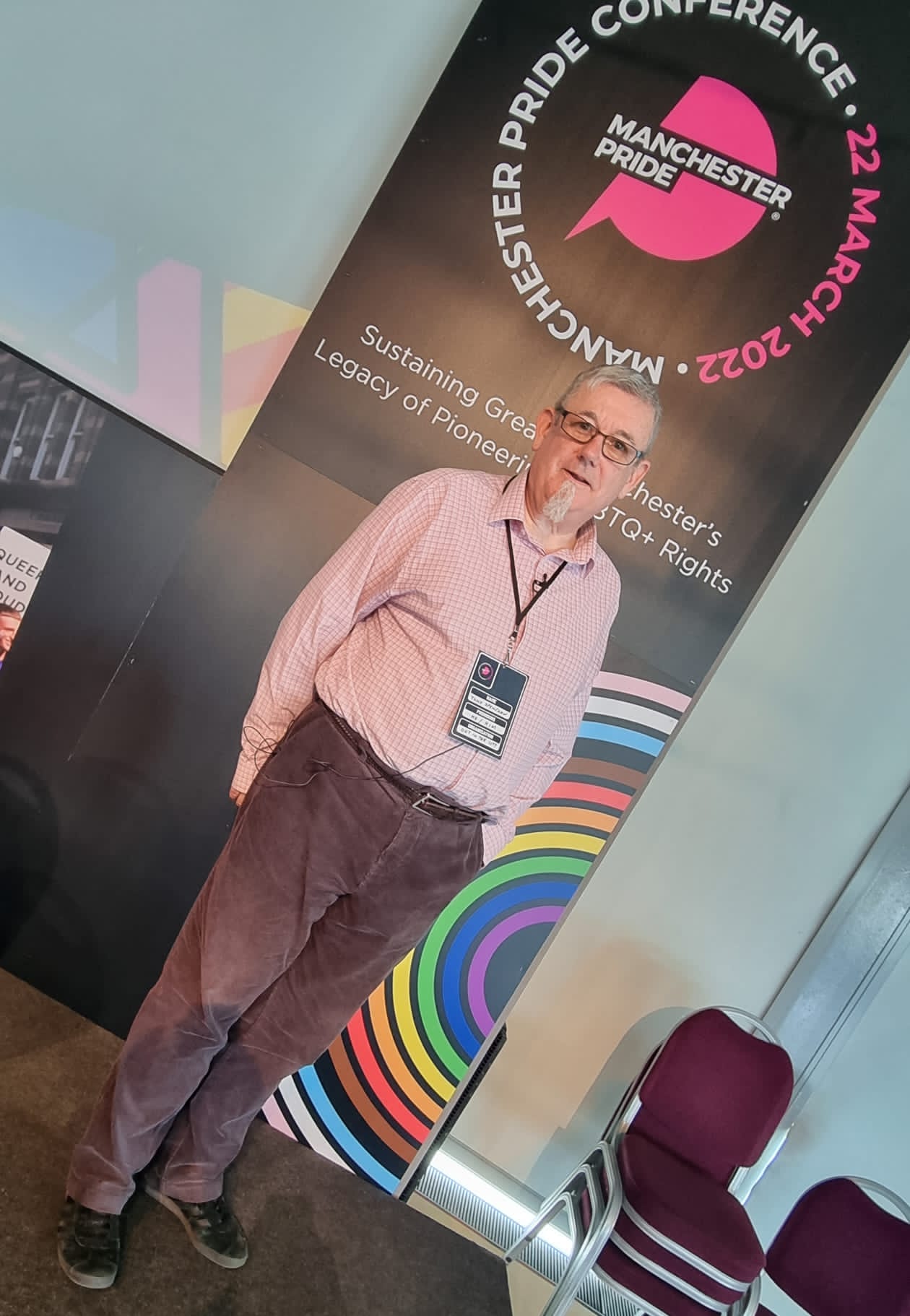
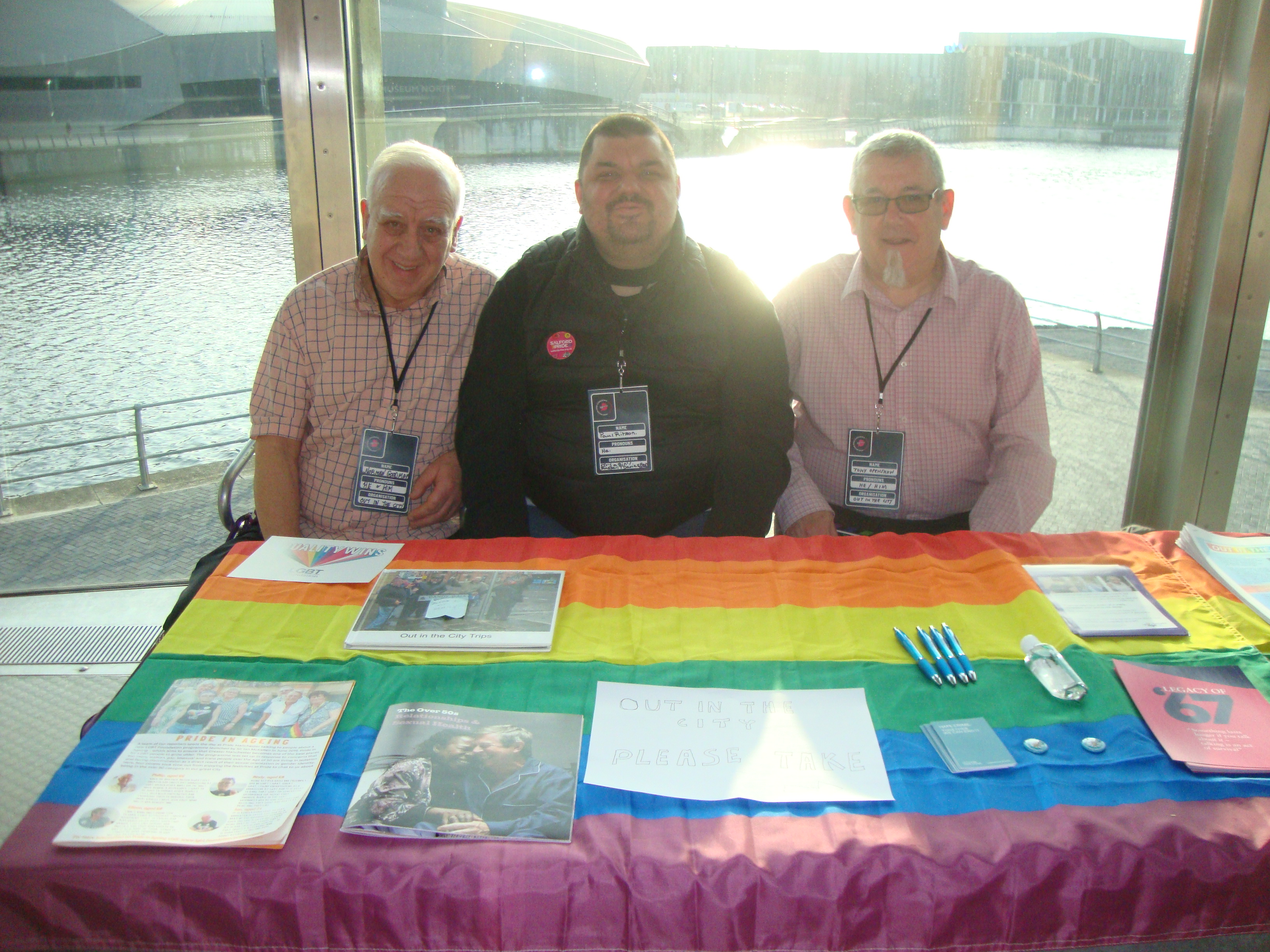
Manchester Pride Conference

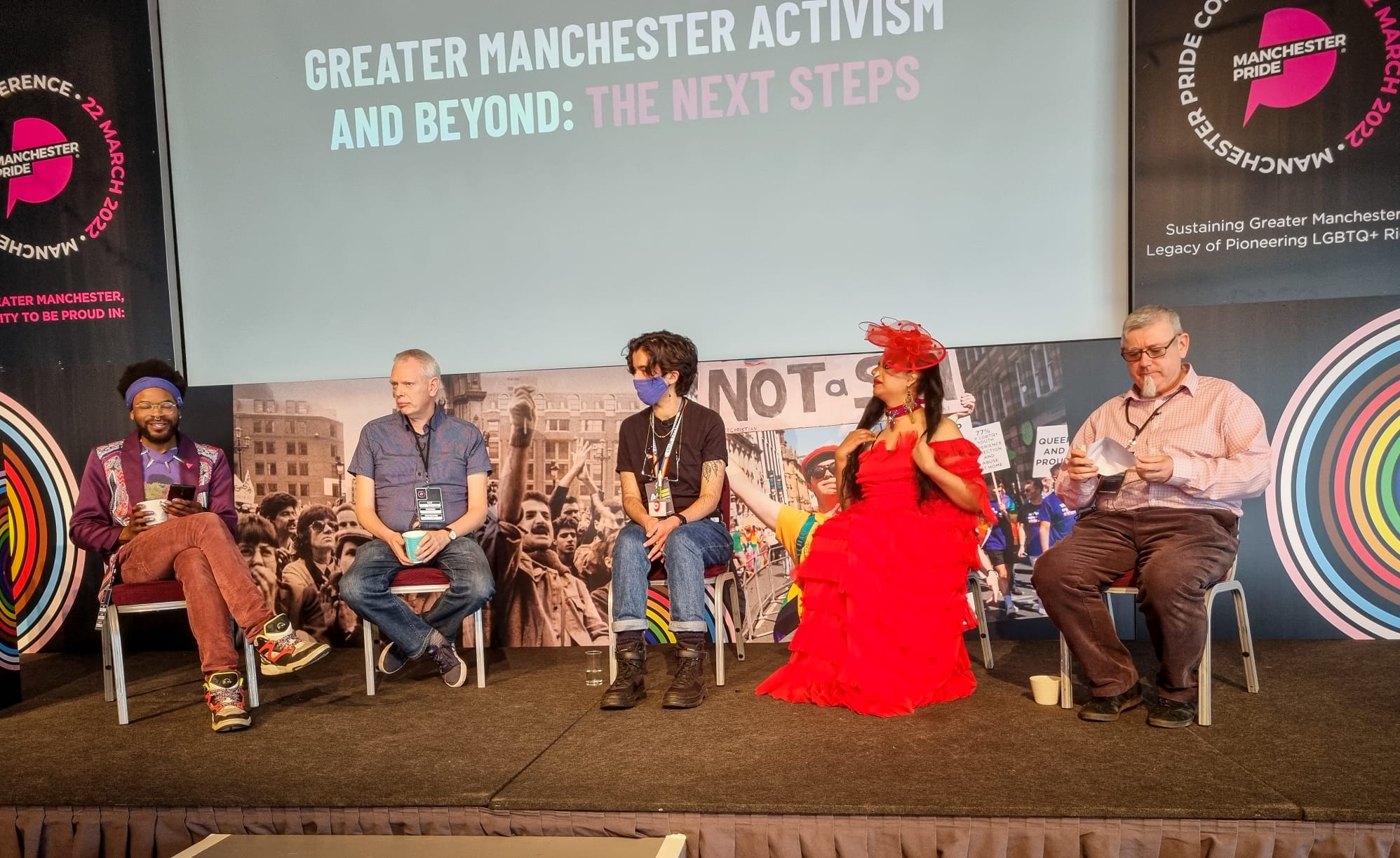
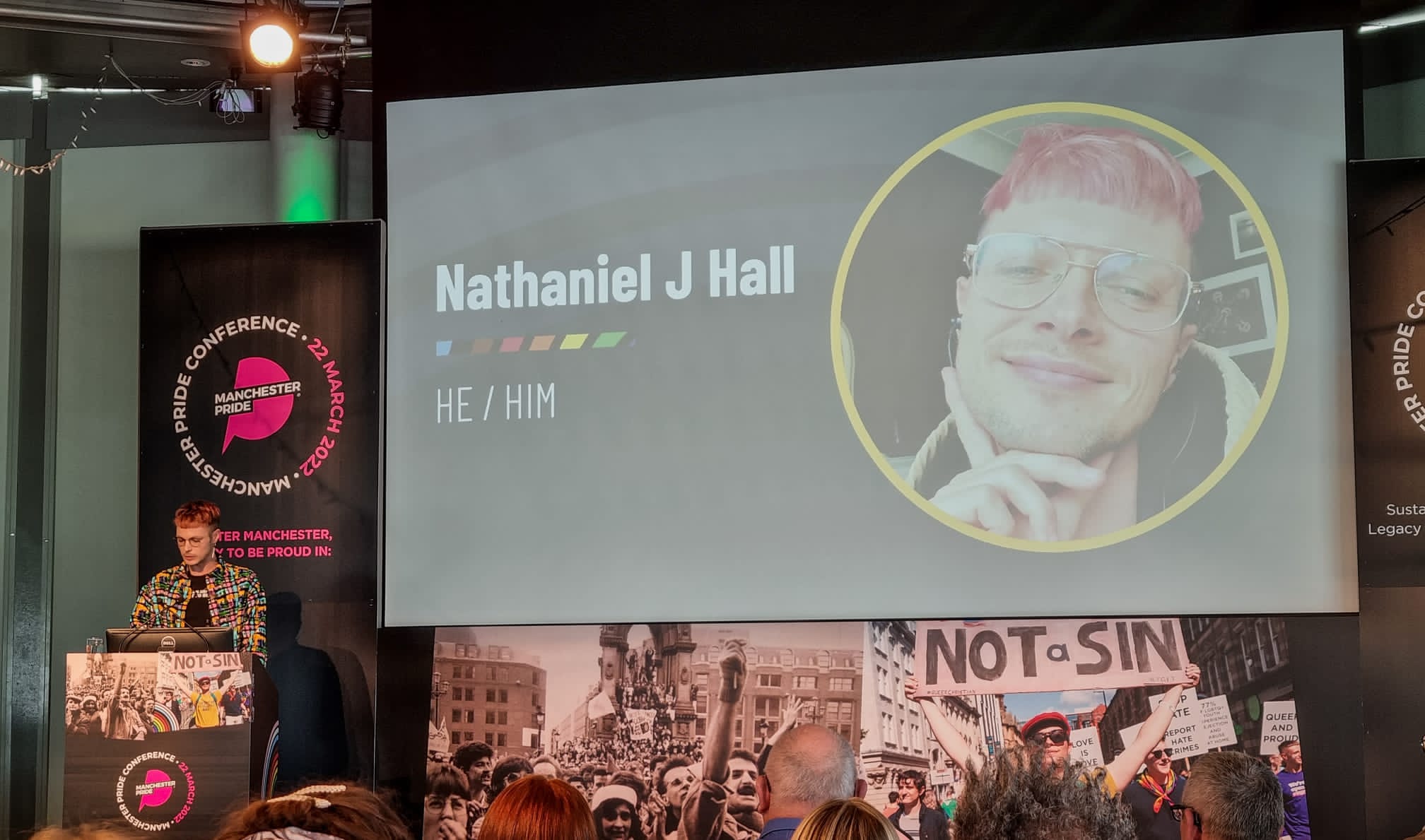
The fourth annual Manchester Pride Conference was held on 22 March 2022 at The Lowry Theatre.

The conference theme was “Greater Manchester, A City to be Proud In: Sustaining Greater Manchester’s Legacy of Pioneering LGBTQ+ Rights”, and was chaired by Stephanie Hirst.

The panel sessions included: “Greater Manchester Activism”; “Tackling Racism Within the LGBTQ+ Community”; and “Working Class and Queer”. Spotlight sessions included Anna Phylactic, Nathaniel Hall and Tolu Ajayi.

Greater Manchester is dedicated to transformation, unity, collaboration, social justice and equality … we do things differently here.

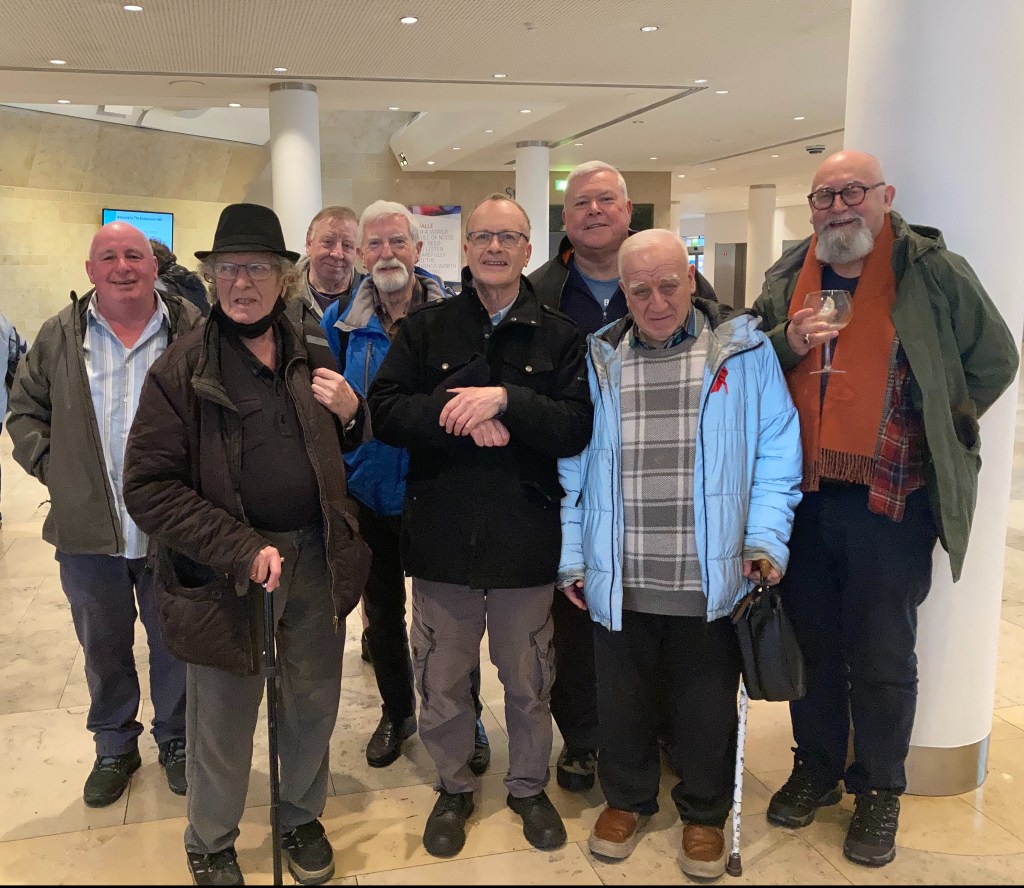
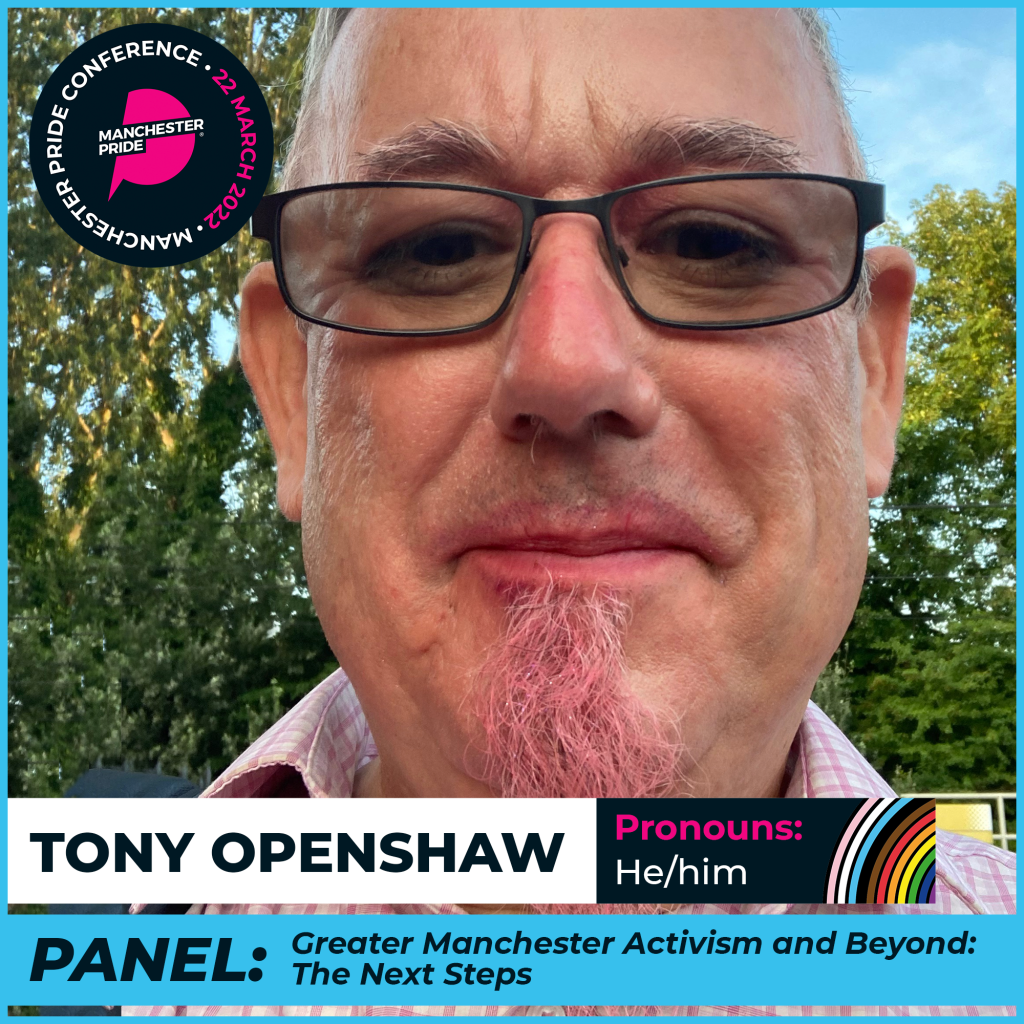
Tony Openshaw introduced himself: “In 1971 I turned 16. I could get married and have sex, so long as it was with someone of the opposite sex.

It wasn’t until I was 37 when the World Health Organisation removed homosexuality from the list of mental disorders in 1992.

I was 46 when the age of consent for gay men was equalised to that of heterosexuals in 2001.

I was 59 when I was permitted to marry my same sex partner in 2014.

I’ve been physically attacked on Sackville Street, had eggs thrown at my bedroom window and been evicted from a house, by order of a court, for being gay.

I am now 67 and had no alternative to become an activist.”

Plaza Cinema

The Plaza Super Cinema and Variety Theatre cinema in Stockport, opened in 1932 and is now a Grade II* listed building. After being a bingo hall for many years, it has now been restored as a cinema and theatre, showing classic films and staging live shows. It has been used as a filming location including Life on Mars and Peaky Blinders.

The building is in the art deco style and features a Compton Theatre Organ built with sunburst decorative glass panels. Our visit included a backstage tour, informative talk and refreshments in the period tearoom.

More photos can be seen here.

Cinema Theatre Association

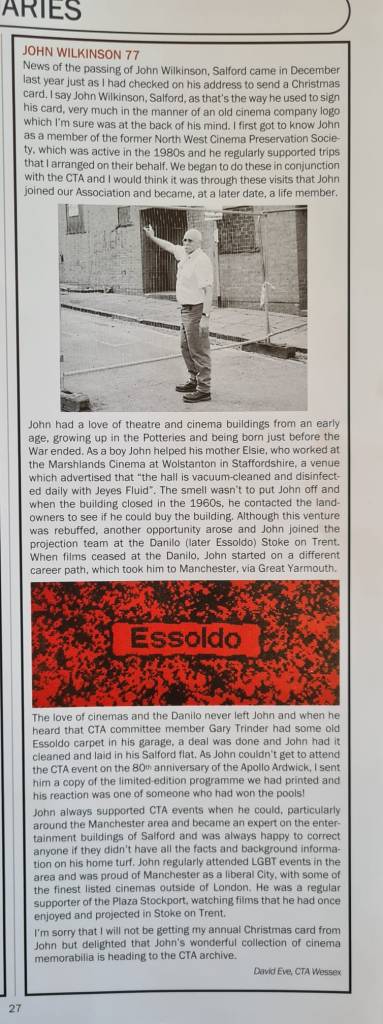
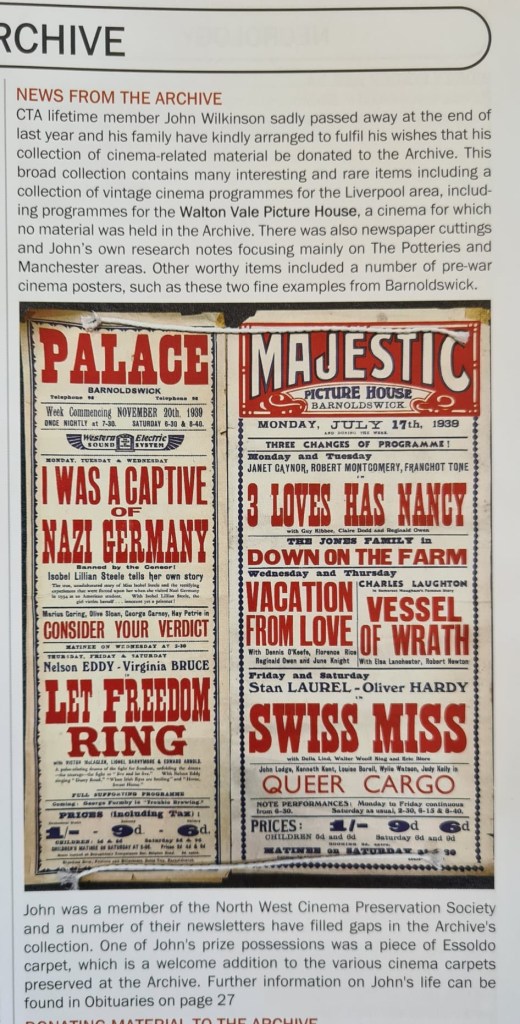
Here are two articles from the Cinema Theatre Association (CTA) – one is John Wilkinson’s obituary and the second is relating to John’s collection which was donated to the CTA.

Ukrainian LGBT+ Refugees … Pride Events

News

Ukrainian LGBT+ Refugees

The scenes of more than three million Ukrainian refugees fleeing their country have been brutally heart-wrenching. Eastern Europe is being overwhelmed right now. The despairing Ukrainians wait very long hours, sometimes even days to board buses and trains to cross the border. Some who have driven, have been leaving their cars and walking considerable distances — marathons to freedom. We are all shocked at what we’ve been seeing. The barbaric bulldozing of a free country by Russian President Vladimir Putin. Each day brings more shocking scenes, more horrific stories, and more desperate situations.

Only last September, over 7,000 people gathered in the capital city of Kyiv for the annual March for Equality.

Only last November, members of Out In The City sent solidarity greetings to Sphere in Kharkiv, an organisation that championed LGBT+ and women’s rights. This entire travesty spells doom for LGBT+ rights, on which progress had slowly started in Ukraine.

LGBT+ refugees fleeing Ukraine draw on European network of allies to find housing and medical care

LGBT+ Ukrainians face risks at borders but have been welcomed by LGBT+ communities in neighbouring countries

People in Kyiv, Ukraine, take part in the Equality March, organised by the LGBT+ communities in September 2021. A network of LGBT+ activists and organisations have sprung into action in recent weeks to support LGBT+ people fleeing the Russian invasion. (Photo: Valentyn Ogirenko / Reuters)

When Edward Reese, a queer activist who works with Kyiv Pride, decided to flee Ukraine on 8 March, he knew it was going to be a long journey.

After leaving his home and walking for an hour in the freezing cold to the nearest working subway station, spending “one hell of a night” in a bomb shelter, catching a day-long bus ride to Lviv, and being escorted by aid workers to the Poland-Ukraine border, Reese was finally able to set foot in a small Polish border town.

Edward Reese is a queer activist that recently fled Ukraine and is staying with hosts in Poland. He says he has had a warm welcome by the local LGBT+ community.

“We slept for like an hour or two in the morning in this big, big hall with tons of other people on these makeshift beds,” said Reese.

A few hours later, he took a bus to Warsaw, where a local LGBT+ advocacy group connected him with queer-friendly hosts who could temporarily house him. The whole journey took more than two days.

Although Poland has limited the rights of LGBT+ people in recent years, Reese, who is non-binary and uses he/him pronouns, said he feels safe in the country. But that’s largely because he was quickly welcomed and aided by Poland’s LGBT+ community.

“Poland is not necessarily the best country for LGBT+ people to live,” said Julia Maciocha, chairwoman of Warsaw Pride, one of the organisations helping connect queer and gender diverse refugees to appropriate resources.

“So, we created a database of people that we know that are part of the community so we can match them with people that are in need of safe shelter.”

Limiting LGBT+ rights

Since Russia invaded Ukraine, more than 3 million people have fled, with more than 1.7 million of them arriving in neighbouring Poland. 

A network of activists and organisations have sprung into action to support those among the refugees who are LGBT+, facilitating access to safe, queer-friendly housing, transportation and medical care.

“I was almost crying because European organisations like Warsaw Pride, like Budapest Pride, they reached out to us like in the first day of the war, offering their help, offering shelter, offering transportation from the border,” said Lenny Emson, executive director of Kyiv Pride.

“This is … a very good feeling that really helps us to survive through this time.”
Some of the neighbouring countries refugees have to pass through have become hostile to LGBT+ people in recent years.

In Hungary, Radio-Free Europe / Radio Liberty reported that in 2020, lawmakers amended the country’s constitution to define marriage as a heterosexual union and allow only married couples to adopt. It also limited the gender on legal and identification documents to the one assigned at birth.

In Poland, same-sex marriage is not legally recognised and adoption by same-sex couples is illegal; some jurisdictions in the country have gone so far as to declare themselves “LGBT-free zones.”

“So the difficulty is not just making it to the border checkpoints but to be able to get safe haven once they do cross the border to a neighbouring country,” said Kimahli Powell, executive director of Rainbow Railroad, an international organisation that helps LGBT+ people facing persecution.

Reese said so far, he’s only received an incredible amount of support and is currently staying “in a really nice room” with three cats in his Polish host’s apartment. 

“We have a great amount of these propositions to host people, to help … from queer people, feminists, different people in different countries who really want to help Ukrainian queer people to go through this,” said Reese, who’s preparing to relocate to Denmark soon.

Trans women face risks crossing borders

Like Reese, some LGBT+ refugees plan to leave Poland after a few days for other Europeans countries.

Countries such as Denmark, Germany and the Netherlands are under less strain than bordering states and may be able to provide more resources and job opportunities to Ukrainian refugees, particularly those who are LGBT+.

The climate for the LGBT+ community inside Ukraine was not particularly accepting even before the war. A 2019 survey of around 40,000 people in 34 countries conducted by the Pew Research Center found that only 14 per cent of respondents in Ukraine thought homosexuality should be accepted in society.

There is no data on how many of Ukraine’s 41 million citizens are LGBT+, but one survey by Ipsos suggests that, globally, anywhere between three and ten per cent of people identify as LGBT+, depending on the country. That would mean potentially anywhere between 1.23 million and 4.1 million Ukrainians identify as LGBT+.

One problem for transgender women trying to leave the country is that their government ID still identifies them as male, meaning they are subject to the law barring males between the ages of 18 and 60 from leaving the country. 

Trans people can legally change their gender but the process is long and complicated and people who have not yet made the change are now effectively trapped.

“Trans women whose gender marker is not matching their real gender or gender non-conforming people with a gender marker in their passport, they all are affected by this situation and they all are in danger when crossing the border,” said Emson. 

“They can be discriminated [against], harassed and … of course, their attempts to cross the border would be unsuccessful.”

According to Powell, LGBT+ refugees also face difficulties accessing certain medications in bordering countries.

“We know for sure that there’s a shortage of antiretroviral medication for people living with and affected by HIV,” said Powell.

LGBT+ people inside Ukraine need essentials

Emson, who is currently in Kyiv, decided to stay in Ukraine to fight the Russian forces and support the LGBT+ community still in the country. Gay and trans people are allowed to join the military in Ukraine and have been taking part in the defence of the country, he said.

“I would like the world to know that there are trans people and LGBT+ people in Ukraine who are serving, who are protecting, who are trying to make their inputs into this fight,” said Emson.

Right now, Emson says, many queer people in Ukraine need the same basic essentials as everyone else: food, shelter and medicine. 

“Those who need medication, like trans people who are taking hormones, the situation is even worse because there is a huge shortage of medications right now, and to get hormones is very challenging, too.”

The challenges facing LGBT+ Ukrainians closely mirror those of LGBT+ people in other conflict zones, according to Sharalyn Jordan, board chair of Rainbow Refugee, an organisation that helps people forced to flee persecution because of their sexual orientation, gender identity or HIV status.

Some LGBT+ Ukrainians are fleeing Russian occupation. Others are signing up to fight

Bohdan Moroz, left, and Vlad Shast are LGBT+ Ukrainians. Moroz was evacuated to Berlin before conscription took effect. Shast is in Kyiv gathering supplies for the Ukrainian soldiers.

A few weeks ago, Vlad Shast was working as a stylist, and performing on the drag queen circuit in Ukraine’s capital Kyiv.

That was before the Russian invasion. Now, he is pushing a grocery cart from shop to shop in Kyiv, filling it with supplies for soldiers on the front lines.

“My life is like before and after,” Shast says. “My life has changed completely.”

Even before getting called up for mandatory conscription in Ukraine’s military, 26-year-old Shast volunteered for Ukraine’s territorial defence force, a civilian corps that reports to the military.

Shast is a prominent member of Ukraine’s queer scene, who uses they/them pronouns and identifies as nonbinary. They fear what might happen under Russian occupation. Inside Russia, LGBT+ people have faced persecution, even torture.

But when Zelenskyy announced wartime conscription, some LGBT+ Ukrainians fled the country.

“I knew that if I stayed, then the border would be closed to me, and they would obligate me to serve in the military,” says Bohdan Moroz, 23, a gay designer from Kyiv whose company evacuated him to Berlin before conscription took effect.

Moroz wasn’t breaking the law by fleeing Ukraine. But he still feels conflicted. He believes the war is important for people like him.

“I believe that Ukraine is a European country, that has equal rights for everybody,” Moroz says. “So fighting for freedom now means fighting for LGBT+ people as well.”

That’s why that drag performer Vlad Shast joined the territorial defence.

“I am a legend in the Ukrainian queer scene! And you know, now I’m living with straight, hetero men, and they don’t even care about my homosexuality, about my queerness — because now we are united.”

Here’s how you can help

Activists and organisations in Ukraine and abroad have taken steps to help Ukrainians whose sexual preference or gender identity puts them at additional risk.

LGBT+ organisations across eastern and central Europe are co-ordinating evacuations and shelter for LGBT+ refugees from the war-torn country. To help them, the international non-profit All Out has started a fundraiser with Ukrainian LGBT+ organisations Kyiv Pride and Insight. Through donations, they plan to get LGBT+ people out of the country and provide resources to those who stay.  Donate to All Out here.

From international fundraisers to local grassroots efforts, here are some organisations looking to support Ukraine’s LGBT+ population: Alturi, Fulcrum, Gender Z, ILGA, Nash Mir LGBT Human Rights Center, OutRight Action International, Quarteera, QUA: LGBT+ Ukrainians in America and Rainbow Railroad.

Bridgewater Hall Concert … Free Events

News

Bridgewater Hall Concert

The Bridgewater Hall is Manchester’s international concert venue, built to give the best possible space for music. The Hall hosts over 300 performances a year including classical music, rock, pop, jazz, world music and much more.

The Hall is home to the Hallé orchestra and we were lucky enough to see Cityscapes, a programme of music with America at its core, conducted by Rodolfo Barráez.

The programme included:

Gershwin – An American in Paris;
Korngold – Violin Concerto with Ning Feng on violin;
Jennifer Higdon – City Scape; and
Bernstein – Symphonic Dances from West Side Story.

Rodolfo Barráez, made his first visit to the Hallé since excelling in the inaugural Siemens Hallé International Conductors Competition. Gershwin’s portrait of an American enjoying the sights and sounds of Paris, complete with car horns, was followed by the Violin Concerto of Austrian émigré Korngold incorporating melodies from his lush scores for Hollywood movies. It was played by Ning Feng, International Tutor at the Royal Northern College of Music and winner of the 2006 Paganini Competition, who made his debut at The Bridgewater Hall. Jennifer Higdon’s City Scape is her evocation of Atlanta: here, in the slow movement, its creeks and parks. Bernstein’s dynamic symphonic dances were expanded from his music-theatre classic in which Shakespeare’s ‘star-crossed lovers’ are relocated to New York.

Free events

Manchester Open Door Tour: Harri Shanahan – Rebel Dykes

HOME, 2 Tony Wilson Place, Manchester M15 4FN – Saturday 26 March, 2.00pm – 3.00pm

Free, but booking required as limited capacity of 30

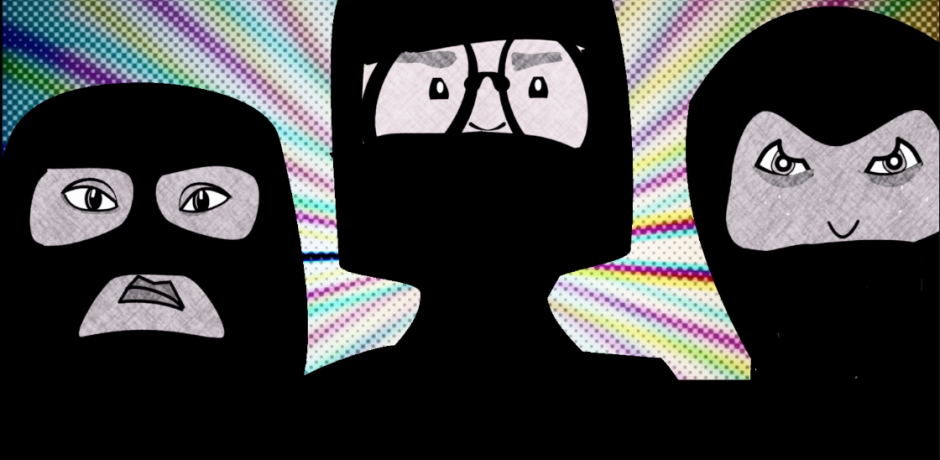
For the final Manchester Open Door Tour, join Harri Shanahan (they/them), co-director and animator of Rebel Dykes who will deliver a unique tour focusing on animation, character design, mixed media, documentary processes and collaborative working.

Harri Shanahan (they/them) is a filmmaker, artist and animator based in Manchester. Harri co-directed and created animation for the feature documentary, Rebel Dykes (Bohemia Media, 2021). 

Harri learned animation independently through experimentation as part of a wider art practice that encompasses video, painting and performance.

Book here.

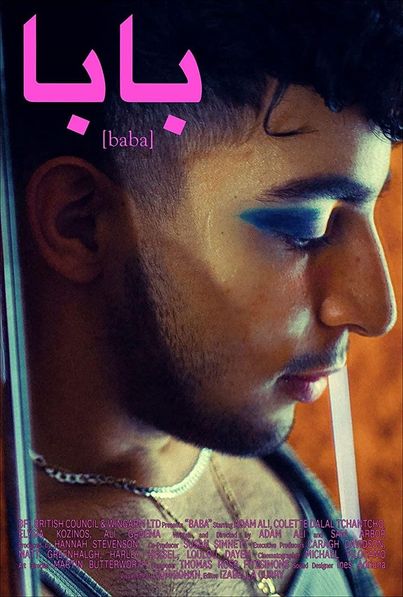
Superbia Cinema Presents Four Short LGBTQ+ ‘Coming of Age’ Films

Ducie Street Mini Cini! Ducie Street Warehouse, Ducie Street, Manchester M1 2TP

Wednesday 30 March, 6.00pm and 7.00pm – Free

Following another sold out screening in February, Superbia Cinema returns to Ducie Street Warehouse Mini Cini this month.

Join us for our next showcase of incredible work by LGBTQ+ creatives from Manchester curated by Joshua Hubbard.

The screening will be followed by a special Filmmaker Q&A, where Joshua will be chatting to the films’ creators.

Book here

Dame Gracy Memorial Event

Tribeca, 50 Sackville Street, Manchester M1 3WF – Friday 8 April, 6.30pm – Free

Join us at Tribeca on Sackville Street in the Gay Village for an evening dedicated to the life and times of Graham Giles, known to many as Dame Gracy.

Dame Gracy was an important gay activist in Manchester, a Gay Village legend, drag artist, uncle, friend, and much-missed community member who died in March 2021.

This event will tell the story of Gracy’s life, including short films, a timeline of Gracy’s life, speeches and stories from friends and family, photographs, memories and more.

The evening will include food, drink and music.

We are also gathering memories for a book dedicated to Gracy.

If you would like to know more about this event and project, please email greg@manchesterpride.com

Book here

Manchester Pride Community Session – Biphoria

People’s History Museum, Left Bank, Manchester M3 3ER – Tuesday 12 April, 6.00pm – 7.30pm – Free

The next session will be hosted by the wonderful Biphoria and will take place on Tuesday 12 April from 6.00pm till 7:30pm at People’s History Museum, if you’d like to join us please register for your free ticket using the link here.

Coccinelle … Tony Jackson … Local Pride events

News

Coccinelle: First French Female Transgender Star

Coccinelle was born in Paris on 23 August 1931, and became famous for having been France’s first transgender celebrity. The name that she was given by her parents was Jacques Charles, but she feminised her first two names to Jacqueline Charlotte. She later stated, “As a boy aged four I knew I was different. I was a girl, really, but nobody could see it.” Jacqueline earned the nickname – which she subsequently adopted as a stage name – ‘Coccinelle’ (Labybird) after appearing at a party in a red dress with black polka dots.

Coccinelle was born at 66 Rue Notre Dame de Nazareth in the 3rd arrondissement of Paris, and was brought up in the Temple district. The Temple area of Paris is near to what is now a thriving gay nightlife scene, the Marais. Apparently from a young age, she expressed her inner femininity by wearing dresses and wigs. Coccinelle did not come from a particularly wealthy family and the first job she ever had was in a hairdressing salon. Unfortunately her father feared that his son, through this form of employment, would become a homosexual.

Coccinelle eventually entered the vibrant cabaret world as a drag queen or female impersonator according to the public comprehension of the time – some performers did even self-identify as transvestites. Another general term that was used for these glamorous individuals was ‘transformistes’. However, Coccinelle’s self-awareness and comprehension obviously extended beyond her stage persona as she clearly felt a strong affinity with her femaleness.

This stunningly beautiful woman had a sense not only for elegant fashion – she became renowned for her trademark polka dot dresses and mink coats – but she also discovered that she had a talent for the performance arts. After making her debut at Chez Madame Arthur in 1953 which was a fashionable cabaret, Coccinelle advanced onto the popular music hall at Le Carrousel de Paris which had opened in 1947. In fact, Coccinelle was a very talented singer upon which she built a career. She also developed her style by taking inspiration from and modelling her look on Marilyn Monroe and Brigitte Bardot.

Coccinelle is also famous for being the first French individual to undergo gender-affirming surgery. Just like April Ashley, whom she had met at the popular Le Carrousel de Paris, Coccinelle travelled to Casablanca to undergo her gender-affirming procedure stating afterwards, “Dr Burou rectified the mistake nature had made and I became a real woman, on the inside as well as the outside.”

Coccinnelle’s gender-affirming surgery has also been described as a victory during an era she could still have been arrested for cross-dressing. In fact, there had been a French Law since 1800 making it illegal for women to wear trousers – obviously French women have ignored this law – however, it was only officially repealed in 2013.

At Le Carousel de Paris, Coccinelle not only encountered other iconic trans women such as April Ashley, but also the performer Bambi (Marie-Pierre Pruvot, born in Algeria) who became a lifelong friend. The Parisian cabaret scene became a magnetic centre that attracted into its orbit a number of trans feminine individuals. Not only did it become a haven in which there was the freedom for feminine gender expression but it also became the focal point for important information, and a network of care, support and communication.

Coccinelle became a media sensation after her surgery. Her career included appearances in the films ‘Europa di Notte’ (1959), ‘Los Viciosos’ (1962) and ‘Dias de Viejo Color’ (1968). As a talented singer she also recorded albums, appeared on TV shows and radio shows, and toured world-wide with her stage act.

Furthermore, Coccinelle’s name was emblazoned in red letters by Bruno Coquatrix on the front of the Paris Olympia for her 1963 revue ‘Cherchez la Femme’ – a production which showcased her magnetic talent as a singer. This was because she was the first French transgender woman to become a major star.

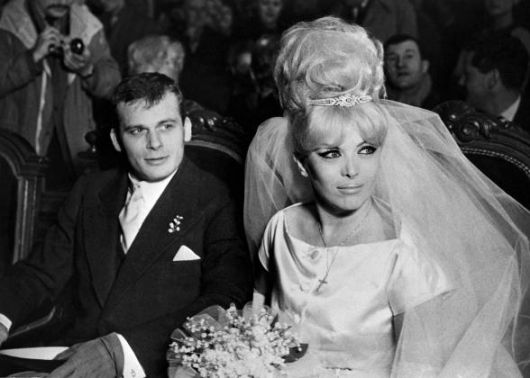
Coccinelle got married in 1960 to the sports writer Francis Bonnet. However, she was unusually required to be baptised again due to her name change to Jacqueline. The significant point here was that through the French Government, it was established for a transgender person to marry. All in all, Coccinelle was married three times in her life. Her second marriage to Mario Costa – a Paraguayan dancer – and finally to transgender activist Thierry Wilson with whom she jointly founded the organisation ‘Devenir Femme’ which provided care and was dedicated to supporting transgender individuals seeking gender re-assignment surgery.

Coccinelle was a pioneer of trans visibility. She refused to live in secrecy. In fact after her first marriage the issue of transgender, became a preoccupation in the media, both within and outside of France.

In the later years of her life, Coccinelle wanted to reach out and help others. She established the ‘Center for Aid, Research, and information for Trans-sexuality and Gender identity’. Before passing away, she also wrote and published her self-titled autobiography. This beautiful and amazing individual sadly died in Marseille at the age of 75, having been hospitalised after suffering a stroke. It has been said – and is part of queer ideology – that by simply existing and thriving in a heteronormative society, that you are taking part in your own subtle revolution. From this perspective, Coccinelle was a triumph.

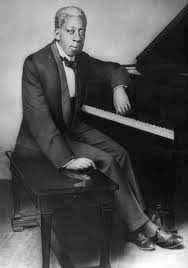
Tony Jackson

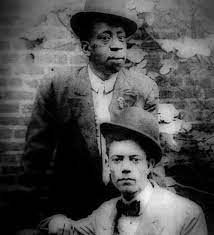
Ragtime legend Tony Jackson was born into poverty in New Orleans in 1876. At age 10 he constructed a harpsichord out of backyard junk, tuned it and reproduced hymns he heard in church. At 13 he got his first job playing piano off hours at a honky-tonk. By 15 he was considered one of the best musicians in town – it is said he could play any tune after hearing it only once – and was soon the most sought after entertainer in Storyville.

Seeking greater freedom as an openly gay black man, he went to Chicago in 1912, playing venues like The De Luxe and Pekin Cafés. One of his show stopping tricks was to dance a high kicking cakewalk while playing. His voice was also exceptional – he could sing ballads, blues, and even opera from soprano to baritone.

Jackson wrote many tunes – most he sold the rights to for a minimal amount and many were stolen outright from him. Indeed, some well-known Tin Pan Alley pop tunes of the era were actually written by Jackson. His songs include “Michigan Water Blues” and “The Naked Dance”. One of the few songs published under his name was “Pretty Baby” (1916) which was written for his gay lover.

His personal style soon came to define the archetype image of the ragtime pianist – pearl gray derby, checkered vest, ascot tie with diamond stickpin, and garters on his arms to hold up his sleeves. It was said, “If you can’t play like Tony Jackson, at least you can look like him.” Sadly, Jackson’s musical virtuosity was never recorded, but his influence can be heard in the recordings of the younger musicians he inspired, like Jelly Roll Morton, Clarence Williams, and Steve Lewis. He died of alcoholism in 1921 at the age of 44.
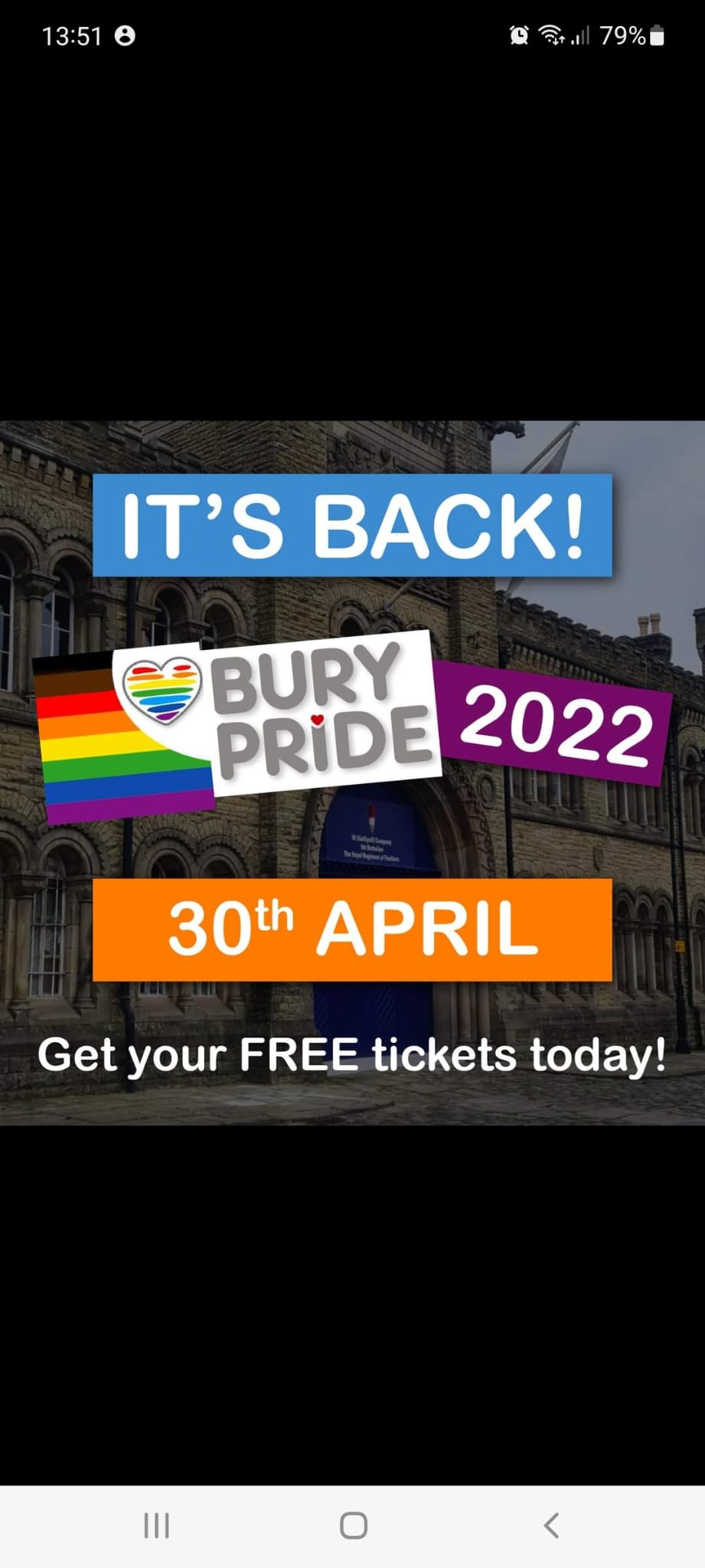
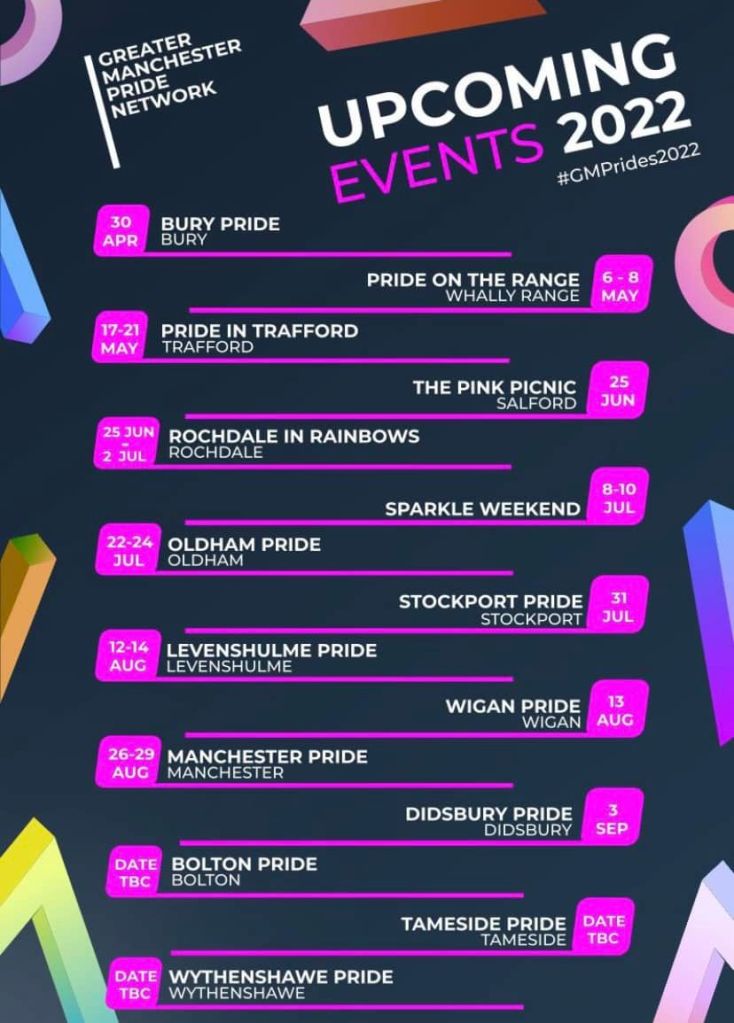
Pride Season 2022: Save The Dates …

Bury Pride: 30 April

Bolton Pride: To Be Confirmed

Didsbury Pride: 3 September

Levenshulme Pride: 12 – 14 August

Manchester Pride: 26 – 29 August

Oldham Pride: 22 – 24 July

Rochdale in Rainbows: 25 June – 2 July

Salford: To Be Confirmed

Stockport: To Be Confirmed

Tameside: To Be Confirmed

Pride in Trafford: 17 – 21 May

Whalley Range – Pride On The Range: 6 – 8 May

Wigan: To Be Confirmed

Wythenshawe: To Be Confirmed