Bakewell … International Transgender Day of Visibility … Isobel Jeffrey … Billy Tipton

News

Bakewell

Bakewell is a market town in the Derbyshire Dales district of Derbyshire. It’s the biggest town in the Peak District and is idyllically situated on the banks of the river Wye.

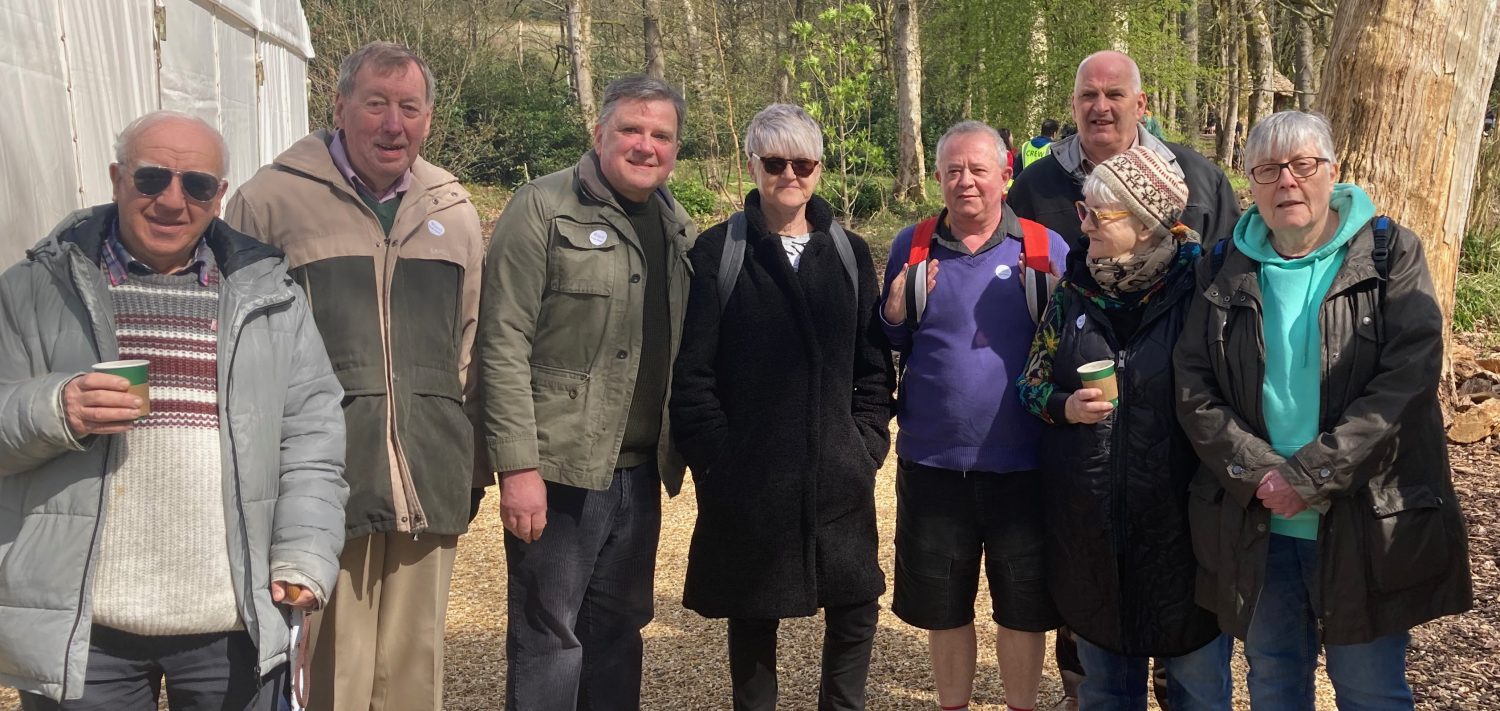
We set off at 10.30am on a coach from Manchester and arrived at 12.00 noon. The mellow stone buildings, medieval five-arched stone bridge and quaint courtyards are a magnet for sightseers and photographers alike.

Bakewell is the ideal place for an interesting town walk. We strolled through the town and discovered scenic buildings and pretty streets. In one of the charming courtyards we discovered the Lavender Tea Rooms and sampled the town’s famous Bakewell Pudding.

Legend has it that the pudding was created by mistake by a local cook in the mid-19th century. Today the delectable ‘jam tart that went wrong’ can be sampled at various bakeries and cafés.

We didn’t find time to visit the Rutland Arms for afternoon tea, to have a look round the Old House Museum or All Saints Church which was founded in 920 during Anglo-Saxon times.

All too soon the time went and we had to return on the coach back to Manchester. Check out the photos here.

International Transgender Day of Visibility

International Transgender Day of Visibility is an annual event occurring on 31 March dedicated to celebrating transgender people and raising awareness of discrimination faced by transgender people worldwide, as well as a celebration of their contributions to society.

Meet Isobel Jeffery, who has undergone gender confirmation surgery at the age of 80

The former fire fighter and truck driver, who knew from an early age she was trapped in the wrong body, began transitioning to female in October 2021 at the age of 79 after living her life as a woman for six years.

She says it has enabled her to finally find peace.

After beginning hormone therapy a year ago, she had the operation at the private Spire Yale Hospital in Wrexham in January this year.

Isobel said: “I cannot tell you how much it has meant to me; the peace, the calm and the contentment that has been brought over me.

People ask me what I am smiling about, and someone asked recently why I was walking taller! Everything has just fallen into place – it was meant to be.

Now I just want to spread the good news and help others. I feel like 25 – not nearly 81!”
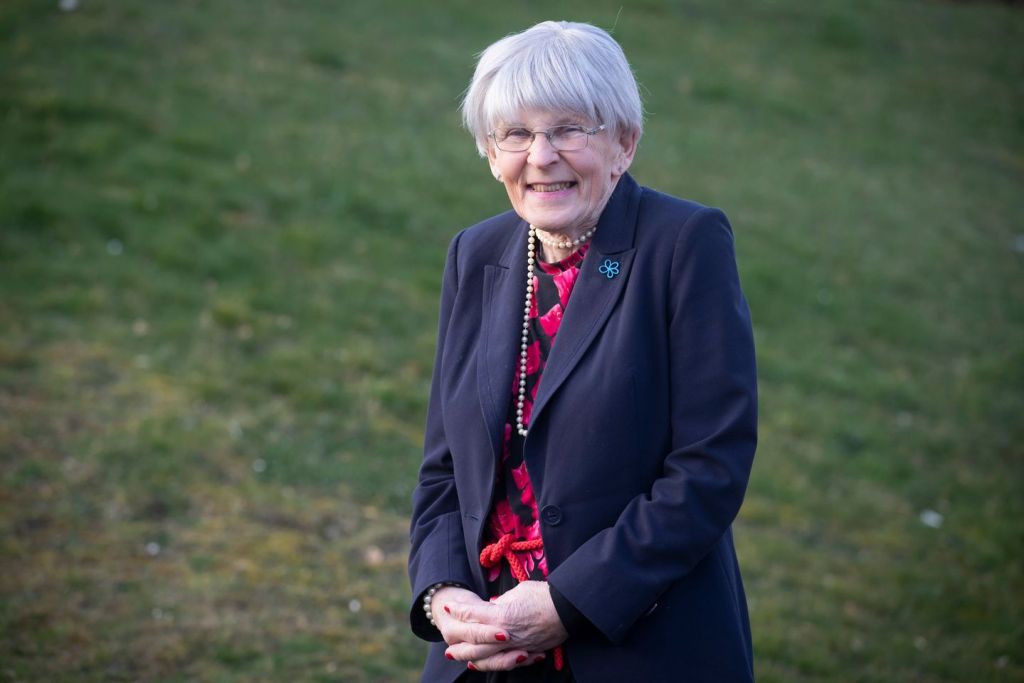
Isobel Jeffery who has recently undergone male-to-female gender confirmation surgery. Picture Mandy Jones / Spire Yale

Isobel, of Winsford, Cheshire, has been married to wife Margaret for almost 60 years and had her full support in her transition journey.

She said: “So many people ask why I left it so long but around 10 to 15 years ago, it was becoming more accepted. The changing attitudes in society gave me more confidence to be who I am.

“It’s not to be undertaken lightly, of course, but I am proof that you’re never too old. As long as you’re physically able to undertake the surgery, then it can happen.”
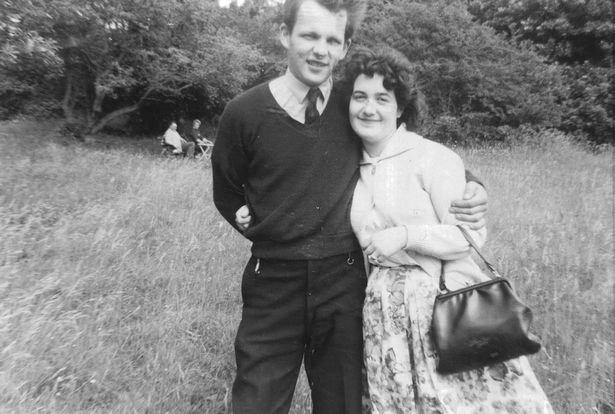
Isobel Jeffery with her wife Margaret before they were married (Image: Spire Yale Hospital / Mandy Jones)

Isobel said she knew from a young age that she was different to other children as she grew up in Marshfield, South Gloucestershire.

She said: “I always played with my sister and her dolls and pushed her pram. Seventy years ago, boys didn’t push dolls’ prams around. It was already starting to show then in hindsight.

I didn’t understand it, I just seemed to feel different. I was dressing up in women’s clothing probably from around 10 or 12. I learned to hide it and was the quiet child at the back normally.”

Isobel when she was presenting as a male and worked as a truck driver (Image: Spire Yale Hospital / MandyJones)

Isobel took on physical roles for 40 years as she tried to convince herself that she was male.

“I sailed around the world out of Liverpool or London with the merchant navy and did two 18-month voyages. When I came back, I became a fire fighter for Bristol City Fire Service as it was known then,” she said.

“Then I went into heavy goods driving and oversized loads. I did everything I could to ‘prove’ I was a man with ‘manly’ jobs but all the time I had a niggling feeling in the back of my mind. I would come home at the end of the day and get into a nightdress. I can laugh about it now, but I was living two lives.”

Isobel grew up as a boy, alongside four brothers and a sister. It was around the age of 10 that she first realised she felt different.
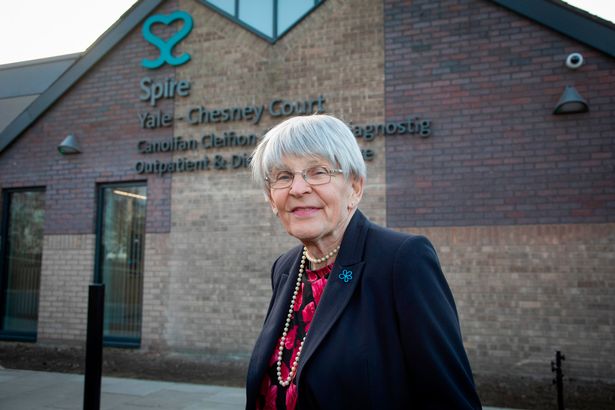
(Image: Spire Yale Hospital / MandyJones)

“I would’ve been bullied badly had I not had a twin brother who stuck up for me. My brother was in a different class to me, and we weren’t always together, but I only had to say so and so has been on at me again and he would sort them out!”

Isobel underwent gender confirmation surgery in January at Spire Yale Hospital in Wrexham.

Isobel’s Consultant said: “I was extremely touched by Isobel’s story. It’s amazing how somebody lived their life for such a long time hiding their real identity, it was very emotional.

The majority of patients are in their 20s or 30s but quite a few patients wish to complete their transition with gender affirming surgery in their 50s or 60s.

This is really a story about what it means to be transgender. We are living in a more liberal society now compared to a time when people like Isobel were growing up.

But discrimination and barriers still exist. For many people with gender dysphoria, life is filled with anxiety, depression, pain and a struggle for acceptance, belonging and equality.

Gender incongruence is not a choice – being born with a body that is not aligned with what your mind perceives as your true identity is scary and makes you question your space in society. It has taken Isobel almost eight decades to get to the point where she mustered up the courage to express and reveal her real identity.”

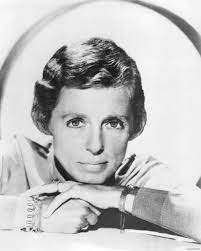
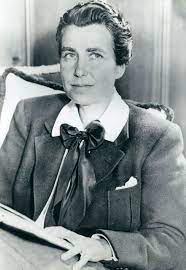
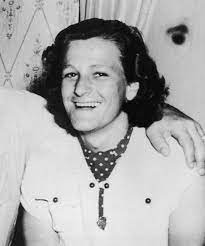
Billy Tipton, jazz artist who lived for decades secretly as a man…
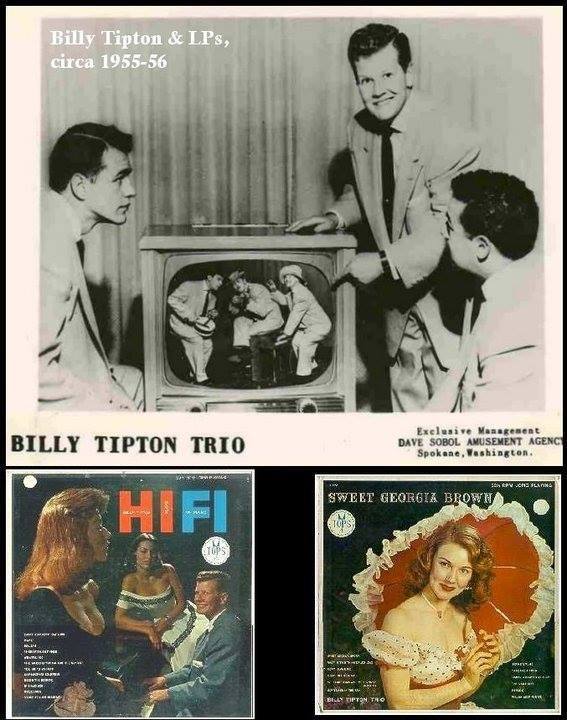
Billy Tipton was a jazz musician who achieved only modest regional success in the 40’s and 50’s. His career included live radio shows with Big Bands and evolved into jazz quartets and trios playing in night clubs. In his 74 years, in addition to being a band leader and a booking agent, he was a husband five times and adopted three children. After he died in 1989 in Spokane, a coroner revealed that he was much more, and the mysterious story ran wild on the wire services: Billy Tipton was a woman.

It seems that Tipton’s decision to adopt a male disguise was likely motivated, at least at first, by practical reasons: It was the depression, people were desperate for work, and it was especially difficult for women to get work playing in jazz bands. So, at 19, Dorothy Tipton began cross-dressing to get a job in a band. She cut her hair, put on men’s clothing, bound her breasts and re-christened herself Billy Tipton, eventually fooling five wives and the world for more than 50 years. Tipton left no letters of explanation, so we can only speculate on what drove him, but we can learn much of what there is to know from a biography by Diane Wood Middlebrook called “Suits Me: The Double Life of Billy Tipton.”


LGBT+ Extra Care Housing Scheme … Voter ID … Celebrate Women’s History Month (Part 2)

News

LGBT+ Extra Care Housing Scheme

In 2013, Manchester City Council commissioned research through LGBT Foundation that indicated higher levels of loneliness and isolation amongst LGBT older people, and a lack of specific affordable accommodation where they can be open about their identity later in life.

The first purpose-built Extra Care scheme for LGBT+ people in the UK was first announced in 2017.

LGBT Foundation and Manchester City Council are really pleased to announce that Manchester City Council’s Housing Board has given approval to open formal negotiations with Great Places as the preferred provider to deliver the LGBT+ majority extra care scheme on Russell Road in Whalley Range. 

We expect a 100 to 110 apartment complex, with a variety of amenities including a restaurant, which will aim to have a majority of LGBT+ residents. 

The scheme is to be built on the former Spire Hospital site on Russell Road. Credit: via BCEG

Great Places has a long track record of delivering specialist and affordable housing, both in Manchester and across Greater Manchester and the North West. They already have five extra care schemes.

Helen Spencer, Executive Director of Growth at Great Places, has said: “We are very delighted to be working with the Community Steering Group on this exciting new scheme and look forward to sharing the experience of co-producing this innovative project. We look forward to the first meeting and getting going.” 

Local Elections

The local elections are on 4 May 2023.

You must be registered in order to vote in the Local Elections.

If you are not already registered, make sure you register by 17 April 2023 – visit https://www.gov.uk/register-to-vote in order to make sure your voice is heard.

Voter ID

This year voter ID is required, and there are concerns that some older people may be unable to vote, or may be put off voting because of this. It is important that a wide range of voices are heard in these difficult times.

Accepted Voter ID includes: 

  • Passport 
  • Provisional or full UK driving licence
  • A Blue Badge
  • Older or Disabled Person’s Bus Pass funded by the UK government
  • Identity card bearing the Proof of Age Standards Scheme hologram (a PASS card).

For anyone who does not have any of these they can apply for a free Voter Authority Certificate – the deadline is the 25 April 2023. If you are not sure if you have eligible Voter ID, pop into your local library. The staff can check your ID and help you to apply online for free voter ID if you need it.

Celebrate Women’s History Month with Women Who Paved the Way (Part 2)

Towards the end of Women’s History Month, we celebrate the accomplishments of some more women who all helped push toward wider acceptance of LGBT+ people through their contributions and through their legacies.

Louise Lawrence

Building Manager, Artist and Activist Louise Lawrence

A building manager by trade in San Francisco in the 1940s, Louise Lawrence, a trans woman, was also an artist and activist who helped build a correspondence network for trans people that became the basis for the Transvestia magazine subscription list.

Lawrence also corresponded with Dr Alfred Kinsey, introducing him to trans people for his studies.

She also lived with her female partner for many years before she died at 63.

Eleanor Roosevelt

First Lady and Diplomat Eleanor Roosevelt

The longest-serving first lady in history, Eleanor Roosevelt worked to change the position during her husband Franklin D Roosevelt’s four terms in office. A politician and diplomat, as first lady, she performed the duty of playing hostess but also held press conferences and delivered radio addresses and lectures.

After Franklin’s death in 1945, Roosevelt waited about a year before becoming the American spokesperson for the United Nations and carried on with her career until her death in 1962.

The first lady met AP journalist Lorena Hickok in the ’30s and the pair maintained an ardent relationship for several years and over many love letters.

“Hick darling, All day I’ve thought of you & another birthday [when] I will be with you, & yet to-night you sounded so far away & formal, oh! I want to put my arms around you, I ache to hold you close. Your ring is a great comfort, I look at it & think she does love me, or I wouldn’t be wearing it!” Roosevelt wrote to Hickok in 1933.

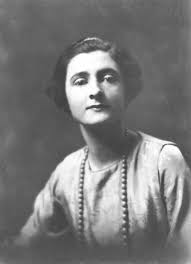
Alice Dunbar-Nelson

Poet, Diarist and Teacher Alice Dunbar-Nelson

A poet and diarist, Alice Dunbar-Nelson, born in New Orleans in 1875 to mixed-race parents, often addressed her African-American, Native American, and Creole heritage in her work. She began her career as a teacher but published her first book, Violets and Other Tales, in 1895, when she was just 20.

Dunbar-Nelson married three men throughout her life, but her affairs with women were documented in her diaries. Later in life she returned to teaching and began a relationship with her school’s principal, Edwina Kruse.

Nancy Kulp

Actress and Politician Nancy Kulp

Fans of The Beverly Hillbillies will remember Kulp best as the staid banker’s secretary Miss Jane Hathaway (an early crush for many a budding lesbian back in the day), but she was a character actress with a long career that extended into the era of The Love Boat and Fantasy Island. A journalism student in college, Kulp was a publicist for a time before she became an actress. Later in life, she tried her hand at politics, with an unsuccessful run for Congress in 1984. She was a Democrat running against a Republican in a heavily Republican district. That was not her swan song, however. She became an acting teacher at a Pennsylvania college.

Regarding her sexual orientation, Kulp told writer Boze Hadleigh, “As long as you reproduce my reply word for word, and the question, you may use it,” she said. “I’d appreciate it if you’d let me phrase the question. There is more than one way. Here’s how I would ask it: ‘Do you think that opposites attract?’ My own reply would be that I’m the other sort — I find that birds of a feather flock together. That answers your question.”
She died in 1991.

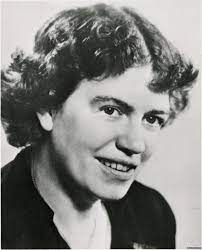
Margaret Mead

Anthropologist Margaret Mead

Cultural anthropologist Margaret Mead is renowned for her book Coming of Age in Samoa (1928), in which she researched adolescent girls in Samoa. Mead was also famous for fieldwork in New Guinea, where she studied children and gender throughout the years. Some of that work is found in her book Growing Up in New Guinea.

When her work in the South Pacific was cut short because of World War II, Mead and her former professor at Columbia University, Ruth Benedict, founded the Institute for Intercultural Studies. Mead worked with the American Museum of Natural History for several years, and she authored or co-authored more than 20 books.

Mead married three times, but she spent the last part of her life with anthropologist Rhoda Metraux. The women were together from the mid-1950s until Mead’s death in 1978.

Mercedes De Acosta

Writer and Costume Designer Mercedes De Acosta

Infamous for her affairs with women, including Greta Garbo, Alla Nazimova, Marlene Dietrich, and Isadora Duncan, De Acosta was a poet, playwright, screenwriter, novelist, and costume designer. Born in New York City in 1893, the youngest of eight siblings, she dressed in male clothing for much of her life, including as a child.

In the 1930s she moved to Hollywood, where she and Garbo began their epic affair. De Acosta published her autobiography, Here Lies the Heart, in 1960.

She died in 1968.

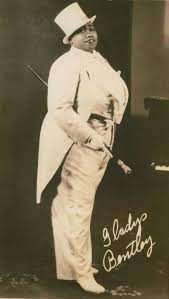
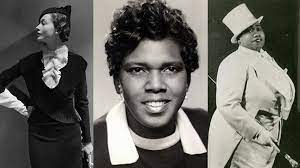
Gladys Bentley

Blues Singer Gladys Bentley

An out and proud, tuxedo-sporting blues singer, Gladys Bentley was one of the toasts of the Harlem Renaissance. Born in Philadelphia, Bentley found a measure of acceptance in the open, artistic environment in Harlem at age 16. She performed at clubs where she often improvised lyrics and flirted with women in the audience. At the close of the Renaissance in the late 1930s she moved to Los Angeles, where she continued to perform in gay clubs.

“From the time I can remember anything, I never wanted a man to touch me. … Soon I began to feel more comfortable in boys’ clothes than in dresses,” Bentley once told Ebony magazine.

She died of the flu at age 53 in 1960.

Dorothy Arzner

Director Dorothy Arzner

One of the few female directors in early Hollywood, Dorothy Arzner was also a pants-clad lesbian iconoclast who reportedly had affairs with women including Joan Crawford.

After driving an ambulance for a time in World War I, Arzner worked in Hollywood beginning as a script typist and becoming an editor.

Having successfully made the shift from the silent era to talkie films, Arzner directed her best-known work with Christopher Strong, which starred Katharine Hepburn as a no-nonsense British aviatrix. She worked with Crawford on the films The Bride Wore Red and The Last of Mrs Cheyney.

Following World War II, Arzner moved away from feature films and concentrated more on television and theatre. She also taught film at the University of California, Los Angeles, and at Pasadena City College. She died in 1979.

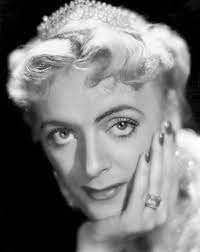
Christine Jorgensen

Nightclub Performer, Lecturer and Author Christine Jorgensen

Born in 1926, Christine Jorgensen unwittingly became famous as one of the first women to undergo gender-confirmation surgery. A native New Yorker, Jorgensen showed an early interest in photography, taking classes at the New York Institute of Photography before being drafted into the military in 1945.

Upon her release from the military, Jorgensen sought confirmation surgery in Denmark in 1950, and while she was still in Copenhagen, she became the subject of many newspaper headlines.

Jorgensen launched a nightclub act upon returning to the US, saying, “I decided if they wanted to see me, they would have to pay for it,” according to The New York Times.

She also became a lecturer and an author. Her autobiography is titled Christine Jorgensen: A Personal Biography.

She died of lung and bladder cancer in 1989.

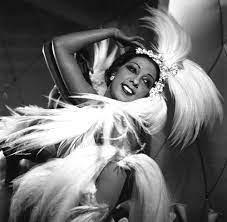
Josephine Baker

Singer and Nazi Fighter Josephine Baker

Baker was born to a single mother in St Louis in 1906. Impoverished, she went to work as a domestic servant while still a child, and she often suffered sexual abuse by the white men who employed her. She had a couple of early marriages but found her calling as a dancer in vaudeville, in nightclubs, and on Broadway, and she enjoyed love affairs with other female performers. Later, her lovers included the French author Colette and the Mexican artist Frida Kahlo. Baker went to Paris to perform in the mid-1920s and quickly became a major star with her sensual dances, sultry singing, and barely-there costumes. There was an element of racial stereotyping in the audience response, as white people had a preconceived notion of Black women as wildly sexual. But she did encounter less racism in Europe than she did in the US, and she has been credited with subverting stereotypes.

In the late 1930s, she married Jean Lion, a white Jewish Frenchman, and although the marriage did not last long, she helped him and his relatives flee the Nazis. By then a French citizen, she was a valued member of the anti-Nazi underground during World War II, smuggling documents and assisting in espionage.

After the war, she married Jo Bouillon, another white man – a musician who was gay. While each had relationships with other people, they lived grandly at a chateau in southern France and adopted 12 children from around the world – children Baker called her “rainbow tribe.” Postwar, she also became more involved in antiracism work, and in 1963 she spoke at the Rev Martin Luther King Jr’s March on Washington.

Baker gave her last performance in April 1975 in Paris, then suffered a cerebral haemorrhage the next day and died two days later.

1853 Restaurant … Library creates brilliant map of LGBT+ authors … Ugandan MPs pass anti-LGBT+ bill

News

1853 Restaurant

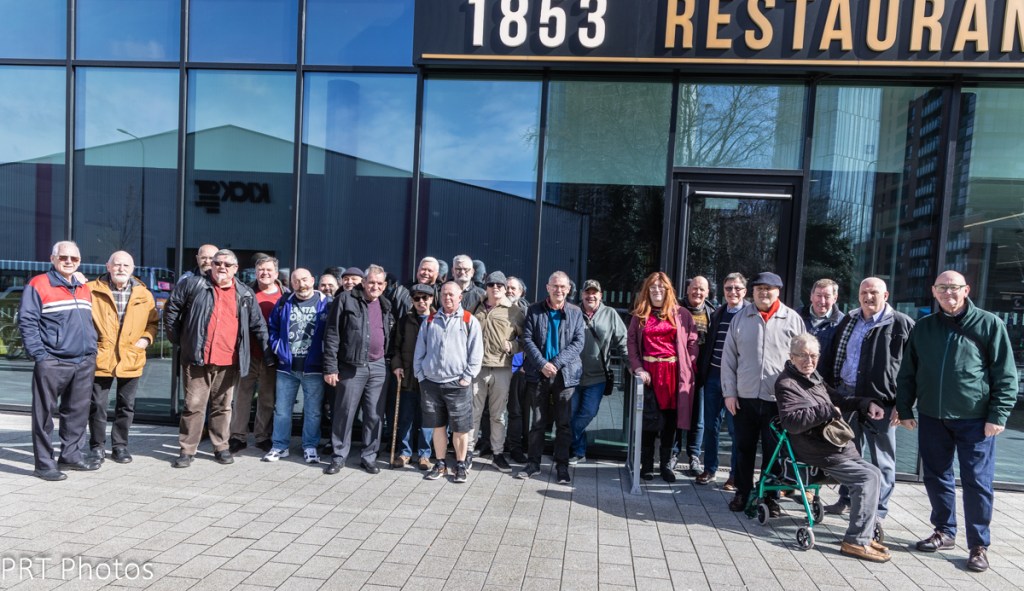
The 1853 Restaurant is a new 40-seat training restaurant, part of the Manchester College. We were the first large group – there were 28 of us – to enjoy the high quality food in a relaxed atmosphere.

The restaurant is run by students, and is just a few minutes walk from Victoria Train Station, next door to the AO Arena.

The lunch time menu was excellent and will be always changing and innovating to reflect local seasonable produce.

They are open for lunch on Wednesdays, Thursdays and Fridays from 12.00 noon to 2.00pm and Thursday evenings from 6.00pm to 9.00pm. There will be an online booking system, but in the meantime you can book your table via email: 1853@tmc.ac.uk

We will certainly be coming back. Look at the photos here.

Library creates brilliant map of LGBT+ authors to help you to find your next read

LGBT+ bookworms, rejoice: the Barbican Library has created a map of the world’s best LGBT+ authors, making it easier for people to source new books to read.

The map includes more than 100 LGBT+ authors with work across the literary field, and was originally published on Twitter in February, LGBT+ History Month.

It’s colour-coded and designed similarly to the London Underground map, segmenting the authors into general fiction, plays, essays, memoir, science fiction and poetry.

On the fiction line are authors including Heartstopper’s Alice Oseman and Andrew Sean Greer, writer of the Pulitzer Prize winning novel Less.

Leaning into the tube line aesthetic, the map highlights which writers cross the boundaries between two genres.

Trans author Juno Dawson and Real Life writer Brandon Taylor, for example, are noted as writing both non-fiction and essays, while writers including Virginia Woolf and Roxane Gay are categorised under memoirs, essays, and fiction.

Mother’s Boy writer Patrick Gale shared his joy at being included on the map, writing on Twitter: “So happy to be a stop between Sarah Waters and Alice Oseman! I hope it’s a stretch with daylight and garden views.”

Emily Noble’s Disgrace author Mary Paulson-Ellis responded to the map with: “Wow, this is a brilliant map! Feel honoured to be in such splendid company.”

The Barbican celebrating LGBT+ authors comes as sales of LGBT+ books soar. However, there is a growing right-wing movement against the dissemination of LGBT+ literature, particularly in the US where books are being banned from schools and public libraries.

Ugandan MPs pass bill imposing death penalty for homosexuality

Moment Ugandan MPs pass anti-LGBT+ bill

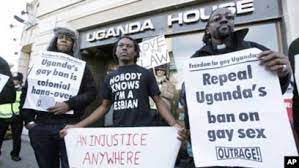
MPs in Uganda have passed a controversial anti-LGBT+ bill, which would make homosexual acts punishable by death, attracting strong condemnation from rights campaigners.

One MP in the chamber, John Musila, wore a gown reading: “Say No To Homosexual, Lesbianism, Gay.”

All but two of the 389 legislators voted late on 21 March for the hardline anti-homosexuality bill, which introduces capital and life imprisonment sentences for gay sex and “recruitment, promotion and funding” of same-sex “activities”. According to Human Rights Watch, the proposed law is the first to make identifying as LGBTQ+ a crime. One legislator claimed that the penalties imposed by the bill did not go far enough, proposing an amendment that would make homosexuality punishable by castration.

“A person who commits the offence of aggravated homosexuality and is liable, on conviction to suffer death,” reads the bill presented by Robina Rwakoojo, the chairperson for legal and parliamentary affairs.

Human Rights Watch notes “any person who ‘holds out as a lesbian, gay, transgender, a queer, or any other sexual or gender identity that is contrary to the binary categories of male and female’” would face up to 10 years in prison.

Just two MPs from the ruling party, Fox Odoi-Oywelowo and Paul Kwizera Bucyana, opposed the new legislation.

“The bill is ill-conceived, it contains provisions that are unconstitutional, reverses the gains registered in the fight against gender-based violence and criminalises individuals instead of conduct that contravenes all known legal norms,” said Odoi-Oywelowo.

“The bill doesn’t introduce any value addition to the statute book and available legislative framework,” he said.

An earlier version of the bill prompted widespread international criticism and was later nullified by Uganda’s constitutional court on procedural grounds. The bill will now go to President Yoweri Museveni, who can veto or sign it into law. In a recent speech he appeared to express support for the bill.

The bill marks the latest in a string of setbacks for LGBT+ rights in Africa, where homosexuality is illegal in most countries. In Uganda, a largely conservative Christian country, homosexual sex was already punishable by life imprisonment.

Human rights campaigners have condemned the new move to enact the harsh law, describing it as “hate legislation”.

“Today marks a tragic day in Uganda’s history. @Parliament_Ug has passed legislation that promotes hatred and seeks to strip LGBTIQ individuals of their fundamental rights!” tweeted Sarah Kasande, a Kampala-based lawyer and human rights activist.

“The provisions of the anti-homosexuality bill are barbaric, discriminatory and unconstitutional,” she said.

She added: “To the LGBTIQ community, I know this is a difficult day, but please don’t lose hope. The battle is not over; this repugnant bill will ultimately be struck down.”

Gay activist Eric Ndawula tweeted: “Today’s events in parliament are not just immoral, but a complete assault on humanity. It’s frightening that our MPs’ judgment is clouded by hate & homophobia. Who benefits from this draconian law?”

Uganda is one of 30 African countries in which homosexuality is criminalised. More than 110 LGBT+ people in Uganda reported incidents including arrests, sexual violence, evictions and public undressing to advocacy group Sexual Minorities Uganda (SMUG) in February alone. Transgender people were disproportionately affected, said the group.

Kasha Jacqueline Nabagesera, a lesbian activist in Kampala, said efforts to overturn the legislation would continue.

“We shall continue to fight this injustice. This lesbian woman is Ugandan even this piece of paper will [not] stop me from enjoying my country. Struggle just begun,” said Nabagesera in a tweet.

Kasande said: “We will fight until all individuals in Uganda can enjoy the rights guaranteed to them by the constitution.”
President Museveni last month said Uganda will not embrace homosexuality, claiming that the west was seeking to compel other countries to “normalise” what he called “deviations”.
“The western countries should stop wasting the time of humanity by trying to impose their practices on other people,” said Museveni in a televised address to parliament on 16 March.

“Homosexuals are deviations from the normal. Why? Is it by nature or by nurture? We need to answer those questions. We need a medical opinion on that,” he said.

“It’s disappointing that parliament would, once again, pass a bill that is clearly in contravention of several basic human rights,” said Oryem Nyeko, a researcher in the Africa division at Human Rights Watch.

“This just opens the door for more regressive laws and for people’s rights to be violated across the board. President Museveni shouldn’t assent to it,” he said.

Gay Gordon’s Manchester … Representation on TV … Celebrate Women’s History Month

News

Gay Gordons Manchester

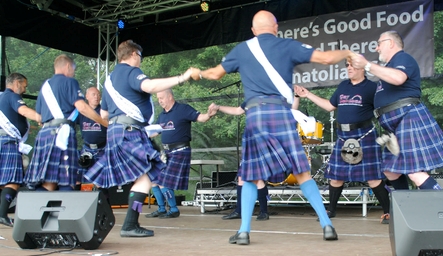
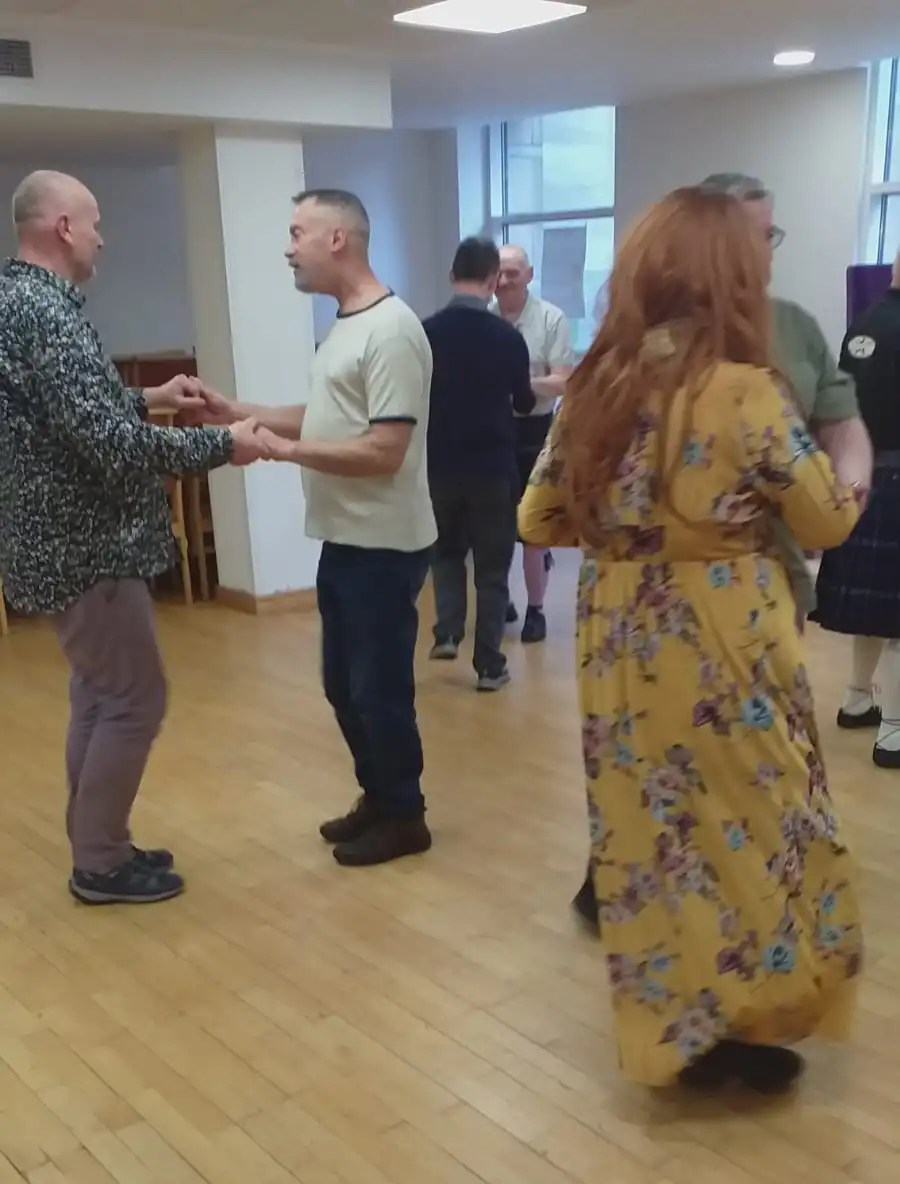
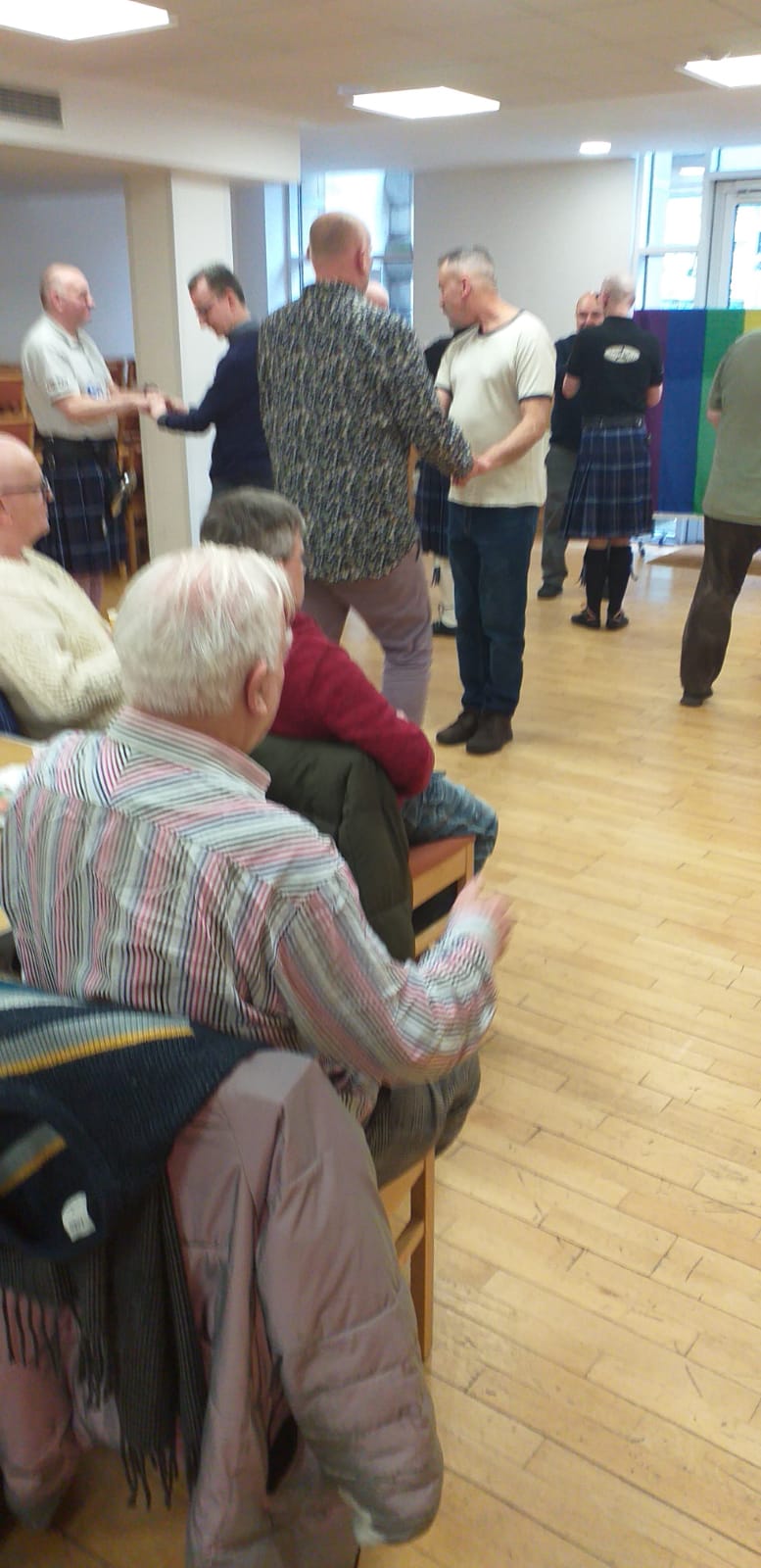
The Gay Gordons Manchester came to an Out In The City meeting to make a presentation and to demonstrate some dances. Audience participation was encouraged.

They are a group of Scottish Country Dance enthusiasts that felt the Gay Community in Greater Manchester could benefit from something new and different.

It is a great way to exercise, to meet new people and to learn a new skill. It is open to everyone – from complete beginners to the more advanced dancer. The only stipulation is that you are LGBT+ friendly and are willing to dance.

The main dance classes are held in the upstairs bar of The Thompsons Arms, 23 Sackville Street, Manchester starting at 7.45pm every Monday (except Bank Holidays).

A drink around the Gay Village usually follows classes, although not compulsory!!

For more information, please see their website.

Brits believe there are too many LGBT+ people and minorities on TV, alarming survey finds

A new YouGov poll has found that close to half the British public believe LGBT+ people and ethnic minorities are over-represented on TV.

The survey, of 1,000 people found that 44 per cent of the public believe LGBT+ representation on TV did not reflect an accurate view of the UK population.

It also found that 45 per cent of the public felt similarly about ethnic minorities, while only 26 per cent thought they were under-represented.

Shows such as The Last of Us, The White Lotus, Heartstopper and Euphoria have been huge hits in recent years, and all have been praised for their representation of LGBT+ people.

Census data for England and Wales published on 6 January 2023 revealed that at least 1.5 million people (3.2 per cent) identify as lesbian, gay or bisexual.

It also found that 262,000 (0.5 per cent) identify with a gender identity different from the sex they were assigned at birth.

Additionally, 18.3 per cent of people in England and Wales see themselves as coming from an ethnic minority.

The YouGov figures show a striking difference compared with surveys in other countries, with France finding that only 19 per cent of its population believed ethnic minorities to be over-represented.

The UK also has a higher percentage of citizens than Italy, France, Spain, Chile and Australia who believe LGBT+ people are over-represented on TV screens. Meanwhile, the survey suggests almost 60 per cent of Britons believe people classified as obese are under-represented in media, while almost half think disabled people are not seen enough on telly.

Celebrate Women’s History Month with Women Who Paved the Way

The roots of Women’s History Month traces its beginning back to the first International Women’s Day in 1911.

For Women’s History Month, we celebrate the accomplishments of women who moved the needle forward for generations to come through their activism, grit, and in many cases by just being unapologetically themselves in the face of sexism and anti-LGBT+ oppression.

These people all helped push toward wider acceptance of LGBT+ people through their contributions to their fields of expertise and through their legacies.

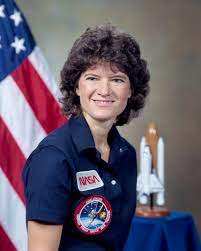
Sally Ride

Astronaut Sally Ride

A physicist and astronaut, Sally Ride was the first American woman in space. As a physics student at Stanford, Ride answered a newspaper ad for female astronauts and became one of six women picked. She flew on the space shuttle in 1983 and in 1984, controlling the robotic arm, the tool that places satellites in space.

After she left NASA, Ride taught at the University of California, San Diego. Upon her death in 2012, her obituary revealed that she had been in a relationship with a woman, Tam O’Shaughnessy, for 27 years.

Toto Koopman

Model, Spy, and Arts Patron Toto Koopman

Born to Indonesian and Dutch parents in 1908, Toto Koopman flew in the face of racist attitudes of the time, embracing her mixed race heritage. The earliest known Vogue cover model, Koopman, who was bisexual, was also an in-house model for Coco Chanel. During World War II she fell in love with a man in the Italian Resistance and helped to carry out espionage missions. Following the war, she met German-born art dealer Erica Brausen. The pair would spend the rest of their lives together. They opened the Hanover Gallery in London, where they showed the work of Francis Bacon, Lucian Freud, Marcel Duchamp, and Henry Moore.

Later in life, Koopman became an archaeologist and went out on several digs.

She died in 1991, having lived a long, rich life.

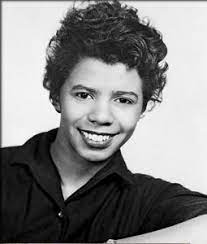
Lorraine Hansberry

Playwright Lorraine Hansberry

While Lorraine Hansberry is best known for her critically acclaimed play A Raisin in the Sun, she was also an activist and a writer who contributed to early publications including the lesbian-oriented The Ladder and the gay magazine One. She often tackled the intersection of feminism and LGBT rights, long before many thought to.

She was married to Robert Nemiroff, a marriage that was rumoured to be mostly platonic, but she had affairs with women.

She died of pancreatic cancer when she was just 34.

Winaretta Singer

Philanthropist and Arts Patron Winaretta Singer

Heiress to the Singer sewing machine empire, Winaretta Singer was a lifelong patron of the arts who hosted a salon in Paris from the late 1800s up through 1939, hosting artists including Claude Debussy, Igor Stravinsky, Cole Porter, Kurt Weill, Isadora Duncan, Colette, Claude Monet, Jean Cocteau, and Marcel Proust.

Beyond helping to fund the arts with donations to the Paris opera and symphony, she partnered with Marie Curie to send mobile radiology units — in limousines — to the front during World War I.

Singer was married twice to men, once to a European aristocrat with whom she did not consummate the marriage, and again to a prince, Edmond de Polignac, who was reportedly gay. Among her female lovers were painter Romaine Brooks, novelist Violet Trefusis, and composer-conductor Ethyl Smith.

She died in 1943.

Lorena Hickok

Journalist Lorena Hickok

While Lorena Hickok was a renowned journalist of her time, she’s likely best known for her proximity to Eleanor Roosevelt. Wisconsin-born, she began her work as a journalist at her small hometown paper but soon moved up and around, taking a job as society editor for the Milwaukee Sentinel before finding a foothold at the Minneapolis Tribune, where she wrote about sports and politics.

She joined the Associated Press in 1928, but she quit that job five years later when her friendship with Roosevelt had become so close that she felt she could no longer report about President Franklin D Roosevelt and the first lady objectively. In 1940, Hickok was named executive secretary of the Democratic National Committee, and she moved into the White House. Over the years, Hickok and Eleanor Roosevelt exchanged many ardent letters.

She died in 1968.

Edythe Eyde

Journalist Edythe Eyde

Also known as Lisa Ben (anagram of Lesbian), Edythe Eyde founded Vice Versa, the first lesbian publication in the US. A secretary at RKO studios in the late ’40s, Eyde produced Vice Versa secretly at work and made copies with carbon paper. She only managed to produce nine issues of the publication, but she joined the lesbian organisation Daughters of Bilitis and contributed to its publication The Ladder as Lisa Ben. Her contribution to LGBT journalism lives on with the Lisa Ben Award for Achievement in Features Coverage from NLGJA, the Association of LGBT+ Journalists.

Born in 1921, Eyde died in 2015.

Florence Nightingale

Nurse Florence Nightingale

Likely the most famous nurse in all of history, Florence Nightingale was working as a nurse in London when she learned of deplorable conditions sick soldiers faced during the Crimean War in the 1850s. At the behest of Secretary of War Sidney Herbert, Nightingale was tasked with forming a team of nurses to help tend to the soldiers in Crimea. She pulled together a team of nearly 40 nurses and set off to Scutari, where she helped vastly improve the sanitary conditions of the infirmary there.

With money bestowed upon her for her heroism during the Crimean War by Queen Victoria, Nightingale founded St Thomas’ Hospital and the Nightingale Training School for Nurses.

Having contracted a bacterial infection while in Crimea, by age 38, Nightingale was primarily confined to her home, if not her bed.

Nightingale never married, but she was reportedly completely devoted to various women in her life, including her cousin Marianne Nicholson, about whom she wrote, “I have never loved but one person with passion in my life, and that was her,” according to the book Superstars: Twelve Lesbians Who Changed the World.

Babe Didrikson

Athlete and Professional Golfer Babe Didrikson

Mildred Didrikson, better known as Babe, was a renowned athlete in sports including basketball, track, softball, and tennis. At the 1932 Olympics, she broke records in the javelin, the 80-metre hurdles, and the high jump, earning her two gold medals and a silver.

She later began to focus on professional golf, becoming the first woman to compete in the PGA tournament. She went on to win 14 golf tournaments in 1946 and 1947 and became a founder of the LPGA.

Didrikson married wrestler George Zaharias in 1938. She became very close with and was rumoured to be in a relationship with fellow golfer Betty Dodd. At 45, she died of colon cancer.

Barbara Jordan

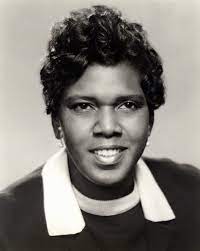
Politician Barbara Jordan

There were plenty of firsts with Barbara Jordan, an attorney who’s best known for being the first African-American to be elected to the US House of Representatives from Texas and the first post-Reconstruction African-American state senator.

Another first for Jordan include being the first woman and the first African-American to deliver a keynote address at the Democratic National Convention. She authored the first successful minimum wage bill in Texas and she served as Governor for the Day in 1972, becoming the first African-American woman to serve as the chief executive of any of the states. In 1979 she moved away from politics and became a professor at the University of Texas at Austin. President Bill Clinton awarded her the Medal of Freedom in 1994. Two years later Jordan died, and it was revealed in her obituary that she had been in a more than 20-year relationship with her partner, Nancy Earl.

Rainbow LGBT
Manchester

FACT Liverpool … Great Indecencies … Eurovision Song Contest … Women on Stamps

News

FACT Liverpool

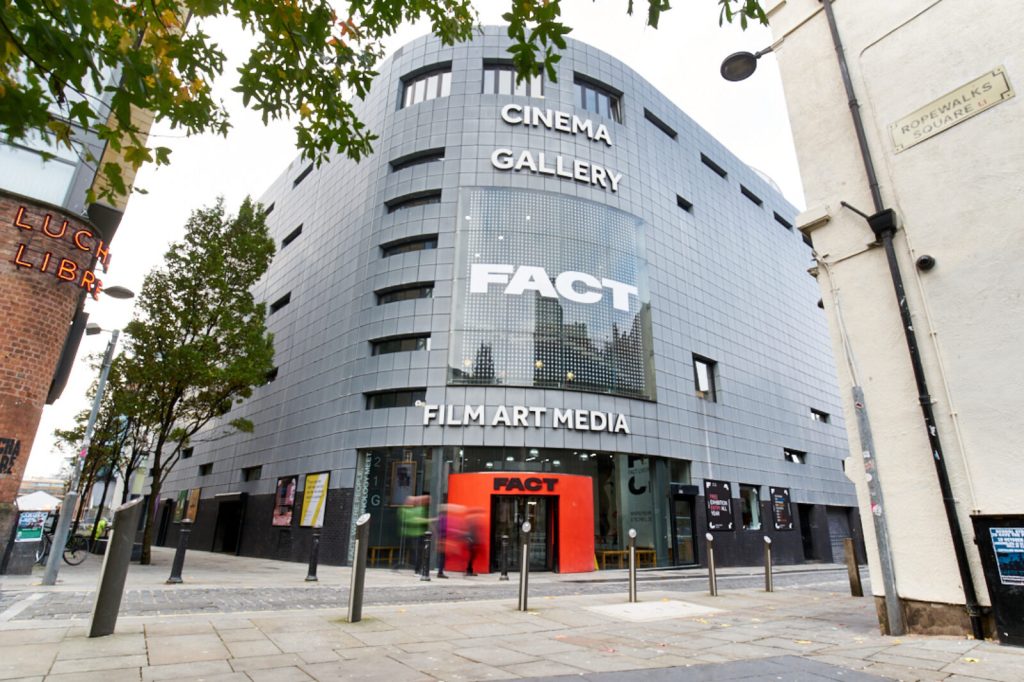
FACT Liverpool is an organisation for the support and exhibition of art, film and digital media. It houses galleries, three cinemas, a café and a bar.

The award winning building was opened in 2003 to provide spaces for people, art and technology to meet in order to nurture artistic practice.

FACT image by Rob Battersby

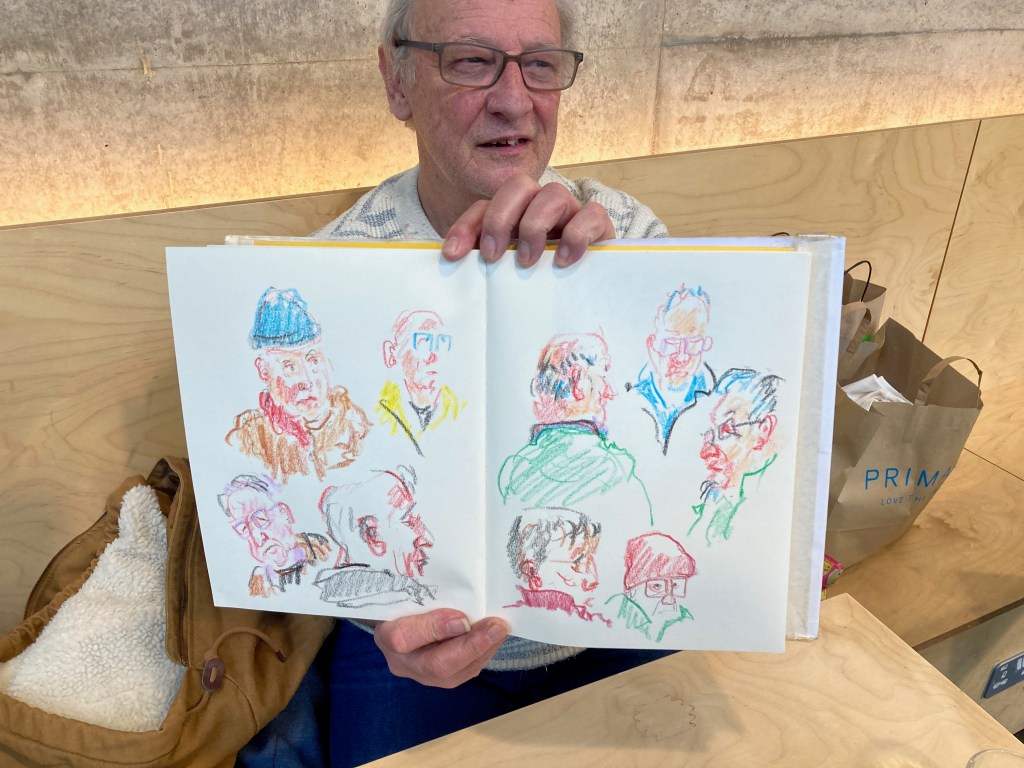
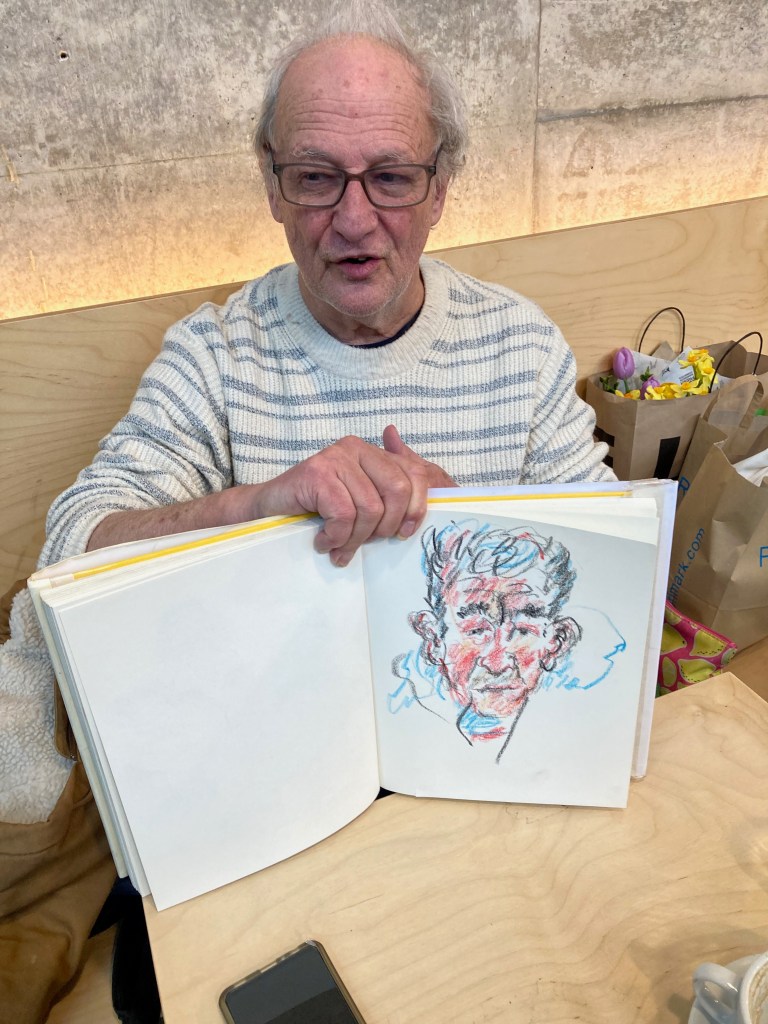
A member of staff gave us a short introductory talk before we viewed the current exhibitions. We enjoyed teas and coffees in the café and later discovered that our group had become the artwork! A local artist, Jim Fleming, was sketching us as we chatted away.

Top row: Adrian, Cliff, Stephen, Peter, Tony O – Bottom Row: Michael B, Tony P, John, Ed

More photos can be seen here.

Great Indecencies

Thursday, 30 March – Saturday, 1 April 2023 – 7.30pm

The Edge Theatre & Arts Centre, Manchester Road, Chorlton, Manchester M21 9JG

Price: £15 / £13 (Concessionary)

Retiring Leonard agreed to help a cute student with their “Queer History” project. Instead, they embark on solving a mystery that has haunted Leonard for a lifetime … if only his memory will serve him correctly. 

Great Indecencies is a darkly comic play with music, that explores LGBTQIA+ memory, and the beginnings of homosexuality’s decriminalisation.  It is the culmination of Legacy of ’67: Initiative Arts Project’s year-long project that captures the real-life accounts of LGBT+ people during the last 50 years, charting the effect of a major change in the law in 1967 and its aftermath.  

Book here.

Eurovision Song Contest – Angel Delight’s Drag Party

Wednesday, 10 May 2023 – 8.00pm – 10.00pm

Manchester Central Library, St Peter’s Square, Manchester M2 5PD

There is a General Admission charge and also a Concessionary charge (60+, students, unwaged, low income)

Join the dream diva, Angel Delight, for an evening of singalongs, card games, bongo bingo, music quizzes and lots of surprises, all with an added Eurovision sparkle!

It’s going to be a night where everyone is a hero! The perfect party to make your Eurovision week go with a boom bang a bang!

Doors open at 7.30pm. Bar will be open all evening.

Register here.

Over 50 Lesbian and Bisexual women worldwide have appeared on postage stamps.

Over 50 lesbian and bisexual women worldwide have appeared on countries’ official postage stamps, elevating the status of women’s history. Here are some examples of those stamps and the stories of those historical figures in honour of Women’s History Month.

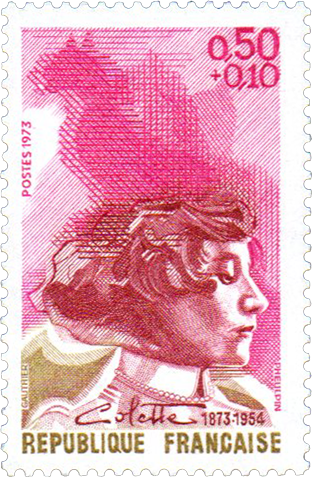
Colette (1873 – 1954)

Colette was one of the great French writers, a Nobel Prize in Literature nominee. She engaged in romances with women while married to men and published works with sensuous sapphic themes. She appears on the stamp above in France and just had a stamp released in early 2023 in Monaco. 

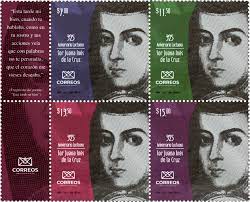
Juana Inés de la Cruz (1648 – 1695)

Sister Juana is considered one of the most prolific poets of the Spanish language and lived in Mexico when it was called New Spain. Born into poverty when women were not permitted to get an education, Juana decided to become a nun to provide herself with food and shelter without marrying a man. She used her time in the convent to become one of the most educated women in the world, an advocate for women’s right to education, and wrote poetry – including some steamy pieces to women. 

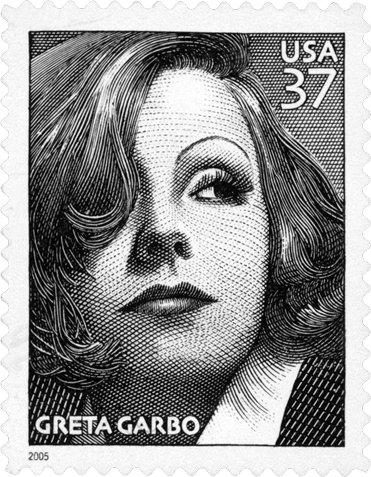
Greta Garbo (1905 – 1990)

Successful Swedish-American actress Greta Garbo was part of Hollywood’s so-called Sewing Circle, Old Hollywood darlings who were sapphically inclined, often with each other. Besides Garbo, Marlene Dietrich and Tallulah Bankhead were members of this unofficial club—and rumoured lovers of Garbo’s. Garbo’s nearly-30-year on-again-off-again lover was Mercedes de Acosta, whose relationship ended when de Acosta sold a tell-all biography about Garbo without her permission when de Acosta was broke. Sweden and the US both released stamps in Garbo’s honour around the centennial of her birth.

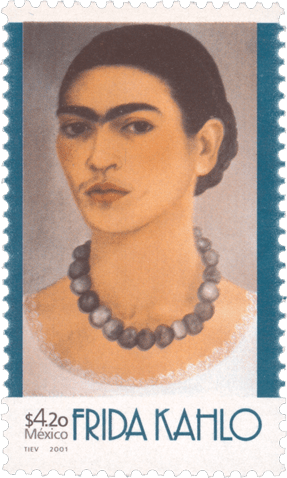
Frida Kahlo (1907 – 1954)

Famed painter Frida Kahlo is a national hero in Mexico and a worldwide icon for bisexuals. As a disabled, communist woman of colour, Kahlo’s art was classified as surrealism by the white art establishment who didn’t understand her, but she said, “I paint my own reality.” Married to fellow Mexican artist Diego Rivera, she often slept with women and men outside of the marriage.

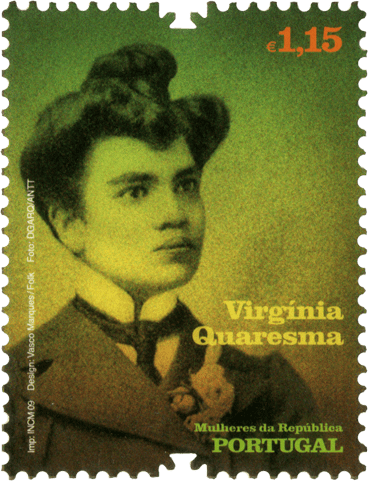
Virgínia Quaresma (1882 – 1973)

Virgínia Quaresma was the first professional female journalist in Portugal and achieved this feat despite intense sexism and being out as a lesbian. She became one of the first women to graduate from the University of Lisbon’s Faculty of Arts in 1903 and used her journalism skills to bring attention to violence against women. She was a leading feminist at the turn of the century, using her access to newspapers to argue for women’s equality. Quaresma eventually settled with her partner, Maria, in Brazil.

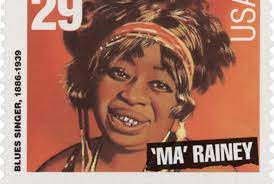
“Ma” Rainey (1886 – 1939)

Gertrude “Ma” Rainey from Georgia was known as the “Mother of the Blues” because she was one of the very first to record a song of the genre in 1923 and recorded over 90 more over the next five years, truly helping to found the field. She was open about her bisexuality in her songs and life. The US released a stamp featuring her in 1994 as part of a collection of stamps with blues and jazz singers on them. 

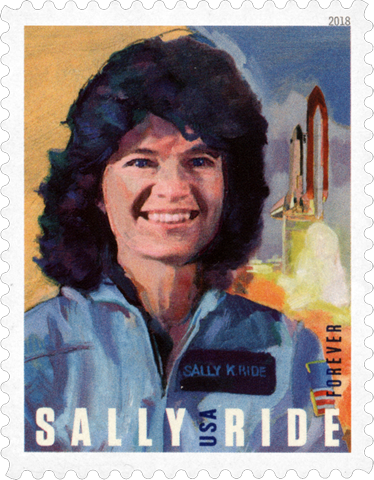
Sally Ride (1951 – 2012)

Sally Ride is on a 2018 US stamp and a 2022 US coin to honour that she was the first American woman to go into space. Her 2012 obituary acknowledged her surviving female partner Tam O’Shaughnessy, making many aware that the trailblazer wasn’t straight for the first time. O’Shaughnessy continues the science education company Sally Ride Science that they had co-founded together, and she accepted Ride’s Presidential Medal of Freedom on Ride’s behalf in 2013.

Sappho (c 610 – c 570 BCE)

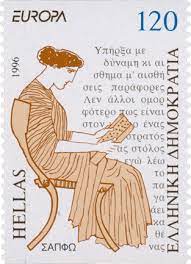
Sappho of Lesbos is such a famous lesbian the words lesbian and sapphic are based on her homeland and name. She’s not only honoured for writing about her love of women, but her lyric poetry was so revered that Ancient Greek philosopher Plato called her the Tenth Muse (a nickname also used centuries later for Juana Inés de la Cruz). Greece honoured her with a stamp in 1996.

Babe Didrikson Zaharias (1911 – 1956)

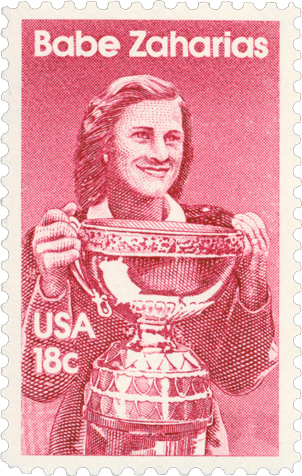
Pic Mildred Ella “Babe” Didrikson Zaharias was one of the greatest female athletes the US has ever seen – The Associated Press named her Female Athlete of the Year six times between 1932 and 1954. She excelled in archery, baseball, basketball, billiards, bowling, boxing, diving, golf, roller skating, softball, swimming, and track and field, but pursued golf and track and field the most. She won two gold medals and a silver in track and field at the 1932 Summer Olympics and had a prolific golf career; she won 10 LPGA major championships. While Zaharias was married to professional wrestler George Zaharias, she was in love with professional golfer Betty Dodd and lived with her for the final years of her life.