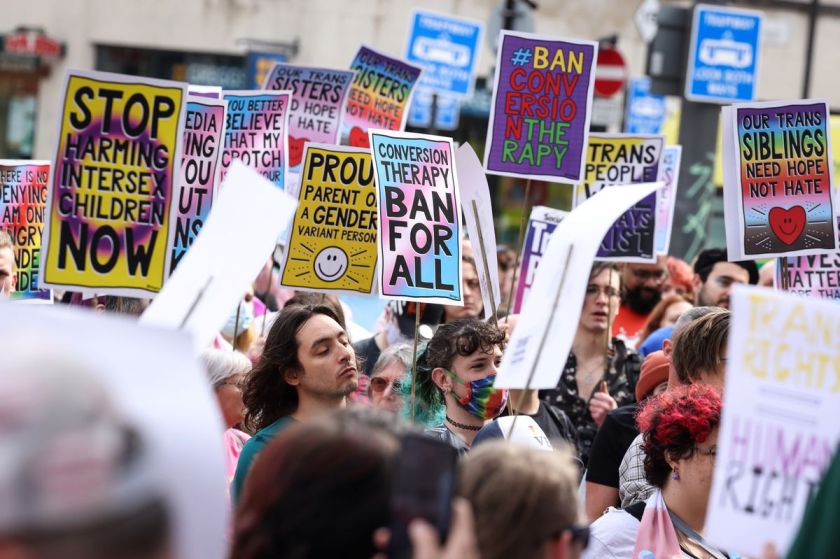
Conversion practices include any medical, psychiatric, psychological, religious or cultural interventions that seek to change, ‘cure’ or suppress the sexual orientation or the gender identity of a person.
International Day to End Conversion Therapy is an annual observance held on 7 January that seeks to raise awareness about the harms associated with conversion therapy practices worldwide.
The day highlights the resilience of survivors, amplifies their experiences and promotes advocacy for the global elimination of such practices. It also calls on policymakers, allies and communities to support affirming, evidence-based care for LGBT+ individuals.
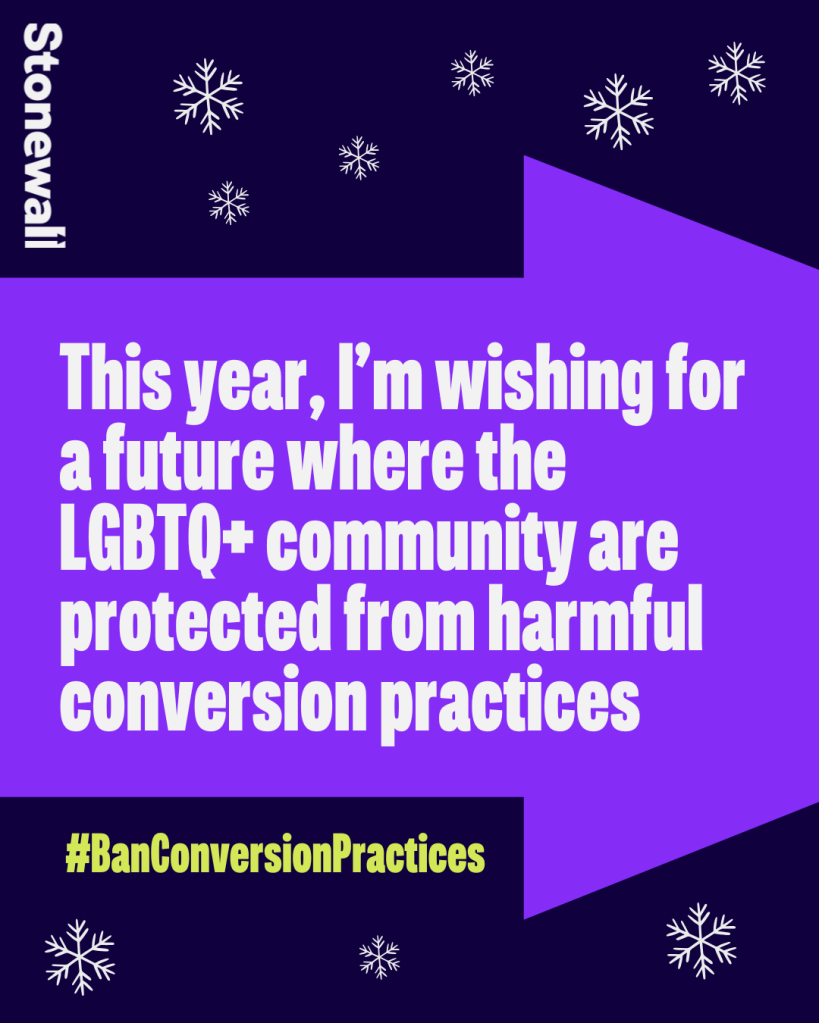
It’s been seven years now since a ban was first proposed. It was featured in the King’s Speech a year and a half ago. The Ban Conversion Practices Coalition, of which Stonewall is a proud founding member, have presented an open letter to the Prime Minister.
The letter urges him to finally make good on his promise and publish a draft Bill to ban conversion practices for LGBT+ communities as soon as possible.
New EHRC chair tells trans people to ‘judge me on what I do’ following criticism
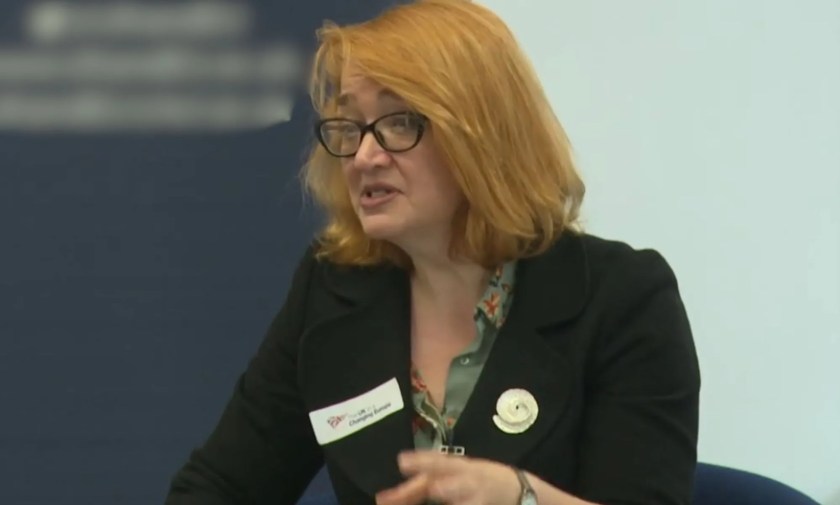
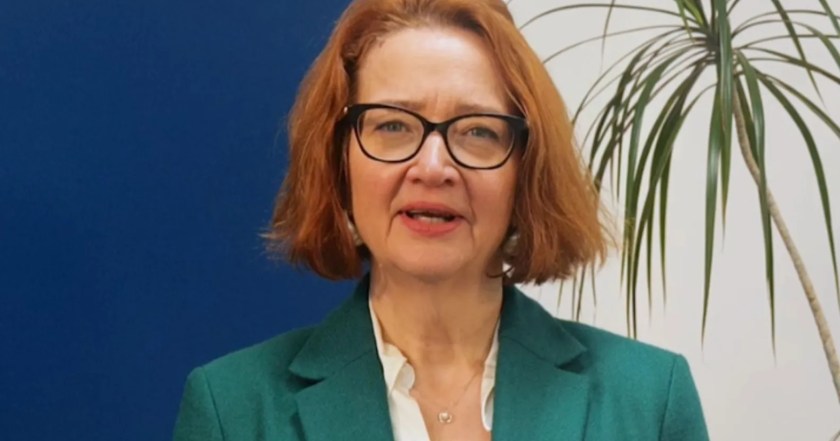
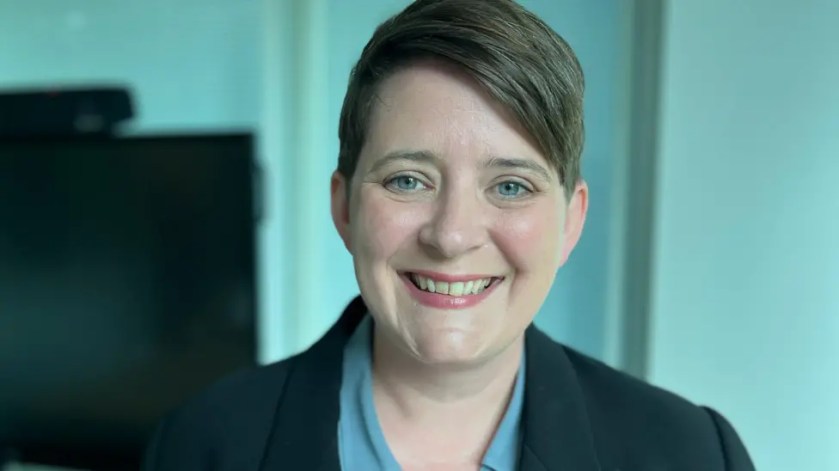
Dr Mary Ann Stephenson – EHRC Chair
Dr Mary-Ann Stephenson (The Equality and Human Rights Commission’s (EHRC’s) new chair) insisted she was intent on upholding the “rights of everybody across all protected characteristics” in her first interview since replacing Baroness Kishwer Falkner in December.
Following the government’s confirmation of Stephenson’s appointment in July, the former director of the Women’s Budget Group faced criticism from various groups for her past engagement with so-called ‘gender-critical’ activists.
In 2022, Dr Stephenson donated to LGB Alliance founder Allison Bailey’s legal fund after she sued Stonewall and Garden Court Chambers, claiming she had been discriminated against for her views on trans people. In December 2025 Allison Bailey had a further appeal dismissed in her case against LGBT+ rights charity Stonewall.
Dr Mary-Ann Stephenson became EHRC chair in December. (Screenshot from YouTube)
She also faced criticism for signing two open letters in 2017 and 2018: The former linked the actions of “transgender activists” to an attack on a women’s rights campaigner, and the latter stated that those opposed to reforming the Gender Recognition Act – something that would have made it easier for trans people to have their gender identity legally recognised – should be protected from “harassment and intimidation.”
Several LGBT+ rights groups and non-profits, including Stonewall, Galop and TransActual, signed an open letter objecting to Dr Stephenson’s appointment, saying that, while they recognised her “impressive track record” in equality law, her previous actions are “at odds with inclusivity for all.”
Dr Stephenson claimed the open letters had been “really widely mischaracterised as kind of anti-trans letters”, arguing that they instead fell in line with her commitment to “protecting and upholding human rights.”
Photo: Mark Kerrison / Getty
Asked what she would say to someone with concerns that she had taken a side on the issue, she said: “I was concerned about women who had been harassed or sometimes lost their jobs for the expression of legally protected views at a point when there was a public debate about changing legislation.
“I would say, you know, judge me on what I do. I am really keen, I think it’s really important for the chair of the EHRC to uphold the rights of everybody across all protected characteristics.”
Chaps Out
Chaps Out is a UK-based podcast giving voice to perspectives you don’t often hear. They provide relatable, uplifting and positive conversations that offer encouragement, affirmation and support for anyone on the journey of coming out, while celebrating and supporting bisexual and gay men.
In this first episode of CHAPS OUT (Coming Out at 40), host Grant Philpott sits down with Stephen McKenna, who shares his powerful story of self-acceptance and coming out later in life after decades of silence living in the UK during the 70s, 80s and 90s.
This is not a story of regret, but one of rebirth, courage and hope; an inspiring reminder that it’s never too late to become your true self.
In this heartfelt conversation, Stephen reflects on:
• Embracing your identity at any age
• Turning fear into freedom
• Finding joy after years of hiding
• Growing up with shame
• Self-love, healing and building confidence
• The pivotal moment when everything “clicked”
• Navigating marriage breakdown
• Why living authentically is possible at any stage in life.
If you’re questioning your identity, coming out or supporting someone who is, this episode offers warmth, optimism and real-life inspiration.
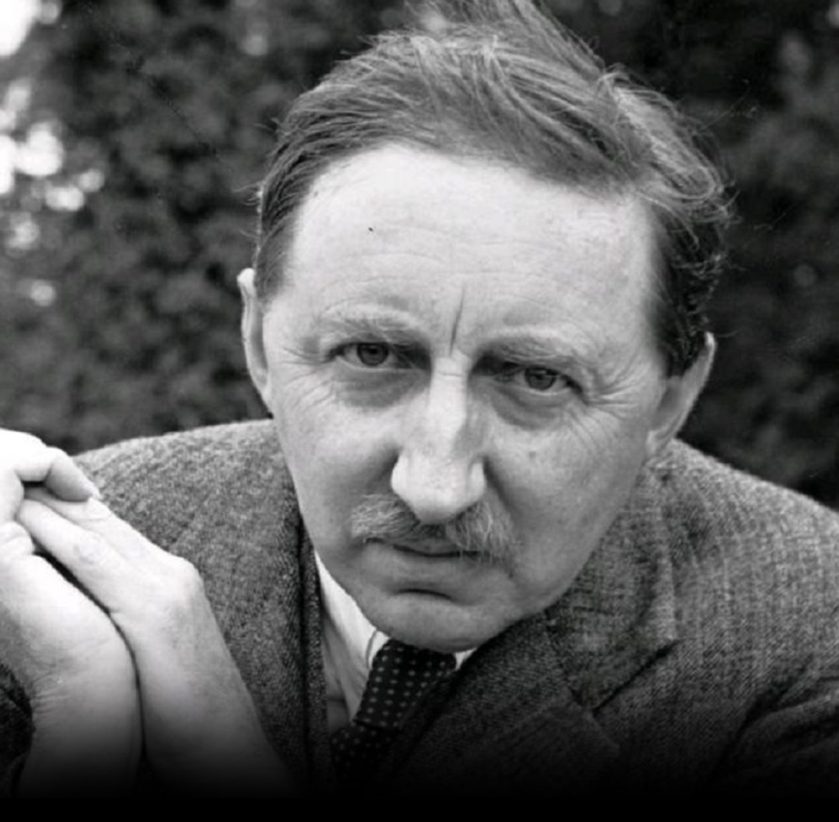
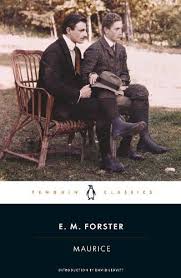
He wrote a love story between two men with a happy ending in 1914 – then locked it in a drawer for 57 years. He died one year before the world finally read it.
E M Forster was already a celebrated author in 1913 when he began writing a novel he knew he could never publish. He had written A Room with a View and Howards End, books that made him famous, books that examined English society with wit and precision.
But this new novel was different. This one was about him.
Maurice tells the story of a young man who falls in love with his Cambridge classmate, Clive Durham. When Clive eventually rejects him, Maurice finds love with Alec Scudder, a working-class gamekeeper. And here’s what made it revolutionary: they run away together. They choose each other. They get a happy ending.
In 1914, that ending was unthinkable.
This wasn’t ancient history. This was the era of Oscar Wilde’s imprisonment still fresh in memory, of men arrested and jailed for “gross indecency”, of lives destroyed simply for loving someone of the same sex.
Homosexuality was a crime punishable by up to two years of hard labour. The law wouldn’t change until 1967 – and even then, only partially. Men lost their careers, their families, their freedom. Some were chemically castrated. Some took their own lives rather than face exposure.
Oscar Wilde had died in exile in 1900, destroyed by the very society Forster moved through. The message was clear: if you were a man who loved men, your story could only end in tragedy, shame or silence.
Forster refused to write that ending.
When he finished Maurice in 1914, he showed it to a handful of trusted friends. Their responses were mixed. Some were moved. Others warned him never to publish it. One friend told him it was “too dangerous.”
Forster typed a note and attached it to the manuscript: “Publishable – but is it worth it?” Then he put it in a drawer and locked it away.
For the next 56 years, Maurice existed only in typescript, read by a small circle of Forster’s closest confidants. He revised it occasionally, updating details, refining scenes. But he never published it.
He couldn’t. Not while his mother was alive.
Lily Forster lived until 1945, dying at age 90. Forster had lived with her for most of his life. She was domineering, possessive, and completely unaware – or wilfully ignorant – of her son’s sexuality. Forster couldn’t risk her discovering the truth, couldn’t bear the scandal it would bring to her.
After her death, Forster was more open with friends, but still not with the world. He was 66 years old when his mother died, too old to rebuild a life as an openly gay man, too entrenched in a society that would reject him.
He had other secrets, too.
In 1930, Forster met Bob Buckingham, a 28-year-old policeman. Forster was 51. They fell deeply in love – or something like it. Their relationship was physical and emotional, documented in letters that reveal Forster’s longing and devotion.
Then, in 1932, Bob married a woman named May Hockey. The relationship didn’t end. Instead, it transformed into a complicated triangle. Forster remained close to both Bob and May for the rest of his life, often visiting them, sometimes causing tension. It was love, compromise, and quiet heartbreak all at once.
Forster lived in the shadows – loving Bob, writing privately, achieving public success while hiding his true self.
In 1954, something happened that reminded Forster just how dangerous those shadows were. Alan Turing, the brilliant mathematician who had helped crack the Enigma code and save countless lives during World War II, was arrested for “gross indecency” after his relationship with another man was discovered. He was convicted. Given a choice between prison or chemical castration, he chose the latter.
In 1954, Turing died of cyanide poisoning. The official verdict was suicide.
Forster knew Turing. He knew what the law could do. He knew that Maurice, with its defiant happy ending, was not just a love story – it was an act of rebellion. But still, he didn’t publish it.
He left instructions: the novel could be published after his death. Only then would it be safe. Only then could it exist without destroying him.
E M Forster died on 7 June 1970, at age 91. He had lived through two world wars, had written masterpieces that were taught in schools, had been celebrated and honoured. But he died without ever seeing Maurice in print.
In August 1971, one year after Forster’s death, Maurice was finally published. The timing was extraordinary. The Stonewall riots had occurred in 1969, igniting the modern LGBT+ rights movement. The world was changing, slowly but undeniably. And into that changing world came a novel written 57 years earlier – a novel that said, quietly but firmly: You deserve to be happy. You deserve love. You deserve an ending that doesn’t break you. The response was overwhelming.
Gay readers around the world found themselves in Maurice’s story. For many, it was the first time they’d seen their own experience reflected in literature – not as tragedy, not as cautionary tale, but as love worthy of celebration.
Letters poured in from people who had lived in hiding, who had believed their only options were loneliness or shame. Maurice told them something different. It told them they could choose each other. They could run away together. They could be happy.
In 1987, the novel was adapted into a film by Merchant Ivory, bringing Forster’s hidden masterpiece to an even wider audience.
But Forster never knew any of this. He died believing the world might reject his truth, might judge him, might destroy what little peace he had built. He locked away the most honest thing he ever wrote – a love story that said happiness was possible – and lived his life in the quiet spaces between what was said and what was felt.
E M Forster spent 57 years protecting Maurice. He protected it from the law, from scandal, from a society that would have punished him for writing it. And in doing so, he gave future generations something rare: a story that ends not with death or despair, but with two men choosing each other and walking into the greenwood together, free.
He lived in the shadows. But he left behind a light. And that light – 57 years delayed, one year too late for him to see – has been shining ever since.
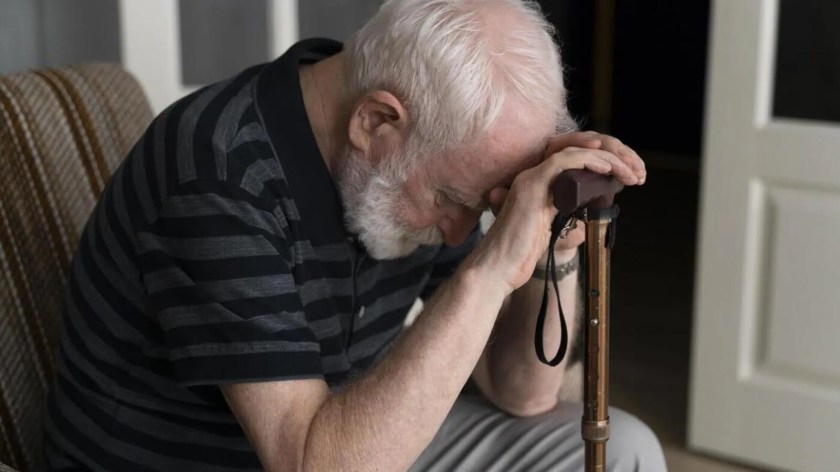
I wouldn’t tell a care home I’m gay
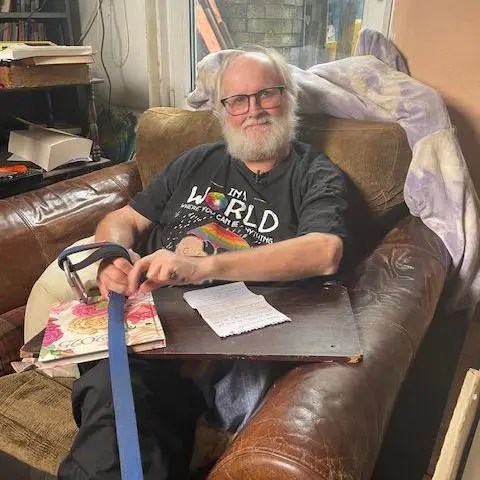
In a recent interview on The View From Here podcast, Ted Brown, a veteran LGBT+ rights campaigner, former member of the Gay Liberation Front, and co-organiser of the UK’s first Pride march, is raising concerns about a growing issue of homophobia, transphobia and societal prejudice in the context of elderly care and care homes.
In The View From Here, Ted reflects on a lifetime of activism that began in the 1960s and ’70s. He emphasises that for many LGBT+ individuals, one of the most severe experiences of homophobia and transphobia often occurs during end-of-life care.
In a startling revelation, Ted told the podcast: “If I was going into a care home now, I would not let them know that I was gay.”
Ted reflects on the treatment of his long-term partner, Noel, who suffered repeated homophobic abuse in a council-run care home. This ultimately led to Lambeth Council paying £30,000 in compensation, but tragically, this occurred only after Noel’s death.
“I had a civil partnership with Noel in 2017 because I realised he was getting dementia and I needed to make sure that I had a responsibility as a carer, and the council and various other people did not recognise our relationship.”
“They did not want to recognise that he was my partner. They didn’t want to recognise gay people as a relationship.”
Ted continues: “You’d be surprised how easy it is and how often a carer can just accidentally kick your ankle as they’re preparing your meal or changing your bed. Or, oops, did I spill tea on your lap again?”
“It’s a one-to-one. They’re in a room with you; you’re in a room with this person. There are no other witnesses.”
Ted introduces his latest campaign, Not Going in the Care Closet, which seeks to ensure no other LGBT+ person has to experience the abuse suffered by Noel, but also to ensure that people have the freedom to be themselves in the elderly care system. The initial aim is to share sources of legal and social advice that can provide support, if required, to protect a partner in a care home.
There are indications that Ted’s campaign is making a difference. Following the controversy surrounding the treatment of Noel, Lambeth Council seems to be starting procedures to ensure that the needs of LGBT+ residents are considered by the care homes with which it is connected.
The View From Here is a UK-based podcast that highlights LGBT+ history through in-depth interviews with some of the UK’s leading changemakers. Their goal is to preserve these stories and inspire the activists of tomorrow.
Ted’s full interview is available now, accessible on all major podcast platforms at www.tvfh.co.uk/listen
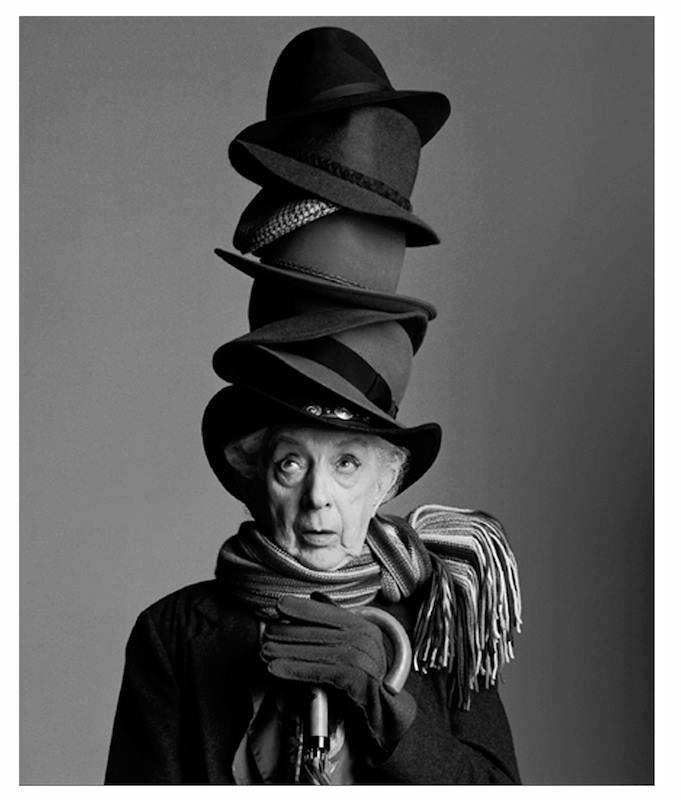
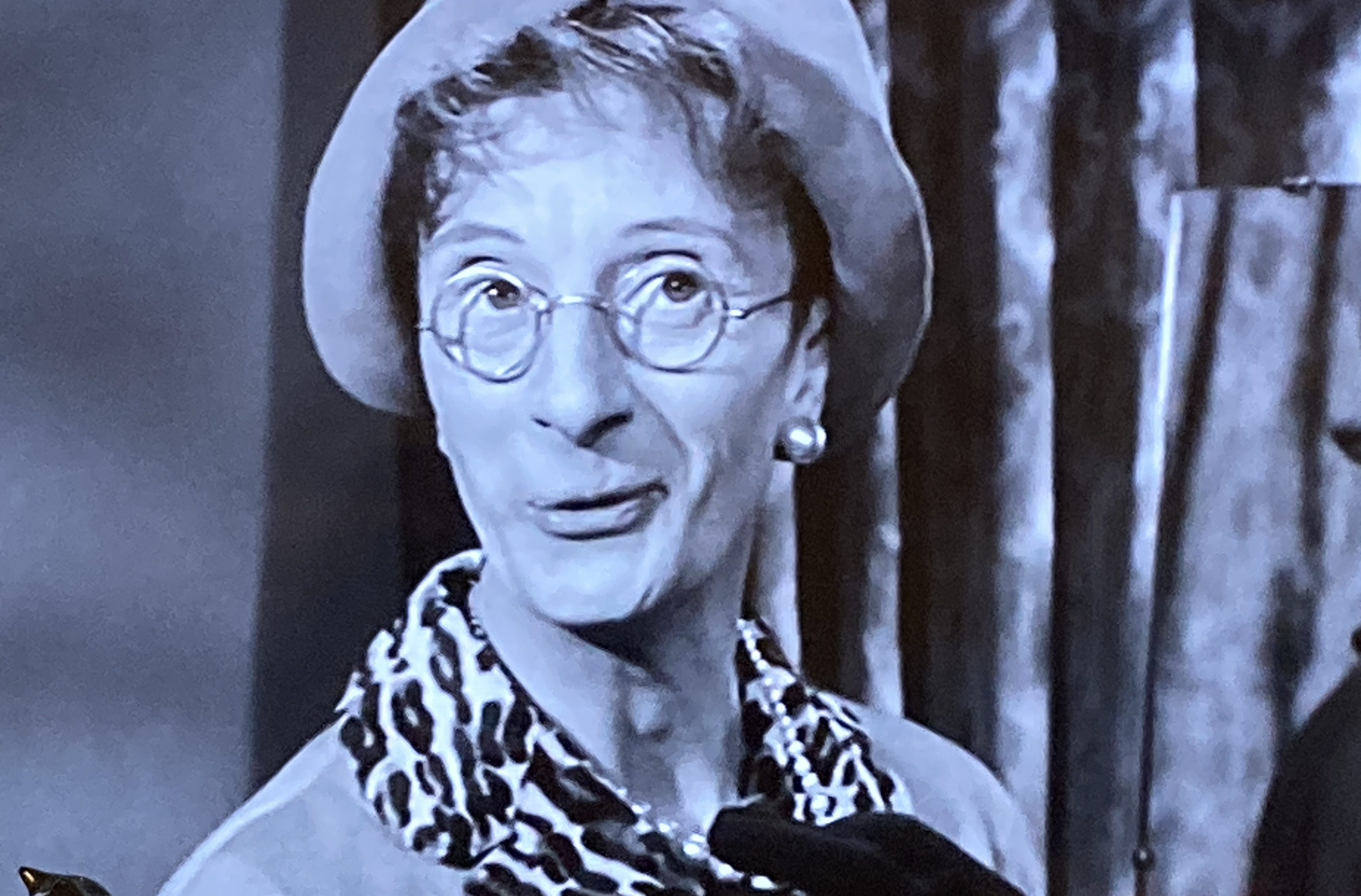
It was Quentin Crisp’s birthday on 25 December. I wonder what he asked Santa for?
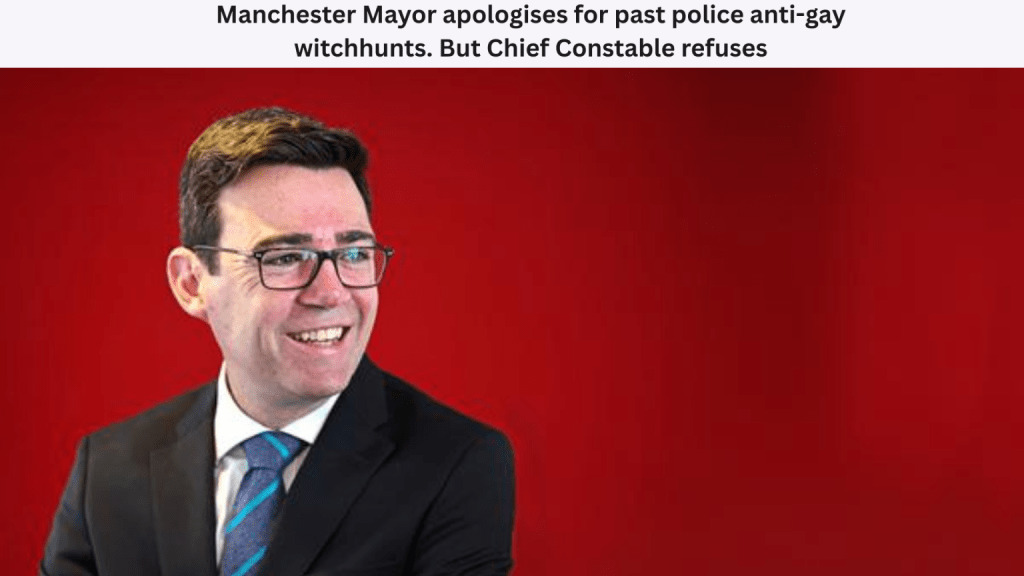
Andy Burnham apologises for historic police failings towards LGBT+ people
Burnham acknowledged the ‘unacceptable discrimination and the pain and suffering’ caused by police failures (AFP / Getty)
Greater Manchester mayor Andy Burnham has apologised for historic police failings towards LGBT+ people.
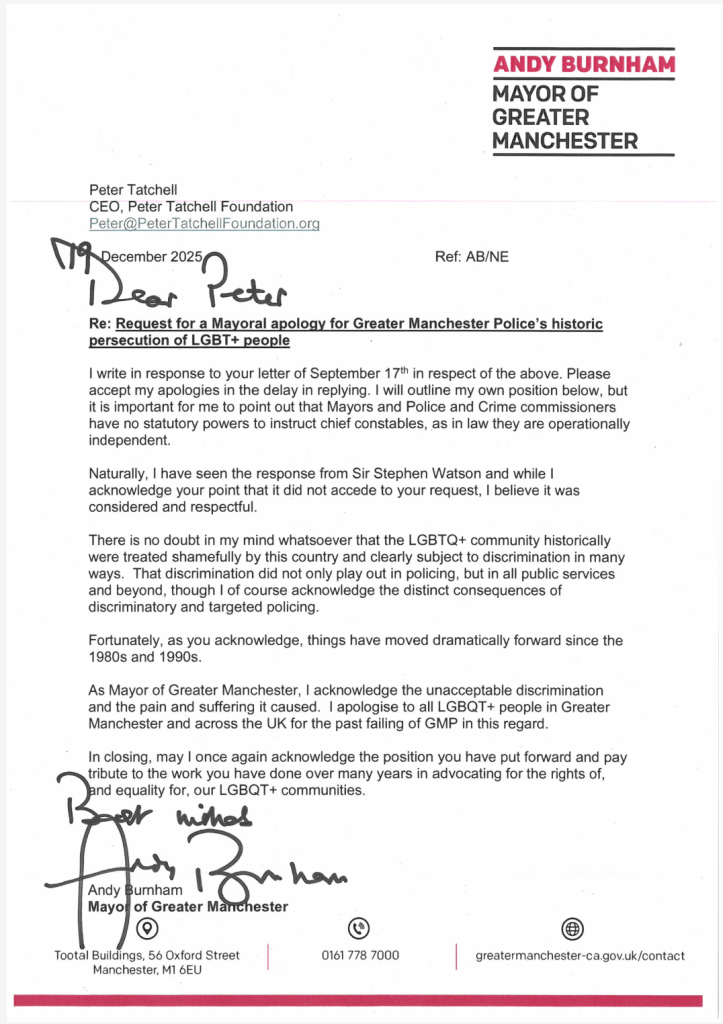
In a letter to the Peter Tatchell Foundation, who have been seeking apologies for “the past homophobic persecution” of LGBT+ people by UK police forces, Mr Burnham acknowledged the “unacceptable discrimination and the pain and suffering” caused by police failures.
He said: “There is no doubt in my mind whatsoever that the LGBT+ community historically were treated shamefully by this country and clearly subject to discrimination in many ways.
That discrimination did not only play out in policing, but in all public services and beyond, though I of course acknowledge the distinct consequences of discriminatory and targeted policing.
Fortunately, as you acknowledge, things have moved dramatically forward since the 1980s and 1990s.”
He continued: “As Mayor of Greater Manchester, I acknowledge the unacceptable discrimination and the pain and suffering it caused. I apologise to all LGBT+ people in Greater Manchester and across the UK for the past failing of GMP in this regard.”
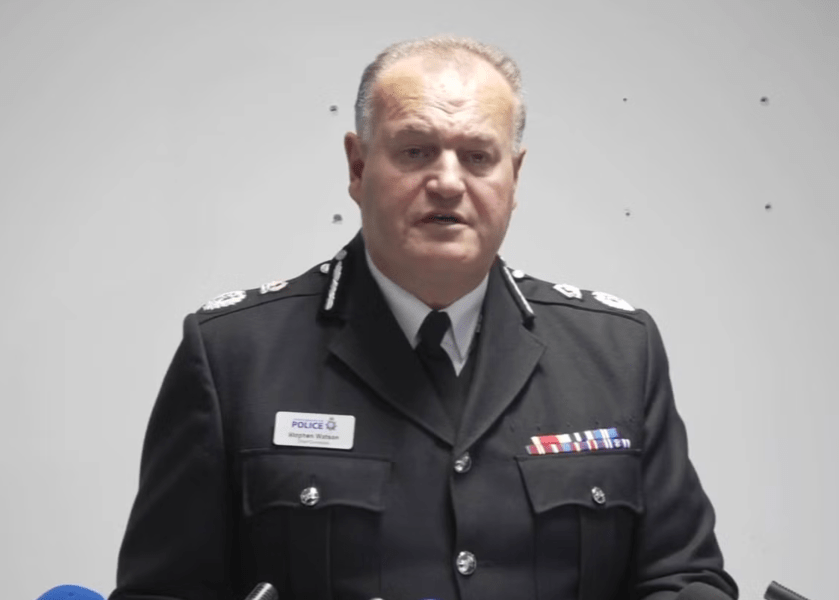
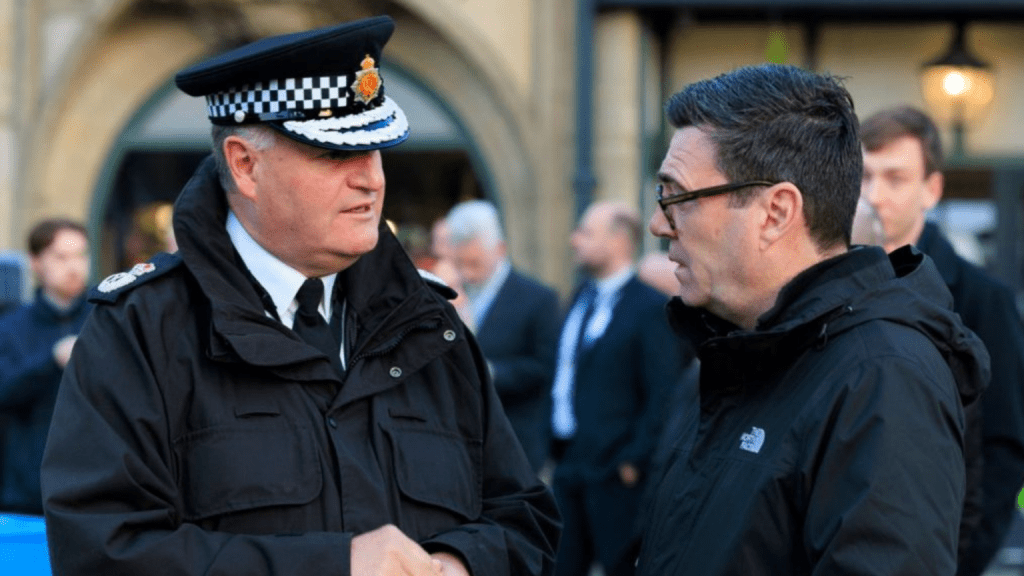
Mr Burnham’s comment comes as Greater Manchester Police chief constable Sir Stephen Watson has faced criticism for refusing to apologise on behalf of his force, as he said that to do so could be seen as “superficial and merely performative”.
GMP Chief Constable Sir Stephen Watson has said apologising could be seen as ‘performative’ (PA Wire)
Activist Peter Tatchell has said that Greater Manchester Police was once “one of the most homophobic police forces in the UK”, citing comments made by 1980s chief constable Sir James Anderton who said that “gay men dying of Aids were ‘swirling around in a human cesspit of their own making’.
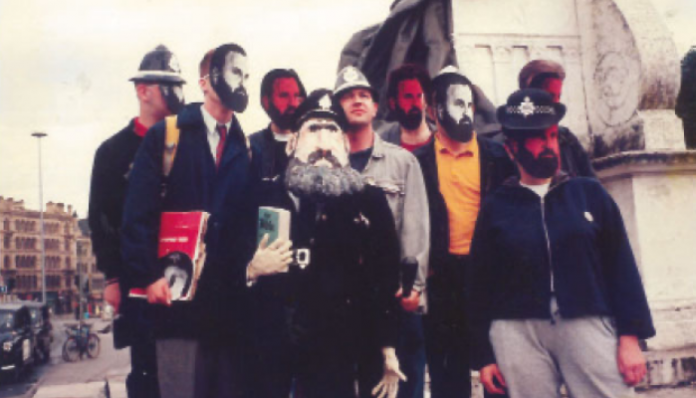
James Anderton protest by ACT UP 1990
“Motivated by his homophobic religious beliefs, he ordered the police to ‘go after’ LGBTs.”
More than 20 chief constables across the UK have apologised for their history of homophobia, including those for City of London, Sussex, Merseyside, Police Scotland, Northumberland, and Durham. The Police Commissioner for the Metropolitan Police has also apologised.
Mr Tatchell said that “GMP has so far refused to do the same. We urge Stephen Watson to do so.”
The Independent understands that there is no change in GMP’s stance at this stage.
The Greater Manchester Mayor commented on Sir Stephen’s comments, acknowledging in his letter that while the Chief Constable hadn’t acceded Mr Tatchell’s request, he believed it was “considered and respectful.”
Peter Tatchell has been campaigning for recognition from forces about the homophobic past of the police (PA)
“It is important for me to point out that Mayors and Police and Crime commissioners have no statutory powers to instruct chief constables, as in law they are operationally independent.”
Mr Tatchell said: “I am grateful to Andy Burnham for his clear and unequivocal apology for the historic mistreatment of LGBT+ people by Greater Manchester Police.
“However, it is deeply disappointing that the Chief Constable continues to refuse to say sorry. A mayoral apology, welcome though it is, cannot substitute for an apology from the police force that carried out these abuses.
“An official GMP apology would be a powerful act of accountability, reconciliation and trust-building with LGBT+ communities. We urge the Chief Constable to follow the example set by Mayor Burnham and other police chiefs across Britain.
“Our foundation will continue to campaign for a full and formal apology from Greater Manchester Police.”
Shutterstock
British Ice Skating will now allow same-sex partners to compete
British Ice Skating (BIS), which regulates official ice skating competitions in the United Kingdom, has announced that same-sex pairs will be eligible to compete in couples competitions, starting with the qualifying rounds in March 2026. The change opens the door for more diverse representation, moves away from outdated norms and may reduce the barrier to entry for some trans and nonbinary participants.
“We are pleased to inform you of several upcoming changes for the 2026/27 season,” BIS announced. “These updates follow recent reviews across all disciplines and reflect our continued commitment to supporting skater development, performance pathways and fair access to competition … Same-sex couples will now be permitted to compete in all events, including at the Championships.”
The move makes the United Kingdom only the third country to allow same-sex ice dancing couples to compete in championships. Skate Canada made its nation the first in 2022, when the rules were changed to allow any two skaters, regardless of gender, to partner.
Finland followed suit earlier this year, amending its rules under pressure from Millie Colling, a British ice dancer who moved to Finland at the age of 6, and Emma Aalto, with the support of their coach. The same-sex pair say they are “best friends who wanted to skate together,” and Colling added that there’s a “common misconception” that same-sex ice dancer pairs are in a relationship.
However, same-sex partners still face limitations in competitions. The new BIS rules allow them to compete all the way to the national level, but the International Skating Union (ISU), which governs international competition, still requires ice dancing pairs to be composed of one man and one woman.
While some smaller competitions have allowed same-sex pairing on the ice before, BIS’s move is a big step for inclusivity in national-level sports. In addition to allowing people to choose their own partners based on skill and compatibility, the change likely makes it easier for trans and nonbinary ice skaters to participate in couples competitions without concern for how their birth gender or gender identity might clash with specific rules.
There has been an increasing push from the ice skating community to repeal old-school rules. In February, Olympic gold medalists Madison Hubbell and Gabriella Papadakis left their male partners on the sidelines and performed an exhibition dance together to challenge people’s image of the sport.
“We made people see other realities,” Papadakis said. “The new generation just doesn’t relate to the requirement to have a male and female partner anymore.”
Canadian Olympic skater Kaitlyn Weaver, who waited until after her retirement to come out as lesbian, fearing it would damage her career, helped get the rules changed in Canada and has also been pushing for broader amendments. She criticised the insistence on requiring a man and a woman to partner, saying, “The conservative people don’t want to see two men skating together … It’s their homophobia.”
The policy changes also address a gender imbalance in the sport. As fewer men take up figure skating (owing to perceived homophobia), female skaters have been hard-pressed to find male partners. This has reportedly given too much power to one side in the sport, but allowing women to pair up has helped redress that issue.
Birthday
Billy Tipton (Born 29 December 1914 – 1989), American jazz musician, bandleader, and talent broker. He is notable for having been posthumously outed as a transgender man.
LGBT survivors tell of ‘barbaric’ NHS shock therapy
Survivor Jeremy Gavins in 1972, around the time he was having Electric Shock Aversion Therapy
More than 250 people were subjected to painful electric shocks, designed to change their sexuality and gender identity, in NHS hospitals between 1965 and 1973.
Three Electric Shock Aversion Therapy (ESAT) survivors have told of physical and lasting psychological pain they experienced as teens at the time. One, Jeremy Gavins, 72, said shocks were so severe he lost consciousness and woke up in hospital three days later.
The British Psychological Society has abandoned its use of ESAT but conversion practices in the UK are still not illegal.
The three survivors, who were teenagers when they were subjected to the procedure, described the physical agony of the electric shocks and the mental trauma of being labelled “perverts” with a “disease”.
Another survivor, Pauline Collier, 80, described her treatment: “He taped electrodes to my arms and gave me a series of shocks. They made me sweat and flinch.”
Many of those treated were referred to hospital by their teachers, priests or GP.
Some say they did not give informed consent, and say they were explicitly told not to tell their parents.
The findings have prompted calls for a formal apology from the government and NHS, led by Lord Chris Smith, who was the UK’s first openly gay MP.
Pauline Collier was given electric shock treatment aged 19 because she was gay and, now aged 80, says she was “psychologically vulnerable” at the time
What is Electric Shock Aversion Therapy?
Electric Shock Aversion Therapy was a form of conversion practice based on associating same-sex attraction with pain.
Patients were strapped to a chair and had electrodes placed on their arm or legs, they were shown images of men or women and then given painful electric shocks, sometimes for up to an hour at a time.
Through extensive research, old medical journals and books written by doctors in the 1960s and 70s have been studied to extract the data that mentions the use of this treatment on gay and transgender people.
The records show that while participants were described as volunteers, many were referred by the courts to have the treatment, some were classified as having psychological illnesses, and some were classified as children at the time. One of them was 12 years old.
Survivors were often coerced or threatened by teachers, courts or employers, with expulsion from school or loss of employment.
The largest known trial took place at Crumpsall Hospital, in Manchester, where 73 people were treated under Dr Philip Feldman and Dr Malcolm MacCulloch.
Both doctors are now aged in their 80s. Dr MacCulloch’s family said that given his age, he was not in a fit state to respond, and Dr Feldman did not respond to letters from the BBC.
Pauline Collier, 80, recalls that the moments of time before receiving a shock would leave her “very anxious and very frightened”
Ms Collier, who was 19 when subjected to the procedure at Crumpsall Hospital in Manchester, said: “You could either get the electric shock immediately as the photograph came up, or you could get it after 30 seconds.
“During that waiting period, you become very anxious and very frightened.
I reckon I must have had about 20 sessions. Each session involved about, I suppose, a dozen, 12 shocks. It did damage me.
I was just 19 years old, I was a working class girl, brought up to be obedient and seek approval, particularly male approval. And there were these three important doctors telling me that they could get rid of this thing inside me.”
She added: “I don’t think they ever said, ‘We’ll be sitting you in a chair and giving you electric shocks’. I don’t remember that. And I think, at the time, I was just so psychologically vulnerable that I just accepted it all.”
Jeremy Gavins was referred by his GP to a hospital, where he was given electric shock treatment aged 17 that he says left him unconscious
Mr Gavins, now 72, of Ulverston, was 17 years old when he was referred by his GP to Lynfield Mount Hospital, in Bradford.
“A male nurse came to see me and said, ‘Come with me’.
“He said, ‘Take all your clothes off and put them in this locker’. I sat on this chair, he fastened a strap around my left hand, and then did the same with my right hand.
“He played with a switch, and I got a pain in my arm. He said, ‘Did it hurt?’ and I said, ‘Yes’ and he said, ‘Good, it’s meant to’.”
When he was asked to describe the pain, he said: ‘It’s like somebody sticking a jagged knife in the side of your arm and scraping it down.”
Mr Gavins says the trauma has lasted a lifetime. “I have PTSD (Post Traumatic Stress Disorder), which gives me shooting pains in my arms and down my side, I’ve suffered terrible depression, I’ve never had a relationship 50 years later. I was too frightened.”
However, after he wrote to his old school – which told him he would be expelled if he did not go for the therapy – asking for an apology, he received a written response from the Roman Catholic Diocese of Leeds acknowledging his suffering, the lack of compassion from members of the school clergy at the time and offering a “heartfelt” apology.
At the age of 17, Carolyn Mercer confided to a local priest that she felt female rather than male
Carolyn Mercer, 78, says she has always felt female despite being born male and having lived most of her life as a man.
At the age of 17, Carolyn confided to a local priest that she felt female rather than male and was sent to Blackburn Hospital for electric shock treatment.
“My hand shot up in the air, pain racked through my body, tears rolled down my face,” she said.
“That treatment wasn’t any sort of therapy. It was cruel, barbaric punishments – torture, not therapy.”
Like a ‘cottage industry’
Recent research by Prof Hel Spandler, a leading historian of psychiatry and LGBT+ health, suggests ESAT practice was far more widespread than previously documented.
While the BBC has found records confirming more than 250 cases, Prof Spandler’s analysis of medical archives and oral histories indicates the true figure could be close to 1,000 cases across the UK.
She explains many treatments were never formally recorded at the time, and describes the treatment as operating like a “cottage industry”, with hospitals and clinics quietly replicating the method across the country.
“The treatment was often presented as cutting-edge behavioural science,” she notes.
Early versions of aversion therapy were first trialled on animals and then on humans for conditions such as phobias, compulsions and addictions, for example, using mild shocks to reduce nail-biting or gambling.
“But in reality,” she said, when used to treat sexuality and gender expression, “it caused profound harm and lifelong trauma”.
Lord Smith has called for a government apology
Lord Smith said: “The use of forced electric shock aversion therapy to try and change someone’s sexual orientation, just 50 or 60 years ago, is horrifying.
The fact that this was imposed on people by the NHS makes it even worse.
The country, and the NHS, should at the very least make a formal apology.”
He added: “We were supposed to be a civilised country, but this was quite simply inhumane.”
Conversion practices still happening
In 2017, NHS England and the Royal College of Psychiatrists pledged to stop practising conversion therapy, including electric shock treatment.
Yet conversion practices still remain legal in the UK and continue to take place in private homes, churches, and through some counsellors or therapists.
According to campaigner Saba Ali: “People are still tortured and hurt in the name of conversion therapy.”
The government has promised to draft a bill to end conversion practices by the end of this year, but it has not happened as yet.
Minister for Equalities Olivia Bailey says conversion practices “have no place in society and must be stopped”
The government will now investigate the historical use of electric shock therapy in the NHS.
Minister for Equalities Olivia Bailey said: “My thoughts are with those who suffered from this inhumane practice.
The bottom line is that conversion practices are abuse – such acts have no place in society and must be stopped.
That is why this government is committed to bringing forward a full, trans-inclusive ban on conversion practices, as set out in our King’s Speech.
All people deserve to live freely and without fear, shame or discrimination, and as a member of the LGBT+ community myself, I will work tirelessly to ensure that is the case.”
The trial conducted at Crumpsall Hospital was overseen by academics at Manchester University.
In a statement, the university said: “The attitudes that informed the Crumpsall trials, now considered unethical and harmful, were widely and openly held in the 1960s.
“Knowing this, however, can only add to the trauma of those who had to endure such treatment, and we would like to express our regret and sorrow for being part of that environment.”
Festive Feast
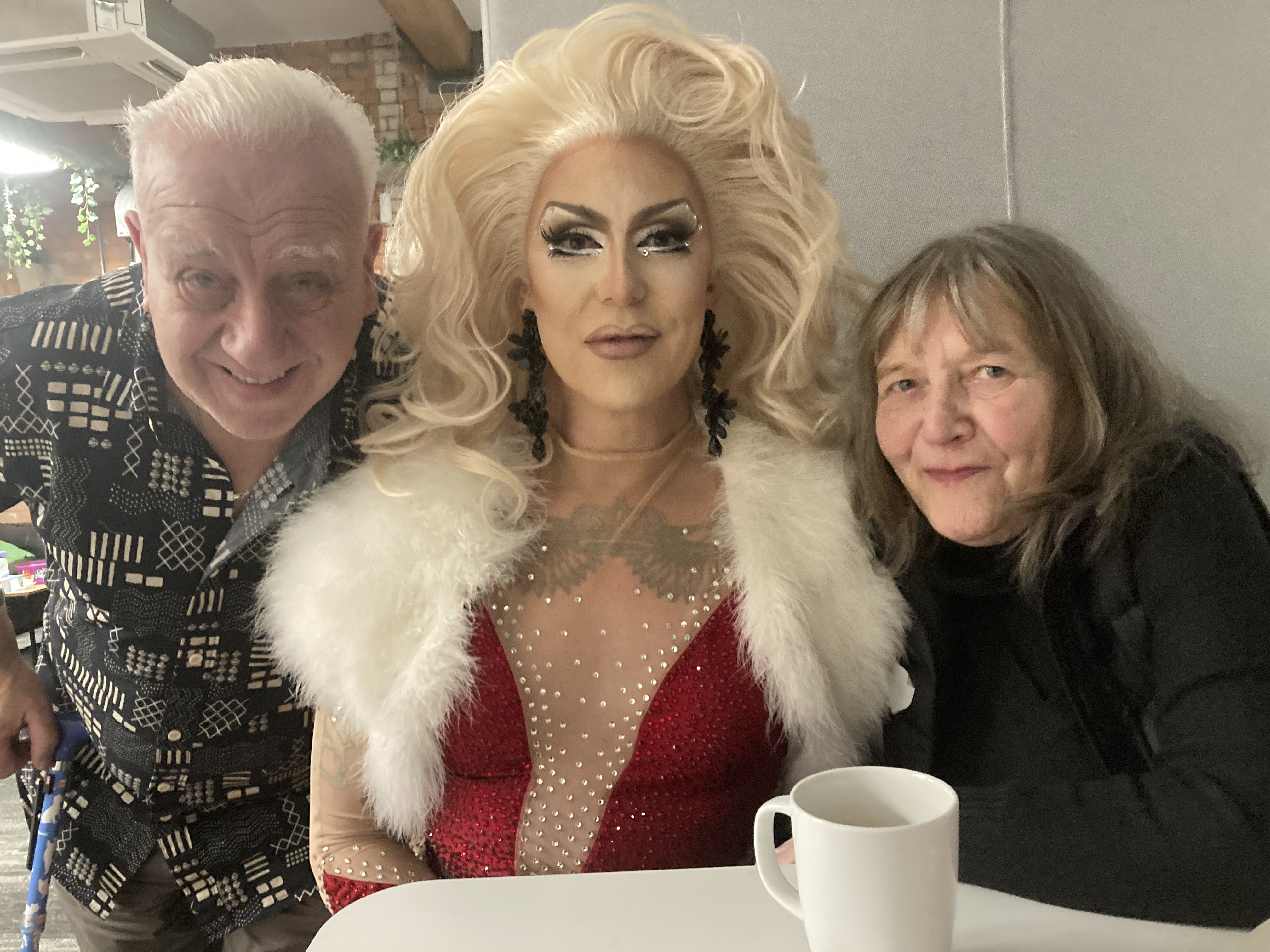
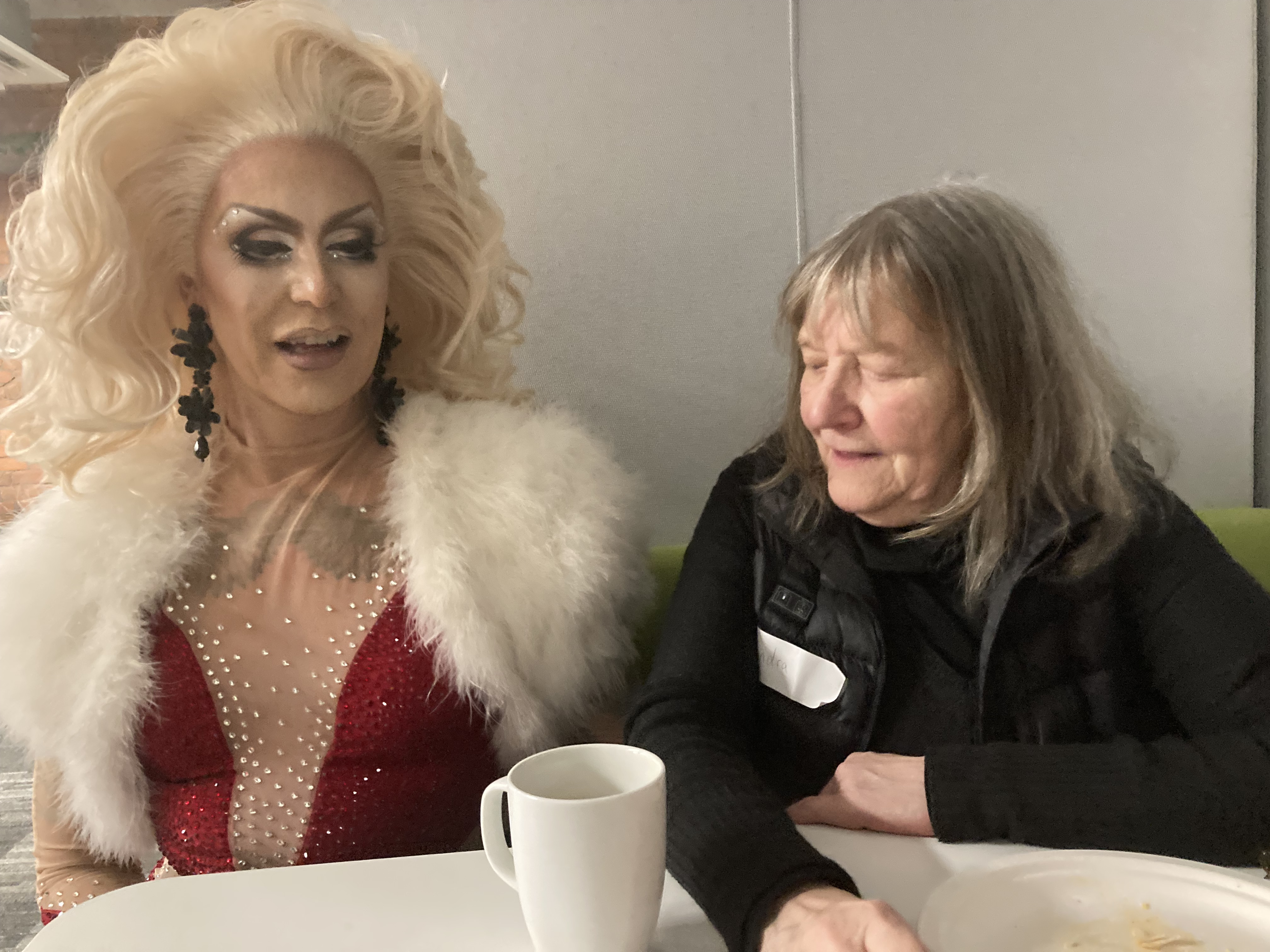
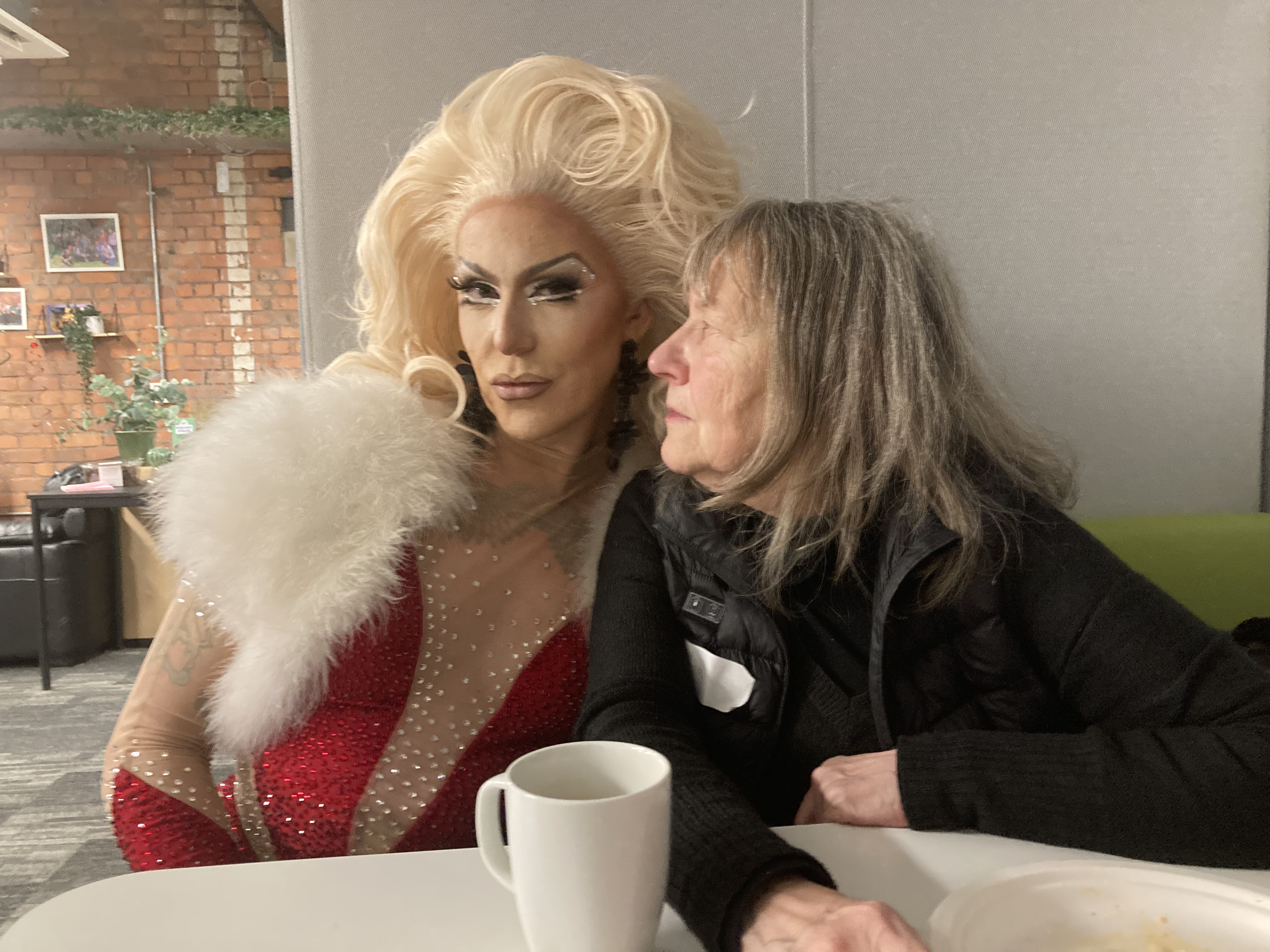
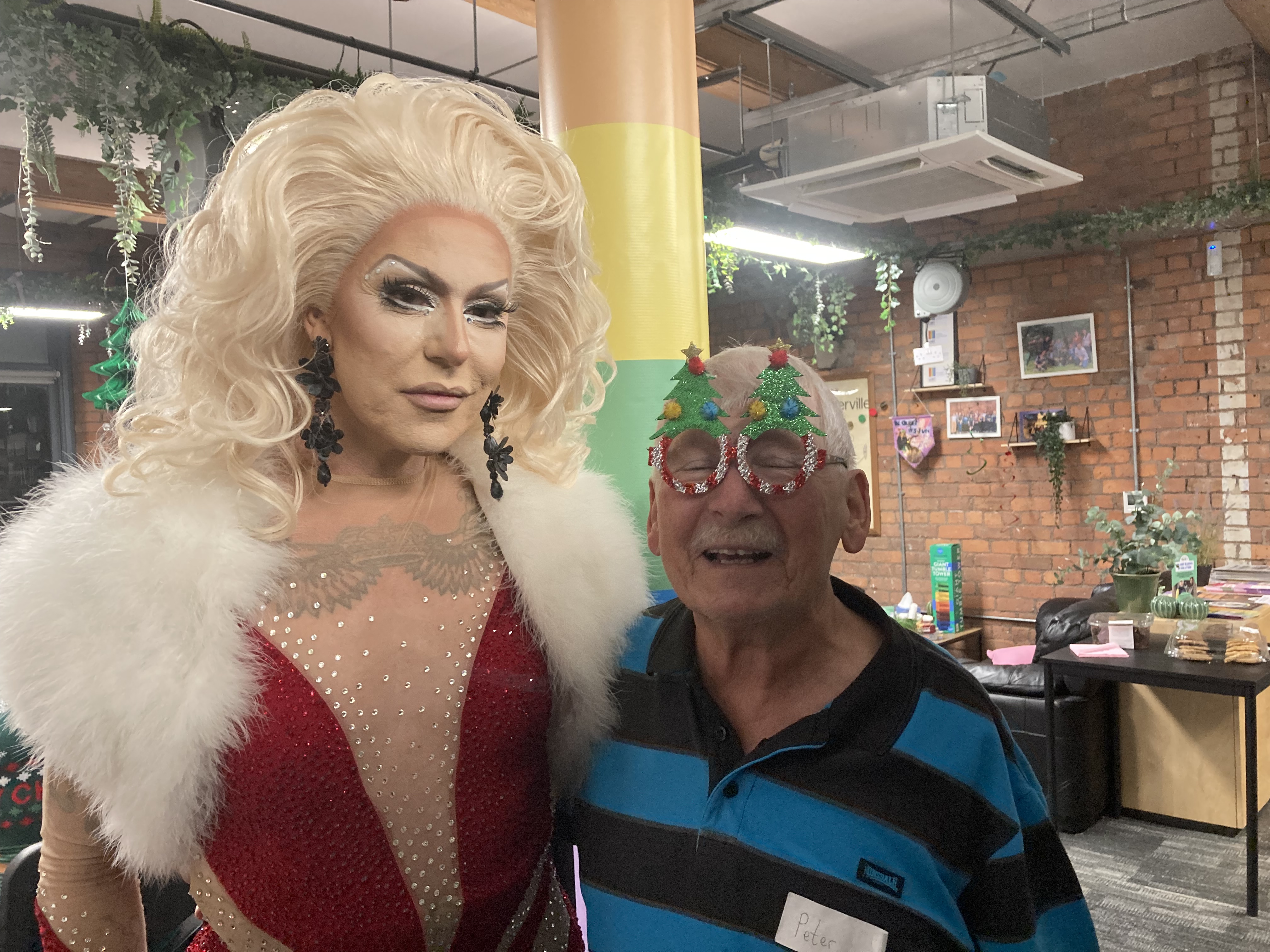
We had a fantastic time at the Festive Feast on Friday, 19 December held at the LGBT Foundation. It was a lovely relaxing evening, with the opportunity to spend time with our community. The food was delicious and we were entertained by Dita Garbo.
Birthdays
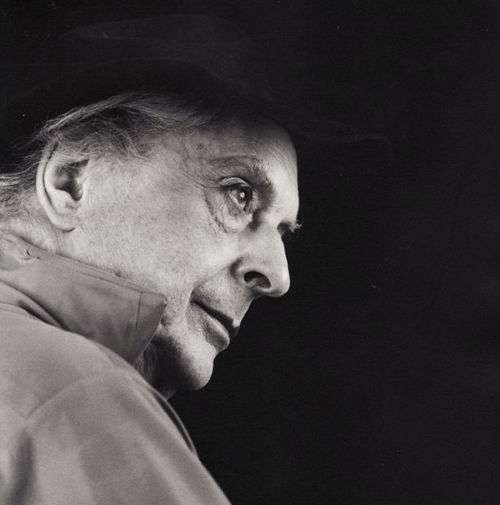
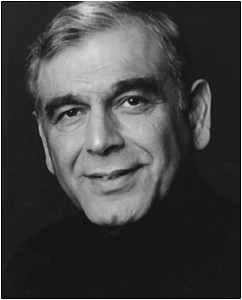
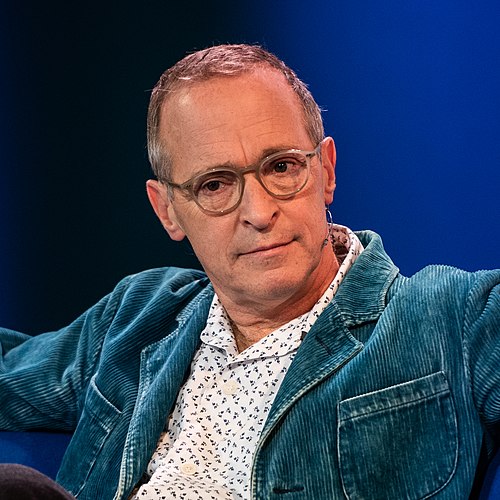
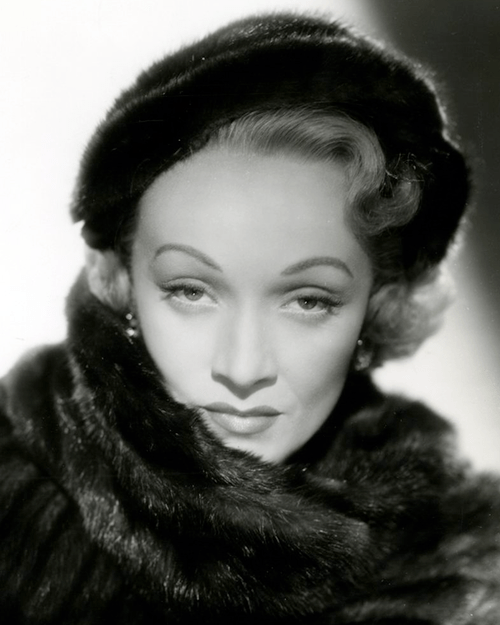
Quentin Crisp (Born 25 December 1908–1999), English writer, raconteur, and gay iconIsmail Merchant (Born 25 December 1936–2005), Indian-born film producer and directorDavid Sedaris (Born 26 December 1956), American humourist, comedian, author, and radio contributorMarlene Dietrich (Born 27 December 1901–1992), German actress and singerLili Elbe (Born 28 December 1882-1931), Danish artist, subject of The Danish Girl novel and film
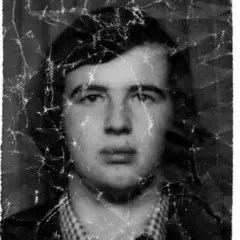
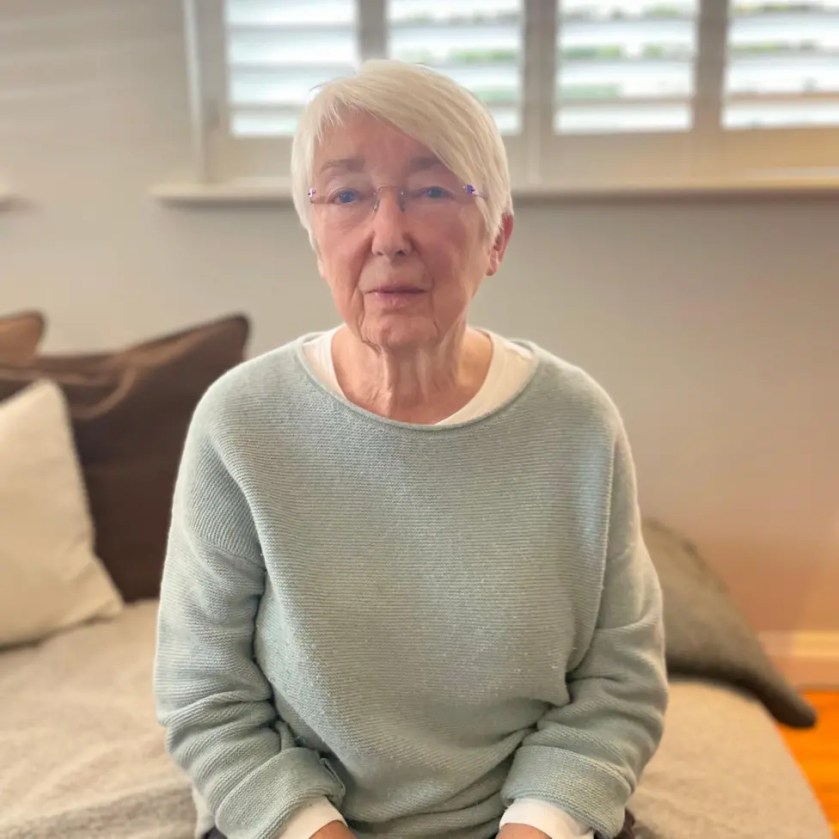
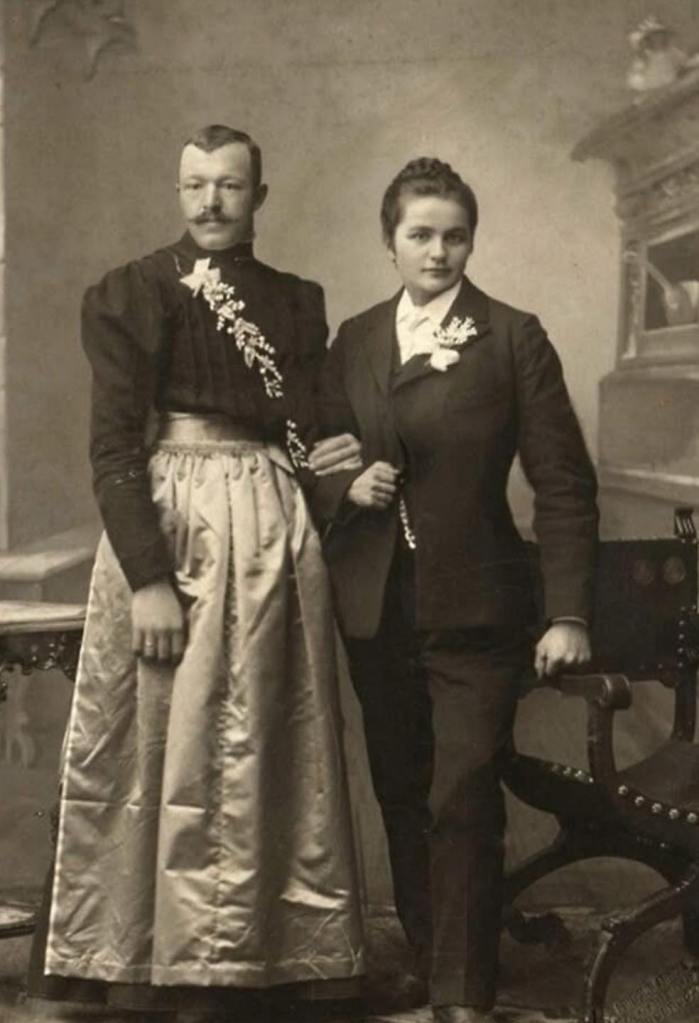
Couple from 1890’s
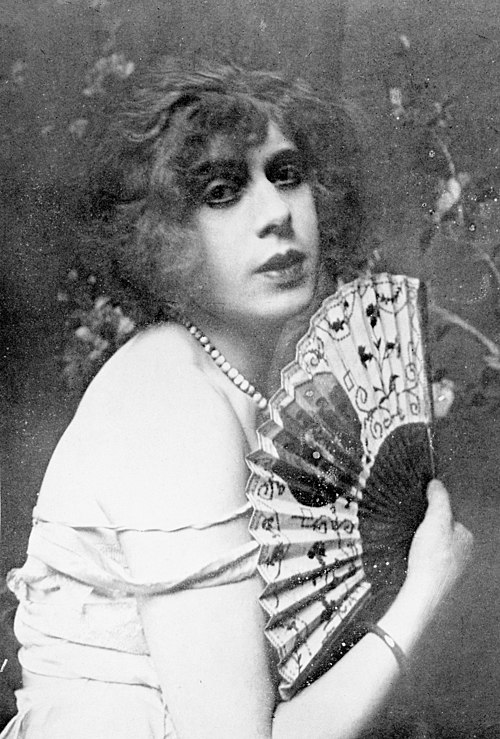
Don’t believe everything you see on the internet! The first image is not real – it has been generated by AI (Artificial Intelligence) using the second image as the base.
Hope everyone gets the chance to rest, relax and enjoy the season.
Florida city sets up rainbow bike racks after being forced to remove Pride crossings
Rainbow bike racks (@stpetfl on Instagram)
A city in the US state of Florida has installed rainbow-coloured bike racks after it was forced to remove Pride crossings.
In recent months, several cities across the Sunshine state have been forced to paint over Pride crossings under directives issued by the Trump administration and Republican governor – and failed US presidential candidate – Ron DeSantis.
DeSantis, who is well-known for enacting anti-LGBT+ policies, signed a law in July which directed the Florida Department of Transportation (FDOT) “to ensure compliance with FDOT’s uniform system for traffic control devices”, with the state’s transport department stating: “Non-standard surface markings, signage, and signals that do not directly contribute to traffic safety or control can lead to distractions or misunderstandings, jeopardising both driver and pedestrian safety.”
This came after the US’s transport secretary Sean Duffy penned a letter to all 50 US states alongside DC and Puerto Rico in which he claimed rainbow crossings “distract” drivers, saying in a statement: “Roads are for safety, not political messages or artwork.”
This included the removal of a rainbow crossing in Miami Beach and the memorial rainbow crossing outside the site of Pulse nightclub in Orlando, where 49 people were killed in an anti-LGBT+ mass shooting in 2016, being painted over.
Locals have protested the erasure of the Pride crossings by re-colouring them using chalk, which has led to arrests.
In response, city of St Petersburg, located in the Tampa Bay area, has installed Pride-inspired bike racks, with the city’s mayor Ken Welch writing in a joint Instagram post with the city’s official account: “Pride on the streets! We’ve just installed 11 Pride-inspired bike racks along Central Ave and 25th St – a vibrant way to honour the Pride street murals that were removed earlier this year due to state requirements.”
The racks were funded through the City’s long-standing public bike rack programme.
This small gesture of inclusion and celebration will be a symbol of our resolve to not be silenced.
Monday, 22 December 2025 – 5.00pm – 7.00pm – Manchester Proud Chorus – Free (but booking required)
The Social, Aviva Studios, Water Street, Manchester M3 4JQ
Get festive at Aviva Studios with free live music from Manchester’s favourite choirs.
Founded in 2000, the Manchester Proud Chorus is one of the largest LGBT+ choirs in the UK, welcoming LGBT+ people and allies, young and old, to sing together. The chorus has performed nationally and internationally, taking part in Pride events in Greater Manchester and beyond.
Saturday, 3 January 2026 – 12.00pm – 2.00pm – Digital Cafe – Free
LGBT Foundation, 72 Sackville Street, Manchester M1 3NJ
Meet new people, have fun and pick up new skills at the Manchester ‘Pride In Ageing’ over 50s social group.
This event is for LGBTQ+ people over the age of 50. If you have any further questions or access requirements, please email prideinageing@lgbt.foundation
Have a look at – https://outinthecity.org/next-outings/ – for future outings and meetings, Bridgewater Hall concerts and theatre trips. This page is updated on a regular basis.
If you wish to book a place on an outing, please contact us – https://outinthecity.org/contact-us/ . Some have a limited number of places and are available on a first come basis.















 Out in the City