Petition: Equality Act’s Definition of Sex … “Secretly” … Clonezone attacked … Pride in Trafford

News

Petition: Commit to not amending the Equality Act’s definition of sex

It has been reported that the Government may amend the Equality Act to “make it clear that sex means biological sex rather than gender.” The Government has previously committed to not remove legal protections for trans people, an already marginalised group, but this change would do so.

Currently, the Act protects trans people from discrimination on the basis of both sex and “gender reassignment”, regardless of whether they have undergone medical transition or hold a Gender Recognition Certificate. It can allow trans people to access single-sex spaces such as Domestic Violence shelters, bathrooms and hospital wards.

The proposed change would remove a legal protection for trans people and encourage discrimination. A petition asking the Government to refuse this change to the Equality Act 2010 was signed by more than 138,500 people as at 1 May 2023.

The petition closes on 15 May 2023 but as more than 100,000 have signed the petition, Parliament is going to debate the issue. The debate is scheduled for 12 June 2023.

Previously, on 25 January 2023, the Government responded to the petition:

“This Government believes in individual liberty. There are processes with appropriate checks to allow for those who wish to legally change their gender. Changes to the Equality Act are not necessary.

The Equality Act 2010 provides protection against discrimination, harassment and victimisation across a number of grounds, including sex. We are committed to upholding Britain’s long-standing record of protecting the rights of individuals against unlawful discrimination.

The Government is also committed to maintaining the safeguards that allow organisations to provide single-sex services. It is important that the principle of being able to operate spaces reserved for women and girls is maintained, in line with the Equality Act. Government is committed to tackling harassment and abusive behaviours by all individuals, and ensuring single-sex spaces are safe for those using them.

The Act makes it clear that providers have the right to restrict use of spaces on the basis of sex and gender reassignment where this is justified.

The Equality and Human Rights Commission (EHRC) have published guidance on the existing legislation which provides much needed clarity to those offering single-sex spaces.

Finally, this Government believes in the principle of individual liberty and in the humanity and dignity of every person. There are processes in place, with the right checks and balances, to allow for those who wish to legally change their gender to do so. We have listened to the responses in the Gender Recognition Act consultation and have taken steps to modernise the way that individuals can apply for a Gender Recognition Certificate as a result, reducing the cost and moving the process online. Everyone that decides to transition, deserves our respect, support and compassion.”

This hit love song from the ‘50s is chock-full of very gay subtext
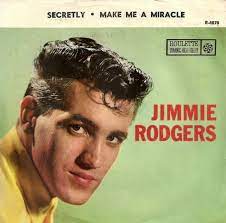
The straight-laced 1950s weren’t known for their flourishing gay culture. The Lavender Scare was forcing LGBT+ people out of their jobs in droves, homosexuality was still considered a mental illness, and the Stonewall Riots were still a decade away. But one song still managed to be a breakthrough hit, even with lyrics that could easily be a rallying cry for gay rights when viewed through a modern lens.

“Secretly” is a pop song by Jimmie Rodgers, released in May 1958. It tells a story of forbidden love: “Why must I meet you in a secret rendezvous? / Why must we steal away to steal a kiss or two? / Why must we wait to do the things we want to do?” he laments.

Through the first half of the chorus, the song might be taken as your classic Romeo and Juliet situation: two lovers, forced apart by unknown circumstances. “Wish we didn’t have to meet secretly / Wish we didn’t have to kiss secretly / Wish we didn’t have to be afraid / To show the world that we’re in love.”

Then, though, the song takes on a political slant: “Till we have the right to meet openly / Till we have the right to kiss openly / We’ll just have to be content to be in love secretly.” 

Hmmmm. We don’t know about you, but asking for “the right to kiss openly”? Sounds pretty gay to us!

Also, the song uses no gendered pronouns or other gendered identifiers for Rodgers’ love interest, which was unusual for love songs of the era. Regardless of Rodgers’ specific intention for the song, it certainly speaks to the idea of fighting the status quo, a contrast to the conservatism of the ‘50s. Nonetheless, the song was a hit, peaking at number 3 on the Billboard Hot 100.
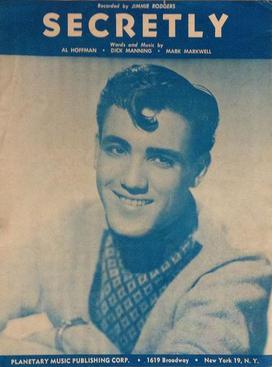
Some folks have interpreted the song as being about an interracial relationship, given that interracial marriage wasn’t legal in all US states until 1967. That’s the beauty of “Secretly”: it speaks to all the hidden relationships of the ‘50s that deserved to see the light of day. Whatever interpretation speaks to you is fair game.

For LGBT+ listeners, of course, a gay interpretation comes naturally. In 2012, On You Tube there is a montage of vintage photos of men together set to “Secretly.” Though not all the pictures are explicitly romantic, just like the song, they paint a clear picture of gay love for anyone reading between the lines.

“Although the years have gone by, whether it was secretly or out in the open, we loved then and we still love today,” reads the video’s caption.

Rodgers himself was never confirmed to be gay. In fact, he had three wives throughout his life, with whom he had five children in total. He died from kidney disease in 2021 at age 87, so his own interpretation of “Secretly” is anyone’s guess — but we’re sure he wouldn’t mind if we claimed this one for the gays!

Clonezone failed by police over attacks, owners say

The shop shared an image of the latest attack, which showed a GMP car on the street nearby

At a glance

  • Clonezone Manchester has been attacked three times in six weeks in what its owners called a “targeted hate crime”.
  • They said Greater Manchester Police had “failed” in its response to the attacks.
  • The force said the attacks were thought to be “hate motivated”, but it was still investigating so could not confirm that for certain.

The police response to a series of attacks has been a failure, its owners have said.

Clonezone Manchester said it had been targeted three times in six weeks, with the latest attack seeing its windows smashed by two men on a motorbike.

Its owners said they were the “victims of a premeditated, targeted hate crime” and Greater Manchester Police (GMP) had “failed us and allowed these attacks to continue”.

The force said the attacks were believed to be “hate motivated” but officers were still investigating.

The shop, which stands on Sackville Street in the heart of Manchester’s Gay Village, describes itself as a “gay superstore”.

In a statement on Twitter, its owners said it had been targeted because it was a “queer business” and it believed the attacks were symptomatic of wider issues.

They said the area, which centres around Canal Street, had “always been a safe space and that now sadly is becoming less and less of a reality”.

They added that they had been touched by the “outpouring of love and support” which had followed the latest attack.
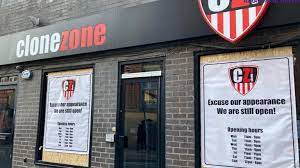
Two people fled on a motorbike in the latest attack

Jeremy Hoad from local group Friends of Manchester’s Gay Village said he was shocked by the attacks, the latest of which happened two hours after GMP officers met with community leaders to discuss the incidents.

“It is really disconcerting [and] it’s frustrating,” he said.

“It worries people, whatever the motivation for the attack, and the police say they can’t attribute it to a hate incident.

“It concerns people in the LGBT+ community – it makes us angry that something like this is still happening.”

GMP said two people were seen on CCTV on Sackville Street on a “distinctive-looking red motorcycle”, before one jumped off to repeatedly smash the shop’s windows.

“After a minute or so, they jumped back on to the motorcycle and left in the direction of London Road,” it added.

Ch Insp Adam Wignall said GMP would not “tolerate these kinds of mindless acts of vandalism”.

“As such, we are providing ongoing support to the owners of the shop, whilst we thoroughly investigate these incidents,” he said. A force representative added that GMP’s theory was that it was “hate motivated at the moment, but we cannot confirm this as we are still investigating”.

Pride in Trafford ’23

Pride in Trafford is an exploration and celebration of identity and LGBT+ life in Trafford from Wednesday 17 May to Saturday 20 May.

Celebrate LGBT+ arts at Sale Waterside as they present another fabulous line up from comedy and cabaret, to theatre, dance and circus, plus a celebratory family day on the Plaza and an exciting closing party hosted by neighbours Mano a Bocca pizzeria. There is plenty for everyone to enjoy!

The programme kicks off on the International Day Against Homophobia, Transphobia and Biphobia where they will raise the progress flag and enjoy speeches from the Leader and Chief Executive of Trafford Council. 
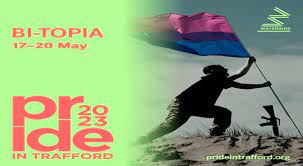
Throughout the four days there will be theatre from emerging artist Sam Danson exploring an authentic bisexual experience in BI-TOPIA and a dark-humoured coming-of-age story Jesus, Jane, Mother & Me; a unique performance on Chinese poles exploring love, drugs and Islam in The Chosen Haram; as well as brilliant comedy from the acclaimed Stephen Bailey in the Laugh Riot stand up night, joined by Rosie Wilby, Marie Goulbourne and MC Jonathan Mayor. 

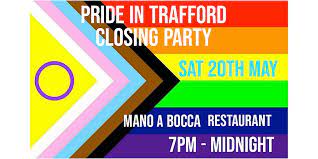
There’ll be lots of entertainment for the whole family on the Saturday in Pride on the Plaza – with free activities throughout the afternoon as well as contemporary circus performances from High Tea (with a Twist) and a Closing Party at partner venue Mano a Bocca including comedy, cabaret, pizza, raffle and disco hosted by the infamous Belinda Scandal.
Bury Pride … Is This The Future of LGBT+ Elders Care? … Loren Cameron

News

Bury Pride

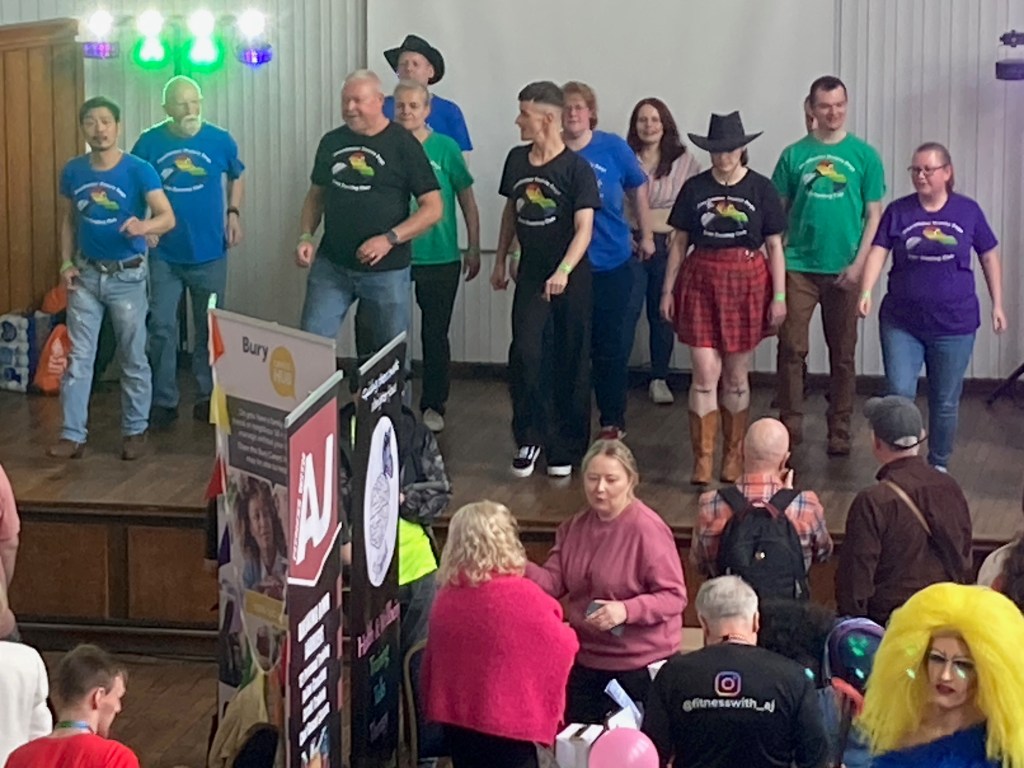
Last Saturday, 29 April, Bury Pride was back – bigger and better than ever! The event took place at the Elizabethan Suite at Bury Town Hall with lots of stalls and indoor entertainment. There was also the Walking Rainbow Parade and an outdoor stage with multiple acts and drag queens. The occasion was a joyous celebration to unite people through diversity and equality.

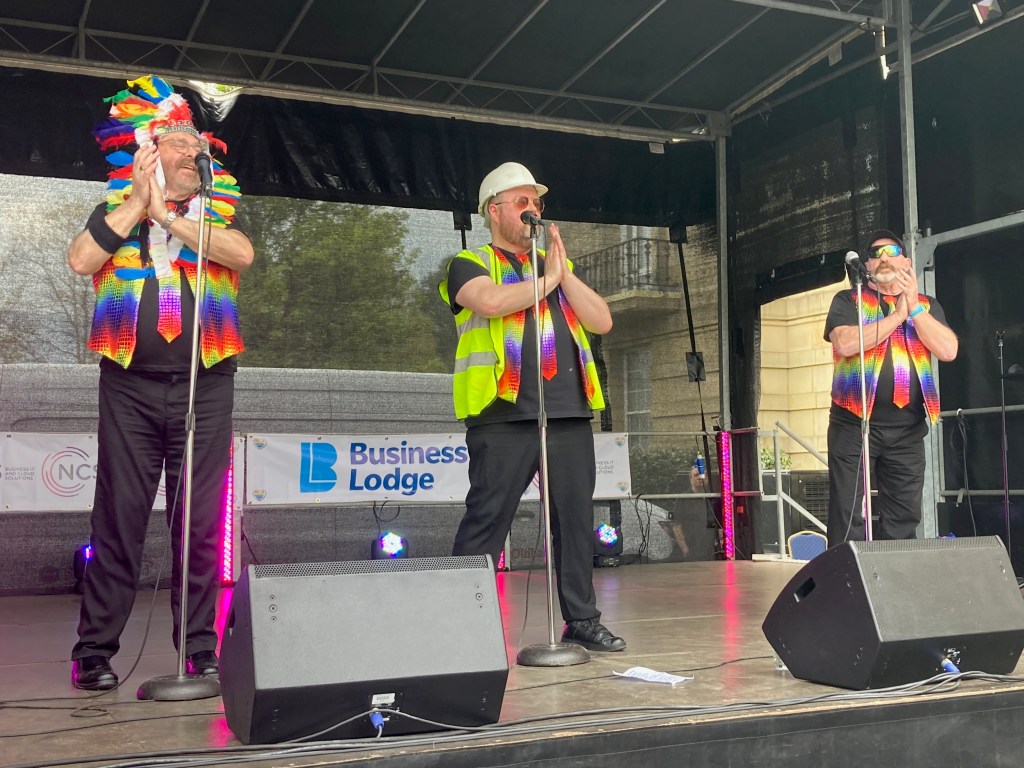
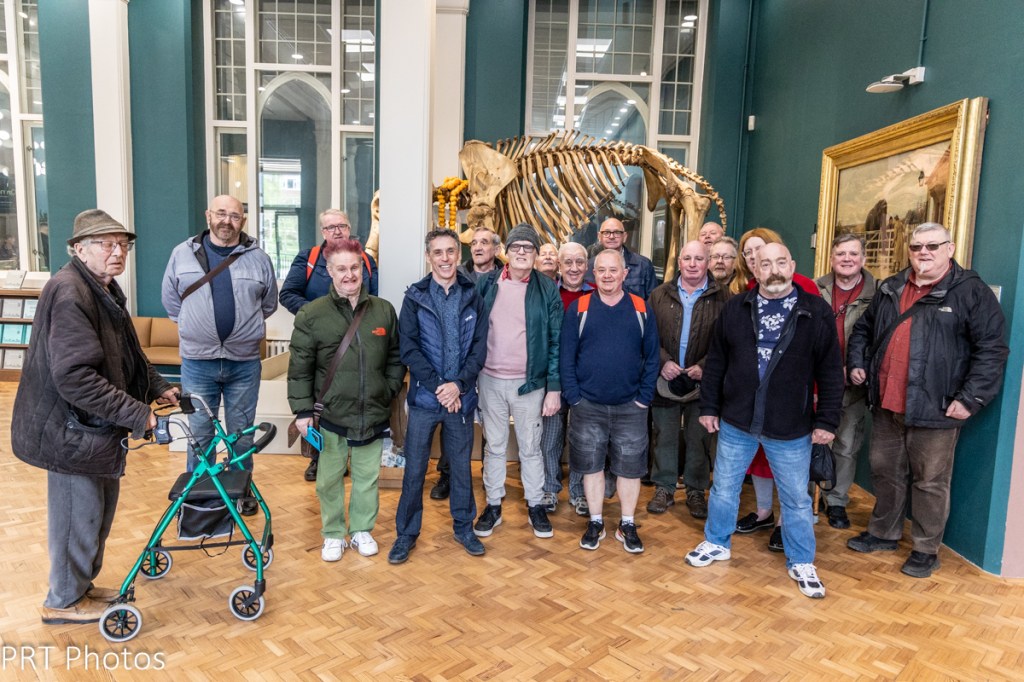
More than twenty members of Out In The City attended including David and Patrick who line-danced on stage as part of the Prairie Dogs and Derek and Gary who performed as Wolf – the oldest boy band.

We had a fantastic time including an excellent coffee and cake in Tina’s Tea Room within Bury Art Gallery.

More photos can be seen here.

Long-term care home unveils ‘Rainbow Wing’ for LGBT+ residents in Toronto

Barry Van Buskirk, a resident at the Rekai Centre said the opening of the ‘Rainbow Wing’ is very ‘comforting.’ (Talia Ricci / CBC)

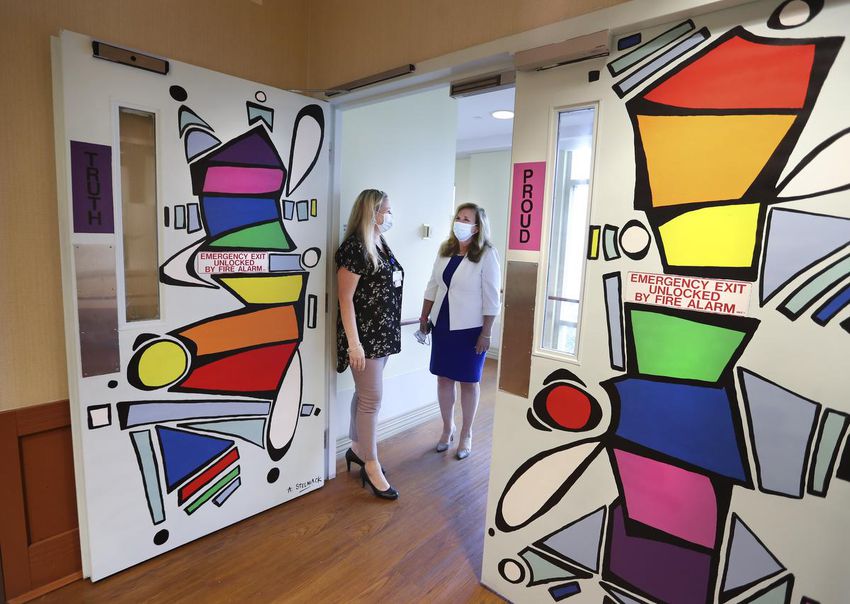
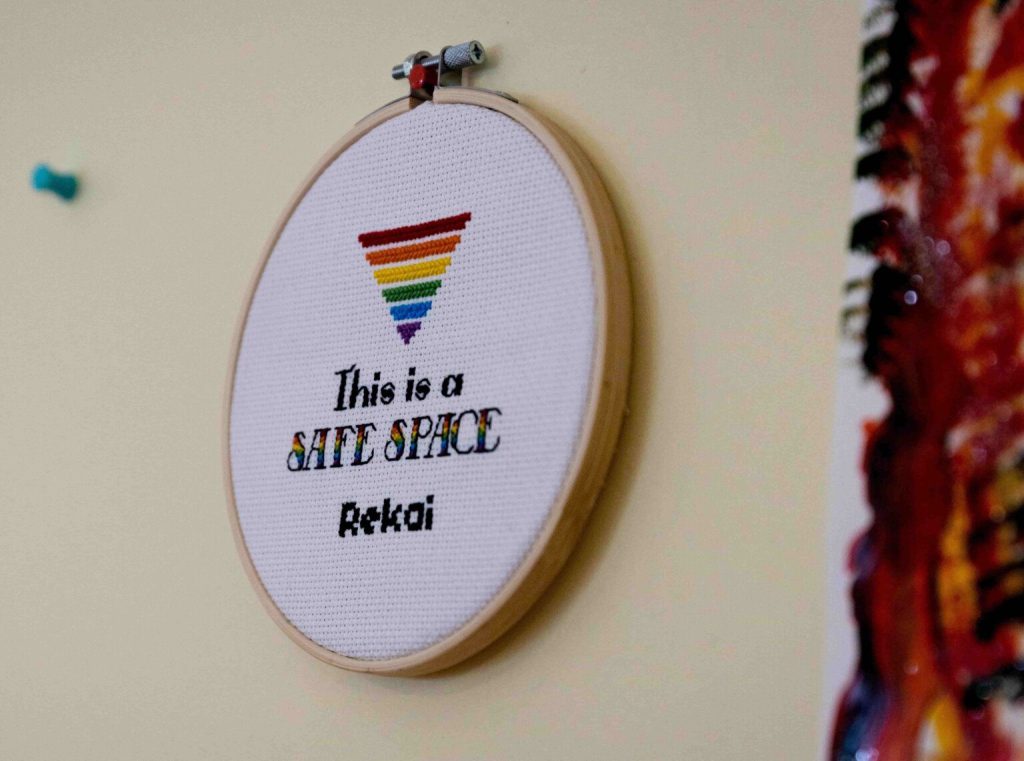
In June 2022 a long-term care home operator unveiled a ‘Rainbow Wing’ at one of its facilities to address the need for a dedicated space for LGBT+ seniors.

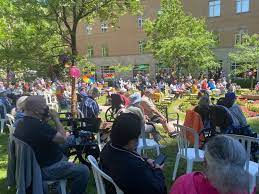
Rekai Centres opened the 25-bed wing with residents, staff and community members gathered to celebrate the opening.

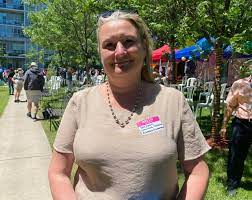
Barbara Michalik

Barbara Michalik, executive director, said she believes the space is the first in North America dedicated to the LGBT+ senior community.

“We have family members who may not feel comfortable coming into a long-term care home because of their gender or their preference in life, and it’s very important that we foster that and foster our staff who are from the community,” Michalik said.

“We can’t just slap a sticker on a door. We can’t just do one education during the month of June for pride. It’s continuous. It’s a feeling of culture when you come into that home [and] safety. It’s really constant reinforcement of welcoming.”

A new ‘Rainbow Wing’ was unveiled at the Rekai Centre on Saturday 18 June 2022. (Submitted by The Rekai Centres)

Currently. The Rekai Centres, have more than 20 per cent of residents who identify as LGBT+ at two of their long-term care homes.

‘Seniors often looked over’ during pride celebrations

Barry Van Buskirk, a resident, said he was thrilled to be there not only for the opening of the wing, but to also be able to participate in Pride.

“I think it’s very exciting. It’s very comforting and very loving,” Van Buskirk said.

“Seniors are often looked over because they’re considered too old to participate. I’ve been in many, many Pride parades because I just love people [and] I want to spread that love.”

Sue Graham-Nutter, CEO of the Rekai Centres, said the new wing has been a long time in the making.

“The launch of the Rainbow Wing is the result of over a decade of work with the LGBT+ community,” said Graham-Nutter.

“What makes us most proud and emotional are the hugs and the tears that flow from our residents, and families saying simply ‘I belong, and I am accepted here. Thank you.’  Everyone needs a home where they are safe and loved.”

They should not have to go back into the closet

Sherwin Modeste, executive director of Pride Toronto, said he hopes to see more of these types of spaces in the future.

“Seniors are part of society, they have contributed, they have paid taxes and they should be able to enjoy their lives,” Modeste said. “They should not have to go back into the closet at their retirement age.”

Toronto Mayor, John Tory, attended the event to celebrate the opening of the wing. He said the wing will allow people to be themselves.

“We benefit from people being able to be their authentic selves,” Tory said.

Staff to provide ‘culturally competent’ care

In 2018, the Rekai Centres commissioned a market research firm to solicit community input through surveys and focus groups. The research gathered by the firm was a key factor in the opening of the dedicated wing.

A survey was conducted that year that targeted people 50 and over who identify as LGBT+. The survey found that 94 per cent of respondents indicated that they were in favour of opening the space.

Projections show that there are more than 65,000 people in Toronto who identify as being part of the LGBT+ community over the age of 65. That number is expected to grow as the population ages.

The focus groups highlighted the need for culturally sensitive staff who are allies or members of the community. They also stressed a need for the revision of the admission process to break down systematic barriers that persist in health care.

Rekai Centres says the new wing will have staff who are “culturally competent” in providing care for residents, programming that meets the needs of residents and a gender sexuality alliance that will provide a platform for residents, families, staff and community partners.

Dozens of residents, staff and community members attended the unveiling, including Toronto Mayor John Tory and Marci Ien, MP for Toronto Centre and Canada’s minister of women and gender equality and youth. (Talia Ricci / CBC)

Michalik said staff need to be well trained to ensure that residents feel safe within the home. “There’s a sense of culture that the residents from the community need and feel, especially when they’re suffering from dementia. There is an extra level of education that our staff need,” she said.

Loren Cameron, 63, Dies; His Camera Brought Transgender Men to Light

Mr Cameron’s groundbreaking portraits of himself and others, collected in his book, “Body Alchemy,” inspired a generation of transgender people.

A self-portrait of Loren Cameron, whose photos portrayed transgender people, including himself, as they had never been seen before. Credit: Loren Cameron / Cleis Press

Loren Cameron was in his early 30s when he bought his first suit, walking nervously into a haberdashery for short men. Size was a delicate subject for him. He was 5-foot-3 and wanted so much to be bigger, equating masculinity with heft – which is why he was also a dedicated body builder.

The salesman sized him up “as a regular working-class Joe,” as Mr Cameron put it, who was entering unfamiliar territory, and set out to teach him the rituals of fine dressing. He fitted Mr Cameron into a double-breasted Italian-made suit, taught him the difference between a half and a full Windsor tie knot and showed him four variations on folding a pocket square.

He even offered dating advice: Never give a woman a rose on a first date. Offer carnations instead.

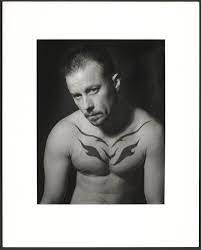
Mr Cameron took a self-portrait in that snappy suit, handsome, bearded and brandishing a bunch of carnations, creating one of many tender and lovely photographs of transgender men like himself that he collected in “Body Alchemy: Transsexual Portraits,” published in 1996.

“I felt at least two inches taller when I walked out of there,” Mr Cameron wrote of his suit-shopping adventure, “and it wasn’t because of the elevator shoes.”

Mr Cameron, a photographer and activist whose depictions of transgender people – and documentation of his own experience – inspired a generation, died on 18 November 2022 at his home in Berkeley, California. He was 63.

The cause was suicide, his sister Susan Tarleton said, adding that he had suffered from congestive heart failure. He had been isolated from friends and family for many years, and his death was not widely reported at the time.

When “Body Alchemy” appeared, it was a revelation. At the time it was groundbreaking, even radical, to photograph transgender people as regular folk, rather than as exotics or freaks or medical specimens, and rarer still for the lensman to be transgender.

Images of transgender women were more familiar than those of transgender men, and they were often famous figures, like Christine Jorgensen, the American actress whose transition surgery in the 1950s was front-page news, and Jan Morris, the British journalist and travel writer who wrote of her own transition in her 1974 memoir, “Conundrum.”

Over the decades, fine artists like Andy Warhol, Robert Mapplethorpe and Diane Arbus “have all trained their lenses on the transgendered figure,” Kate Bornstein, the gender theorist and author, wrote in The Bay Area Reporter in reviewing “Body Alchemy” upon its release. “Never have the transgendered seriously photographed their own. Not until Loren Cameron, that is.”

Mr Cameron found work as a massage therapist, a physical trainer and a stocker in pet stores. His work ethic was inspired by his father, who taught him to honour manual labour. Credit: Loren Cameron / Cleis Press

In “Body Alchemy”, for perhaps the first time, transgender men could see representations of themselves outside of the pages of medical texts.

There was Jeffrey, a Jewish man who had yearned to have a bar mitzvah, affirming his heritage, and was able to do so. Mr Cameron photographed him in a prayer shawl and yarmulke.

Brynne, a rangy surfer, was shown in the back of his van pulling on his wet suit, short board at the ready. Stephan, a police sergeant honoured for his valour who transitioned while on the job, was framed against his squad car.

There were nudes, too, the most potent of which was a photo of Mr Cameron in a classic bodybuilder pose, back arched, muscles rippling, his body emblazoned with flame-shaped tattoos, injecting his buttock with a syringe of testosterone.

Mr Cameron wrote eloquently and honestly of the challenges of therapies like his biweekly testosterone shot, which played havoc with his mood, escalating his temper and often making him emotionally distant from his partner, Kayt, a lesbian.

He framed a pair of portraits of himself with the typical responses his body often provoked, rendered in a bold typeface: “You’re so exotic! May I take your photograph?” “You must be some kind of freak.” “You don’t belong here.”

Despite such bigotry and stigma, Patricia Holt wrote in her review for The San Francisco Examiner in 1997, Mr Cameron’s observations reflect “a kind of innocence and awe of the body.” She called the book a “poignant yet matter-of-fact study” of transgender people that was both “sensitive and insightful.”

Mr Cameron’s work was exhibited all over the country, in galleries and universities like Cornell, where he donated his papers in the early 2000s, when he was in his early 40s. Among his papers is his high school yearbook, showing a young woman as class president. “I was cute, huh?” Mr Cameron wrote in the margin before he sent it to Cornell.

“He wasn’t invested in hiding that he had been a woman,” said Brenda Marston, curator of Cornell’s Human Sexuality Collection. “He put his whole body and soul out there.”

Mr Cameron was sensitive about his size – he stood 5 foot 3 – equating heft with masculinity, which is why he was such a dedicated body builder.

Loren Rex Cameron was born on 13 March 1959, in Pasadena, California. His mother, Barbara (Chambers) Cameron, was an office manager at Sears. After her death in 1968, he moved to Dover, Arkansas, to live with his father, Robert, a nuclear engineer and nuclear plant manager.

Robert Cameron had a farm and raised horses, and Loren worked alongside him, building fences and taking care of the horses. He was daring and adventurous as a teenager, as he wrote in “Body Alchemy,” drag racing and rafting swollen rivers. He dressed in overalls and work boots and learned to swear like a trucker.

He was deeply uncomfortable in his female body, and at age 12 he wrote away for information on sex changes. When a friend suggested he might be a lesbian, he thought, “Why not?” But classmates began to treat him as an outcast, and he quit school and ran away from home, travelling the country by bus. He found work picking fruit and cleaning construction sites.

He ran a truck-stop fuel station and joined a youth conservation-corps crew, where he met a group of lesbians who suggested he might find a like-minded community in San Francisco.

He lived as a lesbian for nine years before addressing his discomfort with his gender. He was 26 and had recently quit smoking pot and cigarettes. “For the first time in my life, I wasn’t numb,” he wrote.

As he began to transition, he took snapshots of the process, sending them to family and friends so they could get used to his new body and also see how happy he was. “What was initially a crude documentation of my personal journey became an impassioned mission,” he wrote. He took a basic photography class, bought a simple Pentax K1000 and began photographing other transgender people and learning their stories.

“I wanted the world to see us,” he wrote, “I mean, really see us.”

Mr Cameron often said his aesthetic was influenced by the photography books his parents had at home, work by Walker Evans and Dorothea Lange that made vivid the stories his father had told of growing up poor during the Depression. His work ethic was inspired by his father, who taught him to mend fences and bale hay – to honour manual labour. “The last time I saw him, he told me that I had a lot of guts to move to California with only a duffel bag and a hundred bucks in my pocket,” Mr Cameron wrote. “I think if he could see me now, he would be proud to call me his son.”

Golden Mummies of Egypt Exhibition … Groundbreaking moments in Lesbian Herstory

News

Golden Mummies Exhibition

A group of us met at Piccadilly Gardens Bus Station and travelled to the University Green, a vibrant area within the Oxford Road Corridor neighbourhood of Manchester. There we met a few others. After burgers and fries at Five Guys, we walked the short distance to the Manchester Museum.

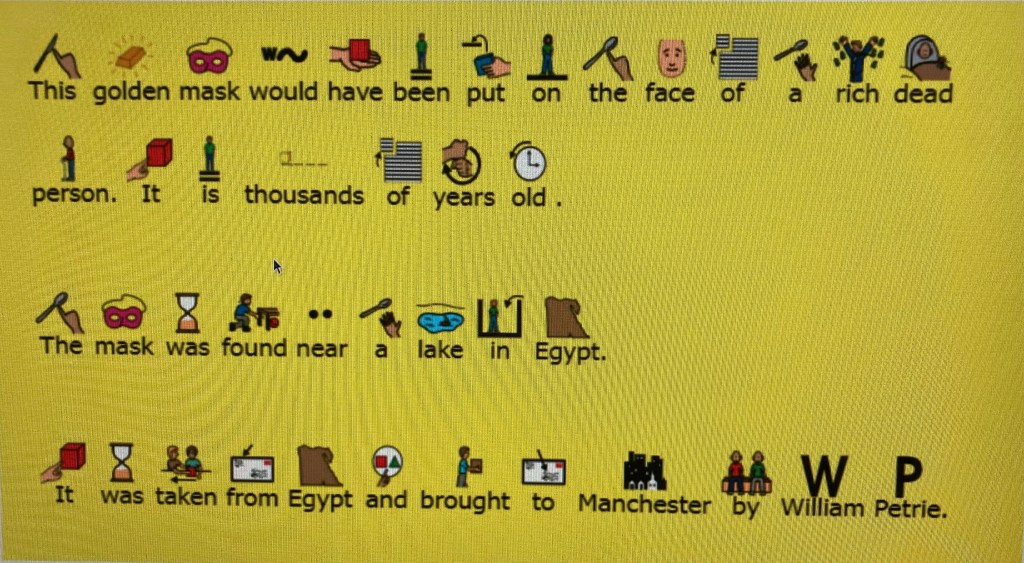
The current exhibition Golden Mummies of Egypt explores expectations of a life after death during the relatively little-known ‘Graeco-Roman’ Period of Egyptian history – when Egypt was ruled first by a Greek royal family, ending with Queen Cleopatra VII, then by Roman emperors. Wealthy members of this multicultural society made elaborate preparations for the afterlife, combining Egyptian, Greek, and Roman ideals of eternal beauty.

The funeral was an important opportunity to display wealth and status. Coffins, masks and mummy decorations were bright and eye-catching, involving costly materials for the wealthy. These show the deceased as alive and awake, at the moment of rebirth – magically assuring that this would be the case. People are depicted as perfect versions of themselves; even those who died as children appear as if they had grown up, so they could enjoy the afterlife to the full.

It was an interesting exhibition, and more photos can be seen here.

Groundbreaking moments in lesbian herstory

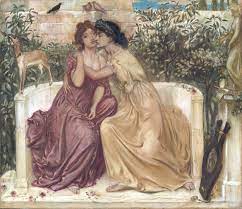
Sappho and Erinna in a Garden at Mytilene 1864 Photo: Simeon Solomon – Tate Britain

This week is Lesbian Visibility Week, which raises awareness about the issues facing lesbians and celebrates their achievements. 

Knowing your LGBT+ history is not only important, but it can provide great comfort and reassurance for members of the community. What’s more, it opens our eyes to the fact that, yes, we have always been here!

In honour of Lesbian Visibility Week, here are some key moments in lesbian herstory, from the first arrest for lesbian activity to the first televised kiss between two women.

The first conviction for lesbian activity

In March 1649, there was the first known conviction for lesbian activity in North America.

Sarah White Norman and Mary Vincent Hammon were charged with “lewd behaviour with each other upon a bed” in Plymouth, Massachusetts.

Hammon was under 16 and not prosecuted.

The first lesbian marriage

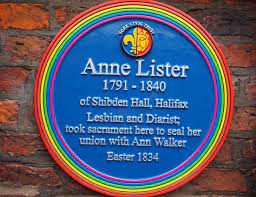
Anne Lister plaque in York

Same-sex marriage wasn’t legalised in the UK until 2014, but that doesn’t mean lesbian weddings only started happening then.

In fact, the very first marriage between two women actually happened in the 1800s.

Anne Lister was dubbed “the first modern lesbian,” and she married Ann Walker at Holy Trinity Church, Goodramgate, York in 1834.

Of course, their union was without legal recognition. However, they took communion together on Easter Sunday and thereafter considered themselves married.

In years since, the church has been described as “an icon for what is interpreted as the site of the first lesbian marriage to be held in Britain,” and the building now hosts a commemorative blue plaque in their honour.

The word “lesbian” is used

The word “lesbian” is part of many people’s everyday vocabulary now, but do you know when it was first used?

Well, the word “lesbianism” to describe erotic relationships between women had been documented way back in 1732.

The term was first used by William King in his book, The Toast, published in England, which meant women who loved women.

The book has become notable for providing proof that the term “lesbians” was used in a sexual sense as early as the 1700s, in exactly the same way that it is used today. 

Before this, the word lesbian meant “of Lesbos”, such as “Lesbian wine” or “Lesbian culture.”

The term “lesbian” is used in a medical dictionary

Then, in 1890, the term lesbian was used in a medical dictionary as an adjective to describe tribadism (as “lesbian love”).

The terms lesbian, invert, and homosexual were then interchangeable with sapphist and sapphism around the turn of the 20th century.

Arrest for lesbian partying

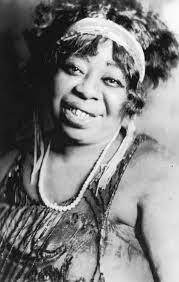
Ma Rainey

Singer Ma Rainey – the so-called Mother of the Blues – was arrested in her house in Harlem for having a lesbian party in 1925.

Her protégé, Bessie Smith, bailed her out of jail the following morning.

Both Rainey and Smith were part of an extensive circle of lesbian and bisexual African‐American women in Harlem, and the Blues scene of the Harlem Renaissance provided Black women with a space to explore their sexuality and gender. It gave them the freedom to be themselves without the white supremacist gaze, which sexualised and criminalised Black women. 

Rainey wrote about speculation regarding her sexuality three years later in the song “Prove it On Me Blues,” with lyrics including: “Ain’t nobody caught me, you sure got to prove it on me.”

Publication of a groundbreaking lesbian novel

In 1928, author Radclyffe Hall published what many consider today a groundbreaking lesbian novel, The Well of Loneliness. It follows the life of Stephen Gordon, a woman from an upper-class family whose “sexual inversion” is apparent from an early age.

The book’s release caused the topic of homosexuality to be a topic of public conversation in both England and the United States.

The formation of the first known lesbian rights organisation

In September 1955, the first known lesbian rights organisation in the United States was formed in San Francisco.

Daughters of Bilitis (DOB) hosted private social functions until it was dissolved in 1995. It was conceived as a social alternative to lesbian bars and clubs, which were subject to raids and police harassment, as well as general discrimination.

Throughout its 40 years, Daughters of Bilitis became an educational resource for lesbians, gay men, researchers, and mental health professionals.

LA Law aired the first televised lesbian kiss

While representation is well on its way now, there was a time when TV shows didn’t want to touch lesbianism with a bargepole, making the first on-screen kiss between two women all the more monumental.
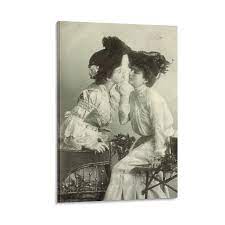
Although it might surprise you to learn that it wasn’t until the nineties that two women first locked lips on TV.

The kiss in question aired in a 1990 episode of 21 Jump Street, but the camera cut off their actual lips, meaning the actual kiss wasn’t really shown at all.
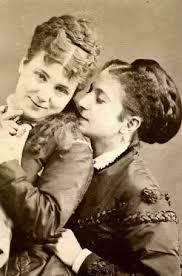
So, unofficially, the first lesbian kiss on TV is often attributed to a 1991 episode of legal drama LA Law, in which bisexual lawyer C J briefly kissed her female colleague Abby Perkins on the lips.
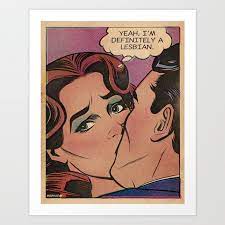
Sadly, romance never blossomed between the two characters, as Abby left the show and C J ended up with a boyfriend, not to mention the network received major backlash for the scene.

Still, we’ve come a long way.

Audre Lorde is named State Poet of New York

A sign with an Audre Lorde quote at the 2017 Women’s March in Toronto

In 1991, self-described “Black, lesbian, mother, warrior, poet,” Audre Lorde became the State Poet of New York. She dedicated both her life and her creative talent to confronting and addressing various injustices, whether it be classism, homophobia, racism or sexism.

The critically acclaimed novelist, poet, and essayist was also a co-founder of The Kitchen Table Women of Color Press, and an editor of the lesbian journal Chrysalis.

Ellen DeGeneres comes out

In April 1997, comedian Ellen DeGeneres came out as a lesbian on the cover of Time magazine, stating: “Yep, I’m Gay.”

The cover coincided with the broadcast of “The Puppy Episode,” a two-part episode of the American situation comedy series Ellen.

The episode details lead character Ellen Morgan’s realisation that she is a lesbian and her coming out, with the title initially used as a code name for Ellen’s coming out so as to keep the episode under wraps.

To say the moment was groundbreaking for lesbian history would probably be an understatement, as not only did it win multiple awards, Ellen became a cultural icon. DeGeneres’s career, though, suffered as the network stopped promoting her sitcom until it was ultimately cancelled.

Lesbian herstory is still in the making

Looking back at these groundbreaking moments, we can see how far the LGBT+ community has come in the fight for equality and acceptance.

There is still much work to be done in terms of combating discrimination and bigotry and ensuring that all members of the community are treated with dignity and respect. Let us honour the brave pioneers who paved the way for us and continue to fight for a better future for all members of the LGBT+ community.

Bury Pride … Lesbian Visibility Week 2023 … Australia on track to eliminate HIV

News

Bury Pride is back and bigger than ever on Saturday, 29 April from 10.00am to 6.00pm!

This year’s event is going to be bigger and better than any previous year so come on down to The Elizabethan Suite, Bury Town Hall, Knowsley Street, Bury BL9 0SW.

The fabulous Prairie Dogs will be there, dancing indoors from 12.00 noon to 12.45pm.

Our favourite band Wolf will also be performing on the main stage from 1.45pm to 2.30pm.

This is a ticket only event. You will need to present your ticket to gain entry. Tickets are free – reserve a spot here.

Lesbian Visibility Week 2023

Lesbian Visibility Week (related to Lesbian Visibility Day) is an annual observance in the United States, the United Kingdom and other countries dedicated to increasing the awareness of lesbian women and their issues. It was originally celebrated in July in 1990 in California, and more recently in April. This year the celebration of lesbian love, culture and life is from 24 to 30 April.

International Lesbian Visibility Day is a day (26 April) to recognise and celebrate the contributions of lesbian women around the world. The day was created in 2008 to raise awareness of the issues faced by lesbians, and to encourage them to live authentically.

To celebrate International Lesbian Visibility Day, events and activities are held in cities and towns around the world, including marches, rallies, and other public events. Organisations such as the International Lesbian, Gay, Bisexual, Trans and Intersex Association (ILGA) also hold events to raise awareness and celebrate the day. Additionally, many individuals take part in online initiatives such as social media campaigns, online forums, and blogs.

International Lesbian Visibility Day is a day to recognise and celebrate the achievements, contributions, and unique experiences of lesbian women. It is also a day to reflect on the challenges faced by these women, and to promote a greater understanding of the LGBT+ community. By celebrating International Lesbian Visibility Day, we can create a culture of acceptance and inclusion, and help to create a more equal and just society for all.

How did International Lesbian Visibility Day first start off? 

International Lesbian Visibility Day was first celebrated in 2008 to bring attention to the issues that lesbian women face around the world. The day was started in order to bring visibility to the struggles and successes of these women in the fight for equality. International Lesbian Visibility Day also serves to create a safe space for lesbians and bisexual women to celebrate and express themselves. 

The day was created after a group of activists and allies, working with the ILGA and the International Lesbian, Gay, Bisexual, Trans and Intersex Youth and Student Organization (IGLYO) realised the need for a day to celebrate and bring visibility to the issues of lesbians and bisexual women. The day was created to celebrate the diversity of the lesbian, bisexual and queer community and to emphasize the importance of visibility for these women, and since its inception, International Lesbian Visibility Day has grown in popularity. 

What is the significance of International Lesbian Visibility Day? 

International Lesbian Visibility Day is an important event in the LGBTQ+ community, to recognise the contributions and accomplishments of lesbians, and to raise awareness about the challenges they face. 

This day marks an important step in the fight for lesbian rights and recognition, and it is an opportunity to honour and acknowledge the accomplishments of lesbians around the world, and unique contributions in culture, politics, and science. 

International Lesbian Visibility Day is an important event in the LGBTQ+ community, and it serves as a reminder that lesbians are an integral part of the LGBTQ+ movement. 

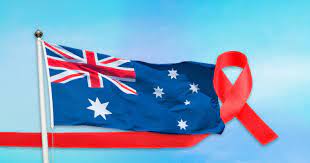
Australia is on track to become one of the first countries in the world to eliminate HIV

A 10-year study has found that Australia could become one of the first countries to “virtually eliminate” HIV transmissions, with new infections decreasing dramatically. 

The findings, published in Lancet HIV, showed that HIV infections decreased by 66 per cent between 2010 and 2019 in New South Wales and Victoria, while there was a 27 per cent rise in people accessing effective HIV treatment. 

Increased access to HIV treatment and PrEP (pre-exposure prophylaxis) – the medication that prevents a person from contracting HIV – was cited as a key reason for decreased transmissions. 

The journal also endorsed the public health strategy “treatment as prevention”, explaining that HIV treatment “results in virally suppressing the HIV virus”, which reduces a person’s risk of transmitting HIV to another person to zero. 

“We examined 10 years of clinical data from over 100,000 gay and bisexual men in New South Wales and Victoria,” said Dr Denton Callander, who led the research at the University of New South Wale’s Kirby Institute.

“We found that over time, as viral suppression increased, HIV incidence decreased. Indeed, every percentage point increase in successfully treated HIV saw a fivefold decrease in new infections, thus establishing treatment as prevention as a powerful public health strategy.”

Dr Callander also underlined the importance of access to HIV testing, as well as the “widespread availability” of PrEP.

Professor Mark Stoové from the Burnet Institute, co-senior author on the paper, added that the success of Australian measures such as education on HIV and reduced patient treatment costs could see the country “virtually eliminate” new HIV transmissions.

HIV experts have explained how medical breakthroughs have transformed the treatment and prevention of the virus.

The U=U (undetectable = untransmittable) slogan aims to tackle the misconception that people with HIV can pass the virus on even if they are receiving effective treatment.

In fact, U=U means that if a HIV-positive person has been taking effective HIV treatment, and their viral load has been undetectable for six months or more, they cannot pass the virus on through sex. 

In the UK, former health secretary Matt Hancock committed to ending new HIV transmissions by 2030, however, charities and activists have warned this won’t happen without better utilisation of all the tools to prevent HIV transmission. 

Richard Angell, chief executive at Terrence Higgins Trust, said it’s “possible but not probable” that the UK will reach the 2030 goal. It’s new campaign – HIV, time’s up – has been launched to ensure Hancock’s target is achieved on schedule.

It is calling for the expansion of opt-out HIV testing in A&Es to all areas with high HIV prevalence and for prevention pill PrEP to be made available outside of sexual health clinics.

Some “huge successes” were praised in terms of UK HIV prevention, but experts explained that inequality and stigma, as well as a lack of resources, were still hurdles to overcome in order to meet Hancock’s aim.

Staircase House … Twitter no longer shields LGBT+ from abuse

News

Staircase House

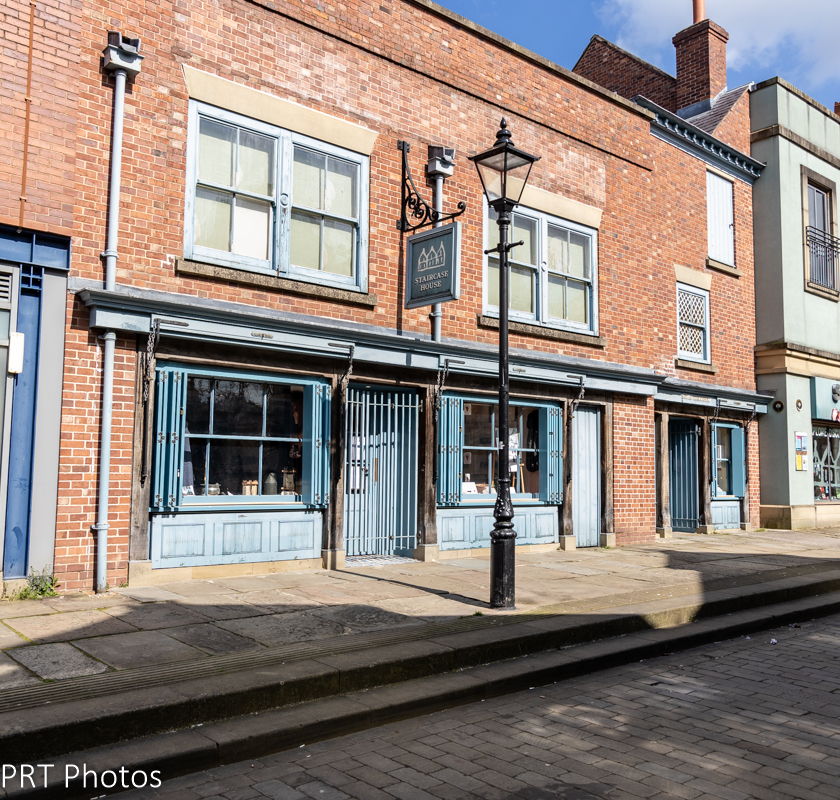
Staircase House was our destination this week. It’s a Grade II* listed medieval building dating from around 1460 situated in Stockport. The house is famous for its rare Jacobean cage newel staircase.

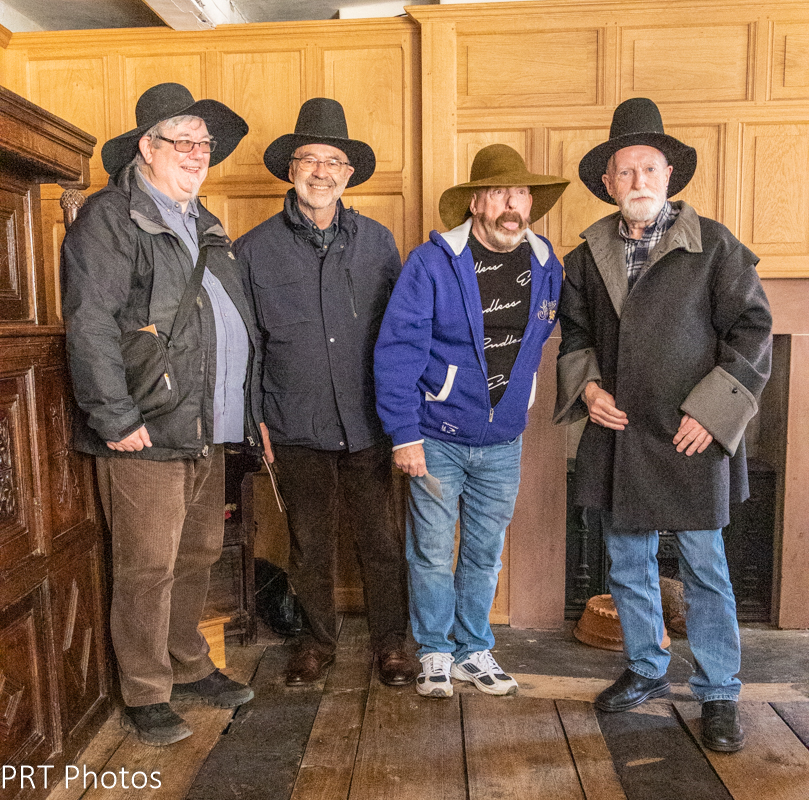
After a lovely meal sitting outside in The Courtyard at the Arden Arms – an old marketplace pub in Stockport – we walked up the hill to Staircase House. This is a real hidden gem. You can walk past it and not know it was there.

Very little is known of the property’s early history, though it is thought that it may have been the home of William Dodge who, in 1483, was the Mayor of Stockport.

The first residents of whom there is certainty were the Shallcross family who owned the House from 1605 to 1730. Members of the landed gentry, with their seat just across the county boundary, in Derbyshire, it was they who in 1618 installed the distinctive Jacobean cage newel staircase, from which the house takes its modern name.

The House, including the staircase, was painstaking restored using traditional materials, tools and techniques, following a major fire in 1995, the second of two arson attacks on the semi-derelict building.

There are lots of amazing photos to be seen here.

Elon Musk’s Twitter No Longer Shields LGBT+ People from Abuse

In October 2022 Elon Musk closed his deal to buy Twitter. He emphasised that he will allow for looser rules over what people can say on the platform. Immediately, far-right users started to celebrate the ability to freely use homophobic and transphobic rhetoric and make threats on the social media platform.

One person posted a photo of a drag queen smiling at a young drag performer with the caption, “This is a groomer.” The word “grooming” has long been associated with mischaracterising LGBT+ people, particularly gay men and transgender women, as child sex abusers.

LGBT+ people already face disproportionate rates of online harassment. Roughly 1.5 million, or 15 percent, of 10 million online posts analyzed between 2016 to 2019 were transphobic, according to a 2019 report by anti-bullying organisation Ditch the Label.

Researchers from the Anti-Defamation League found that throughout 2020 and 2021, 64 percent of LGBT+ respondents said they experienced online hate and harassment, compared to 46 percent of Muslims, 36 percent of Jews and about a third of Black and Asian respondents.

Earlier this month, Elon Musk got rid of Twitter’s protections for transgender people.

It’s now totally okay for people online to bully and abuse trans folks by deadnaming and misgendering them without consequence.

As part of its policy, Twitter quietly altered a section dealing with transgender people. The section considers a policy violation if a user repeatedly uses slurs, tropes, or other content that reinforces negative stereotypes about a protected category.

In particular on 8 April 2023, Twitter removed a phrase that described “targeted misgendering or deadnaming of transgender individuals.”

Targeted misgendering and deadnaming are explicitly prohibited in TikTok and Pinterest’s hate and harassment policies, while Meta has stated the same for Facebook and Instagram.

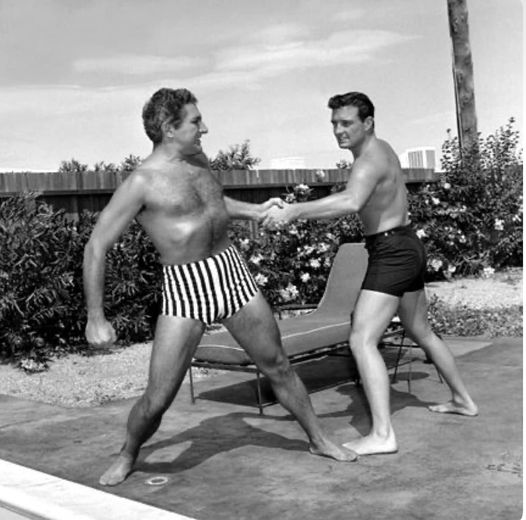
Liberace arm wrestling Rock Hudson