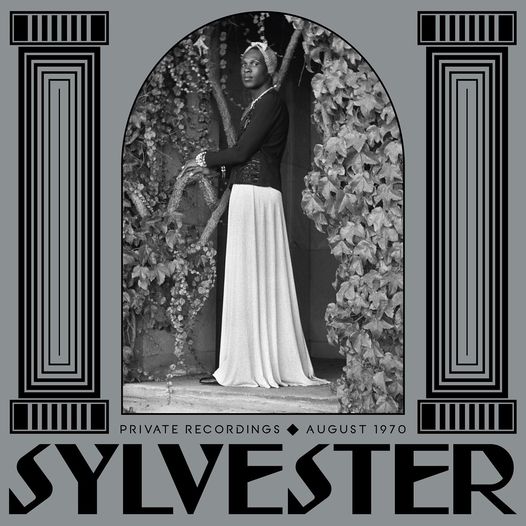
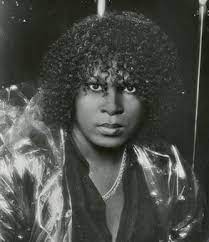
Sylvester’s 76th birthday would have been on 6 September 2023.
Disco legend Sylvester is best known for his chart-topping collaborations with producer Patrick Cowley, such as “You Make Me Feel (Mighty Real)”.
In 1970 a 22-year-old Sylvester had moved to San Francisco and found himself involved with the Cockettes, the infamous psychedelic performance art troupe. Among this milieu was Peter Mintun, a pianist and record collector living in a commune devoted to retro culture.
According to Mintun, “We were like hippies who lived in the twenties. We lived in a house that didn’t have anything modern in it. Nothing in it was made after World War II.” Mintun and Sylvester bonded over their love of Black singers of yore and were allotted a slot during Cockettes performances reviving the music of the Prohibition Era.
One afternoon, Sylvester and Mintun recorded a number of their shared favourites including standards like “Stormy Weather,” “Happy Days Are Here Again,” and “God Bless the Child.” Sylvester’s unmistakable falsetto brings depth and a dash of camp to these familiar tunes.
All proceeds from the record will go to the two charities that Sylvester left his royalties after his death: Project Open Hand and PRC (formerly AIDS Emergency Fund).
This release documents the earliest known recordings from one of disco’s greatest talents.
What the Gay Pride Flag Means to Me: A Symbol of Inclusivity and Support
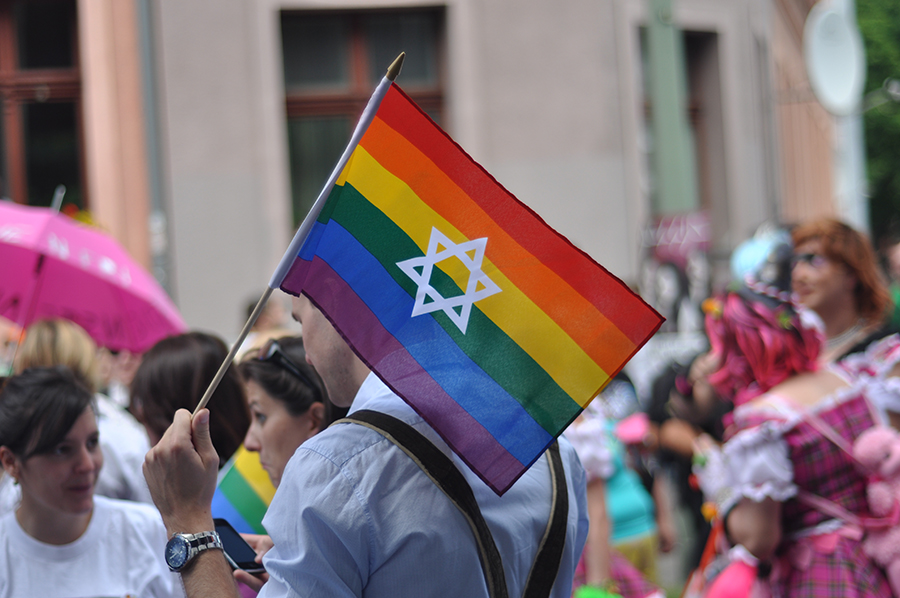
I want to share something that always manages to light up my heart and put a spring in my step – the vibrant and meaningful Gay Pride Flag.
After the shocking news the other week about Laura Ann Carleton, a shop owner in California who was killed for simply hanging a pride flag on her shop window, I realised I wanted to share what the pride flag means to me. It’s an important symbol, and in these troubling times for LGBT+ individuals, I think it’s more important than ever to support those businesses that show their support for LGBT+ people.
Yes, that colourful masterpiece that’s like a beacon of love and acceptance in a sometimes not-so-accepting world.
There’s a special moment when you’re walking down the street, exploring a new neighbourhood, and there it is – the pride flag hanging proudly on a business window, signalling that this place is all about inclusivity and celebrating diversity.
Every single time I see it, it’s like a burst of happiness and a reassurance that there are good vibes to be found.
I’m not sure about you, but for me, it’s impossible to ignore that burst of colour. It’s like an instant mood-lifter. I mean, who wouldn’t smile when greeted by that brilliant spectrum of hues that represent unity, love, and the beautiful tapestry of the LGBT+ community? It’s like a non-verbal “Hey, you’re welcome here, just as you are” message, and honestly, that’s something we could all use more of in this world.
Now, let’s talk about the magic that happens when I see that flag in unexpected places.
Picture this: I’m strolling down a street, my mind buzzing with errands, and bam! There it is – the pride flag hanging outside a cafe or a shop. Instantly, my focus shifts. It’s like a reminder to pause, take a deep breath, and acknowledge that I’m in a space where I’m not just accepted, but celebrated. It’s like someone giving you a warm hug when you least expect it. It’s like a secret code that we’re all part of this amazing, diverse family. It’s like someone saying, “Hey, we’ve got your back, and we’re excited to have you here.”
I don’t know about you, but that simple gesture makes me feel like a valued member of the community.
To me, the Gay Pride Flag is more than just colours on a piece of fabric; it’s a symbol of hope, love, and the progress we’re making toward a more accepting world. So, next time you see that flag waving proudly, take a moment to smile and remember that there are people out there who are working to create safe and inclusive spaces for everyone.
And if you’re like me, maybe you’ll also want to show your support by grabbing a coffee or checking out that shop – because when we stand together, we create a world that’s brighter, more colourful, and undeniably full of love.
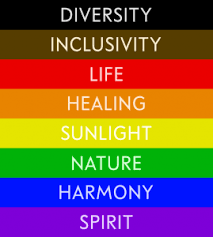
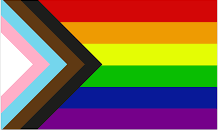
The LGBT+ community is wonderfully diverse, and different flags represent various identities within the community. The beauty of these flags lies in their ability to promote visibility, understanding, and acceptance for individuals of various sexual orientations and gender identities.
“Scran” is a northern word meaning food as in “Am starvin man! Let wi gan and get some scran”.
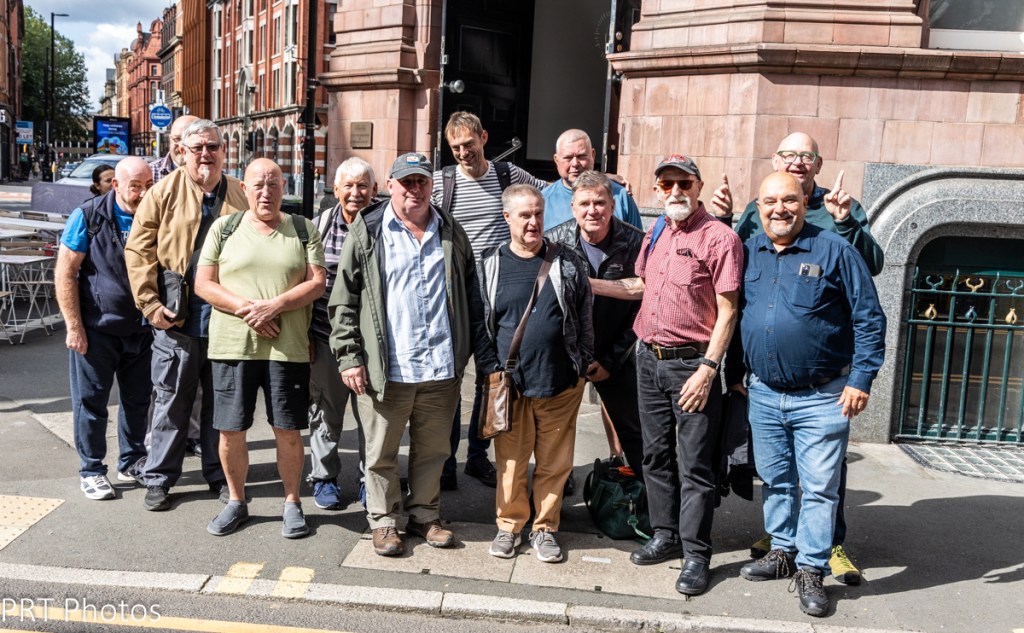
So “Scranchester” is a Manchester food tour with a twist. We were led by our guide, Rob, to some of the best independent restaurants in Manchester. He revealed some food and drink stories along the way giving us an edible insight into the past!
We met at Manchester Craft Centre in the Northern Quarter, and first explored what used to be the fish and meat markets area. Our first stop was Mackie Mayor’s award-winning food hall, the former Smithfield market. Opened in 1858, it was originally used as a fresh produce market, but had lain empty since the early 1990’s.
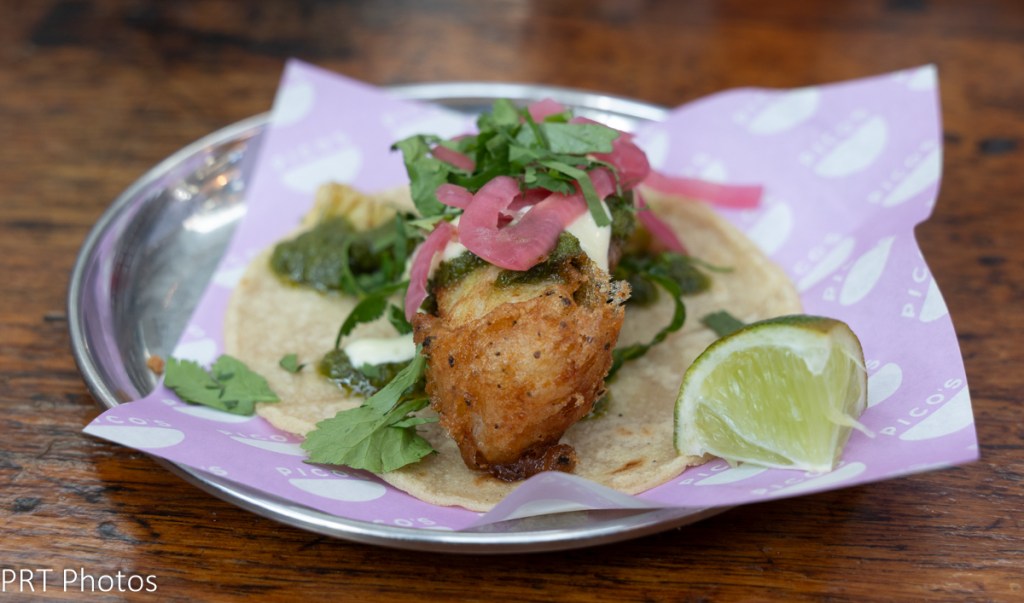
There we had a delicious tempura battered fish taco with a tasty topping.
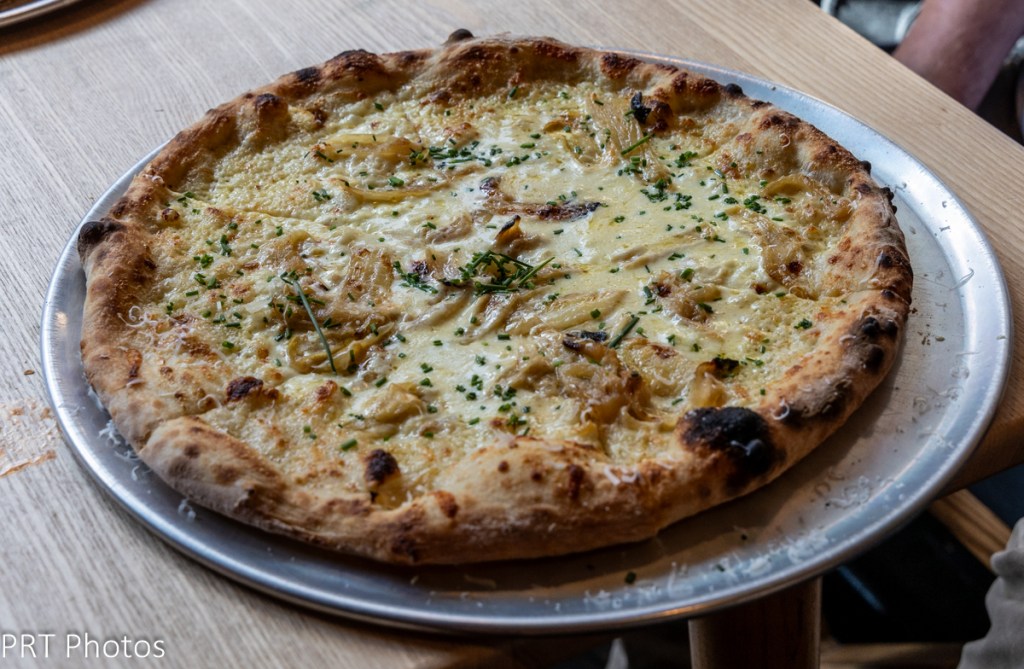
We then moved on to Nells Pizza on Thomas Street, and sampled a couple of slices of “cheese and onion pie” pizza.
From there, we moved to Tib Street. The street had its origins in the 1780s and was previously the central trading district of Victorian Manchester. We remembered it as the home of “parrots and porn” as it was once the pet shop district. Much of the animal trade and pet shops shut down on Tib Street in the seventies, but the concealed structure of the street rendered it ideal for explicit stores to pitch up for patrons; away from city residents’ prying eyes.
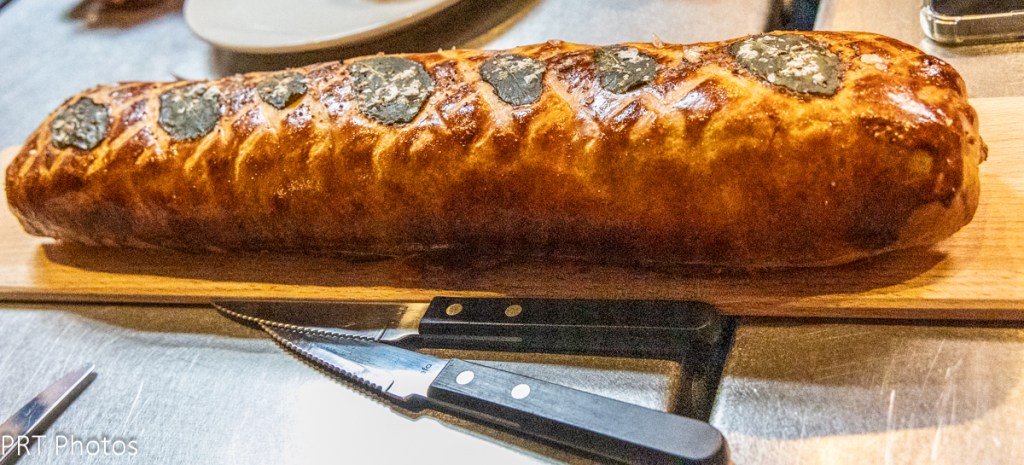
We then headed to Tariff and Dale restaurant, where we sampled spiced pork and lamb meat rolls. There was also a vegetarian option.
We finished the tour at Affleck’s Palace, now home to many trendy, individual stalls, but once the home of Affleck and Brown’s department store. There, members of the group sampled a variety of delicious ice creams at Ginger’s Ice Cream Emporium, an award winning business.
The tour revealed unique food and drink stories and we learnt more about the city we love.
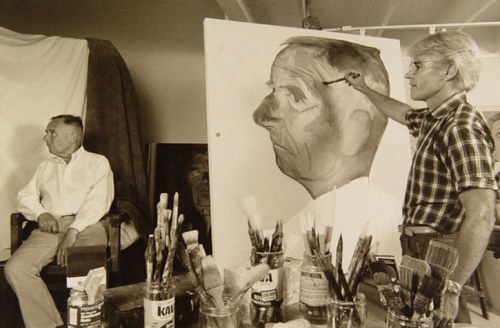
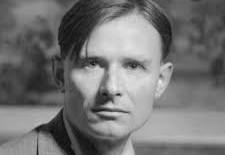
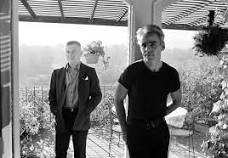
Christopher Isherwood (26 August 1904 – 4 January 1986) wrote Goodbye to Berlin (which became the musical Cabaret), A Single Man, Mr Norris Changes Trains and many more novels.
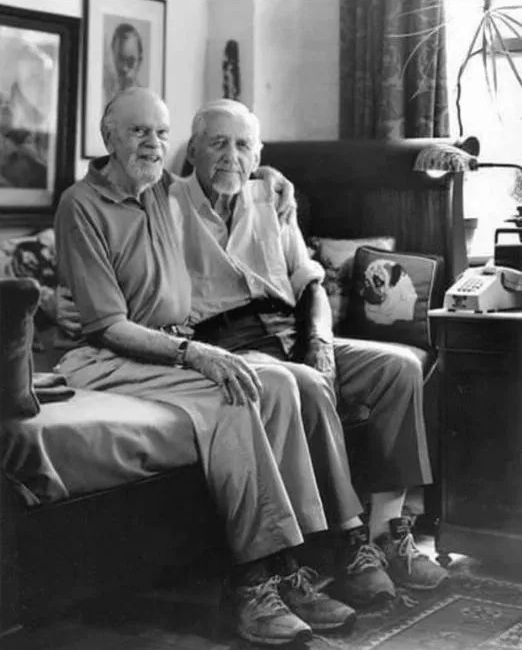
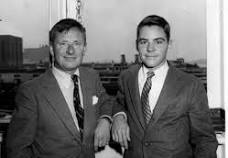
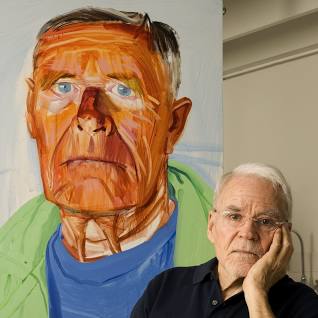
He met and fell in love with artist Don Bachardy in the early 50s. They actually met on Valentine’s Day 1953 when Don was 18 and Christopher was 48. They stayed together until Isherwood passed away in 1986. The image above is Don painting one of his many portraits of Chris.
Their relationship was extraordinary. The lived as an out couple during a time when being out was far more difficult than it is today. The 50s and 60s, even in California where they lived, were not the easiest of times to be gay. Donald Jess Bachardy (born 18 May 1934) still resides in Santa Monica, California.
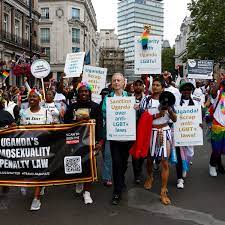
First Ugandan charged with ‘aggravated homosexuality’ punishable by death
A 20-year-old man has become the first Ugandan to be charged with “aggravated homosexuality”, an offence punishable by death under the country’s recently enacted anti-gay law, prosecutors and his lawyer said.
Defying pressure from Western governments and rights organisations, Uganda in May enacted one of the world’s harshest laws targeting the LGBT community.
It prescribes life in prison for same-sex intercourse. The death penalty can apply in cases deemed “aggravated”, which include repeat offences, gay sex that transmits terminal illness, or same-sex intercourse with a minor, an elderly person or a person with disabilities.
According to a charge sheet, the defendant was charged on 18 August 2023 with aggravated homosexuality after he “performed unlawful sexual intercourse” with a 41-year-old man. It did not specify why the act was considered aggravated.
“Since it is a capital offence triable by the High Court, the charge was read out and explained to him in the Magistrate’s Court on (the) 18th and he was remanded,” said Jacqueline Okui, spokesperson for the office of the director of public prosecutions.
Okui did not provide additional details about the case. She said she was not aware of anyone else having been previously charged with aggravated homosexuality.
Justine Balya, an attorney for the defendant, said she believed the entire law was unconstitutional. The law has been challenged in court, but the judges have not yet taken up the case.
Balya said four other people have been charged under the law since its enactment and that her client was the first to be prosecuted for aggravated homosexuality. She declined to comment on the specifics of his case.
Uganda has not executed anyone in around two decades, but capital punishment has not been abolished and President Yoweri Museveni threatened in 2018 to resume executions to stop a wave of crime.
The law’s enactment three months ago drew widespread condemnation and threats of sanctions. Earlier this month, the World Bank suspended new public financing to Uganda in response to the law.
The United States has also imposed visa restrictions on some Ugandan officials, and President Joe Biden ordered a review of US aid to Uganda.
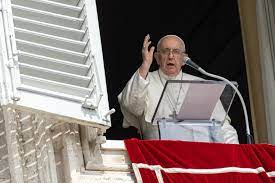
Pope Francis laments “reactionary,” politicised, US Catholic Church
Pope Francis has lamented what he called a “reactionary” Catholic Church in the United States, where he said political ideology has replaced faith in some cases.
In the 10 years since his election, Francis has been criticised by conservative sectors of the US Church who are opposed to reforms such as giving women and lay Catholics more roles and making the Church more welcoming and less judgmental towards some, including LGBT people.
Francis made his comments on 5 August in a private meeting in Lisbon with members of the Jesuit order, of which he is a member, during his trip for World Youth Day. They were published by the Jesuit journal Civilta Cattolica.
In a question-and-answer session, a Portuguese Jesuit said that during a sabbatical in the United States, he was saddened that many Catholics, including some bishops, were hostile to the pope’s leadership.
“You have seen that in the United States the situation is not easy: there is a very strong reactionary attitude. It is organised and shapes the way people belong, even emotionally,” the pope responded.
Religious conservatives in the United States often have aligned with politically conservative media outlets to criticise the pope over a host of issues such as climate change, immigration, social justice, his calls for gun control and his opposition to the death penalty.
“You have been to the United States and you say you have felt a climate of closure. Yes, this climate can be experienced in some situations,” Francis said. “And there, one can lose the true tradition and turn to ideologies for support. In other words, ideology replaces faith, membership in a sector of the Church replaces membership in the Church,” he said.
Don’t forget … Saturday, 2 September – Didsbury Pride, 6 Barlow Moor Road, Manchester M20 6TR
12 noon – 9.00pm – FREE
Rainbow Walk thru the Village from midday … assemble outside The Didsbury Pub from 11.30am.
The Manchester Pride Festival is an incredible four-day celebration of LGBT+ life that takes place across the city every year over the August Bank Holiday weekend (25 – 28 August 2023).
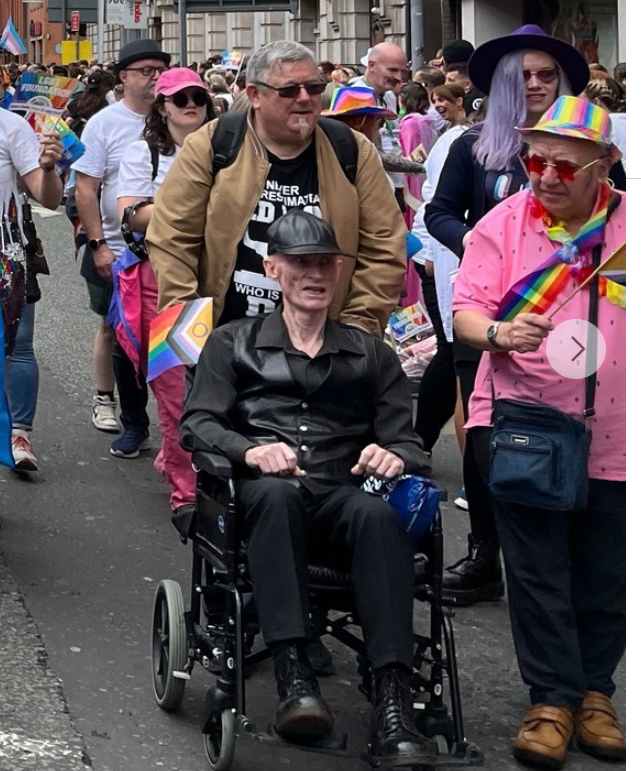
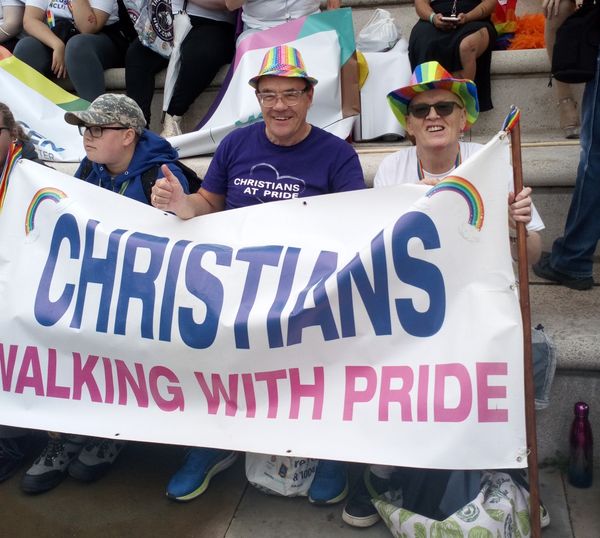
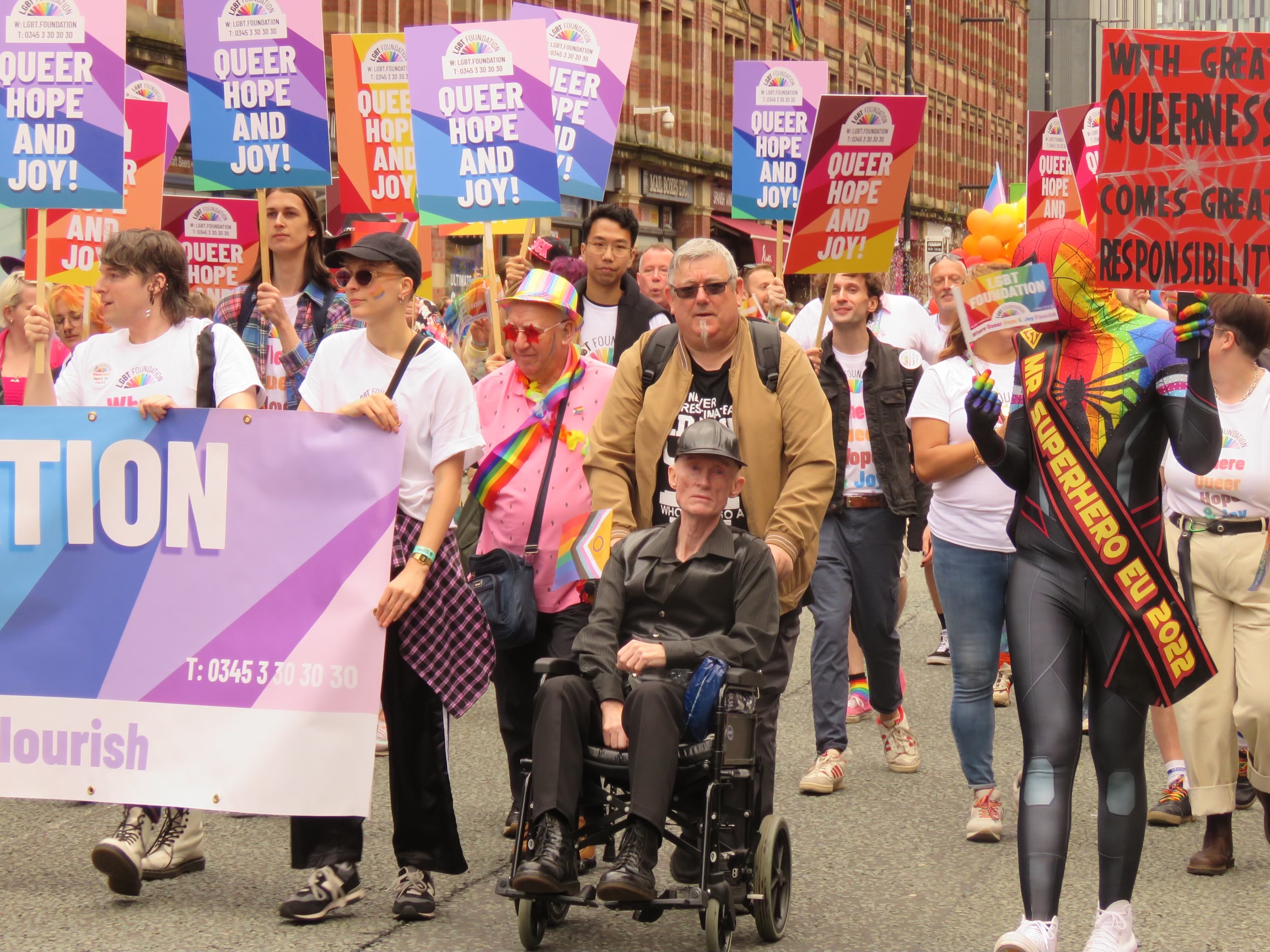
There are a number of aspects to the Festival, but the centrepiece is the parade. There was a brilliant atmosphere walking in the parade, but the downside is that you don’t get to see all the other floats and groups!
We walked with the LGBT Foundation sandwiched between the “real housewives of Cheshire” and the Ambulance Service. It was wonderful to see the streets lined with tens of thousands of people all supporting LGBT people.
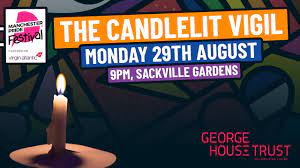
Candlelit Vigil – Monday, 28 August 9.00pm
The Candlelit Vigil (hosted in partnership with George House Trust) is a significant event that marks the culmination of the Manchester Pride Festival.
Taking place in Sackville Gardens, this moment of reflection brings together LGBT+ communities and allies to remember those we have lost to HIV and to stand united in the fight against the global epidemic and the persistent stigma that surrounds it.
There are more Pride events to look forward to:
Saturday, 2 September – Didsbury Pride, 6 Barlow Moor Road, Manchester M20 6TR
12 noon – 9.00pm
Rainbow Walk thru the Village from midday … assemble outside The Didsbury Pub from 11.30am.
Saturday, 16 September – Chorlton Pride, The Edge Theatre & Arts Centre, Manchester Road, Chorlton, Manchester M21 9JG 11.00am – 4.00pm
FREE – but booking needed on Eventbrite.
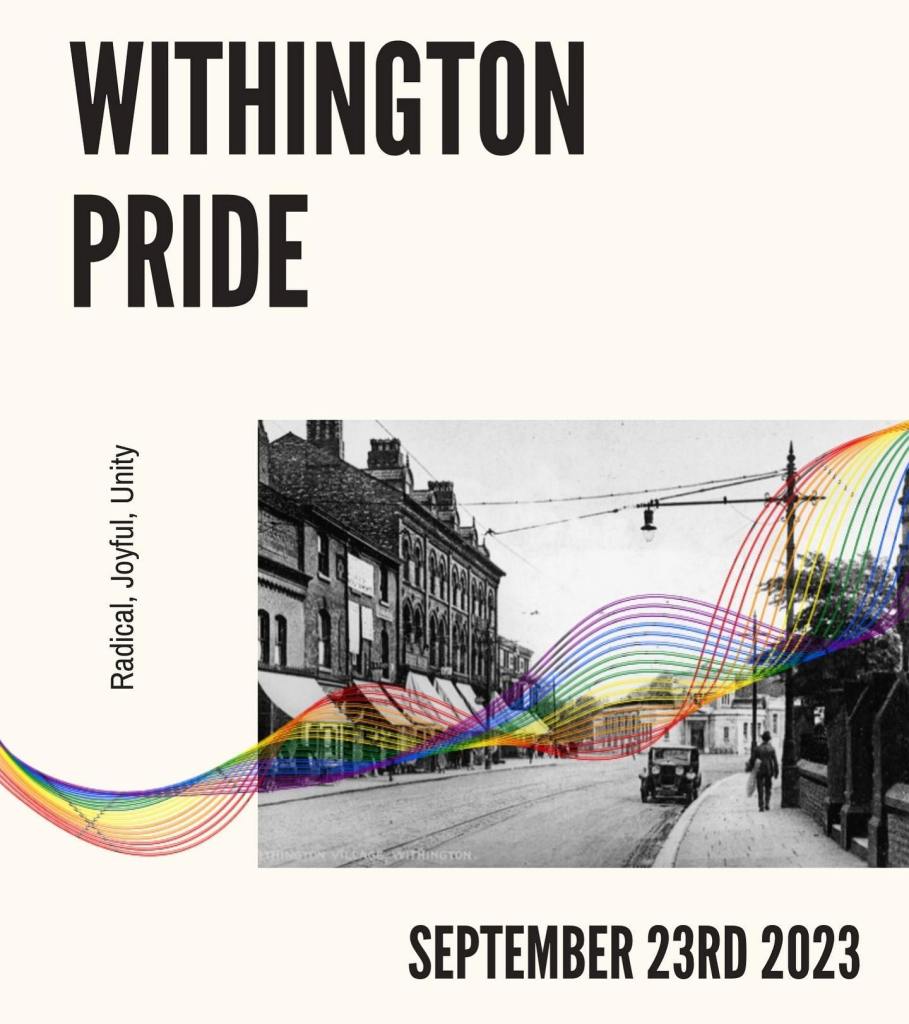
Saturday, 23 September 2023 – Withington Pride – Radical – Joyful – Unity
A day and night of events across Withington celebrating the local LGBTQ+ community’s vibrancy, creativity, & value, and building community networks of care, allyship and solidarity through music, art and dance!
There’ll be something for everyone from free kids crafts to a march and street party, keep your eyes peeled for more info!
Instagram: @withingtonpride
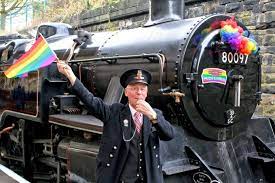
Sunday, 24 September – Bury Pride Rainbow Train
We hope you’re excited to be joining us on the 4th Annual Bury Pride Rainbow Train on Sunday 24 September at 5.00pm!
Celebrate Pride, join us, and experience a trip on East Lancashire Railway’s Heritage Steam Engine whilst enjoying dazzling Pride performances at Bolton Street Station, Rawtenstall and then back at Bolton Street and the Trackside Pub Bury.
Hop on board the extraordinary Rainbow Express at the East Lancashire Railway in Bury! This incredible steam train hosts a dazzling event celebrating the LGBTQI+ community. Experience a day filled with vibrant performances, exciting shows, and inclusive events. Join us for a journey that embraces love, acceptance, and equality.
Be part of the magical Rainbow Express! Get tickets here.
All aboooaaard!
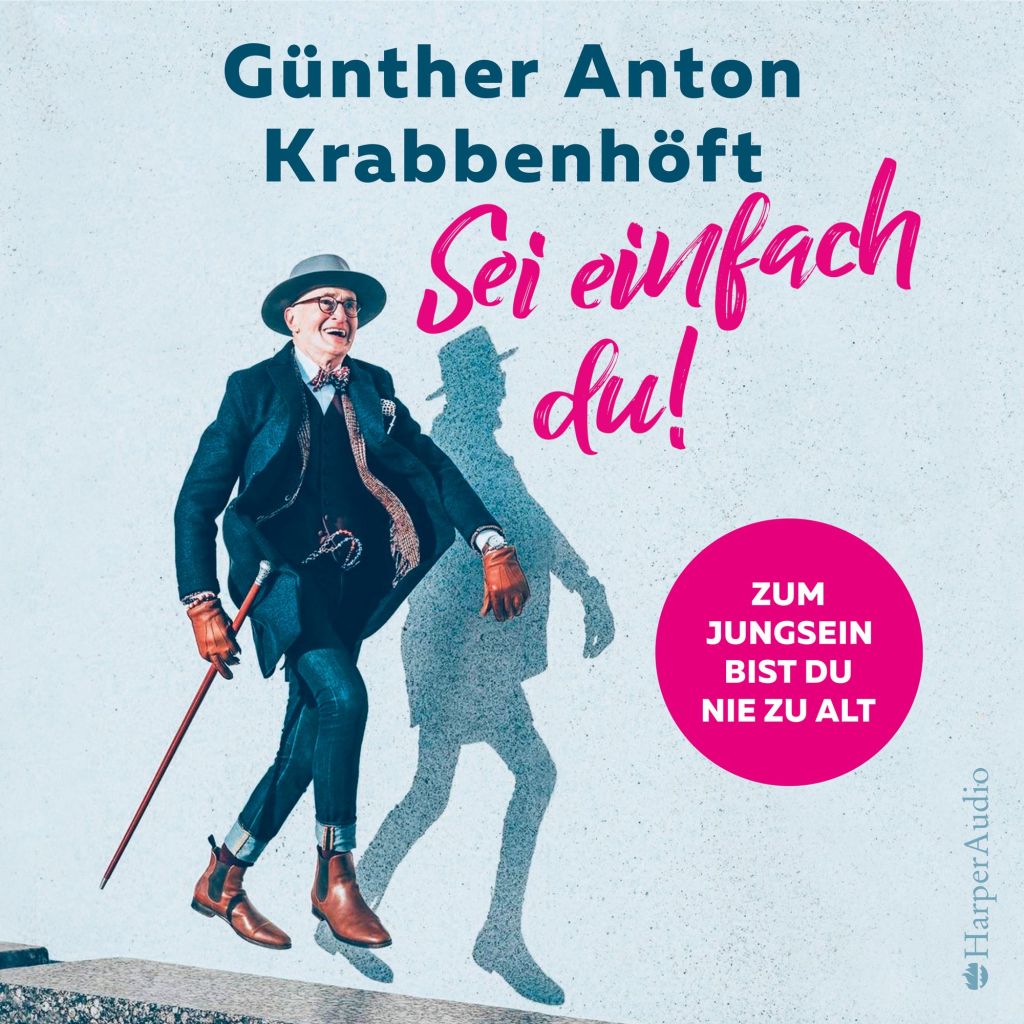
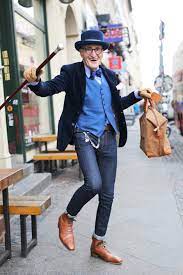
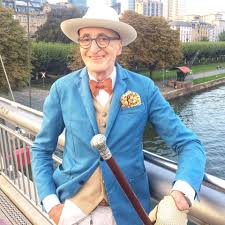
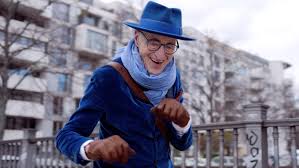
This gay “hipster grandpa” is a world-famous fashion icon with one simple message
At nearly 80 years old, Günther Krappenhofft makes an unlikely influencer. He never expected to be famous. Up until eight years ago, he didn’t even have a smartphone. But he now boasts 176 thousand followers on Instagram, posting long positive messages about authenticity alongside extraordinarily dapper fit checks. He tells his followers to “just be yourself” and his German Wikipedia page describes him simply: “style icon.”
Günther plays an avuncular role as a queer elder on the streets of Berlin, where he stands out like a colourful bird of paradise. He wants to show younger people that you can still love life, live joyfully and be cool when you grow old.
He doesn’t believe in only dressing for special occasions. “With age, my perspective on life has changed. Elegant clothes that I used to only wear on special occasions, the fine, expensive china or the outrageously expensive perfume for a very special evening, all of these things are now used daily,” he tells his Instagram followers.
His book, Just be Yourself (Sei einfach du!) is about the value of individuality. “You need to have the courage to be true to yourself, whether that’s about how you dress or who you love. I always say: be yourself, everyone else already exists. You are the original,” he laughs.
For Günther, clothes have always been a part of that expression, but it was a chance encounter that made him the style icon he is today.
It all began when he was waiting for a metro at Kottbusser Tor, one of the seedier parts of Berlin’s vibrant Kreuzberg district. A passing photographer took a photo, and it ended up on the news wires across the world, appearing in taxi cabs and on billboards from New York to Tokyo. He became known as “Berlin’s oldest hipster,” or the hipster grandad.
His natural style immediately caught the eye of Japanese fashion house United Arrows, who arranged his first appearance on the catwalk. “I wasn’t always interested in fashion, but my personality, my emotions, my mood were always wrapped up in my clothing.”
Günther’s life has been shaped by these happy accidents. A kid from the north German countryside, he never expected the life he lives now, and it took him a while to get there. He initially wanted to go to New York as a cook on the legendary Hamburg America Line, but they told him to wait in West Berlin until they were next hiring. This stopover in a city that was then still divided by the Berlin wall blew his mind. He never left. “The parties were all day and all night, twenty-four hours, especially in the queer scene.”
This was a scene Günther wasn’t much involved in back then. Despite the wild partying, he settled down, temporarily. The gay hipster grandpa got married at 29 – to a woman – and they had a child together. He was in denial about his sexuality and wanted a normal family life and to be a dad. “But then I met someone who threw my life off its path,” he says. Though he doesn’t regret it he says “it was a very painful process. It wasn’t always like it is today.” Being gay was illegal in Germany back then, with the Nazi-era law staying on the books until 1994.
But Günther wasn’t alone – he stayed connected to his family and even ended up starting a support group called Schwule Väter (gay dads) for men in his seemingly unique situation. It turned out it wasn’t so unique at all. “We helped other people accept their sexuality and live as gay and to live with the family while still taking care of their families.” After the divorce, he even ended up as a single dad for a while, raising his daughter alone, though he adds he still has a great relationship with his ex-wife.
After being in a heterosexual marriage and then a gay single dad, his third life started when he was strolling through Berlin to meet friends and two young girls stopped and asked him, “Do you want to come with us to Berghain?” He made an on-the-spot decision to cancel on his friends and join them at the world famous nightclub, and this too changed his life.
Günther describes that day as almost like a religious experience. “I stayed there for 8 hours and danced as if there was no morning, and I was never as free and happy as in those 8 hours, connected in the darkness with this mass of people. It was like a revelation.”
Since then, he’s regularly spotted at many of Berlin’s most exclusive nightclubs, dancing energetically way past the bedtime of most of his contemporaries. “The club is my mass,” he says.
From line cook and husband to gay dad, model, clubber and author. Does Günther have any other new hobbies or changes in his life planned? He refuses to answer. “I live a new life every day, and don’t think about the future – that’s smart at my age.”
UK’s LGBT+ community ‘more likely’ to face real hardship in retirement
The research found that 36% of LGBT+ people were not a member of any pension scheme, compared with 30% of the wider population. Photograph: Rosemary Roberts/Alamy
Close to half of individuals who identify as LGBT+ are heading for a retirement where they are at risk of struggling to afford such basics as food and heating, according to new UK data.
Looking across various measures including amounts saved and pension scheme membership, researchers concluded that members of the LGBT+ community were “far more likely than the general population” to struggle in retirement.
The insurer and pension provider Scottish Widows’s latest retirement report found that 44% of people who identify as LGBT+ are not on track for even a minimum retirement lifestyle, as defined by one of the main pension bodies, which means they are “at risk of not covering their needs” when they are older. That contrasts with the national average of 35% of people who risk falling below the threshold.
The research also found that 36% of LGBT+ people were not a member of any pension scheme, compared with 30% of the wider population.
Meanwhile, 18% had cut contributions into pension plans and similar schemes because of rising living costs – compared with 12% of the wider population.
The insurer said that, “unsurprisingly”, 68% of people from the community were worried about running out of money in retirement, which was higher than the national average of 57%.
Its report stated that the median projected retirement income among people who identify as LGBT+ was £13,000.
The Pensions and Lifetime Savings Association has developed the “retirement living standards” to show what life in retirement looks like at three different levels – minimum, moderate and comfortable – with a single person needing about £12,800 a year to meet the “minimum” threshold. The thresholds for moderate and comfortable are £23,300 and £37,300 a year respectively.
The minimum scenario leaves a pensioner with only £54 a week for food (including food away from the home), no car, and up to £580 a year for clothing and footwear. These figures assume the individual has paid off any mortgage.
Emma Watkins, a managing director at Scottish Widows, said employers and the pensions industry needed to do more to reach members of the LGBT+ community and help them achieve a decent retirement lifestyle.
The fact that almost one in five people from the community had felt the need to reduce their pension contributions “is a huge area of concern”, she said.
The insurer also said that LGBT+ people earn less on average and suffer a higher rate of mental health conditions, making them more likely to need time out of work and therefore reducing opportunities for putting money into pensions.
Stephanie Fuller, the chief executive officer at Switchboard, an LGBT+ helpline, said: “These findings are concerning but sadly do not come as a shock.
“The financial issues faced by the community are indeed significant and multifaceted. LGBT+ people are more likely to be estranged from family networks, for instance, and feel it necessary to change jobs more frequently due to issues arising from their sexuality or gender identity.
“There is also the reality that many trans people will have to fund the gender-affirming procedures they need personally and at significant cost. All this means that tomorrow’s money is often spent today, with few obvious avenues for people to remedy this.”
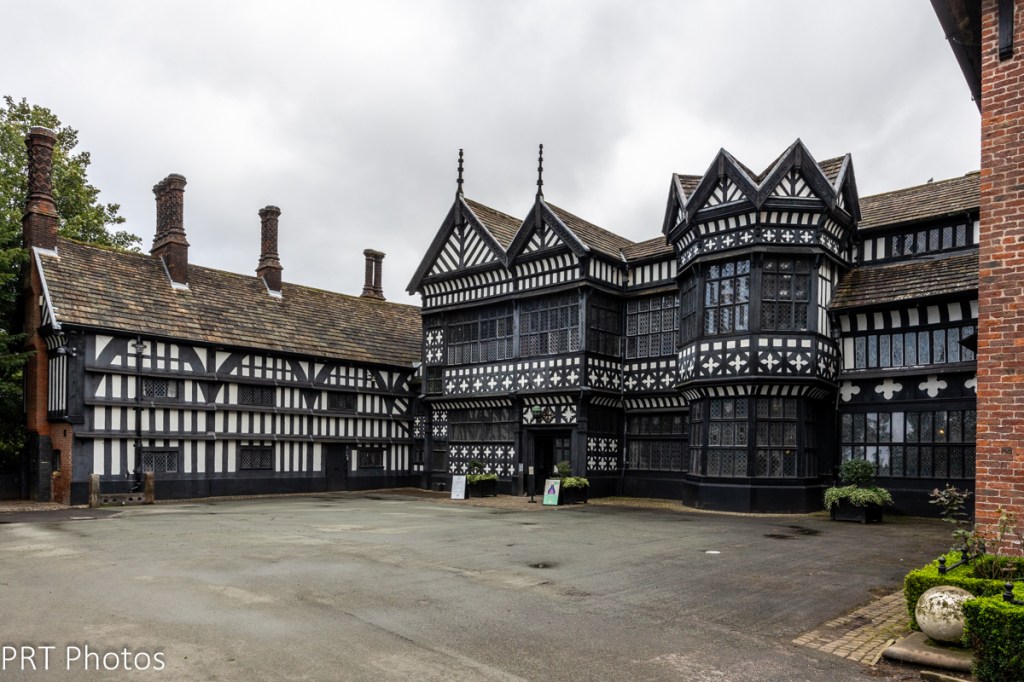
We left Piccadilly Train Station and after a short train and bus journey, we reached the grounds of Bramhall Hall – a superb Tudor manor house with origins dating back to the Middle Ages. Then we had a short walk to the Hall itself.
We had reserved tables in The Stable Café and pre-ordered our lunches. Between us we had fish butties, chargrilled chicken, 60 second steak, lamb kebab, ham, cheddar, salmon sandwiches and delicious french onion soup with cheese on toast.
We then had a look around the Hall, which was magnificent.
The building is timber-framed and its oldest parts date from the 14th century, with additions from the 16th and 19th centuries. The house functions as a museum and its 70 acres of landscaped parkland are open to the public.
The manor of Bramhall was first described in the Domesday Book in 1086, when it was held by the Massey family. From the late 14th century, it was owned by the Davenports, who built the present house and remained lords of the manor for about 500 years. In 1877, they sold the estate of nearly 2,000 acres to the Manchester Freeholders’ Company, a property company formed to exploit the estate’s potential for residential building development. The hall and a residual park of over 50 acres was sold on by the Freeholders to the Nevill family of successful industrialists.
In 1925, it was purchased by John Henry Davies and then, in 1935, acquired by Hazel Grove and Bramhall Urban District Council. Following a local government reorganisation in 1974, Bramall Hall is now owned by Stockport Metropolitan Borough Council, which describes it as “the most prestigious and historically significant building in the Bramhall Park Conservation Area.”
As a thank you for continuing to support Out In The City this Summer, we’re giving you the chance to win a fantastic Apple MacBook Air in The Rainbow Lottery’s very first Super Draw!
With a slim profile and all day battery life, anything from working on the go to professional level video editing and action packed gaming will be a breeze.
Wait a minute – What’s a “Super Draw?”
Well, if you haven’t already heard, we’re making some changes to our big monthly prize draw! Don’t worry, you’ll still have regular chances to win fantastic prizes, and all the while supporting Out In The City – we’re just improving the experience, and introducing some exciting new ways to play!
The special prize draw will take place onSaturday 26 August. As you already have tickets, you don’t need to do anything extra – so why not take the opportunity to support Out In The City in another way too?
You can now use our Refer a Friend process to invite friends and family to the lottery – and for every person that signs up using your unique referral link, you’ll BOTH get an entry into the exclusive £200 prize draw!
Countdown to the Manchester Pride Weekend, please see the full LGBT Foundation programme.
Pride in Ageing have an event:
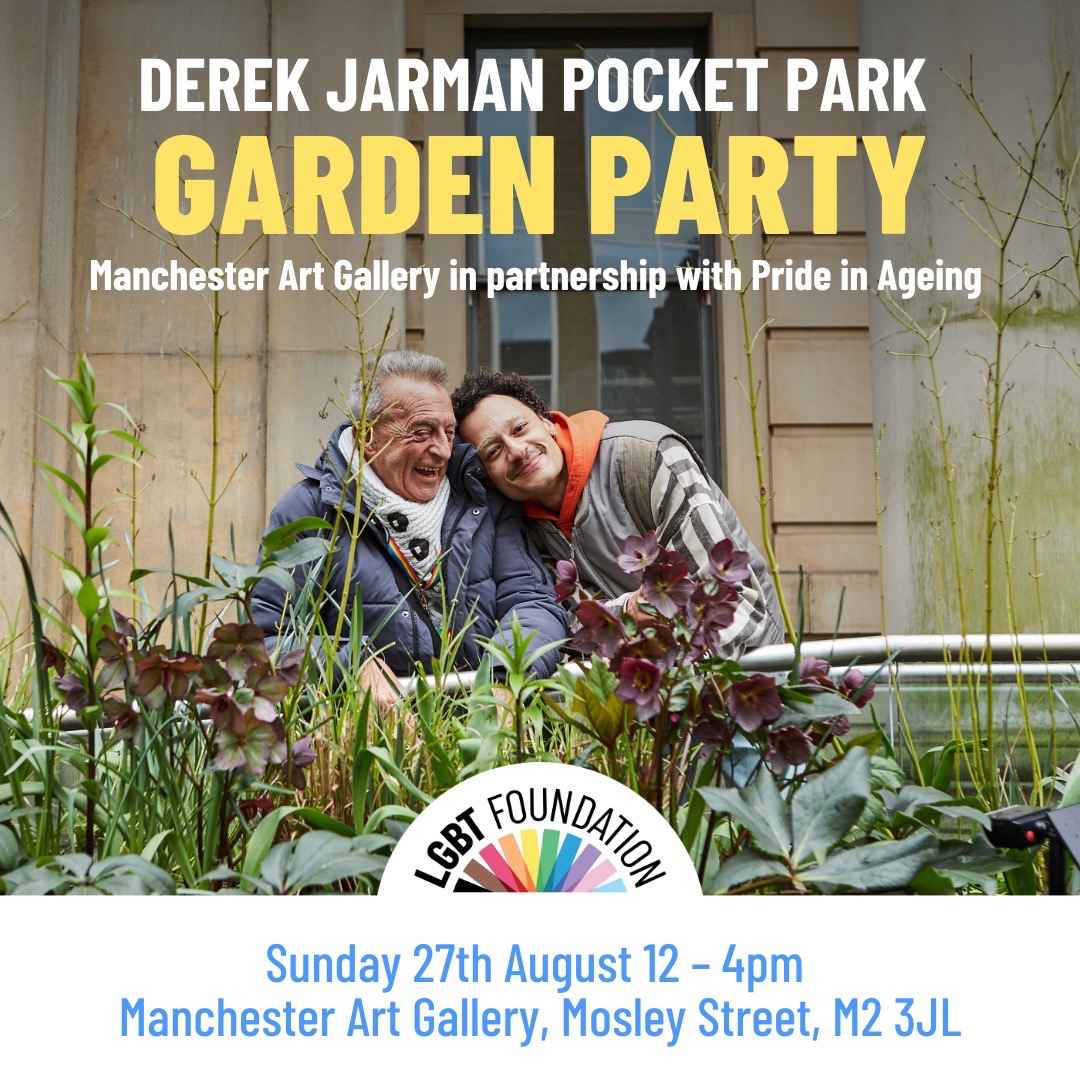
Derek Jarman Garden Party – Sunday, 27 August – 12.00pm – 4.00pm
Join Manchester Art Gallery in partnership with Pride in Ageing at LGBT Foundation for an afternoon of creative activities in our lush Pocket Park at the front of the gallery. You can sketch from nature, have a go at photographing our flora and fauna with your phone and create your own biodegradable plant pot to grow beautiful nasturtiums at home. Come along to enjoy our urban oasis.
Candlelit Vigil – Monday, 28 August 9.00pm
The Candlelit Vigil (hosted in partnership with George House Trust) is a significant event that marks the culmination of the Manchester Pride Festival. Taking place in Sackville Gardens, this moment of reflection brings together LGBT+ communities and allies to remember those we have lost to HIV, and to stand united in the fight against the global epidemic and the persistent stigma that surrounds it.
The Stonewall Riots of 1969 are arguably the most famous and impactful uprisings for lesbian, gay, bisexual and transgender rights. But they are not the first LGBT+ uprising by far. Various smaller uprisings preceded Stonewall – some by over a decade – to push back against harassment, often from police and inequality.
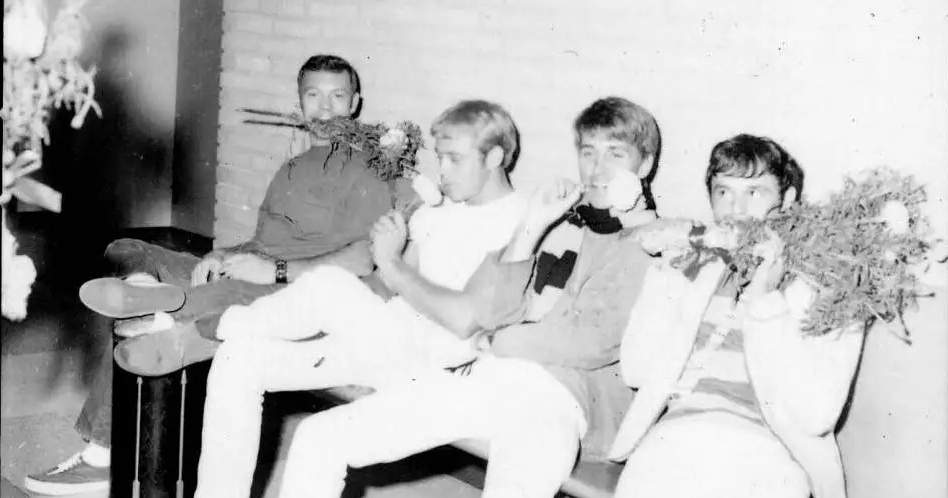
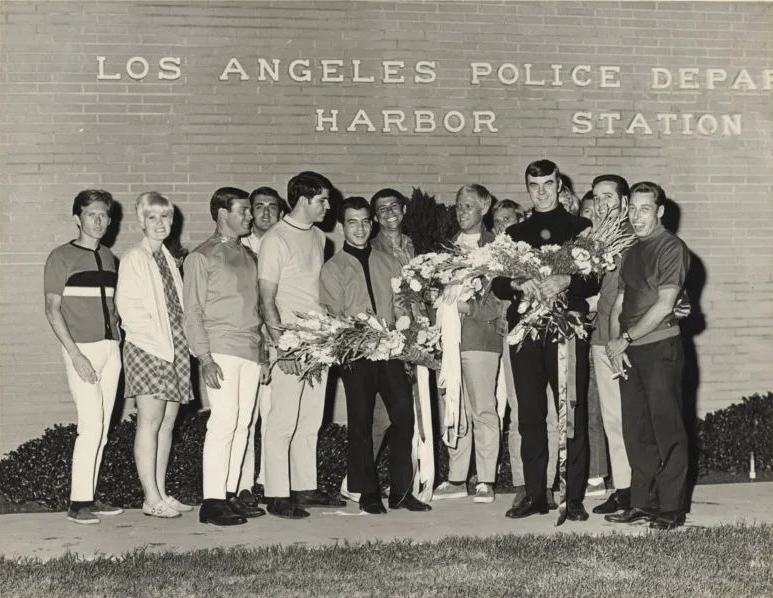
Protestors in the 1968 “flower power” protest camp out at the police department following a raid at the gay bar The Patch. (Courtesy the ONE Archives at the USC Libraries)
1958: Los Angeles – Cooper Do-Nuts Riot
After nearby bars closed, a 24-hour Main Street donut café became the site of a large riot one morning in May 1958. “Two cops, ostensibly checking ID, a routine harassment, arbitrarily picked up two hustlers, two queens and a young man just cruising and led them out,” novelist and one of the hustlers John Rechy said in his book City of Night.
The situation quickly devolved as angry bystanders began throwing debris and items from Cooper Do-Nuts at the cops, who eventually retreated into their car. Disobedience turned into a riot, and soon enough police backup arrived. The officers blocked part of Main Street for the night and arrested several of the rioters.
There has been some confusion about the actual location of the 1958 brawl, but Rechy clarified in a 2021 interview in the LAnd, “There was no riot at Cooper’s. It was actually another donut shop, but at that time, people called every donut shop in the city ‘Cooper’s’ because there were so many. This particular one (on Main Street) is gone now.”
1961: Milwaukee – Black Nite Brawl
Josie Carter, who helped instigate the uprising Courtesy of the Wisconsin LGBTQ History Project
On 5 August 1961, four party-going sailors entered Black Nite, a popular St Paul Avenue gay bar in Milwaukee, on a dare. They started a fight with the bouncer, only to be chased out of the bar by gender-nonconforming Black “Queen” Josie Carter, who knocked one of the men unconscious with a bottle.
The men later returned with reinforcements and began to tear the bar apart, but were met with stiff resistance by bar patrons. The sailors were arrested but the charges were later dropped due to “lack of evidence.” The bar suffered significant damage from the brawl and was eventually demolished for the extension of St Paul Avenue.
1965: Philadelphia – Dewey’s Restaurant Sit-In
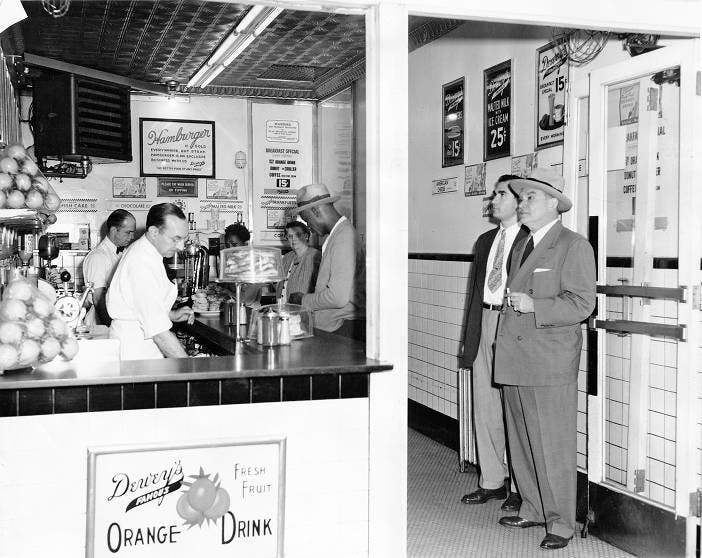
Dewey’s restaurant in Philadelphia, Pennsylvania as it appeared in May 1951. Courtesy of the Special Collections Research Centre, Temple University Libraries, Philadelphia, PA
On 25 April 1965, the 17th Street location of Dewey’s restaurant in Philadelphia denied service to approximately 150 people who appeared to be gay or gender non-conforming. Three teenagers refused to leave and were later arrested, along with Clark Polak, leader of the homophile organisation Janus Society, after he offered to help the group obtain a lawyer.
Janus Society members protested outside of the restaurant for the next five days; on 2 May, three more people staged a second sit-in at Dewey’s. This time, the protesters weren’t arrested and instead left the restaurant voluntarily a few hours later. Dewey’s agreed to stop denying service to LGBT+ people.
1966: New York City – Julius Tavern “Sip In”
Fred W McDarrah / Getty Images
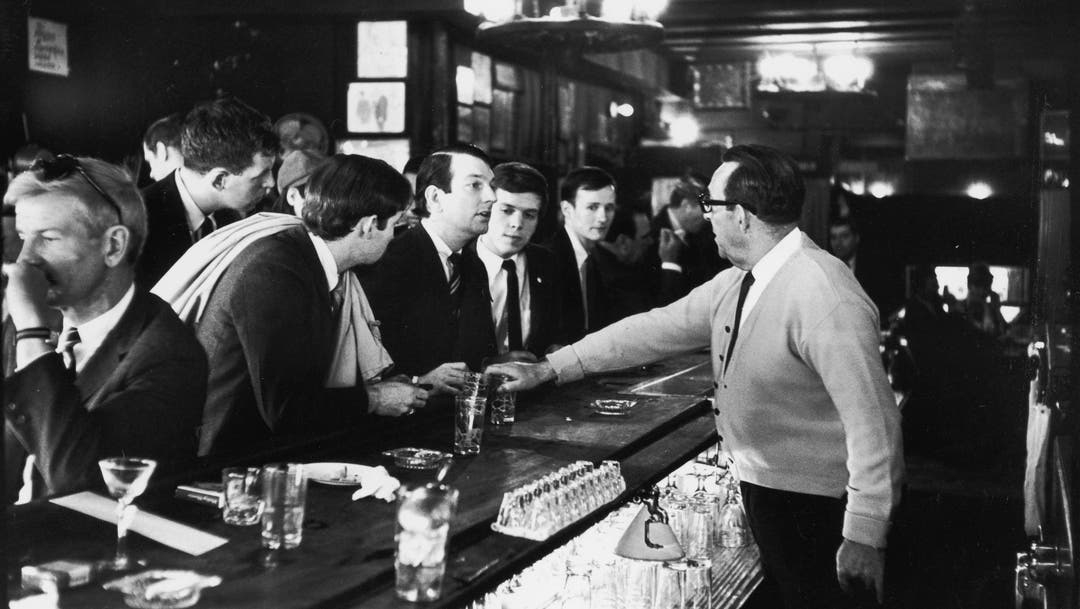
After pouring their drinks, a bartender in Julius’s Bar refuses to serve John Timmins, Dick Leitsch, Craig Rodwell and Randy Wicker, members of the Mattachine Society who were protesting New York liquor laws that prevented serving gay customers, 1966.
In Spring 1966, members of the early gay rights organisation Mattachine Society staged a “sip-in” – a twist on “sit-in” protest – in which they visited taverns, declared themselves gay, and waited to be turned away so they could sue. At the time, LGBT+ individuals couldn’t be served alcohol in public because liquor laws considered their gathering to be “disorderly.”
The group was finally denied service at the Greenwich Village tavern Julius, which had been raided by police a few days earlier for serving gay people. This led to the quick reversal of the state’s anti-gay liquor laws.
1966: San Francisco – Compton’s Cafeteria Riot
Nestled in the San Francisco Tenderloin neighbourhood, Compton’s Cafeteria was a 24-hour restaurant and refuge for sex-working trans women, who often faced intense violence from clients and police. One day in 1966, an officer placed his hand on a trans woman at Compton’s – she responded by throwing her cup of coffee in his face.
Chaos ensued with Compton’s patrons throwing cups, saucers and other diner items at the police, who retreated until reinforcements arrived. A riot erupted as dozens of trans people, drag queens and gay men fought the police. They broke windows, destroyed a police car and set a newsstand on fire. Drag queens hit police with heavy purses. In the end, however, police arrested the women.
1966–1967: Los Angeles – Black Cat Tavern Protests, Los Angeles
Opened in November 1966, Black Cat Tavern was a haven for Silver Lake’s LGBT+ community, who were subjected to harassment from police enforcing anti-homosexuality laws. On New Year’s Eve 1967, undercover cops tore apart couples celebrating at midnight and began beating them. The brutality eventually spread to a neighbouring bar where police attacked the bar’s owner and two bartenders. By the end of the night, 14 people were arrested and two of the men were later forced to register as sex offenders for kissing.
On 11 February 1967, over 200 demonstrators formed a picket line outside of The Black Cat Tavern to peacefully protest against police abuse. Though many police were dispatched to the protest, it remained charged, but peaceful.
1968: Los Angeles – The Patch Bar ‘Flower Power’ Protest
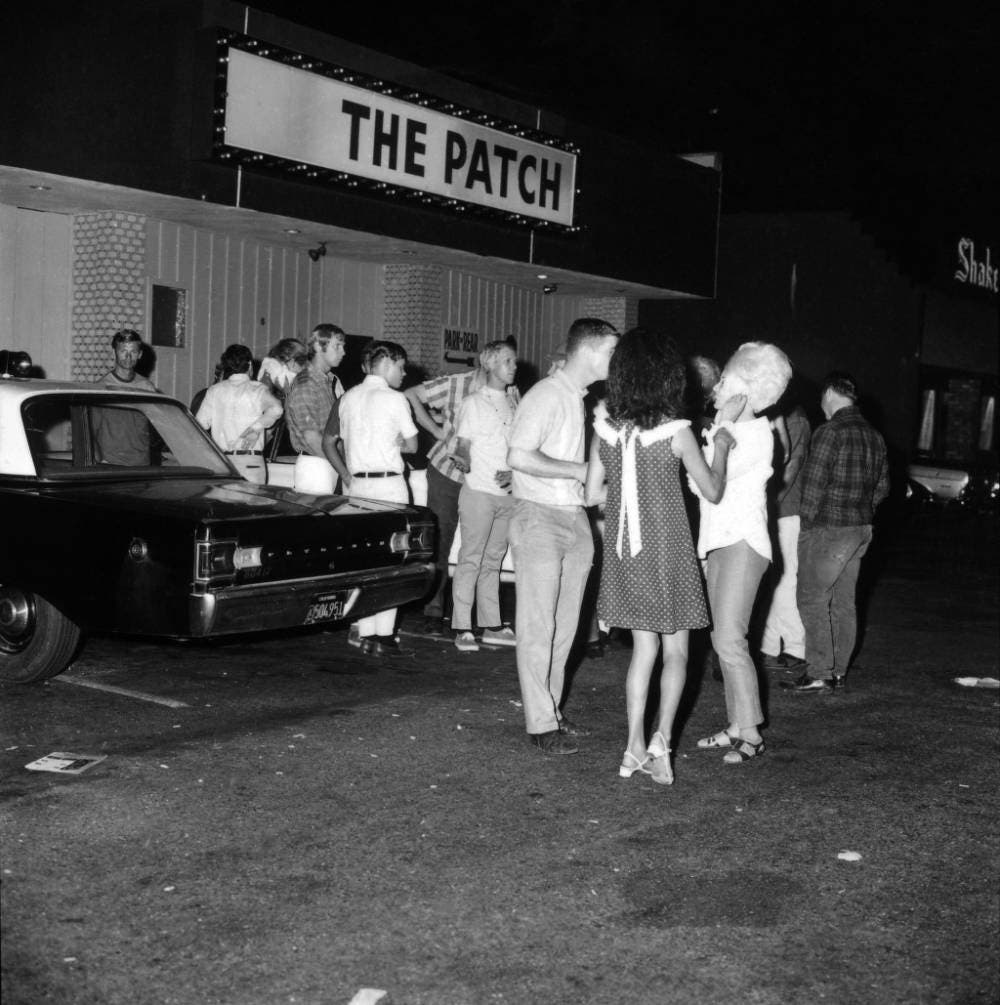
Courtesy the ONE Archives at the USC Libraries
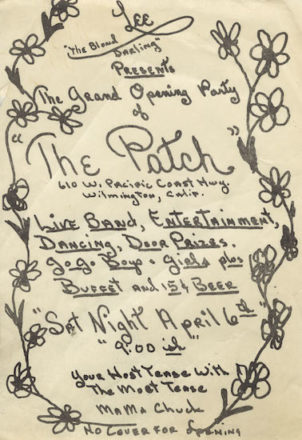
The Patch was an LGBT+ bar in Wilmington owned and managed by Lee Glaze. Glaze, known as “The Blonde Darling,” was a larger than life character with a campy personality, recognisable chuckle, and short blond hair.
Glaze had a secret signal – he would play “God Save the Queen” on the jukebox – to announce that police officers were entering the bar, allowing patrons time to comply with the discriminatory laws. On 17 August 1968, undercover cops left the bar and returned with several uniformed officers for backup, though it’s unclear what prompted this action. They fanned out and began to screen the crowd, looking for IDs that didn’t “match” the holder’s outward appearance.
In the end, police arrested two bar patrons (Tony Valdez and Bill Hasting) for lewd conduct, enraging Glaze who knew the men were innocent. He led a crowd to buy massive quantities of flowers from a nearby shop owned by one of the bar’s customers. The crowd then went to the police station and camped in the waiting room, remaining until bail was posted for the arrested men.
While the demonstrators waited, they staged a “flower power protest,” noting that the police were perplexed and speechless.
They didn’t know what to do with all the gay men waiting in the lobby.
Lee Glaze opened his bar The Patch in Wilmington in 1967 with this flyer announcing the grand opening. Photo: Q Voice News.
Books with Older LGBT+ characters
Interested in reading books starring older LGBT+ characters? Here’s a quick list to get you started:
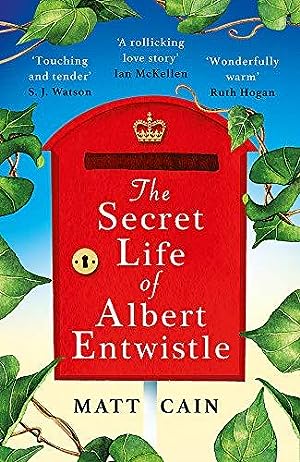
The Secret Life of Albert Entwistle by Matt Cain
Albert Entwistle was a postman. It was one of the few things everyone knew about him. And it was one of the few things he was comfortable with people knowing.
64-year-old Albert Entwistle has been a postie in a quiet town in Northern England for all his life, living alone since the death of his mam 18 years ago. He keeps himself to himself. He always has. But he’s just learned he’ll be forced to retire at his next birthday. With no friends and nothing to look forward to, the lonely future he faces terrifies him. He realises it’s finally time to be honest about who he is. He must learn to ask for what he wants. And he must find the courage to look for the man that, many years ago, he lost – but has never forgotten.
Join Albert as he sets out to find the long-lost love of his life, and has an unforgettable and completely life-affirming adventure on the way. This is a love story the likes of which you have never read before!
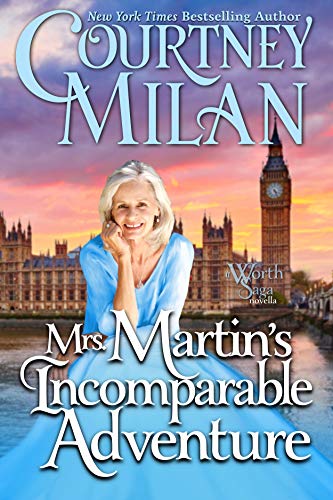
Mrs Martin’s Incomparable Adventure by Courtney Milan
Mrs Bertrice Martin – a widow, some seventy-three years young – has kept her youthful-ish appearance with the most powerful of home remedies: daily doses of spite, regular baths in man-tears and refusing to give so much as a single damn about her Terrible Nephew.
Then proper, correct Miss Violetta Beauchamps, a sprightly young thing of nine and sixty, crashes into her life. The Terrible Nephew is living in her rooming house, and Violetta wants him gone.
Mrs Martin isn’t about to start giving damns, not even for someone as intriguing as Miss Violetta. But she hatches another plan – to make her nephew sorry, to make Miss Violetta smile, and to have the finest adventure of all time.
If she makes Terrible Men angry and wins the hand of a lovely lady in the process? Those are just added bonuses.
The New Town Librarian by Kathy Anderson
Queer middle-aged librarian Nan Nethercott, a wisecracking hypochondriac with a lacklustre career and a nonexistent love life, needs to make a drastic life change before it’s too late. When she lands a job as librarian in a seemingly idyllic small town in southern New Jersey, Nan quickly discovers unforeseen challenges.
Nan’s landlady, Immaculata, launches daily intrusions from below. The library, housed in the former town jail, is overrun by marauding middle-schoolers. A mysterious reader leaves distressing messages in book stacks all over the library. Thomasina, the irresistible butch deli owner, is clearly a delicious affair and not the relationship Nan craves.
There’s no turning back though. Nan must come up with her own wildly unorthodox solutions to what the town and its people throw at her and fight for what she wants until she makes a shiny new life – one with her first true home, surprising friends, a meaningful career, and a promising new love.
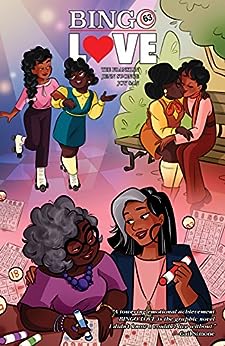
Bingo Love by Tee Franklin
When Hazel Johnson and Mari McCray met at church bingo in 1963, it was love at first sight. Forced apart by their families and society, Hazel and Mari both married young men and had families. Decades later, now in their mid-’60s, Hazel and Mari reunite again at a church bingo hall. Realising their love for each other is still alive, what these grandmothers do next takes absolute strength and courage. Bingo Love is a touching story of love, family and resiliency that spans over 60 years.
A Tale of Two Florists by Brenna Bailey
Minnie Thomas wouldn’t change a thing. The septuagenarian sees her closest friend every day, she owns the most successful (and only) flower shop in Juniper Creek, and she loves her star employee, Kat, like family. But when Kat inexplicably quits and Minnie’s friend goes out of town, Minnie’s stable world tilts off-kilter – especially when Kat’s newly arrived free-spirited grandmother opens a flower shop just down the street.
Eleanor Lennox is determined to embrace life again and get to know Kat better. She promised her late wife she would open a flower shop, but she never counted on resistance from Kat’s infuriating former employer. When the mayor asks the two of them to work together on the upcoming Sunflower Festival, Eleanor tries to smooth things over for Kat’s sake – but the feisty florist only works harder to run her out of town. Well, two can play that game.
After connecting during a road trip to pick up flower barrels for the festival, Minnie and Eleanor form a budding relationship – which shrivels when Minnie’s friend announces she’s moving. Will Minnie cling to the past so tightly that she misses out on the beauty the present has to offer her – love with Eleanor?
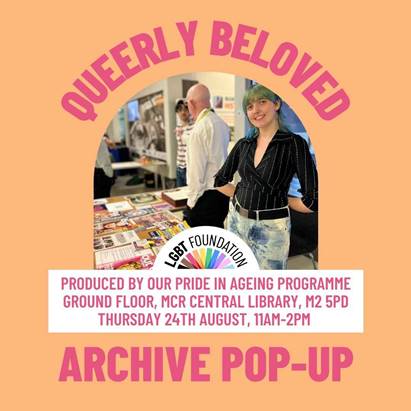
Pop in to Manchester Central Library on Thursday, 24 August (11.00am – 2.00pm) to see items from the archives produced by the Pride in Ageing programme at the LGBT Foundation.










 Out in the City