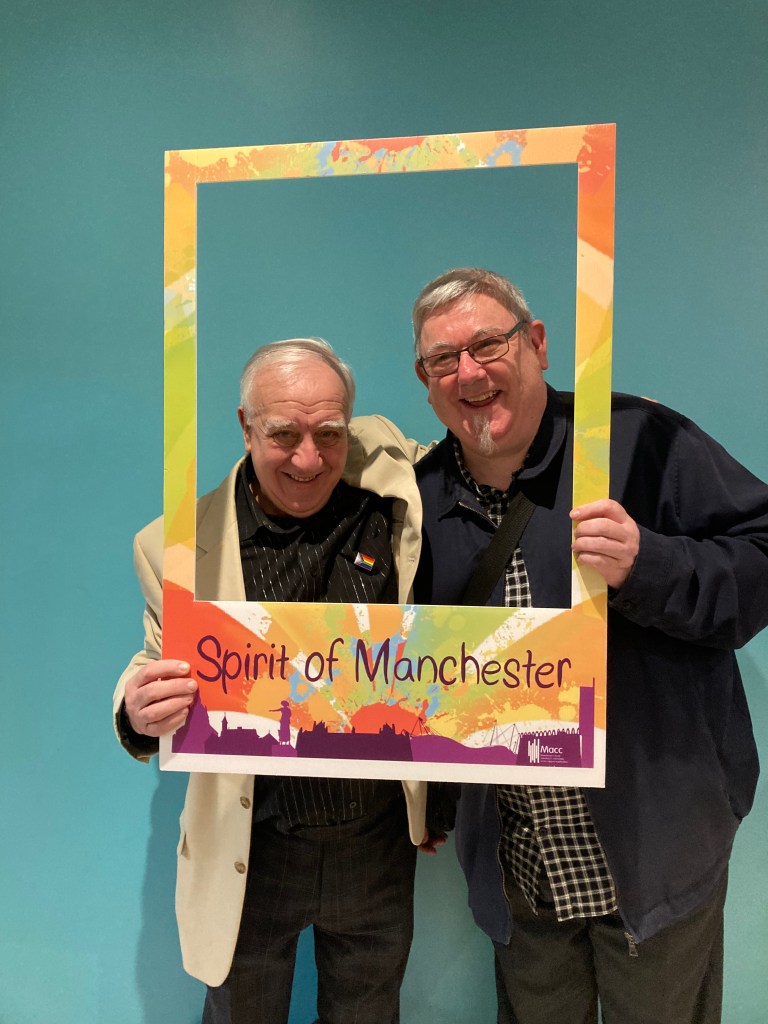
The Spirit of Manchester 2023 Awards ceremony took place on Thursday 5 October, and was also livestreamed on YouTube!
Under various categories Manchester’s voluntary, community and social enterprise sector were shortlisted and a film showed the brilliant work they did.
On our smart phones we voted for the organisation we would like to win an award. The votes were counted straight away and the award presented by the Lord Mayor of Manchester.
The Derek Jarman Pocket Park with Pride in Ageing and the LGBT Foundation were one of the shortlisted projects. Tables were named after LGBT+ Mancunians to honour the LGBT+ communities in Manchester.
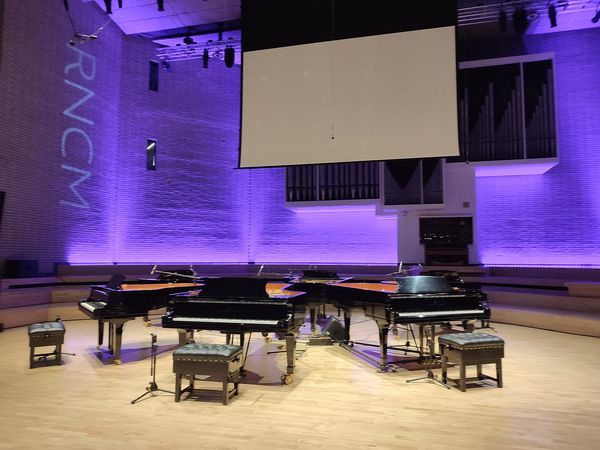
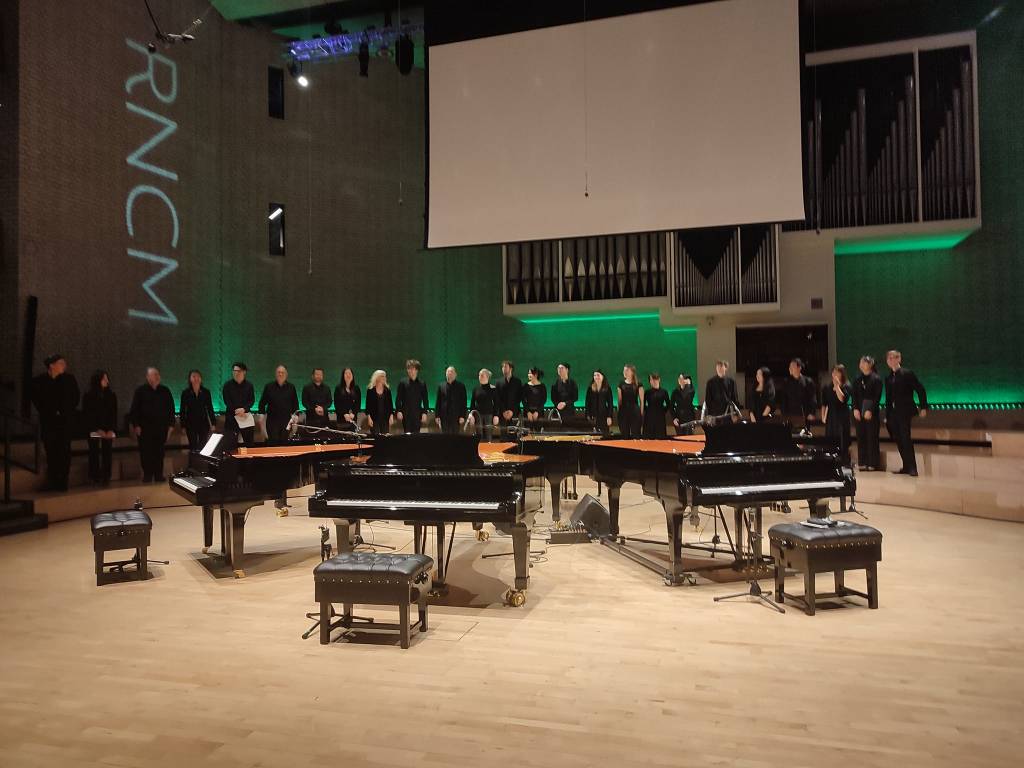
RNCM Piano Ensemble
The Royal Northern College of Music (RNCM) is a conservatoire located in Manchester, and is one of the UK’s busiest and most diverse public performance venues.
Out In The City members attended a Thursday lunch time concert – a riveting performance of John Psathas’ Voices at the End with six pianos.
It was a spectacular live performance fusing video, and recorded sound for a musical exploration about human civilisation and our relationship with the natural world. Pianist Dawn Hardwick performed side-by-side with staff and student pianists to bring this incredible work to life.
National Coming Out Day
Wednesday, 11 October is National Coming Out Day. Be proud of who you are and your support for LGBT+ equality.
Sharing our authentic selves with others is not always safe or easy, and is not a one-day event – but when possible, it can be an extraordinarily powerful key to breaking down the barriers we face as LGBT+ people.
History of National Coming Out Day
National Coming Out Day was founded on 11 October 1988, by Robert Eichberg, a psychologist, and Jean O’Leary, an LGBT+ rights activist. It commemorates the anniversary of the National March on Washington for Lesbian and Gay Rights, which took place in 1987.
The day was established to promote visibility and acceptance for LGBT+ individuals and to encourage a more inclusive society.
Since its inception, National Coming Out Day has become an internationally recognised event, fostering a culture of acceptance and support for LGBT+ individuals.
In a world that often marginalises and excludes the LGBT+ community, attempting to diminish our worth and undermine our fabulousness, this Day feels more important now than ever.
It serves as a powerful reminder that we have always been here and we will continue to exist proudly and unapologetically no matter the voices that try and silence us. We are here to stay.
Right now, queer identities are being policed, politicised, debated and in the most extreme cases even murdered.
We need justice for Brianna Ghey, a 16-year-old transgender girl who was stabbed to death in Culcheth, near Warrington. Her entire life was taken away from her through hate.
At a time where people believe our existence to be a threat, to live your life authentically no matter the consequences, is the most courageous act you can do.
We won’t allow closets, repression and discrimination to be the norms in our life. Our community continues to stay resilient. We are still coming together, celebrating ourselves and advocating for our rights. We are not going anywhere.
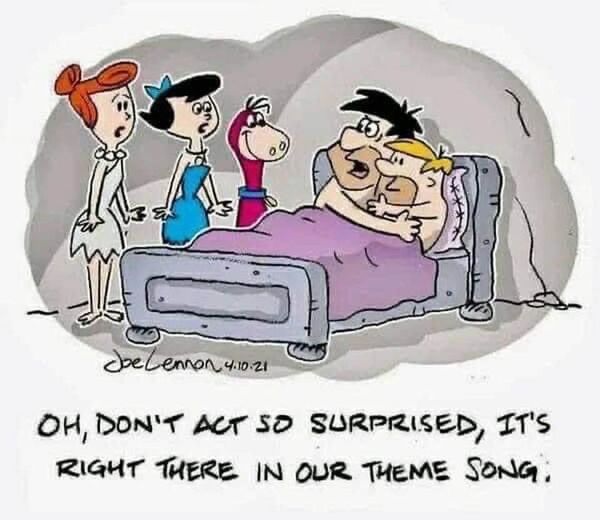
Yabba Dabba Doo …
We’ll have a gay old time The Flintstones Flintstones, meet the Flintstones They’re the modern stone age family From the town of Bedrock They’re a page right out of history …
Since 2019 the Pride in Ageing programme at LGBT Foundation has been delivering a range of initiatives and opportunities for our LGBTQ+ communities who are over 50 and are living in Greater Manchester.
Watch the video here:
The Pride in Ageing Programme has been nominated for the Spirit of Manchester Award based on the fantastic work it has been doing with the Derek Jarman Pocket Park at Manchester Art Gallery.
Join us online for the Spirit of Manchester 2023 Awards!
The Spirit of Manchester 2023 Awards ceremony is taking place on Thursday 5 October. So even if you won’t be at the face to face event you can get involved and vote for the winners by joining in on the livestream on YouTube!
You can watch live all the shortlisted films showing the brilliant work in Manchester’s voluntary, community and social enterprise sector and vote for who you would like to win an Award. The votes will be counted straight away and the Award presented by the Lord Mayor of Manchester.
We will be streaming live on YouTube at 7.00pm – so come and watch us online!
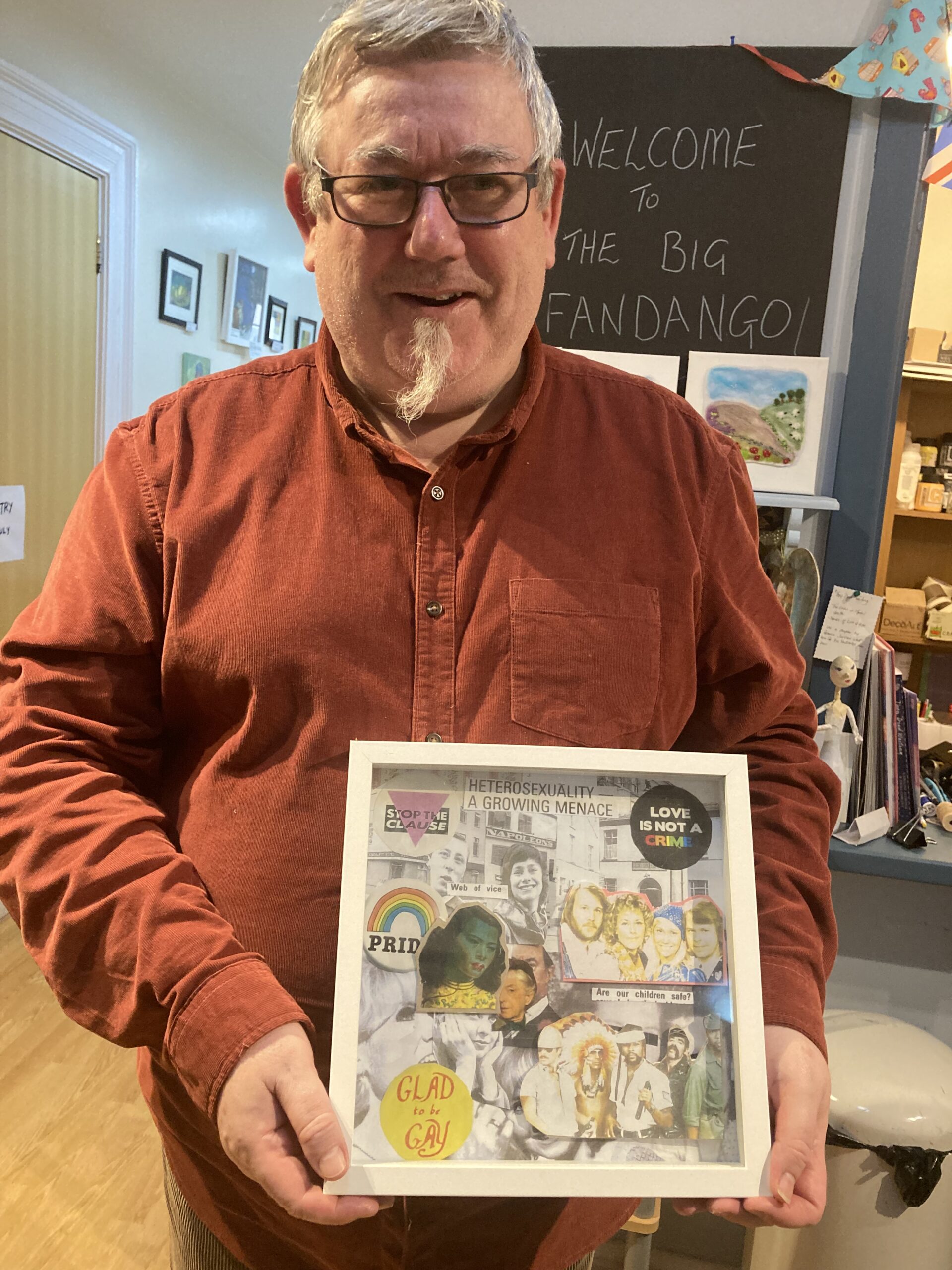
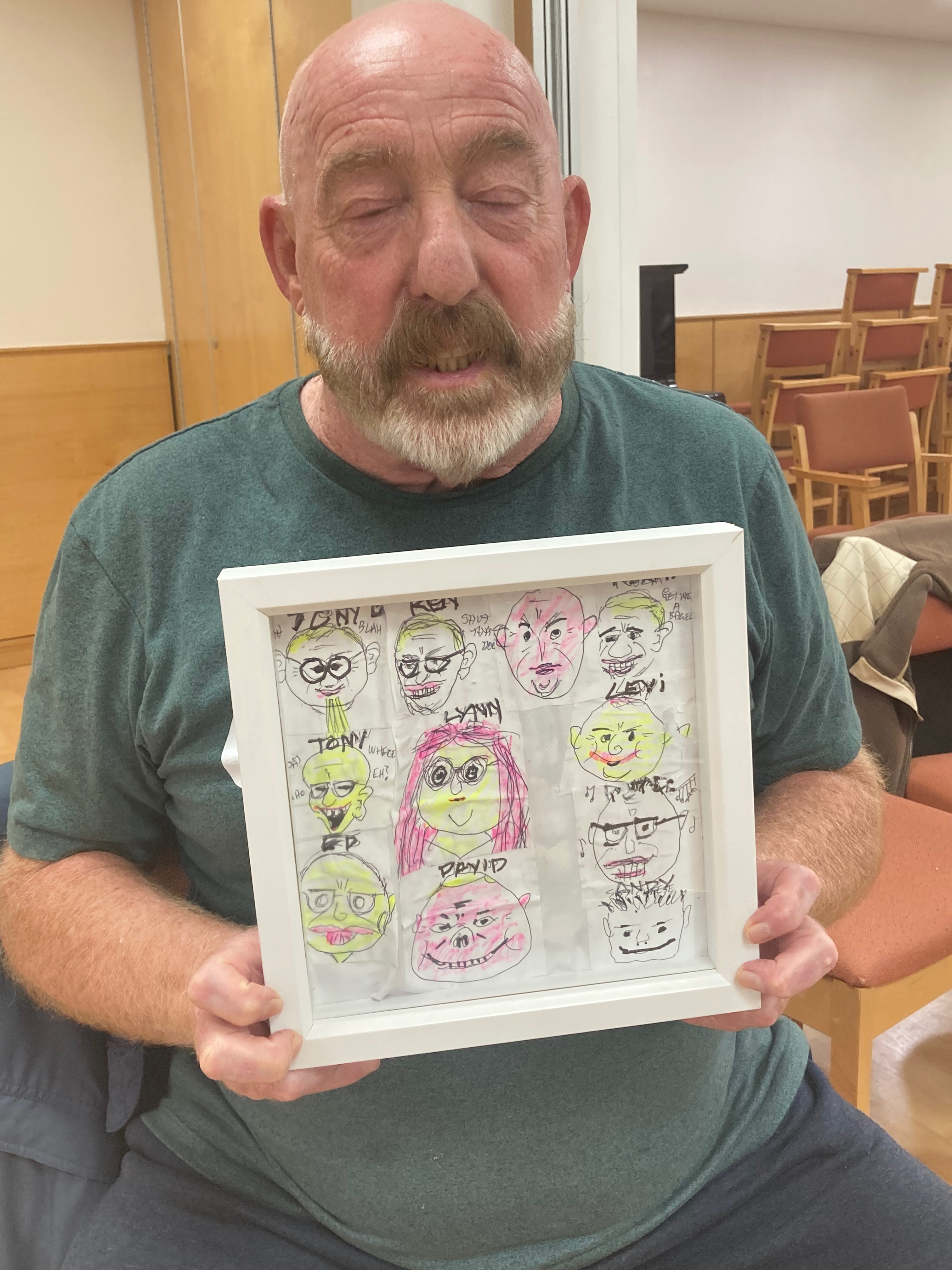
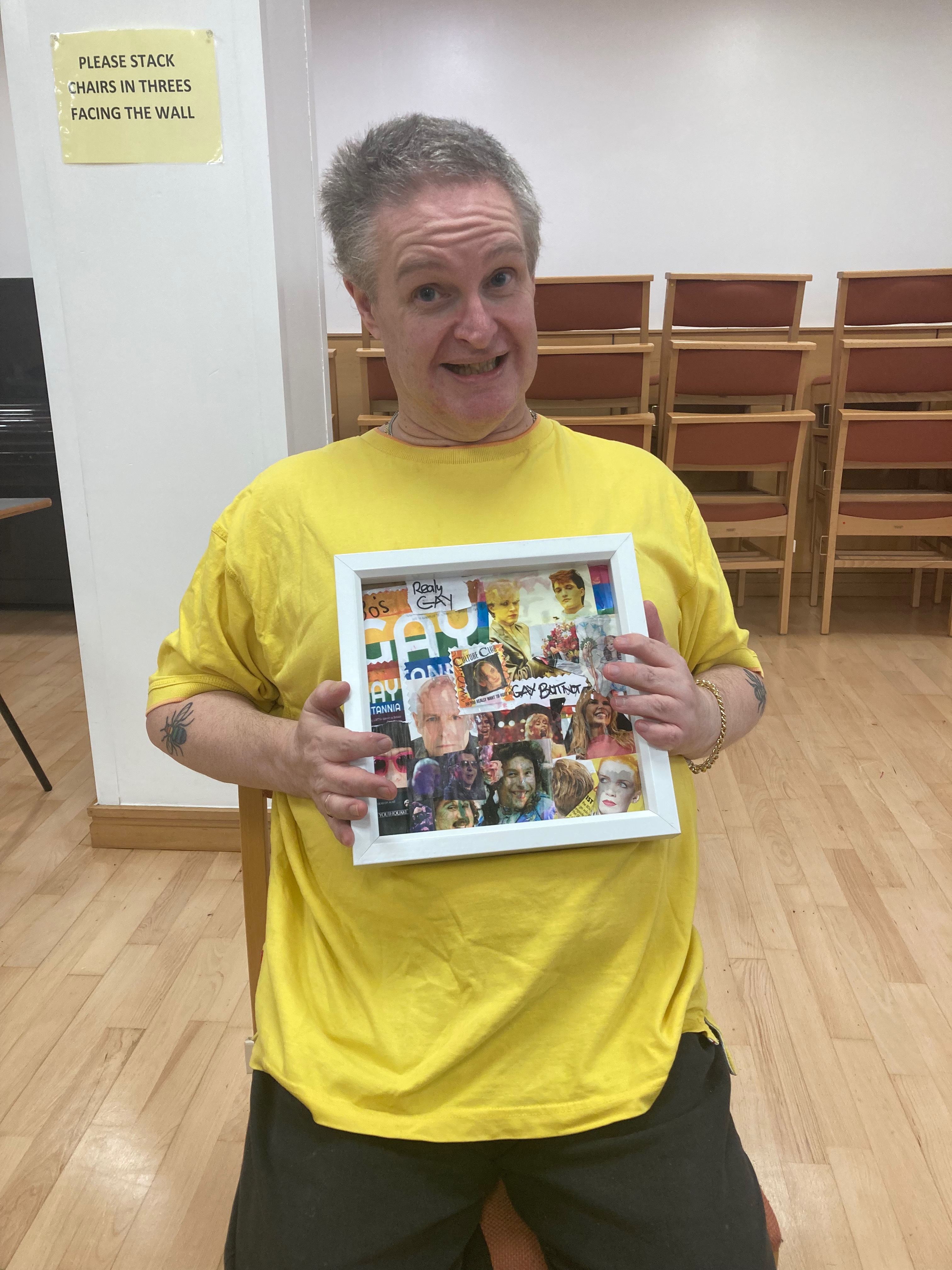
Collages and Teapots
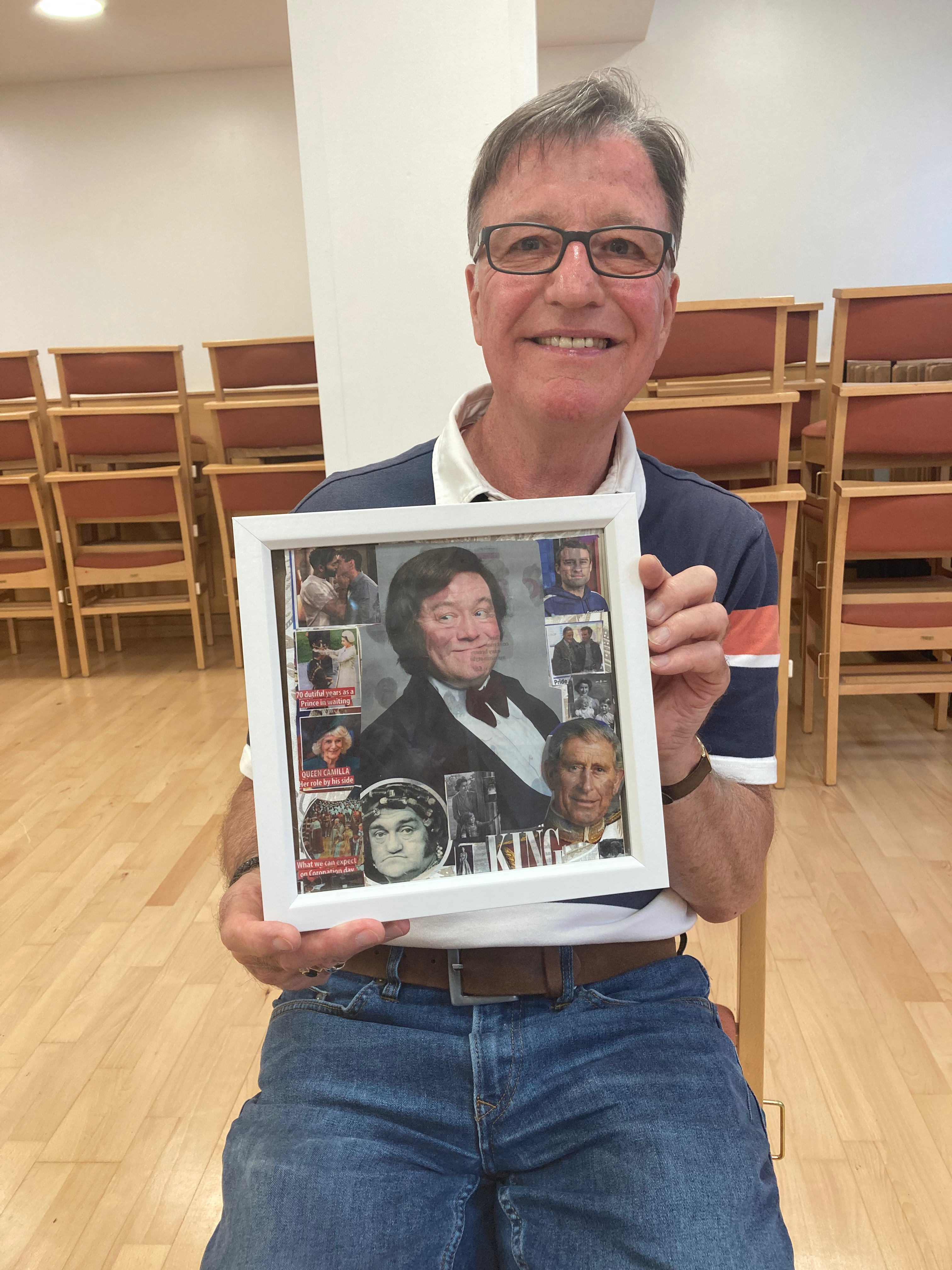
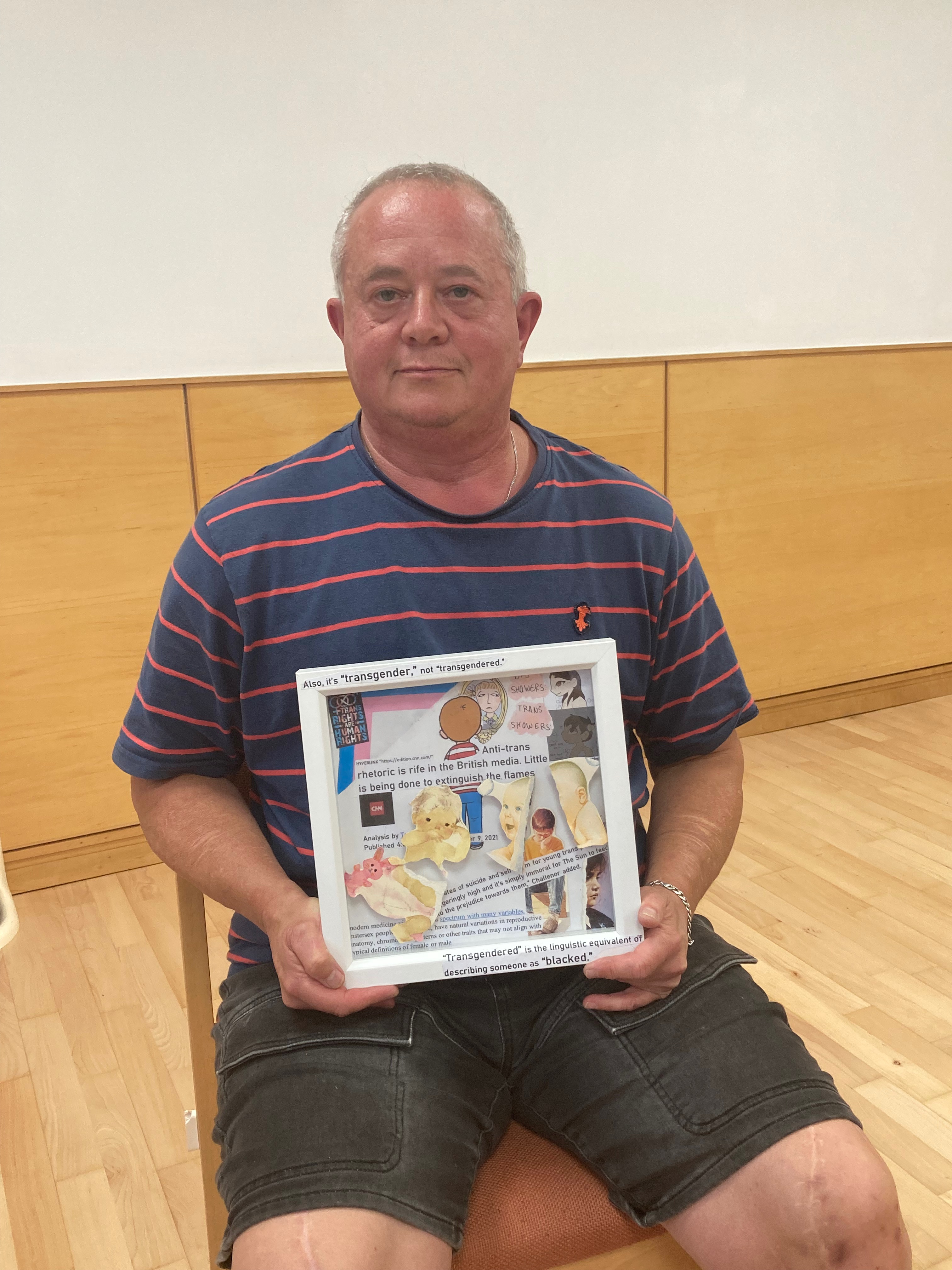
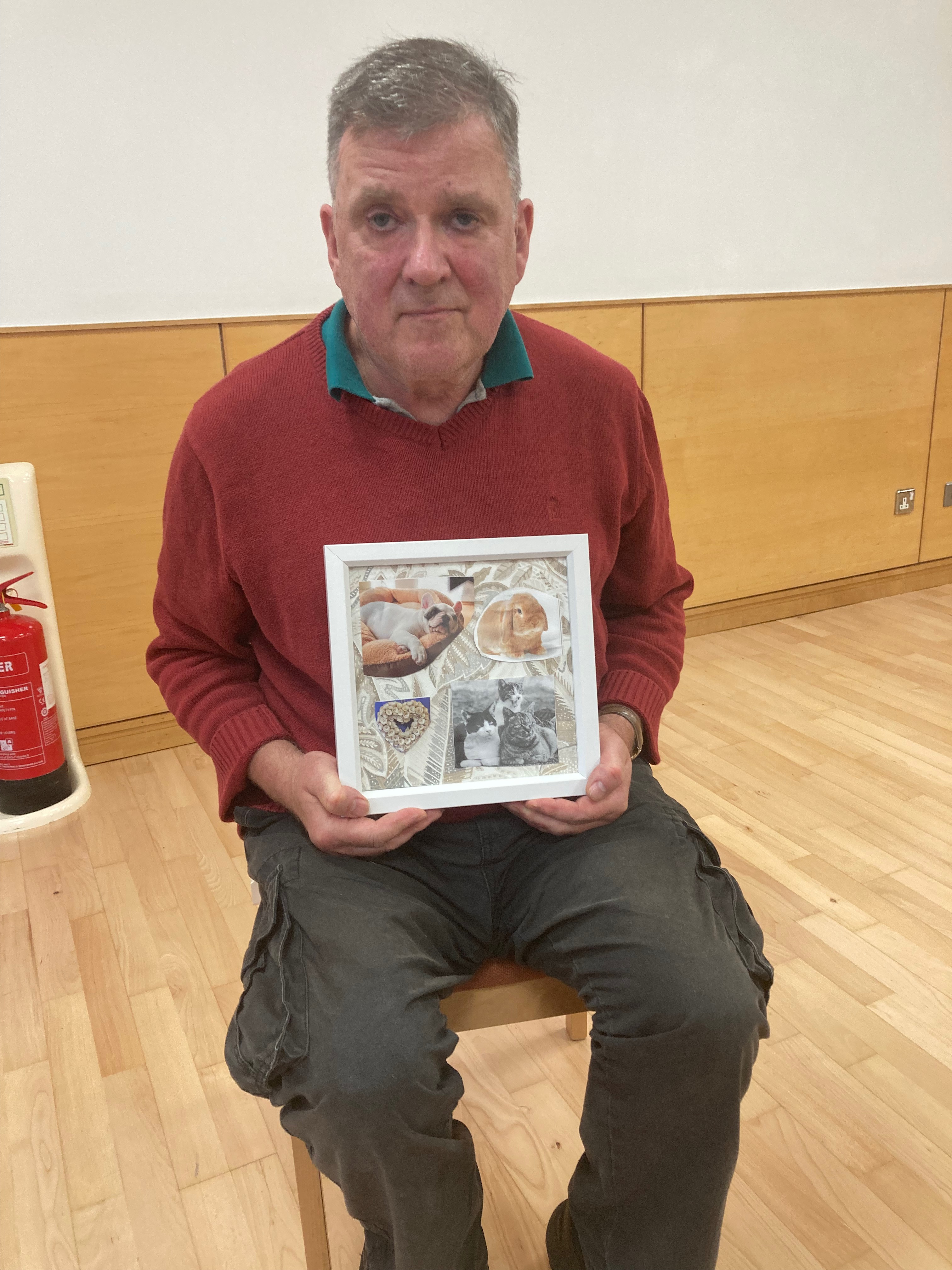
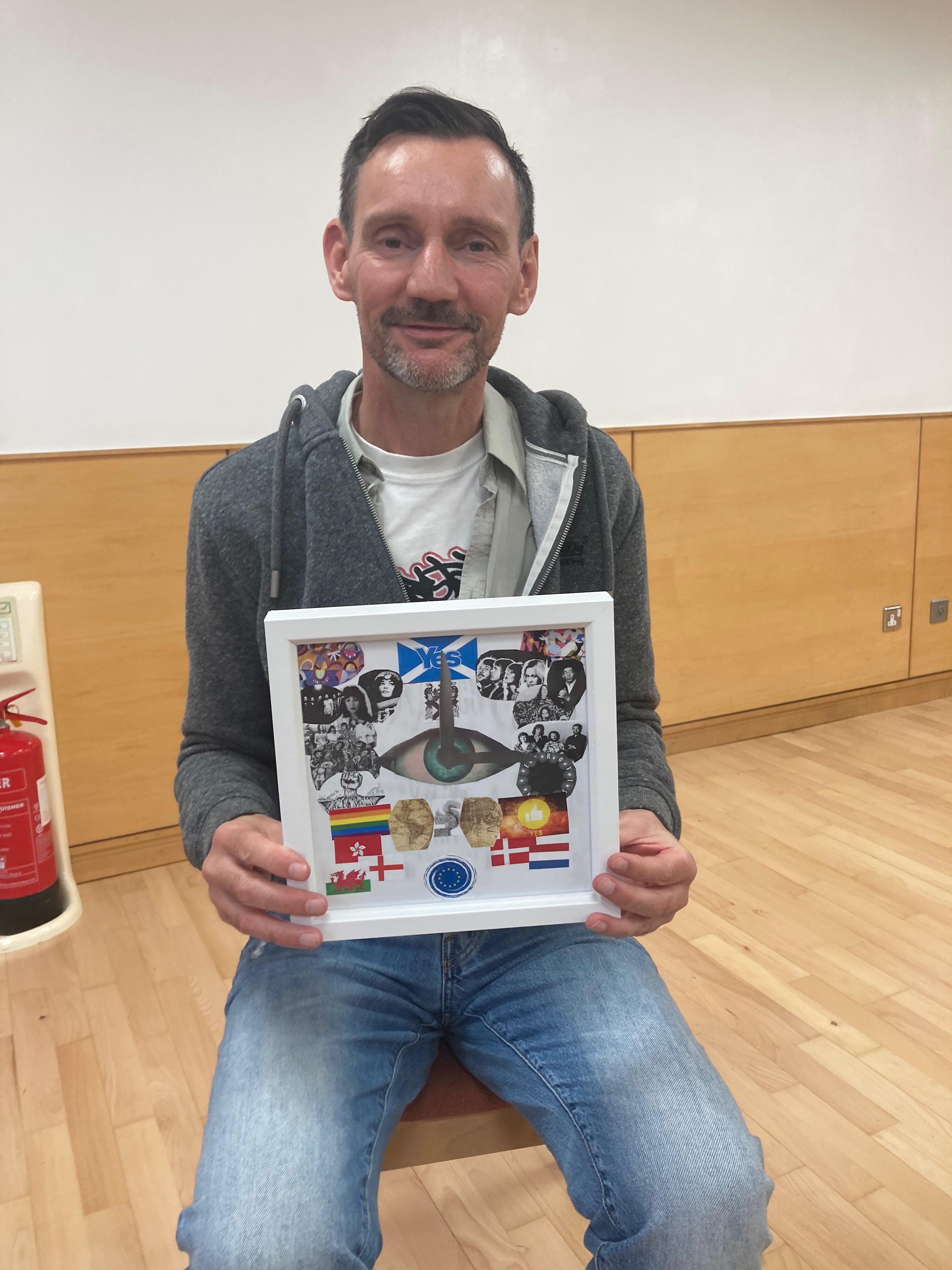
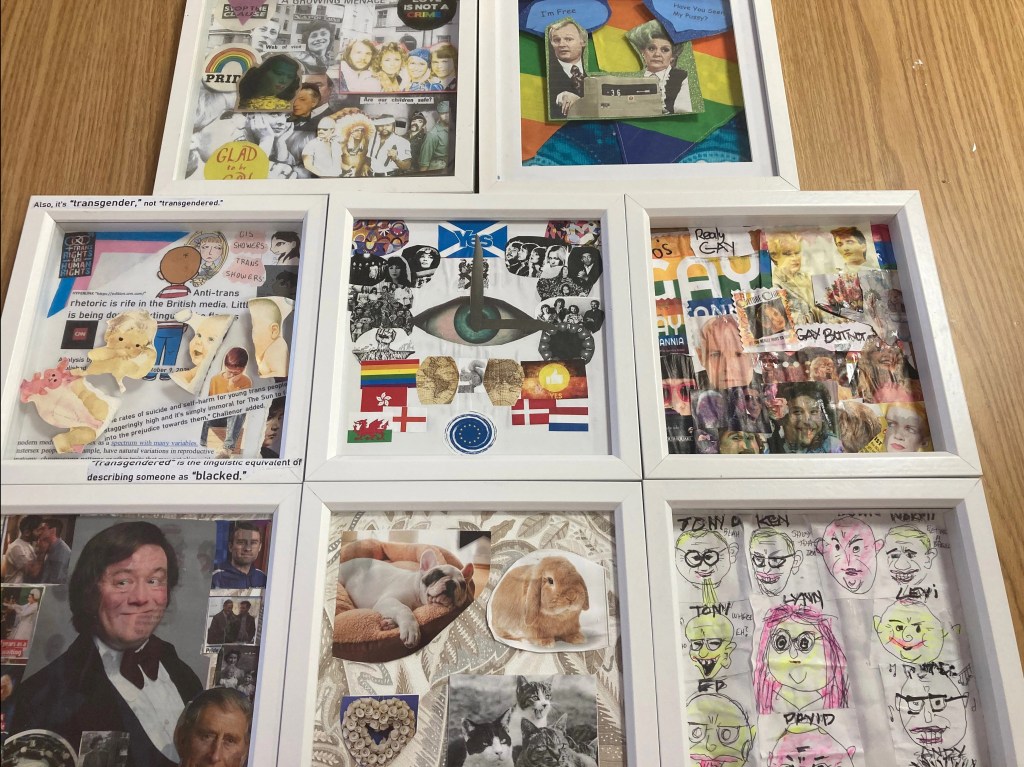
Tying in with the International Day of Older Persons, which recognises and celebrates the positive contributions of older people in society, we spent an afternoon making collages:
Time for Tea
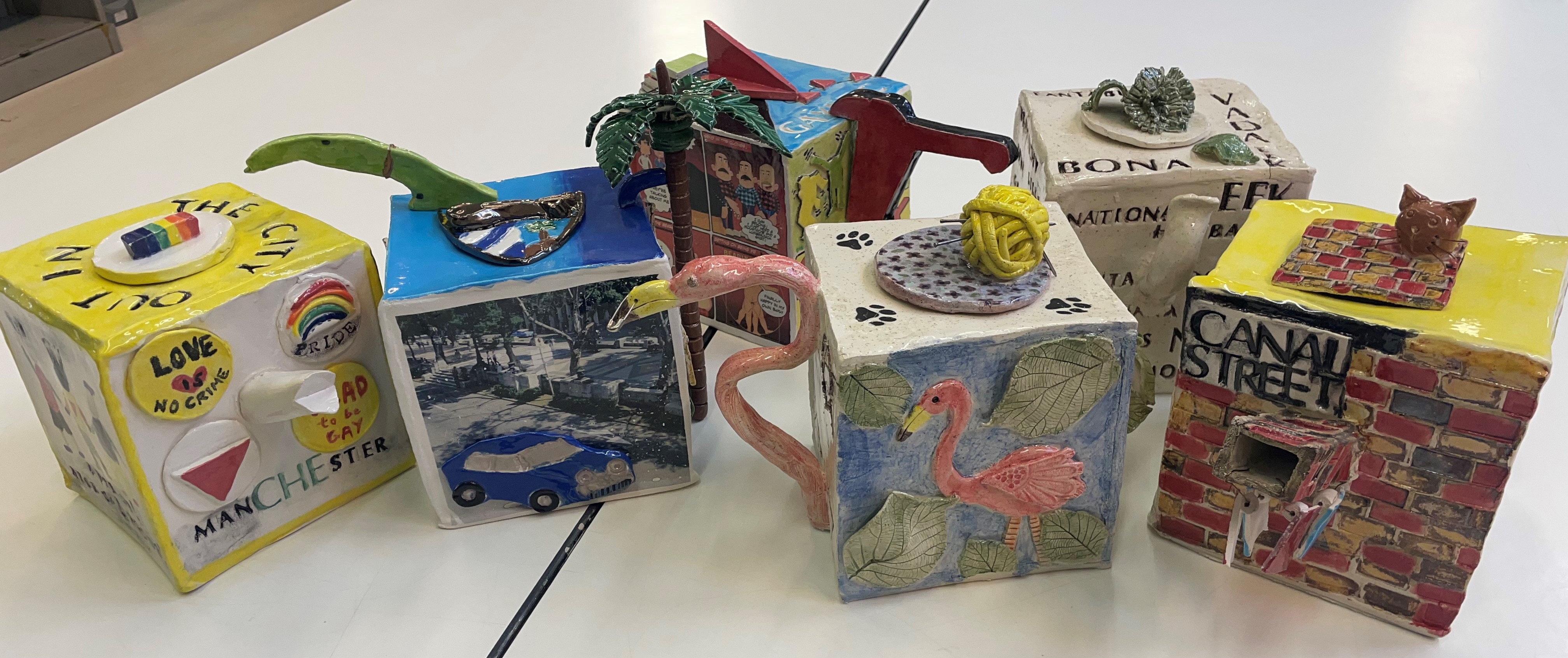
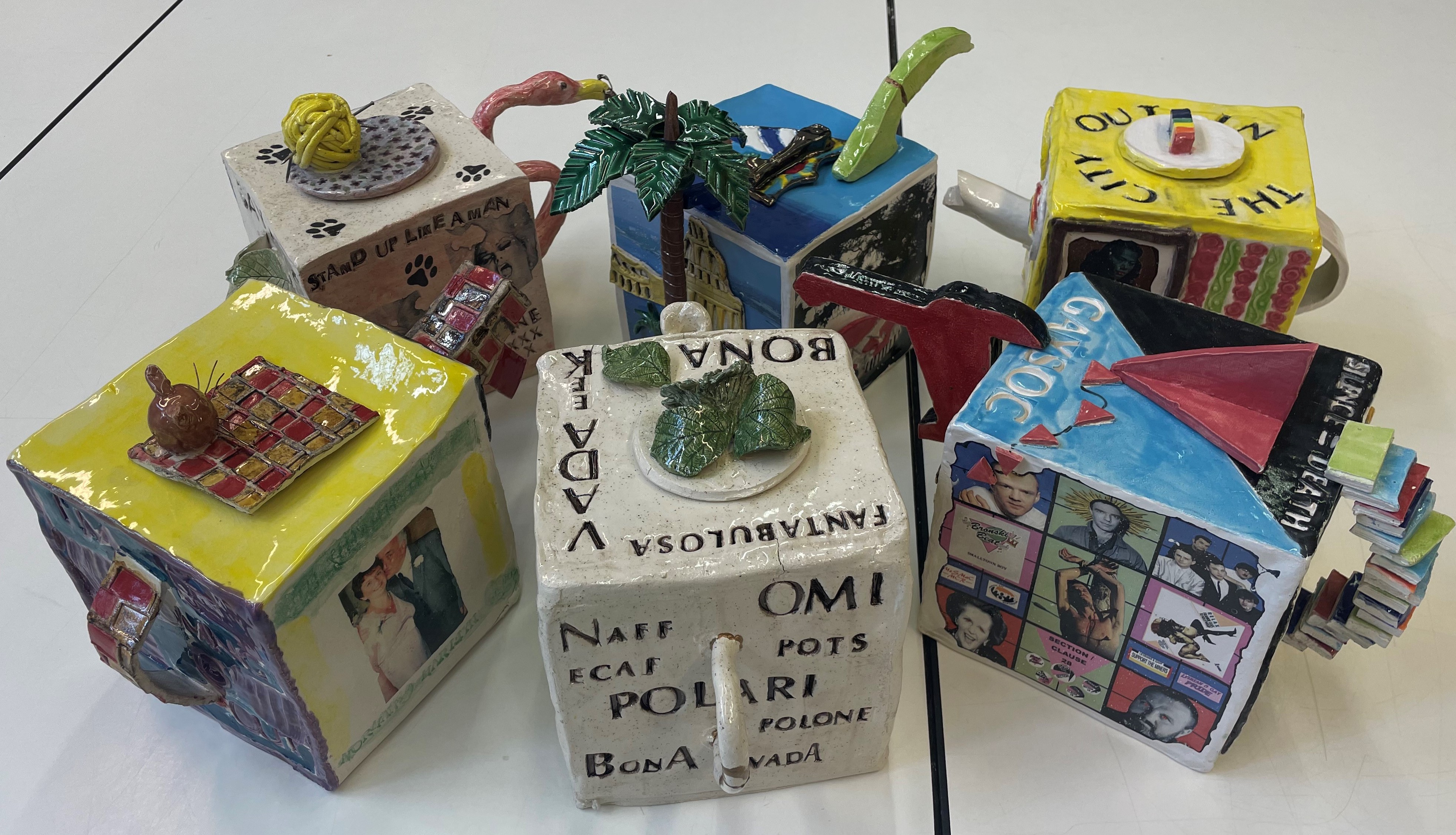
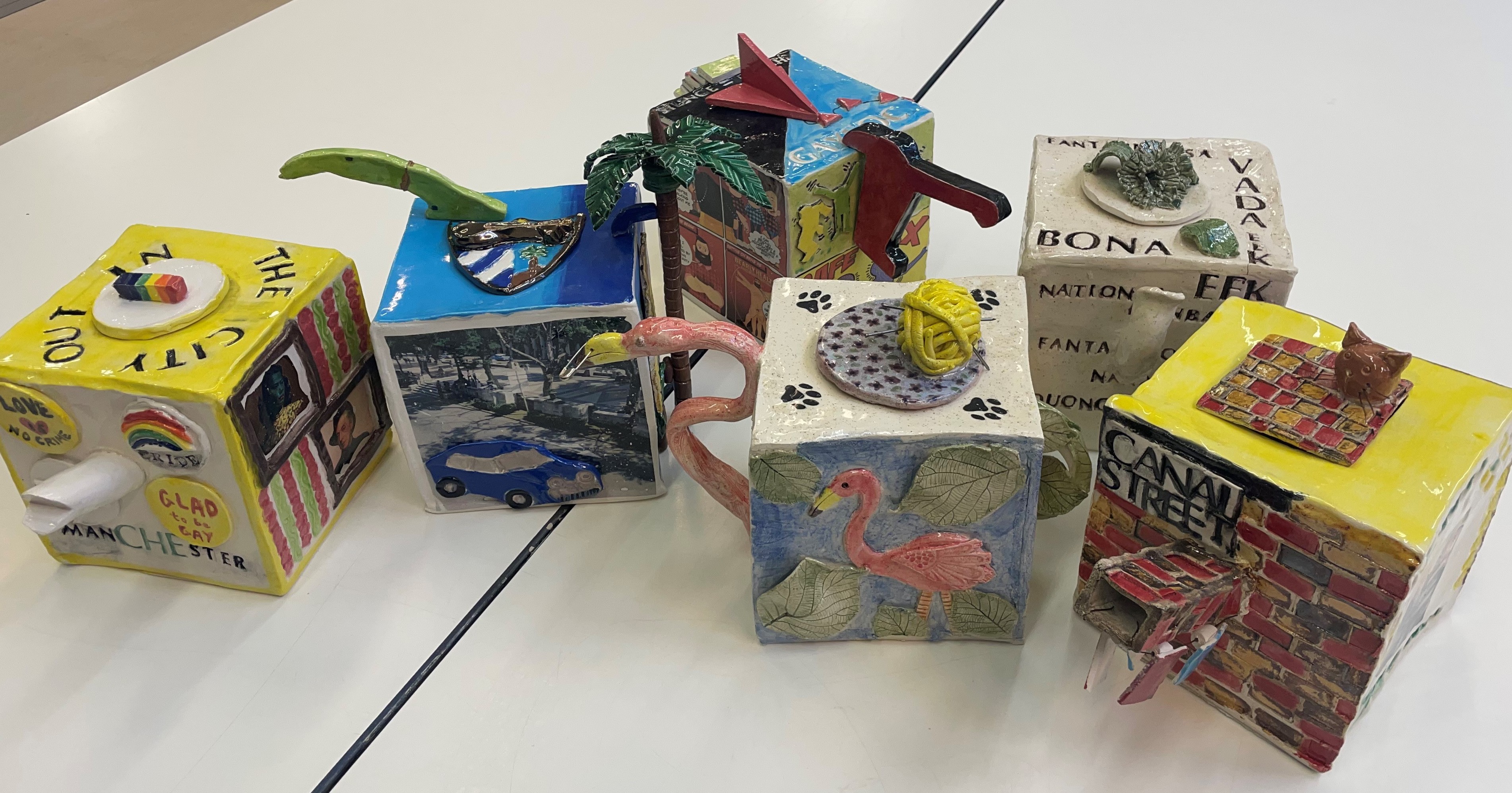
The work displayed in this exhibition was the result of an Arts for Good Health course celebrating LGBT+ history and inclusivity.
Participants involved in the project used image, shape, colour and texture to design their own individual teapot, inspired by stories, memories and LGBT+ heroes, culture and history from the 1960s, 1970s and 1980s. Each teapot exhibited tells its own unique story. As well as the amazing work the exhibition is also an example of the power of connecting through creativity and sharing our stories and memories with a good helping of sparkle and glitter.
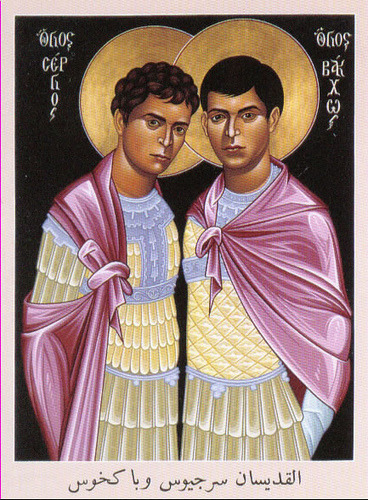
Saints Sergius and Bacchus(martyred circa 303)
Saints Sergius and Bacchus are ancient Christian martyrs who were tortured to death in Syria because they refused to attend sacrifices in honour of Jupiter.
Recent attention to early Greek manuscripts has also revealed that they were openly gay men and that they were lovers. These manuscripts are found in various libraries and indicate an earlier Christian attitude toward homosexuality.
After their arrest, the two saints were paraded through city streets in women’s clothing, treatment that was meant to humiliate them as officers in the Roman army. They were then separated and each was tortured. Bacchus died first and appeared that night to Sergius, who was beginning to lose heart. According to the early manuscripts, Bacchus told Sergius to preserve, that the delights of heaven were greater than any suffering, and that part of their reward would be to be re-united in heaven as lovers.
The feast of these saints is 7 October. The inscription at the bottom of the icon is their names in Arabic. The saints are particularly popular throughout the Mediterranean lands, in Latin America, and among the Slavs. For nearly a thousand years they were the official patrons of the Byzantine armies, and Arab nomads continue to revere them as their special patron saints.
Around the world, LGBT+ older adults experience rampant human rights violations based on sexual orientation and/or gender identity and the stigma of ageism.
While the specifics of LGBT+ ageing vary from country to country and region to region, older members of the LGBT+ community commonly face widespread discrimination in care, services, and housing and are at acute risk for severe social isolation and economic insecurity.
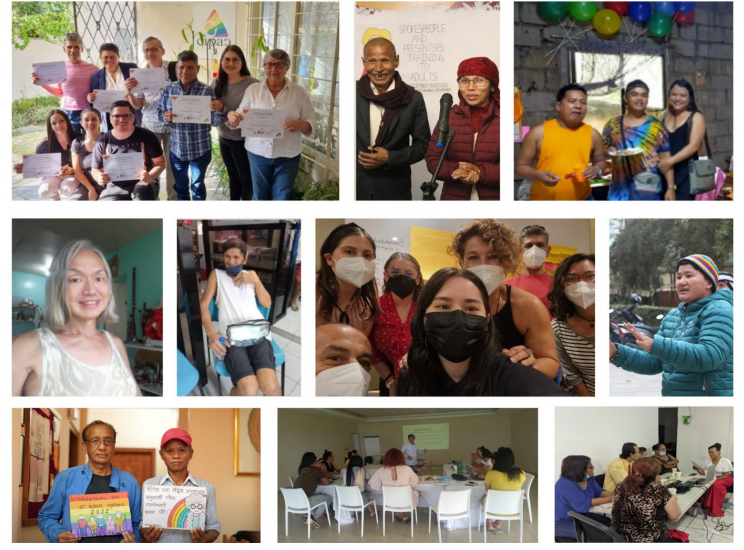
Created in partnership with SAGE (US), OutRight International (US), Mitini (Nepal), EnGendeRights (the Philippines), CIPAC (Costa Rica) and Aspidh (El Salvador) the LGBTI Elders Advancing Initiative (LEAP) is a cross-regional initiative designed to strengthen the human rights protections of LGBT+ older adults and build a more robust and well-connected global LGBT+ ageing movement.
The initiative is informed by three main objectives:
Build awareness of LGBT+ older adults and their needs through country-based data collection, documentation and dissemination of information to targeted audiences.
Improve the ability of LGBT+ organisations to work in support of LGBT+ older adults and position LGBT+ older adults as self-advocates.
Support discrimination protections and health equity for LGBT+ older adults through national policy reform agendas.
“Our LGBTQ+ elders have shared that being part of this initiative has encouraged them to build more social support networks and start speaking openly about their shared experiences of ageing,” said representatives from CIPAC. “Not only are our older adults growing in their ability to advocate for their own needs, but they are also building friendship, solidarity, and trust among their peers. For a population that faces extreme isolation and loneliness, this kinship has been lifesaving.”
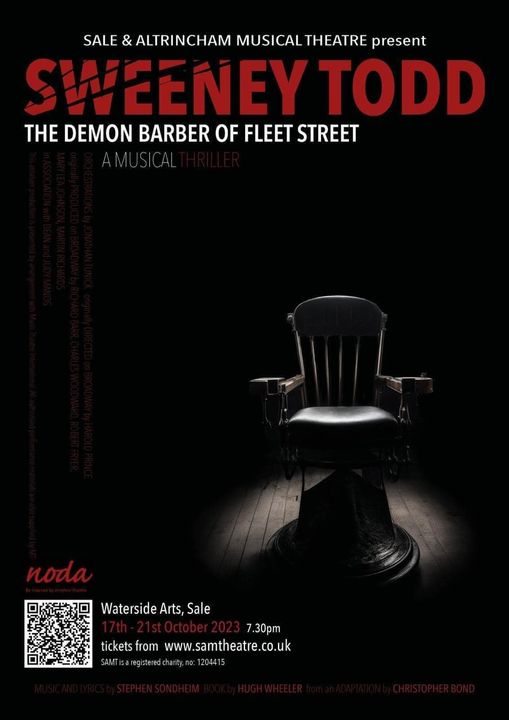
Get ready for a hair-raising experience like no other as the infamous Sweeney Todd comes to the stage at the Waterside Theatre! This gripping and darkly humorous musical, directed by a renowned team, promises to captivate audiences from start to finish.
Step into the shadowy streets of 19th-century London, where the vengeful Sweeney Todd, a once-respected barber, seeks retribution for the wrongs done to him and his family. With his trusty razor in hand, he embarks on a chilling spree of slicing throats and baking the victims into meat pies, alongside his cunning accomplice, Mrs Lovett.
Prepare to be enthralled by the powerful performances, spine-tingling music, and evocative set designs that bring Victorian London to life. Stephen Sondheim’s haunting melodies, including classics like “The Ballad of Sweeney Todd” and “A Little Priest,” will send shivers down your spine and linger in your mind long after the curtains close.
This must-see production boasts a talented cast of seasoned actors, who will transport you into the twisted world of Sweeney Todd and his quest for justice. With its mix of macabre humour, suspenseful storytelling, and unforgettable tunes, this musical is a theatrical experience that will leave you on the edge of your seat.
Running from 17 to 21 October 2023. Book your tickets today and immerse yourself in the dark allure of Sweeney Todd: The Demon Barber of Fleet Street!
Only 9 new cases of HIV were reported in the city last year.
Amsterdam, the capital city of the Netherlands seems well on its way to accomplishing its goal of zero HIV transmissions by 2026. Only nine cases of HIV were reported in Amsterdam last year, thanks to heavy investment in pre-exposure prophylactics (PrEP), a drug protocol that prevents HIV transmission, and other HIV-prevention efforts.
While scientists have announced that a half dozen people may have been cured of HIV worldwide, the process is painful and expensive. It generally requires a bone marrow transplant after a cancer diagnosis.
Dutch health authorities have found a way to circumvent the curing process that prioritises prevention rather than treatment.
The Dutch AIDS Fund’s report of only nine new cases proves that the city’s investment in PrEP and other prevention strategies, which started in 2019, has had an impact. 128 people in Amsterdam were infected in 2019. PrEP can be used by people who don’t have HIV to prevent the virus from gaining hold of their immune system. When taken by people with the virus, it lowers the viral load to undetectable levels and makes it untransmissible.
Health authorities worldwide have particularly recommended the drug for gay men, sex workers and other people who are at risk for transmission.
In addition to PrEP, health officials have collaborated with politicians and HIV-care workers to create and promote easily accessible services and programmes for key at-risk populations, including men who have sex with men (MSM), people with a migration background and people who inject drugs. Many clinics and hospitals in the city offer HIV testing and immediately provide anyone who tests positive with medication to lower viral loads to undetectable (and thus, untransmittable) levels.
According to Aidsfonds-Soa Aids Nederland, the number of new HIV infections in the city had decreased by 95% since 2010.
Approximately 98% of city residents living with HIV have been diagnosed, 95% of those have received medication treatment and 96% of those on treatment have suppressed the virus to untransmittable levels.
“After more than 40 years of working together to stop the spread of HIV, this is great news,” said Mark Vermeulen, the executive director of Aidsfonds-Soa Aids Nederland. “It really is possible to end HIV and AIDS. Amsterdam is proving to everyone that it can be done.”
So far, only three people worldwide have been cured of HIV. Three others have been in remission and potentially cured.
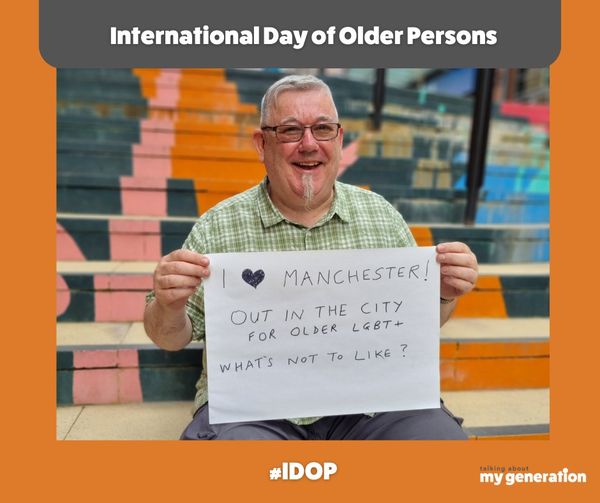
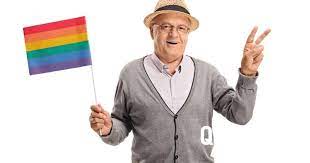
Sunday, 1 October was International Day of Older Persons. Tony loves being part of the Out In The City group for older LGBT+ people.
Bridgewater Hall
We’re delighted to advise that The Bridgewater Hall has offered us 12 FREE tickets to various performances from the International Concert Series, BBC Philharmonic and Manchester Mid-day Concerts Society at The Bridgewater Hall.
Monday, 6 November – 7.30pm – International Concert Series – Bridgewater Hall (12 FREE tickets)
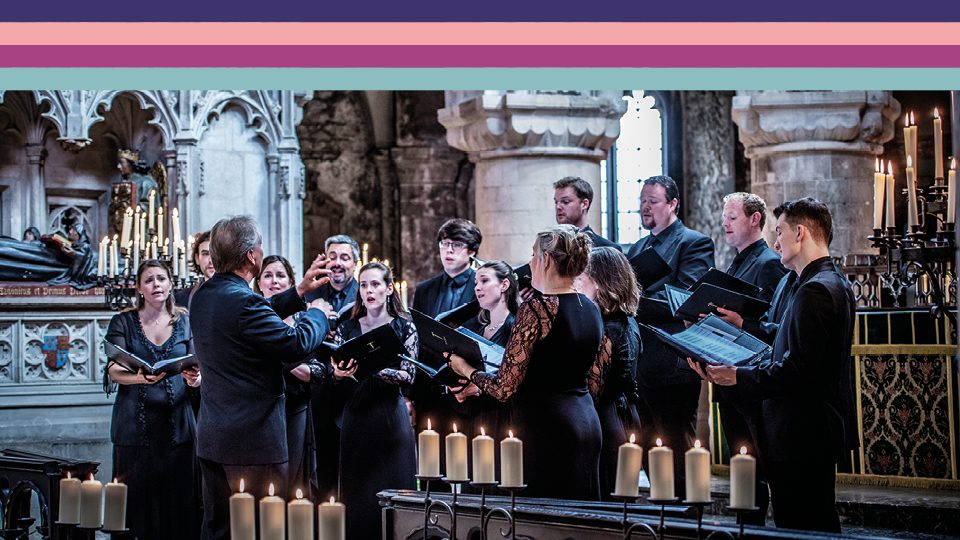
Tenebrae – A Prayer for Deliverance
One of the world’s finest choirs returns to Manchester with a beautifully crafted collection of musical farewells:
Holst The Evening Watch Cecilia McDowall Standing as I do before God Francis Pott The Souls of the Righteous Caroline Shaw And the Swallow Bennett A Good-Night Vaughan Williams Rest; Valiant-for-Truth Joel Thompson A Prayer for Deliverance Tavener Song for Athene Pearsall Lay a Garland Arthur Sullivan The Long Day Closes Howells Requiem Harris Bring us, O Lord
Monday, 13 November – 1.10pm – Manchester Mid-day Concerts Society – Bridgewater Hall – 12 FREE tickets
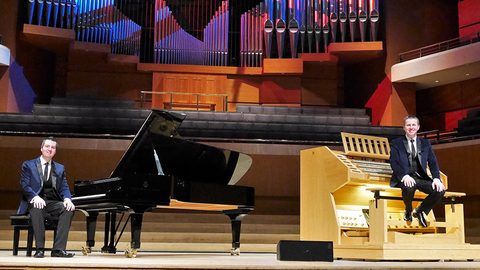
Scott Brothers Duo
Tchaikovsky arr. Scott Sleeping Beauty Waltz Richard Addinsell Warsaw Concerto Saint-Saëns arr. Scott Danse Macabre Mozart arr. Scott Andante from Piano Concerto No. 21 K.467 ‘Elvira Madigan’ Liszt arr. Scott Hungarian Rhapsody No.2
Saturday, 25 November – 7.30pm – BBC Philharmonic – Bridgewater Hall – 12 FREE tickets
The Spirit of Life
John Storgårds conductor/violin Alexandra Dariescu piano
Copland Fanfare for the Common Man James Lee III ‘Shades of Unbroken Dreams’ (BBC commission: UK Premiere) Sebastian Fagerlund Helena’s Song (BBC commission: UK Premiere) Nielsen Symphony No. 4, ‘The Inextinguishable’
Saturday, 2 December – 7.30pm – BBC Philharmonic – Bridgewater Hall – 12 FREE tickets
Beethoven
Sir Andrew Davis conductor
Tippett The Rose Lake Humperdinck Hansel and Gretel – selection Beethoven Symphony No. 8 in F major
Tuesday, 5 December – 1.10pm – Manchester Mid-day Concerts Society – Bridgewater Hall – 12 FREE tickets
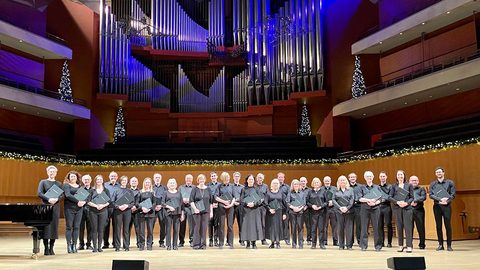
Manchester Chamber Choir
Manchester Chamber Choir return to the Middays with a programme to celebrate the arrival of Advent, featuring music by William Byrd, Peter Philips, James MacMillan, Gabriel Jackson and Jan Sandström, amongst others.
Friday, 12 January – 1.10pm – Manchester Mid-day Concerts Society – Bridgewater Hall – 12 FREE tickets
Elisabet Franch Flute Jonathan Fisher Piano
Manuel Infante Chanson Gitane Jules Mouquet La flûte de Pan Nicolai Rimsky-Korsakov Chanson Arabe from Scheherazade Pyotr Ilyich Tchaikovsky Lensky’s Aria from Eugene Onegin Pablo de Sarasate Carmen Fantasy
Friday, 12 January 2024 – 7.30pm – International Concert Series Bridgewater Hall – 12 FREE tickets
Benjamin Grosvenor
Chopin Barcarolle Schumann Fantasie Liszt Berceuse; Sonata in B minor
If you are interested in attending any of the concerts, please contact us here.
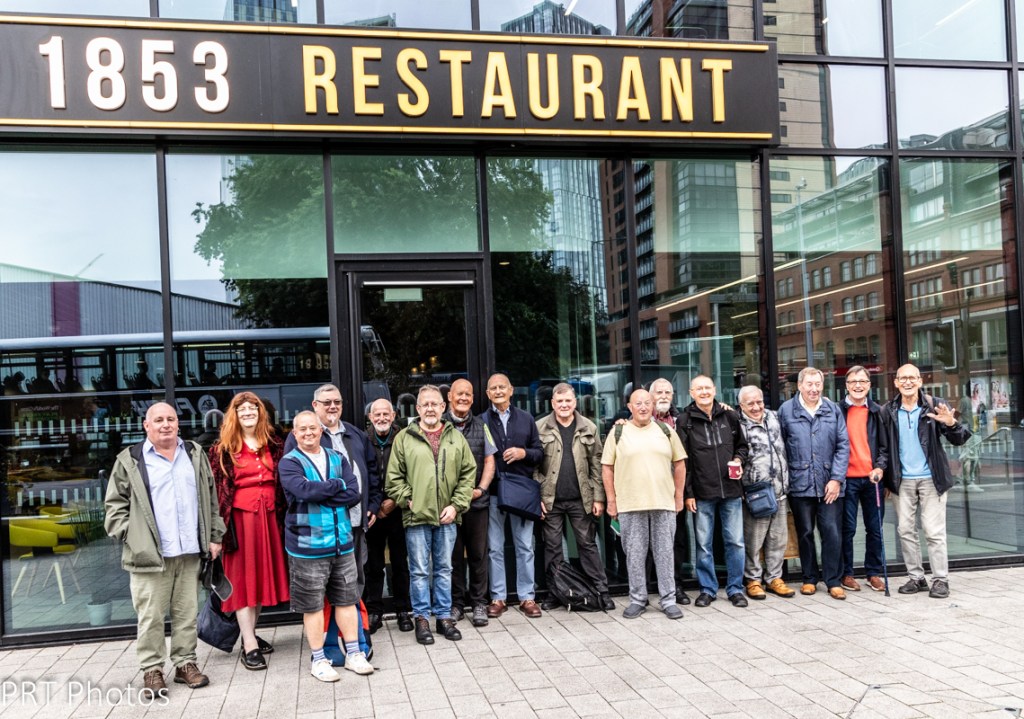
We met at Victoria Train Station and walked the short distance to the 1853 Restaurant – a training restaurant, part of the Manchester College.
We had submitted our pre-orders from a selection of high-quality food. The menu is always changing and innovating to reflect local, seasonable produce and the skills and talents of the chefs who are working and training in the state-of-the-art kitchen.
Not only did we dine in a friendly and relaxed environment, but we were given special attention by the team. The restaurant is run by students in Hospitality and Catering.
The 1853 Restaurant isopen for lunch on Wednesdays, Thursdays and Fridays from 12.00 noon to 2.00pm and Thursday evenings for dinner (arrive for 6.00pm to dine at 6.15pm).
Each year on 1 October, people across the world mark the International Day of Older Persons (IDOP) to raise awareness of opportunities and challenges faced by ageing populations, and to mobilise the wider community to address difficulties faced by older people.
LGBT+ refugees’ fear of persecution ‘insufficient’ for UK asylum
If you’re at risk of persecution in your home country because of your sexuality, or you’re a woman who had fled due to the risk of gender-based violence – people across the UK agree: you deserve our protection.
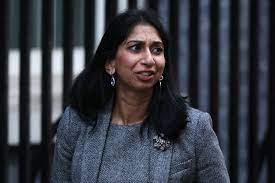
But our Home Secretary, Suella Braverman has made a speech, proposing to narrow the definition of a refugee so that women and LGBTQI+ people who fear persecution, would find it much harder to qualify for asylum.
This speech is just the latest in a series of laws, policies and gimmicks from this government that reject international human rights created for everyone’s protection after the Holocaust.
The UN refugee agency (UNHCR) has hit back at UK Home Secretary Suella Braverman’s highly controversial comments on the international asylum system. Currently, it is illegal to be LGBT+ in 64 UN member states.
Suella Braverman makes some dangerous anti-LGBT+ claims in a speech about international migration laws. (Credit: House of Commons)
Home Secretary Suella Braverman believes that fearing discrimination for being gay or a woman is not enough to qualify for asylum under international refugee laws.
Braverman gave a talk on Tuesday, 26 September at the American Enterprise Institute in Washington, about her hopes to crack down on asylum seekers and migration at large.
In her speech Braverman argued in favour of an overhaul of the supposedly outdated 1951 UN Refugee Convention, signed by 146 countries, insisting that we “now live in a completely different time”.
Braverman warned of a recent influx in the number of people who may qualify for asylum thanks to shifts away from the term “well-founded fear” in favour of terms like “credible” or “plausible fear”.
Braverman doesn’t believe fearing persecution for being gay is enough of a reason to seek asylum in the UK. (Getty)
This, it would seem, is directed at those who seek asylum due to fears of discrimination and other dangers because of their sexuality or gender.
“Let me be clear, there are vast swathes of the world where it is extremely difficult to be gay, or to be a woman,” her speech reads.
“Where individuals are being persecuted, it is right that we offer sanctuary. But we will not be able to sustain an asylum system if, in effect, simply being gay or a woman and fearful of discrimination in your country of origin is sufficient to qualify for protection”.
Responding to the claims in Braverman’s speech, a spokesperson from the Rainbow Migration charity said: “We are appalled to hear that the home secretary is questioning the legitimacy of LGBTQI+ people claiming asylum in the UK.
The government’s own statistics suggest that only 2 per cent of all asylum claims in 2022 included sexual orientation as a reason for needing protection.
It is already the case that LGBTQI+ people must face a well-founded fear of persecution to qualify for refugee protection in the UK”.
Braverman warns of a recent influx in the number of people who may qualify for asylum. (Getty)
Braverman’s hateful speech comes as data from the Home Office reveals an 89 per cent increase in the number of lesbian, gay, and bisexual people who applied for asylum in the UK based on sexual orientation from 2021 to 2022.
Claims which included sexual orientation as part of the basis for seeking asylum made up just two per cent of the total number of asylum seekers in 2022. And, of those applications for asylum based on sexual orientation, 739 people were granted asylum or other forms of leave for this reason – a nine per cent rise from 2021.
These applications for asylum based on sexual orientation come from people in countries with harsh, often life-threatening anti-LGBT+ laws like Uganda or Pakistan.
While Uganda’s Anti-Homosexuality Bill imposes the death penalty for LGBT+ people found guilty in so-called “aggravated” cases, while in Pakistan, homosexuality is illegal and punishable by life imprisonment.
Despite those very real threats to people desperately seeking asylum in the UK, it wouldn’t be unlike Braverman to dismiss the wellbeing of LGBT+ people while trying to enforce her draconian policies.
Just earlier this month, Braverman called out police officials in the UK for working at LGBT+ Pride events over the summer.
The home secretary told the Commons that police chiefs and elected officials were not being paid to “dance with drag queens”.
“They are there to keep people safe. We do not pay them to wave flags at parades, to dance with drag queens or to campaign,” she said.
“That’s why I finally ended all association with Stonewall at the Home Office and why I expect all PCCs (police and crime commissioners) and chief constables to focus on cutting crime and rebuilding confidence, not playing politics.”
Braverman has ordered a review into the “political activism of police” as a result of their perceived allegiance with the LGBT+ community.
That’s despite an independent review into the Met Police earlier this year that found it to be institutionally racist, misogynistic, and homophobic. In a formal apology issued in June, the head of London’s Metropolitan Police apologised to the LGBT+ community for their past failings and promised to restore LGBT+ community liaison officers across the city.
But this might be a step too far in Braverman’s books.
Rainbow Lottery Super Draw!
As a thank you for continuing to support Out In The City we’re giving you the chance to win a £1500 IKEA gift card in The Rainbow Lottery’s Super Draw!
Give your home an autumn makeover with this fantastic prize.
The special prize draw will take place onSaturday 30 September. If you already have tickets, you don’t need to do anything extra, but you can always buy extra tickets.
We’ve had a busy weekend attending the first Withington Pride and the Bury Pride Rainbow Train.
First of all, thanks need to go out to Jas, Esme and Kit for organising Withington Pride which included events at various venues throughout Withington – the Baths, Old Moat Park, Public Hall and the Library. These included not only a parade, street party, sports day and poetry event, but also many more.
We thoroughly enjoyed it. After a brilliant Saturday, we were excited to join the Bury Pride Rainbow Train on Sunday!
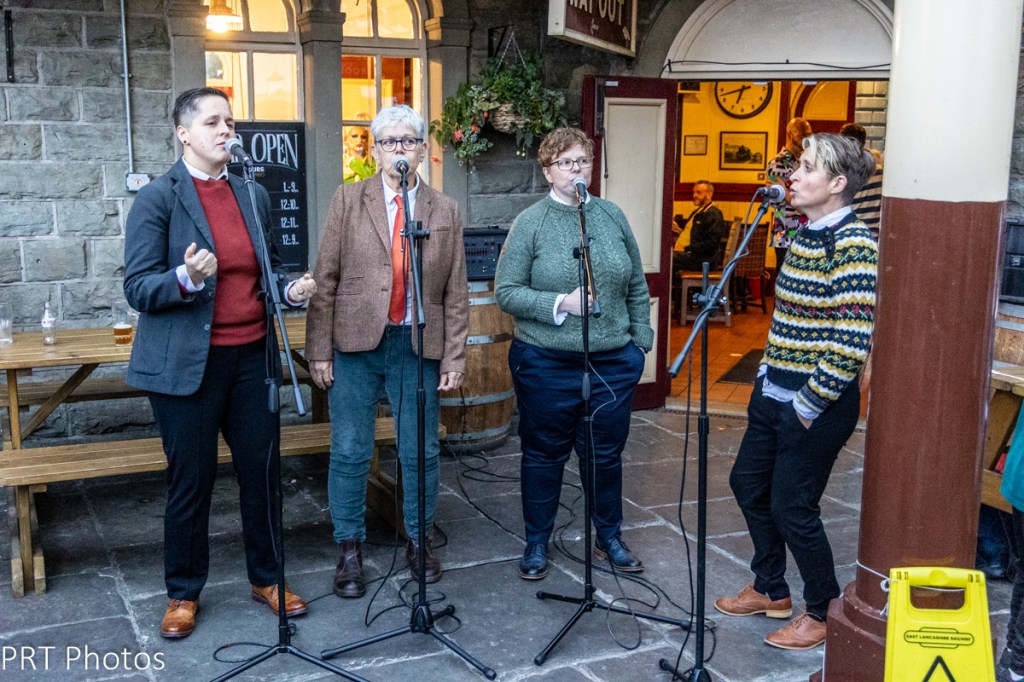
We experienced a trip on East Lancashire Railway’s Heritage Steam Engine whilst enjoying dazzling Pride performances at Bolton Street Station, Rawtenstall and then back at Bolton Street and the Trackside Pub in Bury.
We hopped on board the extraordinary Rainbow Express at the East Lancashire Railway in Bury. This incredible steam train hosted a dazzling event celebrating the LGBT+ community, filled with vibrant performances, exciting shows and inclusive events.
The performers included the Bury Fire Choir, Laura and the Lesbians, House of Bridget Queens and headline act Sharleen as Cher.
Laura and the Lesbians
It was a journey that embraced love, acceptance and equality. More photos can be seen here.
New study throws light on the sex lives of gay men over 70
A new study has shown that older gay men tend to enjoy sex with more partners than their straight peers.
The study was prompted by last year’s mpox outbreak (formerly known as monkeypox). Researchers in the UK wanted to find out how our sex lives change so that they could better model how a virus, such as mpox, might spread.
The most common route of transmission for last year’s outbreak in the UK and US was gay sexual encounters.
Lead researcher Dr Julii Brainard, from the University of East Anglia’s Norwich Medical School, said: “Before this study, many models about sexually transmitted diseases assumed that everyone over a certain age — say 40 or 65 — stopped being sexually active, or at least stopped having multiple partners.
Or there might be an assumption that young people have the most sex. But the answer is more nuanced, and it partly depends on people’s sexuality.”
They surveyed 5,164 people including 1,036 men who have sex with men (MSM) who were recruited via social media.
People were asked how many sexual partners they had in the most recent three weeks as well as three months. They were also asked for their gender and sexual identity.
Seventy-seven MSM over 70 answered the survey. 17% reported having more than one recent sexual partner in the most recent three weeks. 25% of the MSM over 70 had multiple partners or “concurrent partners.”
Beth Chayim Chadashim is the first synagogue for LGBT+ Jews
Harriet Perl lived well into her 90s and died in 2013.
A life-long lesbian, Harriet had been a Los Angeles public high school teacher back in the day when that meant staying closeted or risking losing your job.
It affected every aspect of her life, from clothes to housing to social life – from bedroom arrangements (separate bedrooms or at least twin beds) to where and with whom to appear in public.
Although born Jewish, Harriet’s parents were secular and political. Harriet followed their lead until one Friday evening in the early 1970s when she timidly ventured into a Sabbath service in a new “gay shul” she had heard about.
A few steps into the door, she saw two of her students. She thought, Oh no. What are they doing here? I’ll be outed.
They, as it turned out, thought something similar until they all realised WHY they were really there — not to “out” others, but to be seen for who they are, and to be with others like them.
Harriet became a leader in that synagogue for decades, helping to create a community where lesbians and gay men could explore Judaism in a safe space (including creating liturgy in English with gender neutral language), work for changes in civil rights, and become family to one another.
High Holy Days
It’s the time of High Holy Days on the Jewish calendar. Rosh Hashanah is the Jewish New Year, and today is Yom Kippur, the Day of Atonement.
The month preceding is traditionally a time of self-reflection. Have we been living our lives as our true selves?
We seek to repair and make amends for mistakes we have made. We examine and act individually.
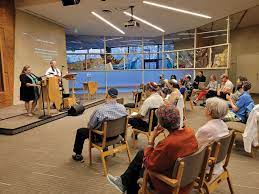
Then, on the High Holy Days, we come together in community to pray, to be inspired by beautiful music, and thoughtful teachings, and to plan together how the next year might unfold.
We consider two goals that Judaism requests from us: What changes will we make individually and as a community to become more our true selves and to make our world a better place?
Beth Chayim Chadashim
Lisa Edwards was the Rabbi Emerita (retired rabbi) of that congregation that Harriet Perl stepped into all those years ago. Beth Chayim Chadashim (House of New Life), a synagogue in Los Angeles, was founded over 50 years ago, in 1972, to be a Jewish community for lesbian and gay Jews.
From the earliest days, they counted among their members and visitors lesbian, gay, bi and trans Jews, their families and friends.
While at first they set out primarily to be a safe haven for those who had been turned out or away from mainstream synagogues, Beth Chayim Chadashim soon grew into an activist congregation seeking to change minds and hearts both in the larger Jewish community where homophobia still prevailed, and in the gay and lesbian community where many – ostracised by religious communities and families – had turned away from religion altogether.
Founded in 1972
Mentored and encouraged by the Reverend Troy Perry, gay founder of Metropolitan Community Church (MCC), the small group of Beth Chayim Chadashim founders reached out to the Reform Movement of Judaism.
There, thanks to some staunch supporters within it, and NOT without controversy, in 1974, the congregational arm of Reform Judaism (UAHC) approved Beth Chayim Chadashim on the first round of voting, making the Reform Movement the first mainstream religious organisation to include a gay and lesbian congregation in its membership.
Fighting discrimination, HIV
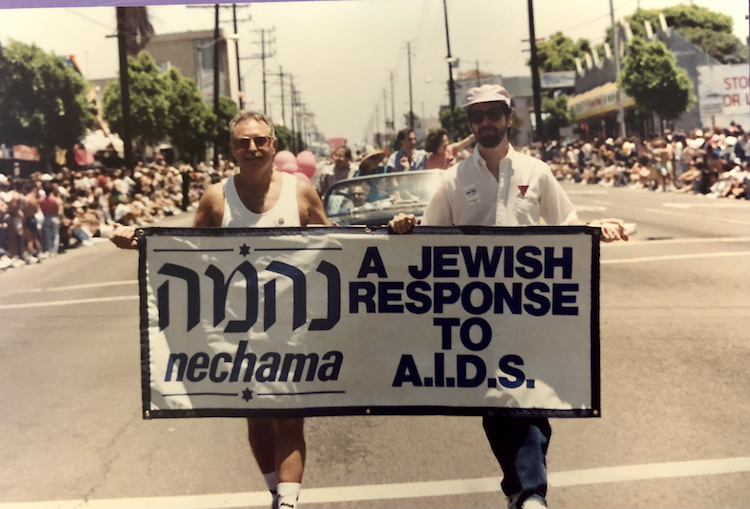
Members of Beth Chayim Chadashim march in support of people living with HIV/AIDS during Los Angeles Pride Parade in West Hollywood in the mid 1980s.
Political activism went hand in hand with creating a Jewish congregation attentive to the Jewish calendar of holy days and life cycle events. Born Jews became more Jewish, people new to Judaism found a welcoming home. Together, they nurtured a community that battled homophobia in the outside world.
A few years later, when HIV/AIDS began its devastation, Beth Chayim Chadashim was no stranger to illness and loss. A significant number of members began living with, and then dying from, HIV/AIDS.
By then, Beth Chayim Chadashim, had hired its first ordained rabbi, Janet Marder, who tenderly and fiercely helped the congregation navigate the demands and stresses, and reached out to the larger Jewish communities for acknowledgement and help with the creation of NECHAMA, A Jewish Response to AIDS.
Within the congregation, people organised to take care of one another through illness and death. They buried peers and friends and lovers in those years, and worked to change attitudes and access to care.
With help from Reform Movement leadership, Rabbi Marder and members of Beth Chayim Chadashim organised carefully structured sessions to talk face to face in people’s living rooms with members of mainstream synagogues, inviting them to get to know one another and ask questions.
Slowly, mainstream synagogue doors opened in welcome to LGBT+ visitors and members. Those mainstream synagogues also acknowledged the parents and children among them who had LGBT+ family members.
Supporting marriage equality
As the battle against AIDS abated with the development of life preserving drugs, new challenges were taken up. Beth Chayim Chadashim, and many other synagogues and churches and religious LGBT+ organisations, took on the goal of marriage equality. Their mourning became celebration as long-time couples (and new ones) chose a path that Harriet Perl never dreamed of. Celebrations continued as more children came into the congregational family.
Welcoming gay men and lesbians
Jillian Cameron, right is the rabbi at Beth Chayim Chadashim. Maggie Boyles, the synagogue’s administrator, left, and president Jessica Donath, join Cameron during a Pride Month event in June. Photo: Jessica Donath
Though the path has had more than a few stumbling blocks in the 51 years of Beth Chayim Chadashim’s existence, over the decades Jewish understanding and embrace of LGBT+ people has grown significantly.
Today, there are many queer students on the path to ordination, and queer rabbis and cantors serve congregations and teach in seminaries and other Jewish organisations all over the world. Queer voices contribute significantly to the liturgy, ritual and theology of mainstream liberal Judaism.
At Beth Chayim Chadashim these days, they continue to be an affirming, nurturing, and brave Jewish space for LGBT+ people, their friends, and families. Harriet Perl would have been proud.


















 Out in the City