The Exhibition is the biggest celebration of Greater Manchester’s creative talent. Artwork by Out In The City members will be presented alongside approximately 480 other amazing and unique artworks.
On Thursday, 8 February Out In The City will be visiting the Manchester Open 24 Exhibition at HOME Cinema, 2 Tony Wilson Place, Manchester M15 4FN.
The work will be exhibited in HOME’s Gallery from Saturday 3 February to Sunday 28 April 2024. We have 20 free tickets to view the exhibition on 8 February from 12.00 noon until 1.00pm. We still have 8 tickets left, so please contact us as soon as possible, if interested.
We can also eat later at the venue.
Is it time to retire the phrase ‘openly gay’?
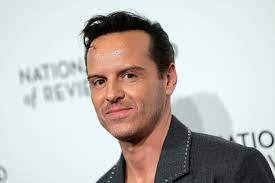
Andrew Scott
Andrew Scott, actor, made the suggestion in a recent interview. He pointed out that no one says a person is ‘openly heterosexual’. The phrase ‘openly gay‘ is mostly synonymous with an era of secrecy and shame.
The phrase has its historical uses – one of the remarkable things about Bayard Rustin is precisely that he was out at a time, pre-Stonewall, when it was hazardous to be so. But it would be hard to disagree that the phrase is outdated today. It’s a hangover from that all-too-recent time when there were no queer voices in the media, with the result that any LGBT-related stories were reported from a straight and typically homophobic perspective.
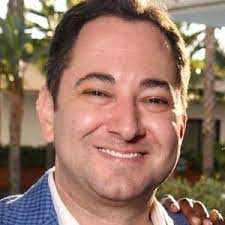
Scott Feinberg
The interviewer, Scott Feinberg, singled out Scott, who stars in Andrew Haigh’s “All of Us Strangers” as a screenwriter magically reunited with the parents who died when he was 12, and Colman Domingo, who plays Martin Luther King’s advisor Bayard Rustin in the Netflix biopic “Rustin”, as “openly gay actors playing openly gay characters who are at the centre of important films”. The remark was intended as a way in to a discussion about representation, though at no point did he refer to the other performers present (Robert Downey Jr, Paul Giamatti, Mark Ruffalo and Jeffrey Wright) as “openly heterosexual”.
“I’m going to make a pitch for getting rid of the phrase ‘openly gay,’” said Scott, steering the conversation in a more illuminating direction. “It’s an expression that you only ever hear in the media. You’re never at a party and you say, ‘This is my openly gay friend’. Why, he wondered, is “openly” always attached to that adjective? We don’t say you’re ‘openly Irish.’ We don’t say you’re ‘openly left-handed’ … There’s something in it that’s a little near ‘shamelessly.’ ‘You’re open about it?’ You know what I’m saying?” He proposed that “it’s time to just sort of park it.”
Agreed. Let’s ditch it!
Pride Events and Dates for 2024
Greater Manchester now has the highest number of individual Pride events found anywhere in the UK and here are the details:
May
Wednesday 15 – Saturday 18 May – Pride in Trafford
Saturday 25 May – Pride on The Range (Whalley Range)
June
Saturday 1 June – Bury Pride
Sunday 2 June – Stockport Pride
Saturday 15 June – Tameside
Saturday 22 June – Salford Pink Picnic
Sunday 30 June – Pride in Nature with RHS Bridgewater
July
Friday 12 – Sunday 14 July – Sparkle Weekend
Saturday 20 & Sunday 21 July – Oldham Pride
Monday 22 – Sunday 28 July – Happy Valley Pride (Hebden Bridge)
August
Saturday 3 August – Trans Pride Manchester
Friday 9 – Sunday 11 August – Levenshulme Pride
Saturday 10 & Sunday 11 August – Prestwich Pride
Saturday 10 August – Wigan Pride
Saturday 17 August – Rochdale in Rainbows
Friday 23 – Monday 26 August – Manchester Pride
Saturday 31 August – Didsbury Pride
September
Saturday 21 September – Ramsbottom Pride
Sunday 29 September – Bury Rainbow Train
Date to be confirmed – Pride in Bolton
Date to be confirmed – Chorlton Pride
We look forward to seeing as many of you as possible at these events across Greater Manchester (and Hebden Bridge).
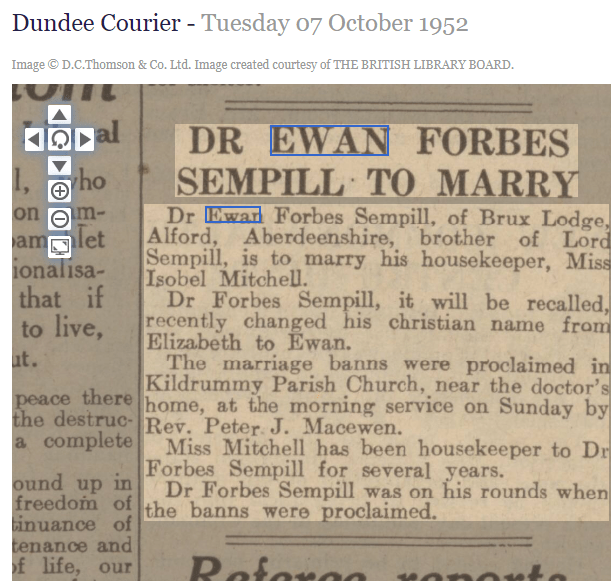
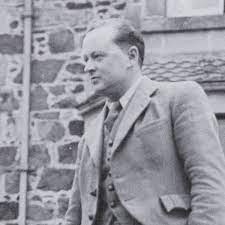
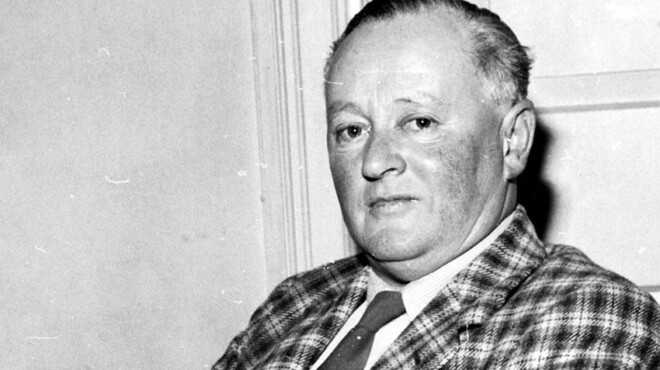
How They Reported on a Prominent Trans Man Getting Married in 1952
“Dr Ewan Forbes Semphill, of Brux Lodge, Alford, Aberdeenshire, brother of Lord Sempill, is to marry his housekeeper, Miss Isobel Mitchell.
Dr Forbes Sempill, it will be recalled, recently changed his christian name from Elizabeth to Ewan.
The marriage banns were proclaimed in Kildrummy Parish Church, near the doctor’s home, at the morning service on Sunday by Rev Peter J Macewen.
Miss Mitchell has been housekeeper to Dr Forbes Sempill for several years.
Dr Forbes Sempill was on his rounds when the banns were proclaimed.”
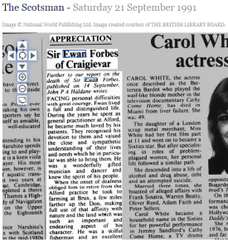
The Scotsman, 21 September 1991
On 21 September 1991, The Scotsman, reporting Forbes’ death:
“Facing personal difficulties with great courage, Ewan lived a full and distinguished life. During the years he spent as general practitioner at Alford, he became much loved by his patients. They recognised his devotion to them and valued the close and sympathetic understanding of their lives and needs which he in particular was able to bring them. He was a wonderfully gifted musician and dancer and knew the spirit of his people.
When the onset of deafness obliged him to retire from the Alford practice he took to farming at Brux, a few miles further up the Don, making full use of that affinity with nature and the land which was such an important and endearing aspect of his character … he was also a devoted husband, faithful elder of the Kirk and a loyal warm-hearted and entertaining friend.”
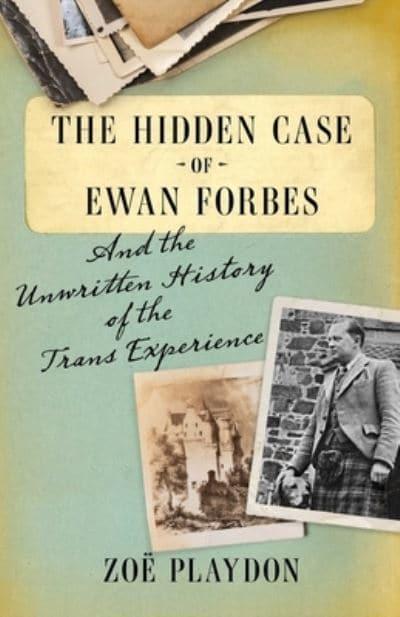
To find out more about this wonderful man, please see “The Hidden Case of Ewan Forbes” by Zoe Playdon.
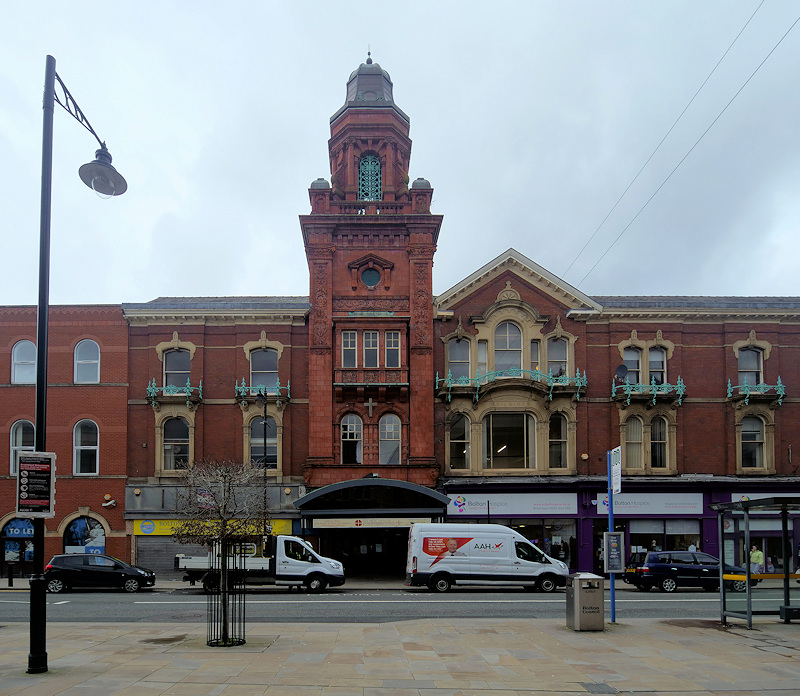
This week we visited Victoria Hall in Bolton, a Methodist church, but also a hub for the local community, which has performances of concerts and pantomimes.
Influenced by a visit to the Manchester Mission, Thomas Walker proposed a similar Mission Hall be built in Bolton. The new Mission Hall was built on land belonging to Ridgway Gates Chapel. A terrace of eight shops was bought with the middle four being demolished so that an entrance to the main hall could be created from the main street. The other shops were let to provide an income for the Mission.
In 1897 the architects Bradshaw Gass were commissioned to build the finest hall in England, based on the design of the popular music halls. It was felt that non-church people would feel more comfortable in such surroundings.
The Victoria Hall was opened in 1900 in the style of a music hall with over 1,250 seats at a cost of £30,000. The acoustics were amazing in the large hall.
With Barry, our knowledgeable and enthusiastic guide, we explored the never-ending halls, sweeping staircases and simply superb architecture that makes up Victoria Hall.
Holocaust Memorial Day is an annual observance to commemorate the victims of the Holocaust, the genocide of six million Jews and of millions of other Holocaust victims by Nazi Germany and its collaborators.
The day is observed on 27 January, the anniversary of the liberation of Auschwitz concentration camp in 1945.
Here are the stories of Dorothea Neff and Fritz Bauer:
Dorothea Neff & Lilli Wolff
A photograph of the Jewish costume and fashion designer and Holocaust survivor Lilli Wolff. Photo: Yad Vashem
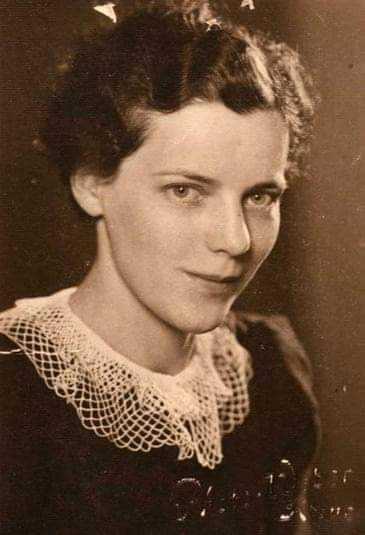
Dorothea Neff was an actress. She was born in Munich, Germany, in 1903. In the 1930s, she acted in a theatre in Cologne, where she met the young Jewish costume designer, Lilli Wolff. The two women started a romantic relationship. When Neff was offered a position with the famous Volkstheater in Vienna and moved there, the two women’s paths diverged.
In 1940, however, as the situation of the Jews in her hometown deteriorated, Lilli decided to go to Vienna, erroneously believing that Jews were better treated there. Desperate and lonely in a city where she knew no one, Lilli went to her former lover’s apartment and asked her for help. Neff found her a room with another Jewish family, assisted her financially and supplied her with necessary medication and other needs.
Moreover, at a time when almost all Germans and Austrians had totally cut off contact with Jews, Dorothea often came to visit her friend. Although the Jews’ freedom of movement was severely restricted by that time, Dorothea invited Lilli over to her apartment.
When the deportations of the Jews to the East began, Dorothea tried in vain to find a hiding-place for her friend, and even went to Berlin for that purpose. It seems that she reached the conclusion that she had exhausted all possibilities of helping her friend. Thus, in October of 1941, when Lilli received notification that she was to be deported, Dorothea came to help her pack her belongings and to see her off.
After the war, the two women related that they had been sitting in the kitchen, trying to decide what Lilli should pack to take to her unknown destination. It was a sudden spontaneous impulse that made Dorothea close the suitcase and exclaim: “You’re not going anywhere! I’ll hide you!” This was clearly not something she had planned in advance. Until that moment she had thought there was nothing more to be done, and only while they were packing did she realise that she had to take one more step.
Years later, she explained: “As I looked into Lilli’s pale face, I was so overcome by compassion for this poor abandoned human being that I knew I couldn’t let her go off to face the unknown.”
For over three years, until the end of the war, Lilli lived in a back room in Dorothea’s apartment. The two women were in constant fear of discovery. For Lilli it was the terror of being caught and deported. But the rescuer’s life changed radically as well. She would rush home every day after her performance, worrying that something might have happened during her absence. At a time of war, when food was rationed, she had to obtain extra food for her friend. During air raids, she had to find excuses to explain the stranger who would join her down at the shelter. She had to be careful about whom she invited to her home.
Another crisis came when Lilli became sick. Like many other rescuers who were hiding Jews, Dorothea now had to find a way to take Lilli to get treatment without arousing suspicion. Finally, their romantic relationship ended, yet Dorothea continued to hide Lilli in her home.
After the war, Lilli Wolff immigrated to the United States and settled in Dallas, Texas.
In 1979, Dorothea Neff was recognized as a Righteous Among the Nations by Yad Vashem.
In her speech she said:
“The greater the darkness of a period, the brighter is the light of a single candle.”
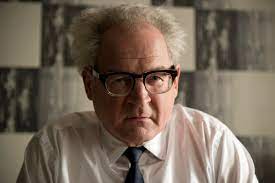
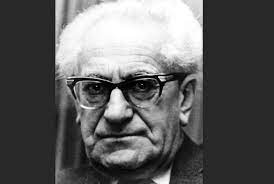
Fritz Bauer, gay Holocaust survivor-turned-Nazi hunter, took down one of the Reich’s most prominent leaders
Fritz Bauer Photo: Wikimedia
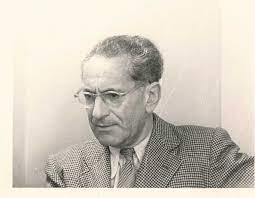
He was a methodical and efficiently non-violent Nazi hunter. A dark-eyed chain smoker with the cultivated calm of a judge, Fritz Bauer single-handedly brought dozens of war criminals to justice for an untold number of human rights offences. But because he was homosexual and embarrassed too many mediocre yet powerful men, he was vilified in his own lifetime as a “degenerate” and “criminal,” He was then lost to history for decades, rather than honoured publicly for his courageous advocacy in the shadow of fascism.
Born in 1903 in Stuttgart, Germany, Bauer was raised in an affluent and liberal Jewish family. Though denied entrance to the most elite fraternities because of his heritage, Fritz ultimately thrived in law school and quickly ascended to the position of “assessor judge,” or junior prosecutor – Germany’s youngest on record – at 27.
Unfortunately, this milestone appointment landed in 1930, just in time for the zealots of the Third Reich to begin dismantling the legal system and the country. A member of the Social Democratic Party, Bauer found himself surrounded by “conservative and authoritarian in spirit” colleagues. He was demoted in 1931 after being smeared by Nazi columnist Adolf Gerlach in a local paper as a “biased” Jew and communist sympathiser incapable of competently doing his job.
By 1933, Nazi rule had insured Bauer was arrested while working at his office – without charges – and condemned to the Heuberg concentration camp, where he was targeted aggressively by brownshirt guards for being both Jewish and a political threat to the Nazi regime. Though not labelled with the dreaded “pink triangle,” some accounts of his life suggest Bauer’s unmarried status and progressive leanings had by this point already outed him in the eyes of the fatally homophobic Nazis.
In November 1933, Bauer was offered exile if he participated in a propagandist PR stunt. In exchange for his signature on a public statement switching allegiance from the Social Democrat to the Nazi party, Fritz was formally discharged as a judge but released from the camps and allowed to escape to Denmark … which wasn’t exactly the reprieve it sounds like.
Bauer was arrested in 1936 for suspicion of homosexual sex with “a male prostitute”. Fritz vehemently denied money being involved and the other man being a sex worker, but he did not refute their involvement and was later forced into another internment camp, this time by Nazi-sympathetic Danish authorities.
Not long thereafter, Bauer legally married a Danish kindergarten teacher named Anna Maria Petersen and fled secretly via fishing boat to Sweden to wait out the rest of the war.
The end of WWII by no means meant the end of Nazi influence, however. Fascist ideology still permeated both international politics and local, civilian post-war life. German nationalists continued to support Nazi players even in light of their defeat. Bauer returned home to West Germany in 1949 to finally resume his service as a judge but found a traumatic landscape where men who’d committed genocide against his community were rewarded with positions of ongoing power and influence. Through diligent work, Bauer nonetheless climbed the ranks of the district courts and was appointed state prosecutor in Frankfurt in 1956.
Bauer’s very rare combination of tangible judicial power and personal camaraderie with other concentration camp survivors put him in the position to actually do something about Nazis living karma-free internationally, though he was forced to hide his Jewish identity, homosexuality, and Holocaust-survivor status in order to get anything done. To this day, biographies of his life tend to downplay or completely erase his homosexuality.
Bauer’s long-game tactics took down one of the major coordinators of the genocide, Otto Adolf Eichman. Eichman literally helped arrange and manage the deportation of Jews into extermination camps. Eichmann was captured in 1945 by the US military but soon escaped to a sedate life in Argentina with the help of a Catholic bishop. Eichmann, like many other Nazi fugitives at the time, made little effort to hide himself or his history – part of the reason he was recaptured was his own son, Klaus, bragging to women about daddy being a Nazi and murderer.
The rest of the reason was the patience of Bauer, who knew Nazi sympathizers in the West German judicial system would only protect Eichmann by tipping him off, or worse, helping move him with German money.
So Bauer committed light treason.
In violation of German law, Bauer bypassed his country’s intelligence entirely, reaching out directly to Israeli Mossad director Isser Harel with Eichmann’s exact location, a recent photo, and details on the family’s braggadocio. Israeli officials worked with Bauer’s tipsters to get Eichmann forcefully extradited for trial from Argentina to Israel – a place where compromised German officials, who initially tried to get Bauer in trouble instead of assisting with the prosecution of a Nazi, couldn’t interfere with justice.
Eichmann was ultimately found guilty and executed for his participation in the mass extermination of millions of civilians. Back home, Bauer was accused of “fouling his own nest” and received death threats.
Undeterred, Bauer pushed this victory further by certifying a class-action lawsuit now recognised as the Frankfurt Auschwitz Trials. Over the course of several years, the case brought formal charges against 22 members of the SS – the tiniest fraction of the estimated 7000+ Nazi-affiliated individuals believed to assist in running the death camps.
Though deemed a “failure” by Bauer himself, the trials were pivotal in alerting the world to the secretive, but at that point still broadly covered-up, machinations of the SS. The testimony of the 22 defendants and 800+ sources interviewed across a half-decade of pre-trial research became the backbone of our global understanding of what unchecked fascist rule truly looks like. They are preserved in UNESCO’s Memory of the World archives.
When not trailing and convicting Nazis, Bauer quietly attempted to move the dial of progress by advocating for the decriminalisation of homosexuality in the German penal code. In the 1950s and 60s, it was an outright crime to simply identify as gay or queer, with additional charges for participating in same-sex activities.
Bauer was found dead in his own bathtub in 1968 at the age of 64 in what was deemed “suspicious circumstances.” A coroner’s report asserted that Bauer had accidentally died of a combination of sleeping pills and alcohol – not impossible for a man in the highest stress position imaginable. But colleagues at his Humanist Union and in the larger social justice community wondered if, given the years of death threats, Bauer had not perhaps been killed by people who had already proven themselves to be murderers.
An acclaimed feature film about his life, The State Versus Fritz Bauer won an award at the Berlin Film Festival in 2016.
LGBT+ exhibition shows lives of older generation
An exhibition showing the lives of Shropshire’s older LGBT+ generations hopes to challenge stereotypes.
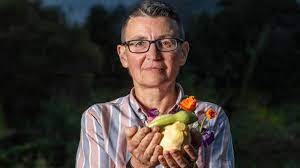
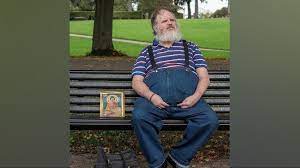
Photographer Ming de Nasty worked with residents in 2023, touching on how LGBT+ culture had changed, as well as sharing memories and old images.
The display, at Theatre Severn, Shrewsbury Museum and Art Gallery and Shrewsbury Library runs until 14 April.
The photographer said her subjects had “rich and diverse histories and very active lives. We don’t disappear after the age of 50,” she added.
The exhibition is a partnership between SAND, a community organisation that aims to improve the experiences of LGBT+ people as they age in Shropshire, Telford and Wrekin; Midlands-based photography organisation GRAIN; and Arts Council England.
The photographs show residents expressing a confidence and sense of identity in their gaze and position, according to the photographer.
The exhibition also features information about their younger lives, family backgrounds and the changes in LGBT+ culture and law.
Sal Hampson, director of SAND, said: “The process of taking part and the exhibition and publication outcomes will contribute to a future where lesbian, gay, bisexual and trans people in Shropshire, Telford and Wrekin are fully integrated into the community.”
Ming de Nasty, 70, has been a professional photographer for 35 years and recent projects include Queer Country, a photographic project with a focus on individuals’ experiences in Wales, and what it means to be living in a rural environment.
“I left Shropshire (for Birmingham in the 1980s) because I’m gay and there wasn’t much here for me,” the artist said. “It isn’t out and loud as it is in the city but there is a community here now. I am in the older age bracket now and we need to share wisdom to the younger generation.”
The exhibition will also be shown at The Hive in Shrewsbury as part of the LGBT+ History Festival in March.
On Saturday, 20 January a group of us met for a “Box of Me” workshop.
“Box of Me” is a fun and informative group workshop for LGBT+ adults which invites you to think more about the plans you could put in place for the future, to ensure you can be your authentic and true self right to the end of your life (and beyond!) This session is produced and delivered as part of a collaboration between Pride in Ageing and St Ann’s Hospice.
We were provided with a box, which will contain all of the planning and information we gathered during the session. We were able to chat openly and freely about the plans we could be putting in place and add information about the things that are important to us in our box.
These include:
• My life story, identity and who is important to me
• My advance care plan and decision-making
• My will
• Donating my organs
• What my funeral would look like.
We were able to ask questions about pension nomination forms and Facebook profiles. At the end of the session we took our box home so that we can add to it over time and keep it in a safe place for the future. It’s important to tell a trusted friend or family member where it is.
Rainbow Lottery Super Draw!
We hope this email finds you in high spirits, and relaxing after a wonderful Christmas! We’re not hanging around though – we’re thrilled to announce our first Super Draw of ‘24, and guess what? You could be the lucky winner of a £1,000 luxury holiday!
But hold on, we get it – everyone’s got their own idea of the perfect getaway. So, we’re spicing things up a bit. If travelling isn’t your cup of tea, no worries! You can also opt for a £1,000 cash alternative. Yep, we’re all about making dreams come true, your way.
Now, let’s talk about the possibilities. Imagine relaxing in a luxurious spa, exploring charming European cities, or even having a cozy countryside staycation. The options are as endless as your imagination!
Need some inspiration? Check out these cool ideas:
City Staycation: Discover hidden gems in UK cities. Treat yourself to a fancy dinner, spa day, or a night at a luxury hotel – you deserve it!
European Adventure: Explore the cobblestone streets of Rome, indulge in pastries in Paris, or hit the beaches of the Greek Islands.
Countryside Retreat: If you prefer the peace and quiet, why not get away to a cabin in the Lakes, or a cottage in the Welsh hills?
Sun-kissed Getaway: At this time of year, wouldn’t you like to picture yourself sipping a fruity cocktail on a golden beach, with the crystal waves lapping at your toes?
Remember, it’s all about YOUR dream escape. The possibilities are as diverse as your taste in music, and we want to make sure your prize is as fantastic as you are.
So, don’t miss out on the chance to turn 2024 into a year of adventure and relaxation! Get those lottery tickets and cross your fingers – this might just be the start of your next great adventure.
Don’t forget, with our Super Draw, you can now TOP UP your tickets, just for the week of the Super Draw? Your weekly tickets will still give you a chance to win this amazing prize of course, but every extra ticket you buy will be an extra chance to win – so if you see a prize you like the look of, just grab a couple of extra Super Draw tickets! Just click the button above to buy now for the draw on Saturday 27 January.
Tuesday, 30 January – 6.00pm – 8.00pm – Presentation by Out In The City – Free
The Proud Place, LGBT+ Community Centre, 49-51 Sidney Street, Manchester M1 7HB
Join Manchester Pride and Out in the City to discuss being aged 50+ and LGBTQ+ in Greater Manchester.
Tony from Out in the City will talk about all the brilliant work that the group has done over the past year, the challenges that come with being included in the pride movement and what we can do to fully include, support and celebrate all those in the community that have paved the way. Book on Eventbrite.
Book cover courtesy of Jessica Kingsley Publishers
“Gender Pioneers” reminds readers that trans people are not new
Open this book anywhere and you’ll see that the theme here is serious, but author Philippa Punchard also lends a bit of breeze. There’s no certain order to what you’ll read, and while the entries reach back to ancient times, they focus more on the past 300 years or so; each of the articles is short and to-the-point, and the soft illustrations invite browsing. For readers who want a quick read, this works.
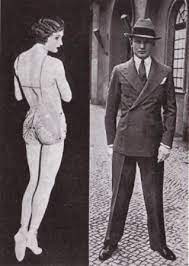
Vander Clyde Broadway known as Babette
In 1912, French audiences were thrilled by the talent of a trapeze artist known as Barbette. The lovely Barbette flew over the heads of Parisians solo, gracefully, and the best citizens followed those performances avidly. By 1919, Babette added to the end of the performance the revelation that “she” was really Vander Clyde Broadway, a male performer.
We might think that being transgender is “new” and just “a Western thing,” but Punchard has reason to disagree: history is dotted with men passing as women, and women living as men. As Christine Burns says in the foreword, “Trans people are not a new thing.”
Some seemed to do it as a means to an end: Ellen and William Craft wore clothing of the opposite sex in order to escape slavery in 1848. Betty Cooper may have worn men’s clothing for the same reason in 1771. Neither case, says Punchard, indicates “classical” trans behaviour, but we’ll never know for sure.
Ellen and William Craft
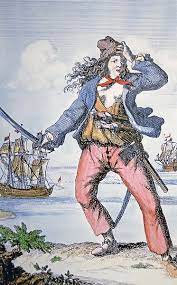
Biawacheeitchish, who grew up to be powerful, wealthy, with four wives, was kidnapped as a young girl and was encouraged by their Native American adoptive father to engage in male activities, perhaps because he’d lost two sons; in another time and place, Biawacheeitchish would’ve been called a “female husband.” Dora Richter, the first woman to receive vaginoplasty, was killed by “a Nazi mob.” Dr James Barry, a highly renowned surgeon, used “built-up shoes and… padding to appear more masculine…” James Allen and Billy Tipton were both married to women before death revealed that they were female. And Mary Read was a girl, until their mother lost her only son.
Mary Read
In her foreword, Burns says that there are “two awkward challenges” when we talk about trans people in history: were they intersex, rather than trans; and were they people – mostly women – who presented as the opposite gender to gain the benefits of the opposite gender? The questions demand more study and “Gender Pioneers” offers a launching point.
Be sure to keep going through both appendices of this book, where you’ll find a wealth of further information and dates to remember.
Historians and readers of trans history will find “Gender Pioneers” just right.
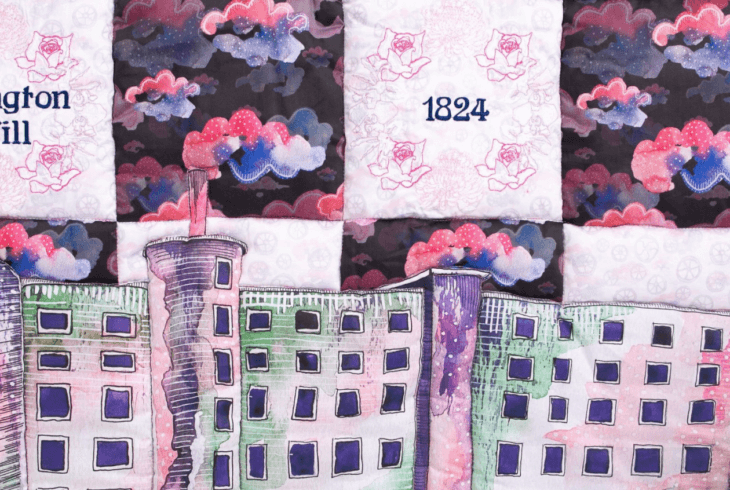
Our planned trip this week was to visit Salford Art Gallery. In the East Wing was an exhibition regarding Islington Mill.
2023 sees the 200th anniversary of the construction of Islington Mill, the former cotton spinning mill on James Street in Salford.
Just one year after Islington Mill was built there was a structural collapse of the building on 13 October 1824 when a supporting cast iron beam broke. The floors of the building partially collapsed, one into the other, trapping workers amidst “bricks, slate and fragments of machinery”.
People leapt from windows to escape. Eighteen people were tragically crushed to death. Three of those were boys and the rest were young women and girls who made up the bulk of the mill’s workforce, some as young as ten years of age.
Witnesses in the area reported a “cloud of dust which obscured the air” amidst intense pandemonium and distress.
Since 1996 the Mill has provided a home for artists seeking new ways to create, think and flourish in community and collaboration. The exhibition sought to shine a light on the people past, present and future who give this building and this community life.
A damning new report has condemned the UK government for its ‘erosion’ of human rights protections and failure to act on “meaningful” pledges.
As part of its World Report 2024, Human Rights Watch (HRW) said that the UK is “nose-diving” in its domestic human rights record, which is undermining its efforts to “promote the rule of law and human rights globally”.
The report cited multiple human rights failures in 2023, including efforts to criminalise protests and worker strikes, as well as the further demonisation of asylum seekers.
HRW also noted the government’s failure to “take any meaningful steps” to act on many of its human rights-related pledges, including the inaction on conversion therapy and a failure to “fairly compensate Black Britons” who, it says, were “harmed by the government” through the Windrush scandal.
The organisation also addressed the “abusive rhetoric” towards LGBTQ+ people and the rise in anti-LGBTQ+ violence, saying that the government is “undermining” the protections of trans people.
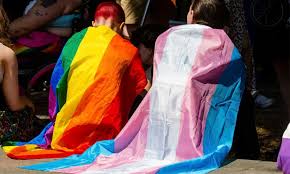
Two activists wearing LGBTQ+ flags at a Pride event. (Getty)
In criticising the UK government’s attitude towards LGBTQ+ people, Human Rights Watch pointed to the report by UN independent expert, Victor Madrigal-Borloz, following a 10-day visit to the country.
The report, published in May, demonstrated great concern over the way the UK government had helped to bolster the “increased bias-motivated incidents of harassment, threats, and violence against LGBT people”.
Madrigal-Borloz was particularly critical of the Equality and Human Rights Commission (EHRC), which he said gave the government a “formula” to enact transphobic legislation.
All of this, HRW concluded, had contributed to the surge in anti-LGBTQ+ violence, particularly against trans people, which rose by 11 per cent compared to the previous year. The Home Office, in its report on hate crime statistics, admitted that the rise in hate crimes could be due in part to the topics being “heavily discussed by politicians, the media, and on social media” over the past few years.
How we met: ‘It was illegal to be gay in the military, so it was very hard for us’
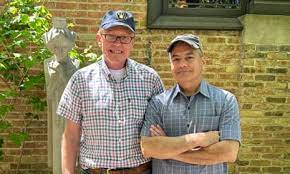
‘I love how attentive he is’ … Scott (left) and Herb at Frank Lloyd Wright’s home in Oak Park, Illinois, 2023
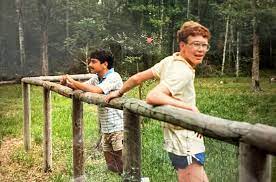
Herb, 59, and Scott, 60, became a couple when they were in the US air force together in the 1980s. After being reported and reassigned to different countries, they moved apart. Almost 40 years later, they reunited.
After finishing high school in 1983, Herb couldn’t afford the college education he had dreamed of. Instead, he joined the US air force, because they offered an educational assistance programme to help with costs. “I also thought it would be good to get some discipline and direction,” says Herb.
Stationed at a base in Michigan, he started work in the mailroom. The year after, he began to get to know Scott, who had also joined the air force after leaving school. “My cousin had talked me into it,” says Scott. As an administrative clerk, Scott regularly found himself in the mailroom, chatting to Herb.
“He had a very curious, intellectual aspect about him,” says Herb. “We had lots of interests in common and both felt different to our colleagues. We were more into culture and we were quite bookish. He also laughed at all my jokes.”
A friendship blossomed between them, but it wasn’t until August 1984, when they became roommates, that their relationship became romantic. While Scott had already been exploring his sexuality, Herb had never considered a same-sex relationship. “Scott shared with me his sexual orientation. At first, I didn’t think that was of interest to me, but as our friendship grew I found there was an intimacy between us. Even now, I’m not sure I identify as gay, as Scott’s the only man I’ve ever had feelings for. It’s more about the person than the gender for me.”
Herb (left) and Scott in June 1985, visiting Herb’s father’s home in Florida
Keen to explore their connection, the two men began dating in secret. “It was the time when Aids was running rampant. There was lots of homophobia and it was illegal to be gay in the military, so it was very hard,” says Scott. Although they tried not to draw attention to themselves, a colleague discovered their relationship and reported them. “They found affectionate cards that Scott had sent to me,” says Herb. “With that information, they felt they could search Scott’s room. They didn’t find enough evidence on me, but they found enough to prove that Scott had been engaging in homosexual behaviour, so they tried to oust him from the service.”
After a long, stressful inquiry, Scott was able to complete his service and retain the education subsidy. “We supported each other through the five-month investigation,” says Scott. “I often look back and realise those should have been five of the worst months of my life, but they were some of the best, because it brought us so close together.”
Scott was reassigned to North Carolina, while Herb went to Japan. They tried to keep in touch for a year, before going their separate ways in 1987. “I hadn’t fully explored my sexuality and I still wanted to explore heterosexuality,” says Herb.
After completing his service and leaving the military, Scott went to Indiana to study, later moving to Oak Park, Illinois, where he still lives, for a job with the US government. Herb also gained a degree, before getting married and having a son. He and his wife split up in 2008 and he moved to Milwaukee in Wisconsin. He now works as a fundraiser for non-profit organisations.
The pair spoke occasionally over the years. Then, in 2013, when Herb’s father died, Scott offered to help him trace his family tree. “I’d got into genealogy,” he says. “We communicated lots more than in previous years.” But it wasn’t until after the pandemic that the spark was reignited between them.
“I was driving near where he lives in 2022 and asked if we could meet up,” says Herb. “He told me he’d still have feelings for me and wasn’t sure if it would be difficult.” Realising he also missed the intimacy they had shared all those years earlier, Herb suggested they get to know each other again. Over the next few months, their relationship evolved romantically.
In June that year, Scott had a stroke. “I went down to take care of him and we started getting into healthy eating together. Now, we go into thrift stores a lot, find nice Mediterranean cooking books and cook together,” says Herb. “At the moment, we live together on weekends and we are starting to plan what our future might look like. I love how attentive he is and how he considers small things that might affect me.” Scott feels closer to his partner than he ever has. “I always sensed this level of caring that was different from other relationships I had, even 39 years ago. I found him very attractive in 1984 – and I still do.”
Age UK Campaign
The new Offline and Overlooked campaign to end digital exclusion is gaining serious momentum. Together, we can protect offline access to the important public services we all rely on.
There are already over 47,000 signatures on the petition and MPs are definitely interested – it’s already been discussed in Parliament. One MP is also hoping to get a dedicated debate on the topic!
It’s crucial that we keep building momentum and show how important stopping online-only services is. There are 6 million older people who either don’t use the internet or can’t use it safely and successfully and they’re being shut out. I think everyone should have the right to access things offline if they want to.
Will you sign the petition too and help protect offline access?
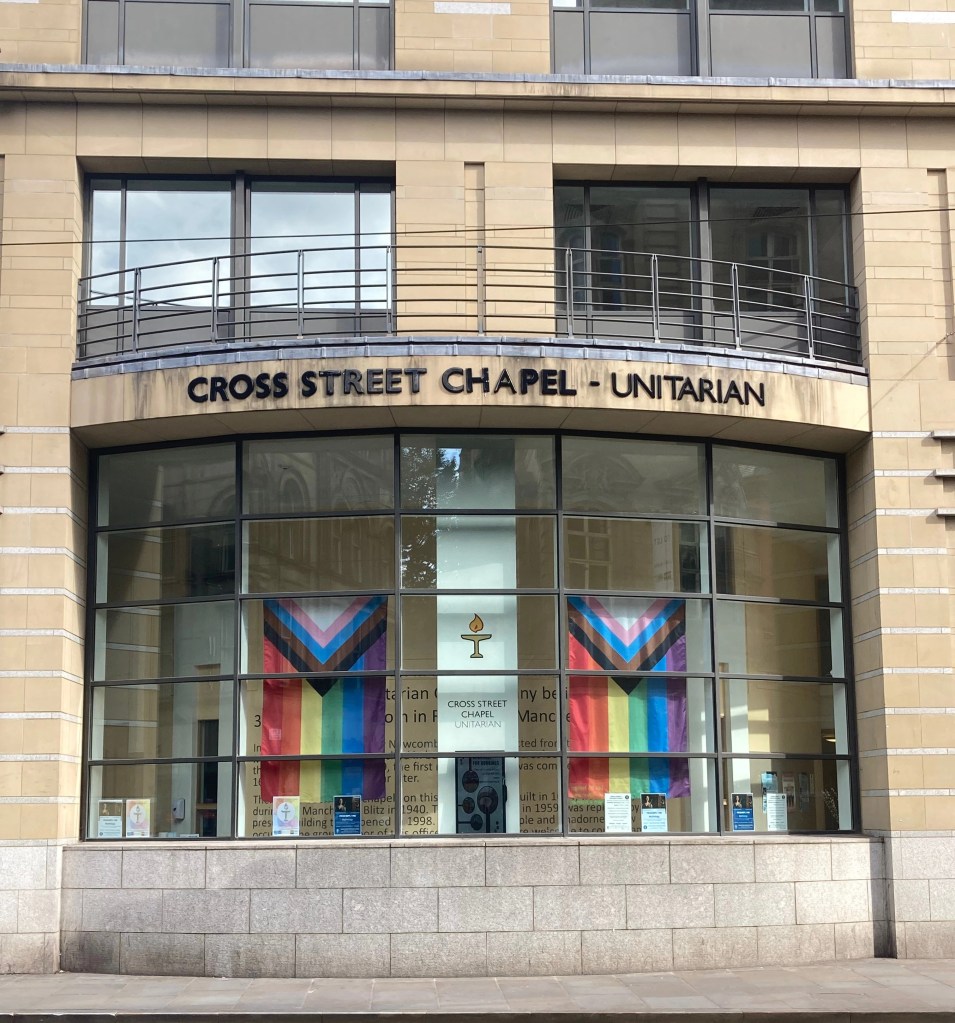
Thursday, 25 January, 5.30pm – 7.00pm – Women’s Meeting at Cross Street Chapel,29 Cross Street, Manchester M2 1NL
Lizzie and Sarah will host the meeting and there will be light refreshments. This is the first of a series of meetings to be held on the last Thursday each month (also 29 February and 28 March), and there is no need to book.
These are additional meetings to our regular weekly meetings.
How we met: ‘When she walked past me it was like being covered in a soft blanket’
‘She has a sincere kindness’ … Shoba (left) and Hania.
Shoba, 70, and Hania, 68, met in 1989 at a silent meditation retreat in Massachusetts. Their first date lasted three days and, now retired, they live together in Portugal.
After living in India with a Hare Krishna community, Hania didn’t know what to expect from a conventional lifestyle when she moved to western Massachusetts in the late 80s. “I’ve always been interested in spirituality, but after a long time travelling and living away, I wanted to explore life at home while working as a political fundraiser,” she says. In the autumn of 1989, she decided to take a break and go on a 10-day silent meditation retreat near her home.
It was there that she first set eyes on Shoba. “I was living in Boston and working for an engineering firm,” says Shoba. “I was just learning to meditate, but I’d never done 10 days in silence before. I saw Hania on the first day and remember thinking, ‘She’s done this a lot.’” As the days passed, they noticed that they got up at the same time for meditation practice and their schedules were in sync.
In the evening, they attended lectures. “I noticed that Shoba would laugh out loud, which people never usually did, but I loved that. I saw her sitting on the grass one day and I thought, ‘I’m going to travel across the country with that woman.’”
Towards the end of the retreat, Shoba was starting to yearn for the real world, “but then Hania walked past me and it was like the softest blanket went over me,” she says.
At the end of their stay, they were finally able to speak to each other. “We asked each other where we lived and what we did,” says Hania. “We asked questions about each other’s lives and found out pretty quickly that we both liked women.” Sensing their shared connection, Shoba asked Hania to go on a date. A few days later, they went to watch a movie near Hania’s home, which turned into a three-day date. “Nothing happened between us then, because I wanted to wait until we fell in love,” says Shoba.
Shoba (left) and Hania in Portugal earlier this year
Hania admits she wasn’t sure if she was ready for a serious relationship. “Shoba wasn’t vegetarian then, and that was an issue for me. I was a bit of a fanatic at that point,” she laughs.
But over the next few weeks they stayed in touch, having long calls before work every morning. “Our connection just got stronger and stronger,” says Hania. Shoba came to visit again, and this time Hania knew she was “the one”. “She kissed me on the cheek and electricity went through me.”
In 1990, they moved into an apartment together in western Massachusetts, and the following year they went to India together for seven months. “We did that every winter for the next nine years,” says Shoba. “I would work six-month contracts for engineering firms to pay for it and we would rent out our apartment to students.” Hania had various jobs as a teacher, carpenter and childminder.
In 1999, Shoba went to study acupuncture in Santa Barbara, California, supported by Hania. “She lacked confidence to start with, but I encouraged her to keep going because I knew she’d be amazing at it.” She practised in several places across the US, while Hania taught yoga. Last year, they retired and moved to Portugal together. “We live in Nazaré, which is famous for its huge waves, and we love going for walks on the beach,” says Hania. Although they celebrated their relationship with a ceremony on the banks of the Ganges in 1994, it wasn’t legally binding, so in 2022 they were married in Oregon.
Hania loves her partner’s tenderness and gentle demeanour. “There’s something about the way I love her that squeezes my heart. When she goes away, I miss her so much.”
Shoba appreciates Hania’s spirituality. “She really wants me to be as strong as she is in her spiritual studies. I love that she suggests books for me to read. She’s very funny and a great cook, and she has a sincere kindness.”
Sandi Toksvig reveals death threats forced her to have police at her wedding
Comedian Sandi Toksvig has revealed that death threats forced her to have police at her wedding. (Getty / Dave Benett)
Comedian, broadcaster, and activist Sandi Toksvig has opened up about how “ongoing” death threats have impacted her and her family over the years.
The QI presenter, who was recently invited to return to Cambridge University for a new fellowship, sat down with students to discuss her lifelong fight for gender equality and LGBTQ+ rights and revealed that her life has been threatened on numerous occasions because of her sexual orientation.
Toksvig told the Cambridge Union that there have been “ongoing” death threats made against her, forcing her to take extra precautions like going into hiding and having close protection police at her wedding.
Sandi Toksvig spoke about having police beside her at her wedding due to “ongoing” death threats. (Nordin Catic / Getty Images For The Cambridge Union)
She told the crowd that she first started getting death threats back in 1994 when she “did a completely unheard of thing” and told the press that she was in a relationship with a woman.
She and her partner at the time had decided to go public with their relationship because they had already welcomed three children together, Jesse, Megan, and Theo, and they “did not want [their] children growing up in the shadows of a secret.”
Toksvig recalled that there had been a front-page headline in the Daily Mail “the very next day”, that said: “If God had meant lesbians to have children, he would have made it possible”
The radio and TV star got a laugh from the audience when she pointed out that the headline made little sense since she and her partner already had three children so “clearly it was possible.” But, despite the failure in logic, Toksvig says the headline was enough to spark a pile-on of hate.
“The death threats started coming and the entire family had to go into hiding,” she said gravely.
Sandi Toksvig also discussed having to put her family in hiding after she first revealed she was dating a woman. (Future Publishing via Getty / Wiktor Szymanowicz)
Although the former Great British Bake Off presenter noted that “things have moved on” since then, Toksvig later told a student during a Q&A session that she still gets death threats.
“It’s not always easy. I don’t want to be too serious but I’ve had a lot of death threats,” she shared.
“My wife and I, when we got married, I had to have a close protection police officer beside me. It is still ongoing, but you can’t let that rule your life. This is who I am. I am not going to live in the shadows of anything.”
Sandi Toksvig joined a civil partnership with psychotherapist Debbie Toksvig back in 2007, and the couple renewed their vows to each other in 2014 when same-sex marriage was legalised in England and Wales.
In the past, Toksvig has spoken about how she was told she would “never work again” when she first came out as a lesbian.
But, despite what homophobes told her, she has had a wildly successful career, and is best known today as the first female presenter of a British mainstream TV comedy panel show after taking over from Steven Fry on QI, and for her stint on The Great British Bake-Off alongside Noel Fielding.
On the side, she has embarked on world tours with her comedy shows, written plays that have played at national theatres, and dozens of fiction and non-fiction books.
Over the years Toksvig has used her notoriety and influence to speak out in support of LGBT+ and women’s rights.




















 Out in the City