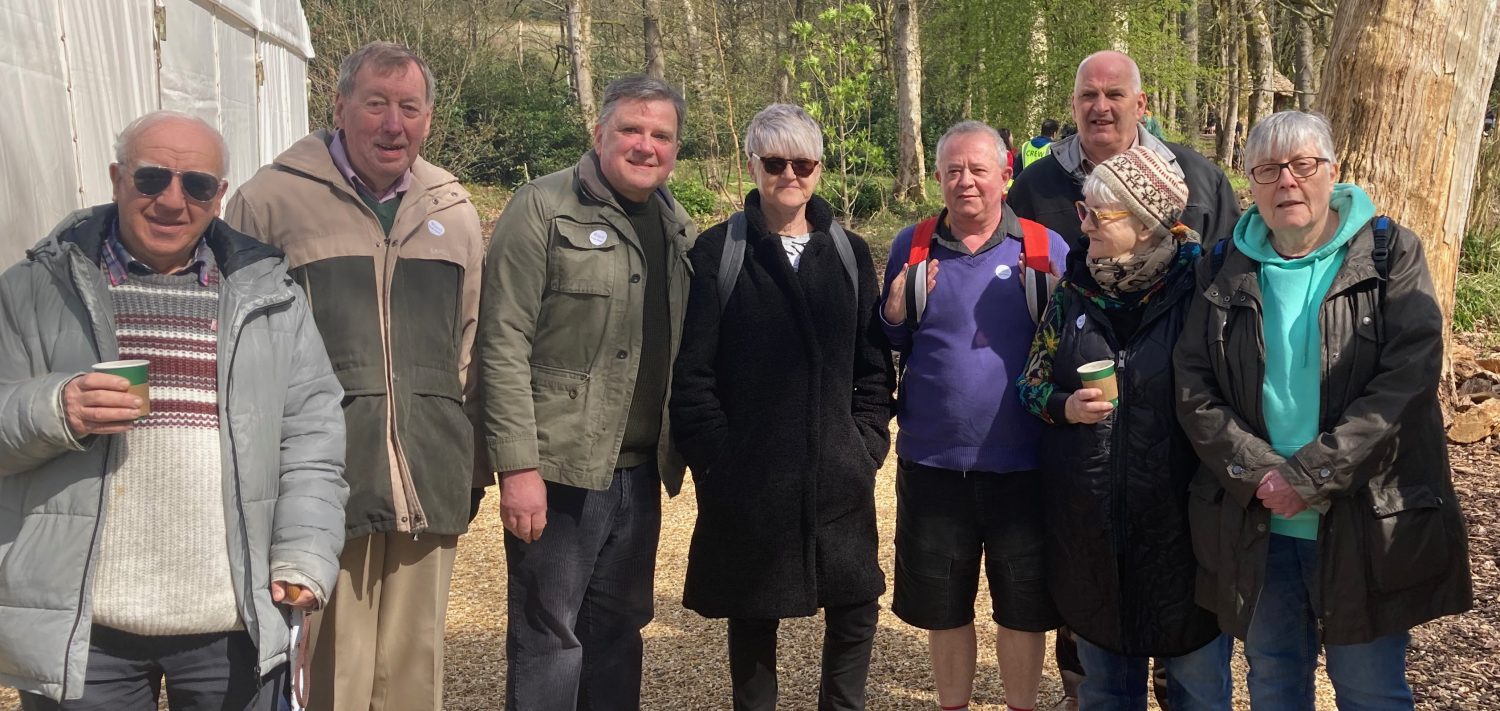
We started at Manchester Piccadilly, with others joining on route, arriving in Blackpool North just before 12.00 noon. It was a short walk to the Layton Rakes – one of four Wetherspoon’s pubs in the town.
After lunch we had the opportunity for a short walk on the prom – Blackpool’s seafront – before our welcome to Showtown.
Showtown opened in March this year and is Blackpool’s brand new all-singing, all-dancing museum, next door but one to Blackpool Tower!
We discovered the stories of the comedians, dancers, acrobats and characters who turned the resort into the home of show business.
The six galleries showcase the very best of the seaside, magic, circus, Illuminations, shows and dance.
This project is the first permanent collection of LGBTQIA+ heritage in Blackpool.
Oral history stories from members of the community have been recorded and are available here.
As part of the We’re Still Here… project photographer Stuart Linden Rhodes has exhibited some of his images from Blackpool’s gay scene in the 90’s outside the Grundy Art Gallery. The exhibition is open until 11 June 2024.
Ghost screenwriter comes out as gay at 81
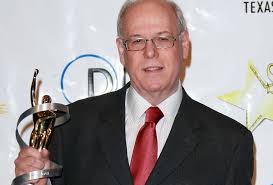
Bruce Joel Rubin at the ShoWest 2007 Awards Ceremony. Paris Hotel, Las Vegas, Nevada Photo: Shutterstock
Bruce Joel Rubin, the screenwriter who penned 1990’s Ghost, has come out publicly as gay.
“I’ve never not been gay,” Rubin, 81, said. “I am fully gay, and I always knew it.”
The Oscar winner recently published a memoir, It’s Only a Movie, in which he revealed his sexuality publicly for the first time. “I don’t like that I was closeted for so long, but it would just have confused people.”
That’s because Rubin has been married to a woman for close to 50 years. His wife, Blanche, has known that he was gay since shortly after they met. Rubin kept his sexuality mostly “internalised” because at the time he didn’t know how to come out.
Rubin says the couple have had what he describes as a “conjoined relationship” with another man. “She had a private moment with him, and so did I,” he says. “Also, I had a few other things along the way, which I didn’t write about because they might embarrass people. It’s not like I’ve been dead to that world. But I’m happily gay.”
Rubin and Blanche remain married, and he says he’s recently come out to their children and grandchildren. “I didn’t want to leave this world with any secrets,” he explained.
But now Rubin is “happily gay” and enjoying embracing his sexuality in his later years. “When you hit your 80s and you think your libido is gone, it comes flying back,” he says. “Male beauty for me is overwhelmingly powerful. Just seeing someone in the supermarket, I feel this explosive joy.”
Barclays Bank Branches
Barclays Bank branches throughout the UK will be showing the campaign films from 2023 (filmed by Punch) across June to mark Pride Month 2024. This should give some great exposure to our amazing stories and the Pride in Ageing programme across June.
Whalley Range is an area of Manchester, located about two miles south-west of the city centre. It was formally known as Whalley in the Range, one of Manchester’s first suburbs, built by Manchester banker and businessman Samuel Brooks as “a desirable estate for gentlemen and their families.”
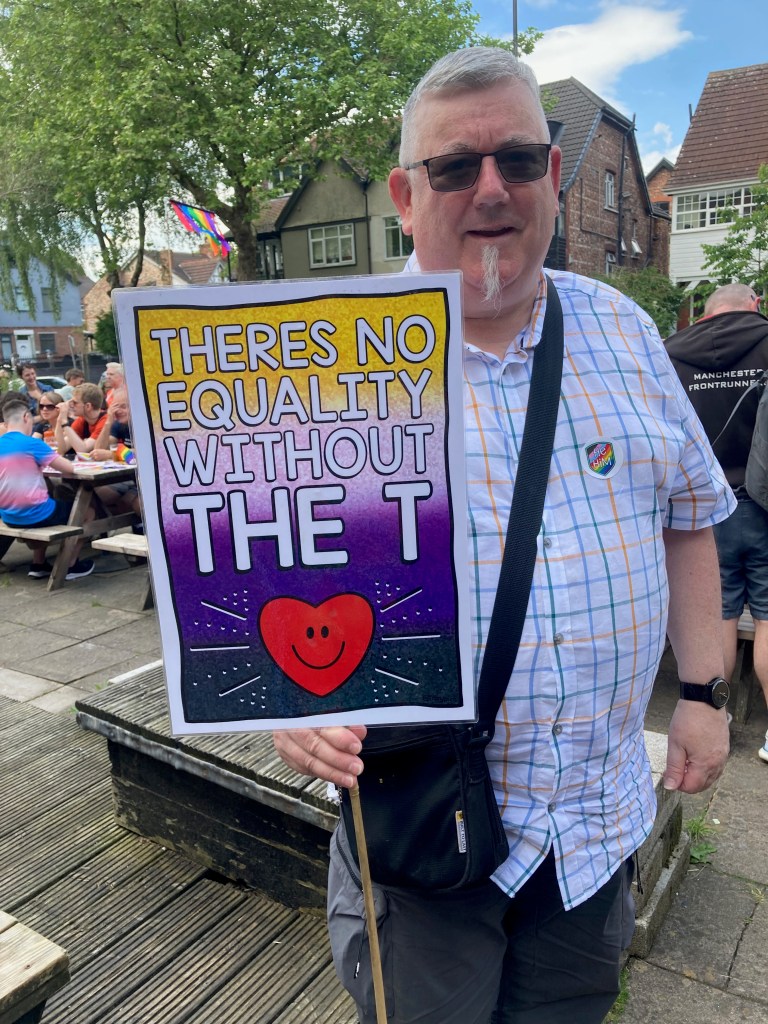
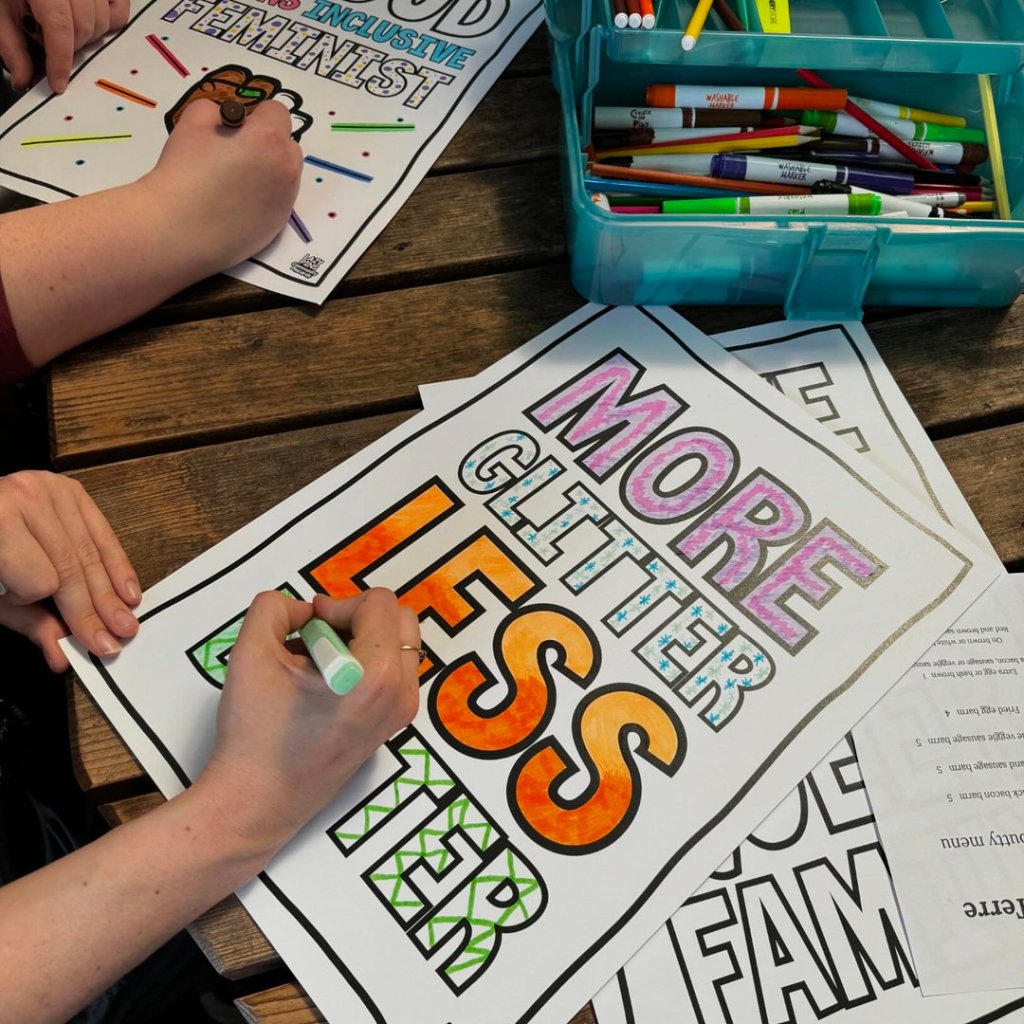
On Saturday 25 May before the annual Pride Parade, there was a placard making workshop with LazyPins Illustration outside the Nip and Tipple. People started to assemble and the parade set off at 12.00 noon ending at the Carlton Club.
Drag queen Banksy introduced vogue dancing, laughter yoga, speeches and cabaret. There was a dog show competition which included prizes for best dressed dog, campest walk and waggiest tail.
There were a number of stalls including the LGBT Foundation, the LGBTQ+ Majority Older Person’s Extra Care Housing Scheme and the Village Bakers.
We enjoyed the fish, chips, halloumi and mushy peas supplied by the Hip Hop Chip Shop. The sun shone and we had a brilliant day.
Pride Season – dates for the diary
Greater Manchester’s Pride Season has started and the following Prides are scheduled during June:
Saturday 1 June – Bury Pride
Sunday 2 June – Stockport Pride
Saturday 15 June – Tameside Pride
Saturday 22 June – Salford Pink Picnic
Sunday 30 June – Pride in Nature with RHS Garden Bridgewater
Unlike previous years, this year at Bury Pride, you do not require a ‘free ticket’ to attend the event.
Come along on the day with your loved ones, friends, family, colleagues, glitter pens, flags and have a jolly good time!
Wolf will be performing around 2.15pm.
Why Modernist Women Liked Cross-Dressing
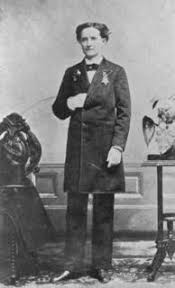
Mary Edwards Walker, a Civil War surgeon, around 1870 via United States National Library of Medicine
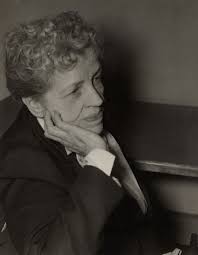
“What a relief it is to be freed from chignon, extra braids, fizzes, rats, mice, combs, pins, etc, etc,” declared Dr Mary Edwards Walker (1832-1919), feminist, abolitionist, prohibitionist, surgeon, prisoner of war, the only woman to win the Medal of Honour and cross-dresser. Mary Walker wore trousers on the battlefields in the 1860s and, in her later years, the evening dress of the early twentieth century male, including the tall silk hat.
Dr Walker was proud of having been swapped “man for man” with a Confederate soldier at a prisoner exchange. Walker’s writing on the liberation inherent in getting rid of the bondage of Victorian women’s clothing helps set the stage for the women at the forefront of what was once thought of as the exclusively male movement: Modernism.
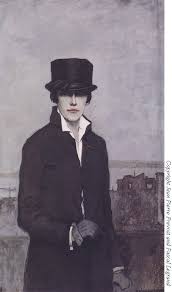
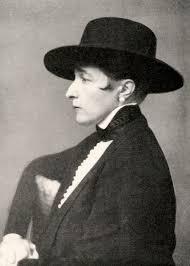
Women like Gertrude Stein, Romaine Brooks, Frida Kahlo, Radclyffe Hall, Djuna Barnes, Vita Sackville-West and others took it all a step further than “tom boys” of an earlier era, like Willa (“Willie”) Cather, who liked to wear trousers and a Civil War cap when young. The women of the early twentieth century were making a travesty of sexual signs.
Women in masculine garb could be thought of as women warriors, while men in women’s clothing were considered emasculated, ridiculous, or psychopathic. Women cross-dressers could be brooding, Byronic figures but for women the inversion of cross-dressing is not always or even primarily erotic.
The appeal of clearly seductive cross-dressers as Sarah Bernhardt and Marlene Dietrich can function as sex symbols for heterosexual men, reflecting masculine attitudes to eroticise independent women.
Female Modernists tended to be more extreme in playing the male role by using male names eg Charlotte Bronte (Currer Bell), Mary Ann Evans (George Eliot), and Olive Schreiner (Ralph Iron), among others.
A century after the Great War, women in trousers are mainstream, an illustration of the radical becoming conventional.
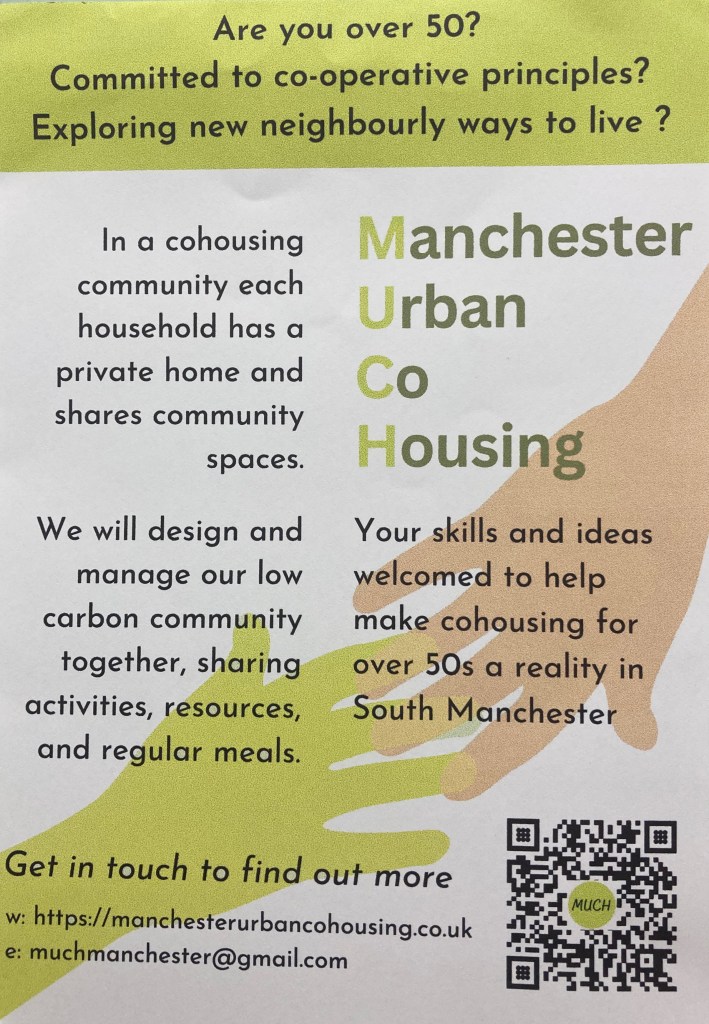
Manchester Urban Co Housing
If you are interested in cohousing, Manchester Urban Co Housing (MUCH) can be contacted on muchmanchester@gmail.com
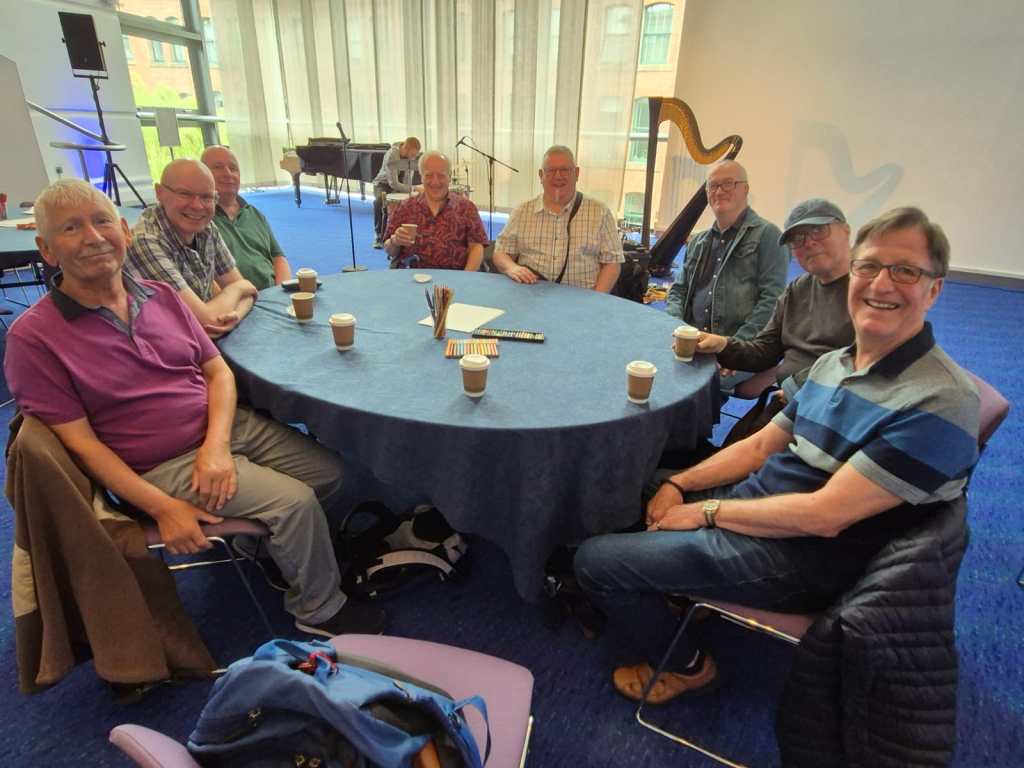
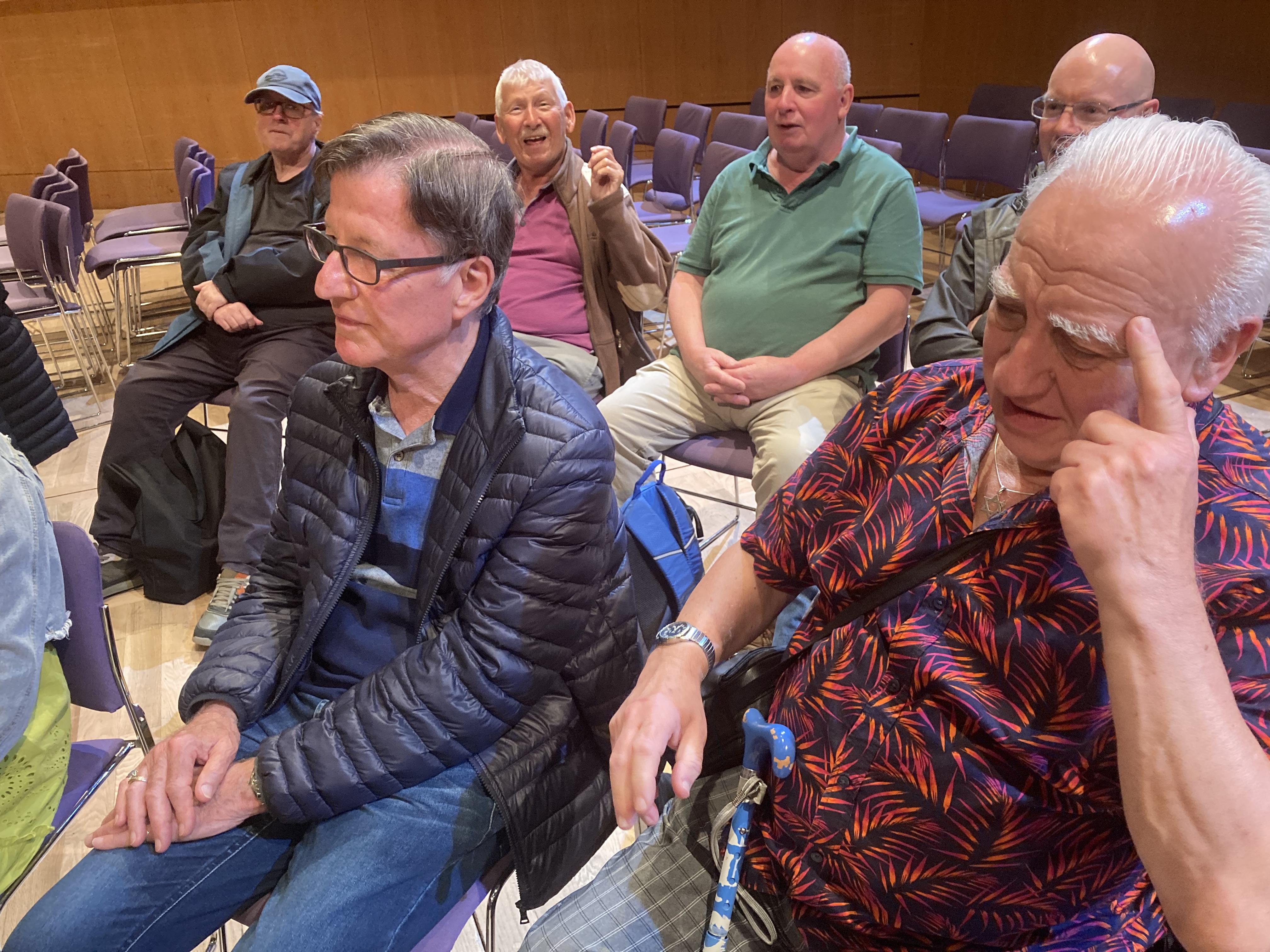
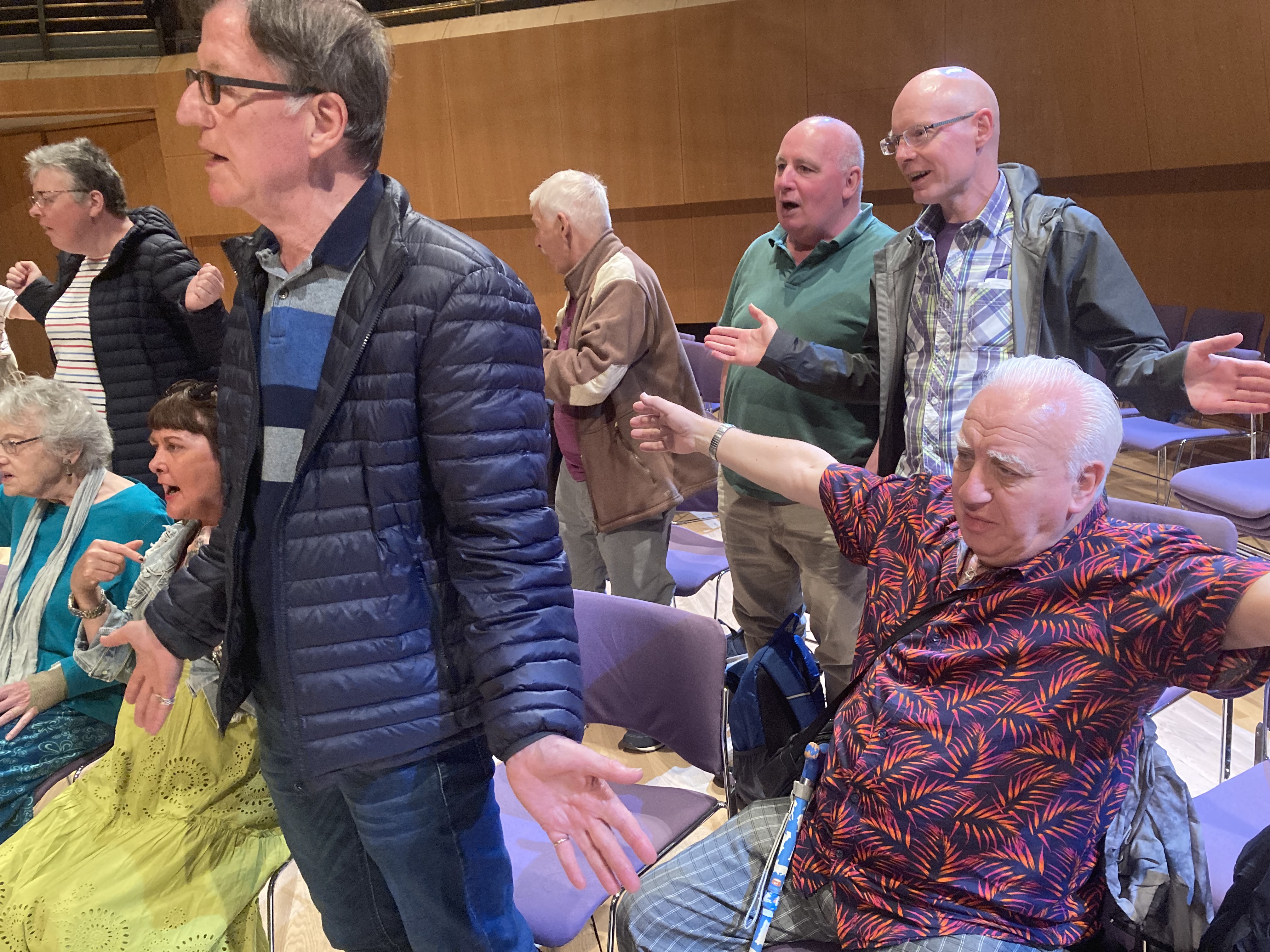
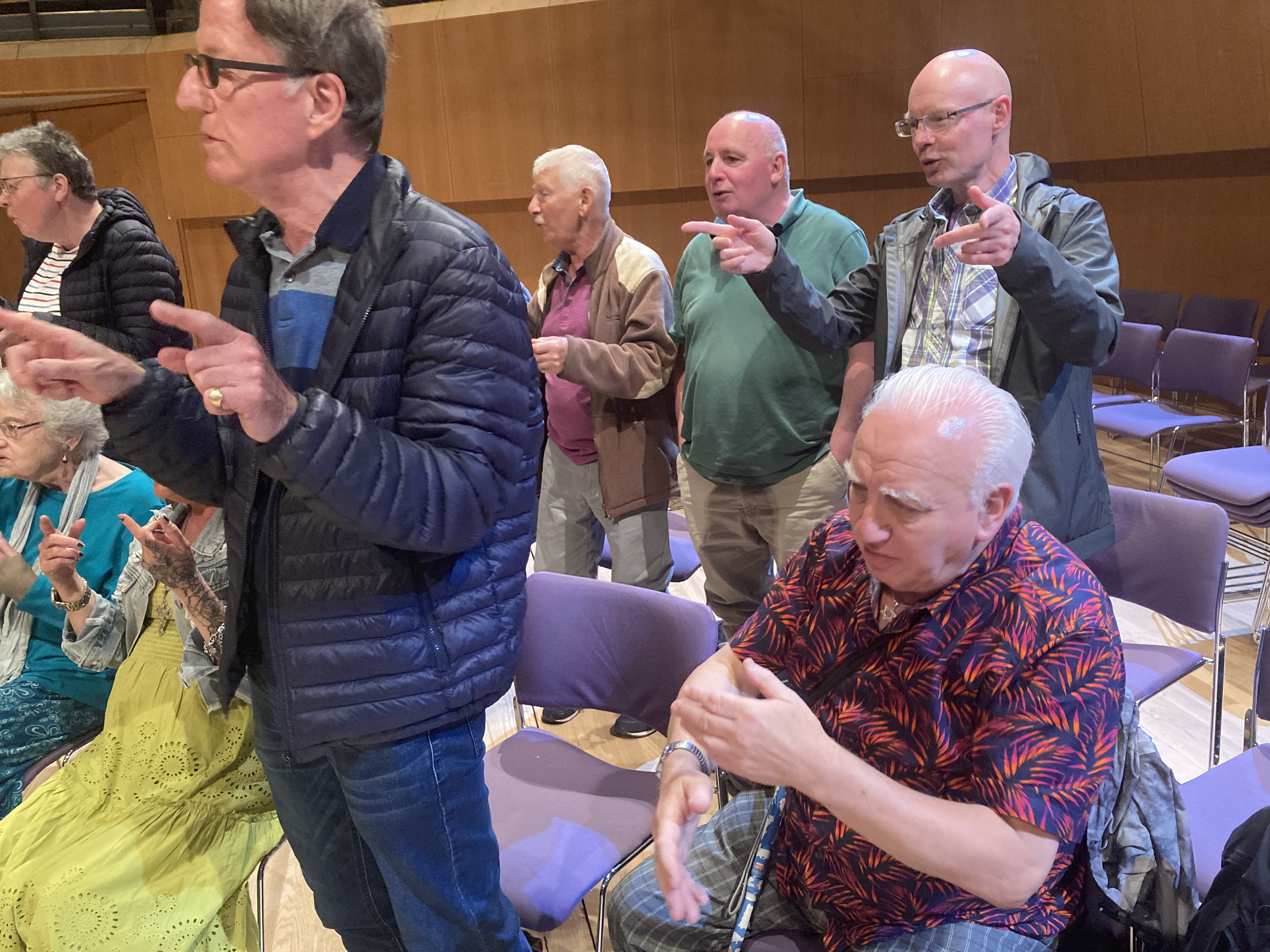
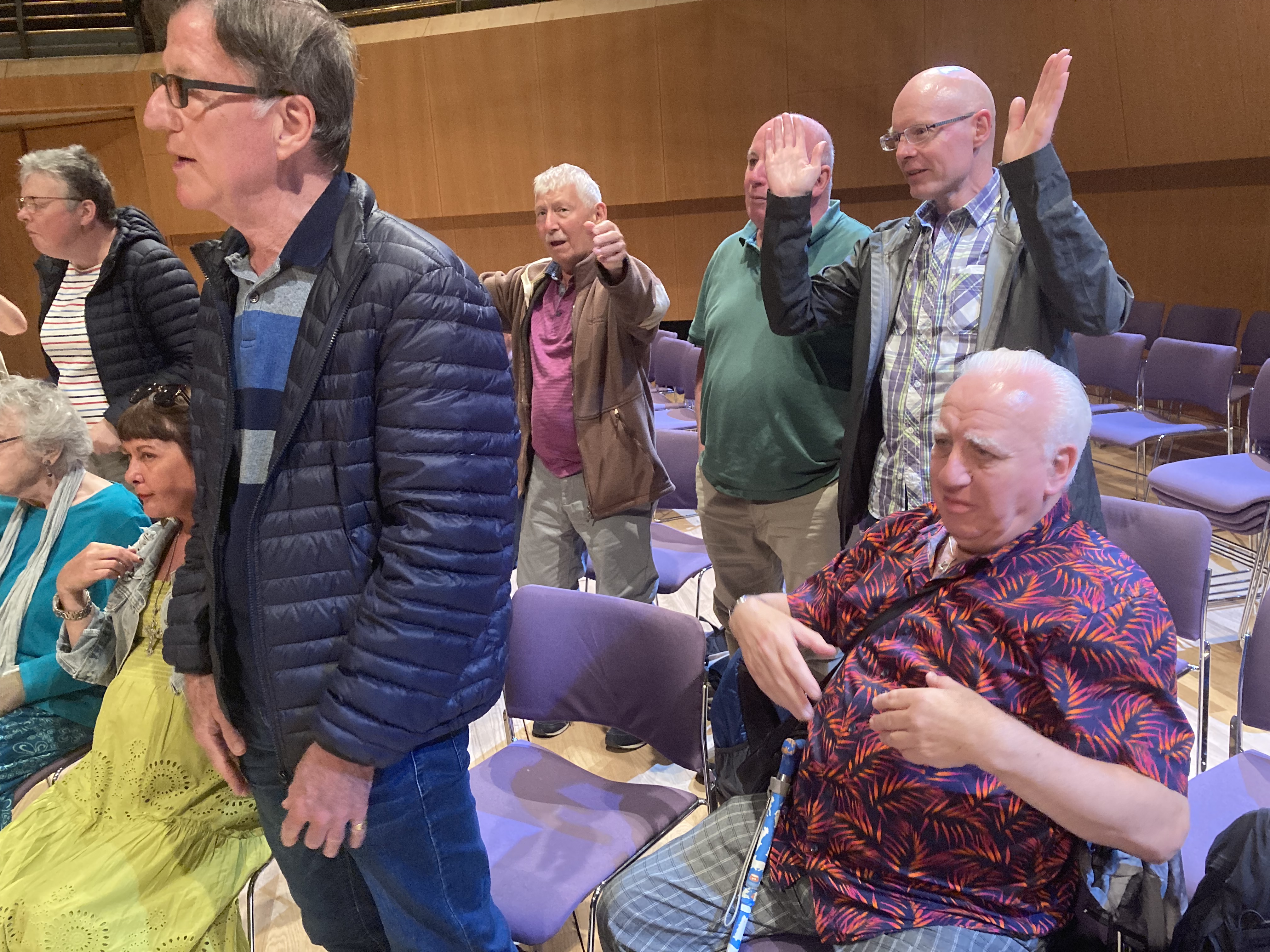
Nine members of Out In The City had a really enjoyable day at the Bridgewater Hall’s Community Day.
We joined people from different community groups from all over Greater Manchester, some with disabilities and mental health issues. The day used music and art to promote a sense of well-being.
After tea/coffee and a brief introduction to the day’s events, our group began with an interesting and informative backstage tour of the Bridgewater Hall. We then attended the music/art workshop in the Barbirolli Room. We were invited to create a piece of artwork based on the harp and drum music that we listened to.
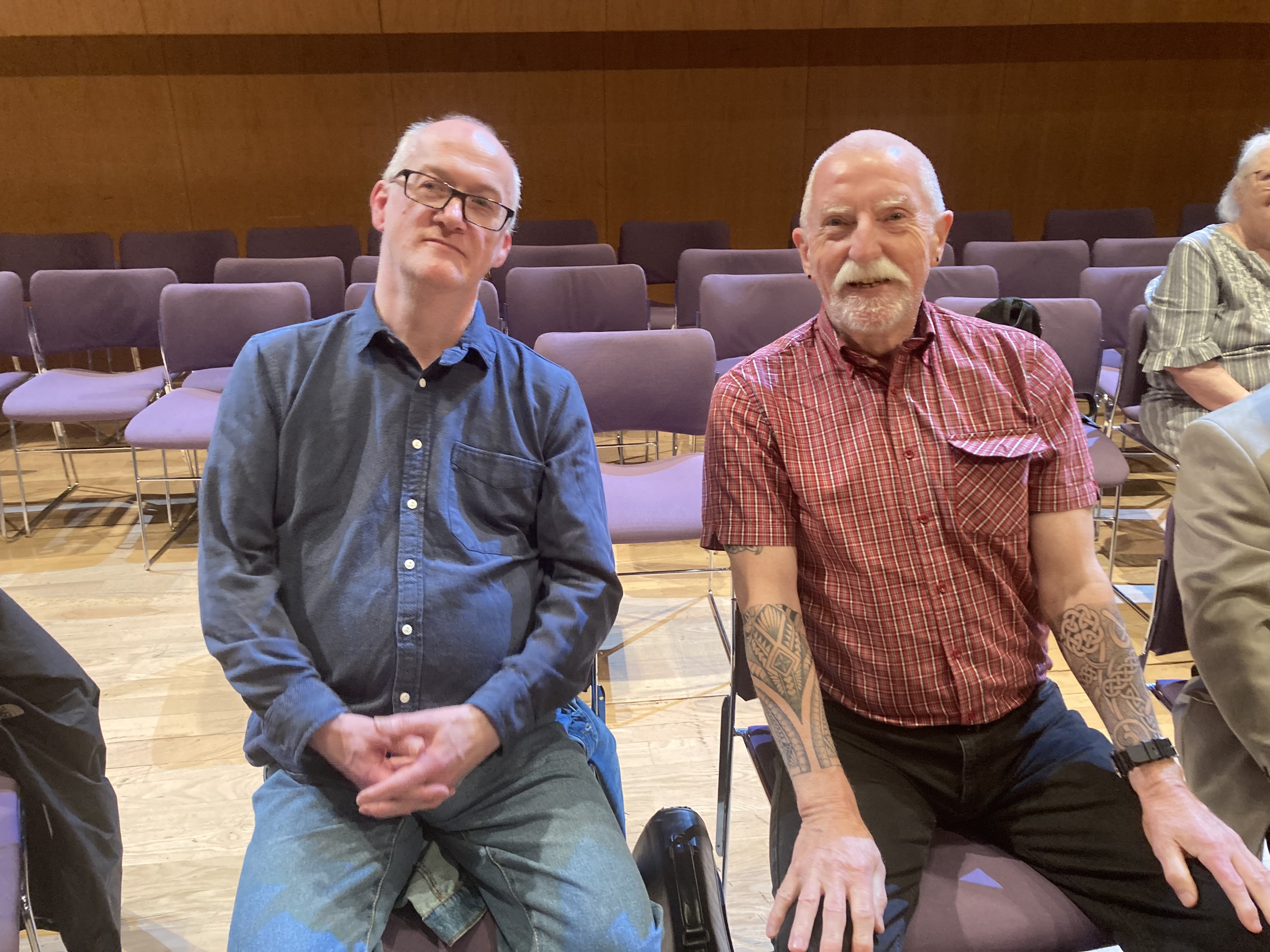
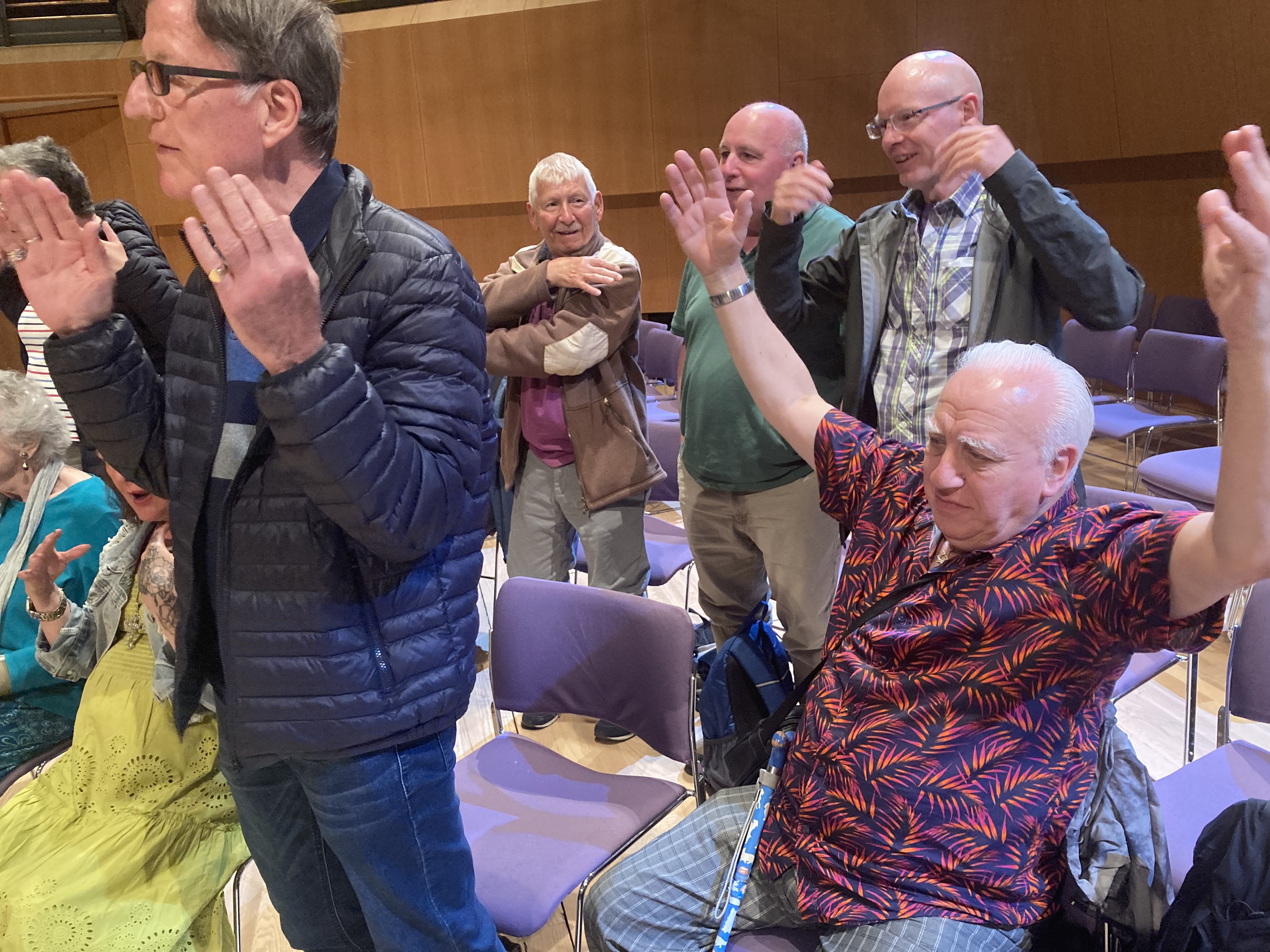
After a box lunch, we then attended the singing workshop. This took place in the auditorium on the Bridgewater Hall stage! We clapped and patted our bodies to make percussive sounds. Andy and Patrick even did a bass harmony duet to “Ain’t No Mountain High Enough”. It was a fantastic experience.
Frankie Goes to Bollywood
From the makers of Britain’s Got Bhangra comes the world premiere of a new British musical “Frankie Goes to Bollywood”.
We went to see this spectacular musical at HOME Theatre 1. The musical is a breathtakingly colourful journey of romance, epic songs and dance – inspired by real stories of British women caught in the spotlight of the biggest film industry in the world.
Frankie never wanted to be a star, and after a chance encounter with a director, she finds herself transported to the ruthless world of Bollywood. As she climbs the sparkling staircase of stardom, Frankie must confront what she is willing to do for fame and fortune. Can she stay in the Bollywood family and still be true to herself?
Amidst the heroes and villains, ornate costumes and sweeping sets, get ready for this tale of being British in Bollywood. The show is totally fabulous and highly recommended.
Pride on the Range
Pride season is just around the corner. There are so many Prides in Greater Manchester that some of them overlap! So, we cannot attend every event.
In 2024, Pride marches can seem to be dominated by young faces. That, of course, isn’t a bad thing and shows how progressive we have become. Yet, WE think that it’s important that us older LGBT+ people are also visible and celebrated at Pride.
Attending Pride on the Range on Saturday 25 May might be your first Pride OR you might be a regular attendee OR you’re returning. We would love for you to join us at Pride on the Range this year. Collectively we will be VISIBLE, PROUD and CELEBRATED.
Meet at the Nip and Tipple, 197 Upper Chorlton Road, Whalley Range, Manchester M16 0BH at 11.30am. The parade will set off at 12.00 noon and end at the Carlton Club, 113 Carlton Road, Whalley Range, Manchester M16 8BE for an afternoon of stalls, celebration and entertainment.
Bolton Pride
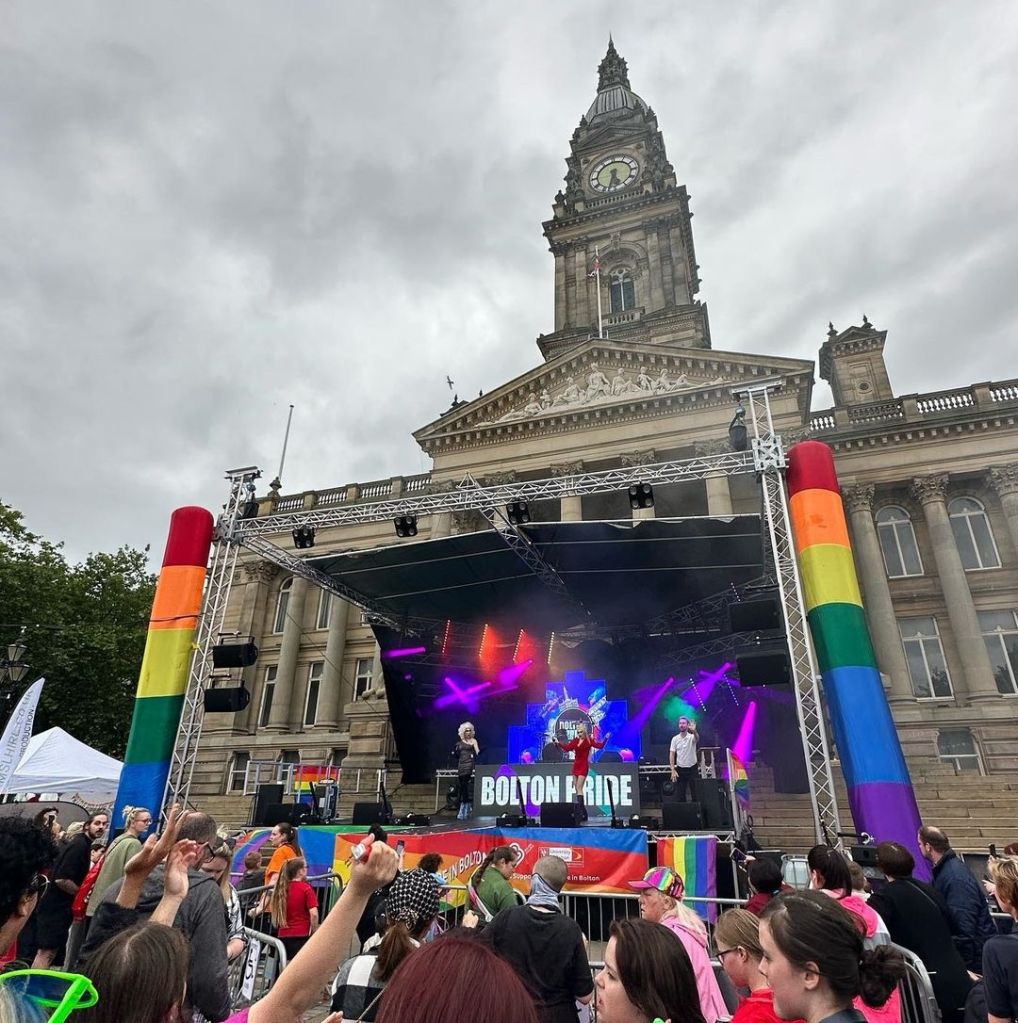
Bolton Pride is being held in Victoria Square, Bolton BL1 on Saturday, 25 May from 10.00am to 6.00pm and on Sunday, 26 May from 10.00am to 5.00pm.
The event is organised by a not for profit community organisation focused on and shaped by the local Bolton LGBTQ+ Allies community and business partnerships.
Their mission is to reduce hate crime and normalise acceptance of the diverse community that resides in and around the amazing town of Bolton.
You must get your free tickets to enter the Pride Festival in Victoria Square here.
Move Manchester is an innovative North West and Greater Manchester Dance Theatre company, led by co-founders Jack Hilton (they/he) and Ayesha Fazal (she/her).
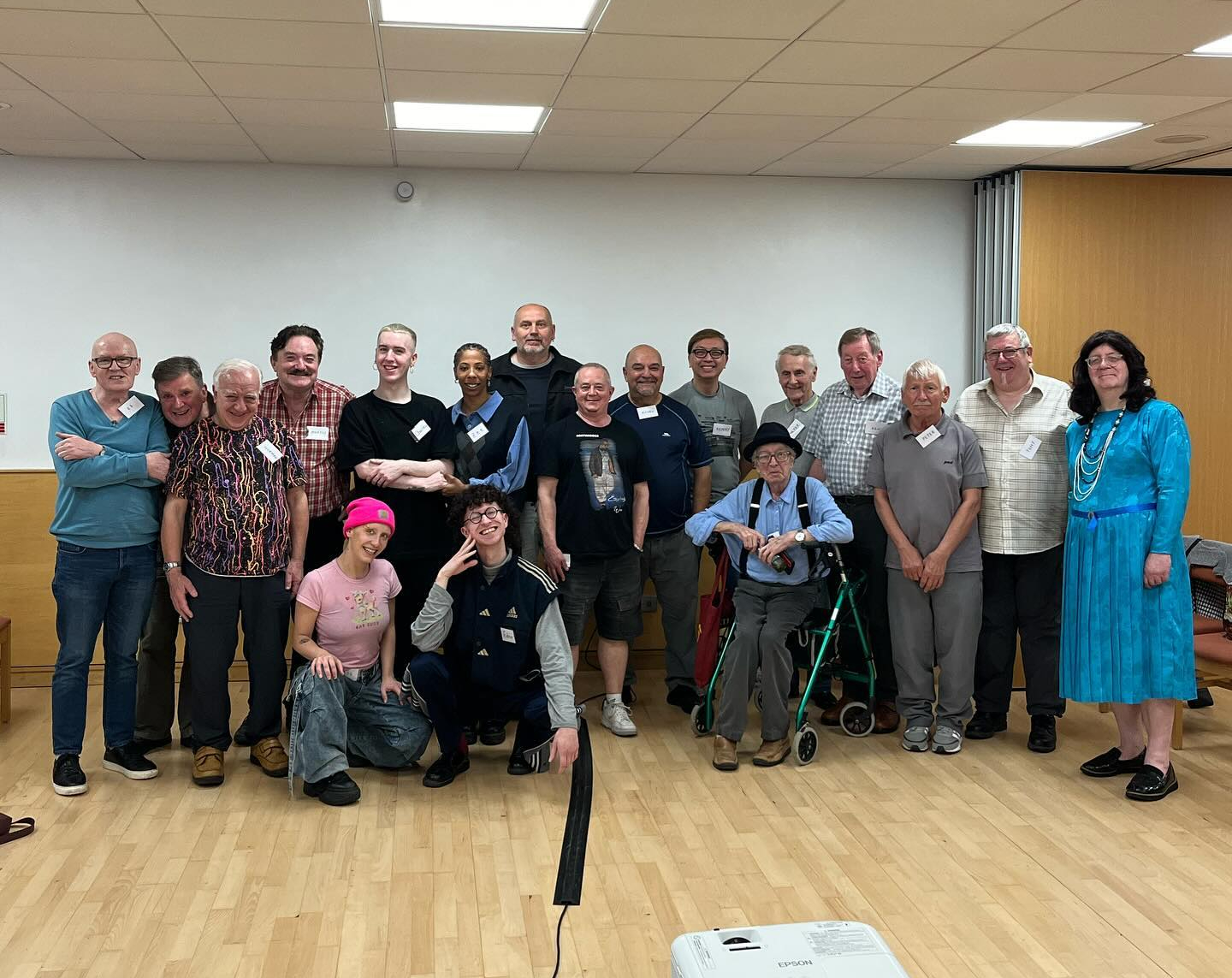
Director Jack together with members of the Queeries team visited Out In The City to deliver a workshop.
This is what they said: “What an incredible privilege the Queeries team and director Jack had this week, they delivered a workshop to members of the Out In The City group for LGBT+ people over 50 in Manchester.
Speaking with community elders, sharing our stories, our emotions and thoughts. Coming closer despite age and allowing our queerness to connect beyond generation. Thank you to all participants for jumping into the workshop, having fun with the dance element and speaking transparently, openly and with pride in conversation.
Extra thank you to our inspiring team of dancers who helped to facilitate the workshop and supported director Jack in delivery and conversation.”
Queeries is a new contemporary dance piece which will be shown at Waterside Arts, 1 Waterside, Sale M33 7ZF on Tuesday, 28 May from 5.30pm to 6.30pm. Tickets are free – contact us here urgently if interested.
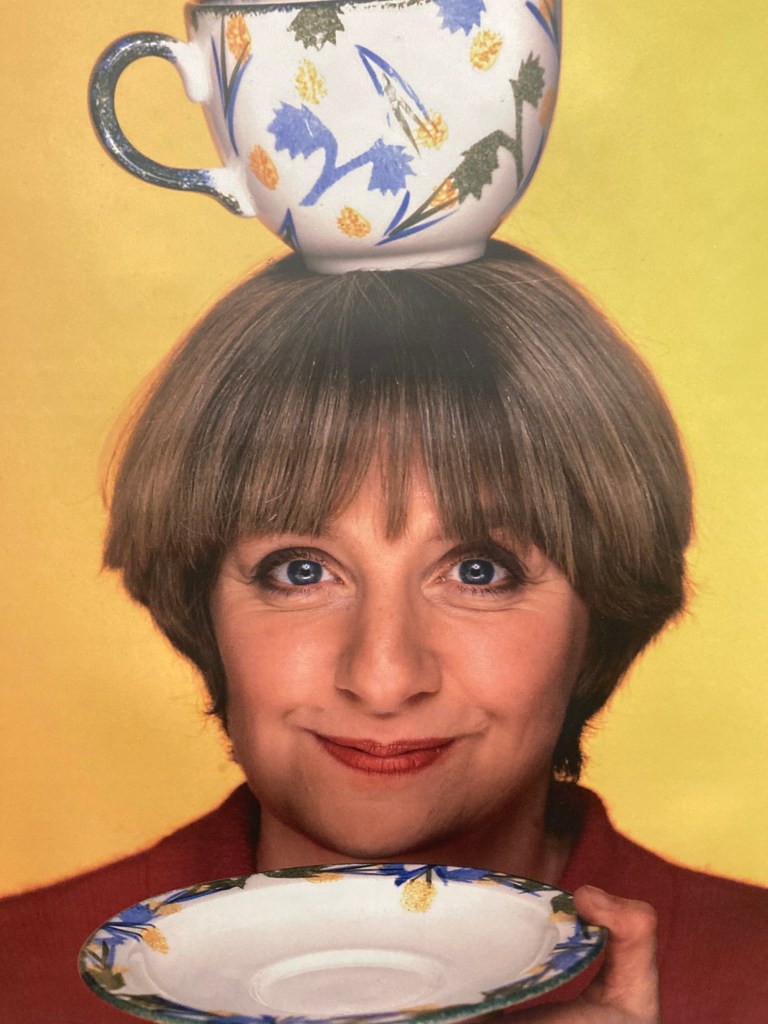
It would have been Victoria Wood’s 71st birthday on 19 May.
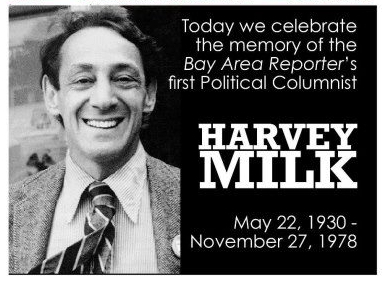
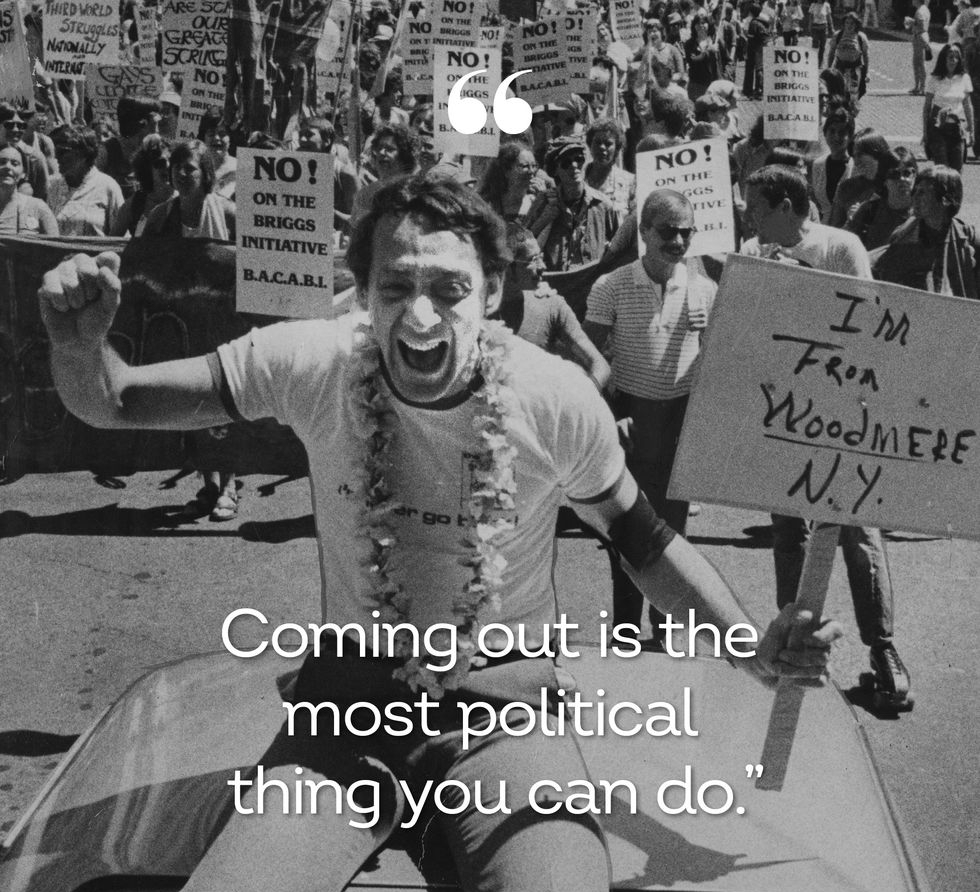
Harvey Milk
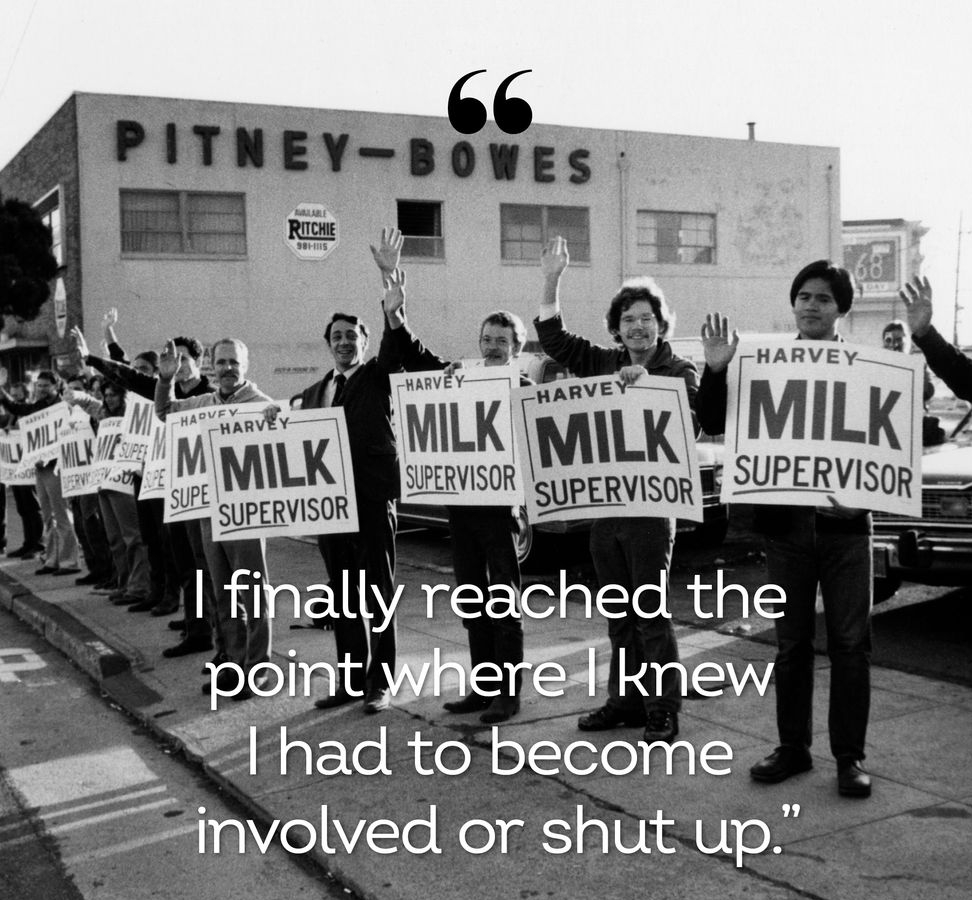
Harvey Milk became one of the first openly gay elected officials in the United States when he was elected to a seat on the San Francisco Board of Supervisors in 1977 – a milestone victory that made headlines in the US and beyond.
He was influential in advocating for LGBT+ rights and representation, making him an early pioneer in the fight for equality. His unapologetic proclamation of his identity gave new hope to people in the LGBT+ community, who faced severe discrimination.
In office, his ambitious agenda included protecting gay rights, as well as establishing day care centres for working mothers, converting military facilities to low-cost housing, reforming the tax code to attract industries to derelict warehouses and factories and other reforms.
Less than a year after he took office, Milk was assassinated, alongside Mayor George Moscone, by Dan White, a disgruntled former city supervisor who snuck into City Hall through a basement window. Thousands marched in his honour after his death.
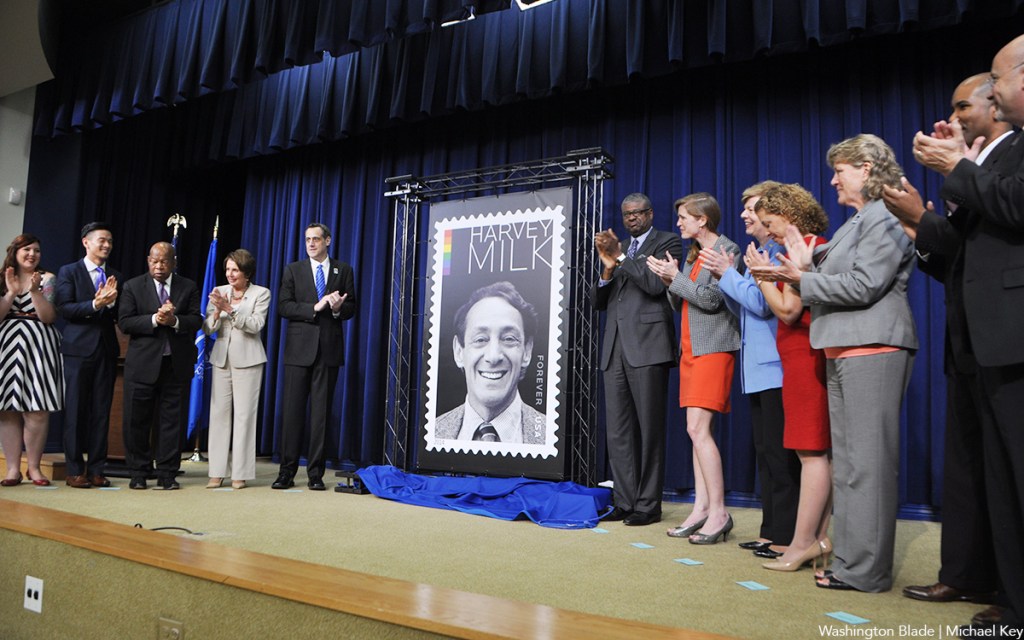
The 2008 movie “Milk,” filmed partly in San Francisco, with Sean Penn as Milk led Gov Arnold Schwarzenegger to sign legislation making Milk’s birthday a Day of Special Significance – Harvey Milk Day – which falls on 22 May. Also, President Barack Obama awarded Milk with a posthumous Presidential Medal of Freedom. On Milk’s 84th birthday, the US Postal Service issued a commemorative Forever stamp in his honour.
He became a public figure during his run for office, calling for hope and change rather than hate and hiding with many – now famous – Harvey Milk quotes. In many ways, he was the first openly gay man to capture the attention of the public eye, though it wasn’t always positive. He inspired hope not only in the gay community, but in the lesbian, bisexual, transgender, and queer communities, too.
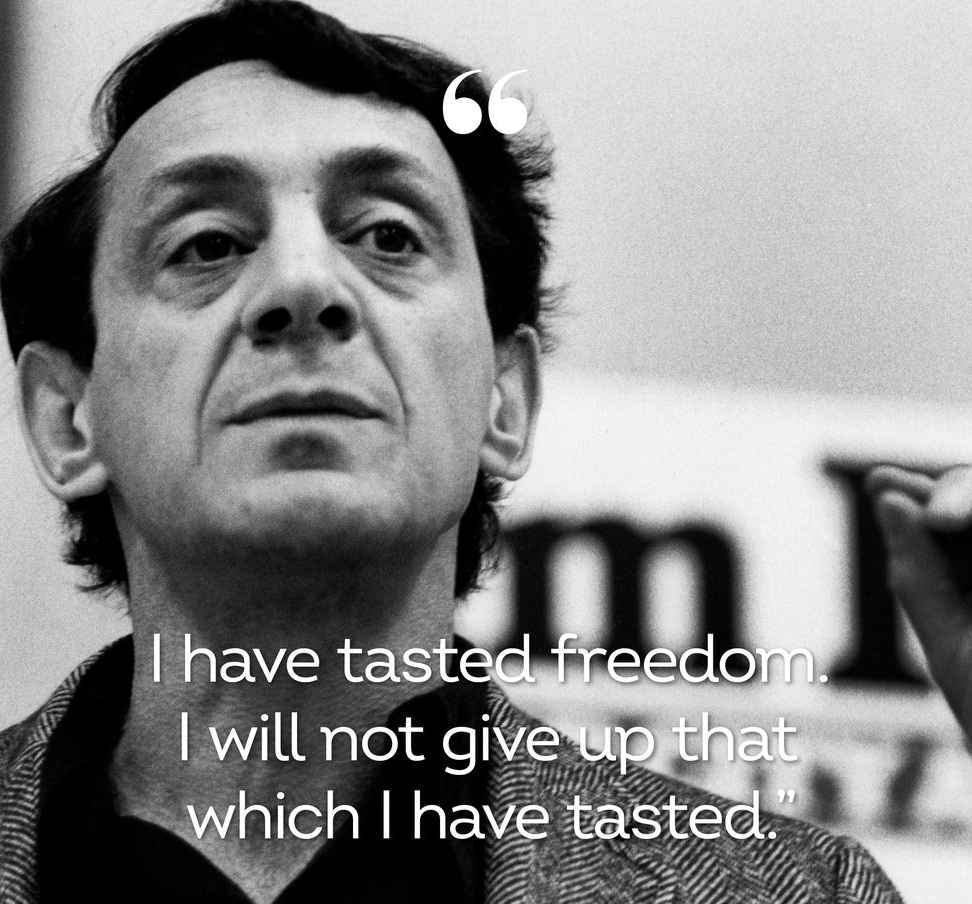
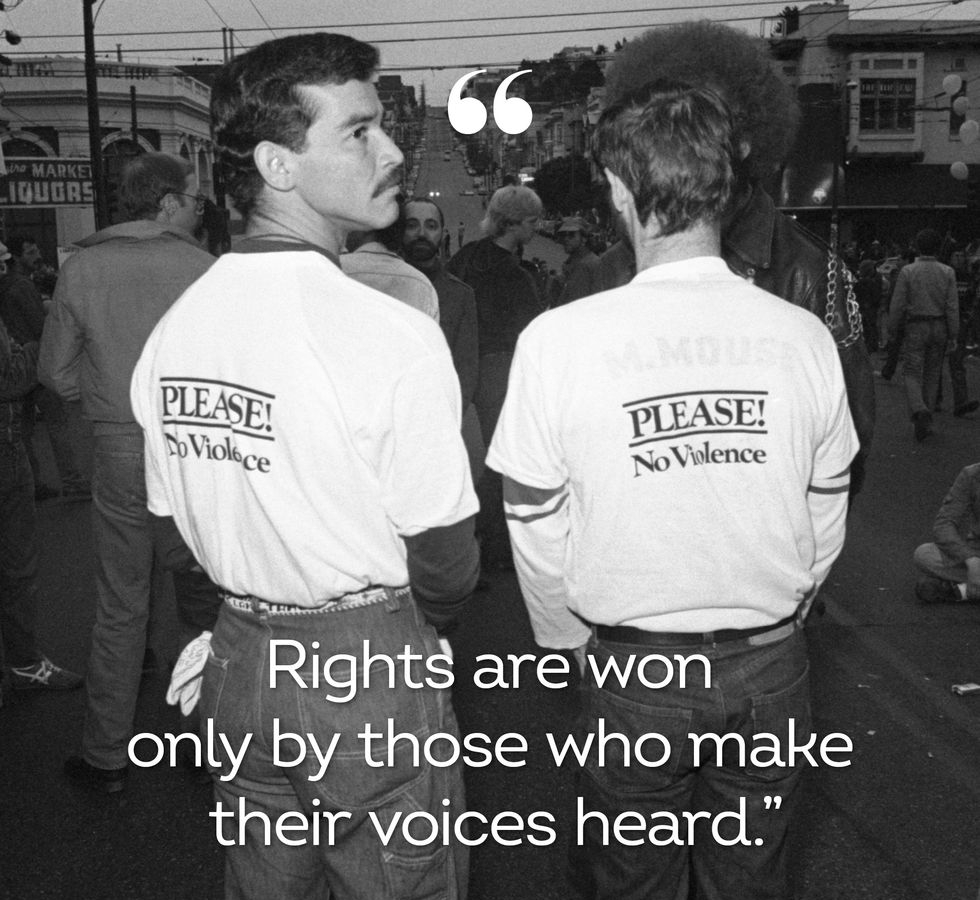
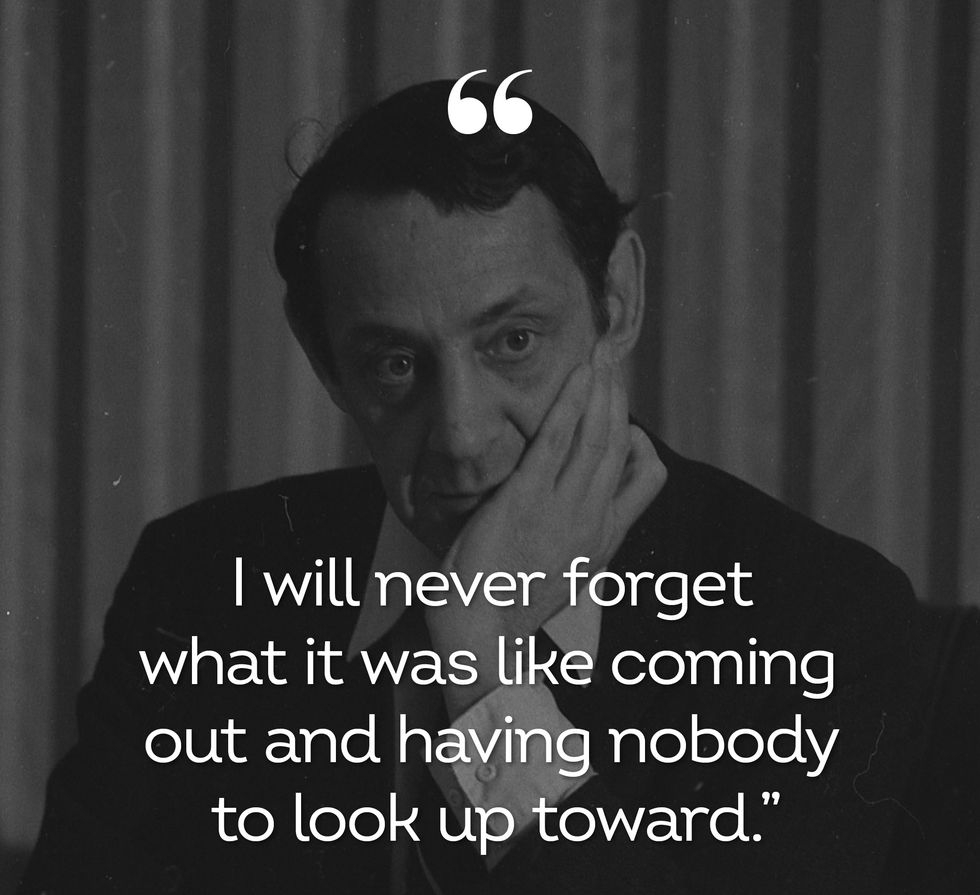
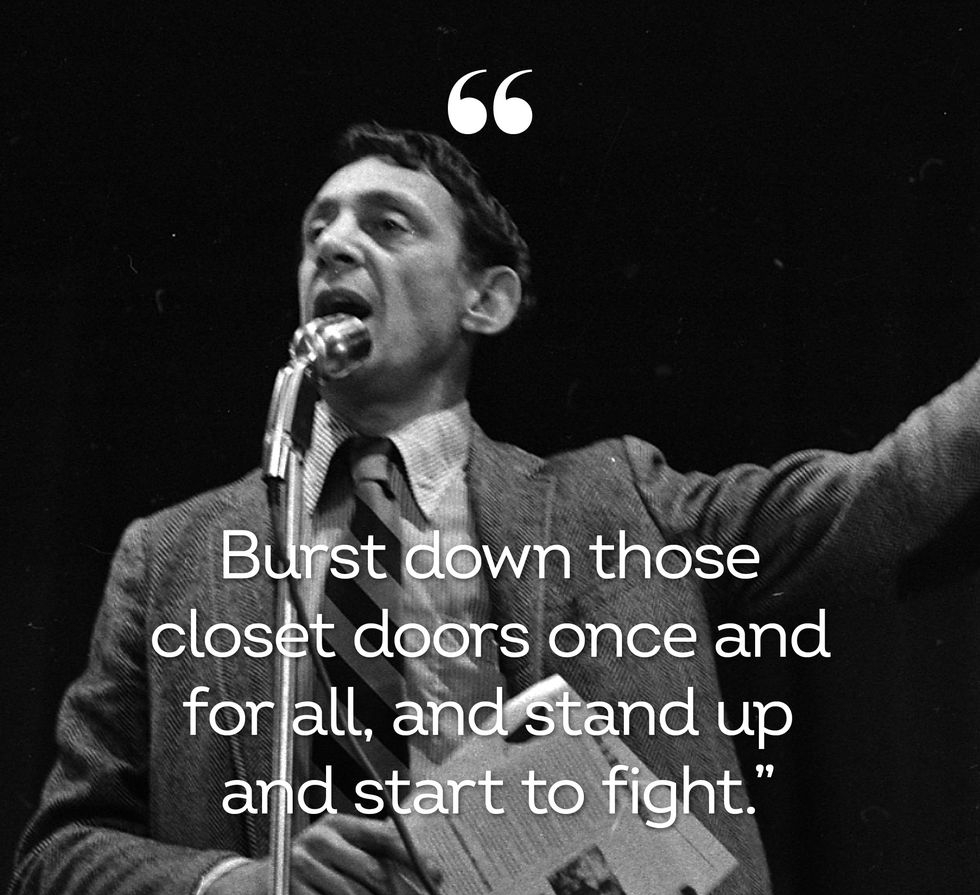
Harvey Milk’s Most Memorable Quotes
Milk’s life is a lesson that one person can make a difference. A strong, united community inspired by Milk and others has changed and continues to change the world.
Rainbow Lottery Super Draw!It’s not too late to escape from it all this Summer!
Get ready to pack your bags and embark on the adventure of a lifetime! We’re thrilled to announce our latest Super Draw prize, and trust us, it’s one you won’t want to miss out on.
On Saturday 25 May, one lucky winner will walk away with a £1,000 holiday voucher, opening the doors to endless possibilities for your dream getaway. Already got your summer escape booked? Take the £1,000 cash alternative! Treat yourself to a little taste of luxury, or spend it your way at home!
You’re already in with a chance to win big – but don’t forget, you can top-up your tickets just for the week of the Super Draw!
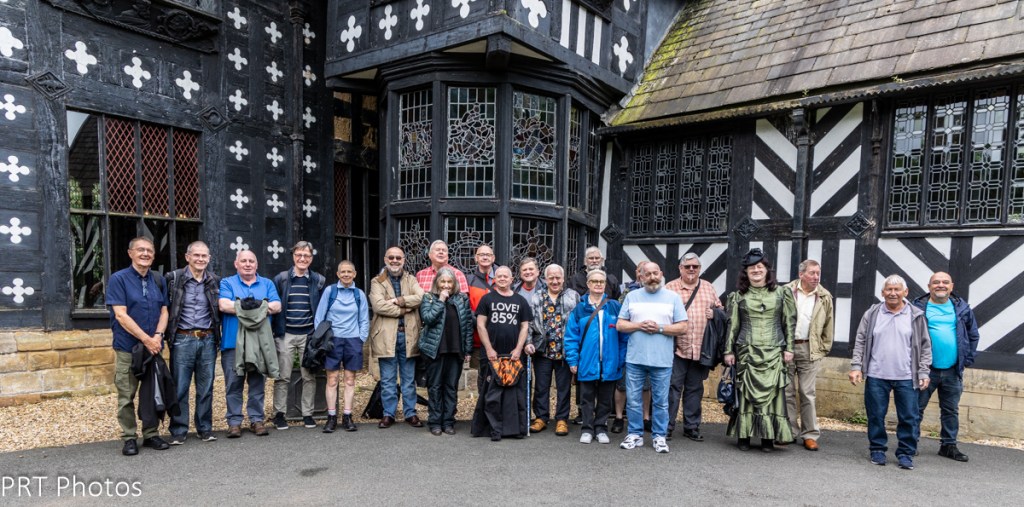
We set off just before 10.30am in a coach from Manchester and reached Samlesbury Hall in under an hour.
On arrival we headed for the Heritage Café and enjoyed a wonderful lunch before visiting the Grade I listed medieval manor house, which attracts more than 50,000 visitors each year.
Samlesbury Hall is a historic house in Samlesbury, Lancashire, six miles east of Preston. It was built in 1325 by Gilbert de Southworth (born 1270), and was the primary home of the Southworth family until the early 17th century.
The hall has been many things in its past including a public house and a girls’ boarding school, but since 1925, when it was saved from being demolished for its timber, it has been administered by a registered charitable trust, the Samlesbury Hall Trust.
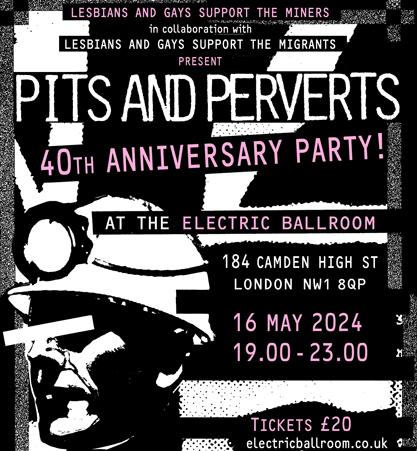
A 40th Anniversary Party of “Pits and Perverts” is being held at the Electric Ballroom on 16 May 2024.
Lesbians and Gays Support the Miners (LGSM) was an alliance of lesbians and gay men who supported the National Union of Mineworkers during the year long strike of 1984 – 1985. By the end of the strike, eleven LGSM groups had emerged in the UK and the London group alone raised £22,500 by 1985 (equivalent to £86,000 today) in support.
During the strike, the Thatcher government sequestered the funds of the National Union of Mineworkers (NUM), meaning that it was pointless for supporters of the strike to send donations to the national union. Instead, support groups in Britain were encouraged to “twin” with the various mining communities.
Among these organisations, the LGSM was formed by Communist Party of Great Britain activist Mark Ashton and his friends, after they collected donations for the miners at the 1984 Lesbian and Gay Pride march in London.At that pride march, Mark Ashton and Mike Jackson ended up collecting around £150. The London LGSM group met and fundraised in numerous locations, including the Gay’s the Word bookshop.
In November 1984, a group of lesbians broke away from LGSM to form a separate group, Lesbians Against Pit Closures, although some lesbians remained active in the LGSM campaign rather than joining the women-only group.
In addition to raising approximately £22,500 for the families who were on strike, there were reciprocal visits. The largest fundraising event that LGSM organised was the “Pits and Perverts” benefit concert, which was held in the Electric Ballroom in Camden Town, London on 10 December 1984. The event was headlined by Bronski Beat and its lead singer, Jimmy Somerville.
The miners’ groups were also among the most outspoken allies of the LGBT community in the 1988 campaign against Section 28.
IDAHOBIT
The International Day Against Homophobia, Transphobia and Biphobia (IDAHOBIT) was created in 2004 to draw attention to the violence and discrimination experienced by LGBT+ people.
It is observed annually on 17 May, and aims to raise awareness about discrimination against LGBT+ communities worldwide.
International Day Against Homophobia, Transphobia and Biphobia is currently celebrated in more than 130 countries, including 37 where same-sex acts are illegal. Thousands of initiatives, big and small, are reported throughout the world.
This year’s theme is “No One Left Behind: Equality, Freedom, and Justice for All”, and despite progress, challenges persist.
Findings from the 2019 National LGBT Survey revealed:
Over two-thirds of respondents avoid public displays of affection due to fear of negative reactions.
Shockingly, over 40% have experienced harassment or violence, with many incidents going unreported.
Accessing mental health services remains difficult for over 28% of respondents.
Letter to MP
A member of Out In The City wrote the following letter to his MP:
“I’m writing after reading about further attacks on the rights of trans people within the NHS.
This is the latest in a tide of hate and prejudice against trans people from the current government.
By far most of this directed at transwomen, statistically the most disadvantaged and vulnerable group in the UK.
The latest rule, saying trans people will be classified by sex rather than gender is as dangerous as it is ridiculous. Will trans women, who, by the way will often have the ‘biological’ genitals of a cisgender woman not be ‘at risk’ if placed with males? And do cis women really prefer transmen (who are always missing from this debate) in their women only wards? Transmen often are completely transitioned with a functioning penis, but apparently this is ‘safer’ for women than transwomen.
The deliberate conflation of trans people, particularly women, with rapists, abusers and even paedophiles has become the norm in this country, in the street, the media and even in Parliament, and I do not see Labour objecting to this persecution. One can hardly expect more from the Tories!
Enough nonsense has been allowed to be aired on this subject by uneducated, ill informed transphobes and extreme feminists eg J K Rowling, and never is there a counter argument heard from those affected or the experts in this area.
I am distressed and disgusted at this unchallenged attack on the trans Community.
Please speak to the LGBT Foundation CEO Paul Martin who I’m sure will be happy to explain the facts around the relative victimisation versus aggression of transwomen. Somebody needs to have the guts to stand up and challenge this misrepresentation of the facts and of an increasingly marginalised minority group.
If not Labour then who?
A demoralised Labour supporter.”
The response from the MP was as follows:
“Thank you for contacting me about the current discourse in politics surrounding trans people and their treatment within our NHS. I am sorry to hear that you are demoralised by the Labour Party at the minute.
I understand this is an extremely sensitive issue and I appreciate the serious concerns you have raised on this matter.
This discourse can often be emotive and politically charged, leading to debates in Parliament and the media that may not accurately reflect the experience of trans people and others. I believe responsible politicians need to understand that this concerns real people’s lives. Indeed, the Home Office has acknowledged the discussion of transgender issues by politicians, the media and social media may have led to an increase in hate crimes.
On the Government’s recent proposals for the NHS Constitution to give women the right to accommodation only shared by those of their biological sex, I am glad that the Government will consider responses to their proposals from the public, clinicians and medical professionals, patients, carers and organisations representing patients and staff and health stakeholders, before publishing its response and a new NHS Constitution. I will follow developments on this closely.
It is clear the country needs a different approach: one that does not treat LGBTQ+ rights as a political football or an afterthought, that acknowledges concerns about changes to legislation in this area but discusses these respectfully, and that restores our country’s reputation as a beacon of LGBTQ+ freedom and equality.
I am committed to working to end discrimination against trans, non-binary and gender diverse people.
More widely, we need a full, trans-inclusive ban on conversion practices, as well as to modernise, simplify and reform the gender recognition law to a new process, while continuing to support the implementation of the Equality Act 2010 including its provision for single-sex exemptions.
I am proud of the work that my Labour colleagues past and present have done to move Britain forward and advance LGBTQ+ rights – including the introduction of the Gender Recognition Act 2004, passing the Equality Act 2010, repealing section 28 and introducing civil partnerships.
Thank you once again for contacting me about this issue. I hope this response assures you of my commitment that I will continue to fight discrimination, bigotry and hatred against LGBTQ+ people.”


















 Out in the City