Mini Cini … Celebrating Pride … Diva Magazine … Stonewall Inn pictures

News

Oy Vey! My Son is Gay!!!

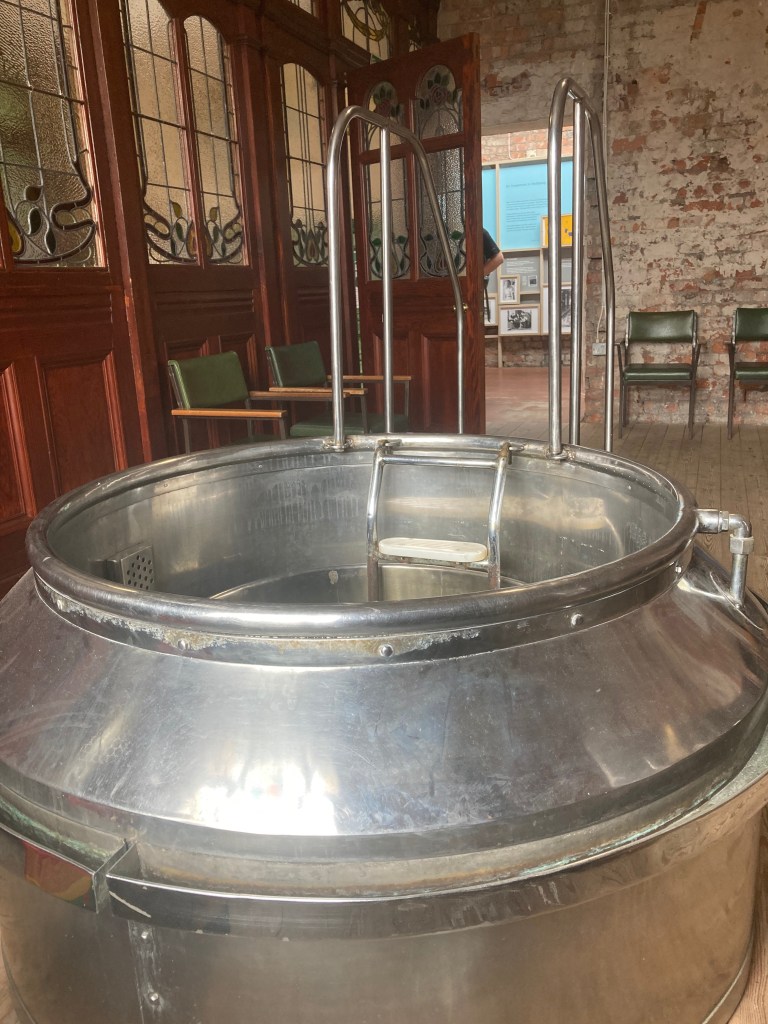
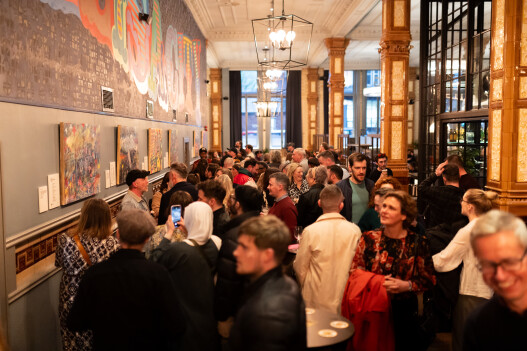
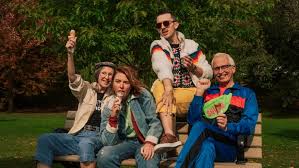
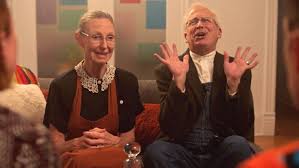
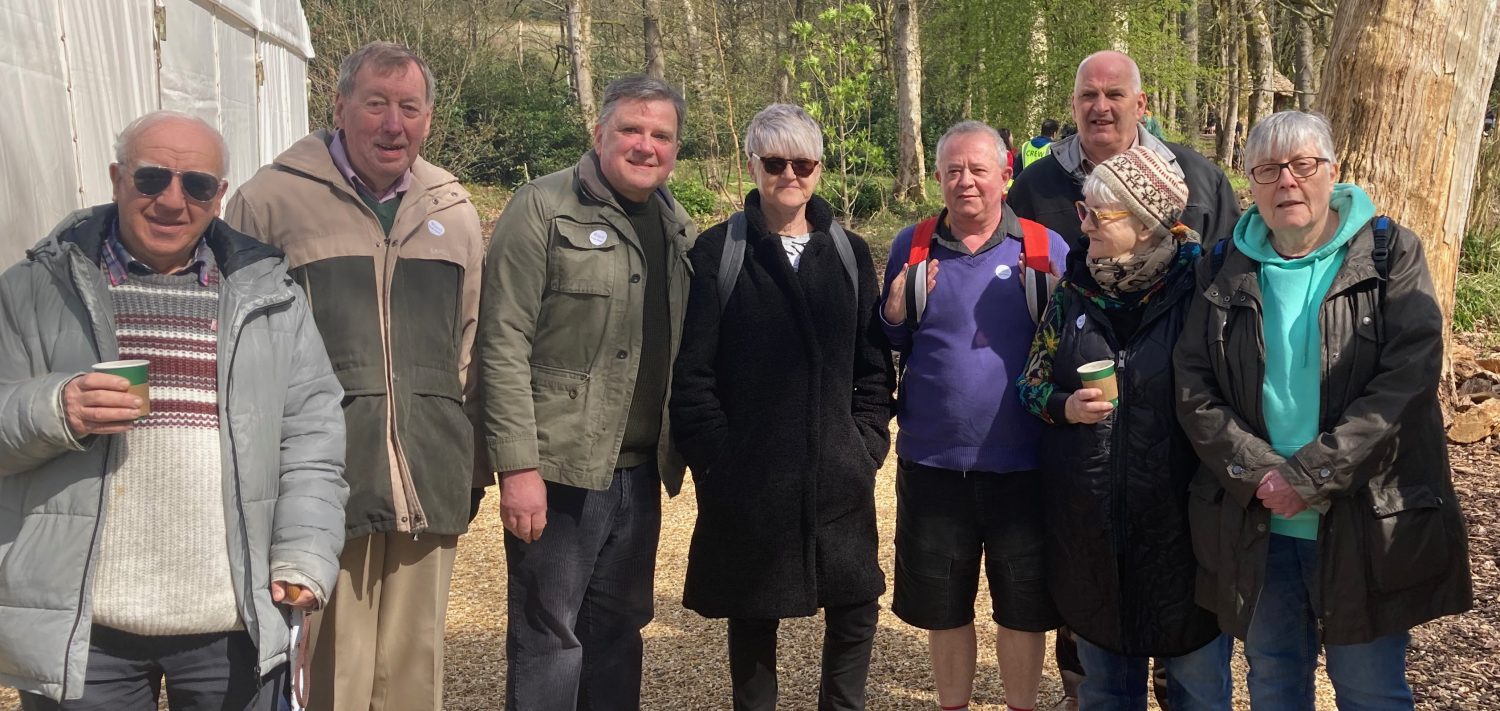
Members of Out In The City gathered at the Mini Cini at Ducie Street Warehouse to see the 2021 film “Half” and the 2009 film “Oy Vey! My Son is Gay!!!

Half” is a short film about a bisexual, half-Jewish man seeking belonging and not feeling truly a part of one religion or sexuality.

The main feature “Oy Vey! My Son Is Gay!!!” Is a wonderful film about love, family, and acceptance.

Every Friday night, the Hirsch family invites another “perfect” girl to Shabbat dinner in the hopes that their son will marry a nice Jewish girl.

This is put to an end when their son finally reveals that he is already seeing someone, and his parents can’t wait to meet the lucky lady – except she is actually a guy, a non-Jewish one. His parents are distraught, but when reality sets in they begin to blame each other for their son’s sexuality.

I absolutely loved the film especially the scene where the mom will only hear and see what she wants to and is coming to terms with her son being in love with a shiksa who takes her clothes off in public.

The film is genuinely touching, well acted and very humorous. It made me laugh at times and cry at others.

Celebrating Pride

BBC SOUNDS – Celebrating Pride Month

Explore true stories of love, relationships and same-sex weddings to 100 years of queer life in Britain seen through the lens of the arts.

Including “The Allusionist” (podcast on Polari) and “Public Indecency: Queer Art in Britain” there are more than 30 programmes that you can listen to here.

BBC iPLAYER – LGBTQ+ Voices

Enjoy a collection of documentaries celebrating the distinctive perspectives and powerful voices from the community.

Including “A Change of Sex” (series following Julia Grant on her transgender journey) and “Aids: The Unheard Tapes” there are more than 20 programmes that you can watch here.

How Manchester became one of the best places to live for LGBTQIA people to grow older

Pauline (left) and Mindy (right) – Images by LGBT Foundation

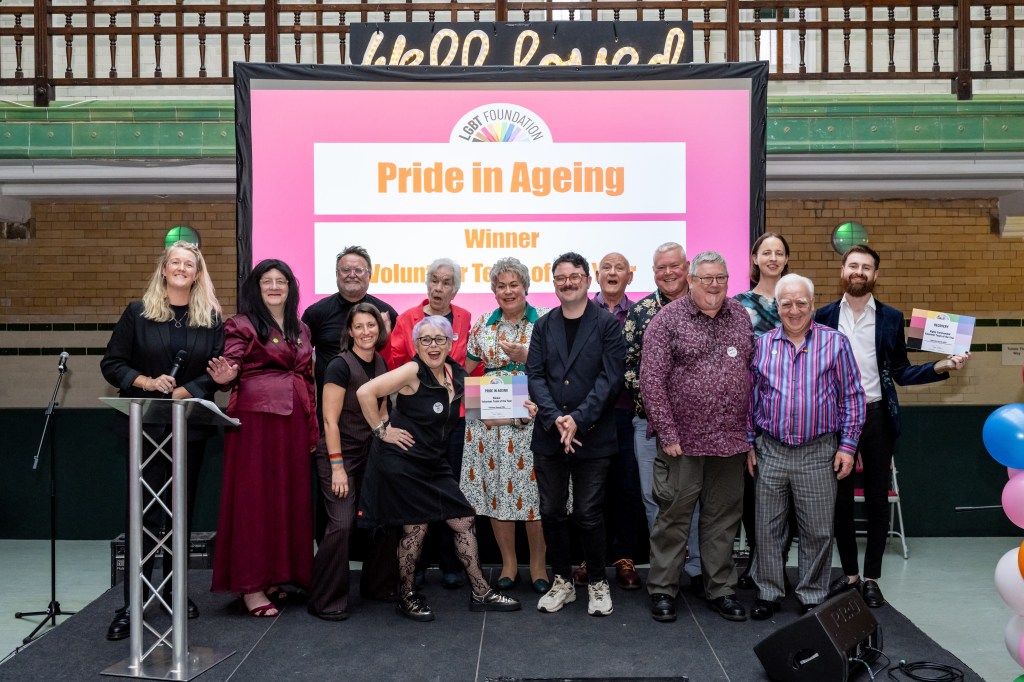
LGBT Foundation spoke to Diva Magazine about the power of their Pride In Ageing Programme.

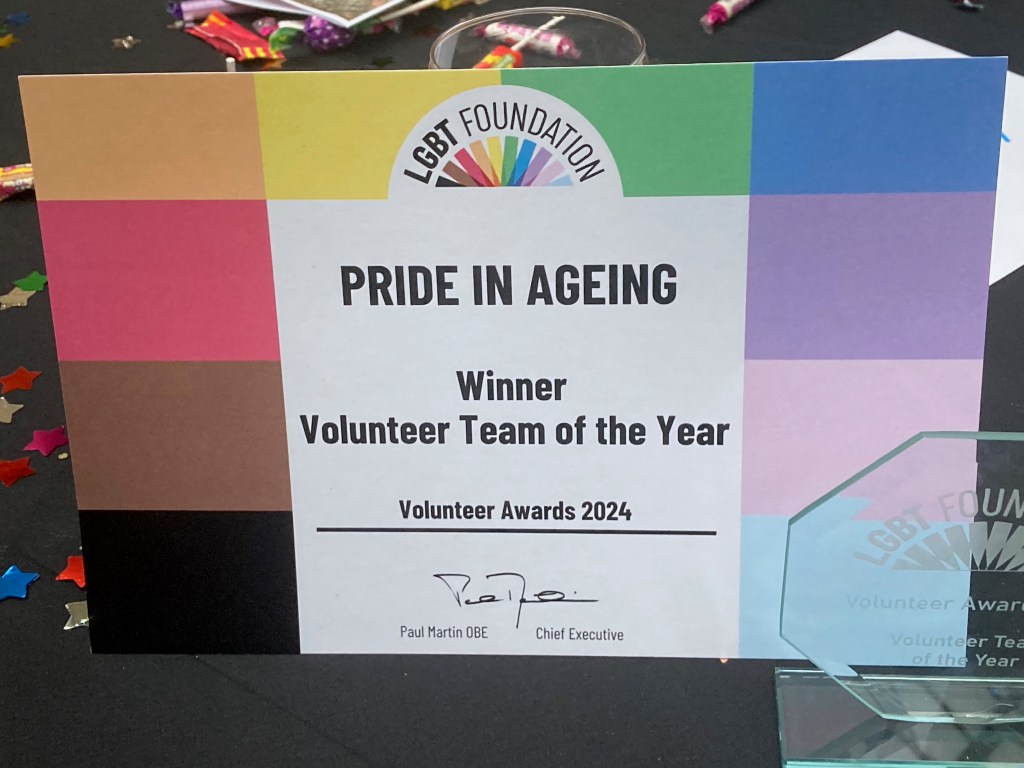
It’s often said that getting older is a privilege, but that can only be true if LGBTQIA women and non-binary people can be open, free from discrimination and celebrated in their later years. The Pride In Ageing Programme, run by the national LGBTQIA wellbeing charity LGBT Foundation, brings visibility and voice to older LGBTQIA communities in Greater Manchester – and is now celebrating five years of activity to make the area one of the best places in the country for LGBTQIA people to grow older.

We are Mindy and Pam (both lesbians) and Pauline (a trans woman) – all of us in our 70s and have volunteered for the project since it launched in June 2019. There’s been a lot of laughter, joy and friendship (we all met and became close friends through the project), as well as conversations around the difficult issues that we all face, from access to the services and support that recognises and celebrates our identities to feeling included as part of our LGBTQIA communities just as much as the youngsters enjoying nights out on Manchester’s famous Canal Street (and yes some of us still like to go clubbing too!). 

“Pride In Ageing has helped a group of LGBTQIA older gardeners to create a new community garden at Manchester Art Gallery. We’ve been inspired by LGBTQIA activist, artist and gardener Derek Jarman who died in 1994 of AIDS-related illness. Our gardening group are a similar generation to Jarman, and we remember all too clearly the need for secrecy that shaped our past and the radical acts we were part of to fight for our rights. Gardening has been a brilliant way to express our experiences and positivity – the gardeners’ life stories are told through QR codes in the garden and via a zine we have produced. We get so many comments on our little green oasis wedged between the tram tracks and the imposing facade of the gallery in the busy centre of Manchester, it’s our thank you to the city that has been so welcoming to our identities.”

Mindy (72)

“Pride In Ageing collaborated with the University of Strathclyde to launch new training materials for social care staff. We explored what’s most important for older LGBTQIA folk, and our main message is about treating us with respect and dignity – whether we are in hospitals, hospices or care homes. It’s been amazing to have the opportunity to meet with social care leads as part of the project, telling them about being older and trans and making sure they know that discrimination must be a thing of the past. The reception has been so positive – our materials are now on the Skills For Care website, where everyone from the social care workforce can use them.”

Pauline (75)

“A highlight for me has been our end-of-life care discussions – it’s made me realise that many older LGBTQIA people live alone, have support from friends rather than family and have no plan for serious illness. Only a few of our group had a will or power of attorney in place. Working in partnership with St Ann’s Hospice we have designed workshops for LGBTQIA people to create a ‘Box Of Me’. The box can include your life story, how you want to be cared for, your will and what kind of funeral you want. It’s even more important that LGBTQIA people put these plans in place, to ensure our wishes are recognised.”

Pam (74)

Stonewall Inn Pictures

Old Lesbian Oral Herstory Project … Social Media Platforms Fail LGBT+ Users … Faith … Bi-Topia … Pride in Ageing Film Screenings … Sapphic Showcase

News

‘We don’t disappear after 30’: the Old Lesbians telling a century’s worth of raw, revealing stories

Featuring more than 900 candid interviews, the Old Lesbian Oral Herstory Project seeks visibility for those long denied it.

Arden Eversmeyer, the late founder of the Old Lesbian Oral Herstory Project. Photograph: Meghan McDonough

Two women who met as teenagers, fell in love, and stayed together for 69 years – spending all but the last decade of their relationship in the closet. A woman who, in her 70s, finally decided to come out to two friendly lesbian strangers she saw together at the grocery store. One woman, born in 1918, who found herself in a lesbian bar one day, not knowing such a thing existed, and finally felt at home.

These are all stories pulled from the Old Lesbian Oral Herstory Project (OLOHP), a catalogue of more than 900 interviews with lesbian seniors in the US. Arden Eversmeyer, a retired Houston schoolteacher who devoted her retired years to campaigning for visibility for older lesbians, who she felt were missing from the cultural discussion, began interviewing women in 1998.

She grew a team of interviewers – all of them also old lesbians, as they call themselves – to travel around the country speaking to women. These transcripts, audio recordings, and photos of the subjects live in an archive at Smith College in Northampton, Massachusetts. After Eversmeyer’s death at age 91 in November 2022, a dedicated group of friends and fellow activists took up the cause. Last month Meghan McDonough, a Brooklyn-based film-maker, released a documentary called Old Lesbians telling the story of OLOHP, commissioned by Guardian Documentaries.
Barb Kucharczyk speaks in a scene from the film. Photograph: Meghan McDonough

Eversmeyer and her team recruited interview subjects through a word-of-mouth network, and by placing ads at venues such as women’s music festivals or the free magazine Lesbian Connection. The only requirement was that the woman be over 70 years old and identify as a lesbian – she didn’t have to be out publicly, and could remain anonymous. (The age requirement has since been loosened.)

“Arden’s famous quote is, ‘You don’t have to climb Mount Everest to have an interesting life story, because the fact that you are a lesbian in our culture makes your life story interesting,’” said Barb Kucharczyk, an air force veteran and OLOHP interviewer who served more than two decades in the military, including under the discriminatory “don’t ask, don’t tell” policy.

Interviews are conducted loosely and conversationally. Not every question relates to a woman’s sexuality. There are a few standard questions: Where were you born? What did your family look like? What did your folks do for a living? But the point is mostly to make women feel comfortable and open up.

“We’ve tried to make it as gentle of an experience as we can for the women,” said Kucharczyk, who is 76 and lives in Sumter, South Carolina. “It becomes a chronological discussion of their life story. At some point in time, they will talk about being a lesbian. But we don’t walk into the door with 47 questions about how they found out they were, or how they were treated. We want the woman to tell her own story, and if the details about her lesbian lifestyle are slim, that’s OK.”

Still, the project is a raw and revealing look at what life was like for lesbians in the 20th century. Women who came of age before Stonewall and the sexual revolution describe what Kucharczyk calls “hidden lifestyles” that they kept secret, living in fear for their safety. There are harrowing descriptions of conversion therapy, ostracism and physical attacks.

Video Old Lesbians: reclaiming old age and queerness through storytelling

Ethyl “Ricci Cortez” Bronson, an exotic dancer and member of the Burlesque Hall of Fame, who later opened the first “gay girls’ bar” in Houston, told Eversmeyer during an interview that took place shortly before Bronson’s death in 2008 that her club was regularly raided by cops. “A lot of the girls in slacks and pants had been hauled off to jail in the raids,” she said. “They even put me in handcuffs and carried me out to the police car. In my own bar! This is what we went through to get open bars, open gay bars.”

Some of the women interviewed for the project asked to speak anonymously, or on certain conditions, like that their name only be revealed after they died. This did not affect their candour when speaking on the record. “Women were open with us as long as they knew that this was not going to be published,” said Edie Daly, an 87-year-old retired intensive care nurse who splits her time between Florida and Massachusetts. “Some of these stories are still closed, because even though they have passed, they were in fear of outing themselves or someone else.”

Daly said some women were able to break through their hesitancy because they wanted to leave a record of what had happened to them. “We talk about how we would love to know what the suffragists’ individual stories were, and we don’t have that, because a lot of women’s stories are lost,” she said. “Women have been erased from history, and so this is our attempt to rectify that in some small way.”

Edie Daly holds up a shirt at home in Northampton, Massachusetts. Photograph: Meghan McDonough

Lillian Faderman, an award-winning scholar of lesbian history and professor emeritus at Fresno State in California, sat for her own interview with Eversmeyer. When she came out in 1950s Los Angeles, she used fake IDs to get into what were then called “gay girls’ bars”.

“As a young lesbian, my feeling was that what happened when you reach 30 or older was that you probably died,” Faderman said. “There were simply no role models, and I don’t think it’s quite as bad today because of social media, but for the most part, I think that young lesbians still have no notion that we don’t disappear after 30. I think it’s important for them to understand that they have a future outside of youth.”

Faderman hopes that the interviews “send a message to the people in our community for posterity, that we are here and flourishing”.

“We’ve always been here,” Daly added. “But now we have visibility, and a voice. And it’s not just visibility of old lesbians, it’s the visibility of all strong women.”
This June, another Pride month unfurls over the backdrop of attacks on LGBT+ Americans. The FBI has warned that celebrations could be targeted by terrorists, and Target rolled back its Pride merchandise after last year saw conservative backlash that in some instances led to angry shoppers confronting workers. That’s partly why Kucharczyk believes it’s more important than ever to look toward the past.
“Does history repeat itself? Absolutely,” Kucharczyk said. “You’re watching it happen right here, right now. I hope the message that young folks take away is to be aware of this history, because if you’re aware, you can see the tidal wave that’s coming up.”

6 Major Social Media Platforms Fail LGBT+ Users

The six largest social media platforms received abysmal grades for LGBT+ safety, privacy, and expression and failed to protect LGBT+ users from hate speech and harassment, according to the Gay & Lesbian Alliance Against Defamation (GLAAD).

Five of them – YouTube, X/Twitter, and Meta’s Facebook, Instagram, and Threads – received F grades for the third consecutive year.

TikTok was the only platform to improve, going from an F to a D+, according to the 2024 Social Media Safety Index report.

“Leaders of social media companies are failing at their responsibility to make safe products. When it comes to anti-LGBTQ hate and disinformation, the industry is dangerously lacking on enforcement of current policies,” GLAAD president and CEO Sarah Kate Ellis said in a press release. “There is a direct relationship between online harms and the hundreds of anti-LGBTQ legislative attacks, rising rates of real-world anti-LGBTQ violence and threats of violence, that social media platforms are responsible for and should act with urgency to address.”

Findings from the report:

  • Anti-LGBT+ rhetoric and disinformation on social media translates to real-world offline harms.
  • Platforms are largely failing to successfully mitigate dangerous anti-LGBT+ hate and disinformation and frequently do not adequately enforce their own policies regarding such content.
  • Platforms disproportionately suppress LGBT+ content.
  • Lack of effective, meaningful transparency reporting from social media companies with regard to content moderation, algorithms, data protection, and data privacy practices.

The report makes note of high-follower hate accounts and right-wing figures who continue to manufacture and circulate most of this activity.

The report cites more than 700 incidents of anti-LGBT+ hate and extremism documented between November 2022 and November 2023, including homicides, assaults, bomb threats, and acts of vandalism.

GLAAD makes five recommendations to improve social media platforms for LGBT+ users:

  • Strengthen and enforce existing policies 
  • Improve moderation 
  • Be transparent 
  • Stop violating privacy / respect data privacy
  • Promote civil discourse.

Faith, by Mike Heath

Greater Manchester Fringe performances at HOME Studio, 2 Tony Wilson Place, Manchester M15 4FN

Monday 1 July to Wednesday 3 July, 6.00pm – 7.30pm

Tickets £15 / £13 concessions (+ booking fees)

Inviting your mother to your wedding should be a joyous occasion; unless you’re gay and your mother is a staunch Catholic. 

Such is the dilemma for John, as he arrives at Faith’s little terrace on a Tuesday evening, only to discover she has tried to match-make him with Melanie – a no-filter 40-something singleton from the church, convinced that tonight is the night. 

Of course, tonight is absolutely not the night as the veil is unceremoniously lifted on the patina of John and Faith’s fabricated reality. 

Then, when Faith is shocked to death by Melanie’s unwitting fictions of gay men’s bedroom behaviours, she discovers the church has it all wrong about homosexuality and alternative lifestyles while she queues for judgment at the pearly gates. 

Sent back to right the wrongs of her earthly existence, she gets a second chance to fix her broken relationship with John (and convince the Pope he was wrong all along). 

Buy tickets here.

Live@TheLibrary: Bi-Topia

Oldham Library & Lifelong Learning Centre, Greaves Street, Oldham OL1 1AL

Thursday, 18 July – 7.00pm – 8.30 pm

Tickets are £6.00. Buy tickets here.

A comedic, touching and candid piece of new writing by northern theatre maker Sam Danson.

BI-TOPIA is a joyful, chaotic and honest coming-of-age story, exploring the authentic Bisexual experience, bravely delving into under-represented links between poor mental health, sexuality and masculinity.

A comedic, touching and candid piece of new writing by northern theatre maker Sam Danson.

Contains some adult references, strong language, mental health, mention of suicide, violence and themes of a sexual nature. Recommended age 14+.

Pride in Ageing Event

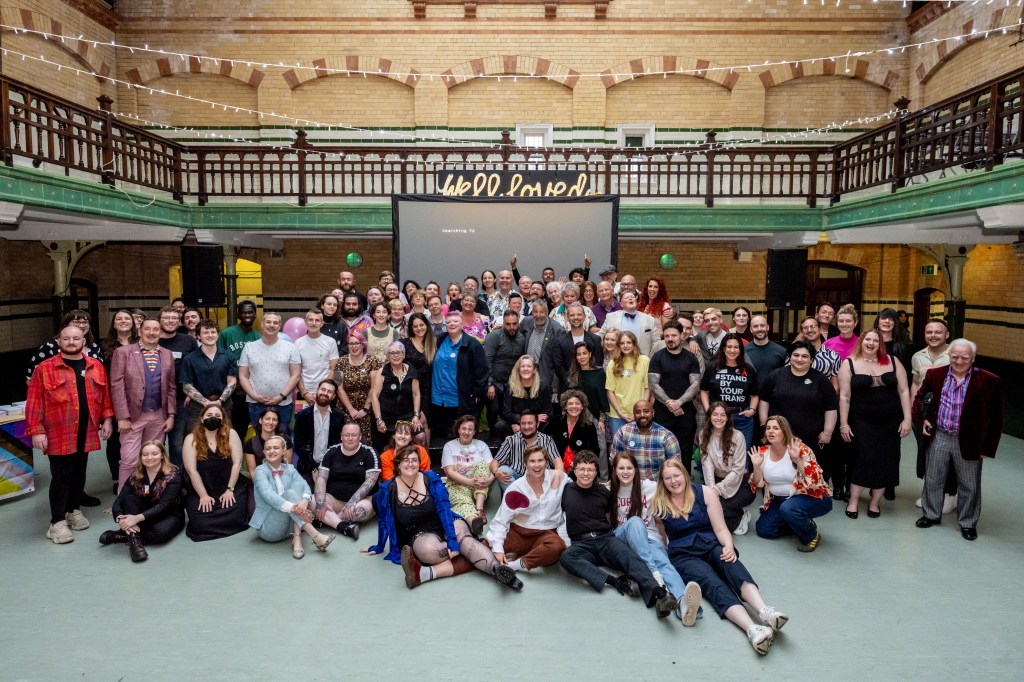
LGBT Foundation’s Pride in Ageing programme invites you to a special summer get-together and evening of celebration of our LGBTQ+ over 50s communities in Greater Manchester.

Come along and find out more about their work with older communities, how you can get involved and how they can support you.

This relaxed event will include short film screenings, LGBT Foundation stalls, networking and a live video-link Q&A where you can ask the experts your questions on HIV, sexual health and active ageing for LGBTQ+ communities.

Details of the full line-up:

  • An introduction to LGBT Foundation’s work with older LGBTQ+ communities and how you can get involved, hosted by Lawrie Roberts, Pride in Ageing Manager
  • Stop HIV – Active Ageing discussion with drag queen Daisy Puller and Dr Laura Waters + Live Video Link Q&A presented by dkbmed and supported by an educational grant from Gilead Sciences Inc
  • The beginnings of Manchester Pride in the 1990s –  footage from Tickled Pink and Manchester Mardi Gras (presented with thanks to North West Film Archive)
  • LGBT Foundation information stalls

Free tickets for this event can be booked here.

Sapphic Showcase: Pride Cabaret + Open Mic Night + Social Mixer

Join us for a night of talent from amazing LGBTQ+ women – including you! – and a great opportunity to socialise to kick off Manchester Pride

Friday, 23 August 2024 – 7.00pm – 10:00pm

HOME, 2 Tony Wilson Place, Manchester M15 4FN

Book FREE tickets here.

LGBT Foundation are bringing together some fantastic headliners to entertain you and are inviting YOU to perform in one of the open mic night slots.

We’re so excited to see all the amazing Sapphic talent Greater Manchester has to offer from poetry, to comedy, and music! After these amazing performances, stick around for some opportunities to socialise and meet some people before Manchester Pride. Please note: Headliners will be announced in July.

Open mic slots are available for any LGBTQ women and non-binary people who wish to access a women centred event. The event will be LGBTQ women centred but the audience is open to all.

Buxton Opera House … Remembering Alan Turing … Trans-lating the Story of Fanny and Stella

News

Buxton Opera House tour

It took an hour on the train from Manchester to Buxton, but our visit this week was to the Opera House for a back stage tour.

The Buxton Opera House was built in 1903 and designed by Frank Matcham, who designed the London Palladium, the London Coliseum and many other theatres throughout the UK.

In 1979, the building was restored, and an orchestra pit was added to the original Matcham design. Since then, the Opera House has been a full-time venue for stage productions, presenting approximately 450 performances per year, including opera, dance, musical theatre, pantomime, comedy, drama, children’s shows and concerts. The current capacity is 901 seats.

The theatre is staffed by a small full-time technical crew for all the backstage work, setting up all the shows and artists that appear. Volunteers from the local community are also employed for front-of-house duties including bar work and as ushers.

Photos can be seen here.

Remembering Alan Turing

Alan Turing took his own life after being convicted of gay sex offences (Getty)

Alan Turing was a war hero, a giant of computer science, and a gay man who simply wanted to be able to live freely.

History should remember Turing – who took his own life 70 years ago on 7 June 1954 – as the innovative mathematician and code breaker who played a pivotal role in ending the Second World War, and laid the foundations for personal computing and artificial intelligence.

“Alan Turing was an outstanding mathematician whose work has had an enormous impact on how we live today,” Mark Carney, then governor of the Bank of England, said while announcing a new £50 note bearing the scientist’s likeness in July 2019.

“Turing is a giant on whose shoulders so many now stand.”

It is impossible to speak of Turing’s achievements and legacy without also mentioning the brutal, institutionalised homophobia that saw him persecuted as a gay man and ultimately cut his life short.

Alan Turing features on the £50 note (Getty)

Who was Alan Turing?

Born 23 June 1912, Alan Turing was a uniquely gifted thinker. Educated at Cambridge, he delivered a paper just two years after graduation which presented the idea of his “Turing machine”, a predecessor to the modern computer.

He spent the next few years studying for a PhD at Princeton University, after which he returned to Cambridge and joined the Government Code and Cypher School (GCCS) – a code-breaking squad.

During the Second World War, Turing worked at the famous Bletchley Park where he helped to crack the Enigma code use by the German navy to transmit secret communications. It has been said that without the efforts of Turing and his colleagues, the war might have continued for two to four years longer. Each year the war raged on claimed the lives of about seven million.

After the war ended, Turing continued to work on computing innovation. In 1950, he proposed the “Turing test” to determine whether a computer was artificially intelligent. Seven decades on, it remains an important concept in AI.

Alan Turing

What did Alan Turing do and why is he an LGBT+ icon?

But it was around this time that Alan Turing’s life took a turn, as a gay man alive at a time when homosexuality was a crime. In January 1952, he called police after a home break-in and was forced to admit that he’d had a sexual relationship with the robber, 19-year-old Arnold Murray.

Despite being a war hero, Turning was arrested and admitted to “acts of gross indecency”. He was given a choice between prison or probation on the condition he undergo cruel chemical castration – hormonal treatment to eliminate his libido, and therefore any sexual urges. He chose the latter.

His conviction meant that his security clearance at GCHQ – the post-war successor to GCCS – was revoked, and he was banned from entering the US, ending his career as he knew it – though he was able to continue his academic work.

Around this time, Turing wrote to a friend, confiding: “I have had a dream indicating rather clearly that I am on the way to being hetero, though I don’t accept it with much enthusiasm, either awake or in the dreams.”

How did he die?

On 7 June 1954, aged 41, Alan Turing died by suicide. Some 13 years later, in 1967, came the partial decriminalisation of homosexuality in England and Wales.

It wasn’t until 2009 that the government apologised for the treatment Turing received as a gay man by the British state.

Then-prime minister Gordon Brown described his ordeal as “horrifying” and “utterly unfair”. “We’re sorry, you deserved so much better,” he wrote in a statement.

“This recognition of Alan’s status as one of Britain’s most famous victims of homophobia is another step towards equality and long overdue.

But even more than that, Alan deserves recognition for his contribution to humankind … It is thanks to men and women who were totally committed to fighting fascism, people like Alan Turing, that the horrors of the Holocaust and of total war are part of Europe’s history and not Europe’s present.

So on behalf of the British government, and all those who live freely thanks to Alan’s work I am very proud to say: we’re sorry, you deserved so much better.”

In 2014, Turing was granted a posthumous royal pardon, and in 2017 a law was passed in his name allowing thousands of men convicted of historical gay sex offences to apply for a formal pardon.

At the time it was passed 15,000 gay men were said to be eligible for a pardon, while another 50,000 who had died had their convictions deleted.

However, by September 2019 fewer than 200 living people had successfully received pardons.

Sixty years after his death, Turing’s life was dramatised in the Oscar-winning 2014 biopic The Imitation Game, which starred Benedict Cumberbatch as the late LGBT+ icon.

Trans-lating the Story of Fanny and Stella

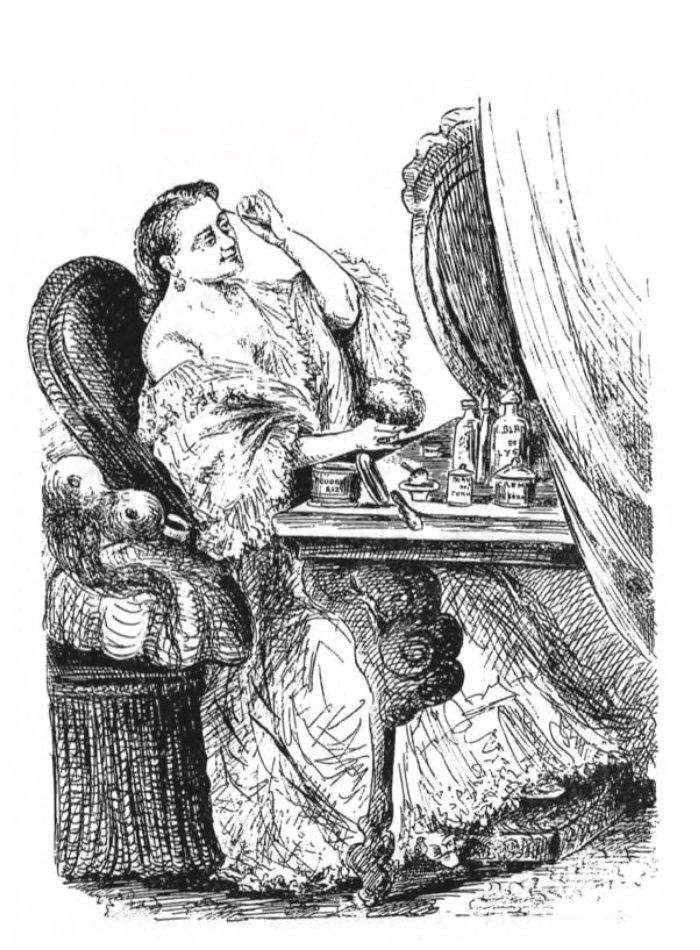
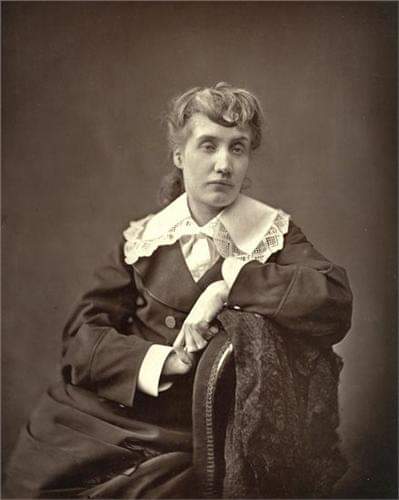
The Victorian-era trial of Fanny and Stella has been variously interpreted over the years. But what if it was a trans narrative all along?

Fanny and Stella, 1869 via Wikimedia Commons

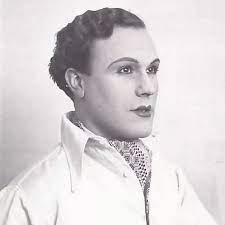
Fanny and Stella were arrested for using the women’s bathroom in a theatre. At the police station, they were stripped and invasively examined by an official gender-decider: anatomically, they were defined as men. A felony charge of solicitation to commit sodomy was added to the initial misdemeanour of disturbing the peace. During the sensational trial that followed, at least one newspaper used feminine pronouns for the accused. And at that trial, the mother of one of the defendants testified that her child had presented as female since the age of six.

The jury convicted Fanny and Stella on the misdemeanour charge, which the defendants agreed to as a kind of plea bargain in return for promising to be on good behaviour for two years. The jury found the pair innocent of the much more serious felony charge, for which one could be sentenced to life with hard labour. (Why, the defence asked, would supposed homosexual male prostitutes be working the women’s bathroom?)

“This qualified victory for transgender rights,” as scholar Simon Joyce describes it, took place in London between 1870 and 1871. A Victorianist, Joyce writes that “public discussions of bathroom use or the correct gender pronouns to use in legal cases” are not as new as we may think.

The Victorians are often seen as the quintessential guardians of rigid gender / sexual boundaries. Their definitions of masculinity and femininity were strictly policed, with women in the private sphere, men in the public, and interactions between them highly codified. But reality was certainly messier than the theory. The era, like every era, had its gender nonconformists.

The bathroom panic over Fanny Park and Stella Boulton has been variously interpreted. The accused, named Frederick Park and Thomas Boulton at birth, are called the “young men who shocked Victorian England” in a 2014 book. One of them is the titular subject of a 2016 play. Over the years they have been characterised as actors, drag performers, prostitutes and cross-dressers. They’ve become homosexual icons and pioneers, especially in relation to a legal system that would be much less tolerant of Oscar Wilde two decades later.

In fact, Joyce argues,

the story of Fanny and Stella makes more sense – both in its own historical terms and now – when read as a trans narrative … Fanny and Stella’s story is studded with moments of recognition and also with aspects that are barely comprehensible today, and … those points of incommensurability with current thinking are just as valuable in helping us understand transgender people as having a history, albeit one that is sometimes fractured and non-linear.

Fanny and Stella did act in women’s roles on stage and did alternate dressing off-stage in both men’s and women’s clothes. The police, it turned out, had had them under surveillance a year before their arrest in April 1870 at the Strand Theatre. Stella sometimes identified herself as Lady Arthur Clinton, wife of a Member of Parliament. (Lord Arthur died upon receiving his subpoena to appear in the case; scarlet fever was cited, but rumours of suicide persisted, as did rumours that he wasn’t dead at all but had fled the country.)

During the trial, both supporters and detractors were in states of gender confusion. Friends and enemies alike got tied in knots over pronouns. An enemy expressing what Joyce calls “transphobic rage” testified that “I kissed him, she or it.” The handwritten trial transcripts show a flurry of edits. Reference to female clothing by witnesses seems to have led the stenographers, who were presumably in court and could see the prisoners in typical masculine clothing, to correct and then re-correct themselves.

“Trans” is, of course, a relatively new term. The sort of negotiations across the gender boundary that we find in the lives of Fanny and Stella show that individuals have affirmed their gender identity throughout history, regardless of the then-current terminology and the classifications such terminology represent. They have done this in the context not only of public and legal hostility but also of surprising sympathies.

Love that the Red Arrows are celebrating Pride by flying the trans colours

Pre-Pride Party … Free Books for Pride Month … Plan to Stop Abuse of LGBT+ Elders … At The Rainbow’s End … Salford Pink Picnic

News

Pre-Pride Party

Early on the morning of Saturday, 28 June 1969, lesbian, gay, bisexual and transgender persons rioted following a police raid on the Stonewall Inn, a gay bar at 43 Christopher Street in Greenwich Village, Manhattan, New York City. This riot and further protests and rioting over the following nights were the watershed moment in the modern LGBT rights movement

In commemoration Out In The City held a pre-Pride Party. We also wanted to celebrate our oldest member, Jim, who was 95 years old on 12 June, but unfortunately, he was too ill to attend.

Many thanks to the Sisters of Perpetual Indulgence (Cardinal Sister Anorak of the Cheap Day Return, Sister Gypsy TV Film Star and Sister Judy de Ryder), Jennifer, Wolf (David, Derek and Gary), Jim on reception, Jed and Peter in the kitchen and Norman for organising the buffet.

Thanks also to Jim, Norman and Peter who donated raffle prizes. The raffle raised £93.00 towards our funds.

… and thanks to all you who attended and had a great time.

Lots of photos can be seen here.

Free Books for Pride Month

Author Paul Ilett is thrilled to offer both his books, Exposé and Exposed (Kindle editions), for you to download and read for free for Pride month.

Both books deal with issues important to the LGBTQ+ community, and it was very important to him to write a gay man in an heroic lead role.

Just click on the links below and get your free copies today. 

Exposé

Superstar actor Adam Jaymes launches a mischievous plot to destroy the world’s biggest selling tabloid newspaper – one reporter at a time.

Take a deep dive into the scandalous world of celebrities and the tabloid press with Paul Ilett’s darkly comical thriller Exposé. Actor Adam Jaymes has a lifetime of grudges against the world’s biggest selling tabloid, the Daily Ear, and its notorious team of ruthless journalists. This includes sharp-tongued columnist Valerie Pierce, ‘kiss and tell’ king Colin Merroney, and photographer Jason Spade, who will do anything to get the picture he wants.

But Adam is now married to one of the world’s wealthiest men, and finally has the resources to take his revenge. He launches a deliciously mischievous plot to turn the tables on Valerie and her tabloid colleagues, by investigating their private lives – and exposing their secrets for all to see.

Exposé is a sensational thriller dripping with black humour. If you like characters you love to hate, sizzling satire, and hilarious surprises, then you’ll adore Paul Ilett’s addictive, page-turning satirical thriller.

Click here.

Exposed

Someone is killing reporters and journalist Valerie Pierce fears she is next. When no one will believe her, not even the police, Valerie sets out to catch the killer herself. But her plan involves teaming up with her arch nemesis – TV actor Adam Jaymes. 

Valerie Pierce is reinventing herself. After more than thirty years as an outspoken columnist for a scandalous right-wing tabloid, the Daily Ear, she wants to renew her personal brand and be seen as a more moderate and thoughtful commentator. She knows she hurt many people over the course of her career, and likely destroyed many lives. But her own private life suffered too, and she is attempting to rebuild her relationships with her estranged daughter and ex-husband.

Only people are dying. People Valerie used to work with. Every three days, at 9.00pm, someone connected with the Daily Ear is found dead. Valerie can see the pattern, and senses a serial killer is at work. But when no one will believe her, not even the police, she turns to the one person who has the knowledge and resources to help. However, it is someone with a lifetime of grudges against Valerie: gay television actor Adam Jaymes.

Click here.

Plan to Stop Abuse of LGBT+ Elders

In the United States, Equality Caucus members Josh Gottheimer and Angie Craig have introduced legislation to create a new task force to combat abuse of LGBT+ elders

The bill has been dubbed the “Elder Pride Protection Act”.

“We know that elderly members of the LGBTQ+ community face abuse across our nation, but their voices aren’t being heard,” Josh Gottheimer said. “The reality is that organisations and government agencies aren’t tracking these heartbreaking attacks.”

The bill would require the attorney general to establish a task force to develop a national approach to combat increased incidents of abuse against LGBT+ elders and share best practices for law enforcement.

Gottheimer said. “No one should ever be mistreated on the basis of their sexual orientation or gender identity, especially our vulnerable elderly populations.”

Data reveals many LGTB+ elders have reported challenges like a diminishing support system and loneliness. Abuse, however, often goes unreported.

An estimated 68% of elders in the community have experienced verbal harassment and 43 percent have been threatened with violence, according to a study from The National Centre on Elder Abuse.

Another survey revealed 65% of LGBT+ elders aged 60 or older reported dealing with victimisation due to their sexual orientation. Also, 29% revealed they were physically attacked.

At the Rainbow’s End

At the Rainbow’s End is a play based entirely on interviews with older LGBT+ people about their experiences of homophobia and transphobia either in care homes, a retirement community and when receiving ‘care’ in their own home.

Clare Summerskill, who wrote the play, believes that the issue of how older LGBT+ people are treated in care situations is of critical importance since not only are there now hundreds of documented cases of abuse (as seen in the Compassion in Care report of 2023) but, at the point of needing care, many of us who may have been out all of our adult life might be forced to go back ‘into the closet’ and hide our authentic natures for fear of receiving discriminatory treatment or even abuse.

Clare aims to raise awareness of this matter in the form of a play which will be followed by a Q&A session between informed panellists, the cast and audience members.

The central London shows at The Courtyard Theatre started on Friday 14 June with another show on Sunday 30 June. Tickers are £10 / £5 (concessions).

Salford Pink Picnic

The Pink Picnic, Peel Park, Saturday 22 June – 1.00pm – 8.00pm

Salford Pride are ecstatic to announce Heather Small – The Voice of M People will be headlining The Pink Picnic 2024.

Get ready to be made to feel proud, spend one night in heaven or to search for the hero inside yourself.

Make sure to check the new T&C’s for changes to the restrictions for 2024! Please be advised bag searches will be in place. Use a clear bag for quicker entry.

Please consider donating £3 or £5 for your ticket, all money goes to putting on a fab day for you.

Tickets are available here.

More information on the website pinkpicnic.org.uk

Festival of Libraries … A Most Queer House … My Gay Best Friend … Pride in Our Art … Rainbow Lottery

News

Festival of Libraries

Manchester’s Festival of Libraries returns for 2024. This celebration of Greater Manchester’s 133 libraries takes place annually across the city.

The festival, which is supported by Arts Council England, features a vibrant programme that highlights the library network’s full offer, across wellbeing, culture and creativity, digital and information, and, of course, reading.

The Festival of Libraries programme takes place in (and out of!) internationally renowned institutions from Manchester’s rich tapestry of heritage libraries, including Central Library, with its impressive status as the busiest public library in the country, in addition to Chetham’s Library, The Portico Library, Manchester Poetry Library and the John Rylands Research Institute and Library. Also featured will be Greater Manchester’s equally important and vital local libraries that deliver much needed support and services to their communities.

This festival allows citizens to celebrate the key role that libraries play in civic life. Partner libraries around the city host performances, exhibitions, concerts, art, film, writing classes, and public debates. Writers, illustrators and musicians are commissioned to respond to the vital role libraries play to the people of Manchester.

Members of Out In The City attended an event “What’s in a word, what’s in a dictionary?” in the Portico Library.

With its discreet side entrance, leading onto an initially unpromising set of winding stairs, the well-hidden Portico Library is one of Manchester city centre’s finest gems.

It first opened in 1806 as a members library and newsroom – a place where gentlemen (and women, after the 1870 Married Women’s Property Act, and including the industrial novelist, Elizabeth Gaskell) could gather to digest the shipped-in news from London. Over two centuries later, it is one of Manchester’s longest running organisations and oldest buildings still fulfilling its original function. A lot has changed in that time, however.

Whilst still retaining much of its original character, any hint of musty Victorianism has been thoroughly dispelled. Today, the Library is a cultural hub which hosted the event with the Linguistic Diversity Collective – a group of academics at the University of Manchester. It was a participatory workshop around words and definitions.

Earlier we had enjoyed tomato, pepper and red lentil soup plus a sandwich and altogether we had a very pleasant day.

A Most Queer House

Sunday, 16 June – 7.15pm (44 minutes) – BBC Radio 3

For more than 150 years, 9 Lower Mall, Hammersmith has been a home or a haven for creative homosexuals and bohemians who enriched the cultural life of the eras in which they lived.  

Early habitués included the American photographer Alvin Langdon Coburn and the painter Henry Scott Tuke. The secret homosexual society, the Order of Chaeronea, met there and went on to become a worldwide fraternity in the Victorian era, the first LGBT+ organisation. Oscar Wilde and Lord Alfred Douglas visited frequently. Theatre manager George Devine moved into the house in 1953 and created the English Stage Company at the Royal Court Theatre with George Goetschius and Tony Richardson. 9 Lower Mall became a hub for a generation of playwrights and directors.  It was where unknown playwright John Osborne speculatively slipped his script of ‘Look Back in Anger’ through the letterbox.

Clare Barlow, the curator of the Tate Britain ‘Queer British Art’ exhibition; Zorian Clayton, the Prints Curator at the Victoria and Albert Museum; artist Jez Dolan; art historian Richard Cork; Professor Sue Healy; architectural historian Alan Powers; dramatist Nicholas Wright and Harriet Devine tell the story of a most queer house.

The presenter is Matt Cook, professor of the history of sexuality at Mansfield College, University of Oxford.

My Gay Best Friend 2024

Friday, 21 June 7.30pm – 9.30pm
The Kings Arms, 11 Bloom Street, Salford M3 6AN
£5.00 + £1.00 booking fee

My Gay Best Friend (and other unspoken letters of LGBTQIA+ Identity) is returning for its second year!

It feels now more than ever, with the world so divided, we need an event to uplift and celebrate the LGBTQIA+ voices in a safe environment, whist also bringing awareness towards the daily struggles and battles members of the community face on a day-to-day basis.

What one thing that you’ve wanted to say to your straight mates but never had the chance to? How much of our struggles and joys do straight people really know about the LGBTQIA+ community?

‘My Gay Best Friend’ is the event that aims to be an annual anthology series in which LGBTQIA+ identifying writers are commissioned to express their personal and political opinions of something that are often left unspoken. Sometimes comical, sometimes emotional, sometimes political, but always honest and personal to the writer. These monologues / letters / speeches will be written and sealed, before being opened and read by the straight identifying actors live for the first time on the night in front of the audience.

For this year’s event, five new pieces of work have been commissioned and will be spoken aloud for the very first time live on stage.

Get tickets here.

Arts for Good Health

Arts for Good Health Courses are free wellbeing courses.

To access the courses you must be:

• Over the age of 18; and

• Be a Manchester resident (Have a Manchester GP and/or pay council tax to Manchester City Council).

How to Refer

You can self-refer to the Arts for Good Health courses. Go to https://www.gmmh.nhs.uk/arts-for-good-health/ and download the A4GH Self Referral Form.

Pride in Our Art

This is one of the courses to celebrate Manchester Pride.

This 5-week course will focus on the work of 4 LGBTQ+ Artists:

• Keith Vaughan

• Joan Eardsley

• Greer Lankton and Juno Birch

• Andy Warhol

Each week we will look at the work of each artist, discuss their lives, what inspired them and the techniques they used to create their art.

We will then create our own unique pieces inspired by each artist and the creative methods they used.

Details

Date: Every Thursday from 1 August until 29 August 2024

Duration: 5 weeks

Time: 11.00am – 1.00pm

Venue: Start (Cornbrook Enterprise Centre), Quenby Street, Hulme, M15 4HW

Tutor: Stephen Davis 07776 994 702

Rainbow Lottery Super Draw!

Please support Out In The City by buying a Rainbow Lottery ticket or two (or more!) It’s a vital part of our fundraising as we receive 50p for every £1 spent and you have the chance to win cash prizes from £25 for three numbers up to a jackpot of £25,000 for six numbers.

Buy tickets here.

We are thrilled to announce an exciting opportunity for you to win a £1,000 Amazon eGift Card through The Rainbow Lottery this June. Whether you’re looking to upgrade your tech gadgets, refresh your home decor, or treat yourself to the latest fashion trends, Amazon has it all – what a way to kick off summer!

On Saturday 29 June, one lucky winner will walk away with a £1,000 Amazon voucher: stock up on smart home tech, fill your shelves with books, get your garden (or your wardrobe!) summer-ready – the choice is yours. Nothing you need online right now? Spend it your way, with the £1,000 cash alternative! 

If you already have tickets then you’re in with a chance to win big – but don’t forget, you can top-up your tickets just for the week of the Super Draw!

Play Now!