This week we took the train to Liverpool Lime Street and had lunch in the adjoining Wetherspoon’s pub – The North Western. It was then only a couple of minutes walk to the Walker Art Gallery.
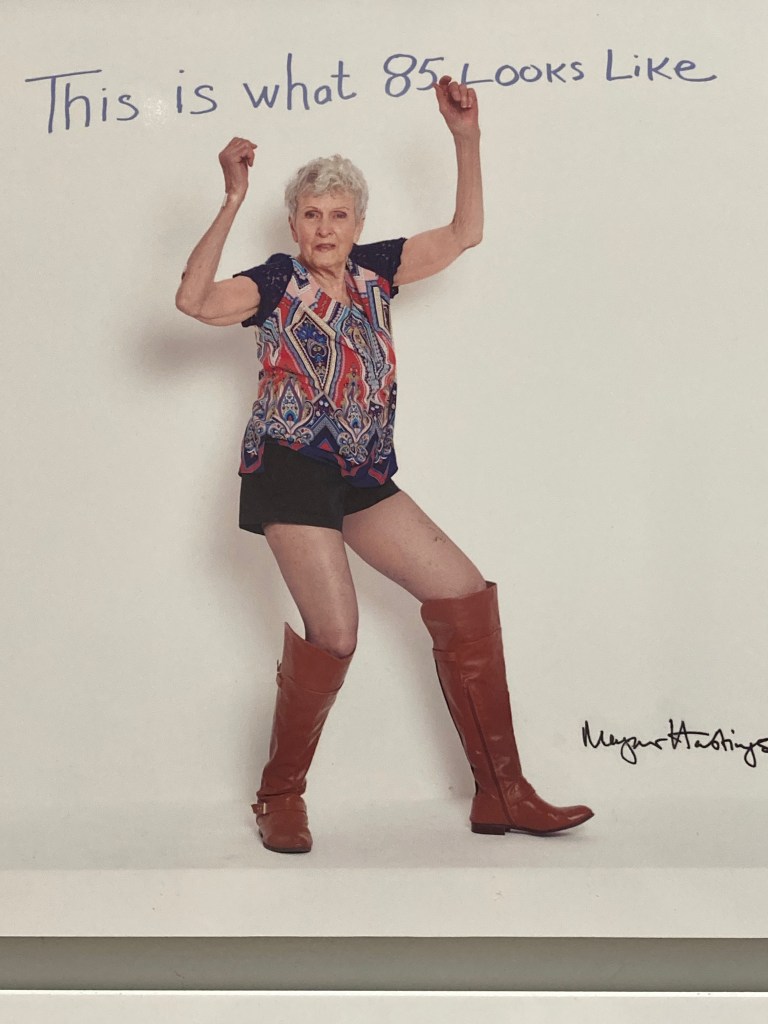
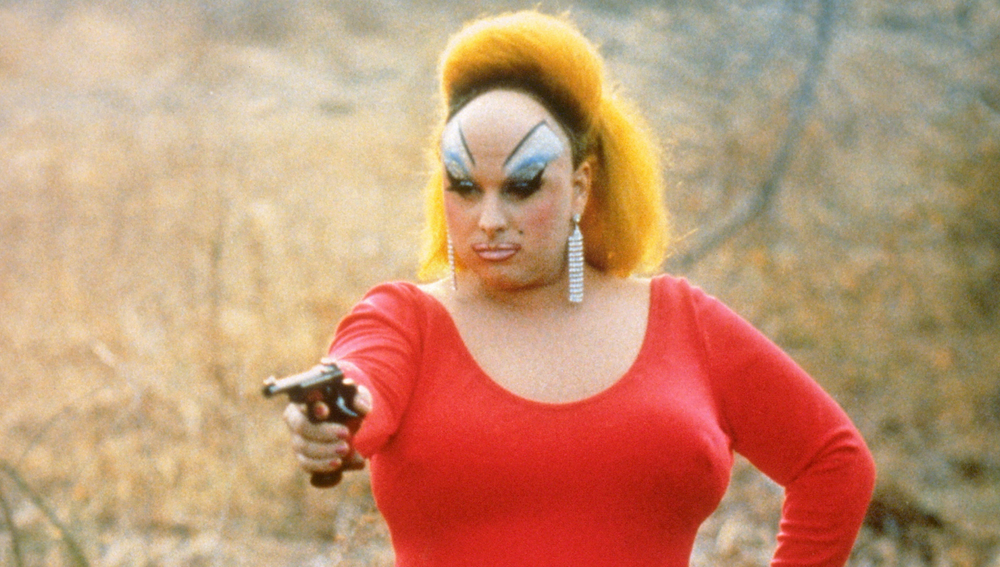
The Walker’s collection includes the late Renaissance Gallery, the Pre-Raphaelite Gallery and Sculpture Gallery, but we had travelled primarily to see a temporary exhibition “Queen by Magnus Hastings”.
British photographer Magnus Hastings, renowned for his internationally acclaimed work, has photographed an array of drag superstars, celebrities and personalities from the LGBTQ+ communities, representing the ever-expanding spectrum of LGBT+ identity and visibility.
He has shot celebrity covers for the biggest gay magazines including Attitude, Boyz and QX International.
This exhibition is a specially curated selection of Magnus’s most famous photographs and portraits of renowned drag queens from across the globe, including newly commissioned never-before-seen photographs spotlighting Liverpool’s legendary drag artists, captured in the city’s vibrant Pride Quarter. In Hastings’ own words: “This show is an exploration of drag’s roots and its continual evolution, and I’m really thrilled to have all these incredible subjects I’ve photographed gathered in one place. It’s an amazing showcase of talent and it feels very fitting to present Queen … in Liverpool.”
Greater Manchester’s Pride Season continues and the following Prides are scheduled during August:
Saturday, 3 August – 11.00am – 1.00pm – Trans Pride Manchester
Castlefield Urban Heritage Park, Manchester, M3 4JN
Join us in support for and celebration of the trans and non-binary community of Greater Manchester at this year’s Trans Pride!
We will assemble at 11.00am at Castlefield Urban Heritage Park in Manchester. There will be speeches and a march starting at 12.00 noon finishing about 1.00pm. The march ends at the Vimto Park.
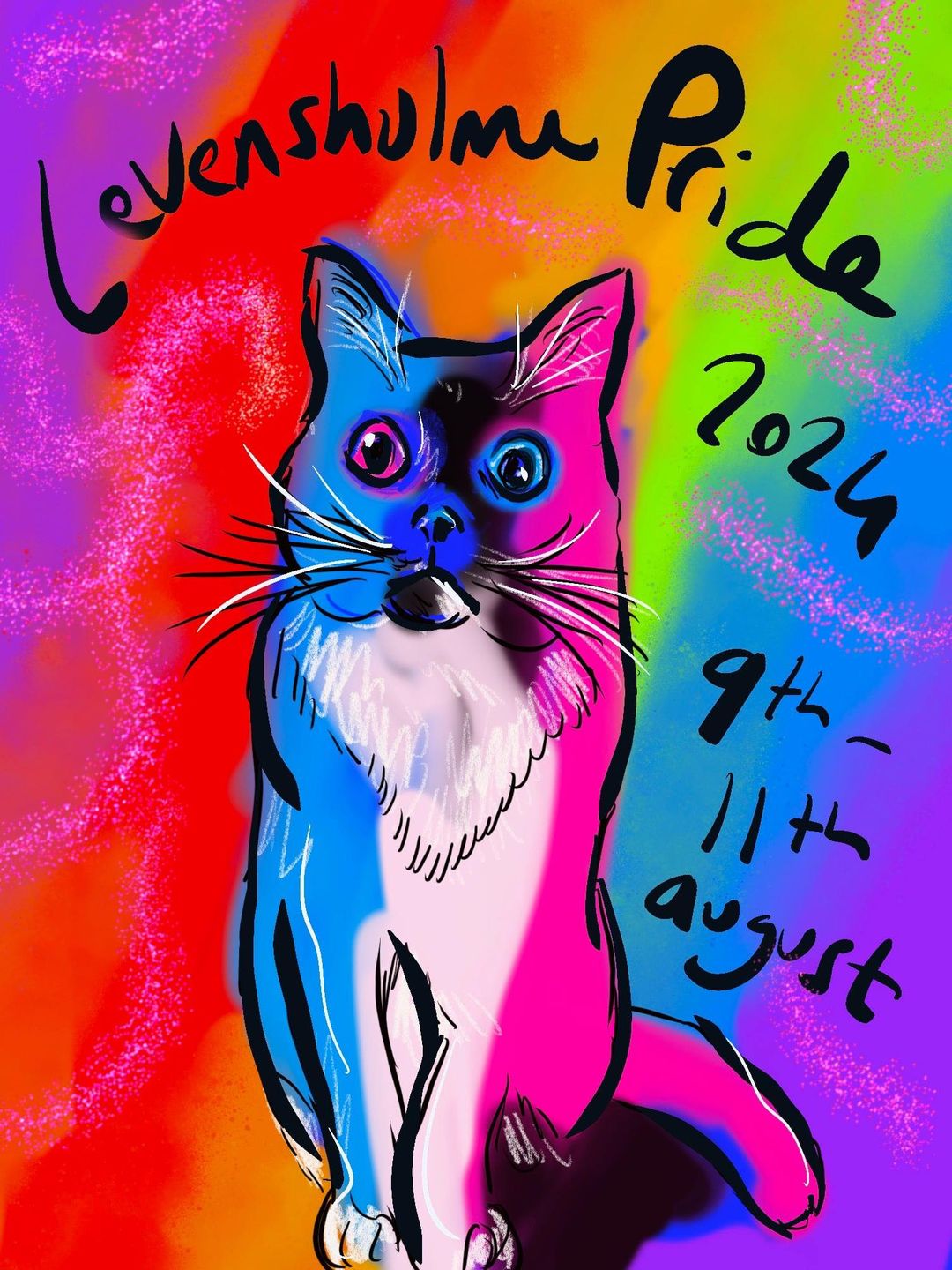
A celebration for everyone – Levenshulme Pride: No Barriers
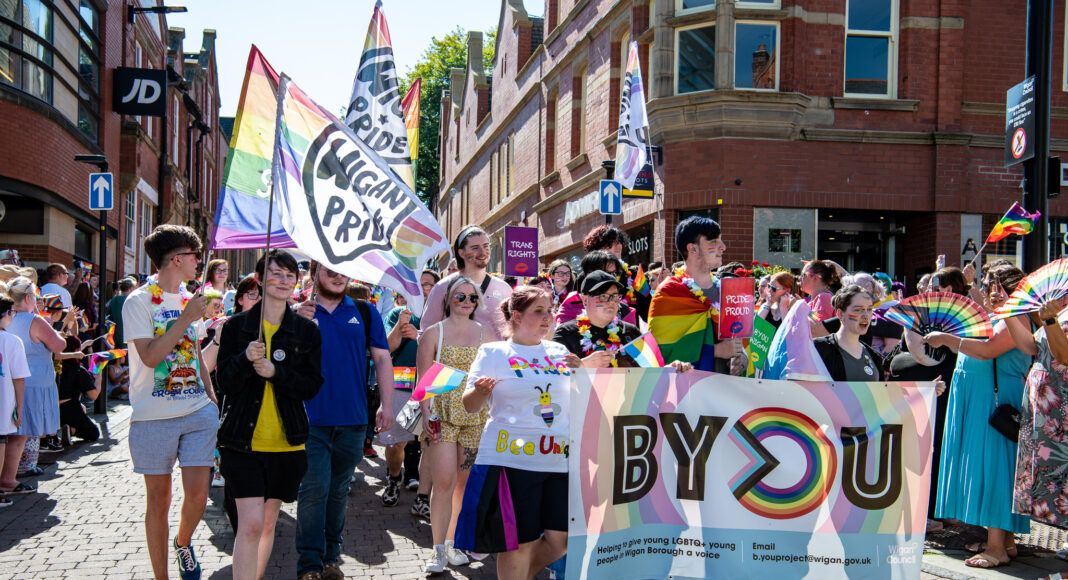
Wigan Pride – Saturday, 10 August
As always, the event will start with a colourful community march.
The parade helps celebrate the diverse borough, gives everyone in the local LGBTQ+ community and allies the chance to be proud of who we are, and acknowledges the first ever Pride event; a march that marked one year since the 1969 Stonewall Uprising in New York.
The march will start around 11.00am on Saturday 10 August, and finish around 12 noon when the action will begin on the main Unity Stage and Believe Square stage.
Prestwich Pride – Saturday, 10 and Sunday, 11 August
Prestwich Pride will take place from Friday, 9 to Sunday, 11 August.
This year’s festivities promise an array of events, showcasing the diverse and inclusive spirit of the LGBTQ+ community, with some new faces as part of the line-up as well as some Prestwich Pride favourites.
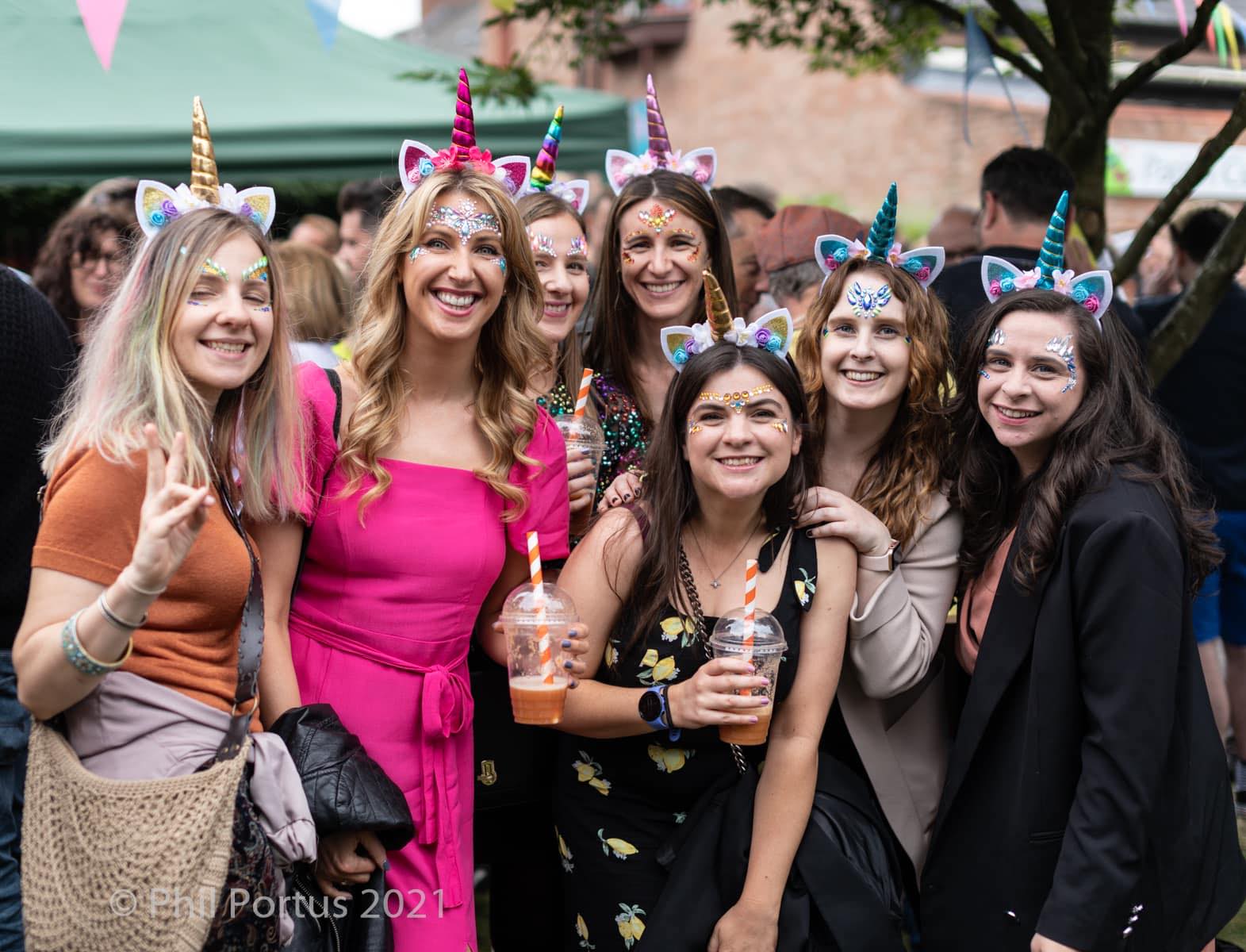
Manchester Pride – Friday, 23 to Monday, 26 August
The Manchester Pride Parade 2024 will take place on Saturday 24 August and starts at midday.
Manchester Pride is one of the UK’s leading LGBTQ+ charities. Our vision is a world where LGBTQ+ people are free to live and love without prejudice and our culture is universally celebrated. We’re part of a global Pride movement celebrating LGBTQ+ equality and challenging discrimination.
This year’s theme is Buzzin’ to be Queer – A Hive of Progress. The bee is symbolic of queer progress in Manchester, but it’s also a vital symbol within Hidayah, representing unity and collaboration as a true collective.
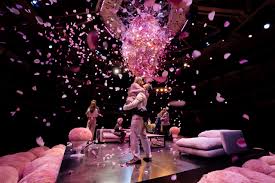
Final scene of “The Importance of Being Earnest”, Royal Exchange Theatre, Manchester
The Importance of Being Earnest
Oscar Wilde’s “The Importance of Being Earnest” has just finished an extended run at the Royal Exchange Theatre in Manchester. The new production was a vibrant and humorous update of Wilde’s classic.
The comedy about mistaken identities and finding one’s true identity is still relevant today.
Here is a timeline:
1533 The Buggery Act criminalised sex between men.
1884 Oscar Wilde married Constance Lloyd and they had two sons, Cyril and Vyvyan.
1885 The Criminal Amendment Act criminalised wider activities associated to homosexuality, terming this “gross Indecency”.
1891 Wilde began an affair with Lord Alfred Douglas, a young British poet and aristocrat 16 years his junior. Outraged, Douglas’s father, the Marquess of Queensberry, sought to expose Wilde’s sexuality.
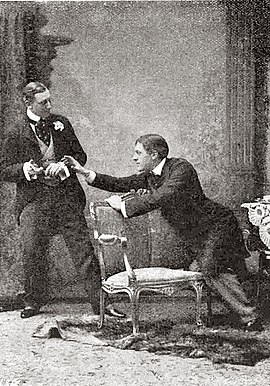
Allan Aynesworth as Algernon (left) and George Alexander as Jack
1895 (14 February) On the opening night of TheImportance of Being Earnest, the Marquess of Queensberry planned to throw rotten vegetables at the stage. Forewarned, Wilde was able to deny him access to the theatre.
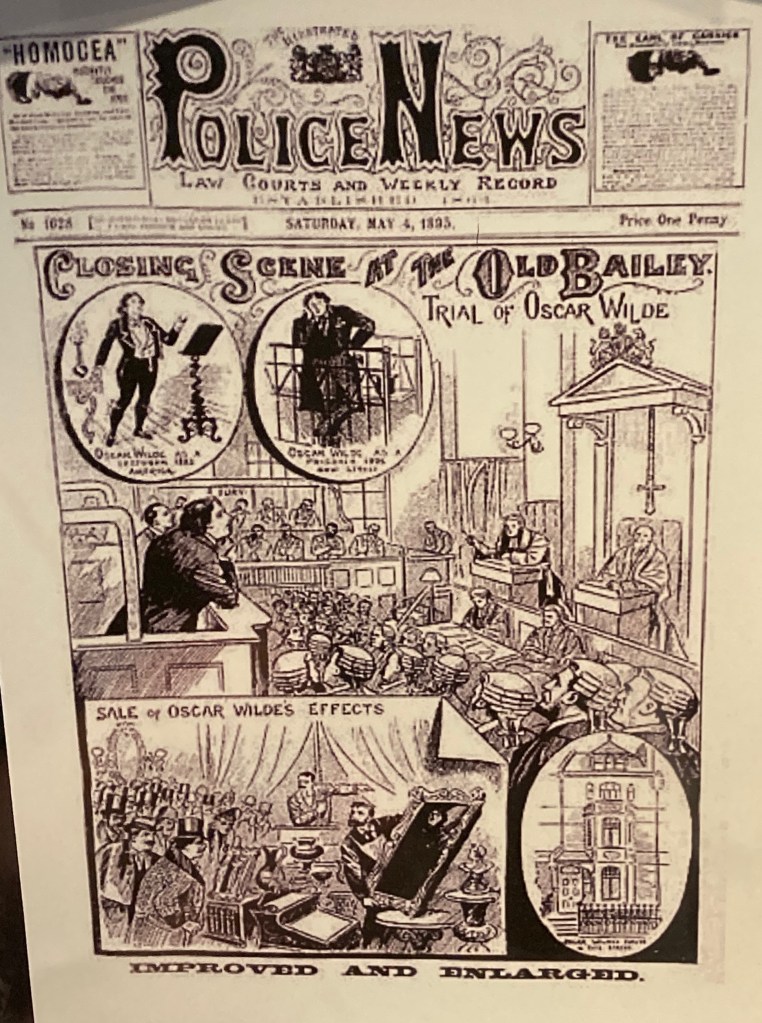
1895 (April) The feud between the Marquess of Queensberry and Oscar Wilde came to a climax in court when Wilde sued for libel. The proceedings provided enough evidence for Wilde’s arrest, trial, and conviction on charges of ‘gross indecency’. Wilde’s homosexuality was revealed to the Victorian public, and he was sentenced to two years imprisonment with hard labour. Despite the play’s early success, Wilde’s notoriety caused it to be closed after 86 performances. After his release from prison, he published the play from exile in Paris, but he wrote no more comic or dramatic works.
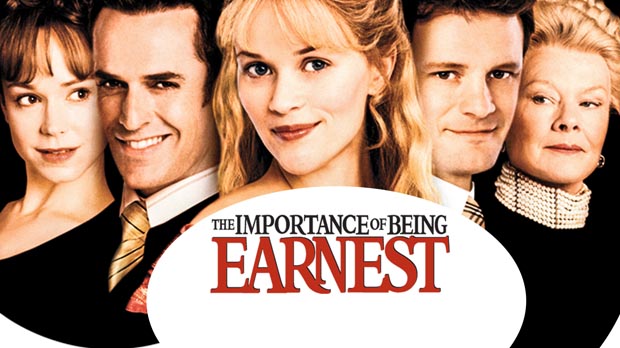
2002 A star-studded adaptation of Wilde’s comedy of mistaken identities is available on the BBC iPlayer (but only for about two weeks). Watch here.
2017 Oscar Wilde was pardoned under “Turing’s Law”, named after Alan Turing who was also convicted of gross indecency.
Nancy Valverde Defied the Los Angeles Police Department – and Won!
Nancy Valverde stood up to a homophobic police force arresting people under anti-‘masquerading’ laws. Photograph: Courtesy Los Angeles LGBT Centre
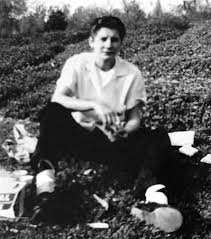
From the age of 17, Nancy Valverde was repeatedly arrested by the Los Angeles Police Department for wearing masculine clothing. By the time she died, at age 92, the city had named a square in her honour, its first public monument to a lesbian.
Valverde, a proud Chicana butch lesbian, had refused to conform to social norms, even in the 1940s and 50s, when the city’s racist and homophobic police force frequently arrested people under anti-“masquerading” laws that criminalised them for wearing clothes officers judged to be unsuited to their gender.
“They wanted me to be someone else. I could not be someone else. This is me,” Valverde said in a short documentary film about her life.
As states across the US pass laws criminalising drag performances and banning gender-affirming healthcare for transgender youth, Valverde’s battle against police harassment feels deeply relevant, said the director Gregorio Davila, who featured Valverde in his documentary LA: a Queer History, and also created an award-winning documentary short about her.
Valverde became a queer Los Angeles icon for her early resistance efforts and her refusal to hide who she was, even at a time when many people were afraid to be gay in public. For decades, butch lesbians and other gender-nonconforming people could be arrested for their clothing choices not only in Los Angeles, but across the country.
Frustrated by being repeatedly arrested and jailed under anti-crossdressing laws that dated back to the 19th century, Valverde went to the county law library in 1959 and found that the courts had actually decided in 1950 that a woman was not breaking the law simply for wearing masculine clothing. Valverde was able to use this legal precedent to stop the LAPD from arresting her, though officers continued to harass her.
With LGBT+ people in the US facing a renewed wave of political attacks, Los Angeles has made a public monument to Valverde’s fight against police harassment.
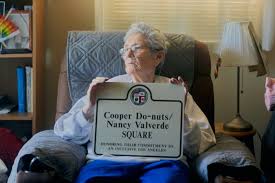
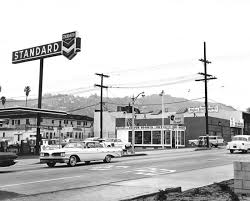
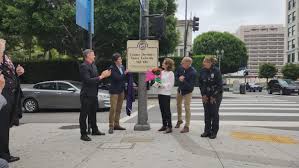
In June 2023, less than a year before Valverde’s death, city officials renamed a downtown intersection the Cooper Do-nuts / Nancy Valverde Square. The name pays tribute to both Valverde, who attended school and was arrested there, and the site of a donut shop popular with gay and trans people, which is believed to be the location of a pre-Stonewall battle against police harassment in 1958 or 1959.
At the dedication ceremony, the LAPD made a formal apology, with Ruby Flores, the department’s first Latina deputy chief, saying: “This mistreatment of our citizens was wrong and should never have happened.”
Valverde was too frail to attend in person, but her reaction to the honour, according to Marisol Sanchez, the resident services coordinator for the LGBT+ senior apartments where Valverde lived, was: “I never thought I was going to get this, but it’s about time.”
Clashes with police
People who knew Valverde describe her charm and sense of humour, as well as her fighting spirit. “Everybody knew Nancy,” Sanchez said. “And if you didn’t know Nancy, she would make herself known.”
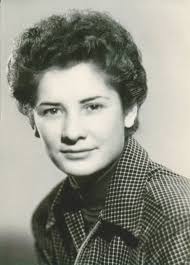
Nancy Valverde was born in 1932 and moved to East Los Angeles as a child. Photograph: Courtesy Los Angeles LGBT Centre
Even in Valverde’s later years, when she had less energy, “that didn’t take the sass away from her”, Sanchez added.
While Valverde is sometimes referred to now as an example of an early LGBT+ activist, that wasn’t how she would describe herself. “She wasn’t trying to make a political statement,” Davila, the documentary director, said. “She made a difference just by being who she was.”
Valverde was born in 1932 in New Mexico and moved with her family to East Los Angeles as a child. She started working at age 11, first picking apricots and cotton, then working for a restaurant, then delivering pastries for a bakery. She experienced discrimination both as a Chicana, during years when the city was razing a Mexican American neighbourhood and forcing out families in order to build Dodger Stadium, and also as a lesbian.
During the second world war, many women had taken on new roles in the workplace while men were fighting overseas. But after the war, “there was a real push to drive women back to the home and back to their ‘normal’ position,” Faderman, the historian, said. “Lesbianism became particularly threatening to that drive.”
The LAPD chief William H Parker, who was well known for his racist views of Black and Latino communities, became a champion of that effort, Faderman said, using police power to raid gay bars and crack down on any public sign of homosexuality.
The result was a police department empowered to harass, detain and even arrest people “at will, just for the hell of it”, said Faderman, one of the authors of Gay LA: A History of Sexual Outlaws, Power Politics, and Lipstick Lesbians. Being arrested for homosexual behaviour could have severe social and professional consequences: women even risked losing custody of their children.
Still, within the shelter of gay bars, butches and “hard dressers”, as they were called in the Black community, tried to find ways to express their identities.
In San Francisco, one woman recalled rolling up her trouser cuffs and wearing a long feminine coat, so that on her way to and from the gay bar she would look like she was wearing a skirt, said Kate Redburn, a legal historian at Columbia Law School. Another butch “thought she was safe because she sewed lace on her socks”, Faderman said.
While there were many butch lesbians in the 1950s, most of them “were scared to really challenge the police if they were harassed or arrested”, Faderman said. “Nancy was different.”
The old Cooper Do-nuts in Los Angeles, a popular spot with gay and trans people. Photograph: Courtesy Cooper Donuts
Valverde had known from an early age that she was not exactly like other girls. “I just knew I was comfortable in pants, men’s attire,” she told Davila. She said she had not learned the word “lesbian” until she went to jail.
For years after her first arrest, at age 17, Valverde recalled, she faced harsh treatment in public, in court, and in jail, where she recalled once serving a three-month sentence for masquerading. Throughout it all, she fought back.
When police officers used to tell her, “I want to see you in a dress,” she would tell them: “Sit down and wait ’cause you’re gonna get tired,” Valverde told Faderman. Officers would bring the clothes she had been wearing to display in court as evidence, and say things like: “Better not fuck around with my wife.”
When she was attending school in downtown Los Angeles to become a barber, Valverde said, the police would arrest her on Friday and not let her out until Monday morning. The head of the school demanded to know why she was always late, and she had to explain that it was not because she was partying, but because she was in jail.
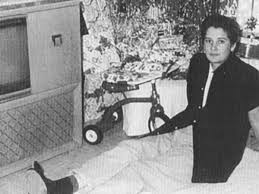
‘I just knew I was comfortable in pants, men’s attire,’ Valverde said. Photograph: Courtesy Los Angeles LGBT Centre
At one point, Valverde was put in a men’s section of a jail, and a male police officer tried to grope her, she said in Davila’s documentary. Valverde started drumming on the bench in her cell and demanding to see a female cop. When the man in the cell next to her complained, she introduced herself as Nancy from East Los Angeles and explained what had happened. The men in the cells around her were also Chicano, she said, and soon they were all drumming on their cells in solidarity.
Valverde did not always get this kind of support. “The gay community didn’t want me around,” she told Davila. “They said I was too out. Everybody was passing for straight, and the only place they came out was at the bars. On the streets they wouldn’t talk with me … (afraid) I would make them guilty by association.”
A potent legacy
Valverde, who raised several adopted children, stayed an active member of LA’s gay communities throughout her life. She recalls participating in one of the city’s early Dyke Marches, “when it was only about 75 of us. I thought, ‘At last, justice has arrived,’” she told Davila, wryly.
Some younger gay Angelenos remember her barbershop as a place of refuge. One now elderly man once got his first haircut with Valverde, Sanchez said, and the man recalled: “I knew she was different. I knew she was a safe space, when I hadn’t even admitted to myself that I was a gay man.”
In the last decades of her life, Valverde moved into the Triangle Square Apartments, the first affordable housing development for LGBT+ seniors in the US. Valverde loved the community and felt very defensive of it, Sanchez said. There, she found love again in her 80s, meeting her partner, Andi Segal, who also moved into the apartment building.
A ceremony at the unveiling of the new Cooper Donuts / Nancy Valverde Square. Photograph: Courtesy of Cooper Donuts and the Evans family
Valverde also became an important queer Latina elder for younger generations of artists, writers and film-makers, who have shared her story through documentaries, academic research, essays and even a play, Raquel Gutiérrez’s The Barber of East LA.
Today, Valverde’s story is taking on fresh urgency as Republican legislators pass new laws targeting transgender and queer people. In 2023, the year Nancy Valverde Square was dedicated, more than a dozen states introduced laws banning drag performances, and Tennessee, Montana, Florida and Texas passed them.
Though the “literal legal language” of the new drag bans is not the same as the century-old laws banning masquerading, “it comes from the same sort of panic over gender and sexuality and other norms being challenged”, said Redburn,the legal historian.
While many of the drag bans are tied up in legal challenges, the legislation has had a “chilling effect”, according to Joshua Block, an attorney at the American Civil Liberties Union, that has left LGBT+ people feeling “under assault and under surveillance”. In her later years, Valverde said she was proud of the “youngsters who are working to open up society” but was sceptical of big talk and posturing, especially in a fight that was far from over.
Her message for people fighting for gay rights today: “Put your ass on the fire the way we did – risk your ass.”
Malvern Pride: Hundreds defy rain to spread colour and love
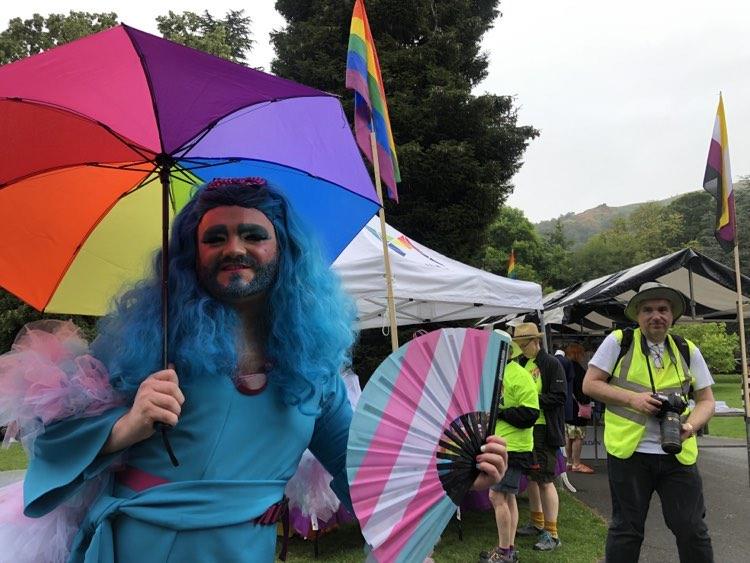
WELCOME: ElliXia Q Valentine came prepared for the rain at Malvern Pride. (Image: Newsquest)
It had been a wet start to Malvern Pride today (Saturday, 27 July), but that had not deterred visitors, who came in droves to celebrate love and inclusivity in Priory Park.
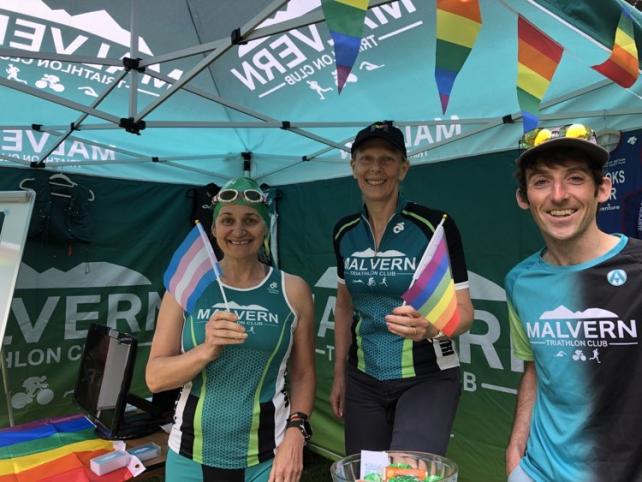
PRIDE: Lorraine Brooks, Jayne Ackroyd and Michael Dymond from Malvern Triathlon. (Image: Newsquest)
The fun got underway at noon with entertainment like live music from the bandstand, face painting and aerial performances.
When the rain started, visitors put up umbrellas, popped on ponchos or moved under trees so they could not miss out on the festivities.
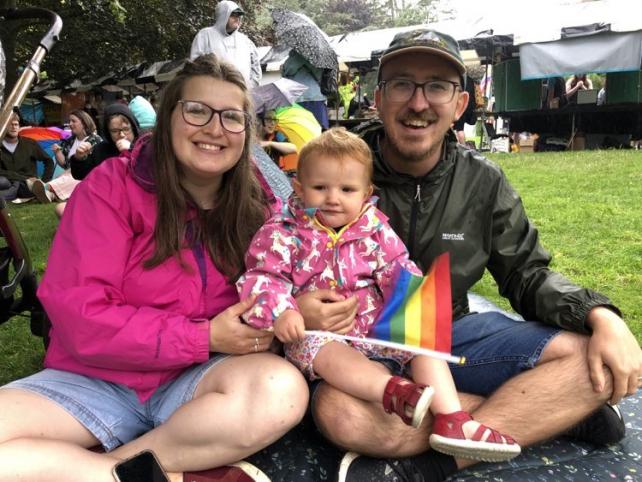
Meet baby Olive, who is enjoying pride with her parents, Lisa and Marc Sharman. (Image: Newsquest)
Mary Marsh, one of the event organisers, said: “Once it started raining, many people got up, and I was thinking, oh no, but they just all moved under the trees.
The way I describe (Malvern Pride) to people is it is a bit like if Pooh and Piglet do pride – it is Malvern, and Malvern would not put up with pride like in London and Birmingham because that’s not us.”
Crowds gathered to watch aerial performances. (Image: Newsquest)
“So it has to be warm and fuzzy, so we have always marketed it as a family-friendly event where everyone is welcome. They all come because it’s great fun and inclusive in the true sense of the word.”
LOVE: Alice Riordan, Grace Bailey and Charlotte Langford-Wilder enjoying Pride. (Image: Newsquest)
“People throw around words like diversity and inclusivity, but Malvern Pride is also warm.”
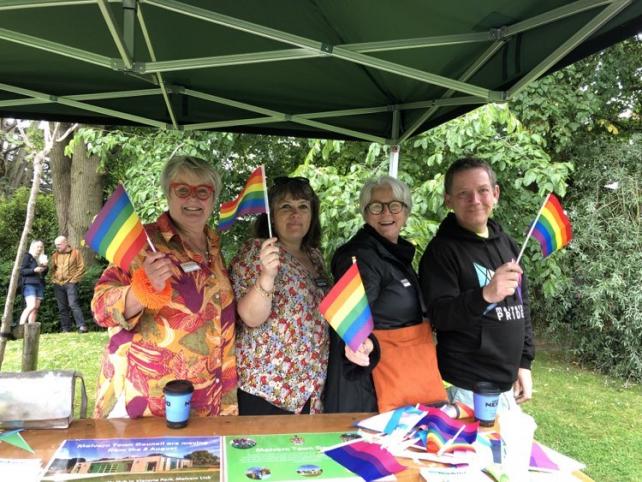
Malvern Town Council also made their first appearance at one of the Malvern Pride events today.
Malvern Town Councillors loved meeting people at the event. (Image: Newsquest)
“It is great – it is really bright and vibrant and everyone has really enjoyed themselves,” said councillor Jude Green. “For us as town councillors, it has been really good to engage with the community and get all sorts of feedback.”
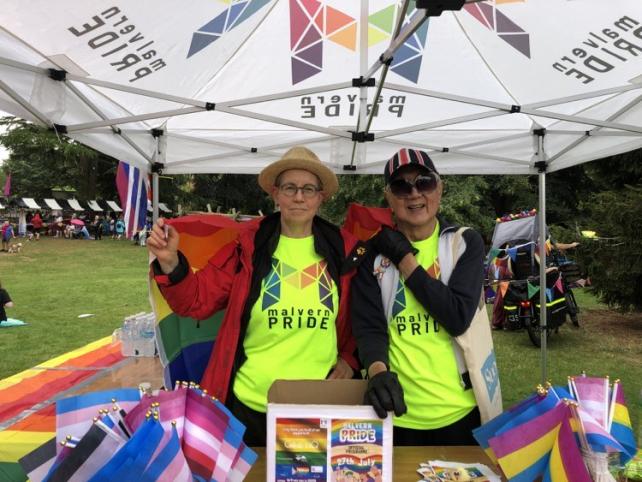
Organisers Mary Marsh and Michael Teo. (Image: Newsquest)
Councillor Melanie Jones said when she moved from London to Malvern, she was nervous that she would receive hostility for being gay.
She said: “I am quite new to Malvern and new to the council as well.
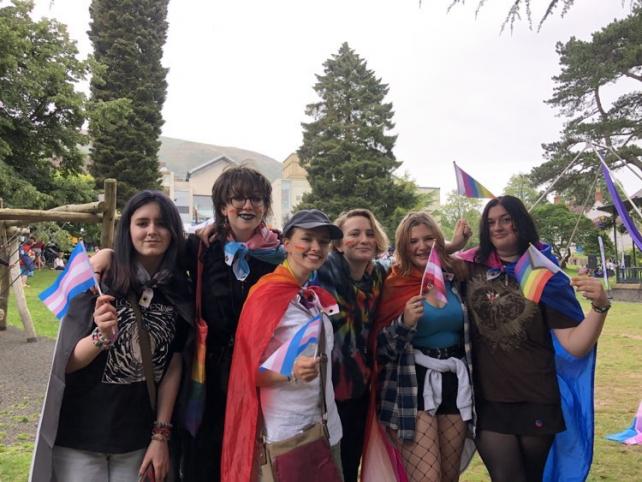
Some members of the crowd wore their flags as capes. (Image: Newsquest)
There are people from different backgrounds and different sexualities, and that does not make you feel uncomfortable here. “I do not mind saying that I am gay, and I came from London and expected there to be hostility, and I never have received that here personally. That has been amazing and to get a place on the council as an outsider is really fantastic.”
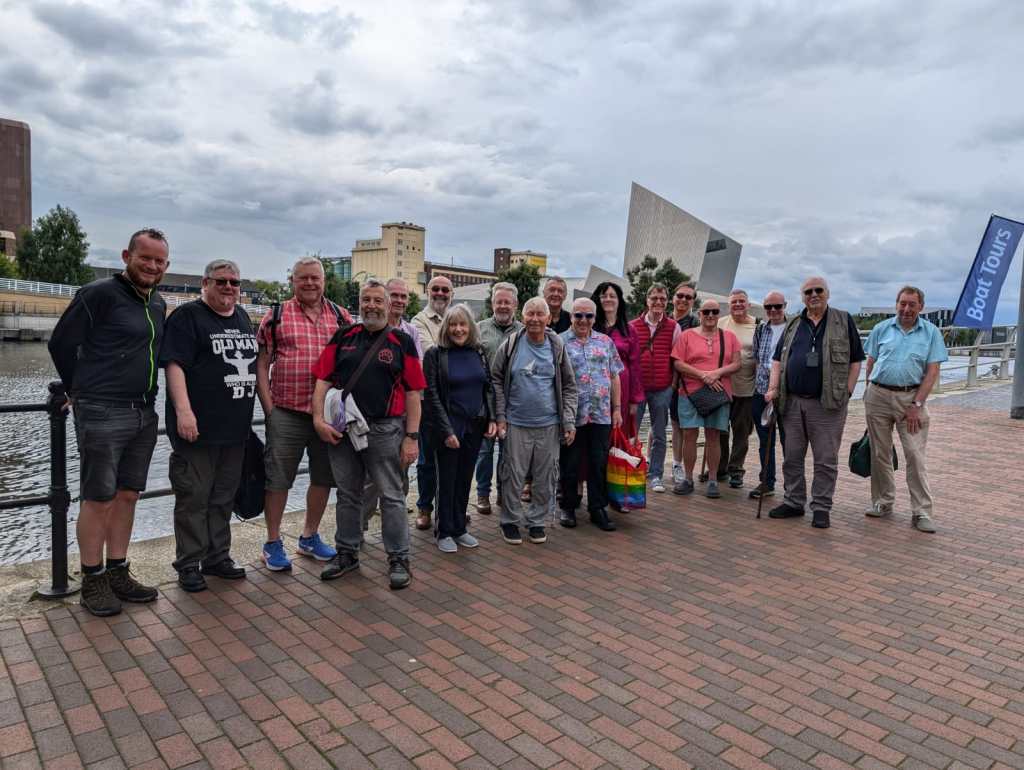
After meeting at Deansgate / Castlefield tram stop, we took the tram to Media City in Salford Quays – home to the BBC and ITV television studios as well as The Lowry Theatre.
Media City has a burgeoning social scene, and we lunched at The Harvester, which turned out to be brilliant value.
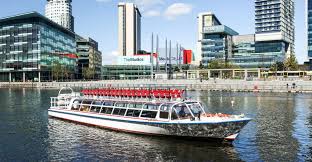
There were 29 of us this week, and the weather was perfect for the next stage of our day out – a one hour canal and river cruise. We boarded at Salford Quays and travelled along the Ship Canal and River Irwell, some people inside, and some on the open top deck.
We discovered the industrial heartland around Salford and Manchester seeing sights from the modern Media City to the imposing Old Trafford football stadium and George Stephenson’s railway bridge from 1830.
On the commentary we heard the history of the Manchester Ship Canal, about the industries that made the city one of the powerhouses of Europe and also about the exciting future that’s currently being built.
Loneliness is killing men – and without proper support and intervention nothing will change
‘Mental health services are trying to engage lonely men … many struggle with individual therapy; and men’s-only group therapy is not readily available.’ Photograph: Marco VDM/Getty Images
In his book Of Boys and Men Richard Reeves outlines various factors leading to boys and men feeling excluded from society and failed by various systems, whether it be education or the workforce. One section states how men struggle after divorce or relationships ending, especially if they do not find a new partner.
Many men are socialised to prioritise strength, independence and stoicism, making it difficult for them to open up and form emotional connections. Many ageing men experience loneliness due to the loss of a partner and friendships.
Mental health services are trying to engage lonely men with various strategies. We know that most men do not phone helplines when they are in crisis, many struggle with individual therapy and men’s-only group therapy is not readily available. There are discussions on policies to have interventions aimed at boys in schools. Holistic practices such as exercise (gym, running or sports), a healthy diet and good sleep hygiene also help, but it is not enough.
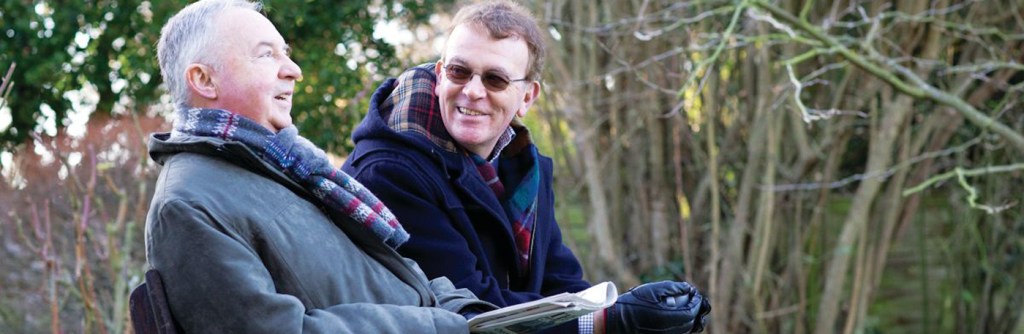
Research shows that older LGBT people are especially vulnerable to loneliness as they are more likely to be single, live alone, and have lower levels of contact with relatives.
They are also less likely to engage with local services, with recent findings showing that over four fifths of older LGBT people do not trust professionals to understand their culture or lifestyle.
The creation of a safe space can provide opportunities for older LGBT people to build confidence and engage with activities that enable them to meet with likeminded people.
Why are Gay men over 50 so lonely?
In this video, two gay men (Tom and Michael) have an open and honest discussion about the loneliness epidemic; why and how it’s affecting our aging gay community. This is an important conversation for us to have because at some point, we have or will experience loneliness.
They share ways you can cope and overcome loneliness, as well as how you can help others who might be suffering.
Are You A Lesbian?
She was in her bedroom, not properly dressed, just sprawling and thinking her own private thoughts when her mother came in – she didn’t knock, she just came in.
You could see she had a determined look, as if resolved to do something and was set on doing it. No preamble – out came the question – “Are you a Lesbian?”
This was a continuation of an earlier conversation. They had talked about boys and the mother mentioned boys who had shown an interest. The girl hooted with laughter at her mother’s cringy suggestions. She choked with snorting derision.
So the mother had been pondering a certain thread of thought. Hence the question – which was asked with that concerned, pained, but creepy expression that mothers use.
The girl was shocked – real jaw-sagging incredulity – a mixture of astonishment and annoyance – she looked so alarmed that the mother backed off immediately, mumbling apologies – but at the same time pleased.
Alone again, the girl stared at the ceiling and then grabbed her mobile to text her girlfriend.
Thanks to David Astbury for this short story
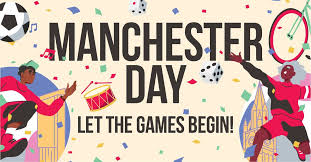
Manchester Day
Manchester Day will return on 27 July with even more fun-filled free activities for all the family.
Between 12.00 noon and 6.00pm on Saturday 27 July, the city centre will turn into Manchester’s biggest-ever playground this summer when Manchester Day: Let the Games Begin! rolls into town.
Inspired by an international summer of sport, join them for a day of free family-friendly fun. They’re taking pop-up performances, astounding acrobatics and have-a-go activities to the streets.
Here’s what to expect for 2024:
– Take part in a Hip Hop wrestling ring for breakdancing, wrestling, a spot of opera and a dash of drag.
– Hook a duck and challenge your mates to a round of darts at the vintage fairground.
– Immerse yourself in larger-than-life console games in Manchester Day’s actual reality arcade.
– Enjoy the freshest beats from DJs across the city. And take a whistle stop tour around the world with the Global Grooves procession.
– Award winning dance company Motionhouse will be perfoming their hit show ‘Wild’. Watch them fly through the city on a forest of poles in a daring production.
– No Fit State Circus will be defying the laws of gravity. Watch them bend, flex and build a towering series of bamboo sculptures. It’s a stunning feat of human strength, trust and harmony with nature.
– Mimbre acrobatic theatre will perform ‘Look Mum, No Hands!’. It’s a family-friendly, inclusive tale of friendship, growing up and what it means to explore each other’s boundaries.
– Enjoy music and performance from some of Manchester’s finest groups including:
* The Bridgewater Hall Choir * A Filipino fashion show * Irish, Bhangra and Lithuanian Dancers
– Be transported to Copacabana beach by the sounds of Jubacana. They combine percussion, guitars and a whole lot of sequins to create a big sound and an even bigger show.
There will also be sporting events taking place across the day including:
– Taekwondo classes.
– Get your blood pumping at the 60m, pop up athletic track supplied by GLL.
LGBTQ+ Extra Care Housing Scheme – Community Update
Work has made steady progress since our last update, and we’re pleased to announce that we have submitted plans for the ‘first of a kind’ purpose-built majority LGBTQ+ Extra Care housing scheme in Whalley Range, south Manchester.
Plan for the ‘first of a kind’ purpose-built majority LGBTQ+ Extra Care housing scheme in Whalley Range
The scheme will look to increase the affordable housing opportunities for older people to move into high quality accommodation, with flexible care and support services available to meet changing needs encouraging independent living. The residents will be required to be aged 55 years or over, with the majority of residents being members of the LGBTQ+ community from Manchester. Living alongside allies the aim is to provide an open and inclusive, physical and psychological place of safety for the older LGBTQ+ community and a welcome addition to the Whalley Range area.
The final proposals will deliver 80 one- and two-bedroom social rented apartments for older people in a brick building of four to five storeys. The low-carbon scheme will include shared communal facilities including lounges and treatment rooms and landscaped gardens which will look to ensure an overall net gain of trees on the site.
The site will also include a neighbouring separate shared ownership block consisting of around 40 one- and two-bed apartments, delivering affordable homes to first time buyers and eligible customers, helping to address emerging affordability issues in places such as Whalley Range.
The final proposals could not have been developed without the crucial input from the Russell Road Community Steering Group, Manchester City Council and LGBT Foundation, and without the feedback from many of you via our consultation at the beginning of this year. We would like to thank everybody for their support in getting the Russell Road development to this stage.
The plans are due to be considered at Manchester City Council’s September Planning Meeting. You can read the planned proposals and you can provide your feedback ahead of the meeting here.
Co-production has underpinned the project from the outset, and alongside preparations for the planning submission, work has continued with the Community Steering Group (CSG) to co-produce a question for the Extra Care provider competitive tender that reflects the aspirations for care for LGBTQ+ older people demonstrated by Russell Road.
We’re also pleased to announce that Amy Davies, Head of Independent Living at Great Places Housing Group and a key member of the Russell Road Project Team, has been awarded a Churchill Fellowship. This will enable her to travel to Berlin, Lyon and Madrid as part of a research study into specialist housing provision for LGBTQ+ older people. We’re sure that you would join us in congratulating Amy on receiving this coveted award that will allow her to look into how the UK is making progress in specialist housing for LGBTQ+ older people, learning from others developing similar pioneering schemes across Europe to inform the development of the scheme as the project progresses.
Thanks for your continued support it is appreciated. We look forward to sharing further news on the planning submission as soon as we can as well as continuing to keep you up to date as to the latest developments as the project continues.
Commenting on the planning submission, Cllr Gavin White, Manchester City Council’s executive member for housing and development, said:
We know there is a real need for this type of affordable housing that can support older LGBTQ+ people in the city to age with dignity, surrounded by a community of like-minded people. Extra Care homes are an attractive and affordable housing choice for people later in life, and where some on-going care needs can be accommodated on-site.
This will be a hugely welcome planning application to transform a long-term brownfield site and these proposals have been developed in partnership with a Community Steering Group to ensure this development will meet the needs of older residents from the LGBTQ+ community in Manchester.
Martin York and Susan Duncan-Wood, Joint Co-chairs of the Russell Road Community Steering Group (CSG), added:
As Co-Chairs we are proud to be involved in this pioneering scheme, working alongside Community Steering Group members. We aim to ensure all voices are heard and perspectives considered to deliver a housing development where LGBTQ+ older people can live their lives authentically and with dignity.
LGBT+ Retirement Communities in the United States
As the population of openly LGBT+ seniors in the United States continues to grow, the need for inclusive and supportive gay retirement communities has become increasingly evident. These communities provide a safe and welcoming environment where LGBT+ seniors can live without fear of discrimination or ostracism.
The importance of gay retirement communities
LGBT+ seniors often face unique challenges as they age, including social isolation, discrimination and a lack of family support.
According to Services & Advocacy for GLBT Elders (SAGE), many LGBT+ elders have experienced indignities such as being denied the opportunity to share a room with their same-sex partner or receiving insensitive treatment from staff members who object to homosexuality. These experiences can lead to feelings of loneliness and the need to “go back into the closet” when entering the senior care system.
Gay retirement communities address these issues by providing a supportive environment where residents can live openly and authentically. These communities often offer specialised services and cultural training programmes to ensure that staff members are equipped to meet the unique needs of LGBT+ seniors.
Additionally, they foster a sense of community and belonging, which is crucial for the mental and emotional well being of residents.
LGBT+ retirement homes across the US
Several retirement communities across the United States cater specifically to the needs of LGBT+ seniors. Here are some notable ones around the country that offer varying amenities and services:
For LGBT+ seniors who may not have access to a dedicated gay retirement community, there are several alternatives to consider:
LGBT+-friendly senior living communities: Many standard senior living and assisted living communities are becoming more inclusive and implementing anti-discrimination policies. It’s important to ask about LGBT+ cultural training for staff and the presence of LGBT+ clubs and events when considering these communities.
Support organisations: Organisations such as the National Resource Center on LGBT Aging and Services & Advocacy for GLBT Elders (SAGE) provide resources and support for LGBT+ seniors, helping them find inclusive living options and access necessary services.
Inclusive cities: Some cities are known for their LGBT+ inclusiveness and may offer a welcoming environment for LGBT+ seniors. Cities like San Francisco, Austin, Atlanta, Chicago, Orlando and Philadelphia have vibrant LGBT+ communities and supportive services for older adults.
Empowering LGBT+ seniors
Gay retirement communities play a crucial role in providing a safe and supportive environment for LGBT+ seniors. With locations across the United States, these communities offer specialised services and a sense of belonging that is essential for the well being of their residents.
For those who cannot access a dedicated gay retirement community, exploring LGBT+-friendly senior living options and supportive cities can provide alternative solutions.
As the demand for inclusive senior living continues to grow, it is essential to ensure that all seniors, regardless of their orientation or gender identity, can age with dignity and respect.
Rainbow Lottery Super Draw!
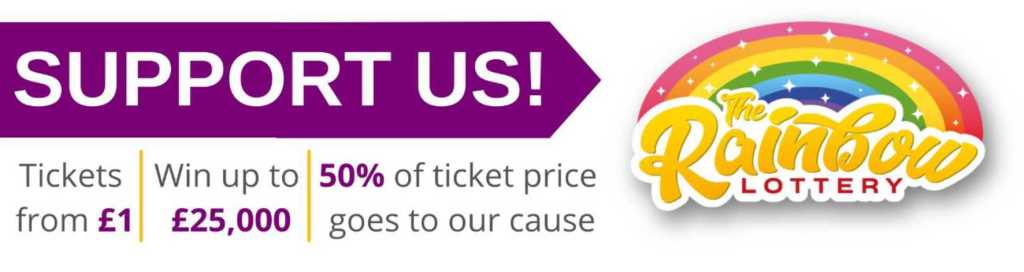
Please support Out In The City by buying a Rainbow Lottery ticket or two (or more!)
With each Rainbow Lottery ticket, you are not just entering to win exciting prizes, you are also supporting our mission to support older LGBT+ people.
It’s a vital part of our fundraising as we receive 50p for every £1 spent and you have the chance to win cash prizes each week from £25 for three numbers up to a jackpot of £25,000 for six numbers – while helping us to achieve more for the LGBT+ communities over 50 years of age.
On Saturday 27 July, one lucky winner will walk away with this month’s amazing Ninja mega-bundle.
The Ninja Woodfire Electric Barbecue and Pizza Oven can be used as easily on your counter-top as they can in the garden!
And of course, your CREAMi ice-cream maker, Foodi Power blender, and Ninja Dual-Zone Air Fryer are perfectly at home in the kitchen too!
However, the choice is yours. You can take the £1,000 cash alternative!
If you already have tickets then you’re in with a chance to win big – but don’t forget, you can top-up your tickets just for the week of the Super Draw!
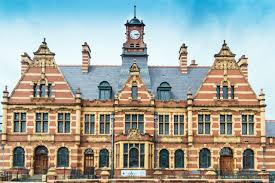
Our visit this week was to Victoria Baths – a Grade II* listed building, in the Chorlton-on-Medlock area of Manchester.
The baths opened to the public in 1906 and cost £59,144 to build. Manchester City Council closed the baths in 1993 and the building was left empty until a multimillion-pound restoration project began in 2007.
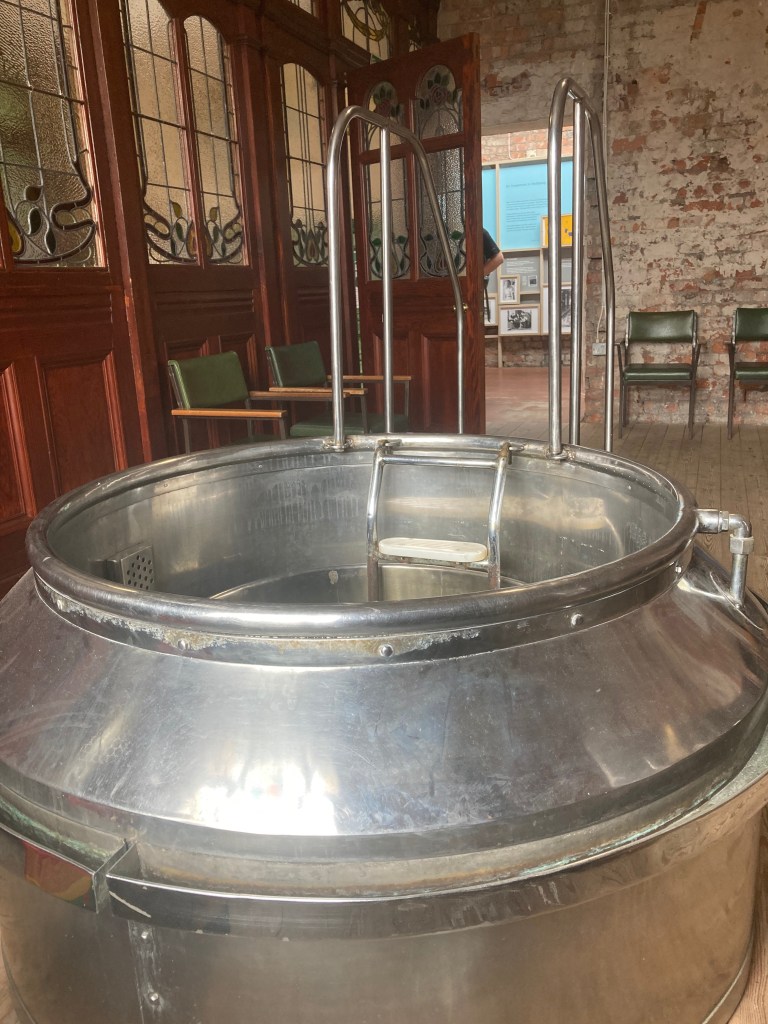
The Aeratone
In the 1950s the Waiting Room for female users of the Baths was converted to provide a new facility – The Aeratone.
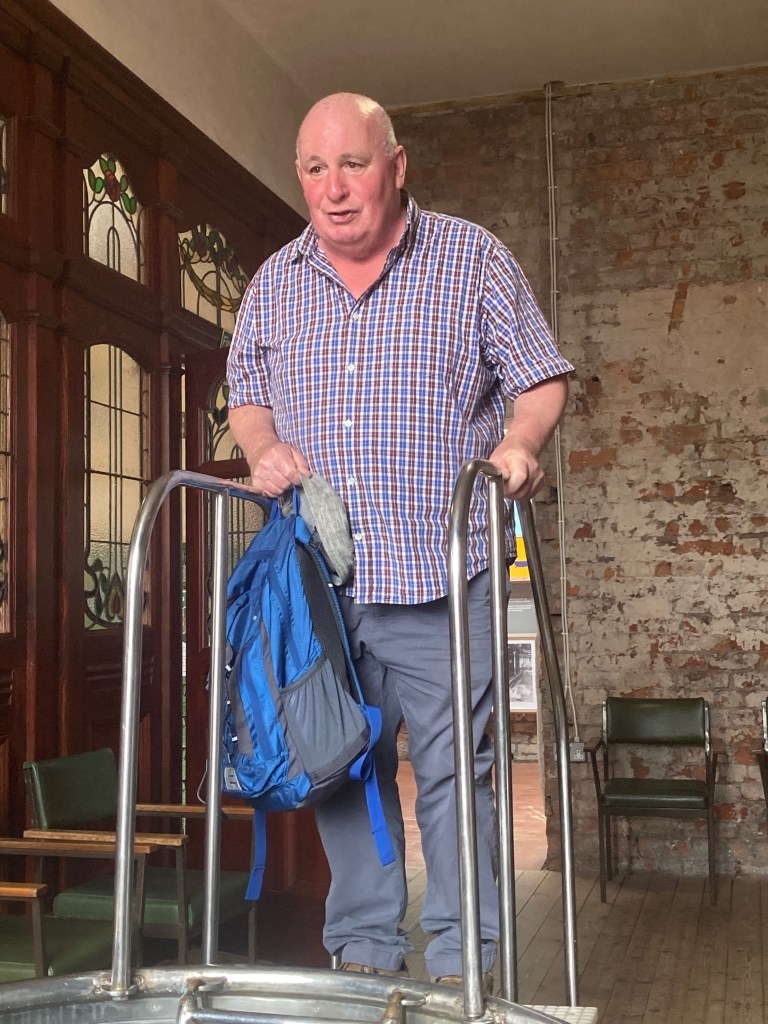
The Aeratone Therapeutic Bath was invented by a Scotsman – Professor William Oliver. It provides a full body water massage which can be used to treat a variety of ailments, particularly those causing pain and stiffness such as rheumatic conditions.
A session lasts around half an hour. The tub is filled with warm water and this is bubbled around you very, very vigorously, This is, literally, not a treatment for the faint-hearted.
This Aeratone was installed in 1952 and was the first in a public baths in England. It was still in regular use when Victoria Baths closed in 1993.
LGBT Foundation Awards
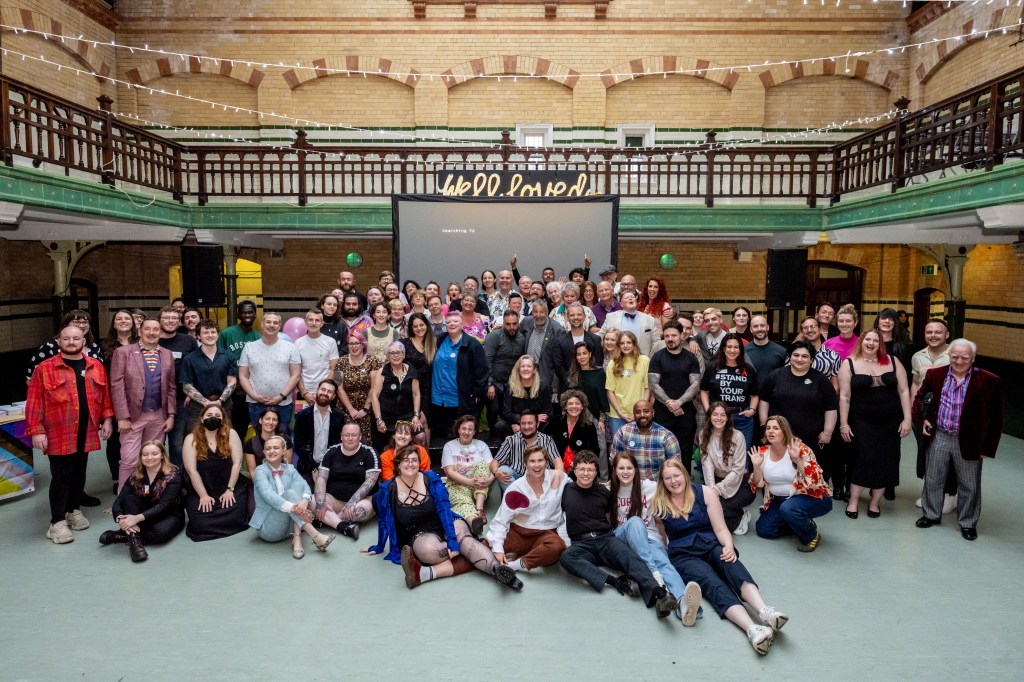
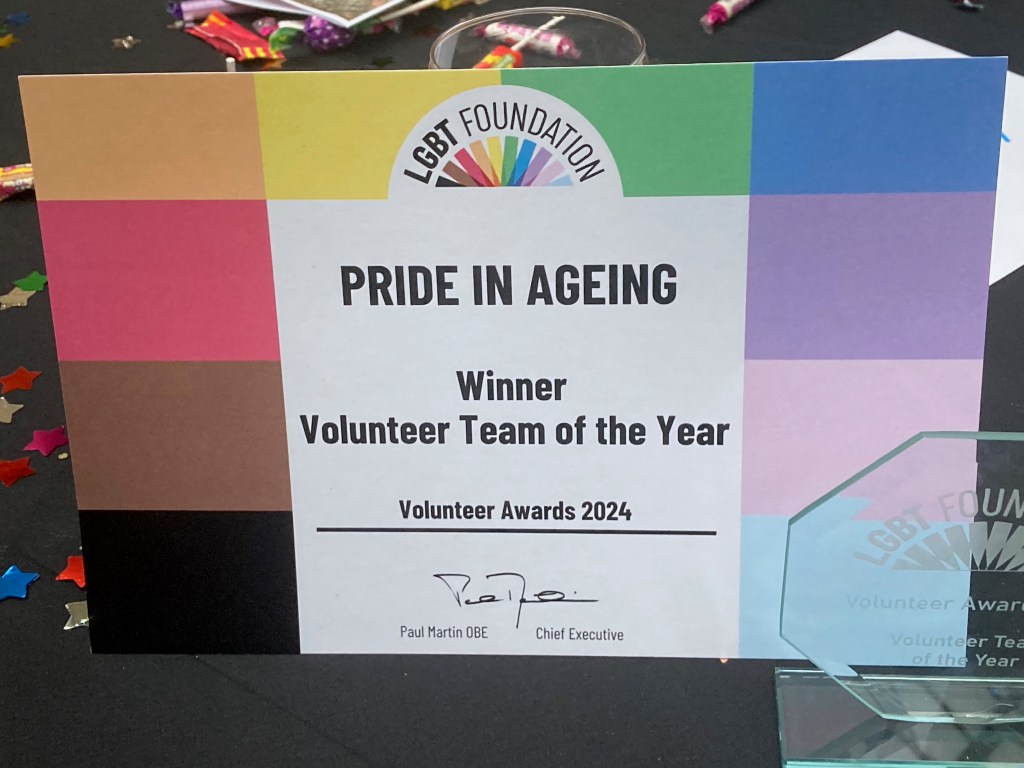
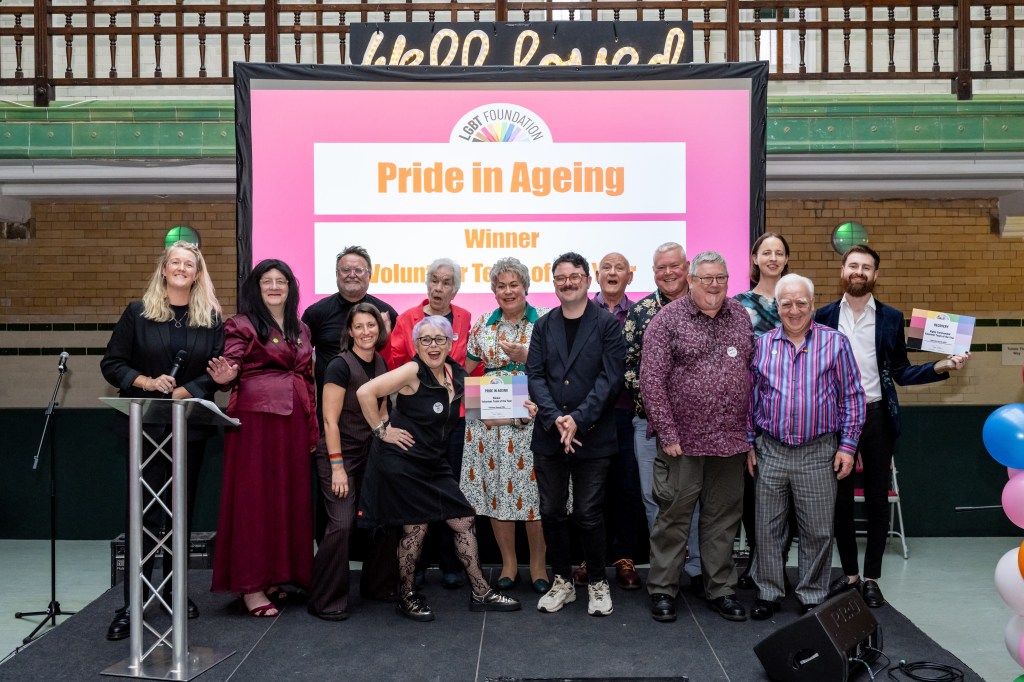
Coincidentally, we had attended the Victoria Baths a week ago for the LGBT Foundation Volunteer Awards 2024. Lots of members of Out In The City are also involved in Pride in Ageing, which won “Volunteer Team of the Year”.
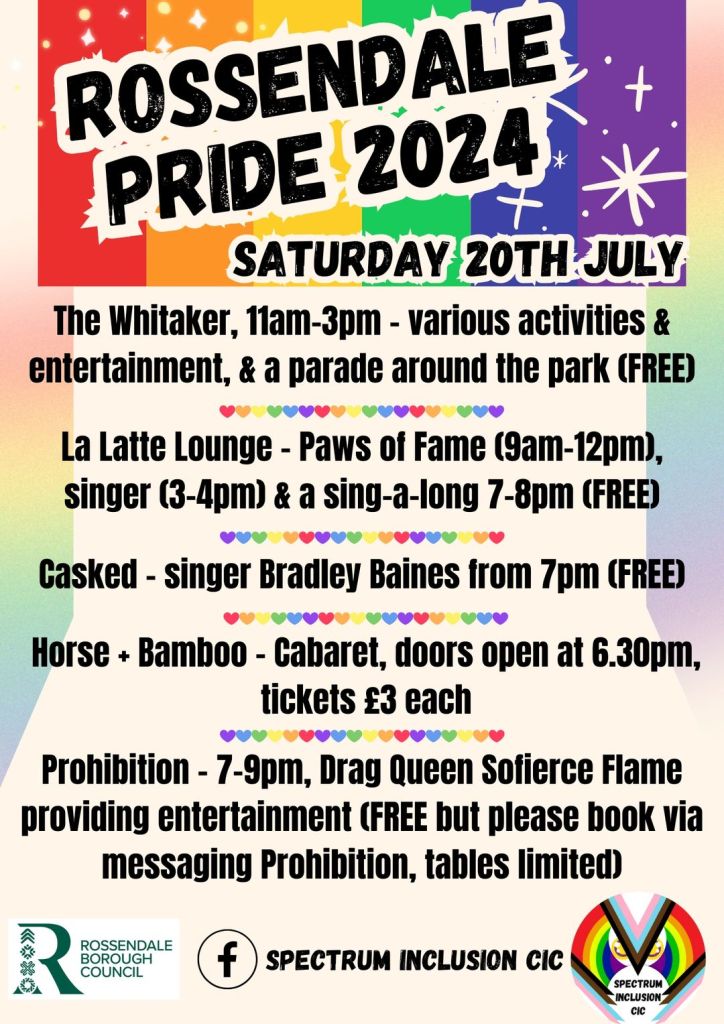
Spectrum Inclusion Rossendale in partnership with The Whitaker Park Museum and Art Gallery are thrilled to announce that on Saturday 20 July 2024 they will be holding Rossendale’s first Pride in the Park Festival.
They are planning lots of family friendly activities and entertainment for the day, in a safe space for the LGBTQIA community.
It’s the first Pride event and we can’t wait!
As well as Pride in the Park at The Whitaker in Rawtenstall, there are other events happening as well (in Rawtenstall, Waterfoot and Bacup), so you may want to pace yourself on the day.
There is plenty of entertainment and activities to choose from, and hopefully there’s something for everyone.
We look forward to seeing you!
Out In The City Women’s Meeting
Out In The City Women’s meeting is on Thursday, 25 July 2024 from 2.00pm to 4.00pm.
The meeting is at Cross Street Chapel, 29 Cross Street, Manchester M2 1NL (Kenworthy Room) and is a drop in. There is no need to book.
SCENE: Manchester LGBTQ+ Film & TV Festival
Celebrating Queer Stories On Screen – 16 – 22 August
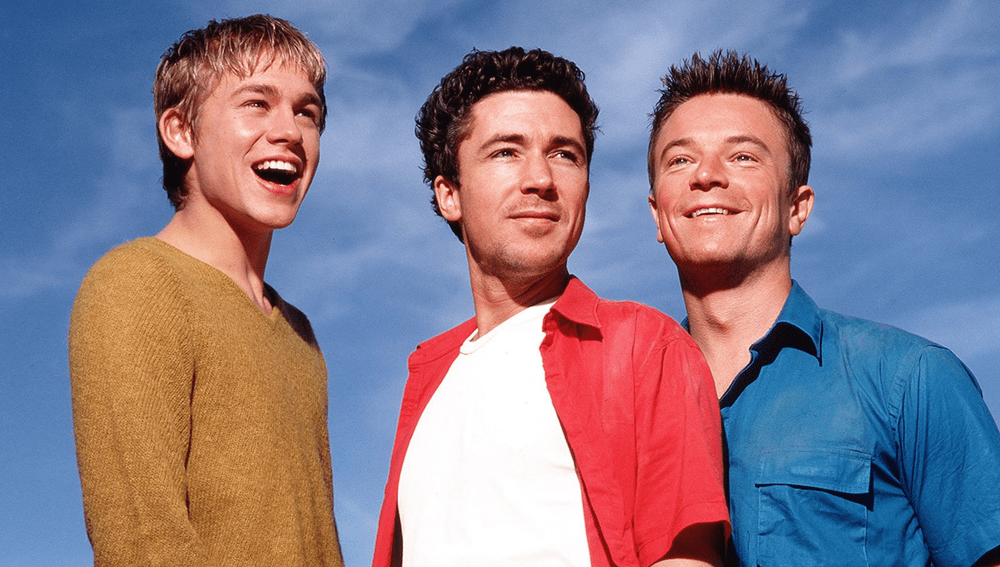
This August, Manchester will welcome SCENE, a new and glittering LGBTQ+ Film and TV festival. The weeklong event will kick off with an exclusive opening night featuring a celebration panel and after-party to commemorate the 25th anniversary of the influential drama Queer as Folk. The series, which spotlighted Manchester’s Canal Street, will be celebrated with appearances from writer Russell T Davies, executive producer Nicola Shindler and actress Denise Black.
A diverse array of events will be hosted in iconic venues across the city, including HOME, The People’s History Museum, New Century Hall and the Gay Village.
All events at SCENE are £15 or under with many being £5 or free.
First Street (outside HOME Cinema) will be showing a series of free-to-view cult musicals on an outdoor screen: Saturday 17 August, 2.00pm – The Wiz Saturday 17 August, 4.30pm – Grease 2 Saturday 17 August, 7.30pm – Xanadu Monday 19 August, 6.00pm – Little Shop of Horrors Tuesday 20 August 6.00pm – Hairspray.
The SCENE festival is an official partner event with Manchester Pride Festival.
Manchester Central Library celebrates 90 years since its grand opening by King George V on 17 July 1934 – a special event attended by thousands.
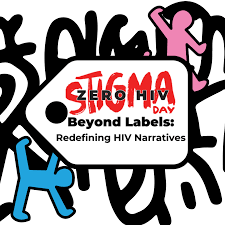
Zero HIV Stigma Day
Zero HIV Stigma Day is recognised on 21 July to represent a movement to unite people, communities and countries to help raise awareness about HIV stigma and learn about ways to help stop it.
The theme this year is “Redefining HIV Narratives”. This means challenging the myths about HIV from the past, and capturing positive stories on living with HIV today.
The date for this event was chosen because it was the birthday of a very courageous woman from South Africa, Prudence Nobantu Mbele, who refused to hide the fact that she was living with HIV, and in doing so, she inspired many more people to be open about their own health.
HIV Stigma is unfortunately back in the spotlight. If we can tackle HIV stigma on a community level, we give more people the courage to test for HIV, to start antiretroviral therapy, continue their access to HIV healthcare and therefore live their life to their full potential.
Stigmatising attitudes can come from external sources such as people who are afraid or not up to date with the modern realities of living with HIV. However, for some people living with HIV, stigma can also come from within oneself manifesting as a fear of how people will react if they discover that you are living with HIV. Many activists, like Prudence was, are vocal about their HIV diagnosis to help to address stigma in society and to enable people living with HIV to be treated the same as anyone else.
















 Out in the City