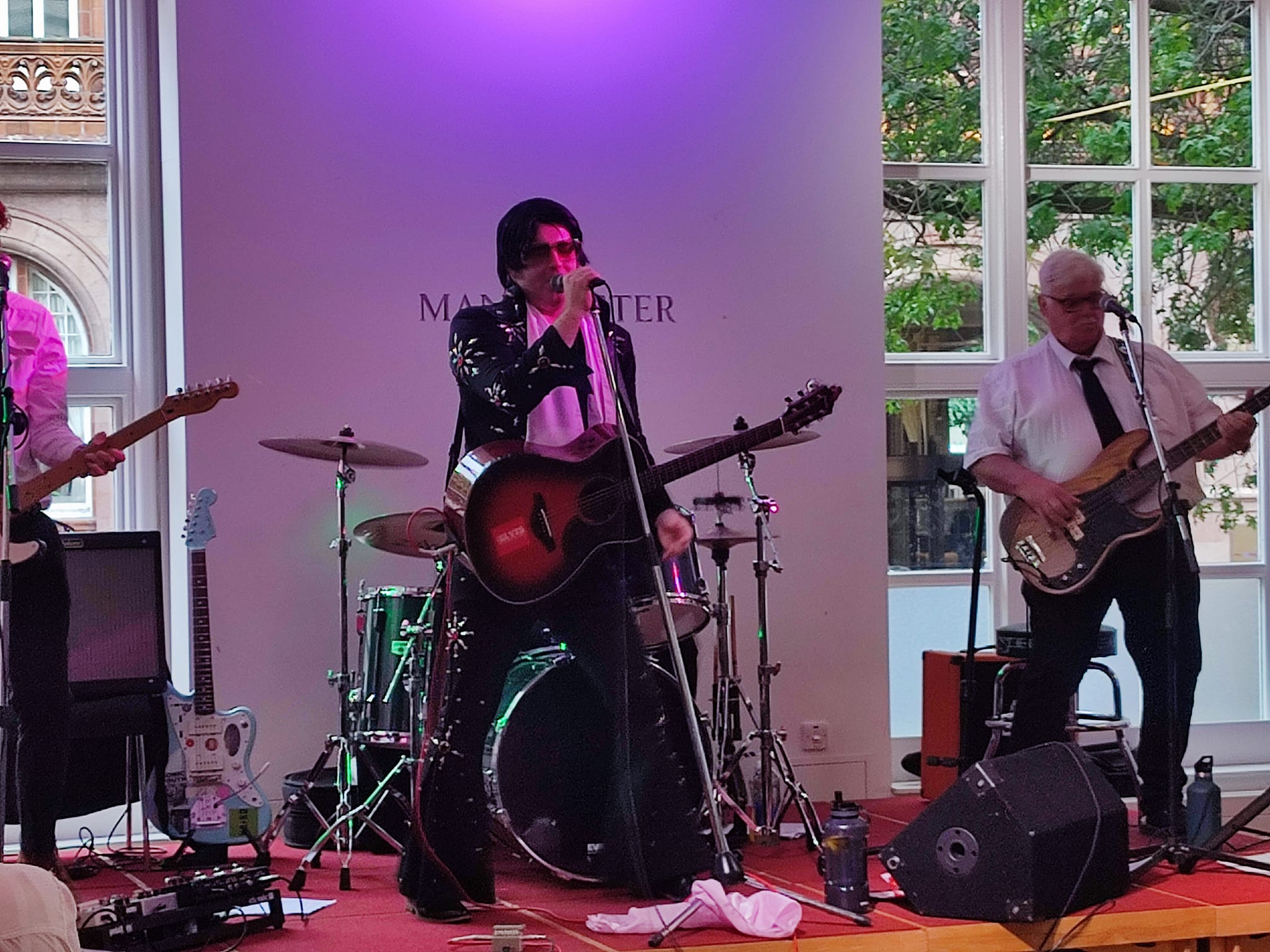
Meet the Queens … Austin Allen … Dora Richter … Manchester LGBT+ Archives

News

Meet the Queens

SShh! Don’t tell anyone but the time has come … to meet a new set of gorgeous queens, who are all vying for Mama Ru’s seal of approval and the ultimate accolade of being crowned the UK’s Next Drag Race Superstar.

Who do you think has the charisma, uniqueness, nerve and talent to slay the competition and snatch the crown?

Four of the queens come from or now live in Manchester!

This message will self destruct in 3 … 2 … 1 !

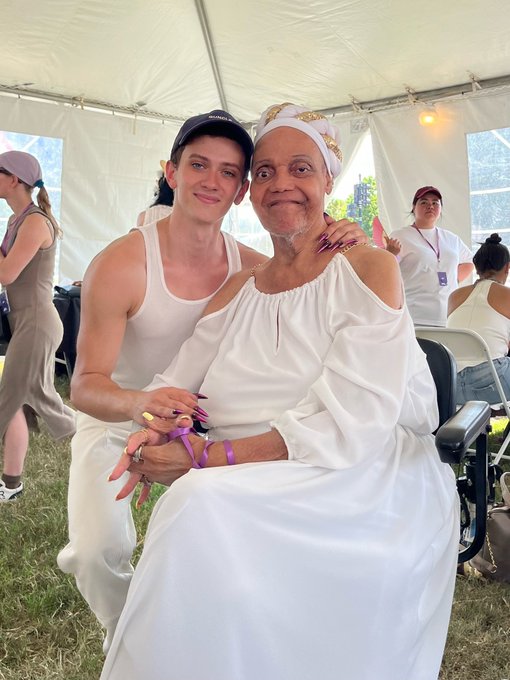
Austin Allen is 74 – he has a powerful piece of advice

Austin Allen, now 74, was raised in Middlesbrough in the Baptist Church and came out in his late 20s. He worked in academic research in chemistry before working as a singer in the early part of the 1980s, then moved on to supply teaching but was sacked the morning after Section 28 became law. He now lives in mid Wales and has given ‘coming out’ assemblies at local schools.

Austin grew up in an era where nobody talked about being gay, when students at the school where he taught would shout homophobic slurs and throw planks and bricks at him. At the time if he were presented with an opportunity to become straight he would have “grabbed at it with two hands”.

Austin stated: “I suppose the biggest challenge growing up in the 50s and 60s was just total closeted-ness. I knew I was gay when I was eight years old and I came out about 20 years later. My friends, family, neighbours, being brought up in the Baptist Church … they didn’t even talk about it. Nobody was gay.

But that actually had advantages, because back then in the 60s in senior school we believed two things: firstly that every boy went through this homosexual phase in puberty, and secondly that these ‘queers’ (the word ‘gay’ wasn’t invented then for homosexuals) were dirty old men who hung around in shop doorways with raincoats on, and we weren’t old men who hung around in shop doorways.

So I actually had quite a nice ‘puberty’ in mid teens … playing with other boys ‘willy-nilly’ if you can forgive the pun! It didn’t really bother me at all while I was at school.

‘If you were homosexual and you were out of the closet you were ‘self-confessed” 
(Image: WalesOnline / Rob Browne)

But it was when I left school and then thought: ‘I’ve gone through puberty, I therefore must be straight, and God is taking rather a long time’ – that’s when the problems started and I forced myself to have girlfriends and then eventually to have sexual relationships with women. It was only in my late 20s that I realised I had been trying to fool myself all these years and came out of the old closet.

I was 27 years old before somebody sat down at a table and we chatted and he said to me ‘I’m gay.’ And I had never met anybody else in my life that knowingly admitted to being gay. It was completely taboo.

I remember Malcolm Muggeridge, the old interviewer, on the telly introducing somebody once. He said something like: ‘Author, entrepreneur, traveller, self-confessed homosexual …’ That was the era. If you were homosexual and you were out of the closet you were ‘self-confessed,’ it was a crime.

I was 17 before the law changed in 1967 to allow men to have sex with each other, but I wasn’t aware of that. I had no idea I could have gone to prison for two years. It’s kind of interesting. People are an awful lot more aware of all sorts of political issues, not just gay issues. We’re more aware nowadays.

One of the reasons I was sacked in ‘88 for being gay was because I’d been relatively comfortably ‘out’ as a gay teacher with the kids previously to that. Part of that was because I’d been asked to go into classrooms for form tutors and take their sex education lessons, because they were forbidden to do that under the 1986 Education Act.

The insidious thing about Section 28 was that it was so woolly-worded … it was ‘intentionally promote,’ and it’s almost impossible to define those words, but what it did do was create this climate. I’m sure the individual head teacher that sacked me was just as homophobic the day before … he probably thought ‘I’ve now got an excuse, I’ve now got a reason, I’m now being backed by the government.’

There was never a prosecution under Section 28; nobody was ever taken to court because it was just impossible. But it created this climate. Some local government libraries were removing Oscar Wilde from the shelves because they said that it was ‘promoting homosexuality.’ I wasn’t the only teacher that was sacked. I was the one that rolled up my sleeves and said ‘you want a fight, you’ve got one!’

When I went to Wales I stopped all formal gay rights involvement, but I still did the full ‘coming out’ assemblies in senior schools in Powys. Just a few years ago I was walking home this lad, then in the upper sixth, crossed the road and he came up to me.

He said: ‘I would just like to thank you for your assembly when I was in year 7. Because I’ve just come out as gay – I haven’t told my family yet. It was such a big help.’

It makes me quite emotional now, and it’s very nice. I don’t dwell on it too much but it does make me have a little tear in my eye now and again. I know that along the way I have helped people.

There was no social media in the late 70s when I came out of the old closet. It was going down to the local gay bar in Bradford. I went down three times and walked up and down outside the pub and then went home terrified! Thinking it was going to be full of these ‘queers’ – urgh! Eventually of course I went in and found it was full of extremely nice people!

Of course it was lovely in the end. In a sense in those days you did have to go out and find, in a gay bar or gay club or whatever – real live people. That seems now to have been replaced to a large extent for some people with apps like Grindr – that’s all they want, they want sex. In one sense it’s kind of destroyed that ‘gay community,’ the places to meet.

‘I’d say ‘accept yourself.’ Because what I didn’t do, right the way through until I was 28.’ (Image: WalesOnline / Rob Browne)

But then I remember talking to much older people than even I who said it was an awful lot better before 1967, mainly in London when you could go to these clubs and knock on the door three times and ask for Big Bertha or whatever it was. You were in a quiet, completely closeted place. They felt they could be happy there; relaxed, for an hour or two.

The incredible sadness of some people stands out. People that I’ve known who were very very closeted ‘til the day they died. But also the light-hearted side of it as well because some of them made the best of a bad job.

My advice is to be honest and ‘accept yourself.’ Because that’s what I didn’t do, right the way through until I was 28. I didn’t accept who I was.

Now at 74 I’ve had 34½ wonderful years with my beloved Andrew and if I could have seen that at 17 I would have put up with anything.

Dora Richter (16 April 1892 – 26 April 1966)

Dora “Dörchen” Richter isn’t a household name to most people, including those in the trans community. Which is a shame, because she’s one of the most historically significant trans women out there. And we just discovered that she survived Nazi Germany.

Richter is famous for being the first trans woman to get a vaginoplasty. She previously received an orchiectomy and a penectomy at the Magnus Hirschfield Institute of Sex Research, where she worked as a cook and domestic servant in the midst of Weimar Germany, a time where trans people struggled to find work and social acceptance.

Shortly after her penectomy, Richter received the first vaginoplasty surgery conducted on a trans woman in history.

It’s been long thought that Richter died when the Nazis stormed Hirschfield’s Institute, killing those inside and burning it to the ground, destroying the many decades of research at the facility.

Image: Magnus Hirschfeld Society

From left to right: Toni Ebel, Charlotte Charlaque and Dora Richter, circa 1933


Recently, however, researcher Clara Hartmann discovered, while investigating historical trans figures, that Richter’s amended birth certificate had a peculiarity to it. The certificate, which was amended to reflect Richter’s true name, was corrected years after Richter was presumed to be killed.

It turns out that Richter survived the attacks after all, and had moved to Czechoslovakia, where her birth certificate could be changed to reflect her correct name and gender. After Germans were expelled from the country when it joined the Soviet bloc in 1946, Richter re-entered her home country, residing in Nuremberg for the next 20 years.

She lived to be 74, where she died 26 April 1966. According to the German news outlet RBB 24, there are some people alive today that even remember her as a kindly older lady with a handbag who would always feed the birds. This is good news to the whole trans community, as it’s important to remember those who came before us and those who lived to become queer elders. Against all odds, Dora Richter found a way to survive and live a full life even when her country tried its hardest to destroy her life, and the lives of those like her.

Manchester LGBT+ Archives

The Library and Archive Team are keen to record oral histories for people who are LGBT+ over 50 years of age.

If this sounds interesting and you want to share your story, or you just want more information, please contact us here and we can get this set up fairly soon.

Didsbury Pride … Pride Season … Groundbreaking Gay Episode of M*A*S*H … Bella Donna

News

Didsbury Pride

Didsbury Pride was held on Saturday, 31 August.

The Pride aims to promote visibility of the LGBTQIA+ community in Didsbury and educate and raise awareness of the spaces and services available locally.

It started with a parade – The Rainbow Walk – on a beautiful sunny day and continued in the grounds of the Emmanuel Church.

It’s a very welcoming inclusive event and we had a great time catching up with lots of friends old and new.

See photos here.

Pride Season – dates for the diary

Greater Manchester’s Pride Season continues and the following Prides are scheduled during September:

Withington – Saturday, 21 September

Chorlton Pride Fundraiser – Friday, 27 September

Withington Pride – Saturday, 21 September 2024

Withington Pride is back, celebrating Radical Joyful Unity in our LGBTQ+ and local communities. This year’s festival is bigger and better, featuring free kids’ crafts, a lively street party, and more -brought to you by Manchester’s top queer collectives and Withington’s venues.

Parade starts at 1.00pm from Withington Baths.

Chorlton Pride Fundraiser – Pop Quiz and After Party

Friday, 27 September 2024 – 8.00pm – 11.59pm

The Beagle, 456-458 Barlow Moor Road, Chorlton-cum-Hardy, Manchester M21 0BQ

Join us for a fun night of trivia and music to help us raise money to keep Chorlton Pride events taking place in our community!

Special Host: Our charismatic and fabulous host Vin Dicktiv will guide you through the night, asking all the questions and calling out your lucky bingo numbers.

Delicious Food & Drink: Home of the famous Nell’s Pizza, The Beagle will be serving food and drinks as usual throughout the night.

Live DJ: Continue the night with The Beagle’s resident DJ playing all your favourite pride bangers.

We recommend a maximum team size of 6, but that’s just a suggestion!

All proceeds will go towards supporting Chorlton Pride, ensuring that our events can keep happening in 2025 and beyond.

Chorlton Pride is a volunteer-run event and we rely on the generosity of the community to keep doing what we do. Please consider donating if you can. 

Tickets available here – cost £6.13 including fee.

That groundbreaking gay episode of M*A*S*H

In September 1974, fifty years ago, M*A*S*H featured a groundbreaking gay episode.

Spun off from Robert Altman’s 1970 film of the same name, the TV dramedy followed the lives of US military medical personnel stationed in South Korea during the Korean War. The iconic CBS show was widely loved, and its 1983 finale remains the most-watched scripted television episode in history.

The thought of revisiting these TV classics is usually a thorny one. Products of their time, it’s not uncommon to stumble on episodes, plot lines, and characters that look more than a little problematic in hindsight – especially in terms of their treatment of LGBT+ characters. So, it’s not entirely unfair to be wary of the fact that, in 1974, a M*A*S*H episode addressed the hot topic of gay men in the military.

M*A*S*H was always a show with a “radically compassionate ethos” and this quote-unquote “gay” episode was indicative of that, telling a rather progressive and open-minded story – even if the ending wasn’t quite the boundary-breaking one the writers had in mind.

The season two episode was called “George” and it opens with the MASH unit treating a badly bruised George Weston (Richard Ely). After his recovery, George comes out – indirectly, but openly – to Hawkeye (Alan Alda). There’s no big reaction, there’s no hatred or discomfort, and there are jokes, but George isn’t the butt of them.

When others at the camp learn about George, their reactions are refreshingly unphased, with one exception.

The episode – written by John W Regier and Gary Markowitz –  makes sure its heroes treat George’s sexual identity as neither a problem nor even a novelty. It’s pretty astounding considering it aired a full 36 years before the repeal of “Don’t Ask, Don’t Tell.”

The lone dissenting voice and driving force of the drama is Frank Burns (Larry Linville), a stern disciplinarian who frequently took on the role of M*A*S*H’s antagonist. He’s the only character to express any kind of homophobia toward George, and he does so under the guise of “following the rules” as he tries to have the gay soldier dishonourably discharged.

Hawkeye and Trapper’s (Wayne Rogers) scheming to help their friend leads to them buttering Frank up and coaxing him to admit he once cheated on a med school test. They then use this information as blackmail so that Frank won’t submit the discharge report, and prove that he has no room to judge anyone else.

It turns out, the writers initially had a different ending in mind. The original plan was to have Hawkeye and Trapper get Frank drunk, during which point the stringent major revealed that he once experienced sexual attraction for another man.

So, right, the intended ending does veer a little too closely to the overused stereotype that homophobic bullies are, themselves, secret closet cases. But its implications were unprecedented for the time in terms of gay representation on screen.

Still, the ending that aired is a fine final note for a truly landmark episode of television. LGBT+ characters were still few and far between, and they were so frequently the target of mean-spirited jokes – or worse. But with “George,” M*A*S*H presented a gay character on his own terms, and then showed its massive, mainstream audience what it means to be a thoughtful and supportive ally.

Bella Donna

19 September – 21 September, 7.30pm – 9.30pm – Kings Arms

Bella Donna is a comedy play at The Kings Arms, 11 Bloom Street, Salford M3 6AN on 19 September to 21 September at 7.30pm.

A girl’s night in with two disgruntled actors, the self-proclaimed Queen of Sass and several bottles of wine … what could possibly go wrong?

From Award-Winning Director and Playwright Laura J Harris comes an original queer comedy filled with unexpected twists, turns and more than its fair share of sass. Drag Artiste Extraordinaire and self-proclaimed Queen of Sass, Bella Da Balle, is in high spirits when her friend and flatmate, Donna Knight, returns home from a long day of auditions. Time to break out the wine and catch up on Bella’s love life (or lack thereof!).
 

When an unexpected guest appears at the door, it triggers a series of dramatic events that drastically alter the night’s trajectory. Surprising revelations surface throughout the evening that will put the bond of friendship between Bella and Donna to the ultimate test.

Brave, bold and beautifully bonkers!

Buy tickets here – £8.50 – £10.50 + Booking fee

Leigh Town Hall … Remembering Marsha P Johnson … Gay Flamingo Couple … People, Pride and Progress

News

Leigh Town Hall

A group of us gathered at the bus stop opposite Manchester Art Gallery to take bus V1 to Leigh, a town in the Metropolitan Borough of Wigan. The route includes seven kilometres of a guided busway (along a disused railway line) that excludes other traffic.

We had lunch in a pub called The Thomas Burke named after Thomas Aspinall Burke. He was born on 2 March 1890 in Leigh and was the eldest of nine children. The family grew up in poor circumstances. He left school at age 12 to work part-time in a silk mill. At age 14, he started working in a coal mine.

Burke’s first professional opportunity happened when a local music society was presenting Handel’s Messiah. The tenor they had engaged fell ill at the last minute and Burke substituted. He later trained in Britain and Italy and became an operatic tenor singing at the Royal Opera House in 1919 and 1920. Burke appeared in several films and had a long recording career.

We made our way to the refurbished historic Leigh Town Hall where we had a guided tour of the building and the archives. Our guide, Thomas, told us that there were 2.5 million items in the 800 hundred years of archives, the oldest item dating back to 1215.

It was a fascinating visit and more photos can be seen here.

Remembering Marsha P Johnson

Darling, I want my gay rights now. I think it’s about time that my gay brothers and sisters got their rights. Especially the women!” — Marsha P Johnson 

Photo by Fred W McDarrah / MUUS Collection via Getty Images

Marsha P Johnson (24 August 1945 – 6 July 1992) was known for her lighthearted and humorous approach to activism.

A joyous spirit, she dreamed of the day when queer people would be allowed to live and love freely. The drag queen and transgender icon played a crucial role in the Stonewall uprising, co-founded Street Transvestite Activist Revolutionaries (STAR), an organisation to support youth, and dedicated her life to fighting for gay liberation. 

The fight for equality has come a long way since the Stonewall Riots of 1969. Marriage equality is now the law of the land; gay people can adopt, serve in the military, and donate blood. With all of this progress, it’s easy to believe that the fight is over and that we’ve accomplished everything we wanted. 

Marsha P Johnson is a big part of our legacy. Her face is painted on murals, printed on pride-themed merchandise and etched into monuments in her honour. Still, I can’t help but feel like her work has been taken for granted. It sometimes feels like we learned nothing from Marsha P Johnson.

If she were alive today, would we protect her? Or would her struggles be ignored, like so many Black trans women today?

Photo by John Phillips / Getty Images

There have been 25 reported murders of transgender people in America this year alone. Nearly half of them were Black, according to the Human Rights Campaign. In 2019, the American Medical Association declared violence against transgender people an epidemic. These stories go vastly underreported and largely ignored, similar to how Marsha P Johnson was treated when she lived.

Despite decades of activism and community organising, trans women like Marsha P Johnson and Sylvia Rivera got very little in return. During the 1970 Christopher Street Liberation Day March, now known as the Pride Parade, cisgender gay men told Marsha and Sylvia that they had to march in the back of the crowd.

The men believed that trans people hurt the image of gay men. This sentiment still exists in the LGBT+ community today. This kind of mentality has allowed Black transgender women to suffer while the world celebrates our so-called progress. 

Photo by Fred W McDarrah / MUUS Collection via Getty Images

While there have been advancements for LGBT+ people, these individuals face disproportionate challenges and disparities due to the intersection of their racial and gender identities. According to HRC, Black transgender people are three times more likely to live in poverty than average Americans. They are less likely to have access to healthcare, more likely to be exposed to HIV and are at a high risk of suicide.

Black trans people deserve to be supported in the way that they have supported us all in the past. Black trans people, like Marsha, have always been the core of the Gay Liberation Movement. Now that gay people have made some progress, it’s time to give back and support the Black trans community the way that Marsha would have wanted.

If Marsha were alive today, she would want us to follow her lead and fight against oppression. She would encourage us to embrace intersectionality and work to address overlapping forms of oppression simultaneously, making sure that organisations support disabled and undocumented trans people. 

Despite experiencing homelessness and having to resort to survival sex work, Marsha believed that there was always someone who had it worse. Her activism relied on prioritising the most vulnerable in our community – she volunteered for organisations that support homeless trans people. She understood that donating clothes and money would keep trans folks safe and off the street.

Marsha wasn’t just strong; she was also bold. It wasn’t enough to be loud; she wanted to be noticed. She became known for her elaborate outfits and handmade flower crowns. Marsha knew being seen was important; it empowered others and encouraged them to join her fight. We must do the same and be loud in our support of Black trans people. We have to let the world know that we stand with them.

Because this isn’t just their fight, it’s all of ours.

Gay flamingo couple surprises caretakers by hatching a chick at zoo

Photo: Shutterstock

In a delightful display of love and dedication, Curtis and Arthur, a gay pair of Chilean flamingos at Paignton Zoo in Devon, have successfully hatched a chick. This remarkable event marks the first successful hatching of Chilean flamingo chicks at the zoo since 2018.

Pete Smallbones, the zoo’s bird curator, shared his excitement, saying, “Regarding the same-sex parenting, we aren’t entirely sure how this has come about, although it is a known phenomenon in Chilean flamingos, as well as other bird flocks. The most likely scenario is that the egg was abandoned by another couple, so this pair have adopted it.”

Curtis and Arthur are part of an initiative called Love Lagoon -inspired by the reality TV series Love Island – which aims to better document and engage the public with social media updates of the flamingo couples.

Earlier this year, Paignton Zoo launched a special Valentine’s Day campaign encouraging the public to name their flamingos. The “Name a Flamingo” initiative was a hit, with names being suggested and voted on through the zoo’s Instagram channel. Among the other flamingo couples who have successfully hatched chicks are Florence and Flame, Frenchie and Del, and Flossie and Lando.

Paignton Zoo’s breeding programme really shows the bird team’s dedication in fighting these issues and making sure the species survive. Chilean flamingos, native to South America, face several threats in the wild, including egg-harvesting, tourism disturbance, and habitat degradation due to industrial mining operations.
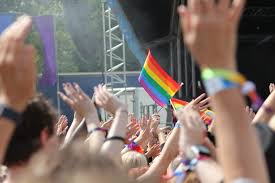
“It’s a testament to the skill and hard work put in by the bird team, and we are hopeful that we may see more eggs hatch over the coming days and weeks,” Smallbones added.

Can flamingos be gay?

Call it ironic that a group of flamingos is called a flamboyance, but this isn’t the first time same-sex bird pairs have become parents. In 2022, two gay flamingo dads adopted a chick that was previously abandoned by its biological parents at Whipsnade Zoo.

A pair of (childless) gay flamingos Freddie Mercury and Lance Bass also made headlines in 2022 after breaking up following a three-year relationship. Same-sex behaviour isn’t unique to flamingos; many bird species, including penguins (like Sphen and Magic), and swans (like Billy and Elliot) also display homosexual behaviour. These observations highlight the diversity of animal behaviours and challenge the notion that heterosexuality is the only natural sexual orientation in the animal kingdom.

People, Pride and Progress

The National Railway Museum is embarking on a new project to record the stories and memories of the LGBTQIA+ community in a new oral history archive. Do you know somebody who would be interested?

This initiative is funded and made possible thanks to the National Lottery Heritage Fund and the players of the National Lottery, ASLEF LGBTQIA+ Network and the Friends of the National Railway Museum.

Aims and Objectives

The project has been instigated by, carried out and guided by members of the LGBTQIA+ community. The team are looking for older and retired members of the community, those who worked under British Rail and in early privatisation, to have a chat about the past and tell what it was really like to work in those days.

Without continuity of culture passed down via families and with a scarcity of personal records, knowledge about the culture and the community’s past is often hidden from younger members of the community. Much of the community’s history, what day to day life was like, is preserved now only in the memories of those who lived it.

The project offers the opportunity for community members to share their stories in one-on-one sessions with others who’ve experienced rail in different periods. These chats will be recorded to form a new oral history (audio only) collection that will be preserved in the National Railway Museum archive.
Do you have an LGBTQIA+ connection with the railways? Contact us to tell us more!
Email: PeoplePrideProgress@railwaymuseum.org.uk

Write: People Pride Progress, National Railway Museum, Leeman Road, York YO26 4XJ

Pride Party … Claire Mooney … New Christopher Isherwood Biography … The Candlelit Vigil

News

Pride Party

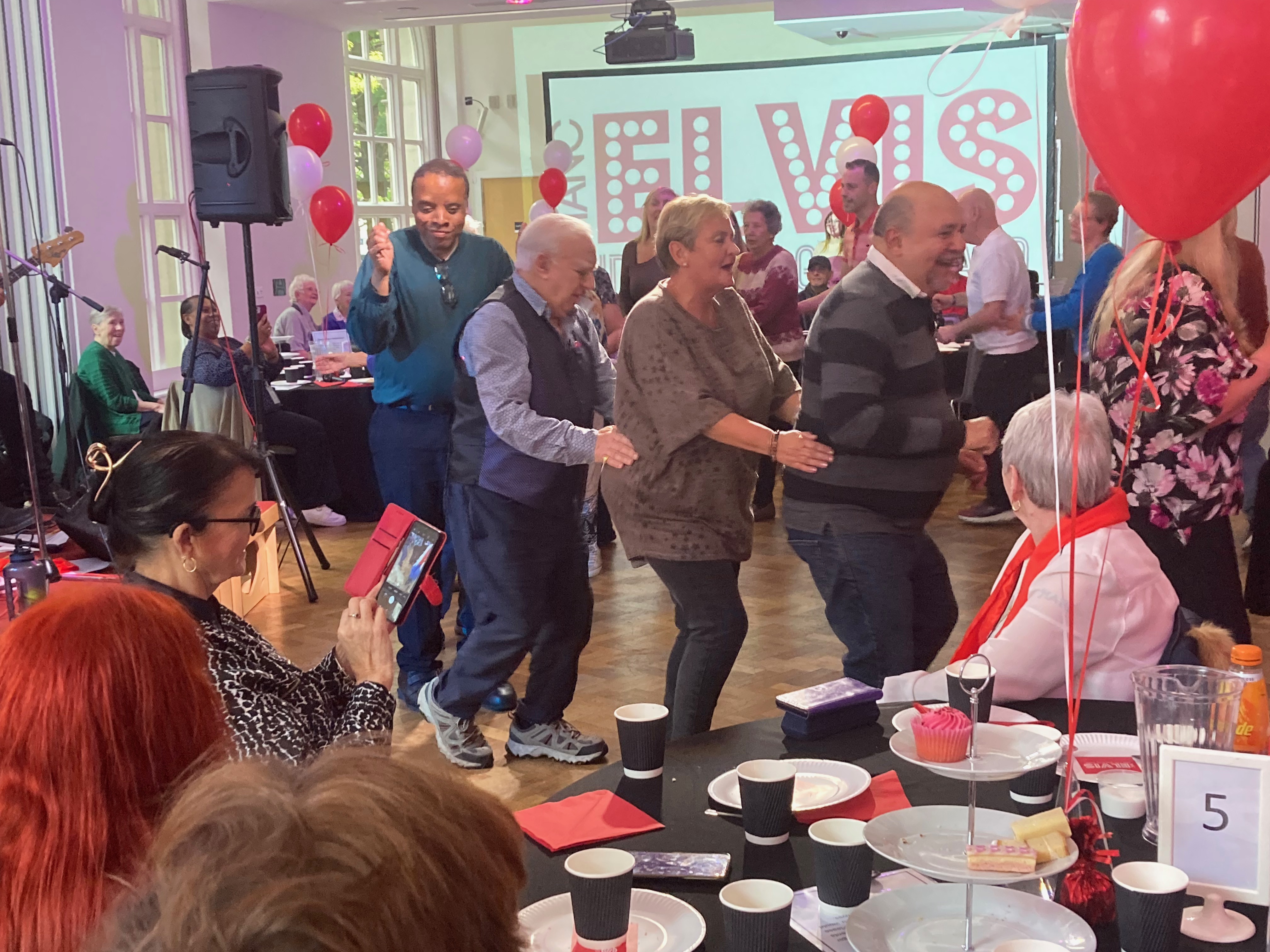
The Out In The City Pride Party was a great success – 60 people attended and we were entertained by Frank n’ Flirter and Wolf.

The raffle raised £143.00, so thank you to all who attended.

Some great photos can be seen here.

Claire Mooney

Tributes have poured in following the death of singer songwriter Claire Mooney.

Claire appeared at Oldham Pride in 2009 when she wowed the crowd. She supported many prides and organisations and was generous with her time. Claire was a fighter in more ways than one, she fought for women’s rights, the repeal of section 28 and made the world a better place for everyone.
She will be missed and as someone has already said “Rest in Power Claire”.
Claire Mooney

New Christopher Isherwood Biography

Christopher Isherwood book cover insert. Courtesy Farrar Straus and Giroux

Christopher Isherwood: Inside Out” is an insightful biography of the prolific writer, author of “Goodbye to Berlin” (the inspiration behind “Cabaret”), “A Single Man” and “Christopher and His Kind”, among others. Katherine Bucknell, director of the Christopher Isherwood Foundation, as well as editor of several collections of Isherwood’s diaries and letters, draws on his letters, journals, creative work and interviews to build an extensive look at this talented writer.

Christopher William Bradshaw Isherwood (26 August 1904 to 4 January 1986) was born in High Lane, Cheshire to landed gentry, with properties, a large house and servants. His father was in the British Army and the family moved around for a while, including a stint in Ireland. His father went to fight in World War I and died in France, leaving his mother to look after Isherwood and his younger brother. This clearly affected Isherwood, although he wouldn’t discuss it until much later. While this section of his childhood is important to Isherwood’s later development, the many details make for slow reading.

Christopher Isherwood en route to China, 1938

The book really picks up when Isherwood travels to Germany in 1929, where he fully embraced his sexuality. In Berlin, he first lived next door to Magnus Hirschfeld’s Institute for Sexual Science, a centre which pioneered research and treatment for various matters regarding gender and sexuality and which advocated for the decriminalisation of homosexuality. Isherwood met many young German men, falling in love with Heinz Neddermeyer, who he tried to help get out of the country as the Nazis gained power. His short novels “Mr Norris Changes Trains” and “Goodbye to Berlin” are fictionalised versions of the people he met and his experiences there, although they don’t tell the whole truth about his sexual adventures.

Decades later, as the German translation of “Christopher and His Kind”, a nonfiction account of Isherwood’s time in Germany, was to appear, Neddermeyer, now with a family, wrote to Isherwood despairing that the book would out him. The translation wouldn’t be published until after Isherwood’s death.

Isherwood emigrated to America with his school friend, the poet W H Auden, in 1939. The two collaborated on several plays and covered Japan’s invasion of China, even sleeping together several times. This move, near the start of World War II, plus Isherwood’s pacifist refusal to fight, caused bitter feelings with some friends in England.

He settled in Los Angeles where he discovered the Vedanta Hindu-inspired philosophy. He translated the Bhagavad Gita with the religious leader Prabhavananda, who he deeply admired. Although Isherwood struggled to practice all of Vedanta’s teachings, including celibacy, the religion accepted him completely.

He also met Don Bachardy on Valentine’s Day in 1953 with whom he would spend the rest of his life. Thirty years younger than Isherwood, Bachardy shared with Bucknell the challenges in their relationship. While Isherwood encouraged him to study art in England, Bachardy had affairs there, as did Isherwood back in LA. In their letters, Isherwood was “Dobbin” while Bachardy was “Kitty.” Seeing their love grow and develop is one of this book’s pleasures.

Despite the biography’s length and slow start, it reveals an honest yet sympathetic look at Isherwood’s life and work. It should inspire readers to pick up his books, either again or for the first time. ‘Christopher Isherwood: Inside Out’
By Katherine Bucknell
864 pages

The Candlelit Vigil

The Candlelit Vigil in partnership with George House Trust is the heart of Manchester Pride Festival and the culmination of the weekend’s celebrations. Each year, The Vigil closes the celebrations with a moment of reflection in Sackville Gardens – the home of the Alan Turing memorial, The National Transgender memorial and the Beacon of Hope, the gardens are transformed into a sea of flickering candles as the celebrations calm and come to an end.

Carefully curated by three respected individuals: Nathaniel J Hall, Kate O’Donnell, and Cheryl Martin, this moment of reflection is a time to come together to honour those who are suffering, persecuted and have lost their lives due to HIV. It serves as a poignant reminder of the challenges faced by LGBTQ+ communities, both in the UK and around the world. Through the soft glow of candlelight, attendees create a united front, demonstrating their unwavering commitment to combating HIV, raising awareness, and fostering a more inclusive and accepting society.

The Candlelit Vigil is completely free to attend, but if you cannot attend in person, you can watch the vigil livestream on YouTube. Follow this link from 9.00pm.

George House Trust is an organisation providing HIV support, advice and advocacy services since 1985. The Candlelit Vigil is a powerful symbol of remembrance, solidarity, and hope. George House Trust plays a pivotal role in curating this meaningful event, leveraging their expertise and dedication to improving health outcomes and supporting those affected by HIV.

“Lost Gardens of Fallowfield” … Sister Rosetta Tharpe … Intergenerational Meetings with The Proud Trust

News

Lost Gardens of Fallowfield

Our trip this week was to the “Lost Gardens of Fallowfield”.

In The University of Manchester’s bicentenary year, the Firs Botanical Grounds is opening its doors – inviting the community to visit the hidden oasis, located in Fallowfield, home to an historic living plant collection, including greenhouses and outdoor spaces.

The Firs traces its history at The University of Manchester back to 1887, when the house and grounds were bequeathed by Sir Joseph Whitworth. With over 100 years of active research, it is the longest continuously running research facility at the University. The site is home to the Firs Environmental Research Station and the University’s Living Plant Collection.

From ten–feet-tall cacti to genetically modified rice, the Firs greenhouses are home to plants from nearly every continent. This enables leading research right from the centre of Manchester.

Their mission includes engaging the community about biodiversity, food security and the environment.

Lots of photos can be seen here.

Sister Rosetta Tharpe

On 7 May 1964, a gaggle of excited passengers alighted on to a rainy disused railway station platform in south Manchester (now Chorlton tram stop) and took their seats for a massively culturally significant gig.

Eric Clapton, Jeff Beck, Keith Richards and Brian Jones came from London in a minibus just to watch the concert.

The bill featured big names in blues, including Sonny Terry and Brownie McGhee

As part of the American Folk Blues Tour, Sister Rosetta Tharpe arrived in a horse-drawn carriage, in a huge white coat, in the rain, and proceeded to rock the crowd with “Didn’t It Rain.” The audience on the other side of the train tracks were transfixed and the excitement of her music was again spread worldwide.

She began her recording career in 1939 in New York City, and in her early 20s, she was the “girl singer” in the Lucky Millinder band, breaking away from her beloved gospel to sing secular hits like “I Want a Tall Skinny Papa,” “Rock Me,” and “Four or Five Times.”

She also recorded many of her early gospel gems solo, playing a National Triolian 14 Fret. She would soon revolutionise the electric guitar, pioneering the use of distortion and featuring uplifting guitar solos in most all of her songs.

Sister Rosetta Tharpe’s version of “Didn’t It Rain” was one of the show’s highlights

In this photo she is playing a Gibson SG, she also played a Les Paul, big archtops and more. She had a unique and wonderful guitar style to accompany her singing. One of the most loved and ebullient artists of all time!

Marie Knight

In 1946, Tharpe met singer Marie Knight, and after they recorded “Up Above My Head,” the two women teamed up and went on tour. The women worked together until 1950.

Rumours circulated for years that the women had a romantic relationship. Tharpe also had been married previously twice to men. She married a third time in 1951. But she might have been bisexual or lesbian.

In 2007, Gayle Wald wrote a biography about the trailblazing musician, “Shout, Sister, Shout!” Tharpe died in 1973 and didn’t leave any archives or written record about her life.

When Wald asked Knight about the rumours of an intimate relationship with Tharpe, Knight told her they were untrue.

Sexuality and identity

Wald also interviewed other sources who spoke about Tharpe’s attractions to men and women, but none of them would go on the record.

“Do I think Sister Rosetta Tharpe had attractions to and sexual relations with women? Yes,” Wald said. “But I don’t know if she used any words to identify herself.”

Wald said she wasn’t surprised that people didn’t go on the record about Tharpe’s sexuality. “In the gospel world, it was understood that people protected each other’s privacy. You didn’t want to ruin anyone’s career or life,” Wald said. “That way, people lived their lives as openly as they could.” “Sister Rosetta Tharpe lived with a certain amount of openness,” Wald said. “It was typical for people to be out, but there was no attempt to be public or for their private life to be a part of their public identity.”

Intergenerational Meetings with the Proud Trust

The Proud Trust have invited Out In The City members to these events:

Tea Lock-In with Bird & Blend – £11.55

Friday, 23 August – 6.30pm – 8.00pm

Bird & Blend Tea Co, 57 Church Street, Manchester M4 1PD

An extra special evening of tea tasting at Bird & Blend in partnership with The Proud Trust, includes tea mocktail on arrival, tea tasting note card and 9 teas to sample.

Book here.

Gardening Drop In Session – FREE

Tuesday, 27 August – 3.00pm – 5.00pm

The Proud Place, 49-51 Sidney Street, Manchester M1 7HB

The Proud Place and National Trust Castlefield will be holding drop in sessions on the roof terrace. Learn some new skills, get your hands dirty and make some new friends! All tools and equipment will be provided – but please wear clothes which you don’t mind getting muddy. Free hot and cold drinks.

Book here.

Pride Crafternoon – FREE

Saturday, 31 August – 12.00 noon – 2.00pm

The Proud Place, 49-51 Sidney Street, Manchester M1 7HB

Do you love arts and crafts? We are inviting crafters of all experience levels to come join us. We’ll have a variety of art materials to hand as well as quiet space to craft in, so whether you want to try something new, meet fellow crafters or bring along your own project, then come along!

Book here.