The Holly Johnson Story … National Coming Out Day … Matthew Shepard

News
Holly Johnson

The Holly Johnson Story

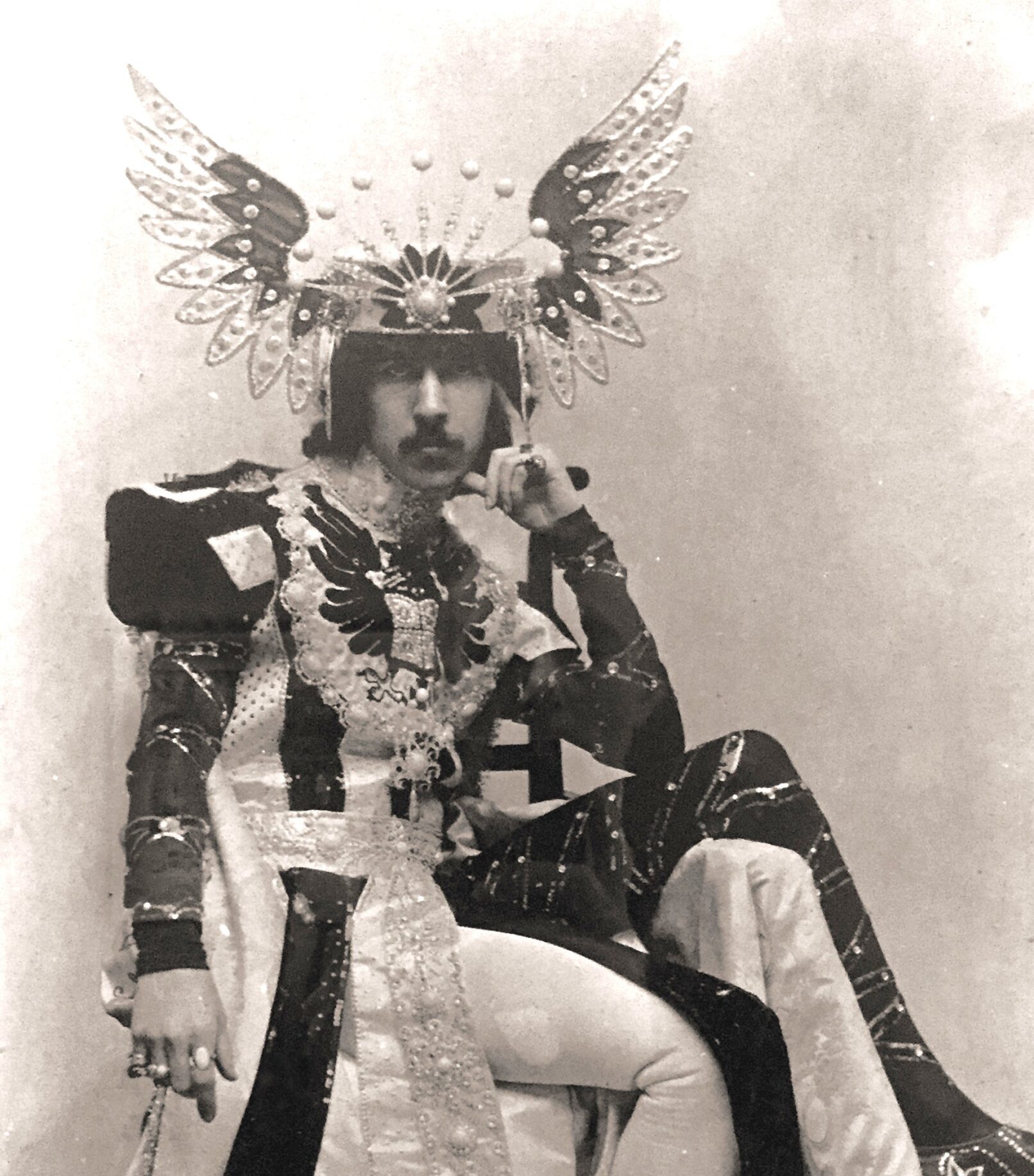
The ’80s are synonymous with the music of Holly Johnson and Frankie Goes to Hollywood. As the band were storming the charts, Britain was going through a cultural revolution. On the 40th anniversary of the album Welcome to the Pleasuredome, released in 1984, this exhibition charts the life and career of Liverpool lad Holly Johnson and his meteoric ascension to fame, where he became one of the first openly gay and openly HIV+ high profile artists in history. 
Delivered in partnership with Homotopia and Duovision, this exhibition tells the story of Holly’s very public experience with homophobia and HIV+ stigma. It reflects the polarising emotions of glamour, fun and sexual liberation, as well as fear and loss, encapsulating the experiences of the LGBT+ community at the time, an important moment in our history, and its legacy today.

Holly Johnson (William Johnson) was born on 9 February 1960 in Wavertree, Liverpool. He attended St Mary’s Church of England Primary School from 1965, where he starred in plays, wrote poetry and created his first song on a glockenspiel.

In 1972, he enrolled at Liverpool Collegiate Grammar School for Boys. The music of David Bowie and Marc Bolan inspired Holly, he started dyeing his hair and acquired the nickname “Joyful Johnson”.

By 1973, Holly had started writing songs, composed on an acoustic guitar, purchased with cigarette coupons. He attended school less frequently, due to the hostility he and his friend, “Honey Heath” experienced, in response to their increasingly outrageous appearance.

During his later school years, Holly discovered the work of Andy Warhol, The Velvet Underground, Derek Jarman, William Burroughs and Jean Genet. He adopted the name “Holly Johnson” and never looked back.

Relax, Two Tribes and The Power of Love all reached number 1. They became the second act, in the history of the UK charts, to reach number 1 with their first three singles, after fellow scousers, Gerry and the Pacemakers in the 1960s.

More photos can be seen here.

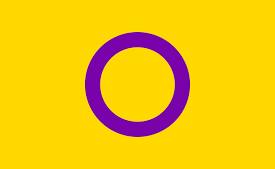
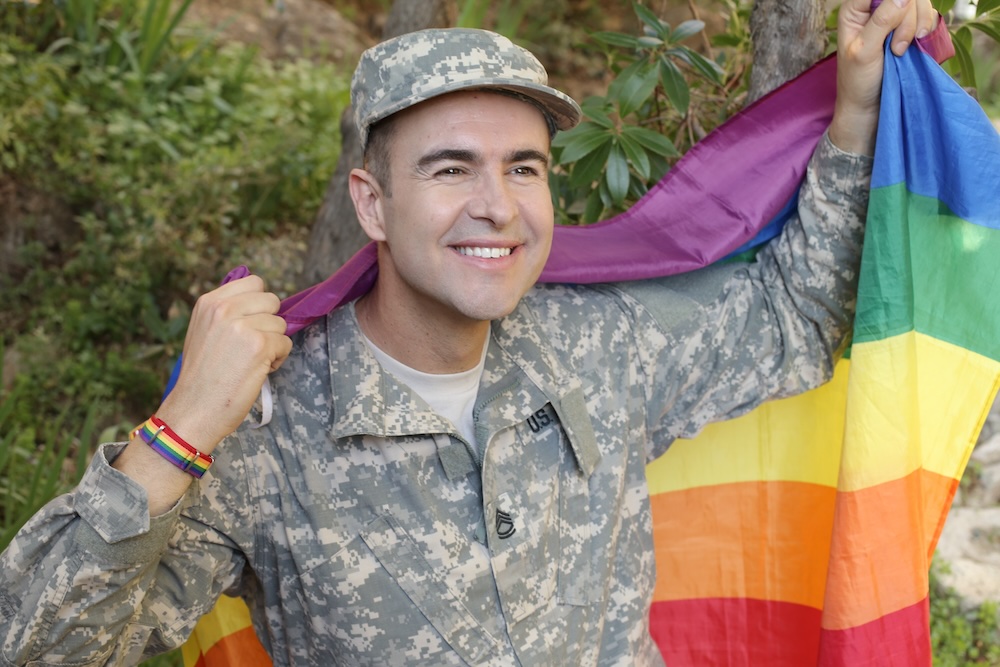
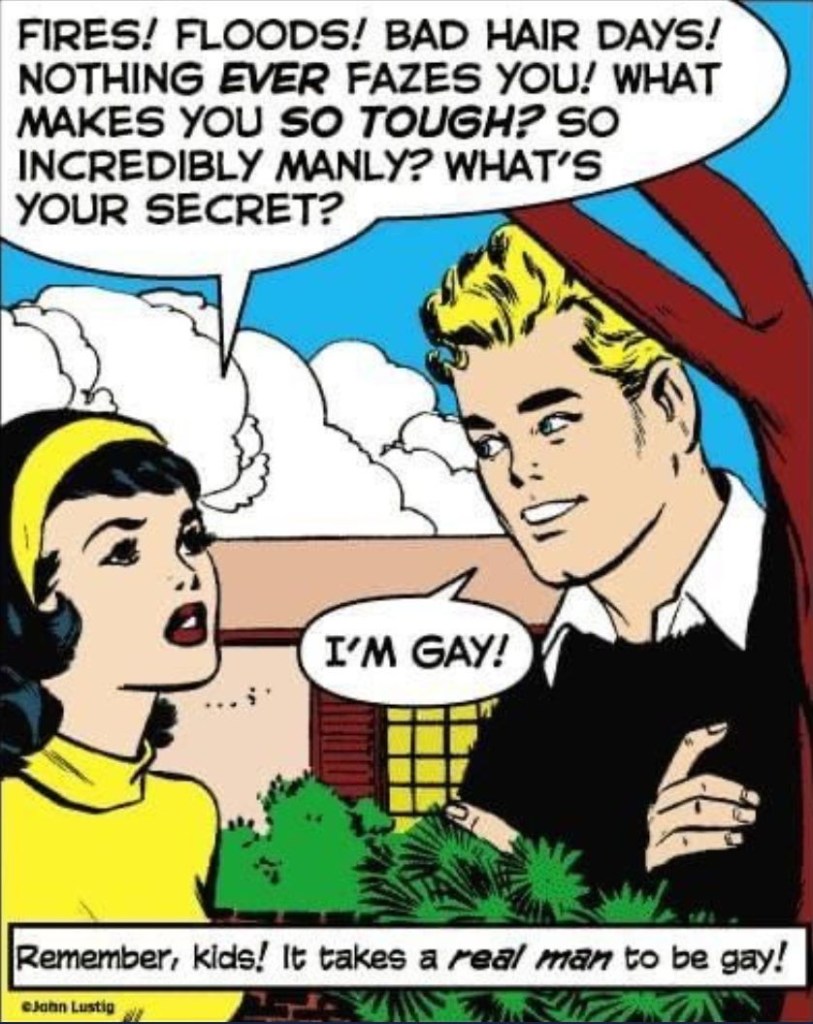
National Coming Out Day – 11 October

National Coming Out Day was first celebrated in 1988 based on the idea that the most basic form of LGBT+ activism was coming out to family, friends, and colleagues. 

Be proud of who you are and your support for LGBT+ equality this National Coming Out Day!

Sharing our authentic selves with others is not always safe or easy, and it is not a one-day event — but when possible, it can be an extraordinarily powerful key to breaking down the barriers we face as LGBT+ people. We are still coming together, celebrating ourselves, and advocating for our rights. It is more important than ever that we show up to send a clear message against the threats to equality: We are not going anywhere.

Matthew Shepard

Matthew Shepard

Matthew Wayne Shepard (1 December 1976 – 12 October 1998) was an American student at the University of Wyoming who was beaten, tortured, and left to die near Laramie on the night of 6 October 1998. He was taken by rescuers to Poudre Valley Hospital in Fort Collins, Colorado, where he died six days later from severe head injuries received during the attack.

Suspects Aaron McKinney and Russell Henderson were arrested shortly after the attack and charged with first-degree murder following Shepard’s death. Significant media coverage was given to the murder and what role Shepard’s sexual orientation played as a motive for the crime, as he was gay.

The prosecutor argued that the murder of Shepard was premeditated and driven by greed. McKinney’s defence counsel countered by arguing that he had intended only to rob Shepard but killed him in a rage when Shepard made a sexual advance toward him. McKinney’s girlfriend told police that he had been motivated by anti-gay sentiment, but later recanted her statement, saying that she had lied because she thought it would help him. Henderson pleaded guilty to murder, and McKinney was tried and found guilty of murder; each of them received two consecutive life sentences.

Shepard’s murder brought national and international attention to hate crime legislation at both the state and federal level. In October 2009, the United States Congress passed the Matthew Shepard and James Byrd Jr Hate Crimes Prevention Act (commonly the “Matthew Shepard Act” or “Shepard / Byrd Act” for short), and on 28 October 2009, President Barack Obama signed the legislation into law. Following their son’s murder, Dennis and Judy Shepard became LGBT rights activists and established the Matthew Shepard Foundation.

Matthew Shepard’s mother gets ‘unexpected honour’ of Presidential Medal of Freedom

Judy Shepard and Dennis Shepard, the parents of Matthew Shepard (Image: Markus Bidaux)

The mother of Matthew Shepard has expressed her gratitude at the “unexpected honour” of being recognised for her campaigning in the years since her son’s death.

Matthew Shepard’s murder in 1998 sent shock waves around the world. He was found dead and tied to a fence in Laramie, Wyoming after being beaten and tortured.

On 3 May 2024, Judy Shepard, Matthew’s mother, was awarded the Presidential Medal of Freedom. The honour is the highest civilian award in the United States. In an opening address at the event at the White House, President Biden mentioned Judy’s work. “The brutal murder of your son galvanised the movement into a law in his name [to] protect LGBTQ Americans. Your relentless advocacy is a reminder that we must give hate no safe harbour and that we can turn into purpose that pain.”

The note that accompanied Judy’s medal said: “Judy Shepard took a mother’s most profound pain and turned her son’s memory into a movement. Matthew Shepard’s brutal death 25 years ago shocked the conscience of our nation and galvanised millions of Americans to stand against anti-LGBTQI+ hate.

Together with her husband, Dennis, their courageous advocacy has since driven tremendous progress in our laws and culture, giving young people and their families strength and hope for the future. The Shepard family’s compassion reflects the best of America, where everyone is equally deserving of dignity and respect.”

In a statement, Judy said the medal was an “unexpected honour” and was “very humbling for me, Dennis, and our family.” She continued: “What makes us proud is knowing our President and our nation share our lifelong commitment to making this world a safer, more loving, more respectful and more peaceful place for all. I am grateful to everyone for the love and support through the years. It has allowed our work to continue.

If I had the power to change one thing, I can only dream of the example that Matt’s life and purpose would have shown, had he lived. This honour reminds the world that his life, and every life, is precious.”

Marking the 20-year anniversary of Matthew’s death in 2018 Judy and Dennis attended the Attitude Awards where they accepted the Attitude Inspiration Award.

Campaigning for LGBT Equality … Royal Northern College of Music … Rainbow Lottery

News

Campaigning for LGBT equality

The meetings that began the modern movement for LGBT equality were held in offices of the Diocese of Manchester, beginning 7 October 1964.

Sixty years later, on 7 October 2024, members of Out In The City will be commemorating this meeting outside Church House, 90 Deansgate, Manchester M3 2ER. 


The Wolfenden Report led to the 1967 Sexual Offences Act and the partial decriminalisation of male homosexuality © The National Archives

Wolfenden and After

From 1954 to 1957, the Wolfenden Committee considered the laws on homosexuality and prostitution. Its 1957 report recommended partially decriminalising male homosexual acts. But it would take ten more years of lobbying and activism before the Sexual Offences Act (1967) achieved this.

The Homosexual Law Reform Society

In 1958 the Homosexual Law Reform Society (HLRS) was formed in response to inactivity from the government on the Wolfenden proposals.

The HLRS’s first public event at Caxton Hall, Westminster drew over 1,000 people. Bernard Dobson recalled the experience:

“I went with a friend of mine … and we went early, feeling very self conscious. It was packed out. By going to a place like that, you were proclaiming in a blaze of lights that you were one of these hundreds of homosexual men … they were mostly men – meeting, not in the usual situation, cruising the place, but going there to talk about law reform … On the platform was a man called Antony Grey… I was very excited by the meeting, so I went up to him and told him that he had given a marvellous speech and I was very interested … He gave me his address and I joined the society …”

Antony Grey in the 1960s – Campaign for Homosexual Equality

From its offices at 32 Shaftesbury Avenue (now demolished), London, Secretary Antony Grey and many others lobbied Parliament for decriminalisation over the next decade.

Partial decriminalisation in 1967 did not bring freedom for gay men. Prosecutions for ‘gross indecency’ actually went up after 1967 and many more men continued to be convicted until the offence was removed in 2003.

The Campaign for Homosexual Equality

The Campaign for Homosexual Equality (CHE) originally started as the North-Western Committee for Homosexual Law Reform (NWCHLR). The group was founded in Atherton, near Manchester, in Allan Horsfall’s miner’s cottage at 3 Robert Street.

3, Robert Street in Atherton, near Manchester – Photo: Campaign for Homosexual Equality

It was organised as a political body aligned with the London-based HLRS, but also sought to offer social opportunities to gay men and lesbians in the northwest of England. It soon expanded, and at its peak in the mid-1970s included 130 branches across England and Wales and more than 5,000 gay and lesbian members.

North-Western Homosexual Law Reform Committee advert in the Manchester Independent 24 October 1967 – Campaign for Homosexual Equality

At a 1971 public meeting in Burnley, CHE members confronted opponents to the opening of a local club. At the packed Burnley Public Library meeting, Horsfall invited the homosexuals in the room to stand. Over a hundred did so.

The event has been described as ‘one of the first mass coming-out demonstrations in the UK, certainly the first outside London.’ CHE members recall it as a coming-of-age moment for the gay movement in England.

Arena Three: A Lesbian Community

Well before the women’s and the gay liberation movements, lesbians were organising as a network and community. The cautiously-named Minorities Research Group (MRG) was set up in 1963. Its aims were to put lesbians in touch with one another through its magazine Arena Three, to affirm community and to challenge the negative social stereotypes of lesbianism.

In response to a demand for social meetings, the group held talks and social gatherings at the Shakespeare’s Head pub in Carnaby Street, London from 1964. Other local groups around England followed suit.

In 1966 a breakaway group was formed, primarily to act as a social club. Kenric was named after its founder members’ neighbourhoods, Kensington and Richmond in west London.

From 1971, the MRG and Arena Three morphed into a new organisation and publication, Sappho. The group and magazine were organised by Jackie Forster and her partner Babs Todd, from their home in Connaught Square, near Marble Arch. Sappho social meetings were held at the Euston Tavern, 73-75 Euston Road and later at the Chepstow pub in Notting Hill.

The photo on the right is Jackie Forster at Speakers’ Corner © Campaign for Homosexual Equality

Paul Fairweather will be attending the Out In The City meeting at Cross Street Chapel on Thursday, 10 October at 2.00pm to speak about LGBT history in Manchester.

Royal Northern College of Music

The Royal Northern College of Music (RNCM) is a conservatoire located in Manchester, and is one of the UK’s busiest and most diverse public performance venues.

Out In The City members attended a Thursday lunch time concert where six pianos were played simultaneously by teachers and students.

The three pieces of music were “Totti” by Graham Fitkin, “Six as 1” by Nikki Yeoh and “Six Pianos” by Steve Reich.

The skills of the pianists had to be admired, but views ranged from “excellent” to “the worst concert ever”.

A lesson learnt – you can’t please all of the people all of the time!

Rainbow Lottery Super Draw!

Please support Out In The City by buying a Rainbow Lottery ticket or two (or more!)

With each Rainbow Lottery ticket, you are not just entering to win exciting prizes, you are also supporting our mission to support older LGBT+ people.

It’s a vital part of our fundraising as we receive 50p for every £1 spent and you have the chance to win cash prizes each week from £25 for three numbers up to a jackpot of £25,000 for six numbers – while helping us to achieve more for the LGBT+ communities over 50 years.

Buy tickets here.

This month we have a terrific tech prize for you. On Saturday 26 October, one lucky person will win the just-released iPhone 16 Pro!

This top-of-the-line phone is built for Apple Intelligence, for a whole new smartphone experience. It comes in Grade 5 Titanium with a Super Retina XDR display with a state-of-the-art GPU for gaming, and the most advanced iPhone camera system yet, for professional photos and the highest quality video in a smartphone!

Your regular weekly tickets already enter you into the draw to win this fantastic prize – but did you know you can now top-up your tickets, just for the Super Draw weeks!? And just imagine what you could do with this huge prize …

Play Now!

Magnificent Mural on the Molly House … The Belles of St Trinian’s … Sophia Jex Blake

News

Magnificent Mural on the Molly House

If you’re a fan of street art, then you probably love this amazing masterpiece …

It’s ten years since Manchester’s famous Gay Village became home to the largest LGBT piece of street art in the UK – 40 metres high and nine metres wide. The multi-coloured makeover took a little more than a week of hard work on the side of The Molly House on Richmond Street to be finished.

Organised by gay community group Queerchester, which lobbies and fundraises for arts and culture initiatives in the gay village, the project saw the entries of the street art competition winners Glenn Jones (the overall winner), Lauren Jo Kelly, Adam Pryce and Mark Wallis become bigger than they could ever have imagined with the help of renowned graffiti artists Aylo (Hayley Garner) and Cbloxx (Joy Gilleard). Over 950 online votes and 7 judges chose between 29 brilliantly creative entries to pick the winner.

The mural depicts five famous faces who are considered to be LGBT icons, two of which are very well known around Manchester’s gay scene; legendary drag queens Anna Phylactic (top) and Foo Foo Lammar (top right). The others are feminist Emmeline Pankhurst (top left), writer Quentin Crisp (bottom left) and scientist Alan Turing (bottom right). Lauren Jo Kelly designed Anna while Glenn Jones created the other four. Adam Pryce’s cute critters in the top left above the rainbow and Mark Wallis’ naked man below it complete the work of art.

Work in progress in 2014

The Belles of St Trinian’s

Commemorating the film that was many people’s first experience of (very good) drag.

The Belles of St Trinian’s is a 1954 British comedy film, directed by Frank Launder, co-written by Launder and Sidney Gilliat, and starring Alastair Sim, Joyce Grenfell, George Cole and Hermione Baddeley.

Inspired by British cartoonist Ronald Searle’s St Trinian’s School comic strips, the film focuses on the lives of the students and teachers of the fictional school, dealing with attempts to shut them down while their headmistress faces issues with financial troubles, which culminates in the students thwarting a scheme involving a racehorse.


The film was among some of the most popular British films to be released in 1954, with critics praising the comedy and several of the cast members for their performances, including Sim’s dual role as the headmistress Miss Millicent Fritton and her twin brother Clarence Fritton.

The film was the first to be produced in the St. Trinian’s film series – three sequels were later produced and released after this film: Blue Murder at St Trinian’s (1957); The Pure Hell of St Trinian’s (1960); and The Great St Trinian’s Train Robbery (1966).

The film was the third most popular movie at the British box office in 1954, after Doctor in the House and Trouble in Store. The film was banned for children under 16 in South Africa.

The 1860s lesbian who stopped at nothing in her quest to become a doctor

Sophia Jex Blake refused to take no for an answer. But her professional ambitions came with costs to her secret love life.

Sophia Jex-Blake, age 25 Photo: Portrait by Samuel Laurence, 1865, via Wikimedia

Sophia Jex Blake was everything that Victorian society hated about women: outspoken, strident and determined. 

Fiercely ambitious, she dreamed of becoming a doctor, but she was not legally allowed access to medical school. Refusing to accept this, she campaigned for years to be permitted to attend school and legally practice medicine.

Jex Blake was also a lesbian. She had a series of romantic entanglements, which she took enormous pains to hide from the world. Her eventual life partner was another doctor, Margaret Todd, and together the two women worked to bring about social reform and acceptance and to help establish women as credible professionals in the medical field. 

Throughout all of this, they concealed the true nature of their relationship, fearing that it would irrevocably damage their work and Jex Blake’s legacy. 

And what a legacy it is. 

Jex Blake was born on the south coast, the daughter of a retired lawyer. Like most girls her age, she was educated at home until age 8 when she was sent to school and fell in love with learning. 

Prodigiously talented, she was offered a place at Queen’s College in London – the first educational establishment in Britain to grant women academic qualifications – where she was later asked to become a mathematics teacher. Her family was set against her taking the position. In fact, her father forbade his daughter from working for pay, so she offered her services for free. 

While in London, she lived in the household of Octavia Hill, famous for her social welfare campaigning and for later founding the National Trust – as well as for living with another woman, Harriet Yorke. Jex Blake’s relationship with Hill was, in her own words, one of “passionate intimacy”, leading to speculation that it was at this point that Jex Blake first began to have romantic relationships with women. 

She also spent time in Edinburgh, where she met with trailblazing future physician Elizabeth Garrett-Anderson, who inspired her interest in public health. Living in Scotland in 1869, Jex Blake enrolled alongside five others in the University of Edinburgh to study medicine. They were later joined by two more, and together, the women became known as the Edinburgh Seven. 

Initially, the seven women all had their applications to Edinburgh Royal Infirmary rejected because many felt that to admit women would, in the words of Professor Robert Christison, “lower the standing of the medical profession.” A contemporary surgeon, William Walker, likewise argued that the idea of being treated by women would be “offensive in nature … violating the feelings of propriety and decorum.” 

But there were no rules that forbade them from studying, so they were permitted to attend classes. On 18 November 1870, Jex Blake and the other women went to sit for their anatomy exam when she saw “a dense mob filling up the road … We walked up to the gates, which remained open until we came within a yard of them, when they were slammed in our faces by several young men.” 

In order to practice medicine, the seven women needed to sit their exams, and their campaigning to be allowed to do so attracted a huge amount of publicity and the support of such distinguished men as Charles Darwin. Ultimately, in 1873 the British courts ruled that women were still not permitted to graduate with a medical degree or practice medicine. So, despite studying and passing, the University still denied the women their degrees. 

Jex Blake was under a huge amount of pressure. Her family disapproved of her actions and the publicity they brought her. On one occasion during the campaign, Jex Blake found herself in court charged with outspokenness and defaming the character of one of the male teachers. 

While she was professionally outspoken, there was another aspect of her life that Jex Blake kept studiously hidden from public view: her love life. 

Jex Blake would later write in her (now mostly destroyed diaries), “I believe I love women too much to ever love a man.” This gave her an advantage in one way, for as she would later state, it meant that she was not “afraid to step on men’s toes,” and with the prospect of marriage off the table, Jex Blake was free to be as hot-tempered and ambitious as she wished. Jex Blake was always one of the least socially acceptable of the Edinburgh Seven simply because she had no husband at home. 

After the 1873 ruling, the Edinburgh Seven travelled down to London, where Jex Blake founded the London School of Medicine for Women. Three years later, the UK Medical Act allowed anyone who was qualified, regardless of gender, to practice medicine.

Still, there was a great deal of hostility in Britain against the idea of female physicians. Other countries were more liberal, and Jex Blake was able to sit for her examinations at the College of Physicians in Dublin. Going abroad was her only realistic option, and in 1877, she finally received her MD from the University of Berne before passing her exams in Dublin the same year. She was now the third woman to be registered as a doctor in Britain. 

Keen to ensure her knowledge and practices were up to date, she had travelled to America in order to observe the newly set up Boston hospital where she met fellow medic Lucy Sewell. The two quickly became involved and planned to live and work together as both romantic and professional partners. Such a vision of a working same-gender relationship was utterly alien at the time and considered abhorrent by society. Her plans with Sewell fell apart when Jex Blake was forced to return to the UK following the death of her father. 

In 1886, Jex Blake returned to Edinburgh where she helped establish the Edinburgh School of Medicine for Women. There, she met the woman who would become her life partner, Dr. Margaret Todd, who studied at the Edinburgh School of Medicine and would graduate with an MD from Brussels in 1894. Particulars of the two women’s relationship are hard to pin down, not least because Jex Blake ordered Todd to burn all her letters after her death. The school attracted a good deal of negative attention as it was. If one of the founders had been caught engaging in “unnatural” behaviour, the result, both women knew, would have been disastrous. 

To practice medicine and further the cause of women’s education and suffrage, both women concealed the true nature of their relationship, living separately for many years. They channelled their energy into campaigning to improve public health in Edinburgh. Their papers and reports attracted a good deal of attention, and their suggestions were taken up regarding fresh water and improving access to health care for the poor. 

Despite their circumspection, there is some circumstantial evidence that their personal relationship was something of an ‘open secret’ accepted by their friends. They were often referred to together in invitations and correspondence, gradually accepted amongst their friends and colleagues in much the same way that their professional capabilities were. 

Together, Todd and Jex Blake went on to write a series of articles arguing for women’s rights and stating that women should have equal access to education. They also practiced medicine together, largely from Jex Blake’s house and practice at Bruntsfield Lodge. 

When Jex Blake retired in 1899, the two women could finally be wholly together. They moved to Rotherfield, where Todd wrote, and the two women welcomed friends and students alike. 

Jex Blake died in 1912, and Todd wrote a book detailing her lover’s life, although she carefully omitted herself and destroyed her letters and diaries. She erased the role she played in supporting her partner for fear it would damage Jex Blake’s reputation. 

Even today, the Edinburgh Medical Society website does not list Todd as Jex Blake’s partner, though it does list the husbands of the other members of the Edinburgh Seven. 

Todd died just three months after her book was published, possibly by suicide, although this remains open to debate. It was a sad end to a partnership that had achieved so much.  The relationship between these two remarkable women and doctors reflects the personal and romantic difficulties women in the late nineteenth century faced and the sacrifices that were demanded of them. These sacrifices deserve to be remembered, as they paved the way for more widespread acceptance of women’s rights and LGBTQ+ love.

George Street Chapel Heritage Tour … Holly Johnson Story … International Day of Older People … LGBTQ+ Majority Extra Care Scheme Update

News

George Street Chapel Heritage Tour

We travelled by tram from Manchester to Oldham to join a fascinating tour telling the remarkable stories of the George Street Chapel.

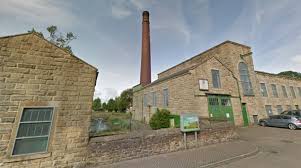
George Street Chapel was built by its congregation between 1815 and 1816. Though it was re-modelled and re-pewed by them in the 1830’s and 1850’s, and they purchased a pipe organ in 1890, its appearance has remained substantially as it was built in 1815. It closed for worship in 1990 with only six regular members.

The original chapel members had broken away from St Peters Church in 1805 and the group initially were known as ‘George Hardman’s folk’ before taking the name of ‘Independent Methodists’. Their chapel in George Street was the first purpose built Independent Methodist Chapel in the country.

After an introductory talk and a short film we stepped back in time to meet the people who lived, learnt and worshipped in the chapel building.

On our journey back in time to 1851 (using costumed actors) we visited the inhabitants of the cellar dwellings. We encountered real Oldhamers and enjoyed a traditional washday experience in Jackson Pit. After seeing the petty man we visited the school room where we had do as we were told as Miss Hopwood was very strict and expected excellent behaviour in her class.

We ended up with tea, coffee and cake and some of us even had a bacon sarnie.

More photos can be seen here.

The Holly Johnson Story

Holly Johnson Story

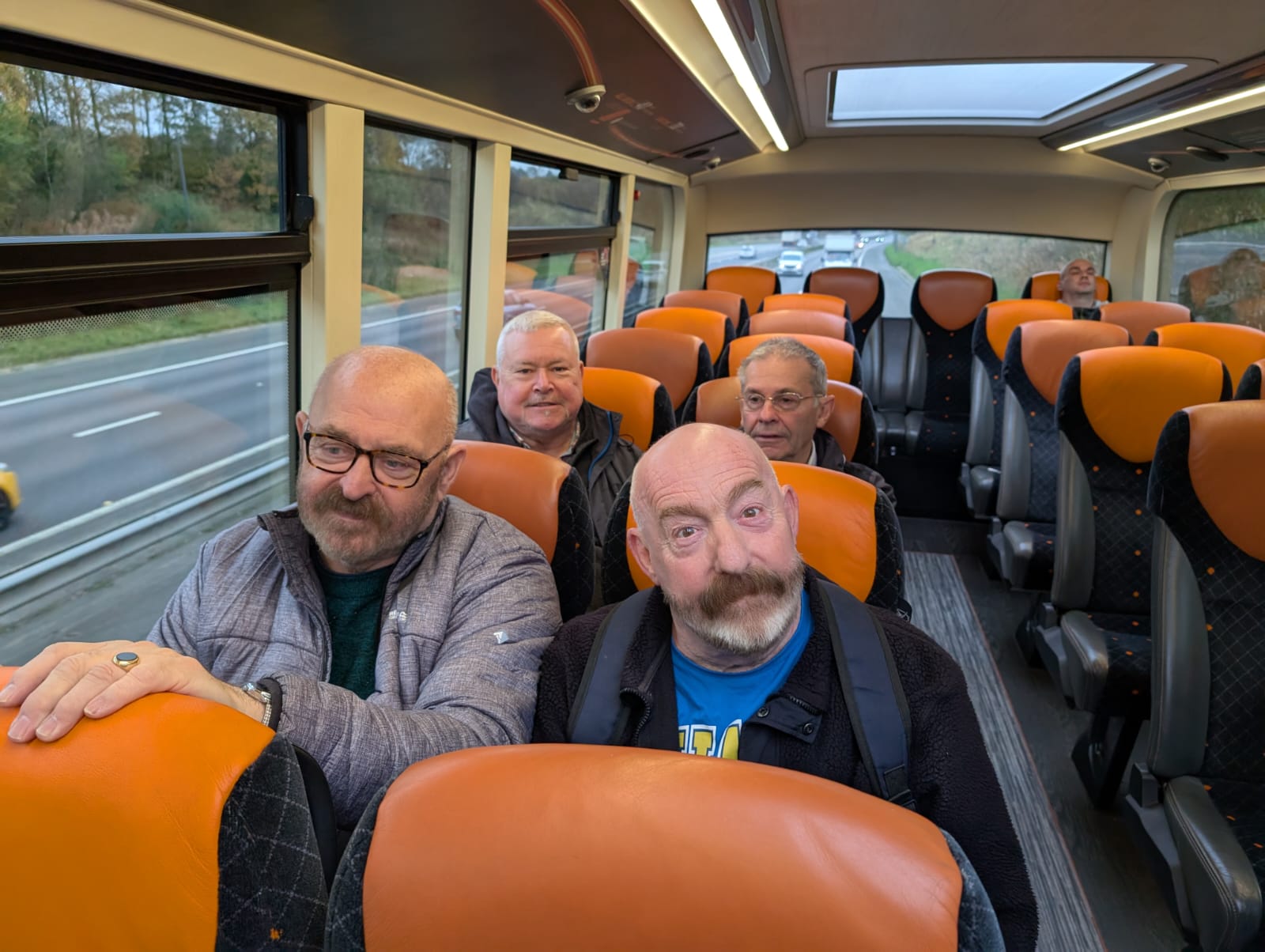
On Wednesday, 9 October we will be travelling to Liverpool to see the Holly Johnson Story. The exhibition at the Museum of Liverpool celebrates Holly Johnson’s creative genius, charting his personal life and extraordinary music career over five decades. If you wish to join us, please contact us here.

The Tom of Finland Foundation is thrilled to announce that Holly Johnson has been inducted into the Artist Hall of Fame for artistic achievements and steadfast commitment to the art and culture of our community.

Firmly established as a household name with his success with Frankie Goes To Hollywood and his first solo debut album in 1989.

In 1994, he revealed to us his struggle with, and acceptance of, his gayness. He has been a monumental figure in our community. He was diagnosed with HIV in 1991 and has remained creative as a painter and printmaker and songwriter. One of his paintings appears as the cover to the Kirsty MacColl single “Angel”.

Born in Liverpool, he studied for a Master of Arts at art school and had his paintings exhibited at the Royal College of Art and at the Royal Academy of Arts in 2001. As a lover of art, he met Warhol and even named himself after one of Andy’s “superstars” (Holly Woodlawn).

The current exhibition at the Museum of Liverpool shows the visitor not only the glamour and sexual liberation but also the fear and stigma associated with being a gay man.

His creative genius has always put him at the forefront of every aspect of his career. His courage as an internationally renowned queer artist has been an inspiration to untold millions.


This year’s theme is: “The part we play”: Celebrating the integral role of older people in our communities.

Background

Each year on 1 October, people across the world mark United Nations International Day of Older People to raise awareness of opportunities and challenges faced by ageing populations, and to mobilise the wider community to address difficulties faced by older people.

Introduction to the theme for 2024

Older people play an integral part in strengthening our communities and neighbourhoods; as workers, carers, volunteers, activists and community connectors. But these vital contributions are often overlooked, or limited by ageism and other societal and physical barriers. 

As well as helping others, volunteering has been shown to improve our social connections, enhance our sense of purpose and self-esteem. Paid work can have a positive impact on wellbeing as well as finances. Despite this, many older people find themselves encountering barriers to getting involved in all the ways they would like to.  

We all have a part to play in making our communities and neighbourhoods better places to age, and in celebrating and enabling the contributions of older people. 

On this International Day of Older People, we are celebrating older people and the vital part they play, and have the potential to play, in making our community a better place to be.     

An Afternoon With The King!! – Elvis is Back in the Building!!

We celebrated older people’s day with a Rock ‘n’ Rolling party starring Manc Elvis & His Magical Band!

Manchester’s premier Elvis tribute act presented a Saturday afternoon packed with all the King’s greatest hits guaranteed to get us up and dancing in our blue suede shoes!

It was a great afternoon – think ‘a little less conversation’ and a lot more ‘all shook up’!

LGBTQ+ Majority Extra Care Scheme Update

We are delighted to share the good news that planning permission has been approved for the UK’s ‘first of a kind’ purpose-built majority LGBTQ+ Extra Care social rent housing scheme.
 
This is a real celebratory moment for all partners involved in this development, which has been in the works for some years and is designed to meet a clear need for quality, social rent housing for LGBTQ+ older people to live in safety, dignity and as part of a welcoming and supportive community.

Commenting on the planning approval actor Ian McKellen, LGBT Foundation patron and committed supporter of the Pride in Ageing Programme, who visited the Russell Road site earlier this year, said: 

“It’s wonderful to see Manchester leading the way yet again. Our community deserves to be able to age in a safe and welcoming environment where we are accepted for who we are, and Russell Road will do just that. Congratulations to everyone involved in the project and I look forward to following its progress and seeing the scheme open!”

The plans for the majority LGBTQ+ Extra Care housing scheme will deliver 80 one- and two-bedroom apartments for older people within a high-quality sustainable building offering a safe and welcoming feel and inviting presence whilst designed to respect the surrounding conservation area. The low-carbon scheme will include shared communal facilities including lounges, treatment rooms and landscaped gardens and will deliver an overall net gain of trees on the site.

Extra Care housing schemes look to increase the housing opportunities for older people to move into high-quality accommodation, with flexible care and support services available to meet changing needs and encourage independent living.

The residents at Russell Road will be aged 55 years or over, with the majority of residents being members of the LGBTQ+ community from Manchester.

For more information on how you can get involved contact Adam Preston from LGBT Foundation at adam.preston@lgbt.foundation

Bisexuality Visibility Day … New Guidance to Support LGBTQ+ Inclusion in UK Care Homes … ‘Danesha’: Black Joy, Queer Love

News

This banner’s on the fence. Bisexuals aren’t.

Bisexual Visibility Day – 23 September

This week is Bisexual Awareness Week – a chance to shine a light on those who represent the B in the LGBT+.

The week always culminates with Celebrate Bisexuality Day / Bi Visibility Day on 23 September. Of course, there’s a lot to celebrate about being bi but there’s also a lot of negative stereotypes and biphobia that still exists today.

This year actually marks the 25th anniversary of the occasion and  Manchester was the only place in the UK to officially celebrate it back in 1999.

Research by Stonewall found that around 46% of bi men and 26% of bi women aren’t open about their sexual orientation to any members of their family – compared to some 10% of gay men and 5% of lesbians.

Jen Yockney MBE, who has run the international listings site BiVisibilityDay.com since 2001, said it’s expected there will be around 250 events taking place across the country on 23 September. This is up by more than 47% compared to five years ago.

“After a quarter of a century Bi Visibility Day, much like bisexual visibility in wider culture, keeps growing and growing,” Jen explains.

“I’ve been organising events celebrating Bi Visibility Day since 1999 and the transformation in that time is huge. We are more talked about and more heard as bi people than ever before; yet also the challenges and particular needs of bisexuals have been thrown into sharper relief over that time.”

Jen says that a lot of the work she does around bi visibility is often stemmed around attitudes and perceptions that have been existent for many years. There are still people who will make the same remarks that were said some 30 or so years ago.

“In the 1990s, bi people were often seen as a kind of ‘gay lite’,” Jen explains. “With the assumption that bi people were less impacted by legal and social discrimination than gay and lesbian people.

“But research increasingly shows bi people have greater mental and physical health challenges than gay or straight people. We’re more likely to experience domestic violence from our partners, too. And bi people have lower earnings than their straight and gay co-workers.

Far from the old ‘best of both worlds’ cliche, the challenge of either persistently reasserting your bisexuality or having part of your life erased proves wearing for many bi people.

“Where lesbians and gay men have one closet to escape, many bi people find that leaving one closet just leads to being put in another.

“Greater bisexual visibility is the best solution to that problem, along with creating groups and events to help more bis find a space where they are neither in the ‘straight closet’ nor the gay one.

“Across the past quarter of a century we have seen how greater visibility and the ability to connect with other bi people the internet has provided has brought so many more bisexual and biromantic people out of the closet.”

And with that, Jen hopes that the statistics for events like Bi Visibility Day in perhaps the next five years will have risen once again compared to this year.

It’s also why the work she and others continue to do is so important and valued in contributing towards that effort.

New guidance released to support LGBTQ+ inclusion in UK care homes

“There is an urgent need for improvements with regards to LGBTQ+ inclusion within care homes” said Dr Jolie Keemink, who led the project.

47% of LGB people said they would not be comfortable being open about their sexuality to care home staff (Image: Pixabay)

Researchers at the University of Kent, in collaboration with Surrey and Hertfordshire universities, have developed new guidance for care homes to support inclusive care provision for older LGBTQ+ people.

The new guide, which is available to download for free, is part of a research project, Creating Inclusive Residential Care for LGBTQ+ Elders (CIRCLE), which aims to understand how care providers can improve services for LGBTQ+ users.

“Research shows that the older LGBTQ+ population is expected to rely more heavily on social care than their cisgender, heterosexual counterparts, because they are less likely to have children and more likely to experience a lack of social support,” said Dr Jolie Keemink, who led the CIRCLE research project.

“Older LGBTQ+ people may also have unique health risks that increase their likelihood of needing care. There is an urgent need for improvements with regards to LGBTQ+ inclusion within care homes and we hope that this guide can play a useful role in this.”

The guidance arrives following a study by Stonewall which found that 61% of LGB people were not confident that social care and support services were equipped to support their needs. That same study found that 47% of LGB people said they would not be comfortable being open about their sexuality to care home staff.

As a result, many LGBTQ+ people worry about going “back in the closet” when they get older in order to remain safe.

In fact, according to a report by Metro, more than 400 reports of homophobic abuse in care homes were reported to elderly abuse charity Compassion in Care’s helpline. The issue was the subject of a moving short film, Ted & Noel, which focussed on Gay Liberation Front (GLF) veteran Ted Brown and his journey after losing his civil partner Noel, who was subjected to physical abuse while living in a care home in Croydon in 2018.

“There are at least 1 million people over the age of 50 who identify as LGBTQ+. These generations have lived through decades of discriminatory policies and laws that have severely impacted their confidence in public services,” Dr Keemink wrote in a blog post.

“These policies and laws have led to trauma, stress, and internalised stigma for the LGBTQ+ community, which may have significant health implications. Additionally, because of these experiences, there is an increased need for explicit LGBTQ+ inclusive services to signal people are safe to be themselves.”

The new guidance was developed in conjunction with a group of older LGBTQ+ people and care home managers and will provide “actionable steps that are easy to implement that will help make the care home environment more LGBTQ+ inclusive”.

Discover ‘Danesha’: Black Joy, Queer Love (£5 Tickets!) – Lowry Theatre (Studio), Pier 8, The Quays, Salford, Manchester M50 3AZ

Danesha by Stefanie Reynolds – Performance Dates: Wednesday 2 October – Saturday 5 October, 8.00pm

“Sometimes I pretend I’m in a music video. And that I have a backing group. And they’re always black, even though I don’t have any black friends, in real life”

All they play in Preston nightclubs is Little Mix and Miley Cyrus. How is Danesha the dancer supposed to vibe to that?

After successfully managing to convince her Preston mates (as well as telling a teeny, tiny white lie to her dad), Danesha arranges a night out in Manchester. She finds the sickest club with the sickest music and the sickest vibe. It’s proper, proper mint. 

Then she meets Her and Danesha’s whole existence becomes one big question mark. Because Danesha thought it was normal to feel like you don’t quite fit in, to like music that nobody else likes, to move your body in a way your friends can’t, and to not know anything about your mum and the island she comes from…

Danesha is a new coming-of-age story exploring black culture, queer joy and finding and loving your authentic self.

Buy tickets here.