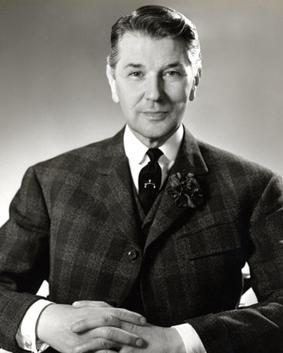
Pavel Kolesnikov & Samson Tsoy … Eva Oertle & Vesselin Stanev … John Frederick Cheetham & Beatrice Astley … Pompeii

News

Some recent activity …

Pavel Kolesnikov and Samson Tsoy: a Duo On Stage and Off

On 7 and 10 November The Hallé concert at the Bridgewater Hall featured Pavel Kolesnikov play Saint-Saëns’ Second Piano Concerto.

Saint-Saëns wrote his Second Piano Concerto in three weeks, leaving very little time to prepare for its premiere. With its dazzling stylistic changes, it has grown to become the most popular of the composer’s piano concertos.

We listened to the brilliant playing from a young man who has been the subject of a headline report in The Times: ‘‘Discrimination doesn’t exist in Russia, because you don’t talk about being gay”.

It was an absolutely amazing concert and probably the best performance we have seen at the Bridgewater Hall.

Pavel Kolesnikov and Samson Tsoy occasionally play as a four handed piano duo. They are also partners in life. They met when both were studying the piano at the Moscow Conservatoire. Kolesnikov is from Siberia. Tsoy, who has a Korean father and a Russian-Jewish mother, was born in Kazakhstan and was a teenage karate champion before deciding, unsurprisingly, that the sport was “too traumatic” for his hands.

They came to London in 2011 to study at the Royal College of Music, and have been here ever since.

Eva Oertle and Vesselin Stanev

On 12 November pianist Vesselin Stanev and flautist Eva Oertle performed a concert at The Stoller Hall celebrating music by female composers from Fanny Mendelssohn to Mélanie Bonis, alongside Brahm’s Sonata No 2 in E flat major, a piece originally written for clarinet. It was a delightful concert and another excellent evening.

Astley Cheetham Art Gallery

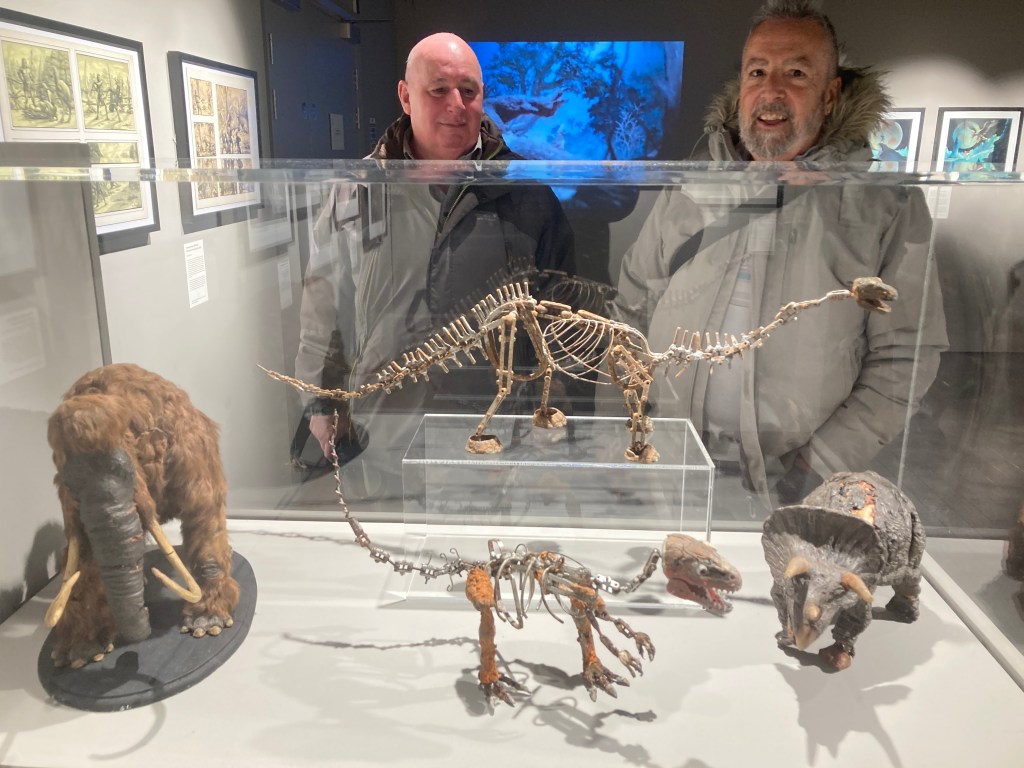
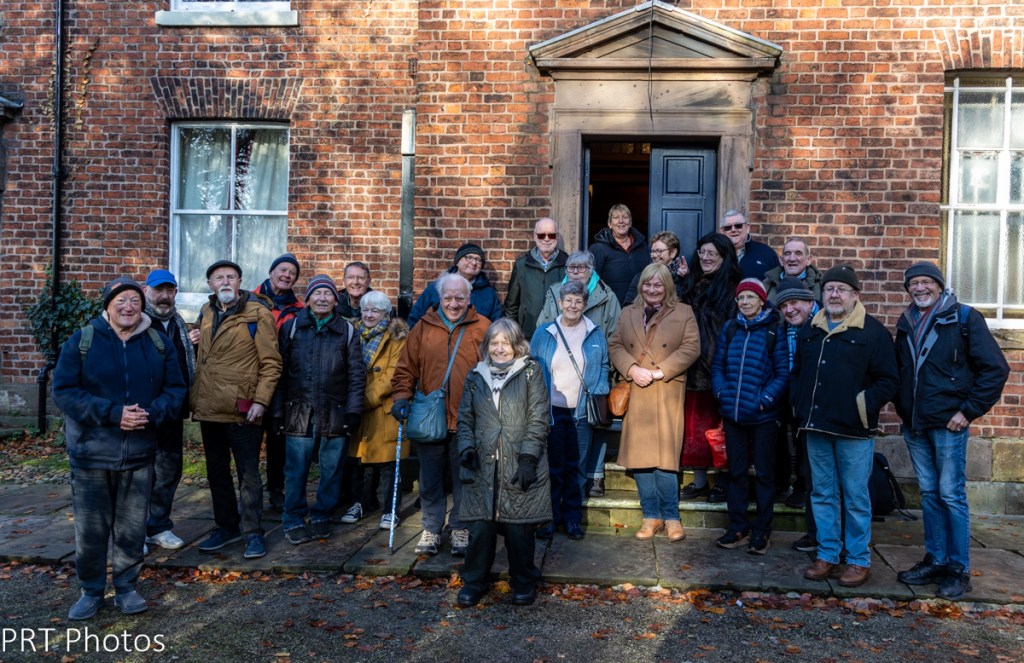
On 13 November we visited the Astley Cheetham Art Gallery in Stalybridge, which was built as a gift to the town by John Frederick Cheetham and his wife Beatrice Astley in 1901. The gallery originally opened as a lecture theatre and then the space was turned into a gallery to house the Astley Cheetham Art Collection, bequeathed in 1932. This collection has grown with gifts and donations throughout the twentieth century.

The current exhibition marks the 50th anniversary of the creation of the Metropolitan Borough of Tameside. On 1 April 1974, nine towns in what was south east Lancashire and north east Cheshire – Ashton-under-Lyne, Audenshaw, Denton, Droylsden, Dukinfield, Hyde, Longdendale, Mossley and Stalybridge – came together to form one of the new boroughs of Greater Manchester.

The towns shared a common history, culture and economy, but Tameside wasn’t named after a single town, but the river Tame.

More photos can be seen here.

Were “The Two Maidens” of Pompeii Actually Gay Lovers?

The Two Maidens” were originally thought to be sisters or mother and daughter. (Getty)

The eruption of Vesuvius over 2,000 years ago in 79AD buried several nearby towns, killing the inhabitants and burying, under pumice lapilli and ash deposits, a unique set of civil and private buildings, monuments, sculptures, paintings and mosaics that provide a rich picture of life in the Roman empire.

The eruption also preserved the forms of many of the dying as the ash compacted around their bodies. Although their soft tissue has decayed over the years, the outlines of the bodies remained and were recovered by excavators centuries later by filling the cavities with plaster. From skeletal material embedded in the casts, ancient DNA data was preserved allowing for the researchers to do the testing. The results characterised the genetic relationships, sex, ancestry and mobility of five individuals, including two who were found embracing each other as they died.

Known for years as “The Two Maidens”’ – they were first found in 1914 – new DNA analysis has suggested that the iconic pair might actually have been two men – and they weren’t related.

Researchers from the Max Planck Institute found at that at least one of the individuals had genetic markers suggesting they were male. The researchers also said that the two figures are estimated to be between 14 to 19 for one of them and the second one is a young adult.

The study excludes the possibility that the pair were sisters or mother and daughter and is therefore much more likely that they were lovers.

But their relationship can never be verified as any historical record of it has been erased from history, despite it being certain that they were not relatives.

So it is entirely possible that the pair could have been gay lovers whose last act alive was to hug each other, and perhaps more genetic testing in the future will confirm that the other figure is also a man – and then “The Two Maidens” might need a new name.

Archaeologists have discovered paintings, food residue, animal bones, skeletons of victims of the volcanic eruption and, surprisingly, even some homophobic graffiti. (Pompeii Sites)

Since the first-ever excavation of Pompeii in 1748, more and more has been discovered about the ancient city that was at the mercy of Mount Vesuvius.

In 2020, for example, archaeologists excavating an Ancient Roman snack bar in Pompeii even discovered “homophobic” graffiti.

The “homophobic” graffiti was found scratched above a painting of a dog. 

An ancient vandal has carved the words: “Nicia Cinaede Cacator.”

Nicias was likely to have been the owner of the bar, while “cinaede cacator” translates as “catamite s**tter”.

The word “catamite” does not have a modern-day equivalent, but referred to a teenage boy who was the sexual partner of a young man. 

When directed at an older man, the word “catamite” was used as an insult.

HOME … Tchaikovsky … Some Highlighted Events to Watch Out for Before Christmas

News

HOME

HOME has a really LGBT+ inclusive atmosphere and is a great place to relax. We visited to see two exhibitions and whilst there we had a bite to eat.

Matthew Bamber explores themes of memory and trauma, greed and power, queerness and identity in his work.

Songs for the Storm to Come is an immersive sound and multi-screen video installation, by award winning, internationally renowned Greek / British artist, Mikhail Karikis. It focuses on collective and individual responses to the impending transformations of the UK, as forecast by climate change scientists.

Tchaikovsky (7 May 1840 – 6 November 1893)

The composer Piotr IlyichTchaikovsky and his student Iosif Kotek

Biographers have generally agreed that Tchaikovsky was homosexual. He sought the company of other men in his circle for extended periods, “associating openly and establishing professional connections with them.” His first love was reportedly Sergey Kireyev, a younger fellow student at the Imperial School of Jurisprudence. According to his brother, Modest Tchaikovsky, this was Pyotr Ilyich’s “strongest, longest and purest love”.

The letters in which the Russian composer confesses his homosexual passions have now been published, uncensored and for the first time.

Tchaikovsky as a student at the conservatory. Photo, 1863.

Piotr Tchaikovsky was devoted to his mother, misunderstood in Russia, greatly admired in the West and supported by a patron from afar. He composed with the universal in mind rather than the Russian soul.

Russians have a saying: “Glasa boyatsya, a ruki delayut.” It means “the eyes are afraid, but the hands do.” The creator of Swan Lake never publicly admitted his homosexuality, fearing possible reprisals. But Tchaikovsky’s hands were not as immobile as society: he wrote hundreds of letters confessing his feelings and anxieties about his lovers, platonic loves, pimps and mysterious women. Part of Russia still does not believe that one of its most outstanding creators was attracted to men. But no one can remain indifferent to the recent publication in English of The Tchaikovsky Papers: Revealing the Family Archive (Yale University Press), a new edition of his correspondence with passages previously censored by the Russian authorities. In it he speaks openly about his sexual orientation. His hidden desires for other men he knew and his upper-class friends are revealed. The matter has been hushed up in Russia, where it remains a highly controversial topic, with even the authenticity of individual letters kept in the archives being questioned. “My God, what an angelic creature, and how I miss being his slave, his plaything, his property,” he writes in one letter about a servant.

Marina Kostalevski, the book’s editor, highlights as discoveries “Tchaikovsky’s high sexual libido and his shameless sense of humour”. The original correspondence consists of more than 5,000 letters preserved in the archives of the Tchaikovsky State House-Museum in Klin, north west of Moscow. Some letters have never even been published in Russian. In another, which was censored in a previous collection, he recounts how he offers money to a young man “of striking beauty” after going for a walk with him, “but he rejects it, he does it for the love of art and because he loves men with beards.”

Nor were his episodes of voyeurism known, with his friend Petashenka, who came to his apartment to watch the cadets forming up in the barracks opposite the window. His letters to his brother Modest (who was also gay) and his messages to his conquests, such as his student Iosif Kotek or his classmate Aleksey Apukhtin, complete a politically incorrect framework for Russia.

Russian Minister of Culture Vladimir Medinsky has repeatedly said that there is no evidence to suggest the composer was gay. Kostalevski considers Tchaikovsky’s homosexuality “the main taboo”, although his work was already censored during Soviet times to hide his interest in religion “and his references to the Tsarist regime.”

The letters also reflect the composer’s inner struggles, his modesty, his great shyness and his sentimentality. And his relationship with Nadezhda von Meck, a wealthy widow who subsidised his work for more than a decade. Tchaikovsky was trapped in a false marriage with Antonina Miliukova, and at the same time involved in a fake game of flirtation and seduction with Von Meck that could not lead anywhere: “Every note that comes out of my pen will be dedicated to you” and other sweet phrases are all that this mother of 11 children managed to get from the artist.

Some Highlighted Events to Watch Out for Before Christmas …

Thursday, 28 November – 11.00am – World AIDS Day Archive Pop Up – Manchester Central Library

Thursday, 28 November – 2.00pm – Out In The City / Women’s meeting at Cross Street Chapel including fundraising jewellery sale – buy your Christmas presents or a treat for yourself!

Saturday, 30 November – 7.30pm – Louder Cabaret – The Met, Market Street, Bury BL9 0BW

Buy tickets here £25.00

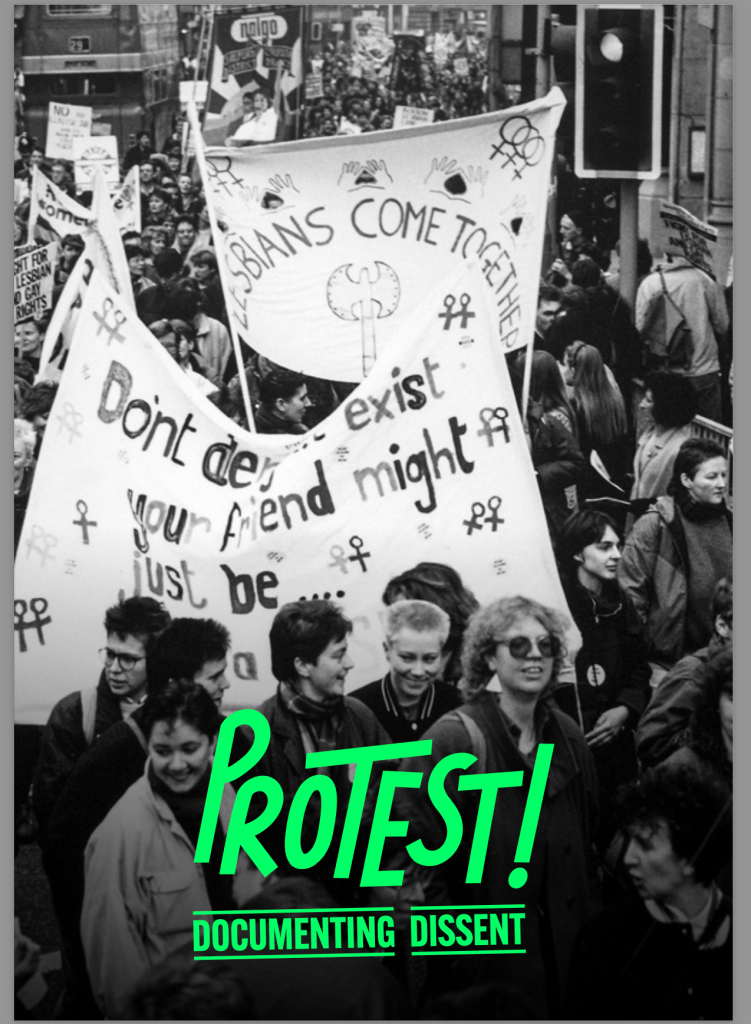
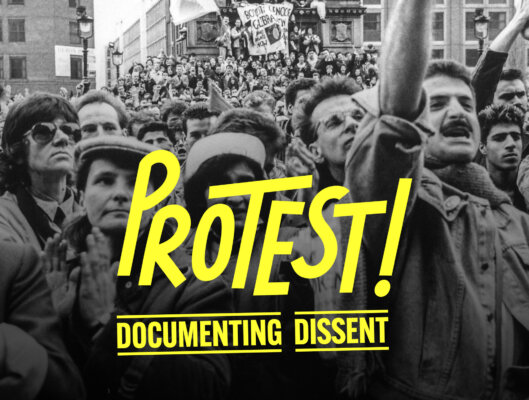
Wednesday, 4 December – 6.00pm – Protest! – Documenting Dissent Launch – Manchester Art Gallery

You are invited to the Launch of PROTEST!

Marking the 21st anniversary of the repeal of Section 28 in England and Wales, arts company IAP:MCR launches their latest project: PROTEST! – Documenting Dissent – a two-year long research and creative engagement programme, generously supported by the National Heritage Lottery Fund.

If you are able to attend, please RSVP to david.martin@iapmcr.co.uk

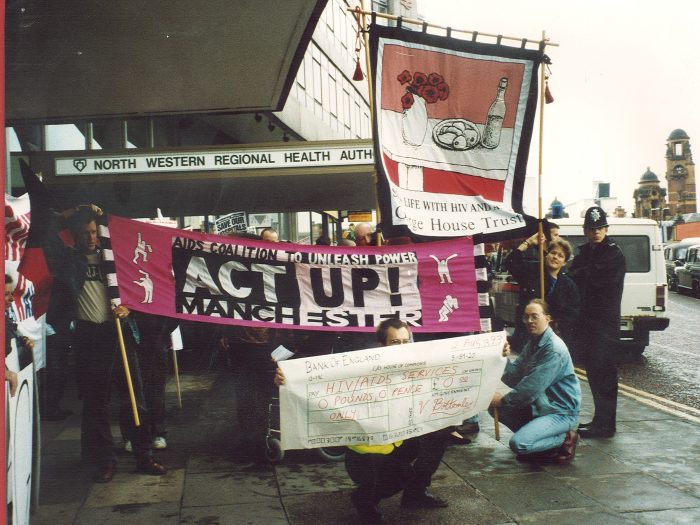
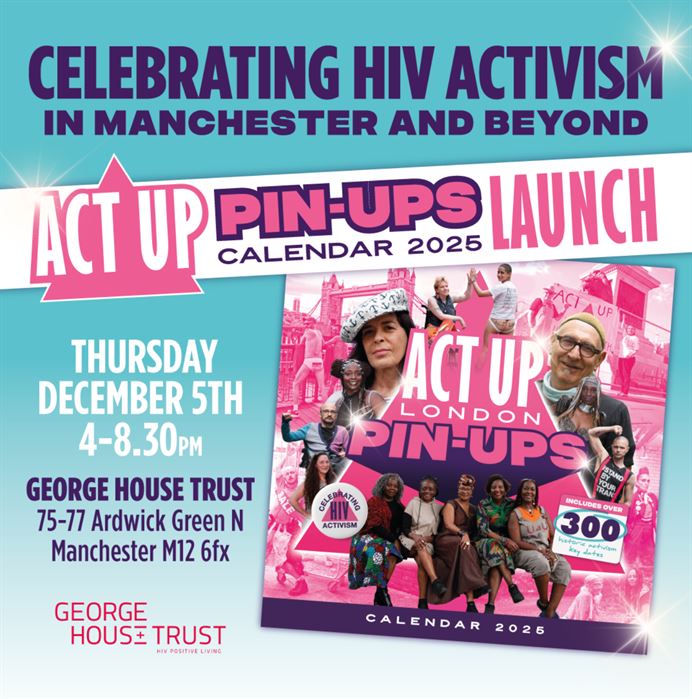
Thursday, 5 December – 4.00pm – Celebrating HIV Activism and ACT UP Calendar Launch – George House Trust

Buy tickets here.

Thursday, 11 December – 2.00pm – Out In The City meeting at Cross Street Chapel including quiz, LGBT+ quiz bingo, raffle and buffet

Monday, 16 December – 7.00pm – A Festive Celebration of the LGBT+ Community – Manchester Cathedral, Victoria St, M3 1SX

We have 20 tickets (4 still available) or book here.

Saturday, 21 December – 7.00pm – Sunday Boys present “A Very Queer Christmas” – Manchester Cathedral, Victoria St, M3 1SX 

Buy tickets here from £15.00.

The last meeting of the year will be on Thursday, 19 December from 2.00pm to 4.00pm at Cross Street Chapel.

We will then be taking a break until the meeting at Manchester Central Library on Wednesday, 8 January from 2.00pm to 4.00pm.

The above is a selection of events – more information can be found under Next Outings.

The LGBT Foundation Helpline (for wellbeing support) is 0345 3 30 30 30. You can give them a call any time between 9.00am until 9.00pm on a week day and between 10.00am and 6.00pm on Saturday and Sunday (excluding bank holidays and religious festivals).

Remembering the Legend of Frank Pearson, Foo Foo Lammar and Foo Foos Palace … Unspoken … After the Act … Active Ageing Film

News

Remembering the Legend of Frank Pearson, Foo Foo Lammar and Foo Foos Palace

On 7 November 2003 – 21 years ago today – Frank “Foo Foo Lammar” died, so let’s remember the legend.

Foo Foo’s Palace was the legendary club of the 70s, proudly billed as “Manchester’s No 1 night spot” in its heyday.

Opened in 1975 by the iconic drag artist Frank “Foo Foo Lammar” Pearson, it quickly became the heartbeat of Manchester’s nightlife.

Pearson’s flair and charisma made Foo Foo’s Palace an unforgettable venue, attracting crowds from all walks of life to experience its vibrant and electrifying atmosphere.

Frank Pearson

Frank Pearson and Foo Foo Lammar

Frank Pearson’s journey from a humble background in Ancoats to the glittering stages of show business is the stuff of legend.

Born into a working-class family, Pearson’s path seemed destined for a different trajectory until he discovered drag at the age of 20.

Francis Joseph Pearson was born to a working-class family on 22 March 1937.

He was one of five brothers, and his father was a rag-and-bone merchant.

Francis, known as Frank, left school at 15 without any qualifications and worked as a delivery boy for bread vans.

This was followed by a stint at a cotton mill, and then Butterworths, a waste paper reclamation firm.

In his teens, he was a boxer, and lived on the same street as future Coronation Street actor Bill Tarmey.

Foo Foo Lammar

With a flair for performance, he crafted the persona of Foo Foo Lammar, a name that would become synonymous with Manchester’s entertainment scene.

Foo Foo’s stage presence was electrifying, with blonde bouffant wigs, extravagant sequinned gowns and a wit as sharp as his heels.

He once quipped, “I don’t see myself as a drag queen, I’m more of a comic in a frock,” encapsulating the essence of his unique style.

His performances captivated audiences, drawing both laughter and applause from tough northern crowds.

Foo Foo’s other clubs

In the early 1970s, Pearson ventured into club ownership with the acquisition of the Picador in Shudehill, situated in the heart of Manchester’s bustling city centre.

Following this success, he took the reins of another venue, Celebrity, located on Dale Street. With a vision in mind, Pearson transformed the space into what would soon become known as Foo Foo’s Palace. This establishment quickly cemented its place in the city’s nightlife scene, drawing in crowds from near and far.

Behind the bar, Pearson, adorned in full drag, served patrons with flair before taking to the stage for two captivating performances as the night’s cabaret entertainment. Between acts, supporting performers kept the energy high, leading up to Pearson’s grand finale where he would reappear as himself, sans the drag.

The allure of Foo Foo’s Palace was undeniable, attracting people from across the country eager to witness Pearson’s electrifying performances. It also became a hotspot for Manchester United footballers and prominent figures from the world of showbiz.

Pearson’s entrepreneurial spirit didn’t stop there. He expanded his ventures to include Monroe’s and The Ranch, a punk club situated adjacent to Foo Foo’s Palace. Among his portfolio was Napoleon’s, believed to be Manchester’s oldest gay bar.

As the 1990s rolled in, Pearson’s influence extended to the burgeoning Canal Street area, the city’s gay village.

Here, he introduced Cruz 101, further enriching Manchester’s vibrant LGBT+ scene. In 1994, Pearson unveiled Metz on Brazil Street, offering yet another venue for revellers to enjoy.

His entrepreneurial endeavours weren’t confined to Manchester alone, as evidenced by the opening of a Metz branch in Liverpool in 1996.

Foo Foo’s charity work

Beyond the spotlight, Pearson was a pillar of the community, known for his tireless charity work.

He raised hundreds of thousands of pounds for causes close to his heart, including the Royal Manchester Children’s Hospital and The Christie. His generosity knew no bounds, and his contributions left a huge mark on Manchester.

Manchester United players rubbed shoulders with showbiz personalities, while hen and stag parties filled the dance floor with joyous celebration.

The club’s iconic frontage on Dale Street served as a backdrop to countless memories.

As the years passed, Foo Foos Palace remained a beloved fixture of Manchester’s nightlife.

Even after its closure in 2002, its spirit lived on in the hearts of those who had danced beneath its glittering lights.

Frank Pearson’s Legacy

Pearson’s flamboyant presence extended beyond the stage, earning him a reputation as a familiar sight in Manchester, adorned in shimmering suits and extravagant jewellery.

His collection of Rolls-Royce cars, each bearing the distinctive license plate FOO 1, further underscored his larger-than-life persona.

Despite his success, Pearson remained grounded, finding joy in simple pleasures like taking his beloved mother Leah shopping and sharing tea in the bungalow he lovingly provided for her in Moston. I remember seeing him with his mum in the Arndale Centre.

A passionate supporter of Manchester United, Pearson’s love for the club extended to his participation in the film Manchester United: Beyond the Promised Land in 2000. Additionally, he shared cherished memories of fellow Mancunian Les Dawson in an episode of ITV’s The Unforgettable documentary series.

Throughout the 1990s, Pearson called Shuttleworth near Bury his home before eventually settling in Piccadilly Village, an apartment complex in Ancoats. In 2002, he immortalised his life story in his autobiography, I Am What I Am, featuring an introduction by none other than Sir Alex Ferguson, the then-manager of Manchester United.

Tragically, Pearson’s battle with cancer came to an end on 7 November 2003, at the Christie Hospital in Manchester. His passing marked the end of an era, as hundreds lined the streets to bid farewell to a beloved figure.

The solemn ceremony, held at Corpus Christi Priory in Miles Platting, saw heartfelt readings from Sir Alex Ferguson, actress Sue Johnston and former England captain Bryan Robson.

Among the mourners were notable personalities including television presenter Jeremy Beadle, former Greater Manchester Police Deputy Chief Constable John Stalker and several Coronation Street actors, past and present, paying their respects to a man who had a huge impact on the city.

Unspoken

Sunday, 17 November – 6.00pm – 7.30pm – Film at HOME Cinema  – Free

Shortly after the passing of his beloved grandfather Heinrich, high school student Noah Stein finds a letter and an old photograph that suggest Heinrich was in fact gay. Struggling with his own closeted gay identity, Noah together with his classmate Jonah, who he is slowly falling for, decide to uncover the truth about the life his grandfather led in Germany before immigrating to the US.

Entertaining, inspiring and deeply moving, Unspoken is a big-hearted coming of age drama about the secrets we keep from our families.

Please indicate interest here by 10 November so that we can purchase tickets. However, there will be no charge to you.

After the Act

Tuesday, 12 November – Saturday, 16 November – 7.30pm

HOME Theatre 1, 2 Tony Wilson Place, Manchester M15 4FN

Tickets: £16.20 – £27.20

After the Act is a new 1980’s-inspired musical about pride, protest … and abseiling lesbians.

Thatcher’s Section 28, which banned the “promotion” of homosexuality in schools, was the landmark legislation that silenced a generation, offered a global blueprint for LGBT+ oppression and galvanised a community.

After the Act is funny, camp and unapologetically queer but also a clear-eyed exposure of the political playbook used to enact repressive laws.

Its joyously exuberant original live score accompanies the inspiring, sometimes heart-breaking, stories of teachers, students and activists impacted by the legislation. This is the story of how a moral panic gripped a nation – and a generation decided to fight back.

LGBTQ+ Active Ageing Film – Watch for FREE TODAY! 

HIV can be a real drag (pun intended!), especially for older LGBTQ+ adults who face unique challenges.

Watch as drag queen Daisy Puller and Dr Laura Waters, an HIV and sexual health consultant, explore HIV, healthy ageing, and PrEP initiation with our community. 

This inspiring film, produced by DKBmed, premiered at LGBT Foundation’s Pride in Ageing ‘Over 50s Celebration Event’ in August 2024, with a live Q&A session. 

 Watch here

Gay Sheep … LGBTQ+ Businesses … Mpox … Royal British Legion Pride Poppy Badge

News

The World’s First Flock of Gay Sheep

These gay sheep are the stars of the hour. The flock of 21 rams on a farm in Löhne, North Rhine-Westphalia in Germany have risen to fame through a fashion brand called Rainbow Wool, which produces caps, patches and shoelaces from the wool of the fluffy new celebrities. What’s more, the profit goes entirely to LGBTQ+ causes.

Since the project launched, shepherd Michael Stücke’s phone won’t stand still. “In the last weeks, there hasn’t been a day on which I haven’t given an interview. The number of enquiries we’re receiving at the moment is bombastic”, the 51-year-old farmer says. A member of the Gayfarmer Network in Germany, Stücke is gay himself and lives on the farm with his husband.

The project developed from a conversation he had about homosexual behaviour in sheep with a friend who works for a PR and communications agency. According to studies, apparently about one in 12 sheep is gay.

“Sometimes rams jump at each other trying to mate or entirely reject the females and only show interest in the male species,” Stücke said

As Stücke explains, regulations dictate that there must be one ram per 50 ewes and that ram is expected to sire offspring. “If the ram is gay, he obviously doesn’t do that.” So, like many other male sheep, the gay rams end up at the slaughterhouse.

Stücke’s friend wondered if anything could be done to change this and if the rams’ wool could be used for something. It was then that the idea for Rainbow Wool was born, and the friend’s PR and communications agency bought 21 gay rams from breeders. In September 2023, the first rams moved to Stücke’s farm.

The results are the products available in Rainbow Wool’s online shop, for quite a high price, however. Do people really pay that much? “Yes”, says Stücke, “the products are in high demand. I learned very fast that this goes down really well with the younger generation. They find it cool to have shoelaces made from the wool of gay rams.”

He continues, saying: “What really delights me, is that so many people profit from the project, not just one person who came up with the idea.” The entire profit goes to The Federation Queer Diversity in Germany (LSVD+) which helps various LGBTQ+ causes. According to the Human Dignity Trust, 63 countries still criminalise LGBTQ+ activity, and LSVD+ supports international projects aiding people in these places.

To stop breeders from claiming their rams are gay just to make a profit, Stücke shares how they recognise homosexual behaviour in the animals. “The jumping on each other isn’t the criterion but showing no interest in the ewes and refusing the mating act is a good sign. The flock we have here, they obviously show interest in each other.

We shear the gay sheep separately from our own to gain their wool independently. If a few more gay rams appear and if everything can be marketed well, the project might be able to successfully grow and products be extended. We have plenty of ideas.”

LGBTQ+ Businesses Contribute £106 billion to UK Economy, Landmark Report Finds

The LGBTQ+ Business Count was based on the largest ever survey of UK LGBTQ+ entrepreneurs (Image: Pixabay)

LGBTQ+ businesses in the UK contribute a staggering £106 billion to the economy, according to a landmark report published on 28 October.

The first of its kind LGBTQ+ Business Count report was compiled in partnership between OutBritain, the UK’s first LGBTQ+ chamber of commerce, and Open Economy Network (OPEN), a think tank focused on diversity and tech, to fill a hole left by official UK data about the LGBTQ+ businesses.

Based on the largest-ever survey of UK LGBTQ+ entrepreneurs, the report found that there were around 250,000 LGBTQ+ businesses in the UK that employ at least 750,000 people, with 57% employing a majority of LGBTQ+ people.

However, despite the significant and vital contribution that queer-owned businesses provide to the economy, the LGBTQ+ entrepreneurs survey noted a number of unique barriers and challenges that affect queer businesses.

Of those entrepreneurs surveyed, 57% said that doubt and a lack of self-confidence was something that they had faced.

Meanwhile, 44% had experienced invasive or inappropriate questions about their identities, while 37% said they had encountered some form of discrimination. Respondents also reported feeling like outsiders in the business world, with 36% saying that they were disconnected from mainstream business networks.

Despite the challenges, there are positives to operating a LGBTQ+ business. In fact, 83% of those surveyed said that their business had benefited from being LGBTQ+, with seven out of ten saying their identities made them more determined to succeed. Similarly, 67% suggested that a diversity of perspectives and experiences led to business benefits.

Of course, there are still disparities among LGBTQ+ businesses. The majority (61%) of LGBTQ+ entrepreneurs identify as gay, while nearly two-thirds (64%) said they were men. Likewise, 89% of LGBTQ+ entrepreneurs are white, 4% from mixed or multiple ethnic groups, 3% Asian or Asian British, and 2% Black, Black British, Caribbean or African.

The report identified three recommendations that would support LGBTQ+ businesses to overcome some of the barriers and difficulties they face, including better data collection, specific support and increased representation and supplier diversity.

In a statement, Philippe Legrain, Founder of OPEN and lead author of the report, said: “While the UK has made huge progress in tackling legal injustices and social prejudices against LGBTQ+ people, the past leaves scars.

Moreover, business tends to lag behind society as a whole in its acceptance of LGBTQ+ people; among the chief executives of the FTSE 100 leading companies, only one is openly gay. So, it is hugely important to document both the contribution and the challenges of LGBTQ+ entrepreneurs in the UK, which is why we have produced this report as a call to action to the government, mainstream business organisations and large corporations.”

First Case of More Spreadable Mpox Detected in UK

Mpox is an infectious disease which can cause painful lesions on the body (Getty Images)

A single case of mpox – formerly known as monkeypox – linked to the recent outbreak in parts of Africa, has been detected in the UK. It is part of the Clade 1b outbreak, which appears to spread more easily between people.

Mpox was declared a global health emergency by the World Health Organisation in the summer.

The UK patient had recently been on holiday in at least one of the affected countries in Africa and began to feel sick 24 hours after flying home. The patient developed flu-like symptoms on 22 October and a rash two days later.

An mpox rash of pus-filled lesions can last for up to a month. Other symptoms include fever, headaches and low energy.

The infected UK patient is being treated at the Royal Free Hospital’s specialist high consequence infectious diseases unit in London.

Laboratory testing confirmed the infection was Clade 1b. This form of the virus has been causing mounting concern. It appears able to spread more easily from person to person through close physical contact, including sex, than other types of mpox.

In Africa, the Democratic Republic of Congo, Kenya, Burundi and Rwanda have all reported cases of Clade 1b mpox this year.

Its close relative Clade 1a is largely connected to exposure to infected animals or eating bush meat.

Clade 1b appears to be milder than 1a, although it’s difficult to know for certain because precise figures on the exact numbers of people infected are hard to pin down.

The patient’s close contacts, including those in the same household, are being traced. This is thought to be fewer than 10 people.

“This is the first time we have detected this clade of mpox in the UK, though other cases have been confirmed abroad,” said Prof Susan Hopkins, the chief medical adviser at the UK Health Security Agency.
She said: “The risk to the UK population remains low, and we are working rapidly to trace close contacts and reduce the risk of any potential spread.”

Sweden, India and Germany have all detected cases of this strain of mpox linked to travel to affected countries.

This is a different outbreak to the one that primarily affected gay, bisexual and other men who have sex with men in 2022, called Clade II. These mpox infections still happen at low levels.

Health and Social Care Secretary Wes Streeting said: “The government is working alongside the UK Health Security Agency and the NHS to protect the public and prevent transmission. This includes securing vaccines and equipping healthcare professionals with the guidance and tools they need to respond to cases safely.”

Royal British Legion Pride Poppy Badge

The Royal British Legion is a charity that helps serving and former members of the UK’s armed forces and is best-known for running the Poppy Appeal each year.

The red poppy is considered a symbol of remembrance, particularly for those who gave their lives in the two world wars and the conflicts that followed.

There are, and always have been, LGBTQ+ people in the navy, air force and army, who faced homophobia and discrimination for their sexuality.

This badge symbolises support for our LGBTQ+ community who are a vital part of our Armed Forces past and present.
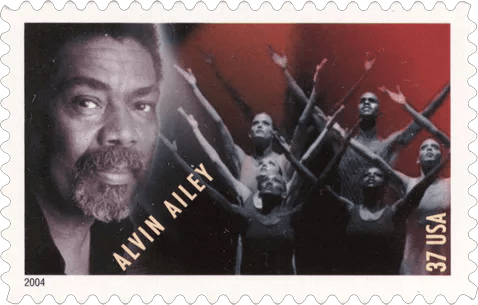
Available here for £8.00.

Queen Street Mill Textile Museum … Noël Coward … LGBTQ+ Abuse in Immigration Detention

News

Trouble at Mill

This week 25 of us headed oop north to that Burnley in darkest Lancashire to visit Queen Street Mill Textile Museum. We took buzz X43 and had us dinners in a Wetherspoons “The Boot Inn” afoor teking another buzz up to Harle Syke. I was reet chuffed that we found da place without too much fretting or mithering.

We had a guide – Roger – who were a reet good egg. He knowed everything bout the place. He weren’t a thickun at all. The machinery were dead loud an’ each person worked four looms by their sen. Mind you, if you worked there you wouldn’t nod off, or you’d end up with cloth ears.

Who’da thowt it? Before we left we had us a brew.

On 30 October 1918 (106 years ago) there was a huge fire at the mill

More photos can be seen here.

Exploring the Not-So-Secret Gay Life of Famed Playwright & Performer Noël Coward

Noël Coward was an acclaimed actor, playwright, songwriter, singer and director.

Born to a working class family in the suburbs of London in 1899, he turned his passion for the arts into a multi-faceted career that established him as one of the most revered voices in entertainment, from the West End to Broadway, thanks especially to his hit plays like Private Lives and Blithe Spirit (by 30, he was already the highest paid writer in the world!).

He was also gay – a truth that almost everyone knew, but no one talked about.

Of course, that’s not the most surprising thing considering the era Coward rose to prominence. But it’s only in recent years that we’ve begun to fully appreciate the impact he made, not just as a dramatist, but as a queer dramatist.

While his work was never expressly gay, it was undoubtedly imbued with his queer sensibilities. Take for example, “Mad About The Boy,” one of his most well-known numbers written for the comedy I’ll Leave It To You, originally intended to be sung by women daydreaming about their movie-star crush.

But, come on: “I know it’s stupid to be mad about the boy, I’m so ashamed of it but must admit, the sleepless nights I’ve had about the boy”? It’s not hard to read those lyrics from the perspective of a gay man!

While Coward largely kept his private life private, he did eventually find a hunky screen idol of his own: The South Africa-born stage and screen actor Graham Payn, who would appear in a number of the writer’s works over the years. The true nature of their decades-long romance was kept a secret until after Coward passed.

Graham Payn & Noël Coward | Image Credit: ‘Mad About The Boy: The Noël Coward Story,’ Greenwich Entertainment

From his lovers to his lavish lifestyle to his lasting legacy, all of that and more is explored in the fascinating documentary Mad About The Boy: The Noël Coward Story – taking its name from his signature song, naturally! – directed by filmmaker Barnaby Thompson (who also helped produce Spice World).

The film recounts his life, from impoverished childhood to jet-setting star up until his passing in 1973, told largely through his own words, music, and rarely seen home movies.

Listen carefully and you’ll hear a number of familiar voices. For one, many of Coward’s famous contemporaries and admirers – from Frank Sinatra to Lauren Bacall to Dame Maggie Smith – sing his praises via archival footage. And, reading direct from the icon’s diaries, as the voice of Noël Coward himself, is out star Rupert Everett.

And the whole thing is narrated by recent Emmy winner Alan Cumming, whose lilting Scottish brogue is the perfect complement to Coward’s incredible story.

Watch the trailer for Mad About The Boy: The Noël Coward Story below:

LGBTQ+ Abuse in Immigration Detention

LGBTQ+ people face unique challenges in immigration detention (Picture: Getty)

As soon as Joel Mordi was driven into the asylum detention compound, he described it as if the ‘gates of hell’ had just opened.

Wearing a blazer and Doc Martens with rainbow laces, he was guided through the big hall of Harmondsworth Immigration Removal Centre (IRC) lined with yellow doors and gangs of people clustered together.

Joel immediately felt powerless, as homophobic insults from fellow detainees started.

“People called me a sissy. Then there was faggot and batty boy, but there were so many street terms that I didn’t know. The ones I couldn’t understand were probably really bad. It felt like I had a target on my back, but the officer I was with didn’t do anything.”

Joel was just 21 on 5 November 2019, when he touched down in London after leaving his home country of Nigeria – where homosexual acts are punishable by up to 14 years in prison. He fled Lagos after organising a public protest for LGBTQ+ rights and receiving death threats as a result.

But his ordeal wasn’t over. Claiming asylum at Heathrow Airport immediately after landing, he says he was held in a waiting room for 11 hours – where he was strip searched – and then transferred to Harmondsworth IRC.

Joel spent one night in the facility’s annex, then was transferred to the main detention area, where the homophobic insults from fellow detainees occurred. Unfortunately, that was just the beginning.

Joel was left shaken and scared for his life (Picture: Joel Mordi)

Joel adds: “One night, the door handle started rattling and someone I didn’t know opened it. He had come to gain sexual favours and threatened to hurt me if I didn’t comply. Eventually, I did what he wanted and then he left.

The following night, he came into my room again. This time, he wanted something different, but I couldn’t go through with it. He tried but I screamed and he left,” he says.

Joel was left shaken and scared for his life, especially with how eerily silent it was in the aftermath when his world felt like it had completely crumbled.

At the time, he tried to report to one of the officers what had happened to him, but Joel says she didn’t want to hear it and so dismissed him. 

Inside Harmondsworth IRC (Picture: Dominic Lipinski/PA)

Five years on, Joel still recalls vivid and traumatising details of the assault, including the man smelling of weed or the countless cuts on both of his arms. Thankfully, to Joel’s relief, he was granted bail less than a week after his detainment. But the damage was already done.

In the years since, his mental health suffered immensely, including insomnia, nightmares, flashbacks and major PTSD. “Detention never really leaves you,” he says. “I remember everything. I’ve tried to undo it but there are some things that will be forever etched in me.”

Joel still recalls vivid and traumatising details of the assault (Picture: Joel Mordi)

According to figures via a Freedom of Information (FOI) request from immigration charity Rainbow Migration, there were at least 259 LGBTQ+ people held in immigration detention in 2023 – which is almost exactly double the amount (129) in 2022.

The Home Office does not systematically collect or publish any data on LGBTQ+ people in detention, which is why they’re reliant on FOI data – but even that has its limits.

The data provided is missing eight months’ worth of numbers from Derwentside and nine months’ worth from Colnbrook and Harmondsworth – some of the biggest detention centres in the UK. That missing data, and the fact that what data there is relies on LGBTQ+ people voluntarily outing themselves to detention centre staff, is why the true number will be significantly higher.

The true number of LGBTQ+ asylum seekers is likely to be significantly higher than reported (Picture: Rainbow Migration)

Thankfully, since his detention, Joel has been supported by LGBTQ+ and immigration charities – AKT, Safe Passage, Micro Rainbow and Rainbow Migration – who he says have been a ‘lifeline’.

But after his traumatic ordeal in detention, he has a message for the Home Office. ‘If detention is already a damned place for our counterparts, times it by at least 11 and that’s how it is for LGBTQ+ people,’ Joel says. ‘It’s not fit for purpose’.

* Name has been changed.