World AIDS Day … Lynn Ann Conway … Neil Munro

News

World AIDS Day

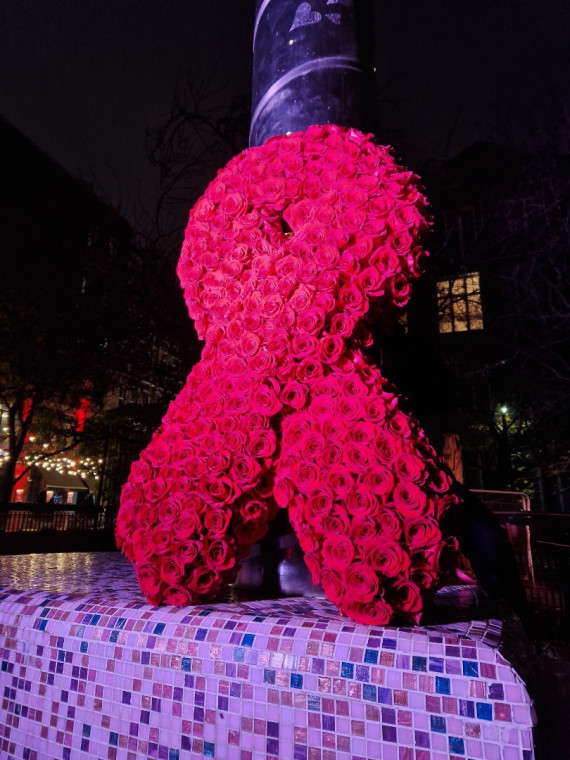
World AIDS Day is a global initiative to raise awareness about HIV/AIDS and show international solidarity. It’s a time to: 

  • Remember those who have died from AIDS-related illnesses; 
  • Honour the 39 million people living with HIV worldwide; and 
  • Reaffirm a commitment to ending HIV. 

On 1 December, communities come together to commemorate World AIDS Day. In 2024 the theme is “Take the rights path: my health, my right!”

The theme highlights the importance of human rights in the response to HIV and AIDS. The campaign calls on people to champion the right to health and address the inequalities that prevent progress in ending AIDS. 

In 2022 Manchester Pride and George House Trust partnered to create a powerful and informative video. Nathaniel Hall, theatre-maker, writer, performer, northerner and HIV activist takes us through the many ways that Manchester’s Gay Village has supported people with HIV throughout the decades.

You may even be surprised to learn that Manchester Pride’s very own beginnings were part of a jumble sale raising money for HIV patients on Canal Street. You can read about HIV, activism, PrEP, LGBTQ+ history and more here.

Lynn Ann Conway 

Lynn Ann Conway (2 January 1938 – 9 June 2024) was an American computer scientist, electrical engineer, and transgender activist.

Lynn Conway with her husband Charles W Rogers in 2006. She has passed away at age 86.

Lynn Conway was the tech pioneer and transgender trailblazer who helped revolutionise the microchip industry.

As a gifted computer architect in California’s Silicon Valley in the 1960s and 70s, Conway co-invented a new method of microchip design that now powers nearly every digital device in our lives, from smartphones to in-car electronics.

Yet, throughout those years, she was also secretly undergoing a gender transition that came with enormous personal and career costs, at a time when trans people were routinely targeted for violence and frequently denied the protection of the law.

After her retirement, she came out publicly and began sharing her story on her personal website, helping generations of younger trans people recognise themselves and learn about the process of transition.

“I think a lot of us (trans people) are living more interesting, more fun lives than most people. It’s our secret,” she told The Independent last year,

“We are highly empowered – in ways that people may not understand – because of the joyfulness we feel in having been able to do what we do in spite of the difficulties, and find a place in society where we actually have joy in just living.”

Michael Hiltzik, a columnist for The Los Angeles Times who had known her for 25 years called her “the bravest person I ever knew.”
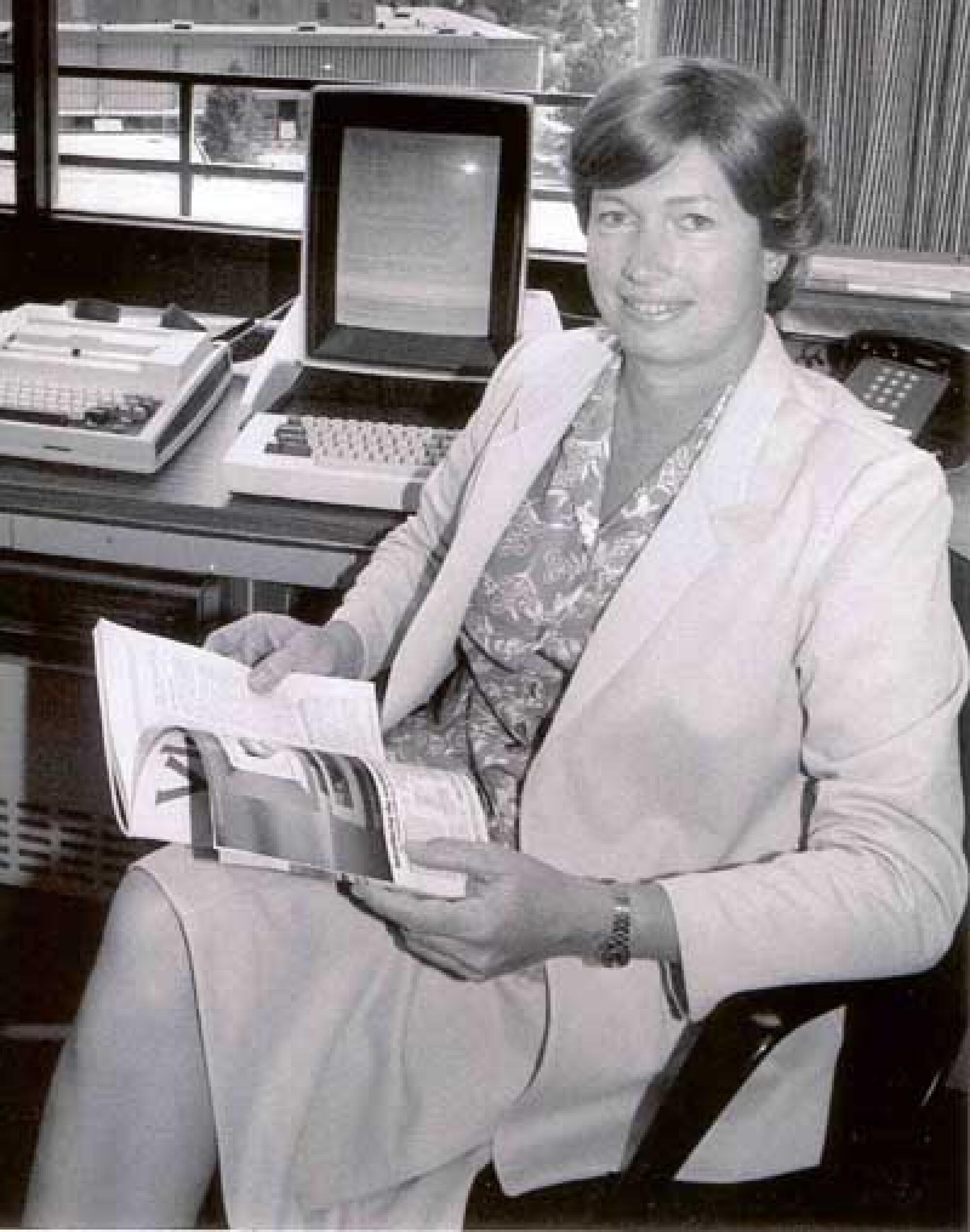
Conway sitting beside her Xerox Alto, an early personal computer developed at at Xerox’s PARC research lab where she worked (Margaret Moulton)

Conway was born in 1938 in White Plains, New York, growing up in a white middle-class world that she described as “haunted” by the violence and repression that lurked underneath its “appearance of normalcy”.

After graduating from Columbia University in the early 60s, she moved to Silicon Valley to work on a secretive IBM supercomputer project.

She thrived on the work, but her personal life was falling apart under the pressure of her suppressed identity, and she finally resolved to undergo medical transitions.

Then IBM fired her after learning of her plans to transition, forcing her to restart her career almost from scratch in a new identity. It was, she recalled, very much like being a Cold War spy.

“You have to operate at a high level pretty quickly, or else you’ll get exposed, and then you’re a traitor to your whole institution,” she told The Independent. “But at the same time you have to be kind of affable, and not attract attention … can’t ever get angry, or show fear.”

Conway secured a job at Xerox’s PARC research lab, now famous for innovations such as the computer mouse and the digital desktop interface, where she began collaborating with California Institute of Technology professor Carver Mead to solve a thorny industry problem.

At the time, the number of components that could be squeezed into each microchip was increasing exponentially every year. But the resulting complexity was difficult to manage using traditional, bespoke methods of chip design, creating a bottleneck on actually exploiting this new power.

Conway and Mead’s innovation – known as “Very Large Scale Integration”, or VLSI – was to develop a set of rules for clustering components together in standardised blocks, like neighbourhoods in a city, simple enough for even a novice engineer to follow.

That work led to a post for Conway at the military research agency DARPA, and then a professorship at the University of Michigan.
She retired from active teaching in 1998, but in the years that followed, Conway came to feel that she had been unfairly left out of the computer industry’s popular history of her invention, and pushed aside in favour of her male collaborator.

“Mead probably thinks it was 80/20 him; most people, I think, in the long term, will find it was really 80/20 me,” she said.

But in recent years her contributions have increasingly been recognised, thanks in part to her own documentation and campaigning.

In 2009, she received an award from the engineering trade group, the Institute of Electrical and Electronics Engineers.

In 2020, IBM finally apologised for firing her 52 years earlier. In October 2023 she was inducted into the National Inventors’ Hall of Fame as the co-creator of VLSI, 14 years after Mead received the same honour.

In a more personal way, Conway also touched the lives of many trans people. For years, her personal website was one of the few places where you could find clear, detailed, unprejudiced information about the experience of being trans and the process of transition – as well as a striking example of how trans people could find lasting happiness and success.
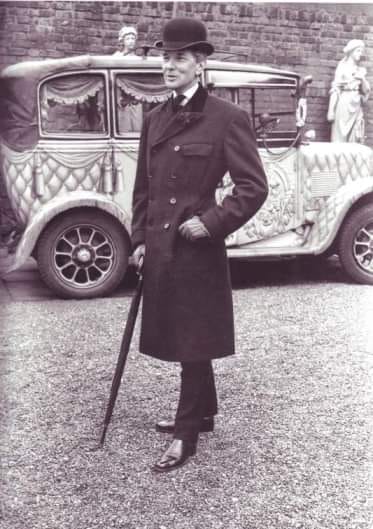
Neil Munro “Bunny” Roger (9/6/1911 – 27/4/97)

“Now I’ve shot so many Nazis, Daddy will have to buy me a sable coat.”

There have always been queens, but few compared to the glib, quick-witted Bunny Roger. He was a war hero, yet his most notable contribution was his 1949 invention – Capri pants! He lived his life courageously and consistently; a man who knew who, what, and why he existed. Born in London, he was the most eccentric of three life-long “bachelor” brothers.

Here’s an anecdote: Roger got out of a taxi and powdered his nose, when his driver said: “You’ve dropped your diamond necklace!” Roger replied: “Diamonds? With tweed? Never!”

He influenced how men of his era dressed. As a main character in the neo-Edwardian movement in the 1950s, he brought back the precise tailoring of the turn of the century, influencing the Teddy Boys.
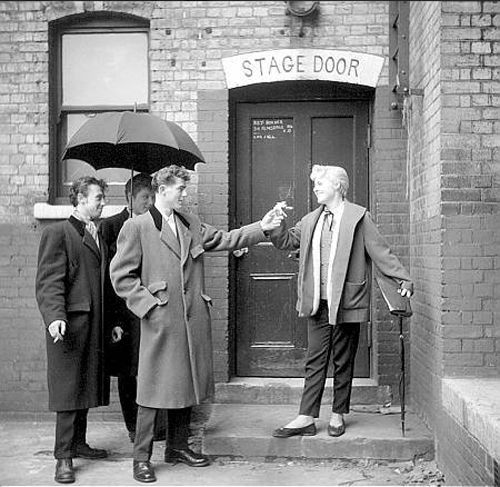
Once, when Cecil Beaton was photographing him, he asked Roger to step off the sidewalk into the gutter and Roger’s retort was: “Not on your life! We’ve spent two generations getting out of the gutter!”

I don’t understand how he had the time to be a hero in World War II, when he was busy as a full-time fop on the verge of becoming an important fashion designer. He died a few days before his 86th birthday, partying until right before entering the hospital for cancer treatment. He bragged at the time that he and Princess Diana had the same waist measurement.

The son of a self-made tycoon, as a youth, he taunted his conservative father by bleaching his hair and wearing a bit of rouge. He was expelled from Oxford for his indiscrete queerness. Undaunted, he started his own fashion house at 26 years old, and his first client was Vivien Leigh.

Five years later, Roger was fighting Nazis in Italy and North Africa. He was noted for his courage under fire while still wearing chiffon scarves. He saved a wounded fellow officer from a building that had been bombed. Roger claimed to have gone into a battle brandishing a rolled-up copy of Vogue and commanding: “When in doubt, powder heavily!” Perhaps meaning gun powder, or maybe not.

After the war, he was hired to take over the couture department at an upscale London department store. He also invested in fashion house of Bunny’s buddy, Hardy Amies (1909 – 2003), a discreetly gay fashionista who designed for the Queen. Roger’s money revived the House of Hardy Amies, and when it was sold, it gave him enough funds to retire in comfort and pursue his favourite activities: socialising and buying clothes.

He spent tens of thousands of pounds every year on his wardrobe. His signature look was bowler hat paired with extraordinary shoes that he polished himself using a concoction of beeswax and natural dyes, which he customised by adding red laces to compliment his ruby cufflinks. For each of his suits he had four pairs of shoes or boots made to maximise the number of looks. He owned over 150 Savile Row suits (each suit was said to have cost around £2,000), so it was not a small shoe collection, made larger because he had several pairs of the same shoe made when he found a favourite style.
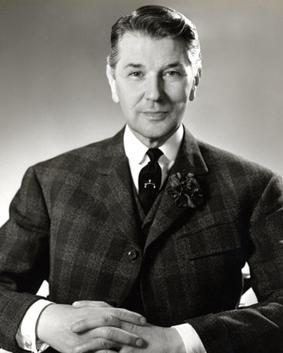
Roger hosted outrageous themed soirées. There were Diamond, Amethyst, and Flame Balls held to celebrate his 60th, 70th, and 80th birthdays. He wore an exotic mauve catsuit with a feather headdress at his Amethyst 70th birthday ball in 1981. At his 80th, he wore a catsuit made of scarlet sequins with a cape of orange organza, casually greeting his 400 guests from behind a wall of fire to the applause of all. His parties were covered by spreads in the newspapers, including a New Year’s Eve Fetish Ball where half the guests were of the stiff upper-class, while the other half wore rubber S/M gear and high heels while being led by women tethered in chains. This outraged his father who seemed to have had no sense of humour, although when Roger was a teenager, he had asked for a doll’s house as a reward for being selected for a sports team, and his father gave it to him.

When he was six years old his mother gave him a fairy costume with diaphanous skirts and butterfly wings. When he got a little older, Roger plucked his eyebrows to look like Marlene Dietrich, whom he adored. When he visited Hollywood, he was disappointed that he was compared to actor George Arliss and not Dietrich. In his later years his face was what he described as “much-lifted”.

He lived with his gay brothers at their estate in Scotland, which Roger furnished with elaborate Gothic furniture, carved with bull and goat motifs, symbols of male sexuality.

There is that old-time euphemism for his type of queer: “… a little light in the loafers”. Well, Roger loved to dance and by all accounts he was a little light in his perfect size-seven loafers. From his London Times obituary: “Beneath his mauve mannerisms, Bunny was stalwart, frank, dependable and undeceived; to onlookers a passing peacock, to intimates, a life enhancer and exemplary friend.”
Fairfield Moravian Settlement … World AIDS Day … Gay Liberation Front … WASPI Women

News

Fairfield Moravian Settlement

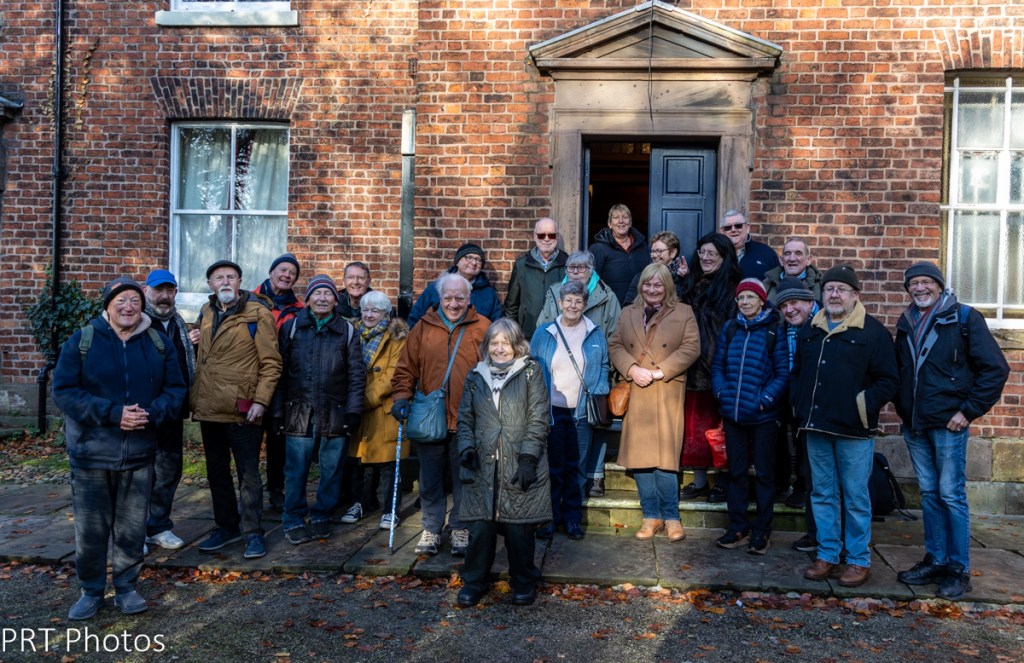
We picked a perfect bright sunny winter’s day for our trip to the little known Moravian Settlement in Fairfield – five minutes away from Droylsden tram stop but hidden away down a side street beyond the Ashton canal bridge.

It was like stepping back in time as we entered the cobbled main square and met Janet, our very informative guide for the tour, in the beautiful church.

She began with a detailed introduction to the history of the Moravians. Founded by Czech Jan Hus (1369-1415) who established the oldest Free Church in Northern Europe sixty years before the Reformation in response to the iniquitous sale of indulgences among many other unpopular activities of the Catholic Church.

Hus was condemned to death, but his vision lived on and in 1457 the first United Brethren settlement was founded in Kunwalt. After flourishing in Bohemia and Moravia for many years the church was almost wiped out in the Thirty Years War.

The Moravians found allies in Amos Comelius (1592-1670), his son and grandson, all of whom served as bishops in the church. Amos was dubbed the father of modern education and settlements included boarding schools for girls and boys.

In 1732 it was the first Protestant body to go out on foreign missions, while1749 saw the Moravian Church recognised in law in the British Parliament.

The first settlement in England was in Pudsey; a small one in Dukinfield followed, Fairfield was opened in 1785 after brethren bought a farm and land in the village. Once a kiln was built to provide bricks it took a couple of years to build the main terrace followed by the rest of the buildings. The settlement was entirely self-sufficient, with a bakery, a dairy, fields and was run like a commune. Completed in 1796, people who wished to join would apply to build their own houses.

Janet took us on a fascinating tour of the whole settlement, and we saw the burial ground, or God’s Acre, with its characteristic tomb markers set flat in the ground, men and boys to one side, girls and women on the other. In keeping with the notion of self-sufficiency the area also served as an orchard.

The Brethren House closed in 1820 and the boys’ school was taken over by Lancashire County Council in 1920. It is now a girls’ comprehensive school. Fairfield is no longer a self-contained village with its own night watchman, whose cellar was used as a lock-up for those found the worse for drink. The village pub did serve alcohol but if you ordered a pint it came with a religious tract.

It is now a Conservation Area and the houses and other buildings are Grade 2 or Grade 2* listed. We repaired to the former College, now a community centre and excellent little museum for tea and biscuits to complete a fascinating and very informative visit.

Thanks to Lizzie for this report back. More photos can be seen here.

World AIDS Day

The annual World Aid’s Day vigil will take place on Sunday, 1 December 2024 at 6.00pm at Sackville Gardens, Sackville Street, Manchester M1 3WA.

Join us to remember people we have lost, show our solidarity with people living with HIV around the world and commit ourselves to ending HIV stigma and discrimination.

This inclusive event will represent all identities, facets and elements of the HIV community who will be represented through speaking, artistic performances and visibility. We will centre the history of HIV and the trailblazers who inspired us and paved the way to today. There will also be talks from Positive Speakers (people living with HIV) who will share their story and experiences. 

We look forward to seeing you there.

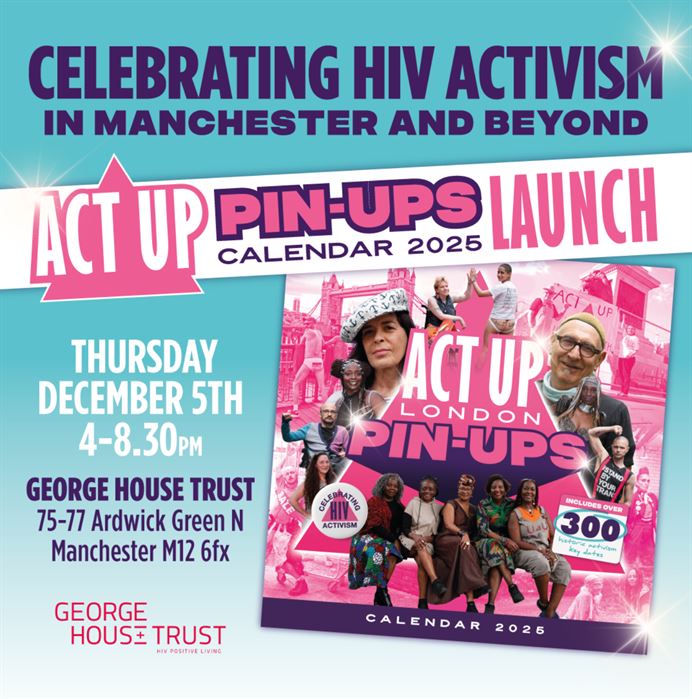
Celebrating HIV Activism

Thursday, 5 December from 4.00pm

The Lineup

4.00pm Welcome from George House Trust and ACT UP PIN UPS Nathaniel Hall, Paul Fairweather, Tony Openshaw

4.10pm Screenings and Q+A of Nathaniel’s films – HIV+Me and GHT’s Pioneers of Progress

4.30pm HIV Activism Quiz

5.15pm Recording our stories from ACT UP Manchester, Section 28 and iconic queer protests

6.00pm – 8.00pm Calendar signings, food and DJ’s.

Get tickets here.

The UK’s Gay Liberation Front had trans rights at its heart – despite what transphobes might try and tell you

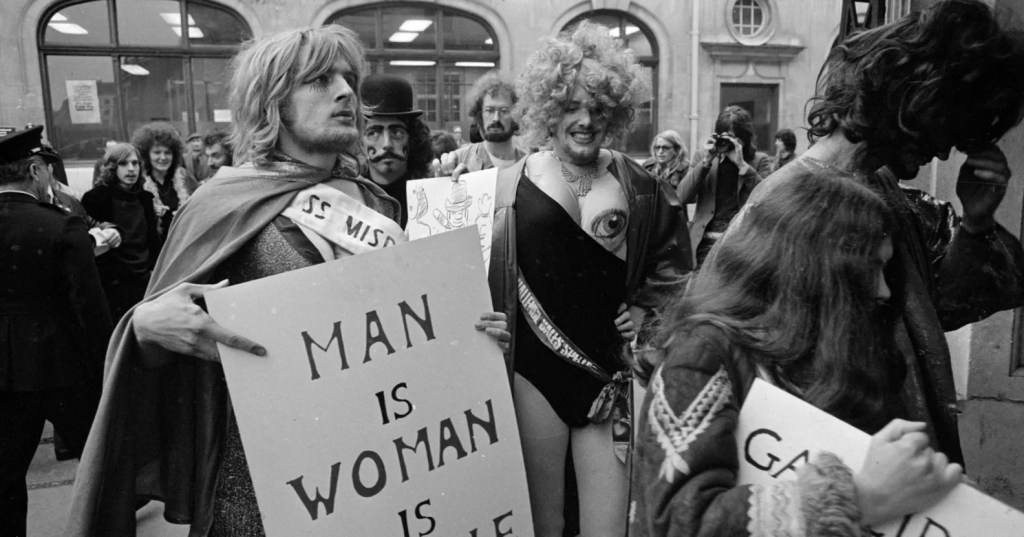
Members of the Gay Liberation Front protesting outside Bow Street Magistrates Court (Central Press / Getty)

The erasure of trans people from history is sadly nothing new, so it’s hardly surprising that the fight for trans liberation in the UK is far older than many realise.

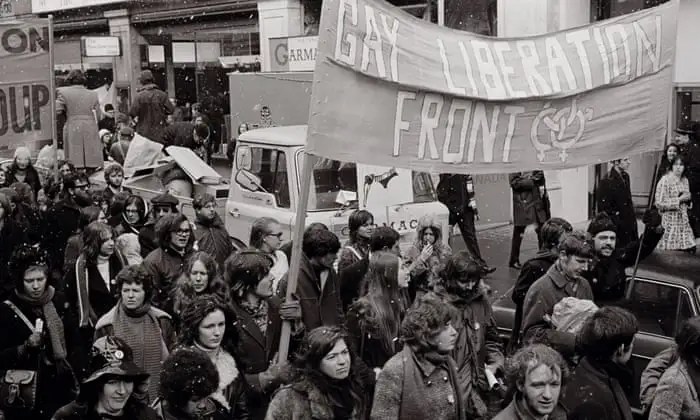
The modern-day LGBT+ rights movement started with the Stonewall riots of 1969. The demonstrations sent ripples across the world, sparking trailblazing LGBT+ movements from Boston to Berlin – and in Britain, we had the Gay Liberation Front.

It began in 1970 as 19 people in a basement of the London School of Economics. Within weeks it snowballed into meetings attended by hundreds more, becoming a watershed moment in British LGBT+ history.

The phrase “LGBT+” hadn’t been coined yet, but that doesn’t mean transgender people weren’t there. As a member of the GLF since 1971, Peter Tatchell explains how trans rights were central to the group’s ethos.

“In the GLF era, the word transgender, with its current meaning, barely existed. It was little known and rarely used. Back in those early days, gay was, for most of us, an umbrella word for all lesbian, gay, bisexual and trans people.

GLF challenged gender norms and embraced all gender non-conformists. Trans people shared a defiance of gender rules and expectations alongside LGBs – that gave us a common interest in working together for our mutual emancipation.”

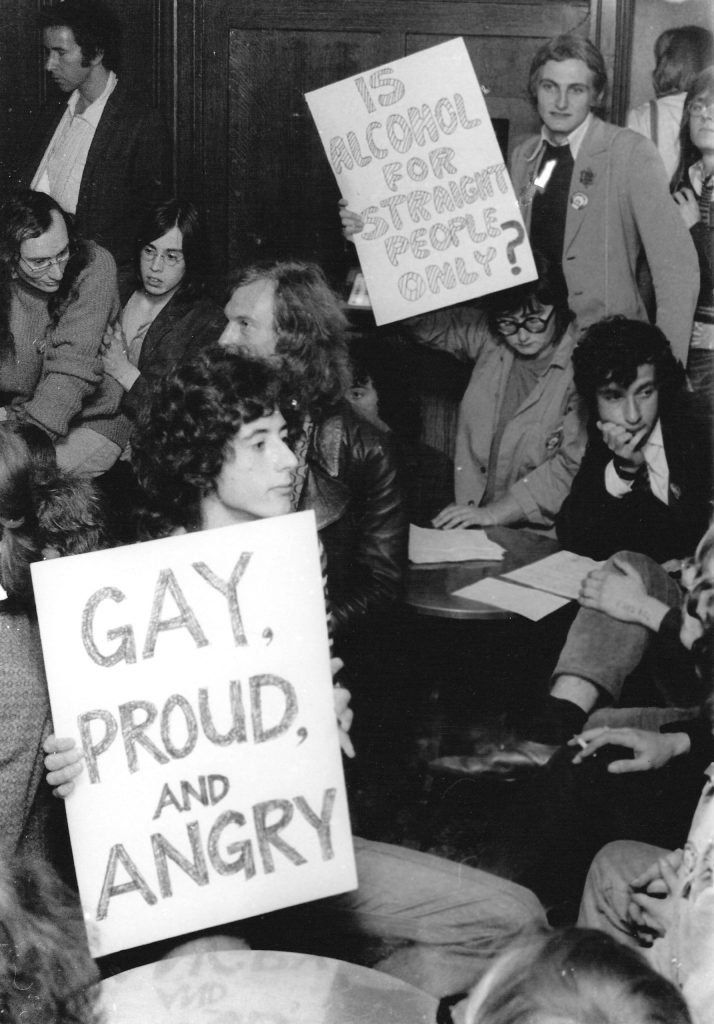
Gay Liberation Front – Chepstow pub sit-in 6 October 1971 (Peter Tatchell in foreground)

Nowadays it’s a common tactic of anti-trans activists to paint transgender people as something of a modern phenomena, claiming that their involvement in the gay rights movement is a “fiction” inserted into historical narratives.

Nothing could be further from the truth.

“Gay Liberation Front members supported the trans fight, including protesting at a café near Piccadilly Circus that refused to serve trans women,” Peter Tatchell said. “We saw trans rights as part of our struggle.”

He can recall several early issues of the GLF newspaper covering the stories of trans women, who were widely accepted as part of the “diverse spectrum” of the GLF community and movement.

“Many of us in GLF argued that sexual orientation, gender roles and gender identity are all interlinked,” Tatchell continued. “They are part of a matrix of sexual and gender subversion that challenges orthodox social expectations of what it is to be male and female.

This common thread is why GLF was allied to women’s liberation, and supportive of transgender and bisexual liberation.

Alas, not everyone in GLF embraced trans people. Some straight-acting gay male activists were lukewarm or embarrassed by them. But their reticence was not widely shared.”
While we now have a range of expression to describe the spectrum of gender and sexuality, 50 years ago many of these ideas were still in their infancy and the language we use today simply didn’t exist.

That meant it was easy for some trans and gender non-conforming people to slip under the radar, but it’s a mistake to assume they weren’t part of the fight.

Like the gay community, trans people were viewed as “gender rebels” who contradicted the same heterosexist norms LGB people did – and their causes were united from the start.

“The right to be different is a fundamental human right for LGBs and Ts,” Tatchell stated.

“The idea that people should be expected to adhere to heterosexual supremacist gender-normative expectations is demeaning and insulting for LGBs and for Ts. We share a mutual interest in working together for both sexual orientation and gender / gender identity liberation.”

To disassociate the LGB from the T, he argues, is therefore “mistaken and impossible”.

Can you sign the petition for a WASPI compensation scheme?

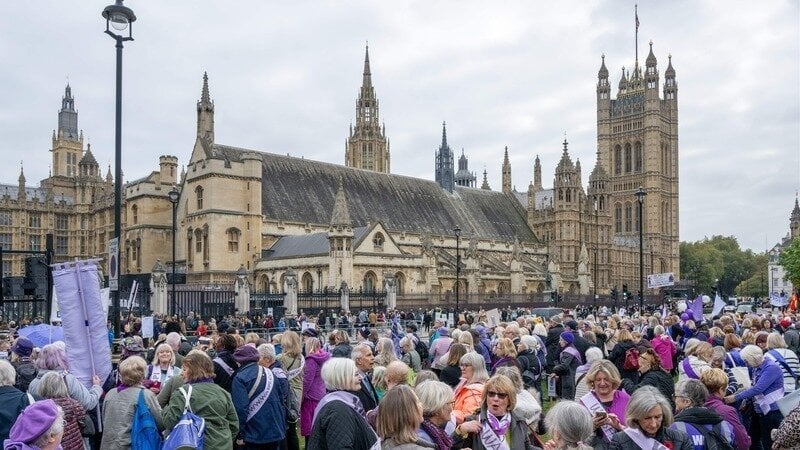
WASPI demo 30 October 2024

WASPI stands for Women Against State Pension Inequality. Waspi is now in common use to describe women born in the 1950’s affected by the changes to the State Pension age.

The campaign is calling on the Government to fairly compensate WASPI women affected by the increases to their State Pension age and the associated failings in Department for Work and Pensions (DWP) communications.

In March 2024, the Parliamentary and Health Service Ombudsman (PHSO) said 1950s-born women were owed financial redress and an apology due to DWP maladministration.

The Ombudsman’s findings were backed by the cross-party Work and Pensions Select Committee, hundreds of MPs and, according to polling, 68% of the public. However, only the Government has the power to put this injustice right.

The campaign wants the Government to urgently respond to PHSO report and set up a compensation scheme by 21 March 2025.

With one affected woman dying every 13 minutes, there is no time for further delay.

Sign this petition

New stamps … A Quick Look at Lesbians … Rainbow Lottery Super Draw!

News

Keith Haring & Betty White get the “Forever” Treatment with New Stamps

The United States Postal Service shared good news with an announcement they’ll be honouring two LGBT+ icons with stamps in 2025: Keith Haring and Betty White.

As the name suggests, “Forever Stamps” can be used to mail a one-ounce letter regardless of when the stamps were purchased or used and no matter how prices may change in the future.

“This early glimpse into our 2025 stamp programme demonstrates our commitment to providing a diverse range of subjects and designs for both philatelists and stamp enthusiasts,” said Lisa Bobb-Semple, Stamp Services director for USPS, where “diversity” will no doubt be under fire under the incoming administration.

Keith Haring shot to fame in the 1980s with his iconic, graffiti-inspired drawings that became an instantly recognisable visual language. He devoted much of his work to social activism centred on the HIV/AIDS epidemic; Haring died of AIDS-related complications in 1990. He was just 31 years old.

The new “Love” stamp commemorates the artist with his now classic image, Untitled from 1985, depicting two figures holding up a heart. The stamp “celebrates the universal experience of love” with the “instantly recognisable” image, according to the Postal Service.

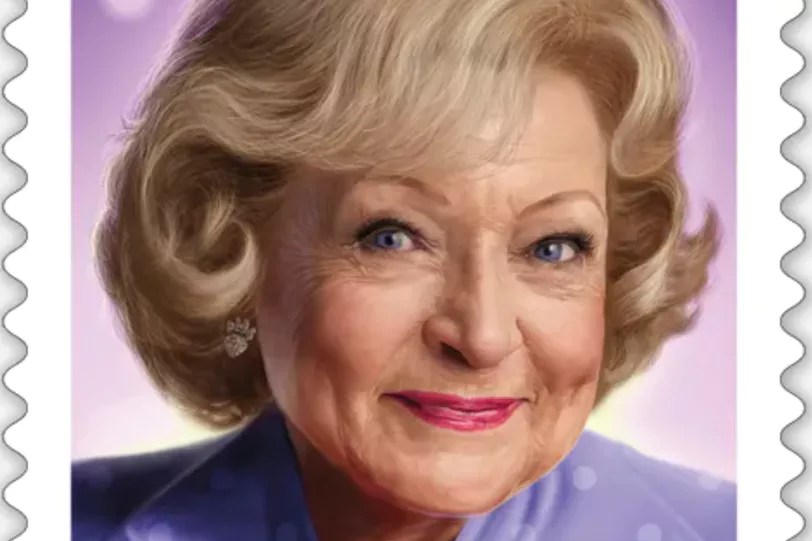
Betty White gets the “forever” treatment, as well – she’d lived nearly that long at her death just days shy of her 100th birthday in 2021.

White was a mainstay of television since her debut on local TV in Hollywood in the late 1940s. She was a popular guest on game shows before she revealed her comedy chops for a primetime audience on The Mary Tyler Moore Show, playing Sue Ann Nivens, the acerbic and sex-starved host of a local TV cooking show. She earned her gay bona fides as the lovable and clueless Rose Nyland on The Golden Girls.

White’s purple-hued portrait based on a 2010 photograph by Kwaku Alston captures the celebrity’s sly, “in on the joke” personality.

The actress was decidedly non-political over her career, but did weigh in on marriage equality in 2010 with some advice for readers.

“I don’t care who anybody sleeps with,” White told Parade Magazine. “If a couple has been together all that time – and there are gay relationships that are more solid than some heterosexual ones – I think it’s fine if they want to get married. I don’t know how people can get so anti-something. Mind your own business, take care of your affairs, and don’t worry about other people so much.”

10 Black LGBT+ heroes (already) honoured on stamps

Some LGBT+ Black heroes are getting special recognition with these commemorative stamps.

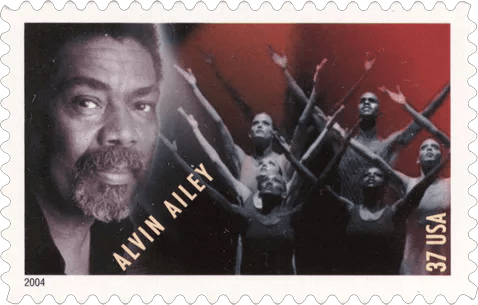
Alvin Ailey (1931-1989)

Alvin Ailey was an acclaimed dance choreographer on a global stage and his Alvin Ailey American Dance Theater continues on today. His dance piece “Revelations,” shown on the stamp, is considered the most widely-seen modern dance work in the world. It has been seen by more than 23 million people in 71 countries since 1960.

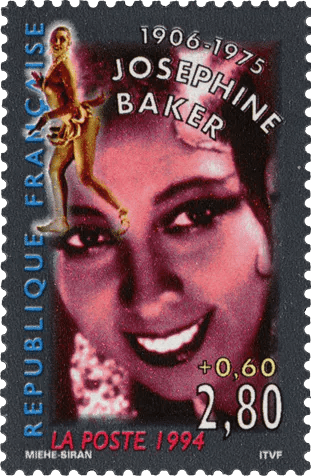
Josephine Baker (1906-1975)

This French stamp honours Josephine Baker, the performer born in St Louis who moved to France at the age of nineteen. Baker was a true hero for her work as an anti-Nazi spy and an activist against segregation in the United States, and she did it all while being one of the most successful dancer-singer-actresses in the world for her time – and being a mom of twelve.

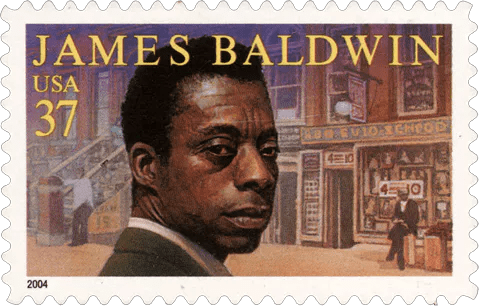
James Baldwin (1924-1987)

James Baldwin was one of the greatest American writers, but due to the racism of the United States he spent much of his life living in Paris. His novels Go Tell It on the Mountain (1953) and Giovanni’s Room (1956) and his essay collection Notes of a Native Son (1955) were important works that dealt with themes of race, sexuality and class.

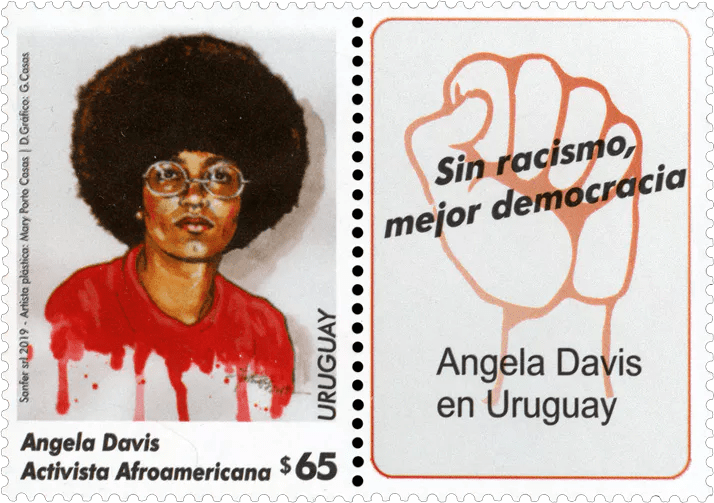
Angela Davis (1944-present)

Though Angela Davis is American, Uruguay is the country that honoured her with a stamp, commemorating her visit to the country in 2019. Davis is a prominent activist and academic who works for prison abolition and against racism, sexism and homophobia.

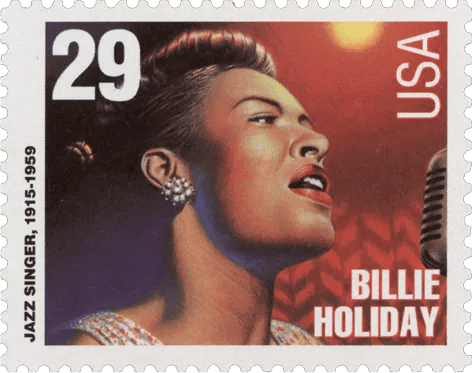
Billie Holiday (1915-1959)

Jazz and swing singer Billie Holiday, the singer of “Strange Fruit”, was bisexual and had a likely but unconfirmed relationship with actress Tallulah Bankhead. This is touched on in the 2021 film The United States vs Billie Holiday.

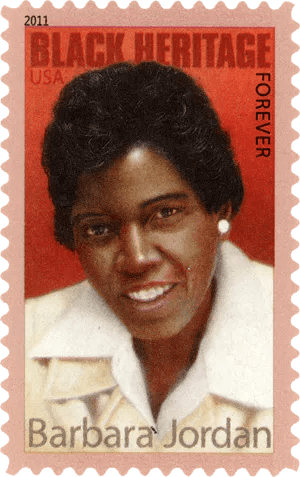
Barbara Jordan (1936-1996)

Barbara Jordan was the first woman and Black person to be elected to Congress from Texas. In 1976, she was also the first Black woman to deliver a keynote address at the Democratic National Convention. President Clinton said he wanted to nominate her to the Supreme Court but that her multiple sclerosis was too advanced by the time he got the chance. He awarded her the Presidential Medal of Freedom in 1994.

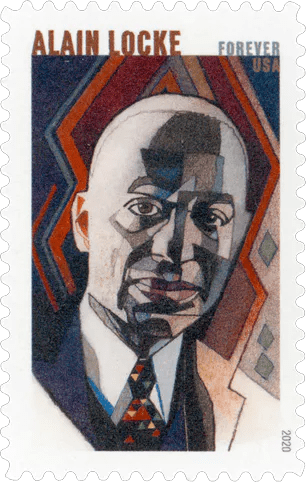
Alain Locke (1885-1954)

Philosopher and writer Alain Locke was an important figure of the Harlem Renaissance, an important period of Black history that was also very queer. He became the first African American Rhodes Scholar in 1907 and was a professor at Harvard University – until 1925 when he tried to get equal pay with white professors.

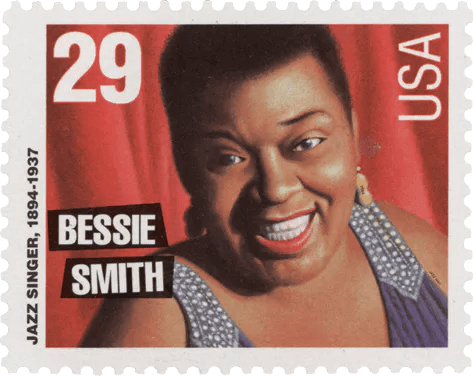
Bessie Smith (1894-1937)

Nicknamed “The Empress of the Blues”, Bessie Smith was a key figure in the Jazz Age. Not only was she a wildly popular blues singer in the 1920s and 30s as the highest-paid Black performer in the country, she was also very popular in her romantic life and was openly bisexual. 

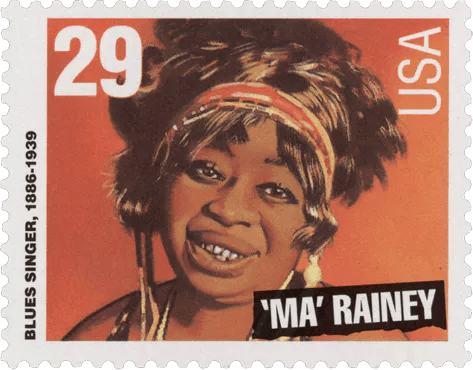
Ma Rainey (1886-1939)

A friend, mentor and maybe more of Bessie Smith, Gertrude “Ma” Rainey was known as the “Mother of the Blues.” She was a popular blues singer and also openly bisexual, singing “Prove It On Me Blues” in 1928, referring to how the police couldn’t prove that she had had sex with a woman and had to release her. (Bessie Smith bailed her out.)

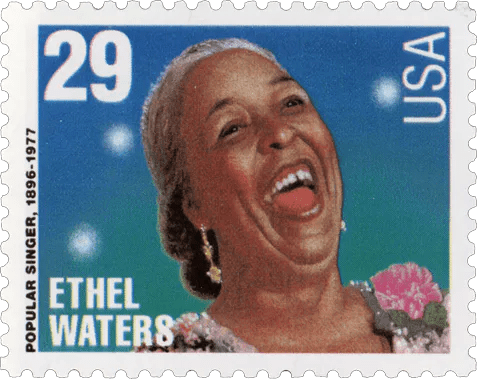
Ethel Waters (1896-1977)

Ethel Waters was a popular singer and actress with an illustrious career that broke boundaries. Waters was the second African American to be nominated for an Academy Award and the first to star on her own television show. While Waters was married three different times to men, she also had relationships with women, including with dancer Ethel Williams during the 1920s. They lived together in Harlem and were nicknamed “The Two Ethels.”

A Quick Look at Lesbians

This is the title of an article published in “The Twentieth Century” in the winter edition of 1962-3.

“Male homosexuals are persecuted in Britain, and their problems have been exhaustively discussed. Yet the problems – and the dangers – of feminine homosexuality have been curiously ignored. In the belief that it should be taken seriously and understood, we asked several experienced journalists to investigate. Two drew a blank. The third drew a picture of a “misty, unmapped world”.

This article led to the formation of the Minorities Research Group, which became the UK’s first lesbian social and political organisation. They went on to publish their own lesbian magazine called “Arena Three“.

Rainbow Lottery Super Draw!

Please support Out In The City by buying a Rainbow Lottery ticket or two (or more!)

With each Rainbow Lottery ticket, you are not just entering to win exciting prizes, you are also supporting our mission to support older LGBT+ people.

It’s a vital part of our fundraising as we receive 50p for every £1 spent and you have the chance to win cash prizes each week from £25 for three numbers up to a jackpot of £25,000 for six numbers – while helping us to achieve more for the LGBT+ communities over 50 years.

Buy tickets here.

With Christmas firmly on the horizon, we have the perfect present as our November Super Draw prize! By supporting Out In The City before Saturday, 30 November, you will be in with a chance to win the ultimate PS5 Pro Bundle, or £1,000 cash!

Take on the best of the Premier League in FC 25; join Astro Bot in his trusty Dual Speeder in a new supersized space adventure; explore the post-apocalyptic 31st Century in Lego’s brand-new fun-filled take on the Horizon Franchise – along with all the free games you can enjoy with a year of PlayStation Plus subscription! All this and more on a 50” 4K Ultra HD Smart LED TV, with a PS5 PULSE wireless headset, and an extra controller too; or you can take the £1,000 cash alternative, and spend it your way!

Your regular weekly tickets already enter you into the draw to win this fantastic prize – but did you know you can now top-up your tickets, just for the Super Draw weeks!? And just imagine what you could do with this huge prize …

Play Now!

Working Class Movement Library … Japan … Photography Project … Research Project … Celebrating HIV Activism … World AIDS Day Event in USA

News

Working Class Movement Library

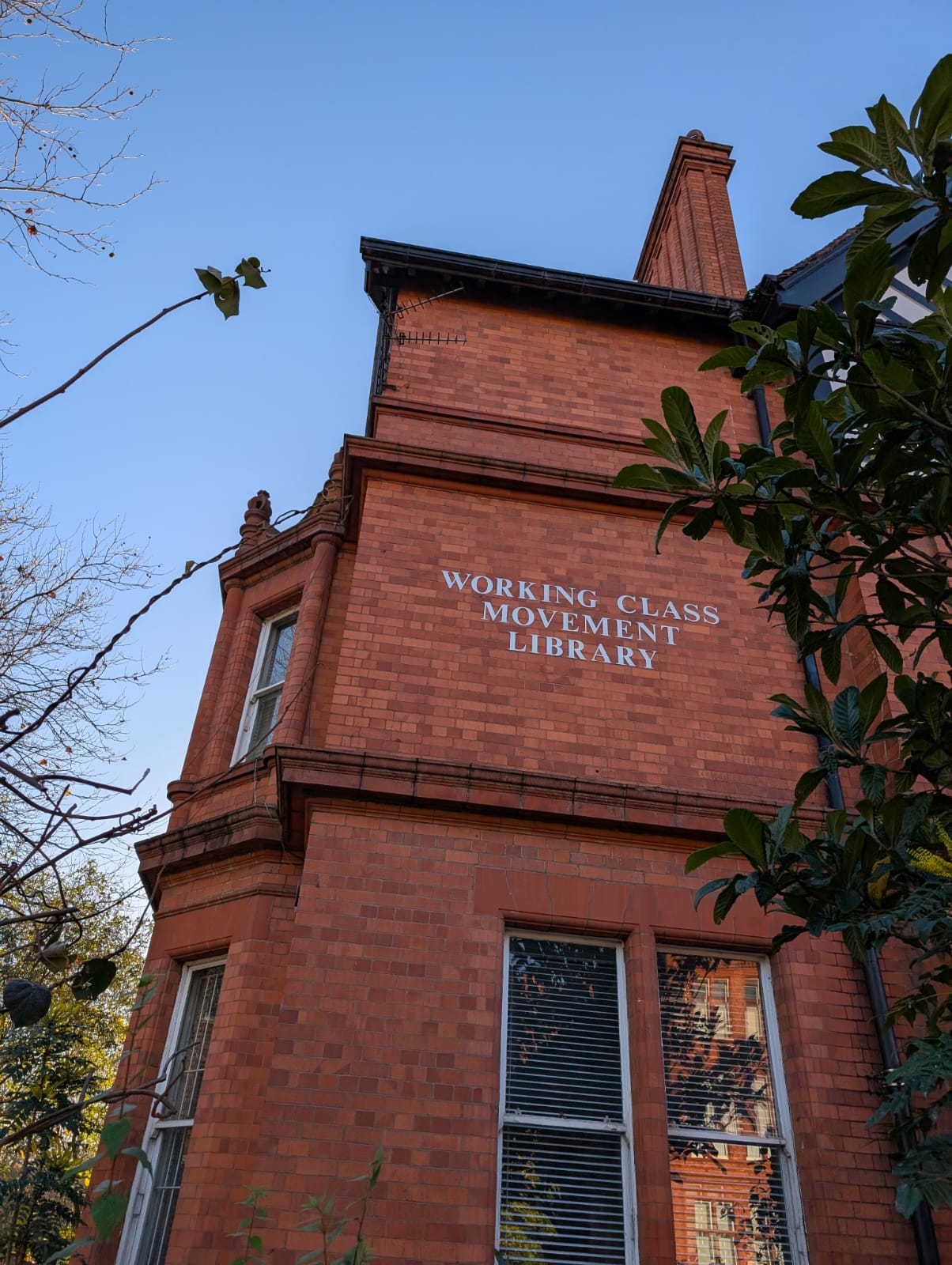
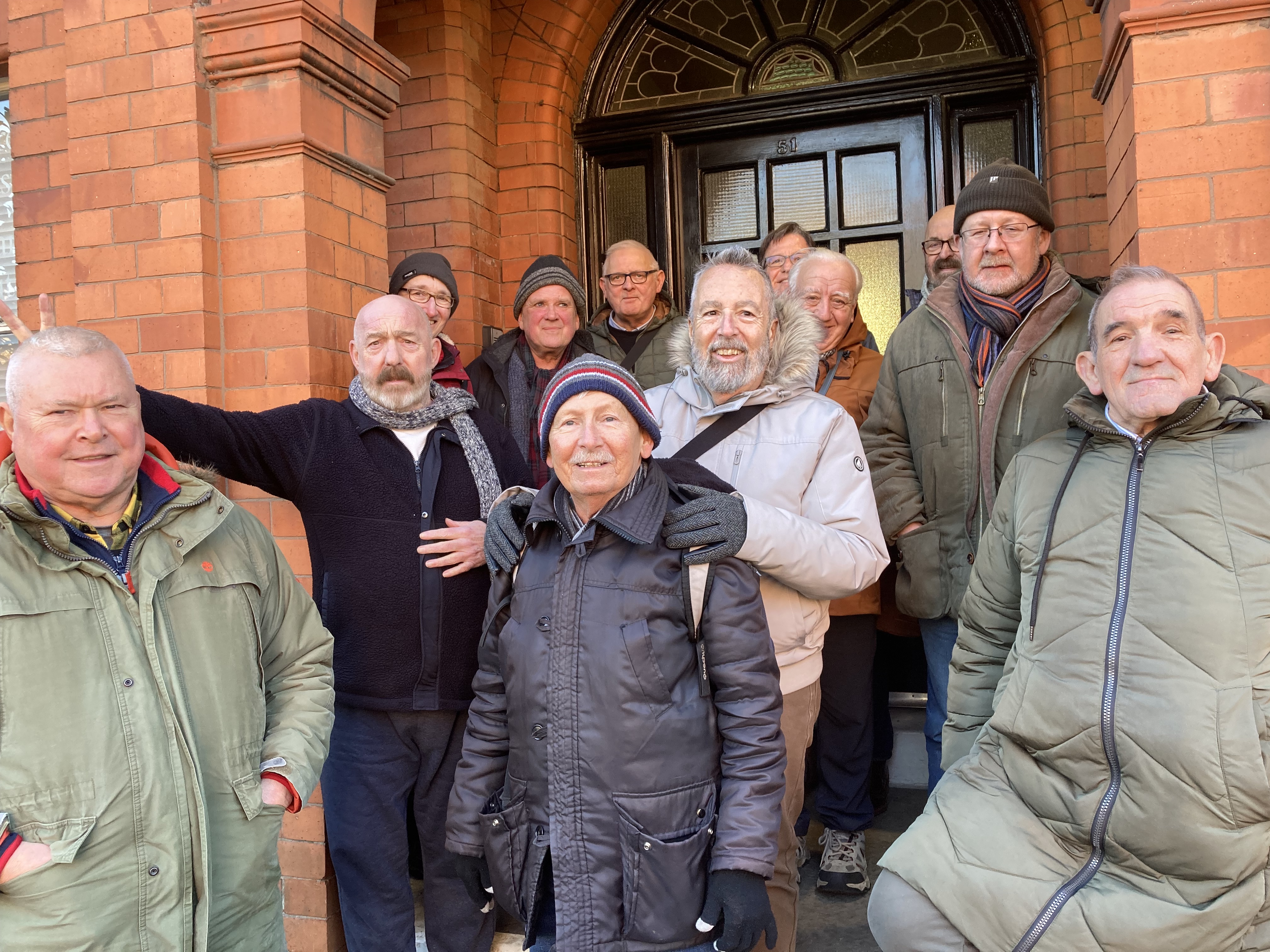
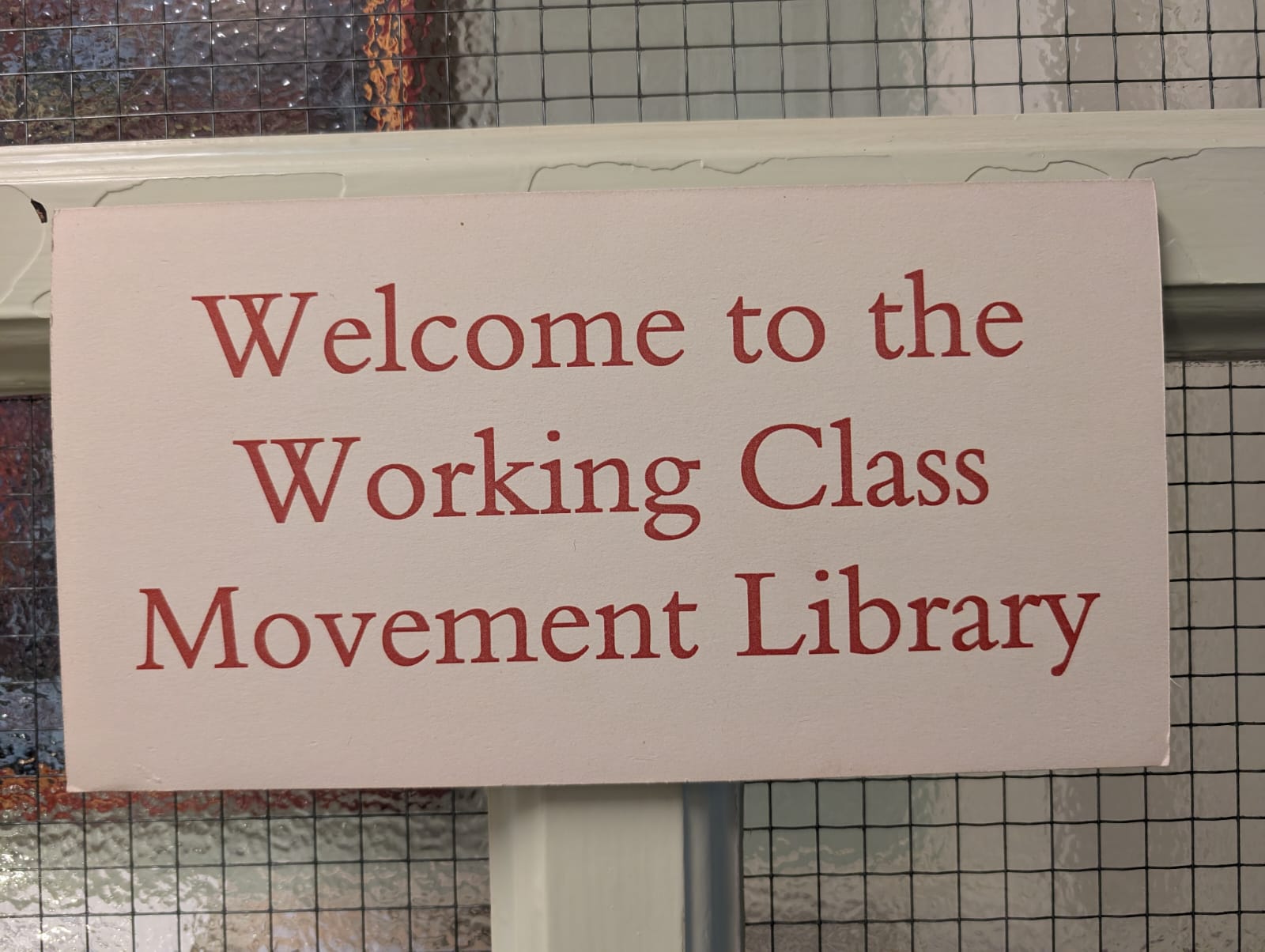
This week we visited The Working Class Movement Library (WCML), a short bus ride from Manchester city centre.

The WCML is a collection of books, periodicals, pamphlets, archives and artefacts, relating to the development of the political and cultural institutions of the working class in Salford.

In 1953, two bibliophiles, Eddie Frow and Ruth Haines, met at a Communist Party Summer School. In 1956, they set up home together and the merger of their book collections was the beginning of the Working Class Movement Library.

They spent their spare time and money travelling around Britain, gathering new items for the collection. By 1960, the collection was being consulted by historians and academics, and they had attracted the support of other collectors of labour movement material.

By the mid 1980s, the collection had filled their semi in Trafford. Salford City Council agreed to support the library and, in 1987, gave the WCML, and the Frows, a new home in a former nurses’ home, Jubilee House, situated near the University of Salford.

Thanks to Nathan who guided us around the building. We also visited the Old Fire Station café next door for teas and coffees.

More photos can be seen here.

Japan

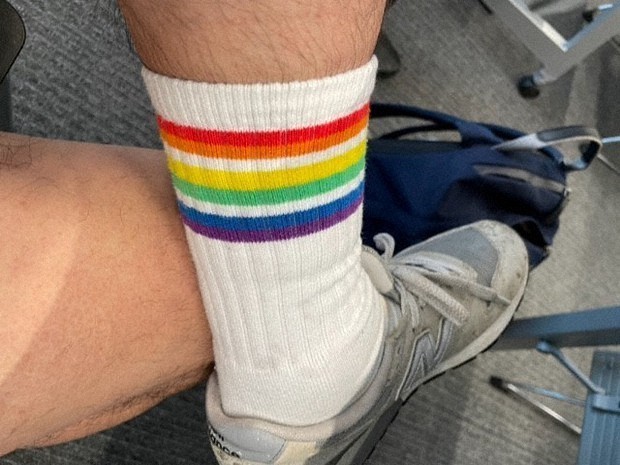
A man is suing the Japanese government after a judge barred him from wearing rainbow-coloured socks to a court hearing on same-sex marriage last year.

Ken Suzuki, a School of Law professor at Meiji University, was wearing the rainbow-patterned socks when he attempted to observe the same-sex marriage trial in Fukuoka District Court in June 2023. He says he was told by court officials to hide the rainbow pattern ahead of the trial, and was only admitted after he folded the pattern inward, obscuring it.

Meiji University professor Ken Suzuki is seen wearing socks with rainbow stripes in this photo supplied by himself. He says he was told by a Fukuoka District Court staffer, “You cannot enter (the courtroom) unless you hide them.”

He’s now joined two other individuals who were ordered to change or hide clothing before attending other unrelated cases in a case before the Tokyo District Court seeking 3.3 million yen (approximately £17,000) in damages. 

Suzuki claims that the court overstepped its authority to maintain order by requiring that he remove the socks, as they did not disrupt the court proceedings. He also says the order was inconsistent, as he was able to wear the socks without issue while attending a different same-sex marriage trial at the Tokyo District Court. 

Furthermore, the professor said that during bag checks at the building entrance, he was told to “conceal” a strap reading “Love & Peace” in rainbow colours on his bag.

Several courts across Japan are weighing the rights of same-sex couples. Five of six lower courts that have heard same-sex marriage cases have ruled that the ban on same-sex marriage violates the constitution, as have two superior courts that have heard challenges. Further court hearings are expected in superior courts, and eventually at the Supreme Court. 

Photography project

Poppy, a Queer photographer, currently studying at Manchester Metropolitan University is undertaking a photography project on the LGBTQ+ community in Manchester.

She would love to get involved with the older generation of the community to document and celebrate your amazing contributions over the years and hear your stories!

If interested, the project would include taking some portraits and a short interview.

This opportunity is unpaid but she can offer printed or digital copies of the photos she takes!

Come to our meeting on Thursday, 28 November from 2.00pm to 4.00pm at Cross Street Chapel, 29 Cross Street, Manchester M2 1NL to find out more.

Research Project

Jason, a 48 year old gay man, is studying a BSc in Psychology at Arden University in Manchester.

He is undertaking his final major researching project and will be completing it on “Gay Men and their use of Gay Dating Apps” with a focus on the experience of users and the pros and cons they may have identified.

Part of the project involves recruiting participants that are aged over 55 for a brief interview about their experience either face to face or online. The project will have full ethical approval from the university and a Participant information sheet, consent form and debrief form will all be provided.

The aim of the study is to help identify the benefits and drawbacks of these apps and the importance of having social opportunities for older gay men in the community.

If anyone would be happy to participate, please contact us here.

Celebrating HIV Activism

The Lineup

4.00pmWelcome from George House Trust and ACT UP PIN UPS Nathaniel Hall, Paul Fairweather, Tony Openshaw
4.10pmScreenings and Q+A of Nathaniel’s films – HIV+Me and GHT’s Pioneers of Progress
4.30pmHIV Activism Quiz
5.15pmRecording our stories from ACT UP Manchester, Section 28 and iconic queer protests
6.00pm – 8.00pmCalendar signings, food and DJ’s

Get tickets here.

World AIDS Day event in USA – your help is needed

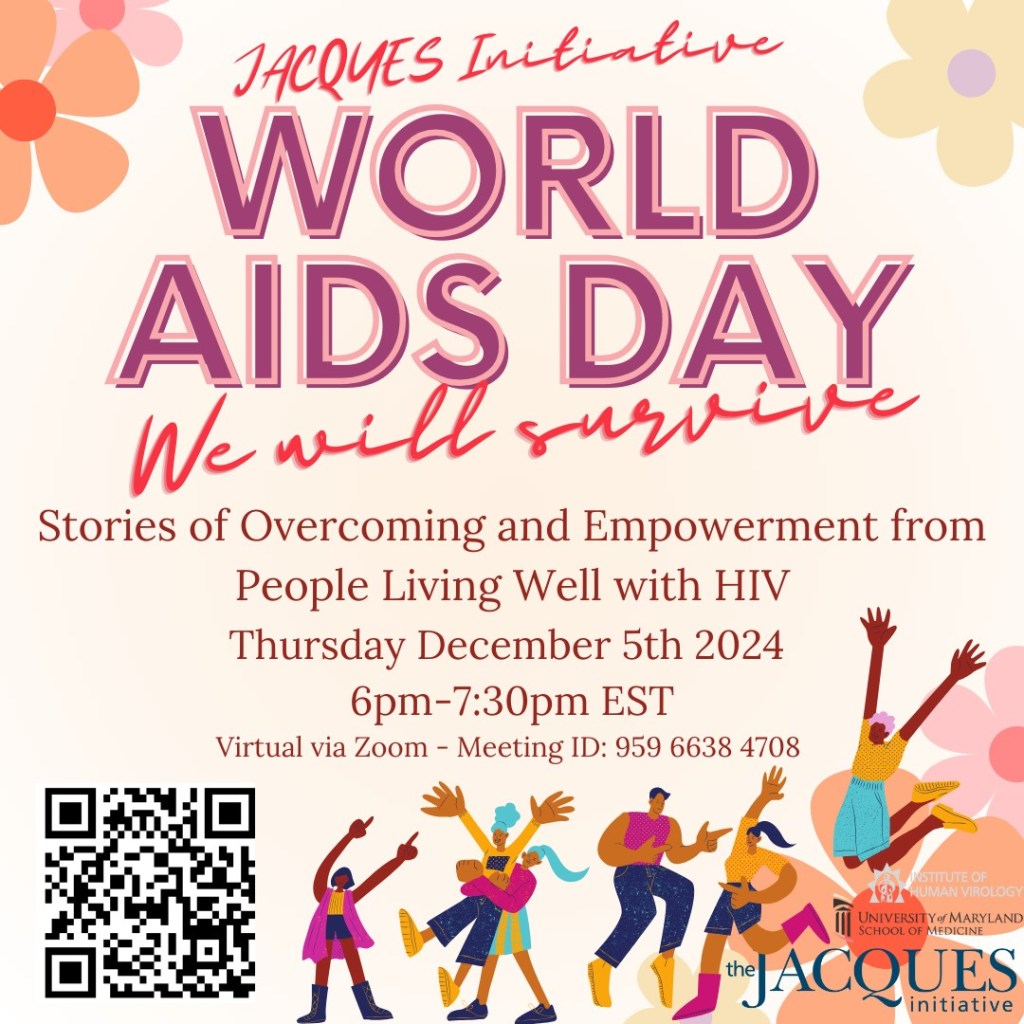
Scott Hale from the Institute of Human Viralogy at the University of Maryland, Baltimore, USA, is looking for short written accounts (just a paragraph or two) by people who have been affected by HIV or use PrEP as prevention. Written accounts can remain anonymous.

There will be a presentation of the stories, to inspire and promote awareness of people living with HIV, on Thursday 5 December 2024 with medical director, Dr Natalie Spicyn, presenting some background information.

Please send to us here and I will forward them on.

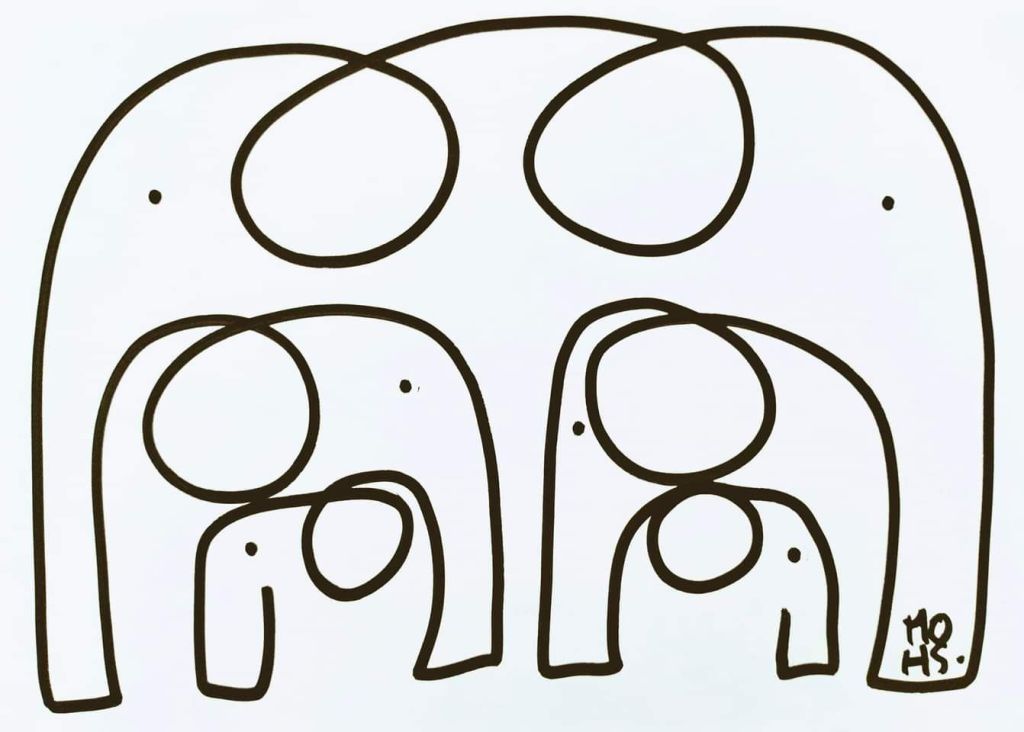
Thanks to Mohssin Amghar for this beautiful drawing titled “The Big Family” (one line and 6 dots)

Transgender Day of Remembrance … Out In The Country … Landmark Ruling for LGBT+ People Seeking Asylum

News

Transgender Awareness Week

Transgender Awareness Week, observed 13 November to 19 November, is a one-week celebration leading up to the Transgender Day of Remembrance, which memorialises victims of transphobic violence.

Trans Day of Remembrance

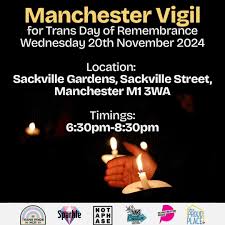
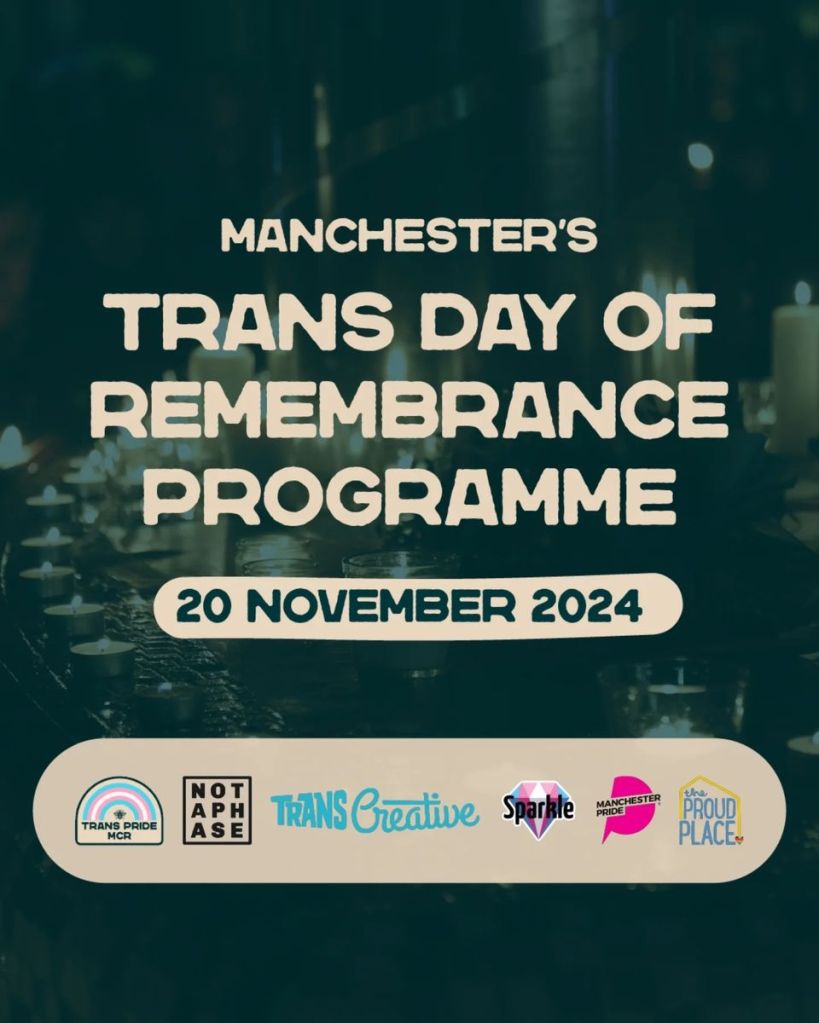
Join us on 20 November 2024, from 6.30pm – 8.30pm, in Sackville Gardens, to honour the lives of transgender individuals lost.

Hosted by Not a Phase, Trans Pride Manchester, Trans Creative, Sparkle, Manchester Pride and The Proud Place, the vigil will include a group walk from The Proud Place and a livestream for those preferring to stay indoors.

BSL interpretation will be available throughout. Let’s come together in remembrance and resilience.

Out In The Country: Celebrating LGBT+ Voices in Agriculture

Chef Steph Moon at Out on the Farm event. Photo: Clancy Walker

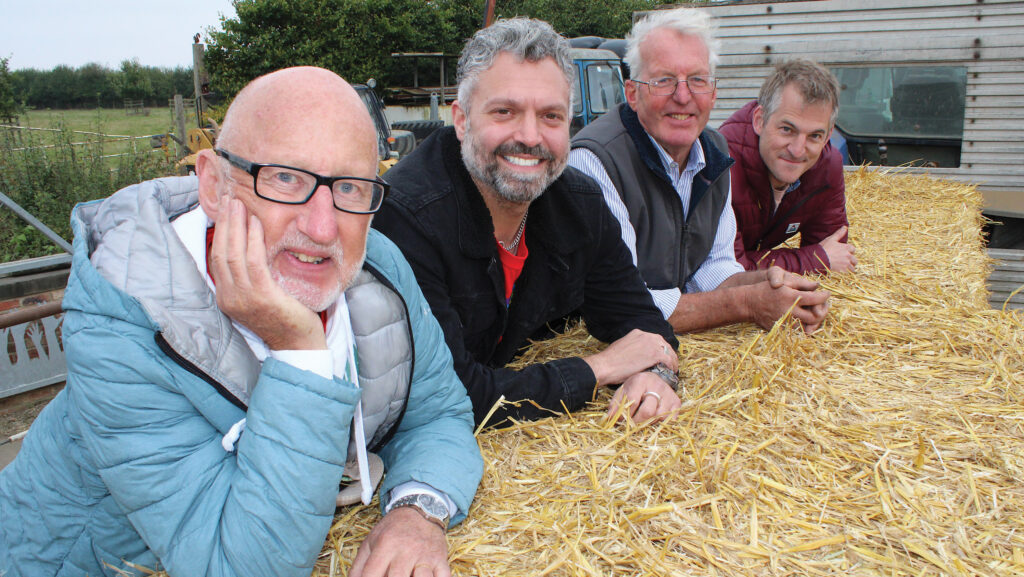
A partnership has been formed between farmer Graham Clarke, ex-National Farmers’ Union regional director Adam Bedford and Leeds-based LGBT+ charity Out Together.

The mission? To create a rural LGBT+ community honouring lifelong farmer and friend, Mike Potter.

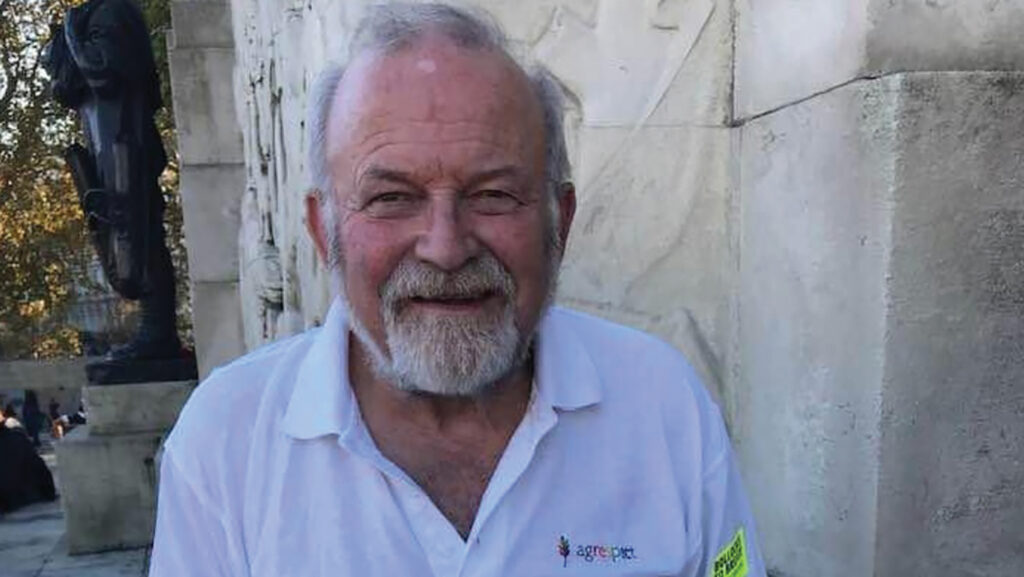
Mike, a potato farmer from North Yorkshire, came out as gay at the age of 72 having felt compelled to hide his true self from the farming industry for most of his life.

He sadly passed away in October 2022 at the age of 76, after battling Parkinson’s disease.

Mike Potter. Photo: Graham Clarke

As executors of Mike’s estate, Adam and Graham believed he would have wanted his savings to support initiatives that foster inclusivity for rural LGBT+ individuals.

Driven by Mike’s memory and the challenges they knew he faced as a gay man in farming, the pair shared his story with charity trustees Tim Gittins and Matt Jameson from Out Together.

Tim said: “We were so touched by Mike’s story that we immediately wanted to start working with Adam and Graham to put on events for LGBT+ people living rurally.

“Everyone deserves to feel connected and supported wherever they live.”

Tim Gittins and Matt Jameson from Out Together, Graham Clarke and Adam Bedford. Photo: Clancy Walker

Out On The Farm 

Together, they organised their first joint event, “Out On The Farm”, held on 22 September at Graham’s family farm in Pickhill, Thirsk, North Yorkshire.

The event drew more than 140 attendees from various backgrounds and included music and food.

A highlight was a cooking demonstration by Yorkshire chef Steph Moon, known from the BBC’s Great British Menu, who amazed guests by preparing a three-course meal in less than 45 minutes.

Aside from the smorgasbord of food, fun, and tractor tours, the day provided a chance for LGBT+ farmers to foster connections and build community spirit, with many guests experiencing a gathering like it for the first time.

“What we have learned from “Out On The Farm” is that isolation can be even more pronounced in the countryside; LGBT+ people can face numerous additional challenges in making social connections as fewer resources are available, distances are greater, and social pressures can be more evident,” says Tim.

Adam, a close friend of Mike for more than 20 years since their days at Askham Bryan College, reflected on the day: “I’ve never seen such a diverse group of people come together for a party on a farm in North Yorkshire. Mike would have loved it – it was truly fantastic!”

Isolation

Reflecting on Mike’s journey and how he had wanted to share his life with a partner, which ultimately went unfulfilled, Adam stresses the importance of creating welcoming spaces, especially in rural areas where LGBT+ individuals often encounter isolation.

“We have come a long way, but we still have much further to go in agriculture. Mike’s story illustrates this; I’m sure he would have come out earlier if he’d had an LGBT+ community around him,” Adam says.

Already working to combat isolation for rural LGBT+ communities is AgRespect, a collective of LGBT+ farmers advocating for equality and inclusion in the countryside.

Julie Robinson, who attended the “Out On The Farm” event on behalf of AgRespect, said: “As a group of happy lesbians and gay men on tractors who knew Mike, we were excited to support and promote the event. I had a fantastic time and look forward to what this new partnership will create for our rural LGBT+ communities.”

Future plans

Following the success of the inaugural event, Adam, Graham and the charity have pledged to develop future initiatives, recognising the need for events like it to continue.

To support this vision, Mike’s estate will make a further donation to help Out Together explore new networks and create additional activities for the LGBT+ rural community.

This backing will enable the charity to launch its new project, “Out In The Country”.

In spring 2025, the project plans to trial new community “hubs” in North Yorkshire.

These safe spaces – whether a coffee shop, village hall, or other welcoming venue – will provide opportunities for people to socialise and share experiences of LGBT+ life in rural areas.

“We hope the trial will lead to us hosting regular gatherings in different villages or small towns that will make social and support networks a local reality,” says Tim.

The project will also develop a “virtual neighbourhood” – an online community platform that will complement the in-person events.

This recognises that social opportunities in the countryside are often limited due to working schedules or concerns about LGBT+ inclusion.

Tim believes that digital outreach can connect people across scattered communities and ensure consistent support.

“Since 2022, our charity has successfully used ‘telefriending’ networks to contact individuals who are unable or unwilling to attend events physically,” he says.

“In rural areas, we think online support groups, forums, and virtual meet-ups may be more accessible for some people to begin with, than in-person gatherings.”

By elevating LGBT+ voices and fostering connections both in person and online, the partnership aims to create lasting change in rural communities, ensuring that everyone feels they belong.

For regular updates on the project or to get involved, visit the Out Together website or send an email to hello@outtogether.lgbt with the subject “Out In The Country”.

Landmark Ruling for LGBT+ People Seeking Asylum

On 12 November 2024, the European Court of Human Rights published its judgement that a gay man from Iran cannot be deported from Switzerland or asked to live discreetly in Iran.

Homosexual relationships in Iran are a criminal offence and people face the death penalty.

Aderonke Apata, African Rainbow Family founder and CEO, acted as a court-granted Intervener in this case – the outcome of which will now apply as law within all 46 Council of Europe member countries, including the United Kingdom!

What does this mean for LGBT+ People Seeking Asylum?

This landmark ruling marks a change for LGBT+ asylum cases throughout Europe, as the European Court of Human Rights has now overturned the Government of Switzerland’s Federal Administrative Court ruling which stated that “it was unlikely that the applicant’s sexual identity would be discovered if he continued to live discreetly in Iran”.

The recognition that requiring gay men to live discreetly in their country of origin to avoid harm is psychologically damaging and unacceptable for LGBT+ people seeking asylum.

To put it simply, this outcome now means that it is the law for all 46 Council of Europe member countries to end the use of discretion and concealment tests in asylum cases surrounding sexual orientation. The use of these tests has previously been a barrier to the fair treatment of LGBT+ people seeking asylum, as such tests demand that LGBT+ people seeking asylum repeatedly demonstrate that they were not able to live a discreet life in their home country.

It is unjust to suggest that any LGBT+ person should need to conceal their identity for their entire life when there are safe countries where they might be able to live openly – and we are glad that the European Court of Human Rights has affirmed this belief. This positive decision affirms the European Court of Human Rights’ commitment to protecting the rights and mental well-being of individuals facing persecution based on sexual orientation, setting a positive precedent for human rights and dignity.

The European Court of Human Rights granted African Rainbow Family alongside Stonewall permission to intervene in this case, M.I v Switzerland Application no. 56390/21.