Look Back at 2024 … Life of Bi … Quentin Crisp … Liechenstein

News

Out In the City’s “Look Back at 2024

Meetings & Trips

1,210 people attended 60 meetings.

1,691 people attended 103 trips including:

32 trips to concerts at the Bridgewater Hall (attended by 327 people);

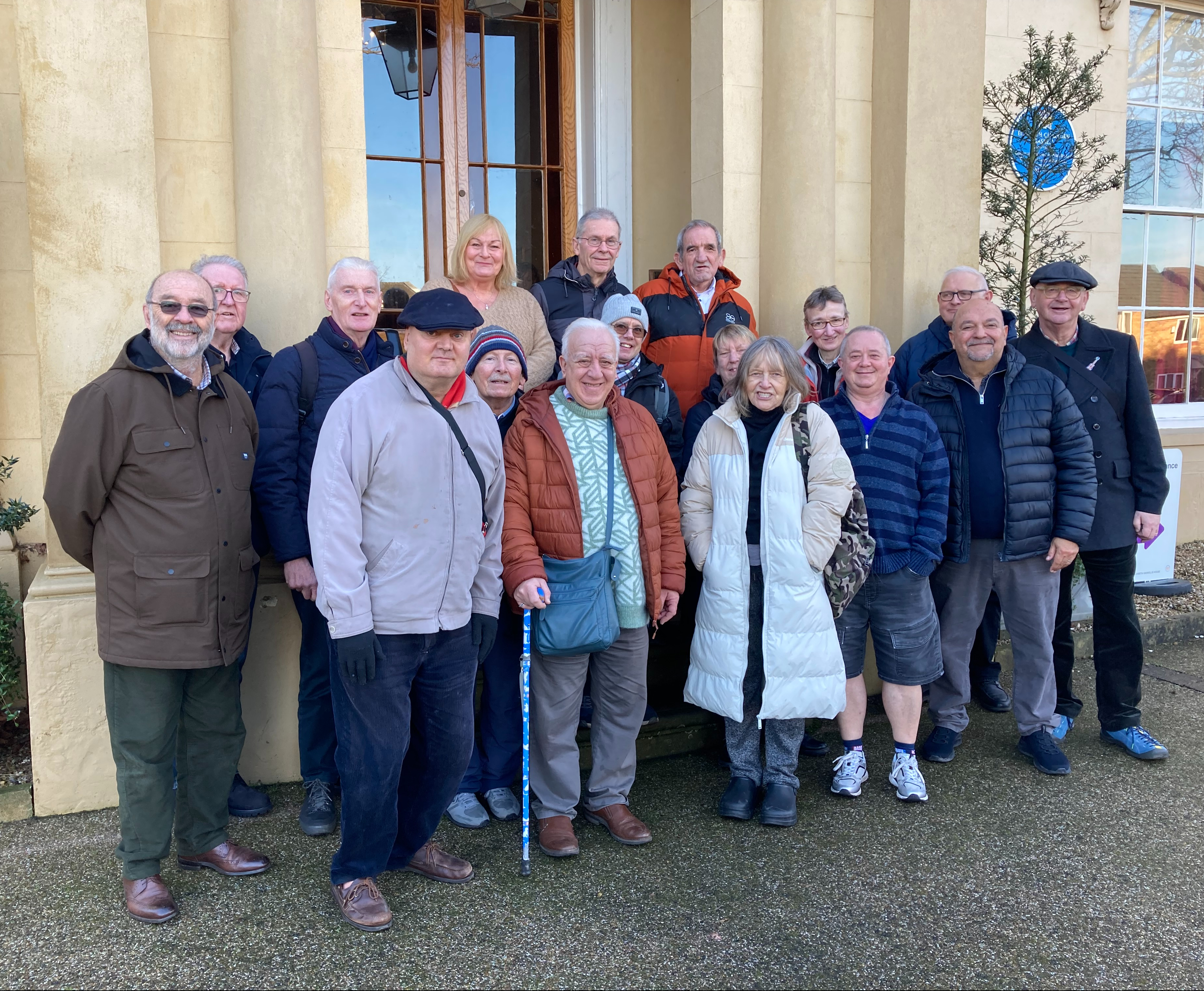
3 coach trips to Jodrell Bank, Samlesbury Hall and Maurice Dobson Museum (attended by 76 people); and

Christmas Meal (attended by 73 people).

Website

660 articles published over 99 blog posts. We have 414 subscribers.

87,992 website views by 11,816 visitors from 97 different countries.

Rainbow Lottery

£1,864 raised for Out In The City.

£2,150 cash and 84 extra tickets won by 35 people.

Media

Various members have been interviewed and contributed as follows:

  • Centre for Ageing Better organised an exhibition “See and Be Seen” in London.
  • Interviewed by ITV (and ITVX website) for video about Canal Street.
  • Interviewed by Amy Prescott, researcher at Brunel University, London for a project on “Socially Inclusive Ageing Across the Lifecourse”.
  • Interviewed by Bianca from Centre for Ageing Better on what can be done to improve the lives of older people.
  • Interviewed by The Times about coming out in later life.
  • Barclays Bank showed the video made in 2023 (for Pride in Ageing) in all Barclays Bank branches during month of June.
  • Six members of Out In The City were filmed in connection with the Over 50s Digital Café and the Derek Jarman Pocket Park by Pride in Ageing at the LGBT Foundation.
  • Interviewed in connection with HIV activism for Manchester Pride. The film was launched at the Candlelit Vigil.
  • Rainbow Lottery shone a spotlight on Out In The City whilst revealing the week’s winning numbers.
  • Interviewed by Matthew Walker who is making a documentary about Section 28.
  • Interviewed by Mike Sweeney on BBC Radio Manchester on “Is Greater Manchester a good place to grow old in?”.
  • Interviewed by Manchester Central Library regarding Out In The City activities which will form part of a podcast.
  • Interviewed by Emma Goswell on BBC Radio Manchester on “Pride in Ageing”.
  • Interviewed by ITV (Good Morning Britain) outside Church House to commemorate 60 years since the meeting on 7 October 1964 that began the modern movement for LGBT equality.
  • Interviewed on Broadcast Radio (Wythenshawe FM) about Out In The City.
  • Interviewed by Joely Bell, student journalist at the University of Salford to chat about lesbian life in 1990s Manchester for a feature article.
  • Article about Out In The City published in the Age Friendly newsletter.
  • Scott Hale from the Institute of Human Viralogy at the University of Maryland, Baltimore, USA was looking for short written accounts by people who have been affected by HIV or use PrEP as prevention for a World AIDS Day event in Maryland. Two contributions were included.
  • Norman Goodman’s story is featured in Age UK’s report “You are not alone in feeling lonely: Loneliness in later life”.
  • Recorded a podcast with Heart Radio to be broadcast in the new year.
  • Interviewed for The Sun Online about loneliness and older people.
  • We are currently working with 2 students doing research – Poppy Sullivan at Manchester Metropolitan University (photography project) and Jason D’Suvio at Arden University (Gay Men over 55 and Dating Apps).

Laughter, Independence, Kindness and Support

Immeasurable.

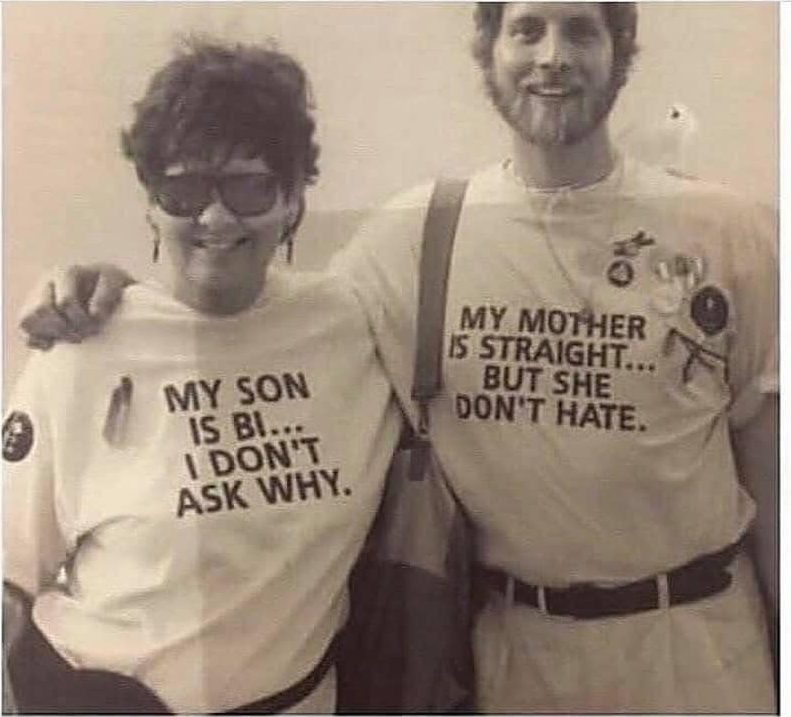
“Life of Bi” – Podcast Episode 37

In this episode of the extremely fun and thought-provoking podcast “Life of Bi” (available on all podcast platforms) Monica Pearl discusses some thoughts on Queer Friendship.

Veteran professor and HIV/AIDS activist Dr Monica Pearl is in conversation with Mary Higgins and Ell Potter about her experiences with ACT UP and the unique and under-studied intricacies of queer friendship.

A perfect antidote and/or accompaniment to the festive season when the emphasis is on “family time”.

Quentin Crisp-mas

I hadn’t realised previously that Quentin Crisp was born on Christmas Day, 25 December in 1908.

While travelling on a bus recently, I was called “an old queen” as I accidentally jostled a whippersnapper while taking my seat. At first, I was offended, but as I started to spit out a response, I thought of a certain Old Queen of England and instead my retort was: “Oh, sweetie dear, you simply have no idea…”.

“Life was a funny thing that happened to me on the way to the grave.” 1980 photo by Simon Dack

Quentin Crisp was a British writer who really gained the world’s attention after the 1975 airing of a television adaption of his 1968 memoir, “The Naked Civil Servant”.

He was a flamboyant, fey man who wore makeup and painted his nails. He worked as a rent boy as a youth, and then spent three decades making money as a figure model for art classes. The interviews he gave about his unusual life attracted increasing public curiosity and he was soon in demand for interviews where he told tales of his highly individual views on social manners and the cultivation of style. He was also frequently harassed, insulted, and beaten.

Born Denis Charles Pratt, he left home to lead a life that was not based on anything more than completely being his newly invented persona, “Quentin Crisp”. Not only did he have an attention-getting appearance, his expressions of his queerness attracted a great deal of curiosity among his fellow humans.

He started to speak about his life and his views in his ever changing solo stage show, which was very popular in Britain and the USA.

Many critics claimed that Crisp didn’t do anything to actually help members of the LGBTQ community, but he was always a brave supporter of freedom in gender and sexual expression. Throughout his long life, he remained highly independent, but he continued to share his beliefs and observations through his books, stories, quips, and stage and film performances. The way he lived his life advocated that a positive outlook and dedication would help one succeed in life.

Crisp was Oscar Wilde’s perfect progeny, with calculated caustic confabulations, open queerness, and witty, winning obstinate opinions toward anything conventional. He caused a bit of a stir in the traditional Britain of the 1950s, 1960s, and 1970s. In 1981, he moved to New York City and brought along his wit and eccentricity. Crisp completely charmed the city, and he became the very essence of the modern urban bohemian.

Crisp resided in a single room in the East Village from 1977 to 1997. He remained fiercely independent and unpredictable to the end. He caused controversy and confusion in the LGBTQ community by jokingly calling HIV/AIDS “a fad”. Still, he was always in demand from journalists seeking a juicy soundbite, and throughout the 1990s, his commentary was still requested. You could consistently count on Crisp to say something quotable.

During his two decades in Manhattan, Crisp wrote eleven books, plus contributed reviews and magazine articles, and acted in several films, including playing a touching and dignified Elizabeth I in Sally Ann Potter’s luscious gender-bending “Orlando” (1992), loosely based on Virginia Woolf’s 1928 novel “Orlando: A Biography” starring the always daring Tilda Swinton in the title role.

While filming “The Bride” (1985), he became friends with Sting who was playing Dr Frankenstein. Crisp was the inspiration and subject of Sting’s beautifully brilliant song “An Englishman In New York” (1988). In 1986, Sting had visited Crisp in his Bowery apartment and was told over dinner, and in the three days that followed, what life had been like for an out-of-the-closet, fey, queer man in the very homophobic Britain of the 1920s to1960s. Of living in New York City, Crisp told Sting: “I looked forward to receiving my naturalisation papers so that I could commit a crime and not be deported.” When Sting asked him what kind of crime, Crisp explained: “Something glamorous, non-violent, with a dash of style. Crime is so rarely glamorous these days.” Sting was both shocked and fascinated. His song includes these lyrics: “It takes a man to suffer ignorance and smile. Be yourself no matter what they say.” The black-and-white video for the song was directed by David Fincher, and features scenes of Sting and Crisp. At the end of the video, as the song fades, Crisp says: “If I have an ambition other than a desire to be a chronic invalid, it would be to meet everybody in the world before I die … and I’m not doing badly.”

The kids won’t understand this, but Crisp’s New York telephone number was listed in the phone book. He felt it was vital that he speak with anyone who called. Crisp: “If you don’t have your name in the phone book, you’re stuck with your friends. How will you ever enlarge your horizons?” His openness to strangers meant accepting dinner invitations from almost anyone. He expected that the host to pay for dinner, but Crisp felt he earned it by regaling his terrific, sometime terrifying tales.

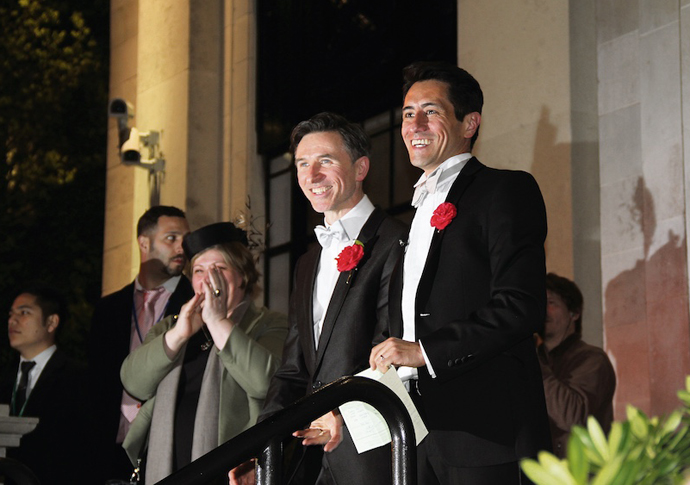
Liechtenstein marriage equality law takes effect

A law that extends marriage rights to same-sex couples in Liechtenstein took effect on 1 January.

Lawmakers in the small European country that borders Switzerland and Austria approved a marriage equality bill in May 2024. Liechtenstein is the last country in which German is the primary language to extend marriage rights to same-sex couples.

Same-sex couples have been able to legally marry in Switzerland and Austria since 2022 and 2019 respectively. Same-sex marriage has been legal in Germany since 2017. Liechtenstein’s first-ever Pride event took place in 2022.

Christmas Meal … Henry Gerber – 100 years ago … Rainbow Lottery … LOUD Cabaret

News

Christmas Meal

This year 73 members of Out In The City enjoyed a meal at the 1853 Restaurant.

As the capacity of the restaurant is only 50 people we had two Christmas meals! We took over the restaurant on Thursday with the balance attending on Friday where there were other members of the public present.

The 1853 is a training restaurant run by students studying Hospitality and Catering. In every aspect the service was excellent, the atmosphere was friendly and relaxed and the food was of high quality.

We shall definitely be returning next year.

More photos can be seen here.

Henry Gerber – 100 years ago

Did you know the documented fight for LGBT+ equality in America started decades before the 1969 Stonewall Uprising?

While the groundbreaking protest blazed a trail for present day LGBT+ rights, the movement can be traced back to 1924, when a Chicago man named Henry Gerber formed the Society for Human Rights.

This month marks 100 years since Gerber launched what’s largely regarded as the country’s first-ever gay rights group. On 10 December 1924 he published a newsletter, Friendship and Freedom, for distribution among its small membership.

Unfortunately, the organisation was short lived. Within months Gerber and fellow members of the group were arrested on obscenity charges. Though the charges were eventually dropped, the legal fees bankrupted Gerber and the scandal cost him his job forcing the group to disband.

Only two issues of Friendship and Freedom were printed and no copies are known to survive today, however a review described the first issue as including a Walt Whitman poem, an essay on Oscar Wilde and an article on “self-control.”

Gerber died just over fifty years ago on 31 December 1972, at the age of 80, living long enough to see the Stonewall Uprising and the start of a new era of LGBT+ rights activism.

Rainbow Lottery Super Draw!

Our Christmas blockbuster Super Draw is BACK this festive season, and we’re spreading some holiday cheer! Your support of Out In The City means you’re already in with a chance to win a whopping £3,000 Christmas cash bonus on Saturday 21 December – but you can always top up your tickets for extra chances to win!

The possibilities for spending your prize are endless:  

  • Home looking a little tired? Spruce up your living space with a New Year’s makeover!
  • Into Tech and Gadgets? Upgrade your gadgets or treat yourself to the latest tech innovations. Whether it’s a PS5 Pro, the new iPhone 16, or smart home devices, the choice is yours.
  • Hit the January sales! Hit the shops and indulge in a shopping spree, treating yourself and your loved ones to special gifts and holiday essentials.
  • Fancy a getaway? Plan the vacation you’ve always dreamed of, whether it’s an escape to a winter wonderland or a planning ahead for some summer sun
  • Or why not give a little back? Spread the joy by giving back to your favourite charities, contributing to a cause that holds a special place in your heart, or even planting trees!

Please support Out In The City by buying a Rainbow Lottery ticket or two (or more!)

With each Rainbow Lottery ticket, you are not just entering to win exciting prizes, you are also supporting our mission to support older LGBT+ people.

It’s a vital part of our fundraising as we receive 50p for every £1 spent and you have the chance to win cash prizes each week from £25 for three numbers up to a jackpot of £25,000 for six numbers – while helping us to achieve more for the LGBT+ communities over 50 years.

Your regular weekly tickets already enter you into the draw to win this fantastic prize – but did you know you can now top-up your tickets, just for the Super Draw weeks!? And just imagine what you could do with this huge prize …

Buy tickets here.

LOUD Cabaret – Thursday, 19 December 8.00pm

LOUD Cabaret is back with another fabulous line-up of LGBTQ+ talent!

LOUD showcases the most fabulous of rising stars from across Bury and beyond. Expect tantalising musicians, side-splitting comedians, captivating dancers and a line-up of talented additions for your delight on a monthly basis. Thursdays have never been so exciting!

December’s event will feature Alexa VoxTequila Thirst, and Josh Jones. Your host for the evening will be Mancunian writer, actor and activist Nathaniel J Hall, Artistic Director of Dibby Theatre.

Tickets: £11 standard / £9 subsidised / £13 supporters (inc fees)

The Box @ The Met, Market Street, Bury BL9 0BW

Christmas Poem … Gay Penguin … Emilia Perez … Lisa Power

News

A king penguin has been renamed after a sexing mix up (Peter Macdiarmid / Getty Images)

Female Penguin Renamed After Park Staff Discover She’s In Fact a Gay Male

Staff at a wildlife park who were bemused by female king penguin Maggie’s inability to lay eggs – despite flirting and lovemaking with males in her enclosure – have learned the truth behind the mystery.

The 10-year-old bird, it turns out, is male. And gay.

Since renamed Magnus, the penguin lives at Birdland Park and Gardens, in Bourton-on-the-Water, Gloucestershire, which has the UK’s only king penguin breeding colony.

The colony is made up of four other birds: 30-year-old Bill, 24-year-old Frank, Seth, the world’s oldest living king penguin at 39, and Spike, 17. Bill was originally thought to be male but was later discovered to be female. Magnus was brought to Birdland from Odense in Denmark in 2016 as part of a breeding programme to boost numbers.

“Magnus seemed to settle in well, even catching the attention of fellow penguin Frank,” a spokesman told The Telegraph. “But when keepers observed ‘Maggie’ attempting to mate with Frank, suspicions grew. A feather sample was sent for DNA testing and the truth was revealed: Magnus is definitely male.”

Alistair Keen, Birdland’s head-keeper, said the discovery of Magnus’ real sex presents “another unique hurdle” in efforts to establish a successful breeding programme because it leaves just one female bird in the colony.

“It’s fascinating, however, to have confirmed what we’ve long suspected, and we remain committed to supporting these incredible birds in every way possible,” he added.

A new female penguin is expected to arrive from Germany in January 2025.

Given that Magnus is a male, it turns out he has been engaging in same-sex sexual activity.

The children’s book And Tango Makes Three was inspired by the real-life coupling of male penguins Roy and Silo at New York’s Central Park Zoo. The title is frequently included in book bans by anti-LGBTQ+ conservatives who want to prevent children knowing about homosexuality.

Sphen and Magic, a pair of male gentoo penguins at Sea Life Sydney Aquarium, also made headlines around the world and were dubbed gay icons for their love story. They adopted and raised two chicks: Sphengic (Lara) was born in 2018, followed by Clancy two years later.

Fans of the birds were left heart-broken in August when Sphen died aged 11.

In the wild, when a penguin’s partner dies the living one will often search for them, so staff at the Sydney aquarium decided it would be best to show Magic that Sphen died, to help him see that “his partner wouldn’t be returning”.

Penguin-keeper Renee Howell described the moment Magic saw Sphen as deeply emotional because he started singing, with the wider colony then joining in.

In 2019, Heythrop Zoo, in Oxfordshire, threw a lavish wedding for “inseparable” penguin couple Ferrari and Pringle, including a ride in a Bentley and a fish wedding breakfast.

Emilia Pérez

“Emilia Pérez” has won best film at the European Film Awards. The musical also claimed prizes for best director, screenplay, editing and best actress for Karla Sofía Gascón.

Karla Sofía Gascón is the first openly trans actor to win best actress at Cannes for her role in Jacques Audiard’s audacious musical, Emilia Pérez.

The 52-year-old Gascón, who was born and raised near Madrid and has spent the bulk of her career acting in Mexican telenovelas, plays the drugs kingpin Manitas, who fakes his death, transitions from male to female and reinvents herself as Pérez, a socially conscious activist.

Accepting her prize, Gascón was very emotional and dedicated the prize to trans people in Europe. She said she had chosen to wear a blue dress because she believed “deeply” in European values. “There are European roots of many human rights and laws”, she said. “We have been pioneers in the world in passing laws that make life better for many people.”

Gascón herself transitioned at the age of 46. Back then, she told herself: “I do it now, or I never do it.” She continues to have the support of her wife, whom she has known since they were teenagers, and their daughter, who is now 13.

Veteran Welsh LGBTQ+ Activist Celebrated as a Game Changer

When Lisa Power MBE came out in the 1970s, there were few icons to draw courage and inspiration from. “I had a choice between Radclyffe Hall – whose The Well of Loneliness is the most miserable novel in the English language – and Beryl Reid in the film The Killing of Sister George, drunk as a skunk sexually assaulting nuns in a taxi,” Lisa recalls. 

It’s all the more fitting, then, that after a lifetime of fighting for gay rights, Lisa, 69, has become something of an icon herself. She volunteered on a telephone helpline in the 1980s, offering advice during the Aids epidemic (a time she revisited as a historical consultant to Channel 4’s It’s a Sin); was policy director at the Terrence Higgins Trust; and co-founded Stonewall.

In 1991 she was the first openly queer person to address the UN on gay rights. And she has even been “sainted” by The Sisters of Perpetual Indulgence group, which campaigns on LGBTQ+ issues.

Now Lisa, a proud Cardiff native, volunteers for Pride Cymru. “Friends joke that I won’t retire but I’m doing what I love,” Lisa says. “I’m a sort of generic ‘gay granny’ and that’s a privilege, as so many male friends from our community didn’t survive into old age.”

Lisa has just been nominated by the public as one of 30 National Lottery Game Changers to help celebrate the organisation’s 30th birthday – the first draw was on November 19, 1994. Players have since raised £50 billion (£30 million a week) for causes that change lives, supporting more than 690,000 projects. The Game Changers are being honoured for their inspiring achievements across community, heritage, sport, arts and film projects, and organisations that have used National Lottery funding.

‘Being a generic “gay granny” is a privilege – so many male friends didn’t survive’

“It’s very exciting to have been nominated as a Game Changer by others because usually I muscle my own way into things,” Lisa laughs. “It’s lovely to be remembered for the game changing I’ve done and acknowledged as someone who is still changing the game.”

Lisa is one of seven Game Changers honoured for their work in heritage. Since 1994, billions of pounds of National Lottery funding have gone into the sector, making it the UK’s largest supporter of heritage projects and organisations. 

In 2015, Lisa and Pride Cymru received a National Lottery grant to create Icons & Allies, a mobile portrait exhibition shining a light on 20 Welsh LGBTQIA+ trailblazers who helped shape their country. They were nominated by the public and endorsed by experts in queer history. 

“I remember my experience in the 1970s – no icons and precious few allies,” Lisa says. “But as a community we have a rich history and need to be able to say: ‘Look, here are our gay elders.’ It’s about that slogan: ‘If you can’t see it, you can’t be it.’ It also irritated me that there were so many gay people, like Terry Higgins and Ivor Novello – both Icons in the exhibition – who nobody realised were Welsh.” 

The Icon from furthest back in history is Hugh Despenser, a peer hung, drawn and quartered in 1326 for being King Edward II’s lover. Allies include miner Dai Donovan, who hosted and looked after members of fundraising group Lesbians and Gays Support the Miners when they visited south Wales mining communities during the 1984 strike, sometimes in the face of vitriolic homophobia. 

Icons & Allies, first shown at the Welsh Parliament in 2016, is still touring libraries, educational institutions and even shopping centres. “It’s not what people expect in Sainsbury’s on a Saturday – ‘a couple of pounds of potatoes and a lesson in gay history, please’. But it’s where people need to see it. 
“When we stuck our head above the parapet in the Eighties, the backlash was massive and that’s what’s happening to trans people now. They’re the most persecuted section of our community. 

“So one of our exhibition Icons is Wena Parry, an evangelical preacher from Port Talbot who in 2005 was the first trans person to take the UK to the European Court of Human Rights. Then, to get a gender recognition certificate, you had to divorce your heterosexual partner. But she saw no reason why she should split up with her lovely wife. She lost but her case became a lever for subsequent ones. Without that National Lottery funding we couldn’t share Wena’s story.”
Last month, Lisa was in Whitby for the unveiling of a 5,400 sq m land art installation celebrating the seven National Lottery Heritage Game Changers, who include Eden Project co-founder Sir Tim Smit and Arthur Torrington, who helped set up the Windrush Foundation. 

“A huge painting of a tree spread out from Whitby Abbey with a representation of each of our hands at its roots. It was magnificent. And I was very proud to represent my community and Wales.” 
Next year is the 40th anniversary of Cardiff’s first Gay Pride march, and Lisa and Pride Cymru hope to mark it with a celebration of activism in Wales. “I’m a loud voice and get involved to stand up for people,” she says. “Hopefully seeing The National Lottery Game Changers – people who did something because it needed doing – will inspire game changers of the future.” 

The Lost Worlds of Ray Harryhausen … AIDS: Then and Now … Human Rights Day

News

The “Evil Monsters” capture Out In The City

The Lost Worlds of Ray Harryhausen: Creatures, Martians and Myths

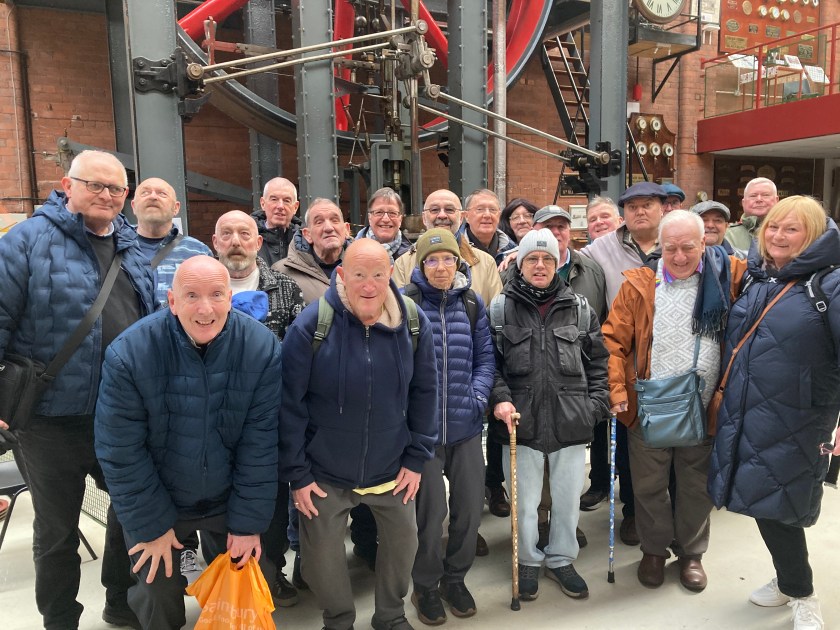
We dined at The King’s Ransom, a Greene King pub, just opposite the Metrolink stop at Sale Station. Next door was the Waterside Arts Centre which was featuring the exhibition “The Lost Worlds of Ray Harryhausen: Creatures, Martians and Myths”.

Ray Harryhausen is known as the mastermind behind some of Hollywood’s most iconic cinematic special effects. Inspired by John Walsh’s book Ray Harryhausen: The Lost Movies, this exhibition explores the origins of Ray’s creative career, looking back through his more experimental phases and invited us to delve deeper into his meticulous creative process.

The exhibition is divided into two distinct sections, “Harryhausen the Myth” and “Evolution of Harryhausen”. In the first part, we encountered the legendary Ray Harryhausen as he is widely celebrated, a cinematic genius and visionary who brought to life mythic worlds and unforgettable creatures.

His special effects became the defining feature of mythical and fantasy films such as Jason and the Argonauts and The 7th Voyage of Sinbad, captivating audiences and inspiring renowned filmmakers. This section highlights rare scenes and key drawings from these iconic films and cements his status as a master of special effects.

In the second part, we were taken behind the scenes to explore Harryhausen’s evolution as a filmmaker. Here, we discovered his experimental phases and early creative influences through rare test footage, sketches, and creature prototypes.

This section offers an intimate glimpse into Harryhausen’s process, showing how his early experiments and creature designs shaped his cinematic style. He never referred to his characters as “monsters”, always “creatures” as they were deeply personal and often misunderstood.

Many of Harryhausen’s projects and characters never made it to screen, but are essential to understanding his evolution as an artist. They highlight Harryhausen as his own toughest critic and as someone who was immensely dedicated to his craft. Through these two perspectives, the exhibition captured both the legacy and the journey of one of cinema’s most influential storytellers.

“Dinosaurs”

More photos can be seen here.

AIDS: Then and Now

1981 was the year that gave us Kim Wilde, Donkey Kong, the wedding of Prince Charles and Lady Diana, and the birth of MTV.

It was a golden age of popular culture – dancefloors were full and hairspray was on the top of the shopping list. 

But a dark cloud was looming.

In June 1981, the Centers for Disease Control (CDC) published the first official document on the disease that later became known as AIDS. The report had just made a connection, for the first time, between a ‘serious disorder of the immune system’ and homosexuals. The study was with five ‘previously healthy’ gay men, two of whom had died.

It is at that moment a dangerous perception formed of it being a ‘gay disease’ and stigma and discrimination is still being fought against today.

It’s 1982. I’ve just got out of the shower. While I was there I checked under the soles of my feet, my armpits, and my groin for any purple bruises. There’s this new disease affecting young gay men. I’m a young gay man!

The purple bruises are lesions called Kaposi’s Sarcoma, which normally only affect very old people. I’ve read about it in The Pink Paper, but there’s no clear information. Nobody knows why or how, so you don’t know what being careful is about.

They were calling it “H” as it appeared to affect heroin users, homosexuals and (strangely) people from Haiti. Then it became known as “GRIDS” (Gay Related Immuno-Deficiency Syndrome).

In the mid-80s one of my close friends died. He was in his early 20s. I didn’t know he was ill. He was ashamed and didn’t tell anyone he was HIV+. I only found out when it was too late. I heard about more people who became ill, more people who died.

I joined ACT-UP (AIDS Coalition to Unleash Power) – the organisation that originated in the United States. We were a non-violent direct action group: we dropped 40-foot banners from Manchester Town Hall (Action = Life, Silence = Death); threw condoms over the walls at Strangeways Prison; and campaigned against the inaction of the government.

Manchester ACT UP and George House Trust protesting at the Regional Health Authority against inaction by Health Secretary Virginia Bottomley in 1993

In the 90s I worked at George House Trust (HIV Agency) for three years, when protease inhibitors first came out. During that time I knew about 75 people who died.

After that, I worked with asylum seekers. My job included visiting people on the HIV wards in North Manchester General Hospital to assess their immigration status and refer them to solicitors where appropriate. On one occasion I wasn’t allowed in unless I wore full protective clothing. I argued it wasn’t necessary, but I had to comply. On another occasion, I visited a woman. She died 20 minutes after I had left. Her 8-year-old son was taken into the care of Social Services with a view to deport him to Malawi.

I have many memories of bereavement, hope, support, and love.

Much has changed over the last 40 years. Effective HIV medication means that a person can reach a point where the amount of the virus in their blood is so low as to be undetectable, after which they are not infectious and cannot pass it on.

There are parallels between HIV and Covid-19: the government was slow to respond; there was a marked impact on minority communities, and victims are blamed by the government.

I live in hope that the government will learn from the mistakes of the past – but I won’t hold my breath.

Human Rights Day

Human Rights Day is celebrated annually around the world on 10 December every year.

The date was chosen to honour the United Nations General Assembly’s adoption and proclamation, on 10 December 1948, of the Universal Declaration of Human Rights.

Around the World … and it ain’t Good News

Ugandan activist Clare Byarugaba told a packed audience in New York that she is not giving up the fight against anti-LGBTIQ laws despite constant threats against her, while she accepted the William D Zabel Human Rights Award for her advocacy for LGBTIQ rights. Despite being born in a country that she says she loves but doesn’t love her back, she will keep fighting so that those who come after her can have a softer landing. “See, when you love something, you fight for it. You fight to belong. You fight for the freedoms that authoritarian regimes will not give freely. You fight because so many communities all over the world have to fight. I am no different,” she said.

Members of India’s gay community continue to face beatings, sexual assault and murder threats even though the Supreme Court decriminalised homosexuality six years ago, population researchers have said in a study that sampled six metros, including Calcutta. Their study has found pervasive violence against men who have sex with men (MSM) with six in 10 men sampled, on average, having faced some form of violence for their sexual orientation. Men aged between 18 and 24 are at the greatest risk, 81 per cent among them having faced some violence.

Mali is on the brink of passing a law that would jail people for engaging in same-sex relations, condoning same-sex relationships, or “promoting” homosexuality. The country’s ruling National Transitional Council, on 31 October, approved the proposed law by a vote of 131-1.

Disturbing social media videos have revealed four young men being beaten and degraded by a mob in the Nigerian city of Benin, highlighting the social impact of discriminatory and dehumanising laws that criminalise same-sex intimacy. It is alleged that the men were targeted after reportedly being caught engaging in sexual activity, which could see them facing 14 years in prison.

More raids have seen clubgoers arrested and charged (Nikolay Doychinov / AFP via Getty Images)

A number of clubgoers in Russia’s capital Moscow have been found guilty of ‘petty hooliganism’ after police raids on three venues under the country’s draconian anti-LGBTQ+ propaganda law.

On Saturday, 30 November, three LGBTQ+ nightclubs – Arma, Inferno and Mono – were the subject of raids by Russian security forces “as part of measures to combat LGBT propaganda”, according to reporting by the Russian state-run TASS news agency.

Clubgoers detained by Russian security forces 

Launch of PROTEST! … Manchester in Black and White … Did You Know? Kissing Couples … Meeting at Cross Street Chapel

News

Launch of PROTEST!

Twelve of us from Out In The City attended the launch of PROTEST! at Manchester Art Gallery on 4 December.

Section 28 of the Local Government Act prohibited the “promotion of homosexuality” by schools and local authorities. In direct response to this, and as an act of protest and defiance, over 20,000 people took to Manchester’s streets to express their anger … making it the biggest single LGBT+ demonstration in British history.

Marking the 21st anniversary of the repeal of Section 28 in England and Wales, arts company IAP:MCR (Initiative Arts Projects Ltd) launched their latest project: PROTEST! – Documenting Dissent – a two-year long research and creative engagement programme, generously supported by the National Heritage Lottery Fund.

Were You There?

IAP:MCR want to meet anyone affected by Section 28: the stifled students, the silenced teachers, the organisers, and the tireless activists who fought right up until its repeal in 2003; they’re looking for the Queer voices and untold stories that will enrich and refine the history of LGBT+ protest. These stories will be recorded and find a permanent home in the public archives.

IAP:MCR will recruit volunteers who will conduct brand-new interviews with LGBT+ people in the Northwest who were at the demonstration, or who have engaged in dissent, or who were affected by social attitudes and prejudice over the past 25 years.

Working alongside Manchester City Council’s curatorial teams at Archives+ and Manchester Art Gallery, as well as the library services in Trafford, PROTEST! will also be delving into the public record to find ways in which dissent has already been documented.

Confirmed highlights include newly commissioned artworks, a series of public events and interventions, the creation of a new film, and an exhibition at Manchester Art Gallery; IAP:MCR will also host two paid internships in curation.

Upcoming events where you can connect, learn and join the PROTEST!:

Village Fete, 1 February

Hook a duck, try your luck at the tombola, sing out in protest karaoke, and chat with the IAP:MCR team to explore how you can help document Queer history.

Oral History Training, 1 March

For more details on upcoming events, see iapmcr.co.uk/events

To be involved, please contact Rosheen via email on volunteer@iapmcr.co.uk

Manchester in Black and White

Canal Street, according to local history records, got its name on 21 December 1804. It has grown over the years into a true symbol of equality. Since the late 80’s the street has proudly advertised itself as “The Gay Village”. The first pub in the area to openly welcome the gay community was the Union Hotel, and this was followed by bars which openly advertised themselves as existing for the gay community such as Manto. Below is an image courtesy of Manchester Archives which shows the Union Hotel in 1970.

Union Hotel, Princess Street, corner with Canal Street 1970

The street is situated close to Rochdale Canal and hence its name. The Canal runs for 32 miles with 92 locks and has a great history. It has carried boats with essential fuels, materials and necessities for everyday living. The Canal was completed in 1804, abandoned in 1952 due to an Act of Parliament and later refurbished in 2002.

So what was Canal Street before the canal was built?  According to maps, the Canal and gay village was a field intended for Church gardens and Parsonage fields. Maps dating to 800 AD show how Manchester was built around one street: Deansgate.

In the early 20th century, the street was used as a red light district – a concentration of prostitution and sex-orientated business as the street was dark and unvisited. The street’s many bars are now used as a night out hotspot for the LGBT+ community and many others. The village is without doubt the liveliest area in the city and firmly on the tourist map.

Take a look, and see if the photographs trigger any forgotten memories for you.

Rochdale Canal, Canal Street 1901

Canal Street, View towards Princess Street 1963

The Rembrandt, Sackville Street / Canal Street 1962

Richmond Street off Princess Street 1963

Rochdale Canal, Canal Street looking towards Princess Street 1960

Sackville Gardens, Whitworth Street 1957 (Manchester College of Science and Technology – view of the new part of the College of Science and Technology)

Did you know? Kissing Couples

Sean Connery gave the first man to man kiss on TV in 1960, kissing his character’s brother.

The first proper gay kiss on TV happened in 1970 during a groundbreaking broadcast of Edward II by Christopher Marlowe.

British audiences witnessed Ian McKellen, a young actor at the time, share a kiss with James Laurenson in a bold and emotional performance.

This moment wasn’t just a milestone in LGBT+ representation – it was also a brave step forward during a time when homosexuality had only recently been decriminalised.

McKellen, who would go on to become an LGBT+ icon, described the role as a defining moment in his career and activism.

This kiss wasn’t just an act – it was a statement of love, humanity, and progress that paved the way for more inclusive storytelling on screen.

The first lesbian one … of course was given by Marlene Dietrich in the film Morocco from 1930.

Meeting at Cross Street Chapel

The meeting at Cross Street Chapel, (29 Cross Street, Manchester M2 1NL) on Wednesday, 11 December from 2.00pm to 4.00pm will include:

a quiz;

LGBT quiz bingo;

a raffle; and

a buffet.

There are some great prizes, so  come along.