LGBT+ History Month at People’s History Museum … Queer Treasures at Manchester Central Library … Keith Haring Biography

News

LGBT+ History Month Archive Exploration at People’s History Museum

We explored this year’s theme of “Activism and Social Change” by delving into the People’s History Museum’s incredible archive collections.

Collection of Mark Ashton

These included the archive of Lesbians and Gays Support the Miners (LGSM), collection of Mark Ashton, the co-founder of LGSM, papers of Michael Steed, former chairman of the Campaign for Homosexual Equality and papers of Hugh Fell, former secretary of the North West Campaign for Lesbian and Gay Equality. There were copies of Gay News – Europe’s Biggest Selling Independent Homosexual Newspaper.

The documents included the following article:

Lesbian Line (This article was written by G in 1979)

“A woman rings the line. As she talks it is like hearing a voice from the past. The same desperation. Isolation. Pain. Loneliness.

And before long … ‘perhaps it is just my cross to bear in life. I had just better get on with it.’

Stop. How can I make this woman understand? How to make her see her lesbianism in a positive light? It is beautiful. I am a lesbian, I know. Set yourself free. Come and see us, see for yourself … don’t hang up on yourself. The bonds break slowly. Words come more easily. The woman’s voice rises to a pitch and finally … she laughs. Good.

150 Calls

That is what Lesbian Line exists for. This is who it exists for. The first telephone service for women run by women.

We get 150 calls a week on average – most of them from first-time callers. The need is great and if only we had enough money, we could probably double or treble that number.

Lesbians are everywhere – from John O’Groats to Lands End. In launderettes surrounded by kids while hubby puts his feet up by the fire; 18-year-olds in the arms of incredible hulks trying to pretend they don’t have feelings; in colleges; on buses; in hospitals; on television in parliament – everywhere.

Perverted Notions

We are black, white, brown, yellow, fat, thin, Jewish, catholic, atheist, whatever.

I felt like that woman on the phone once too! Judging myself a freak because of other people’s perverted notions. Wasting my life and love away so that I could glide in white down some aisle to keep society happy.

Then at last I came out to myself – and that is the most important way of coming out. And I remember the beginnings …

‘We can cure you,’ the male psychiatrist said. ‘We can give you electric shock treatment if you want.’

I just stared blankly at him. A feeling of nausea gripped me. ‘Sick, sick’ I kept thinking.

Finally I asked him, academically: ‘And have you any idea who I would be afterwards?’

He did not answer. Any negative feelings I had about being a lesbian disappeared in that moment. Rage became my most dominant emotion.

‘I am a lesbian,’ I said clearly, ‘and I want to stay that way,’ – and I got up and left the room.

Four words, but those four words – ‘I am a lesbian’ said proudly and defiantly were enough. I was on my way.

It sounds corny, but the re-birth had started. My first real words as ME. Years of growing up in a world of heterosexuality fell away. A new world opened up.

Life begins here, whether you are 21 or 65!

Lesbian Line is itself only two years old. It was born when women working with men on other gay telephone lines broke away to form their own group. Only women are really equipped to talk to and help other women. Many men, gay or not, still view women negatively. Many lead very different life-styles to women.

It might become clearer if I tell you that that male psychiatrist was also gay (as I later discovered). Not, of course, that all gay men would act this way – but there is a difference.

Back to the phone. Eureka! The woman says she will come to one of our afternoon socials, perhaps even to a disco.

I can’t help feeling this is the start for her. Maybe it will be her, some time in the future, on this end of the line helping other women to do the same. Perhaps it will be her going out giving talks to groups about our work, writing articles, spreading knowledge.” 

We then joined a guided gallery tour, which included various banners and other items.

ASLEF Lesbian Gay Bisexual Transgender Members Banner 2005

The Associated Society of Locomotive Engineers and Firemen (ASLEF) is the train drivers’ union. In 2000 ASLEF established equalities committees for its members, to represent women, LGBT people and people of colour. The committees’ roles were to challenge ignorance and prejudice within the union.

In December 2001, the union’s LGBT Representative Committee distributed ‘Facing Points’, a newsletter for LGBT members. The title refers to members ‘facing up’ to their true identities, and being proud of who they are.

The newsletter highlighted the committee’s key aims to outlaw homophobic bullying in the workplace and to establish legal protections for trans people.

Lesbians & Gays Support The Miners Banner, 1984 (made by Mark Ashton)

Lesbians and Gays Support the Miners (LGSM) was formed during the Miner’s Strike in 1984. LGSM’s main aim was to raise money for the striking miners and their families.

The group raised about £20,000 with events such as the benefit concert ‘Pits and Perverts’. This money helped miner’s families survive the winter.

Although small, this campaign group was significant. A bond formed between miners and the LGBT+ community, which lasted long beyond the strike. Miner’s groups were outspoken supporters in the 1988 campaign against Section 28, government legislation which banned schools and local authorities from ‘promoting homosexuality’.

On the banner’s reverse is the first verse of ‘Solidarity Forever’, a song composed in 1915 by American Ralph Chaplin, inspired by a miners’ strike in West Virginia, featured alongside a caricature of the UK Prime Minister at the time of the 1984 to 1985 Miners’ Strike, Margaret Thatcher.

Queer Treasures at Manchester Central Library

This is the first of a short series of articles about queer treasures that are currently to be found in the Archives held at Manchester Central Library.

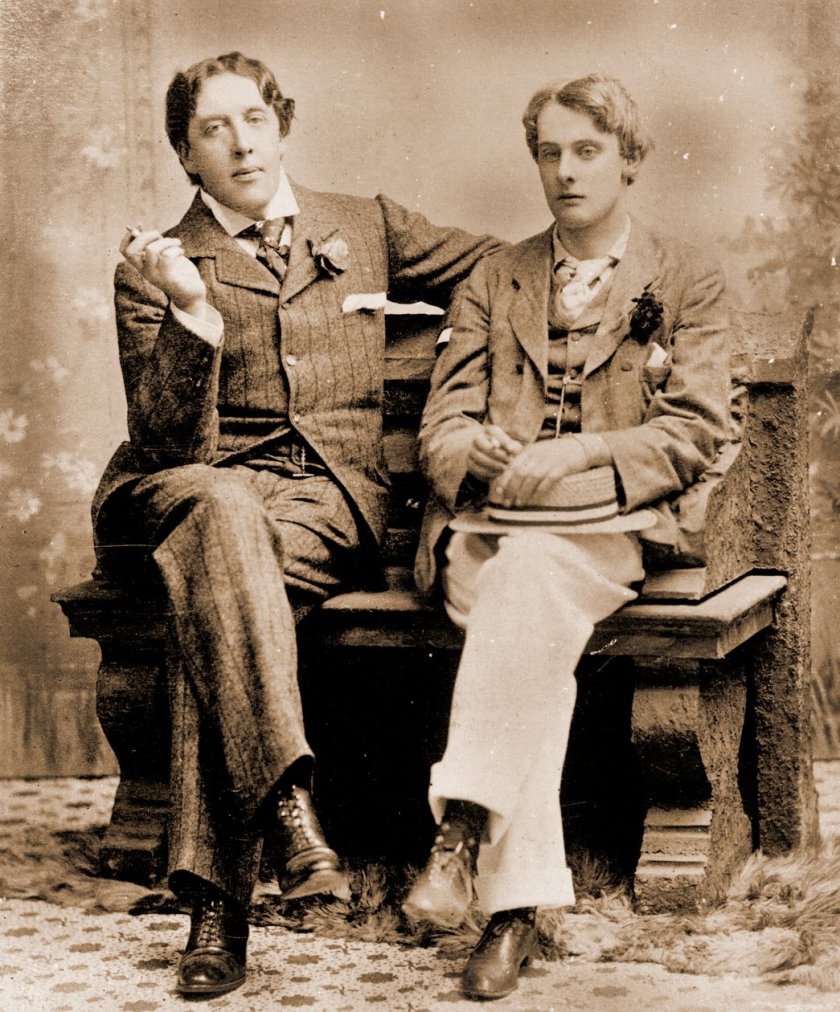
‘An Urning’s Love’ by John Moray Stuart-Young

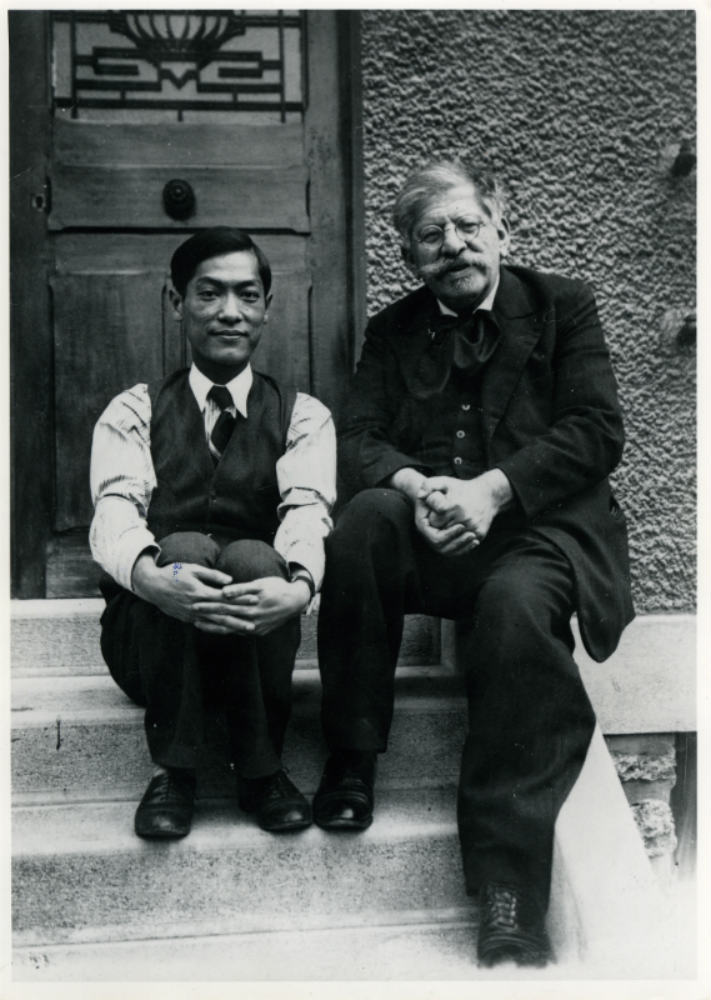
In his seminal book on the Uranian Poets, Timothy D’Arch Smith highlighted the work of the Manchester-born writer, John Moray Stuart-Young. ‘Uranian’ was the name D’Arch Smith applied to a group of British poets who were active during the late 19th and early 20th centuries and whose work celebrated love between males. The name ‘Uranian’ was taken from Plato’s Symposium, where the male lovers of their own sex were regarded as devotees of ‘Aphrodite Urania’, who represented the purest, most devoted and selfless of lovers. It was also a word used by some of the poets that D’Arch Smith studied to refer covertly to male same-sex love. Ancient Greek models of male friendship inspired almost all of these writers, but many were also influenced by the work of those early German pioneers in the study of Sexology, such as Karl Heinrich Ulrich, Adolf Brand and Magnus Hirschfeld. And, in 1862, Ulrich coined the word ‘Urning’ to refer to a man who exclusively loved other males – hence the book’s title refers to those males loved by the poet. (*1)

Stuart-Young’s life story would warrant a series of articles in itself. However, briefly, he was born as plain ‘John James Young’ on 3 March 1881 in Ardwick into a poor working-class family; on leaving school he worked as a clerk until, in 1899, he was sentenced to six months hard labour at Strangeways, following his conviction for fraud. Throughout his life he claimed to have had an intimate friendship with Oscar Wilde, who was the subject of a number of his writings. Shortly after leaving prison he went to work as a palm oil trader in Nigeria and died at Port Harcourt on 28 May 1939 from throat cancer. Despite the ignominy of his early life in Britain, in Nigeria he lived successfully as a trader and as a poet, enjoying a number of personal relationships with other males. When he passed away he was lauded in the Nigerian press as a literary giant.

‘An Urning’s Love’ is a beautifully produced volume of homoerotic poetry, interspersed with essays. Printed in 1905 and bound expensively in vellum with gilt floral decorations, Stuart-Young produced the book whilst staying in Ardwick Green. The Central Library Archives holds copy no 2 (of a limited edition of 50 autographed copies), which was presented to the Library by Stuart-Young himself on 3 March 1906. The book has gilt-edged pages and is illustrated with coloured engravings, rubric page-framing and photographs. The title page bearing the motto in French, ‘Rien n’est vrai que le beau’ (Nothing is true but beauty), pays homage to Plato’s philosophical writings. Stuart-Young writes that the book was dedicated in particular to Daniel Derow ‘in memory of those wonderful days when we stood together on the threshold of manhood and chiefly because you remain my friend, loyal and tried’ (p7). Sadly, little is known now about Derow, though clearly he was hugely important to Stuart-Young. In his Introduction, Stuart-Young pays fulsome tribute to Oscar Wilde (whom he sometimes refers to by the anagram of ‘Osrac’), and to ‘those thousands of dreamers, to whom Nature has given a tender feminine soul encased in a masculine form’ (p7). He goes on to define ‘Urnings’ as ‘nature’s paradoxes, men who seem women, women who appear to be men, of whose company Sappho, Michelangelo and Shakespeare were members, and who will continue to appear so long as the world exists’, and lauds Oscar Wilde as ‘the veritable Urning of our times’ (p8).

His panegyric to Wilde reaches its zenith in his essay on him entitled ‘Osrac, the Self-Sufficient’ (*2) which details Oscar’s life and works and reproduces letters and an autographed picture he says he received from Wilde, which bears the inscription, ‘September 1894 Oscar Wilde to Johnnie’ (p18). A few of the poems in the volume are addressed to women, which conveniently acts as a cover for the many that are addressed to men. Also, the word ‘Urning’ was not understood by the general public, so publication would not readily receive public censure. But certainly it was familiar to a literate minority who knew much about that love that dare not speak its name. 

A few of his poems reference his early sojourn in Africa and, in particular, one of the later poems in the book, entitled ‘A Glimpse’, praises the beauty of his closest Nigerian friend, Ibrahim, and is addressed to him. The poem praises Ibrahim’s physical beauty and adds –

‘But rarer than these treasures superfine,

Thine eyes, indifferent to the girls, in sweet repose to mine’ (p140).

Thankfully, the days in which homosexual men were regularly sent to prison for expressing their love has now passed, but, especially during this LGBT History Month, it is good to look back and remember those who spoke out, however covertly, to articulate the beauty of our love and to celebrate it and, in doing so, gave others the courage to love.

(*1) Ulrich referred to women who loved other females by the word ‘Dioning’.

(*2) ‘Self-Sufficient’ also references the work of Adolf Brand, who, in 1896 in Germany, started a magazine called ‘Der Eigene’; originally an anarchist magazine, it soon because the world’s first magazine devoted almost entirely to homosexual love. ‘Eigene’ in Brand’s concept of the word, could also be translated into English as ‘self-sufficient’.

Arthur Martland © LGBT History Month 2025
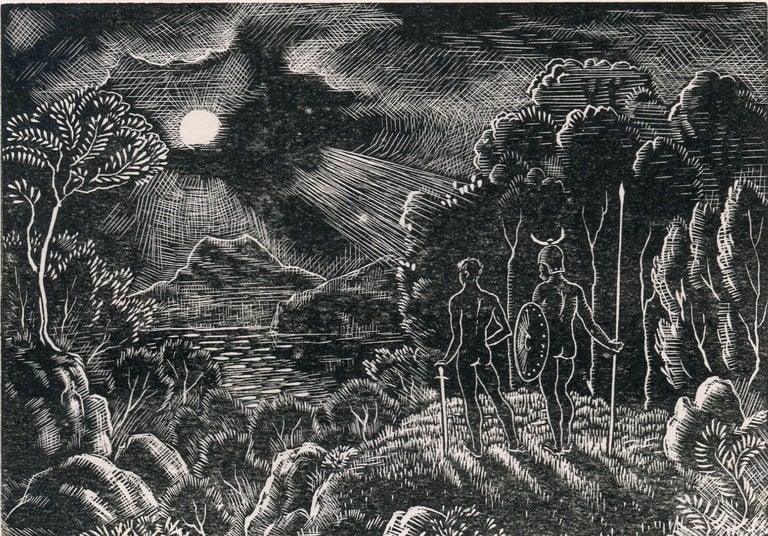
‘Radiant’ an illuminating biography of Keith Haring

“Radiant” is an illuminating biography of the talented artist Keith Haring, who made his indelible mark during the 1980s before dying of AIDS at age 31. Brad Gooch follows Haring from his childhood to his early days in New York City painting artistic graffiti, to his worldwide fame and friendships with Andy Warhol and Jean-Michel Basquiat.

The eldest of three children and the only boy, Haring learned to draw early on from his father. Art quickly became a lasting obsession, which he pursued fiercely. Growing up in a small, conservative town, he was drawn to countercultural movements like hippies and religious “Jesus freaks,” although he mostly found the imagery and symbols appealing.

He studied commercial art in Pittsburgh but later dropped out, spending several years working and learning at the Pittsburgh Arts and Crafts Centre, before moving to New York City in 1978. Studying painting at the School for Visual Arts, he also learned about video and performance art, making interesting projects. He also began drawing images on subways and blank advertisement backboards. One of his most distinctive was the Radiant Baby, a crawling baby shooting rays of light. 

Gooch begins the biography with his own encounter with this public art, which felt colourful and “extremely urgent.” It had to be done guerilla-style, before the authorities could catch him, and they were frequently painted over. He was arrested a few times.

Ironically, a few years later Haring would be paid huge sums and flown around the world to create large-scale art on public property. People were amazed at how quickly he worked, even in terrible conditions. Sometimes at these events, while a crowd was gathered, he would draw and give away the artwork. Knowing that his art in galleries sold for incredible amounts, he enjoyed occasionally frustrating the art world’s commercial desires.

His Pop Shops also revealed Haring’s competing impulses. Opened in 1986, first in New York and later in Tokyo, they put his art on all sorts of merchandise, including T-shirts and posters. On the one hand, they allowed ordinary people to buy his work at reasonable prices. However, they also earned him more money and increased his public image.

He made art for everyone. His best-known pieces, featuring babies and dogs, are colourful and family friendly. Some even consider it “lightweight.” He eagerly created murals and artwork for elementary schools and neighbourhoods. But he also made art with social and political commentary and sexual explicitness. “Michael Stewart – USA for Africa” depicts a graffiti artist’s strangulation by New York City Transit Police officers. He painted “Once Upon a Time…” for the men’s bathroom of New York City’s Lesbian & Gay Community Centre.

Haring worked nearly right up to his death in 1990. The Keith Haring Foundation keeps his work in the public eye, while also funding non-profits working with disadvantaged youth and AIDS education. Gooch captures Haring’s complexities; he befriended graffiti artists of colour and dated working-class men, but was sometimes ignorant about how his wealth and fame affected these relationships. Well written and sympathetic, the book can sometimes overwhelm in detail about life in the 80’s and Haring’s celebrity friends.

‘Radiant: The Life and Line of Keith Haring’
By Brad Gooch
2024, Harper, 502 pages
£18.67 (Amazon Hardback)

Bet you sang along!

Crazy Golf at Paradise Island … Hate Crime Awareness Week … 10 Reads for LGBT+ History Month

News

Crazy Golf at Paradise Island

This week we travelled by tram to The Trafford Centre, where we dined at The Mardi Gras before heading to Paradise Island for a session of crazy golf.

Golf is a tee-rific game and it was a par-fect day for crazy golf. A round of golf is always a fairway to start the day. I brought an extra pair of pants in case I got a hole in one.

To putt a long story short, we split into six teams. The first thing you have to do is address the golf ball. Hello, ball! Crazy golf is different from ordinary golf – it’s a hole new ball game. In our teams we all had equal opportuni-tees, but fore-tune favours the bold.

Our top golfer was Michael B with a round of 45. That putt a smile on his face!

It wasn’t tee-dious at all as having fun is par for the course. It was an un-fore-gettable experience, and we all had a tee-rific time.

More photos can be seen here.

Hate Crime Awareness Week

This week is Greater Manchester’s Hate Crime Awareness Week. It’s a time dedicated to raising awareness of hate crime and how to combat it. The week takes place between Monday 3 February to Friday 7 February.

What is hate crime? 

Hate crime isn’t a single offence – it’s when crimes like assault or threats are driven by anger towards:

  • Race or religion
  • Sexuality
  • Disability
  • Transgender identity

Hate crimes can include:

  • Threats and harassment
  • Physical attacks
  • Property damage
  • Encouraging others to commit hate crimes

Examples of hate crime include:

  • Someone assaults you using homophobic language
  • A brick is thrown through your window with racist graffiti
  • Online abuse targeting your identity

If hate is the motive, it’s a hate crime.
For example, if someone attacks you because they think you’re Muslim and you’re not, it still counts as a hate crime.

How do you report it? 

You can report hate crime online here.

Call 999 if there’s a crime in progress or if someone is in immediate danger.

If the crime isn’t an emergency, call 101 or contact your local police.

Find out what support you can get if you’re the victim of hate crime here.

Loud and Proud: Amplifying LGBTQ+ Voices

Jean is the Treasurer for Oldham Pride. This podcast is a candid, personal account of her experiences growing up and the issues she faced before and after coming out.

The podcast was produced by Oldham Pride to help to support and acknowledge Greater Manchester’s Hate Crime Awareness Week 2005.

Each episode was recorded at Billington’s Oldham, which is a registered safe space and hate crime reporting centre

Listen here.

10 Reads for LGBT+ History Month

February marks LGBT+ History Month, giving a space to celebrate the rich tapestry of LGBT+ history and the people who shaped it.

Here is a list of ten books exploring LGBT+ history from a range of perspectives:

The Stonewall Reader

This powerful anthology chronicles the 1969 Stonewall uprising through diaries, articles, and firsthand accounts. Featuring voices from activists on the frontlines, The Stonewall Reader provides a vivid portrait of one of LGBT+ history’s most pivotal moments. A must-read for understanding how the fight for equality gained momentum.

Queer Ancient Ways: A Decolonial Exploration – Zairong Xiang

Queer Ancient Ways takes a decolonial approach to queerness, exploring how ancient cultures embraced diverse sexualities and identities. It presents a much-needed challenge to Western-centric narratives of LGBT+ history and offers a fresh perspective on queerness through time.

Outrageous – Paul Baker

Outrageous delves into the history of Section 28, the legislation that banned the ‘promotion’ of homosexuality in schools. Paul Baker examines its damaging impact, the protests it sparked, and how it shaped a generation of activists. Through personal anecdotes and sharp analysis, this book is both a history lesson and a rallying cry.

Queer Heroes of Myth and Legend – Dan Jones

This celebratory collection revisits myths and legends from around the world, highlighting queer figures and themes. From gods and goddesses to epic warriors and lovers, Dan Jones reclaims these stories and centres queerness within them. If you enjoyed learning about the Ancient Greeks in school, this one’s for you.

The 2000s Made Me Gay – Grace Perry

The 2000s shaped a generation – and continues to do so. Grace Perry reflects on how the TV, films, and music of the era influenced LGBT+ identity and representation. Full of humour and heart, this book explores how queer millennials navigated coming of age during a period of cultural upheaval.

Moby Dyke – Krista Burton

Krista Burton’s Moby Dyke is an irreverent and hilarious exploration of queer culture and identity. Through a collection of witty essays and observations, Burton provides insight into what it means to be queer today while connecting her experiences to broader historical and cultural contexts.

Bad Gays – Ben Miller and Huw Lemmey

Not all queer historical figures were saints. Bad Gays embraces that complexity, examining villains and antiheroes to explore sexuality, identity and power. This fascinating take on LGBT+ history highlights the contributions of less-admirable but equally significant figures.

Homintern: How Gay Culture Liberated the Modern World – Gregory Woods

Homintern investigates how LGBT+ cultures influenced and liberated the modern world. Gregory Woods explores the networks of LGBT+ creatives and intellectuals who shaped art, politics, and beyond. A more academic read, but richly rewarding and thought-provoking.

Fabulosa – Paul Baker

Fabulosa focuses on Polari, the secret slang of the mid-20th-century gay community. Paul Baker delves into its history and cultural context, revealing how this unique language gave LGBT+ people a way to express themselves in a hostile world. Funny, poignant, and richly detailed, it’s an ideal read for LGBT+ History Month.

Revolutionary Acts: Love and Brotherhood in Black Gay Britain – Jason Okundaye

Revolutionary Acts explores the experiences of Black gay men in Britain. Tackling themes such as love, identity, and community, this book is both a celebration of brotherhood and a powerful commentary on navigating an intersectional identity in a complex world.

Whether you want to learn more about our history, celebrate LGBT+ culture, or uncover the hidden past of our queer ancestors, there’s something for everyone here.

Manchester Gay Switchboard … Daughters of Bilitis … Ben and Anna

News
178 Waterloo Place

Manchester Gay Switchboard

Fifty years ago, on 2 January 1975 a telephone rang for the first time. It was a helpline – the Manchester Gay Switchboard – and was situated on the stairway in a rented Longsight flat.

Terry Waller, a local activist, with friends had discreetly handed out leaflets advertising the service at gigs and student nights. It’s difficult to envision a time before the internet, with information now available at our fingertips, but things were just not spoken about. There were no role models on television and no sex education in schools. Library books on the subject of homosexuality were hidden on the reserve book shelf. Some of us felt we were different, but we didn’t have the words.

The phone line served a very important service – a chance to speak to other lesbian and gay people to get information and advice.

There have been name changes and relocations over the years, but to date it’s estimated that more than 250,000 people have rung up, registering more than 3.7 million minutes worth of advice and support.

I volunteered for the service in the late 70’s when it was situated at 178 Waterloo Place – a basement belonging to the university. I had “come out” to my parents at age 16, but they encouraged me to believe that it was “just a phase”, so I told them that I was volunteering for Samaritans!

The helplines included “Lesbian Link”, “Friend” and the “TV/TS service”. Nowadays we say “Transgender”, but the acronym stood for “Transvestite/Transexual”. Bob Crossman was our first paid worker, and later he became the first openly gay Mayor in the UK, serving as Mayor of Islington from 1986-1987.

Sometimes people rang up who were suicidal, but other times it was for information such as locations of gay pubs. The service is continuing 50 years later and is still necessary.

February is LGBT+ History Month

In 2025 we are celebrating 20 years of UK LGBT+ History Month, organised by Schools OUT, and this year the theme is: Activism and Social Change.

Schools OUT was delighted to launch the UK LGBT+ History Month 2025 theme from Conway Hall in London – a place steeped in history from the conference of doctors that led to the founding of the NHS, to speakers such as George Orwell.

A list of LGBT History Month events in Manchester include:

  • Community Café / Digital Café at LGBT Foundation;
  • Lights, Camera, Pride! – free film at Manchester Central Library;
  • The Big Gay Pub Quiz Takeover at Contact Theatre;
  • Queer AF Comedy Night at Contact Theatre;
  • Alan Turing’s Manchester – Lunchtime lecture at House of Books;
  • LGBT+ History Month archive exploration & guided gallery tour at People’s History Museum;
  • Queer as Cupid Cabaret at Contact Theatre;
  • LipService presents Funny Stuff at Bury Met;
  • Shadowed Dreamer at 53two; and
  • LOUD Cabaret at Bury Met.

More details can be found on https://outinthecity.org/next-outings/ and https://lgbt.foundation/

Daughters of Bilitis

Founding

Del Martin and Phyllis Lyon, two women fresh with degrees in journalism, met in Seattle in the early 1950s. Martin and Lyon quickly became romantically involved, and moved together to San Francisco in 1953. Despite the rising prevalence of gay and lesbian bars in the North Beach neighbourhood, Martin and Lyon found themselves feeling isolated, without a community of other lesbians. “It wasn’t like we had a community. It was like there were places to go for entertainment and there was a certain ambiance, but there was not the sense of community that we have developed since.”

Phyllis Lyon (left) and Del Martin (right), mid-1950s – Photo: qualifolk.com

When Martin and Lyon were invited by a friend of a friend to join a small, secret lesbian social club, they jumped at the opportunity. The first social meeting of eight lesbians took place in 1955, and out of this meeting the Daughters of Bilitis (DOB) was born. The group named itself after the poetry collection Songs of Bilitis by Pierre Louys, a work that depicts a fictional lesbian woman who lived alongside Sappho in Ancient Greece.

Rise and Politicisation

The 1950s was a time permeated by fear for gay people in the United States. When the DOB was founded, it served as an outlet for lesbian women to congregate socially and safely. However, as the social club gained popularity in the San Francisco area, it quickly began to turn its focus toward more political interests in the homophile movement. In the first issue of their publication, The Ladder, members of the DOB wrote, “with discussion came broader purposes and the club was formed with a much wider scope than that originally envisioned.”

The homophile movement began with the inception of the Mattachine Society, a group founded in Los Angeles in 1951 by homosexual men intending to spread awareness and educate the public on matters of homosexuality. The DOB mirrored the Mattachine Society and its homophile principles in many ways: both groups were founded with social intent, turning later towards the political; both groups urged their constituents to participate in psychological studies and to work to actively educate the masses against the stereotype of homosexuals as “sick”; both groups worked to combat the fear that permeated the community during the 1950s due to widespread bigotry, frequent police raids on gay and lesbian bars, etc; and both groups emphasised the concept of “fitting in” to the larger heteronormative community rather than embracing difference in sexuality and gender. However, the DOB focused their efforts primarily on the causes of women and lesbians, and at times members resented their representation as “auxiliary” to the Mattachine Society.

By 1960, the DOB had spread throughout the United States, and the organisation’s first national convention, publicised by the DOB as “Ten Days in August,” took place at the Wickham Hotel in San Francisco, and was deemed a success by members of the organisation.

The Ladder

As the DOB began to gain traction, they decided to begin publishing a small newsletter for members of the organisation. The first issue of The Ladder was published in October 1956. The first issue had the express intent of attracting new members, and included a copy of the DOB’s statement of purpose.

The Ladder

October 1957 issue of The Ladder

Subsequent issues of The Ladder contained various articles, interviews, group event calendars, advertising, group bowling outings and even pieces of short fiction and poetry written by members of the DOB and other contributors.

The Ladder was generally met with praise. Its popular “Readers Respond” section, in which readers could send messages to the editor and have them published in the following month’s issue, included numerous praises and expressions of gratitude sung by readers. One such grateful reader was “L H N” a playwright from New York, who wrote in the May 1957 issue to say,

“I’m glad as heck you exist … Women, like other oppressed groups of one kind of another, have particularly had to pay a price for the intellectual impoverishment that the second class status imposed on us for centuries created and sustained. Thus, I feel that The Ladder is a fine, elementary step in a rewarding direction.”

L H N was Lorraine Hansberry Nemiroff, whose play A Raisin in the Sun made its debut on Broadway two years after her message was published in “Readers Respond”. Hundreds of other women across the United States echoed Nemiroff’s eager readership, until The Ladder ceased publication in 1972.

Demise

By the mid-1960s, the political culture around homosexuality and protest was changing; the homophile movement and its call for assimilation gave way to the activism and celebration of identity of the pride movement. A new generation of lesbians was taking power in the Daughters of Bilitis, with Shirley Willer taking over as the first national president elected from outside of San Francisco in 1966. The rise of the feminist movement throughout the United States also caused tension among group members, who began to split ideologically between emphasising gay rights and women’s rights. When Barbara Gittings took over as editor of The Ladder, some members of the DOB criticised Gittings for her active incorporation of gay male contributors to The Ladder, feeling she was beginning to stray from The Ladder’s intents as a magazine with specific lesbian interest. Gittings was controversially removed from her position as editor in August 1966, and, along with other members of the DOB, began working with more general gay rights groups; some former DOB members helped to found the Homophile Action League in 1968. Around this time, Martin and Lyon began working closely with feminist activist group National Organisation for Woman (NOW), turning their attention away from the DOB. The DOB leadership attempted another national convention in Denver in 1968, with a turnout of less than 30.

In 1970, the national mailing list for The Ladder was stolen from the DOB’s San Francisco office by Rita Laporte. Laporte, a former member of the DOB, began publishing issues of The Ladder with a new team, without support of the DOB. Many members of the DOB felt scandalised by Laporte’s actions, and rejected her explicit focus on gender over sexuality when she wrote in The Ladder’s August / September 1970 issue, “With this issue, The Ladder, now in its 14th year, is no longer a minority publication. It stands squarely with all women, that majority of human beings that has known oppression longer than anyone.”

Due to controversies in leadership and direction, The Ladder published its last issue in 1972. Though it had officially split from the DOB in 1970 after Laporte’s theft, the demise of The Ladder signified the end of the DOB for many women in the group. Some chapters continued meeting occasionally, but the close of the original San Francisco chapter in 1978 marked the DOB’s formal demise.

Martin and Lyon remained active figures in both the women’s rights and gay rights movements, and made the news for an historic moment in 2004 as the first homosexual couple to be offered a marriage certificate in San Francisco.

Mayor Gavin Newsom of San Francisco presiding at the nuptials of Del Martin and Phyllis Lyon, long-time partners and lesbian activists, who after more than 50 years together could finally say, “We’re married.” Sadly, Del passed away just over two months later on 27 August 2008.

How we met: ‘Ben told me he now identified as a trans man. I had been waiting for it to happen’

Anna, 51, and Ben, 55, met at a friend’s birthday brunch in 1993. After she split from her girlfriend, Anna begged one of Ben’s friends to set them up. They now have three children and live in Oakland, California.

‘She sees the world differently to me’ … Ann and Ben in Oakland, California, in 2019. Photograph: Courtesy of Ben and Anna

In late 1993, Anna was invited to her girlfriend’s birthday brunch in San Francisco, where they were both living. “We were dating casually at the time,” she says. “We went for a crepe party with a big group of people at her place.” She remembers spotting Ben straight away, who at that time identified as a woman.

“I saw Ben wearing glasses and thought they were adorable,” she says. “I remember thinking we’d be together one day.” They chatted briefly, but Ben didn’t show much interest.

“Anna was dating a good friend of mine,” he says. “And I was living in Long Beach, finishing my graduate school studies in pathology.” After the brunch party, they went their separate ways and he didn’t expect to see her again.

In spring 1994, Ben moved to Sacramento in northern California. By then, Anna and her girlfriend had split up. “I was still thinking about Ben and begged one of his friends to set us up,” she remembers, laughing. He was reluctant at first because of Anna’s previous relationship with his friend, whose birthday brunch it had been. However, he says: “She was fine with it, so I decided to go and see her.”

They met in San Francisco a few weeks later and spent the day walking around the city visiting craft markets, before sharing some tacos. “It was a super sweet date,” says Ben. “She was really cute. I was really happy to be with her.”

The following week they met again for a cinema date. “It was a scary movie, so good for snuggling,” says Ben. Afterwards they kissed for the first time.

‘He’s a great artist and an amazing parent’ … Anna and Ben in April 2022. – Photograph: Courtesy of Ben and Anna

They dated until Ben moved to San Francisco in early 1995. “I’d never thought about having a long-term relationship before Ben, but we were so happy together,” says Anna. Things became more serious and the couple moved into a shared house in 1996, before holding a special ceremony the following year. “We made up our wedding, which is what gay people did back then as same-sex marriage wasn’t actually legal,” she says.

In 2001, their first child was born, followed by twins in 2002. “Rather than going to a sperm bank, we decided to ask a trusted friend, Tex, to be a donor,” says Anna. The family moved into a house in Oakland with Tex in 2004. “He has a separate flat but we’re all really close. He is an uncle to the kids,” she says. Later that year, Ben and Anna attempted to formalise their relationship, after the mayor of San Francisco, Gavin Newsom, now governor of California, announced plans to legalise same-sex marriage in the city. “We queued for hours but our paperwork was rejected two months later.” Within a month of the announcement, 4,000 same-sex couples tied the knot in San Francisco but then the California Supreme Court ruled all the marriages invalid. “[Mayor Newsom] didn’t actually have the power to make that change,” says Anna.

Two years later, Ben told Anna that he no longer identified as a gay woman, but as a transgender man. “The process was more of an evolution than a line drawn in the sand,” he says. “My gender presentation had not changed, but I made the decision to have hormones and surgery so that my body could match that. My transition isn’t a binary one, but it’s a shift in how I feel and how I’m seen in the world.”

For Anna, this wasn’t a surprise. “I was waiting for it to happen. Everyone we knew was very accepting of different gender expression, so it wasn’t foreign to me at all. I wanted him to feel comfortable.” In 2014, they were finally able to marry legally, surrounded by friends and family. “We also have a wedding celebration every year, on the anniversary of the one that was disallowed,” says Anna.

After nearly 30 years together, she still appreciates the way her partner keeps her grounded. “I have ADHD, so my brain can be everywhere. He is very fair and always honest. He doesn’t always do the easy thing but he does the right thing. He’s a great artist and an amazing parent.”

Ben appreciates Anna’s creativity. “She knows what’s in her heart and she is never afraid to share,” he says. “She always shows up, and I love how she sees the world differently to me. It helps me see things I’d never notice.”

The Egyptian Room and Oldham Art Gallery … Argentina

News

The Egyptian Room and Oldham Art Gallery

Nestled in the heart of Oldham’s town centre, The Egyptian Room is a new(ish) food hall with a diverse range of independent food stalls offering a range of cuisines.

The contemporary food hall is set within an architecturally stunning setting – the Grade II listed old Town Hall, which retains its historic charm and original features. The food partners include Ply Loves Pizza (pizza and pasta dishes), The Last Stop (burgers), Wings of Power (burgers), Tuk Tuk ((Cambodian and Asian Kitchen) and Seacoles (Caribbean).

There is seating for 150 people with both indoor and outdoor seating and a mezzanine area. The venue has only been open since November, and for some of us the service was a little slow. On the whole it is a great addition to Oldham and we shall definitely return.

We then visited The Lights exhibition at Oldham Art Gallery. Over the last ten years, Grundy Art Gallery in Blackpool has developed a special interest in artists who use light as a material within their work. In addition to an annual light themed exhibition each autumn, Grundy has also been adding light based art works to its collection.

A selection of works from Grundy’s collection was presented in Oldham for the first time. The exhibition takes its title from the shorthand for how the Blackpool Illuminations are referred to locally.

A few of us went on to Billington’s for coffee and cake. This is a very impressive venue, very welcoming to members of the LGBT+ communities.

More photos can be seen here.

Argentina’s president called all LGBTQ+ people paedophiles. Now he’s getting sued

Javier Milei

Javier Milei, the Argentinian President, took his “war on woke” to the World Economic Forum in Davos, Switzerland last week in a fiery speech declaring that LGBTQ+ “gender ideology constitutes plain and simple child abuse. They are paedophiles.”

“The mental virus of woke ideology is the great epidemic of our time that must be cured,” Milei said. “This is the cancer we need to get rid of.”

The attacks on LGBTQ+ people accompanied a restatement of the Argentinian president’s longstanding assaults on feminism, immigration and the fight against climate change.

Milei wrapped his far-right agenda in language cribbed from his fan and fellow warrior in the fight against “woke”, President Trump.

“It is essential to break these ideological chains if we want to usher in a new golden age,” Milei said, echoing language used in Trump’s inauguration speech.

To illustrate what he called a direct link between LGBTQ+ “gender ideology” and its harmful effects, the Argentinian leader used the example of a gay couple in Georgia arrested last month for abusing and prostituting their young adopted sons to a paedophile ring. He also falsely claimed that 5-year-old children regularly undergo sex-transition surgeries.

“I want to be clear when I say abuse,” Milei said. “This is no euphemism.”  

In response, Argentinian Congressman Esteban Paulón, a longtime LGBTQ+ rights activist, filed a criminal complaint against the president, arguing Milei employed discourse that promotes negative stereotypes and encourages violence against the LGBTQ+ community.

“Milei radicalises hate speech based on lies and fabricated truths. He raises harmful stereotypes against the LGBTQ+ community, which generates fear and anguish in our communities. We have filed a criminal complaint, understanding that his statements constitute several crimes aggravated by his presidential investiture.”

Paulón said LGBTQ+ families are living in fear as a result of Milei’s selective and unfounded claims.

“There are fathers and mothers afraid of being denounced for allowing their children to express their gender identity. LGBTQ+ couples fear that their children will be taken away from them,” he said. “This type of discourse activates ultra-conservative groups that politically support Milei, but do not reflect the feelings of the majority of Argentine society.”

Following the speech, LGBTQ+ activists and human rights groups in Argentina have organised a march under the banner, “For a country without hate,” scheduled for 1 February in the country’s capital, Buenos Aires.

Summary of LGBT History Month Events … A Secret Love … Twilight Men

News

February is LGBT+ History Month

In 2025 Schools OUT is celebrating its 50th year and 20 years of UK LGBT+ History Month.
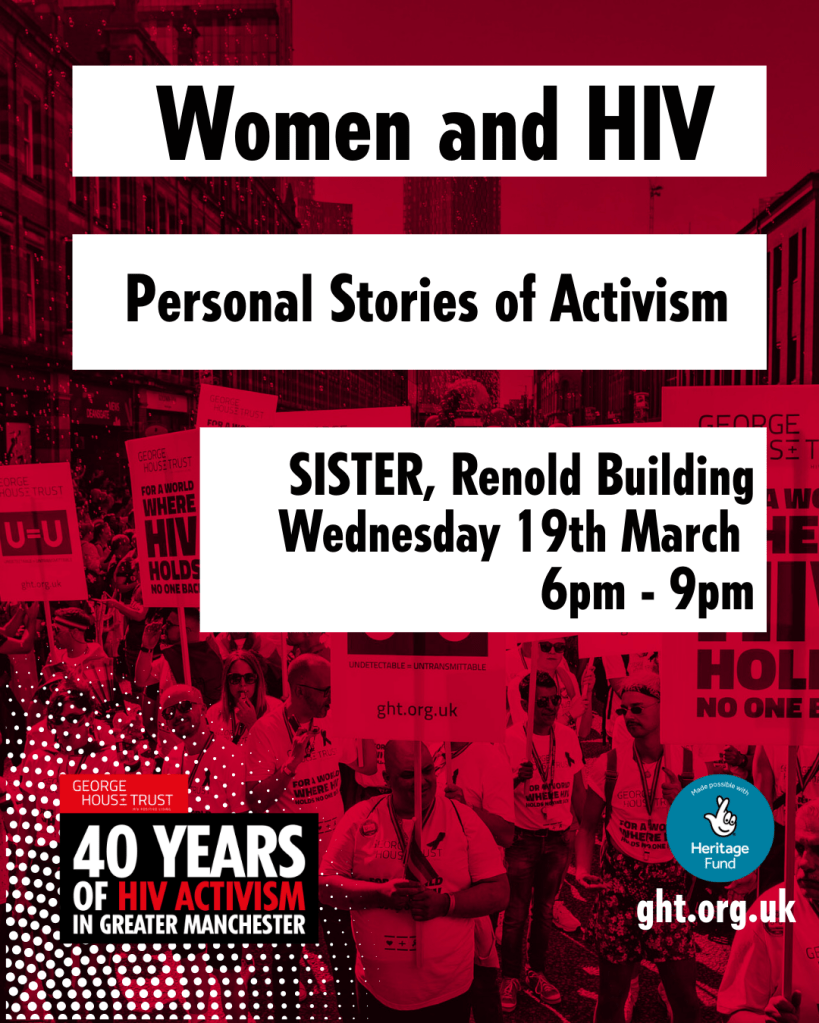
The 2025 UK LGBT+ History Month theme is: Activism and Social Change.
Schools OUT was delighted to launch the UK LGBT+ History Month 2025 theme from Conway Hall, London – a place steeped in history from the conference of doctors that led to the founding of the NHS, to speakers such as George Orwell.

Summary of LGBT History Month Events – 2025

  • Saturday, 1 February – 12.00pm – 4.00pm – LGBT Foundation Community Café – Digital Café Takeover
  • Monday, 3 February – 5.45pm – 8.00pm (Doors open at 5.00pm) Lights, Camera, Pride! – Celebrate LGBTQ+ History Month – Free film – Manchester Central Library, St Peter’s Square, Manchester M2 5PD
  • Tuesday, 4 February – 8.00pm – The Big Gay Pub Quiz Takeover – Contact Theatre, Oxford Road, Manchester M15 6JA – Free
  • Wednesday, 5 February – 7.00pm – Queer AF Comedy Night – Contact Theatre, Oxford Road, Manchester M15 6JA – Free
  • Friday, 7 February – 1.00pm – 2.00pm – Alan Turing’s Manchester – Lunchtime Lecture – House of Books and Friends, 81 King Street, Manchester M2 4AH – £3 (Ticket Only) – £20 (Book and Ticket)
  • Saturday, 8 February – 1.15pm – 3.45pm – LGBT+ History Month archive exploration & guided gallery tour – People’s History Museum, Left Bank, Spinningfields, Manchester M3 3ER
    • Concession tickets: £11.44 / Free
    • Explore the theme of activism and social change through delving into the museum’s incredible archive collection and joining a guided gallery tour.
  • Saturday, 8 February – 7.00pm – Queer as Cupid Cabaret – Contact Theatre, Oxford Road, Manchester M15 6JA – Free
  • Thursday, 13 February – 7.30pm – LipService presents Funny Stuff Derby Hall @ The Met, Market Street, Bury BL9 0BW – Tickets £18
  • Thursday 20 & Friday 21 February – 7.30pm – Shadowed Dreamer
    • 53Two, Arch 19, Watson Street, Manchester M3 4LP
    • Tickets £10 Full Price / Pay What You Can – Not Including Booking Fee
    • ​Shadowed Dreamer: A story of survival, determination and belief.
  • Thursday, 27 February – 8.00pm – LOUD Cabaret
    • The Box @ The Met, Market Street, Bury BL9 0BW
    • Tickets: £11 standard / £9 subsidised / £13 supporters (inc fees)

Please check websites – you will need to have a ticket for the free events.

A Secret Love: The Timeless Love Story of Terry Donahue and Pat Herschel

In 1947, two women from different worlds met in Canada, beginning a love story that would span over seven decades. Terry Donahue, a star player in the All-American Girls Professional Baseball League (AAGPBL), and Pat Herschel crossed paths, and the connection between them was immediate.

The love story began when Pat, in a bold and heartfelt move, handed Terry a note that read, “I’m a reader of books, but I’ve never read anywhere where a woman loves another woman. I hope you feel the same way, too.” This simple yet profound note marked the beginning of a journey that would see them through nearly 72 years of love, commitment and resilience, despite the challenges of their time.

Throughout their years together, Terry and Pat faced significant societal pressures, especially during an era when LGBT+ relationships were not widely accepted. Their love remained a closely guarded secret from most of their family and friends for 70 years. They lived quietly in a Chicago suburb, building a life together, and enduring the trials of a world that often did not have room for their love. Terry’s courage eventually led her to reveal the relationship to her niece, marking the beginning of a new chapter of openness for the couple. Their love, which had been hidden for so long, became a testament to their strength and devotion to each other.

In 2020, the world learned about their incredible love story when the documentary A Secret Love was released, bringing their journey into the spotlight. The film captured their 70 years together, the emotional challenges they faced, and their eventual decision to marry after decades of commitment. It also highlighted the difficulties of end-of-life care as Terry faced health issues. The documentary not only touched hearts worldwide but also sparked important conversations about love, identity, and acceptance.

Through their story, Terry and Pat inspired millions and left behind a lasting legacy of love that transcended time, showing that true love, regardless of circumstances, is always worth celebrating.

Twilight Men

André Tellier’s second novel was launched on 27 January 1931 by Greenberg, New York as a 338-page volume. It flew through at least seven prints and sold over 40,000 copies. The novel is a clichéd and dramatic story of the queer experience.

After the deaths of two loves, Armand moves from France to face New York City and self-discovery. A woman hired by his acrimonious father tails him, although her attempts to seduce him break way to a unreturned infatuation. After Armand drifts through the city, he finally finds community in the artistic queer scene, where he receives support as a poet and as a man who loves other men. However, the nights of drinking, drugs, and naivete drag him into ruin.

The first US edition (1931), first UK edition (1933), and second US edition (1948) all contain different texts.

Comte Edmond de Rasbon visits Josef Bironge on 2 June, the birthday of de Rasbon’s illegitimate son, born of a dead lover, who has spent the past eighteen years raised as Bironge’s nephew.

Previous visits had disappointed the Comte; the boy, Armand, is weak, quixotic, and of no calibre to succeed his father as a businessman. When Armand enters, he expresses his love of nature and poetry, then asserts against de Rasbon’s challenges that he intends to learn through travel and imagination. As a rude parting gift, de Rasbon gives Armand a necklace belonging to his mother and calls him womanish. Armand and Bironge return to their country estate.

There, Armand contemplates de Rasbon’s insults. His life in the estate has fostered an extreme naivete in him, and the derision he encounters confuses him. Before he leaves Paris, de Rasbon strikes a deal with his mistress, Marianne Dodon. If she can seduce Armand and redirect his dreamy path, he will buy her any diamond necklace. She courts Armand into having tea with her days later, and their conversation about women concludes when the pair have sex. Dodon falls in love; Armand returns home with a bitter, violent feeling of disgust.

Armand falls in love with his visiting cousin, Lucien de Rasbon. Lucien attempts to guide Armand towards accepting sex and women for an easier life, but Armand rebuffs and stands by his mutual love for Lucien. When Armand tries to visit Lucien at night, he finds the door locked – Lucien is dying of tuberculosis and refuses to let Armand catch it. They spend several months in London, where Bironge’s health begins to fail too, and Armand meets his new tutor, Jean Mareau.

While Jean resists Armand’s loving advances at first, he eventually relents to comfort Armand – particularly in the wake of Lucien and Bironge’s sudden deaths. Lucien’s body returns to Paris while Jean takes Bironge to be interred at the country estate, so Marianne joins the lone Armand in London. Although he warms to her as a friend, her incessant prodding about love eventually angers him, and in a retort she tells him that the Comte is his father. They part and Armand grows closer to Jean. However, in an attack of self-loathing and sexual shame, Jean tells Armand he loves him before leaping out of a window and killing himself. With no one left, Armand resolves to go to New York.

On the ship to Manhattan, a rich woman offers Armand a place to stay in Manhattan. Before long, he realises that her generosity is tied to her attraction for him, and that she sponsors artists to use them as odd showpieces at parties. Armand flees her house and meets a man feeding the ducks in Central Park. Stephen Kent introduces himself as a fellow literary-minded denizen of Greenwich Village. Armand warns Stephen that most people despise him for his queerness, but Stephen nonchalantly accepts him and offers him a place to stay. From then on, Armand lives on 146 Washington Square South with Stephen and meets fellow Greenwich artists.

Marianne sends a letter shortly after. A year has passed since she last saw him in London, and she meets him at dinner to discuss the past. Armand makes it clear that he regards her as a friend – he has Stephen to guide him now, and Don to love. The indulgent and irreverent manners of Don occasionally grate on Armand’s shy politeness, but Don introduces him to the strongest features of queer nightlife. They visit John Wright’s club in the East Forties where Armand meets and observes other queer men, including Pedro Mecardi, a talented pianist.

Stephen watches with dread. Although his encouragement was once enough to encourage Armand into successfully publishing poetry, his influence over Armand wanes. Don and Marianne pull Armand away from Stephen’s love, and Armand chooses alcohol, morphine, and spite over security. During a party, Armand uses Stephen’s old drag clothes and runs into the street with them; he’s swiftly arrested. The other artists pool resources, but Stephen’s phone call to the judge is what frees Armand. Judge Adrian Ware quickly seduces Armand in the aftermath with his maturity and flattery.

Armand buys his own studio and separates himself from Stephen, Don, and the other Greenwich artists. After Marianne threatens that she will die without him twice, Armand allows her to move in with him as a sister – still, she ends up commiserating with Stephen instead over their Armand-related grief. Alone but devoted to Adrian, Armand basks in the judge’s disproportionate affection and languishes under addiction. Marianne intervenes by telling Armand that Comte de Rasbon is in New York, and Stephen warns Armand that Adrian is romantically unfaithful, like many gay men.

Armand confirms Adrian’s betrayal at John Wright’s club – Pedro Mecardi is Adrian’s newest acquisition. From then on, Adrian accepts no contact from Armand, and Armand retreats deeper into morphine. Stephen forces Armand to move back in with him, but despite his best attempts, Armand’s reliance on the drug does not wane. Suddenly, Armand takes up writing again, and just as suddenly vanishes. Comte de Rasbon had sent Armand an invitation to meet.

Armand arrives and asserts his independence from his father. However, the Comte declares that Marianne told him of how Armand had ruined himself, and he will not allow it any longer. All the money that brought Armand to New York was not Bironge’s but de Rasbon’s, and he will institutionalise Armand until he dies. Armand selects a candlestick from the mantle and strikes de Rasbon on the head with it. As de Rasbon bleeds on the floor, Armand flees. Withdrawals and paranoia hurry him through the city and away from help. He buys a room along the Hudson, reflects on murder and his old friends, and takes the last of his pills to sleep. Hours later, Marianne calls Stephen and tells him de Rasbon has been killed.

The next day, Adrian calls and reports that Armand was found dead of a morphine overdose. A letter was found on the body, and Adrian instructs Stephen to tell the investigators that he knows nothing about Armand at all. Before the police come, Stephen enters Armand’s room and collects his poetry together. There’s a knock on the door.

You can never be too gay!