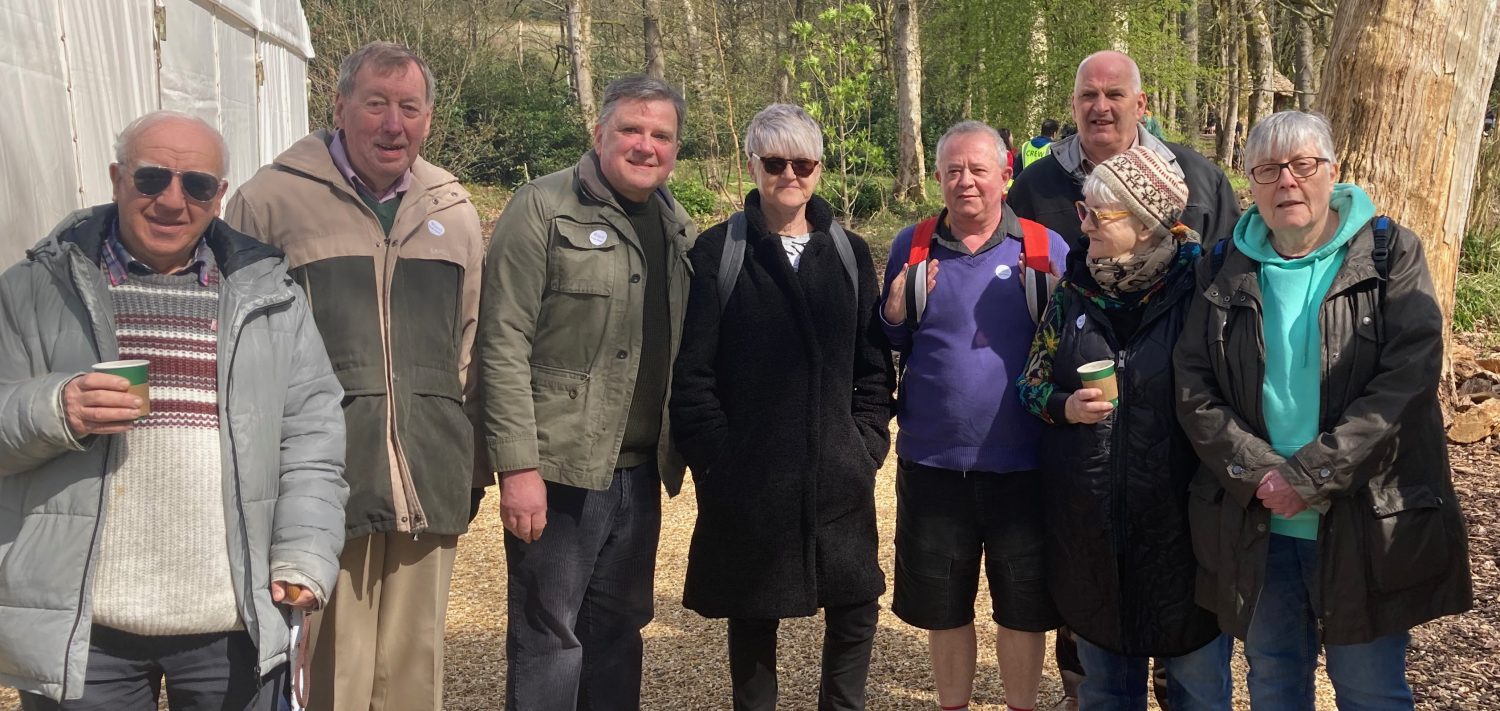
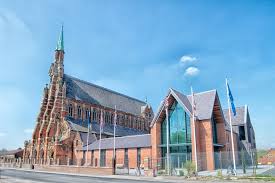
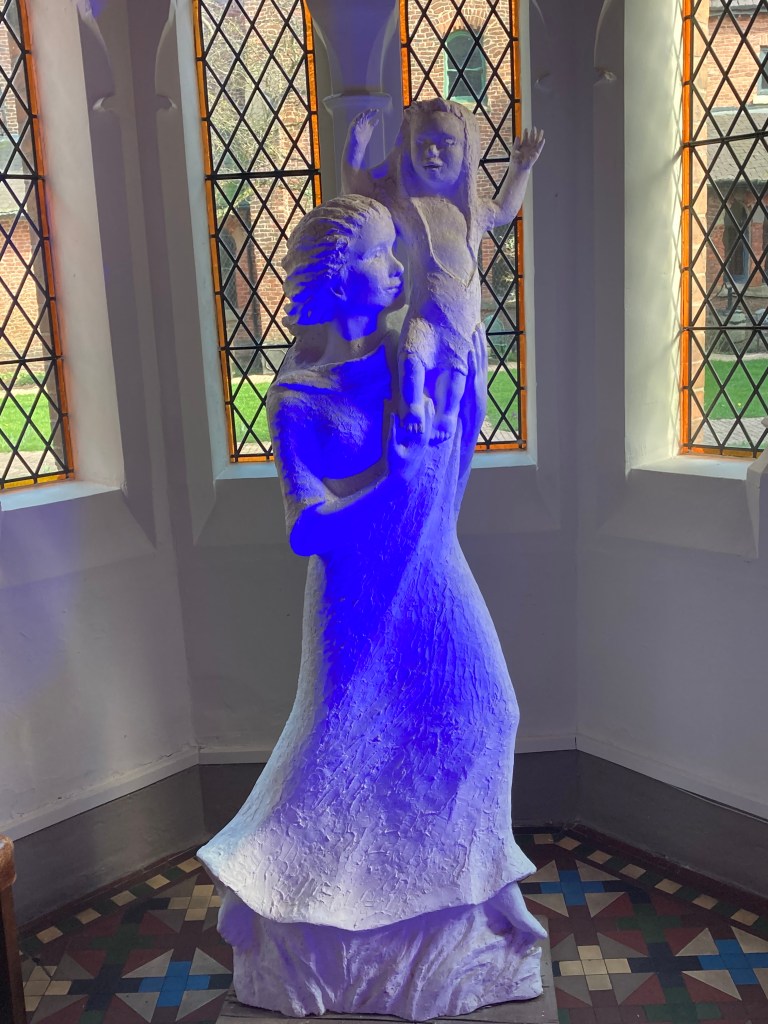
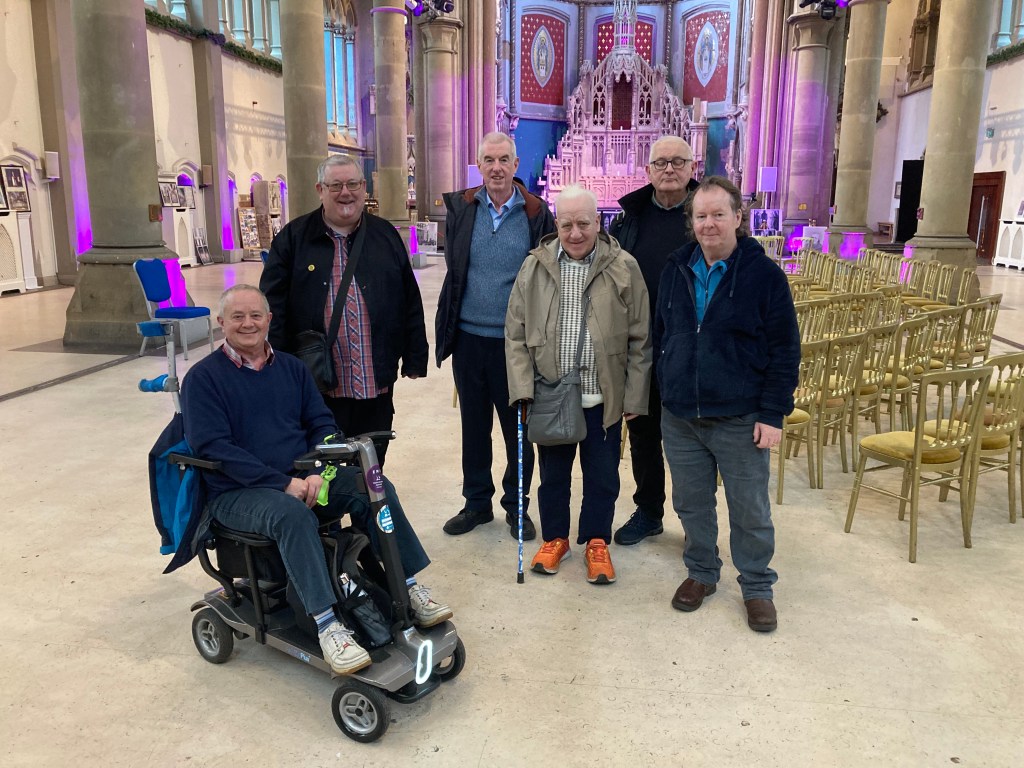
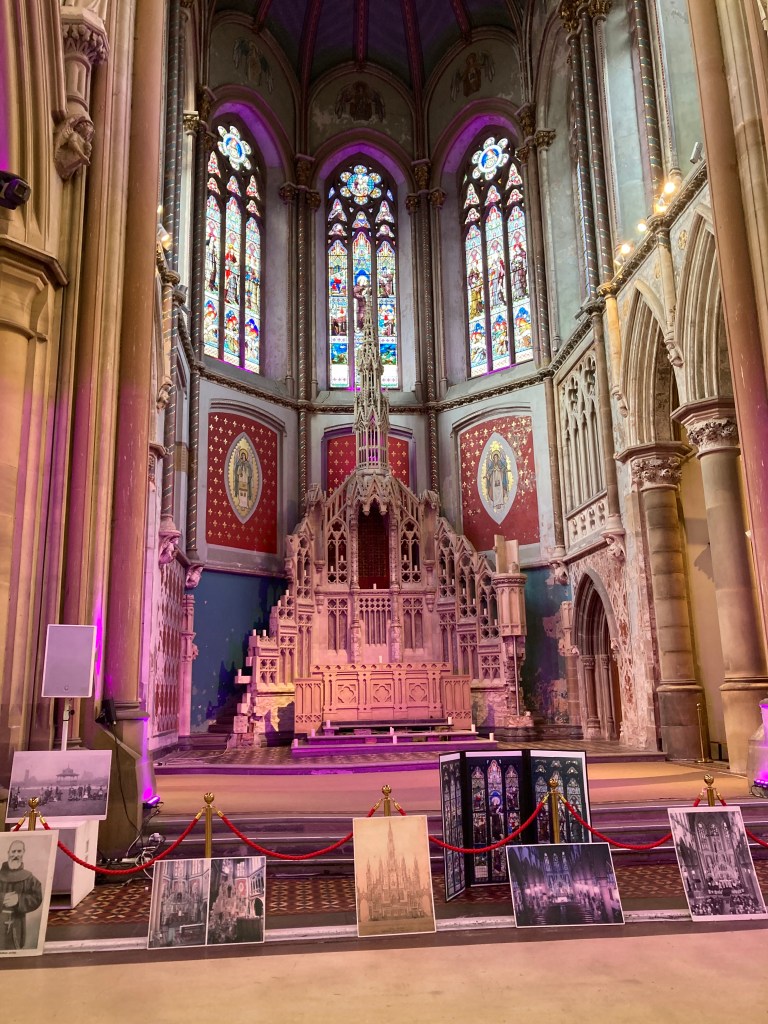
The Monastery is a short bus ride from the centre of Manchester, and although no longer a place of worship, it offers a sanctuary of peace.
We enjoyed an hour of silence. In essence, The Silence between 12.00 noon and 1.00pm is simply a place where you can recover the stillness and beauty at the heart of your being. Being in silence and peace is incredibly healing, a rest from the fast pace of modern life and a time to slow down.
It has been widely demonstrated that noise pollution is a threat to our health. A wonderful antidote can be found at Gorton Monastery, whose strong, sturdy walls enclose what for many is the epitome of a quiet, safe space.
We left all our baggage, worries and busy life at the door and took the time as a space for rest and recovery. A mini escape, a sanctuary of peace and urban retreat. A chance to get away from it all and gain some peace and perspective. A gift to ourselves or simply a chance to just have a rest!
The cafeteria was extremely busy, but we had a light lunch of jacket potatoes or sandwiches, before exploring the building.
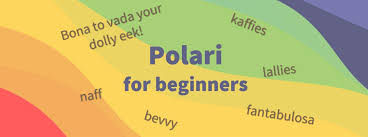
A brief history of Polari
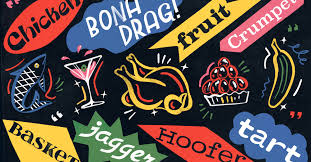
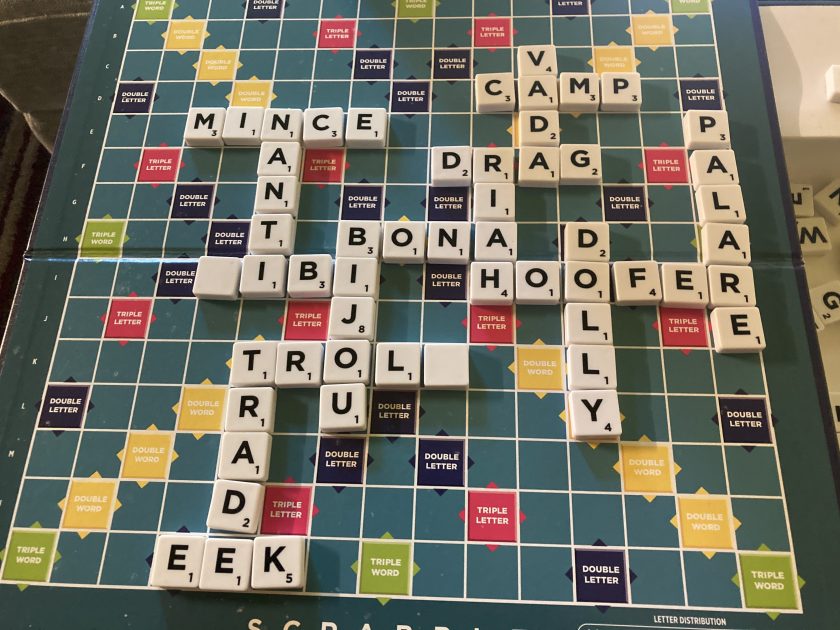
Polari is a secret language, which has now largely fallen out of use, but was historically spoken by gay men and female impersonators. It grew out of the world of entertainment, stretching back from West End theatres, through to 19th-century music halls and beyond that to travelling entertainers and market-stall holders.
And no flies! After visiting Gorton Monastery, we put our best lallies forward and with our eeks shining with hope, we trolled together towards the fantabulosa libraryette.
There we heard “Voiced” an unmissable evening of queer poetry and performance. Jez Dolan titivated us in her zhooshed up riah and gildy clobber.
Polari developed from an earlier form of language called Parlyaree which had roots in Italian and rudimentary forms of language used for communication by sailors around the Mediterranean. Also associated with travellers, buskers, beggars and prostitutes, it found its way into Britain, especially London and port cities, and gradually became used by gay men, especially during the first half of the 20th century.
Polari itself had Parlyaree as a base, but once in Britain was supplemented with a wealth of slang terminology from different sources, including Cockney Rhyming Slang, backslang (pronouncing a word as if it was spelt backwards), French, Yiddish and American airforce slang.
In a period when homosexuality was illegal and heavily stigmatised, it was useful as a means of conducting conversations in public spaces, which would have alerted others to your sexuality. Many of the words allowed speakers to gossip about mutual friends or to critique the appearance of people who were in the immediate vicinity.
“Vada the naff strides on the omee ajax” meant look at the awful trousers on the man nearby. Inserting a Polari word – such as bona (good) or palone (woman) – into a sentence could act as a coded way of identifying other people who might be gay. The language itself, full of camp, irony, innuendo and sarcasm, also helped its speakers to form a resilient worldview in the face of arrest, blackmail and physical violence.
Polari speakers “christened” themselves with camp names like Scotch Flo or Diamond Lil, affording themselves alternative identities that reclaimed the representations of them as effeminate in positive ways.
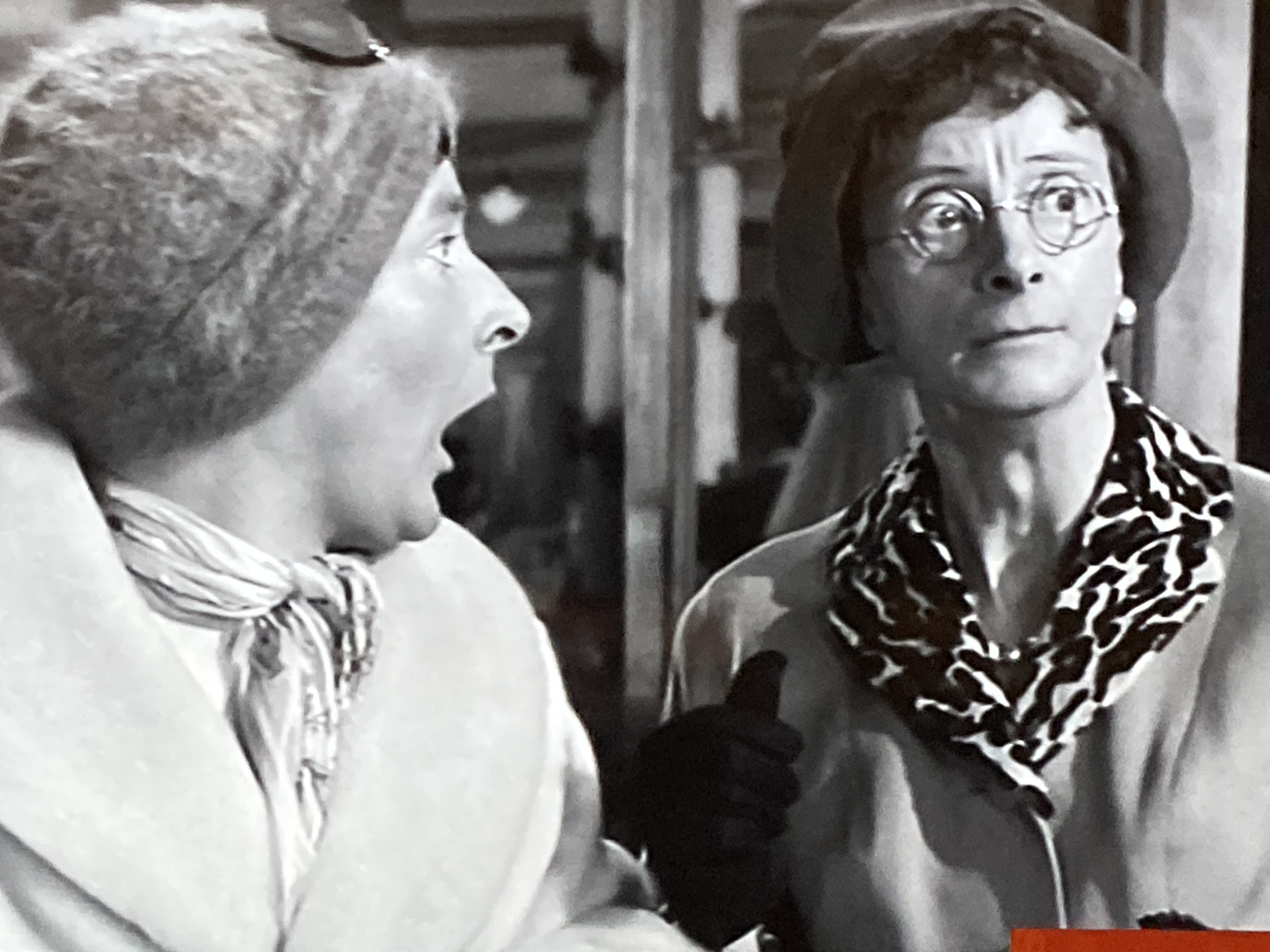
The 1960s comedy radio series Round the Horne had a regular sketch voiced by Kenneth Williams and Hugh Paddick, who played Polari-speaking actors. The version of Polari that was used was necessarily simplified and toned down for the British public, and by the 1960s, there was a feeling that Polari had already overstayed its welcome. Round the Horne spoiled the secret, rendering the language less attractive to its speakers. Meanwhile the decriminalisation of homosexuality in 1967 was round the corner, making it less necessary for a secret lingo in any case.
Some younger gay men were more interested in concepts like gay pride, gay liberation and coming out and viewed Polari as a naff byproduct of a more repressive time. In the 1970s, in an early gay magazine called Lunch, activists branded Polari as ghettoising and it gradually became surplus to requirements.
Renewed interest
While few gay men today actively use Polari, in recent years it has gained a kind of latent respectability as an historic language – similar to the way Latin is seen by the Catholic faith. From a political standpoint, Polari is now recognised as historically important, an example of the perseverance of a reviled group of people who risked arrest and attack just for being true to who they were.
A group of activists called the Sisters of Perpetual Indulgence created a Polari Bible, running a Polari wordlist through a computer programme on an English version of the Bible. The Bible was bound in leather and displayed in a glass case at the John Rylands Library in Manchester. This was not to mock religion but to highlight how religious practices are filtered through different cultures and societies, and that despite not always being treated well by mainstream religions, there should still be space for gay people to engage with religion.
There are lines such as: “And the rib, which the Duchess Gloria had lelled from homie, made she a palone, and brought her unto the homie.” This translates as: “And the rib which God had taken from man was made into a woman and brought to the man.”
Never has a dead language had such an interesting afterlife.
Free bus travel for older and disabled passengers to be made permanent from 1 March 2026
Older and disabled people in Greater Manchester will benefit from free round-the-clock travel on Bee Network buses, with the permanent lifting of the 9.30am restrictions on concessionary passes from March 2026.
Mayor of Greater Manchester Andy Burnham and council leaders from across the city-region have been working with older and disabled groups locally to bring about the major change which will give “real freedom” to passengers.
It follows two successful pilots in August and November, during which around 400,000 older and disabled people in Greater Manchester were able to use their concessionary passes 24/7, rather than having to wait until 9.30am to get on board.
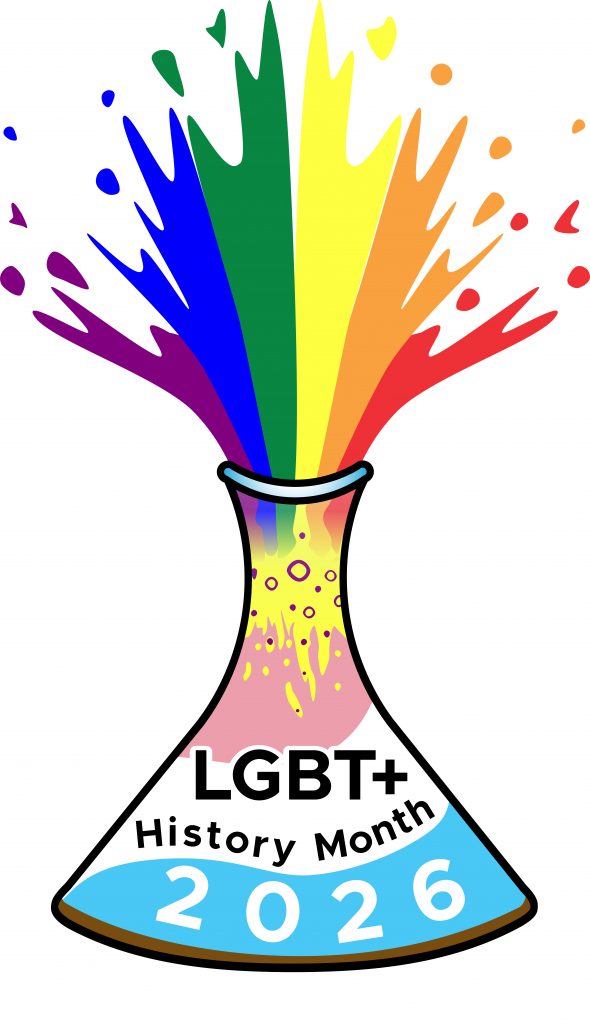
The theme for LGBT+ History Month 2026 is “Science & Innovation”. This theme highlights the contributions of LGBT+ people to science, technology, engineering and medicine, while also exploring how science has historically been used to pathologise LGBT+ identities. It aims to celebrate both historical and contemporary trailblazers.
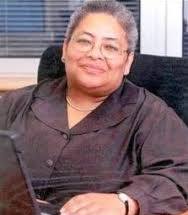
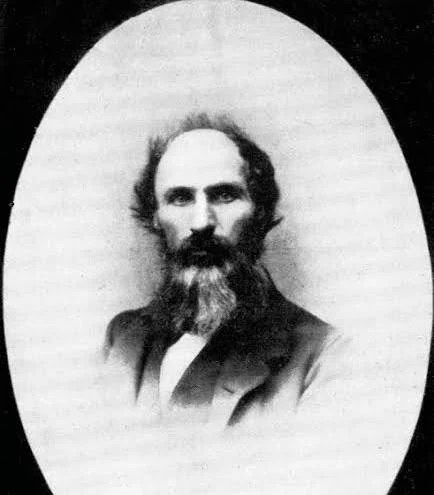
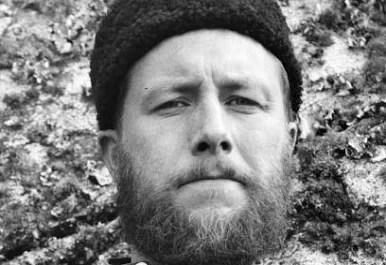
Each year five LGBT+ historical figures are chosen in line with the theme:
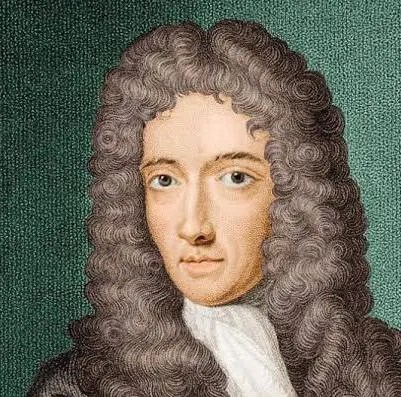
Barbara BurfordCharles BeyerElke MackenzieJemma RedmondRobert Boyle
Barbara Burford, a medical researcher who established NHS equality and diversity guidelines
Charles Beyer, a locomotive engineer and a founding member of the Institute of Mechanical Engineers
Elke Mackenzie, a botanist who researched lichens in Antarctica
Jemma Redmond, a biotechnologist who developed 3D bioprinters to create tissues and organs
Robert Boyle, a founder of modern chemistry and of the modern scientific method.
LGBT+ History Month party
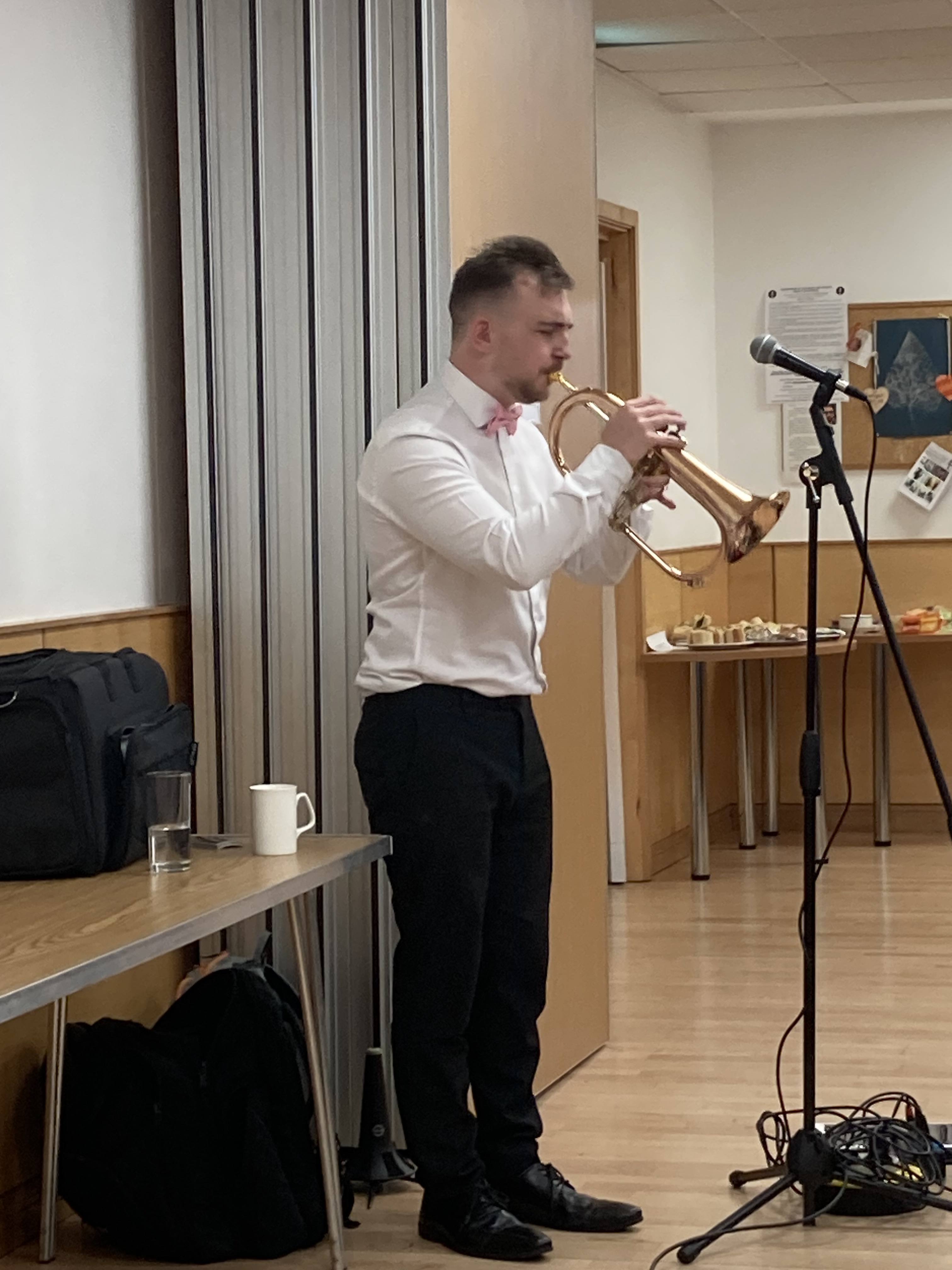
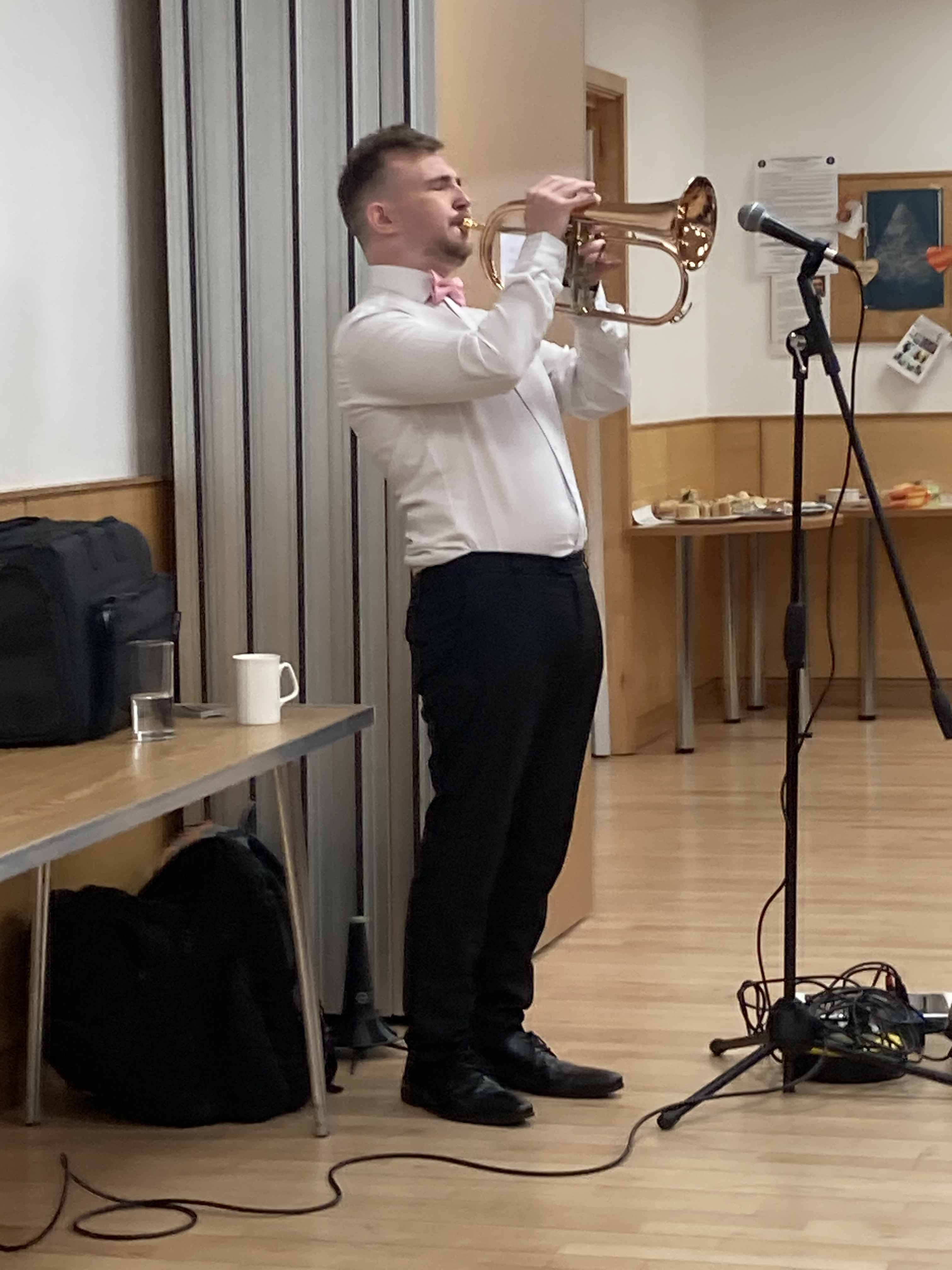
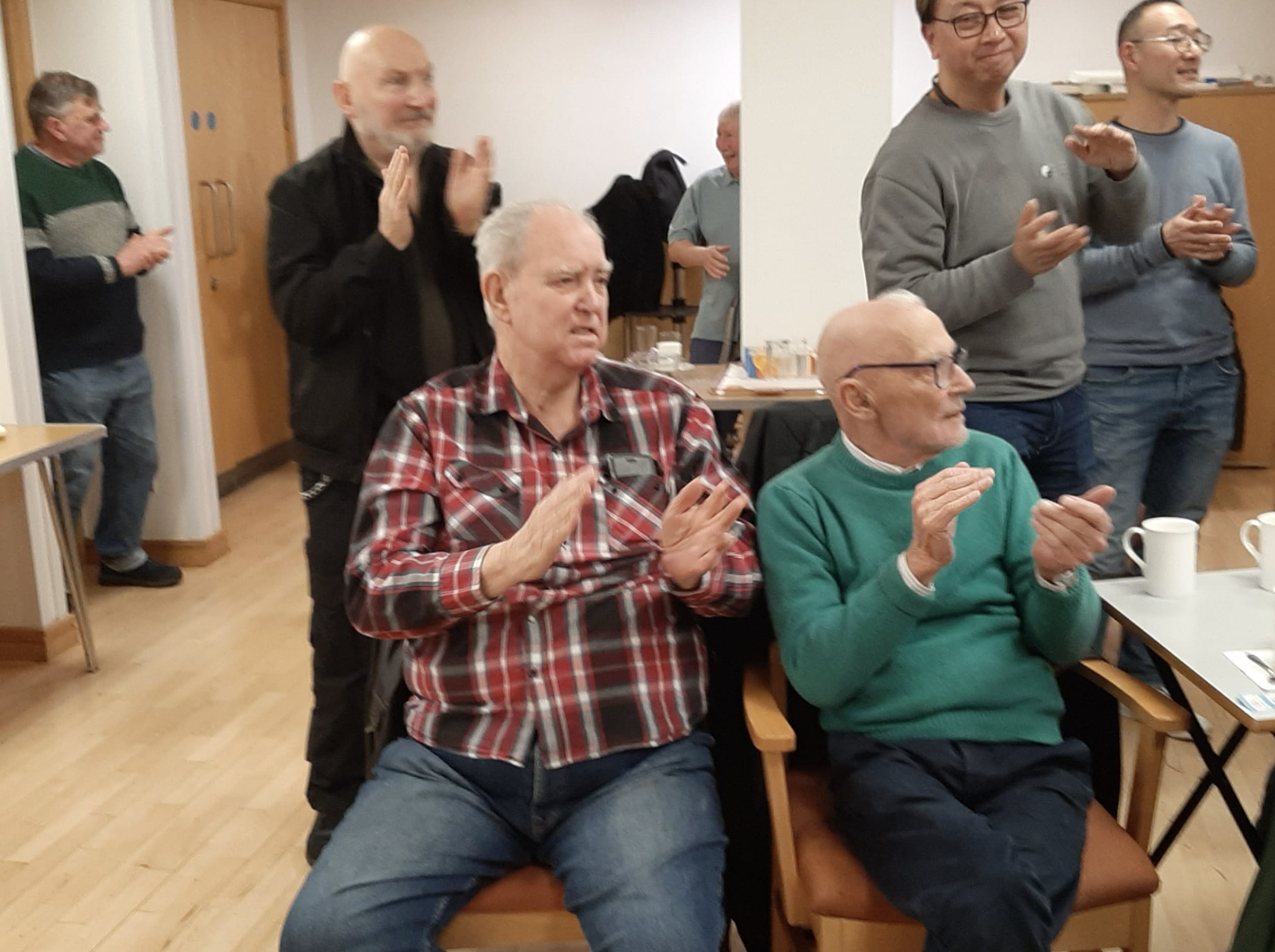
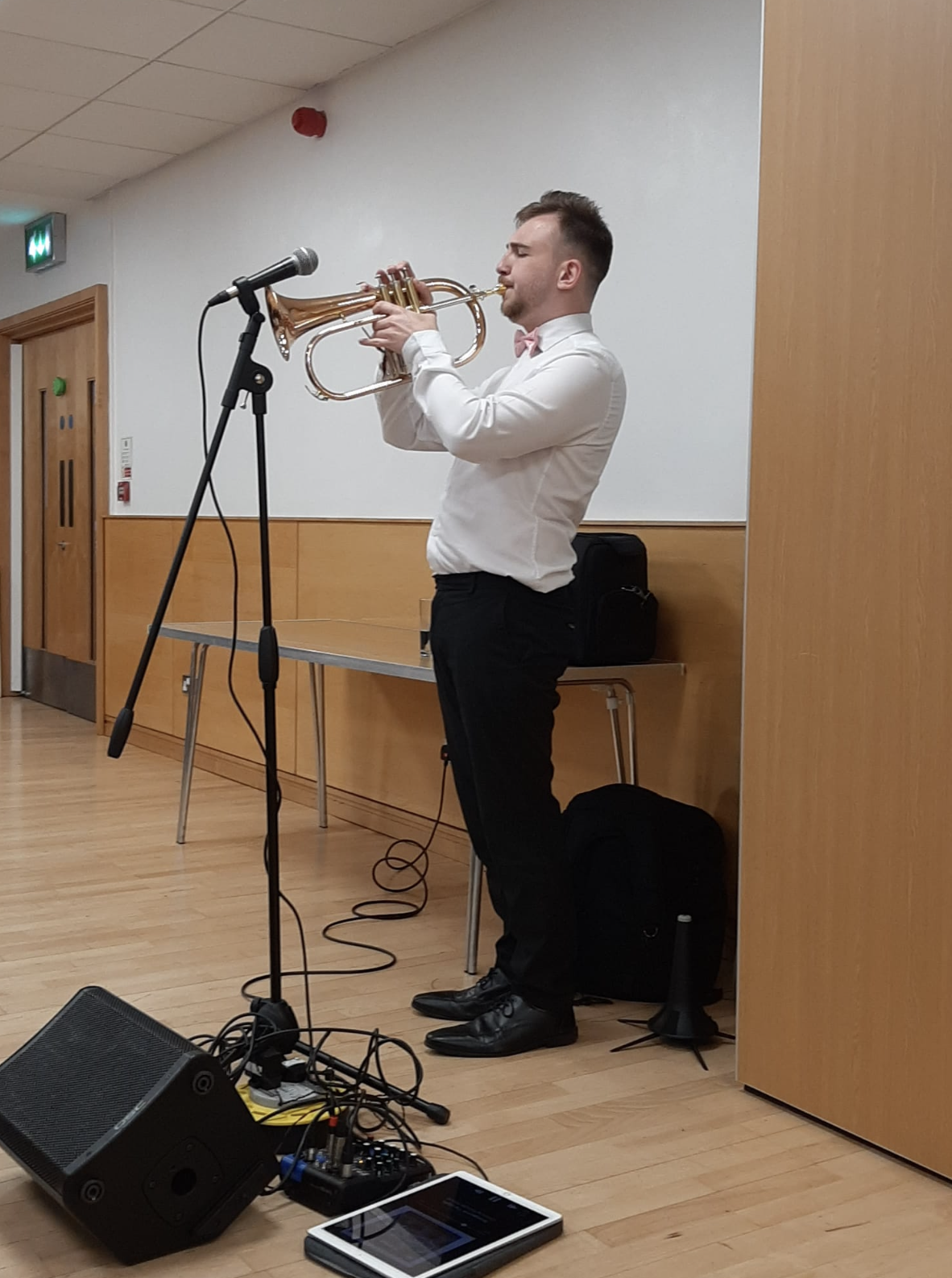
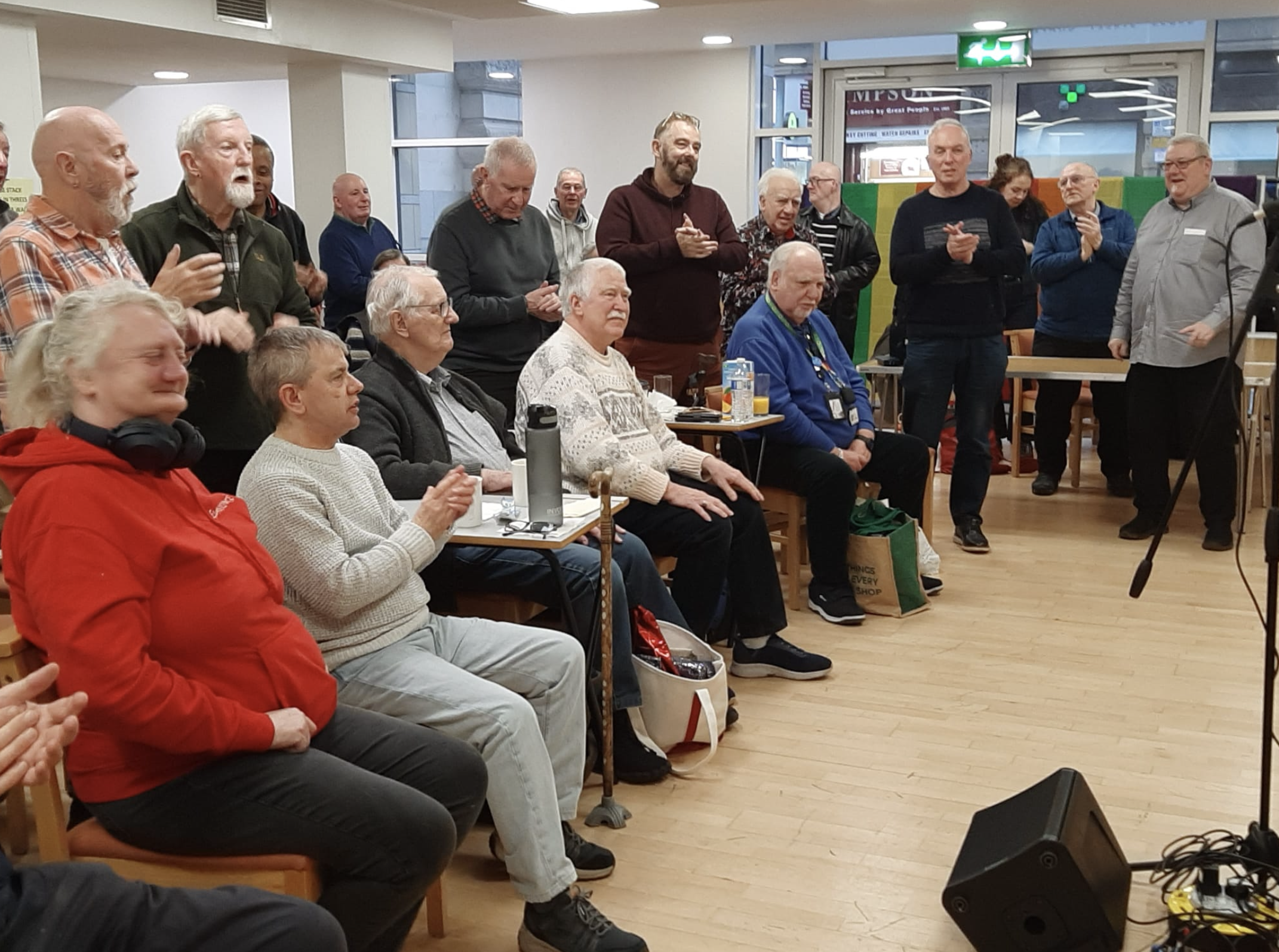
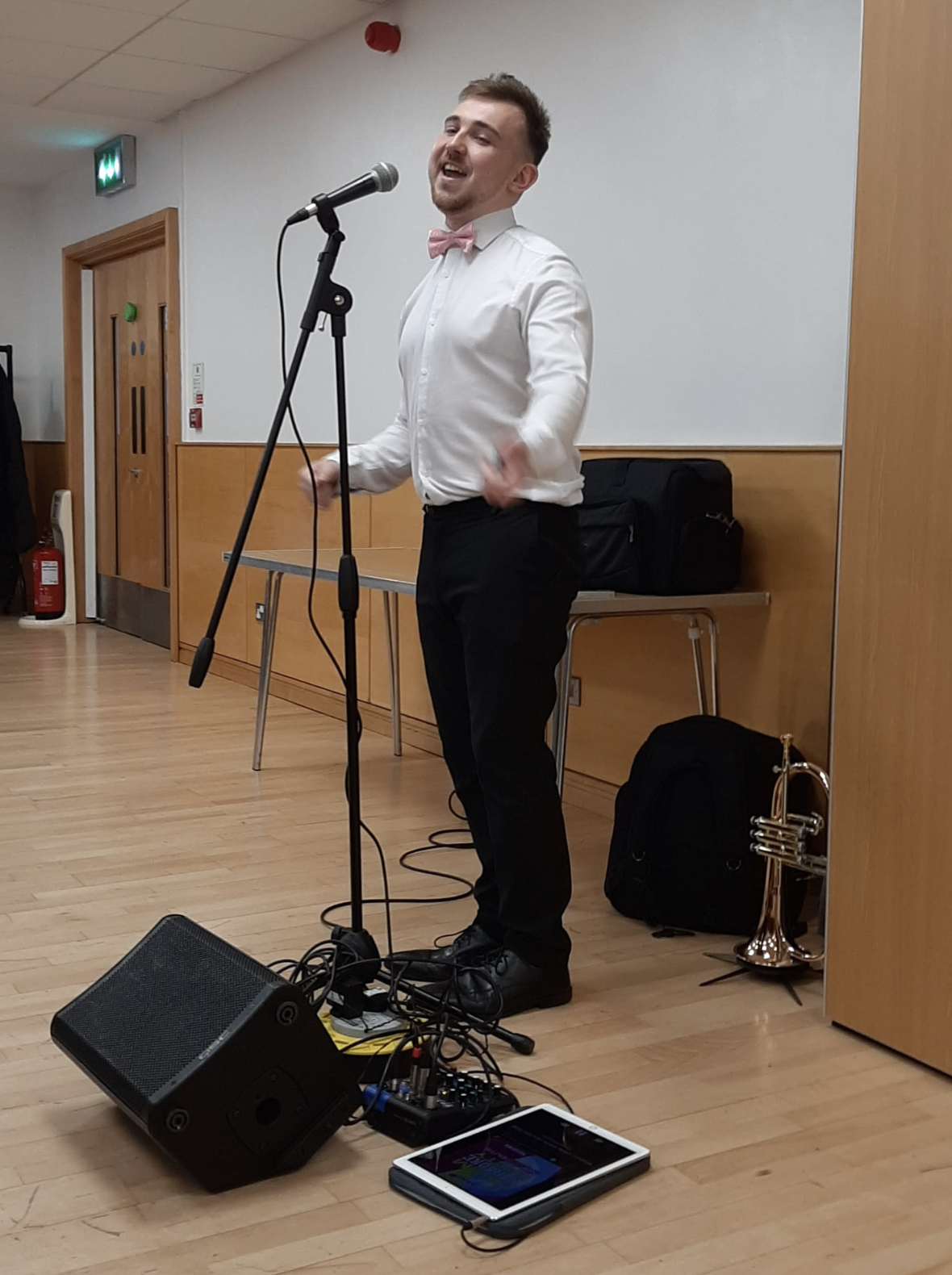
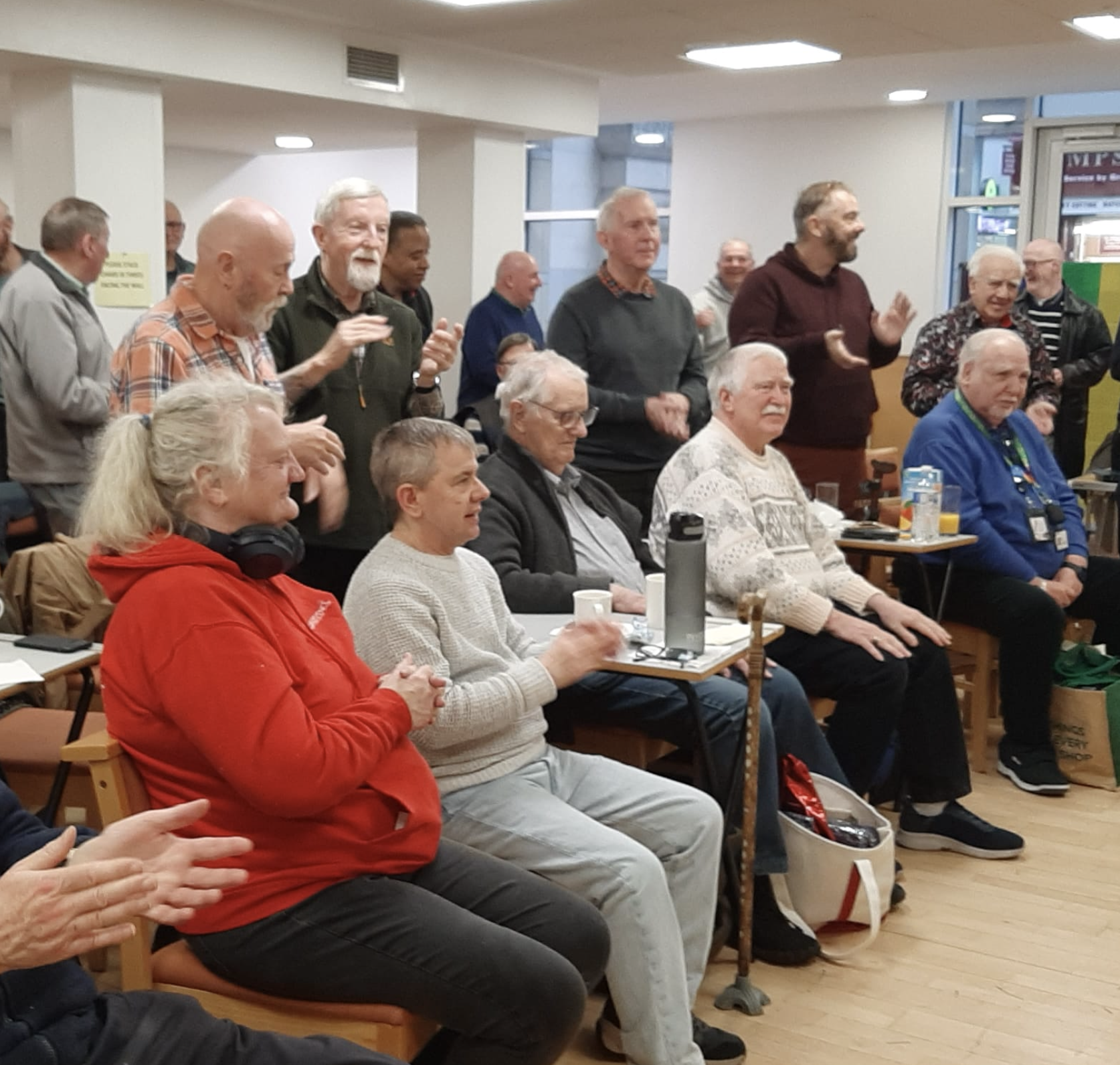
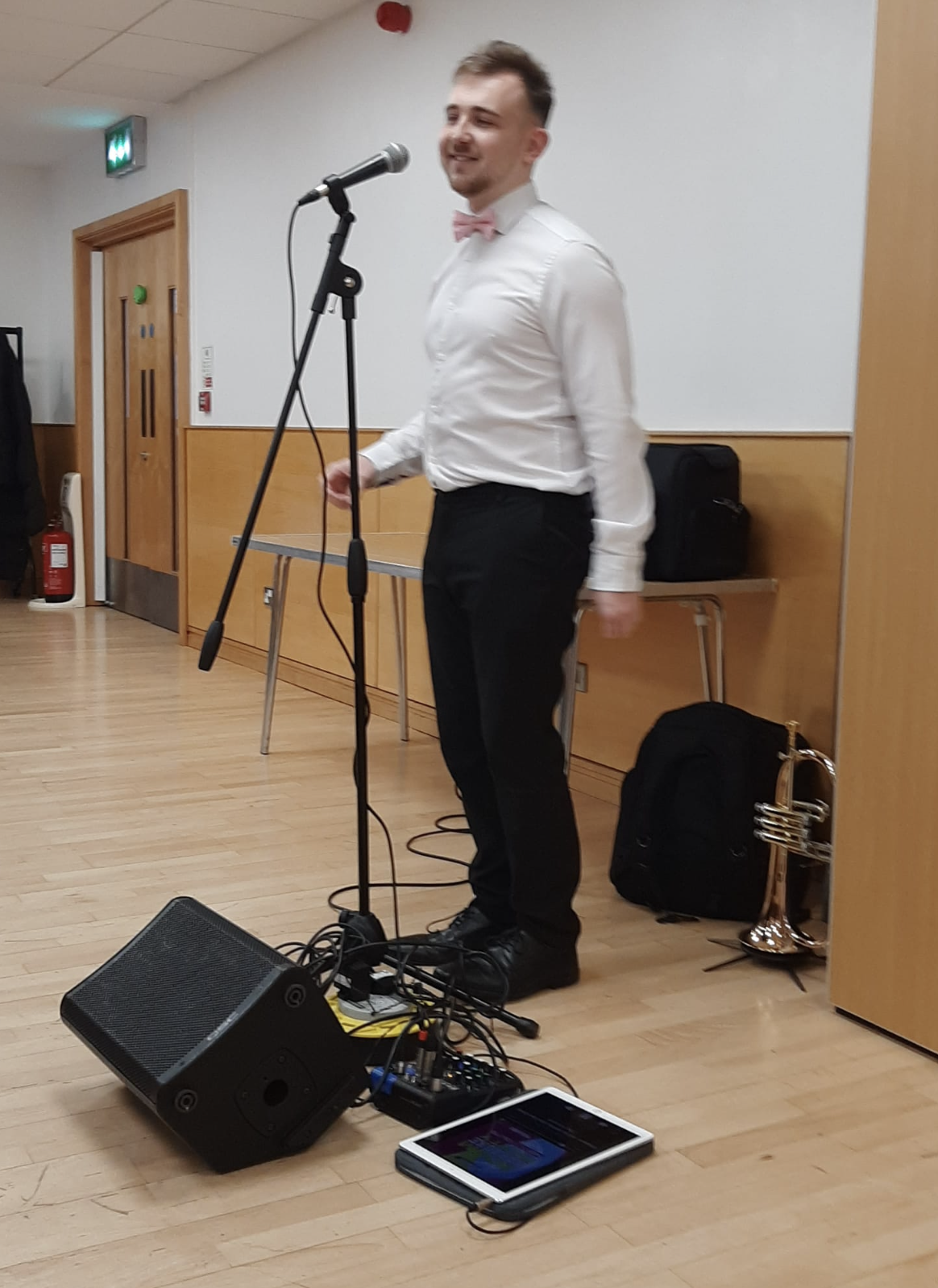
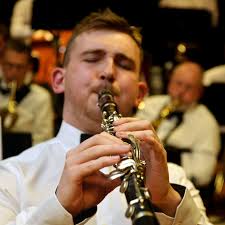
Out In The City held an LGBT+ History Month party with 50 people in attendance. Joe Cockx from the Golden Age Big Band entertained us with great songs from Frank Sinatra, Glenn Miller, Andy Williams, Engelbert Humperdinck and more.
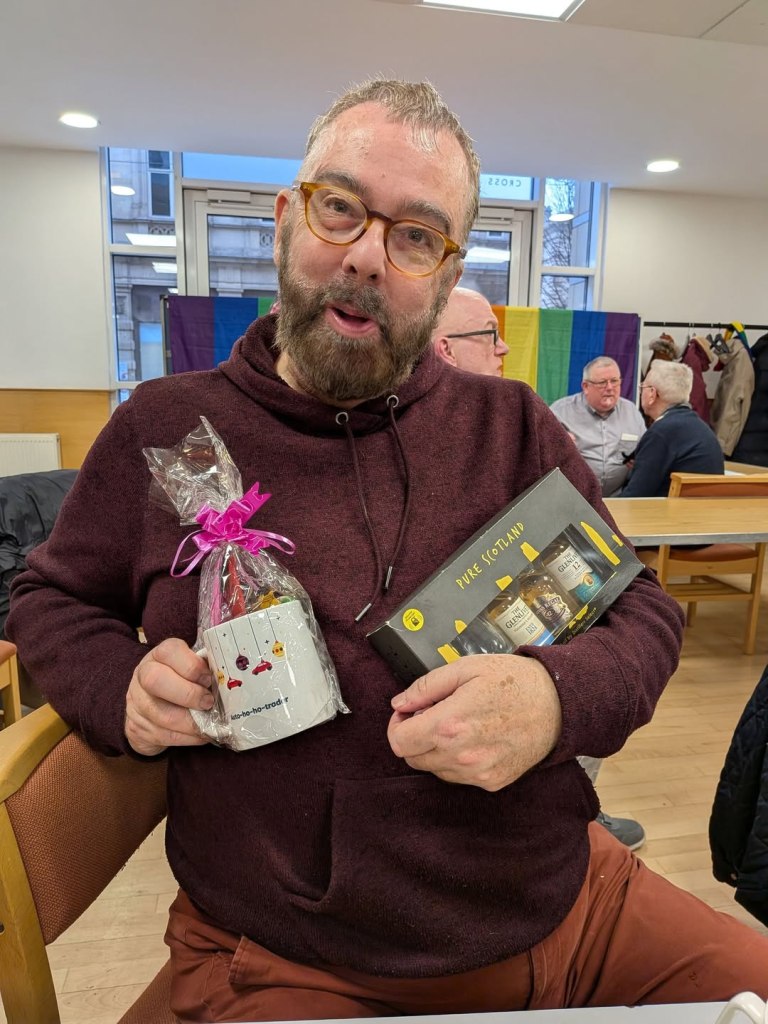
It was a thoroughly enjoyable afternoon of fun and joy with a little bit of dancing. The buffet and raffle went down well – Martin won three prizes!
Section 28
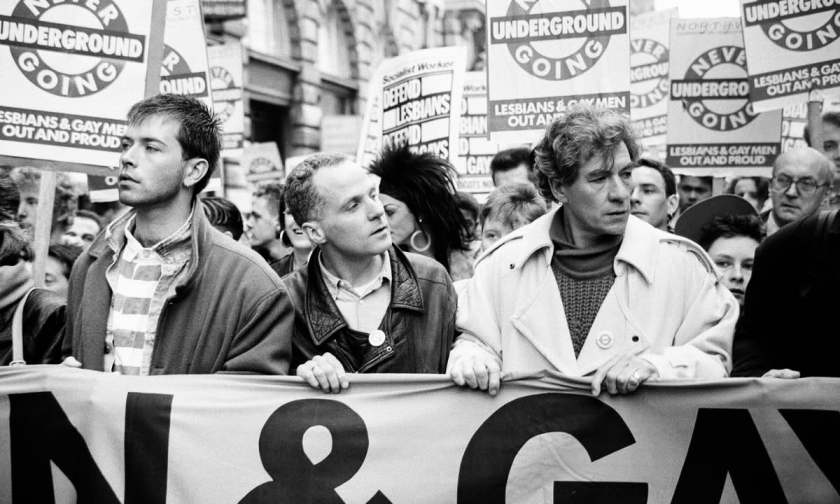
20 February 2026 was the 38th anniversary of Manchester’s brilliant ‘Never Going Underground’ march, rally and concert. Ian McKellen featured significantly in the campaign and went on to openly campaign against Section 28 – here on Wogan.
Ian McKellen appears on Wogan to state his opposition to Section 28 of the Local Government Act – which prohibits the “intentional promotion of homosexuality” by local authorities. Originally broadcast 3 June,1988.
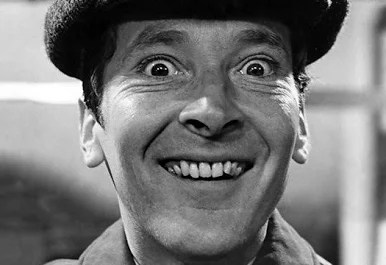
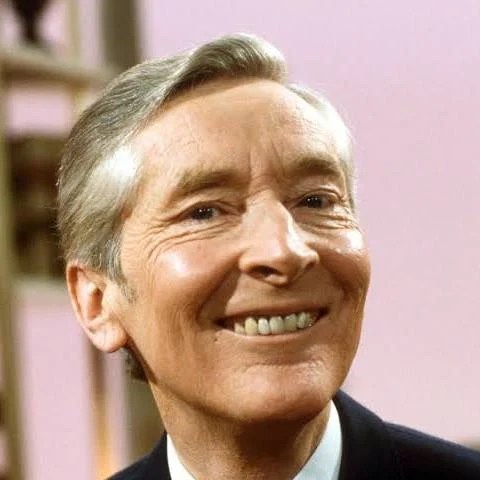
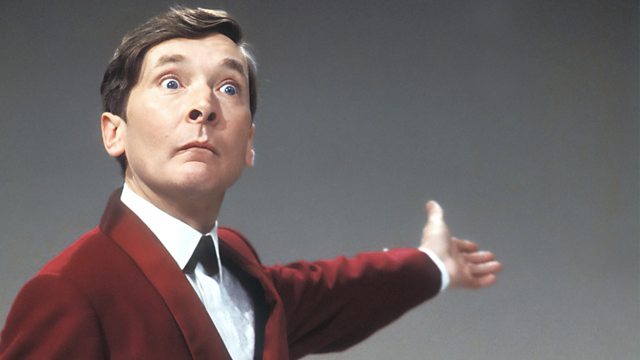
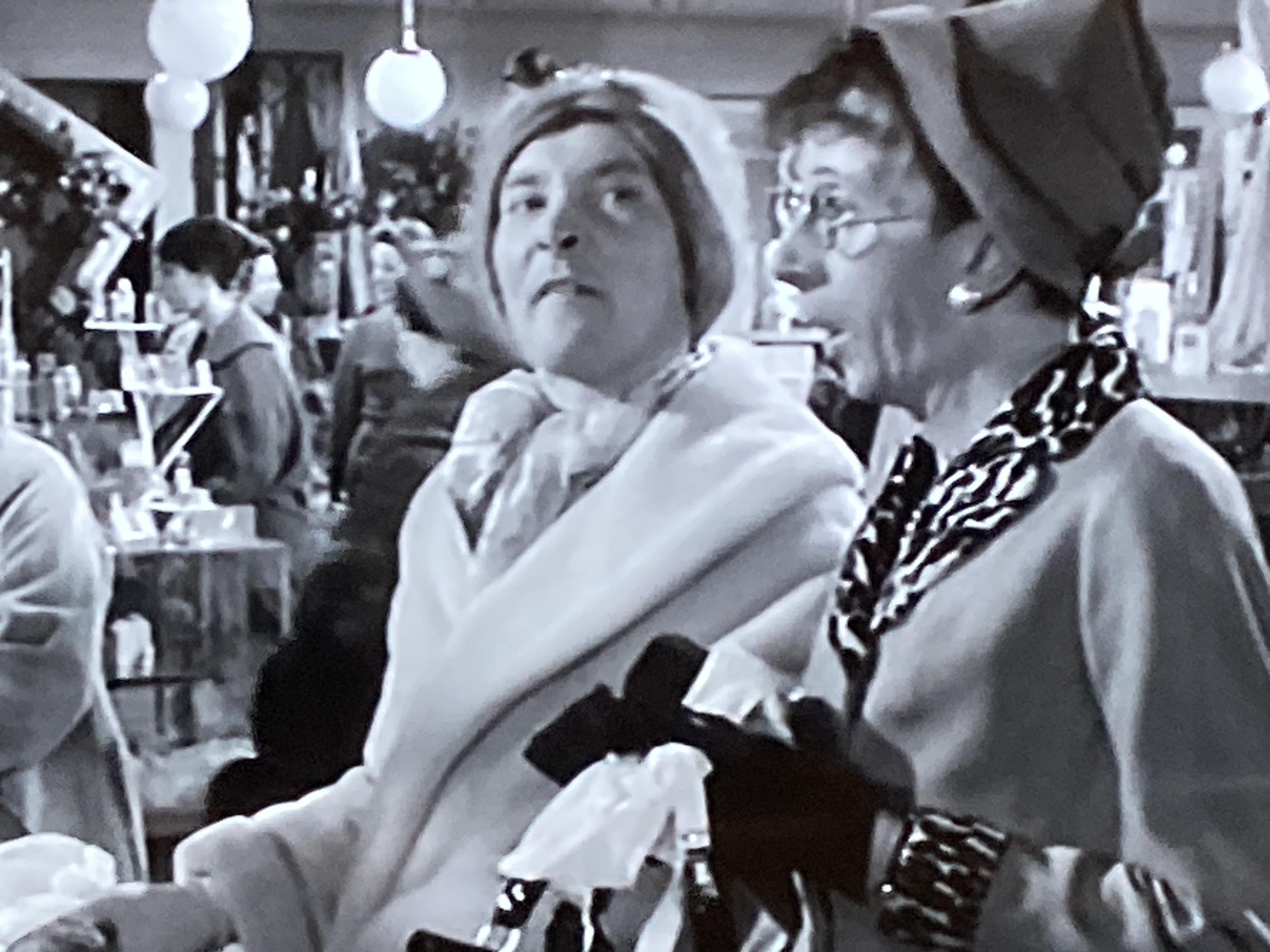
Kenneth Williams
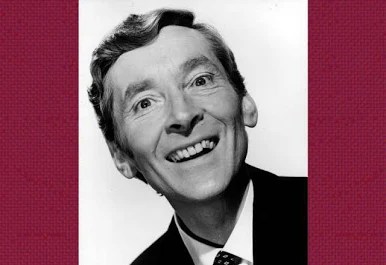
Kenneth Charles Williams (22 February 1926 – 15 April 1988) was a British actor and comedian. He was best known for his comedy roles and in later life as a raconteur and diarist.
He was one of the main ensemble in 26 of the 31 Carry On films, and appeared in many British television programmes and radio comedies, including series with Tony Hancock and Kenneth Horne, as well as being a frequent panellist on BBC Radio 4’s comedy panel show Just a Minute from its second series in 1968 until his death 20 years later.
If he were alive today he would be celebrating his 100th birthday!
Rainbow Lottery
Play the Rainbow Lottery and support Out In The City
The Rainbow Lottery is the UK’s first and only lottery supporting LGBT+ good causes.
Welcome to the Rainbow Lottery, the exciting weekly lottery that raises money for over 200 LGBT+ good causes totally, openly and exclusively.
The hope is to make a difference to good causes so they can carry on their vital work – which helps us all. Play the lottery, support the community – it’s fun, it’s simple and everybody wins!
How the lottery works:
£1 per ticket – that’s right, unlike many other lotteries, the lottery tickets are only £1 per week.
For every ticket you play, 80% goes to good causes and prizes.
£25,000 jackpot prize
Match all 6 numbers and you win the JACKPOT! There are also prizes of £2000, £250, £25 and 3 free tickets for following week.
Every month there is a Super Draw. February’s Super Draw is a
Luxury City Break worth £1,000 (or £1,000 cash!) One of our supporters could be getting away from it all this year with our fantastic bonus draw!
Whether you want to hit the West End for a weekend, see the architecture and nightlife of Barcelona, sample the art and food of Florence, or soak up the culture in Paris, this prize is simply not to be missed!
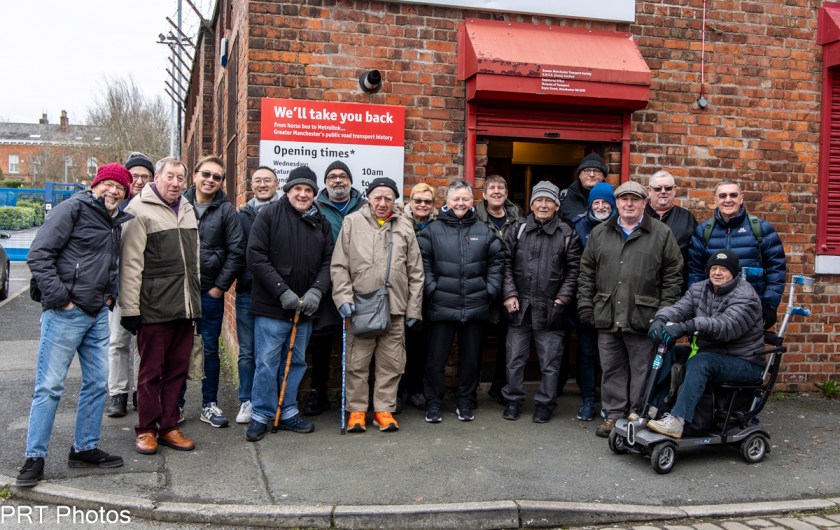
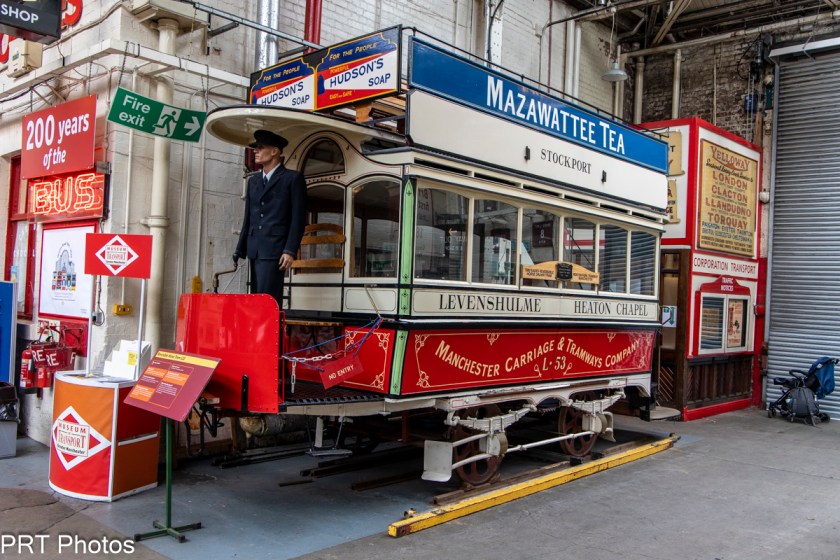
After meeting at Victoria Train Station, we took the short bus journey to Queens Road. There we met the rest of the group at the museum at the top of Boyle Street. The building was a working bus garage in the 1930s but now houses historic buses, coaches, trams as well as various collections and displays.
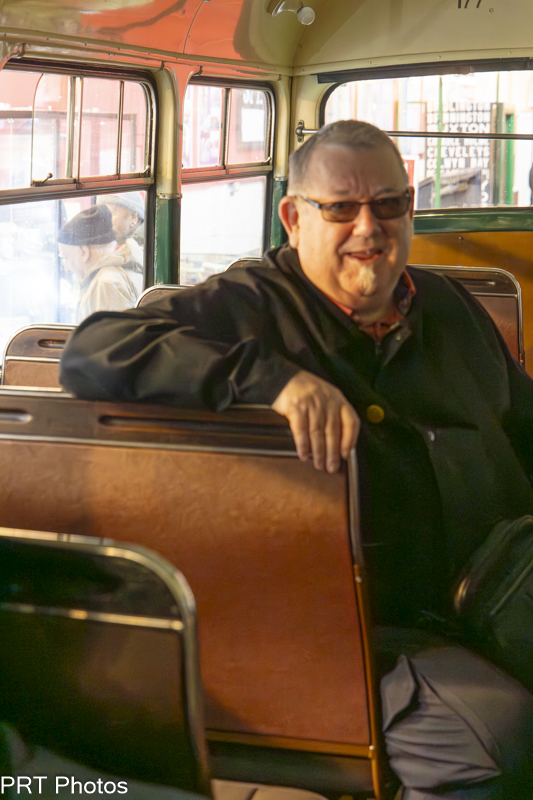
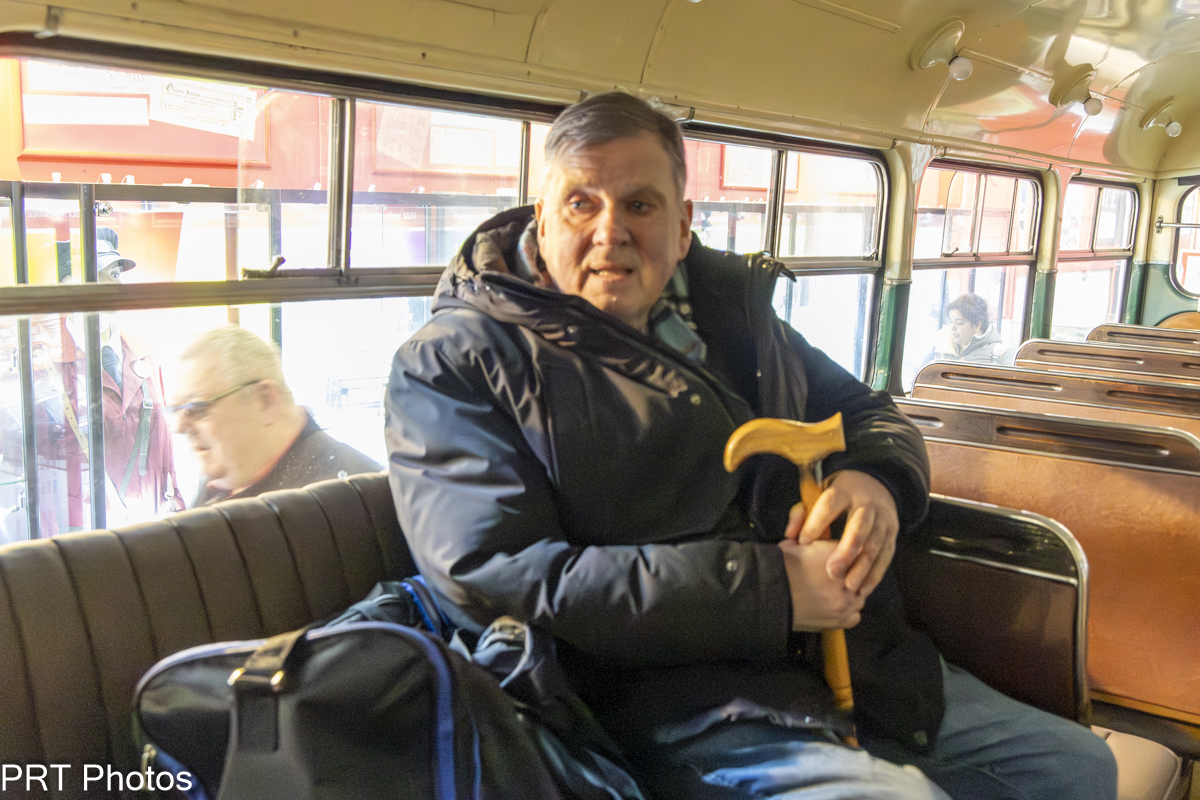
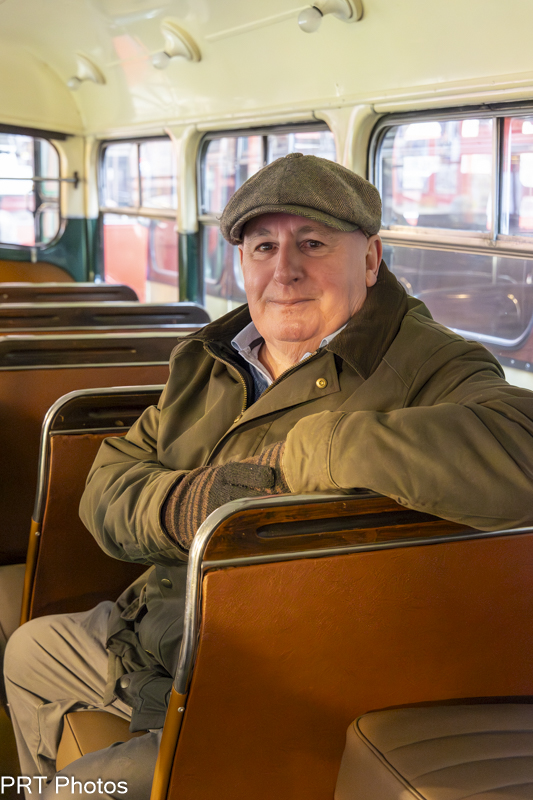
From horse bus to Metrolink we discovered Greater Manchester’s public road transport history. You could sit inside some of the buses, which brought back memories of our younger days.
We had pre-ordered our lunches – pie and peas, jacket potatoes and sandwiches – which we enjoyed in the surroundings of the tea room, a traditional 1950s cafeteria.
A visit to Greater Manchester’s Museum of Transport is a journey back in time.
We found ourselves transported to an age when all the local authorities around Manchester ran their own buses, proudly painted in local colours and adorned with the Corporation’s crest.
We were reminded of a more tranquil age when these mighty buses and trams, with their drivers and ‘clippies’, were the most familiar form of transport for virtually everyone. There are around ninety vintage vehicles, many of which have been fully restored and now look resplendent in their original liveries.
Pride of place in the museum must go to the Victorian horse drawn bus, circa 1890. It is a wonderful example of an early public transport vehicle and you can see exactly how passengers would have travelled about town at the turn of the nineteenth century.
The museum is actively involved in restoring the region’s forgotten buses. It also plays host to special events throughout the year, some of which give you the chance to ride vintage buses around the streets of Manchester.
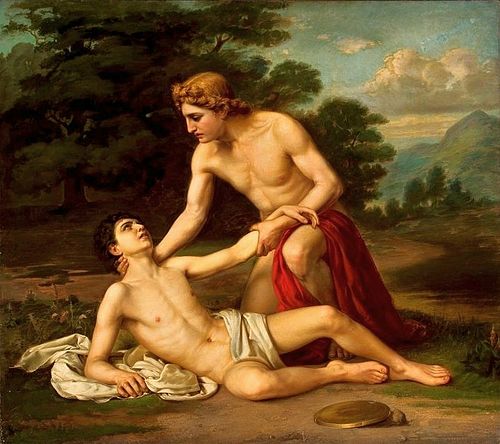
Mozart was barely eleven years old, when, in May 1767, his opera, Apollo et Hyacinthus, was first performed by young male students from The Benedictine School in the great hall of Salzburg University. The libretto, written in Latin, was based on the story of the Greek God, Apollo, and his love for Hyacinthus, taken from Book 10 of Ovid’s Metamorphoses (a collection of Ancient Greek myths).
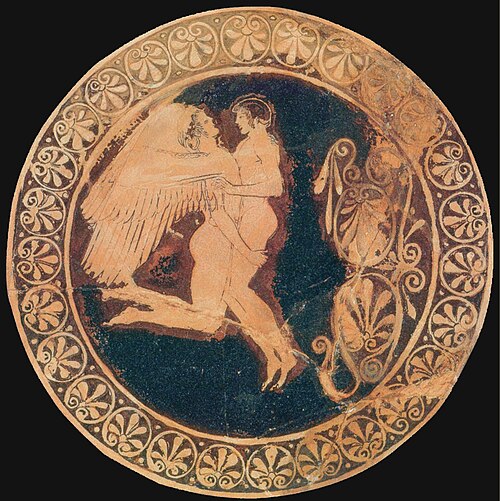
Hyacinthus and Zephyrus
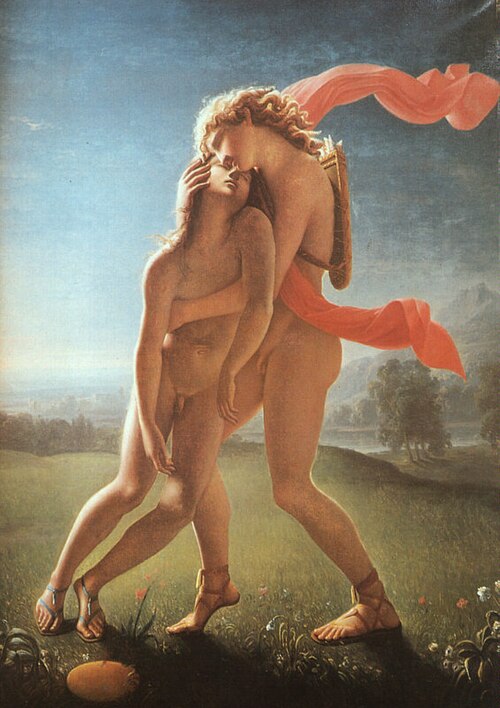
In the original story Apollo fell deeply in love with Hyacinthus, a handsome Spartan prince with whom he often exercised in the nude. Unwittingly, Apollo occasioned the demise of his lover when a discus thrown by him accidentally hit Hyacinthus in the head. Distraught at the death he had caused, Apollo frantically attempted to revive his lover, but to no avail. So, as a memorial to his beloved, and to their love, Apollo caused the hyacinth flower to sprout from the blood of the fallen Hyacinthus.
Later versions of the story introduced a further would-be lover and suggested that Zephyrus, the West Wind, jealous of the love of Apollo for Hyacinthus, was the one who had encouraged the god to throw his discus, with the Wind himself fatally guiding the discus towards the head of Hyacinthus. In this opera, Zephyrus too is a central character and, in an aside, confesses his guilt.
To downplay the central homosexual love triangle of the plot, the librettist, Father Rufinus, brought two new characters into the story, Oebalus and his daughter Melia (sister of Hyacinthus and sung by a boy chorister en travesti). Rufinus also introduced a presumed romance between Apollo and Melia into the story, thereby perhaps hoping to straightwash the work and forestall any potential criticism that might be occasioned by a Catholic priest writing such a well-known queer classical tale for young male students to perform. Nonetheless, the obvious queer overtones of the story would have been readily perceived by the all-male staff and students at the University, who as part of their basic education would be well-read in the Classics of Ancient Greece, and some no doubt quite familiar with the stories of Apollo and his various male lovers.
Death of Hyacinth
With his prodigious intellect I feel sure Mozart would also have been aware of the queer undercurrents in the story. After all, the love of Apollo for Hyacinthus is clearly foregrounded in the title and body of the opera that he wrote. That, allied perhaps with his own awareness of schoolboy crushes and of the prevalent colloquialism, then in everyday use, of the term, ‘Warme Brüder’, (literally ‘Warm Brothers’), a euphemistic phrase applied in the German States to refer to men who preferred to sleep with other men.
Hope Mill Theatre, 113 Pollard Street, Manchester M4 7JA
Presented by members of Artemis Theatre Company.
A verbatim play addressing homophobic and transphobic abuse of older LGBTQ+ people in care and receiving care in later life.
These script-in-hand performances of At the Rainbow’s End by Clare Summerskill at The Hope Mill Theatre are all FREE.
Clare Summerskill’s latest play is based entirely on interviews with older LGBT people who have experienced homophobia and transphobia in care settings and when receiving care in their own home. It tackles an extremely important issue concerning older LGBT people who, having perhaps been out for their whole adult lives, are faced with the possibility of having to go ‘back into the closet’ at the point of accessing care in later life.
Each performance will be followed by a Q&A with the writer, the audience and informed panellists.
Performance and post-show discussion last approximately 1.5 hours.
What did the High Court say about Trans people and the use of loos?
Here is an accurate summary of the High Court judgement dated 13 February 2026 in the case brought by Good Law Project to challenge the lawfulness of the interim guidance (previously) issued by the Equality and Human Rights Commission (EHRC) regarding single-sex spaces, cutting through polarised rhetoric.
The judgment does not establish that trans people are banned from any spaces. Instead, it clarifies a nuanced legal framework:
Workplaces must provide “suitable and sufficient” single-sex facilities OR single-person lockable rooms.
Employers must provide facilities separated by biological sex or single-user lockable rooms. But they can (and often must) provide additional facilities beyond the minimum to avoid discriminating against trans staff.
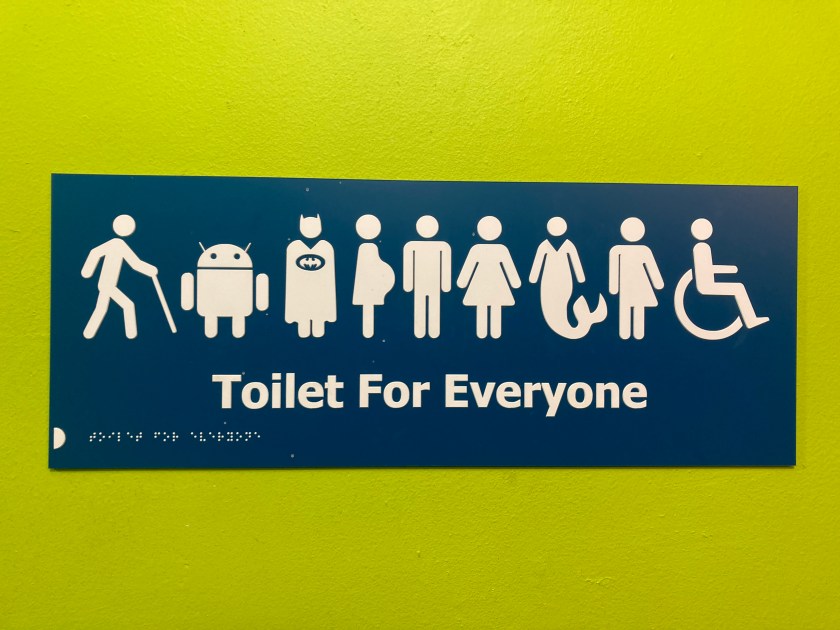
Public services (shops, cafés, etc) have no legal requirement to provide single-sex facilities at all.
Service providers can choose mixed/unisex facilities, single-sex facilities (if proportionate to a legitimate aim), or both. They are not compelled to exclude trans people.
Single-sex facilities
Cease to be legally “single-sex” if used according to gender identity rather than biological sex.
This is a definitional point – not a ban. Providers can still allow trans-inclusive use; they just can’t label it “single-sex” while doing so.
Proportionality is everything: even where single-sex provision is permitted, it’s only lawful if “a proportionate means of achieving a legitimate aim” (Equality Act 2010, Sch 3).
Blanket exclusions of trans people may fail this test and constitute unlawful discrimination on grounds of gender reassignment (paras 66-67, 71).
No requirement to police biological sex: The judge explicitly rejected the idea that employers must “police” toilet use “person by person and day by day” as “divorced from reality” (para 40). Good faith policies are sufficient.
Trans-inclusive facilities may be lawful: The judge was notably less certain than the EHRC that allowing trans women in women’s facilities while excluding other men would automatically constitute sex discrimination against men.
It depends on circumstances and whether it amounts to “less favourable treatment” (paras 57-62). This undermines claims of a strict “either everyone or no one” rule.
Dignity obligations remain: Providers must ensure trans people aren’t left with no appropriate facilities. Expecting all trans people to use only facilities matching their biological sex may not be proportionate (para 66).
The guidance itself encouraged providing mixed-sex or single-user facilities alongside single-sex ones (points [3c] and [3d]).
The judge:
warned against “unyielding ideologies” and noted the law is “more nuanced” than public debate suggests (para 25-27);
criticised framing rights as “trumping” each other in a “zero-sum game” when the Equality Act actually balances multiple protected characteristics;
called it “bizarre” to speak of legal “rights” to particular toilets – urging providers to be guided by “common sense and benevolence” rather than rigid rules (para 27).
The court found that the way the EHRC revised the guidance was “opaque and very unsatisfactory” – changes weren’t clearly flagged to readers (para 92).
But crucially: the court did NOT find the guidance legally inaccurate or unlawful in substance
The court rejected arguments that workplace regulations only govern physical provision of facilities without governing their use (the purpose is clearly to provide private space separated by biological sex for “reasons of propriety”).
Noted that concerns about gossip when using accessible facilities, while sincerely held, don’t necessarily amount to legal discrimination (para 73).
Bottom Line for Trans People
You are not banned from using facilities matching your gender identity.
Service providers can provide trans-inclusive facilities – they’re not legally prohibited from doing so.
Employers must avoid unlawful discrimination on grounds of gender reassignment when making facility arrangements.
But facilities designated as “single-sex” (for Equality Act purposes) must align with biological sex – though providers can choose not to designate as such.
The legal test is always proportionality: blanket exclusions may be unlawful; thoughtful, context-sensitive arrangements are required.
The judgment ultimately affirms that equality law requires nuanced, fact-sensitive application – not rigid rules.
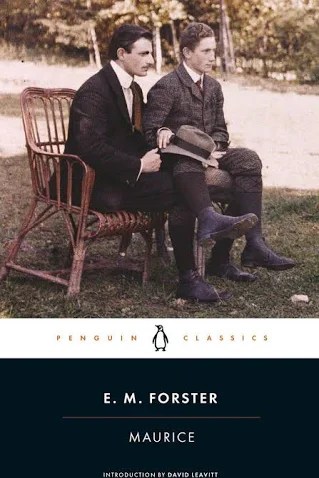
Maurice
He wrote a love story between two men with a happy ending in 1914 – then locked it in a drawer for 57 years. He died one year before the world finally read it.
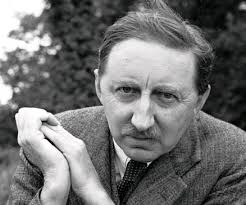
E M Forster was already a celebrated author in 1913 when he began writing a novel he knew he could never publish. He had written A Room with a View and Howards End, books that made him famous, books that examined English society with wit and precision.
But this new novel was different. This one was about him.
Maurice tells the story of a young man who falls in love with his Cambridge classmate, Clive Durham. When Clive eventually rejects him, Maurice finds love with Alec Scudder, a working-class gamekeeper. And here’s what made it revolutionary: they run away together. They choose each other. They get a happy ending. In 1914, that ending was unthinkable.
This wasn’t ancient history. This was the era of Oscar Wilde’s imprisonment still fresh in memory, of men arrested and jailed for “gross indecency”, of lives destroyed simply for loving someone of the same sex.
Homosexuality was a crime punishable by up to two years of hard labour. The law wouldn’t change until 1967 – and even then, only partially. Men lost their careers, their families, their freedom. Some were chemically castrated. Some took their own lives rather than face exposure.
Oscar Wilde had died in exile in 1900, destroyed by the very society Forster moved through. The message was clear: if you were a man who loved men, your story could only end in tragedy, shame or silence. But Forster refused to write that ending.
When he finished Maurice in 1914, he showed it to a handful of trusted friends. Their responses were mixed. Some were moved. Others warned him never to publish it. One friend told him it was “too dangerous.”
Forster typed a note and attached it to the manuscript: “Publishable – but is it worth it?” Then he put it in a drawer and locked it away.
For the next 56 years, Maurice existed only in typescript, read by a small circle of Forster’s closest confidants. He revised it occasionally, updating details, refining scenes. But he never published it. He couldn’t. Not while his mother was alive.
Lily Forster lived until 1945, dying at age 90. Forster had lived with her for most of his life. She was domineering, possessive, and completely unaware – or wilfully ignorant – of her son’s sexuality. Forster couldn’t risk her discovering the truth, couldn’t bear the scandal it would bring to her.
After her death, Forster was more open with friends, but still not with the world. He was 66 years old when his mother died, too old to rebuild a life as an openly gay man, too entrenched in a society that would reject him.
He had other secrets, too. In 1930, Forster met Bob Buckingham, a 28-year-old policeman. Forster was 51. They fell deeply in love – or something like it. Their relationship was physical and emotional, documented in letters that reveal Forster’s longing and devotion.
Then, in 1932, Bob married a woman named May Hockey. The relationship didn’t end. Instead, it transformed into a complicated triangle. Forster remained close to both Bob and May for the rest of his life, often visiting them, sometimes causing tension. It was love, compromise, and quiet heartbreak all at once.
Forster lived in the shadows – loving Bob, writing privately, achieving public success while hiding his true self.
In 1954, something happened that reminded Forster just how dangerous those shadows were. Alan Turing, the brilliant mathematician who had helped crack the Enigma code and save countless lives during World War II, was arrested for “gross indecency” after his relationship with another man was discovered. He was convicted. Given a choice between prison or chemical castration, he chose the latter.
In 1954, Turing died of cyanide poisoning. The official verdict was suicide.
Forster knew Turing. He knew what the law could do. He knew that Maurice, with its defiant happy ending, was not just a love story – it was an act of rebellion. But still, he didn’t publish it.
He left instructions: the novel could be published after his death. Only then would it be safe. Only then could it exist without destroying him.
E M Forster died on 7 June 1970, at age 91. He had lived through two world wars, had written masterpieces that were taught in schools, had been celebrated and honoured. But he died without ever seeing Maurice in print.
In August 1971, one year after Forster’s death, Maurice was finally published. The timing was extraordinary. The Stonewall riots had occurred in 1969, igniting the modern LGBT+ rights movement. The world was changing, slowly but undeniably. And into that changing world came a novel written 57 years earlier – a novel that said, quietly but firmly: You deserve to be happy. You deserve love. You deserve an ending that doesn’t break you. The response was overwhelming.
Gay readers around the world found themselves in Maurice’s story. For many, it was the first time they’d seen their own experience reflected in literature – not as tragedy, not as cautionary tale, but as love worthy of celebration.
Letters poured in from people who had lived in hiding, who had believed their only options were loneliness or shame. Maurice told them something different. It told them they could choose each other. They could run away together. They could be happy.
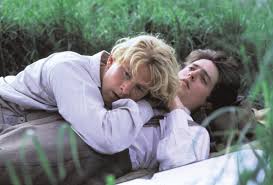
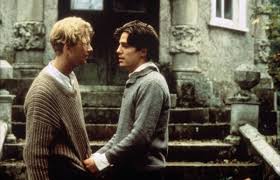
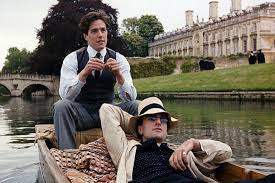
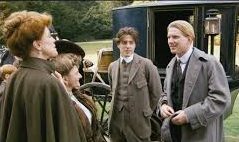
In 1987, the novel was adapted into a film by Merchant Ivory, bringing Forster’s hidden masterpiece to an even wider audience.
But Forster never knew any of this. He died believing the world might reject his truth, might judge him, might destroy what little peace he had built. He locked away the most honest thing he ever wrote – a love story that said happiness was possible – and lived his life in the quiet spaces between what was said and what was felt.
E M Forster spent 57 years protecting Maurice. He protected it from the law, from scandal, from a society that would have punished him for writing it. And in doing so, he gave future generations something rare: a story that ends not with death or despair, but with two men choosing each other and walking into the greenwood together, free.
He lived in the shadows. But he left behind a light. And that light – 57 years delayed, one year too late for him to see – has been shining ever since.
Inside the censorship campaign against this 20th century lesbian novel
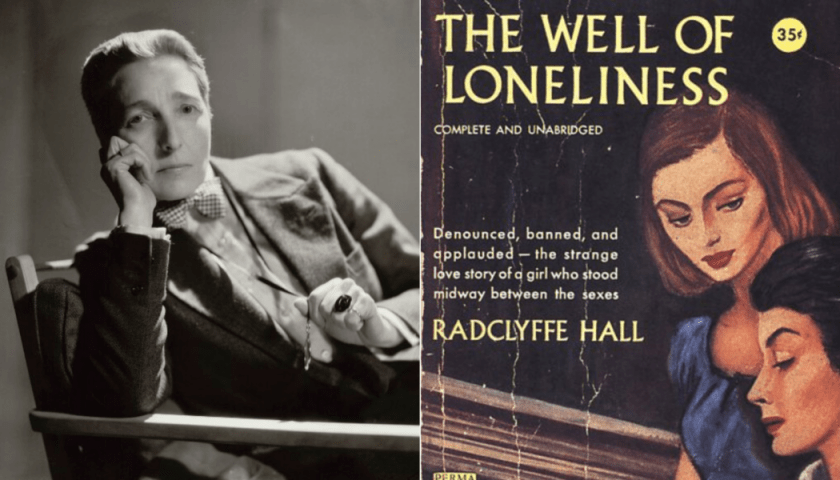
Radclyffe Hall’s The Well of Loneliness was the target of a mass censorship campaign in the early 20th century.
First published in 1928, the semi-autobiographical novel follows a so-called “inverted” woman named Stephen, who enjoys the company of other women and dressing in men’s clothes. It is considered the first widely read novel about the lesbian experience written in English.
Shortly after it was published in the UK, James Douglas used his position as editor of the Sunday Express to call for the book to be banned to “prevent the contamination and corruption of English fiction.”
The Well of Loneliness was accused of violating the Obscene Publications Act of 1857. While the novel did not contain explicit content, its exploration of queer themes was said to “deprave and corrupt” the minds of those who read it.
During the obscenity trial, judges refused to hear expert testimonies about the artistic merits of the book from authors like Virigina Woolf and E M Forster, claiming they were irrelevant. The book was ruled to be “obscene libel” and was ordered to be destroyed.
But the book’s legal challenges unfolded quite differently in the US. After the novel was accused of violating the 1873 Comstock Act, the publishers’ lawyer Morris Ernst successfully argued that lesbianism was not inherently obscene or illegal, resulting in the case being dismissed.
Hall would not live to see her novel back on shelves in the UK once the Obscene Publications Act was amended in 1959, but its legacy lives on as a seminal work of lesbian literature that is still read and analysed today.
LGBT+ History Month Party in Cross Street Chapel
Thursday, 19 February – 2.00pm – 4.00pm – Free
featuring Joe Cockx (from the Golden Age Big Band) performing Dean Martin, Frank Sinatra and Andy Williams.
After a lovely lunch at The Piccadilly Tavern, we took the tram to New Islington and then the short walk to Mayes Gardens. There we played Scrabble, Dominoes, Checkers and Pontoon.
It was an enjoyable afternoon in beautiful surroundings.
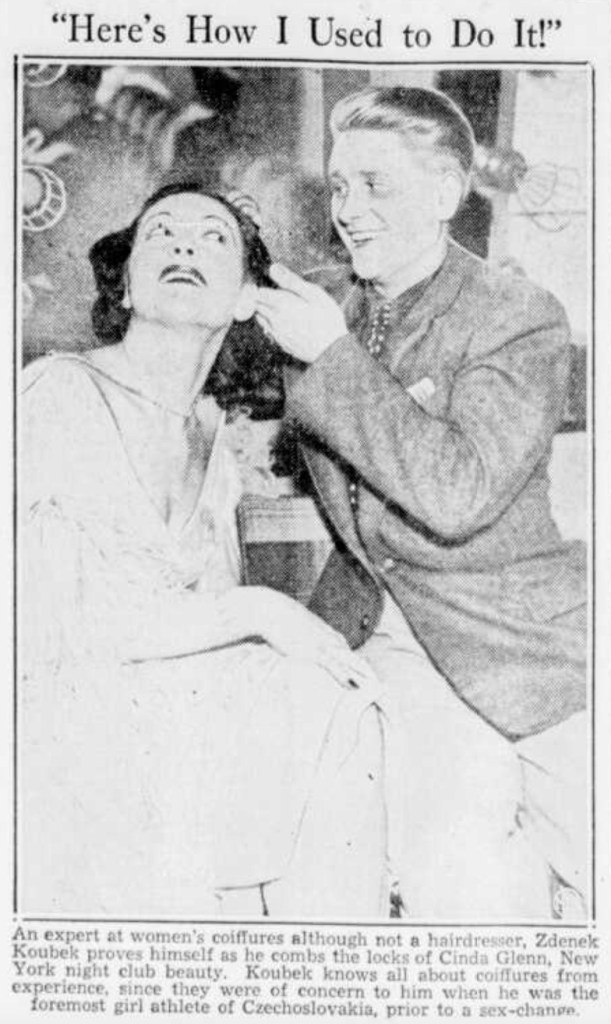
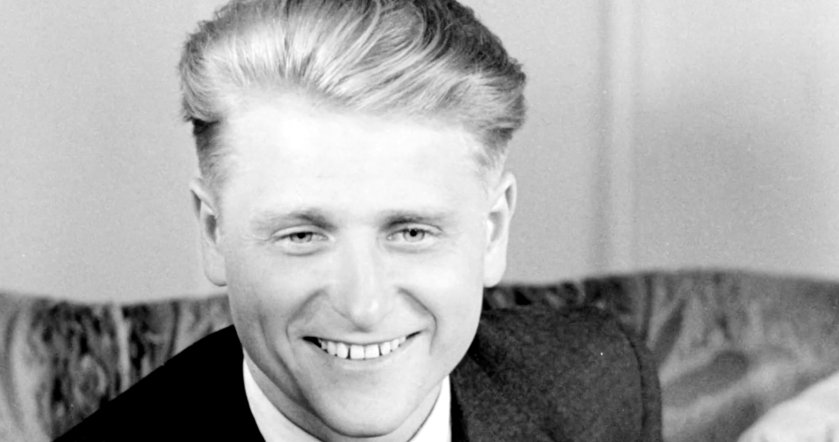
Who was Zdeněk Koubek?
Rare photos from trans history: Olympic runner Zdeněk Koubek styles Cinda Glenn’s hair, 1936. Koubek was one of the first trans men to gain international fame after he transitioned in 1935.
Born on 8 December 1913, in the Czech city of Paskov, Zdeněk Koubek grew up knowing he was different. Most people perceived him as a girl, including his mother and father. Koubek’s mother forced him to start wearing a blue bow in his hair, which Koubek hated.
He thought the bow made him look like an obedient poodle, and soon the nickname stuck: the boys at school, especially the mean ones, nicknamed him “the poodle.” In a small act of rebellion, Koubek wore trousers that he borrowed from his brothers.
In 1929, while balancing his job at a haberdashery, Koubek joined a local women’s sports league. He tried different track-and-field competitions, but he was always a sprinter at heart. He ran track for VS Brno, a club in the city of Brno. Within a few years, VS Praha, based in Prague, recruited him.
There, he began training for what would become his career capstone: the 1934 instalment of the Women’s World Games, then the largest global competition for athletes in the women’s category.
When the time came, Koubek came from behind to win gold in the 800-metre dash. He was still at the finish line, gasping for breath, when he heard the first notes of the Czech national anthem. Someone raised the Czech flag.
At some point, a teammate or a coach or an official told him that he’d broken a world record. His time was 2 minutes and 12.4 seconds, over four seconds ahead of the previous best.
In December 1935, Koubek told the press that he had decided to start living as a man.
The announcement catapulted Koubek into an international celebrity. News stories across the world splashed photos of him in his sleeveless track-and-field jerseys across the front page.
The coverage was bombastic—but not all that negative. To London Life, a British magazine with a penchant for covering stories that challenged popular understandings of sex and sexuality, Koubek’s transition was a “marvellous story” that “definitively proved” that gender transition was possible in humans: “Within the last five years there have been at least six authenticated cases in this country of women becoming men, and men becoming women.”
“All Shall Be Well” Film Screening – Thursday 26 February at 5.15pm – Free
John Casken Lecture Theatre at the Martin Harris Centre, University of Manchester, Bridgeford Street, Manchester M13 9PL
The Drama and Film and The Film Society at University of Manchester are delighted to welcome Hong Kong Film maker Ray Yeung for a screening of his film “All Shall Be Well” followed by a Q&A with Dr Vicky Lowe.
Ray Yeung is a filmmaker who is also the Executive Director of the Hong Kong Lesbian and Gay Film Festival. In 2020, he made the film “Suk Suk”, which is about two older gay men unexpectedly falling in love.
In 2024, Yeung followed that film with “All Shall Be Well”, which is about an older lesbian couple in their 60s. This latter film won the Teddy Award at the Berlinale Film Festival in 2024.
The film will be screened for free in the John Casken Lecture Theatre, Martin Harris Centre on Thursday 26 February, at 5.15pm. There is no booking required, There are 120 seats in the lecture theatre and they will be allocated on a first come first served basis.
Friday, 27 February – 11.00am – 12.00pm – LGBTQIA+ History Month Tours – Free
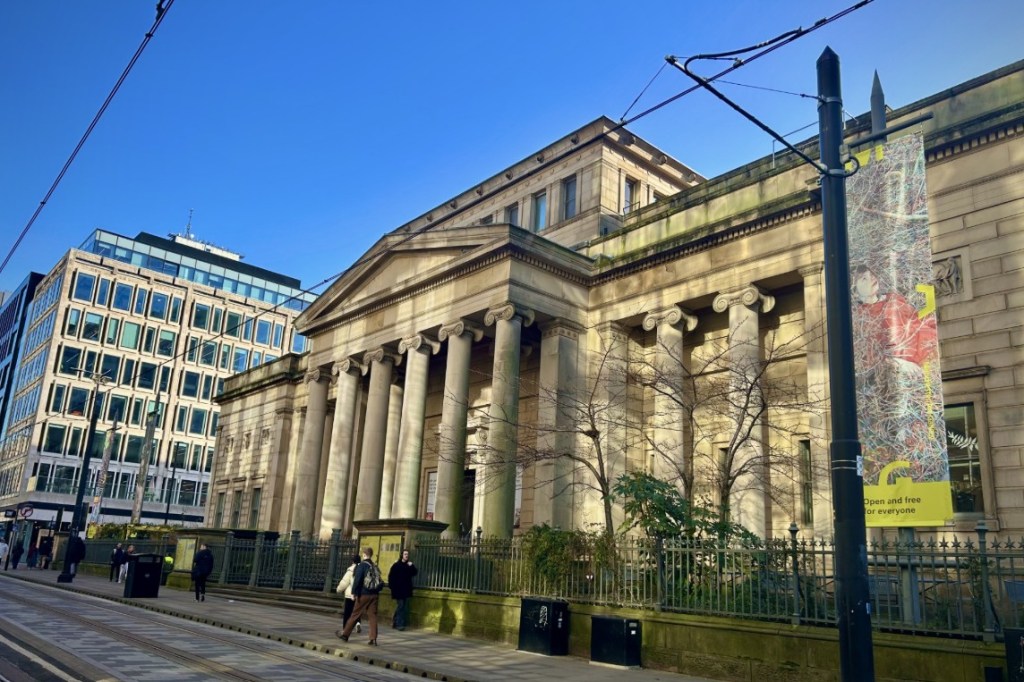
Manchester Art Gallery, Mosley Street, Manchester M2 3JL
Meet at the Information Desk, Ground Floor Atrium
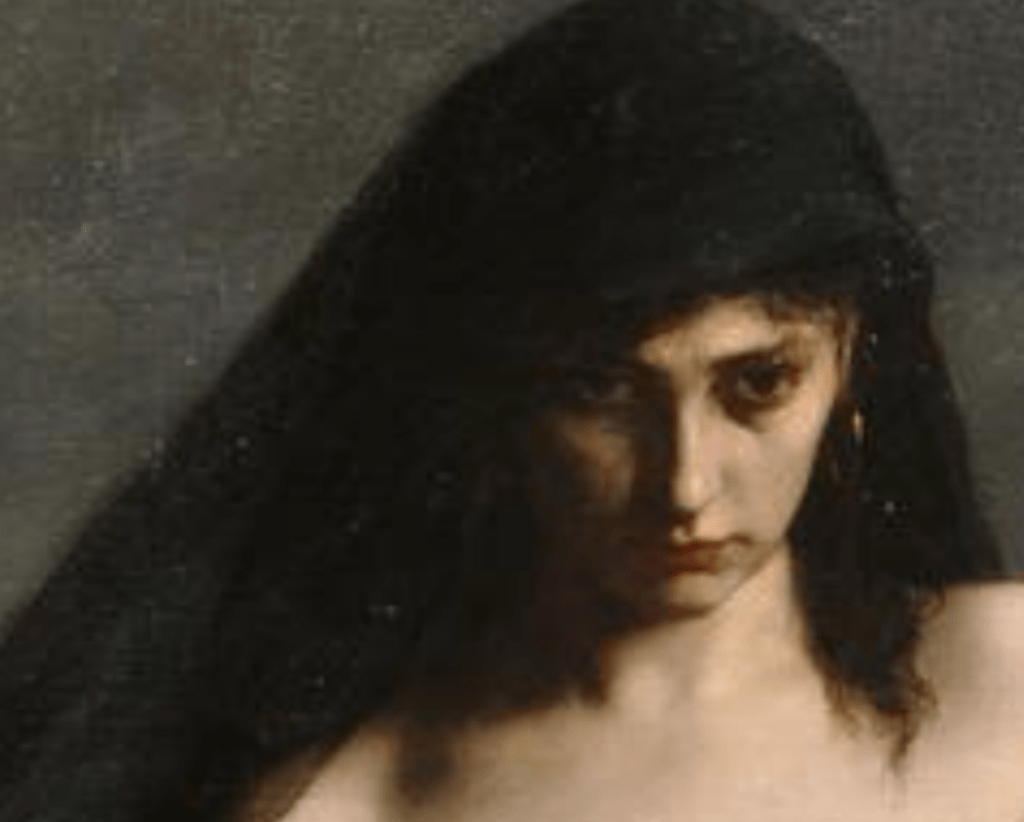
Join the Visitor Engagement Team for a themed tour of the collection celebrating identity, gender, sexuality and community. Free, no need to book.
Research
A PhD research student is currently recruiting participants for her research project.
The PhD project seeks to explore the lived experiences of LGBTQ+ individuals in England and Wales following the implementation of the Same-Sex Marriage Act. The project itself will aim to understand how this legislation has influenced social and cultural perceptions of equality, identity and relationships within the LGBTQ+ community.
In order to participate in this research, participants need to be:
Aged 18 years or older
Identify as part of the LGBTQ+ community
Reside in England or Wales
Have a perspective on marriage, including those who are married or wish to marry and those do not wish to marry and/or are opposed to marriage.
Participation will involve discussing your lived experiences and perspectives in relation to LGBTQ+ equality and marriage. Insights provided by participants will contribute to a deeper understanding of how legislative changes have shaped the social and personal lives of LGBTQ+ people in the UK.
If you would like any further information or would like to express an interest in taking part, please contact via email at: jackowska.a@pgr.marjon.ac.uk









 Out in the City