Queer Treasures of the Manchester Central Library – 4‘
A Fable of Love and War: A Romantic Poem’ (1925) by Ralph Nicholas Chubb
This is the fourth of a short series of articles about queer treasures that are currently found in the Archives held at Manchester Central Library.
Born in Hertfordshire in 1892, Ralph Nicholas Chubb completed his studies at Cambridge before signing up as a volunteer to fight in the First World War in 1914. He was already aware of his own fondness for male company, having experienced various crushes and a relationship with a younger male whilst at school. As with many other young recruits, life before the war had not prepared them for the horrors that real-life combat would expose them to. After entering the army, he was soon promoted to the rank of captain and was mentioned in despatches at Loos. Continuing exposure to violence and extreme stress though subsequently affected his mental health and he was invalided out of the army with severe neurasthenia before the end of the conflict.
Of his many wartime experiences, one proved pivotal and turned him thereafter into a lifelong pacifist. Chubb had become attracted to a ‘curly-haired, seventeen-year-old son of a blacksmith’ whom he subsequently saw being killed by enemy fire. As Timothy D’Arch-Smith writes in his book on the Uranian Poets, ‘Love in Earnest’ –
His death symbolized for Chubb all the horrors and taboos of society. The boy, a beloved object, was not only forbidden by law to be loved by an adult male but was legally sacrificed by the same laws in the service of his country. (p223)
After leaving the army, he studied for a period at the Slade School of Art and successfully exhibited his artwork in various London galleries.
In 1921, he left London to live with his sister, Muriel, and brother, Lawrence, in Curridge in Berkshire. Together with Lawrence, Ralph built a crude printing press from discarded wood and began to write and print his own books – ‘A Fable of Love and War’ was Ralph’s third book and the last that he produced on the press. It is decorated with woodcut illustrations he himself produced. After ‘Fable’, Chubb experimented with other printing methods before settling on lithography, which allowed him to produce some of the rarest, and most artistic, homoerotic books of the 20th century.
‘A Fable of Love and War’ is a poetical celebration of the story of a relationship between two soldiers – one a seasoned warrior, the other a younger fighter who is attracted to him. Mirroring Chubb’s trauma at the loss of the blacksmith’s son, the younger soldier is brutally killed in battle. However, the poem ends on a note of hope, pointing towards his as-yet-unborn child who may well survive and inhabit a better, more accepting world.
Arthur Martland (c) 2025
Once-a-year jab for HIV protection passes early safety trial
An annual jab to protect against HIV infection has successfully passed an early safety trial, according to research published in The Lancet medical journal.
The drug lenacapavir passed a critical Phase I testing trial and now may become a highly effective and convenient form of HIV prevention.
Lenacapavir works by stopping HIV from replicating inside cells. PrEP delivered with a daily pill or bi-monthly injections already drastically reduces the risk of contracting or spreading HIV.
The lenacapavir trial consisted of 40 people without HIV receiving a muscle-directed shot of the drug. No major side effects or safety concerns were recorded, and after 56 weeks the medicine was still detectable in their bodies.
“By decreasing dosing frequency and providing an additional PrEP option for people who want or need PrEP, yearly dosing of lenacapavir has the potential to further decrease current barriers to PrEP by increasing the uptake of, persistence on, and, therefore, scalability of PrEP,” researchers said.
In a statement to the BBC, Richard Angell of the HIV charity Terrence Higgins Trust, said, “PrEP as a daily pill has been a game-changer in our HIV response. The prospect of ‘safe’ annual injectable PrEP is as exciting as it is transformational. It’s great to see these early results that suggest injectable PrEP might be effective for up to 12 months.”
Angell noted there is inequality in who gets access to treatment and who doesn’t.
“The oral pill is still not available in prisons, online, or in community pharmacies,” he said. “We need to get ready for its rollout now and fund sexual-health clinics to do so.”
Around 40 million people are living with HIV, 65% of them in Africa, according to the World Health Organisation.
Trials going forward must have more diverse participants, the researchers told the 2025 Conference on Retroviruses and Opportunistic Infections.
Women and HIV: Personal Stories of Activism
Throughout 2025, George House Trust is proud to present a series of events celebrating the rich history of HIV activism in Greater Manchester.
Their next event, Women and HIV: Personal Stories of Activism, will bring together inspiring women who have been at the forefront of positive change in the field of HIV in Greater Manchester.
Join us for an uplifting evening that will highlight stories from the archive while addressing current issues affecting women and HIV today.
The event will take place at SISTER (Renold Building, 81 Sackville Street, Manchester M1 3NJ) and will begin at 6pm.
George Stephenson (1781–1848), engineer behind the world’s first public railway hauled by steam, ended his days at Tapton House, now a Chesterfield College campus, his statue can be seen outside Chesterfield station.
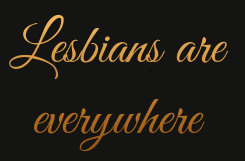
Visit to Chesterfield
Chesterfield is a charming market town nestled in the picturesque county of Derbyshire.
Chesterfield’s history stretches back over a thousand years, with its roots firmly planted in the Roman era. The town’s name is derived from the Old English “ceaster” (a Roman fort) and “feld” (pasture), highlighting its significance as a Roman settlement.
One of the most notable landmarks is the Crooked Spire of St Mary and All Saints Church. This architectural marvel, constructed in the 14th century, is famous for its twisted and leaning spire, which has intrigued visitors for centuries. The spire is twisted 45 degrees and leans 9 feet 6 inches (2.90m) from its true centre.
Folklore recounts that a blacksmith mis-shod the Devil, who leapt over the spire in pain, knocking it out of shape. Realistically, the lean has been ascribed to an absence of skilled craftsmen just twelve years after the Black Death, and the use of unseasoned timber used during construction, which warped over time.
The church itself is a stunning example of Gothic architecture, with its intricate stonework and beautiful stained glass windows. Inside, visitors can explore the nave, chancel, and various chapels, each adorned with historical artifacts and memorials.
On 4 March, President Donald Trump spent a hefty amount of his 99-minute address to Congress to underline his social policies around LGBT+ people.
In his speech, he said transgender children shouldn’t exist – a similar claim that Speaker of the House Mike Johnson has made toward gay people, generally – concealed the real impacts of cuts on LGBT+ issues, and repeated misleading claims on transgender athletes while elevating people who work with anti-LGBT+ hate groups. However, he was also fact checked on other issues such as immigration and Social Security and was found to have misled Congress. One fact Trump failed to mention is that he’s working on $5 trillion in tax cuts for the rich.
STATEMENT: “Just listen to some of the appalling waste we have already identified. … $8 million to promote LGBTQI+ in the African nation of Lesotho, which nobody has ever heard of. $60 million for indigenous peoples and Afro Colombian empowerment in Central America – $60 million. $8 million for making mice transgender. This is real.”
FACT CHECK: Trump’s claim needs much more context. First, both of the $8 million figures are unclear, as many of the savings the Department of Government Efficiency (DOGE) claims have been debunked because of bloated numbers and a deep misunderstanding of how government contracts work. The only record of money given to focus on administering gender hormones to animals was three grants totalling $447,000 from the National Institutes of Health. Similar claims have been made on pseudo-science and far-right news outlets with claims as high as $10 million being spent on this kind of research. Second, the study “for making mice transgender” was actually for giving feminising hormones to chimps as part of research to understand why trans women, in particular, have higher rates of HIV – up to 50 times – than other populations.
STATEMENT: “A few years ago, January Littlejohn and her husband discovered that their daughter’s school had secretly socially transitioned their 13-year-old little girl. Teachers and administrators conspired to deceive January and her husband, while encouraging her daughter to use a new name and pronouns – they/them pronouns actually – all without telling January, who is here tonight and is now a courageous advocate against this form of child abuse.”
FACT CHECK: This statement is false. Littlejohn became well known in conservative circles because of this claim – Florida Governor Ron DeSantis even repeated the story to justify signing the state’s “Don’t Say Gay” bill. But emails given to CNN (Cable News Network) showed that it was Littlejohn – not teachers or administrators – who asked that the school refer to her child by the name they chose and to use they/them pronouns. Littlejohn lost her case against the school district.
STATEMENT: “Three years ago, Payton McNabb was an all-star high school athlete – one of the best – preparing for a future in college sports. But when her girls’ volleyball match was invaded by a male, he smashed the ball so hard in Payton’s face, causing traumatic brain injury, partially paralyzing her right side and ending her athletic career. It was a shot like she’s never seen before. She’s never seen anything like it.”
FACT CHECK: This statement needs clarity. It is true that Payton McNabb suffered an injury during a volleyball game where the other player was transgender. But it needs to be couched in numbers: How often are volleyball injuries? One study, which looked at the National Electronic Injury Surveillance System, showed that more than 340,000 people had volleyball-related sports injuries among youth in the US. McNabb’s head injury is one of the more common sports injuries in volleyball. And, if we’re looking at the number of transgender athletes en masse, the athletic association NCAA has said there are less than 10 athletes out of 500,000 who are openly transgender.
STATEMENT: “And if you really want to see numbers, just take a look at what happened in the women’s boxing, weightlifting, track and field, swimming or cycling, where a male recently finished a long distance race five hours and 14 minutes ahead of a woman for a new record by five hours. Broke the record by five hours. It’s demeaning for women, and it’s very bad for our country. We’re not going to put up with it any longer.”
FACT CHECK: It’s important to note that Trump didn’t actually give any numbers to justify this statement. The “long distance race” statement he made is true – but it was not just for women. The man who won that race wrote an Opinion piece in The Guardian saying Trump is incorrectly using him to degrade transgender athletes, while doing nothing at all to elevate, fund or support women athletes.
There are many similar comments made by Trump that were said in years past to scapegoat our community. I know it feels like the attacks are coming from all sides right now – but let’s be clear, this isn’t new. This is the same playbook, just with fancier tech and way worse vibes.
Scrubbing trans people from online records? Banning research on our community? That’s just the 21st-century remix of Nazis burning books and research from the Institute for Sexual Science in 1933.
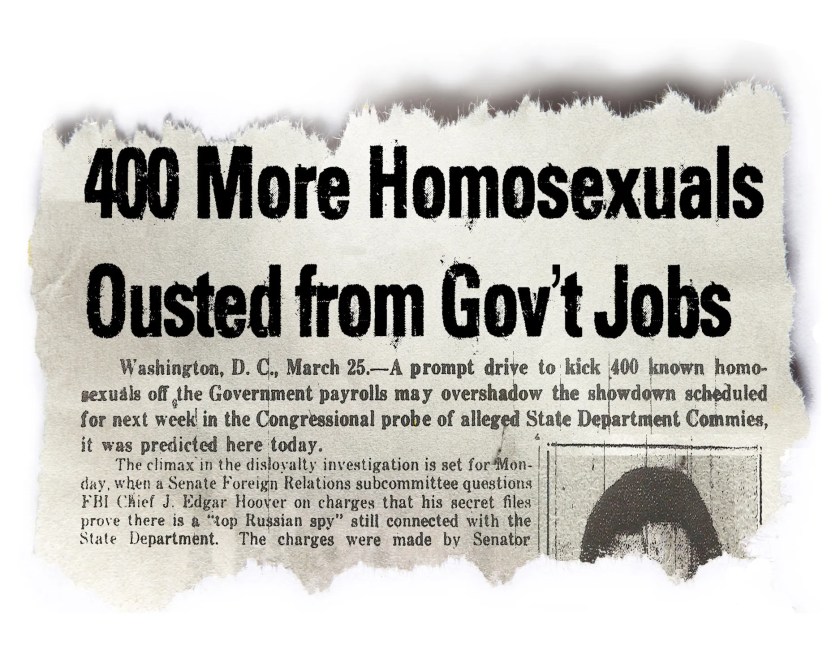
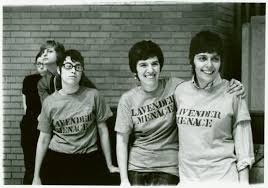
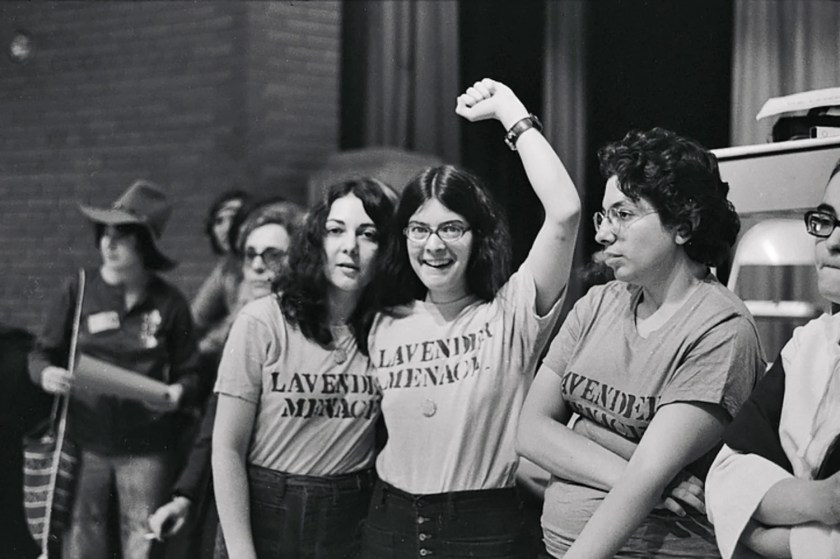
Let’s not forget the Lavender Scare of the 1950s, when the US government purged thousands of LGBT+ people from federal jobs, branding them as security risks. Senator Joe McCarthy justified this and said communists were “twisted mentally and physically” because they were homosexuals.
Also, in 1978, Senator John Briggs ran a disinformation campaign trying to convince people that gays and lesbians were a threat to children and shouldn’t be allowed to teach. His ballot measure lost.
And in 1987 Congress banned the Centers for Disease Control and the National Institutes of Health from funding AIDS research or any education that “promoted homosexuality.”
History tells us that no matter how many times they try to throw us off course, we figure out how to keep moving. The road to justice has never been easy – but we’ve never let that stop us before.
LGBT+ Group Creates Blackpool ‘Rainbow Quarter’
Blackpool Council said the vibrant colours “brightened up the area” and were a show of “solidarity” with LGBT+ people
Rainbows have been appearing on street signs in Blackpool as a community group works with councillors to support LGBT+ people in the resort.
It coincides with Blackpool developing its Be Who You Want To Be area, which aims to boost inclusivity and help regenerate the north of the town.
Zebra crossings and street planters have also been decorated in the many colours of the Progress Pride flag, which is a symbol of the LGBT+ community.
Shaun Pickup said the Be You In Blackpool group wanted to create a “rainbow quarter”
Shaun Pickup, community lead for the Be You In Blackpool group, said: “One of the main ideas is to give the area around Lord Street, Dickson Road and Queen Street an identity to help encourage investment within the area.
Blackpool’s the LGBT+ capital of the country, so we’re now creating the Blackpool rainbow quarter,” he added.
“One of the ideas that was put forward by the community was these new rainbow street signs, replacing street signs that were either missing, or had been vandalised.”
The signs follow two rainbow zebra crossings that were added last year.
Two rainbow zebra crossings appeared in Blackpool last year
Mr Pickup said they decided to concentrate on streets around Lord Street since they were “already quite heavily concentrated with LGBT+ venues and hotel accommodation.
“And it is actually working,” he said. “Because 18 months ago we were down to about four LGBT+ venues and we’re already up to 24 venues, so it’s already showing that people are starting to invest in the area.
A lot of the older generation are feeling safe and coming back out again, so these venues are really important.
Throughout the country LGBT+ venues have been closing, so it’s nice to see Blackpool bucking the trend and I think it’s something Blackpool should be shouting about.”
We met at Via on Canal Street for lunch, before taking the tram to New Islington. We were heading for the Community Room in Mayes Gardens.
Mayes Gardens is an estate of 48 one and two bed bungalows and apartments in the New Islington area of Ancoats. It’s an almshouse charity founded in 1635 to provide modern, safe and independent homes.
We had great fun playing Chess, Connect Four, Scrabble and more!
Important Lessons From LGBTQ+ History – Podcast
In this podcast for LGBTQ+ History Month, the guests will be discussing best moments from Manchester’s queer history, how to take care of ourselves and each other in the current political climate and what lessons we should take with us when thinking about our future.
Please be aware, this video contains frank discussion about experiences of transphobia and homophobia, including mention of slurs and violence.
Chair: Aisha Akram, Wellbeing and Liberation Officer, University of Manchester
Guests: Monica Pearl, English and American Studies Professor and ACT UP activist; and
Dominic Bilton, Curator and Programme Developer, Queer the Whitworth.
Listen here:
ACT-UP
ACT UP (AIDS Coalition to Unleash Power) was formed on 12 March 1987, at the Lesbian and Gay Community Services Center in New York City.
ACT UP Manchester was formed in 1990. We punched above our weight as we were all about lying in the road, telephone-blocking, fax-zapping, letter-writing, informing, condom-dropping, researching, lobbying, talking, shouting, screaming, stickering, misbehaving, lying-in, dying-in, painting, retaliating, creating and having fun.
Action = Life – Silence = Death
Exist – Resist – Persist
Wake Up – Rise Up – Act Up
Queer Treasures of the Manchester Central Library – 3
‘Die Transvestiten’ by Magnus Hirschfeld
This is the third of a short series of articles about queer treasures that are currently to be found in the Archives held at Manchester Central Library.
The Archives holds an early copy of Magnus Hirschfeld’s groundbreaking work on what we would now call ‘trans’ people. ‘Die Transvestiten’ (The Transvestites), subtitled as ‘Eine Untersuchung über den erotischen Verkleidungstrieb’ (An investigation into the erotic drive to disguise) was the first systematic, modern and scientific look at the variety of people who chose to cross-dress throughout history and in the present day, and to understand their reasons for doing so.
In Hirschfeld’s study, anecdotes of the past ‘transvestites’ were used, as well as contemporary ‘case histories’, (including the first-person narratives of cross-dressers themselves), to attempt to obtain a wholistic perspective on the subject. Sadly, Manchester Library’s copy does not contain the supplemental volume of pictures.
Hirschfeld himself was gay, but could never come out without finding himself being investigated under Paragraph 175 of the German Penal Code which forbad sexual relations between males. Nonetheless since the 1890s onwards he was publicly involved in organising petitions in support of law reform and, subsequently, in establishing the Institute for Sexual Science in Berlin (Institut für Sexualwissenschaft). With the collapse of cinema censorship after the First World War, in 1919, Hirschfeld worked on, (and appeared in), the first serious full-length film ever made about male homosexuality, called ‘Anders als die Andern’ (Different from the Others).
Whilst a critical contemporary audience would find much to disagree with in Hirschfeld’s handling of his project, and some of his conclusions, nonetheless ‘Die Transvestiten’ was groundbreaking, as the Digital Transgender Archive records –
‘Moving away from the methods of other sexological research at the time that lumped all types of sexual and gender diversity into more all-encompassing groupings, Dr. Hirschfeld theorized a distinction between sexual desires and gender expressions. With this distinction came a whole new category of interpreting and understanding gender non-conformity – the “transvestite.” And with a new identity marker came new opportunities for community building, more social awareness, and even a more scientific and less stigmatizing way of encountering gender difference.’
Hirschfeld’s truly pioneering works and social activism paved the way for all who do not conform to gender and/or sexual stereotyping norms in societies to be better understood and publicly accepted.
Queer Poetry Lovers! – Friday, 14 March from 6.00pm to 7.30pm – Free
Queer Lit, Social Refuge, 27 Great Ancoats Street, Manchester M4 5AJ
Are you passionate about poetry? Come along to our new poetry workshop. Join Jide Macaulay for an evening of poetry and community on the following dates:
14 March, 4 April, 9 May, 13 June, 11 July and 8 August.
This workshop is open to all – whether you’re a seasoned poet or just starting out. Come along, connect with a supportive community, and let your words take flight. Scan the QR code to register and secure your spot!
2025 is a Special Year – It’s a Year of Anniversaries:
First edition of Round the Horne at 2.30pm on Sunday, 7 March 1965 on the BBC Light Programme
60 years ago – Round The Horne
Writers Marty Feldman and Barry Took use gay slang Polari in the innuendo-laced Julian and Sandy sketches in Round the Horne, with literal straight-man Kenneth Horne.
Millions listen at Sunday lunchtimes to the highly gay stereotyped characters played by Hugh Paddick and Kenneth Williams.
Polari has origins in the Roma communities, Italian, slang and other sources. Its aim is to confuse outsiders, especially ‘Betty Bracelets’. (Polari for the police!)
50 years ago – LGBT Foundation Helpline
Fifty years ago, on 2 January 1975 a telephone rang for the first time. It was a helpline – the Manchester Gay Switchboard – and was situated on the stairway in a rented Longsight flat.
There have been name changes and relocations over the years, but to date it’s estimated that more than 250,000 people have rung up, registering more than 3.7 million minutes worth of advice and support.
40 years ago – George House Trust
This year is a big milestone for George House Trust as they mark their 40th year of providing advice, support and information for people living with, and those affected by, HIV.
The symbol for a 40th anniversary is ruby and they will be painting everything red this year, so please join in and show your support by wearing your red ribbon whenever and wherever you can.
30 years ago – Gaytime TV begins
Gaytime TV was a late night gay-themed comedy and lifestyle magazine programme broadcast on BBC 2. It was presented by Rhona Cameron and Bert Tyler-Moore and later Richard Fairbrass. The programme ran until 1999.
20 years ago – Out In The City
Out In The City is a social and support group for members of the LGBT+ communities over the age of 50. It started in 2005 as part of the Ageing Well service provided by Age UK Manchester, but has been a self-organised group since 2018.
20 years ago – Schools OUT
Over the past 20 years, since the first LGBT+ History Month in 2005, Schools OUT have highlighted the incredible things LGBT+ people in all our diversity have achieved throughout history in all areas of life.
20 years ago – Sparkle
The Sparkle Weekend is the original celebration of gender diversity – featuring live entertainment, workshops, wellbeing activities, family and youth provision, sober spaces, market traders, food, drink, and much more! There have been 20 years of celebration, advocacy, and education.
10 years – Stand By Your Trans
On Saturday, 25 July 2015 Trans Pride was held in Dorset Gardens, Brighton. It was hosted by Kate O’Donnell, singing “Stand By Your Trans” with the Rainbow Chorus.
Celebrate International Women’s Day
Manchester is set to mark International Women’s Day (IWD) 2025 with a dynamic and inclusive programme of events aimed at celebrating, empowering, and advocating for women across the city.
It is International Women’s Day on 8 March, the annual event that celebrates women’s achievements and focuses attention on the continuing fight for gender equality.
Manchester is the home of strong influential women. The fight for women’s rights was forged for many here in Manchester – not only the city’s radical past contributing towards greater political power in the form of the Representation of the People Act 1918 – but here the Suffragette movement was also founded.
The event has particular resonance in Manchester where suffragette Emmeline Pankhurst was born and later rallied the troops from her home on Nelson Street.
Suffragette activity emerged out of The WSPU – with marching rallies through the city centre and public speeches from the Pankhurst family.
Specific Manchester buildings have their share of women’s history here, too. For example, the Free Trade Hall is not only the place where Emmeline’s daughter Christabel and friend Annie Kenney interrupted a Liberal Party conference by demanding greater rights for women and were arrested, but the first public meeting on the issue of women’s rights was held here even earlier in 1868; itself led by a woman – Lydia Becker.
And the history of strong women here has continued.
International Women’s Day in Manchester
Accelerate Action at Manchester Central Library
Taking place at Manchester Central Library on Saturday, 8 March, the council’s celebrations promise to be an intriguing gathering of women, allies, and community organisations working towards gender equality.
With the theme ‘Accelerate Action,’ IWD 2025 calls on supporters to challenge the systemic barriers that women from all backgrounds continue to face in their personal and professional lives.
Instead of its traditional ‘Walk for Women,’ Manchester City Council has collaborated with various women-led community organisations to design a fresh approach that better reflects the city’s diverse female voices.
Thanks to funding from the annual IWD grants programme, multiple community organisations will host events citywide, culminating in a special programme at Manchester Central Library under the banner of ‘HER: Heal, Encourage, Revive.’
Here’s the full line up:
Heal (Performance Space)
Flourish Together: Mindfulness and relaxation session, 11.00am – 1.00pm
Equal Education Chances: Letter writing and positive affirmations, 11.20am – 12.15pm
Encourage (Performance Space 2 and 3)
Community Thriving Together: Personal storytelling and overcoming challenges, 11.00am – 11.50am
Trailblazers: Creative activity session including bookmark-making and stitching
Young Identity with Shirley May: Poetry performances, 11.55am – 12.15pm
Flourish Together: Fireside chat with Nickala Torkington on women changemakers, 12.20pm – 12.50pm
Revive (Performance Space 2 and 3)
Bollyfit: A multicultural dance-inspired exercise class, 1.00pm – 1.30pm
Closing speech from Councillor Erinma Bell, 1.35pm – 1.45pm
Uplifting DJ set to conclude the celebrations.
Additionally, a pop-up spa in the Glass Room / Sensory Space will offer 20-minute Indian Head Massage treatments from 11.00am – 2.00pm, providing a well-being retreat for attendees.
Throughout the day, key organisations such as Manchester Action on Street Health (MASH), Manchester Rape Crisis, Fikawele African and Caribbean Mental Health, Walksafe, and the Ahmed Iqbal Ullah RACE Centre will be present to promote their services and raise awareness of important issues affecting women in Manchester.
Councillor Erinma Bell, Lead Member for Women, expressed enthusiasm for this year’s programme: “Manchester has long been a city that champions gender equality, and this year’s International Women’s Day celebrations highlight the creativity and innovation of women’s voices in our community. This event is an opportunity to drive further action in ensuring that women can thrive in all areas of life. I encourage women from all backgrounds and generations to get involved and advocate for greater allyship.”
For more information or to book a place at the Women’s Community Festival, visit the event’s official website by clicking here.
The Ladybarn Community are celebrating International Women’s Day on Friday, 7 March! Come along for loads of stalls, activities and free food from their wonderful cook Emily!
If you’re observing Ramadan, you don’t need to miss out – they’ve got takeaway containers so you can eat your food later.
Art Workshop Call Out – Call Out to LGBTQ+ Folks (60+ years) Living in Manchester
Friday, 28 March from 12.00 noon to 5.00pm at Castlefield Gallery, 2 Hewitt Street, Manchester M15 4GB.
Come and join this exploratory workshop which brings Manchester-based early career artists and LGBTQ+ elders together to explore the theme of urban connections and self-making.
Focusing on LGBTQ+ urban life, the workshop will draw on art-based methods to explore questions including: How do we connect in an urban environment? Where do these connections happen? What kinds of spaces are needed to allow connections to flourish? How could we create these spaces? And how do these experiences influence our individual identity and sense of community belonging?
Through pairing artists (who may or may not be elders) with elders (who may or may not be artists), the workshop will result in a collaborative piece that reflects both urban connections as they are, and as they could be.
This workshop will be hosted by Madeleine Vietmeier and Dr Emma Spruce. As a dyke artist and queer theorist respectively, we are interested in facilitating socially engaged work that amplifies the creative knowledge already present in our communities. It is our hope that this workshop marks the start of a longer collaborative project that will unfold over the coming year(s).
If you would like to participate or find out more about this or future projects, please contact: selfinspace@gmail.com by 17 March.
Detention at The Lowry – Wednesday, 14 May – 8.00pm
Gary Clarke Company proudly presents its highly anticipated new dance theatre show, DETENTION, sequel to the multi award-winning COAL and critically acclaimed WASTELAND.
DETENTION explores the impact of Section 28: a piece of largely hidden legislation from Margaret Thatcher’s Conservative Government in 1988, which ‘prohibited the promotion of homosexuality’, forcing people from the LGBT+ community into a place of secrecy, fear and shame at a time when the country was in industrial turmoil and the gay community was being ravaged by the onslaught of AIDS.
Gary Clarke’s powerful and personal working-class storytelling draws on public and private stories and testimonies, including a rare insight into the LGBT+ Switchboard Logbooks, combined with vivid choreography performed by a company of exceptional dancers, an evocative narrator, a local cast of LGBT+ people, striking designs in film, sound, light and costume and music tracks by the iconic band Test Dept.
DETENTION is a bold and moving exploration of the violence, loneliness, protests, debates, unlikely allies and the remarkable individuals and organisations of the time.
How London’s older LGBT+ people struggle with financial stress and isolation
A new report by a non-profit housing provider focuses on a financially precarious community of older LGBT+ people in London. But there are lessons for all social landlords.
Min Ong, a Tonic Housing resident (picture: Dan Joseph)
“I think the city of London has me in its chokehold.” As this comment from a 55-year-old gay man shows, living in the capital can be a double-edged sword, the benefits of its more tolerant environment curbed by high financial stress.
This is the topic of a new study by Tonic Housing, a non-profit organisation which runs a retirement community for LGBT+ people in the capital. It reveals the challenges faced by a “hidden population” of LGBT+ over-50s in London.
Titled Precarious Lives, the report surveyed 134 people across London to explore issues such as the long-term impacts of discrimination, long-term health conditions and financial stress. It also conducted focus groups and interviews with an additional 39 participants.
Its findings were “deeply unsettling”, said Tonic Housing’s chair Terry Stacey, and highlighted how certain people – namely LGBT+ people of colour, LGBT+ disabled people and trans and non-binary people – face “particularly profound hardship”.
Mr Stacey said the report emphasised the need for community-led solutions to address the needs of older LGBT+ people. This was “particularly crucial” following the closure of Opening Doors, the LGBT+ charity that was originally running the Precarious Lives research, but which closed last year.
Following its closure, Tonic took over the report, with the project funded by Trust for London.
So what are some of the issues that LGBT+ older people face as they grow older, and how should social landlords change their approach to make sure they are properly serving this community?
Intersectionality
One of the key findings was the high social isolation of those surveyed. According to the report, 64% of those surveyed live alone. It also found that single-person households were six times more likely to rely on food banks than those living with others (18% vs 3%).
The survey also revealed that 60% of respondents were disabled. Of these, 58% expected no social support in times of crisis.
Overall, among all survey respondents, 36% would not expect any social support – from a spouse or partner, family members or friends – in the event of serious difficulties.
Meanwhile, 58% of respondents said that they would not expect help from support services if they had serious difficulties.
“As we grow older, our communities – and with them, our circle of safety – tend to shrink,” says report author Mark Sladen. “The result is that both our social and institutional support systems can be threadbare, making individual circumstances that bit more ‘precarious’.”
Mr Sladen said one important takeaway from the report was intersectionality, and how many respondents faced a “compounded” set of challenges. “So, being LGBT+ is a good indicator of challenges ahead; but if you are LGBT+ and Black, or LGBT+ and disabled, you can find almost all aspects of living in 21st century London markedly more difficult.”
Financial hardship
Many people in the LGBT+ community value living in the capital, the report found, because it is relatively tolerant and because of the opportunities to find a sense of community.
However, living in London comes at a high financial cost. According to the report, many respondents were on low incomes and, overall, 41% of people surveyed were finding it ‘somewhat’ or ‘very’ difficult to manage financially.
It found 34% of LGBT+ over-50s surveyed have a household income below £15,000. For 15%, it was less than £10,000 a year.
One of the lessons from the report, according to Mr Sladen, is how experiences differ based on housing tenure. “It is clear that those in the private rented sector are far more precarious,” he says. “Add that to all the other costs of living in London and it becomes very clear that there needs to be more social housing, and more housing provided at affordable rents.”
Lessons for landlords
Asked what advice the report holds for social landlords, Anna Kear, chief executive of Tonic Housing, notes that many older LGBT+ people don’t have children. Yet despite this, there are often expectations from housing associations for residents to have someone who can advocate for them.
“Social landlords, therefore, must not assume that people have those children in place. People can be very isolated and vulnerable.”
Landlords also have to be sensitive to the fact that many LGBT+ people carry the trauma of the past with them, says Ms Kear. “As one resident put it recently: ‘I’ve got too much time to think and I am going over the past.’
“It’s a past that included criminalisation, ECT (electroconvulsive therapy – known commonly as electro shock therapy) – just for being gay or trans; the AIDS crisis, and the death of friends and partners; Section 28. Put those together, and what you have is a complete distrust of institutions.”
Ms Kear gives the example of Maudsley Hospital in south London, which today is a centre of excellence for mental health issues, but once was the place someone might have been sent to for ECT. “The idea that people can just reach out and navigate institutions today without some acknowledgment of that past is massively flawed.
“Yet too many large organisations expect individuals to do that without a second thought. That needs to change.”
Becoming a registered provider
When Tonic set up its first retirement community, it began with shared ownership on the banks of the Thames – a tenure unlikely to be accessible to older people on low incomes.
But Tonic has now applied to become a registered provider with the aim of offering social rent homes in its communities. “We were not initially set up as a registered ‘social landlord’. Because, as a small start-up, we did not meet the criteria. Ten years on, we have a solid track record and are now actively working to gain registration,” says Ms Kear.
Ms Kear says the organisation has found the regulatory application process to be “quite a mystery”, adding: “We think we have done everything to meet the requirements, but we won’t know until they tell us either way. In the meantime, we can’t plan for future homes,” she says – there is no way to approach lenders, developers or scope out possible Section 106 sites.
Getting registered provider status would allow Tonic to provide a range of tenures, says Ms Kear, including affordable rented homes.
Extra care scheme
In September last year, a ‘first of a kind’ project aimed at older LGBT+ people achieved planning permission. It is an extra care social rent housing scheme in south Manchester.
Manchester City Council’s planning committee approved proposals from Great Places to develop the project on the site of the former Spire Hospital on Russell Road, Whalley Range.
Plans were put together by Great Places Housing Group in collaboration with the Russell Road Community Steering Group, Manchester City Council, and the LGBT Foundation. The aim is for this scheme to deliver 80 one and two-bedroom apartments for older people within a high-quality sustainable building.
Low-carbon design takes into account the surrounding conservation area. In addition, there will be shared communal facilities including lounges, treatment rooms and landscaped gardens aiming to ensure an overall net gain of trees on the site.
Residents will be aged 55 years or over, with the majority being drawn from Manchester’s local LGBT+ community. Great Places aims for the scheme to deliver an open and inclusive, physical and psychological place of safety for the older LGBT+ community, as well as a welcome addition to the Whalley Range area.
The Russell Road development has been widely welcomed. Paul Martin, chief executive of the LGBT Foundation, says: “Older LGBT+ people are currently at greater risk of discrimination, poor health outcomes and social isolation, and many do not have the support networks of family and friends. This scheme aims to address these challenges and create a safe and affirming environment where our community can age with pride.”
Bisexual Health Awareness Month
Bisexual Health Awareness Month (BHAM) is an annual event held in the United States during the month of March. The purpose of the event is to raise awareness of the unique health challenges faced by bisexual individuals and to promote greater understanding and acceptance of bisexuality.
Bisexual individuals face a number of health disparities, including higher rates of depression, anxiety, and substance abuse, as well as greater risk for certain physical health issues. Additionally, bisexual individuals may face discrimination and stigma both within and outside of the LGBT+ community, which can have negative effects on their mental and physical health.
During BHAM, individuals and organisations around the country participate in a range of events and activities to raise awareness of these issues and to promote better health outcomes for bisexual individuals. This may include educational workshops, webinars, social media campaigns, and community events.
The goal of BHAM is to increase understanding of bisexual health issues and to promote greater inclusivity and acceptance of bisexual individuals in healthcare and other settings. It is also an opportunity for bisexual individuals to share their stories and for allies to learn how to be better allies and advocates for bisexual individuals.
Google wants to erase Pride, but we’re not going to let them. Here’s how to resist …
In the current United States presidential administration’s war against diversity, equity and inclusion, not even our calendars are safe.
Google has removed Pride Month from its Calendar app, alongside other minority-centred events like Black History Month, Women’s History Month and Holocaust Remembrance Day.
Apparently, Google’s programme will now only display public holidays and national observances because “manually” maintaining “a broader set of cultural moments” globally wasn’t “scaleable or sustainable,” according to an unnamed spokesperson.
Of course, their timing is suspicious, to say the least. In January, CEO Sundar Pichai attended Trump’s inauguration after donating $1 million to the cause.
Furthermore, the tech giant’s decision comes in the wake of an executive order dismantling federal Diversity, Equity and Inclusion programmes, and companies like Meta, Walmart, Target and Amazon following suit.
Unfortunately, Trump’s team has been especially fastidious in erasing the queer community; according to the Gay and Lesbian Alliance Against Defamation (GLAAD), “nearly all LGBT and HIV focused content and resources” have been eliminated from WhiteHouse.gov and relevant federal agencies’ websites.
That said, we don’t have to let them win.
Here’s a step-by-step guide to adding events like Pride Month back to your Google Calendar.
1. Open up your Google Calendar
Make sure you’re signed into your Google account and navigate to the Calendar app.
2. Navigate to the month of June
Using the arrows next to the month, scroll over to June 2025.
3. Create a calendar “Event”
Click “Create” and “Event.” Now, a pop-up window will appear.
4. Type out “Pride Month” and select a duration
You can type out “Pride Month,” and click on the clock to edit its duration. Select Sunday, 1 June to Monday, 30 June and make sure “All day” is checked.
You can also click on “Does not repeat” and then toggle the selection to “Annually on June 1”. This will ensure that Pride Month appears on your calendar every year.
After selecting “Save”, you will notice Pride Month has a not-so-subtle marker on every day in June (and by creating it as an “event” and not a “meeting” or “task,” your notifications shouldn’t get too crazy – like we need a daily reminder!)
OK, so this is a small and singular act of defiance in a larger system that seems determined to move the LGBT+ equality movement backwards.
That said, we didn’t get permission for the first Pride Month, and they can’t take future ones away from us.
Criminally Queer: The Bolton 7
Hugh Sheehan explores a landmark legal case, in a five part series on BBC Sounds, examining the case of the Bolton 7. The case was termed “the last great homosexual show trial”, and played a significant role in the fight for gay rights.