Sexuality Summer School 2025: Intergenerationality
Sunday 25 – Friday 30 May 2025
The Sexuality Summer School is a week-long event consisting of seminars and workshops for 40 postgraduate students, alongside a public events programme open to all. This year, the SSS will focus on the theme of ‘Intergenerationality’, exploring debates about how generations are constituted and distinguished one from another in the context of feminist, queer and trans theories and practices.
Our discussions will draw together debates in gender, sexuality and critical race studies about how generationality has marked and regulated certain bodies, spaces and resources in particular times and contexts. Our public events and postgraduate workshops will examine how knowledge, creative practice and activism in the past has shaped current intellectual and political agendas, as well as artistic forms and collaborations.
Exploring memory work, archives and oral histories, we will consider theories and methods for conceptualising past-present relations in terms of debates about desire, violence, antagonism, nostalgia, consent and regulation.
Public Events Programme:
Sunday, 25 May, 3.30pm – 5.30pm
Pratibha ParmarJackie Kay
Film Screenings: A Place of Rage (1991, 54 mins) and Khush (1991, 26 mins), directed by Pratibha Parmar.
Q&A: Author and poet Jackie Kay will join Pratibha Parmar for a discussion of the films.
In partnership with the Women in Revolt! Exhibition at the Whitworth Gallery and with the Centre for New Writing and Screen Studies.
Venue: HOME Cinema, 2 Tony Wilson Place, Manchester M15 4FN
Opening Academic Plenary Lecture: ‘Between Desire and Dissociation: ‘Queer Magical Thinking in Hetero-Authoritarian Times’
Tavia’ Nyong’o (William Lampson Professor of Theater and Performance Studies, Professor of American Studies and African American Studies, Yale University).
Venue: International Anthony Burgess Foundation, 3 Cambridge Street, Manchester M1 5BY
No booking required, all welcome.
Tuesday, 27 May, 5.30pm – 7.00pm
Roundtable Discussion on Intergenerationality and Activism. Speakers include: Marc Thompson (Pioneering HIV/AIDS activist, London), Chloe Cousins (Rainbow Noir and Social Justice Manager, Manchester Museum), Robert Broughton (George House Trust) and Agatha Phiri (HIV Activist).
In partnership with George House Trust, celebrating 40 years of supporting people with HIV and AIDS in Manchester.
Venue: Sister, Renold Building, 81 Sackville Street, Manchester M1 3NJ
Free to attend but booking required. Click here to reserve a spot.
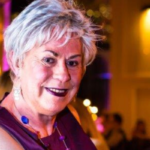
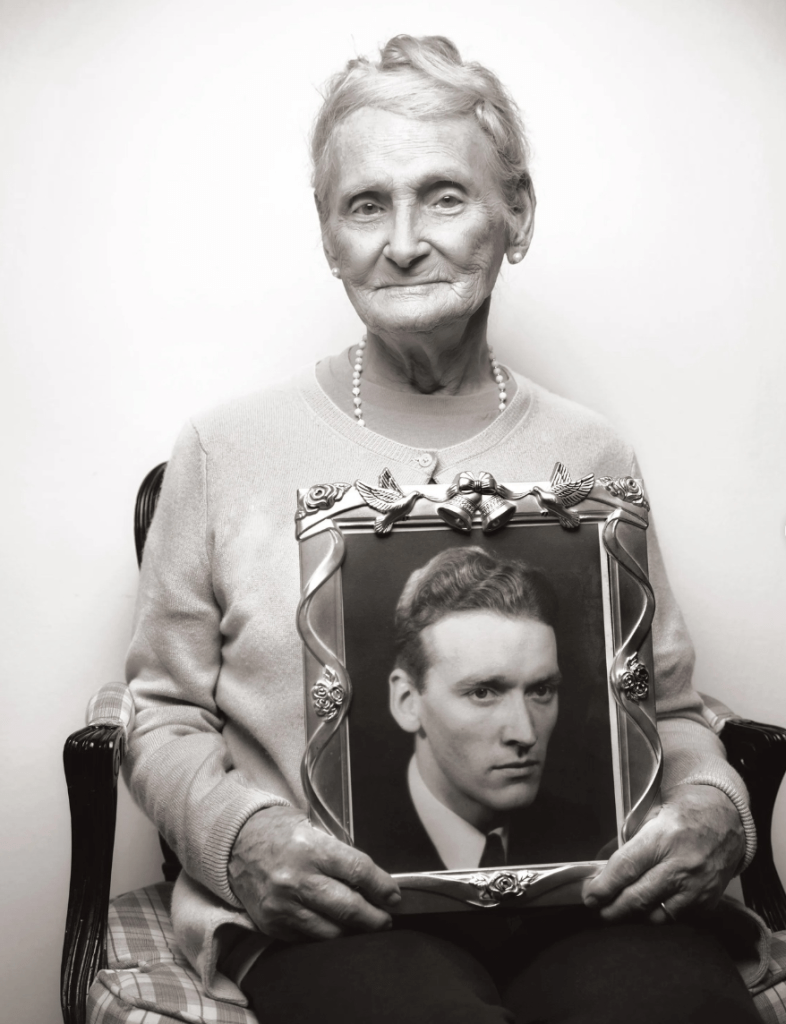
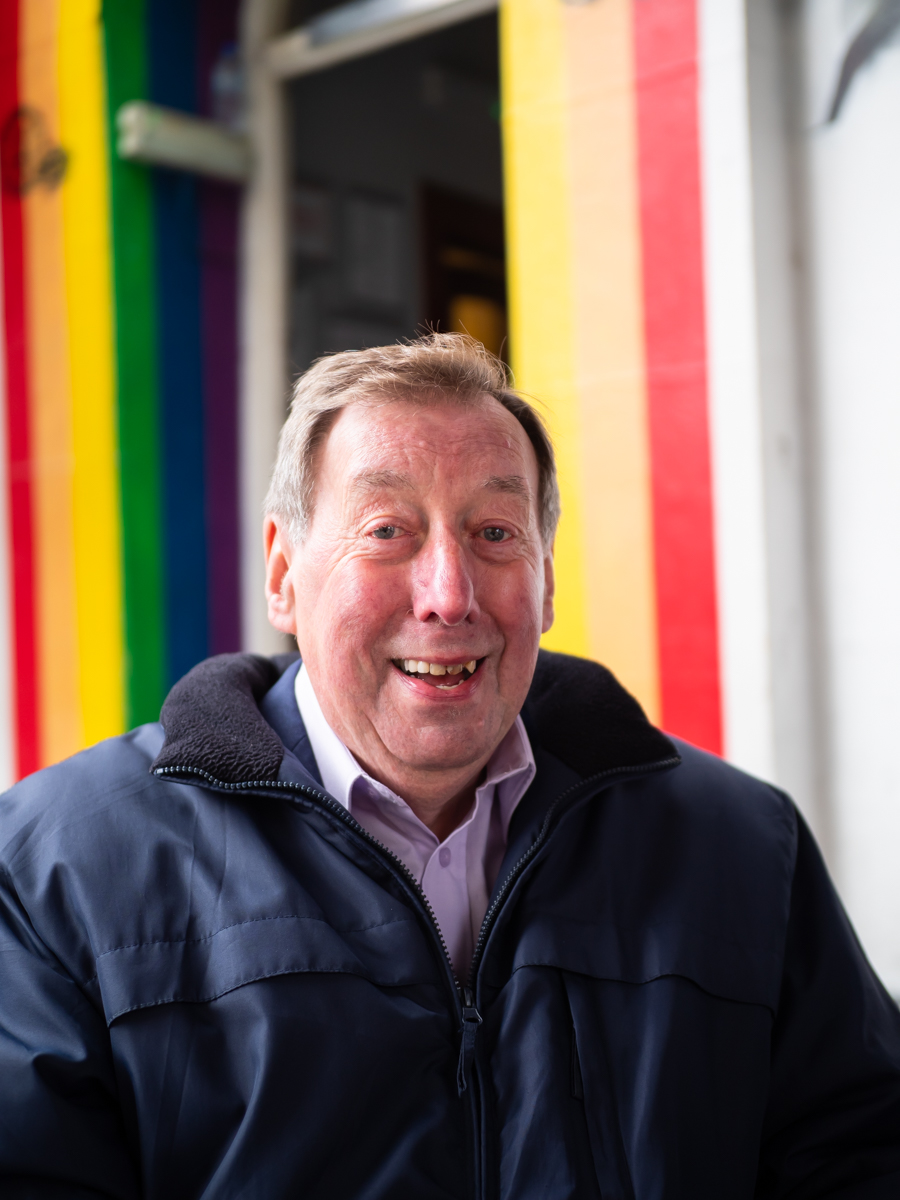
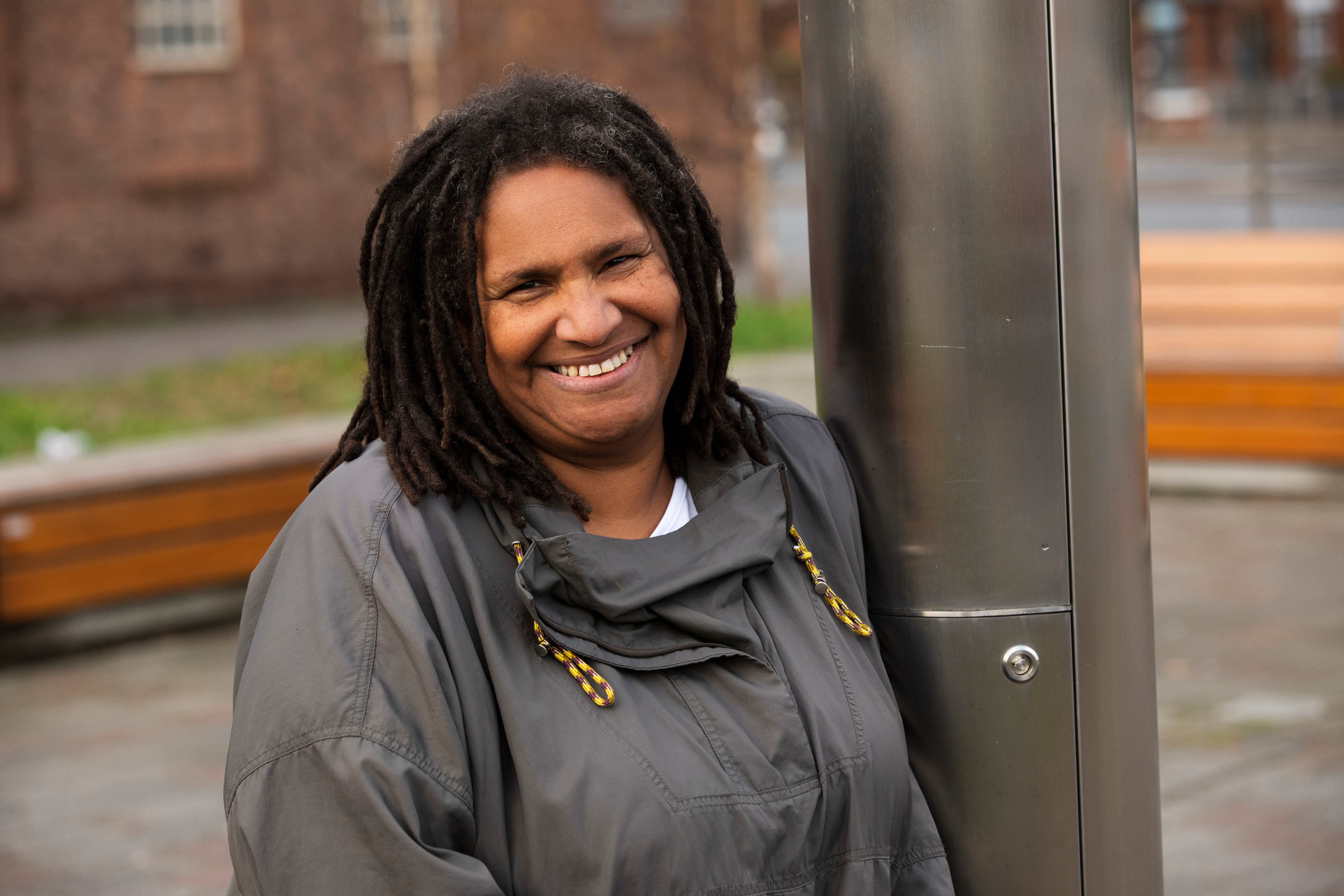
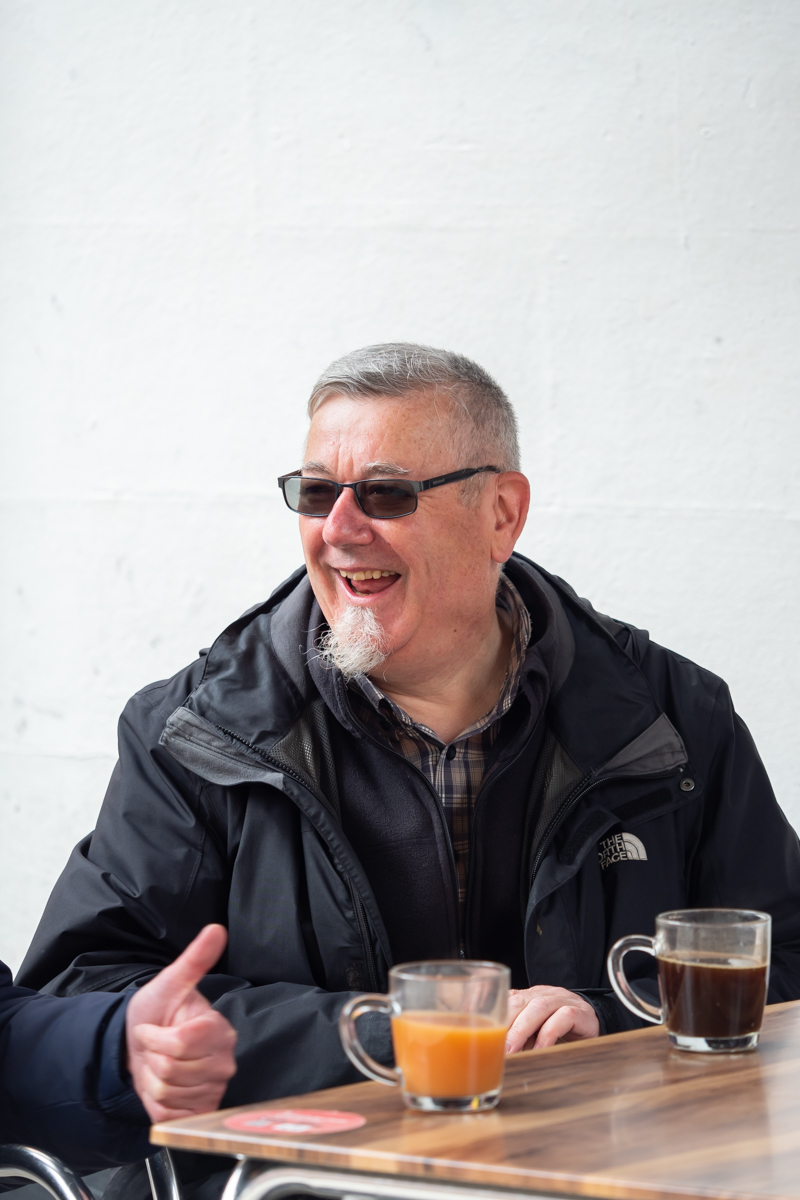
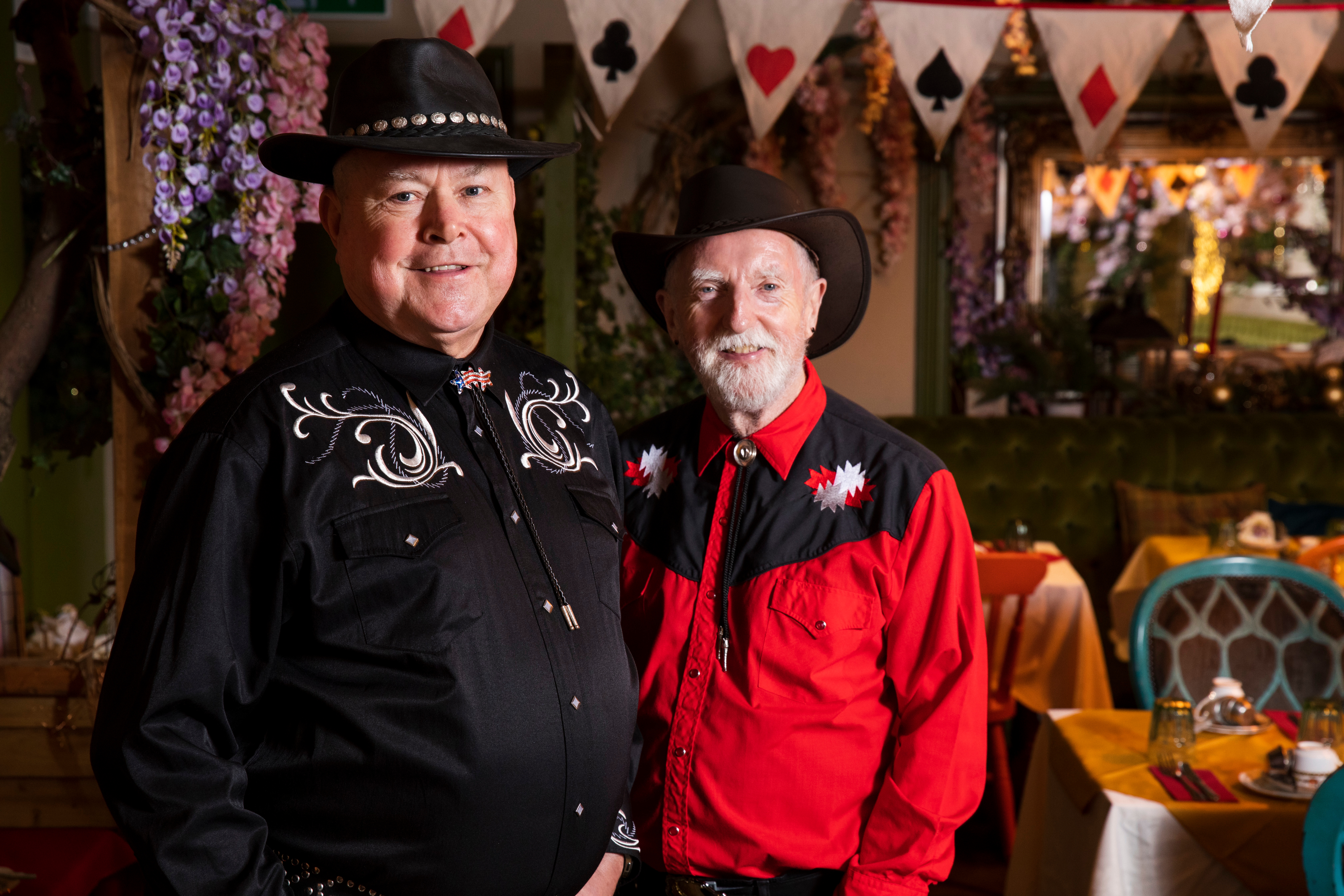
DIVA Magazine partnered with LGBT Foundation to find out more about your rainbow families. This is what family looks like to Mindy.
Words by Mindy
What does family mean to you?
For me, family is chosen as well as a couple of the people I have a genetic connection to. My primary family priority is my wife (we’ve been together for 34 years now) and our cats.
Tell us about a typical day in your family life.
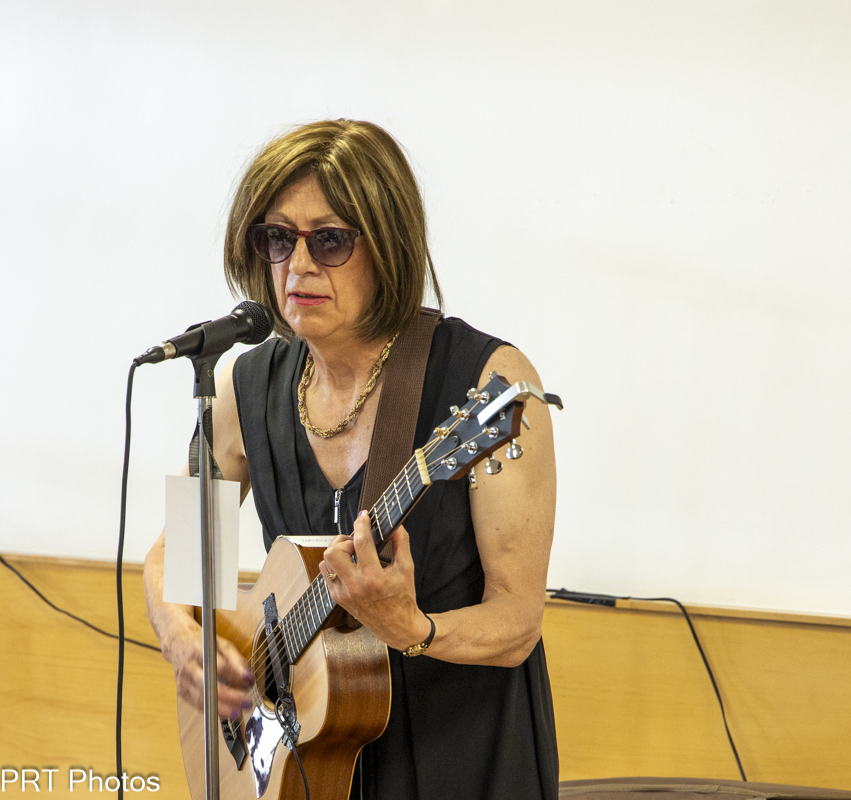
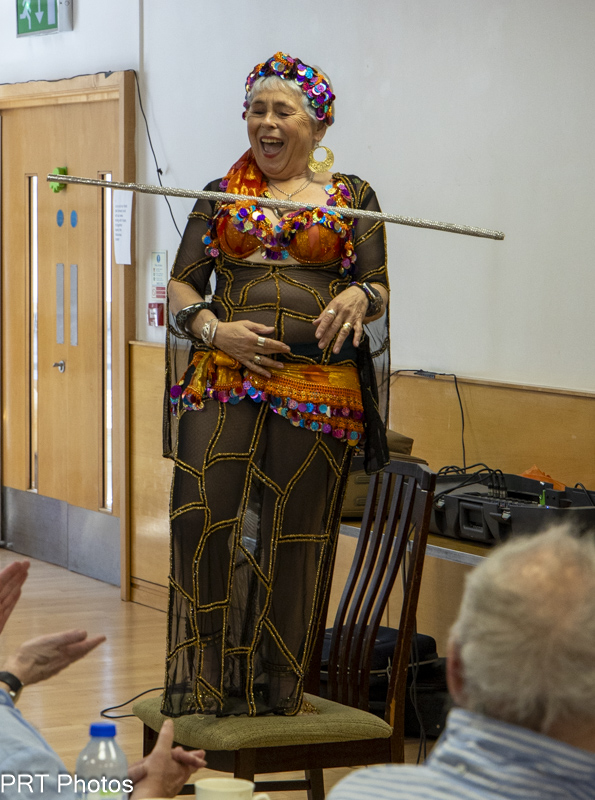
We get up together, then we meditate before breakfast (that makes us sound a lot more worthy than we are). After breakfast we get on with our day, which includes cat care and the various volunteering things we are involved in. If it’s a Tuesday we go to a singing for wellbeing group, other days Linda plays her guitar and I dance. Sometimes we meet up with close friends for a meal or I go out dancing with other friends.
How have things changed for LGBTQIA+ families over your lifetime?
Big changes! In the 80s I knew I couldn’t adopt or foster so we have no children. The children of friends just take us as we are – all totally ordinary as we’ve known them since they were babies. We are both out to everyone in our lives and it wasn’t like that when I came out in the early 80s or when Linda left Northern Ireland in the late 70s.
What are your hopes for the future for LGBTQIA+ families?
My hope is that we keep on becoming more and more unremarkable so we are completely embedded in our communities and localities. Here in Manchester it feels like we are totally ordinary but that may just be because we’ve lived in the same house for 30 years and as older women we are largely invisible.
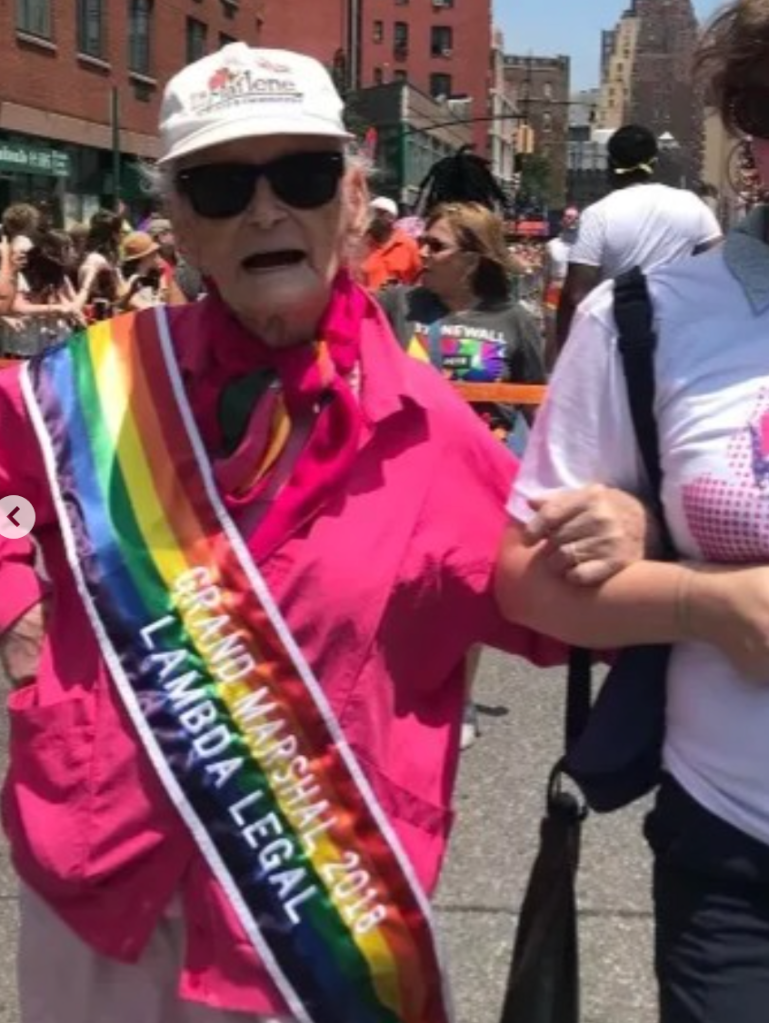
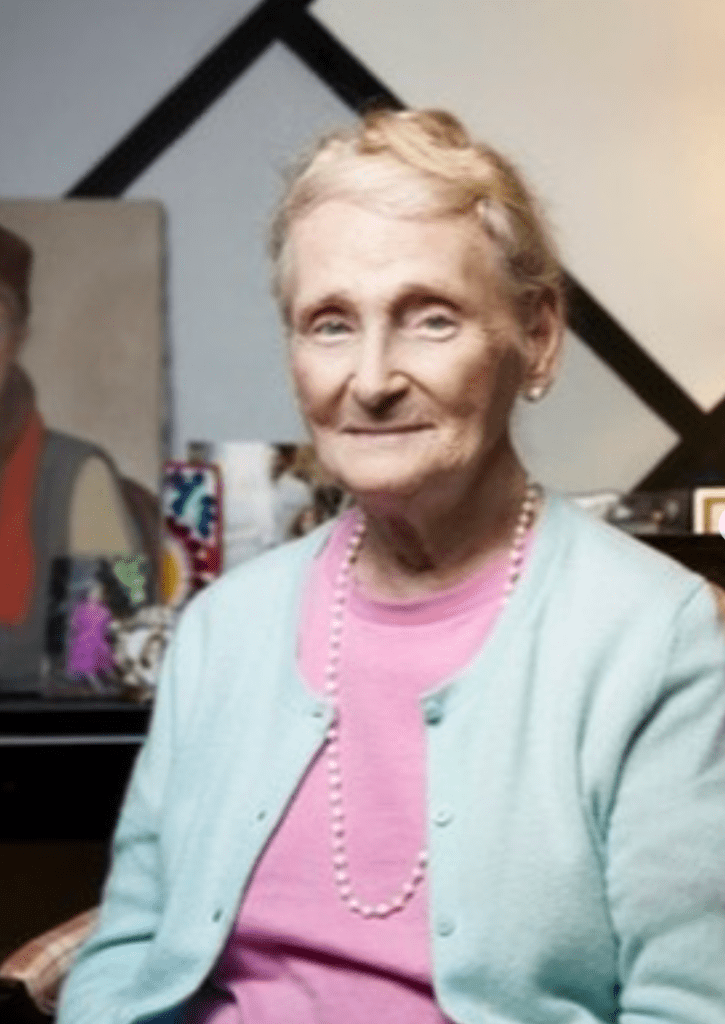
All of this is why I am part of the Centre For Ageing Better’s Age Without Limits campaign and part of their stock image library as well as a volunteer at the LGBT Foundation here in Manchester.
Ready to Protest? – Tuesday, 10 June – 6.00pm – 8.00pm
The Social, Aviva Studios, Water Street, Manchester M3 4JQ
Test your skills at PROTEST! – a Pride Month special quiz – Free to attend
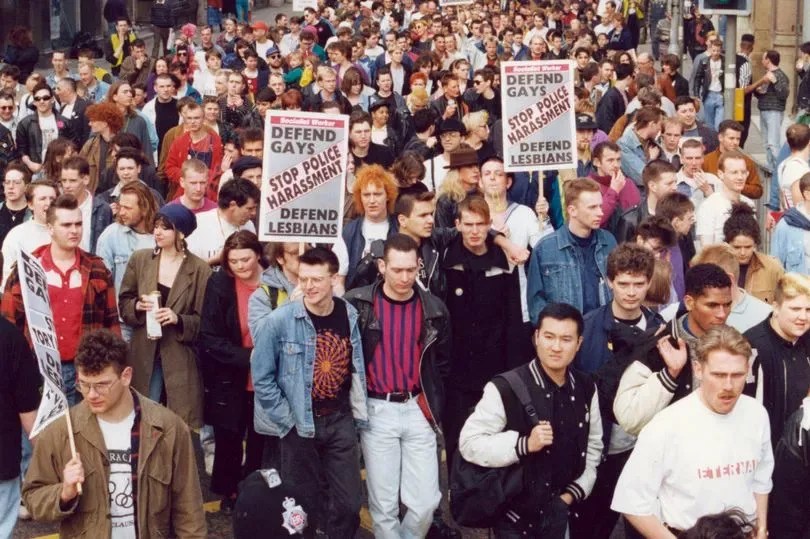
This June, IAP:MCR takes over Factory International’s monthly quiz night. This special edition is part of PROTEST! – a two-year project exploring Section 28, and the history of Queer resistance.
Your compere is Louise Wallwein: legendary poet, performer, and frontliner at the 1988 anti-Section 28 demonstration. Expect big energy and brilliant questions, celebrating protest, pride and resistance.
There will also be a pop-up display, tracing the history of Section 28.
Produced by IAP:MCR as part of PROTEST!, funded by the National Lottery Heritage Fund.
Can we get a team together for Out In The City? – Please contact us if interested.
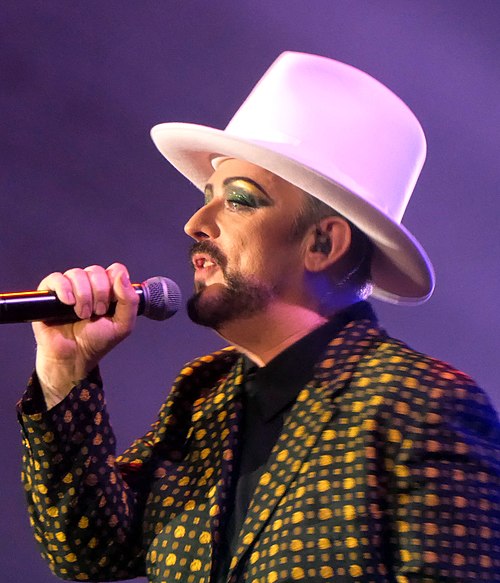
Birthdays
Tom of Finland (8 May 1920–1991), Finnish artistAlan Bennett (born 9 May 1934), English playwright, screenwriter, actor & authorValentino (born 11 May 1932), Italian fashion designer
In May 2024, QueerAF started the first Trans+ History Week, observed for the week beginning 6 May 2024, to celebrate the history of transgender, non-binary, gender-nonconforming, and intersex people. The organisation hosted billboards across the UK with the slogan “Always been here. Always will be.”
They got the idea after learning about the Nazi book burnings that targeted trans texts on 6 May 1933 after a raid on the Institut für Sexualwissenschaft in Berlin.
Nazi Party members at the Opernplatz book burning in Berlin
This year Trans+ History Week will be celebrated from 5 May to 11 May 2025. During the week we make space for, platform and share our rich history. A history which is as long as all of human life.
About a year ago, frustrated with the “erasure of trans history” and continued anti-trans narratives, Eli Erlick began writing a history book.
It spotlights underreported trans stories from 1850 to 1950, including some experiences that haven’t been told in 120 years.
Unfortunately, a lot of history isn’t just withheld on purpose by the far-right but also by academics and publishing companies that want to maintain the intellectual property.
She said, “So I wanted to do something very public, very accessible and very understandable to the mainstream.”
As part of her work, Eli colourises historical black and white images. As she explains: “We know from past social movements, particularly the civil rights movement, colourisation brings the subject closer to the viewer. We think of subjects who don’t have photos or have black and white photos as lesser, as in the past, as of a different time, era or culture – even when this could have only been 50 years ago.”
Eli has posted images of world champion athlete Mark Weston, who transitioned in 1936, and Christine Jorgensen, who was the first trans person to become widely known in the US for having gender-affirmation surgery.
Christine 1953
“I was colorising trans photos and it reminded me of star athlete Mark Weston, who transitioned in 1936. It’s as if he was erased from the history books. He was one of the world’s top athletes and Britain’s #1 women’s shot putter for six years. His brother Harry was also trans!”
Through her research, Eli has found that trans people were treated relatively “well” in the 19th and 20th centuries – especially compared to how the community is “currently being demonised as a sort of contagion”.
“Trans people used to be treated, at worst, as a curiosity or even a medical breakthrough, and it was generally positive,” she says.
She adds: “It’s clear that right now we have a significant problem in reporting and also in queer and trans historiography.”
“We shouldn’t have to produce evidence of our own history,” she says. “Yet, we are forced to … colouring these images helps remind viewers that trans people – real people – have always existed and will continue to thrive no matter how much we are attacked.”
Karl Kohnheim – Businessman, Advocate, Trans
What did it mean to transition in Weimar Germany?
Karl Kohnheim (sometimes referred to in documentation as ‘Katharina T’) was the first person to receive a German Transvestitenschein, the official government documentation that allowed dressing in affirming clothes (literally transvestites pass). Karl fought to be legally recognised as a man for over 15 years before he was given his pass; it took 8 years to receive a notice to allow his style of dress, and he was never allowed to legally change his name.
What can we learn from Karl Kohnheim?
We can’t be erased. Trans+ people have always been resilient and have always had to fight for their identities. Even when the Nazis targeted the first trans+ clinic in the world, even when they burnt our medical records and outlawed our very existence, we didn’t disappear.
Magnus Hirschfeld was one of the strongest trans+ allies in the Weimar period. He founded the Wissenschaftlich-humanitäres Komitee (Scientific-Humanitarian Committee) and the World League for Sexual Reform. His Institut für Sexualwissenschaft (Institute for Sexual Research) was the site of the first sex reassignment surgery. Hirschfeld was not transgender himself, but he felt that trans+ people deserved more dignity than they were offered in society. The incoming fascist regime targeted him for those views as well as the fact that he was Jewish and gay.
Hirschfeld also gives us the opportunity to reflect on those we choose to put on a pedestal. He pushed trans+ rights forward significantly in his time, but he was deeply racist, heldstrong views on how eugenics could be used positively in society, and had complicated power dynamics in relationships with quite young men. It’s important that we are careful about the people we invest in and recognise that no person is a monolith. We can’t excuse Hirschfeld’s horrific and dangerous ideas just because he was supportive of trans+ folks.
Campaigners urge Greater Manchester Police to apologise for alleged history of homophobic policing
Greater Manchester Police has been urged to apologise for an alleged history of ‘homophobic policing’.
The Peter Tatchell Foundation has written to the Mayor of Greater Manchester, Andy Burnham, and the Chief Constable Stephen Watson asking for “a formal apology for decades of abusive, homophobic policing that devastated the lives of LGBT+ people.”
The Foundation sent the letter on 16 April, and though it acknowledged Manchester’s more inclusive and supportive policies today, it condemned the force’s historic persecution of LGBT+ people as “some of the most vicious and aggressively homophobic in Britain.”
Citing the tenure of Chief Constable James Anderton in the 1980’s, they claim that he openly denounced gay men as “swirling around in a cesspit of their own making” and orchestrated a campaign of harassment, entrapment and humiliation.
Greater Manchester Police has been urged to apologise for an alleged history of ‘homophobic policing’.
The Foundation also says that victims were beaten, arrested for kissing, and outed in the press—leading to prison, fines, job losses, evictions and suicide attempts.
The Foundation is not asking the police to apologise for enforcing now-repealed homophobic laws, but to say sorry for the “abusive and often unlawful manner” in which these laws were enforced.
“Raiding gay birthday parties, using homophobic slurs and harassing and bashing people outside gay pubs—these tactics would never be acceptable today,” said Tatchell.
“So far, 21 UK police forces have apologised for similar past wrongs, including the Metropolitan Police, Police Scotland and Merseyside Police. Their apologies have been followed by new LGBT+ action plans, including the appointment of LGBT+ community liaison officers and the establishment of homophobic hate crime hotlines. These apologies and new supportive LGBT+ policies have much improved relations between the police and the LGBT+ community.”
“Mayor Burnham and the Chief Constable were not responsible for the past homophobic abuses,” Tatchell said, “but as people with oversight of the police, they have the power—and duty—to help make amends. A formal apology would be an important act of healing. It would boost in trust and confidence in the police, and encourage more LGBTs to report hate crimes, domestic violence and sexual assaults.”
A GMP Spokesperson said: “The GMP of today is proud to serve and protect all communities in our dynamic city-region. We strive to engage with all our diverse communities to understand their non-recent experiences and ensure they feel policing of today is doing more to listen to concerns and work together to make Greater Manchester a safer place for everyone.”
Theatrical Double Standards
English writer, broadcaster and drama critic Sheridan Morley, circa 1985. Photo by Gemma Levine / Hulton Archive / Getty Images
Sheridan Morley was an English author, biographer, critic and broadcaster. He was the official biographer of Sir John Gielgud and wrote biographies of many other theatrical figures he had known, including Noël Coward.
In this article from The Spectator dated 5 May 2001, Sheridan Morley looks back on changing public and police attitudes towards gay actors.
For me, it all began with Jimmy Edwards – a revered actor and comedian, a war hero badly burned at Arnhem, a lord rector of Aberdeen university, and for 11 years the beloved, irascible Pa Glum of Take It From Here on BBC Radio. In the late 1970s he was “outed”, and it was revealed to a somewhat surprised world that Jim, he of the tuba and the handlebar moustache, was in fact also a lifelong homosexual.
Jimmy Edwards
“Out of the closet?” he once boomed indignantly at me in a pub near Broadcasting House. “Of course I didn’t come out of the bloody closet. They broke the bloody door down and dragged me out against my will.” Soon after that Edwards settled in Australia, and far too soon after that he was dead at only 68. I am not suggesting the outing killed him, but it certainly made it harder for him to find work in Britain. It is at least arguable that his life and career as well as that of many others were shortened by the strain of some very unwelcome publicity.
As late as the 1980s, British public and private intolerance of homosexuality was still more than enough to ruin careers and lives, or at least to do them considerable damage; the television star Peter Wyngarde and Leonard Sachs of The Good Old Days were just two of maybe a dozen actors whose careers never really came back from court cases involving cottaging, even though there was no question of the involvement of minors, or indeed anyone other than consenting adults.
Peter WyngardeLeonard Sachs
The tragedy was that for many of these men, often born into a 1920s world where the memory of Oscar Wilde was still strong, there was no possibility of coming to any terms with what even they still thought of as a criminal offence, and a deep cause of familial and sometimes also marital shame.
Justin Fashanu
To this day, the stigma can still kill: in May 1998, the former soccer star Justin Fashanu committed suicide a month after a warrant was issued for his arrest on charges of sexual assault against a teenager in America – charges denied in his suicide note. Ironically, in that same week, the first “gay walking tour” of Soho was announced, and clearly there was a double standard already established: suggestions of homosexuality did little harm, for instance, to the careers of Kenneth Williams or Frankie Howerd, because their public personae were long established as gay, even though they both resolutely refused to tell the truth and Williams once threatened to sue me for inadvertently, in a theatre annual, publishing nothing more overtly “damaging” than a picture of him on a beach in Morocco with Joe Orton and his killer Kenneth Halliwell.
Kenneth WilliamsFrankie Howerd
If however your career depended on any kind of a romantic image, whether as an actor or a pop star, the danger of alienating audiences was still all too real and, amazingly, remains so to this day, more than 100 years after the death of Wilde.
I believe, having researched in some detail the arrest of Sir John Gielgud in 1953 with police who recall the case, that the witch hunt of homosexual actors in the years after the second world war was as firmly established over here, and did as much damage to lives and careers, as that of the simultaneous witch hunt of American actors and writers by the McCarthy Committee on UnAmerican Activities in Hollywood.
Indeed there is a direct transatlantic connection. In the aftermath of the Burgess and Maclean defection to Moscow, the FBI had strongly requested that the Home Office make every effort “to weed out homosexuals from British public life”, since they could clearly form a security risk at a time when the Cold War was still at its height. Accordingly, one of Scotland Yard’s top-rated officers, Commander E.A. Cole, was seconded for three months to Washington to examine in detail the anti-communist campaign in America, and to see whether there were useful lessons to be learnt for the ongoing war on homosexuality in Britain.
The commander rapidly reached the conclusion that witch hunts were apt to be counterproductive, but 1953 was in many ways the watershed. It was of course the year of the Coronation, of Everest, of a “New Britain” not unlike the one envisaged almost half a century later by Tony Blair. It was however still more divisive; in every area of public life, there was a group of reactionaries who believed that, with “a slip of a girl” newly on the throne, Britain was in imminent danger of going to the dogs, and that therefore the sooner Victorian values could be reimposed, harshly if necessary, the better for our long-term moral health. But now for the first time there was an equally powerful group of younger movers and shakers who saw in the Coronation changeover the chance finally to drag Britain into the 20th century and line her up with more liberal European neighbours such as France and Italy, where homosexuality among consenting adults had long been decriminalised.
Isherwood and Auden
The battle which started in that year dragged on for about 20 more, and it took many hostages. Some playwrights, among them Terence Rattigan and Noel Coward, followed Isherwood and Auden into exile, choosing places in the sun such as Bermuda and Jamaica where their discreetly homosexual lives could be pursued without fear of the police or press. Others chose to remain in Britain, despite the evidence of increasing intolerance.
Birthdays
Del Martin (5 May 1921–2008), American feminist and gay rights activistPyotr Ilyich Tchaikovsky (7 May 1840–1893), Russian composer
Nestled in the serene countryside near Accrington, Haworth Art Gallery stands as a beacon of artistic elegance and historical charm. Whether you are a lover of fine art, a history enthusiast, or simply seeking a tranquil retreat, this gallery offers a remarkable experience that combines cultural heritage with breathtaking natural landscapes.
Twenty five of us travelled to the gallery, an Edwardian mansion built in 1909. The building itself is a masterpiece of Edwardian design, but the gallery is celebrated for housing one of Europe’s finest collections of Tiffany glass.
Comprising over 140 exquisite pieces, this collection is said to be the largest outside of the United States. The collection’s highlights include stunning examples of Tiffany’s Favrile glass – pieces that shimmer with luminous colours thanks to the use of metallic oxides during the glass-making process.
The gallery is set within nine acres of beautiful parkland, offering visitors a chance to embrace nature alongside their artistic journey. The well-manicured lawns, picturesque paths and seasonal blooms created an idyllic environment.
On the hottest day of the year (so far) Haworth Art Gallery was not just a destination; it was a celebration of the enduring power and beauty of art.
A clay maquette of the statue shows the writer sitting on the bench with Susie at her feet
Plans for a statue of a lesbian writer who spent most of her adult life in west Dorset have been given the go-ahead.
Sylvia Townsend Warner (6 December 1893 to 1 May 1978) was a contemporary of Virginia Woolf and lived in Dorset with her long-term partner, Valentine Ackland in the early 20th Century.
The life-size statue, cast in bronze, will sit on a new public bench in South Street, Dorchester.
Dorchester councillor Les Fry said he believed it would cost around £60,000 to make and erect and welcomed the addition of a statue to a woman author associated with the area.
Sylvia Townsend Warner lived in Dorset with her partner, poet Valentine Ackland
In its planning application, Dorchester Civic Society said Sylvia Townsend Warner’s career as a poet and writer spanned six decades.
It said: “Yet, despite her remarkable contributions, her name is rarely mentioned and remains absent from Dorset’s literary landscape.
Sylvia was a highly individual writer of novels, short stories and poems, and a contemporary of writers such as Virginia Woolf and Djuna Barnes.
She contributed short stories to the New Yorker for more than forty years and went on to write six more novels ranging far and wide in time and place.”
A computer-generated image shows the clay maquette of the statue on South Street, Dorset
The statue will be sculpted by Denise Dutton who created the Mary Anning statue in Lyme Regis.
It will feature a cat at the statue’s feet, a reference to Townsend-Warner’s love of cats. The figure itself has been modelled on Dorchester’s famous Susie the Cat.
In the application for planning consent the society said the statue would help create “a more welcoming and distinctive open space … and will enhance the quality of Dorchester’s environment for residents and visitors.”
The society said the statue would be the town’s first non-royal statue of a woman, joining the six statues of “worthy” men that Dorchester already has, including Thomas Hardy and William Barnes.
‘Rights can be knocked out in a second’: older trans people shocked by supreme court ruling
Christine Burns: ‘Social media made it possible for there to be a revolution in how trans people engaged with the world.’ Photograph: Christopher Thomond / The Guardian
The fear is back. The fear I had when I first started my transition in 1979, that people will hurt me,” says Janey, who is 70. She has been living “happily and independently” as a woman for nearly half a century. She still works in the mental health sector and is part of a large and accepting Irish family. She is also transgender.
“I still go into the women’s toilets at work, but when I open the door there’s that little voice inside me: ‘Will someone shout at me?’,” she says.
Last week’s supreme court ruling sent shock waves through the UK’s trans community. The unanimous judgment said the legal definition of a woman in the Equality Act 2010 did not include transgender women who hold gender recognition certificates (GRCs). That feeling was compounded when Kishwer Falkner, the chair of the Equality and Human Rights Commission, which is preparing new statutory guidance, said the judgment meant only biological women could use single-sex changing rooms and toilets.
Janey’s colleagues don’t know she’s trans (Janey is not her real name). She remembers the 1980s all too well, when “people would beat the shit out of you just for being different”.
“I always felt I didn’t have to tell people other than close friends. By my early 30s I thought: ‘I am me, end of story.’ I did what everybody else did, going out dancing, and I was treated like any other woman, which included being harassed by men.” Coming home at night, Janey still carries her keys in her hand.
It’s the fragility of rights that scares her. “Just look at what is happening in the US – what worries me in this country is that it’s all about trans people now, but this is the start of something. Rights can be knocked out in a second.”
In the decade-long campaign for gender recognition, Christine Burns says it was ‘a devil’s own job’ to get ‘very shy’ trans people on to the streets protesting. Photograph: Christopher Thomond / The Guardian
Diana James, 66, a domestic abuse worker, says the supreme court judgment has been “a tremendous shock” to mature trans women in particular. “These are women just living their lives, coming up for retirement, pottering around their gardens, and suddenly their safety and security has been removed.”
In the intervening decades since her own transition in the mid-70s, James has witnessed “an incremental increase in rights and understanding” for trans people. “The path forward wasn’t rushed but in gentle increments, so some people who had concerns could discuss them.”
But she is one of many who identify 2017 as a pivot point, when Theresa May as prime minister proposed changing UK gender recognition laws to allow people to self-identify as their chosen gender, alongside the emergence of women’s campaign groups focusing on “sex-based rights”.
“It became wrapped up into an issue of women’s safety from trans people, despite the lack of evidence there was a genuine threat. This muddied the water around a complex situation, so a lot of the nuance was lost and so was a lot of discussion.”
Christine Burns, a retired activist and internationally recognised health adviser, charts “a fairly straight line of progress” towards the passing of the Gender Recognition Act in 2004, which allowed trans people to change gender on their birth certificate, marry to reflect their chosen identity and gave them privacy around their transition. That legislation “mattered so much to people” says Burns, while acknowledging that only a minority of the community have gone on to apply for a GRC.
She points to another significant social shift in the mid-00s. “The oddity is that the Gender Recognition Act changed lives, but the emergence of social media made it possible for there to be a revolution in how trans people engaged with the world.”
In the decade-long campaign for gender recognition, it was “a devil’s own job” to get “very shy” trans people on to the streets protesting, Burns says. But with the advent of social media, “suddenly they had a space where it was safe to describe themselves to the world, and find other trans people to compare notes with”.
The campaign for gender recognition was spearheaded by the group Press for Change, co-founded in 1992 by the acclaimed advocate Stephen Whittle, who says it taught trans people that “we didn’t have to take it lying down”.
“In the 70s and 80s, early 90s, people were terrified (that) if they tried to fight for their rights they would lose everything,” says Whittle, now 69, who found himself denounced as a “sex pervert” by a tabloid newspaper in the early 90s.
Stephen Whittle at home in Stockport. ‘In the 70s and 80s, early 90s, people were terrified [that] if they tried to fight for their rights they would lose everything.’ Photograph: Christopher Thomond / The Guardian
But by the mid-2010s, he sensed “the world had grown up”. “I was not monstered all the time. I was accepted as a good colleague, a good teacher, a good lawyer. But since then there has been this decline, and it has been vicious. There will be some who will retreat. There will be some people who will be galvanised.”
Roz Kaveney, 75, a poet and critic, says her concern about the “outrageous” supreme court judgment is that “a lot of people will think they are now entitled to act as vigilantes and that will be very unpleasant for their victims, not all of whom will be trans”.
James agrees: “So many trans women are bodily indistinguishable from cis women, with breasts and a vagina. Any gender non-conforming lesbian should also be worried.”
Her concern is that use of certain facilities will now come down to “passing privilege”. “So if someone fits their view of what a woman should look like, they are given permission for entry. Wasn’t that what we fought against in the 70s and 80s with our copies of Spare Rib and demands for bodily autonomy?”
Whittle likewise recalls the trans community’s solidarity with women in previous decades. “We’ve always been respectful of women’s rights. In the 80s and 90s we were out on the streets along with them and they were alongside us in this fight. And any trans person will tell you they have a lifetime’s experience of sexual assault and rape. Do gender critical groups not think we care about those issues?”
Burns says the judgment was especially shocking for those “who have grown up always knowing a respectful legal framework for trans people”.
Kaveney, a former deputy chair of Liberty, says: “My generation have never had to cope with an ongoing, concerted attack on trans existence that we’re seeing in the US and now here.
“It is realistic to be worried, but we’ve always been very aware of our rights in law. I’m hugely impressed with the younger generation: I’d say to them: don’t be scared, just be prepared to fight for your lives.”
Birthdays
Romaine Brooks (1 May 1874 – 7 December 1970), American painterMichael Dillon (1 May 1915 – 15 May 1962), British physician and authorLesley Gore (2 May 1946 – 16 February 2015), American pop singerSandi Toksvig (born 3 May 1958), Danish–British comedienne and TV personalityKeith Haring (4 May 1958 – 16 February 1990), American artist
Meet the gamechanger blazing a trail for LGBTQIA women and non-binary people
As Lesbian Visibility Week 2025 unfolds, DIVA Magazine is proud to once again shine a light on the brilliance, resilience and power of LGBTQIA+ women and non-binary people. The DIVA Power List is a cornerstone of this celebration – a moment to honour 100 trailblazers who inspire us all.
Lesbian Visibility Week is a time for us all to stand a little taller. Too often the stories and achievements of LGBTQIA+ women and non-binary people are overlooked, forgotten, or erased. For decades, the history of the struggles and the successes have gone unrecorded, even as women have been shaping culture, building families, leading movements and changing lives. It’s long past time to celebrate that legacy as well as the vibrant future.
To all LGBTQIA+ women and non-binary people, we celebrate you. You are seen, you are valued, and you belong.
Aderonke Apata is a Nigerian-born LGBTQIA+ activist and barrister who founded the African Rainbow Family. After leaving Nigeria due to persecution about her sexuality, she secured asylum in the UK after a 13-year battle. After starting her formal legal training in 2018, she was called to the bar in 2022.
This is her statement: “I am deeply honoured and truly humbled to be included on the top 100 DIVA Magazine’s DIVA Power List 2025, celebrating the incredible contributions of LGBTQIA women and non-binary people.
My heartfelt gratitude goes to Linda Riley, Nancy Kelley, Roxy Bourdillon, the DIVA Magazine team and all involved in curating this powerful platform that continues to uplift, recognise, and amplify voices across our beautifully diverse community.
This recognition means so much – not just to me personally, but to all those who have walked with me, supported me, and shared in the journey for justice, equality and visibility. Being part of this year’s list reaffirms the importance of standing in our truth and continuing the work to ensure everyone, regardless of identity or background, feels seen and valued.
I am grateful for this honour and for your continued commitment to celebrating those who lead with love, resilience, and purpose.
Congratulations to everyone on the list.”
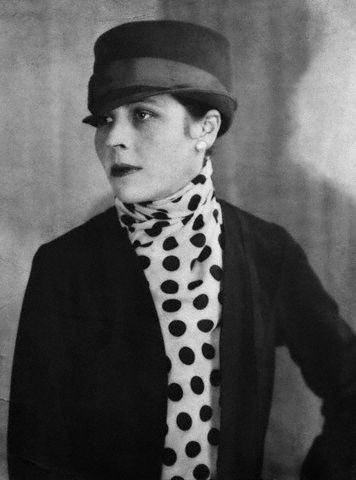
Alice B. Toklas and Gertrude Stein in the Atelier at 27 Rue de Fleurus. Photograph by Man Ray in 1923
Alice B Toklas
Alice Babette Toklas was born in San Francisco on 30 April 1877, the first child and only daughter of a family of merchants. Alice became the lover and life partner of Gertrude Stein.
Neither Gertrude or Alice felt they could fulfil the roles of wife or mother that were prescribed by society. Both had unrequited feelings for other women that exacerbated their sense of isolation from others.
Stein was the first to break away, joining her brother Leo first in London in 1902, then Paris in 1903, residing in a flat at 27 Rue de Fleurus in the Montparnasse district. Joining a community of artists, writers, and intellectuals seeking to redefine the arts, Stein tentatively began to develop her own distinctive style. Toklas moved into the flat in 1910, Leo moved out, and a legendary partnership was born.
The two women turned their Parisian home into an important artistic and literary salon for almost thirty years, where they collected art and entertained Pablo Picasso, Henri Matisse, Ernest Hemingway, F Scott Fitzgerald, Henry Miller, Anais Nin and many others.
Toklas kept the household running smoothly, typed all of Stein’s work, helped to publicise and publish her writing. When Stein decided to write her memoirs in 1933, she wrote about herself through the voice of her closest companion, naming the book The Autobiography of Alice B Toklas.
The two survived World War II in France, but Stein died of stomach cancer on 27 July 1946. Toklas only began to write after Stein’s death, producing The Alice B Toklas Cookbook in 1954 and What Is Remembered in 1963. She died on 7 March 1967. The two women are buried side by side in the Père-Lachaise cemetery in Paris.
Alice B Toklas was companion to Gertrude Stein She was so much more – her editor, Her lover, her muse, her director, Translator, gardener and cook, Inspiration for her book. Alice B Toklas with gentle care Stood by Gertrude, a presence rare. Two women met in a fateful embrace Alice and Gertrude, a love full of grace.
LGBTQ+ Extra Care Housing Scheme – Community Update
The Russell Road Extra Care Scheme will look to increase the affordable housing opportunities for older people to move into high quality accommodation, with flexible care and support services available to meet changing needs encouraging independent living.
The residents will be required to be aged 55 years or over, with the majority of residents being members of the LGBTQ+ community from Manchester.
The final proposals will deliver 80 one- and two-bedroom social rented apartments for older people in a brick building of four to five storeys. The low-carbon scheme will include shared communal facilities including lounges and treatment rooms and landscaped gardens.
Community Update – April 2025
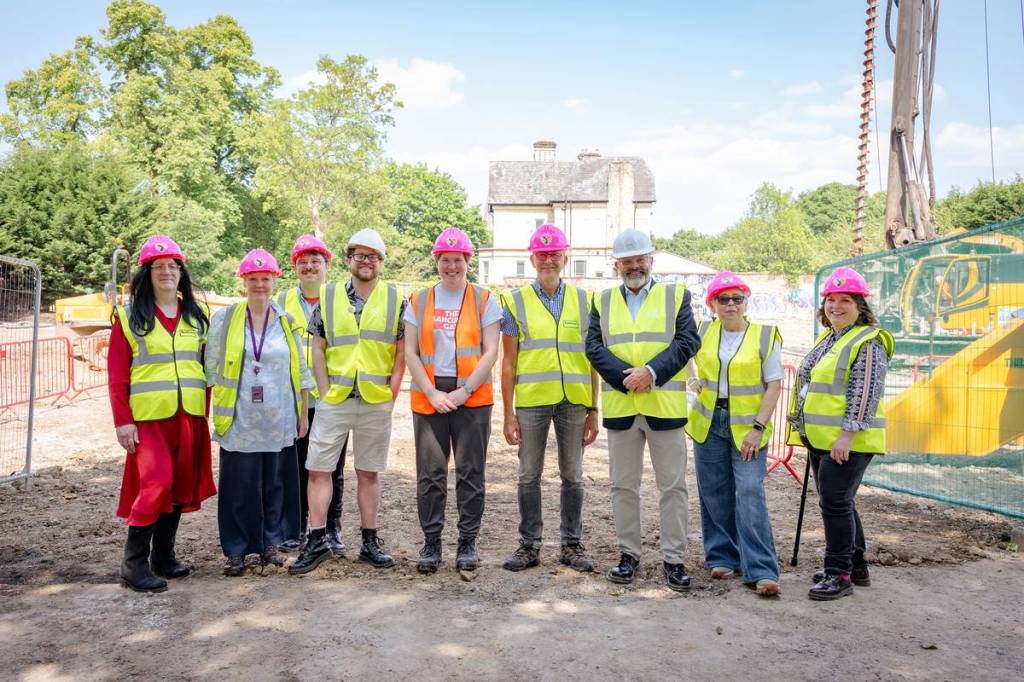
Work continues to progress since our last update as we work towards the start of construction works on the ‘first of a kind’ purpose-built majority LGBTQ+ Extra Care social housing scheme in Whalley Range.
Great Places and our contractor Rowlinson Construction have completed the initial preparatory site works at Russell Road and can now confirm that contracts have now been officially signed and Rowlinson has taken possession of the site to facilitate construction.
Our co-production work with the Community Steering Group (CSG) continues and the group have been involved in the selection of an interior designer for the scheme. We had a great tender process for the interior designer, eventually arriving at two finalists who presented to the CSG their vision for Russell Road, and we are pleased to announce that we have selected Studio Henderson. The design practice specialise in assisted living design and will be working with the CSG and members of the project team in the coming months to develop the designs for Russell Road’s communal areas which represent Manchester’s rich LGBTQ+ history.
If you’re interested in becoming involved in this exciting project, the Community Steering Group is looking to expand its membership and particularly wants to expand the diversity and inclusion of the group. For more information on how you can get involved contact Adam Preston from LGBT Foundation at adam.preston@lgbt.foundation
Amy Davies from our Project Team recently spoke to Care Home Professional about the Russell Road Project and you can read the full interview here.
Thanks for your continued support and we look forward to starting on site shortly and sharing further news on developments at Russell Road as the project continues.
Pride in Ageing with the LGBT Foundation
Find out more about our Pride in Ageing programme for LGBTQ+ over 50s in Greater Manchester and Merseyside and Liverpool, which is funded by Barclays, Manchester City Council and Age Friendly Manchester.
Lesbian Visibility Day is celebrated annually on 26 April and falls within Lesbian Visibility Week. This awareness week runs from 21 to 27 April 2025.
International Lesbian Visibility Day is a day to recognise and celebrate the contributions of lesbian women around the world. The day was created in 2008 to raise awareness of the issues faced by lesbians, and to encourage them to live authentically. International Lesbian Visibility Day is celebrated annually and is supported by various organisations and individuals around the world.
To celebrate International Lesbian Visibility Day, events and activities are held in cities and towns around the world, including marches, rallies, and other public events. Organisations such as the International Lesbian, Gay, Bisexual, Trans and Intersex Association (ILGA) also hold events to raise awareness and celebrate the day. Additionally, many individuals take part in online initiatives such as social media campaigns, online forums, and blogs.
International Lesbian Visibility Day is a day to recognise and celebrate the achievements, contributions, and unique experiences of lesbian women. It is also a day to reflect on the challenges faced by these women, and to promote a greater understanding of the LGBT+ community. By celebrating International Lesbian Visibility Day, we can create a culture of acceptance and inclusion, and help to create a more equal and just society for all.
How did International Lesbian Visibility Day first start off?
International Lesbian Visibility Day was first celebrated in 2008 to bring attention to the issues that lesbian women face around the world. The day was started in order to bring visibility to the struggles and successes of these women in the fight for equality. International Lesbian Visibility Day also serves to create a safe space for lesbians and bisexual women to celebrate and express themselves. The day was created after a group of activists and allies, working with the ILGA and the International Lesbian, Gay, Bisexual, Trans and Intersex Youth and Student Organisation (IGLYO) realised the need for a day to celebrate and bring visibility to the issues of lesbians and bisexual women. The day was created to celebrate the diversity of the lesbian, bisexual and queer community and to emphasise the importance of visibility for these women.
Lesbians and the Lavender Scare
Lesbian relationships among government workers in the United States were seen as a threat to national security in the 1950s. But what constituted a lesbian relationship was an open question.
When the US government targeted LGBTQ employees in the Lavender Scare of the 1950s, the most numerous victims were gay men. Lesbians were also driven out of federal jobs. But that was tricky because officials had trouble figuring out what a female homosexual might be.
One rationale behind getting gay people out of government employment was that they could be subject to blackmail. But a deeper one was the idea that being gay reflected a failure of “character.”
While experts of all sorts believed there was something unsavoury about homosexuality, they conceptualised what this meant in a variety of ways. Some used the paradigm of “sexual inversion,” which identified same-sex attraction with gender nonconforming physical appearance and behaviour. Others insisted that homosexuality was a matter of acts, not identity – as late as 1965, when Civil Service Commission John Macy Jr met with members of the early gay-rights organisation the Mattachine Society, he explained that “we do not subscribe to the view, which is indeed the rock upon which the Mattachine Society is founded that ‘homosexual’ is a proper metonym for an individual.”
Still, gay identities were widely understood to be a thing, for men and women. In their 1951 book Washington Confidential political reporters Jack Lait and Lee Mortimer claimed that “there are at least twice as many Sapphic lovers as fairies” in government employ.
And soon, those women were coming under fire. In 1954, the US Senate Committee on the Judiciary was faced with allegations that one subcommittee’s staff was largely made up of lesbians whose interpersonal drama was hurting office morale.
That same year, similar allegations swept through the Federal Housing Administration. Some accused women immediately resigned, but others fought back. Two nurses, Grace O’Lone and Mary Meyer, acknowledged that they had previously been in a sexual relationship but claimed they no longer were. At the same time, Meyer expressed her disapproval of the entire inquiry, arguing that officials should focus on fighting Communism, “a much more dangerous thing than even the most outstanding sex pervert.”
But which acts between women might constitute perversion was an open question. While two men kissing or holding hands clearly broke taboos, with women it might reflect acceptable friendly affection. On the other hand, one Navy psychiatrist told a Senate committee that sexual activity in lesbian relationships might be limited to “hugging and kissing” and that “it is possible for two women to be in something of a homosexual relationship without either of them being fully aware of it.” In the case of Meyer and O’Lone, defence attorney Al Philip Kane argued that true lesbianism was only possible if one of the women had an enlarged clitoris capable of vaginal penetration.
After sitting through long discussions of what they did or didn’t do in bed, Meyer and O’Lone beat the allegations – though only by convincing the officials that they had successfully overcome their sexual desires and now lived together chastely.
Men often put off doctor’s visits again and again … until there comes a tipping point
Men go to the GP less than women and are less likely to be registered at a dental practice or use a pharmacy
Men often put off seeking medical treatment – until their symptoms became unbearable or until a loved one pushes them to get help.
It’s well known that men go to the doctors less than women, and data backs this up.
According to the Office for National Statistics Health Insight Survey, commissioned by NHS England, 45.8% of women compared to just 33.5% of men had attempted to make contact with their GP practice for themselves or someone else in their household in the last 28 days.
Men were more likely to say they weren’t registered at a dental practice and “rarely or never” used a pharmacy, too.
They also make up considerably fewer hospital outpatient appointments than women, even when pregnancy-related appointments are discounted.
Men are “less likely to attend routine appointments and more likely to delay help-seeking until symptoms interfere with daily function,” says Paul Galdas, professor of men’s health at the University of York.
This all affects men’s health outcomes.
Experts say there’s a long list of reasons why men might put off seeking medical help, and new survey data from the NHS suggests that concerns about how they are perceived come into play.
In the survey, 48% of male respondents agreed they felt a degree of pressure to “tough it out” when it came to potential health issues, while a third agreed they felt talking about potential health concerns might make others see them as weak. The poll heard from almost 1,000 men in England in November and December 2024.
Society associates masculinity with traits like self-reliance, independence and not showing vulnerability, says social psychologist Prof Brendan Gough of Leeds Beckett University. “Men are traditionally supposed to sort things out themselves”.
“It’s worrying to see just how many men still feel unable to talk about their health concerns,” says Dr Claire Fuller, NHS medical director for primary care. She notes that men can be reluctant to seek medical support for mental health and for changes in their bodies that could be signs of cancer. GPs are often the best way to access the help they need,” she adds.
‘Men are inherent problem-solvers’
The data suggests that when people were unable to contact their GP practice, men were significantly more likely than women to report “self-managing” their condition, while women were more likely than men to go to a pharmacy or call 111.
“Many men feel that help-seeking threatens their sense of independence or competence,” Prof Galdas says.
Prof Galdas points to other factors deterring men from going to the doctors, like appointment systems that don’t fit around their working patterns.
Services also rely on talking openly about problems, he suggests, which doesn’t reflect how men speak about health concerns – and there are no fixed check-ups targeting younger men.
Women, in contrast, are forced to engage in the health system because they might seek appointments related to menstruation, contraception, cervical screenings or pregnancy.
They are largely in control of organising their family’s healthcare too. For example, roughly 90% of the people who contacted the children’s sleep charity Sleep Action for help in the last six months were mums, grandmothers and other women in the children’s lives.
Because women are more integrated in the healthcare system – through seeking support for both themselves and their children – they are more health-literate and are often the driving force behind their partners seeking medical help, according to Prof Galdas.
Men have a different attitude towards healthcare. Many see it solely as treatment – solving their problems – rather than preventative. Men are, for example, less likely, to take part in the NHS’s bowel cancer screening programme. As Prof Galdas says: “men often seek help when symptoms disrupt their ability to function.”
Connection can make a big difference
In recent years, support groups for men with cancer and mental health conditions have sprung up.
Prof Paul Galdas says men respond better if services are redesigned to meet their needs, like offering focusing on actions rather than talking
Experts say that while men’s attitudes towards healthcare are gradually changing for the better, more work still needs to be done.
Prof Galdas believes men will engage more if services are redesigned to meet their needs – proactively offering support, having flexible access and focusing on practical action to improve mental health issues.
“There’s good evidence from gender-responsive programmes in mental health, cancer care, and health checks showing this consistently,” he says.
Adding general health checks for men in their 20s to get them more used to accessing medical care, would be another improvement.
They’re already available through the NHS for people aged 40 to 74, but introducing them for younger men who might not otherwise go to the doctors would embed the idea that you can come and use health services.