Greater Manchester Fire and Rescue Service Training and Safety Centre
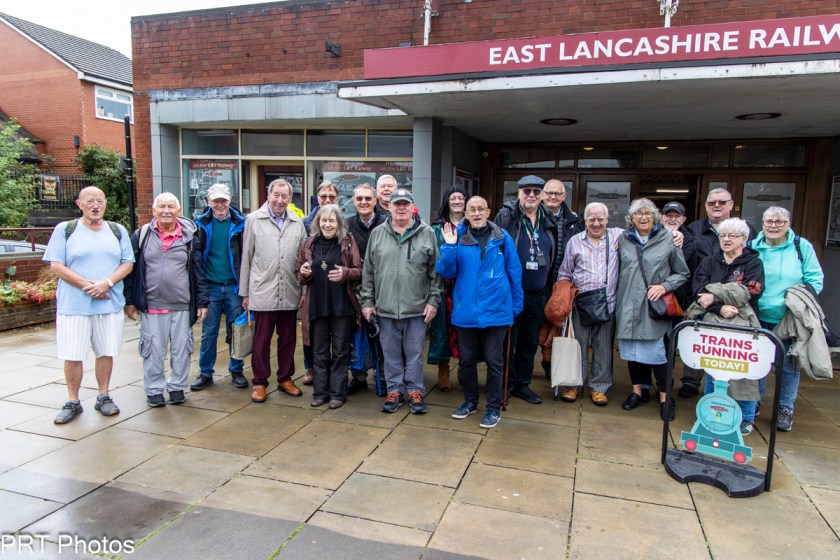
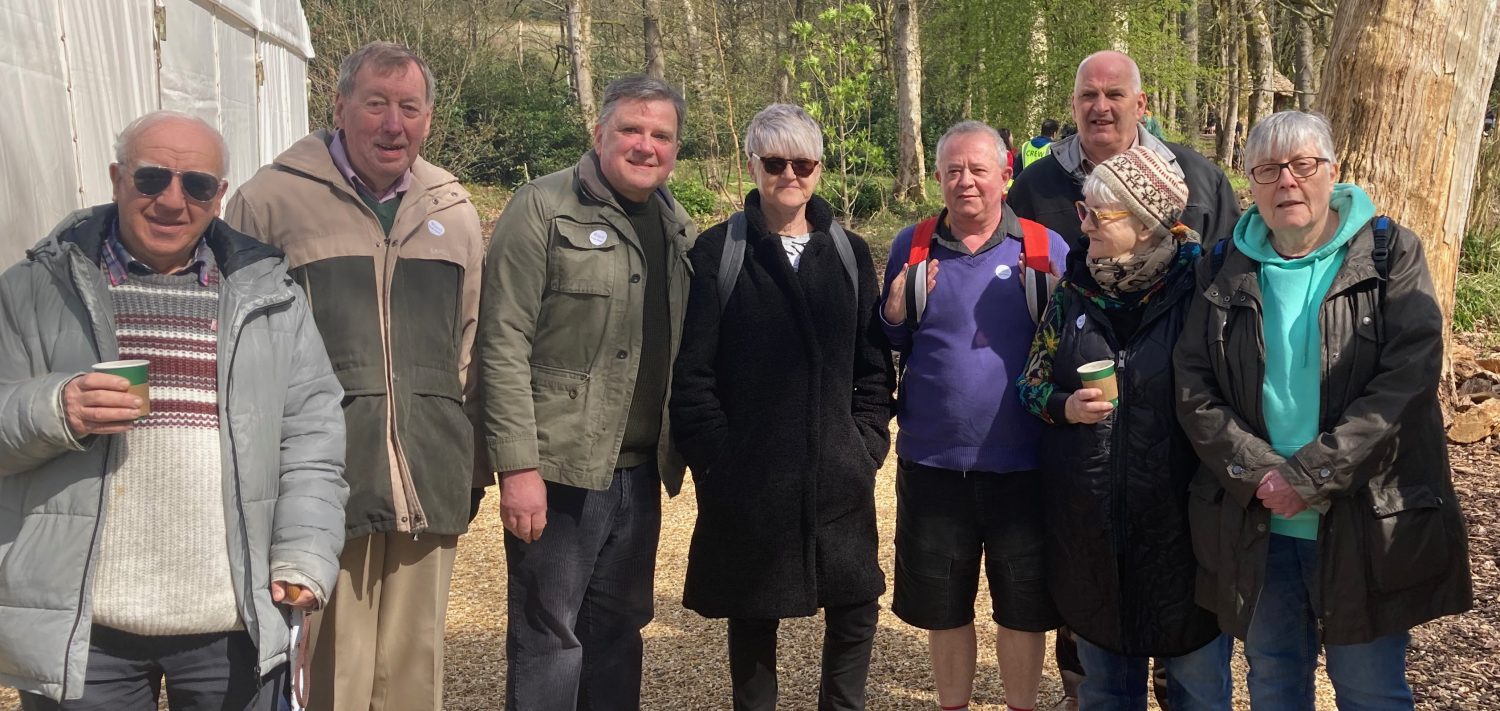
Twelve of us met at Bury Interchange and made the short journey by bus and foot to the Training and Safety Centre. The site is tucked away under an old railway bridge, and is the largest Fire-Fighter training facility in the UK.
The “visit that could save our lives” introduced us to the work of Greater Manchester Fire and Rescue Service and allowed us to experience their impressive immersive centre, which provoked our senses with the smell of smoke, the heat of fire and the sound of sirens putting us at the heart of the action.
We watched short films, listened to emergency calls and checked for hazards in a family living room and kitchen.
Here is a living room before and after a fire:
It was a very interesting, informative and enjoyable day.
Despite consternation from a member of India’s conservative Bharatiya Janata Party (BJP), the international airport code for Gaya International Airport is still very GAY.
Bhim Singh, a legislator in India’s upper parliamentary house Rajya Sabha, recently submitted a written inquiry to the government asking to change Gaya International Airport’s three-letter code from GAY.
“People consider the code socially and culturally offensive and uncomfortable,” Singh claimed in his inquiry, asking if the government had considered moving “to a more respectful and culturally appropriate code.”
In a written response issued 4 August, Minister of Civil Aviation Shri Murlidhar Mohol confirmed that the ministry had received similar requests in the past, but that there were no plans to change the code. Three-letter airport codes are not set by countries’ governments but are rather unique identifiers issued by the International Air Transport Association (IATA).
IATA has conveyed that assigned three-letter codes are considered permanent and are altered only under exceptional circumstances, usually involving air safety concerns. In other words, Gaya International Airport won’t be getting less GAY any time soon.
(Other notably fun codes include Poços de Caldas Airport in Brazil, ignobly designated POO.)
FaithFULL Collective Callout
The Faith & Belief Forum, a national interfaith charity, are currently recruiting 25 individuals from a wide range of faith and belief backgrounds based in London, Birmingham and Manchester to join the LGBTQ+ FaithFULL Collective, dedicated to improving the wellbeing of LGBTQ+ people of faith.
Running from Autumn 2025 to Autumn 2026, Collective members will receive expert training, mentoring and skills building, then will work together to design and run social action projects in their local communities.
Radclyffe Hall (Born 12 August 1880–1943), English writer and poetCara Delevingne (Born 12 August 1992), English model and actressGladys Bentley (Born 12 August 1907–1960), American blues singer
I remember Southport’s Merrivale Model Village, known as the “Land of the Little People,” which was a popular attraction in the 1960s. It was a two-acre site featuring a miniature English town with various scenes, including a castle, lake, airport and farms. The village, built on the former Winter Gardens site, was known for its meticulous landscaping and detailed models.
The Model Village quickly proved a very popular family attraction – noted for the very high standard of workmanship and maintenance – with about 100,000 visitors every season; between 1957 and 1962 there were over one million visitors.
Sadly, The Land of the Little People eventually faced closure and demolition in 1987 due to redevelopment plans for the site.
However, the legacy continued. In 1995, Southport residents Ray and Jean Jones were granted permission to design and build a new model village at King’s Gardens, Southport.
Together with their team of craftsmen they transformed an area within the seafront into a miniature landscape. This became the first model railway village in the United Kingdom, due to the focus of the attraction on the miniature railway. When it opened to the public in 1996 it was the largest outdoor display of G gauge railway in the United Kingdom.
Movement is generated in the model railway village by one of the largest 45 mm garden railway systems in the United Kingdom. It has five LGB trains continuously running on 500 metres of track. By the way, LGB stands for Lehmann Gross Bahn!
The Jones family still run Southport Model Railway Village today.
Pride protest pioneer honoured
LGBT rights champion Ted Brown, who helped organise the UK’s first Pride march 53 years ago, has been awarded an honorary doctorate from the University of Brighton.
Ted, 75, was honoured at the university’s summer graduation before leading Brighton’s Pride parade.
The activist, who joined the Gay Liberation Front at the age of 20, was recognised for campaign work spanning more than half a century.
He said: “I never imagined that standing up for who I am and for what I believe in would become what it is today”.
He added that being recognised “not just for the march or the moments people remember, but for the long road it took to get here, means everything to me”.
Born in New York to Jamaican parents, Mr Brown’s campaigning efforts with the GLF saw him help stage the now-iconic “kiss-in” protest in London in 1972.
He later co-founded Black Lesbians and Gays Against Media Homophobia in 1990 as a direct response to the treatment of the world’s first openly gay footballer, Justin Fashanu.
Mr Brown also successfully campaigned against the violent homophobia in reggae artist Buju Banton’s controversial song, Boom Bye Bye.
The university’s vice chancellor, Prof Donna Whitehead, said: “Ted has not just shaped British civil rights history, he has helped to write it. As our city prepares for Brighton Pride this weekend, it’s clear that Ted has changed this country for the better.”
Mr Brown was made an honorary Doctor of Letters on the final day of the University of Brighton’s summer graduation ceremonies, where more than 3,000 students from 97 countries were recognised.
Canada celebrates with four beautiful LGBT+ postage stamps
The stamp honouring Hanlan’s Point Beach | Canada Post
The designation for the community used by the Canadian government is 2SLGBTQI+, or Two Spirit, Lesbian, Gay, Bisexual, Transgender, Queer, Intersex+.
Canada Post, Canada’s postal service, issued the new stamps called “Places of Pride”.
One stamp celebrates Hanlan’s Point Beach, a beach that has been a meeting point for nearly 100 years. Located on Centre Island in the Toronto Islands (in Lake Ontario), the beach was known as a gay gathering place since the 1930s, since it was close enough to Toronto to be accessible to residents of that city but required taking a boat to get there, reducing but not eliminating police harassment. In 1971 it hosted the Gay Day Picnic.
The other stamps celebrate Club Carousel in Calgary, the city’s first gay bar; Truxx in Montreal, a bar that was raided by police in 1977, leading to mass protests; and the 3rd North American Native Gay & Lesbian Gathering in Beausejour, Manitoba, where the term “Two Spirit” was introduced as a term for a gender variant or queer social role in Native American tribal life.
NHS begins rollout of world-first gonorrhoea vaccine programme
Vaccination against gonorrhoea now available in sexual health clinics in England for those at greatest risk of infection
Vaccine will protect thousands of people and save the NHS over £7.9 million over next decade
Rollout is part of shift from sickness to prevention under government’s Plan for Change
People at highest risk of infection with gonorrhoea will now be better protected from the disease, as the NHS and local authorities begin the rollout of a world-first vaccination programme in England.
From Monday 4 August, sexual health clinics will be able to offer a free vaccine to patients at highest risk of the sexually transmitted infection (STI), including gay and bisexual men who have a recent history of multiple sexual partners and a bacterial STI in the previous 12 months.
The 4CMenB vaccine will help shield those most at risk of gonorrhoea – potentially averting up to 100,000 cases of the disease, while easing pressure on vital NHS services.
It will play a key role in the government’s shift from sickness to prevention as it makes the NHS fit for the future as part of its Plan for Change.
Minister for Public Health and Prevention Ashley Dalton said:
“Rolling out this world-leading gonorrhoea vaccination programme in sexual health clinics in England represents a major breakthrough in preventing an infection that has reached record levels.
This government’s world-first vaccination programme will help turn the tide on infections, as well as tackling head-on the growing threat of antibiotic resistance.
I strongly encourage anyone who is eligible to come forward for vaccination, to protect not only yourselves but also your sexual partners”.
The groundbreaking vaccination programme comes at a critical time, with diagnoses of gonorrhoea reaching their highest levels since records began. In 2023, a record 85,000 cases of the disease were reported in England – three times higher than in 2012.
This vaccine will protect thousands of people and save the NHS more than £7.9 million over the next decade. It will also help combat increasing levels of antibiotic-resistant strains of the disease.
The rollout is part of this government’s commitment to keep people healthier via an array of prevention and community health initiatives. This includes the Department of Health and Social Care’s National HIV Prevention Programme delivered by the Terrence Higgins Trust, which has worked with local activation partners to deliver National HIV Testing Week and the summer campaign for the past 4 years.
Consultant Epidemiologist at the UK Health Security Agency, Dr Sema Mandal said:
“This roll out is hugely welcome as we’re currently seeing very concerning numbers of gonorrhoea, including even more worryingly antibiotic-resistant gonorrhoea. The vaccine will give much needed protection to those that need it most – making the UK a world leader in the fight against gonorrhoea.
And it’s excellent to see that at the same time other important vaccines will continue to be offered in sexual health services to those eligible, protecting against mpox, hepatitis A and B, and HPV. Sexually transmitted infections aren’t just an inconvenience – they can have a major impact on your health and your sexual partners, so if offered I strongly urge you to get these jabs, you’ll be protecting yourself as well as others. Don’t put it off and regret it later”.
Guncle’s Day
Guncles’ Day, also known as Gay Uncles Day, is celebrated on the second Sunday in August. In 2025, this falls on 10 August. It’s a day to celebrate the special role that gay uncles play in families.
Out In The City Party!
It’s our 20th Anniversary Year – It’s Manchester Pride Month – That can only mean one thing:
P A R T Y !
Thursday, 21 August from 2.00pm to 4.00pm
Cross Street Chapel, 29 Cross Street, Manchester M2 1NL
Entertainment from Wolf – Buffet – Raffle (prize donated by Morrisons, Whitefield)
‘I love the Kennedy Center – I’ve performed there – but no, I won’t go near anything of Trump’ Photograph: Sean Zanni / Patrick McMullan / Getty Images
Harvey Fierstein is sitting here bleeding to death, he announces. “I got taken down by a rose bush earlier,” the playwright, actor and activist explains in his gloriously gravelly voice. “It could have been a raspberry bush. Gardening is much more dangerous than quilting.”
It is one aside among many during a discursive interview with the Guardian that includes his fears of fascism in America, why heterosexual men are a “bunch of assholes” and the time he sat with Donald Trump at a gay wedding.
But first there is quilting. Fierstein began about 20 years ago, inspired by craft shows on the HGTV channel that he fondly recalls as “hot glue heaven”, and made about a quilt a year. Then came the Covid-19 pandemic lockdown and, with “nobody else to talk to”, he turned to his sewing machine in earnest and found a new community in a local quilt shop. He is now up to about 80 or 90 quilts.
“I started experimenting more and more and found that people like quilts a lot better than paintings,” Fierstein, 73, observes from his home in Ridgefield, Connecticut. “If you give somebody a painting they have to hang it on the wall if you come over for dinner. But at least the dog can sleep on the quilt.”
The fruit of his labour is his first exhibition of handmade quilts, You Made That? The Quilting Adventures of Harvey Fierstein, at the Keeler Tavern Museum & History Center in Ridgefield.
Fierstein was one of the first out gay celebrities in the US and is best known for his Tony award-winning stage work on Hairspray, La Cage Aux Folles, Newsies, Kinky Boots and Torch Song Trilogy as well as various film roles. But quilting represents a return to his roots in the visual arts: he graduated from the High School of Art and Designand received a degree in painting from the Pratt Institute.
“That’s what I was supposed to be doing,” he says. “This theatre thing is like a side gig: it’s what I do when I can’t get work as an artist. As a child I went to Disney studios and saw the artists working. That’s what I thought I was going to do and this whole writing thing was sort of a mistake.”
Fierstein views the upcoming public display in a tiny museum in what he dubs “a small fictional town in Connecticut” as an opportunity to “figure out whether, besides keeping the dog warm, this is something that’s worth doing. It’s also very American as we try and cling to America as we’re being killed by that soulless piece of crap. We have to hang on.”
Harvey Fierstein quilt. Photograph: Courtesy of the artist
This is a reference to the current occupant of the White House. One of Fierstein’s deceptively beautiful quilts is a condemnation of fascism, featuring two black skeletons giving Nazi salutes above a kneeling figure in striped pyjamas, against a backdrop of yellow stars and pink triangles like those that Jews and gay people were forced to wear during the Holocaust.
Growing up Jewish in Brooklyn, with acquaintances who had concentration camp tattoos on their arms, he developed a deep awareness of intolerance. “Antisemitism was something that I was used to but, having lived through the 60s with the civil rights struggle and then the 70s with the gay struggle, you keep thinking we’ve moved past this.
But it’s in us. Prejudice is somewhere in us. It’s built into us for safety. All animals see another of their kind and find safety in that and it’s something we have to fight. It’s always been an undercurrent. I wanted to make an expression of that.If you look at the quilt, I did the background, the Jewish stars and the pink triangles, in very pretty colours. It doesn’t announce itself in an ugly way.”
Fierstein moves up a few gears as he contemplates the toxic stew of Trump’s America: draconian crackdowns on undocumented immigrants, rising antisemitism and political violence, a primal desire to revel in ignorance and turn back the clock.
“There are people that actually think that what’s going on, arresting people and pulling them out of their jobs, is something good. I am shocked when I see people on television saying, ‘Well, he promised to clean up the swamp and that’s what he’s doing.’ It’s all so frightening if you have any idea of history.
This war against the left: I believe there’s something very dark there. I believe its people being too lazy to want to do the work. They love Donald Trump because he has no idea about anything. He’s your Uncle Paul who comes over for dinner and you just have to listen to him and bite your tongue because he knows absolutely nothing. That’s why these people love him; he’s an idiot; he’s just like them.”
Fierstein wishes Trump supporters would come to their senses. “When people tell me they’re pro-Trump, I say, do you know him? Because I do. I’ve been to a gay wedding and sat with him at a table in a gay wedding. Have you? I’ve had business meetings with the man. Have you? I know him. I’m telling you, he’s nothing but a thief and a fraud.”
Harvey Fierstein in 1977. Photograph: John Kisch Archive / Getty Images
The gay wedding in question was talent manager Richie Jackson’s marriage to theatre producer Jordan Roth in Manhattan in 2012. Roth’s father, Steven, was a friend of Trump. Fierstein recalls: “Donald was there looking absolutely miserable, didn’t even bring any of the 15 wives or girlfriends or underage children with him.
When they tell me they’re pro-him, I say, if you met him, you wouldn’t be. The ones who are so weak want to be hugged by somebody strong, just get into his circle and love that. It’s that papa thing. Hitler had it. All those guys have.”
Fierstein made waves in March when he denounced Trump’s takeover of the John F Kennedy Center for the Performing Arts in Washington, which included a declared intention to ban drag shows. Fierstein noted this would mean La Cage aux Folles and many of his other shows could not be performed there.
He says: “I love the Kennedy Center – I’ve performed there – but no, I won’t go near anything of Trump. He went to see Les Mis, saying this was his favourite musical, and didn’t know the difference between the hero and the villain.How stupid do you have to be to say this is my favourite musical? At least tell the truth.”
Trump installed a loyalist, Ric Grenell, an out gay man, as president of the Kennedy Center. “He proudly says, ‘I am a gay, married man.’ Who got you those rights, you piece of shit, you lowlife little creep … Who got you the right to get married, you fuckface?”
Fierstein sees LGBT+ rights under siege once more. On his first day back in office, Trump signed an executive order mandating that federal agencies recognise only two sexes – male and female – based on biological classification at birth, rejecting gender identity as a separate concept. Another order was aimed at cutting federal support for gender-affirming care for minors.
Again Fierstein does not mince words: “The president of the United States announces there are only two sexes in the world! Well, you better call that God you say you believe in because there’s hermaphrodites, there’s all sorts of things in the end, not just in human beings but in all species. How stupid can you be? Sit down before you make a statement like that and look it up.
On Facebook I put up a picture of a statue from ancient Rome of a hermaphrodite. What are you talking about, you asshole? They’ve been around forever. Homosexuals have been around forever. This is a natural part of who we are.
Harvey Fierstein in 1982. Photograph: Joe McNally / Getty Images
But no, they have this Bible: he can sell them but he’s never read one. What’s your favourite quote of the Bible? ‘Oh, I love it all. I love it all. I read it every day.’ You don’t even read your own briefings every day. They had to simplify it for you, you piece of crap.”
Fierstein is dismayed by the law firms and media companies bending the knee to Trump because of selfishness and desire to make more money. He unleashes his frustrations at one group in particular.
“I am not an incredibly prejudiced person but, when it comes to heterosexual men, I don’t get them. They’re a bunch of assholes. There are so few heterosexual men that I know that I look up to. You can’t count on them for anything other than their own self-interest. There are some good ones – I mean, I’m not that prejudiced – but if we took all the heterosexual men out of Congress for two years and see what happens … or the ones who pretend to be heterosexual.”
And does Fierstein expect to live to see America’s first out gay president? “I’m very old,” he muses. “I’ve lived through Ronald Reagan never saying the word Aids. When Obama first raised his hand, I didn’t think – so you never know. You live in hope.
PROTEST! – ON THE SCENE
A One-Night-Only Immersive Event That Merges Queer Club Night, Historical Re-Enactment and Filmmaking
Wednesday, 20 August 2025 – 7.30pm – 10.00pm Fairfield Social Club, Irk Street, Manchester M4 4JT
A One-Night-Only Queer Party x Live Film Set Experience.
Step into February 1988. You’ve just marched through the streets of Manchester in the UK’s largest-ever LGBT+ protest. Now? It’s time to dance, defy – and make history.
ON THE SCENE is a one-off immersive queer party, part of the SCENE festival – and also a working film set.
You’ll be transported to a lovingly recreated 1988 gay bar, where you’ll party like it’s ’88, guided by our fierce resident drag queen and surrounded by the iconic sounds and fashion of the era.
But this is more than a party.
You’ll also be part of the set for a brand-new short film about Section 28 – capturing your joy, defiance, and best moves in the background (or maybe even the foreground) of this vital story of queer protest.
Older Queer Voices is a bold, podcast that centres the lives, struggles, wisdom and resilience of older LGBTQIA+ people. Hosted by writer, speaker and activist, Raga D’silva, each episode amplifies voices too often sidelined in mainstream conversations; people who have lived through silence, resistance and change, and who still have so much to say.
Through raw, heartfelt conversations with queer elders, activists, artists, legal experts and survivors, this podcast confronts ageism from both within and outside the LGBTQIA+ community. It explores themes of identity, love, loss, legacy, invisibility and joy, while offering listeners practical insight into the realities of ageing as a queer person.
Importantly, Older Queer Voices also creates space for intergenerational dialogue, inviting younger queer listeners to listen, learn and connect. Together, these conversations weave a living archive of queer life across time, one that honours the past while inspiring a more inclusive and compassionate future.
Whether you are part of the older LGBTQIA+ generation or someone learning how to better show up for them, this podcast is a space for truth-telling, bridge-building and unapologetic celebration.
Because our stories don’t fade with age, they deepen.
Cisgender people are just like you and me, except they believe their “assigned sex at birth” matches up with their “gender identity”.
How do they know they are cis?
Many cis people feel they “know” their gender internally. They feel they were “born in the right body”, even if others don’t understand.
Who is going to date them?
Though cisgender people can have a hard time meeting partners, they are still able to have healthy relationships. Often, cis people will date other cis people.
How do they have sex?
Cisgender people can be very inventive with their bodies.
But they don’t look cis!
Cisgender people are everywhere. They might not look the way that you expect!
Birthday
Andy Warhol (Born 6 August 1928 – 1987), American painter, printmaker, and filmmaker
Esholt is a village situated seven miles north of Bradford city centre. The name Esholt is said to take its name from the nature which is found in the area: Esche or Ash and Holt or wood: Ash Wood.
Sadly, Esholt railway station closed in 1940, so instead we made our way by train from Manchester Victoria to Bradford Interchange and then took bus A3 to Hollins Hill. It was a half mile walk down Station Road to the village.
Esholt has one public house, The Woolpack, a listed building in Main Street. There we enjoyed sandwiches (crispy beer battered haddock served with handcut chips and salad was particularly popular) and jacket potatoes.
Esholt Old Hall
The manor house, Esholt Old Hall at Upper Esholt is medieval in origin, probably 16th century, and possibly once had a moat. It is well-preserved and has Grade II* listed building status.
St Paul’s Church, Esholt
The Church of Saint Paul was built at a cost of £800 in 1839 by William Rookes Crompton-Stansfield for use as a private family chapel.
From 1976 to 1996, Esholt was used for the location of Beckindale for the Yorkshire Television drama series Emmerdale Farm (later Emmerdale). The series relocated to a purpose-built set based on the layout of Esholt in Leeds.
“Nobody told me”: Military vet learns she had a criminal record for 56 years for “perceived same-sex sexual activity”
Liz Stead was 22 when she was booted from the Royal Air Force. The year was 1969. Supervisors discovered romantic letters from her then-girlfriend, spurring the discharge.
As traumatic as that was, it gets worse. 56 years later, Stead has just discovered she also received a criminal conviction for “perceived same-sex sexual activity.”
Stead had already been fighting the government for reparations in response to the ban on homosexuality in the armed forces, which was lifted in 2000. This latest development came as a shock.
“I can think of one job where it might have been the reason I didn’t get it. I can’t think how it is on my records and I’ve never known about it, but I can’t be the only one, they can’t have just pinpointed me.”
“Liz’s experience shows how important it is that justice is properly done to all LGBT+ veterans who suffered under the cruel ban,” said Peter Gibson, CEO of LGBT+ military charity Fighting With Pride. “Lives and careers were ruined under that ‘gay ban.’ ”
To live unknowingly branded a criminal for loving someone is heartbreaking. The government must speed up justice for all LGBT+ veterans!
A history of LGBT+ discrimination
Between 1967 and 2000, the British military discharged upwards of 250 people per year. Officials approved a £75 million compensation fund (up to £70,000 per individual). While the financial support is positive for those affected, time does not heal all wounds, particularly for those who endured even greater consequences.
The Royal Air Force investigated David Bonney for two years after discovering a copy of The Gay Times. Court-martialled in 1993 and sentenced to incarceration for six months, including one month of solitary confinement (he was released early for good behaviour), Bonney is still picking up the pieces.
Bonney’s record has haunted his entire adult life, despite a successful post-military career as a psychiatric nurse.
I’ve still got a criminal record, and it’s robbed me – continues to rob me – of a right to a private life. Every job I went for as a nurse, I had to tell them. You’re supposed to have a right not to tell your employer your sexual orientation. I don’t.”
Like Stead, Bonney continues the uphill battle through bureaucratic red tape. A request to receive his complete military records yielded a redacted report that scrubbed any mention of the investigation.
A monumental apology
“Open Letter,” the winning design for a memorial for UK LGBT+ service members. Illustration by the artist collective at Abraxis Academy.
This year marks the 25th anniversary of the ban’s lifting. While many former service members still face discrimination, criminal records, and financial loss, a large sculpture at Staffordshire’s National Memorial Arboretum scheduled for reveal this August will mark the UK’s first memorial to LGBT+ service people.
An artist collective from Abrax Academy won the competition by designing a large-scale bronze sculpture in the form of a freestanding letter, its words gathered from collected evidence of those persecuted.
Nina Bilbey, one of the sculpture’s designers, said, “We hope this memorial will help ease some of the distrust and pain experienced by LGBTQ+ veterans and become a beacon of hope for future generations who will witness this work and be reminded of the healing power of reconciliation and the public acknowledgement of historic discrimination.”
Concessionary pass trial
In August 2025, concessionary pass holders can travel for free before 9.30am.
Throughout August, Bee Network are running a trial so concessionary pass holders can travel before 9.30am for free.
What you need to know:
· Available from 1 – 31 August
· Valid for TfGM issued older person’s or disabled person’s travel passes only
· Available on Bee Network buses (not trams).
Rainbow Lottery
On Saturday, 2 August at 8.00pm I will be revealing the winning numbers of the Rainbow Lottery on Facebook!
I’ve made a simple video and the Rainbow Lottery will add all the subtitles, bells and whistles, and of course the winning numbers. So, please watch, ‘Like’ and ‘Share’. You can also buy tickets to support us.
Come and join us to make a real difference and have the chance of winning great prizes.
Rainbow hugs,
Tony Openshaw
Co-ordinator / Out In The City
Birthdays
Barbara Gittings (Born 31 July 1932 – 2007), American gay rights activistYves Saint Laurent (Born 1 August 1936 – 2008), French fashion designerJames Baldwin (Born 2 August 1924 – 1987), American novelist
Before 1967, homosexuality was illegal and loving someone of the same sex was a criminal offence.
Although the law did not apply to lesbians, the privacy of the home provided safety and security for many LGBT+ people when same-sex intimacy was condemned by society.
Here are five artists’ homes that have become landmarks in LGBT+ history:
1. The Cabin, Bucks Mills, Devon
Once a fisherman’s store, this mid-19th century cabin became the studio retreat of artists Judith Ackland and Mary Stella Edwards in 1924.
The Artist’s Cabin on the beach slipway at Bucks Mills, North Devon.
The women met as students in London and fell in love. Together they travelled the country, painting and selling their work. They lived and worked in the cliff edge summer house for sustained periods over 50 years until Judith died in 1971. Mary Stella closed the Cabin and did not return.
It has been left unchanged in the care of the National Trust and is still used as an artist’s residence.
2. Chantry House, West Sussex
Artist Hannah Gluckstein adopted the name Gluck in 1918 and began to dress in traditionally masculine clothes.
Chantry House, Steyning West Sussex
Gender subversion, non-conformity and queer sexualities played an important role in Gluck’s art. One of their most famous paintings, ‘Medallion (You We)’, 1937, a dual portrait of their love, socialite Nesta Obermer, later became the cover image for Radclyffe Hall’s novel ‘The Well of Loneliness’, 1928, about a lesbian relationship.
After Nesta broke off their relationship in 1944, Gluck began a relationship with Edith Shackleton Heald, the first female reporter in the House of Lords. They lived together in Heald’s home of Chantry House in Sussex until she died in 1978.
3. Priest’s House, Kent
Successful theatre producer, director, and costumier Edith (Edy) Craig lived at Priest’s House with her female partners, the writer and translator Chris St John (Christabel Marshall) from 1899, with artist Tony (Clare) Atwood joining in 1916.
Smallhythe Place, Tenterden, Smallhythe, Ashford, Kent, around 1930
They lived together for the rest of their lives and were visited by queer artists and writers, including Virginia Woolf and Radclyffe Hall.
Edith Craig, Clare Atwood and Chris St John at Smallhythe Place, Kent
Their timber-framed house is on the grounds of Smallhythe Place, home to Edy’s mother, Victorian actress Ellen Terry.
When Ellen died in 1928, Edy transformed the house into a memorial museum to her mother’s life. She converted the 17th century thatched barn into a theatre and held an annual drama festival from 1929, attracting luminaries of the theatre world, including queer actor John Gielgud.
4. Ham Spray House, Wiltshire
Artist Dora Carrington and the writer’s Ralph Partridge and Lytton Strachey made Ham Spray House their home in 1924.
Outside the Grade II listed Ham Spray House with Dora Carrington, her spouse Ralph Partridge and writer Lytton Strachey.
The ménage a trois was associated with ‘The Bloomsbury Set’ of artists and intellectuals who had open relationships, often with same-sex partners.
Strachey wrote his books ‘Elizabeth and Essex’, 1928, ‘Portraits in Miniature’, 1931, and ‘Characters and Commentaries’, 1933, in the first-floor library of the house.
The library was designed by Carrington, featuring tiles with Strachey’s monogram and a false bookcase with humorously titled book spines. Strachey died in 1932, and grief-stricken Carrington died of suicide shortly after.
5. Sissinghurst Castle, Kent
Purchased in 1930, the poet and novelist Vita Sackville-West lived at Sissinghurst with her husband, Harold Nicolson. They both had numerous same-sex affairs throughout their happy and unconventional married life.
The Grade I listed Sissinghurst Castle, Kent, purchased in 1930 by the poet and novelist Vita Sackville-West
The most well-known of Vita’s love affairs was that with the novelist Virginia Woolf. Woolf is said to have modelled her successful book ‘Orlando’, 1928 and its gender-shifting hero on Vita.
Both Vita and Harold were discreet about their same-sex affairs. Their home at Sissinghurst allowed them to share a happy, queer marriage.
Vita Sackville-West 1926
Mary Frith (1584 – 26 July 1659)
She swaggered through the streets of London in breeches and boots, a pipe clenched between her teeth, daring anyone to question her right to exist on her own terms. In an age when women were expected to be silent, submissive, and tucked behind a veil of obedience, Mary Frith – better known as Moll Cutpurse – stood as a living scandal, a walking disruption of every rule that kept women in their place.
Born around 1584, Mary didn’t just push boundaries – she torched them. From a young age, she refused to conform to the rigid expectations of femininity. She dressed like a man not to entertain or deceive, but to live freely, unchained by corsets or customs. Her male attire, often complete with a sword, was an audacious statement: I will not be what you say I must be.
Moll wasn’t just notorious for her wardrobe. She made her living on the streets as a pickpocket, a fence, and eventually, a business-savvy operator who helped return stolen goods – for a fee, of course. She mingled with thieves and actors, outlaws and drunkards, becoming both a local legend and a feared figure in London’s underworld. Her reputation grew so vast that plays were written about her while she was still alive.
But Moll didn’t stop at crime. She also broke into the all-male world of public performance. She took to the stage at a time when women weren’t even allowed to act, performing in drag, smoking openly, and mocking the very society that tried to erase her. Even when arrested and forced to publicly repent, she did it in style – reportedly throwing in a song or two just to irritate the authorities.
Mary Frith lived a life that makes the phrase “ahead of her time” feel almost inadequate. She defied gender expectations not as a private act of rebellion, but as a public spectacle. In a world that punished women for stepping out of line, she danced, drank, and laughed right across it.
Her story isn’t just one of defiance – it’s a reminder of the power that comes from refusing to apologise for being exactly who you are.
Good News From America:
Rainbow Road is the longest LGBTQ+ mural in history
Driving along 15th Street Northwest in Washington DC, you may notice a stretch with multicoloured bike lanes and other street paintings. That “Rainbow Road” is now the longest LGBTQ+ mural in history.
“DC has the largest LGBTQ per capita population in the country, and you know, it’s just important to not shy away from our colours,” said Lisa Marie Thalhammer, the lead artist on the project.
Stretching over half a mile between O and V streets, the mural features all the colours from the pride flag, as well as plenty of spots with three stars representing the DC flag.
There are also additions by eight other artists from the DC area.
“We also have this really cool piece by Maps Glover called “Watermelon Kisses”, and it’s just this really sweet depiction of two figures, you know, embracing in a sweet kiss surrounded by green and black in a pink heart,” Thalhammer said.
The artists and more than a hundred volunteers spent weeks designing and painting the project in time for last month’s World Pride Festival.
“It would not have happened without the help of, you know, these 120 volunteers all coming together to make this city more colourful and more beautiful,” Thalhammer said.
While planned for Pride month, the 0.63-mile long mural is expected to stick around for years to come as “a visual reminder that pride is actually 365 days of the year.”
“This painting is really for our community, in the Shaw and Dupont Circle neighbourhoods, and it just really brought so much light and joy to people’s faces,” Thalhammer said.
Located on 15th Street in Northwest DC, “Rainbow Road” is the longest LGBTQ+ mural in history (Photo: Luke Lukert / WTOP)Maps Glover’s piece called “Watermelon Kisses” is part of the mural (Photo: Luke Lukert / WTOP)
“In Plain Sight” Sculpture
Philadelphia’s sculpture, “In Plain Sight“, is on display at Cherry Street Pier. (Photo: Jeremy Rodriguez)
Philadelphia is committed to collaborate with the LGBTQ+ community and pursue dialogues about how to best show marginalised people visible support and allyship.
What emerged was a sculpture called “In Plain Sight”, a ten-foot tall sculpture that features colours from a variety of Pride flags to display the letters T and Q with a plus sign, meant to be a representation of both visibility and hospitality to those members of the community facing especially painful challenges in the current political climate.
This sculpture is an opportunity to share – really with the world – that Philadelphia is committed to LGBTQ+ equality and visibility.