Request for help … Men’s Mental Health Podcast

News

Request for help 

We have received the following request:

“Hello, I’m a writer and former journalist. I worked with you when I was Editor of Attitude and we did a shoot with one of your group.

I’m wondering if you might be able to help me with something else. I’m getting ready for publication of my next novel, The Secret Life of Albert Entwistle, which is about a gay postman in his 60s who goes off in search of the love of his life, a boyfriend he hasn’t seen for fifty years.

For the audio book extras, my publisher wants me to record a few interviews with real-life men whose story mirrors that of my protagonist.

So I’m looking for British men aged 65+ (preferably from the north west of England) who could share their personal stories about how awful it was to grow up gay in the 1950s and 60s, how forbidden same-sex love was in those days, how the fear of imprisonment and blackmail blighted our lives, and the impact this had on our romantic and sexual relationships, including how we were often torn apart from partners and had our relationships destroyed.”

If you are interested please contact us, and we will pass on details.


Men’s Mental Health Special

This podcast contains honest conversations around topics like self-harm, suicide and anxiety which some listeners might find triggering, please decide if it’s right for you to listen.

With stress and anxiety at an all time high, in this special Healthful podcast, hosted by Matt Johnson, the panellists discuss issues surrounding men’s mental health and how we can open up the conversation.

TV personality Chris Hughes shares his own journey with anxiety, while LGBTQ+ activist Alexander Leon discusses how ideas about masculinity can impact on men’s mental health. Dr Amir Khan explains why he thinks it can be harder for men to speak out and Stephen Manderson, aka Professor Green, shares his tips on how to get through the tough days.

Two television programmes to watch … Tom Allen

News

Two television programmes to watch

Check out The Bidding Room at 4.30pm on Friday, 22 January on BBC1. You may see somebody you recognise! Spoiler alert: it’s a member of Out In The City!

Later on at 9.00pm on Channel 4 is Russell T Davies’ drama It’s a Sin.

The programme is set in the 1980s during the Aids crisis, following the lives of a group of young gay men. September 1981 finds 18-year-old Ritchie leaving the Isle of Wight to go to university. In London, Roscoe walks out of his parents’ home, while Colin arrives from Wales to start a new career on Savile Row. The three men meet, and along with fellow student Ash and best friend Jill form a gang and move into a flat, christened the Pink Palace.

However, a distant threat on the horizon means that life in the 1980s might be all too precious. Olly Alexander, Omari Douglas and Callum Scott Howells star.


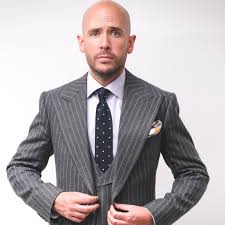
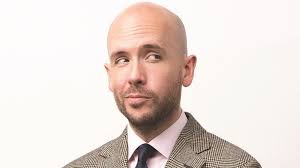
Tom Allen: “Nobody should be made to feel that football isn’t for them”

The comedian and TV host talks about his eye-catching punditry stint for Soccer Saturday and how it showed him attending a live game can and should be for everyone

Tom Allen created quite the reaction on Twitter and elsewhere with his reports from Charlton’s recent 5-2 victory over AFC Wimbledon, which the comedian did as part of Sky Sports’ coverage of the Rainbow Laces campaign. Photograph: Aemen Sukkar

“I’m fascinated by the way Americans want to take over English football and always think they must get such a shock when they see what it’s actually like,” Tom Allen says with a chuckle. “No, I’m being churlish. I just mean how the celebrations here are quite low-key and not as theatrical as they are in American sports. Like West Ham and the blowing bubbles song, which as I’m sure you know has that line about your dreams fading and dying … it’s a bit different to pompom dancers and marching bands, isn’t it?”

Allen chuckles again while speaking about football, a topic that by his own admission he knows little about but in his own unique way has become a spokesman for.

Not that the award-winning stand-up comedian and host of The Apprentice: You’re Fired sees himself that way. Equally, he recognises the size and significance of the reaction to his appearance on Sky Sports’ Soccer Saturday. Alongside the reporter Mark McAdam, a friend of his, Allen provided updates from Charlton’s League One game against AFC Wimbledon. It was the Chris Kamara role turned up to 11 as Allen relayed what was going on at the Valley in typically acerbic, quick-witted and hilarious fashion. Back in the studio, Jeff Stelling didn’t know what was hitting him while online there was an almost immediate, joyous reaction to the 37-year-old’s stint as a pundit. Twitter, it is fair to say, blew up.

“I thought it would be quite light-hearted but it was actually quite intense because of course for Mark and the other people working there it’s their job and rightly they take it very seriously,” says Allen, who is also a regular on The Great British Bake Off: An Extra Slice and has just started his own show on Channel 4, Tom Allen Goes To Town. “So I did try and back off a bit. But I had lots of fun and it’s great so many people enjoyed it.”

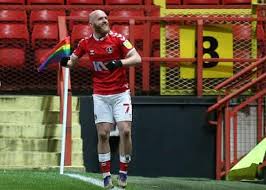
“And there were seven goals [Charlton won 5-2]. At one stage I was like: ‘Oh no,’ because Wimbledon were leading and I was sad for Charlton because we were at their ground, but then they started smashing those goals in. And I’m delighted Jonny Williams scored because, as I said on air, he’s bald just like me. He sent me a message afterward, actually. I can’t remember what he said but it was along the lines of ‘hope you enjoyed the game’. That was lovely. I do like Jonny Williams.”

Jonny Williams celebrates scoring for Charlton in their 5-2 victory over AFC Wimbledon on 12 December, something that pleased Tom Allen: ‘He’s bald just like me.’ Photograph: Paul Dennis / TGS Photo / Shutterstock

Allen’s appearance on Soccer Saturday was to mark the Rainbow Laces campaign, the annual initiative started by the gay rights charity Stonewall with the aim of raising awareness of LGBT+ equality and representation in sport. Sky has been a prominent backer and in 2019 ran a package that featured Allen, again alongside McAdam, attending West Ham’s Premier League game with Sheffield United at the London Stadium as a spectator. For Allen it was the chance to experience something that felt distant and out of bounds for him growing up in the suburbs of south London, with his sexuality a large and sadly prominent reason for that.

“My grandad was a huge supporter of Crystal Palace. I never knew him as he died before I was born but he contributed to a stand at their ground and would go every week with my cousins, who still follow the club despite living in Australia. Palace are also my dad’s team while my younger brother supports Manchester United.

“I never got into football because I just felt I had no business being part of it. It wasn’t overt – nobody at school said: ‘You can’t play with us, you’re not welcome!’ But boys can actually be really bitchy and excluding and when you feel different as a child – as I did, and was – that can be quite overwhelming. What if I did get involved and got it wrong – would I be humiliated? There was a lot of self-consciousness there. I became the child who wanted to talk to my friend’s mum rather than play football with my friend.”

Allen addresses the difficulty of his childhood in his new memoir, No Shame, and how it was shaped as much by his eccentricity as his sexuality – “I have this posh voice which nobody else in my family has and while it’s nice it’s also a curse” – and speaking to him it becomes clear he is a man who, as well as hitting the heights professionally, is going through a period of self-reflection and discovery. Hence his decision to get involved with Rainbow Laces in the first place, having been asked to do so by McAdam.

“I’ve always been led by curiosity and also I’m at a point in my life where I feel a lot less conscious about what people think; the fear of getting involved isn’t there any more,” Allen says. “I was made to feel incredibly welcome by everyone I met at West Ham – including Karren Brady, who I know through my work with The Apprentice – and what I really liked about the experience of going there and to Charlton is that sense that football is a place where families go to have a nice time together. I genuinely didn’t know that was the case. For so long I thought it was where the bigger boys went and wasn’t for boys like me.”

Football is undoubtedly a more inclusive environment than it once was but challenges in that regard remain, as highlighted by a report released by the anti-discrimination body Kick It Out in September that showed a 95% rise in reports of abuse based on sexual orientation in the professional game during the 2019-20 season.

It is a state of affairs that is as nasty as it is dispiriting and something Allen was subjected to following his Soccer Saturday cameo, for while most of the reaction he received was positive there were negative comments. Not one to normally engage with trolls, Allen decided on this occasion to address them head on, posting a Twitter thread in which he made the more than valid point that “there isn’t a right or wrong way to respond to goals”.

“There was one comment that was along the lines of: ‘He’s jumping around like an overexcited schoolgirl.’ I read it and thought: ‘So what if I am – is that bad?’” Allen says. “I’ll admit, I was being a bit performative, but then all of it is a bit performative – the guy who sings a certain song or shouts a certain thing at a player, they’re being performative too, and ultimately everyone is entitled to get involved in football in whatever way they want.

“Of course it’s interesting to have insight, and I respect all professional commentators and pundits, but you can just have fun with it, as I did.”

The response to Allen’s intervention was again largely positive, which was important to him given it had been for others as much as for himself. As he explains: “The negative comments reminded me of the times people have made me feel ashamed for being different so I thought it was important not to leave them unchallenged because they may have made someone else feel ashamed in the same way. That person may then decide football isn’t for them, that they’re not welcome there. Nobody should feel that way.”

Raconteur, reporter, role model – Allen has and is doing it all and ultimately one question remains: has visiting the London Stadium and the Valley made him keen to attend more games, if and when that is possible? A trip to Selhurst Park certainly feels like an obvious thing for the Beckenham-born, one-time youngest member of the Noel Coward Society to do.

“You know what, I’ve never gone to see Crystal Palace play,” he replies. “Isn’t that awful? Especially considering they do have pompom dancers.” 

No Shame by Tom Allen is out now (Hodder Studio, £20)

Covid-19 Survey … Manchester International Festival … Turn On Festival postponed

News

Socio-economic effects of Covid-19 on the LGBTQ+ community

Manchester Pride are compiling a report for the Greater Manchester Combined Authority (GMCA) who are looking at how best to understand the impact of Covid-19 on the LGBTQ+ community.

They are particularly interested to hear about your access to key services including healthcare and transport.

The survey should take about 20 minutes to complete and all data is anonymous.

Complete the survey here.

The data will help to create a report for the Greater Manchester Combined Authority on how the LGBTQ+ community has been impacted by Covid-19.

They need all responses in by the end of January, so it’s a tight turnaround – if anyone needs help filling it in, please feel free to contact Alex Khanyaghma, Community Engagement Officer at Manchester Pride on 0161 831 7700 or 07983 170 345.


Manchester International Festival Project

Manchester International Festival (MIF21) is definitely happening from 1 – 18 July 2021, and they would love for you to get involved. 

Have you got a love story you’d like to share? Do you want to express your love for the important people, places, objects and experiences in your life? They might be able to help, through a new project they are creating for next summer’s Manchester International Festival. 
 
They are looking to finalise participants as soon as possible. They are hoping that we can all get together in person – participants, artist, writers – sometime in February. If that’s not possible, the alternative is to create an online community and meet via Zoom.
 
Please see flyer:


If you’re interested, please let us know here.


Turn On Fest Postponed

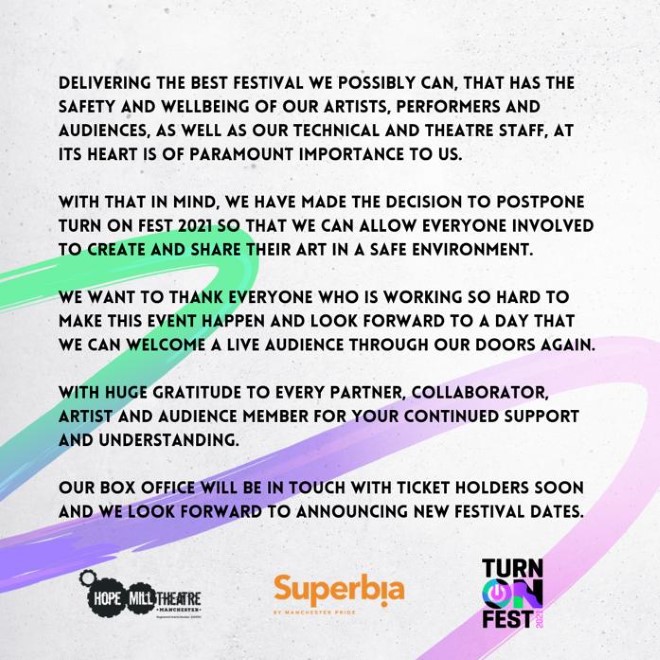
Due to the most recent government guidelines, it was with a heavy heart that Hope Mill Theatre released the following statement regarding the second annual Turn On Fest. The LGBTQIA+ Arts festival, in partnership with Superbia, aims to celebrate, support and create a platform for queer artists in  Manchester and the north. We look forward to the day that we can do this in the fullest and safest way possible.

Mind Yer ‘Ed … Covid-19 Survey … Rainbow Death Cafe

News

Talking About My Generation was started as a campaign so people aged 50 and over from across Greater Manchester could change the record on what it means to grow older in the region.

One of the projects is the Mind Yer ‘Ed series and members of Out in The City have been interviewed. Here are a couple more of the interviews:
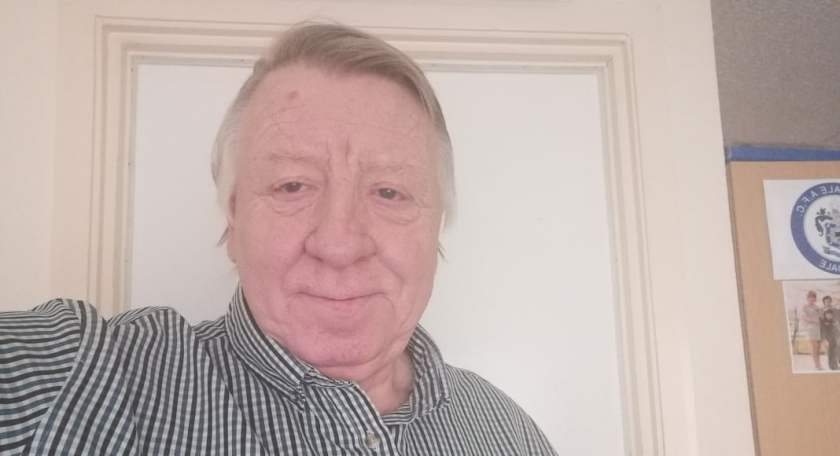
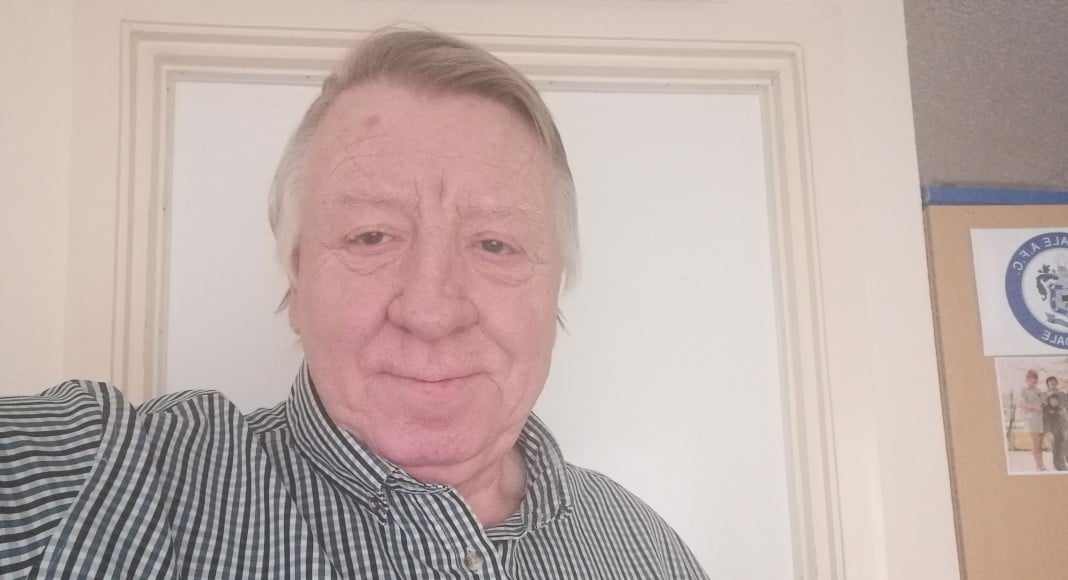
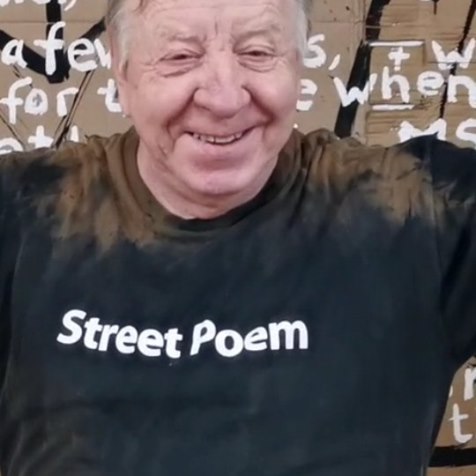
Norman Walsh, 65, shares his experience of the coronavirus pandemic and the serious mental challenges of lockdown. Norman, from Bury, found a place of his own to live in last year after coming out of prison in 2015, and said his friends and poetry helped him pull through depression and loneliness.

“I’ve felt very isolated during the pandemic. I have a PlayStation here but you soon get bored of just being on that and I’ve found it really difficult. I was on the maximum dosage of anti-depressants between October and November 2019 and when I moved into my new place, they started to wean me off to the minimum dosage. When the pandemic came, I went off my trolley again.”

“In September I contemplated suicide but luckily my friends got me through that. I don’t know how I survived doing what I did. One night, I took an overdose that would have been enough to kill three people but I woke up the next morning. I took that as a sign.”

“My friends have been solid rocks for me. My partner, Stuart, and nephew, Stephen, are in the same bubble and we see each other two or three times a week. Stephen is a bit like a brother to me.”

“I made my other friends during a short time as a chef at the Mustard Tree and through Manchester Street Poem. Street Poem is about creating awareness of marginalised people and offering them a chance to share their stories through art. It’s about letting you know that you might be in a low place now, but things are going to get better. We have meetings every week on Zoom and it always cheers me up to see everyone from there.”
“I love creative writing and I’ve turned my hand to poetry and making a few stories but it’s all for my own benefit, really. Sharing worries in that way feels like you’re getting a weight off your shoulders and I’ve shared my story with so many people now and it really does make you feel better.”

“September was the lowest point of my life, but I’m getting there slowly. I do feel really cheerful at the moment and I don’t feel like I miss my family as much as I normally do during the Christmas period. I always hope that my kids will come and visit me eventually. It’s been about nine years since I saw them. They could come and knock on my door right now and I’d welcome them with open arms. They’re my kids for God’s sake, but if they don’t come, they don’t come and I’m learning to live with it now.”

“I think I’ve learnt that I’m more vulnerable than I thought I was. Being in prison and being on my own for those years taught me to deal with my own company. I felt like I had no control in prison, I had to be there. I’m a free man now and what I do is up to me, but the government are telling me to stay indoors.”

“When I wasn’t free, I wasn’t bothered, but now that I am, I want to get out there. I’m back on to half dosage of the anti-depressants and I feel okay right now. I’m sleeping much better and my resilience has improved loads since September. I’m feeling very positive for the future.”

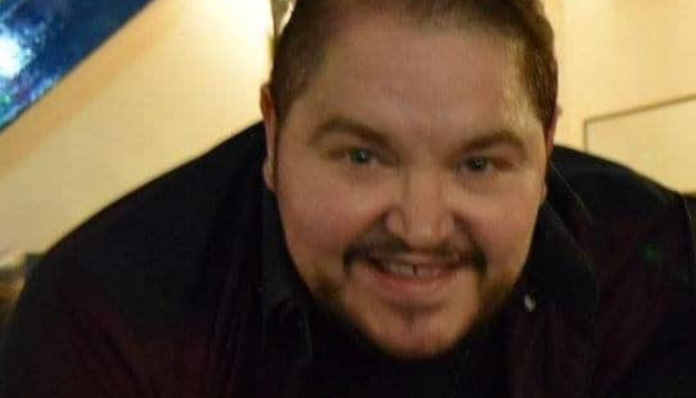
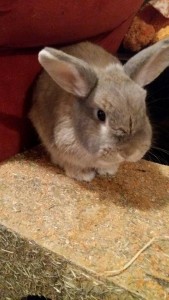
Chris Nicholson, 53, from Salford says he is finding isolation and anxiety during the coronavirus pandemic a real challenge during the winter months, but his pet rabbit, Mitzy, has helped him to get through it.

“I’ve had a few medical issues and I am in the vulnerable category. I haven’t had to shield but I’ve had to be extra careful and I’m petrified of getting too close to people.”

“After we went into the local lockdown, I started getting very lonely and I’m even more so now because I’m working from home. I really have to push myself to go to the supermarket and I don’t want to be near people because I’m so scared to death of catching anything.”

“I’m very isolated because I live on my own. I work full-time in HR at the moment and working from home is hard.”

“However, it does have its benefits, like not having to commute. Because you’re not going out of the house to the office you’ve got to try and push yourself that bit harder to have a ten-minute walk around the block.”

“Before Manchester went into local lockdown, I was having people coming round to sit in the garden and I was able to meet friends outside. I also went to the Out In The City group three or four times before everything had to stop, so I was managing to get out and see people. That period wasn’t too bad. I was getting out for walks and getting fresh air.”

“When the local lockdown did hit, I felt very anxious and cut-off. A lot of my friends had already formed bubbles with their family or partners and I felt completely cut-off.”

“I’ve got my rabbit, Mitzy, here with me. She keeps me sane and I have her hopping around the house.”

“There have been a lot of times when I’ve picked her up, cuddled her and cried. I just sit there stroking her to de-stress a bit sometimes when I’ve been getting very anxious about things.”

“I took her to the vets the other day and I don’t think she was too happy about it. She just sulked and wouldn’t come up to me but after about two hours she was back to her old self, begging for treats and things. She’s very entertaining.”

“She’s got a hut outside but she hasn’t used it for about four and a half years and she’s got a hutch inside but she doesn’t really use that either. She has a litter tray in the living room and she has free roam in there. She sometimes sleeps on the sofa but I don’t let her anywhere else.”

“She hops through the kitchen into the garden or escapes into the hallway and I’ll be wondering where she is and I’ll hear this scratching on the door. Rabbits are funny and having that little furry friend in Mitzy to keep me company has really helped me get through all this.”


Share YOUR Views on the NHS Covid-19 Vaccine

Carl Austin-Behan as the LGBTQ+ Advisor to the Mayor of Greater Manchester, and LGBT Foundation are carrying out a survey to better understand LGBT people’s views on the Covid-19 vaccine.

Information you choose to share may be used in policy and research documents which will be publicised. However, you will not be identified. All questions are optional. The survey should only take 5 minutes. Thank you.

https://www.surveymonkey.com/r/RSLVV5R

If you have any questions regarding the survey or would like to provide any further feedback, please email research@lgbt.foundation


Virtual Rainbow Death Cafe

15th February 2021, online, 4.00pm – 5.00pm
 

A chance to talk openly about death and dying in a relaxed, LGBT-friendly online group space. Find out more about the Death Cafe movement and book free tickets to this event here.

Tickets are free and a link to access this event will be sent to you on the day. Spaces limited to 12 per session, please book early.

This event will be hosted on Zoom (video conferencing application). Please email lawrence.roberts@lgbt.foundation if you have any questions about connecting or additional access requirements for this session.

This event is presented by the Pride in Ageing programme at LGBT Foundation. Find out more about our other events here: https://lgbt.foundation/prideinageing
Beyond the silk pyjamas: the style of Noël Coward

News

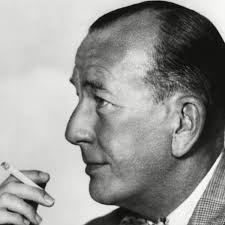
Debonair … Noël Coward. Photograph: Everett / Rex / Shutterstock

A new exhibition is devoted to the visual flair of a debonair playwright whose tastes are almost impossible to define – Noël Coward: Art & Style is scheduled to open on 14 January at Guildhall Art Gallery, London. The world première of this new exhibition marks the 100th anniversary of Noël Coward’s West End debut as a 19-year-old playwright.

Noël Coward was the epitome of style. Fittingly that is the subject of a major exhibition opening at London’s Guildhall Art Gallery, containing costumes, set designs, paintings and production photos. Brad Rosenstein, its curator, says Coward is “especially celebrated for his verbal wit” but that the exhibition “will remind us that his original productions were also visual feasts for their audiences”.

That sounds tempting – but it raises several questions. What, actually, do we mean by style? And how has it changed over the years? In Coward’s case, style consisted of the effortless projection of a unique personality. You see that clearly on an album cover of a 1955 LP, Noël Coward at Las Vegas, where he stands in the Nevada desert immaculately clad in dark suit and suede shoes while clutching a cup of tea.

Michael Billington writes in The Guardian: “I only saw Coward once in the flesh and that was at the first night of a compilation show, Cowardy Custard, at the Mermaid Theatre in London in 1972. Although visibly aged, he seemed immensely debonair. But my chief memory is of how John Moffatt dried in the middle of a Coward song. With superb insouciance, Moffatt simply asked the conductor to go back to the beginning of the number. That’s what I call style.”

But while some aspects of style are permanent, its visual manifestation alters with time. You can see that by tracking the radical changes that have overtaken one particular play, Present Laughter. First seen in 1943, it is one of the five canonical comedies – the others are Hay Fever, Private LivesDesign for Living and Blithe Spirit – that constitute Coward’s main claim on posterity. Patently autobiographical, it is about a star performer, Garry Essendine, who uses his instinctive charm to protect himself against the clamorous demands of lovers, friends and the world at large.

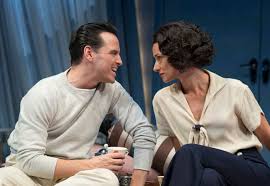
Andrew Scott as Garry Essendine, Indira Varma as Liz Essendine in Present Laughter, 2019. Photograph: Alastair Muir / Rex / Shutterstock

Coward wrote Garry as “a bravura part” for himself and there’s a photo of a 1947 revival that shows exactly how he must have played it. While being harangued by an angry young playwright from Uckfield (Robert Eddison), Coward – in polka-dotted bow-tie and striped dressing-gown – leans back in his armchair, looking on with amused indifference. That set the pattern for future revivals until Albert Finney played Garry at Manchester’s Royal Exchange in 1977. There’s a wonderful photo of Finney, sporting a tweed suit and brown trilby, confronting the camera with jutting-jawed resolution. Finney banished the idea that Coward must be played with lacquered suavity and gave us a robustly butch Garry who used funny faces and joke voices to ward off ghastly intruders. As Irving Wardle wrote in the Times: “it is as though Lucky Jim had wound up in No 1 dressing-room.”

Sometimes the attempt to escape the Coward imprint can lead to grotesque exaggeration: that was the fault of a Sean Foley Chichester revival in 2018. But Andrew Scott in last year’s Old Vic production brilliantly showed that elegance can be combined with innovation. Where Coward’s Garry is first seen in his pyjamas, Scott entered sporting a piratical eyepatch and a brocaded waistcoat as if he had come from JM Barrie’s Neverland. That exactly made the point that Garry, like his author, is a lost boy. As Kenneth Tynan wrote in 1953: “Forty years ago Coward was Slightly in Peter Pan and you might say that he has been wholly in Peter Pan ever since.” But Scott, along with the rest of a talented cast including Indira Varma and Sophie Thompson, proved that style is both innate and a quality that needs to be redefined with each decade.

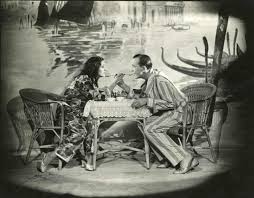
But what of the idea that Coward’s plays offer a series of visual feasts? It is true but there are far more varied courses to the banquet than custom allows. The stock Coward image is of himself in a dressing-gown and Gertrude Lawrence in a satin Molyneux dress rapturously entwined in Private Lives. But the settings for his work include a railway station buffet (Still Life, which became the movie Brief Encounter), a London pub (Peace in Our Time), an imaginary Pacific island (South Sea Bubble) and aboard a cruise ship (Sail Away). While Gladys Calthrop’s sets gave Coward’s plays an exotic glamour in the 1920s and 30s, today designers feel free to reinterpret them.

Gertrude Lawrence and Noël Coward in Rain Before Seven, in the Charlot revue London Calling! (1923). Costumes by Edward Molyneux. Photograph: James Abbe / Courtesy of The James Abbe Archive

The outstanding example is the director-designer Philip Prowse, who has shaken up our visual perception of Coward. At the Glasgow Citizens in 1999 he took Cavalcade, conventionally seen as a patriotic pageant about the first 30 years of the 20th century, and stripped it of false sentiment. One particular scene, in which the recruiting songs of 1914 were accompanied by strange images of death, seemed like a forerunner of Oh! What a Lovely War. And, as Michelle Gomez sang the climactic Twentieth Century Blues with Brechtian ferocity, electronic signs whisked us through the horrors of the years to come. Prowse’s production of Coward’s Semi-Monde, first seen in Glasgow in 1977, also highlighted the decadence of the social butterflies fluttering through the lounge and bar of the Paris Ritz.

Coward was always a mass of contradictions: a proselytiser for bohemianism who worked a 12-hour day, a champion of sexual freedom and a finger-wagging moralist, a cosmopolitan sophisticate who liked to retire to bed early with “something eggy on a tray”. There were many facets to Coward but he indisputably had style; and the art to reviving his work lies in finding modern equivalents without simply mimicking the silken elegance of the past.