Lost BBC documentary on homosexuality brought back to life nearly 70 years on
A new short film from Loughborough University tells the story of a remarkable BBC radio documentary about homosexuality, broadcast nearly seven decades ago at a time when the subject was almost entirely absent from public life.
The Homosexual Condition aired on the BBC Home Service in July 1957, when male homosexuality was still illegal in Britain. The programme featured doctors, legal experts and a former prisoner discussing the causes of homosexuality, possible “treatments” and whether the law should be changed.
It was broadcast just weeks before the publication of the landmark Wolfenden Report, which recommended decriminalising homosexual acts between consenting adults, a recommendation that would not become law for another decade.
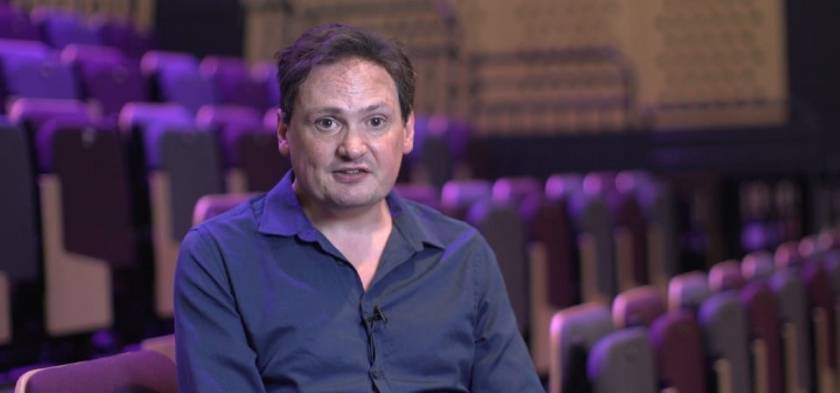
The transcripts were rediscovered in the BBC archives by Marcus Collins, Professor of Modern History at Loughborough University, whose research forms the basis of the new film.
Collins said the discovery offered a striking glimpse into a very different world. “What counted as a ‘liberal’ position in the 1950s was often the belief that homosexuality could be cured, rather than punished,” he said.
The film explores how the BBC navigated such a controversial subject at the time, and how profoundly attitudes to sexuality, science and the law have shifted since. Homosexuality was partially decriminalised in Britain in 1967, ten years after the broadcast.

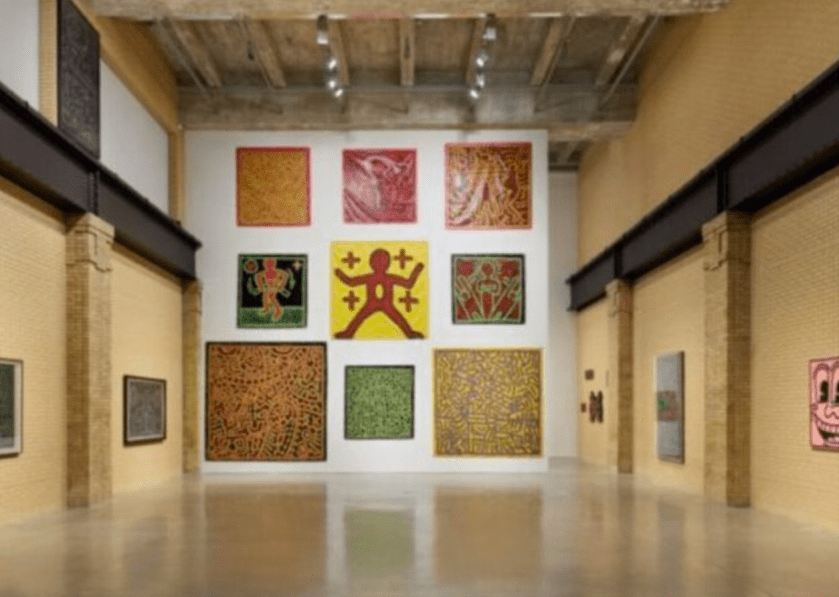
Keith Haring: A New Retrospective of his Early Work 1980-1983 at the Brant Foundation, New York
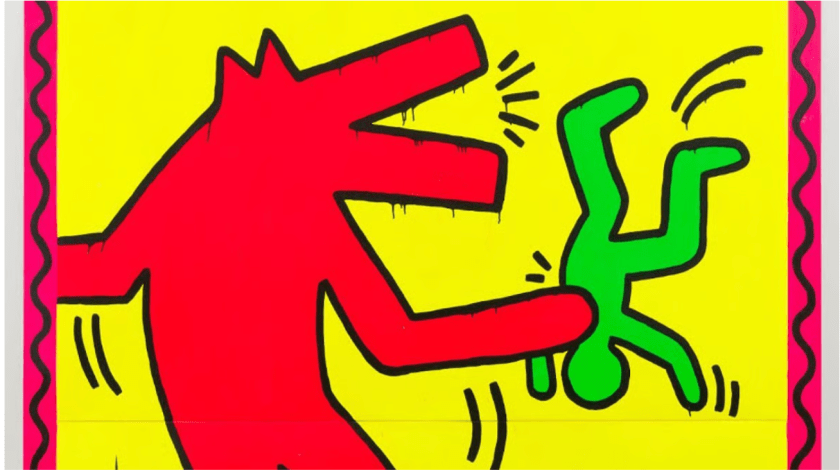
Photo: Courtesy of Keith Haring
We still find it tough to believe that it’s 36 years since the world lost Keith Haring. Aged just 31, Haring died of AIDS related complications at the height of the epidemic. At his memorial service on 4 May 1990, at the Cathedral of St John the Divine in New York City, there were over 1,000 people in attendance. He will always remain the quintessential New York queer artist of the time, quite rightly, his whole body of work is just as powerful and memorable today as it ever was.
Now, the Brant Foundation in New York has mounted a new retrospective revisiting Haring’s formative years of 1980 – 1983, and the exhibition traces his meteoric rise from the subways of New York to international fame. Opening to the public on 11 March 2026, the exhibition will be on view at the Foundation’s East Village space in the bustling downtown neighbourhood where a young Haring began his career.
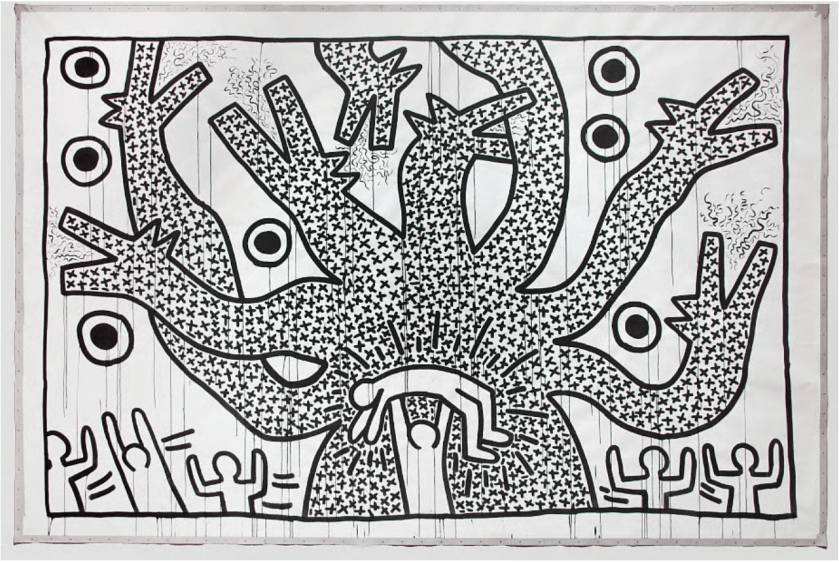
Photo: Courtesy of Keith Haring
Haring took inspiration from the everyday urban spaces he inhabited. From his spontaneous, early-career chalk drawings in subway stations to his vibrant, pop-inspired works that addressed social issues ranging from the AIDS epidemic to the drug crisis, Haring shepherded a body of work that was both visually dynamic and socially engaged.
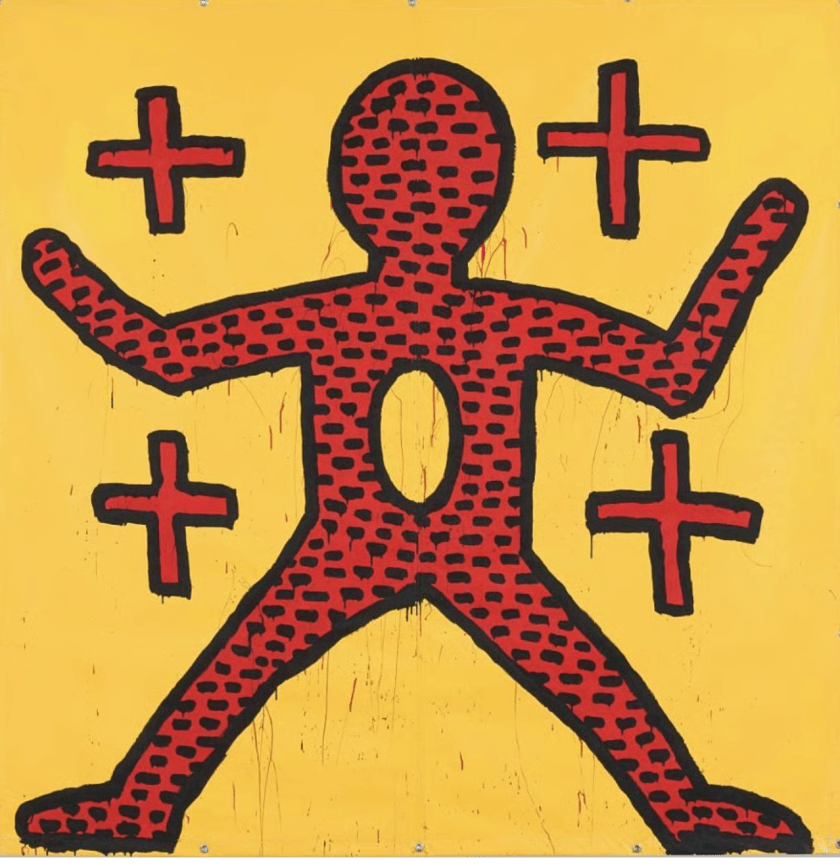
Photo: Courtesy of Keith Haring
The Brant Foundation’s founder, Peter M Brant said:
“Haring was a champion for important causes of his time, particularly the AIDS crisis. He used his art to support his tireless activism and he was an advocate for change, inspiring millions with his distinct style.”
Original Pride flag to come to Cork as first stop of world tour
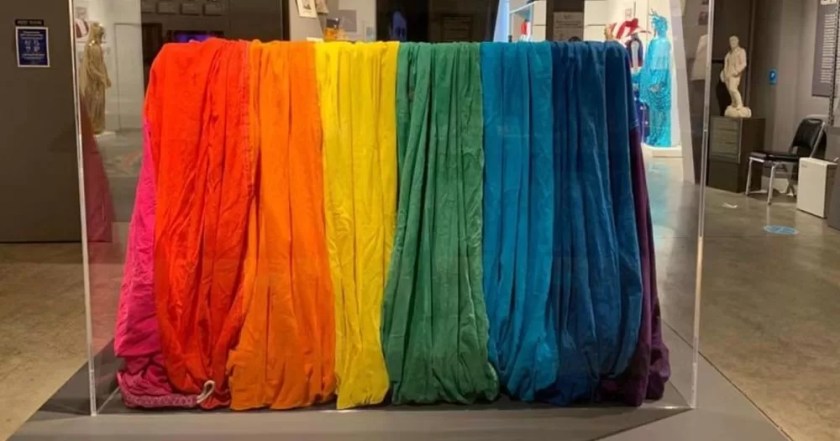
The original Pride flag, which usually resides in San Francisco, is going on a world tour, and Cork is its first stop.
Cork may seem like a surprising stop on the world tour, certainly for the first stop, but San Francisco and Cork are actually sister cities. Twinning and sister cities aim to celebrate culture and build communities through international links.
Cllr John Maher, local representative of the Labour Party for Cork City North East, visited San Francisco and the flag in 2024. He is another reason for Cork being selected as the inaugural stop on tour. “I made the comment a bit flippantly, to be honest, when we met the curator of the museum where the flag is held. He had said that they were thinking of sending the flag on tour, and I just said ‘make sure Cork is first’.
The original Pride flag was designed in 1978 by LGBT+ rights activist Gilbert Baker. It is usually on display in the GLBT Historical Society in the Castro district of San Francisco. Baker was popular for his drag costumes and political banners. Harvey Milk encouraged Baker to create a symbol of Pride for the LGBT+ community, and Baker decided on a flag as a way to come out and attain visibility.
The dyed cotton muslin flag is a fragment of one of the two original eight-stripe rainbow flags raised at the San Francisco Gay Freedom Day Parade on 25 June 1978.
The original flag boasted eight colours, two more than the now-standard six-colour Pride flag. Pink and turquoise were cut by 1979 due to production issues and aesthetic choices, and indigo was replaced by blue. Baker made a mile-long version of the flag for the 25th anniversary of the Stonewall riots in 1994.
Cleve Jones, a friend of Baker, said, “I told him he’d better patent it, and he said, ‘No, it’s my gift to the world.’” Many flag versions have been created since, with the Progress flag and Intersex-inclusive ones being popular additions in recent years.
Cork LGBT Archive is to launch a permanent exhibition this year, and the original Pride flag is expected to be on display beside the exhibition in autumn, in the Cork Public Museum.
 Out in the City