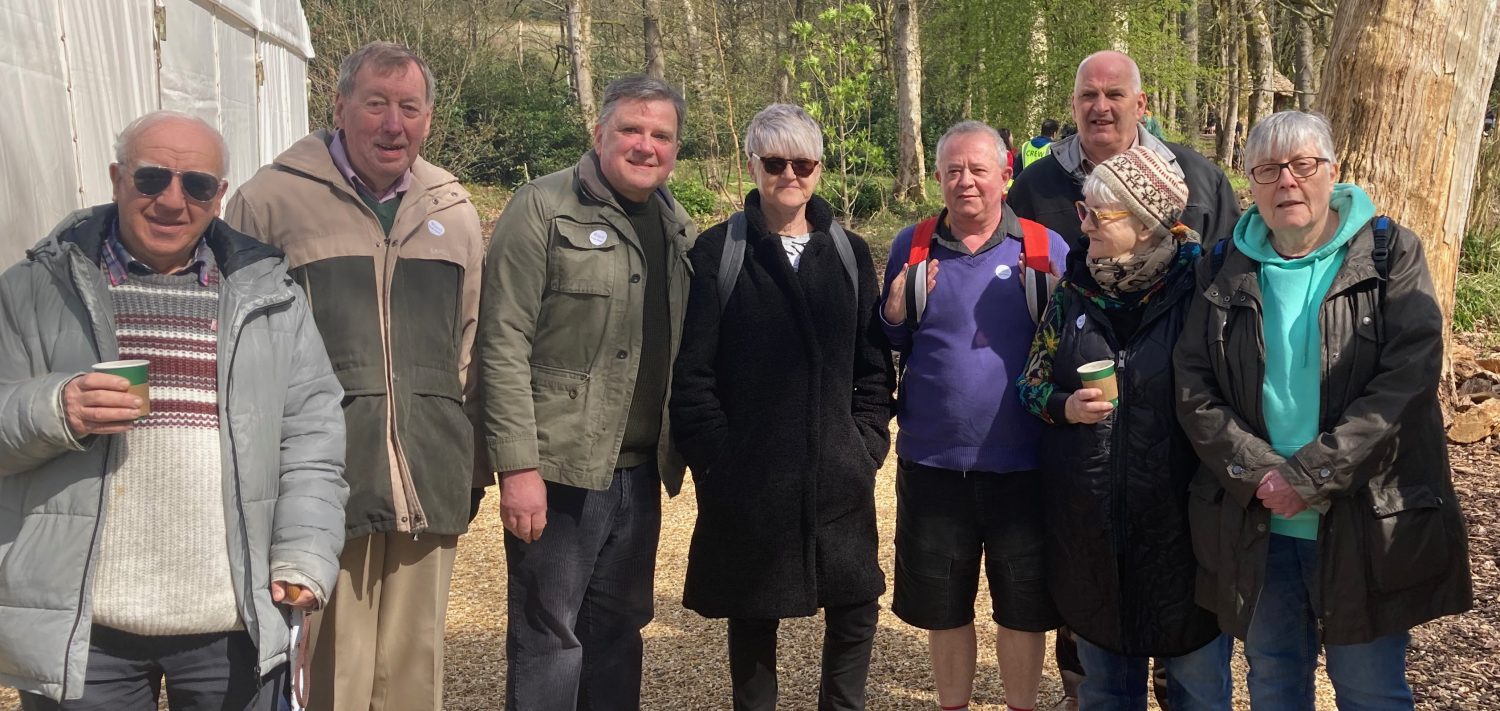
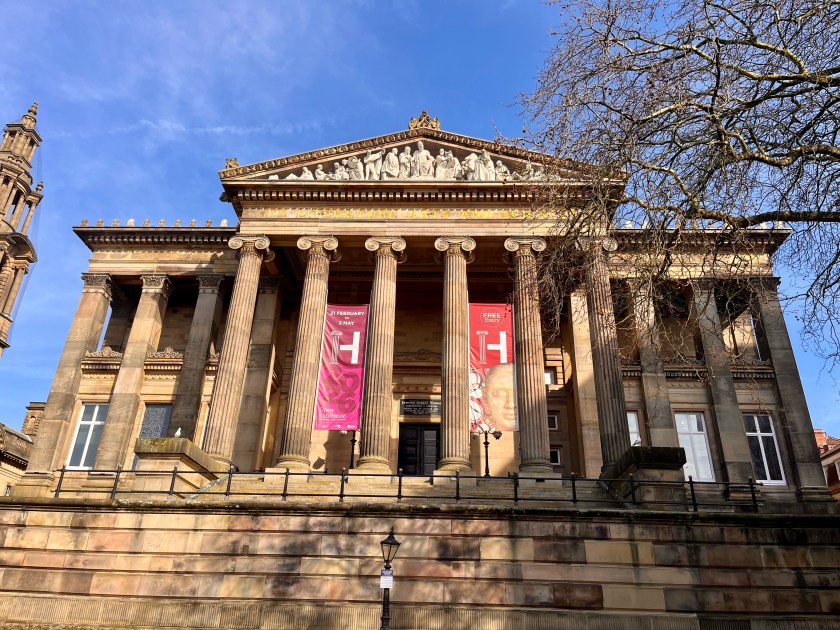
Harris Museum, Preston
I’m finding it hard to describe this museum – there was so much to see, and it was certainly the best museum we have visited in a long time. I will let the photographs “do the talking” – there are more to see here.
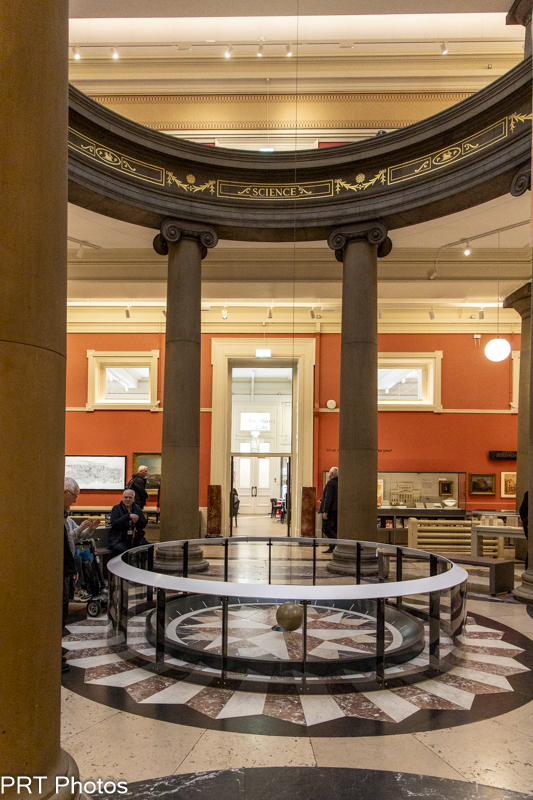
The Foucault pendulum was particularly impressive. At 35 metres, this is the longest Foucault pendulum in the UK.
Like any pendulum it swings from side to side, but in addition, the direction of the swing slowly rotates clockwise, due to the motion of the Earth. This is called precession. At the latitude in Preston (53 degrees north), the swing direction completes a full 360 degree turn in 30 hours.
The pendulum shows us the rotation of the Earth completely independently of the motion of the Sun or the stars. In history, some believed that Earth didn’t move, and the Sun and stars rotated around the Earth. In fact this became the official doctrine of the Catholic Church, and in 1600 Giordano Bruno was burned at the stake by the Inquisition for teaching that the Earth rotated and moved around the Sun.
Shortly after, in 1615, the scientist Galileo Galilei was also investigated by the Inquisition for the same Sun centred theory. Fortunately he decided to back down and admit that he might be wrong (he wasn’t) but he still had to spend the rest of his life under house arrest!
Finally, the matter was settled once and for all in 1851 when Leon Foucault constructed his pendulum in Paris.
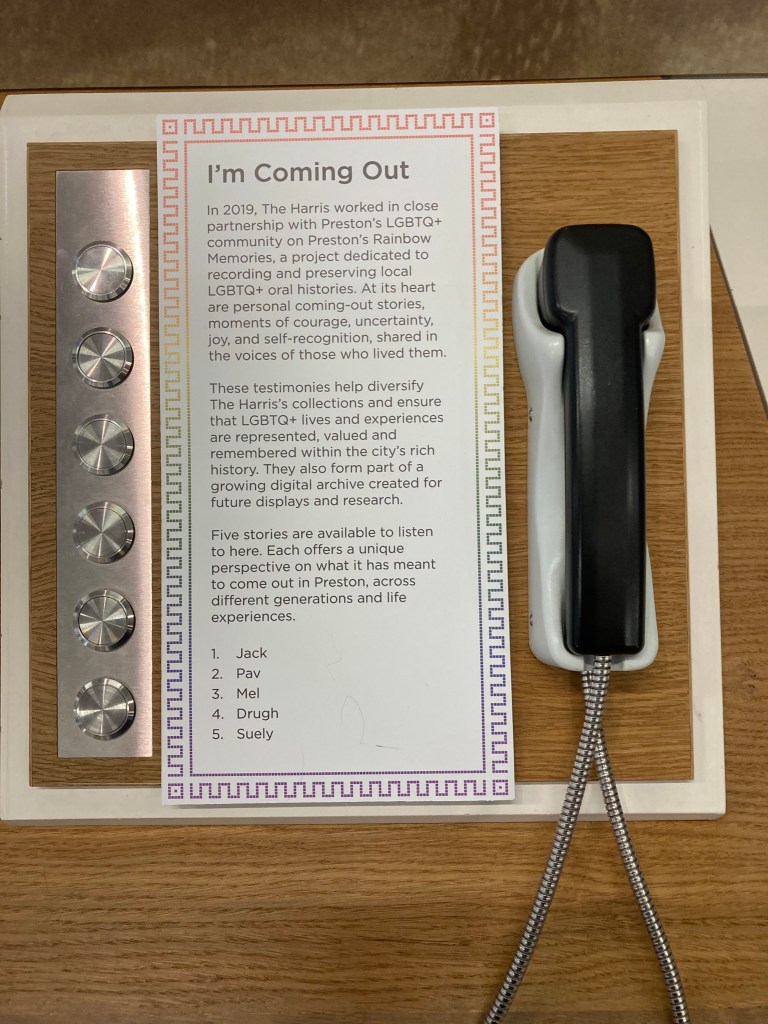
I also enjoyed listening to some “Coming Out” stories.
More photos can be seen here.

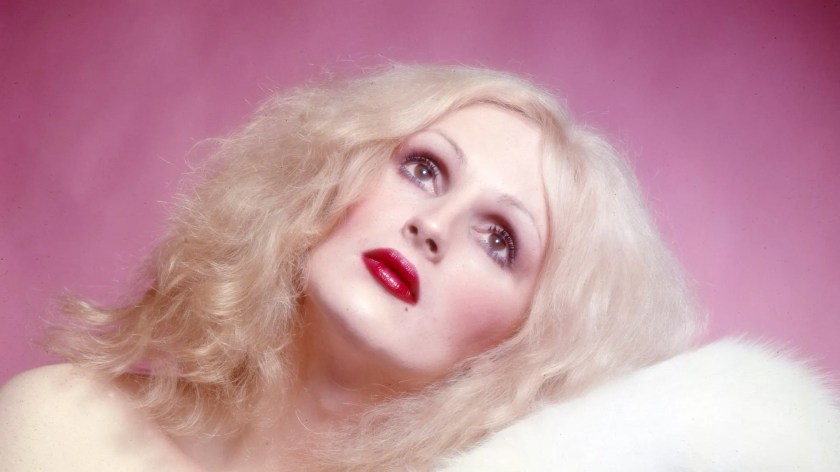
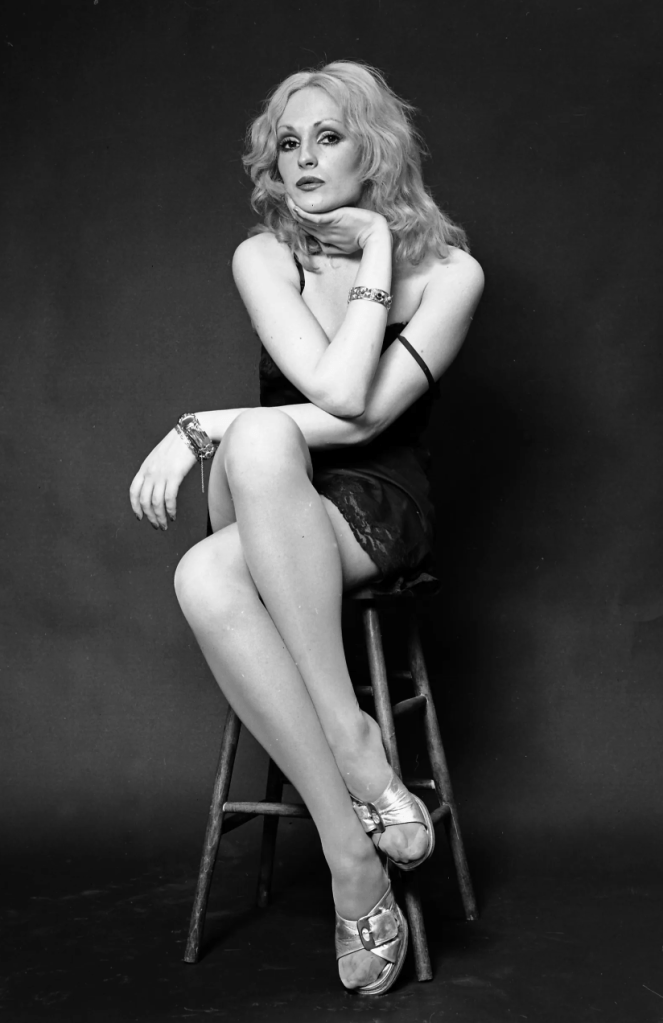
Remembering Candy Darling, a Trailblazing Trans Warhol Muse and Unlikely Star
It’s hard to have one favourite photograph of Candy Darling, but mine lives in the New York Public Library’s Billy Rose Theatre Division. In this photo by Kenn Duncan, she’s wrapped in a white fur and a golden yellow dress, her signature blond curls falling loosely around dark eyes and red lips. She’s easily one of the most beautiful performers ever to grace analogue film.
In her time, Candy Darling’s portrait was taken by some of the greatest photographers of their day, including Richard Avedon, Peter Hujar, and Cecil Beaton. As author Cynthia Carr shares in her biography Candy Darling: Dreamer, Icon, Superstar, Candy was apparently only more beautiful in person. But Carr’s biography, the first of its kind about the star, preserves her legacy as not just a great beauty, but as an actress, an artist and a trailblazer of contemporary transgender history.
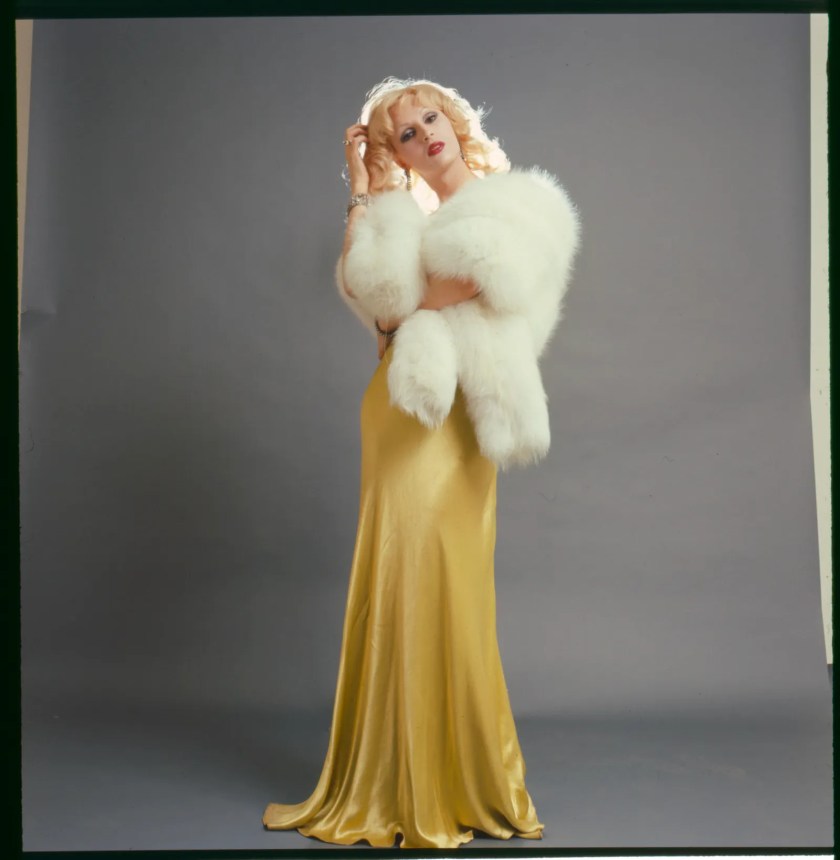
Candy Darling is usually associated with Andy Warhol; she starred in two of the artist’s films, 1968’s Flesh and 1971’s Women in Revolt as one of his Superstars, as his coterie of on-screen performers were known. But she also appeared in theatre and film productions independently as a performer, though she never studied theatre. That Candy lived as a glamorous public persona at all, frequenting exclusive parties and appearing in cool downtown print publications like After Dark and Warhol’s Interview, is astounding for the time. The word “transgender” wasn’t even in use yet – the word “transsexual” was used then, though Candy only referred to herself as a woman and often wrestled with how to describe her gender identity. While she sought to embody a starlet persona on and off screen, she regularly faced discrimination and was often struggling to survive. Carr was initially spurred to write Candy’s biography in part because of these contradictions.
The thing I most admire about her is she seemed to figure out who she was when she was still a teenager and she made this statement: ‘I am me. Do not tell me what I’m supposed to be, accept me for what I am or stay away.’ It was a bold way to live at the time especially when there was so little trans visibility, aside from pioneering trans celebrity Christine Jorgensen. It’s still not that easy to be transgender as we know. In fact, it seems to be getting harder. In spite of the difficulties Candy faced, she sought to live in a world where she didn’t have to and wouldn’t apologise for being herself, something people still seek today.
There were people throughout Candy’s life who heeded her suggestions in both directions. In Manhattan, for example, Candy attended parties with Andy Warhol and high-end uptown socialites, but when visiting her mother’s home in Massapequa Park on Long Island, she was asked to arrive late at night and run into the house so nobody would see her.
Famed playwright Charles Ludlam loved her onstage and wanted her in his Ridiculous Theatrical Company, but thought it might be too difficult for her since he felt her life was so chaotic. While originally from Long Island, as immortalised in Lou Reed’s 1972 song “Walk on the Wild Side,” Candy rarely had a stable place to live. She lived a life of in-betweens, stunted by others’ social and artistic shortsightedness, fear, or what we’d call transphobia today. Where one person wanted to work with her because of her undeniable star power, like legendary playwright Tennessee Williams, for example, a potential producer or co-star might write her off as “a cheap drag queen”.
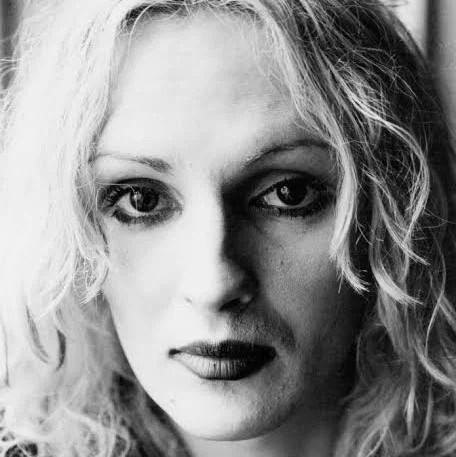
She did eventually work with Williams, however, at one point starring alongside him in his 1972 play Small Craft Warnings. She also had a host of small parts in other films, and a larger supporting role in the 1971 film Some of My Best Friends Are … among the earlier films explicitly about being a queer person in New York. Even in the wake of others’ negativity, though, Candy imagined herself a beacon. “I’ve always felt my spirit was once a movie star,” she said. “I think I may have been Jean Harlow.”
Candy’s story appeared previously in the 2009 documentary Beautiful Darling by the actress’s longtime friend Jeremiah Newton, albeit in a more fragmented way. By Newton’s own admission, the story wasn’t as far reaching as he would have liked, mostly just chronicling their friendship. Newton approached Cynthia Carr to write the biography. She waded through all of the archival material Newton had compiled of Candy’s over the years to make it happen, and then some. Writing the biography took Carr 10 years, in part because Candy never had a long-term regular residence and her personal effects were scattered in so many different places, if they were kept at all.
This can be the nature of recording lives of some queer and transgender historical figures, those who may have faced homelessness and/or joblessness simply because of who they were, like Candy. This was also an era, as Carr writes, before we understood the personal as political. Another reason Candy is interesting is because she had no interest in politics. Candy just wanted to be Candy, to be glamorous and beautiful, to be a star like Jean Harlow or Kim Novak in the golden age of Hollywood, to be loved for who she was. In a life of juxtapositions, she’d succeed in some spheres – becoming a known downtown presence, for example – while also facing extreme challenges, like finding regular work and a place to live.
Carr’s biography sparkles with intricate details about the star’s life, but it’s also an unflinching portrait. Candy wasn’t a saint, as none of us are, and when some narratives about marginalised identities can lean toward exceptionalism, this is one that humanises its subject in all of her light and darkness, in all of her truths and fictions. Carr recognises queer figures from the margins may only get one shot at having their stories told, so it’s important to have all their layers in order to understand someone as a person and not a token.
Candy created a fantasy world where she could be a starlet because that’s a place she could live happily and safely. It was also a place where she had a kind of control over her life and her narrative that she may not have had otherwise. She exercised this down to her last days, when she was in the hospital being treated for lymphoma. She asked Newton to find someone to photograph her, and the resultant image by Peter Hujar is now among the photographer’s most famous. At 29, Candy lies in the hospital surrounded by flowers, her makeup flawless. Hujar took the picture, but it was Candy who made herself immortal.
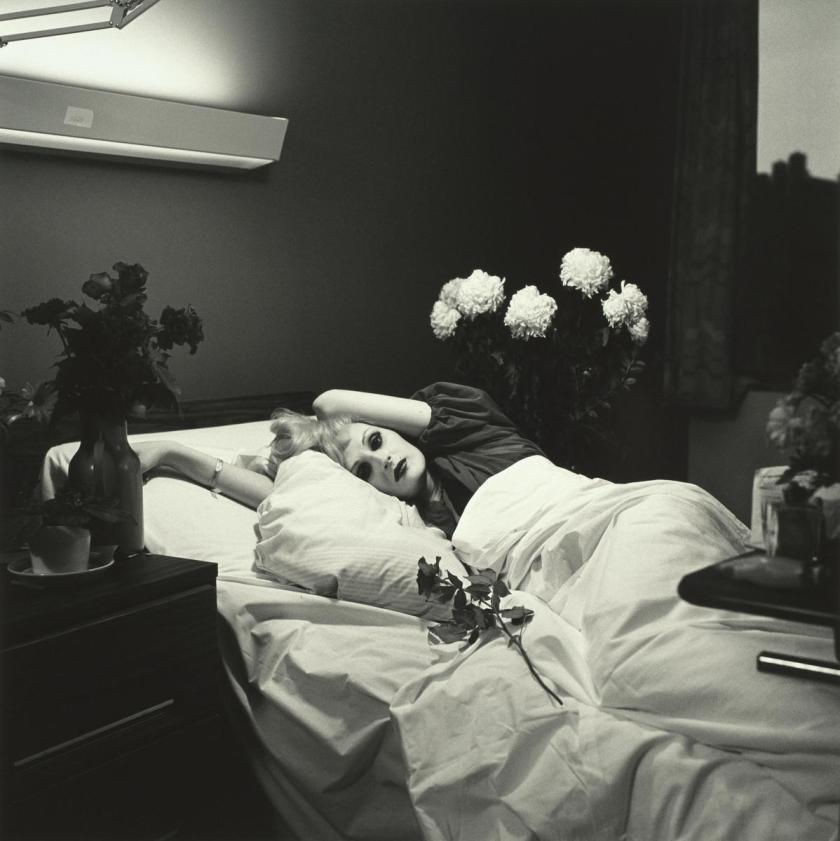
“She was the princess in the fairy tale, completely devoted to the fairy tale because that’s where she was allowed to be the woman she knew herself to be,” Carr writes. “It’s why she didn’t want an acting class. She wasn’t acting. She was living.”
Candy Darling died on 21 March 1974.
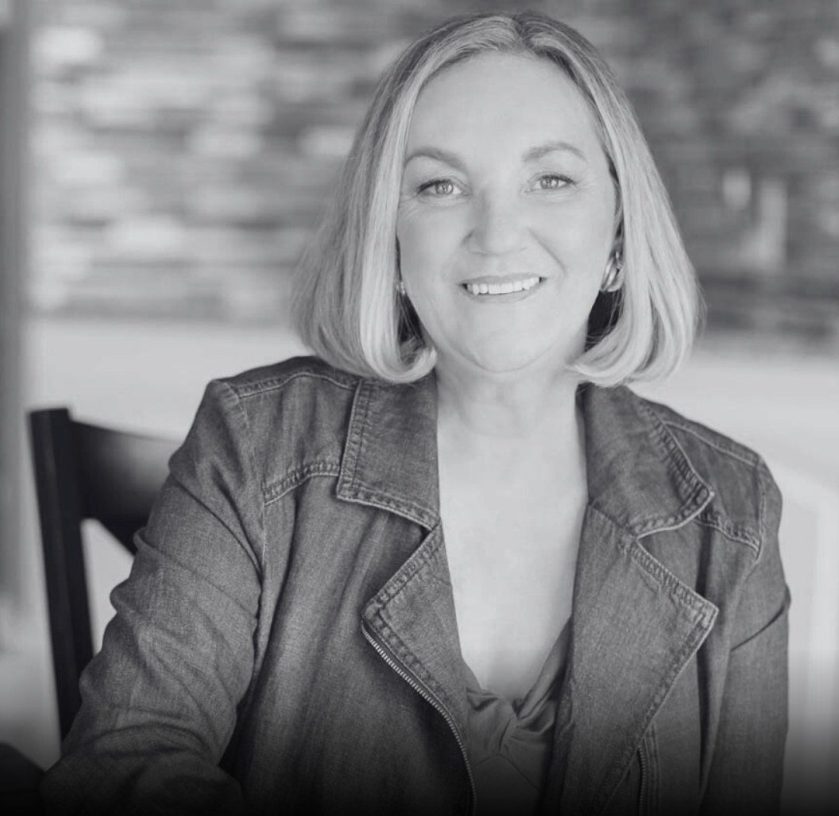
Ruth Coker Burks (born 19 March 1959)
She saw a red bag over a hospital door – and walked in anyway. What she found changed 1,000 lives.
1984. University Hospital, Little Rock, Arkansas.
Ruth Coker Burks, 25 years old, was visiting a friend when she noticed something that made the nurses turn away: a hospital room door marked with a big red biohazard bag.
She watched nurses draw straws to see who would have to go inside.
Ruth had a gay cousin. She understood what that red bag meant in 1984. AIDS. The disease that was killing young men by the thousands. The disease everyone feared touching, breathing near, even speaking about.
She didn’t draw straws. She walked in.
Inside was a skeletal young man, maybe 32 pounds, dying alone. He was terrified. He was in pain. And he kept asking for his mother.
Ruth told the nurses: “Call his mother.” They laughed. “Honey, his mother’s not coming. He’s been here six weeks. Nobody’s coming.”
Ruth convinced them to give her the mother’s phone number. She called one last time. The mother’s response was clear: her son was sinful, already dead to her, and she would not be coming to see him die.
So Ruth went back into that room. She took his hand. And she stayed.
For 13 hours, she held the hand of a stranger while he took his last breaths on Earth. When he died, his family refused to claim his body.
Ruth decided to bury him herself.
She owned hundreds of plots in her family’s cemetery – Files Cemetery – where her father and grandparents were buried. “No one wanted him,” she said, “and I told him in those long 13 hours that I would take him to my beautiful little cemetery, where my daddy and grandparents were buried, and they would watch out over him.”
The closest funeral home willing to cremate an AIDS patient was 70 miles away. Ruth paid out of her own savings. A friend at a local pottery gave her a chipped cookie jar to use as an urn.
She used posthole diggers – the kind you use to build fences – to dig the grave herself.
She buried him, and she said a few kind words, because no priest or preacher would come to speak over the grave of a man who died of AIDS. Ruth thought that would be the end of it.
It was only the beginning.
Word spread across Arkansas: there’s a woman in Hot Springs who isn’t afraid. There’s a woman who will sit with you when you’re dying. There’s a woman who will bury you when your family won’t. They started coming. From rural hospitals across the state. Dying young men, abandoned by the people who were supposed to love them most. Ruth became their hospice.
Over the next ten years, Ruth Coker Burks cared for more than 1,000 people dying of AIDS – most of them young gay men whose families had disowned them.
She buried 40 of them herself in Files Cemetery. Her young daughter would come with her, carrying a little spade while Ruth worked the posthole diggers. They’d have “do-it-yourself funerals” because still, no one would say anything over their graves.
Out of those 1,000 people, only a handful of families didn’t reject their dying children. Ruth would call parents. She’d beg them to come. To say goodbye. To claim their child’s body.
Most refused. “Who knew there’d come a time,” Ruth said, “when people didn’t want to bury their children?”
But while Ruth saw the worst in people – parents abandoning children, churches refusing burials, communities turning their backs – she also saw the best.
She watched gay men care for their dying partners with devotion that would break your heart. “I watched these men take care of their companions and watch them die,” she said. “Now, you tell me that’s not love and devotion.”
And she saw how the community (lesbians and gay men) supported each other – and her. “They would twirl up a drag show on Saturday night and here’d come the money. That’s how we’d buy medicine, that’s how we’d pay rent. If it hadn’t been for the drag queens, I don’t know what we would have done.”
The drag queens fundraised. The gay community rallied. Ruth kept digging graves and holding hands and making sure no one died alone.
By the mid-1990s, better treatments emerged. Education improved. Social acceptance – slowly, painfully – began to shift. Ruth’s work became less necessary. She stopped caring for patients personally.
And then, like so many heroes of the AIDS crisis, Ruth Coker Burks was largely forgotten.
Her story slipped into the background of history, known only to the community she’d served and the few who remembered what Arkansas was like in the 1980s, when dying of AIDS meant dying abandoned.
But Ruth never forgot the 40 people buried in Files Cemetery. The ones in cookie jars and ceramic urns. The ones whose families never came. The ones she’d promised would be remembered.
For years, she dreamed of a memorial. Something to say: this happened. These people existed. They were loved. They mattered. Thanks to a crowdfunding campaign, that memorial is finally being built.
Ruth hopes it will read, in part:
“This is what happened. In 1984, it started. They just kept coming and coming. And they knew they would be remembered, loved and taken care of, and that someone would say a kind word over them when they died.”
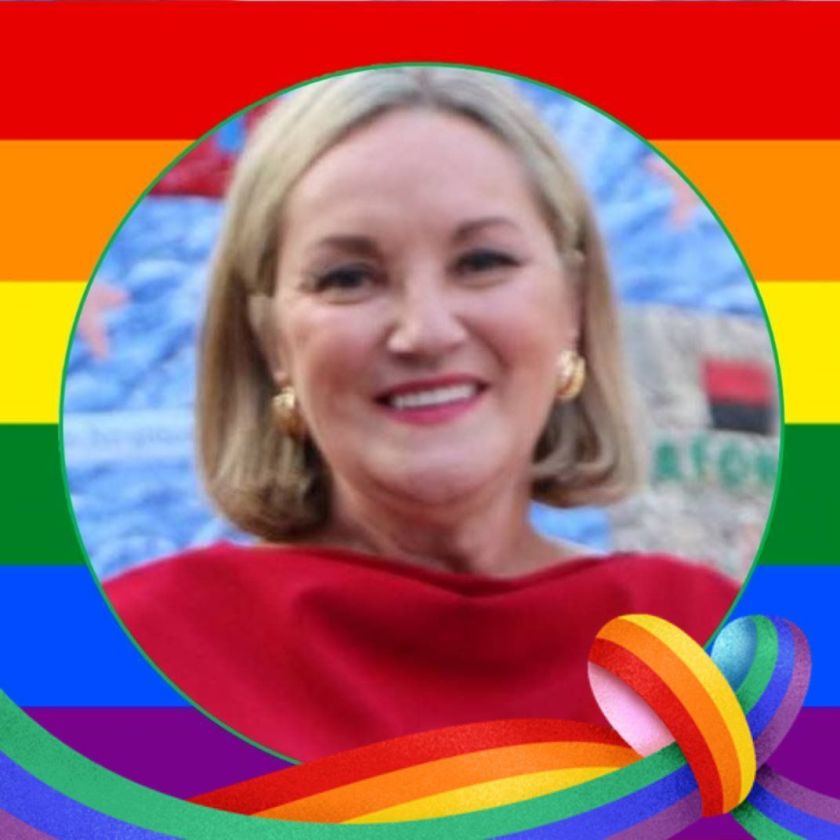
Ruth Coker Burks is in her 60s now. She wrote a memoir in 2020 called “All the Young Men” because she wanted people to know what happened in Arkansas in the 1980s. What happened across America. What happens when fear and prejudice convince people to abandon their own children.
What happens when one person decides to walk through the door everyone else is afraid to open.
She didn’t have medical training. She didn’t have institutional support. She didn’t have much money. She had compassion. She had courage. And she had posthole diggers and a family cemetery. That was enough to make sure 1,000 people didn’t die alone.
The next time someone tells you one person can’t make a difference, remember Ruth Coker Burks.
Remember the red bag on the door.
Remember the 13 hours she stayed.
Remember the 40 graves she dug herself.
Remember the drag queens who organised fundraisers on Saturday nights.
Remember that compassion is stronger than fear.
Remember that sometimes the most powerful thing you can do is simply refuse to let someone die alone.
Ruth saw a red bag over a hospital door in 1984.
She walked in anyway.
1,000 lives were changed because of it.
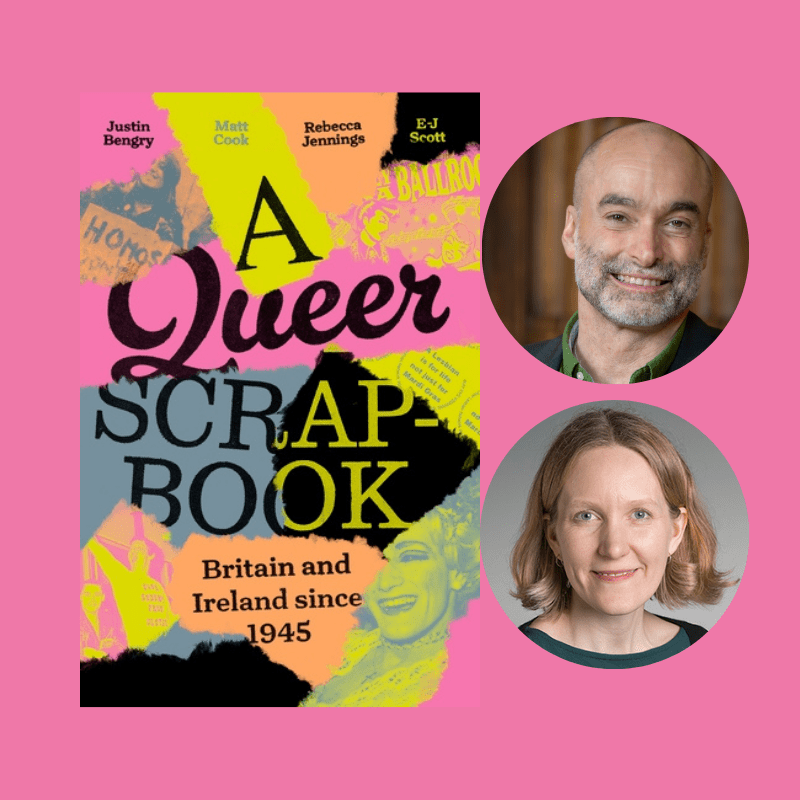
Thursday, 26 March – 6.00pm – 7.00pm – A Queer Scrapbook – Free
Join us for the second instalment of our Salon series, where we will be joined by book editors Rebecca Jennings and Matt Cook in discussion of their new release, A Queer Scrapbook.
A Queer Scrapbook offers a treasure trove of LGBTIQ+ histories from across Britain and Ireland. Packed with materials, from interviews and newspaper articles to photographs and flyers, the book explores urban, rural and regional queer life since 1945.
📅 Thursday, 26 March 2026 – 6.00pm – 7.00pm.
📍 Manchester Histories Hub, Lower Ground Floor, Manchester Central Library / Online.
🎟️ Free to attend.
Book your free ticket here.
 Out in the City