Golden Age Big Band
The John Alker club, where the Golden Age Big Band have performed previously, have temporarily closed their doors … but the show must go on!
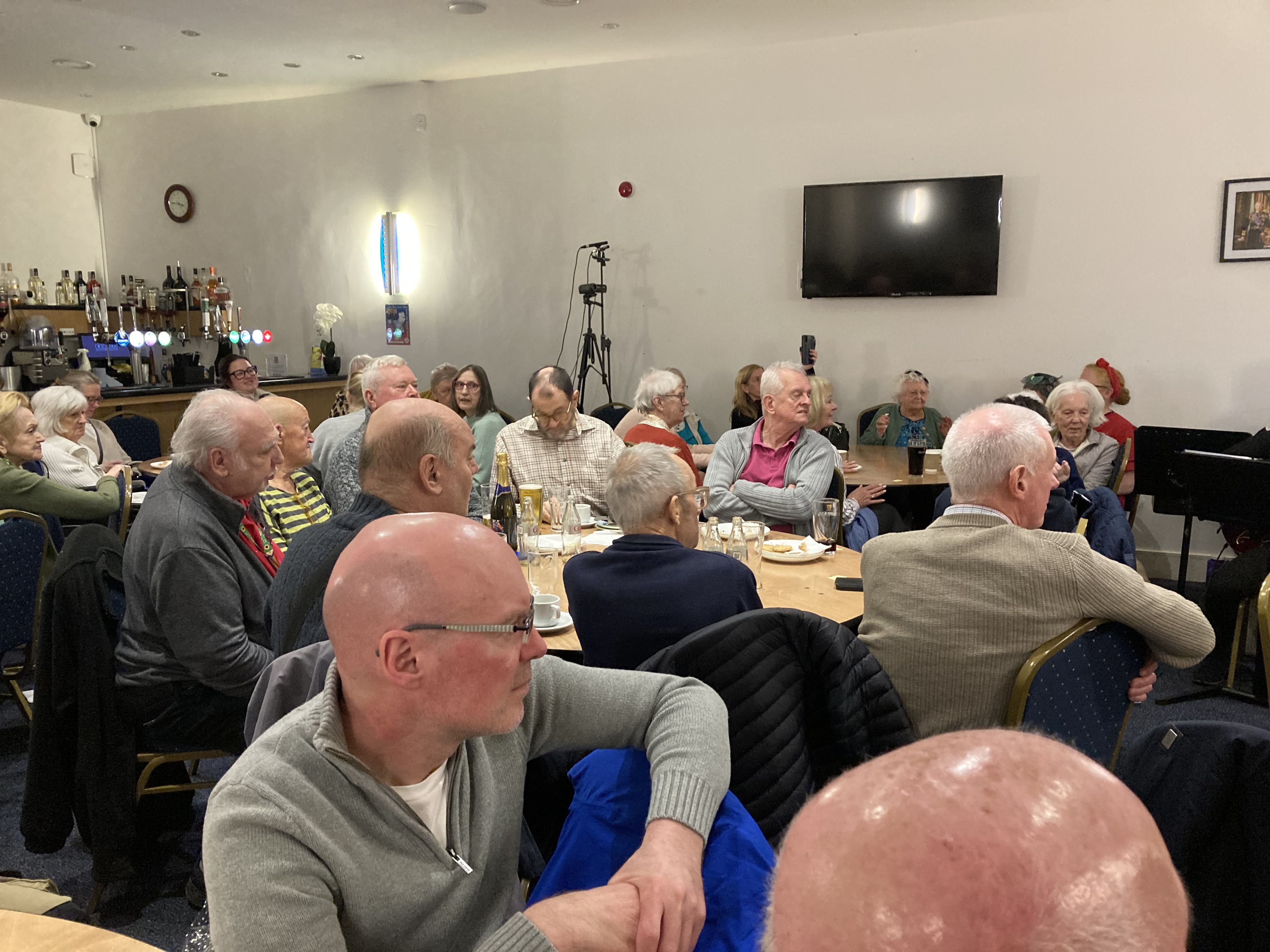
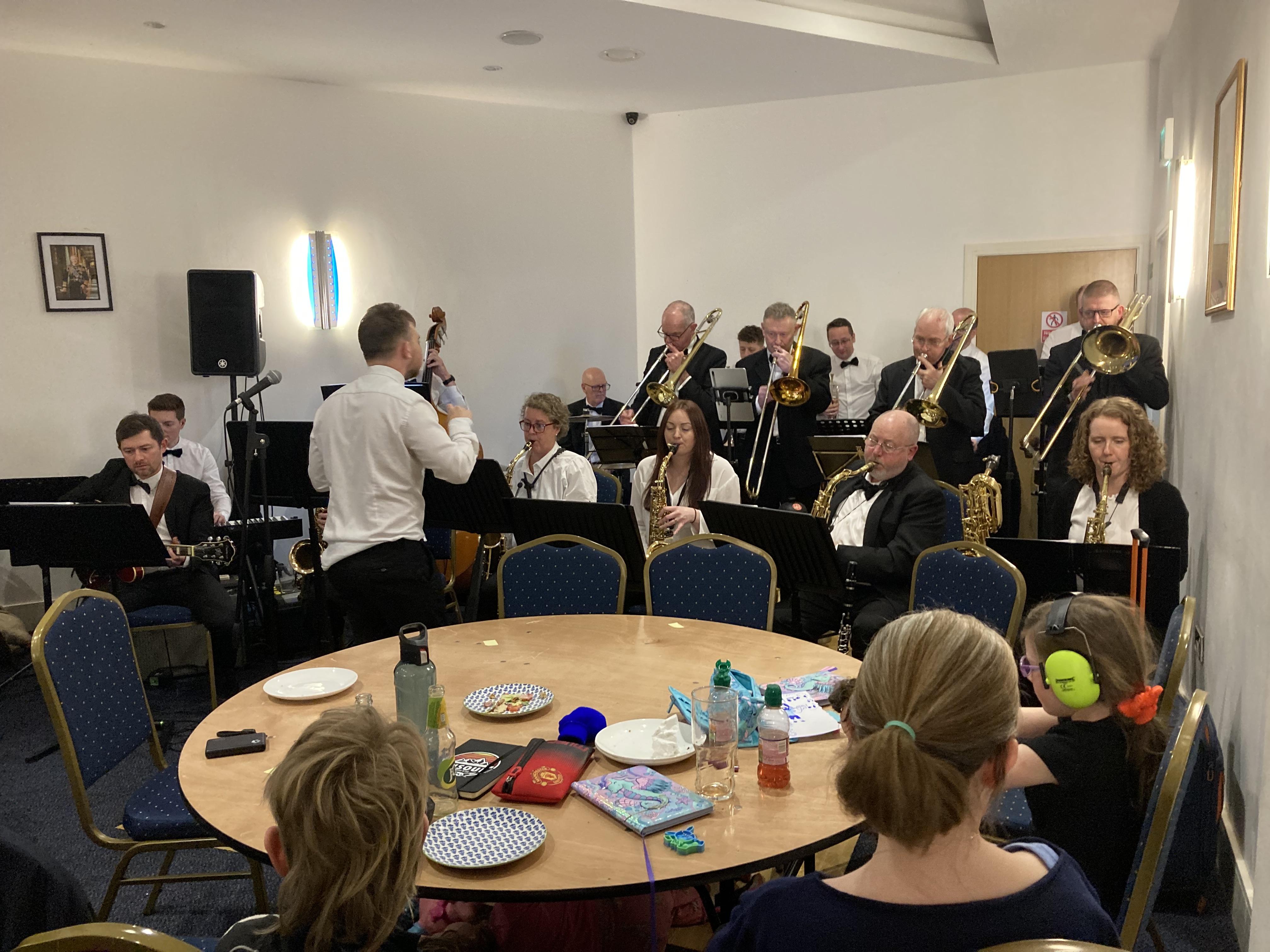
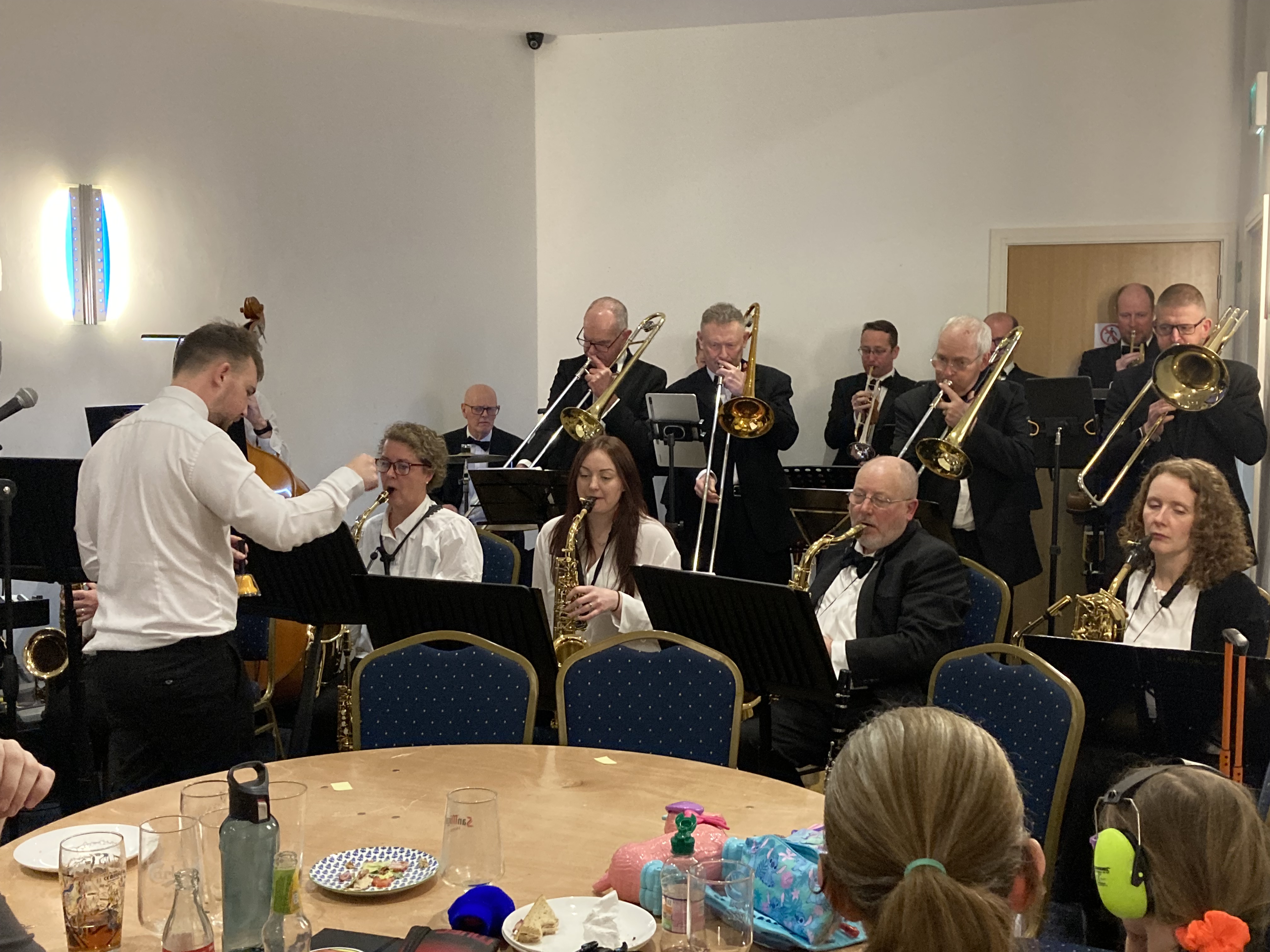
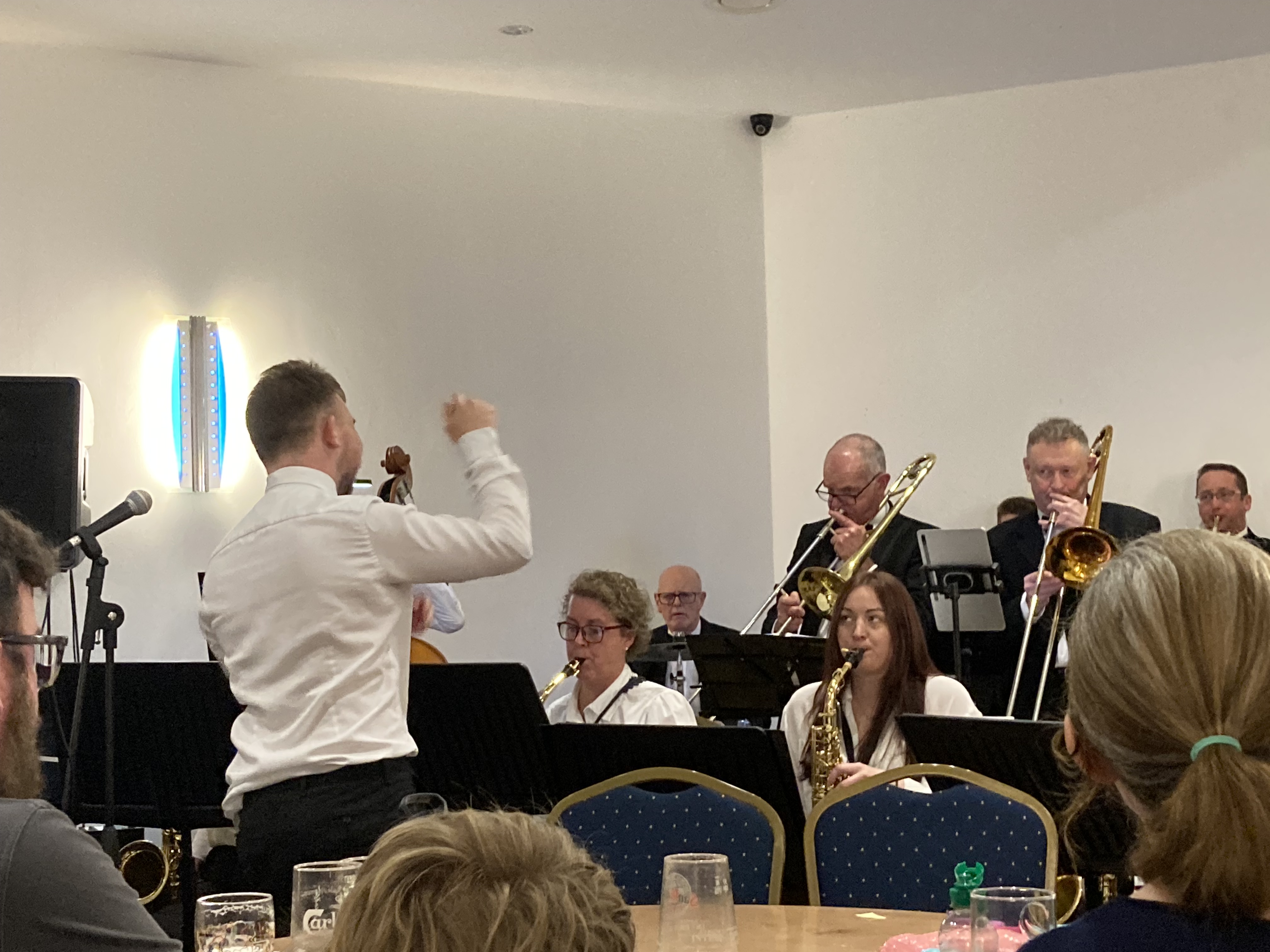
A new location – ”The Venue / Lounge 1881” – was found in Urmston at short notice! The room was a lot smaller than the club, but it made for a terrific atmosphere and an amazing afternoon.
Joe Cockx with his 17 piece band performed songs by Dean Martin, Glenn Miller, Frank Sinatra and many more from the “golden age” of big bands.

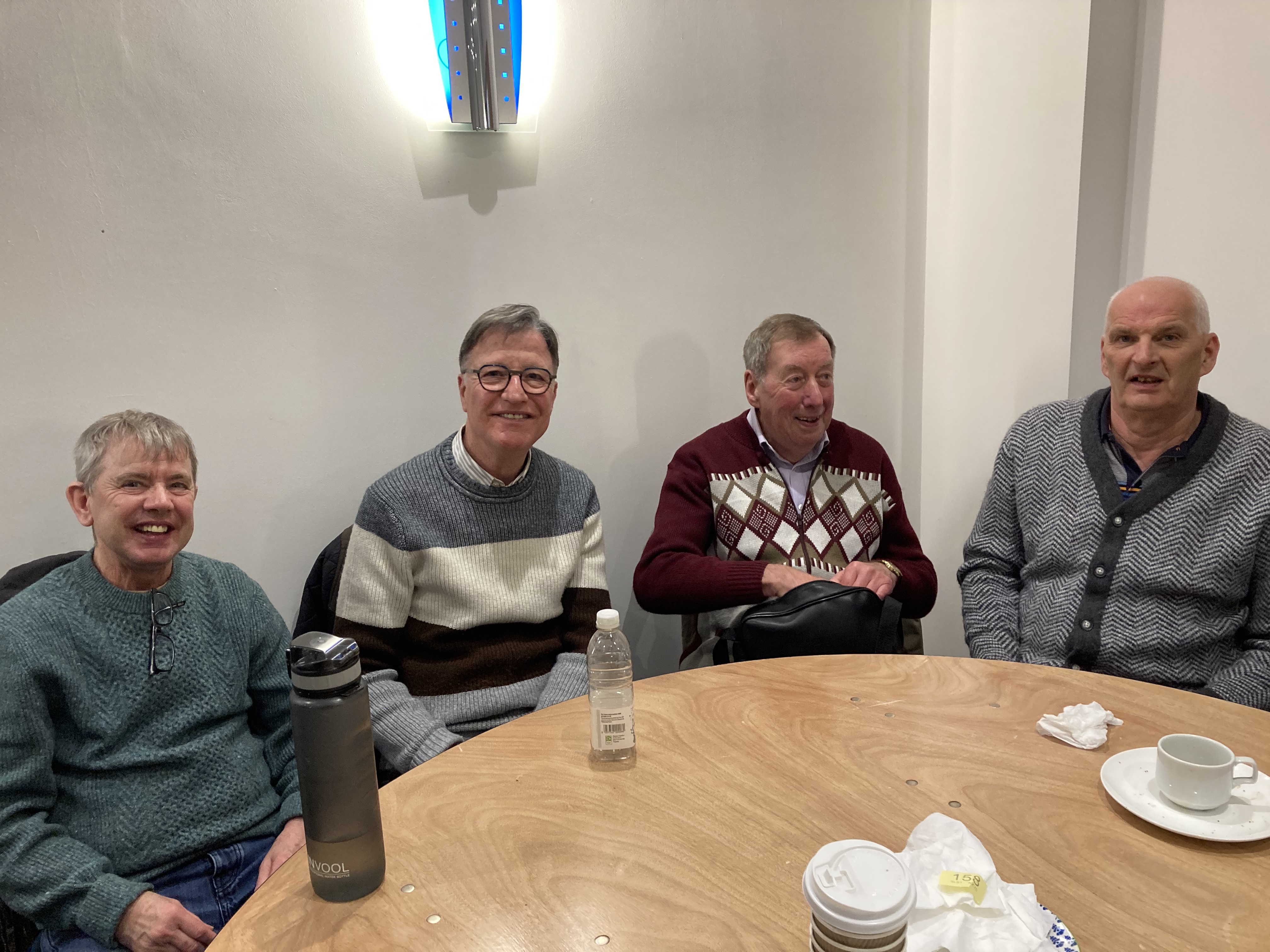
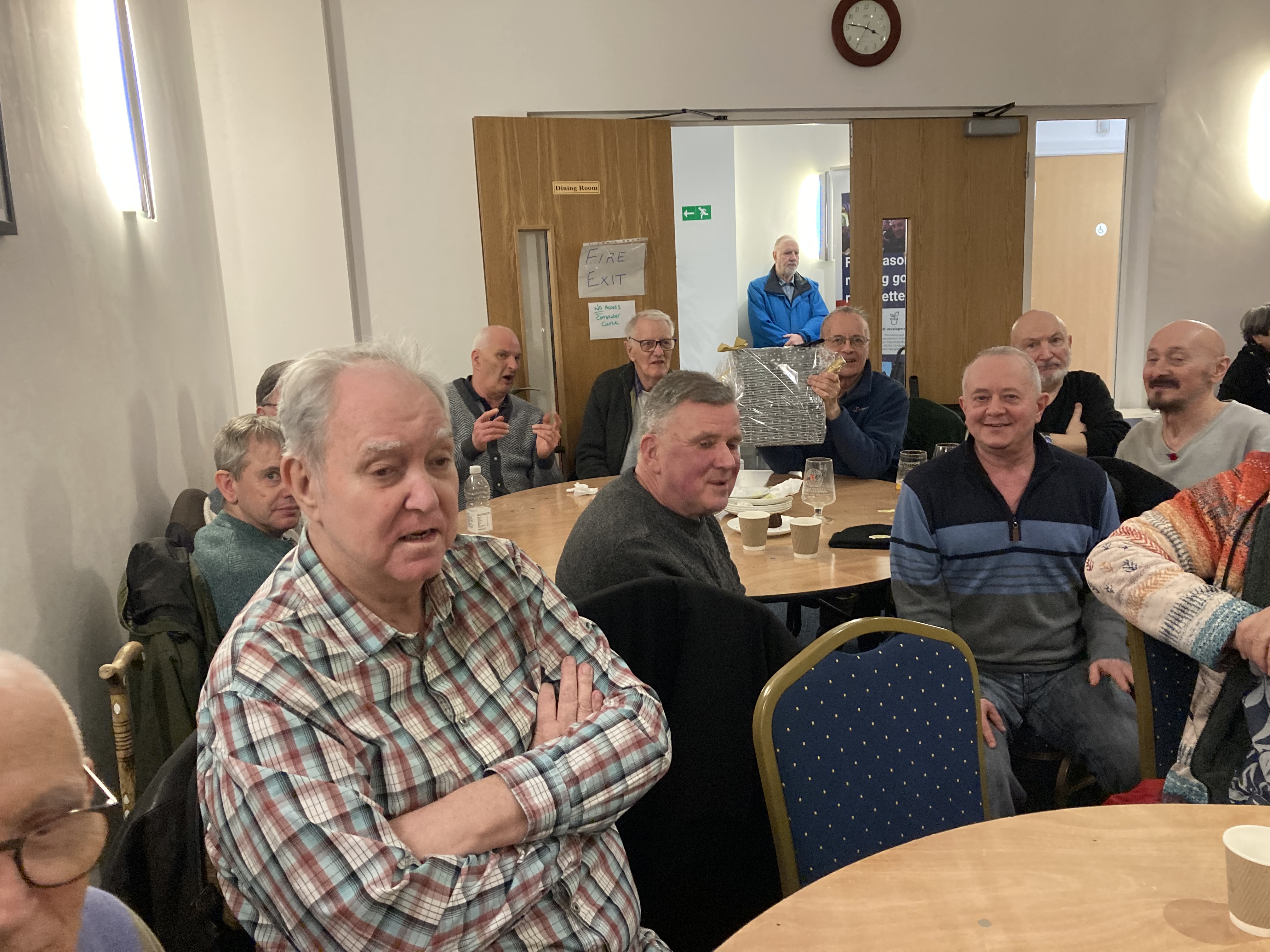
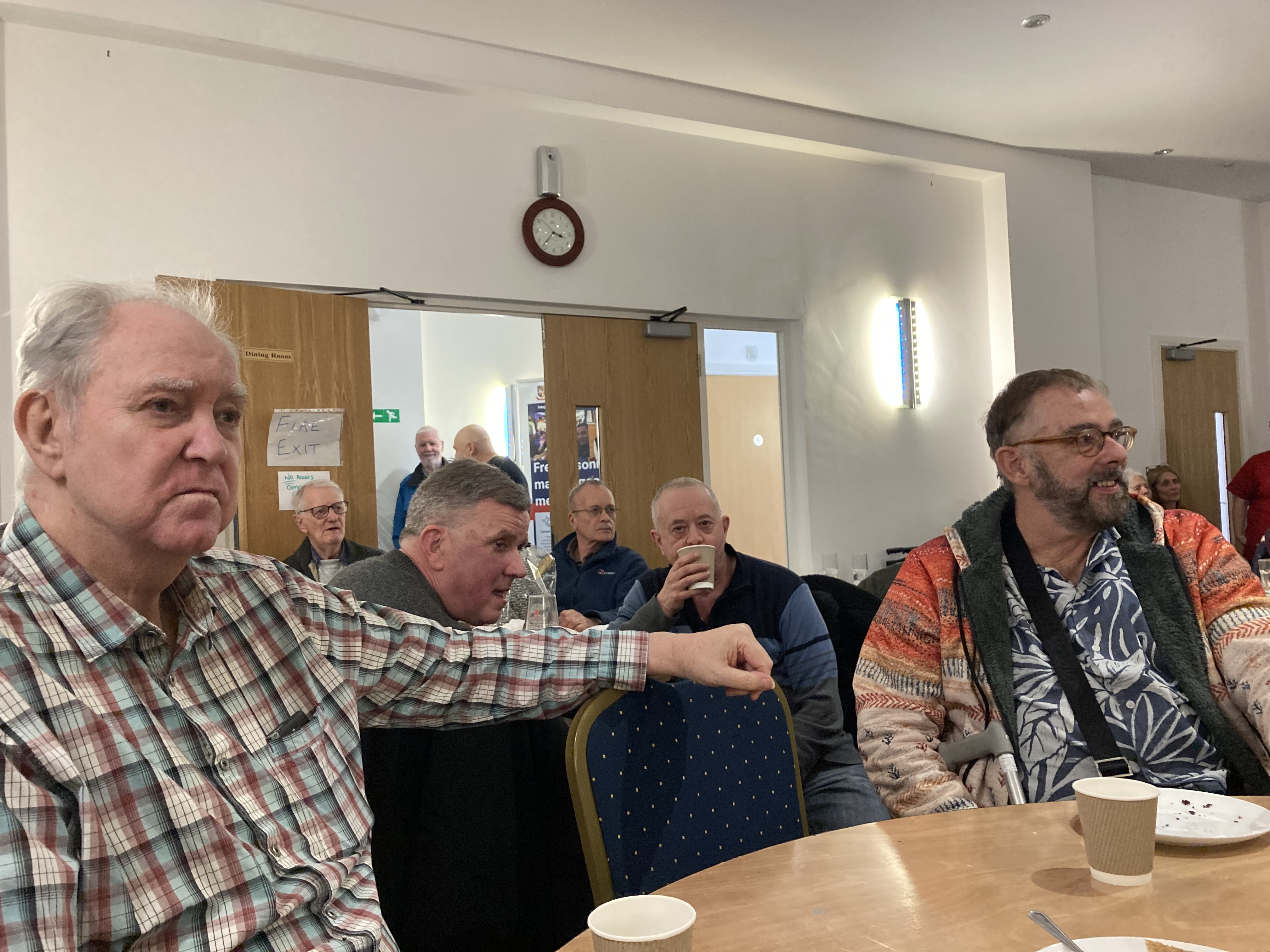
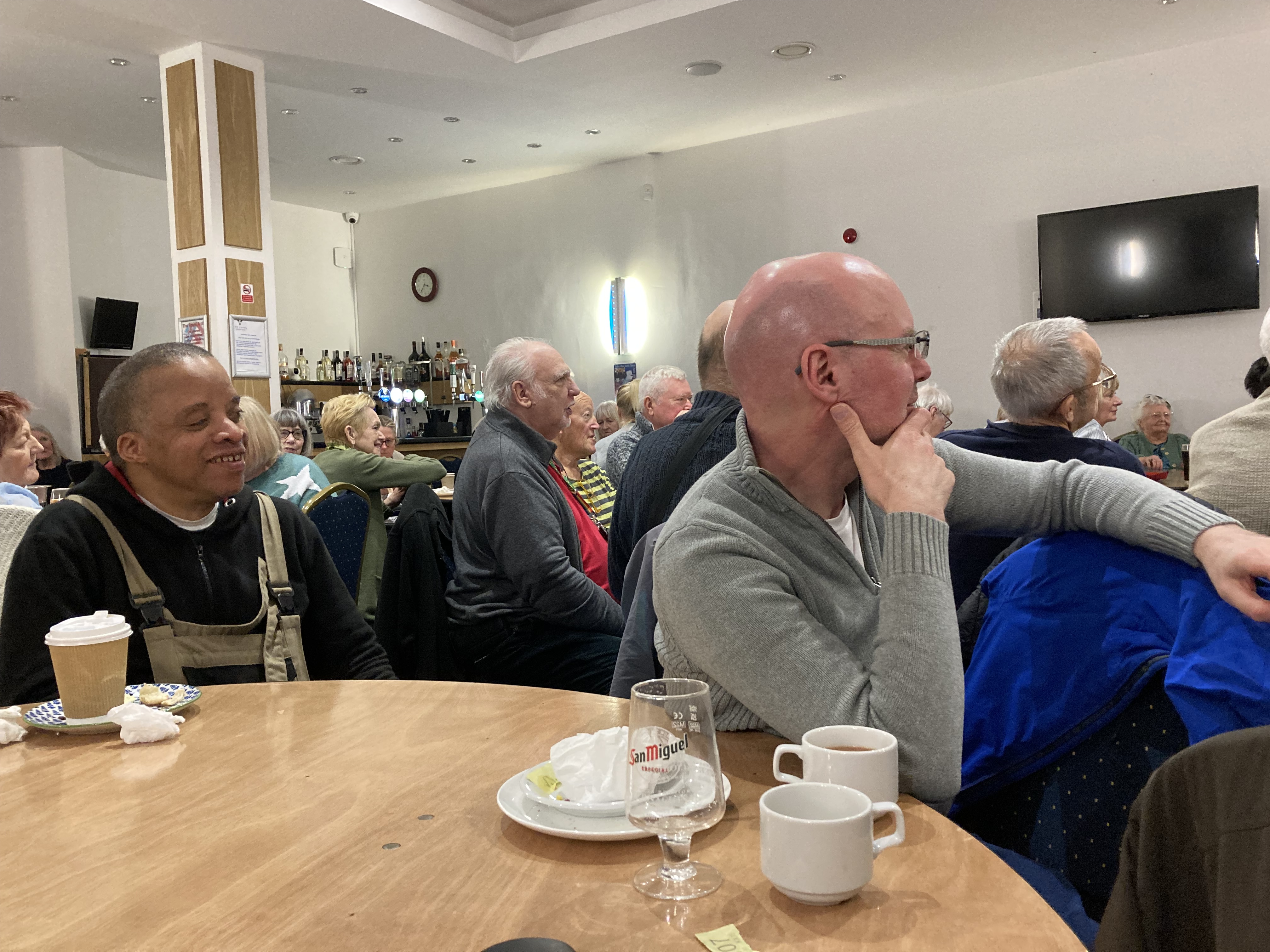
During the interval we tucked into sandwiches and cakes.
There were three hampers as raffle prizes and all the prizes were won by members of Out In the City!

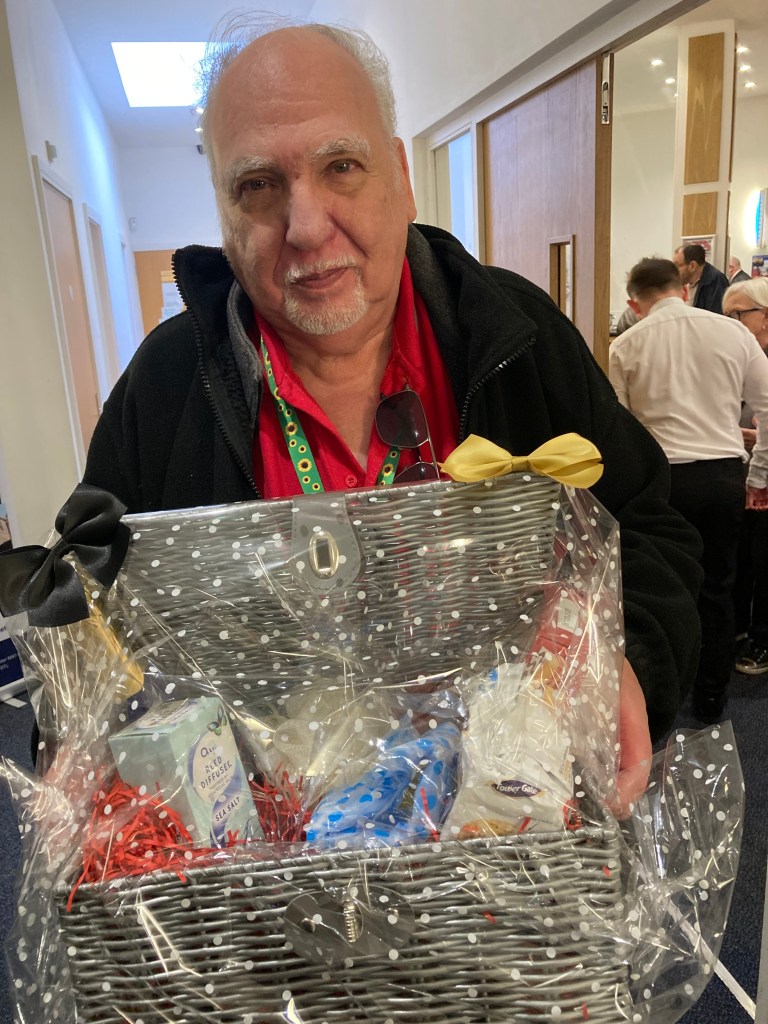
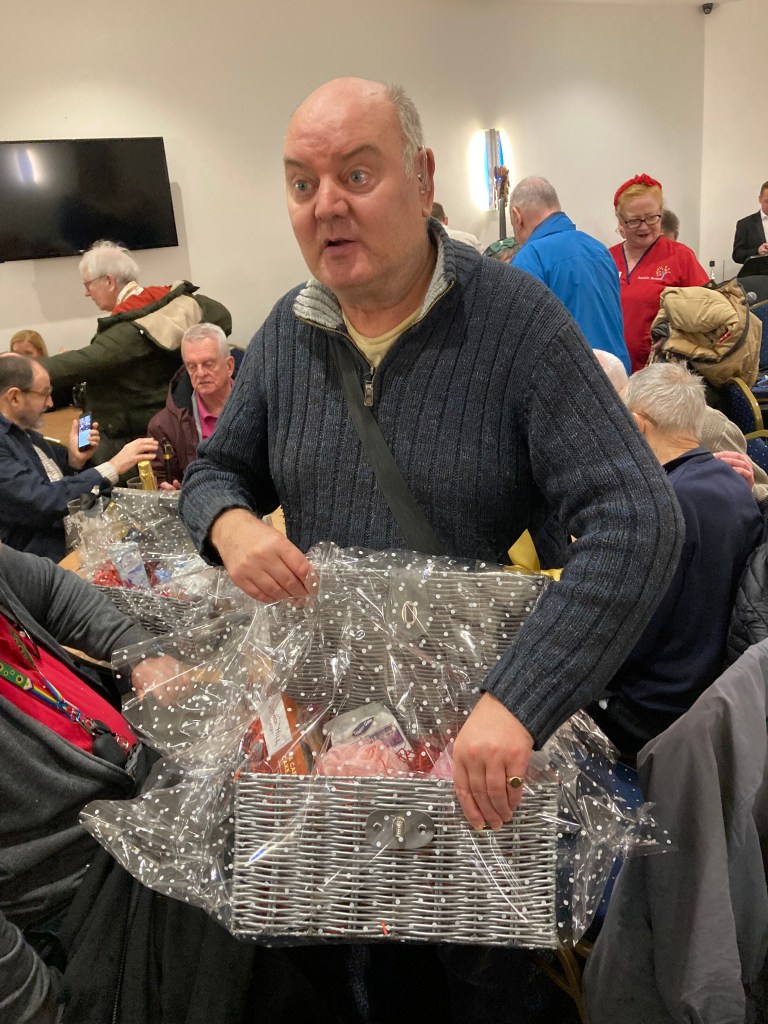
The big band swing is one of our favourite outings, so no doubt we will catch up with them again soon.

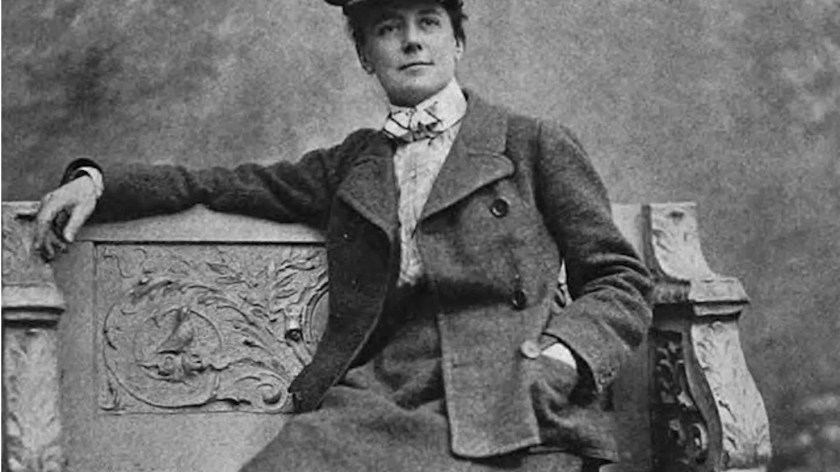
The suffragette known for scandalous affairs, bold protests and writing famous operas
In March 1912, Ethel Smyth stood side by side with activist Emmeline Pankhurst outside the office of MP Lewis Harcourt, a well-known anti-suffragist. Calmly and with accuracy, the two women threw a series of bricks through his office windows, sending shards of glass flying everywhere.
This calculated action was part of a coordinated campaign whereby over 100 suffragettes smashed windows across London. Nearly all were arrested and dragged away while screaming and shouting suffragette slogans. Among them was Smyth, who was sentenced to two months in Holloway prison. When her friend Thomas Beecham visited her there, he recalled that the women exercising in the courtyard were marching and singing with Smyth, who conducted them from her cell window using her toothbrush.
Smyth’s name rarely comes up in conversations about suffragettes. Yet in the 1910s, she was deeply involved in every aspect of women’s fight for the right to vote in Britain. Tall and often donning tweed suits and men’s hats while riding her bicycle, she was an eye-catching figure on the streets of London. In the words of fellow suffragist and writer Sylvia Pankhurst, there was “little about her that was (traditionally) feminine.” Nevertheless, she attracted admirers of both sexes wherever she went.
Smyth transcended social and gender norms almost from birth. A talented and passionate musician, she had her ambitions and work dismissed as frivolous because she was a woman.
Smyth was also an unapologetically lesbian woman who had passionate affairs with numerous women, including the Irish novelist Edith Somerville and the royal courtier and women’s rights advocate Lady Mary Ponsonby. She also developed an intimate friendship with Virginia Woolf, though it is unclear if the relationship ever became more than that. Woolf once wrote of Smyth, “Let me fasten myself upon you, and fill my veins with charity and champagne.” Others with whom she was intimately involved included the author Violet Trefusis, the American painter Romaine Brooks, and the artist Renata Borgatti, although once again, it is not clear whether the attachments became physical.
Defying the expectation of the age, Smyth wrote opera and chamber music, which was far beyond the scope of the composition of parlour music usually available to women. When she met Pankhurst in 1910, she turned her talents to supporting the suffragette cause, composing music, writing essays, and, of course, smashing windows.
Resisting the “male machine”
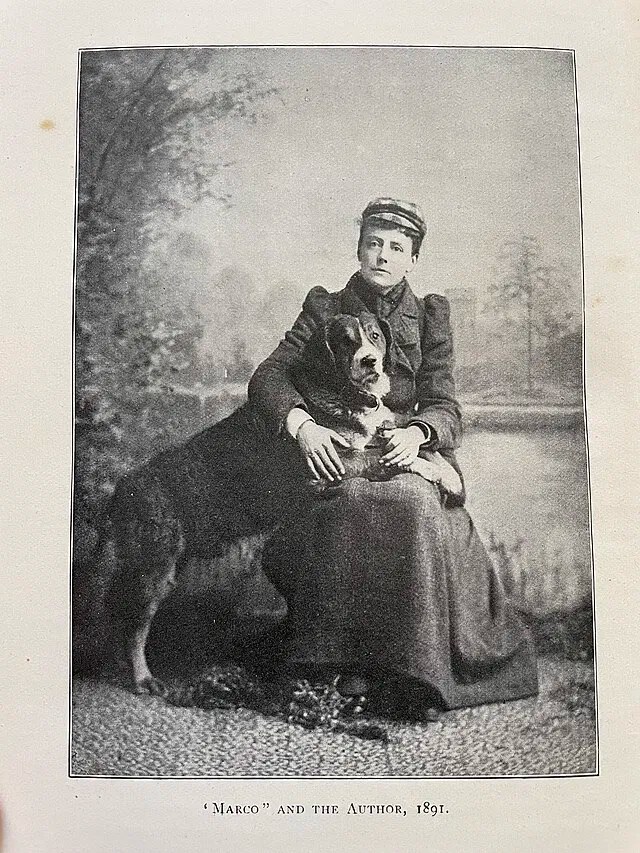
Born in Sidcup, England, in 1858, Smyth was not a typical Victorian child and was despaired of by her military father. She was passionate about music from a young age, but the field was male-dominated, and women’s skills were dismissed. Smyth was fiercely ambitious, and although her father disapproved, he eventually relented and allowed her to attend the Leipzig Conservatoire in Germany. She was determined that the music she wrote should not be relegated to parlour music to be played by women in their drawing rooms for the entertainment of men. Instead, she aimed to write great and dramatic operas.
In later recollections, Smyth denounced the world of the Conservatoire as a “male machine” but welcomed the chance to learn. While there, she met and was dismissed by the composer Johannes Brahms, but the composer Pyotr Ilyich Tchaikovsky recognised her as a rare talent and encouraged her, writing that “Miss Smyth can seriously be considered to be achieving something valuable in the field of music creation.” She also met Clara Schumann, the wife of composer Robert Schumann, who likewise recognised her ability. She became friends with musician Heinrich von Herzonbery and his wife, who was herself a composer and pianist.
Smyth produced a large body of music, and upon her return to England, she slowly began to receive recognition for her talent. Her Mass in D was performed in the Royal Albert Hall in 1893 to widespread acclaim. Her opera The Wreckers premiered in 1906 and became one of her most famous works.
Throughout her life, Smyth would say that she composed best when she was happiest. Her sweepingly dramatic compositions indeed reflected the turbulence of her personal life, and she had plenty of drama to draw on.
Remarkably explicit & never ashamed
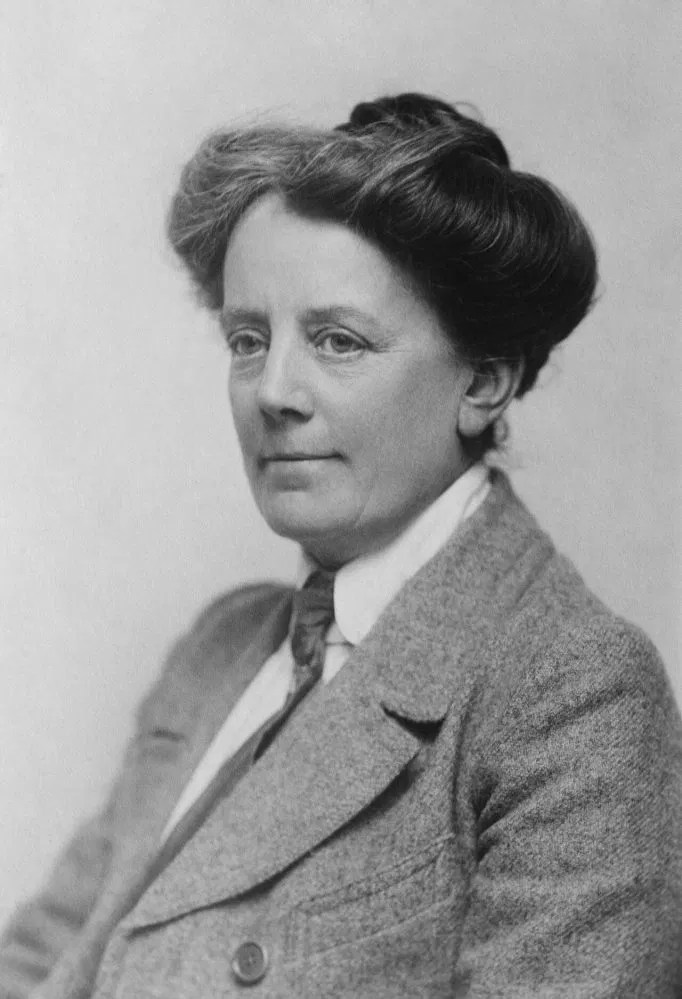
In 1910, Smyth heard Pankhurst speak at a meeting at the home of writer Anna Brassey, and she immediately joined the suffragette cause. She quickly became enamoured with Pankhurst and the two formed the “deepest and closest of friendships.”
Smyth certainly felt a romantic attachment to Pankhurst, although whether this was reciprocated in any way is unclear (though Virginia Woolf tells us in a letter that “they shared a bed”). From an early age, Smyth had been aware that she was attracted to women, as well as sometimes to men, writing that “from the first my most ardent sentiments were bestowed on members of my own sex.” In her memoirs (published in 1919 under the title Impressions That Remained), she is remarkably explicit when talking about her relationships with women. She’s never ashamed, and she never shies away from the reality of her desires.
She also had as a lover the American poet, writer, and philosopher Henry Brewster, but she steadfastly refused to marry him, knowing that she was primarily attracted to women. She mused on the nature of desire, asking him, “I wonder why it is so much easier for me … to love my own sex passionately rather than yours?” In the early to mid 1880’s, she ended up in a menage a trois with Brewster and his wife, Julia, which led to scandal when the situation resulted in a publicised divorce petition. In later life, she also had a romantic relationship with the musician Violet Gordon-Woodhouse.
In 1911, Smyth wrote the suffragette anthem, The March of the Women. It was described in January 1911 by the WSPU suffragette newspaper as “at once a hymn and a call to battle,” with its first performance celebrating the release of suffragettes from prison after the Black Friday protest. Soon afterwards, Smyth took up window-smashing.
Smyth remained a dedicated suffragette. She ultimately fell out with the Pankhursts over their support of the war effort, though she played her part by working as a radiological assistant in France.
Despite the scandals surrounding her personal life, Smyth’s music was well respected, and in 1922, she became a Dame of the British Empire, with her work recognised by an honorary Oxford University degree. She died peacefully in 1944.
Smyth is not well known today, largely because her openness about her sexuality meant that her life and work were unacceptable to the mid-20th century British establishment. Her memory lived on in those who knew her, though.
In Smyth’s eulogy, Author Vita Sackville-West described her as follows:
“Wild welcomer of life, of love, of art.
Your hat askew, your soul on a dead level,
Rough, tough, uncomfortable, true
Chained to the iron railings of your creed”
The world’s oldest active drag king has shaped the art form for decades
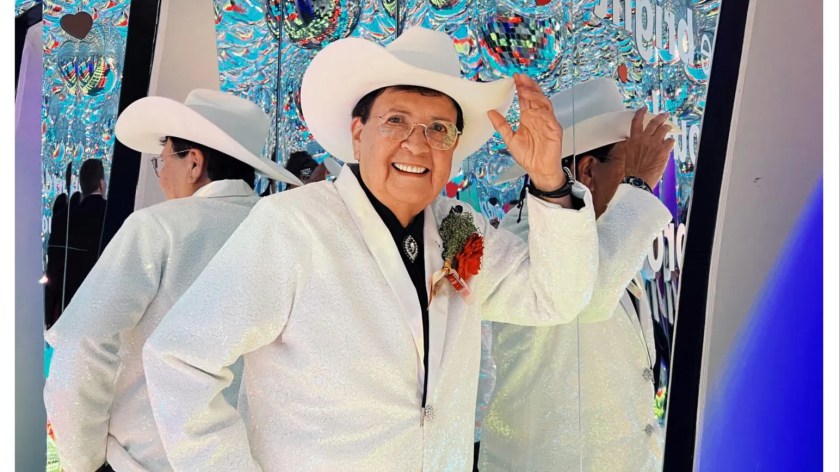
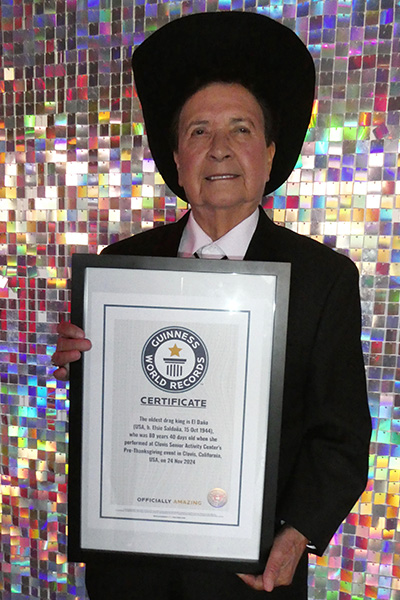
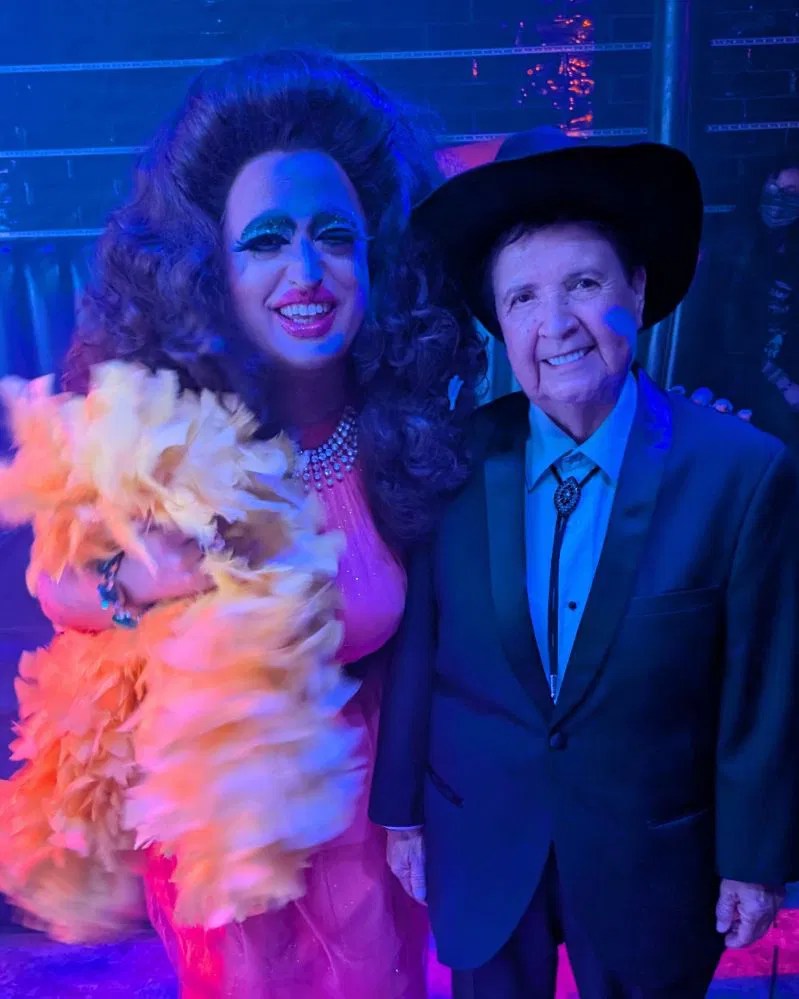
With the perfect combination of swagger and sass, El Daña is both a stud and a sweetheart. At 80 years old, she was recently certified as the world’s oldest performing drag king by Guinness World Records.
The Mexican American male impersonator is a true icon. She began performing in 1965 in California’s Central Valley and regularly travelled throughout the state. Her career spanned decades, from before Stonewall to the present, and she was also part of the famed Imperial Court System, an organisation that demonstrates not only drag’s artistry but also its commitment to community service and activism.
El Daña started performing in November 1965 the month before she had turned 21. She stated: “I always wanted to perform. Back then, it was mostly radio, so I would turn it on, and I would hear Vic Damone, Frank Sinatra, Bobby Darin, Bobby Vee, all those. Before I was 21, well, if I liked a song, I would grab a brush and pretend that I was doing that number.
When I found out that the Red Robin (a gay bar in Fresno, California) had shows, I auditioned. The Red Robin would advertise down in LA and San Francisco. They would recruit the drag queens that were professional. I would dress up in a suit, like the character I was doing, just a little bit of makeup to hide my blemishes. Back then, instead of saying “lip-sync” like they do now, the word was “pantomime.”
My very first performance was “La Bamba.” And believe me, my knees were shaking really bad when I got on stage, but once I got started, and the audience accepted me, I forgot about my knees shaking.
Performing drag is my own dream, and it comes from the bottom of my soul. On stage, I allow myself to shine and release anything that’s negative about me. I’ve been told by many that when I’m on stage, I just sparkle. They see me sparkle in my eyes.
To me, it’s very personal. I love it, and I want everybody else to enjoy it just as much as I enjoy it. And, to my surprise, they really do. Even today, as old as I am, they love it. And they’re feeding my ego, they’re feeding my talent. My whole soul is being fed by this beautiful cheering and joy and clapping. It gives us pleasure for a moment, you know, to forget what’s happening outside of that venue.
Back in the 1960s, a lot of us were in the closet. Once I was old enough, I didn’t care. They either accepted me or not, and I never had a problem with that. And back then, there were a lot of private parties; you had to be invited once you got known out there. And it was more difficult for the gay men, I think, than for the lesbians. They had to be careful what they were wearing underneath their dress, if they were in drag. Because they could get arrested, and they would get harassed. But I never really experienced anything like that. Me and my girlfriends, like a group of us, we hung out together. The Central Valley is very agricultural, and we would go out in the fields and drink and party and make out and all that. And nobody would bother us.
When the Girl of the Golden West opened up, the owner, Bob Benson, would put together production shows, like that picture of me on the moon. That’s Cabaret. And the audience was below me, with me on that moon being hoisted down to the stage. It was neat! And I would be the one that would have all the male lead parts, like in My Fair Lady and Showboat. From 1965 until the early 70s, you know, I was the only male impersonator around. That bar was way out in nowhere-land, and people from San Francisco and LA would come, and we would pack that little bar up, standing room only sometimes.
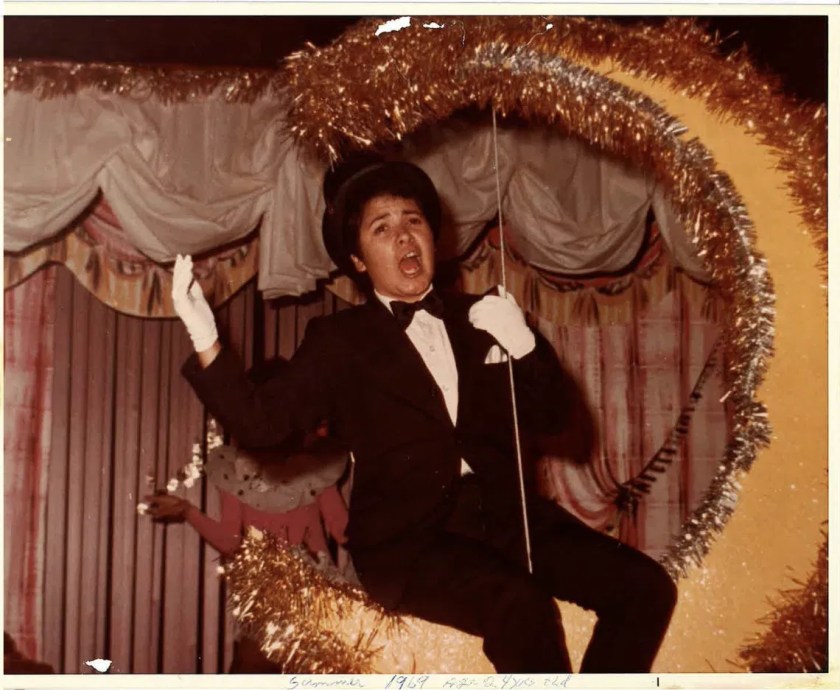
And then after the bar would close, there was a little restaurant right off Route 99 called Tiny’s, and we’d go have breakfast afterwards. And the waitresses just loved seeing us coming, because we would have fun. There would be maybe 10 to 20 of us at one table. And sometimes the police would walk in. But they would say nothing, they wouldn’t harass us. I think the manager of the restaurant would probably tell the police, “They really don’t bother anybody, they have breakfast, they tip good, and they’re just having a good time.”
And I would end up going home at like 3 or 4 in the morning. I’d sleep a couple of hours or so, then had to go to work. At the time, I was working as one of those catering drivers on a lunch wagon, and I had to be at work by 6 o’clock. So I wouldn’t get much sleep, but it was fun. When you’re young, you can go on for hours, you know? I’m 81 years old, and I can look back at my 20s and say: “I’m glad I did what I did,” and not say I wish I had.
Who knows if I’ll be here next year? At least enjoy what’s coming to me. And I’m going to accept everything with open arms because I do want to be in the spotlight.
My advice to young drag kings is to be better than the ones that are so negative, especially toward gay society. Be kinder, be gentler, be prettier. Be yourselves in a manner that they can’t do nothing but respect you.

Manchester is home to:
- more than 200 languages spoken
- 2 writing schools
- 3 writing agencies
- 10+ indie publishers
- 40 arts and culture festivals
- 4 historic libraries
- 23 public libraries
- 2 literary heritage houses
- More than 18 bookshops.
Manchester United
Jack Fletcher, an 18-year-old rising star at Manchester United, has been banned for six matches for calling an opponent a homophobic slur at an under 21s match. He’s also been fined £1500, and will have to attend an education programme. The Football Association has now confirmed that Fletcher was sent off for calling an opponent “gay boy”.

However, in an important caveat to the ban, it can only be applied when he is not playing a Premier League match, limiting its impact now he’s joined the senior team.
In his apology, he said the phrase had no homophobic intention but recognised “I completely understand that such language is unacceptable and immediately apologised after the game. I want to be clear that this momentary lapse of character absolutely does not reflect my beliefs or values.”



 Out in the City