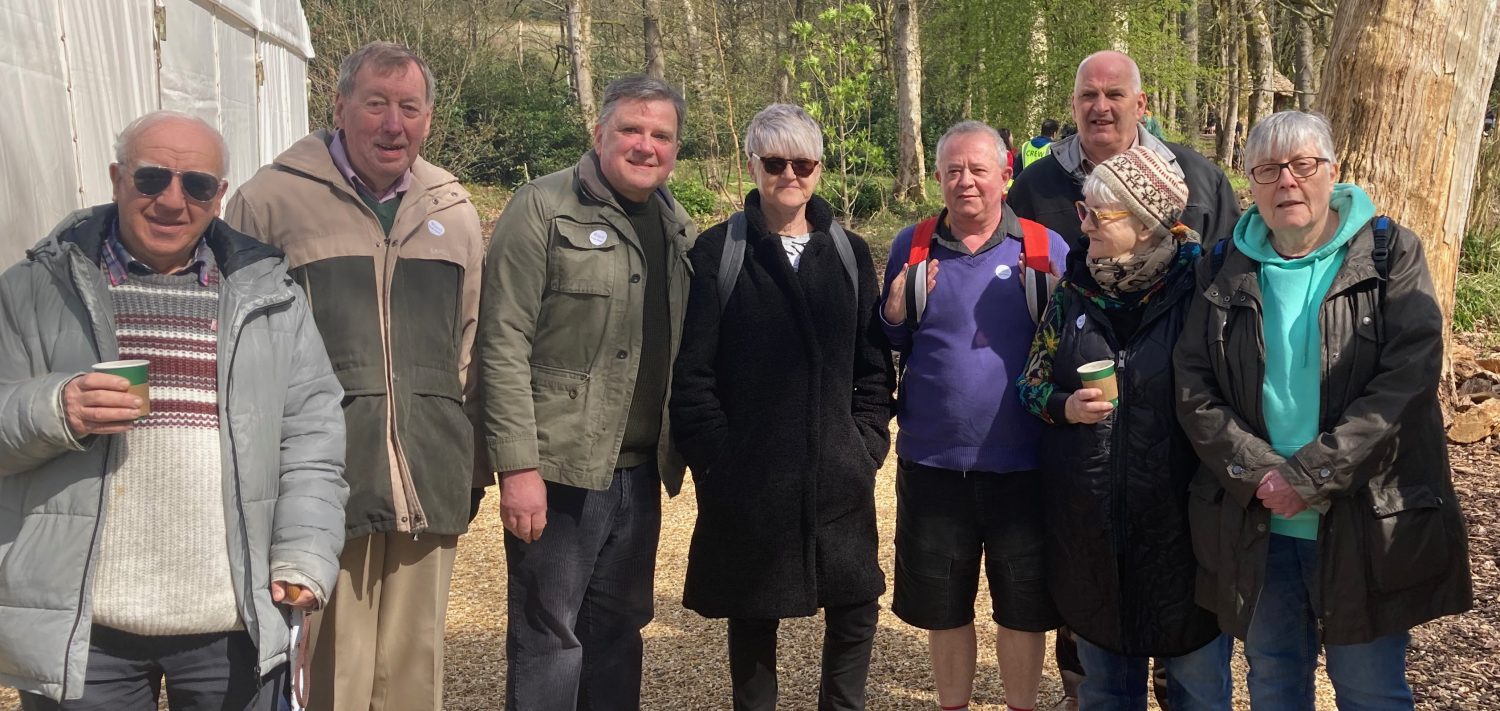
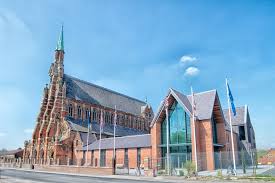
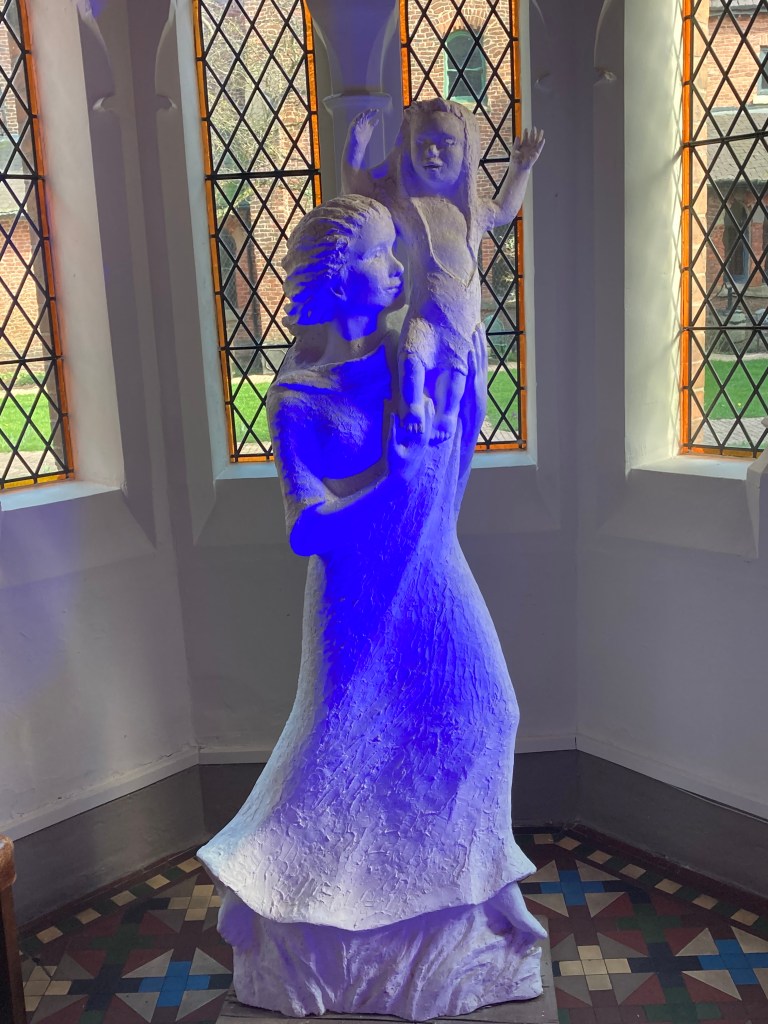
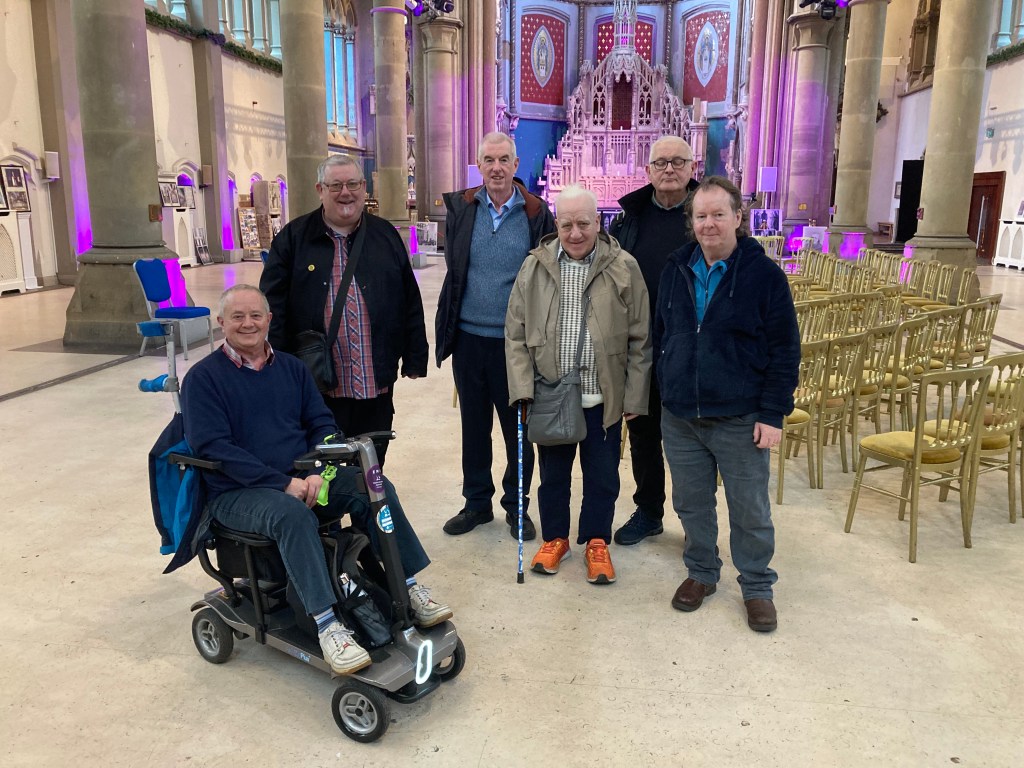
Gorton Monastery
The Monastery is a short bus ride from the centre of Manchester, and although no longer a place of worship, it offers a sanctuary of peace.
We enjoyed an hour of silence. In essence, The Silence between 12.00 noon and 1.00pm is simply a place where you can recover the stillness and beauty at the heart of your being. Being in silence and peace is incredibly healing, a rest from the fast pace of modern life and a time to slow down.
It has been widely demonstrated that noise pollution is a threat to our health. A wonderful antidote can be found at Gorton Monastery, whose strong, sturdy walls enclose what for many is the epitome of a quiet, safe space.
We left all our baggage, worries and busy life at the door and took the time as a space for rest and recovery. A mini escape, a sanctuary of peace and urban retreat. A chance to get away from it all and gain some peace and perspective. A gift to ourselves or simply a chance to just have a rest!
The cafeteria was extremely busy, but we had a light lunch of jacket potatoes or sandwiches, before exploring the building.

A brief history of Polari
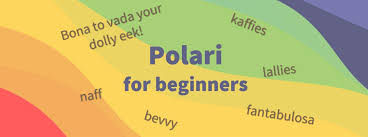
Polari is a secret language, which has now largely fallen out of use, but was historically spoken by gay men and female impersonators. It grew out of the world of entertainment, stretching back from West End theatres, through to 19th-century music halls and beyond that to travelling entertainers and market-stall holders.
And no flies! After visiting Gorton Monastery, we put our best lallies forward and with our eeks shining with hope, we trolled together towards the fantabulosa libraryette.
There we heard “Voiced” an unmissable evening of queer poetry and performance. Jez Dolan titivated us in her zhooshed up riah and gildy clobber.
Polari developed from an earlier form of language called Parlyaree which had roots in Italian and rudimentary forms of language used for communication by sailors around the Mediterranean. Also associated with travellers, buskers, beggars and prostitutes, it found its way into Britain, especially London and port cities, and gradually became used by gay men, especially during the first half of the 20th century.
Polari itself had Parlyaree as a base, but once in Britain was supplemented with a wealth of slang terminology from different sources, including Cockney Rhyming Slang, backslang (pronouncing a word as if it was spelt backwards), French, Yiddish and American airforce slang.
In a period when homosexuality was illegal and heavily stigmatised, it was useful as a means of conducting conversations in public spaces, which would have alerted others to your sexuality. Many of the words allowed speakers to gossip about mutual friends or to critique the appearance of people who were in the immediate vicinity.
“Vada the naff strides on the omee ajax” meant look at the awful trousers on the man nearby. Inserting a Polari word – such as bona (good) or palone (woman) – into a sentence could act as a coded way of identifying other people who might be gay. The language itself, full of camp, irony, innuendo and sarcasm, also helped its speakers to form a resilient worldview in the face of arrest, blackmail and physical violence.
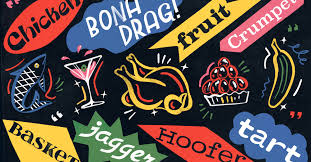
Polari speakers “christened” themselves with camp names like Scotch Flo or Diamond Lil, affording themselves alternative identities that reclaimed the representations of them as effeminate in positive ways.
The 1960s comedy radio series Round the Horne had a regular sketch voiced by Kenneth Williams and Hugh Paddick, who played Polari-speaking actors. The version of Polari that was used was necessarily simplified and toned down for the British public, and by the 1960s, there was a feeling that Polari had already overstayed its welcome. Round the Horne spoiled the secret, rendering the language less attractive to its speakers. Meanwhile the decriminalisation of homosexuality in 1967 was round the corner, making it less necessary for a secret lingo in any case.
Some younger gay men were more interested in concepts like gay pride, gay liberation and coming out and viewed Polari as a naff byproduct of a more repressive time. In the 1970s, in an early gay magazine called Lunch, activists branded Polari as ghettoising and it gradually became surplus to requirements.
Renewed interest
While few gay men today actively use Polari, in recent years it has gained a kind of latent respectability as an historic language – similar to the way Latin is seen by the Catholic faith. From a political standpoint, Polari is now recognised as historically important, an example of the perseverance of a reviled group of people who risked arrest and attack just for being true to who they were.
A group of activists called the Sisters of Perpetual Indulgence created a Polari Bible, running a Polari wordlist through a computer programme on an English version of the Bible. The Bible was bound in leather and displayed in a glass case at the John Rylands Library in Manchester. This was not to mock religion but to highlight how religious practices are filtered through different cultures and societies, and that despite not always being treated well by mainstream religions, there should still be space for gay people to engage with religion.
There are lines such as: “And the rib, which the Duchess Gloria had lelled from homie, made she a palone, and brought her unto the homie.” This translates as: “And the rib which God had taken from man was made into a woman and brought to the man.”
Never has a dead language had such an interesting afterlife.

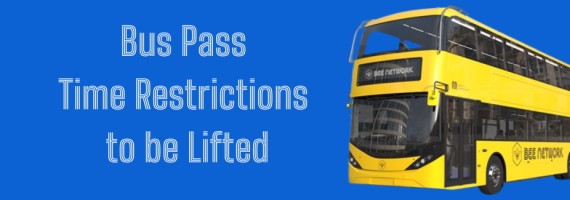
Free bus travel for older and disabled passengers to be made permanent from 1 March 2026
Older and disabled people in Greater Manchester will benefit from free round-the-clock travel on Bee Network buses, with the permanent lifting of the 9.30am restrictions on concessionary passes from March 2026.
Mayor of Greater Manchester Andy Burnham and council leaders from across the city-region have been working with older and disabled groups locally to bring about the major change which will give “real freedom” to passengers.
It follows two successful pilots in August and November, during which around 400,000 older and disabled people in Greater Manchester were able to use their concessionary passes 24/7, rather than having to wait until 9.30am to get on board.
 Out in the City
Good to read the article about Polari. On a recent visit to the People’s History Museum with Out in the City, I bought a copy of ‘Fabulosa!’, Paul Baker’s very readable book about Polari. It contains a very useful glossary of Polari words at the back which contains a very surprising meaning of a word which is also my partner’s name. I’ll leave that hanging here!😉
LikeLike