Years before Stonewall, a cafeteria riot became a breakthrough for trans rights
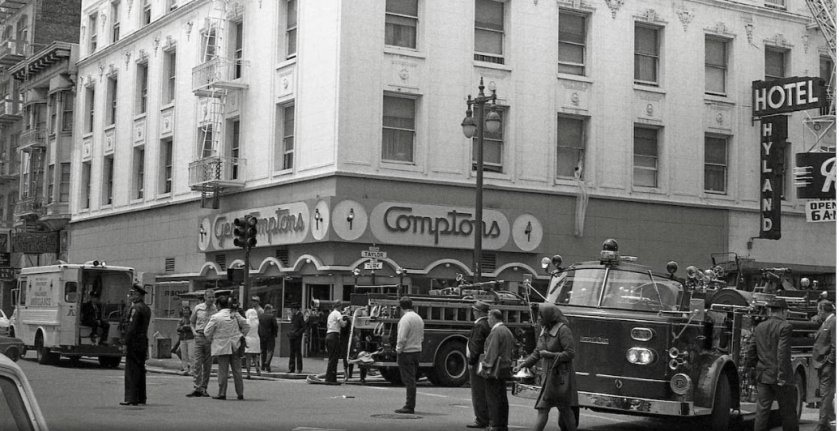
As February is LGBT+ History Month, we thought we would start early. Before Stonewall, and before the Black Cat protests, there was the Compton’s Cafeteria riot.
In August 1966 – the exact date is unknown – drag queens and transgender women who frequented Gene Compton’s Cafeteria in the Tenderloin district of San Francisco rose up against police harassment.
Here are the facts as we know them about the riot and its aftermath.
Harassment and hot coffee: What happened?
The restaurant, open 24 hours, was popular with trans women and drag queens; they were not welcome in many of the nearby gay bars. Some of them were sex workers, and they could be arrested not only for that but for cross-dressing. One night, a police officer tried to arrest one of Compton’s trans patrons on some charge or other, and she responded by throwing hot coffee in his face. Others started tossing chairs, dishes, and sugar shakers around the cafeteria. Outside, they smashed squad cars’ windows and set fire to a newsstand.
“We were tired of being arrested for nothing,” Felicia “Flames” Elizondo, a trans woman who lived in San Francisco at the time, said in 2018. “Arrested for being who we wanted to be. Thrown in jail for obstructing the sidewalk. Thrown in jail for dressing like a woman, because in those days it was illegal. Anything they could think of to make their quota or just to make our lives a living hell, they would do.” Flames often visited Compton’s, but given the fog of time, she couldn’t remember if she was there that night.
She did remember how difficult life was for LGBT+ people then, especially drag queens and trans women, even in supposedly liberal San Francisco. “LGBT people were thrown out of hotels, they were stabbed, they had their breasts cut, they were mutilated because of their genitalia,” she said in the 2018 interview. “We were something that could be thrown away in a trash can.”
Amanda St Jaymes, who did participate in the uprising, was interviewed for the 2005 documentary Screaming Queens, written and directed by Susan Stryker and Victor Silverman. “Oh, the sugar shakers went through the windows and the glass doors,” she said in the film. “I think I put a sugar shaker through one of those windows.” Outside, the fighting continued, and many of the restaurant’s customers were taken away in police vehicles.
Nevertheless, “there was a lot of joy after it happened,” St Jaymes told Stryker. “A lot of them went to jail, but there was a lot of, ‘I don’t give a damn. This is what needs to happen.’”
The owners of Compton’s responded to the uprising by barring drag queens and trans women from the restaurant, a decision that immediately led to protests. But life got marginally better for this community.
“The developments in the Tenderloin following that night attest to its impact,” Johnny Damm wrote in Guernica Magazine in 2020. “After Compton’s, the city could no longer claim not to see the Tenderloin trans community. Tenderloin residents also suggest police harassment lessened in those months following the riot, but the law forbidding ‘dress not belonging to his or her sex’ continued as a basis for arrest until finally removed from the municipal code book in July 1974.”
Preserving a legacy
No local media outlet reported on the Compton’s uprising; the subject was considered unworthy of attention. Police claim to have no arrest records from that night. But LGBT+ activists and historians wouldn’t let it be forgotten.
Stryker is chief among them. She found a scrap of information on the riot while going through some archives, then realised, “There’s a story here that I need to tell,” she told The Guardian in 2019.
“So she slowly built her own paper trail and learned how the corner of Turk and Taylor streets, where Compton’s was located, was ‘trans central,’” The Guardian noted. She met St Jaymes and others, and the Screaming Queens documentary was the result.
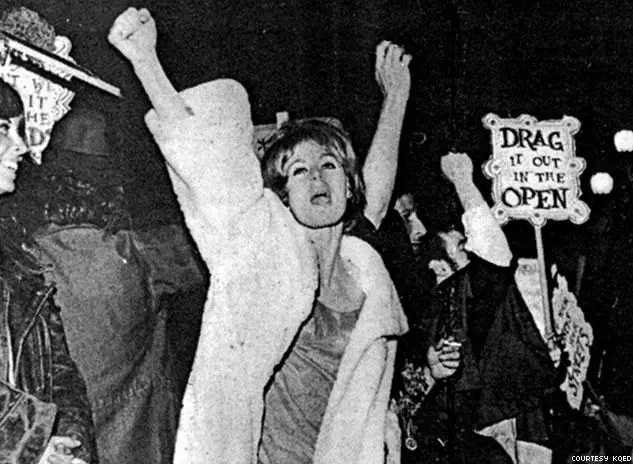
The Compton’s riot has been memorialised in other sources. It figures prominently in the permanent collection of the Tenderloin Museum, which opened in 2015. The Compton’s Cafeteria Riot, an interactive play, has been presented at the museum’s Larkin Street Café.
The overall history of the Tenderloin district is recounted in the book The Tenderloin: Sex, Crime, and Resistance in the Heart of San Francisco by Randy Shaw.
Six blocks in the Tenderloin have been designated as the Transgender District, the first legally recognised trans district in the world. It was founded in 2017 by three black trans women, Honey Mahogany, Janetta Johnson, and Aria Sa’id, and originally named Compton’s Transgender Cultural District. Transgender District staffers work to bring economic empowerment and stable housing to the community, promote cultural competency and offer arts and culture programmes.
The current tenant is controversial
Compton’s Cafeteria closed in 1972, and its site is now home to a halfway house for formerly incarcerated people, operated by the private prison firm Geo Group. Activists would like to reclaim the Compton’s site as a community centre or supportive housing. Janetta Johnson envisions “studio apartments and one-bedroom apartments for people with mental health issues, with mental health providers on staff, not a prison”. Advocates have vowed to go on working for such a use of the site.

Stop Sex Matters infiltrating the Council of Europe

The Council of Europe will be voting on 29 January to ban conversion therapy. This would be an incredibly important step to stop the rollback in the rights of LGBT+ people. But Sex Matters is infiltrating the vote. They have set up a tool for transphobes to email the MPs that are part of the council, bullying them to uphold transphobic ideas and asking them to vote against a ban.
The British parliamentarians who represent us in the council should represent what the people actually want, instead of reflecting the views of a small, hateful minority. After all, banning conversion therapy was in the government’s manifesto – let’s make sure they keep their word.
We have to stop this. Email the MPs and let them know they can stand up for what’s right.
We only have a few days, but together, we can stop hate.
Through the Queer Lens: with Stuart ‘LINDEN’ Rhodes and Rachel Adams
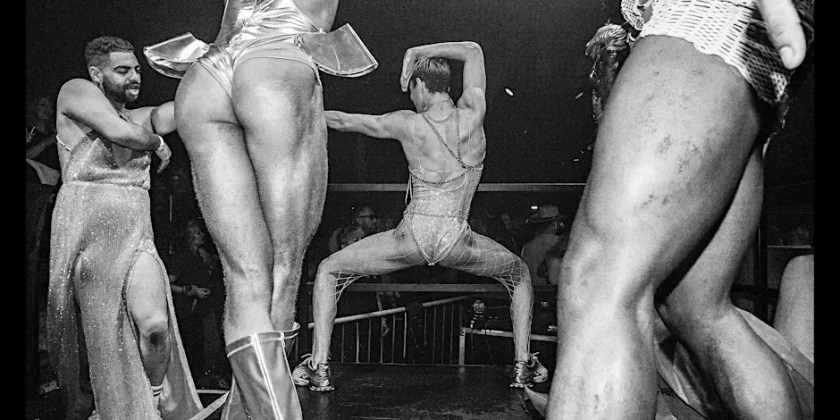
Thursday, 26 February from 6.00pm to 7.30pm at The Whitworth, Oxford Road, Manchester M15 6ER.
Join Stuart ‘LINDEN’ Rhodes and Rachel Adams as they discuss what it means to capture the Queer community through photography.
Join us for an evening discussion called Through the Queer Lens where Stuart and Rachel will discuss photography’s role in building community and shaping culture and how they have captured these within their own practice.
Get tickets here £3 – £5
Out on the Radio
The next edition of Out In The City‘s radio show “Out on the Radio” will be live on ALL FM 96.9 on Tuesday, 3 February from 2.00pm to 3.00pm.
The new show features special guests Lizzie and Sarah from Out In The City‘s Women’s group.
If you missed the previous shows
Listen to Show 1 here
Listen to Show 2 here
 Out in the City