Manchester Pride’s identity is up For Sale
By Adam Maidment
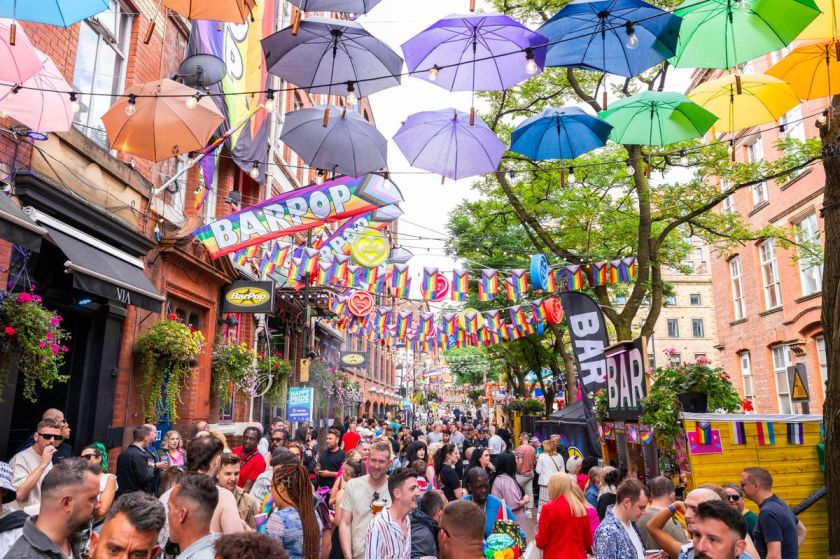
Earlier last summer, Manchester Pride celebrated its 40th anniversary with a weekend of unity and celebration. But within weeks of the August Bank Holiday festival taking place, the shutters were down on the company responsible for the event after going into voluntary liquidation.
Headliners, performers and suppliers were left doubting whether they would be paid what they were still owed, eight staff members were made redundant, and questions remained on how debts in the hundreds of thousands of pounds would be resolved.
On 29 July 2025, Out In The City received an email confirming that our application to the Community Fund had been approved for the amount of £1000. Despite chasing up, we never received the payment.
It also made people question not only how things had got to that point, but what it meant for the Pride event going forward.
KR8, who were appointed liquidators by Manchester Pride Limited (the company behind the festival) back in November, said this week that they had now successfully contacted ‘all affected creditors of the charity’, and were in the ‘process of pursuing all asset realisation opportunities to maximise the return to creditors’.
This does not include organisations like Out In The City who were promised a grant, which was not paid.
Asset valuators and auction house SIA Group have listed the Manchester Pride and Mardi Gras brand name, and any associated domain names. This means that whoever secures the assets will, in theory, be able to ‘host future Pride events under the Manchester Pride brand name’. But, how did we get to this position where Manchester Pride’s identity is now up for grabs to the highest bidder – whoever that might be?
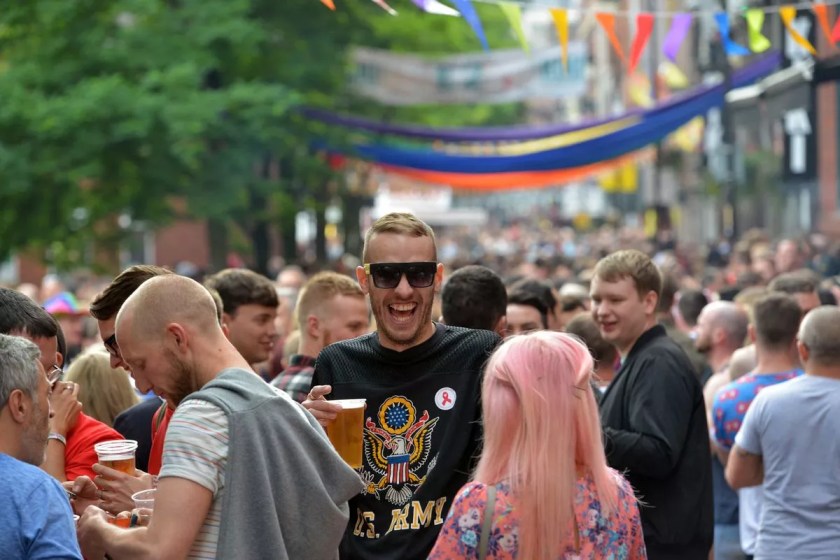
Officially, 22 years of Manchester Pride
The roots of Manchester Pride date back to 1985, having taken on various names since then including the Manchester Mardi Gras, GayFest, and The Big Weekend. But it would officially become known as Manchester Pride as the city geared up to host EuroPride in 2003.
Manchester Pride Limited (MPL) was set up as a company in 2003, being registered as a charity in 2007. A Manchester Pride Events Limited subsidiary was also founded in 2007. Between then and 2019, it’s understood that, bar a few shortfalls, the event had managed to mostly prove financially successful as it built up a firm reputation within LGBTQ+ communities around the world for its prestige.
The pandemic caused ‘significant disruption’ to the company, with the 2020 event having to be cancelled altogether. MPL reported a fall in revenue of around £3.2m and a loss of £481,000 in 2020. By 2023, the charity reported losses after tax of £467k, resulting in a negative reserve position for the first time in ‘several years’. The latest figures for 2024 have not yet been published, but it’s estimated the charity could have lost around £318k.
For the 2025 event, Manchester Pride bosses announced a new Mardi Gras set-up which aimed to go back to its roots with a celebration of culture and community outside of the Gay Village area. Held at Mayfield Depot, it was headlined by Nelly Furtado, Olly Alexander and Leigh-Anne Pinnock. Behind the scenes, the charity had hoped this new expansion would be successful enough to turn fortunes around. It wasn’t.
Fortunes faded and a ‘compelling case’
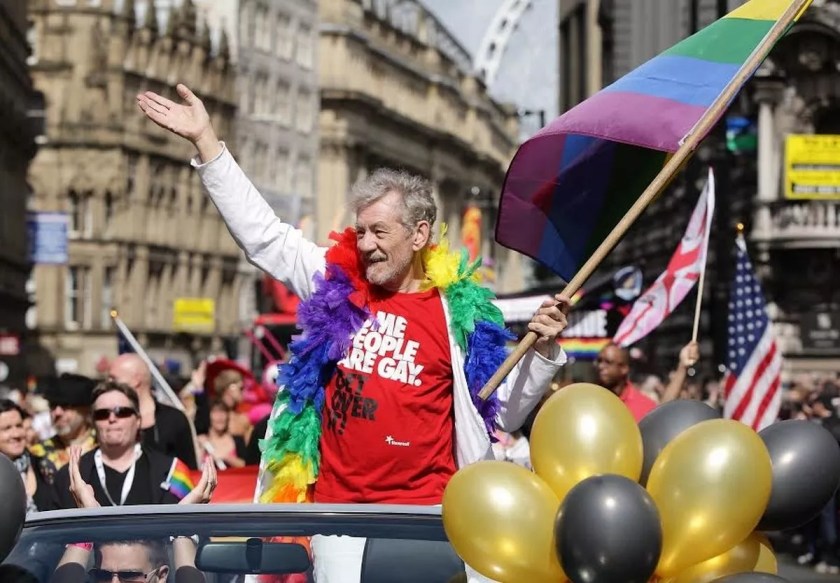
Within hours of opening to the public, videos circulated online of empty dancefloors and artists performing at the new Mardi Gras set-up to minimal crowds. Before the event had even finished, bosses were said to be scrambling in the sidelines about the next steps for the charity. One such plan already in motion was a bid to host EuroPride again in 2028 – where things all began for the company.
Out In The City provided a letter of support to the organisers of EuroPride 2028 on 5 August 2025.
Putting together a bid which saw the event budgeted at around £3.2m, the city went up against West Ireland in front of the European Pride Organisers Association (EPOA). Manchester lost spectacularly with 70 per cent of voters preferring the alternative bid.
At the same time, Pride bosses had submitted a ‘compelling business case and turnaround plan’ to Manchester City Council which aimed to secure loans or grants to help the charity ‘return to solvency’. It wasn’t enough, with Council leader Bev Craig later saying that Manchester Pride’s ‘position had become unsustainable’.
Assets for sale
The news of Manchester Pride’s voluntary liquidation was officially announced on 22 October 2025. The charity said it had hoped to find a way to move forward, but rising costs, declining ticket sales and an ‘ambitious refresh of the format’ had resulted in the organisation ‘no longer being financially viable’.

Since then, little has been said about whether performers and suppliers will ever see the money they are rightfully owed. The Equity Union is campaigning on behalf of many artists, whilst the Together for Creatives fundraiser also aims to raise £50,000 for those left out of pocket. Manchester Council said it will ensure Pride will take place in the city this August Bank Holiday weekend, working with members of the local LGBTQ+ community to create something that goes ‘back to home-made Pride’.
But, now questions have arisen about whether this future event will ever be able to be called Manchester Pride. The assets and trademarks to the name are listed for sale with The SIA Group saying the opportunity ‘would be suited to a range of potential acquirers’ including LGBTQ+ organisations, civic bodies and not-for-profits, as well as event promoters, entertainment groups and nightlife operators. Theoretically, it’s fair game to anyone and will depend on who has the most cash – or most viable offer – to claim it.
Manchester Council has reaffirmed that whilst it supports the return of Pride, and will work alongside the LGBTQ+ community, it will be not serve as an organiser of any such event. The ‘brand-related’ assets are therefore unlikely to be something the council would purchase.
Despite its name and branding up for sale, the legacy of the Pride event in Manchester cannot be underestimated. It has drawn in thousands of people from all over the world, generated millions in the economy, and, most importantly, served as a place for belonging and community to LGBTQ+ people and allies. Whether it’s named Manchester Pride or not going forward, it’s important that doesn’t change. It can still be a watershed moment, and it’s the community themselves that can, and should, steer that going forward.

Same Sex Kisses on Film
Same sex kisses on film have a long evolving history from early pioneering moments to modern depictions, showcasing shifts from coded representation to more open and celebrated intimacy in cinema and on television.
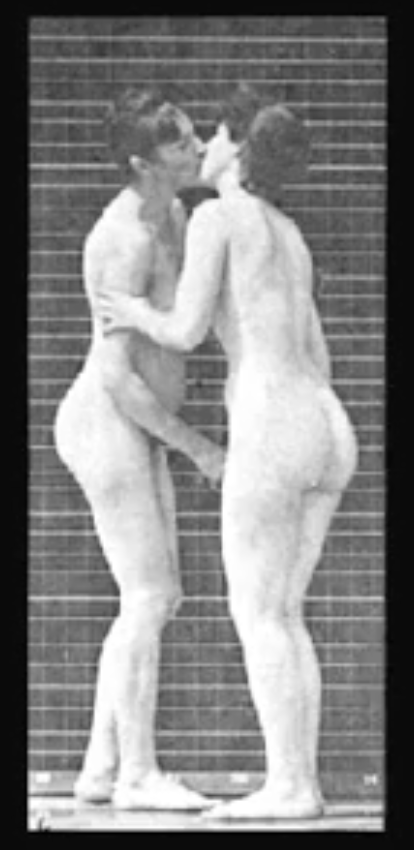
The Kiss was photographed between 1872 and 1885 by Eadweard Muybridge before the invention of the motion picture camera. Animating the photographs has produced the first cinematic kiss.
During the fall of Babylon sequence in “Intolerance” (1916), two male warriors kiss quite passionately on the lips, when they realise they are both about to be killed in a losing battle.
In “Orphans of the Storm” (1921), two sisters (one played by star actress Lilian Gish) lovingly embrace and kiss each other on the lips.
In one of the Roman orgy scenes in “Manslaughter” (1922), there are two women kissing and fondling each other in the crowd of partying people.
In 1927, audiences were treated to a same-sex kiss. In Wings, winner of the Academy Award for Best Picture, Buddy Rogers and Richard Arlen both fancy Clara Bow. They also really like each other. It is a truly romantic moment as the wingmen confront Arlen’s death.
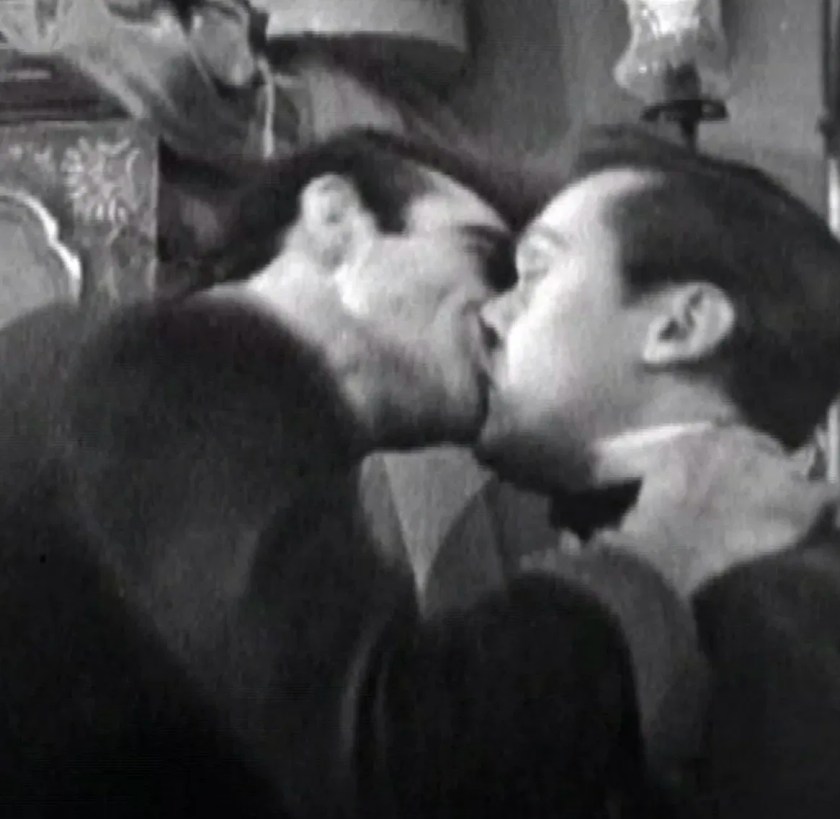
In a BBC teleplay from 1960, once thought to be lost, Sean Connery can be seen smooching another man. Disappointingly, the kiss is a fraternal one.
BBC Two’s adaptation of Edward II (1970) featured a kiss between the titular king (Ian McKellen) and his lover Gaveston (James Laurenson), recognised as the first male same-sex kiss on British TV.
In 1989 the long-running soap opera EastEnders broadcast the first mouth-to-mouth kiss between two gay men (Colin and Guido), in a pre-watershed slot, causing controversy but paving the way for more LGBT+ representation.
Donor Circle Grassroots Fund
LGBT+ organisations receive just 10p in every £100 that is donated to charitable causes in the UK, and most are small teams doing incredible work, day in day out.
45% of the LGBT+ Consortium’s membership operate on less than £1,000 a year, and they have launched a new campaign featuring Out In The City:
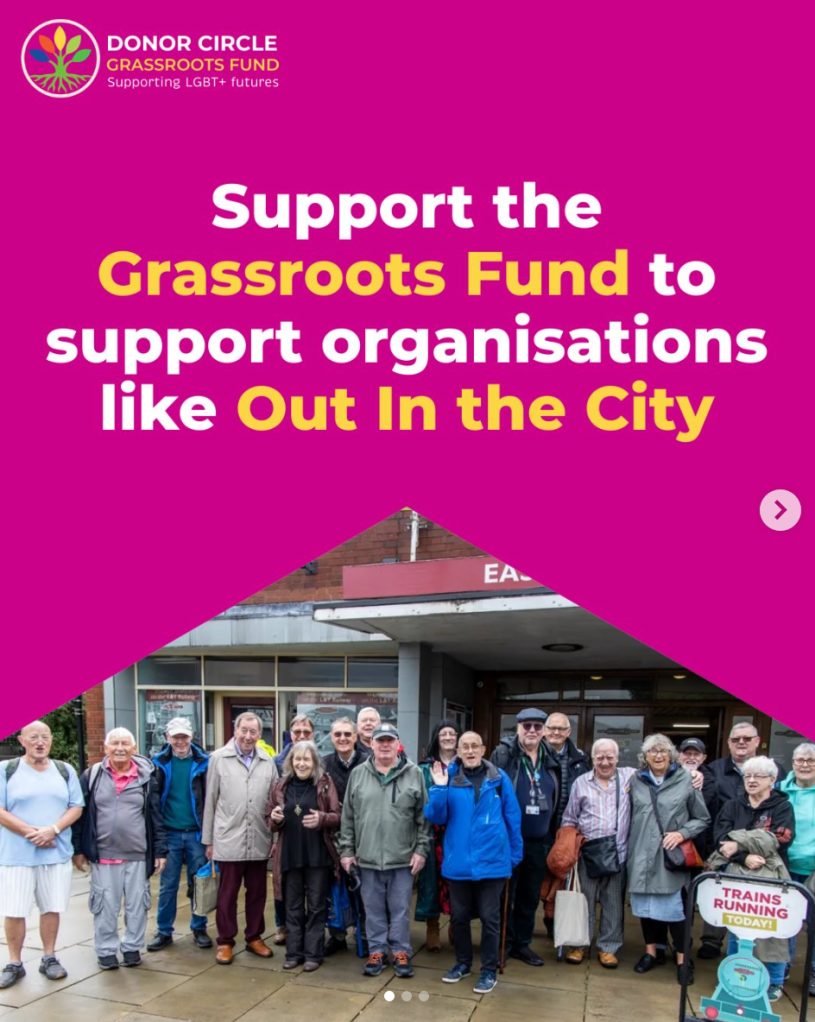
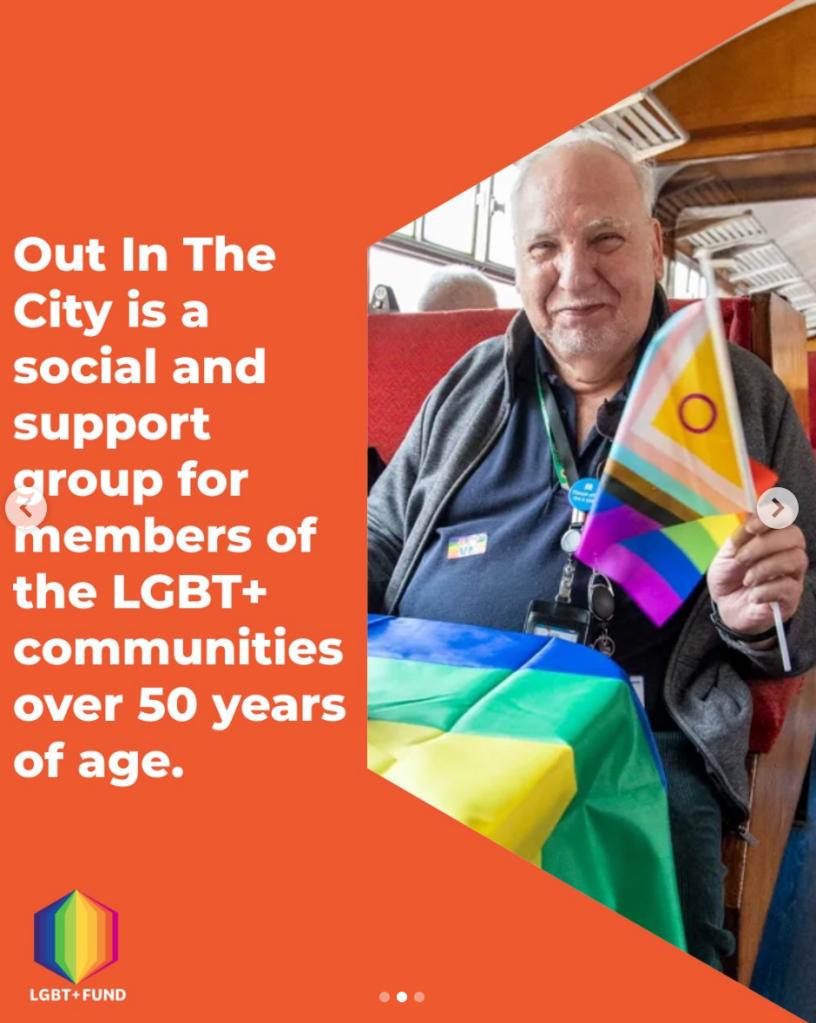
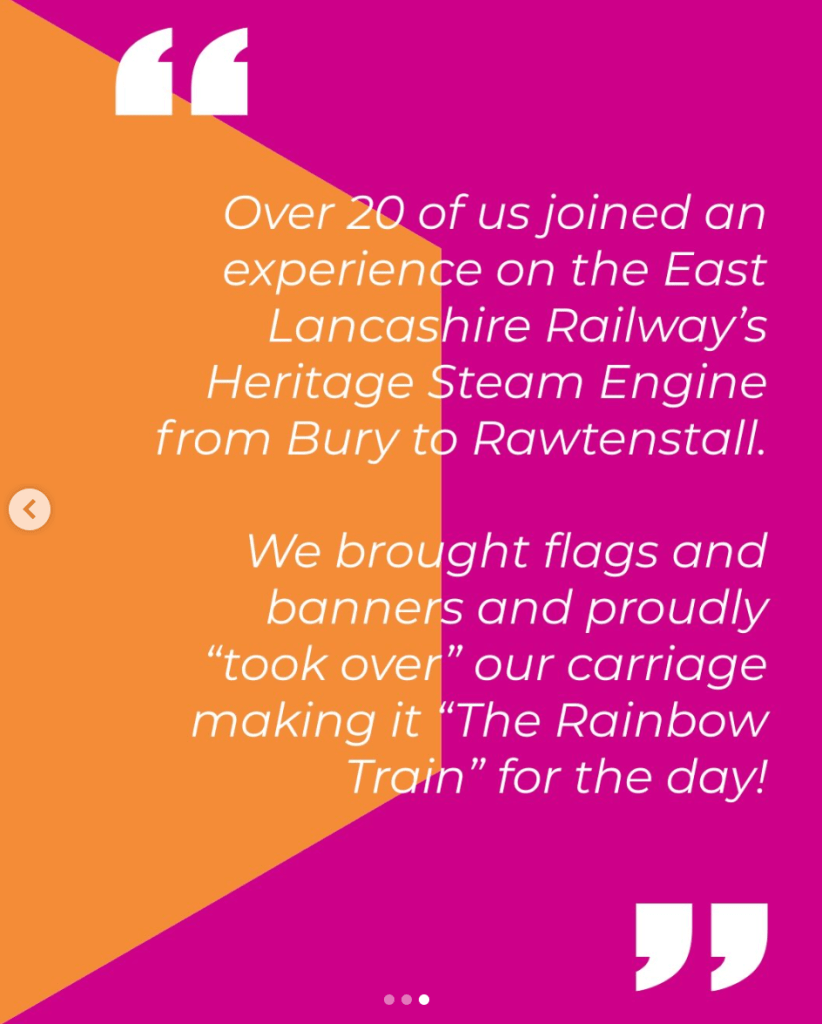
When you donate to the LGBT+ Fund you help us resource some amazing LGBT+ charitable and volunteer led organisations like Out in the City Manchester.
Out In The City is a social and support group for members of the LGBT+ communities over 50 years of age.
“Using some of our funding from the LGBT+ Futures: Equity Fund, over 20 of us joined an experience on the East Lancashire Railway’s Heritage Steam Engine from Bury to Rawtenstall. We brought flags and banners and proudly ‘took over’ our carriage making it The Rainbow Train for the day!”
If you can donate £100 please head to this link and donate to our Donor Circle Grassroots Fund today
LGBTQ+ Extra Care Housing Scheme Update
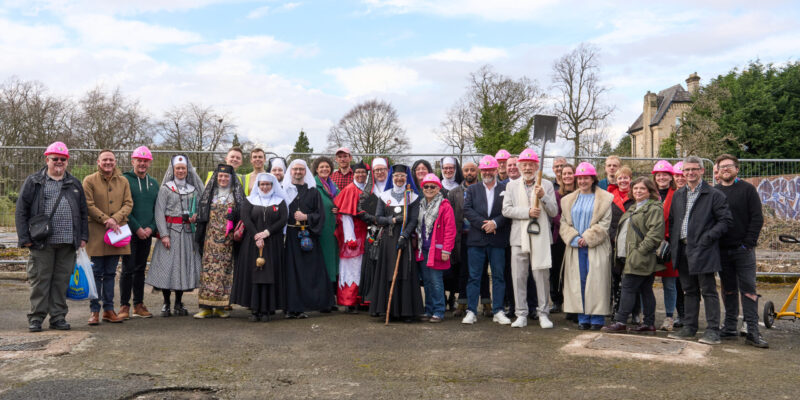
Work has continued to progress on the ‘first of a kind’ purpose-built majority LGBTQ+ Extra Care social rent housing scheme and neighbouring shared ownership block in Whalley Range.
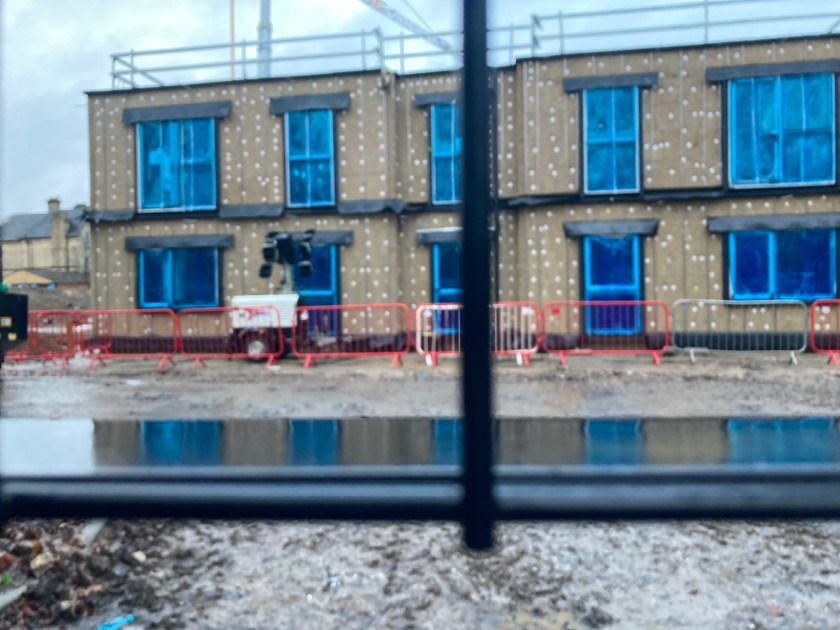
The lightweight steel frame installation has now commenced on site, with the ground floor structure partially formed for the Shared Ownership block. Meanwhile, work continues on the foundations and substructure for the Extra Care block, with the ring beam and pot & beam flooring nearly complete in readiness for the steel frame installation to begin. Ring Beam is a strong concrete band around a building that keeps it stable. Pot & Beam is a floor system using concrete beams and hollow blocks to make floors strong but lighter. These methods help ensure safety and durability in modern construction.
Our co-production work with the Russell Road Community Steering Group (CSG) continues. Last month, members visited the site alongside researchers from the University of Manchester to view progress and discuss upcoming construction activity with the site manager.
The University of Manchester is carrying out a year-long project researching the unmet housing and social care needs of older LGBTQ+ people. As part of this, they are working alongside LGBT Foundation and the Community Steering Group to consider best practice and co-production of inclusive housing and care, with a view to undertaking a wider piece of research post 2026.
They are looking for people over 50, who identify as lesbian, gay, bisexual, transgender or queer and have lived in or have an interest in social housing.
The commitment will be to about ten hours attending workshops taking place between April and June.
Please contact us here and we will pass on your contact details.
 Out in the City