Visit to Ancoats
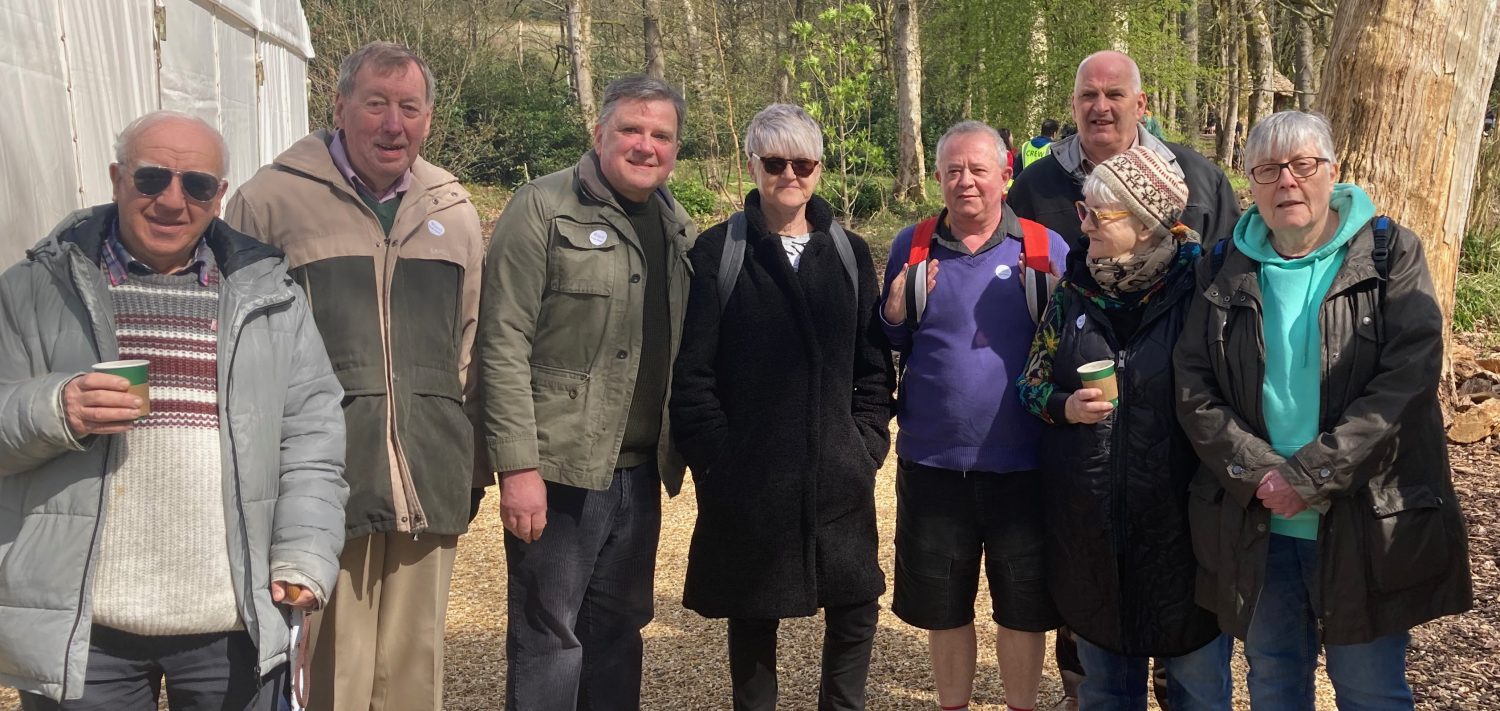
Out In The City members gathered in the city centre and walked up to Ancoats, a former industrial district in north Manchester.
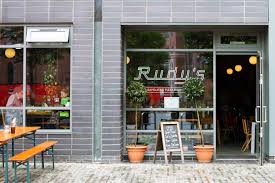
There we dined at Rudy’s Pizza – the original Rudy’s serving true Neapolitan Pizzas. There are around 36 locations now, but Rudy’s is not a franchise. It’s a company owned and operated chain of restaurants. Rudy’s Pizza in Ancoats is based on Cotton Street, and “Cottonopolis” was a 19th-century nickname for Manchester, due to its central role in the global cotton industry.
Just across the street is Hallé St Peter’s, which provides a home for the Hallé Orchestra’s rehearsals and recordings, its choirs and Youth Orchestra, as well as a space for education workshops and small performances.
We had come to hear a chamber music performance (but missed it due to a misunderstanding on timings), but we did attend a talk on “The Re-Opening Festival of the Free Trade Hall 1951”.
The talk was held in the Victoria Wood Hall. Victoria Wood was Patron of the Hallé Children’s Choir for several years and had a life-long affection for the Hallé Orchestra and classical music.
This hall is dedicated to the memory of Victoria Wood and acknowledges her huge contribution to the worlds of music, theatre and television.
Victoria was one of the UK’s most beloved performers and a very famous Northerner who developed some of the funniest characters ever crafted; a local woman whose love of music started as a child right here in Manchester.

Manchester Free Trade Hall
The Free Trade Hall was bought by Manchester Corporation in 1920; but was bombed and left an empty shell in the Manchester Blitz of December 1940. A new hall was constructed behind two walls of the original façade, opening as a concert hall in 1951.
As well as being the venue for the Hallé Orchestra, Manchester Free Trade Hall was also used for pop and rock concerts. I remember seeing Joan Armatrading, The Smiths, the Sex Pistols, Buzzcocks, Rory Gallagher, Kraftwerk, Aswad and many more there.
Nearly sixty years ago, Bob Dylan was at the centre of a storm, with arguments raging about whether his decision to play electric sets meant he had sold out his folk roots.
The controversy began at the 1965 Newport Folk Festival in the US, where he was booed when he played electric and it came to a head, unexpectedly, towards the end of his 1966 world tour at a concert in Manchester on 17 May.
Frustrated by what he was hearing, one man decided to vent his fury as the sound ebbed before Dylan’s final song of the set with a heckle that has become one of the most famous in musical history.
He shouted a single word – “Judas”.


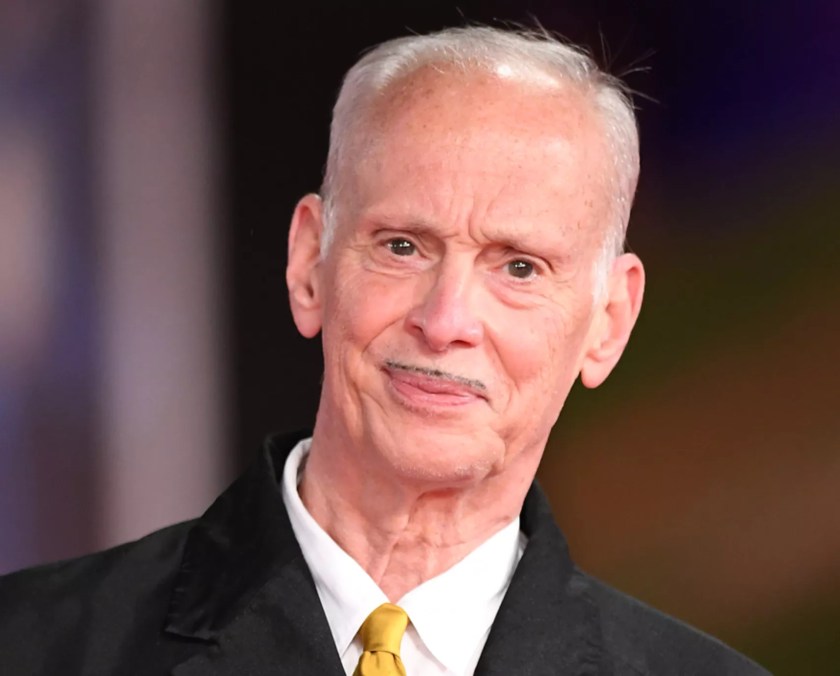
John Waters on why “queer” can be so controversial
I don’t use it much. I’m not against it, but I don’t use it much. I have it in “Hairspray”, when Penny says, “He’s such a queer.” That just meant a nerd too. It wasn’t a gay thing. But being called a queer was very hurtful, yeah. And it’s the same like all bad words: You take it back.
I like “ribbon clerk” – an anti-gay term that I find quite endearing. “There’s that little ribbon clerk.” It’s British. It means a snotty little queen that works in the gift wrap department at Harrods. There are some horrible things to say about people, but I don’t think anybody’s been convicted of a hate crime by calling somebody a ribbon clerk.
‘We’re here, we’re not queer, and nobody’s used to it.’ That’s really what it is now, because the young kids, they aren’t just queer. They’re open to everything.
These new extremes do surprise me even, but I think that’s very healthy. I am a survivor of the first sexual revolution, but there’s definitely a new one that is going on and the trans thing was, except recently, accepted by young people really quickly.
“Gay” took centuries. But right now, every trans person’s a murderer. That’s what they (homophobes) are trying to say now.”
Miss Major, trailblazing US trans rights activist and Stonewall veteran, dies aged 78
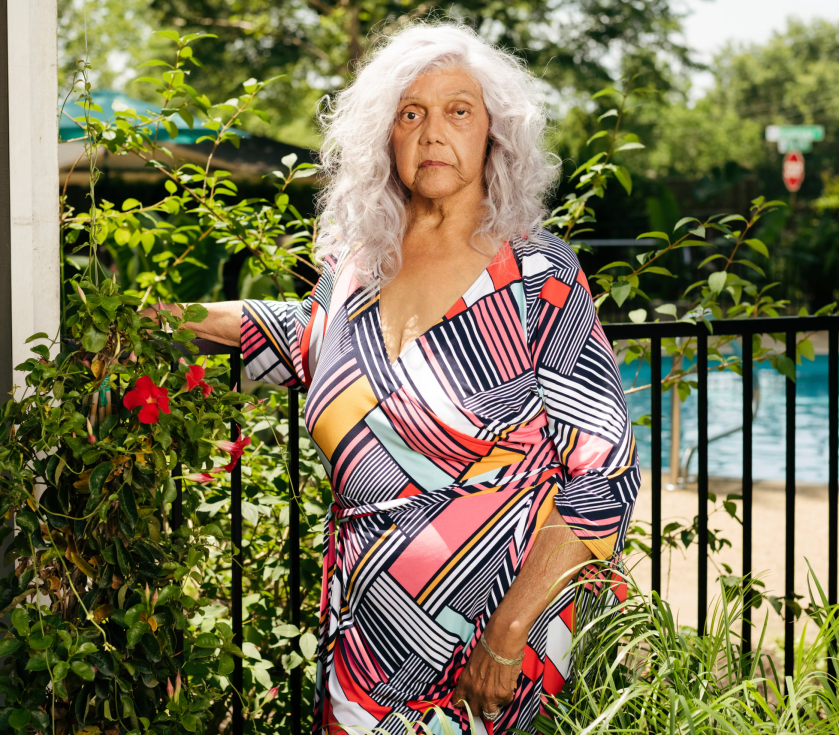
Miss Major Griffin-Gracy, a trailblazer of the transgender rights movement, longtime community organiser and veteran of the Stonewall riots, died on 13 October, her representatives announced.
The acclaimed activist died at her home in Little Rock, Arkansas, surrounded by family, the House of GG (Griffin-Gracy Retreat and Educational Centre – the final organisation she founded and led) announced. She was 78, and the group’s statement did not give a cause of death.
Miss Major was one of the US’s most celebrated trans rights pioneers and elders, at the forefront of the fight for trans rights for more than five decades. She spent her final years providing a sanctuary for trans and gender-nonconforming people in her conservative home state, while continuing to travel the country to rally for trans rights and meet with young trans people and other LGBT+ organisers.
Miss Major, known by her first name, earned a reputation as an outspoken and fearless champion for the liberation of Black trans women, fighting for communities that have long suffered extreme discrimination and violence and have been neglected by the gay rights movement.
She was considered a mother to trans women across the country, some of them prominent community organisers themselves.
Her mantra, “I’m still fucking here!”, captured the joy and humour she brought to her activism and became a rallying cry for the resiliency of Black trans people – a call to live long, full lives in a society that pushes to marginalise and erase the community.
Miss Major was born in Chicago. Her parents, a postal service administrator and beauty shop manager, took her to her first drag show but did not support her when she identified with the performers. Her family sent her to psychiatric institutions as a teenager to “get the gay outta me”, and her mother burned her dresses, she recounted in her book, Miss Major Speaks: Conversations With a Black Trans Revolutionary (2023).
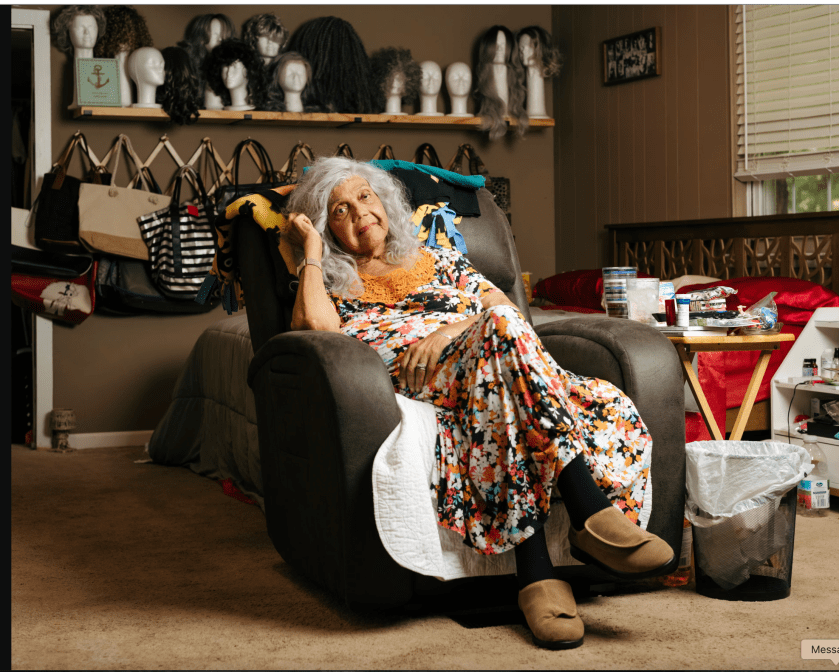
She went on to perform in Jewel Box Revue, a drag show in Chicago, helped by a mentor named Kitty who gave her a wig, did her makeup and taught her to embrace her identity.
Forced out of college in Minnesota for being trans, she ended up in New York, where she survived by doing sex work. Some of her early activism was rooted in the networks of sex workers who worked together to keep themselves safe from police and violent clients.
Miss Major recounted suffering repeated police violence, including on 28 June 1969, when the New York police department raided the Stonewall Inn in the West Village, the rare gay bar that she said did not shun trans people.
“I guess we were just sick of their shit,” she said in Miss Major Speaks. “And suddenly we were fighting, and we were kicking their ass.”
She and others fought back, and Miss Major recalled being knocked unconscious and jailed. “The cops beat on you till you drop. Everybody that stood up to them went through that. It wasn’t pretty. It was a riot. We were fighting for our lives. It was so sad,” she said in an interview in 2023.
The Stonewall protests launched Pride and were considered the birth of the contemporary gay rights movement, but the trans women of colour involved in the demonstrations were cast aside by the mainstream activism that followed.
“We fought for no reason. It’s a shame the way it turned out. We started the riots and what did we get? Nothing. Nothing,” she said, recalling that gay and lesbian leaders were “ashamed to be seen with us”.
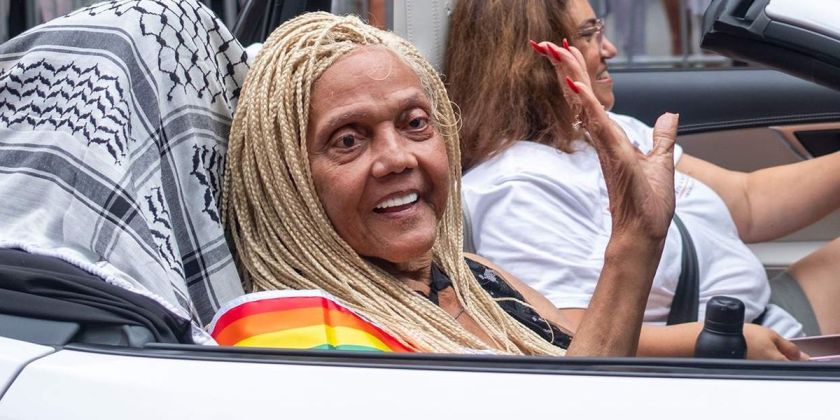
During a later stint in a New York prison, Miss Major became a mentee of Frank “Big Black” Smith, who had led a major prison uprising and taught her principles of organising, and how “you can’t throw anybody under the bus”, a guidance that drove her later work, she recalled.
In the 1980s, Miss Major formed the Angels of Care, a group of trans women who served as caretakers for gay men dying in the Aids epidemic, with efforts in California and New York. In San Francisco, she became an accomplished community leader, driving the city’s first mobile needle exchange van and running a drop-in centre for trans sex workers.
Miss Major went on to lead the Transgender Gender-Variant & Intersex Justice Project (TGIJP), a group that fights the abuse of trans people of colour in prison and provides support during re-entry. Janetta Johnson, one of her adopted daughters, now leads the organisation, which today is called the Miss Major Alexander L Lee TGIJP Black Trans Cultural Centre.
In recent years, Miss Major suffered repeated health challenges, yet she continued her work through the House of GG, which she also nicknamed Telling It Like It Fuckin’ Is (Tilifi). The organisation brings trans leaders to her colourful Little Rock guest house, called the Oasis, to provide a refuge for rest and relaxation.
“I’ve gotta make joy here, because it doesn’t exist in the normal world,” Miss Major said during a 2023 interview at her home. “They want us to live in the 1950s. No. Get off our fucking backs and let us live … I know the world I would like to live in. It’s in my head, but I try my best to live it now.”
Miss Major is survived by Beck Witt, her longtime partner; her three sons, Asaiah, Christopher, and Jonathon; and her “many daughters”.
“She was a world builder, a visionary, and unwavering in her devotion to making freedom possible for Black, trans, formerly and currently incarcerated people as well as the larger trans and LGB community. Because of her, countless new possibilities have been made for all of us to thrive – today and for generations to come,” the House of GG said in a post on Monday. “While her physical presence has shifted, we have gained an immensely powerful ancestor and there is no doubt that she is and always will be with us – guiding, protecting and reminding us that she is ‘still fucking here!’”
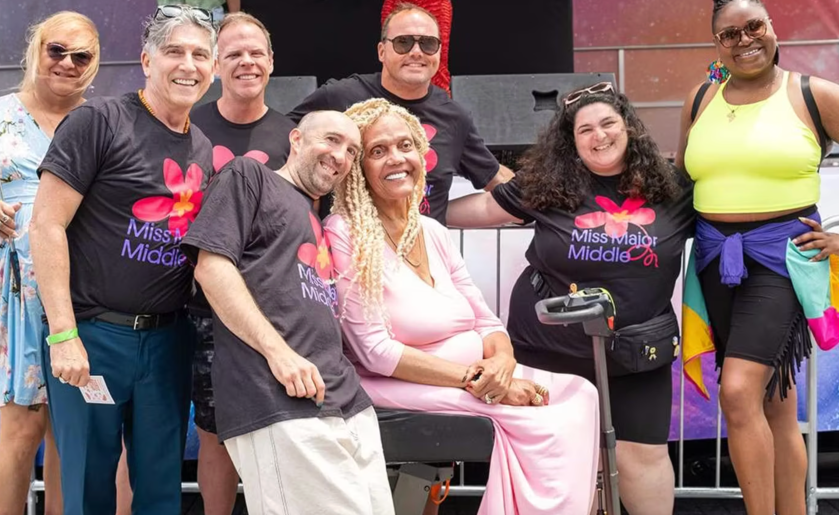
Miss Major was a revolutionary, a visionary, a legend – a foundational mother of our movement and an inspiration to those fighting for liberation. She was a sharp and unyielding truth teller. She was also undeniably loving and generous to those who called her Mother, Auntie, colleague and friend. There will never be another like her.
Birthdays
 Out in the City
Good morning Tony,
Thank you for such a comprehensive overview in this article.
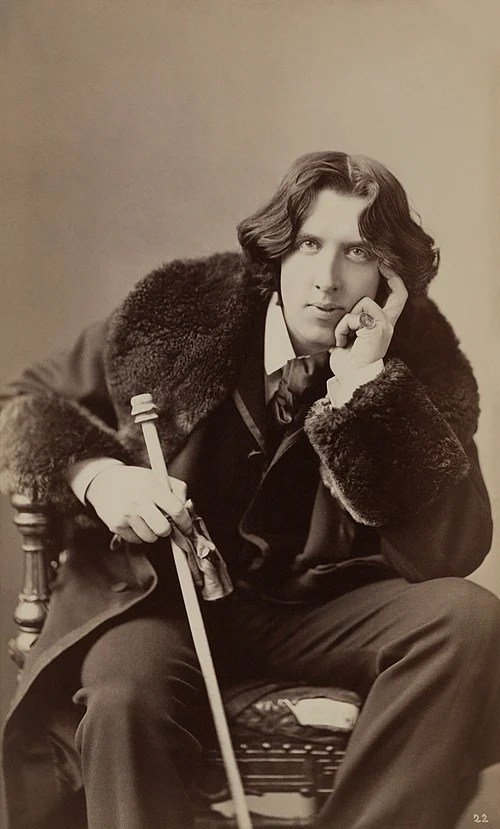
2. Free Trade Hall. I went there a lot as a schoolboy ( way before I became Pauline though I started cross dressing from the age of 9), as my all boys school had its yearly speech day there as it was one of the few places that held 1400 back in the 60s. In 1966 I was at the famous Judas concert to watch and listen to Bob, with my then best friend Jack. We sat on row 9 very near the front and paid £1 each for our seats ( a lot then when you could get in the Twisted Wheel to see the Kinks live for less than 10 shillings. My review of the concert is on Talking About My Generation.
3. Miss Major…what an amazing trans woman and activist. I did see the article hidden away in the Guardian, which reviewed her life and I am so glad you publicised it.
Take care and thanks for including me on the distribution list
Pauline
LikeLike